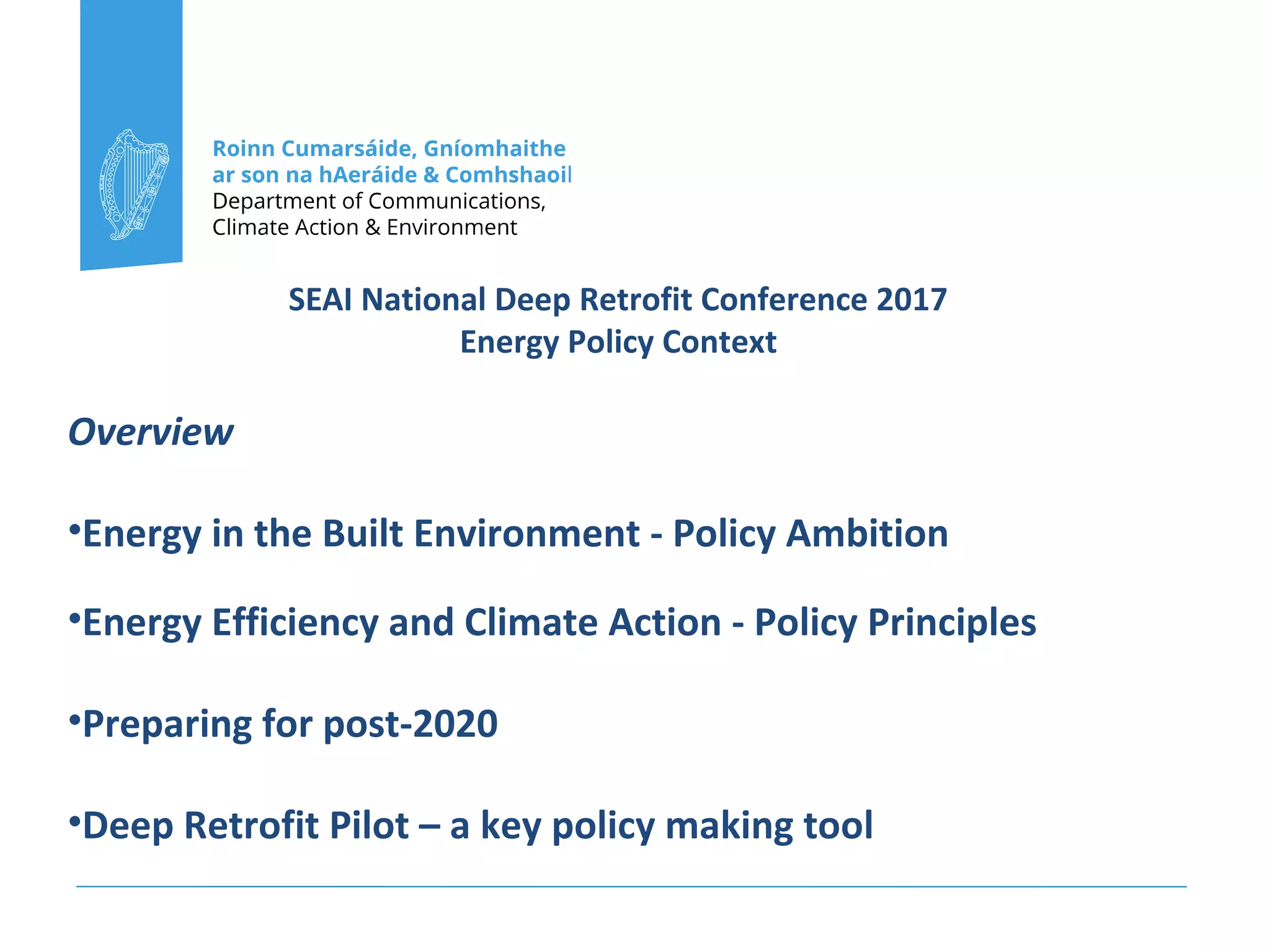
SEAI National Deep Retrofit Conference 2017
Energy Policy Context
Overview
•Energy in the Built Environment - Policy Ambition
•Energy Efficiency and Climate Action - Policy Principles
•Preparing for post-2020
•Deep Retrofit Pilot – a key policy making tool
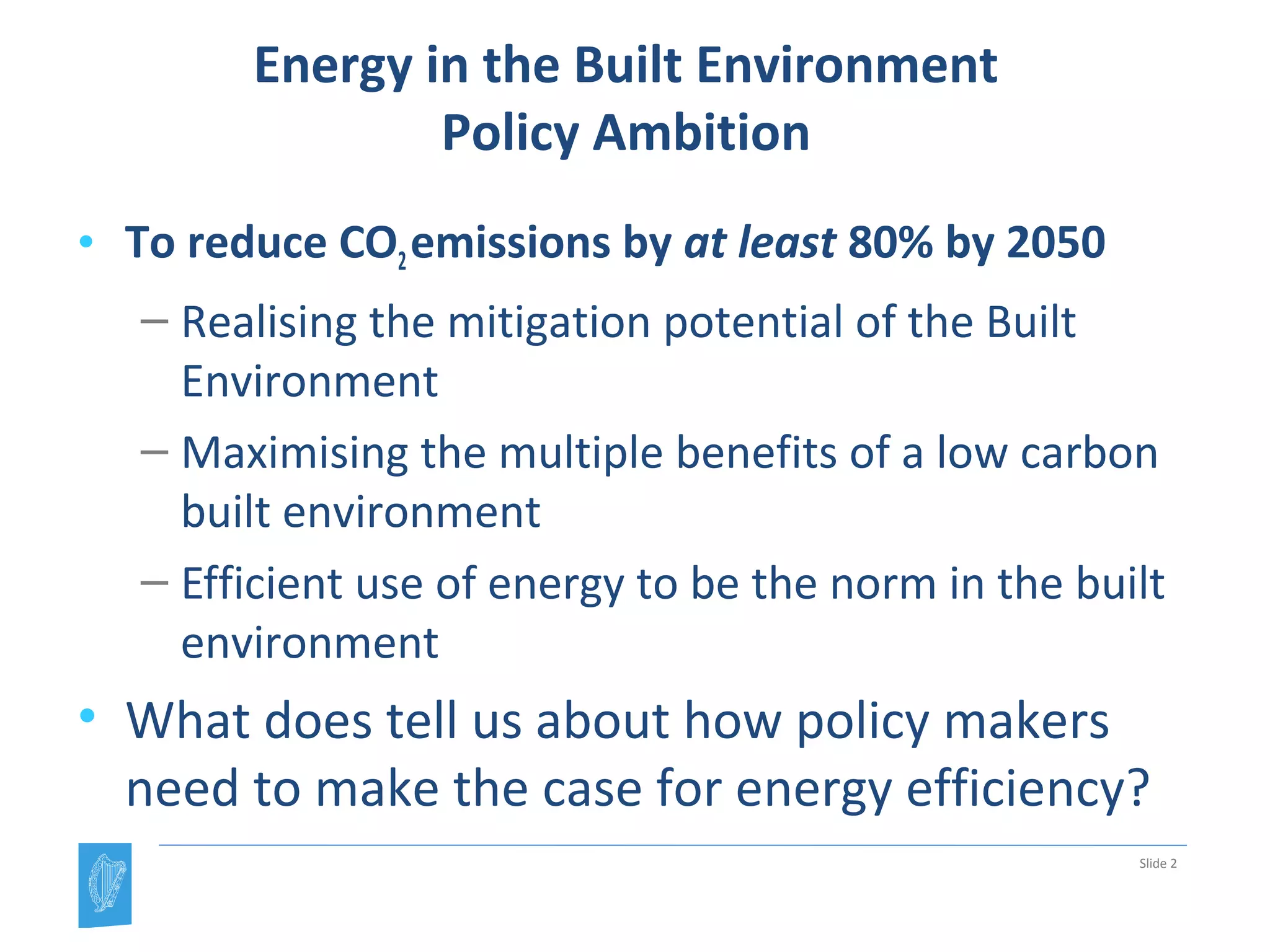
Energy in the Built Environment
Policy Ambition
• To reduce CO2emissions by at least 80% by 2050
– Realising the mitigation potential of the Built
Environment
– Maximising the multiple benefits of a low carbon
built environment
– Efficient use of energy to be the norm in the built
environment
• What does tell us about how policy makers
need to make the case for energy efficiency?
Slide 2
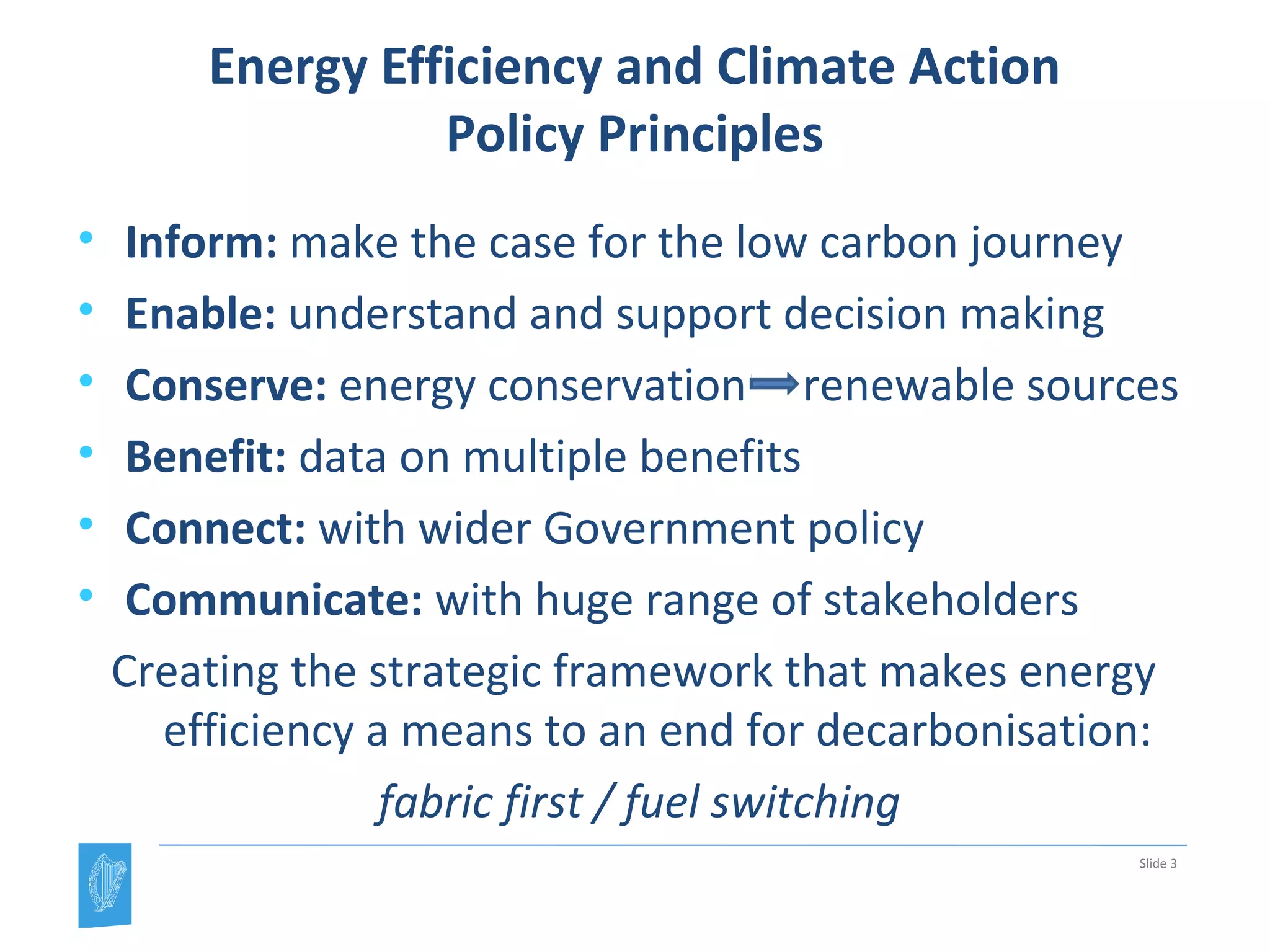
Energy Efficiency and Climate Action
Policy Principles
• Inform: make the case for the low carbon journey
• Enable: understand and support decision making
• Conserve: energy conservation renewable sources
• Benefit: data on multiple benefits
• Connect: with wider Government policy
• Communicate: with huge range of stakeholders
Creating the strategic framework that makes energy
efficiency a means to an end for decarbonisation:
fabric first / fuel switching
Slide 3
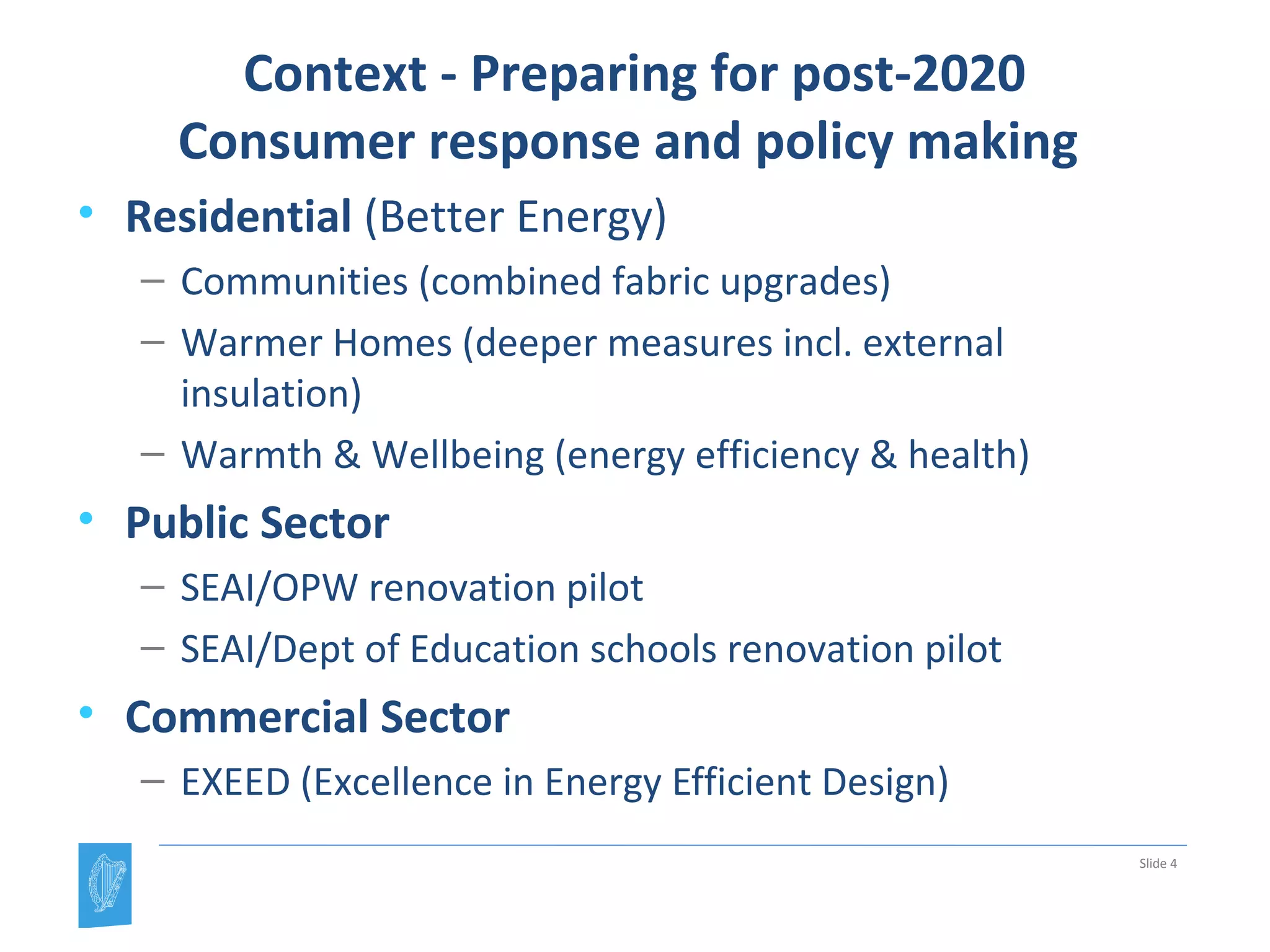
Context - Preparing for post-2020
Consumer response and policy making
• Residential (Better Energy)
– Communities (combined fabric upgrades)
– Warmer Homes (deeper measures incl. external
insulation)
– Warmth & Wellbeing (energy efficiency & health)
• Public Sector
– SEAI/OPW renovation pilot
– SEAI/Dept of Education schools renovation pilot
• Commercial Sector
– EXEED (Excellence in Energy Efficient Design)
Slide 4
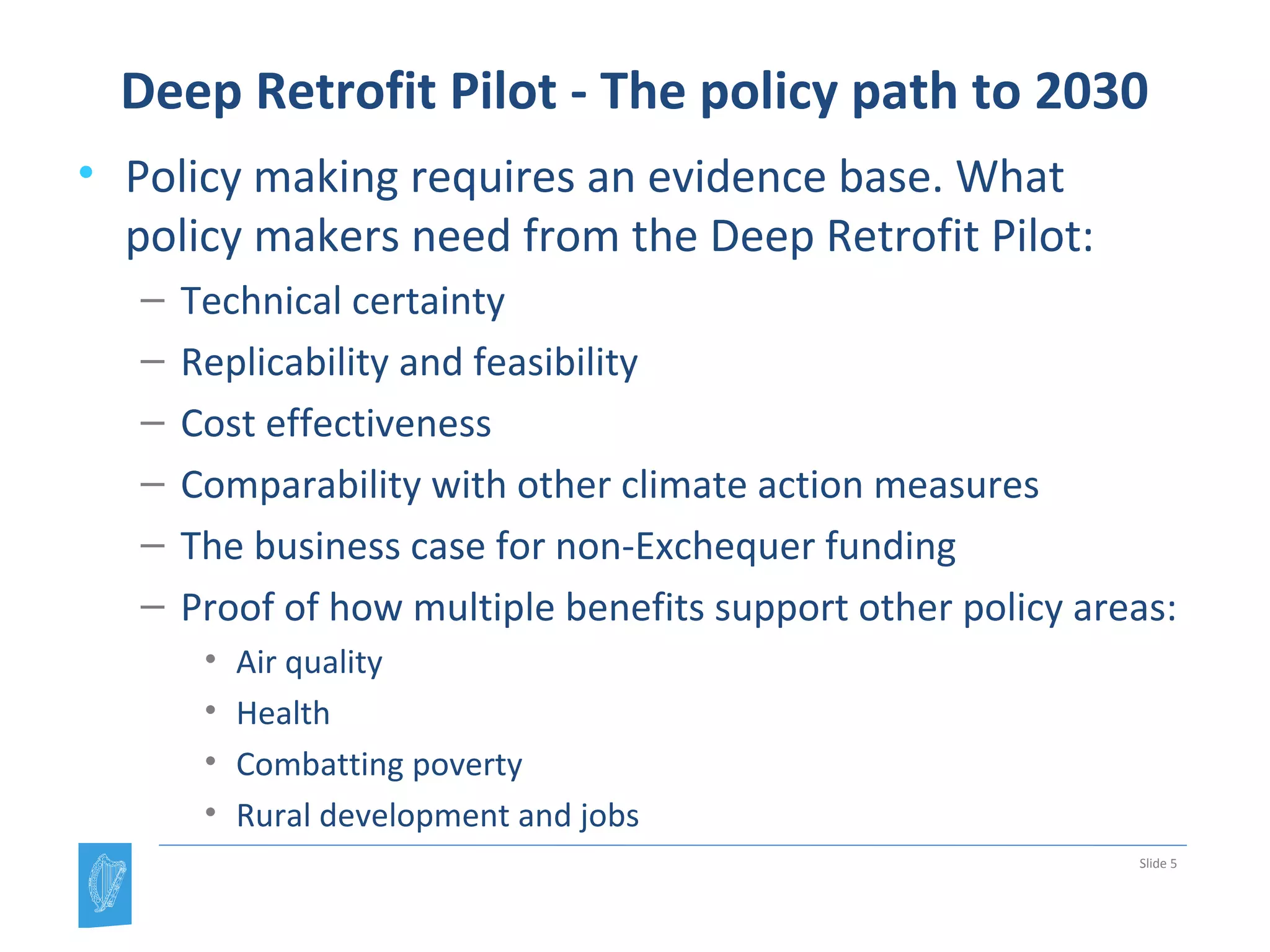
Deep Retrofit Pilot - The policy path to 2030
• Policy making requires an evidence base. What
policy makers need from the Deep Retrofit Pilot:
– Technical certainty
– Replicability and feasibility
– Cost effectiveness
– Comparability with other climate action measures
– The business case for non-Exchequer funding
– Proof of how multiple benefits support other policy areas:
• Air quality
• Health
• Combatting poverty
• Rural development and jobs
Slide 5
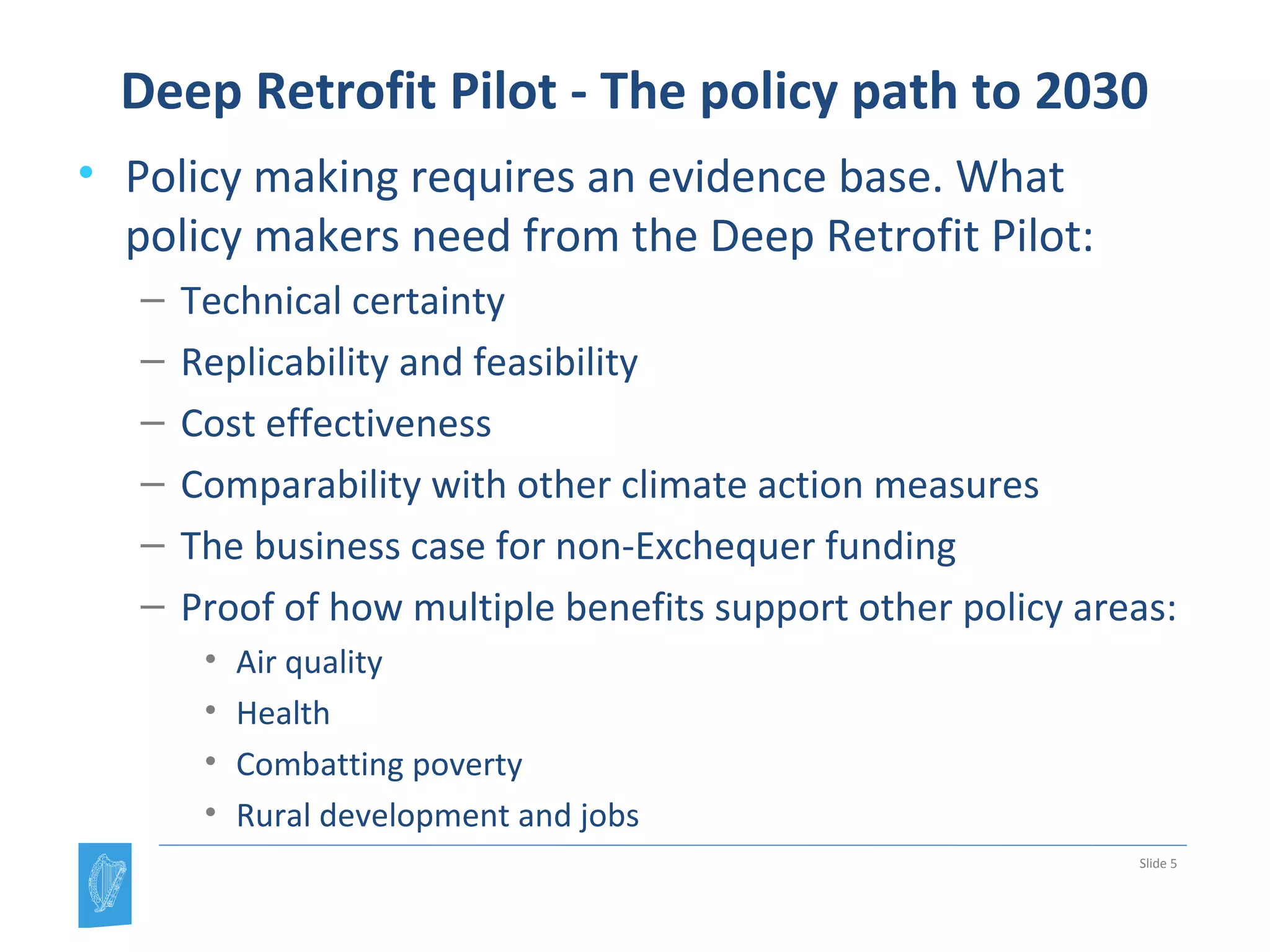
Deep Retrofit Pilot - The policy path to 2030
• Policy making requires an evidence base. What
policy makers need from the Deep Retrofit Pilot:
– Technical certainty
– Replicability and feasibility
– Cost effectiveness
– Comparability with other climate action measures
– The business case for non-Exchequer funding
– Proof of how multiple benefits support other policy areas:
• Air quality
• Health
• Combatting poverty
• Rural development and jobs
Slide 5

Deep Retrofit & the Irish Policy Perspective

  • 1.
    SEAI National DeepRetrofit Conference 2017 Energy Policy Context Overview •Energy in the Built Environment - Policy Ambition •Energy Efficiency and Climate Action - Policy Principles •Preparing for post-2020 •Deep Retrofit Pilot – a key policy making tool
  • 2.
    Energy in theBuilt Environment Policy Ambition • To reduce CO2emissions by at least 80% by 2050 – Realising the mitigation potential of the Built Environment – Maximising the multiple benefits of a low carbon built environment – Efficient use of energy to be the norm in the built environment • What does tell us about how policy makers need to make the case for energy efficiency? Slide 2
  • 3.
    Energy Efficiency andClimate Action Policy Principles • Inform: make the case for the low carbon journey • Enable: understand and support decision making • Conserve: energy conservation renewable sources • Benefit: data on multiple benefits • Connect: with wider Government policy • Communicate: with huge range of stakeholders Creating the strategic framework that makes energy efficiency a means to an end for decarbonisation: fabric first / fuel switching Slide 3
  • 4.
    Context - Preparingfor post-2020 Consumer response and policy making • Residential (Better Energy) – Communities (combined fabric upgrades) – Warmer Homes (deeper measures incl. external insulation) – Warmth & Wellbeing (energy efficiency & health) • Public Sector – SEAI/OPW renovation pilot – SEAI/Dept of Education schools renovation pilot • Commercial Sector – EXEED (Excellence in Energy Efficient Design) Slide 4
  • 5.
    Deep Retrofit Pilot- The policy path to 2030 • Policy making requires an evidence base. What policy makers need from the Deep Retrofit Pilot: – Technical certainty – Replicability and feasibility – Cost effectiveness – Comparability with other climate action measures – The business case for non-Exchequer funding – Proof of how multiple benefits support other policy areas: • Air quality • Health • Combatting poverty • Rural development and jobs Slide 5
  • 6.
    Deep Retrofit Pilot- The policy path to 2030 • Policy making requires an evidence base. What policy makers need from the Deep Retrofit Pilot: – Technical certainty – Replicability and feasibility – Cost effectiveness – Comparability with other climate action measures – The business case for non-Exchequer funding – Proof of how multiple benefits support other policy areas: • Air quality • Health • Combatting poverty • Rural development and jobs Slide 5