Deep Neck Spaces
Dr. Jennifer Rager
Geisinger Medical Center
Outline
 Anatomy of the Cervical Fascia
 Anatomy of the Deep Neck Spaces
 Deep Neck Space Infections
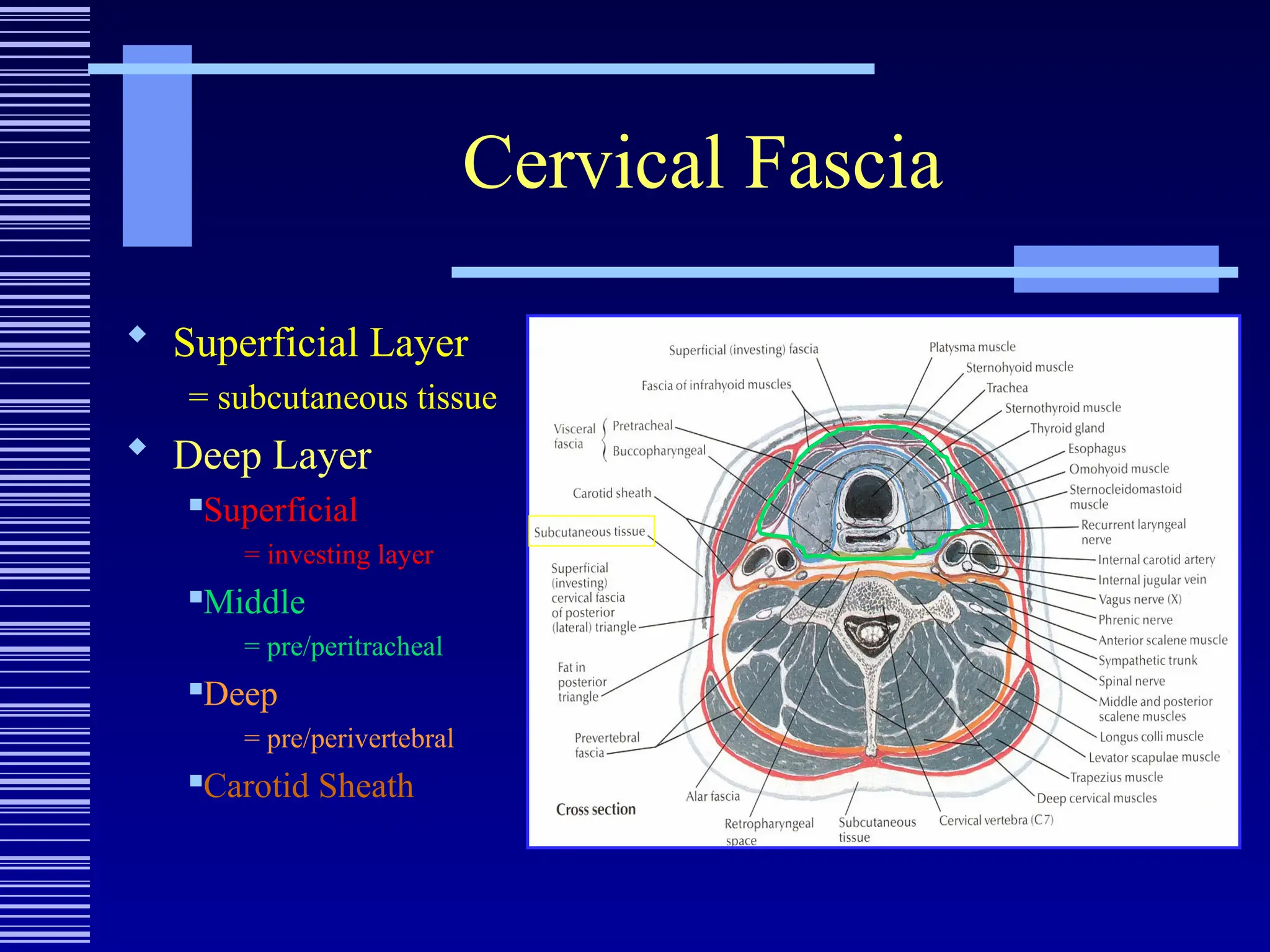
Cervical Fascia
 Superficial Layer
= subcutaneous tissue
 Deep Layer
Superficial
= investing layer
Middle
= pre/peritracheal
Deep
= pre/perivertebral
Carotid Sheath
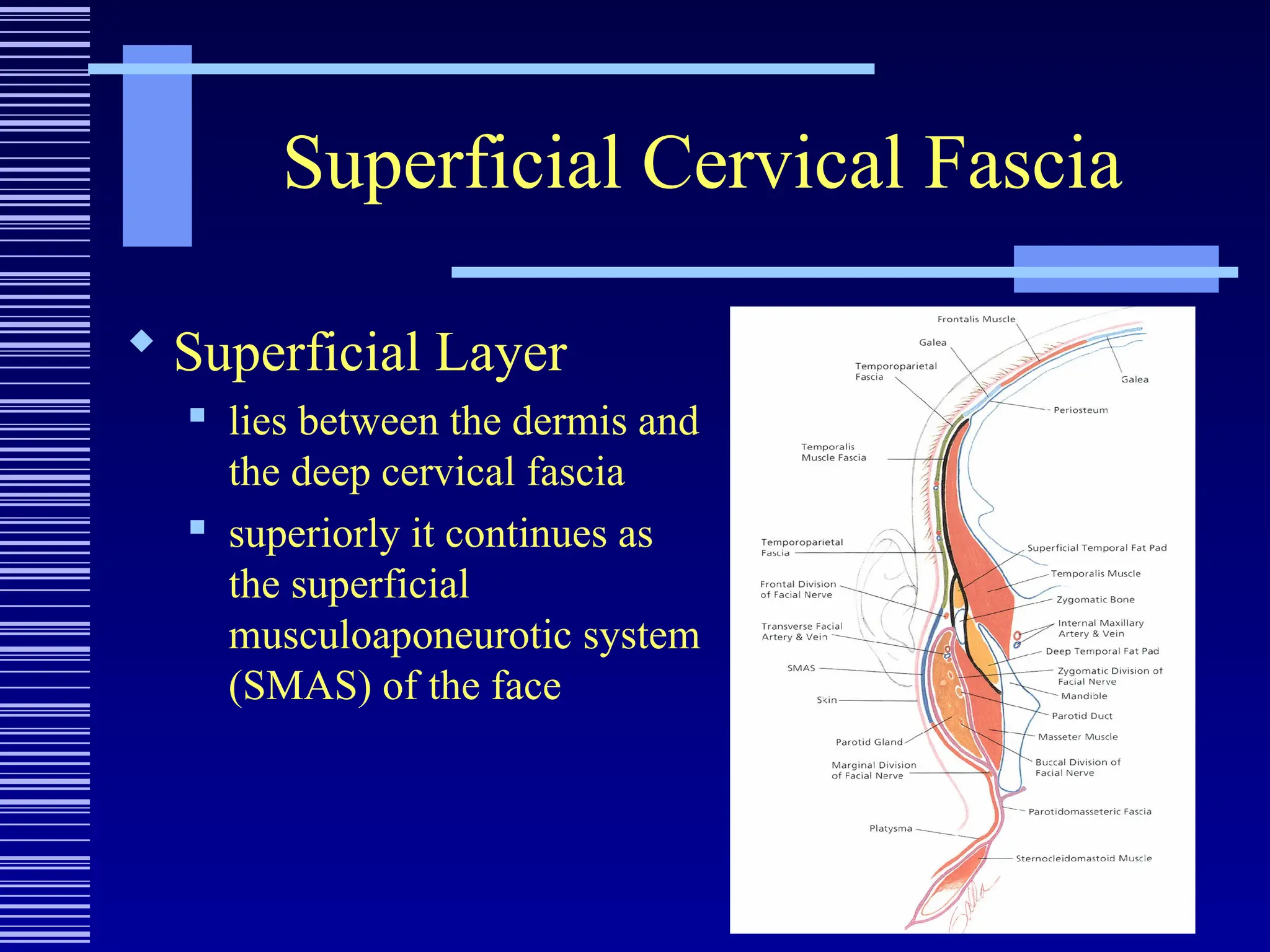
Superficial Cervical Fascia
 Superficial Layer
 lies between the dermis and
the deep cervical fascia
 superiorly it continues as
the superficial
musculoaponeurotic system
(SMAS) of the face
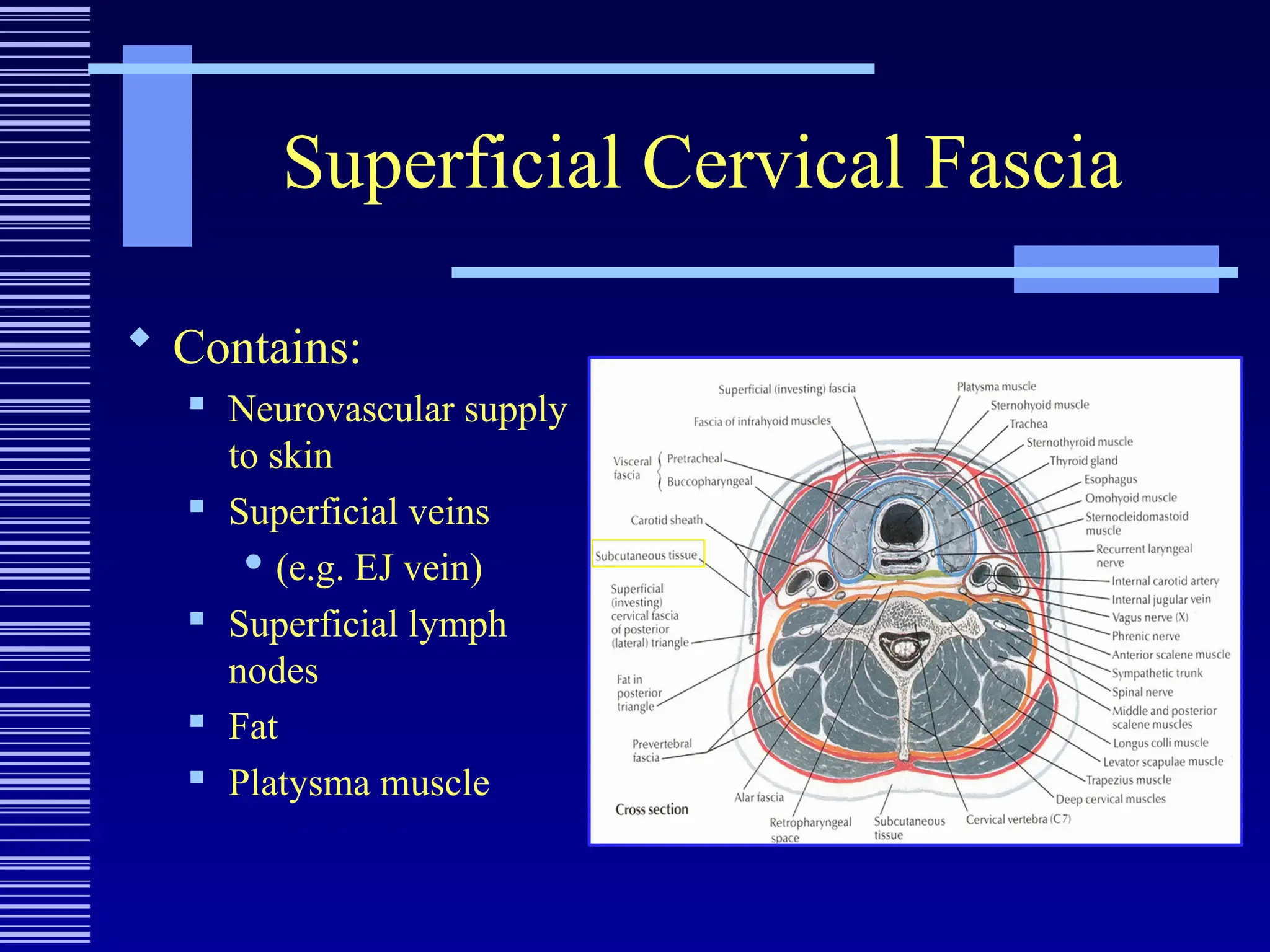
Superficial Cervical Fascia
 Contains:
 Neurovascular supply
to skin
 Superficial veins
 (e.g. EJ vein)
 Superficial lymph
nodes
 Fat
 Platysma muscle
Deep Cervical Fascia
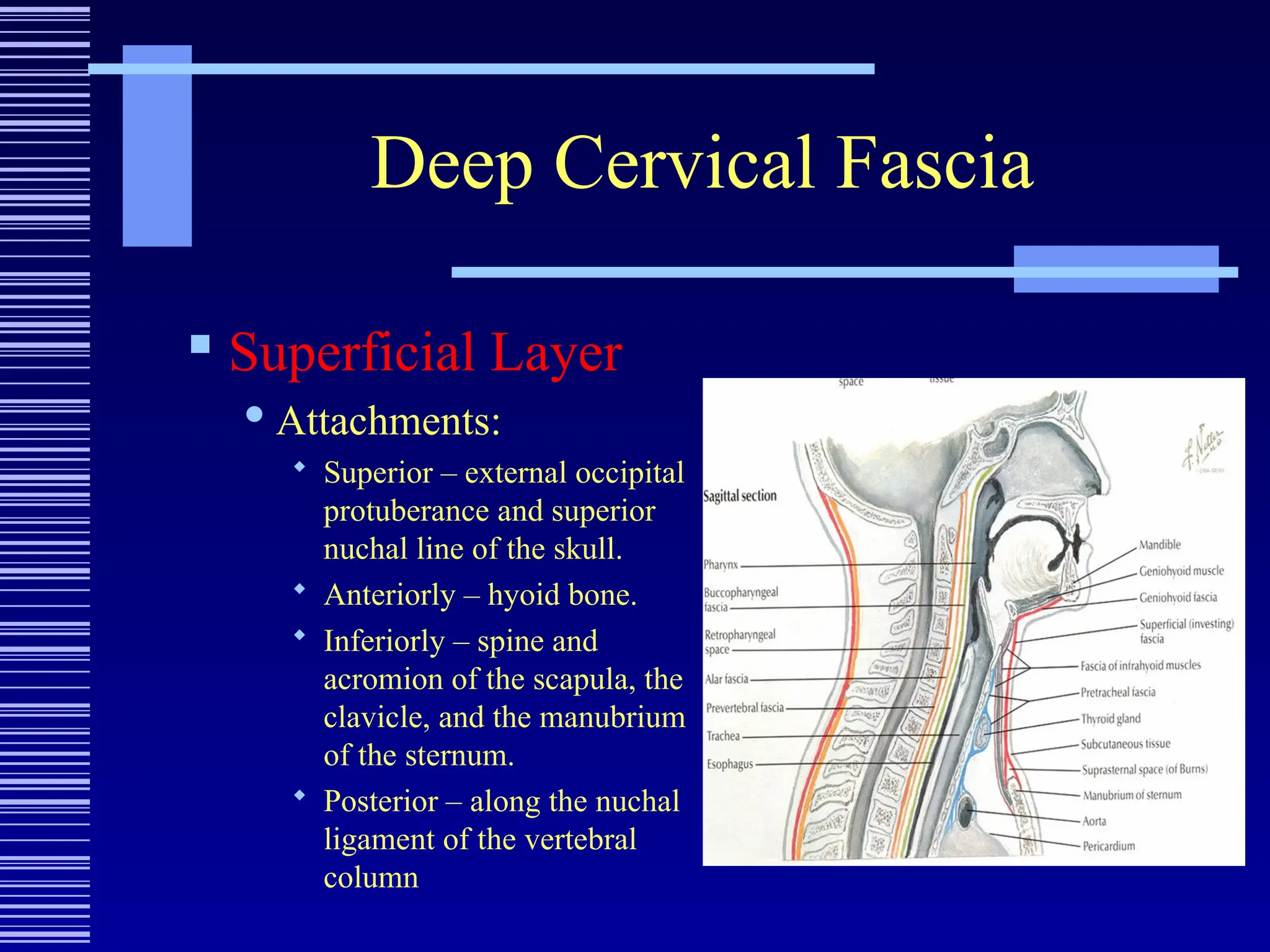
 Superficial Layer
 Attachments:
 Superior – external occipital
protuberance and superior
nuchal line of the skull.
 Anteriorly – hyoid bone.
 Inferiorly – spine and
acromion of the scapula, the
clavicle, and the manubrium
of the sternum.
 Posterior – along the nuchal
ligament of the vertebral
column
Deep Cervical Fascia
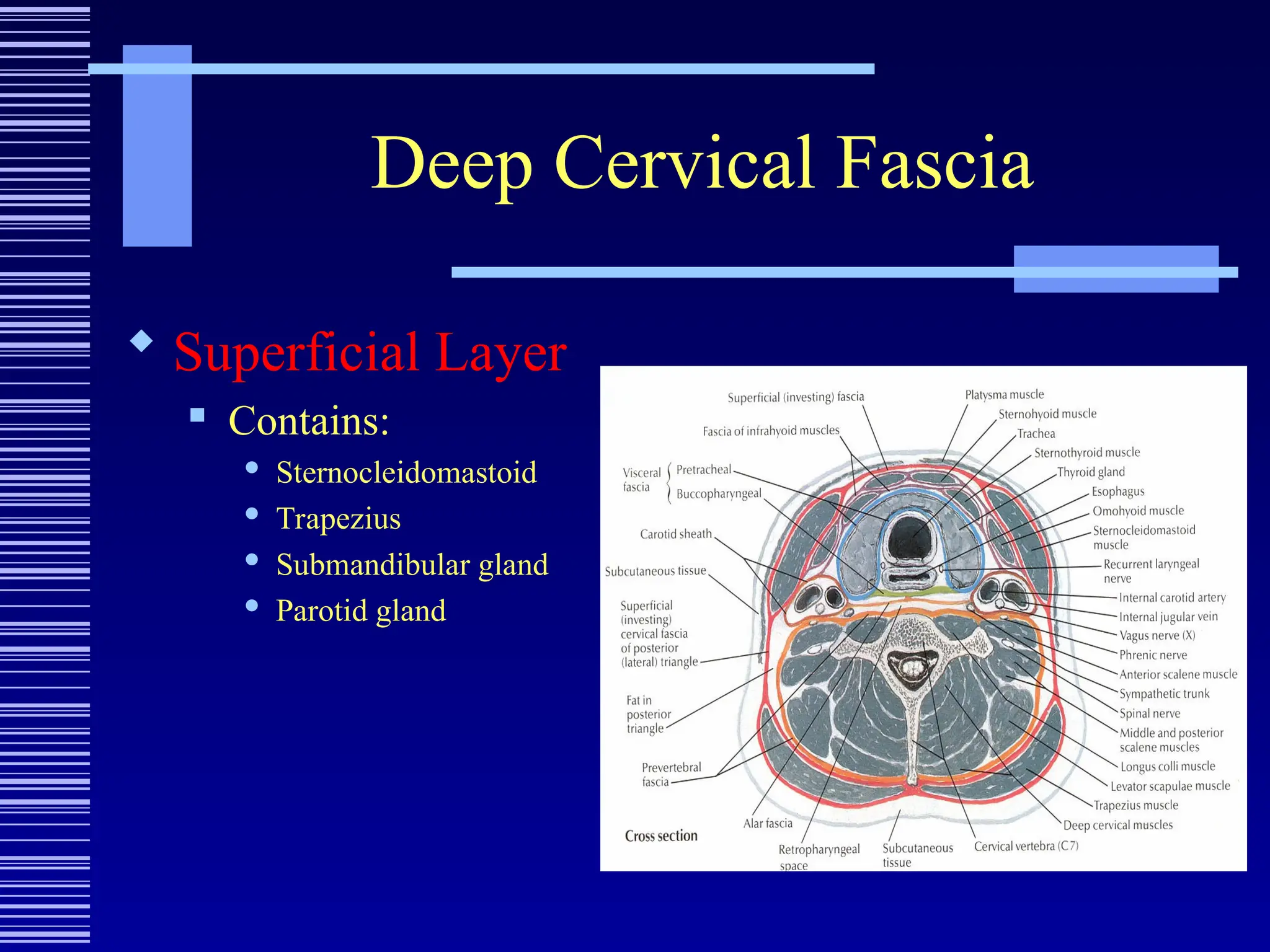
 Superficial Layer
 Contains:
 Sternocleidomastoid
 Trapezius
 Submandibular gland
 Parotid gland
Deep Cervical Fascia
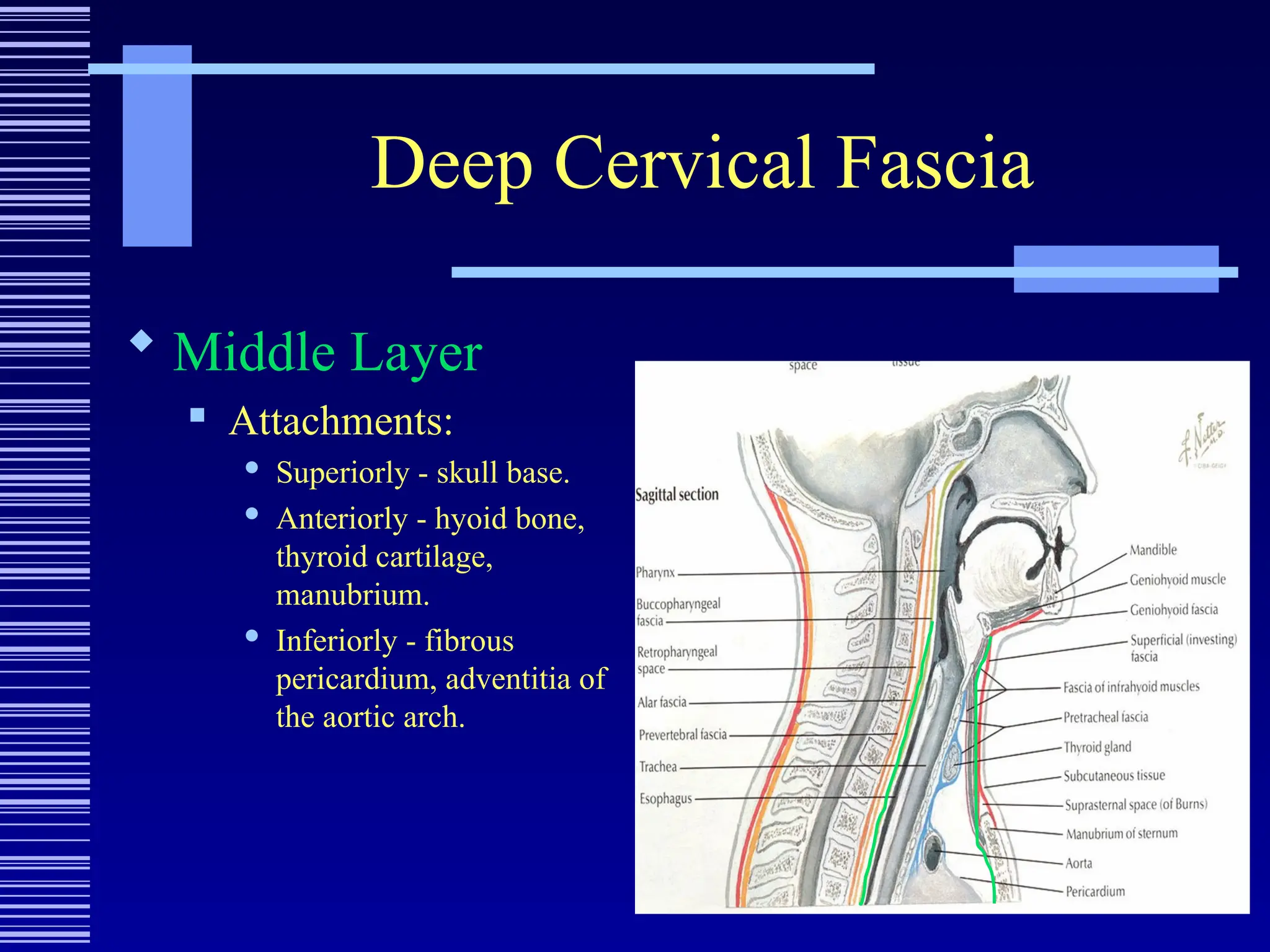
 Middle Layer
 Attachments:
 Superiorly - skull base.
 Anteriorly - hyoid bone,
thyroid cartilage,
manubrium.
 Inferiorly - fibrous
pericardium, adventitia of
the aortic arch.
Deep Cervical Fascia
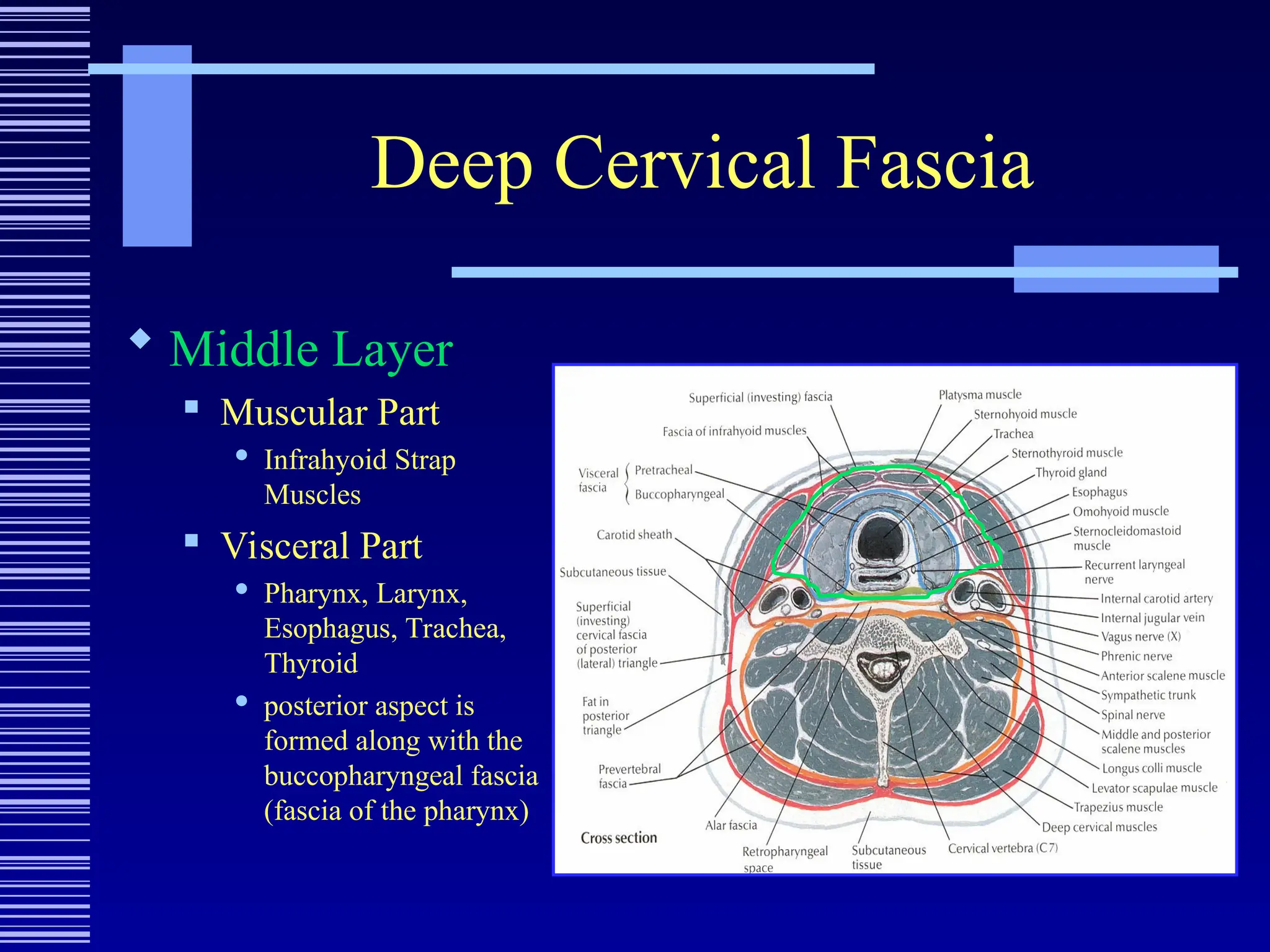
 Middle Layer
 Muscular Part
 Infrahyoid Strap
Muscles
 Visceral Part
 Pharynx, Larynx,
Esophagus, Trachea,
Thyroid
 posterior aspect is
formed along with the
buccopharyngeal fascia
(fascia of the pharynx)
Deep Cervical Fascia
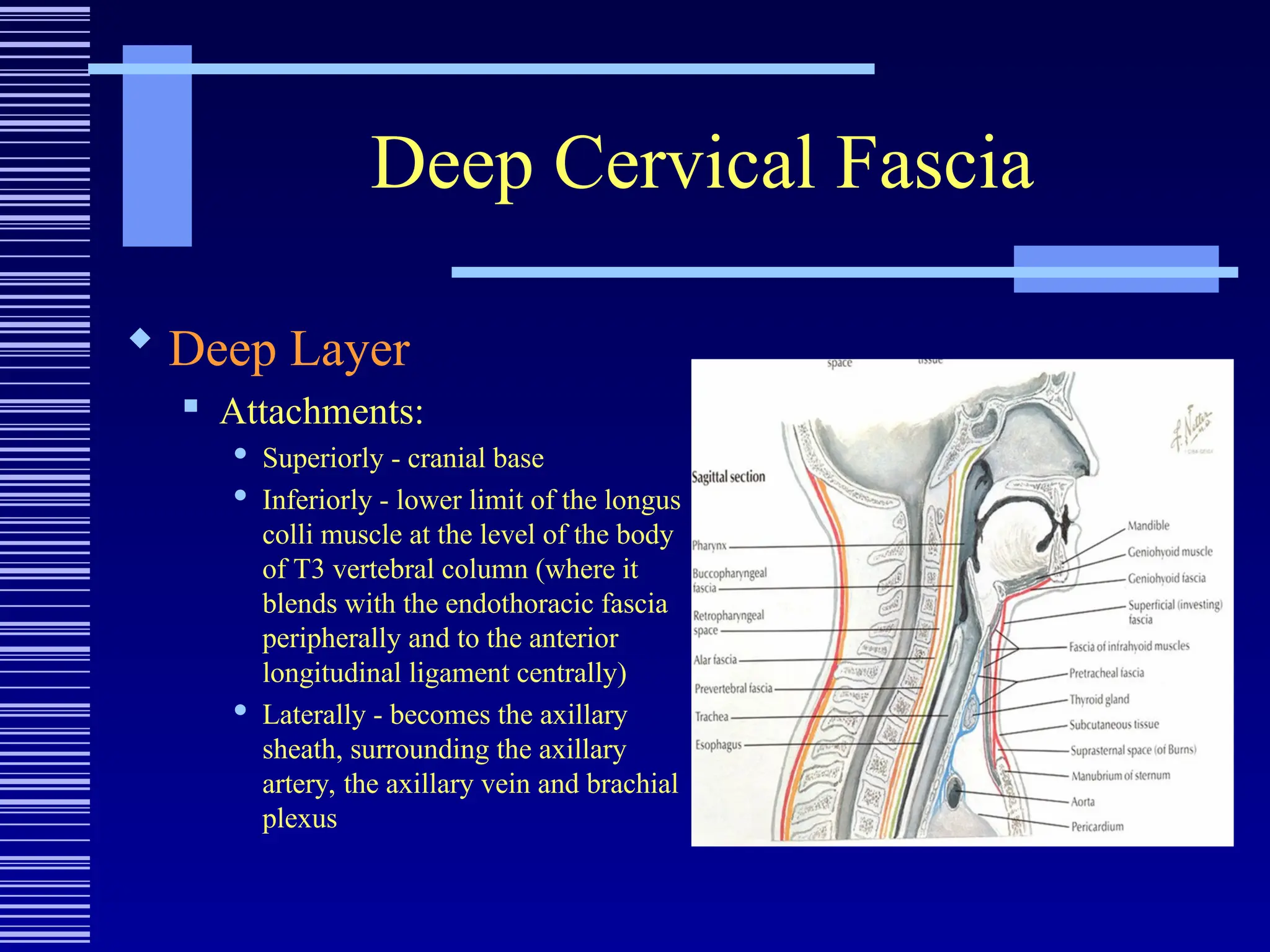
 Deep Layer
 Attachments:
 Superiorly - cranial base
 Inferiorly - lower limit of the longus
colli muscle at the level of the body
of T3 vertebral column (where it
blends with the endothoracic fascia
peripherally and to the anterior
longitudinal ligament centrally)
 Laterally - becomes the axillary
sheath, surrounding the axillary
artery, the axillary vein and brachial
plexus
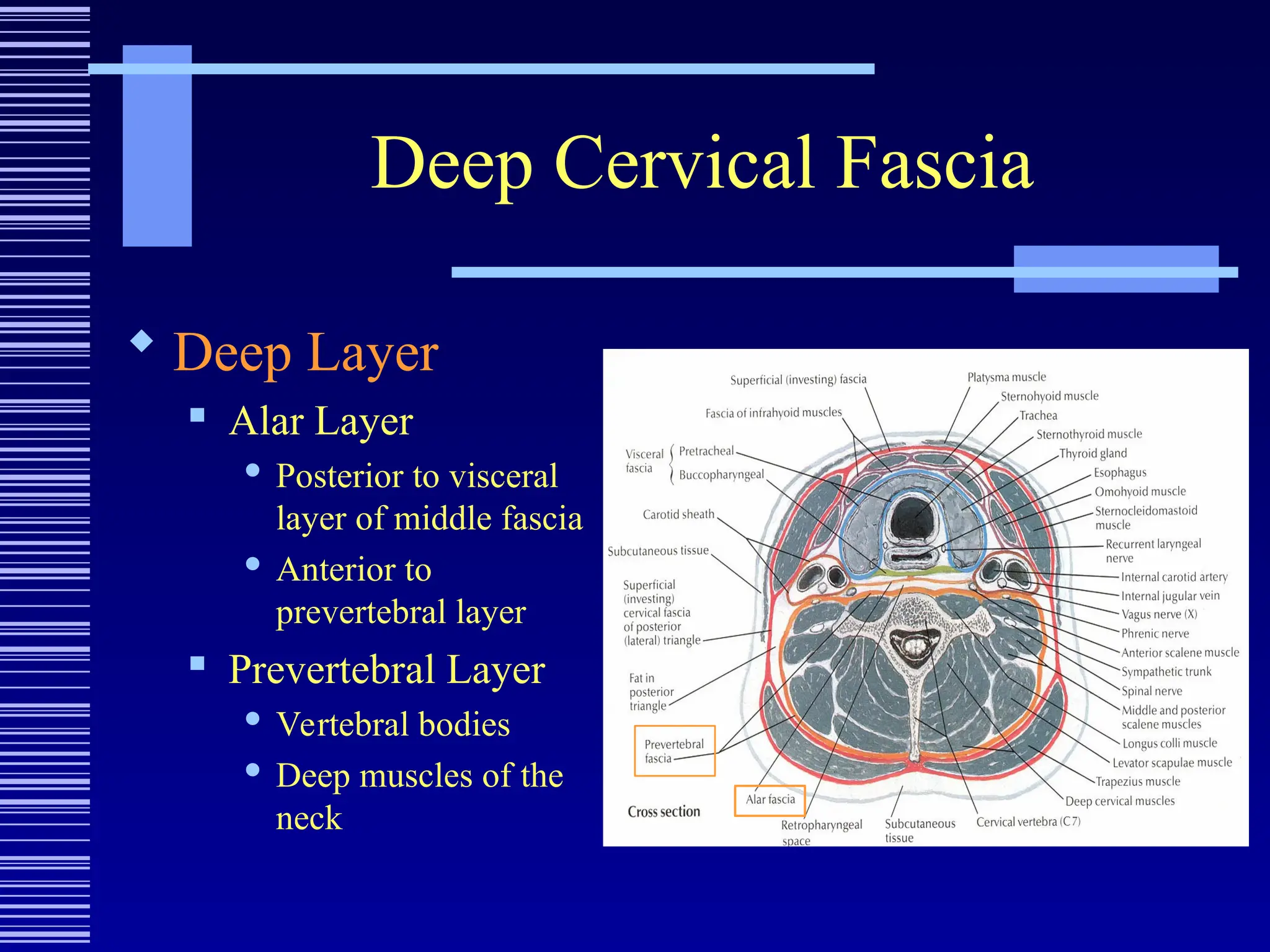
Deep Cervical Fascia
 Deep Layer
 Alar Layer
 Posterior to visceral
layer of middle fascia
 Anterior to
prevertebral layer
 Prevertebral Layer
 Vertebral bodies
 Deep muscles of the
neck
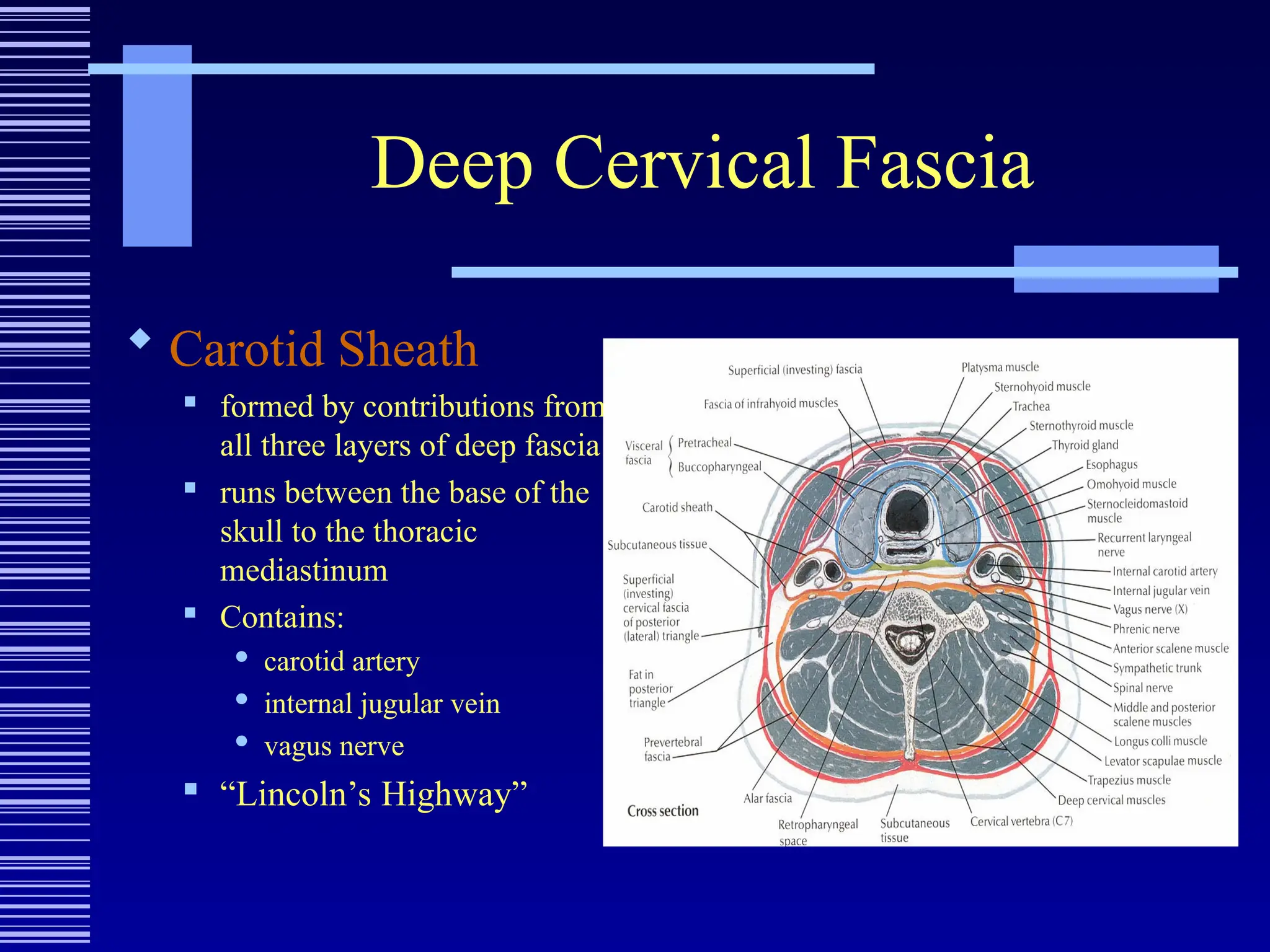
Deep Cervical Fascia
 Carotid Sheath
 formed by contributions from
all three layers of deep fascia

runs between the base of the
skull to the thoracic
mediastinum
 Contains:
 carotid artery
 internal jugular vein
 vagus nerve
 “Lincoln’s Highway”
So, why does it matter?
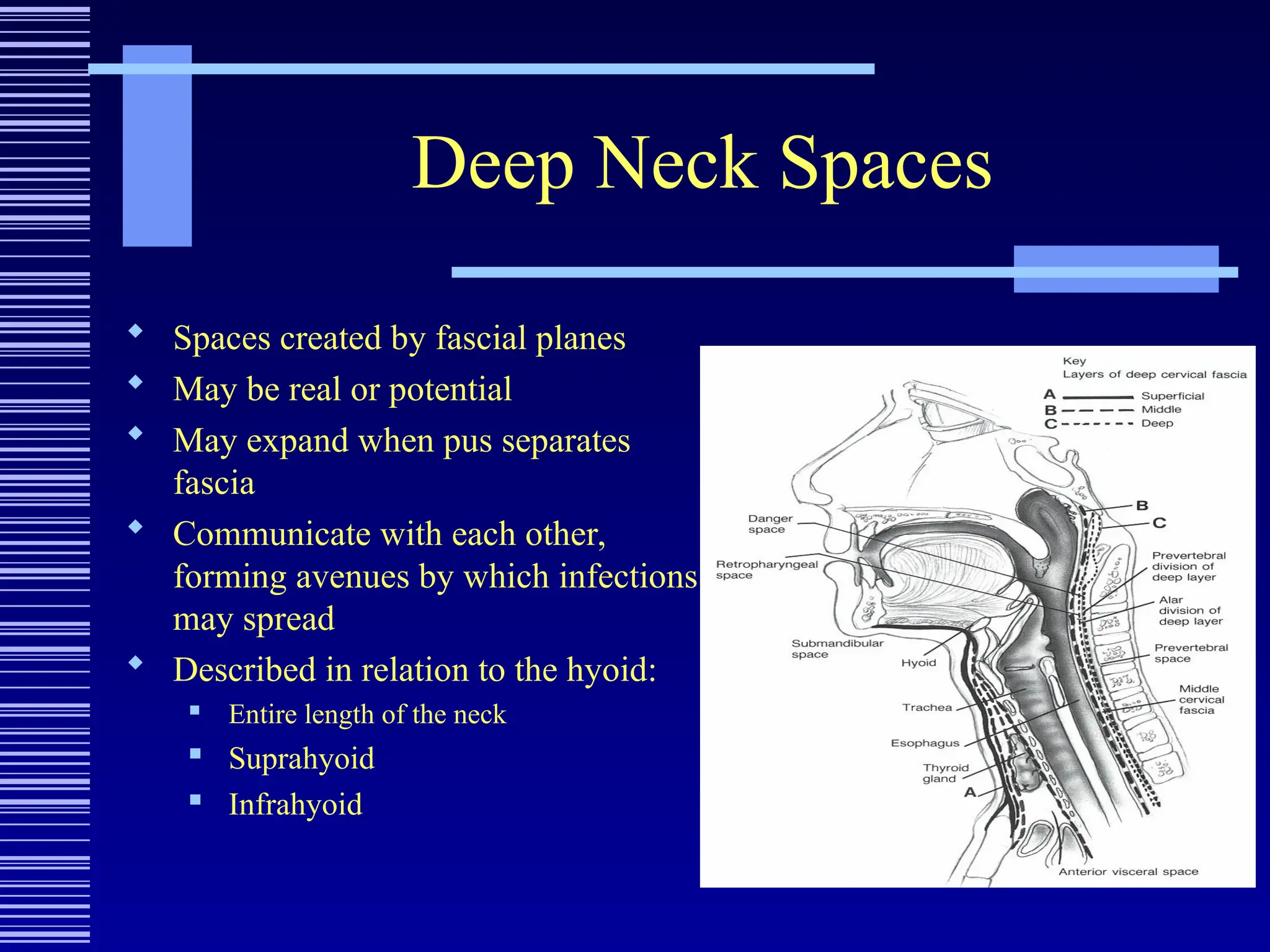
Deep Neck Spaces
 Spaces created by fascial planes
 May be real or potential
 May expand when pus separates
fascia
 Communicate with each other,
forming avenues by which infections
may spread
 Described in relation to the hyoid:
 Entire length of the neck
 Suprahyoid
 Infrahyoid
Entire Length of the Neck
Deep Neck Spaces
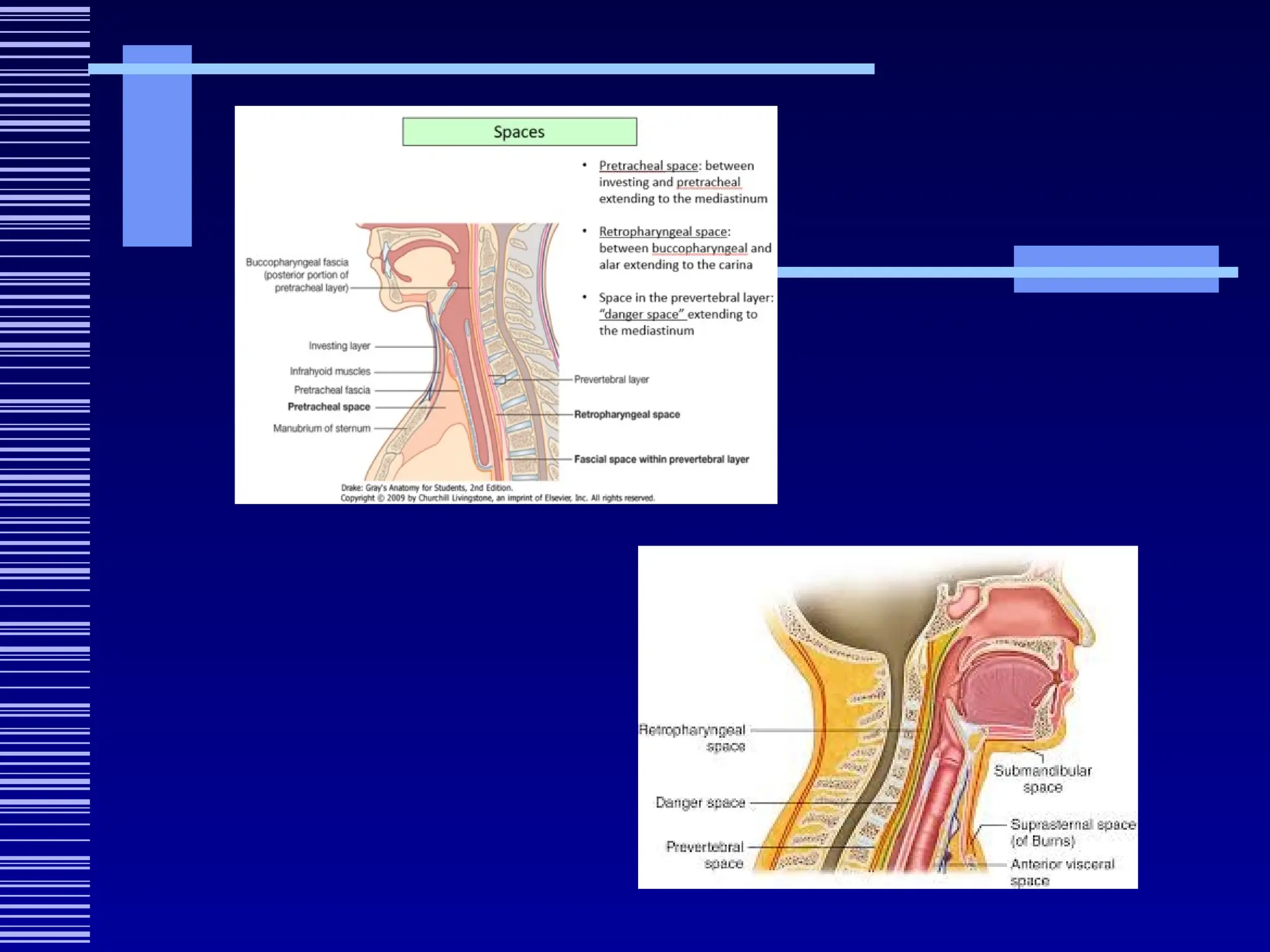
 Retropharyngeal Space
 Danger Space
 Pre/perivertebral Space
 Carotid Space (visceral/vascular)
Entire Length of the Neck
Deep Neck Spaces
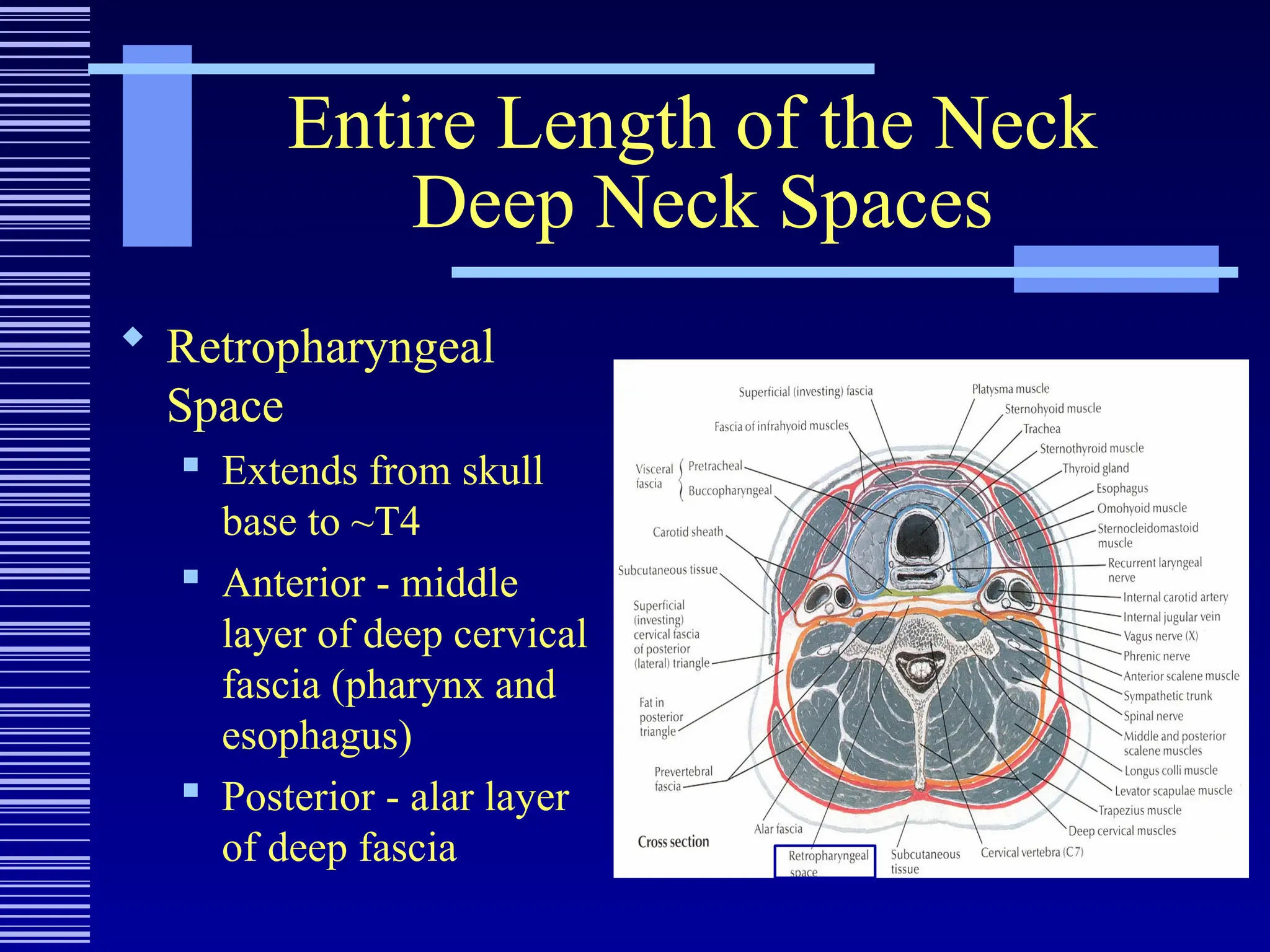
 Retropharyngeal
Space
 Extends from skull
base to ~T4
 Anterior - middle
layer of deep cervical
fascia (pharynx and
esophagus)
 Posterior - alar layer
of deep fascia
Entire Length of the Neck
Deep Neck Spaces
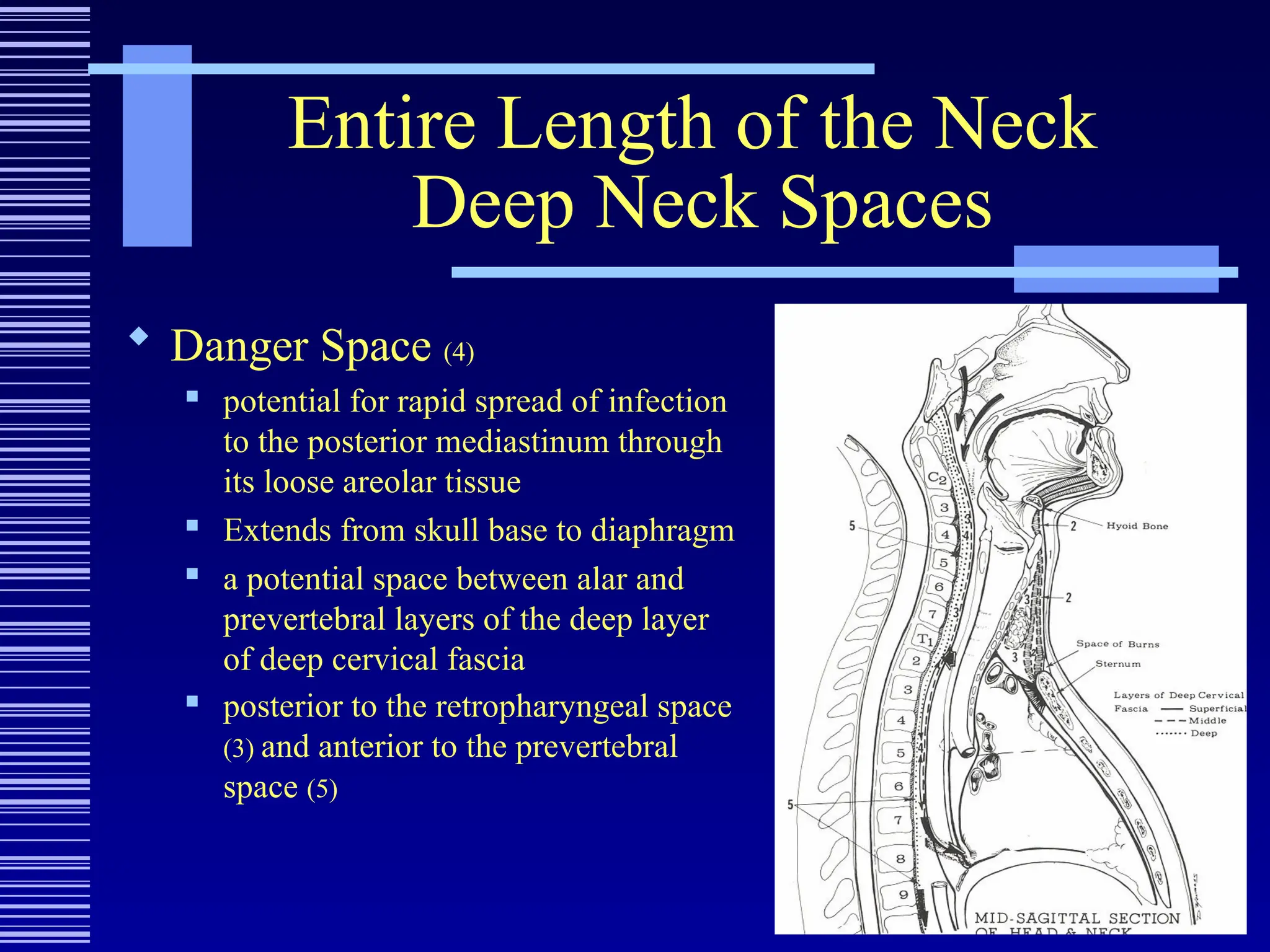
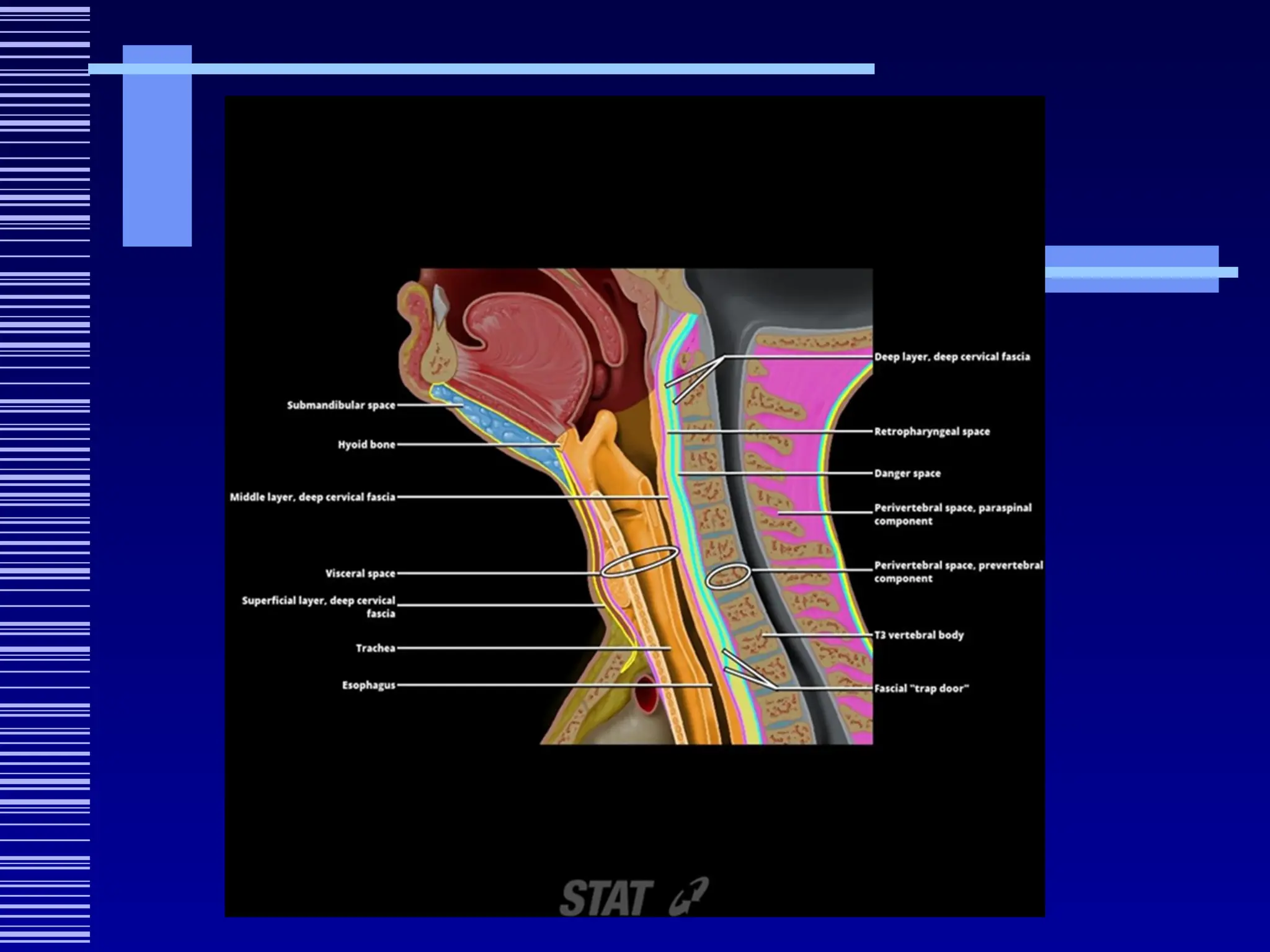
 Danger Space (4)
 potential for rapid spread of infection
to the posterior mediastinum through
its loose areolar tissue
 Extends from skull base to diaphragm
 a potential space between alar and
prevertebral layers of the deep layer
of deep cervical fascia
 posterior to the retropharyngeal space
(3) and anterior to the prevertebral
space (5)
Entire Length of the Neck
Deep Neck Spaces
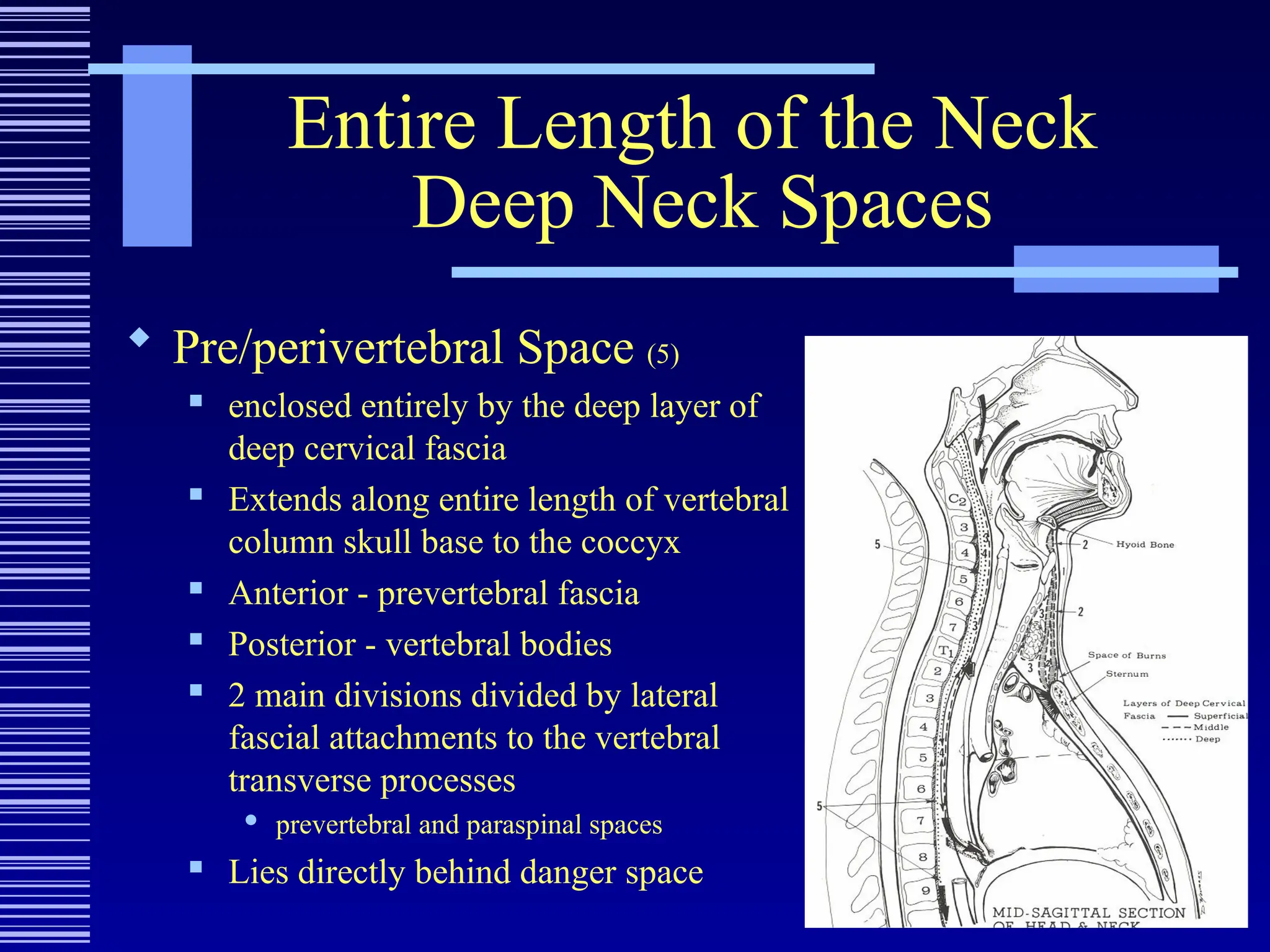
 Pre/perivertebral Space (5)
 enclosed entirely by the deep layer of
deep cervical fascia
 Extends along entire length of vertebral
column skull base to the coccyx
 Anterior - prevertebral fascia
 Posterior - vertebral bodies
 2 main divisions divided by lateral
fascial attachments to the vertebral
transverse processes
 prevertebral and paraspinal spaces
 Lies directly behind danger space
Entire Length of the Neck
Deep Neck Spaces
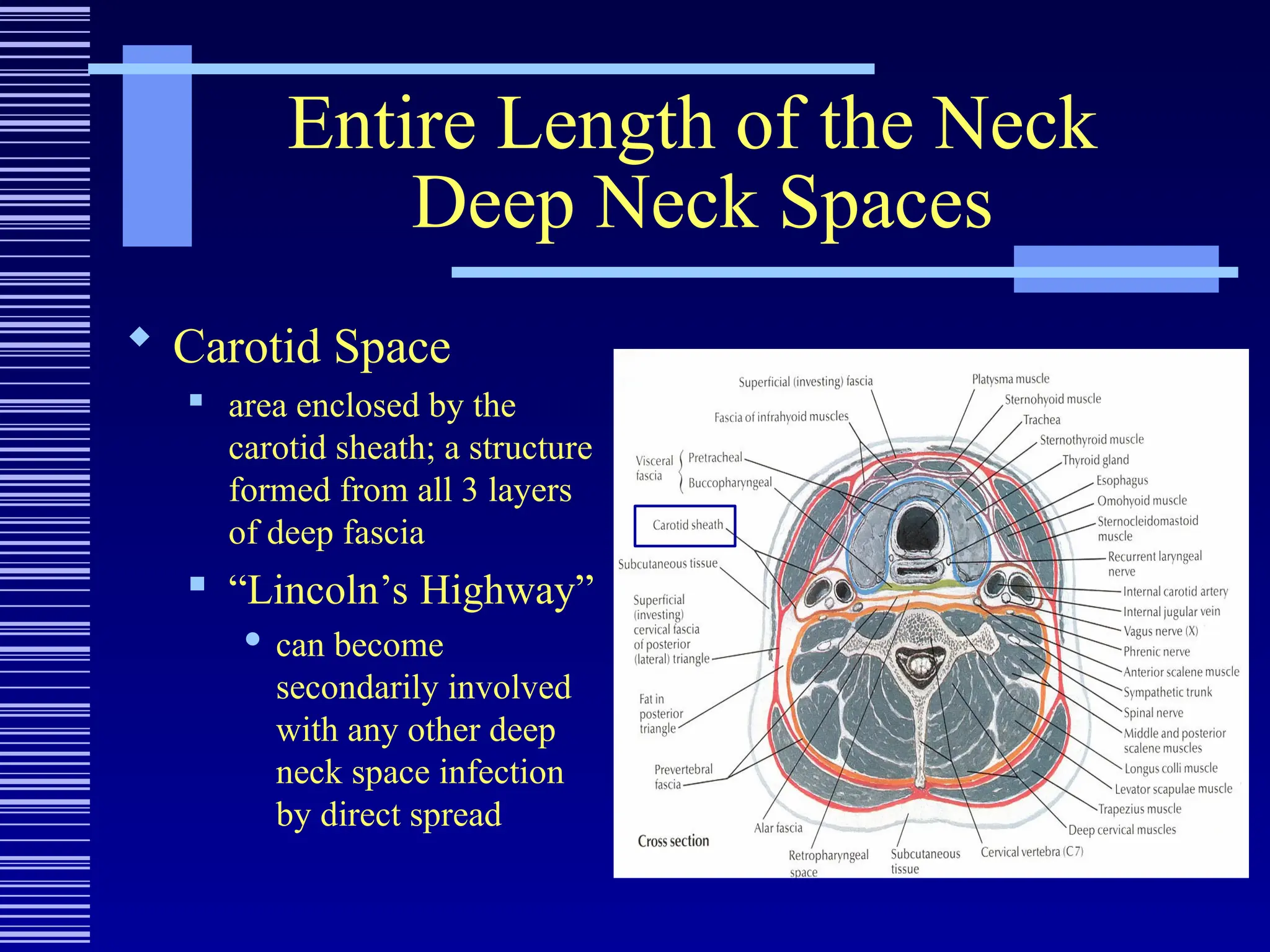
 Carotid Space
 area enclosed by the
carotid sheath; a structure
formed from all 3 layers
of deep fascia
 “Lincoln’s Highway”
 can become
secondarily involved
with any other deep
neck space infection
by direct spread
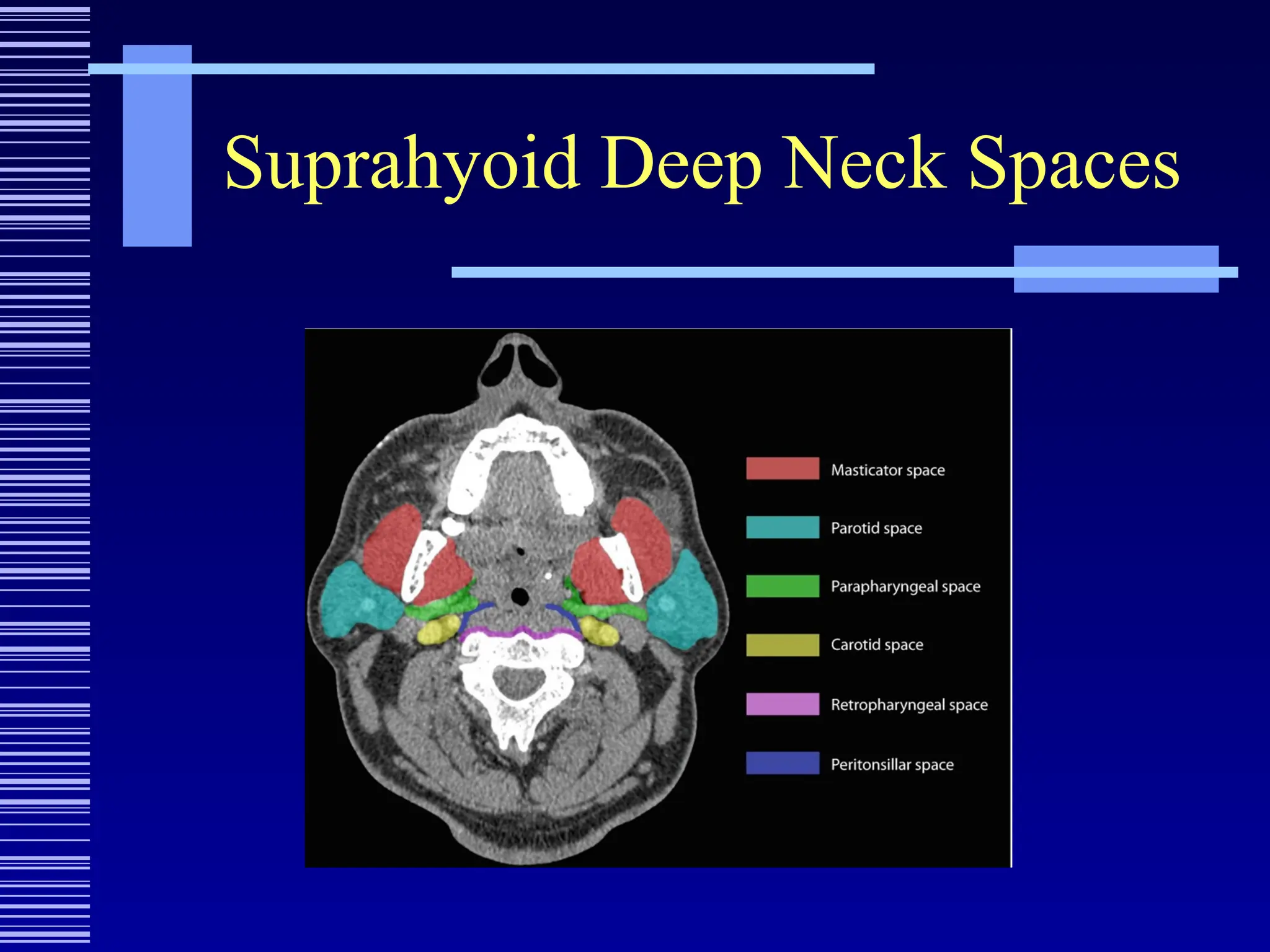
Suprahyoid Deep Neck Spaces
 Sublingual Space
 Submandibular Space
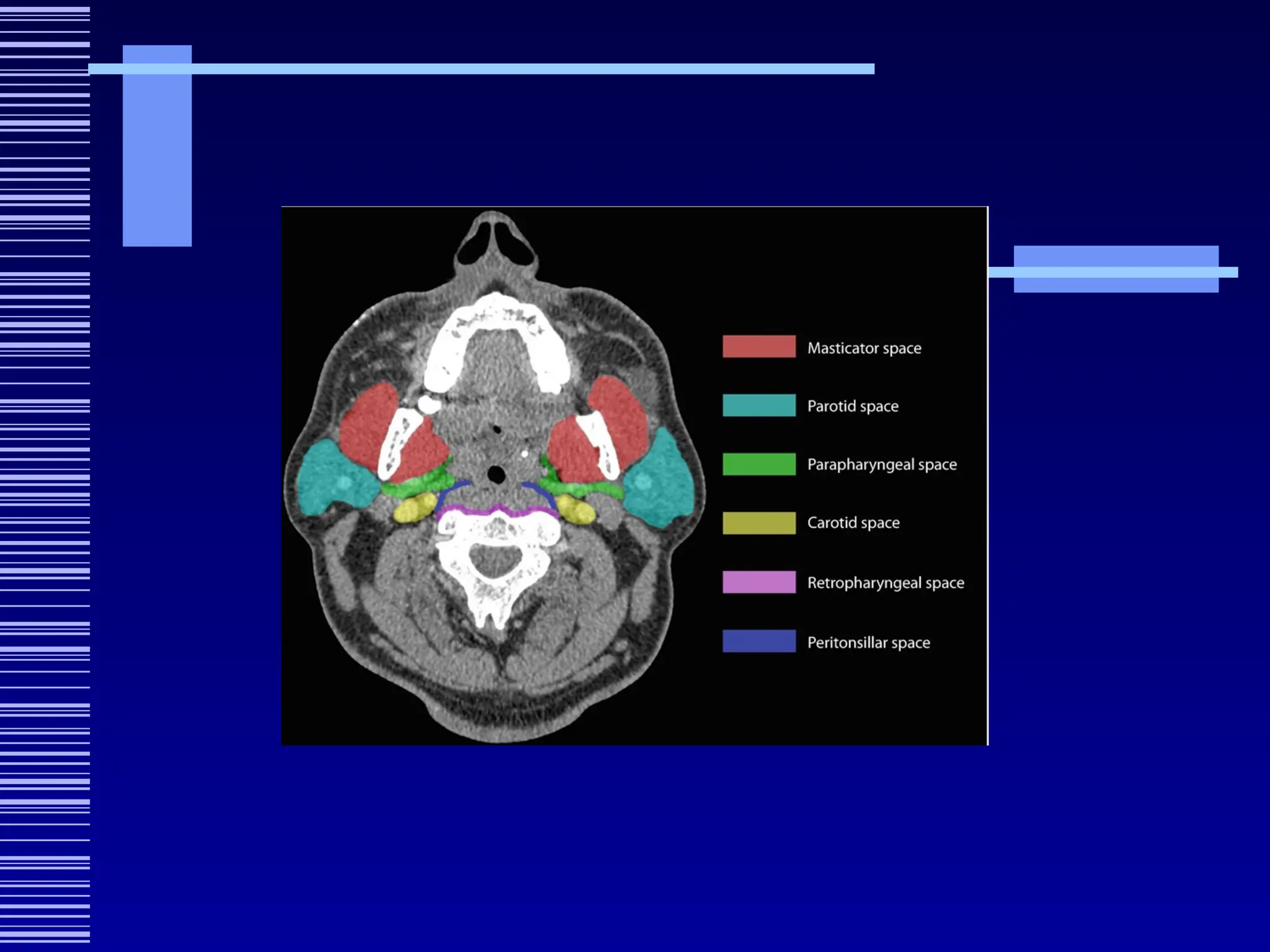
 Peritonsillar Space
 Parapharyngeal Space
 Pharyngeal Mucosa Space
 Masticator Space
 Parotid Space
Suprahyoid Deep Neck Spaces
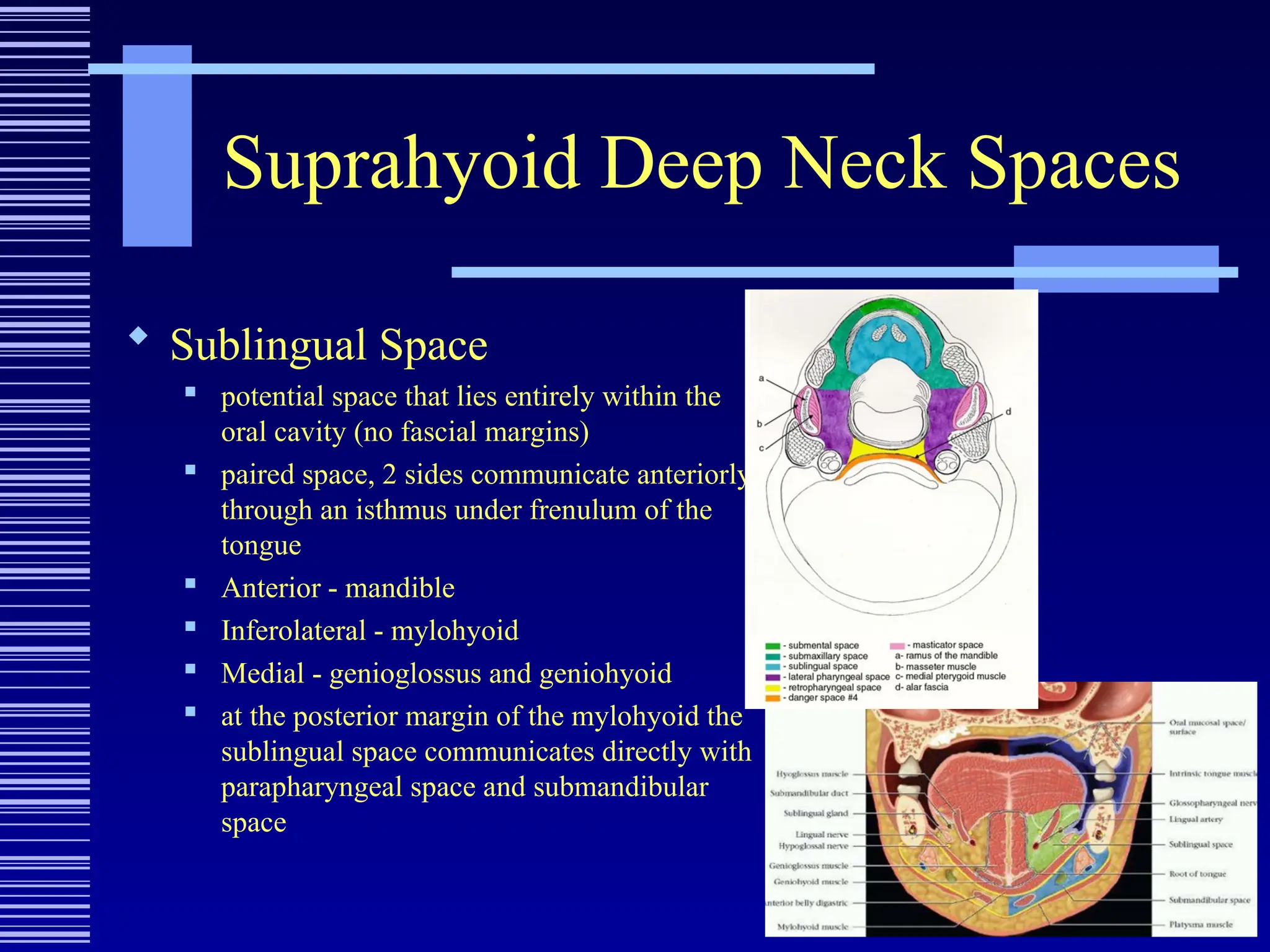
 Sublingual Space
 potential space that lies entirely within the
oral cavity (no fascial margins)

paired space, 2 sides communicate anteriorly
through an isthmus under frenulum of the
tongue

Anterior - mandible
 Inferolateral - mylohyoid

Medial - genioglossus and geniohyoid
 at the posterior margin of the mylohyoid the
sublingual space communicates directly with
parapharyngeal space and submandibular
space
Suprahyoid Deep Neck Spaces
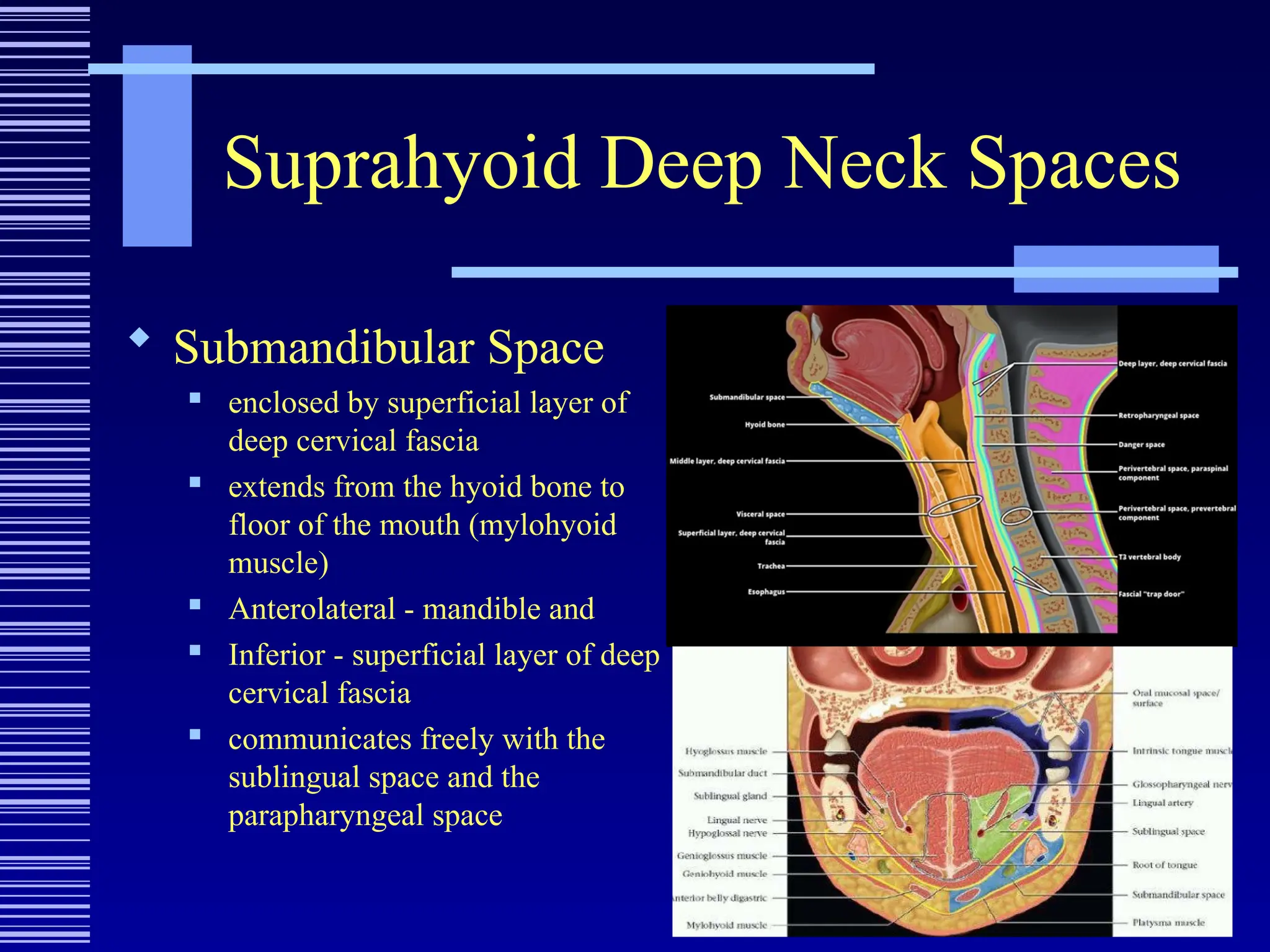
 Submandibular Space
 enclosed by superficial layer of
deep cervical fascia
 extends from the hyoid bone to
floor of the mouth (mylohyoid
muscle)
 Anterolateral - mandible and
 Inferior - superficial layer of deep
cervical fascia
 communicates freely with the
sublingual space and the
parapharyngeal space
Suprahyoid Deep Neck Spaces
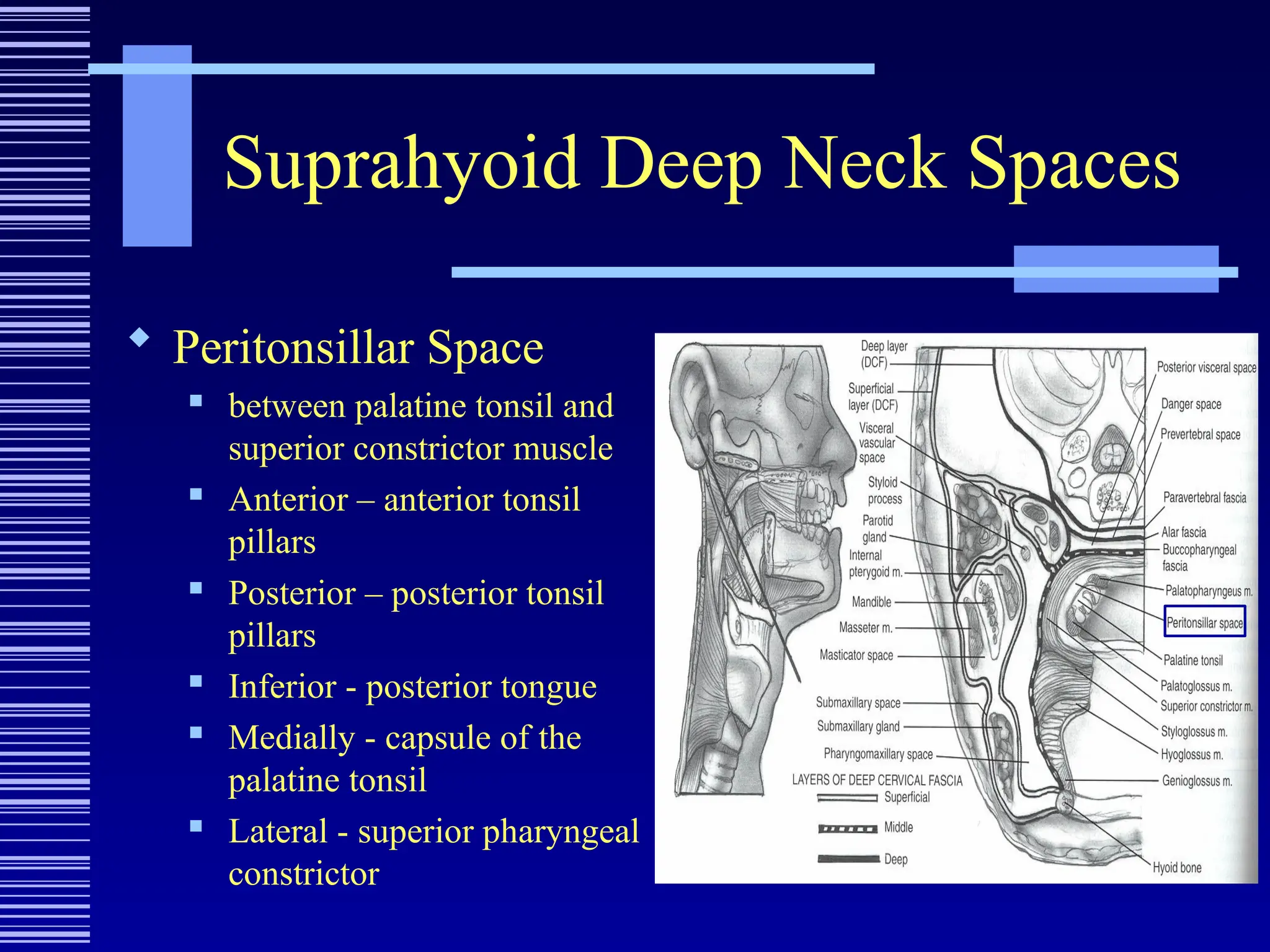
 Peritonsillar Space
 between palatine tonsil and
superior constrictor muscle
 Anterior – anterior tonsil
pillars
 Posterior – posterior tonsil
pillars
 Inferior - posterior tongue
 Medially - capsule of the
palatine tonsil
 Lateral - superior pharyngeal
constrictor
Suprahyoid Deep Neck Spaces
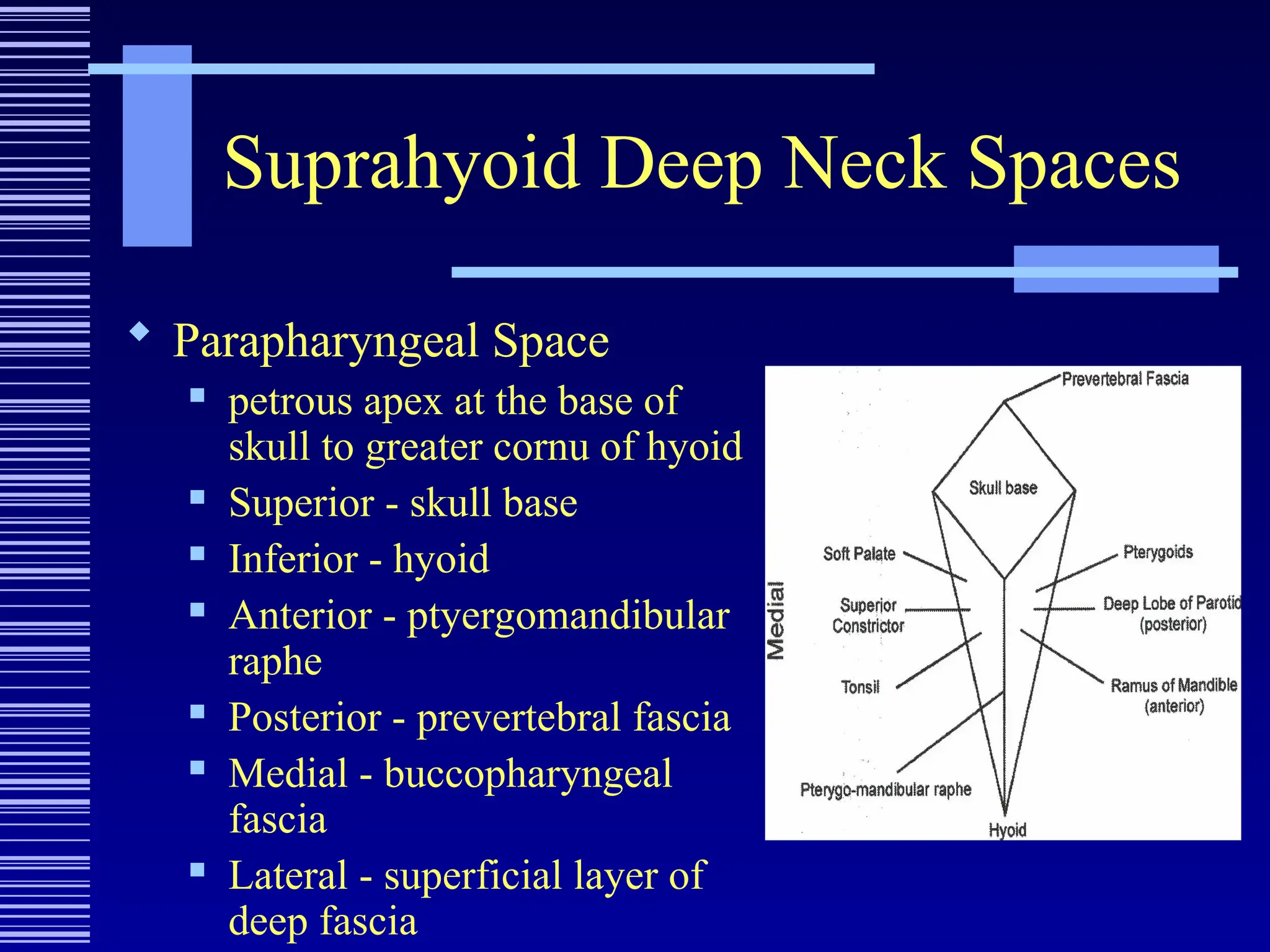
 Parapharyngeal Space
 petrous apex at the base of
skull to greater cornu of hyoid
 Superior - skull base
 Inferior - hyoid
 Anterior - ptyergomandibular
raphe
 Posterior - prevertebral fascia
 Medial - buccopharyngeal
fascia
 Lateral - superficial layer of
deep fascia
Suprahyoid Deep Neck Spaces
 Parapharyngeal Space
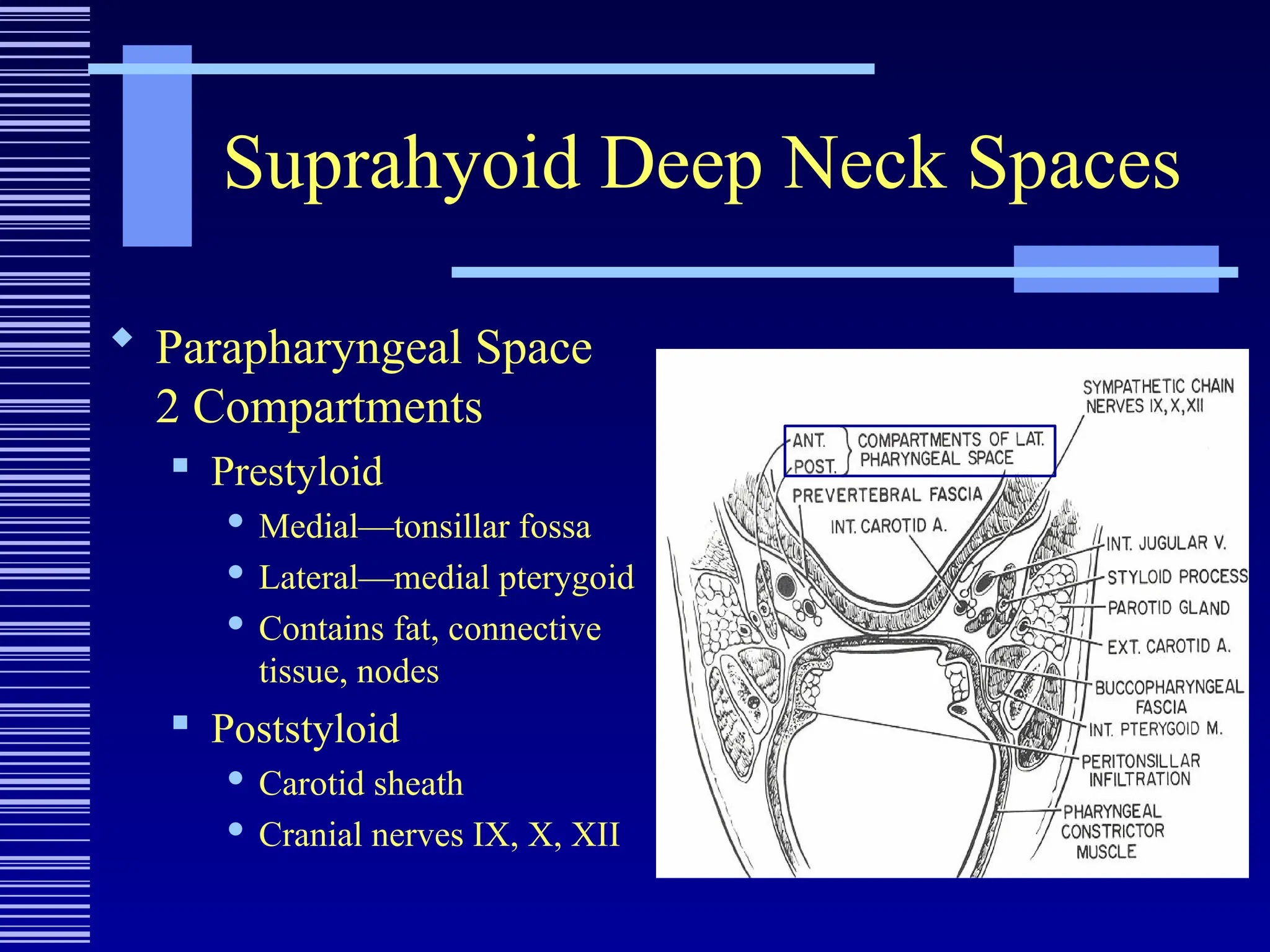
2 Compartments
 Prestyloid
 Medial—tonsillar fossa
 Lateral—medial pterygoid
 Contains fat, connective
tissue, nodes
 Poststyloid
 Carotid sheath
 Cranial nerves IX, X, XII
Suprahyoid Deep Neck Spaces
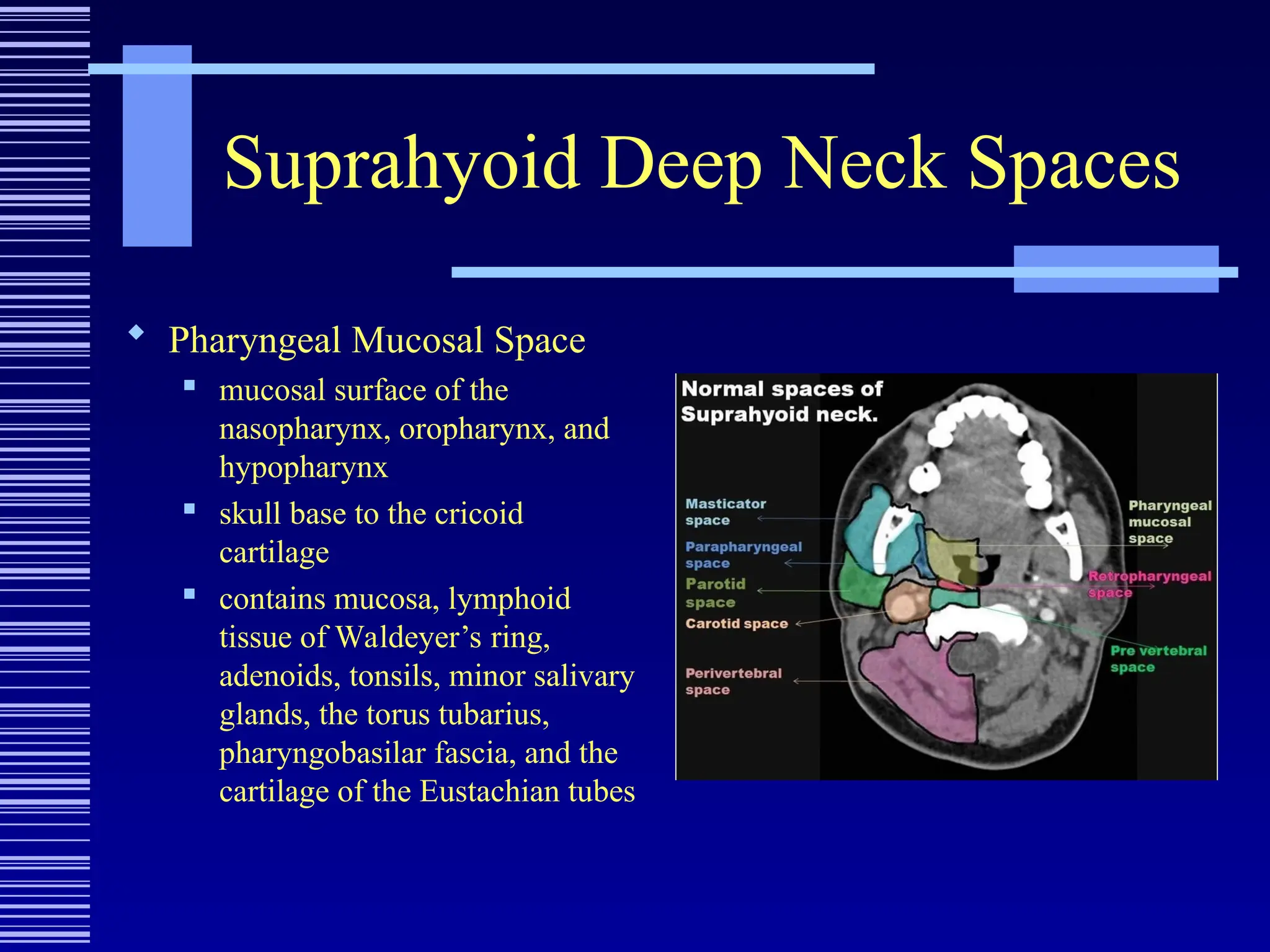
 Pharyngeal Mucosal Space
 mucosal surface of the
nasopharynx, oropharynx, and
hypopharynx
 skull base to the cricoid
cartilage
 contains mucosa, lymphoid
tissue of Waldeyer’s ring,
adenoids, tonsils, minor salivary
glands, the torus tubarius,
pharyngobasilar fascia, and the
cartilage of the Eustachian tubes
Suprahyoid Deep Neck Spaces
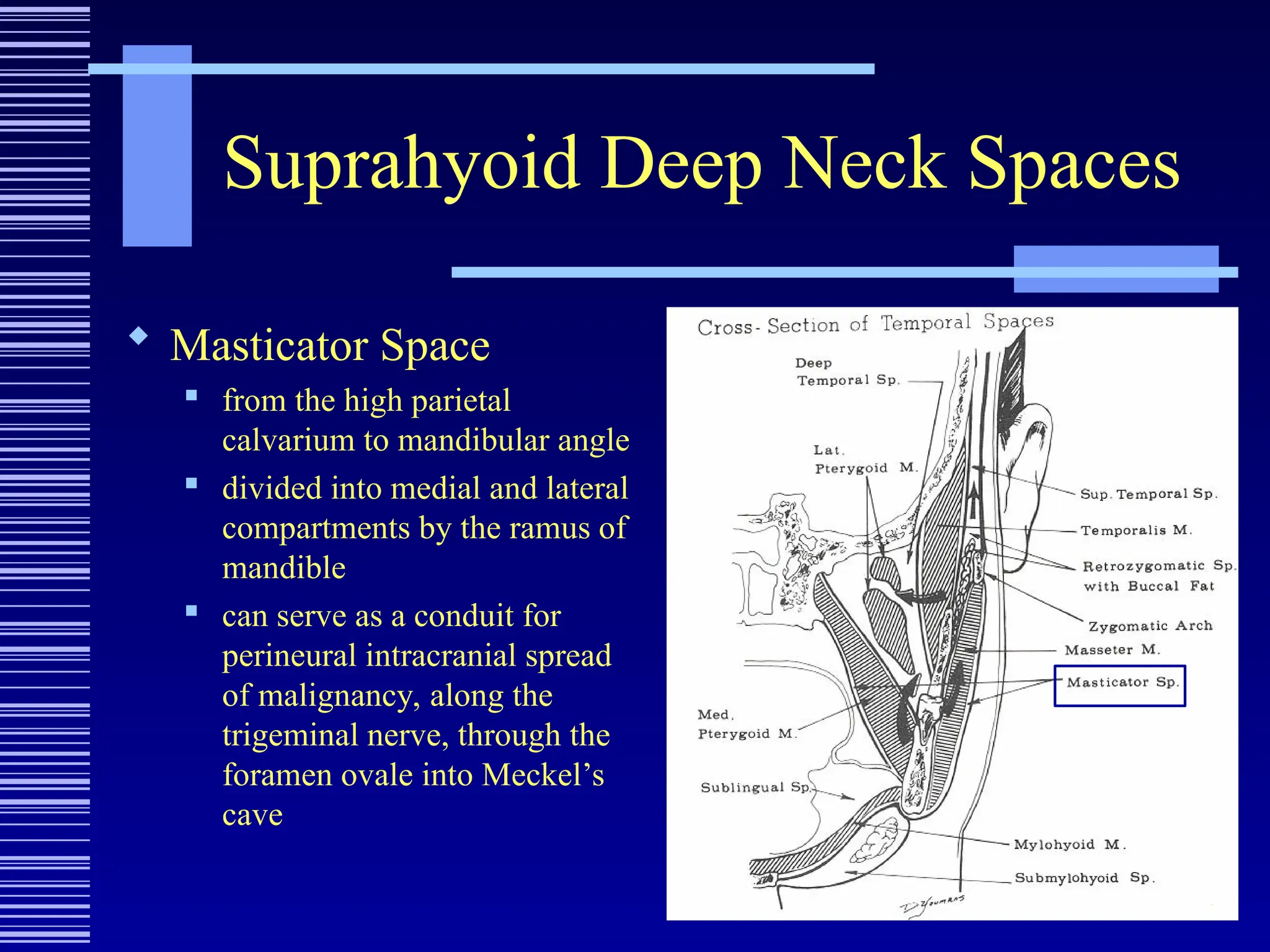
 Masticator Space

from the high parietal
calvarium to mandibular angle

divided into medial and lateral
compartments by the ramus of
mandible
 can serve as a conduit for
perineural intracranial spread
of malignancy, along the
trigeminal nerve, through the
foramen ovale into Meckel’s
cave
Suprahyoid Neck Spaces
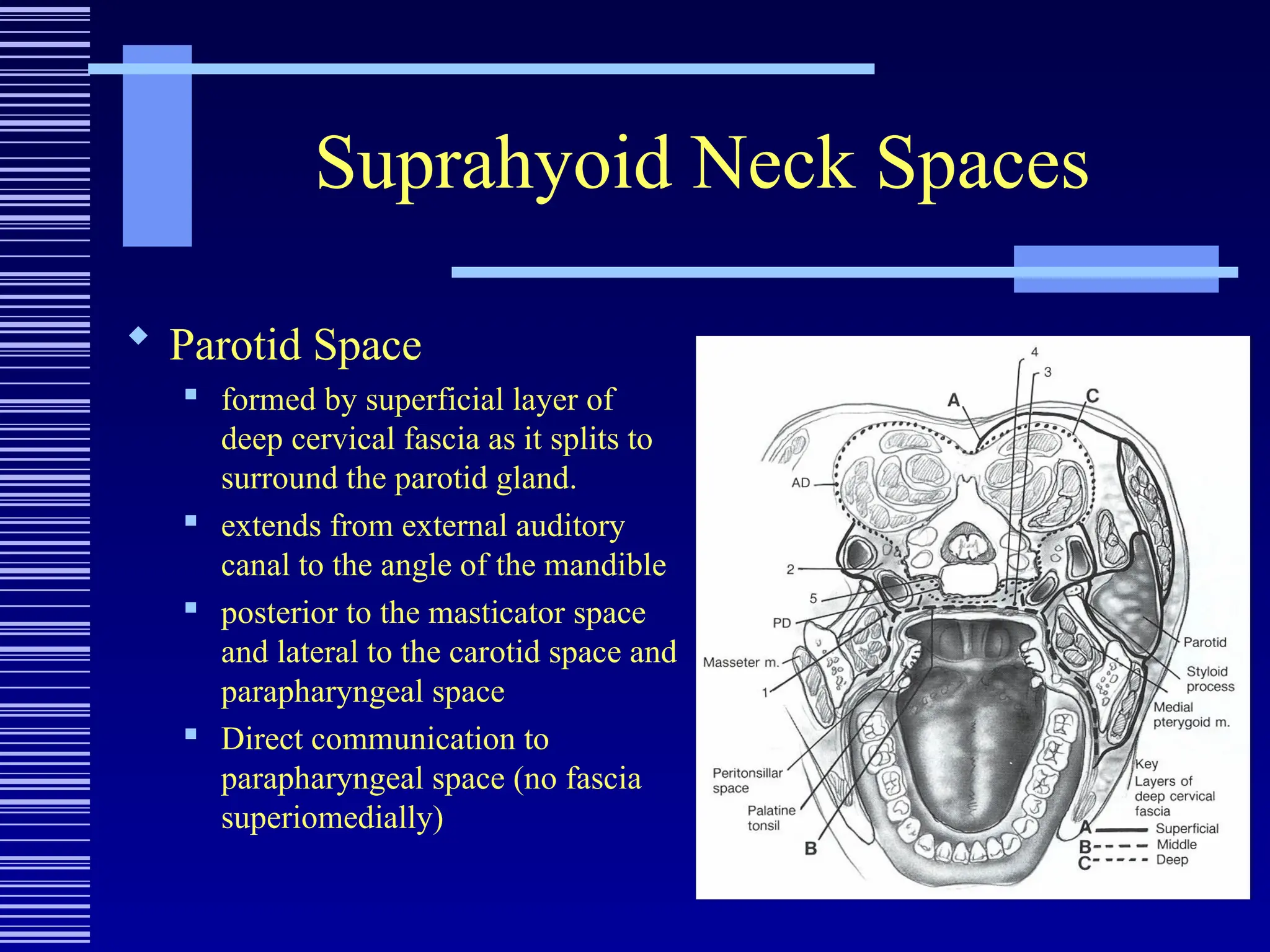
 Parotid Space

formed by superficial layer of
deep cervical fascia as it splits to
surround the parotid gland.
 extends from external auditory
canal to the angle of the mandible
 posterior to the masticator space
and lateral to the carotid space and
parapharyngeal space
 Direct communication to
parapharyngeal space (no fascia
superiomedially)
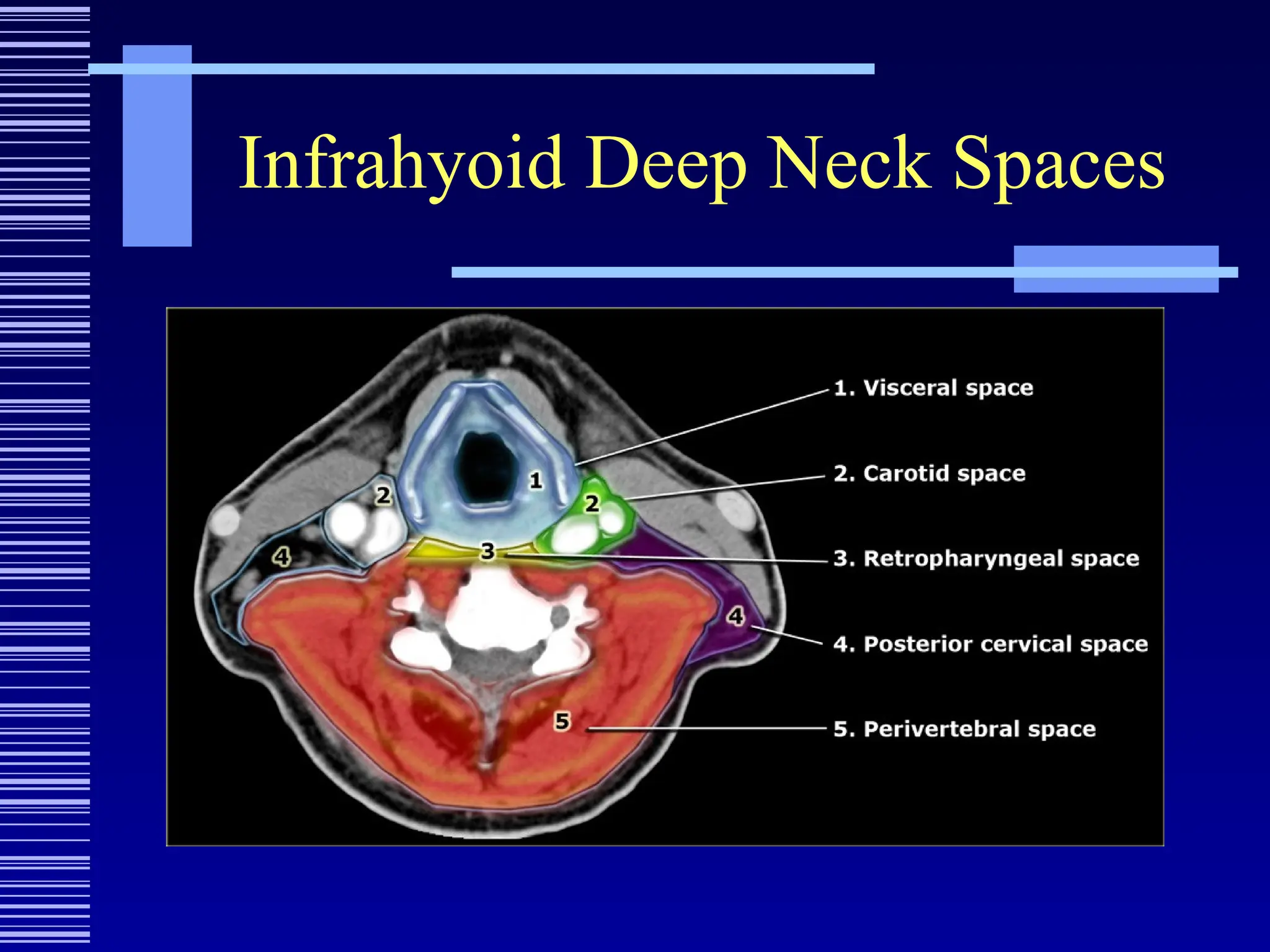
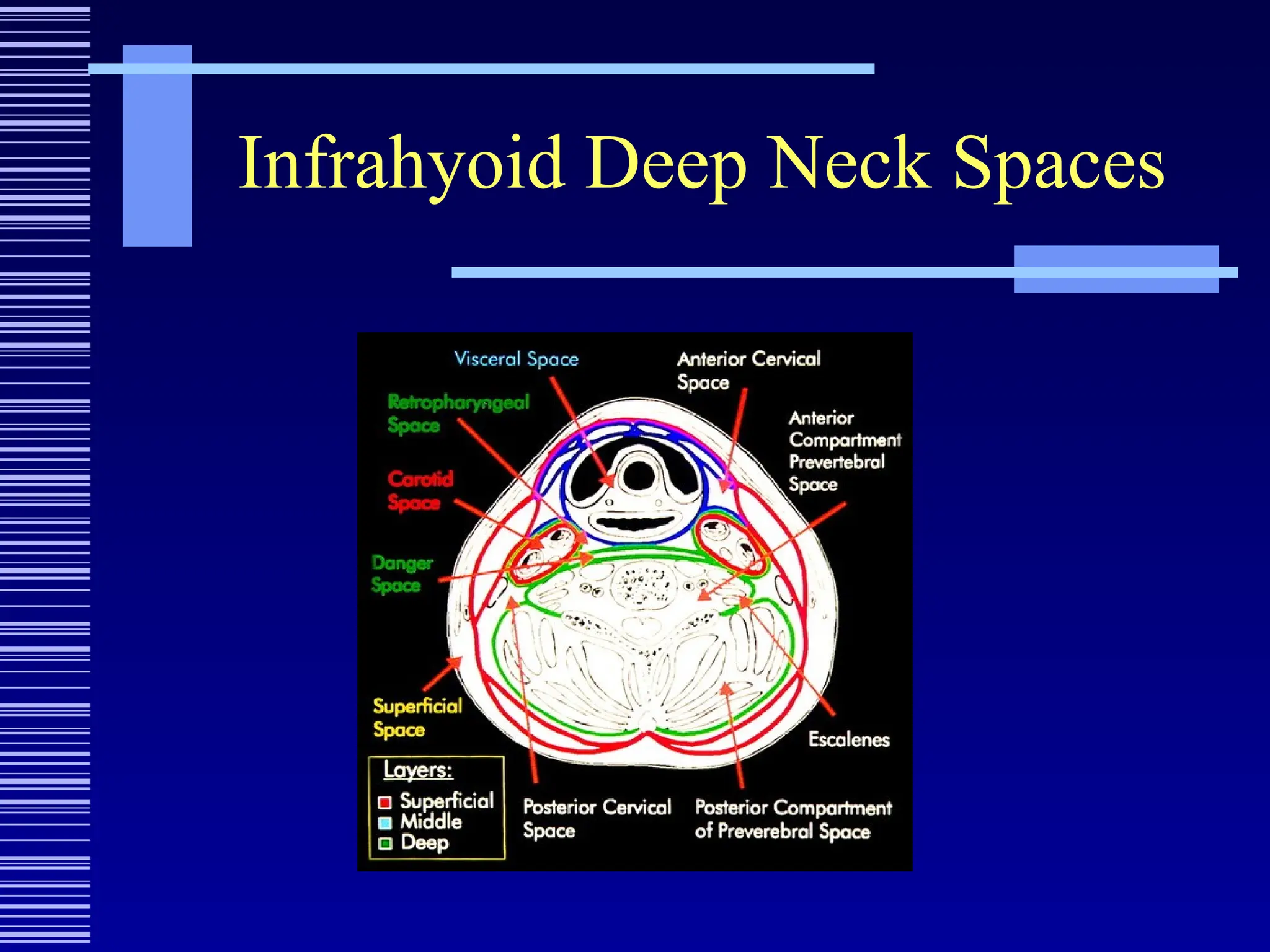
Infrahyoid Deep Neck Spaces
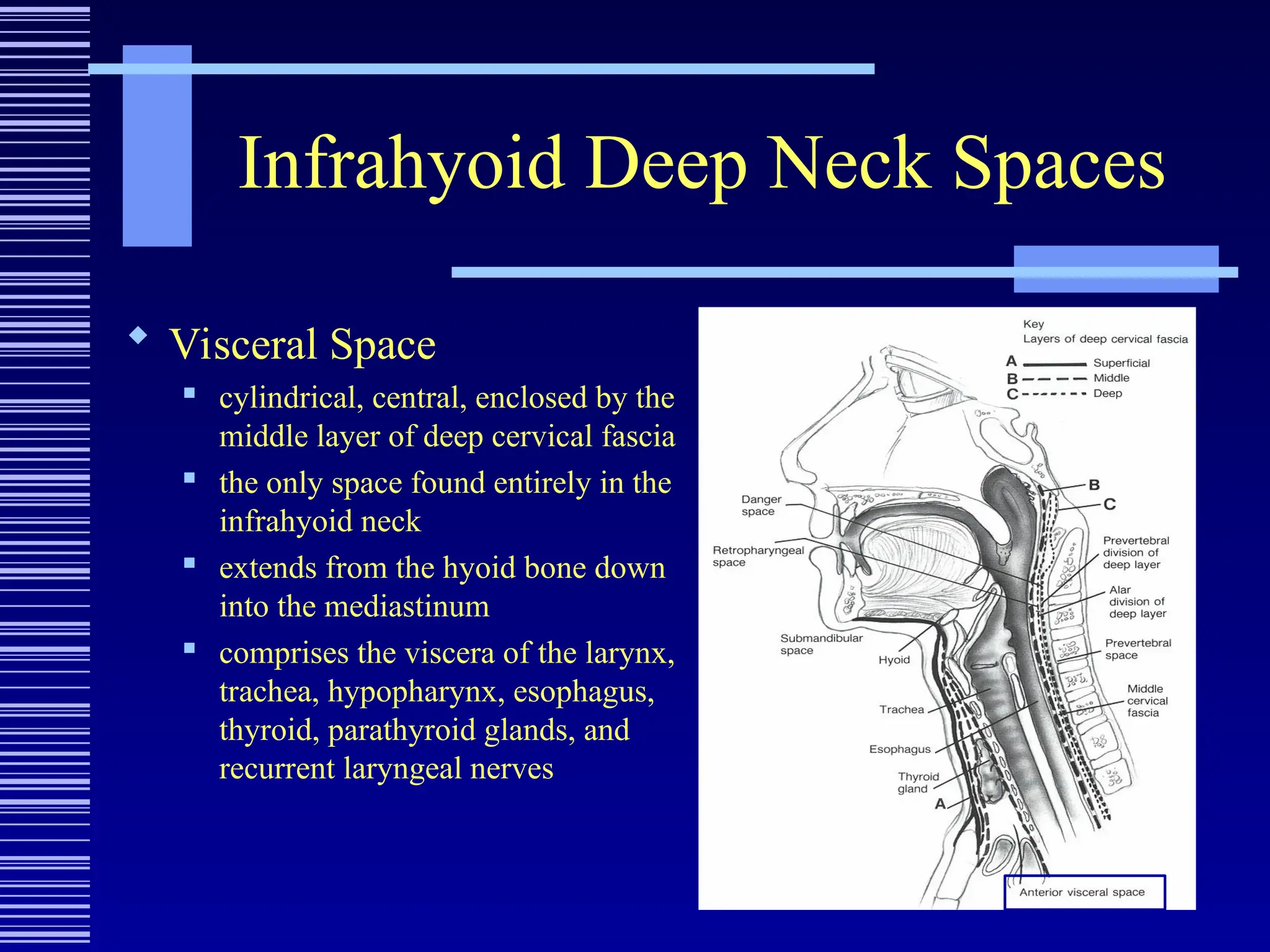
 Visceral Space
 cylindrical, central, enclosed by the
middle layer of deep cervical fascia
 the only space found entirely in the
infrahyoid neck
 extends from the hyoid bone down
into the mediastinum
 comprises the viscera of the larynx,
trachea, hypopharynx, esophagus,
thyroid, parathyroid glands, and
recurrent laryngeal nerves
Infrahyoid Deep Neck Spaces
Deep Neck Space Infections
 Presentation/Origin of Infection
 Microbiology
 Imaging
 Treatment
 Complications
 Special Consideration
Presentation/Origin
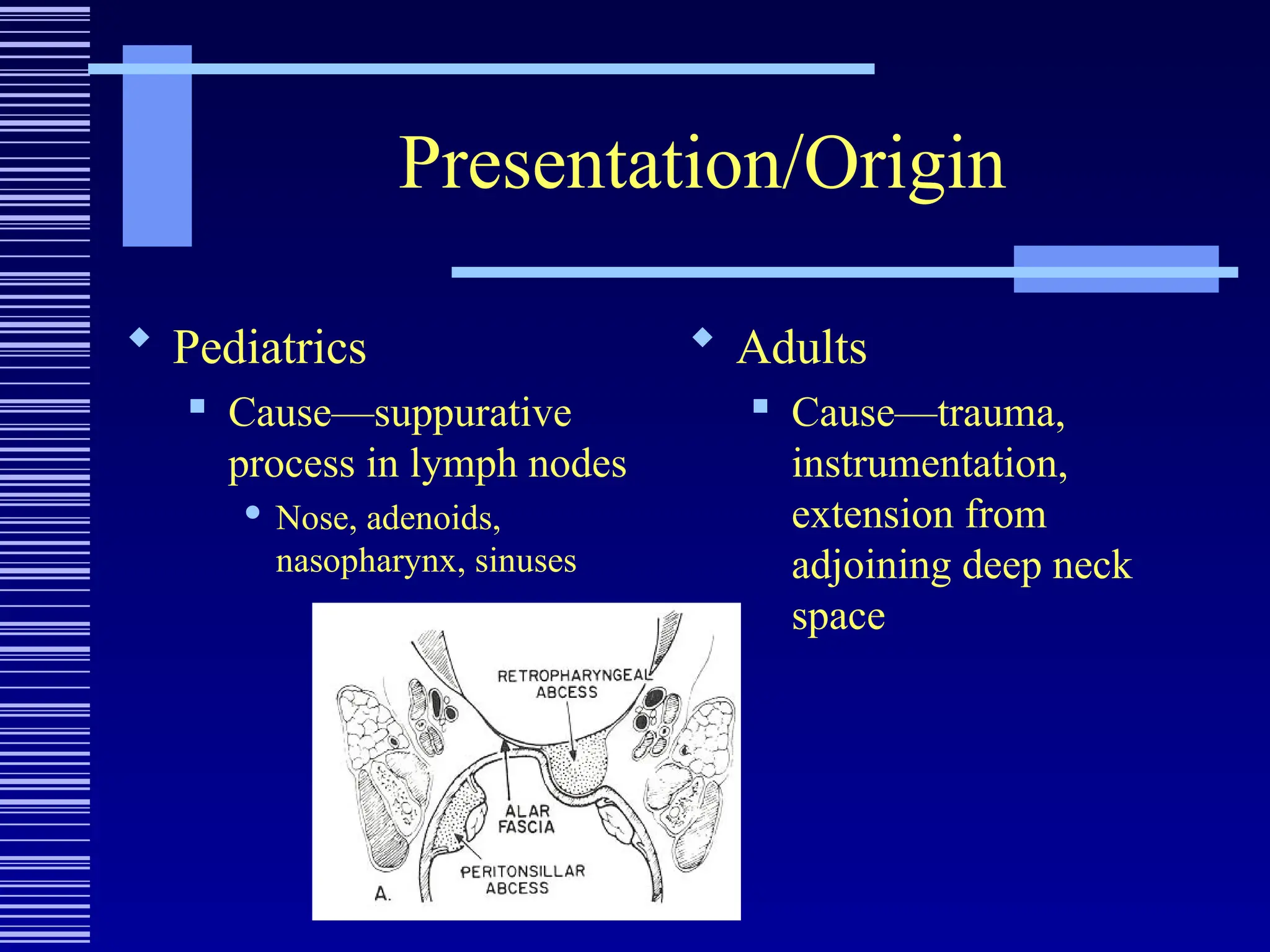
 Retropharyngeal Abscess
 50% occur in patients 6-12 months of age
 96% occur before 6 years of age
 Children--fever, irritability, lymphadenopathy,
torticollis, poor oral intake, sore throat, drooling
 Adults--pain, dysphagia, anorexia, snoring, nasal
obstruction, nasal regurgitation
 Dyspnea and respiratory distress
 Lateral posterior oropharyngeal wall bulge
Presentation/Origin
 Pediatrics
 Cause—suppurative
process in lymph nodes
 Nose, adenoids,
nasopharynx, sinuses
 Adults
 Cause—trauma,
instrumentation,
extension from
adjoining deep neck
space
Presentation/Origin
 Danger Space
 Presentation and exam nearly identical to
retropharyngeal space infection
 Cause—extension from retropharyngeal,
prevertebral or parapharyngeal space
Presentation/Origin
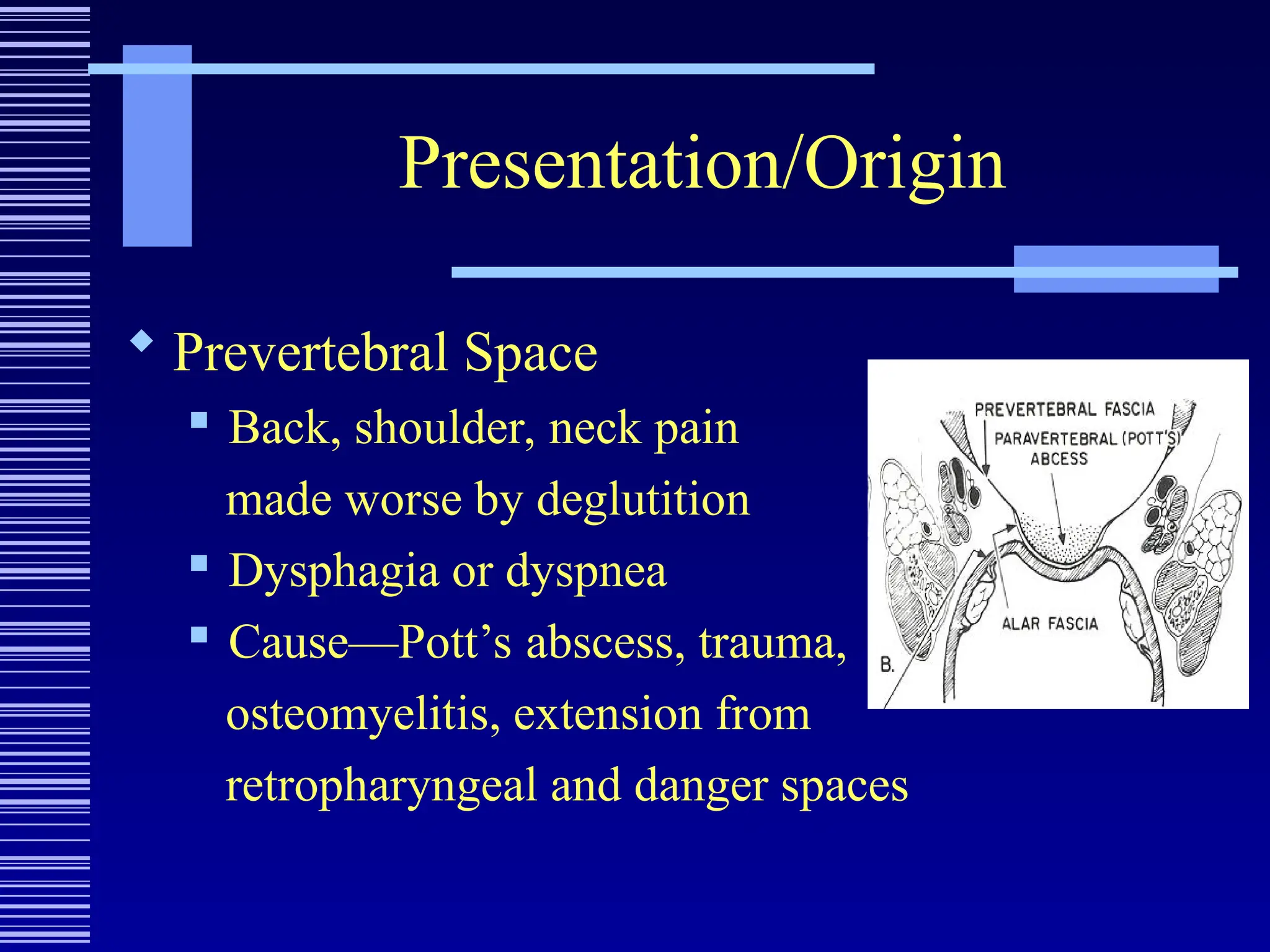
 Prevertebral Space
 Back, shoulder, neck pain
made worse by deglutition
 Dysphagia or dyspnea
 Cause—Pott’s abscess, trauma,
osteomyelitis, extension from
retropharyngeal and danger spaces
Presentation/Origin
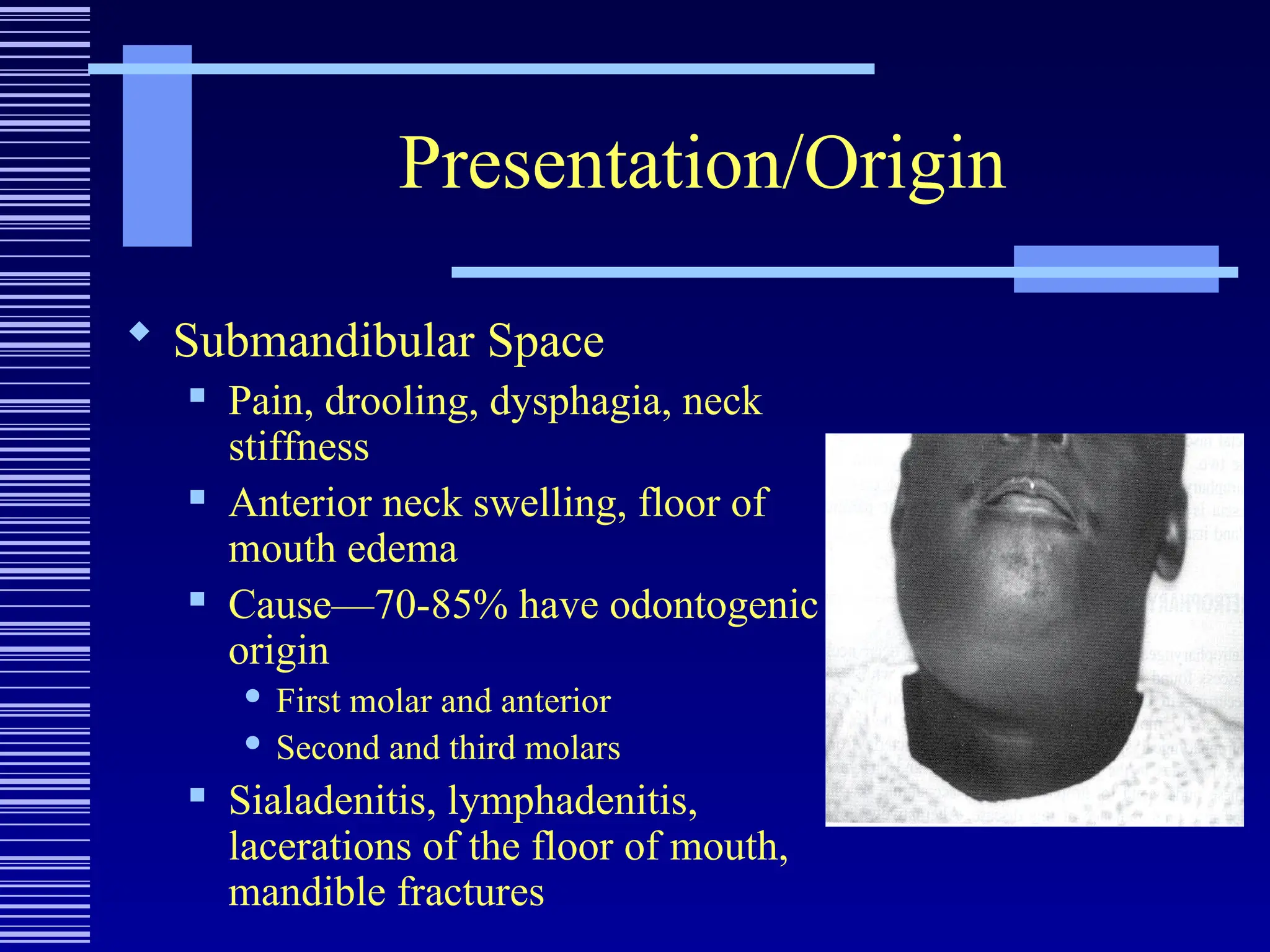
 Submandibular Space
 Pain, drooling, dysphagia, neck
stiffness
 Anterior neck swelling, floor of
mouth edema
 Cause—70-85% have odontogenic
origin
 First molar and anterior
 Second and third molars
 Sialadenitis, lymphadenitis,
lacerations of the floor of mouth,
mandible fractures
Presentation/Origin
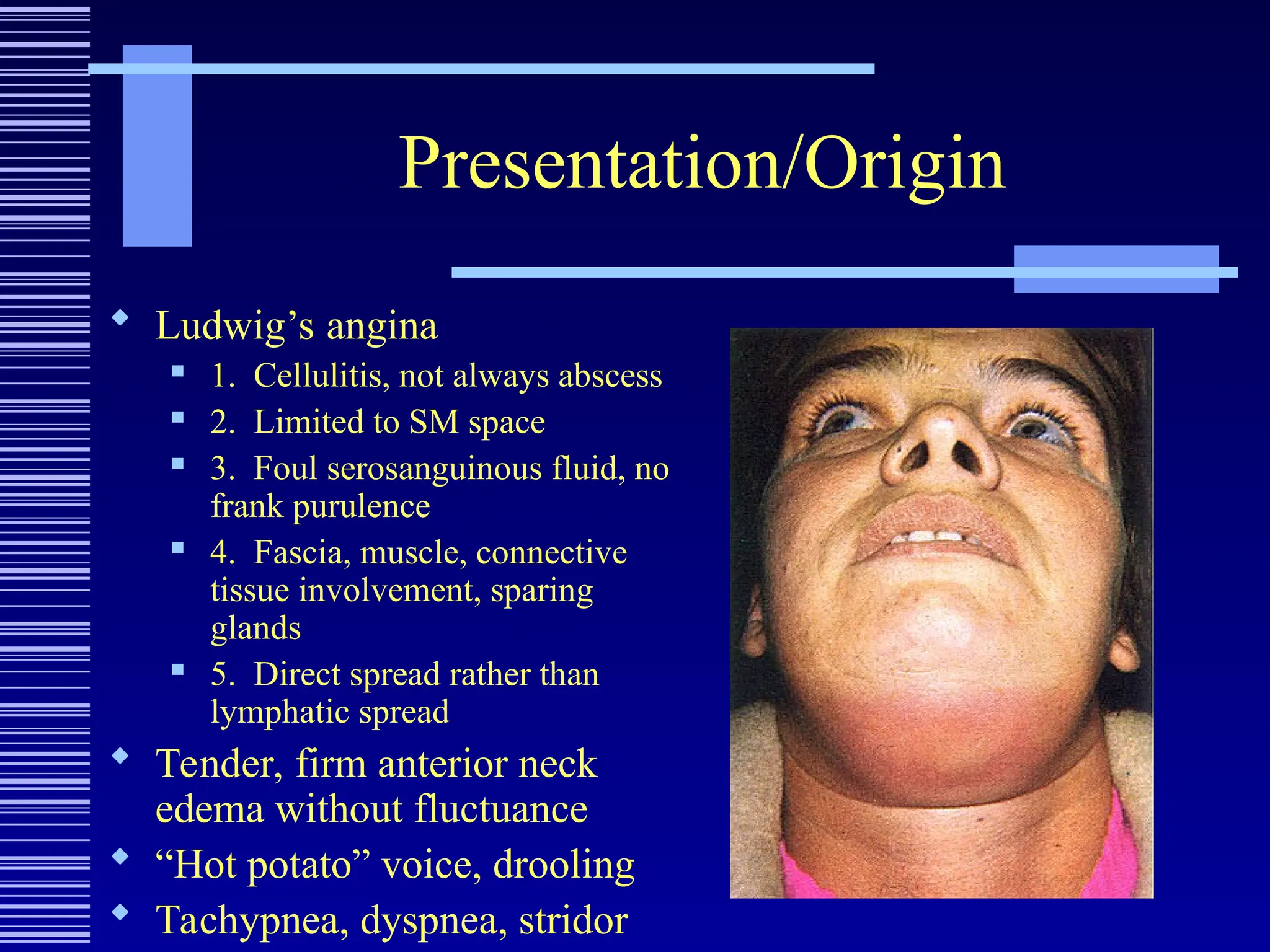
 Ludwig’s angina
 1. Cellulitis, not always abscess
 2. Limited to SM space
 3. Foul serosanguinous fluid, no
frank purulence
 4. Fascia, muscle, connective
tissue involvement, sparing
glands
 5. Direct spread rather than
lymphatic spread
 Tender, firm anterior neck
edema without fluctuance
 “Hot potato” voice, drooling
 Tachypnea, dyspnea, stridor
Presentation/Origin
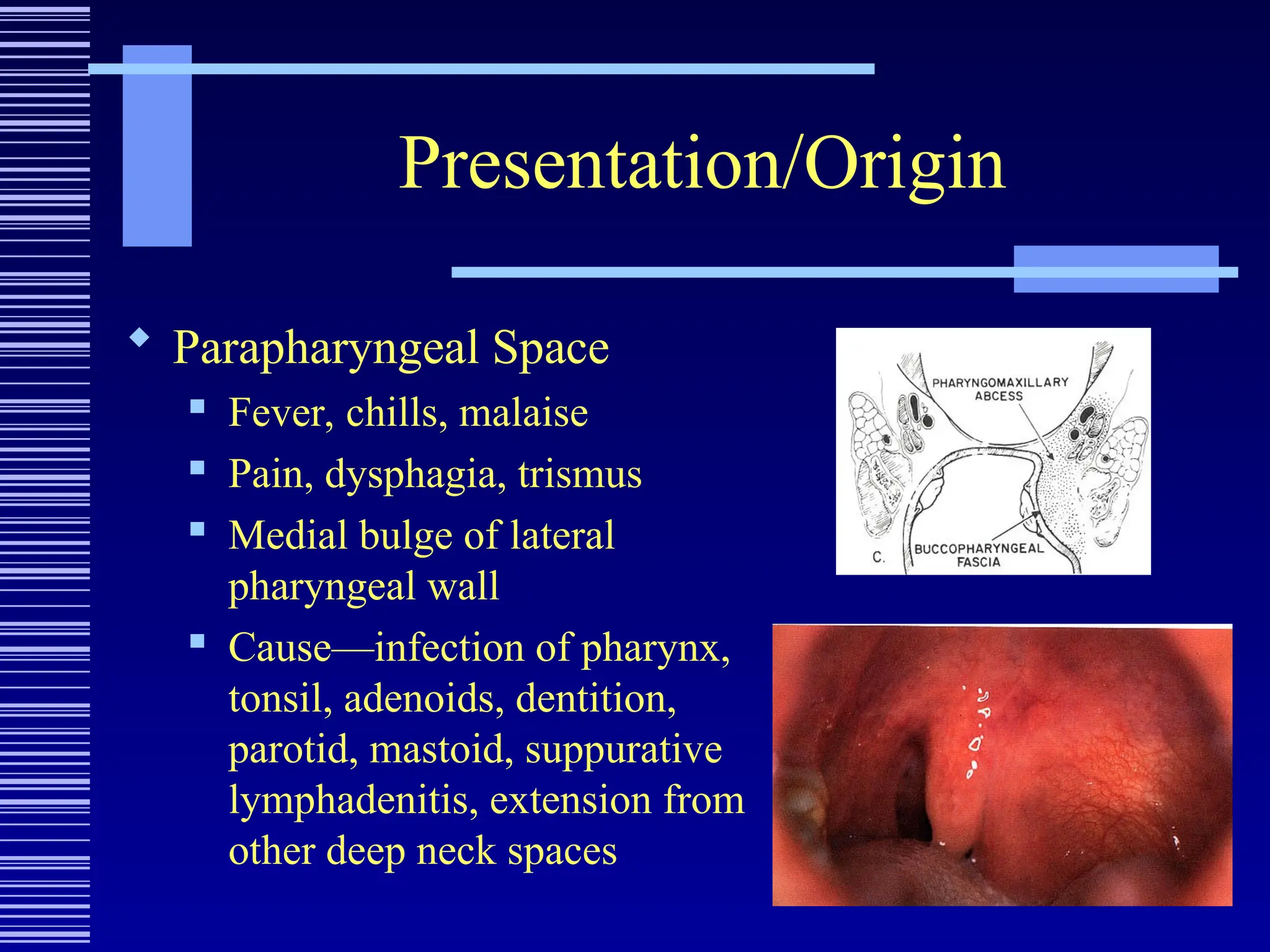
 Parapharyngeal Space
 Fever, chills, malaise
 Pain, dysphagia, trismus
 Medial bulge of lateral
pharyngeal wall
 Cause—infection of pharynx,
tonsil, adenoids, dentition,
parotid, mastoid, suppurative
lymphadenitis, extension from
other deep neck spaces
Presentation/Origin
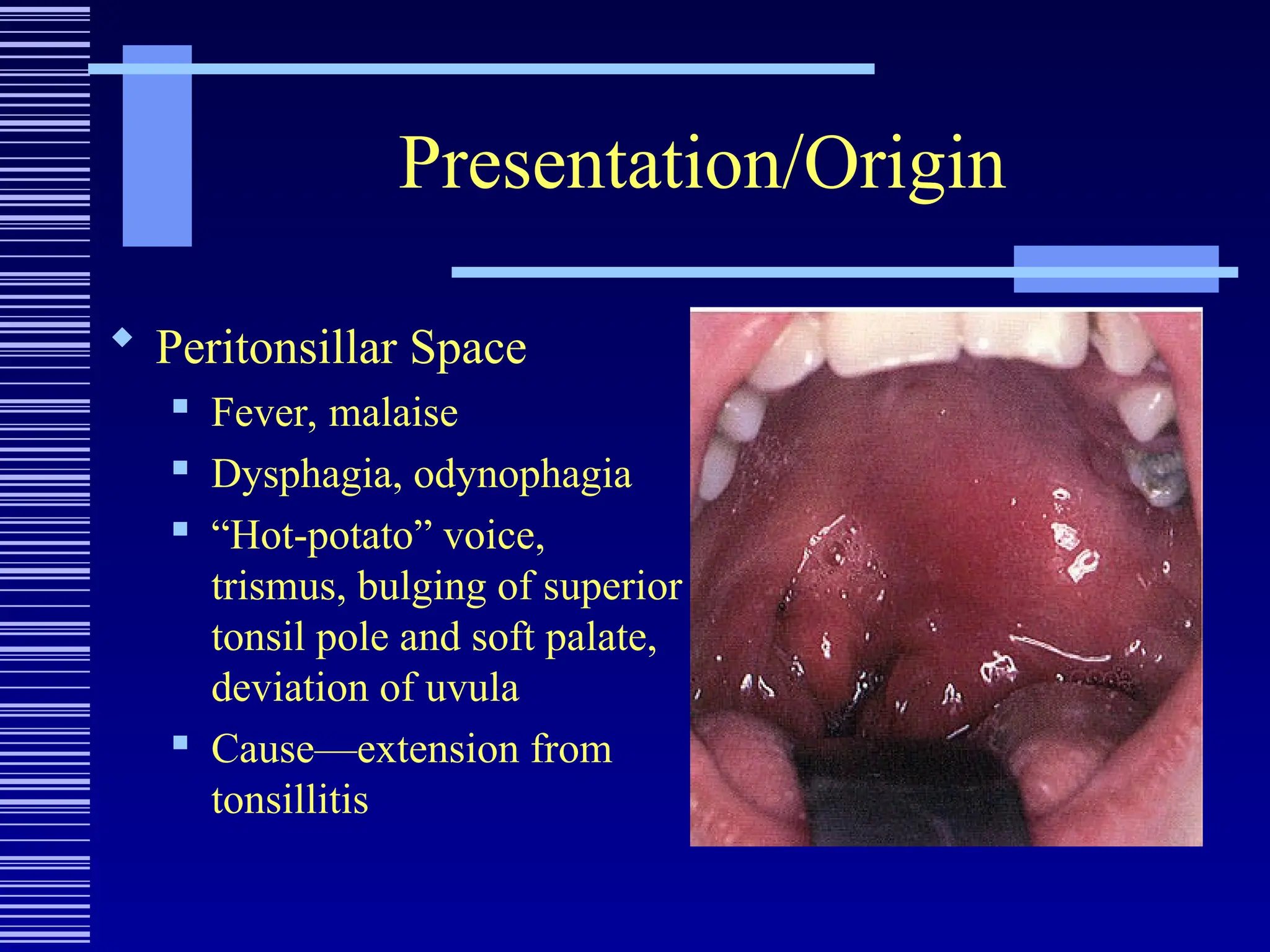
 Peritonsillar Space
 Fever, malaise
 Dysphagia, odynophagia
 “Hot-potato” voice,
trismus, bulging of superior
tonsil pole and soft palate,
deviation of uvula
 Cause—extension from
tonsillitis
Presentation/Origin
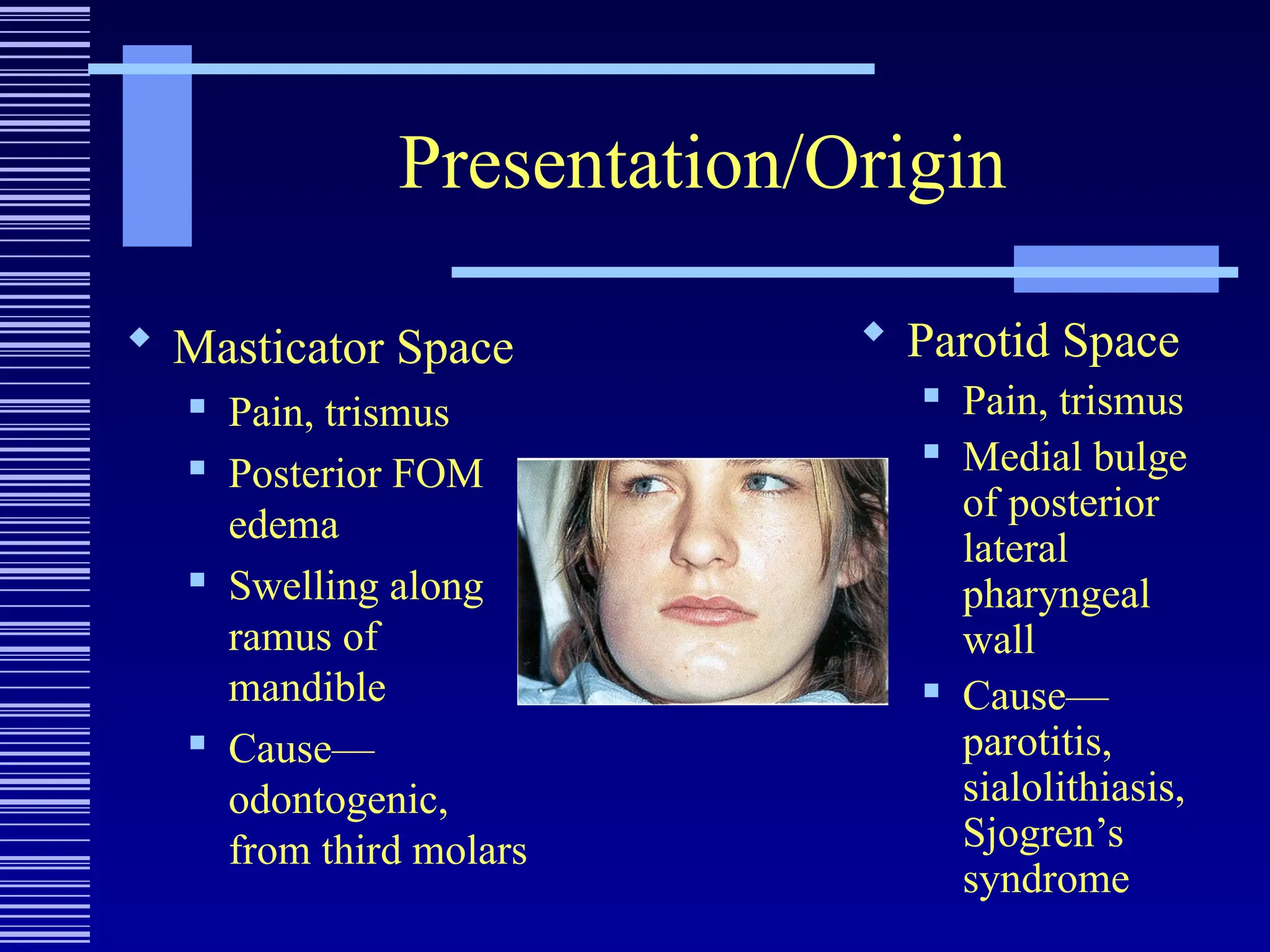
 Masticator Space
 Pain, trismus
 Posterior FOM
edema
 Swelling along
ramus of
mandible
 Cause—
odontogenic,
from third molars
 Parotid Space
 Pain, trismus
 Medial bulge
of posterior
lateral
pharyngeal
wall
 Cause—
parotitis,
sialolithiasis,
Sjogren’s
syndrome
Presentation/Origin
 Visceral Space
 Hoarseness, dyspnea, dysphagia, odynophagia
 Erythema, edema of hypopharynx, may extend to
include glottis and supraglottis
 Anterior neck edema, pain, erythema, crepitus
 Cause—foreign body, instrumentation, extension
of infection in thyroid
Microbiology
 Preantibiotic era—S.aureus
 Currently—aerobic Strep species and non-strep
anaerobes
 Gram-negatives uncommon
 Almost always polymicrobial
 Remember resistance
Imaging
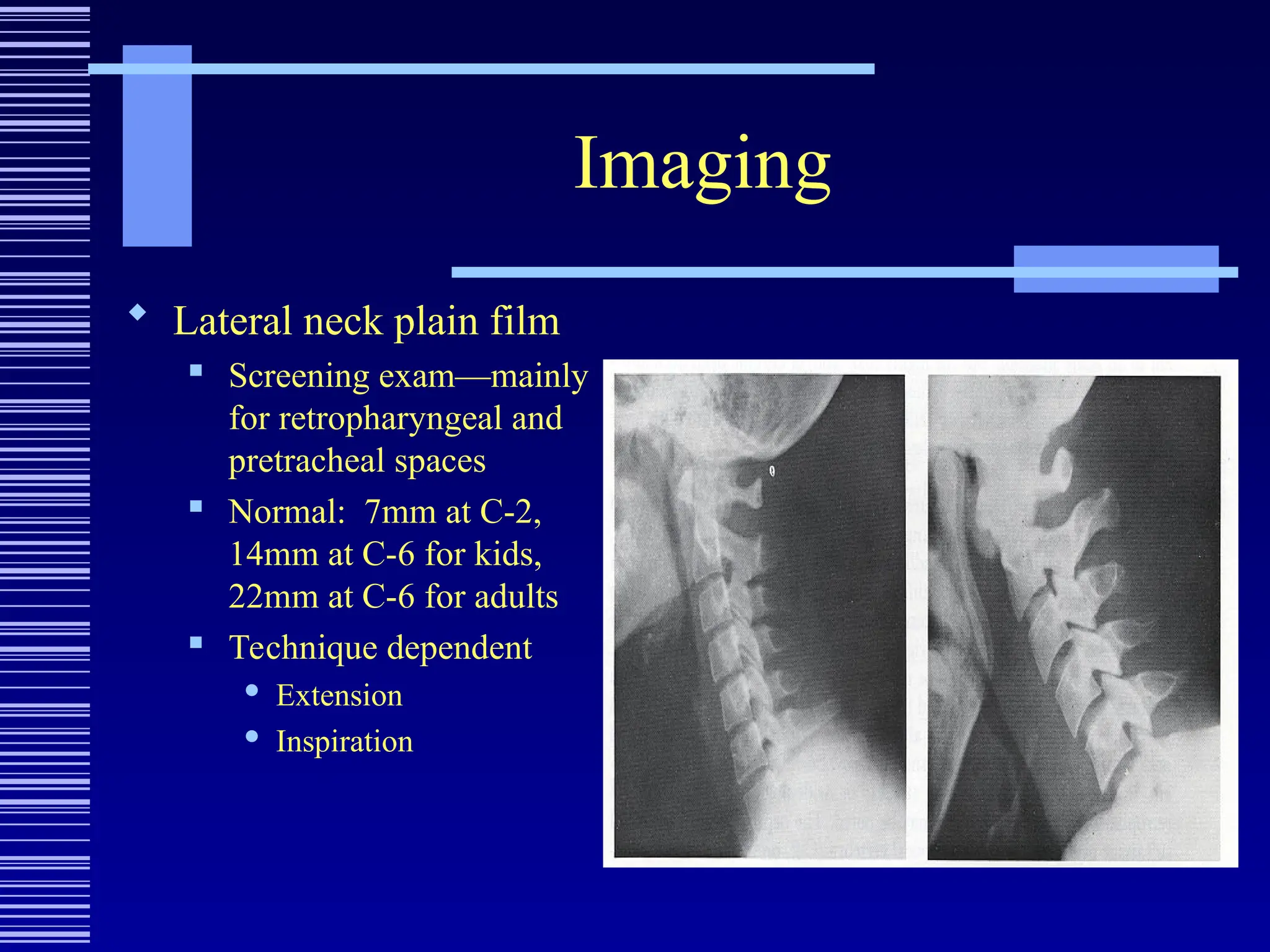
 Lateral neck plain film
 Screening exam—mainly
for retropharyngeal and
pretracheal spaces
 Normal: 7mm at C-2,
14mm at C-6 for kids,
22mm at C-6 for adults
 Technique dependent
 Extension
 Inspiration
Imaging
 High-resolution Ultrasound
 Advantages
 Avoids radiation
 Portable
 Disadvantages
 Not widely accepted
 Operator dependent
 Inferior anatomic detail
 Uses
 Follow infection during therapy
 Image guided aspiration
Imaging
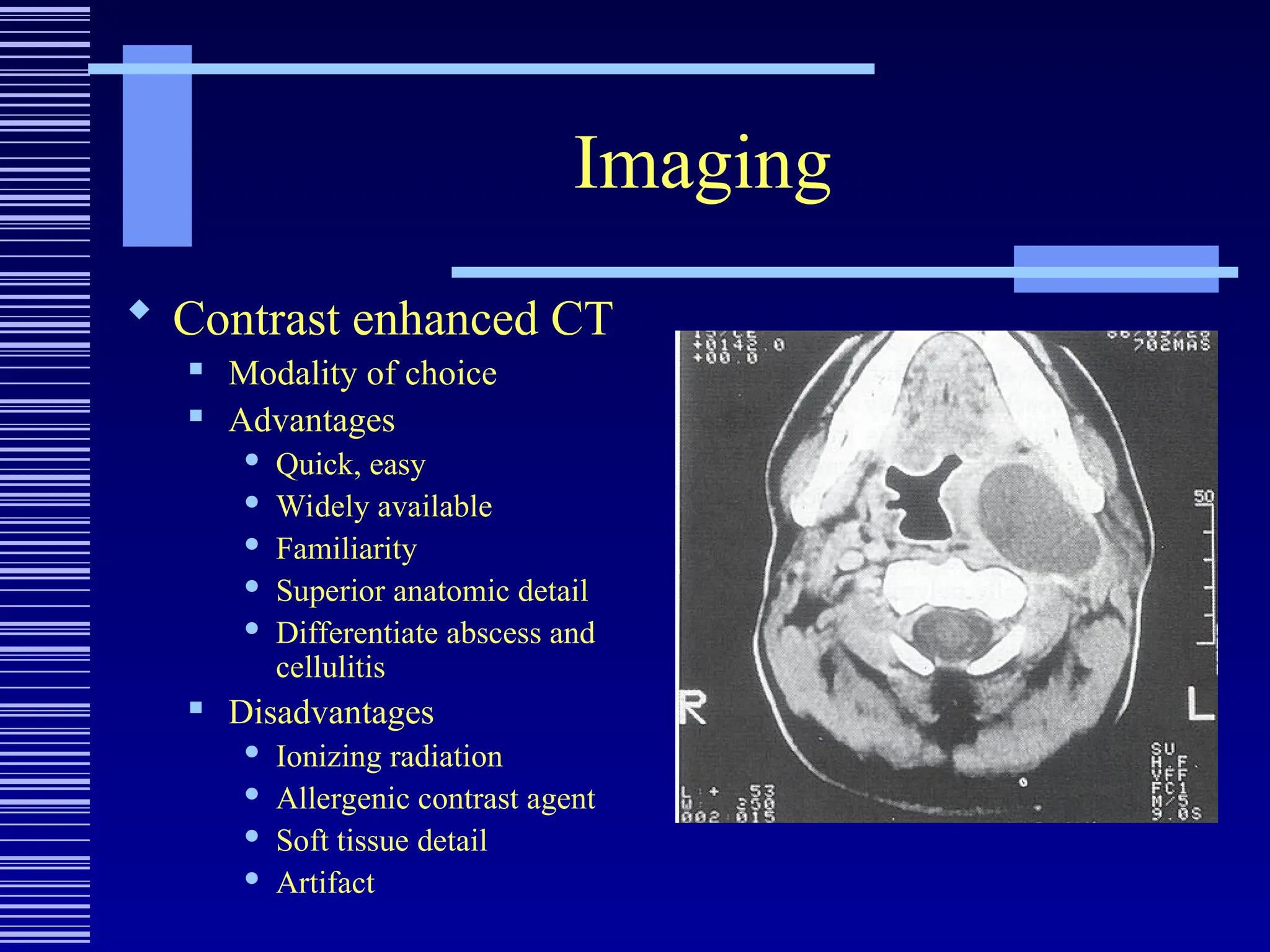
 Contrast enhanced CT
 Modality of choice
 Advantages
 Quick, easy
 Widely available
 Familiarity
 Superior anatomic detail
 Differentiate abscess and
cellulitis
 Disadvantages
 Ionizing radiation
 Allergenic contrast agent
 Soft tissue detail
 Artifact
Imaging
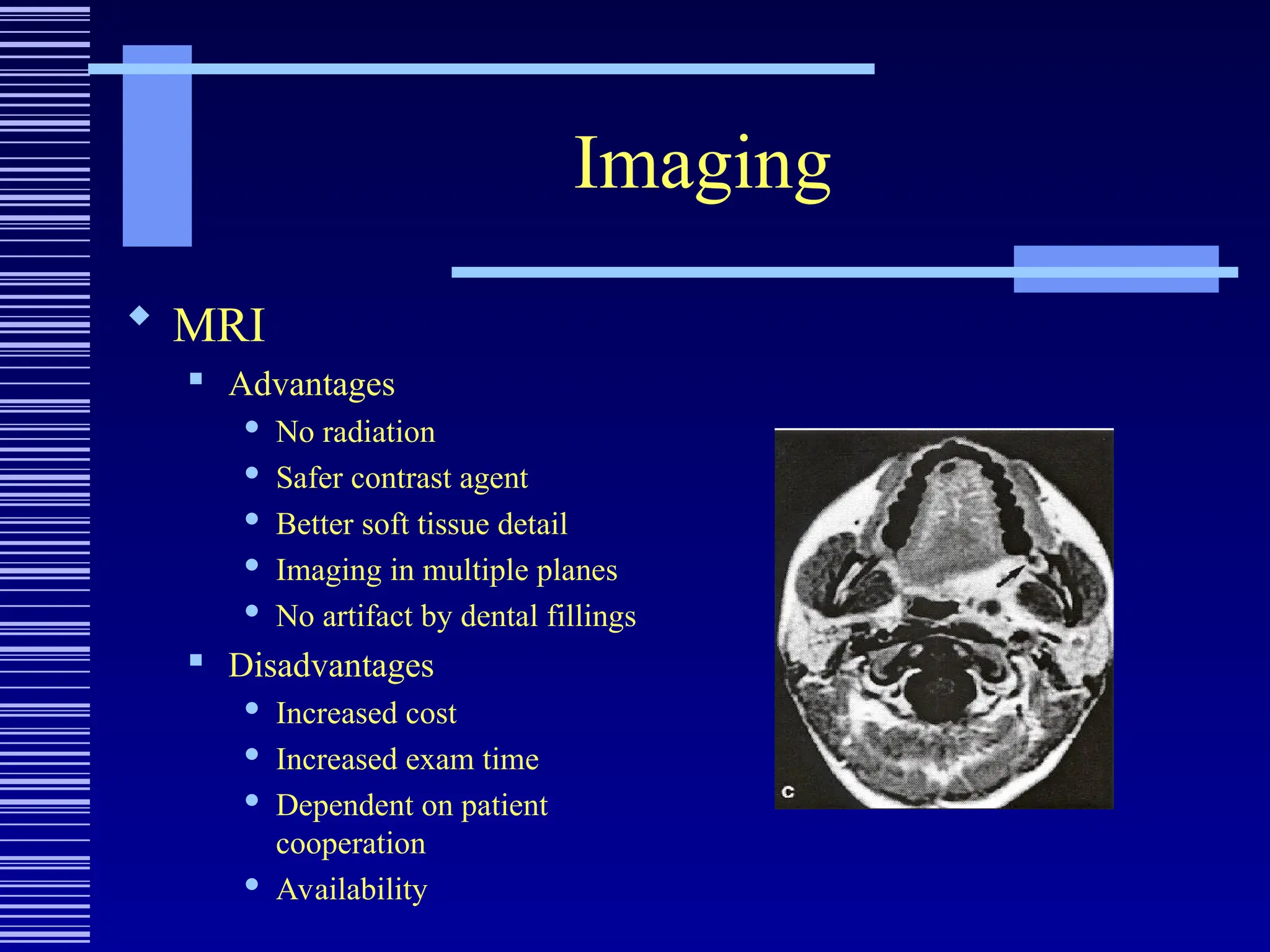
 MRI
 Advantages
 No radiation
 Safer contrast agent
 Better soft tissue detail
 Imaging in multiple planes
 No artifact by dental fillings
 Disadvantages
 Increased cost
 Increased exam time
 Dependent on patient
cooperation
 Availability
Treatment
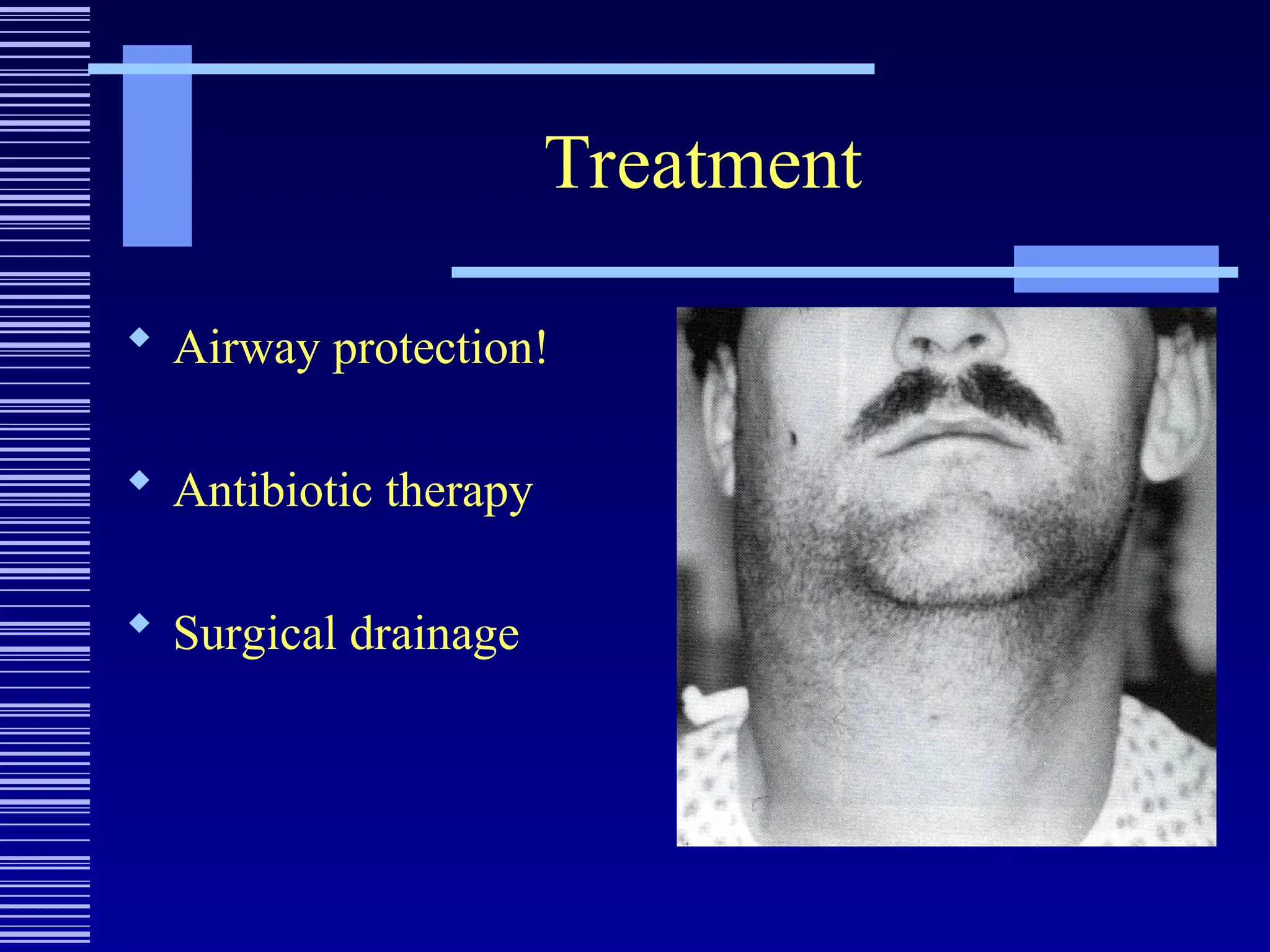
 Airway protection!
 Antibiotic therapy
 Surgical drainage
Treatment
 Airway protection
 Observation
 Intubation
 Direct laryngoscopy: possible risk of rupture and
aspiration
 Flexible fiberoptic
 Tracheostomy
 Ideally = planned, awake, local anesthesia
 Abscess may overlie trachea
 Distorted anatomy and tissue planes
Treatment
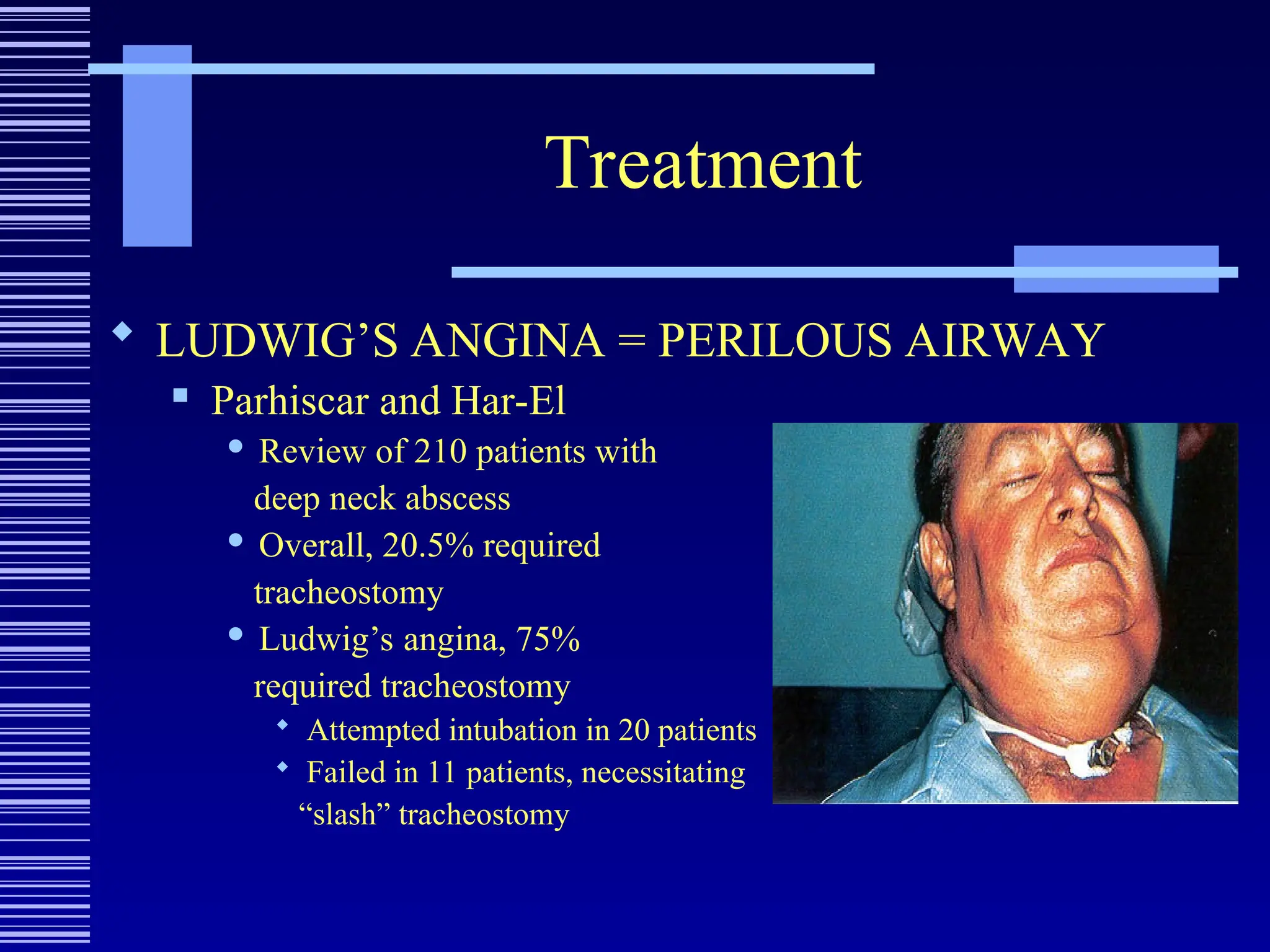
 LUDWIG’S ANGINA = PERILOUS AIRWAY
 Parhiscar and Har-El
 Review of 210 patients with
deep neck abscess
 Overall, 20.5% required
tracheostomy
 Ludwig’s angina, 75%
required tracheostomy
 Attempted intubation in 20 patients
 Failed in 11 patients, necessitating
“slash” tracheostomy
Treatment
 Antibiotic Therapy
 Improvement in 24-48 hours
 Cellulitis vs Abscess
 Polymicrobial infections
 Aerobic Strep, anaerobes
 Ampicillin/sulbactam with metronidazole
 Beta-Lactam resistance in 17-47% of isolates
 Alternatives
 Third generation Cephalosporins
 Clindamycin
 Culture and sensitivity
Treatment
Treatment
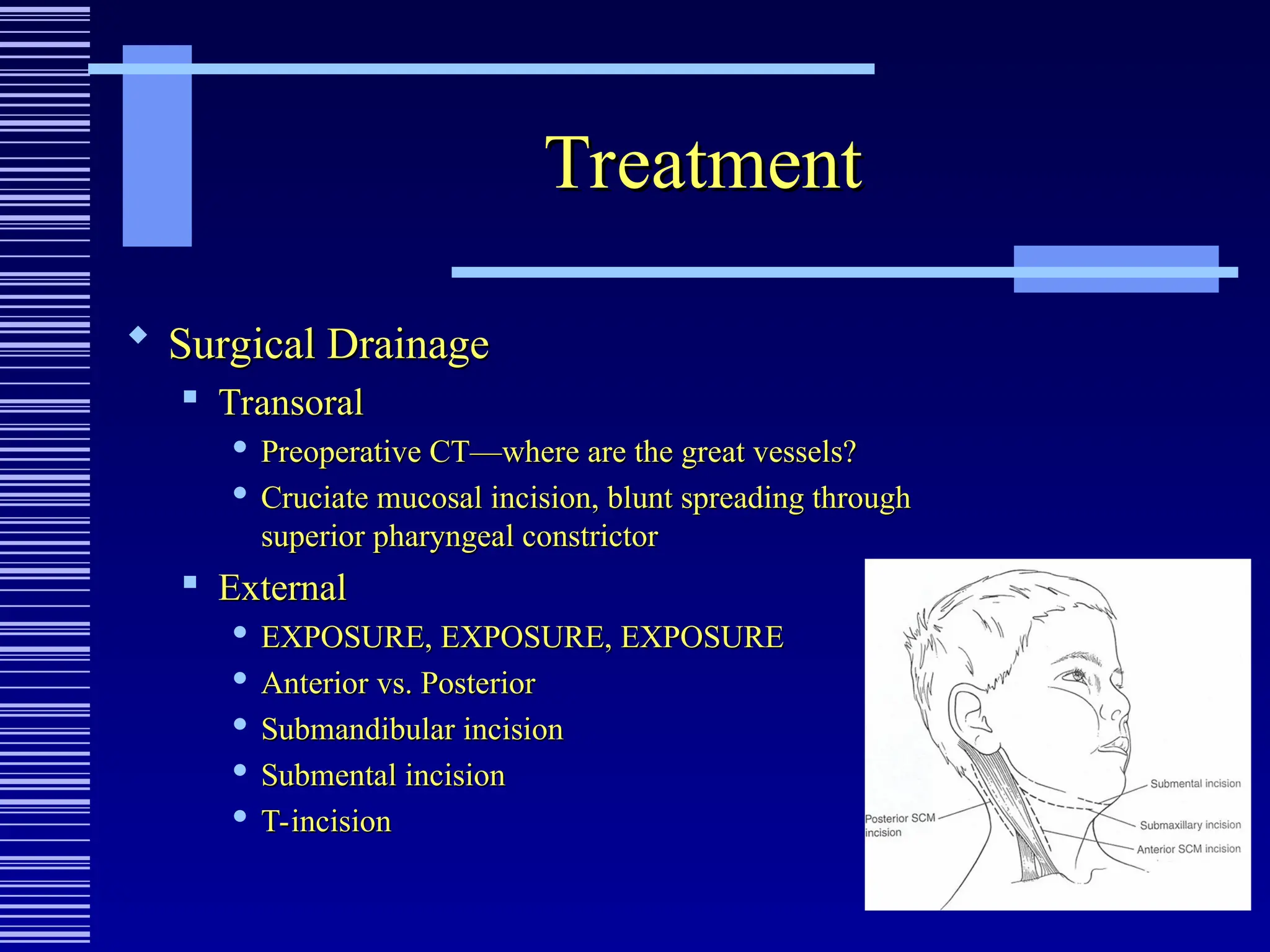
 Surgical Drainage
Surgical Drainage

Transoral
Transoral
 Preoperative CT—where are the great vessels?
Preoperative CT—where are the great vessels?
 Cruciate mucosal incision, blunt spreading through
Cruciate mucosal incision, blunt spreading through
superior pharyngeal constrictor

External
External
 EXPOSURE, EXPOSURE, EXPOSURE
EXPOSURE, EXPOSURE, EXPOSURE
 Anterior vs. Posterior
Anterior vs. Posterior
 Submandibular incision
Submandibular incision
 Submental incision
Submental incision
 T-incision
T-incision
Treatment
 Image-guided Aspiration
 Patient selection
 Smaller abscesses, limited extension, uniloculated
 Poe, et al: CT guided aspiration
 Early specimen collection, reduced expense, avoidance
of neck scar
 Yeow, et al: Ultrasound guided aspiration
 8/10 patients successfully treated with needle aspiration
 5/5 patients successful treated with pigtail catheter
insertion
Complications
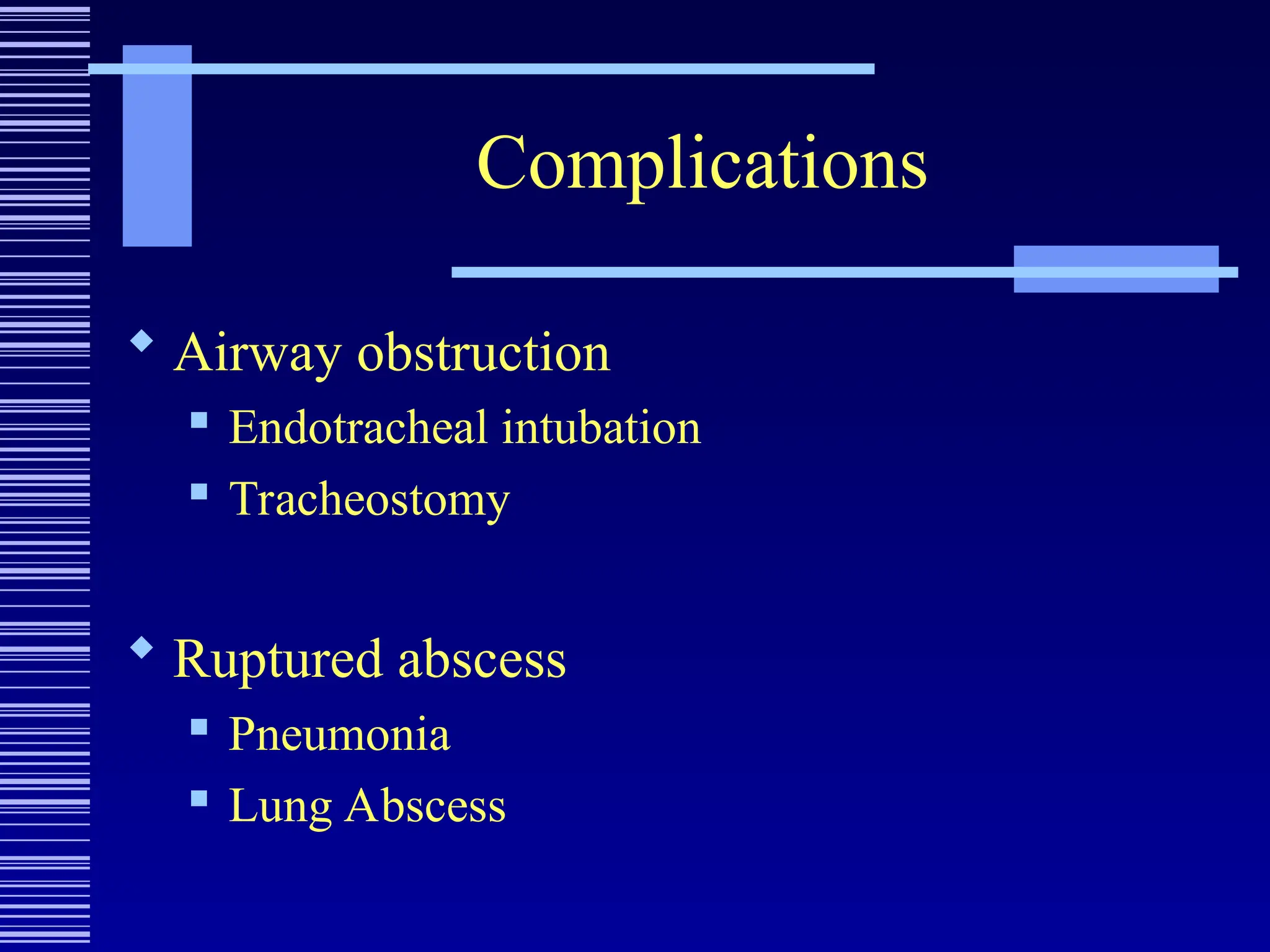
 Airway obstruction
 Endotracheal intubation
 Tracheostomy
 Ruptured abscess
 Pneumonia
 Lung Abscess
Complications
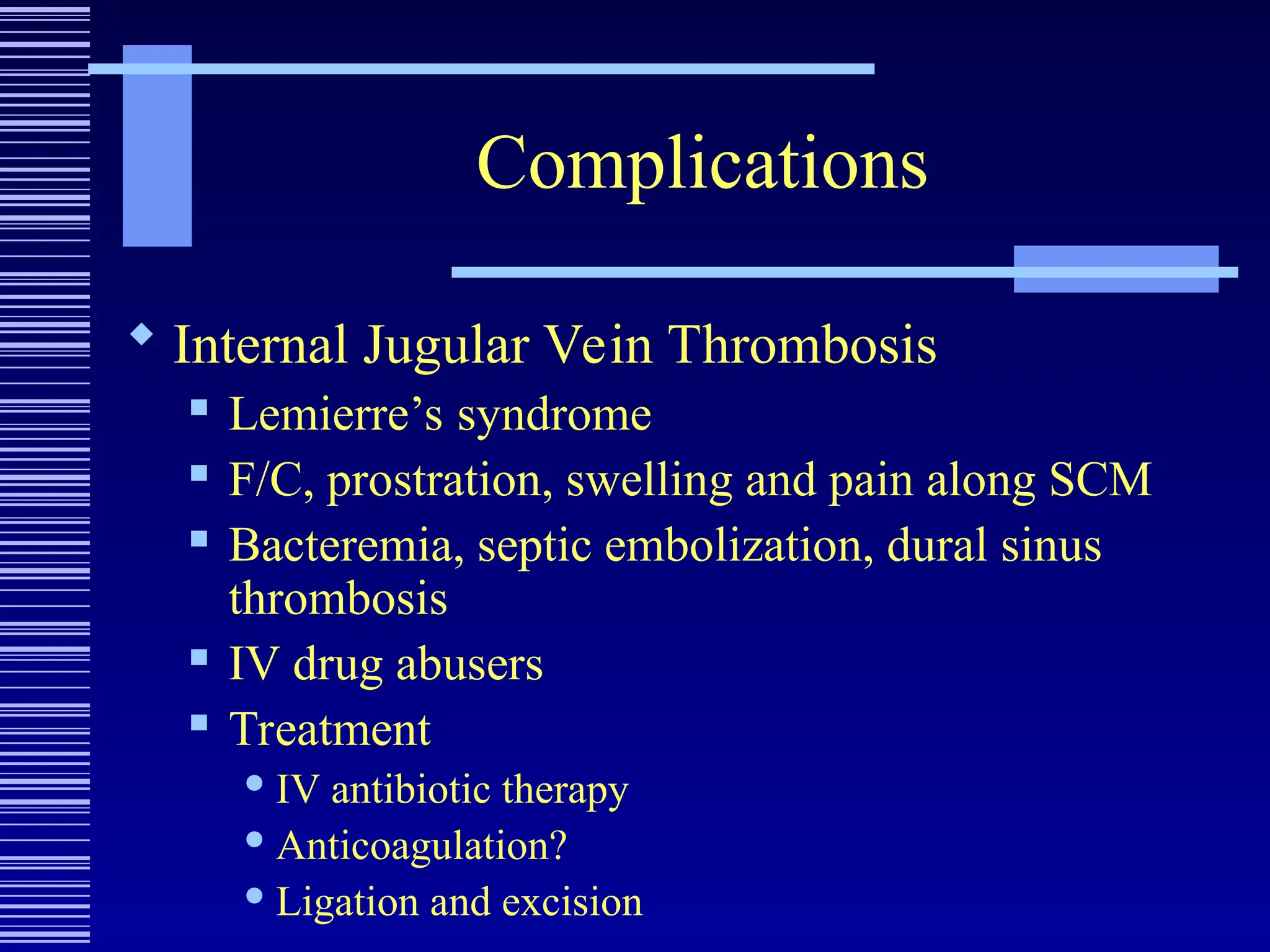
 Internal Jugular Vein Thrombosis
 Lemierre’s syndrome
 F/C, prostration, swelling and pain along SCM
 Bacteremia, septic embolization, dural sinus
thrombosis
 IV drug abusers
 Treatment
 IV antibiotic therapy
 Anticoagulation?
 Ligation and excision
Complications
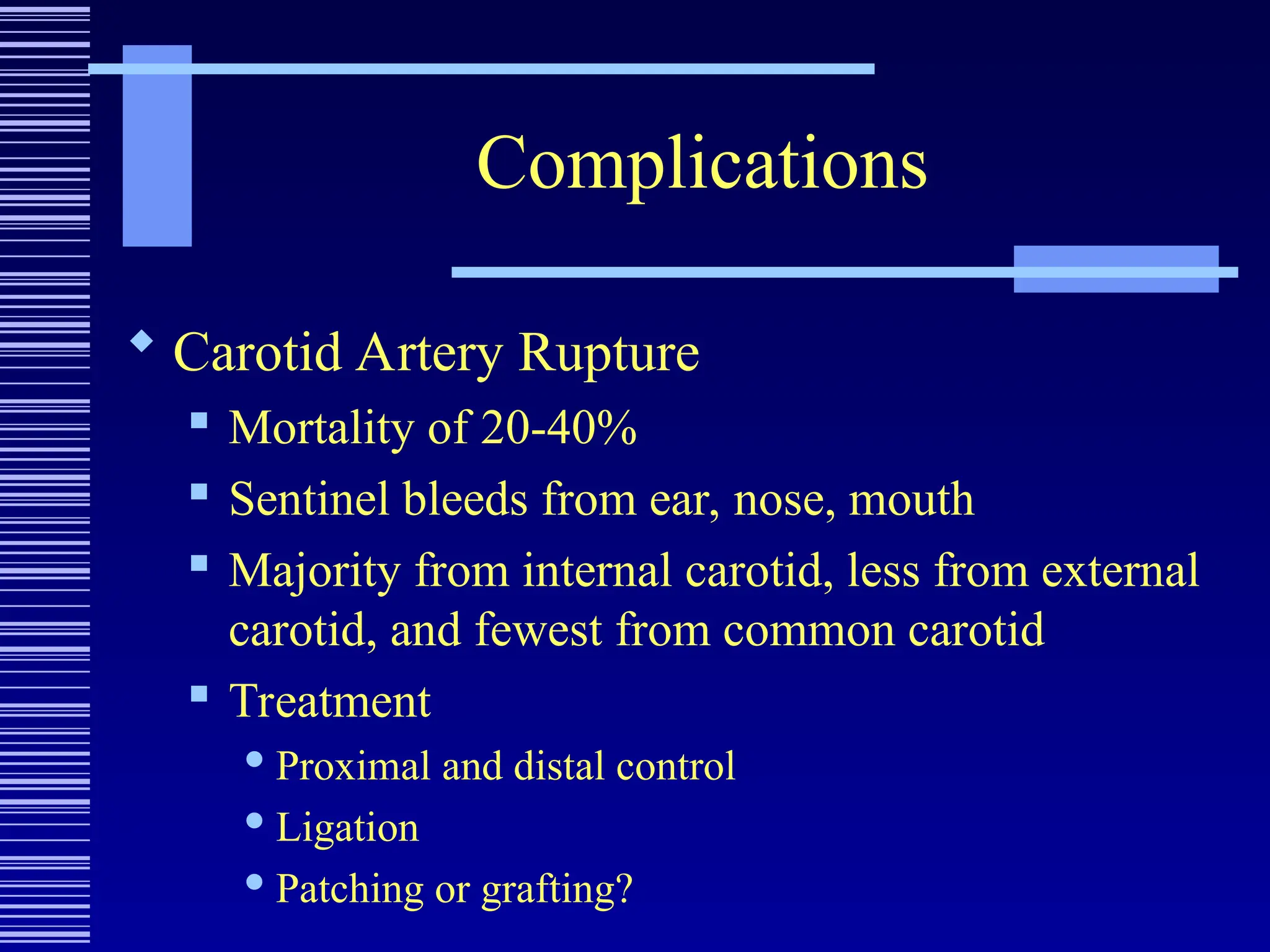
 Carotid Artery Rupture
 Mortality of 20-40%
 Sentinel bleeds from ear, nose, mouth
 Majority from internal carotid, less from external
carotid, and fewest from common carotid
 Treatment
 Proximal and distal control
 Ligation
 Patching or grafting?
Complications
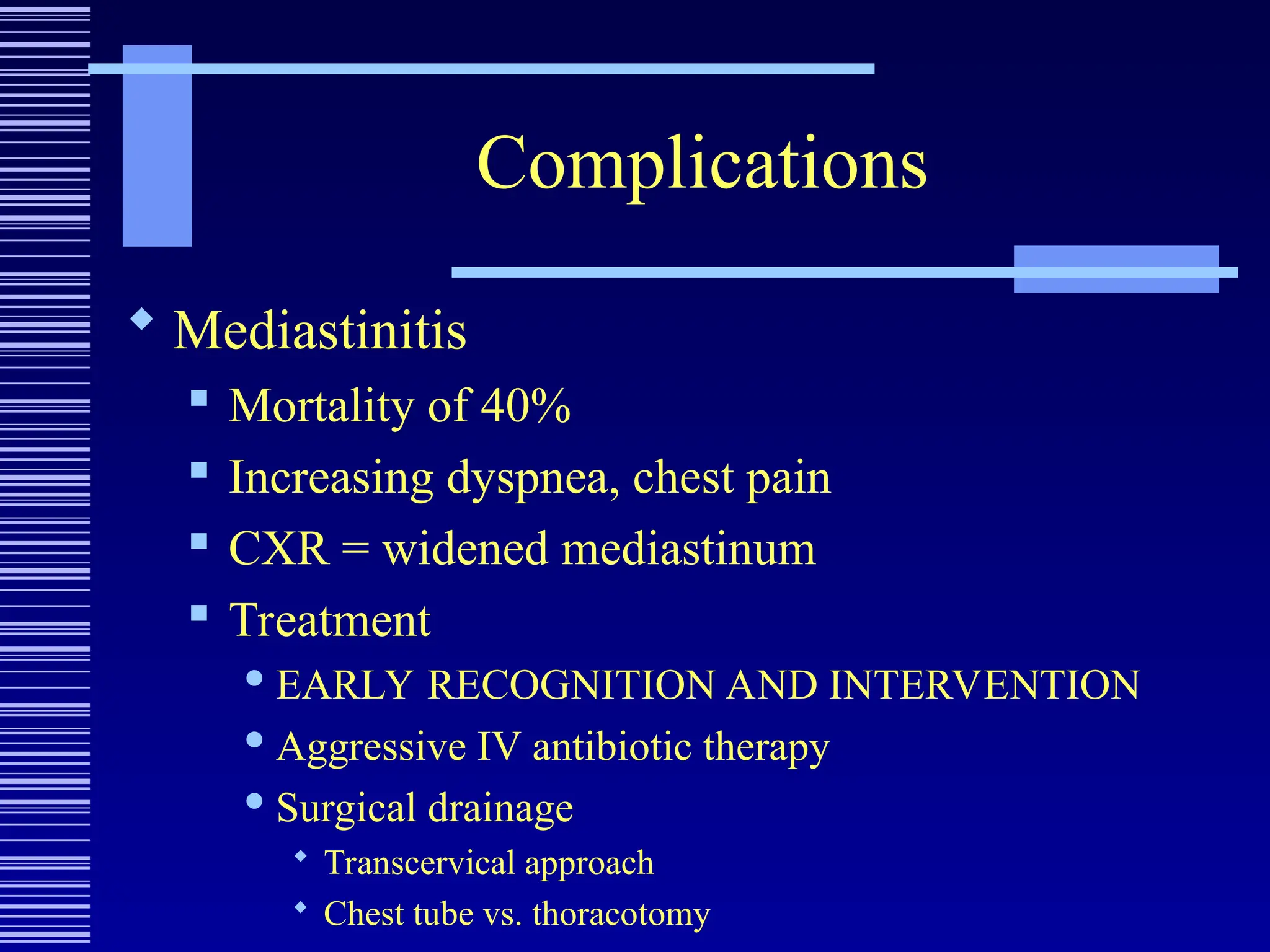
 Mediastinitis
 Mortality of 40%
 Increasing dyspnea, chest pain
 CXR = widened mediastinum
 Treatment
 EARLY RECOGNITION AND INTERVENTION
 Aggressive IV antibiotic therapy
 Surgical drainage
 Transcervical approach
 Chest tube vs. thoracotomy
Special Consideration
 Recurrent Deep Neck Space Infection
 THINK CONGENITAL ABNORMALITY
 Imaging should help make the diagnosis
 Nusbaum, et al: 12 cases of recurrent deep neck
infection
 Most Common: second branchial cleft cyst
 Others: first, third, fourth branchial cleft cysts,
lymphangiomas, thyroglossal duct cysts, cervical
thymic cyst
Any Questions?

Deep neck spaces are anatomical compartments in the neck, defined by the deep cervical fascia, that play a crucial role in understanding various pathologies, particularly infections.

  • 1.
    Deep Neck Spaces Dr.Jennifer Rager Geisinger Medical Center
  • 2.
    Outline  Anatomy ofthe Cervical Fascia  Anatomy of the Deep Neck Spaces  Deep Neck Space Infections
  • 3.
    Cervical Fascia  SuperficialLayer = subcutaneous tissue  Deep Layer Superficial = investing layer Middle = pre/peritracheal Deep = pre/perivertebral Carotid Sheath
  • 4.
    Superficial Cervical Fascia Superficial Layer  lies between the dermis and the deep cervical fascia  superiorly it continues as the superficial musculoaponeurotic system (SMAS) of the face
  • 5.
    Superficial Cervical Fascia Contains:  Neurovascular supply to skin  Superficial veins  (e.g. EJ vein)  Superficial lymph nodes  Fat  Platysma muscle
  • 6.
    Deep Cervical Fascia Superficial Layer  Attachments:  Superior – external occipital protuberance and superior nuchal line of the skull.  Anteriorly – hyoid bone.  Inferiorly – spine and acromion of the scapula, the clavicle, and the manubrium of the sternum.  Posterior – along the nuchal ligament of the vertebral column
  • 7.
    Deep Cervical Fascia Superficial Layer  Contains:  Sternocleidomastoid  Trapezius  Submandibular gland  Parotid gland
  • 8.
    Deep Cervical Fascia Middle Layer  Attachments:  Superiorly - skull base.  Anteriorly - hyoid bone, thyroid cartilage, manubrium.  Inferiorly - fibrous pericardium, adventitia of the aortic arch.
  • 9.
    Deep Cervical Fascia Middle Layer  Muscular Part  Infrahyoid Strap Muscles  Visceral Part  Pharynx, Larynx, Esophagus, Trachea, Thyroid  posterior aspect is formed along with the buccopharyngeal fascia (fascia of the pharynx)
  • 10.
    Deep Cervical Fascia Deep Layer  Attachments:  Superiorly - cranial base  Inferiorly - lower limit of the longus colli muscle at the level of the body of T3 vertebral column (where it blends with the endothoracic fascia peripherally and to the anterior longitudinal ligament centrally)  Laterally - becomes the axillary sheath, surrounding the axillary artery, the axillary vein and brachial plexus
  • 11.
    Deep Cervical Fascia Deep Layer  Alar Layer  Posterior to visceral layer of middle fascia  Anterior to prevertebral layer  Prevertebral Layer  Vertebral bodies  Deep muscles of the neck
  • 12.
    Deep Cervical Fascia Carotid Sheath  formed by contributions from all three layers of deep fascia  runs between the base of the skull to the thoracic mediastinum  Contains:  carotid artery  internal jugular vein  vagus nerve  “Lincoln’s Highway”
  • 13.
    So, why doesit matter?
  • 14.
    Deep Neck Spaces Spaces created by fascial planes  May be real or potential  May expand when pus separates fascia  Communicate with each other, forming avenues by which infections may spread  Described in relation to the hyoid:  Entire length of the neck  Suprahyoid  Infrahyoid
  • 15.
    Entire Length ofthe Neck Deep Neck Spaces  Retropharyngeal Space  Danger Space  Pre/perivertebral Space  Carotid Space (visceral/vascular)
  • 16.
    Entire Length ofthe Neck Deep Neck Spaces  Retropharyngeal Space  Extends from skull base to ~T4  Anterior - middle layer of deep cervical fascia (pharynx and esophagus)  Posterior - alar layer of deep fascia
  • 17.
    Entire Length ofthe Neck Deep Neck Spaces  Danger Space (4)  potential for rapid spread of infection to the posterior mediastinum through its loose areolar tissue  Extends from skull base to diaphragm  a potential space between alar and prevertebral layers of the deep layer of deep cervical fascia  posterior to the retropharyngeal space (3) and anterior to the prevertebral space (5)
  • 19.
    Entire Length ofthe Neck Deep Neck Spaces  Pre/perivertebral Space (5)  enclosed entirely by the deep layer of deep cervical fascia  Extends along entire length of vertebral column skull base to the coccyx  Anterior - prevertebral fascia  Posterior - vertebral bodies  2 main divisions divided by lateral fascial attachments to the vertebral transverse processes  prevertebral and paraspinal spaces  Lies directly behind danger space
  • 20.
    Entire Length ofthe Neck Deep Neck Spaces  Carotid Space  area enclosed by the carotid sheath; a structure formed from all 3 layers of deep fascia  “Lincoln’s Highway”  can become secondarily involved with any other deep neck space infection by direct spread
  • 21.
    Suprahyoid Deep NeckSpaces  Sublingual Space  Submandibular Space  Peritonsillar Space  Parapharyngeal Space  Pharyngeal Mucosa Space  Masticator Space  Parotid Space
  • 22.
    Suprahyoid Deep NeckSpaces  Sublingual Space  potential space that lies entirely within the oral cavity (no fascial margins)  paired space, 2 sides communicate anteriorly through an isthmus under frenulum of the tongue  Anterior - mandible  Inferolateral - mylohyoid  Medial - genioglossus and geniohyoid  at the posterior margin of the mylohyoid the sublingual space communicates directly with parapharyngeal space and submandibular space
  • 23.
    Suprahyoid Deep NeckSpaces  Submandibular Space  enclosed by superficial layer of deep cervical fascia  extends from the hyoid bone to floor of the mouth (mylohyoid muscle)  Anterolateral - mandible and  Inferior - superficial layer of deep cervical fascia  communicates freely with the sublingual space and the parapharyngeal space
  • 24.
    Suprahyoid Deep NeckSpaces  Peritonsillar Space  between palatine tonsil and superior constrictor muscle  Anterior – anterior tonsil pillars  Posterior – posterior tonsil pillars  Inferior - posterior tongue  Medially - capsule of the palatine tonsil  Lateral - superior pharyngeal constrictor
  • 25.
  • 26.
    Suprahyoid Deep NeckSpaces  Parapharyngeal Space  petrous apex at the base of skull to greater cornu of hyoid  Superior - skull base  Inferior - hyoid  Anterior - ptyergomandibular raphe  Posterior - prevertebral fascia  Medial - buccopharyngeal fascia  Lateral - superficial layer of deep fascia
  • 28.
    Suprahyoid Deep NeckSpaces  Parapharyngeal Space 2 Compartments  Prestyloid  Medial—tonsillar fossa  Lateral—medial pterygoid  Contains fat, connective tissue, nodes  Poststyloid  Carotid sheath  Cranial nerves IX, X, XII
  • 29.
    Suprahyoid Deep NeckSpaces  Pharyngeal Mucosal Space  mucosal surface of the nasopharynx, oropharynx, and hypopharynx  skull base to the cricoid cartilage  contains mucosa, lymphoid tissue of Waldeyer’s ring, adenoids, tonsils, minor salivary glands, the torus tubarius, pharyngobasilar fascia, and the cartilage of the Eustachian tubes
  • 30.
    Suprahyoid Deep NeckSpaces  Masticator Space  from the high parietal calvarium to mandibular angle  divided into medial and lateral compartments by the ramus of mandible  can serve as a conduit for perineural intracranial spread of malignancy, along the trigeminal nerve, through the foramen ovale into Meckel’s cave
  • 31.
    Suprahyoid Neck Spaces Parotid Space  formed by superficial layer of deep cervical fascia as it splits to surround the parotid gland.  extends from external auditory canal to the angle of the mandible  posterior to the masticator space and lateral to the carotid space and parapharyngeal space  Direct communication to parapharyngeal space (no fascia superiomedially)
  • 32.
    Infrahyoid Deep NeckSpaces  Visceral Space  cylindrical, central, enclosed by the middle layer of deep cervical fascia  the only space found entirely in the infrahyoid neck  extends from the hyoid bone down into the mediastinum  comprises the viscera of the larynx, trachea, hypopharynx, esophagus, thyroid, parathyroid glands, and recurrent laryngeal nerves
  • 33.
  • 34.
  • 37.
    Deep Neck SpaceInfections  Presentation/Origin of Infection  Microbiology  Imaging  Treatment  Complications  Special Consideration
  • 38.
    Presentation/Origin  Retropharyngeal Abscess 50% occur in patients 6-12 months of age  96% occur before 6 years of age  Children--fever, irritability, lymphadenopathy, torticollis, poor oral intake, sore throat, drooling  Adults--pain, dysphagia, anorexia, snoring, nasal obstruction, nasal regurgitation  Dyspnea and respiratory distress  Lateral posterior oropharyngeal wall bulge
  • 39.
    Presentation/Origin  Pediatrics  Cause—suppurative processin lymph nodes  Nose, adenoids, nasopharynx, sinuses  Adults  Cause—trauma, instrumentation, extension from adjoining deep neck space
  • 40.
    Presentation/Origin  Danger Space Presentation and exam nearly identical to retropharyngeal space infection  Cause—extension from retropharyngeal, prevertebral or parapharyngeal space
  • 41.
    Presentation/Origin  Prevertebral Space Back, shoulder, neck pain made worse by deglutition  Dysphagia or dyspnea  Cause—Pott’s abscess, trauma, osteomyelitis, extension from retropharyngeal and danger spaces
  • 42.
    Presentation/Origin  Submandibular Space Pain, drooling, dysphagia, neck stiffness  Anterior neck swelling, floor of mouth edema  Cause—70-85% have odontogenic origin  First molar and anterior  Second and third molars  Sialadenitis, lymphadenitis, lacerations of the floor of mouth, mandible fractures
  • 43.
    Presentation/Origin  Ludwig’s angina 1. Cellulitis, not always abscess  2. Limited to SM space  3. Foul serosanguinous fluid, no frank purulence  4. Fascia, muscle, connective tissue involvement, sparing glands  5. Direct spread rather than lymphatic spread  Tender, firm anterior neck edema without fluctuance  “Hot potato” voice, drooling  Tachypnea, dyspnea, stridor
  • 44.
    Presentation/Origin  Parapharyngeal Space Fever, chills, malaise  Pain, dysphagia, trismus  Medial bulge of lateral pharyngeal wall  Cause—infection of pharynx, tonsil, adenoids, dentition, parotid, mastoid, suppurative lymphadenitis, extension from other deep neck spaces
  • 45.
    Presentation/Origin  Peritonsillar Space Fever, malaise  Dysphagia, odynophagia  “Hot-potato” voice, trismus, bulging of superior tonsil pole and soft palate, deviation of uvula  Cause—extension from tonsillitis
  • 46.
    Presentation/Origin  Masticator Space Pain, trismus  Posterior FOM edema  Swelling along ramus of mandible  Cause— odontogenic, from third molars  Parotid Space  Pain, trismus  Medial bulge of posterior lateral pharyngeal wall  Cause— parotitis, sialolithiasis, Sjogren’s syndrome
  • 47.
    Presentation/Origin  Visceral Space Hoarseness, dyspnea, dysphagia, odynophagia  Erythema, edema of hypopharynx, may extend to include glottis and supraglottis  Anterior neck edema, pain, erythema, crepitus  Cause—foreign body, instrumentation, extension of infection in thyroid
  • 48.
    Microbiology  Preantibiotic era—S.aureus Currently—aerobic Strep species and non-strep anaerobes  Gram-negatives uncommon  Almost always polymicrobial  Remember resistance
  • 49.
    Imaging  Lateral neckplain film  Screening exam—mainly for retropharyngeal and pretracheal spaces  Normal: 7mm at C-2, 14mm at C-6 for kids, 22mm at C-6 for adults  Technique dependent  Extension  Inspiration
  • 50.
    Imaging  High-resolution Ultrasound Advantages  Avoids radiation  Portable  Disadvantages  Not widely accepted  Operator dependent  Inferior anatomic detail  Uses  Follow infection during therapy  Image guided aspiration
  • 51.
    Imaging  Contrast enhancedCT  Modality of choice  Advantages  Quick, easy  Widely available  Familiarity  Superior anatomic detail  Differentiate abscess and cellulitis  Disadvantages  Ionizing radiation  Allergenic contrast agent  Soft tissue detail  Artifact
  • 52.
    Imaging  MRI  Advantages No radiation  Safer contrast agent  Better soft tissue detail  Imaging in multiple planes  No artifact by dental fillings  Disadvantages  Increased cost  Increased exam time  Dependent on patient cooperation  Availability
  • 53.
    Treatment  Airway protection! Antibiotic therapy  Surgical drainage
  • 54.
    Treatment  Airway protection Observation  Intubation  Direct laryngoscopy: possible risk of rupture and aspiration  Flexible fiberoptic  Tracheostomy  Ideally = planned, awake, local anesthesia  Abscess may overlie trachea  Distorted anatomy and tissue planes
  • 55.
    Treatment  LUDWIG’S ANGINA= PERILOUS AIRWAY  Parhiscar and Har-El  Review of 210 patients with deep neck abscess  Overall, 20.5% required tracheostomy  Ludwig’s angina, 75% required tracheostomy  Attempted intubation in 20 patients  Failed in 11 patients, necessitating “slash” tracheostomy
  • 56.
    Treatment  Antibiotic Therapy Improvement in 24-48 hours  Cellulitis vs Abscess  Polymicrobial infections  Aerobic Strep, anaerobes  Ampicillin/sulbactam with metronidazole  Beta-Lactam resistance in 17-47% of isolates  Alternatives  Third generation Cephalosporins  Clindamycin  Culture and sensitivity
  • 57.
    Treatment Treatment  Surgical Drainage SurgicalDrainage  Transoral Transoral  Preoperative CT—where are the great vessels? Preoperative CT—where are the great vessels?  Cruciate mucosal incision, blunt spreading through Cruciate mucosal incision, blunt spreading through superior pharyngeal constrictor superior pharyngeal constrictor  External External  EXPOSURE, EXPOSURE, EXPOSURE EXPOSURE, EXPOSURE, EXPOSURE  Anterior vs. Posterior Anterior vs. Posterior  Submandibular incision Submandibular incision  Submental incision Submental incision  T-incision T-incision
  • 58.
    Treatment  Image-guided Aspiration Patient selection  Smaller abscesses, limited extension, uniloculated  Poe, et al: CT guided aspiration  Early specimen collection, reduced expense, avoidance of neck scar  Yeow, et al: Ultrasound guided aspiration  8/10 patients successfully treated with needle aspiration  5/5 patients successful treated with pigtail catheter insertion
  • 59.
    Complications  Airway obstruction Endotracheal intubation  Tracheostomy  Ruptured abscess  Pneumonia  Lung Abscess
  • 60.
    Complications  Internal JugularVein Thrombosis  Lemierre’s syndrome  F/C, prostration, swelling and pain along SCM  Bacteremia, septic embolization, dural sinus thrombosis  IV drug abusers  Treatment  IV antibiotic therapy  Anticoagulation?  Ligation and excision
  • 61.
    Complications  Carotid ArteryRupture  Mortality of 20-40%  Sentinel bleeds from ear, nose, mouth  Majority from internal carotid, less from external carotid, and fewest from common carotid  Treatment  Proximal and distal control  Ligation  Patching or grafting?
  • 62.
    Complications  Mediastinitis  Mortalityof 40%  Increasing dyspnea, chest pain  CXR = widened mediastinum  Treatment  EARLY RECOGNITION AND INTERVENTION  Aggressive IV antibiotic therapy  Surgical drainage  Transcervical approach  Chest tube vs. thoracotomy
  • 63.
    Special Consideration  RecurrentDeep Neck Space Infection  THINK CONGENITAL ABNORMALITY  Imaging should help make the diagnosis  Nusbaum, et al: 12 cases of recurrent deep neck infection  Most Common: second branchial cleft cyst  Others: first, third, fourth branchial cleft cysts, lymphangiomas, thyroglossal duct cysts, cervical thymic cyst
  • 64.

Editor's Notes

  • #12 In 1929, Mosher called this fascia the Lincoln Highway of the neck because all three layers of deep cervical fascia contribute to the carotid sheath. This mental imagery was indicative of an important national event of his time, namely the creation of the first transcontinental paved highway in the United States that ran coast-to-coast from Times Square in New York City west to Lincoln Park in San Francisco.
  • #22 Content: Hypoglossus
  • #25 Superior Constrictors
  • #36 Lost in Space