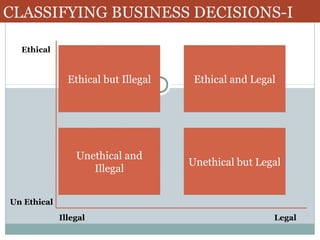
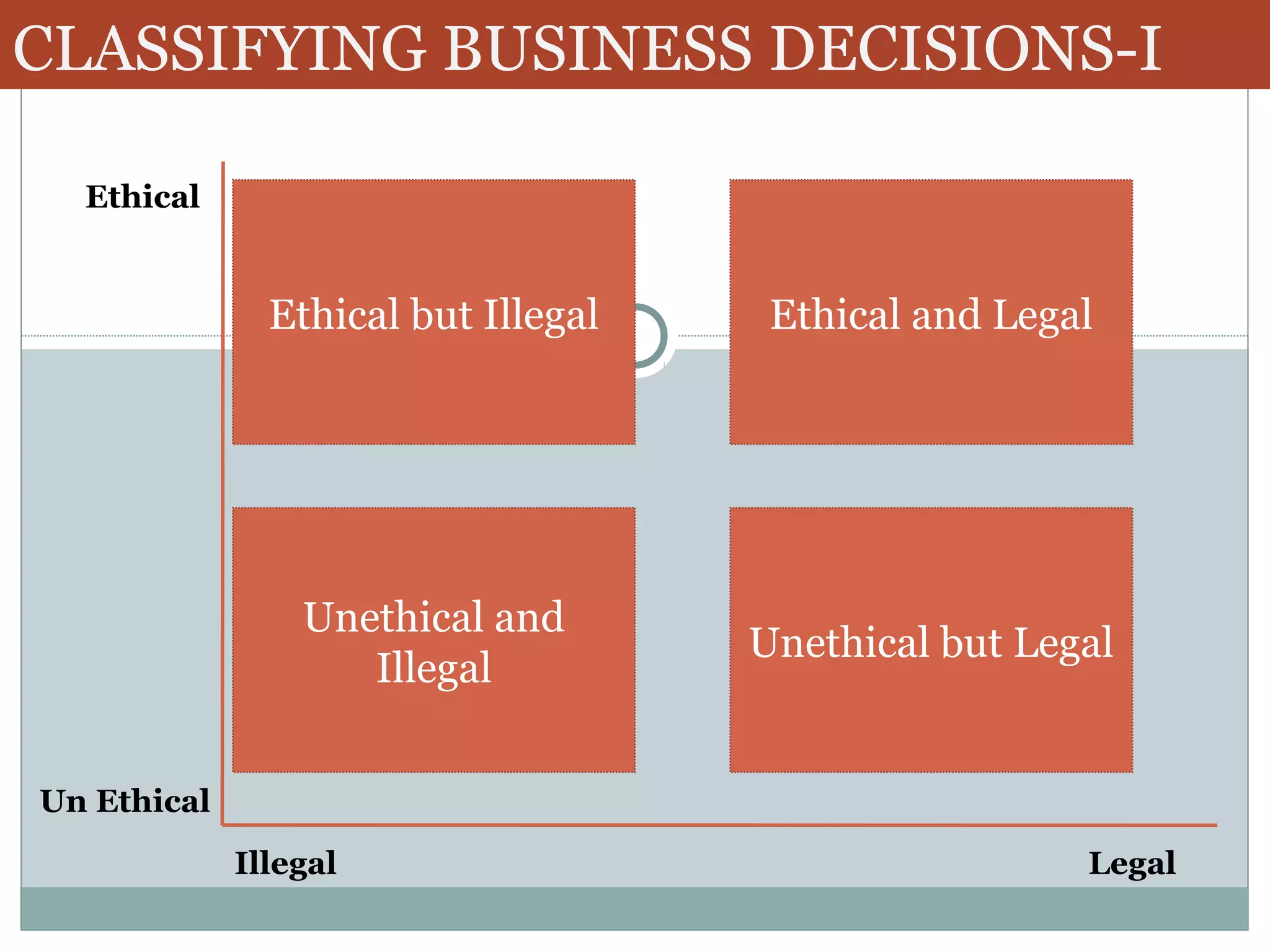
CLASSIFYING BUSINESS DECISIONS-I
Ethical

Ethical but Illegal

Ethical and Legal

Unethical and
Illegal

Unethical but Legal

Un Ethical
Illegal

Legal
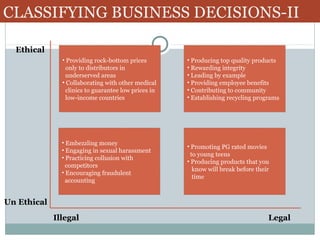
CLASSIFYING BUSINESS DECISIONS-II
Ethical
• Providing rock-bottom prices
only to distributors in
underserved areas
• Collaborating with other medical
clinics to guarantee low prices in
low-income countries

• Producing top quality products
• Rewarding integrity
• Leading by example
• Providing employee benefits
• Contributing to community
• Establishing recycling programs

• Embezzling money
• Engaging in sexual harassment
• Practicing collusion with
competitors
• Encouraging fraudulent
accounting

• Promoting PG rated movies
to young teens
• Producing products that you
know will break before their
time

Un Ethical
Illegal

Legal
UNETHICAL BUSINESS PRACTICES
•Dumping. This is an unfair business practice that sometimes big companies employ in order to destroy
the local competition. This is done by flooding the market with the big company’s product, which are
sold at loss, but at much lower price than the competition.
•Labor union opposition. This is one of the classic examples of unethical business practices. Employees
are prevented from forming a labor union that can represent their interests. One of the biggest companies
that has this policy is Wal-Mart. They instead have the open doors policy which allows and encourages
every employee the right to take their complaints beyond management level.
•Discriminating employees on the basis of sex, race, or religion; Equality in the work place is now
guaranteed by law, but the actual acceptance of people, who have different skin color, or opinions, is a
long way away for almost all societies.
•Copying the style of packaging in order to mislead the consumer. This is usually done by smaller
companies who produce lesser quality products and try to pass them off as high quality goods by using a
brand name for example that can mislead the consumer in thinking it’s a much more famous brand name.
•Deception on size and content of a product. This is one of the most often seen examples of unethical
business practices. It refers to deception in advertising. A product can be made out to appear much
bigger, or have a much more significant content, than it really does.
•Omitting to provide side effect information. This is another example of unethical business practices.
•Incomplete or inaccurate testing of products. This is the domain of the public authorities who have the
obligation to ensure that every product that goes out in the market is tested beforehand.
SWEATSHOP

Sweatshop (or sweat factory) is a term for any
working environment considered to be
unacceptably difficult or dangerous. Sweatshop
workers often work long hours for very low pay,
regardless of laws mandating overtime pay or a
minimum wage. Child Labor laws may be
violated. Sweatshops may have hazardous
materials and situations. Employees may be
subject to employer abuse without an easy way, if
any, to protect themselves.
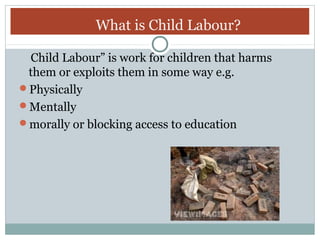
What is Child Labour?
Child Labour” is work for children that harms
them or exploits them in some way e.g.
Physically
Mentally
morally or blocking access to education
Causes
30% of our country’s total population is leading life below
the poverty-line, in which the people are deprived of
basic necessities of life like clothing, shelter, food,
education and medication, the children of these people
will be forced to become Labourers' or workers in order to
survive.
 Our people are not aware of the importance of education.
Class-based education system is another reason for
increasing child Labour as a result, child Labour is
increase in rural areas.
 The government has not put its laws into practice to stop
child Labour in our country that’s why child labour is
increasing day by day.

Workplace Deviance
Workplace Deviance
Unethical behavior that violates
organizational norms about
right and wrong



Two dimensions
 Degree of deviance
 Target of deviant behavior
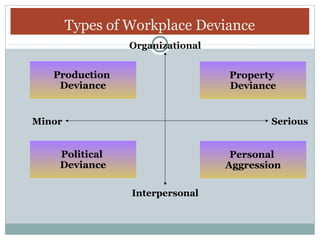
Types of Workplace Deviance
Organizational

Production
Production
Deviance
Deviance

Property
Property
Deviance
Deviance

Minor

Serious

Political
Political
Deviance
Deviance

Personal
Personal
Aggression
Aggression
Interpersonal
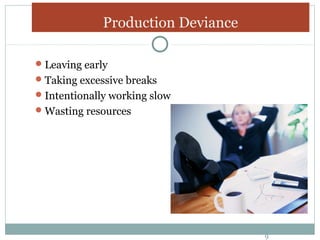
Production Deviance
 Leaving early
 Taking excessive breaks
 Intentionally working slow
 Wasting resources

9
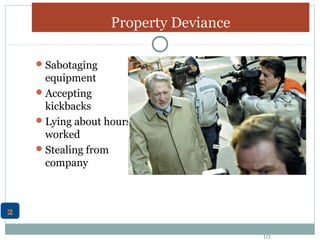
Property Deviance
 Sabotaging

equipment
 Accepting
kickbacks
 Lying about hours
worked
 Stealing from
company

2
10
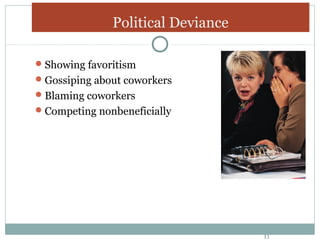
Political Deviance
 Showing favoritism
 Gossiping about coworkers
 Blaming coworkers
 Competing nonbeneficially

11
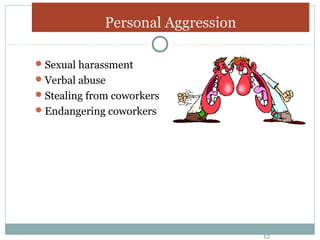
Personal Aggression
 Sexual harassment
 Verbal abuse
 Stealing from coworkers
 Endangering coworkers

12
Doing the Right Thing
13

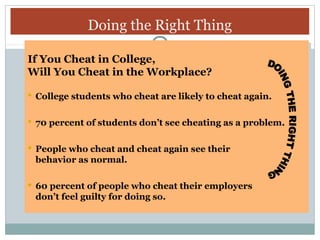
If You Cheat in College,
Will You Cheat in the Workplace?
 College students who cheat are likely to cheat again.
 70 percent of students don’t see cheating as a problem.
 People who cheat and cheat again see their
behavior as normal.
behavior as normal.
 60 percent of people who cheat their employers
don’t feel guilty for doing so.
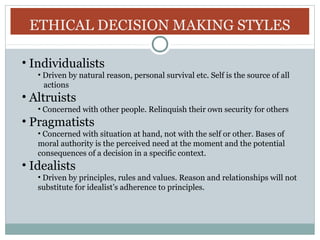
ETHICAL DECISION MAKING STYLES
• Individualists
• Driven by natural reason, personal survival etc. Self is the source of all
actions

• Altruists
• Concerned with other people. Relinquish their own security for others

• Pragmatists
• Concerned with situation at hand, not with the self or other. Bases of
moral authority is the perceived need at the moment and the potential
consequences of a decision in a specific context.

• Idealists
• Driven by principles, rules and values. Reason and relationships will not
substitute for idealist’s adherence to principles.

Decision making & deviance in business ethics

  • 1.
    CLASSIFYING BUSINESS DECISIONS-I Ethical Ethicalbut Illegal Ethical and Legal Unethical and Illegal Unethical but Legal Un Ethical Illegal Legal
  • 2.
    CLASSIFYING BUSINESS DECISIONS-II Ethical •Providing rock-bottom prices only to distributors in underserved areas • Collaborating with other medical clinics to guarantee low prices in low-income countries • Producing top quality products • Rewarding integrity • Leading by example • Providing employee benefits • Contributing to community • Establishing recycling programs • Embezzling money • Engaging in sexual harassment • Practicing collusion with competitors • Encouraging fraudulent accounting • Promoting PG rated movies to young teens • Producing products that you know will break before their time Un Ethical Illegal Legal
  • 3.
    UNETHICAL BUSINESS PRACTICES •Dumping.This is an unfair business practice that sometimes big companies employ in order to destroy the local competition. This is done by flooding the market with the big company’s product, which are sold at loss, but at much lower price than the competition. •Labor union opposition. This is one of the classic examples of unethical business practices. Employees are prevented from forming a labor union that can represent their interests. One of the biggest companies that has this policy is Wal-Mart. They instead have the open doors policy which allows and encourages every employee the right to take their complaints beyond management level. •Discriminating employees on the basis of sex, race, or religion; Equality in the work place is now guaranteed by law, but the actual acceptance of people, who have different skin color, or opinions, is a long way away for almost all societies. •Copying the style of packaging in order to mislead the consumer. This is usually done by smaller companies who produce lesser quality products and try to pass them off as high quality goods by using a brand name for example that can mislead the consumer in thinking it’s a much more famous brand name. •Deception on size and content of a product. This is one of the most often seen examples of unethical business practices. It refers to deception in advertising. A product can be made out to appear much bigger, or have a much more significant content, than it really does. •Omitting to provide side effect information. This is another example of unethical business practices. •Incomplete or inaccurate testing of products. This is the domain of the public authorities who have the obligation to ensure that every product that goes out in the market is tested beforehand.
  • 4.
    SWEATSHOP Sweatshop (or sweatfactory) is a term for any working environment considered to be unacceptably difficult or dangerous. Sweatshop workers often work long hours for very low pay, regardless of laws mandating overtime pay or a minimum wage. Child Labor laws may be violated. Sweatshops may have hazardous materials and situations. Employees may be subject to employer abuse without an easy way, if any, to protect themselves.
  • 5.
    What is ChildLabour? Child Labour” is work for children that harms them or exploits them in some way e.g. Physically Mentally morally or blocking access to education
  • 6.
    Causes 30% of ourcountry’s total population is leading life below the poverty-line, in which the people are deprived of basic necessities of life like clothing, shelter, food, education and medication, the children of these people will be forced to become Labourers' or workers in order to survive.  Our people are not aware of the importance of education. Class-based education system is another reason for increasing child Labour as a result, child Labour is increase in rural areas.  The government has not put its laws into practice to stop child Labour in our country that’s why child labour is increasing day by day. 
  • 7.
    Workplace Deviance Workplace Deviance Unethicalbehavior that violates organizational norms about right and wrong  Two dimensions  Degree of deviance  Target of deviant behavior
  • 8.
    Types of WorkplaceDeviance Organizational Production Production Deviance Deviance Property Property Deviance Deviance Minor Serious Political Political Deviance Deviance Personal Personal Aggression Aggression Interpersonal
  • 9.
    Production Deviance  Leavingearly  Taking excessive breaks  Intentionally working slow  Wasting resources 9
  • 10.
    Property Deviance  Sabotaging equipment Accepting kickbacks  Lying about hours worked  Stealing from company 2 10
  • 11.
    Political Deviance  Showingfavoritism  Gossiping about coworkers  Blaming coworkers  Competing nonbeneficially 11
  • 12.
    Personal Aggression  Sexualharassment  Verbal abuse  Stealing from coworkers  Endangering coworkers 12
  • 13.
    Doing the RightThing 13 If You Cheat in College, If You Cheat in College, Will You Cheat in the Workplace? Will You Cheat in the Workplace?  College students who cheat are likely to cheat again.  College students who cheat are likely to cheat again.  70 percent of students don’t see cheating as a problem.  70 percent of students don’t see cheating as a problem.  People who cheat and cheat again see their  People who cheat and cheat again see their behavior as normal. behavior as normal.  60 percent of people who cheat their employers  60 percent of people who cheat their employers don’t feel guilty for doing so. don’t feel guilty for doing so.
  • 14.
    ETHICAL DECISION MAKINGSTYLES • Individualists • Driven by natural reason, personal survival etc. Self is the source of all actions • Altruists • Concerned with other people. Relinquish their own security for others • Pragmatists • Concerned with situation at hand, not with the self or other. Bases of moral authority is the perceived need at the moment and the potential consequences of a decision in a specific context. • Idealists • Driven by principles, rules and values. Reason and relationships will not substitute for idealist’s adherence to principles.