Decision making and
Problem solving in Group
Three C Model, Rational Model
Submitted by,
Samuel Roy
S2 : MSW
NO : 1425
Decision making and Problem solving in Group
Group decision making is a type of participatory process in
which multiple individuals acting collectively, analyse
problems or situations, consider and evaluate alternative
courses of action, and select from among the alternatives a
solution or solutions.
The Three C Model and Rational Model help
in Decision making and Problem solving in Group.
Three C Model
The three C models of Problem Solving/Decision Making
1. Clarify the problem or the decision to be made.
2. Consider the possible alternatives and the consequences of
choosing each alternative; collect any additional information needed.
3. Choose the best alternative and take the necessary action. Be sure
to follow through on your decision.
Clarify
• Clarify: - DEFINE THE PROBLEM - State exactly what the problem
or situation is which needs to be dealt with. This may seem
obvious, but often people do not identify the real problem.
To solve a problem, you must first determine what the
problem actually is. You need to check it out. Sometimes, it is
easy to focus on symptoms, not causes.
Consider
• Consider the possible alternatives and the consequences
• List all possible ways to resolve the problem or possible decisions that
could be made.
• List at least 3 alternatives because people with problems often only
see in black and white.
• Think about the possible choices and what would happen for each
choice and also think about the positive and negative consequences
for each choice.
• After the group has exhausted its ideas for alternative solutions,
combine aspects of previously generated solutions. Some solutions
are likely to integrate the best aspects of various ideas and also are
more likely to find consensus in the group.
Choose
Choose: - It simply means that choose the best. After carefully
considering the consequences of each alternative, choose the
most appropriate alternative. The group select the "best
solution" either by evaluating criteria or by voting method.
Agreeing on the "best solution" requires that the group have
some ground rules for making decisions, such as consensus or
majority vote. If the group is having difficulty in reaching
consensus, members or a facilitator should work to clarify
specific areas of disagreement and then identify ways to
integrate similar interests into the solution. Controversy and
disagreement if used constructively can be effective tools in
selecting the best solution.
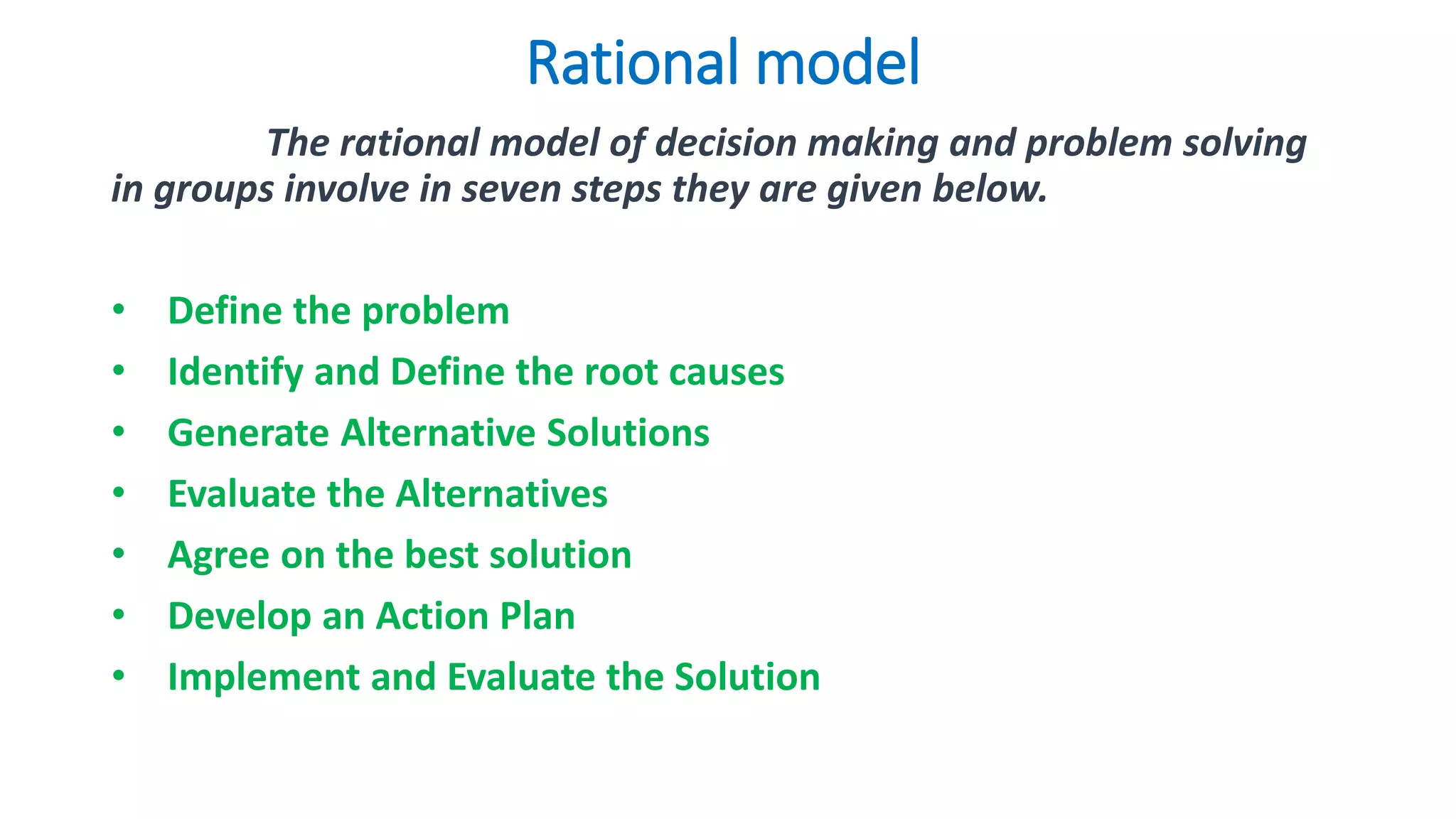
Rational model
The rational model of decision making and problem solving
in groups involve in seven steps they are given below.
• Define the problem
• Identify and Define the root causes
• Generate Alternative Solutions
• Evaluate the Alternatives
• Agree on the best solution
• Develop an Action Plan
• Implement and Evaluate the Solution
Define the problem
Define the problem: -. When defining the problem, the
statement should not imply any solutions or causes. The
current situation is defined by facts. Use clear and concise
language supported by gathered facts when defining the
problem. The desired situation, or what we want to happen, is
defined as an objective. A primary source of group
ineffectiveness is rushing to solutions before properly defining
the problem.
Identify and Define the root causes
Identify and Define the root causes: - To solve problems so
they remain solved, the group must identify and define root
causes rather than symptoms. A technique to use when
considering all possible causes is brainstorming. Brainstorming
is a technique that allows a large number of ideas to be
generated. Prior to brainstorming, go over the ground rules
with group members.
Generate Alternative Solutions
Generate Alternative Solutions: The group has to identified
and defined root causes and alternative solutions. The focus
of this step is to generate, not evaluate. Usually groups that
generate and evaluate together often reduce the number of
potentially viable solutions. After the group has exhausted its
ideas for alternative solutions, combine aspects of previously
generated solutions. Some solutions are likely to integrate the
best aspects of various ideas and also are more likely to find
consensus in the group.
Evaluate the Alternatives
Evaluate the Alternatives: - The group needs to first establish
criteria for judging solutions. The criteria should define
general characteristics that a solution should have. One way to
help members develop criteria is to ask them to complete
sentences that naturally lead to identifying criteria. Group
members should focus only on those criteria that are needed
or desired to solve the problem.
Agree on the best solution
Agree on the best solution: - Agreeing on the "best solution"
requires that the group have some ground rules for making
decisions, such as consensus or majority vote. If the group is
having difficulty in reaching consensus, members or a
facilitator should work to clarify specific areas of disagreement
and then identify ways to integrate similar interests into the
solution. Controversy and disagreement if used constructively
can be effective tools in selecting the best solution.
Develop an Action Plan
Develop an Action Plan: - Action planning is designed to involve
people, build their commitment, and increase the likelihood that the
solution will be implemented effectively and on time. To help structure
the action plan, groups can choose from a variety of action plan types.
Questions that need to be answered during action
planning include:
• What they want to do. (goal)
• How each step is to be undertaken. (strategy)
• When they want to do it. (timeframe)
• Who is responsible for each step.
• Expected outcome of the completed step.
Implement and Evaluate the Solution
Implement and Evaluate the Solution: - Solution steps should
be implemented according to the action plan. However,
sometimes unintended consequences occur that require
changing the implementation plan midstream. The group can
adapt to unintended consequences by suggesting that project
updates be added to each meeting's agenda so that the group
has a regular way to check its progress.
Decision making and problem  solving in group.

Decision making and problem solving in group.

  • 1.
    Decision making and Problemsolving in Group Three C Model, Rational Model Submitted by, Samuel Roy S2 : MSW NO : 1425
  • 2.
    Decision making andProblem solving in Group Group decision making is a type of participatory process in which multiple individuals acting collectively, analyse problems or situations, consider and evaluate alternative courses of action, and select from among the alternatives a solution or solutions. The Three C Model and Rational Model help in Decision making and Problem solving in Group.
  • 3.
    Three C Model Thethree C models of Problem Solving/Decision Making 1. Clarify the problem or the decision to be made. 2. Consider the possible alternatives and the consequences of choosing each alternative; collect any additional information needed. 3. Choose the best alternative and take the necessary action. Be sure to follow through on your decision.
  • 4.
    Clarify • Clarify: -DEFINE THE PROBLEM - State exactly what the problem or situation is which needs to be dealt with. This may seem obvious, but often people do not identify the real problem. To solve a problem, you must first determine what the problem actually is. You need to check it out. Sometimes, it is easy to focus on symptoms, not causes.
  • 5.
    Consider • Consider thepossible alternatives and the consequences • List all possible ways to resolve the problem or possible decisions that could be made. • List at least 3 alternatives because people with problems often only see in black and white. • Think about the possible choices and what would happen for each choice and also think about the positive and negative consequences for each choice. • After the group has exhausted its ideas for alternative solutions, combine aspects of previously generated solutions. Some solutions are likely to integrate the best aspects of various ideas and also are more likely to find consensus in the group.
  • 6.
    Choose Choose: - Itsimply means that choose the best. After carefully considering the consequences of each alternative, choose the most appropriate alternative. The group select the "best solution" either by evaluating criteria or by voting method. Agreeing on the "best solution" requires that the group have some ground rules for making decisions, such as consensus or majority vote. If the group is having difficulty in reaching consensus, members or a facilitator should work to clarify specific areas of disagreement and then identify ways to integrate similar interests into the solution. Controversy and disagreement if used constructively can be effective tools in selecting the best solution.
  • 7.
    Rational model The rationalmodel of decision making and problem solving in groups involve in seven steps they are given below. • Define the problem • Identify and Define the root causes • Generate Alternative Solutions • Evaluate the Alternatives • Agree on the best solution • Develop an Action Plan • Implement and Evaluate the Solution
  • 8.
    Define the problem Definethe problem: -. When defining the problem, the statement should not imply any solutions or causes. The current situation is defined by facts. Use clear and concise language supported by gathered facts when defining the problem. The desired situation, or what we want to happen, is defined as an objective. A primary source of group ineffectiveness is rushing to solutions before properly defining the problem.
  • 9.
    Identify and Definethe root causes Identify and Define the root causes: - To solve problems so they remain solved, the group must identify and define root causes rather than symptoms. A technique to use when considering all possible causes is brainstorming. Brainstorming is a technique that allows a large number of ideas to be generated. Prior to brainstorming, go over the ground rules with group members.
  • 10.
    Generate Alternative Solutions GenerateAlternative Solutions: The group has to identified and defined root causes and alternative solutions. The focus of this step is to generate, not evaluate. Usually groups that generate and evaluate together often reduce the number of potentially viable solutions. After the group has exhausted its ideas for alternative solutions, combine aspects of previously generated solutions. Some solutions are likely to integrate the best aspects of various ideas and also are more likely to find consensus in the group.
  • 11.
    Evaluate the Alternatives Evaluatethe Alternatives: - The group needs to first establish criteria for judging solutions. The criteria should define general characteristics that a solution should have. One way to help members develop criteria is to ask them to complete sentences that naturally lead to identifying criteria. Group members should focus only on those criteria that are needed or desired to solve the problem.
  • 12.
    Agree on thebest solution Agree on the best solution: - Agreeing on the "best solution" requires that the group have some ground rules for making decisions, such as consensus or majority vote. If the group is having difficulty in reaching consensus, members or a facilitator should work to clarify specific areas of disagreement and then identify ways to integrate similar interests into the solution. Controversy and disagreement if used constructively can be effective tools in selecting the best solution.
  • 13.
    Develop an ActionPlan Develop an Action Plan: - Action planning is designed to involve people, build their commitment, and increase the likelihood that the solution will be implemented effectively and on time. To help structure the action plan, groups can choose from a variety of action plan types. Questions that need to be answered during action planning include: • What they want to do. (goal) • How each step is to be undertaken. (strategy) • When they want to do it. (timeframe) • Who is responsible for each step. • Expected outcome of the completed step.
  • 14.
    Implement and Evaluatethe Solution Implement and Evaluate the Solution: - Solution steps should be implemented according to the action plan. However, sometimes unintended consequences occur that require changing the implementation plan midstream. The group can adapt to unintended consequences by suggesting that project updates be added to each meeting's agenda so that the group has a regular way to check its progress.