Department of Energy Scholars
Summer internship 2015 at USDA
Presented by: Alejandro Guzman
August 5th of 2015
Outline
● Objectives of the Internship
● Facilities Energy and Water Conservation Activities
● Sustainable Building Program Activities
● ARS Support and Activities
● FEMP Technology Exploration Forums
Internship Program
Funded by FEMP and monitored by USDA:
Internship Objectives
● Involvement with a real world need on energy and water conservation
projects and the Federal Government
● Learn Operation and Sustainability for the different sectors in Federal
facilities
● Deliver assistance with the ongoing projects of energy reduction and
renewable energy implementation
● Access and planning water conservation measures
● Knowing about construction and sustainable buildings policy
● Acquiring a valuable education and experience for future employment
Assigned Intern Position
United States Department of Agriculture
● Departmental Management
o Office of Procurement and Property Management (OPPM)
❑ Environmental Management Division (EMD)
o Facilities Energy and Water Conservation
o Sustainable Buildings
● Agricultural Research Service (ARS)
o Facilities Energy Evaluations at Beltsville Agricultural Research Center
(BARC)
Facilities Energy and
Water Conservation
Activities
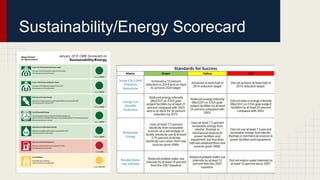
Sustainability/Energy Scorecard
Agencies Sustainability/Energy
Scorecard
• Compiled agency data
• Analyzed agency data
• Assisted with development of scorecard
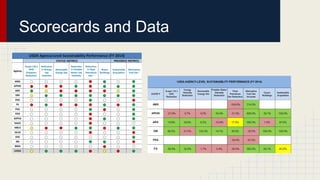
Scorecards and Data
GREEN BUTTON
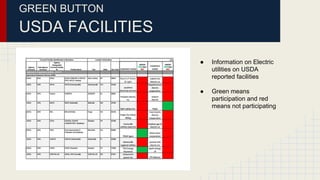
GREEN BUTTON
USDA FACILITIES
● Information on Electric
utilities on USDA
reported facilities
● Green means
participation and red
means not participating
USDA Advanced Utility Metering Plan
• Reviewed DOE Metering Guidance
• Assisted development of Metering Plan
Template
• Reviewed draft Agency Plans
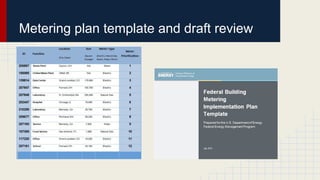
Metering plan template and draft review
Geographic Information System (GIS)
● Develop GIS Layers
○ USDA Covered Facilities
○ Energy Costs
○ Renewable Energy Resources (e.g., solar, wind)
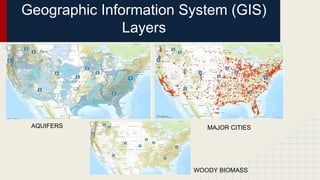
WOODY BIOMASS
MAJOR CITIESAQUIFERS
Geographic Information System (GIS)
Layers
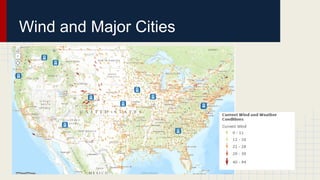
Wind and Major Cities
Sustainable Building
Program Activities
Sustainable Buildings Policy
● Locating Federal Facilities
o Executive agencies must comply with the Council on Environmental Quality’s Implementing
Instructions - Sustainable Locations for Federal Facilities, of September 15, 2011. Sustainable
locations are pedestrian and bicycle travel friendly, in or near existing employment centers,
accessible to public transit, and may be in centers of existing cities and towns.
Executive agencies must comply with the location policies in this part and Part 102-83 of this
chapter.
Support local goals for smart growth projects and ensure that Federal locations do not
disproportionately impact the existing transportation infrastructure. Take steps to reuse
previously developed sites, to revitalize communities, to reduce sprawl, and to minimize the need
for costly new infrastructure and new development.
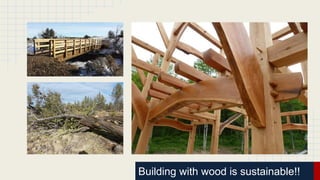
Building with wood is sustainable!!
ARS Support & Activities
Energy Audits
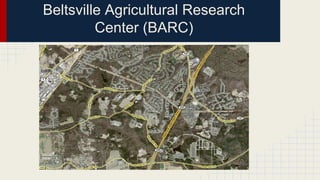
Beltsville Agricultural Research
Center (BARC)
Level One Energy Evaluations
● General walk through
● Document obvious problems or misuses of energy
● Assess electrodomestic items and refrigerators
● Assess Air Conditioning units
● Assess lights
● Take note of air leaks and/or humidity filtration in the building
● Find Electric, Gas and water meters if possible
● Inspect windows and insulation
● Assess water uses, toilets and faucets
Level One Energy Evaluations
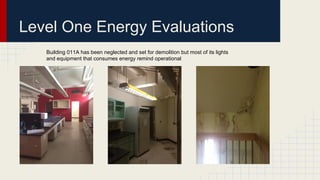
Building 011A has been neglected and set for demolition but most of its lights
and equipment that consumes energy remind operational
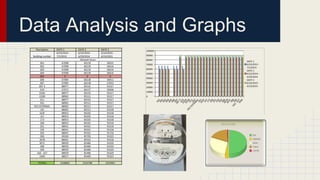
Data Analysis and Graphs
FEMP Forums
Fort Carson
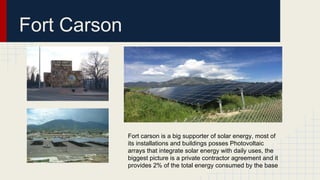
Fort carson is a big supporter of solar energy, most of
its installations and buildings posses Photovoltaic
arrays that integrate solar energy with daily uses, the
biggest picture is a private contractor agreement and it
provides 2% of the total energy consumed by the base
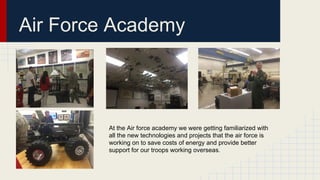
Air Force Academy
At the Air force academy we were getting familiarized with
all the new technologies and projects that the air force is
working on to save costs of energy and provide better
support for our troops working overseas.
General Services Administration
(GSA)
The General Services Administration is the
government real estate agent, they are constantly
working on sustainability programs and renewables.
we had a quick conversation about some of the solar
projects being done on site.
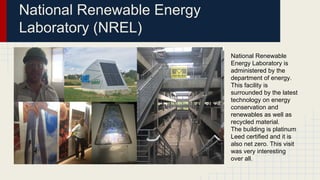
National Renewable Energy
Laboratory (NREL)
National Renewable
Energy Laboratory is
administered by the
department of energy.
This facility is
surrounded by the latest
technology on energy
conservation and
renewables as well as
recycled material.
The building is platinum
Leed certified and it is
also net zero. This visit
was very interesting
over all.
NREL Wind Laboratory
Here is a representation on how the wind turbine works to
produce energy. Surprisingly only one windmill can produce at
least 1.5 megawatts of energy, that is enough to support almost
1000 average homes with electricity in the US.
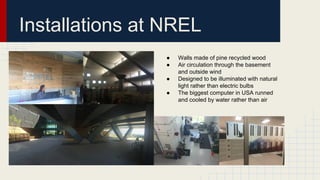
Installations at NREL
● Walls made of pine recycled wood
● Air circulation through the basement
and outside wind
● Designed to be illuminated with natural
light rather than electric bulbs
● The biggest computer in USA runned
and cooled by water rather than air
Questions?

DCP 4942_Alejandro Guzman_ POWER POINT USDA FINAL.pptx

  • 1.
    Department of EnergyScholars Summer internship 2015 at USDA Presented by: Alejandro Guzman August 5th of 2015
  • 2.
    Outline ● Objectives ofthe Internship ● Facilities Energy and Water Conservation Activities ● Sustainable Building Program Activities ● ARS Support and Activities ● FEMP Technology Exploration Forums
  • 3.
    Internship Program Funded byFEMP and monitored by USDA:
  • 4.
    Internship Objectives ● Involvementwith a real world need on energy and water conservation projects and the Federal Government ● Learn Operation and Sustainability for the different sectors in Federal facilities ● Deliver assistance with the ongoing projects of energy reduction and renewable energy implementation ● Access and planning water conservation measures ● Knowing about construction and sustainable buildings policy ● Acquiring a valuable education and experience for future employment
  • 5.
    Assigned Intern Position UnitedStates Department of Agriculture ● Departmental Management o Office of Procurement and Property Management (OPPM) ❑ Environmental Management Division (EMD) o Facilities Energy and Water Conservation o Sustainable Buildings ● Agricultural Research Service (ARS) o Facilities Energy Evaluations at Beltsville Agricultural Research Center (BARC)
  • 6.
    Facilities Energy and WaterConservation Activities
  • 7.
  • 8.
    Agencies Sustainability/Energy Scorecard • Compiledagency data • Analyzed agency data • Assisted with development of scorecard
  • 9.
  • 10.
  • 11.
    GREEN BUTTON USDA FACILITIES ●Information on Electric utilities on USDA reported facilities ● Green means participation and red means not participating
  • 12.
    USDA Advanced UtilityMetering Plan • Reviewed DOE Metering Guidance • Assisted development of Metering Plan Template • Reviewed draft Agency Plans
  • 13.
    Metering plan templateand draft review
  • 14.
    Geographic Information System(GIS) ● Develop GIS Layers ○ USDA Covered Facilities ○ Energy Costs ○ Renewable Energy Resources (e.g., solar, wind)
  • 15.
    WOODY BIOMASS MAJOR CITIESAQUIFERS GeographicInformation System (GIS) Layers
  • 16.
  • 17.
  • 18.
    Sustainable Buildings Policy ●Locating Federal Facilities o Executive agencies must comply with the Council on Environmental Quality’s Implementing Instructions - Sustainable Locations for Federal Facilities, of September 15, 2011. Sustainable locations are pedestrian and bicycle travel friendly, in or near existing employment centers, accessible to public transit, and may be in centers of existing cities and towns. Executive agencies must comply with the location policies in this part and Part 102-83 of this chapter. Support local goals for smart growth projects and ensure that Federal locations do not disproportionately impact the existing transportation infrastructure. Take steps to reuse previously developed sites, to revitalize communities, to reduce sprawl, and to minimize the need for costly new infrastructure and new development.
  • 19.
    Building with woodis sustainable!!
  • 20.
    ARS Support &Activities Energy Audits
  • 21.
  • 22.
    Level One EnergyEvaluations ● General walk through ● Document obvious problems or misuses of energy ● Assess electrodomestic items and refrigerators ● Assess Air Conditioning units ● Assess lights ● Take note of air leaks and/or humidity filtration in the building ● Find Electric, Gas and water meters if possible ● Inspect windows and insulation ● Assess water uses, toilets and faucets
  • 23.
    Level One EnergyEvaluations Building 011A has been neglected and set for demolition but most of its lights and equipment that consumes energy remind operational
  • 24.
  • 25.
  • 26.
    Fort Carson Fort carsonis a big supporter of solar energy, most of its installations and buildings posses Photovoltaic arrays that integrate solar energy with daily uses, the biggest picture is a private contractor agreement and it provides 2% of the total energy consumed by the base
  • 27.
    Air Force Academy Atthe Air force academy we were getting familiarized with all the new technologies and projects that the air force is working on to save costs of energy and provide better support for our troops working overseas.
  • 28.
    General Services Administration (GSA) TheGeneral Services Administration is the government real estate agent, they are constantly working on sustainability programs and renewables. we had a quick conversation about some of the solar projects being done on site.
  • 29.
    National Renewable Energy Laboratory(NREL) National Renewable Energy Laboratory is administered by the department of energy. This facility is surrounded by the latest technology on energy conservation and renewables as well as recycled material. The building is platinum Leed certified and it is also net zero. This visit was very interesting over all.
  • 30.
    NREL Wind Laboratory Hereis a representation on how the wind turbine works to produce energy. Surprisingly only one windmill can produce at least 1.5 megawatts of energy, that is enough to support almost 1000 average homes with electricity in the US.
  • 31.
    Installations at NREL ●Walls made of pine recycled wood ● Air circulation through the basement and outside wind ● Designed to be illuminated with natural light rather than electric bulbs ● The biggest computer in USA runned and cooled by water rather than air
  • 32.