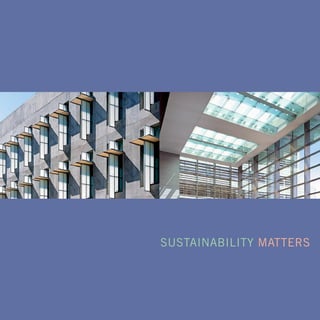
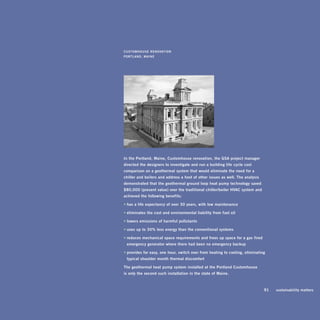
SuStainaBiLitY MattERS
U.S. General Services Administration
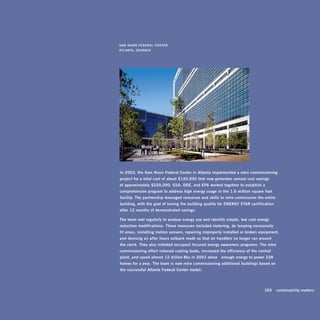
Public Buildings Service
Office of Applied Science
1800 F Street, NW
Washington, DC 20405

For more information:
www.gsa.gov
SuStAiNABiLitY MAttERS
U.S. General Services Administration
2008
Table of conTenTs   1       m e S S A G e f r o m t h e A c t i n G A d m i n i S t r At o r

                    3       meSSAGe from the commiSSioner

                    4       introdUction


                    8       the case for Sustainability
                            CASE StuDY: SAN FRANCiSCO FEDERAL BuiLDiNg, SAN FRANCiSCO, CALiFORNiA


                    34      the Greenest Alternative
                            CASE StuDY: HOWARD M. MEtzENBAuM u.S. COuRtHOuSE, CLEvELAND, OHiO


                    52      cost, Value, and Procurement of Green Buildings
                            CASE StuDY: EPA REgiON 8 HEADquARtERS, DENvER, COLORADO


                            sTraTegies

                    74           energy efficiency
                                 CASE StuDY: BiSHOP HENRY WHiPPLE FEDERAL BuiLDiNg, FORt SNELLiNg, MiNNESOtA


                    100          Site and Water
                                 CASE StuDY: NOAA SAtELLitE OPERAtiONS FACiLitY, SuitLAND, MARYLAND


                    118          indoor environmental Quality
                                 CASE StuDY: ALFRED A. ARRAj u.S. COuRtHOuSE, DENvER, COLORADO


                    140          materials
                                 CASE StuDY: CARL t. CuRtiS MiDWESt REgiONAL HEADquARtERS, OMAHA, NEBRASkA


                    156          operations and maintenance
                                 CASE StuDY: jOHN j. DuNCAN FEDERAL BuiLDiNg, kNOxviLLE, tENNESSEE


                    182     Beyond GSA: the Greening of America
                    	       CONvERSAtiONS AND REFLECtiONS: BOB BERkEBiLE, FAiA, AND BOB FOx, AiA


                    194     moving forward: the challenges Ahead
                        	

                    204     GSA Leed BUiLdinGS

                    211     AcknoWLedGementS
tHE HuMAN RACE

iS CHALLENgED MORE tHAN EvER BEFORE

   tO DEMONStRAtE OuR MAStERY—


         NOt OvER NAtuRE,

          But OuRSELvES.


             rachel carson
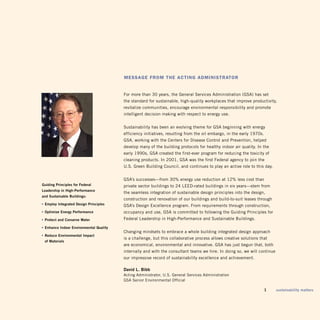
Message froM The acTing adMinisTraTor


                                         For more than 30 years, the general Services Administration (gSA) has set
                                         the standard for sustainable, high-quality workplaces that improve productivity,
                                         revitalize communities, encourage environmental responsibility and promote
                                         intelligent decision making with respect to energy use.


                                         Sustainability has been an evolving theme for gSA beginning with energy
                                         efficiency initiatives, resulting from the oil embargo, in the early 1970s.
                                         gSA, working with the Centers for Disease Control and Prevention, helped
                                         develop many of the building protocols for healthy indoor air quality. in the
                                         early 1990s, gSA created the first-ever program for reducing the toxicity of
                                         cleaning products. in 2001, gSA was the first Federal agency to join the
                                         u.S. green Building Council, and continues to play an active role to this day.


                                         gSA’s successes—from 30% energy use reduction at 12% less cost than
Guiding Principles for federal           private sector buildings to 24 LEED-rated buildings in six years—stem from
Leadership in high-Performance
                                         the seamless integration of sustainable design principles into the design,
and Sustainable Buildings:
                                         construction and renovation of our buildings and build-to-suit leases through
• employ integrated design Principles    gSA’s Design Excellence program. From requirements through construction,
• optimize energy Performance            occupancy and use, gSA is committed to following the guiding Principles for
• Protect and conserve Water             Federal Leadership in High-Performance and Sustainable Buildings.

• enhance indoor environmental Quality
                                         Changing mindsets to embrace a whole building integrated design approach
• reduce environmental impact
                                         is a challenge, but this collaborative process allows creative solutions that
 of materials
                                         are economical, environmental and innovative. gSA has just begun that, both
                                         internally and with the consultant teams we hire. in doing so, we will continue
                                         our impressive record of sustainability excellence and achievement.

                                         david L. Bibb
                                         Acting Administrator, u.S. general Services Administration
                                         gSA Senior Environmental Official

                                                                                                                       1   sustainability matters
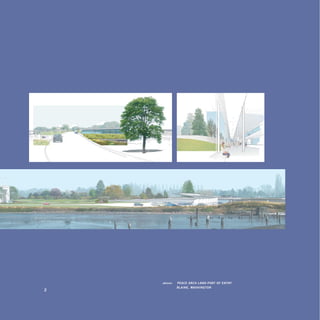
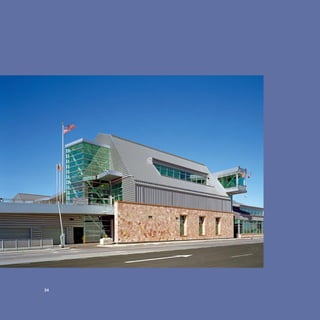
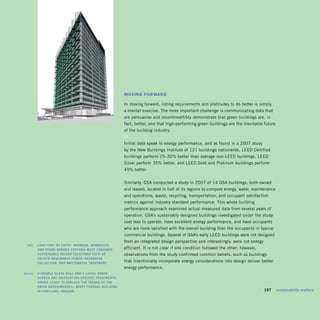
above:	   PeAce Arch LAnd Port of entry
              BLAine, WAShinGton
2
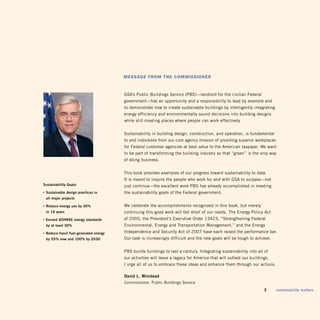
Message froM The coMMissioner


                                        gSA’s Public Buildings Service (PBS)—landlord for the civilian Federal
                                        government—has an opportunity and a responsibility to lead by example and
                                        to demonstrate how to create sustainable buildings by intelligently integrating
                                        energy efficiency and environmentally sound decisions into building designs
                                        while still creating places where people can work effectively.


                                        Sustainability in building design, construction, and operation, is fundamental
                                        to and indivisible from our core agency mission of providing superior workplaces
                                        for Federal customer agencies at best value to the American taxpayer. We want
                                        to be part of transforming the building industry so that “green” is the only way
                                        of doing business.


                                        this book provides examples of our progress toward sustainability to date.
                                        it is meant to inspire the people who work for and with gSA to surpass—not
Sustainability Goals:                   just continue—the excellent work PBS has already accomplished in meeting
• Sustainable design practices in       the sustainability goals of the Federal government.
 all major projects

• reduce energy use by 30%              We celebrate the accomplishments recognized in this book, but merely
 in 10 years                            continuing this good work will fall short of our needs. the Energy Policy Act
• exceed AShrAe energy standards        of 2005, the President’s Executive Order 13423, “Strengthening Federal
 by at least 30%                        Environmental, Energy and transportation Management,” and the Energy
• reduce fossil fuel-generated energy   independence and Security Act of 2007 have each raised the performance bar.
 by 55% now and 100% by 2030            Our task is increasingly difficult and the new goals will be tough to achieve.


                                        PBS builds buildings to last a century. integrating sustainability into all of
                                        our activities will leave a legacy for America that will outlast our buildings.
                                        i urge all of us to embrace these ideas and enhance them through our actions.

                                        david L. Winstead
                                        Commissioner, Public Buildings Service
                                                                                                                	   3      sustainability matters
inTroducTion


    gSA presents this resource as an aid to improve current practices and to
    encourage continuing innovations that create and maintain sustainable work
    environments. Whatever mission a Federal agency may have, this publication
    presents an integrated approach, illustrated with numerous and various
    examples, that will improve buildings and workplaces and achieve legislative
    and executive mandates: at best value to taxpayers and without compromising
    the quality of life of future Americans.


    the book begins by setting the stage for sustainability in the Federal
    government. the second chapter, “the greenest Alternative” highlights the
    importance of the preservation of existing resources and the sustainability
    of not building at all. the third chapter addresses the value proposition
    and practical procurement practices for green buildings. the following five
    chapters offer proven examples of processes and techniques gSA can and
    should be implementing. the strategies address the broad panoply of a
    building’s lifecycle—from choosing a site through operations, maintenance
    and renovation.


    Each chapter’s content is illustrated by case studies of gSA facilities that
    emphasize the knowledge and strategies presented therein. in aggregate,
    they highlight the creativity, diligence and understanding of asset managers,
    project managers, property managers, and realty professionals. their success
    should inspire project teams to solve the new challenges we face, and improve
    each building through an integrated approach from the earliest phase.
the book’s concluding chapters acknowledge the green movement external to
the Federal government, its influencers and gSA’s continuing and emerging
efforts to participate in and, in fact, lead by deed and example.


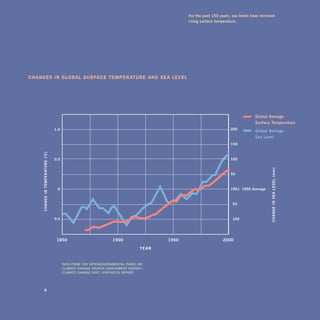
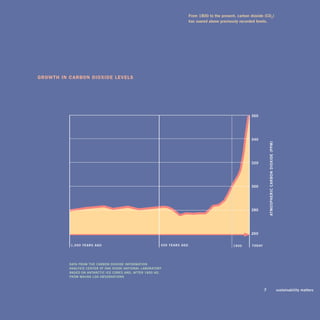
As seen in the following charts, the world is taking notice of the urgency
before us. global scale environmental changes demand an examination of
current practice and a vision for the future. it is in this context that gSA
must make operational and design decisions to continue to meet the
mission-related needs of customer agencies.


Changing standard practices always involves risk. But the examples
herein contain ideas and strategies that can reduce energy consumption,
discourage resource depletion, increase productivity, and create healthy
work environments. this is the legacy we at gSA wish to leave behind—
buildings of today that incorporate our hopes for tomorrow.


                                                                       	   5   sustainability matters
For the past 150 years, sea levels have mirrored
                                                                                            rising surface temperature.


Changes in global surfaCe temperature and sea level


                                                                                                                                 global Average
                                                                                                                                 Surface Temperature
                                 1.0                                                                               200

                                                                                                                                 global Average
                                                                                                                                 Sea Level
                                                                                                                   150

    ChAngE in TEmpERATuRE (ºC)


                                 0.5                                                                               100


                                                                                                                                          ChAngE in SEA LEvEL (mm)
                                                                                                                   50


                                   0                                                                               191–1990 A verage


                                                                                                                   –50


                                 –0.5                                                                              –100


                                   1850                         1900                 1950                      2000

                                                                             YEAR


                                        DATA FRom ThE inTERgovERnmEnTAL pAnEL on
                                        CLimATE ChAngE FouRTh ASSESSmEnT REpoRT—
                                        CLimATE ChAngE 2007: SYnThESiS REpoRT
From 1800 to the present, carbon dioxide (Co2)
                                                                         has soared above previously recorded levels.


growth in Carbon dioxide levels


                                                                                                          30


                                                                                                          340


                                                                                                                          ATmoSphERiC CARbon DioxiDE (ppm)
                                                                                                          320


                                                                                                          300


                                                                                                          280


                                                                                                          20


          1,000 YEARS Ago                                500 YEARS Ago                           1900      T o D AY


          DATA FRom ThE CARbon DioxiDE inFoRmATion
          AnALYSiS CEnTER AT oAk RiDgE nATionAL LAboRAToRY
          bASED on AnTARCTiC iCE CoRES AnD, AFTER 1800 AD,
          FRom mAunA LoA obSERvATionS


                                                                                                                      7                                      sustainability matters
8
The Case for Sustainability


                                             sustainability and the federal government


                                                      The Federal government’s environmental footprint is enormous. As the owner
                                                      of nearly 450,000 buildings with more than 3 billion square feet of floor
                                                      space—an area larger than the state of Nevada—the Federal government has
                                                      both the responsibility and the unique opportunity to reduce its impact on the
                                                      environment. Through the sustainable design, construction, operation, and
         the challenge—to make                        maintenance of Federal buildings, our government can reduce the emission of
         federal buildings more                       greenhouse gases, curtail energy costs, contribute to national security by
         sustainable—begins in a                      reducing our dependence on foreign energy sources, improve working conditions
         context of hundreds of                       for its millions of employees, and perhaps most importantly, serve as a model
         thousands of diverse buildings,              for the private sector.
         serving unique purposes, and
         owned by numerous agencies,                  Arriving at this holistic view of sustainability has taken decades—now the
         with significant environmental               challenge is to apply its universal principles to the individual missions of every
         impacts and the opportunity
                                                      governmental agency.
         for improvement.
         FRom The Federal CommiTmenT To               Also, green building and issues of sustainability have come to bear on policy
         Green BuildinG: experienCes and
                                                      decisions made outside the environmental arena. Energy security has become
         expeCTaTions, 2003, oFFiCE oF ThE
         FEDERAL EnviRonmEnTAL ExECuTivE              increasingly important to the Federal government, and in particular the
                                                      Department of Defense—itself responsible for more than half of the govern­
                                                      ment’s energy use. It was a concern of the Energy Independence and Security
                                                      Act of 2007 and the subject of current legislative proposals. As far back as the
                                                      oil embargo of the mid-1970s, agencies understood that reducing dependence
                                                      on foreign oil was as much a military as an economic strategy, and that energy
                                                      conservation could play a major role in that effort. Just as importantly, by
                                                      spending less money on energy, the government will have more funds available
                                                      to meet its core missions. The adoption of environmentally sound design,
                                                      building, and maintenance practices not only makes sense for the planet,
                                                      it also makes sense for the Federal budget and for our national security.
left:	   ThE REpETiTivE inTERpLAY oF SunShADES,
         LighT ShELvES, AnD RECESSED winDowS
         ConTRoLS DAYLighT AT ThE okLAhomA CiTY
         FEDERAL buiLDing.                                                                                                            9    sustainability matters
The Case for Sustainability


     The U.S. General Services Administration is, therefore, committed to
     sustainable design defined by five overarching goals:

     1 Using an integrated team approach to design, construct and operate its
       buildings,

     2 Reducing the total life-cycle ownership cost of facilities,

     3 Improving energy efficiency, water conservation, and reducing material
       consumption,

     4 Providing safe, healthy, and productive built environments,

     5 Promoting excellence in environmental stewardship.


     A Short history of gSA and Sustainable practices
     GSA’s energy program began like that of many Federal agencies—as a response
     to the energy crisis of the early 1970s. Unlike the general public, however,
     whose interest in conservation waned once the crisis passed, GSA’s interest in
     sustainability grew throughout the decade. As a result, when oil prices began
     to spike again in the early 1980s, the agency was prepared. In addition to
     numerous energy-saving initiatives involving the lighting, heating, and cooling
     of its facilities, GSA also promoted water-saving programs, environmentally
     beneficial landscaping, and incorporated guidelines established by the
     Environmental Protection Agency (EPA) for the use of recycled-content and
     environmentally preferable building materials. The design of mechanical
     systems included economizers and heat recovery equipment, saving energy as
     well as enhancing indoor air quality through an increased use of outside air.
     Recognizing the impact of a healthy workplace on employee satisfaction and
     productivity, GSA developed green cleaning policies as early as 1992.


10
u.s. buildings aCCount for:           Over time, individual “best practices” within the agency were included
                                      in GSA’s Facilities Standards for the Public Buildings Service, the most
39% of total energy use
                                      comprehensive and progressive set of building standards then in existence.
12% of total water consumption        In essence, GSA had implemented a comprehensive sustainable design
8% total electricity consumption     strategy for new buildings in advance of any policy directive.
38% of all carbon dioxide emissions
0% of total non-industrial waste     Furthermore, GSA created a strategy for the adoption of the principles of
                                      sustainable design, focusing on three specific goals: 1) commitment at the
CompiLED bY EpA gREEn buiLDing
                                      strategic level; 2) integration into current standards and processes; and
woRkgRoup 2004
                                      3) gaining the support of GSA associates through training and education.
                                      The goal was a challenging one, and involved the design, implementation,
                                      and seamless integration of a sustainable design program into the day-to-day
                                      business practices and processes of the Public Buildings Service.


                                      In the late 1990s a series of Executive orders focused on “greening” the
                                      government laid the foundation for many of the Federal environmental policies
                                      in place today. Executive Order (EO) 13123 “Greening the Government through
                                      Efficient Energy Management,” signed in June of 1999, was the first to
                                      mention sustainable design. That order charged an interagency team, led by
                                      GSA and the Department of Defense, to define precisely what sustainable
                                      design and development principles would mean to the Federal government.
                                      The resulting six principles guided the future development of the Whole
                                      Building Design Guide, which emphasizes a holistic, sustainable approach to
                                      facilities design, construction, and maintenance. Sustainable design became an
                                      umbrella term encompassing all of the best environmental building strategies.


                                                                                                                     11 sustainability matters
whole building design guide

                                As they began the monumental task of upgrading criteria documents for
                                the naval Facilities Engineering Command in 1997, the members and staff
                                of the Sustainable buildings industry Council (SbiC) and its then Chairman,
                                visionary architect and educator, Don prowler, first conceived of the on- line
                                resource, the whole building Design guide (wbDg). After nearly two years of
                                development, the site was turned over to the national institute of building
                                Sciences. it has since become the primary web- based portal for architects and
                                engineers in government and industry to gain access to up- to- date information
                                on a wide range of buildings- related guidance, criteria and resources.

                                Design objectives, the website’s first section, focuses on eight critical aspects
                                for designing, delivering and operating almost any building: accessibility,
                                aesthetics, cost effectiveness, functionality, historic, productivity, safety and
                                security, and sustainability. Sustainability became the first of these to be fully
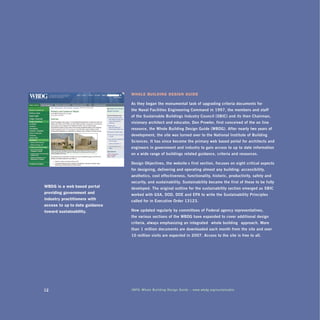
wbdg is a web-based portal      developed. The original outline for the sustainability section emerged as SbiC
providing government and        worked with gSA, DoD, DoE and EpA to write the Sustainability principles
industry practitioners with     called for in Executive order 13123.
access to up-to-date guidance
toward sustainability.          now updated regularly by committees of Federal agency representatives,
                                the various sections of the wbDg have expanded to cover additional design
                                criteria, always emphasizing an integrated “ whole building” approach. more
                                than 1 million documents are downloaded each month from the site and over
                                10 million visits are expected in 2007. Access to the site is free to all.


12                              inFo: whole building Design guide – www.wbdg.org/sustainable
guiding prinCiples:                                     Following these early initiatives, GSA continued to develop and implement
                                                        sustainable policy into the 21st century. The Energy Policy Act of 2005
i.   Employ integrated Design principles
                                                        formally established the wording of EO 13123 as national policy, requiring
     • integrated Design
                                                        all Federal agencies to apply sustainable design principles to the siting,
     • Commissioning
                                                        design and construction of all new facilities if life-cycle cost effective.
ii. optimize Energy performance
     • Energy Efficiency                                GSA, in partnership with the Departments of Defense and Energy and through
     • measurement and verification                     the Interagency Sustainability Working Group, worked to pool the strength of
iii. protect and Conserve water                         the three agencies to support Federal construction requirements that mandated
     • indoor water
                                    the incorporation of sustainable design strategies. The group identified the
     • outdoor water
                                   most commonly used, financially feasible and measurable strategies with the
iv. Enhance indoor Environmental Quality                intention that a Memorandum of Understanding (MOU) between participating
     • ventilation and Thermal Comfort
                                                        agencies would make them de facto standards for Federal construction.

     • moisture Control
                                                        The office of the Federal Environmental Executive adopted the resulting
     • Daylighting
                                                        document and its signing became a highlight of the first White House Summit
     • Low-Emitting materials
                                                        on Sustainable Federal Buildings held January 24-25, 2006. Nineteen
     • protect indoor Air Quality during Construction   agencies signed the MOU on the first day. Exactly one year later President Bush
v. Reduce Environmental impact of materials             signed Executive Order 13423, “Strengthening Federal Environmental,
     • Recycled Content                                 Energy and Transportation Management,” establishing the MOU and its
     • biobased Content                                 “Guiding Principles for Federal Leadership in High Performance and
     • Construction waste
                              Sustainable Buildings” as formal Federal policy.
     • ozone Depleting Compounds

                                                        As Congress and the American people continue to learn of how buildings
                                                        contribute to climate change, energy efficiency has taken on an even greater
                                                        significance. During the 2007 Congressional session, legislators introduced
                                                        26 pieces of legislation with the potential to affect Federal energy and
                                                        sustainable design programs. The Energy Independence and Security Act of
                                                        2007 (EISA 2007) is the result that codified many of the goals of EO 13423,
                                                        and for the first time set targets for the reduction of fossil fuel-generated energy
                                                        used by buildings.
                                                                                                                                        13 sustainability matters
The Case for Sustainability


                                         gSA and LEED®
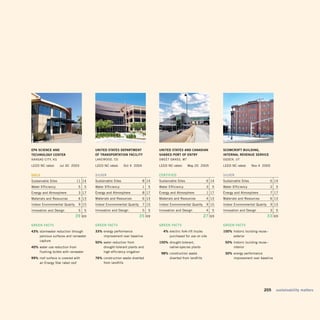
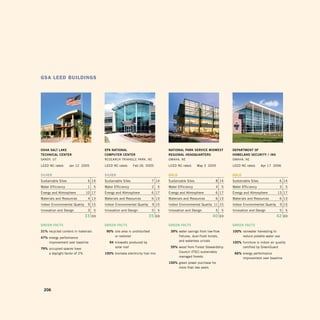
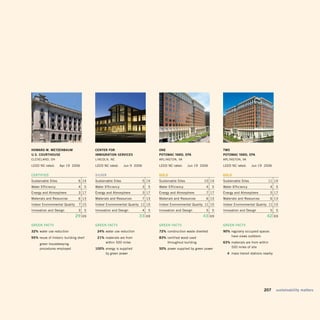
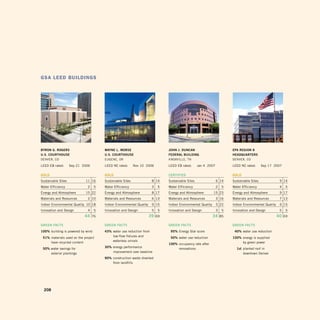
gSA LEED buiLDingS
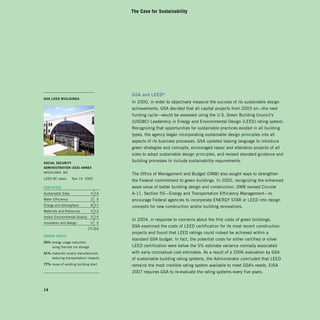
                                         In 2000, in order to objectively measure the success of its sustainable design
                                         achievements, GSA decided that all capital projects from 2003 on—the next
                                         funding cycle—would be assessed using the U.S. Green Building Council’s
                                         (USGBC) Leadership in Energy and Environmental Design (LEED) rating system.
                                         Recognizing that opportunities for sustainable practices existed in all building
                                         types, the agency began incorporating sustainable design principles into all
                                         aspects of its business processes. GSA updated leasing language to introduce
                                         green strategies and concepts, encouraged repair and alteration projects of all
                                         sizes to adopt sustainable design principles, and revised standard guidance and

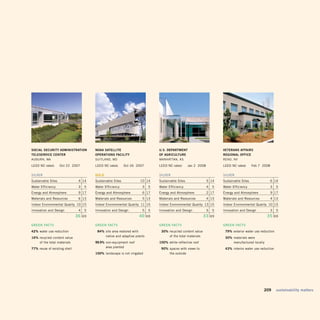
SoCiAL SECuRiTY
                                         building processes to include sustainability requirements.
ADminiSTRATion (SSA) AnnEx
WOODLAWN, MD
                                         The Office of Management and Budget (OMB) also sought ways to strengthen
LEED NC rated:      Nov 19 2002
                                         the Federal commitment to green buildings. In 2002, recognizing the enhanced
CERTiFiED                                asset value of better building design and construction, OMB revised Circular
Sustainable Sites               4 14     A-11, Section 55—Energy and Transportation Efficiency Management—to
Water Efficiency                2    5   encourage Federal agencies to incorporate ENERGY STAR or LEED into design
Energy and Atmosphere           8 17     concepts for new construction and/or building renovations.
Materials and Resources         5 13
Indoor Environmental Quality    5 15
                                         In 2004, in response to concerns about the first costs of green buildings,
Innovation and Design           2    5
                                         GSA examined the costs of LEED certification for its most recent construction
                               2   69
                                         projects and found that LEED ratings could indeed be achieved within a
gREEn FACTS
                                         standard GSA budget. In fact, the potential costs for either certified or silver
25% energy usage reduction
    using thermal ice storage            LEED certification were below the 5% estimate variance normally associated
41% materials locally manufactured,      with early conceptual cost estimates. As a result of a 2006 evaluation by GSA
    reducing transportation impacts      of sustainable building rating systems, the Administrator concluded that LEED
77% reuse of existing building shell     remains the most credible rating system available to meet GSA’s needs. EISA
                                         2007 requires GSA to re-evaluate the rating systems every five years.


14
Enhancing the vision
Support from the Administrator of GSA and the Commissioner of the Public
Buildings Service (PBS), as well as training programs throughout all GSA regional
offices continue to maintain and strengthen the entire agency’s commitment
to sustainability.


GSA’s long established emphasis on healthy and productive work environments
is perfectly compatible with the principles of sustainable design, which, at times,
calls for going beyond standard building codes. Whether within or in addition
to existing design and construction guidelines, GSA’s goal has been to provide
superior workplaces for Federal workers at the best value to the U.S. taxpayer.
It is the position of GSA that this vision—in essence, to be the best public real
estate organization in the world—is enhanced through its increased focus on all
aspects of sustainability in buildings.


design exCellenCe
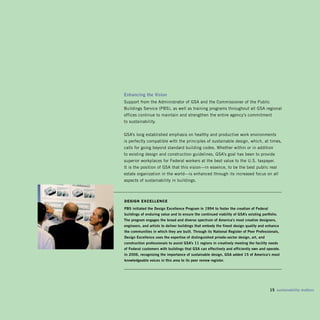
pbS initiated the Design Excellence program in 1994 to foster the creation of Federal
buildings of enduring value and to ensure the continued viability of gSA’s existing portfolio.
The program engages the broad and diverse spectrum of America’s most creative designers,
engineers, and artists to deliver buildings that embody the finest design quality and enhance
the communities in which they are built. Through its national Register of peer professionals,
Design Excellence uses the expertise of distinguished private-sector design, art, and
construction professionals to assist gSA’s 11 regions in creatively meeting the facility needs
of Federal customers with buildings that gSA can effectively and efficiently own and operate.
in 200, recognizing the importance of sustainable design, gSA added 15 of America’s most
knowledgeable voices in this area to its peer review register.


                                                                                         15 sustainability matters
The Case for Sustainability


     integrated Design
     Delivery and management of buildings that accomplish the multiple goals of
     sustainability cannot reasonably result from processes that focus on single
     systems and short-term goals. From the beginning of any project, all the parties’
     need to be involved in a structured process that ensures that the result will
     deliver performance that meets all the parties needs. The building tenants and
     their customers; the building operators; the entire design and delivery team; all
     bring crucial understanding of different aspects of building performance.


     One key to such change is an integrated design process. This is not a difficult
     concept to understand or to embrace, but, at times has proven difficult to
     practice. Nonetheless, it is the first step toward changing entrenched processes
     that tend to deliver the same limited results.


     The design charrette can be the mechanism that overcomes these obstacles
     and starts the communication process between the team members, building
     users, and project management staff. As such, it is important that all relevant
     decision makers participate. The charrette, viewed as a creative burst of energy
     that builds momentum for a project and sets it on a course to meet project
     goals, can transform a project from a static, complex problem to a successful,
     buildable plan. Usually, it is an intensely focused, multi-day session that uses
     a collaborative approach to create realistic and achievable design ideas that
     respond holistically to the issues at hand.


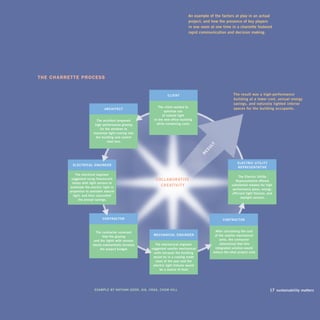
1
An example of the factors at play in an actual
                                                                                                 project, and how the presence of key players
                                                                                                 in one room at one time in a charrette fostered
                                                                                                 rapid communication and decision making.


         the Charrette proCess


                                                                                   CLiEnT                                     The result was a high-performance
                                                                                                                              building at a lower cost, annual energy
                                                                                                                              savings, and naturally lighted interior
                                                                             The client wanted to                             spaces for the building occupants.
                                                  ARChiTECT
                                                                                 optimize use
                                                                                of natural light
                                            The architect proposed        in the new office building
                                           high - performance glazing       while containing costs.
                                              for the windows to
                                          maximize light coming into
                                           the building and control
                                                     heat loss.


                                                                                                               LT
                                                                                                           Su
                                                                                                          RE
                                                                                                                                 ELECTRiC uTiLiTY
                            ELECTRiCAL EnginEER
                                                                                                                                 REpRESEnTATivE

                               The electrical engineer
                                                                                                                                  The Electric utility
                           suggested using fluorescent                      CoLLAboRATivE
                                      Representative offered
                            lamps with light sensors to
                          modulate the electric light in
                                                                              CREATiviTY
                                    substantial rebates for high -
                                                                                                                              performance glass, energy -
                          proportion to available natural
                                                                                                                             efficient light fixtures, and
                             light, and then calculated
                                                                                                                                   daylight sensors.
                                 the annual savings.


                                                ConTRACToR                                                            ConTRACToR


                                           The contractor surmised                                                After calculating the cost
                                                                          mEChAniCAL EnginEER                    of the smaller mechanical
                                                that the glazing
                                          and the lights with sensors                                                units, the contractor
                                          would substantially increase      The mechanical engineer                  determined that this
                                              the project budget.        suggested smaller mechanical             integrated solution would
                                                                           units because the building           reduce the total project cost.
                                                                          would be in a cooling mode
                                                                            most of the year and the
                                                                          electric light fixtures would
                                                                               be a source of heat.


above:   ThE CApTion inFoRmATion goES hERE FoR
         ThE phoTo AT LEFT             ExAmpLE bY nAThAn gooD, AiA, iiDAA, Ch2m hiLL                                                                17 17 sustainability matters
                                                                                                                                                          sustainability matters
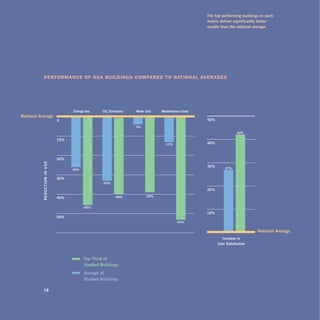
The top performing buildings in each
                                                                                                        metric deliver significantly better
                                                                                                        results than the national average.


             performanCe of gsa buildings Compared to national averages


                                        Energy use     Co2 Emissions   water use    maintenance Costs
national Average
                                0                                                                       50%
                                                                       -3%
                                                                                                                          42%

                                -10%
                                                                                      -13%              40%


                                -20%
           R EDuCT ion in uSE


                                                                                                        30%       27%
                                       -2%

                                -30%
                                                       -33%

                                                                                                        20%
                                                              -40%           -39%
                                -40%

                                              -45%
                                                                                                        10%
                                -50%
                                                                                             -53%

                                                                                                                                   national Average
                                                                                                                increase in 

                                                                                                              user Satisfaction


                                              Top Third of
                                              Studied buildings
                                              Average of
                                              Studied buildings

             18
measuring Results
                                     GSA recently completed a comprehensive post-occupancy evaluation of 

                                    12 of its sustainably designed buildings in order to answer the question, 

Key findings-
                                    “Does sustainable design deliver?” The evaluation of these buildings was
Compared to national averages,
                                    comprehensive, including environmental performance, financial metrics,
buildings in this study have:
                                    and occupant satisfaction. No previous U.S. study has taken such a holistic
2% less energy use
                                    approach to building performance. The buildings studied all incorporated
(5 kbtu/sf/yr vs. 88 kbtu/sf/yr)
                                     sustainable design criteria to varying degrees, with seven receiving LEED
13% lower maintenance costs          ratings. The study compared the energy performance, operating cost, and
($2.88/sf vs. $3.30/sf)
                                     water use of the GSA buildings against the average performance of U.S.
33% fewer Co2 emissions             commercial buildings.
(19 lbs/sf/yr vs. 29 lbs/sf/yr)

27% higher occupant satisfaction
                                     Results show that an integrated approach to sustainable design—addressing
                                    environmental, financial, and occupant satisfaction issues in aggregate—
                                     improves building performance. Taken together, the GSA buildings in the
                                     study produce 33% lower carbon emissions than the national average. They
                                    use 26% less energy and 3% less domestic water. On average, their occupants
                                    are 27% more satisfied than U.S. commercial building occupants. However,
                                     the two LEED Gold buildings in the study, which best reflect an integrated
                                     sustainable design approach, performed markedly better, using 34% less
                                    energy and 54% less domestic water than the national average, and their
                                    occupants report 34% greater satisfaction.


                                     Findings such as those documented by this study validate the efforts and 

                                    achievements of green building initiatives, providing sometimes needed 
                                     incentives for clients and their design teams to take on sustainable design 

                                    challenges. By undertaking this study, and hopefully others like it, GSA 

                                    encourages the needed practice of measuring results.


                                                                                                                  19 sustainability matters
20
C a s e s t u d y : i n t e g r at e d d e s i g n


                   San Francisco Federal Building


                                                 a model of sustainable design
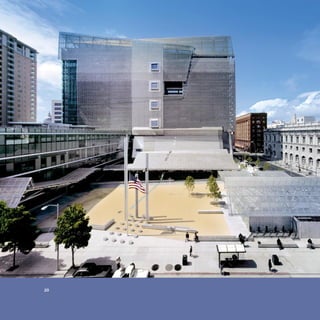
                                                 one of gSA’s newest federally-constructed office buildings, opened in 2007
                                                 in San Francisco, exemplifies the integrated design approach essential to
                                                 achieving sustainability. The building responds to the climatic conditions of
                                                 its site, the functional and operational needs of its owner, and the workplace
                                                 productivity needs of its tenants—now and into the future.


                                                 From the initial planning stages, gSA wanted the new Federal building
                                                 to be among the nation’s finest high-performance, environmentally friendly
                                                 commercial office buildings. Climate and urban context considerations
                                                 guided the vision of a building that would not only provide a healthy
                                                 environment for its occupants, but would also serve as a national template
                                                 for the sustainable use of natural resources and energy.


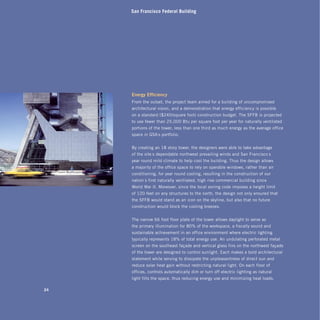
left:	    ThE SAn FRAnCiSCo FEDERAL buiLDing
         iS A STRiking ARChiTECTuRAL STATEmEnT
         ThAT DEmonSTRATES An inTEgRATED,
         EnviRonmEnTAL AppRoACh To DESign.                                                                                       21 sustainability matters
San Francisco Federal Building


building facts                                 integrated design
building Location: San Francisco, California
                                               The effort required to meet sustainable design and energy-efficiency goals
Date of completion: 2007
                                               had an impact on nearly every aspect of the project, beginning with the make-
budget: $144 Million
                                               up of the design team, and extending to the selection of building materials
Size: 18-story tower with four-story annex;    and tenant space requirements. It also required an unprecedented level of
652,433 gross square feet
                                               cooperation between team members and client representatives from the earliest
                                               phases of schematic design through the final phases of furnishing the interior.


                                               In 2000, GSA selected the design team led by architect Thom Mayne and
                                               his firm, Morphosis, with Ove Arup providing engineering and the Smith Group
                                               (architect of record) as key team members. Their winning proposal called for
                                               an 18-story, $144 million structure with 605,000 rentable square feet, which
                                               promised to be an enduring model of sustainable design on many levels.


                                               Ove Arup, a global design and business consulting firm responsible for the
                                               project’s structural, mechanical, and electrical engineering, was already
                                               involved at the schematic design kickoff necessary for integrated solutions,
                                               but, an unusual arrangement since architects traditionally bring engineers
                                               in much further along into the design process. Their early involvement paid
                                               large dividends, allowing the team to fully exploit the project’s potential for
                                               energy efficiency—and to optimize the use of sustainable materials—before
                                               architectural concepts were fixed. This early collaboration cultivated the
                                               whole-building, integrated-design approach.


                                               In this case study, we highlight many of the facets of the process which led
                                               to the total building solution: neighborhood, energy efficiency, structure,
                                               performance studies, workplace innovations, metrics and measurement. While
                                               every individual aspect is interesting, it is how they combined and influenced
                                               each other that is the story.

         22
neighborhood
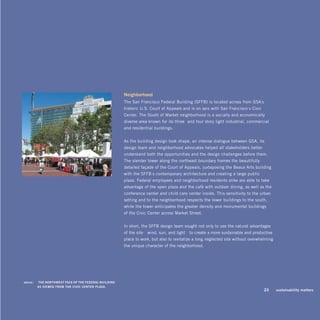
                                                       The San Francisco Federal Building (SFFB) is located across from GSA’s
                                                       historic U.S. Court of Appeals and is on axis with San Francisco’s Civic
                                                       Center. The South of Market neighborhood is a socially and economically
                                                       diverse area known for its three- and four-story light industrial, commercial
                                                       and residential buildings.


                                                       As the building design took shape, an intense dialogue between GSA, its
                                                       design team and neighborhood advocates helped all stakeholders better
                                                       understand both the opportunities and the design challenges before them.
                                                       The slender tower along the northeast boundary frames the beautifully
                                                       detailed façade of the Court of Appeals, juxtaposing the Beaux Arts building
                                                       with the SFFB’s contemporary architecture and creating a large public
                                                       plaza. Federal employees and neighborhood residents alike are able to take
                                                       advantage of the open plaza and the café with outdoor dining, as well as the
                                                       conference center and child care center inside. This sensitivity to the urban
                                                       setting and to the neighborhood respects the lower buildings to the south,
                                                       while the tower anticipates the greater density and monumental buildings
                                                       of the Civic Center across Market Street.


                                                       In short, the SFFB design team sought not only to use the natural advantages
                                                       of the site—wind, sun, and light—to create a more sustainable and productive
                                                       place to work, but also to revitalize a long-neglected site without overwhelming
                                                       the unique character of the neighborhood.


above:	   ThE noRThwEST FACE oF ThE FEDERAL buiLDing
          AS viEwED FRom ThE CiviC CEnTER pLAzA.
                                                                                                                                  23      sustainability matters
San Francisco Federal Building


     Energy Efficiency
     From the outset, the project team aimed for a building of uncompromised
     architectural vision, and a demonstration that energy efficiency is possible
     on a standard ($240/square foot) construction budget. The SFFB is projected
     to use fewer than 25,000 Btu per square foot per year for naturally ventilated
     portions of the tower, less than one third as much energy as the average office
     space in GSA’s portfolio.


     By creating an 18-story tower, the designers were able to take advantage
     of the site’s dependable northwest prevailing winds and San Francisco’s
     year-round mild climate to help cool the building. Thus the design allows
     a majority of the office space to rely on operable windows, rather than air
     conditioning, for year-round cooling, resulting in the construction of our
     nation’s first naturally-ventilated, high-rise commercial building since
     World War II. Moreover, since the local zoning code imposes a height limit
     of 120 feet on any structures to the north, the design not only ensured that
     the SFFB would stand as an icon on the skyline, but also that no future
     construction would block the cooling breezes.


     The narrow 66-foot floor plate of the tower allows daylight to serve as
     the primary illumination for 80% of the workspace, a fiscally sound and
     sustainable achievement in an office environment where electric lighting
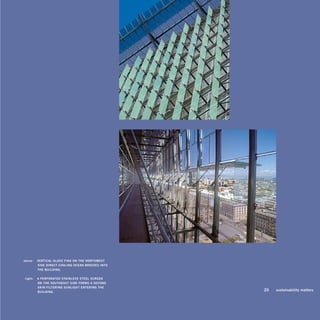
     typically represents 18% of total energy use. An undulating perforated metal
     screen on the southeast façade and vertical glass fins on the northwest façade
     of the tower are designed to control sunlight. Each makes a bold architectural
     statement while serving to dissipate the unpleasantness of direct sun and
     reduce solar heat gain without restricting natural light. On each floor of
     offices, controls automatically dim or turn off electric lighting as natural
     light fills the space, thus reducing energy use and minimizing heat loads.

24
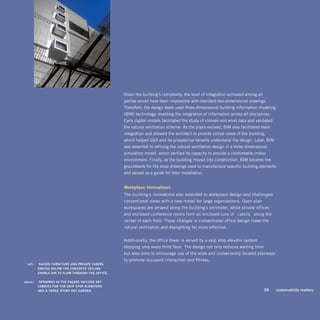
above:   vERTiCAL gLASS FinS on ThE noRThwEST
         SiDE DiRECT CooLing oCEAn bREEzES inTo
         ThE buiLDing.

right:   A pERFoRATED STAinLESS STEEL SCREEn
         on ThE SouThEAST SiDE FoRmS A SEConD
         Skin FiLTERing SunLighT EnTERing ThE
         buiLDing.
                                                  25   sustainability matters
San Francisco Federal Building


     Structure
     The SFFB’s whole-building, integrated design approach aims to provide not
     only optimal performance throughout the building’s life cycle, but also return
     significant and recurring cost savings through reduced operating costs.


     The structure’s form—derived principally from its energy design, particularly
     its natural ventilation—also includes other strategic elements:

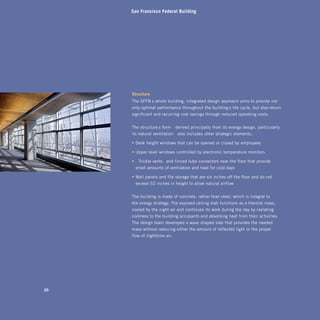
     • Desk-height windows that can be opened or closed by employees

     • Upper-level windows controlled by electronic temperature monitors

     •	 “Trickle vents” and finned tube convectors near the floor that provide
      small amounts of ventilation and heat for cold days

     • Wall panels and file storage that are six inches off the floor and do not
      exceed 52 inches in height to allow natural airflow


     The building is made of concrete, rather than steel, which is integral to
     the energy strategy. The exposed ceiling slab functions as a thermal mass,
     cooled by the night air and continues its work during the day by radiating
     coolness to the building occupants and absorbing heat from their activities.
     The design team developed a wave-shaped slab that provides the needed
     mass without reducing either the amount of reflected light or the proper
     flow of nighttime air.


2
The concrete mix contains a high proportion of ground granulated blast
                                                         furnace slag, which increases the strength of and whitens the concrete,
                                                         allowing the surfaces to reflect light without being painted. Slag, a steel
                                                         industry by-product, replaced 50% of the energy-intensive Portland cement
                                                         in the concrete, dramatically reducing the building’s carbon footprint.


                                                         The lobby floor has the appearance of terrazzo but the design team avoided
                                                         added material by using simple polished concrete, providing a sustainable,
                                                         durable, uncoated finish at a fraction of the cost of other flooring options.


                                                         performance Studies
                                                         To ensure that the natural ventilation system would provide a comfortable
                                                         environment for the building’s occupants, GSA commissioned a series of
                                                         third-party performance studies. Wind tunnel tests were used to simulate
                                                         worse-case build-out on surrounding properties to make certain that sufficient
                                                         natural ventilation could not be compromised.


                                                         Consultants from Lawrence Berkeley National Laboratory evaluated the façade
                                                         system and determined that building performance did not require a full
                                                         double skin façade, resulting in a savings of $1.5 million. A design team from
                                                         the University of California-San Diego also provided a computational fluid
                                                         dynamics analysis to help finalize the shape of the window mullions, which
                                                         serve to deflect incoming air away from the desk and seating areas on the
                                                         windward side of the building.


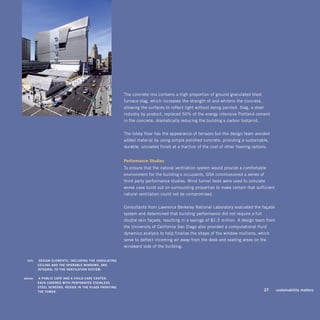
  left:	    DESign ELEmEnTS, inCLuDing ThE unDuLATing
           CEiLing AnD ThE opERAbLE winDowS, ARE
           inTEgRAL To ThE vEnTiLATion SYSTEm.

above:	    A pubLiC CAFé AnD A ChiLD CARE CEnTER,
           EACh CovERED wiTh pERFoRATED STAinLESS
           STEEL SCREEnS, RESiDE in ThE pLAzA FRonTing
           ThE TowER.                                                                                                                  27   sustainability matters
San Francisco Federal Building


28
Given the building’s complexity, the level of integration achieved among all
                                                    parties would have been impossible with standard two-dimensional drawings.
                                                    Therefore, the design team used three-dimensional building information modeling
                                                    (BIM) technology, enabling the integration of information across all disciplines.
                                                    Early digital models facilitated the study of climate and wind data and validated
                                                    the natural ventilation scheme. As the plans evolved, BIM also facilitated team
                                                    integration and allowed the architect to provide virtual views of the building,
                                                    which helped GSA and its prospective tenants understand the design. Later, BIM
                                                    was essential to refining the natural ventilation design in a three-dimensional
                                                    simulation model, which verified its capacity to provide a comfortable indoor
                                                    environment. Finally, as the building moved into construction, BIM became the
                                                    groundwork for the shop drawings used to manufacture specific building elements
                                                    and served as a guide for their installation.


                                                    workplace innovations
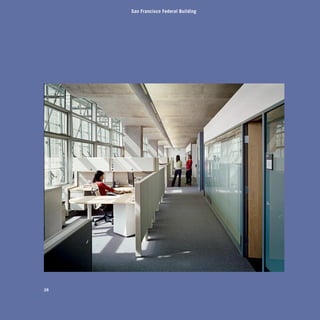
                                                    The building’s innovations also extended to workplace design and challenged
                                                    conventional views with a new model for large organizations. Open plan
                                                    workspaces are arrayed along the building’s perimeter, while private offices
                                                    and enclosed conference rooms form an enclosed core of “cabins” along the
                                                    center of each floor. These changes in conventional office design make the
                                                    natural ventilation and daylighting far more effective.


                                                    Additionally, the office tower is served by a skip-stop elevator system—
                                                    stopping only every third floor. The design not only reduces waiting time
                                                    but also aims to encourage use of the wide and conveniently located stairways
                                                    to promote occupant interaction and fitness.
  left:	   RAiSED FuRniTuRE AnD pRivATE CAbinS
           EnDing bELow ThE ConCRETE CEiLing
           EnAbLE AiR To FLow ThRough ThE oFFiCE.

above:	    opEningS in ThE FAçADE inCLuDE SkY
           LobbiES FoR ThE Skip - STop ELEvAToRS
           AnD A ThREE - SToRY SkY gARDEn.                                                                                         29   sustainability matters
San Francisco Federal Building


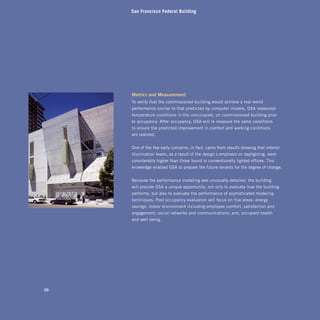
     metrics and measurement
     To verify that the commissioned building would achieve a real-world
     performance similar to that predicted by computer models, GSA measured
     temperature conditions in the unoccupied, un-commissioned building prior
     to occupancy. After occupancy, GSA will re-measure the same conditions
     to ensure the predicted improvement in comfort and working conditions
     are realized.


     One of the few early concerns, in fact, came from results showing that interior
     illumination levels, as a result of the design’s emphasis on daylighting, were
     considerably higher than those found in conventionally lighted offices. This
     knowledge enabled GSA to prepare the future tenants for the degree of change.


     Because the performance modeling was unusually detailed, the building
     will provide GSA a unique opportunity, not only to evaluate how the building
     performs, but also to evaluate the performance of sophisticated modeling
     techniques. Post occupancy evaluation will focus on five areas: energy
     savings; indoor environment including employee comfort, satisfaction and
     engagement; social networks and communications; and, occupant health
     and well-being.


30
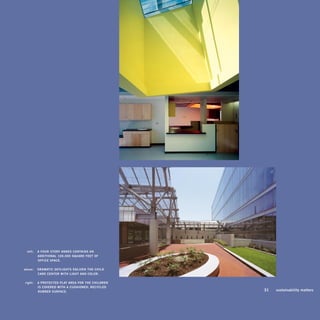
left:   A FouR -SToRY AnnEx ConTAinS An
          ADDiTionAL 100,000 SQuARE FEET oF
          oFFiCE SpACE.

above:    DRAmATiC SkYLighTS EnLivEn ThE ChiLD
          CARE CEnTER wiTh LighT AnD CoLoR.

right:    A pRoTECTED pLAY AREA FoR ThE ChiLDREn
          iS CovERED wiTh A CuShionED, RECYCLED
          RubbER SuRFACE.                          31   sustainability matters
San Francisco Federal Building


     refleCtions on the proCess

     At every stage of the building’s development and construction, projected
     levels of financial and contractual performance have been—or are being—
     verified by multiple independent analyses. These analyses demonstrate that
     the SFFB, built at a total cost comparable to conventional commercial office
     buildings, will become a model of sustainable design principles.


     The GSA team’s progressive thinking, passion, and commitment allowed the
     strong initial design concepts of the design team to be carried through to
     completion. The extraordinary integration of expert consultants, spearheaded
     by a design architect who strove for innovation and sustainable design
     excellence, was central to the project’s success.


     The SFFB uses techniques and systems appropriate for its location and its
     use. The specific strategies implemented in the building—in particular the
     use of natural ventilation—are not readily transferred to some less salubrious
     geographic locations. The project’s design goals and methods, rather than the
     technical solutions, are applicable for all projects: an insistent commitment
     to energy efficiency, a focus on sustainable design excellence, the provision of
     a healthy working environment, the reduced use of natural resources, and the
     use of an integrated design approach to achieve these goals—all these are the
     future of excellent design.


32
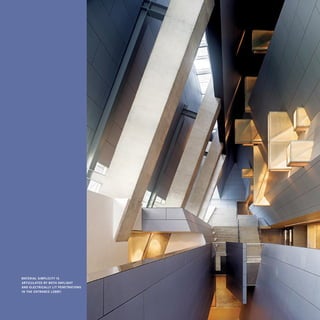
shown:	   mATERiAL SimpLiCiTY iS
          ARTiCuLATED bY boTh DAYLighT
          AnD ELECTRiCALLY LiT pEnETRATionS
          in ThE EnTRAnCE LobbY.
34
The Greenest Alternative


                                          reThinking The need To build


                                                            The greenest alternative is to not build at all. This catches many building
                                                            owners and designers off guard. How can organizations meet their workplace
                                                            needs without constructing a building? Alternatives do exist—renovating
                                                            existing facilities, interior retrofits, reorganizing work processes, reusing
                                                            resources and materials—with potentially enormous benefits for owners,
                                                            occupants and the environment.


                                                            The Modern Workplace

                                                            The nearly universal adoption of modern office technology—fax machines,
                                                            laptops, cell phones, and pda’s—introduced unprecedented mobility into
                                                            the nation’s workforce. Even so, though the nature of work has changed over
         in 2001, robert probst, also known
                                                            the last two decades, many offices continue to be built out with the same late
         as the “father of the cubicle” for his
                                                            1960’s design assumption that “one size fits all,” an outmoded workplace
         “action office” design of the late
                                                            concept.
         1960’s, labeled the current use of
         the cubicle as “monolithic insanity.”
                                                            As a result of the modern workforce’s increasing mobility, and the growth of
                                                            more strategic, knowledge-based work—by its nature less routine and more
                                                            collaborative workplace strategies that rely on single individual places are
                                                            unlikely to effectively support modern work practice. Work is no longer a
                                                            solitary pursuit, performed exclusively in an office.


                                                            Perhaps the most dramatic change over the last decade has been the
                                                            decrease—from 34% in 1997, to only 8% in 2007—in traditional nine to
                                                            five workdays spent exclusively in the office. Workers today have more flexible
                                                            schedules and job demands that regularly take them away from their desks.


	   left:	 The	governmenTs	of	Canada	and	The	UniTed	
           sTaTes	deCided	To	bUild	a	single	shared	porT	
                                                                                   35	 sustainability	matters
           of	enTry	raTher	Than	Two	aT	sweeT	grass,	

           monTana – CoUTTs,	alberTa.
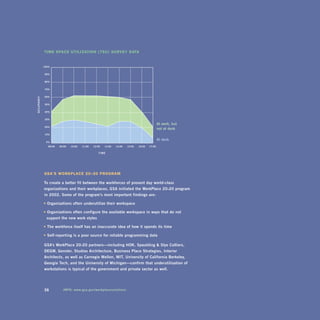
TiMe Space uTilizaTion (TSu) Survey daTa


                 100%


                 90%


                 80%


                 70%


                 60%
O c c upA nc y


                 50%


                 40%


                 30%

                                                                                                at	work,	but	
                                                                                               At work, but
                 20%
                                                                                                not	at	desk
                                                                                               not at desk
                 10%
                                                                                               At desk
                                                                                                at	desk
                  0%
                   08:00   09:00   10:00   11:00   12:00   13:00   14:00   15:00   16:00   17:00

                                                      TIME


                 gSa’S Workplace 20 • 20 prograM

                 To	create	a	better	fit	between	the	workforces	of	present	day	world-class	
                 organizations	and	their	workplaces,	gsa	initiated	the	workplace	20 •20	program	
                 in	2002.	some	of	the	program’s	most	important	findings	are:

                 •	organizations	often	underutilize	their	workspace

                 •	organizations	often	configure	the	available	workspace	in	ways	that	do	not		
                 	 support	the	new	work	styles	

                 •	The	workforce	itself	has	an	inaccurate	idea	of	how	it	spends	its	time

                 •	self-reporting	is	a	poor	source	for	reliable	programming	data

                 gsa’s	workplace	20•20	partners—including	hoK,	spaulding		slye	Colliers,	
                 degw,	gensler,	studios	architecture,	business	place	strategies,	interior	
                 architects,	as	well	as	Carnegie	mellon,	miT,	University	of	California	berkeley,	
                 georgia	Tech,	and	the	University	of	michigan—confirm	that	underutilization	of	
                 workstations	is	typical	of	the	government	and	private	sector	as	well.


                 36          info:	www.gsa.gov/workplacesolutions
During individual client engagements, researchers observed and documented
the many ways employees actually use their workspaces in terms of occupancy
and task parameters. The survey data show the use of space over time of
organizations and provides an objective counterpoint to the ways employees
think they are using their spaces.

• Workspaces are temporarily unoccupied 23% of the time on average

• Work tasks are consistent throughout the day, with a modest lunch dip

• Computer work is the dominate activity while at the desk—approximately
 half the time

• Desks are vacant up to 60% of the time, even at times of the highest
 occupancy!


This last startling statistic poses the question, where are these workers?
They are on site but away from their desks, at agency client offices, or
traveling—in other words, doing their jobs the way work is done in the
21st century and using the full range of modern tools.


Typically, workforces have a mistaken idea of how they actually use their
workspaces. In general, GSA found that they use their workstations about
half as much, and in different ways, than they think.


These findings regarding actual space usage should prompt a reexamination
of traditional programming procedures that rely on self-reported space
requirements and use. Most organizations need to consider replacing much
of their “fixed” space with “flexible” space in order to accommodate the new,
more mobile work style of the modern office worker.


                                                                       	     37	   sustainability	matters
The Greenest Alternative


     The SuSTainabiliTy QueSTion

     There will always be a place for closed offices, open workstations and
     demountable partitions that characterize a well-designed workplace. However,
     the layout must be consciously designed, and informed by an understanding
     of modern work styles in order to serve the organization well. Many furniture
     manufacturers are responding to the more mobile workforce with components
     and designs that are not only more sustainable, but far better suited for the
     way work is done today. Nevertheless, for some organizations, the reality that
     30–50% of their workstations will be vacant for large parts of the day will beg
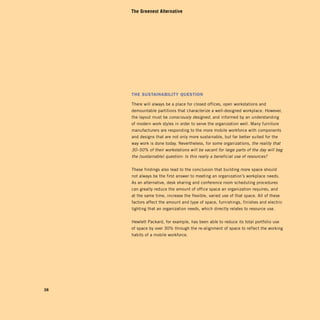
     the (sustainable) question: Is this really a beneficial use of resources?


     These findings also lead to the conclusion that building more space should
     not always be the first answer to meeting an organization’s workplace needs.
     As an alternative, desk sharing and conference room scheduling procedures
     can greatly reduce the amount of office space an organization requires, and
     at the same time, increase the flexible, varied use of that space. All of these
     factors affect the amount and type of space, furnishings, finishes and electric
     lighting that an organization needs, which directly relates to resource use.


     Hewlett Packard, for example, has been able to reduce its total portfolio use
     of space by over 30% through the re-alignment of space to reflect the working
     habits of a mobile workforce.


38
John	C.	KlUCzynsKi	federal	bUilding
                                                              ChiCago,	illinois


                                                              leSS iS More

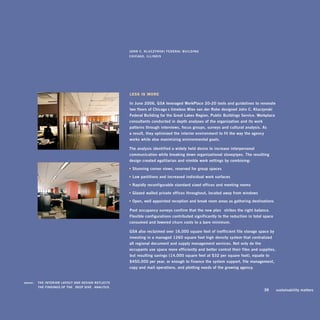
                                                              in	June	2006,	gsa	leveraged	workplace	20 • 20	tools	and	guidelines	to	renovate	
                                                              two	floors	of	Chicago’s	timeless	mies	van	der	rohe-designed	John	C.	Kluczynski	
                                                              federal	building	for	the	great	lakes	region,	public	buildings	service.	workplace	
                                                              consultants	conducted	in- depth	analyses	of	the	organization	and	its	work	
                                                              patterns	through	interviews,	focus	groups,	surveys	and	cultural	analysis.	as		
                                                              a	result,	they	optimized	the	interior	environment	to	fit	the	way	the	agency		
                                                              works	while	also	maximizing	environmental	goals.	

                                                              The	analysis	identified	a	widely	held	desire	to	increase	interpersonal	
                                                              communication	while	breaking	down	organizational	stovepipes.	The	resulting	
                                                              design	created	egalitarian	and	nimble	work	settings	by	combining:

                                                              •	stunning	corner	views,	reserved	for	group	spaces	

                                                              •	low	partitions	and	increased	individual	work	surfaces	

                                                              •	rapidly	reconfigurable	standard- sized	offices	and	meeting	rooms	

                                                              •	glazed- walled	private	offices	throughout,	located	away	from	windows	

                                                              •	open,	well-appointed	reception	and	break	room	areas	as	gathering	destinations

                                                              post- occupancy	surveys	confirm	that	the	new	plan	“ strikes	the	right	balance.”	
                                                              flexible	configurations	contributed	significantly	to	the	reduction	in	total	space	
                                                              consumed	and	lowered	churn	costs	to	a	bare	minimum.

                                                              gsa	also	reclaimed	over	16,000	square	feet	of	inefficient	file	storage	space	by	
                                                              investing	in	a	managed	1260	square	foot	high- density	system	that	centralized	
                                                              all	regional	document	and	supply	management	services.	not	only	do	the	
                                                              occupants	use	space	more	efficiently	and	better	control	their	files	and	supplies,	
                                                              but	resulting	savings	(14,000	square	feet	at	$32	per	square	foot),	equate	to	
                                                              $450,000	per	year,	or	enough	to	finance	the	system	support,	file	management,	
                                                              copy	and	mail	operations,	and	plotting	needs	of	the	growing	agency.	


	   above:		 The	inTerior	layoUT	and	design	refleCTs	
             The	findings	of	The	 “ deep	dive ” 	analysis.	
                                                                                                                                        	   39	    sustainability	matters
i nTernal	revenUe	serviCe	CampUs	
     Kansas	CiTy,	missoUri


     FlexibiliTy : The neW Model

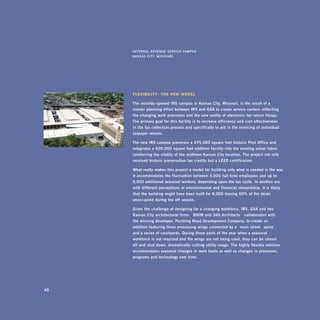
     The	recently	opened	irs	campus	in	Kansas	City,	missouri,	is	the	result	of	a		
     master	planning	effort	between	irs	and	gsa	to	create	service	centers	reflecting	
     the	changing	work	processes	and	the	new	reality	of	electronic	tax	return	filings.	
     The	primary	goal	for	this	facility	is	to	increase	efficiency	and	cost	effectiveness		
     in	the	tax	collection	process	and	specifically	to	aid	in	the	servicing	of	individual	
     taxpayer	returns.		

     The	new	irs	campus	preserves	a	475,000	square	foot	historic	post	office	and	
     integrates	a	600,000	square	foot	addition	facility	into	the	existing	urban	fabric	
     reinforcing	the	vitality	of	the	midtown	Kansas	City	location.	The	project	not	only	
     received	historic	preservation	tax	credits	but	a	leed	certification.		

     what	really	makes	this	project	a	model	for	building	only	what	is	needed	is	the	way	
     it	accommodates	the	fluctuation	between	3,000	full -time	employees	and	up	to	
     5,000	additional	seasonal	workers,	depending	upon	the	tax	cycle.	in	another	era	
     with	different	perceptions	of	environmental	and	financial	stewardship,	it	is	likely	
     that	the	building	might	have	been	built	for	8,000	leaving	60%	of	the	desks	
     unoccupied	during	the	off -season.

     given	the	challenge	of	designing	for	a	changing	workforce,	irs,	gsa	and	two	
     Kansas	City	architectural	firms —bnim	and	360	architects —collaborated	with		
     the	winning	developer,	pershing	road	development	Company,	to	create	an	
     addition	featuring	three	processing	wings	connected	by	a	 “main	street ”	spine		
     and	a	series	of	courtyards.	during	those	parts	of	the	year	when	a	seasonal	
     workforce	is	not	required	and	the	wings	are	not	being	used,	they	can	be	closed		
     off	and	shut	down,	dramatically	cutting	utility	usage.	The	highly	flexible	solution	
     accommodates	seasonal	changes	in	work	loads	as	well	as	changes	in	processes,	
     programs	and	technology	over	time.


40
shared	porT	of	enTry	
sweeT	grass,	monTana – CoUTTs,	alberTa	


Why build TWo When one Will do?

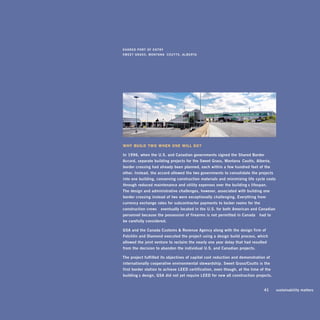
in	1996,	when	the	U.s.	and	Canadian	governments	signed	the	shared	border	
accord,	separate	building	projects	for	the	sweet	grass,	montana– Coutts,	alberta,	
border	crossing	had	already	been	planned,	each	within	a	few	hundred	feet	of	the	
other.	instead,	the	accord	allowed	the	two	governments	to	consolidate	the	projects	
into	one	building,	conserving	construction	materials	and	minimizing	life- cycle	costs	
through	reduced	maintenance	and	utility	expenses	over	the	building’s	lifespan.		
The	design	and	administrative	challenges,	however,	associated	with	building	one	
border	crossing	instead	of	two	were	exceptionally	challenging.	everything	from	
currency	exchange	rates	for	subcontractor	payments	to	locker	rooms	for	the	
construction	crews— eventually	located	in	the	U.s.	for	both	american	and	Canadian	
personnel	because	the	possession	of	firearms	is	not	permitted	in	Canada— had	to	
be	carefully	considered.	

gsa	and	the	Canada	Customs		revenue	agency	along	with	the	design	firm	of	
felchlin	and	diamond	executed	the	project	using	a	design -build	process,	which	
allowed	the	joint	venture	to	reclaim	the	nearly	one -year	delay	that	had	resulted	
from	the	decision	to	abandon	the	individual	U.s.	and	Canadian	projects.	

The	project	fulfilled	its	objectives	of	capital	cost	reduction	and	demonstration	of	
internationally	cooperative	environmental	stewardship.	sweet	grass/Coutts	is	the	
first	border	station	to	achieve	leed	certification,	even	though,	at	the	time	of	the	
building ’s	design,	gsa	did	not	yet	require	leed	for	new	all	construction	projects.	


                                                                            	   41	    sustainability	matters
The Greenest Alternative


“historic preservation is the       uSing WhaT you have
 ultimate form of sustainable
                                    As we consider the need to build, we must think about the environmental
 development. by encouraging
                                    impact of the manufacture and transport of the materials, energy used, and
 the reuse of older buildings
                                    pollution generated by the construction of a new structure. This is not to say
 instead of abandoning or
 demolishing them, historic         that building new is never necessary. A new structure provides a fresh
 preservation reduces the           opportunity for the user by focusing on a new construction budget. We often
 demand for environmentally         do not consider the environmental impact of new buildings, and thus fail to
 costly new building materials      account for the total cost of ownership. Green building design strategies and
 and lessens the amount of          the rethinking of outdated work patterns can minimize these costs, thus
 waste dumped in our landfills.     providing functional space while reducing the environmental footprint. The
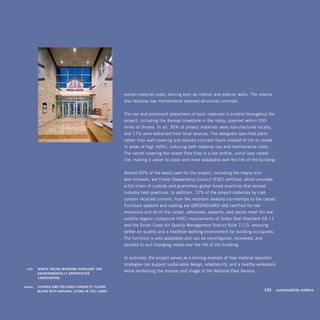
 it also protects and celebrates    appeal of the “clean slate” of a new facility is undeniable; the truth is that
 the social and cultural            such a slate may not be so clean after all.
 resources that define and unite
 us as americans, and ensures       Preservation of our existing building stock is the greenest alternative of all.
 that they will survive to enrich   For GSA the construction of a new building generally involves the demolition
 our communities and our lives      of an existing building on an urban site, generating a considerable amount of
 for generations to come.”          waste. Unfortunately, some buildings are no longer functionally viable and a
riChard	moe,	presidenT,	 	          decision may be made to tear them down; however, that decision cannot be
The	naTional	TrUsT	for	             made lightly and must include not only the financial impacts of the decision
hisToriC	preservaTion               but also the social and environmental impacts—it is a balance of often
                                    competing considerations.


42
Given that 60% of the buildings that will exist 30 years from now have
                                                   already been built, new construction will affect only a fraction of our
                                                   inventory of space. GSA must focus on how reusing (and continuing to use)
                                                   existing buildings makes sense. Just as we are concerned with the earth’s
                                                   irreplaceable natural resources, so must we learn to preserve the irreplaceable
                                                   cultural resources that our buildings represent. Executive Orders 12072 and
                                                   13006 encourage locating Federal facilities in city centers and in historic
                                                   buildings, strengthening not only our communities but also the value of the
                                                   investment in the reuse of existing buildings and infrastructure.

                                                   Adaptive reuse strategies make it possible for existing facilities to meet
                                                   modern office needs while eliminating the huge environmental burden of
                                                   building anew. Redesigning existing space or fulfilling programmatic needs in
                                                   alternative ways, including designing for mobility, may require even greater
                                                   resourcefulness and creativity than a new building. Working with existing
                                                   conditions, often the result of decisions made far in the past, in order to
                                                   modernize a structure to serve present day needs, can not only make formerly
                                                   mute spaces sing, it can also save money and reduce the strain on our
                                                   nation’s overburdened landfills.


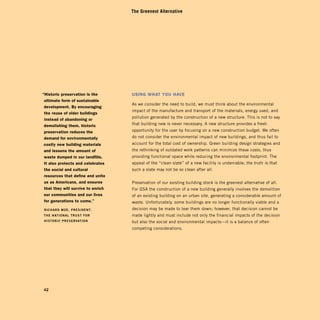
	   above:		 maTerials	refleCT	The	original	 	
             warehoUse	fUnCTion	of	The	hisToriC	
             sCowCrofT	bUilding	in	ogden,	UTah.	
                                                   info:	 executive	order	12072:	federal	space	management,	1978              	   43	   sustainability	matters
                                                   info:	 executive	order	13006:	locating	federal	facilities	on	historic	
                                                   	      properties	in	our	nation’s	Central	Cities,	1996
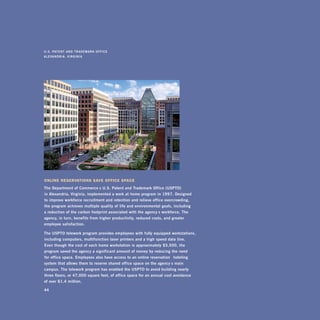
U . s . 	 paT e n T 	 and	TrademarK	offiCe	
a l e x a n d r i a , 	virginia	


online reServaTionS Save oFFice Space
The	department	of	Commerce ’s	U.s.	patent	and	Trademark	office	(UspTo)		
in	alexandria,	virginia,	implemented	a	work -at -home	program	in	1997.	designed		
to	improve	workforce	recruitment	and	retention	and	relieve	office	overcrowding,		
the	program	achieves	multiple	quality -of -life	and	environmental	goals,	including		
a	reduction	of	the	carbon	footprint	associated	with	the	agency’s	workforce.	The	
agency,	in	turn,	benefits	from	higher	productivity,	reduced	costs,	and	greater	
employee	satisfaction.	

The	UspTo	telework	program	provides	employees	with	fully	equipped	workstations,	
including	computers,	multifunction	laser	printers	and	a	high -speed	data	line.		
even	though	the	cost	of	each	home	workstation	is	approximately	$5,500,	the	
program	saved	the	agency	a	significant	amount	of	money	by	reducing	the	need		
for	office	space.	employees	also	have	access	to	an	online	reservation	 “hoteling ”	
system	that	allows	them	to	reserve	shared	office	space	on	the	agency ’s	main	
campus.	The	telework	program	has	enabled	the	UspTo	to	avoid	building	nearly	
three	floors,	or	47,000	square	feet,	of	office	space	for	an	annual	cost	avoidance		
of	over	$1.4	million.

44
For GSA, which controls some 351,900,000 square feet of existing space
                        (176,400,000 of it federally owned), the opportunity for imaginative reuse is
                        vast indeed. One quarter of the agency’s existing inventory is either listed on
                        or potentially eligible for listing on the National Register of Historic Places.


                        History provides us with innumerable examples of the imaginative redesign
                        of existing structures. One of the best of these, though not widely known,
                        is Michelangelo’s reuse of scattered and unrelated, asymmetrical Roman and
                        medieval structures to create the Campidoglio, an architectural masterpiece
                        of majestic symmetry. At GSA, it’s refreshing to consider that Michelangelo
                        was both a great practitioner of adaptive reuse and a civil servant!


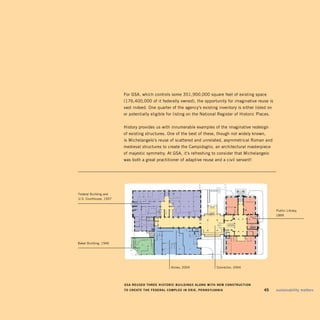
Federal Building and
U.S. Courthouse, 1937


                                                                                                           Public Library,
                                                                                                           1899


Baker Building, 1946


                                                 Annex, 2004              Connector, 2004


                        gsa	reUsed	Three	hisToriC	bUildings	along	wiTh	new	ConsTrUCTion	
                        To	CreaTe	The	federal	Complex	in	erie,	pennsylvania	                     	   45	   sustainability	matters
46
c a S e S T u d y : T h e g r e e n e S T a lT e r n aT i v e


Howard M. Title Goes Here
Case Study Metzenbaum U.S. Courthouse


                   hiSTorically preServed, FuncTionally iMproved,
                   environMenTally advanced
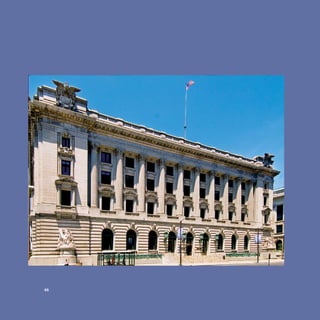
                   rather	than	increasing	the	size	of	the	newly	constructed	Carl	b.	stokes		
                   U.s.	Courthouse	in	Cleveland,	ohio	to	accommodate	the	bankruptcy	courts,	
                   gsa	decided	to	renovate	the	city’s	monumental	metzenbaum	Courthouse,	
                   and	to	use	the	remaining	space	to	consolidate	several	federal	tenants	from	
                   leased	spaces	scattered	around	the	city.	The	resulting	renovation	is	a	
                   brilliant	accommodation	of	both	the	preservation	of	the	original	courthouse,	
                   built	in	1910,	and	the	requirements	of	modern	jurisprudence.	This	
                   remarkable	achievement	has	resulted	in	more	than	14	awards	for	design,	
                   historic	preservation,	engineering	and	environmental	stewardship.


                                                                                        	    47	   sustainability	matters
Howard M. Metzenbaum U.S. Courthouse


                                         Often the most effective strategy for sustainability is to creatively redesign
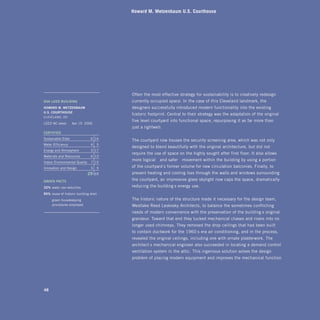
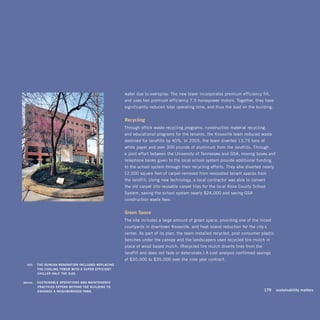
gsa	leed	bUilding                        currently occupied space. In the case of this Cleveland landmark, the
howard	m.	meTzenbaUm	                    designers successfully introduced modern functionality into the existing
U.s.	CoUrThoUse
                                         historic footprint. Central to their strategy was the adaptation of the original
CLEvELAND, OH
                                         five-level courtyard into functional space, repurposing it as far more than
LEED NC rated:      Apr 19 2006
                                         just a lightwell.
CerTified	
Sustainable Sites               6 14
                                         The courtyard now houses the security screening area, which was not only
Water Efficiency                4    5
                                         designed to blend beautifully with the original architecture, but did not
Energy and Atmosphere           3 17
                                         require the use of space on the highly sought-after first floor. It also allows
Materials and Resources         6 13
Indoor Environmental Quality    7 15
                                         more logical—and safer—movement within the building by using a portion
Innovation and Design           3    5   of the courtyard’s former volume for new circulation balconies. Finally, to
                               29   69   prevent heating and cooling loss through the walls and windows surrounding
green	faCTs                              the courtyard, an impressive glass skylight now caps the space, dramatically
32%	water use reduction                  reducing the building’s energy use.
95%	reuse of historic building shell
     green housekeeping                  The historic nature of the structure made it necessary for the design team,
     procedures employed                 Westlake Reed Leskosky Architects, to balance the sometimes conflicting
                                         needs of modern convenience with the preservation of the building’s original
                                         grandeur. Toward that end they tucked mechanical chases and risers into no
                                         longer used chimneys. They removed the drop ceilings that had been built
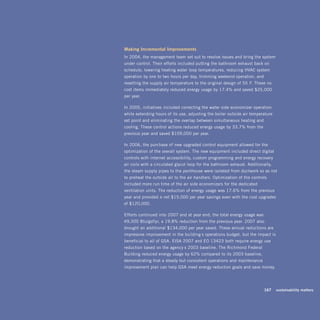
                                         to contain ductwork for the 1960’s-era air conditioning, and in the process,
                                         revealed the original ceilings, including one with ornate plasterwork. The
                                         architect’s mechanical engineer also succeeded in locating a demand control
                                         ventilation system in the attic. This ingenious solution solves the design
                                         problem of placing modern equipment and improves the mechanical function


48
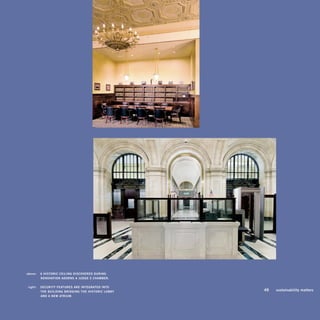
above:		 a	hisToriC	Ceiling	disCovered	dUring	
             renovaTion	adorns	a	JUdge ’s	Chamber.	

	   right:		 seCUriTy	feaTUres	are	inTegraTed	inTo	 	
             The	bUilding	bridging	The	hisToriC	lobby	   	   49	   sustainability	matters
             and	a	new	aTriUm.
Howard M. Metzenbaum U.S. Courthouse


                        by introducing more outside air into the building when concentrations of
                        CO2 reach undesirable levels. The strategy not only reduced costs but also
                        created a more comfortable productive workplace.


                        The project reinstalled restored murals and rebuilt an original chandelier to
                        accommodate low-energy lamps. Other reused materials include hardware,
                        grills, wood doors, glazed brick, and marble from the basement to patch floors
                        and wainscots.


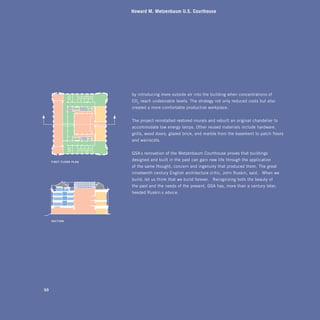
                        GSA’s renovation of the Metzenbaum Courthouse proves that buildings
     firsT	floor	plan
                        designed and built in the past can gain new life through the application
                        of the same thought, concern and ingenuity that produced them. The great
                        nineteenth century English architecture critic, John Ruskin, said, “When we
                        build, let us think that we build forever.” Recognizing both the beauty of
                        the past and the needs of the present, GSA has, more than a century later,
                        heeded Ruskin’s advice.


     seCTion	


50
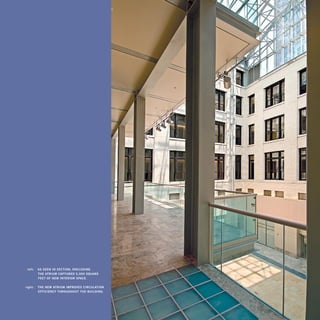
left:		 as	seen	in	seCTion,	enClosing	 	
             The	aTriUm	CapTUred	5,000	sqUare	
             feeT	of	new	inTerior	spaCe.

	   right:		 The	new	aTriUm	improves	CirCUlaTion	 	
             effiCienCy	ThroUghoUT	The	bUilding.	     	   51	   sustainability	matters
52
Cost, Value and Procurement
                                                                                               of Green Buildings


                                            The CosTs of Building green


                                                             How much does it cost to build green? To this day, despite our increased
                                                             awareness of the impacts that the construction, operations, and maintenance
                                                             of buildings can have on our environment, almost every discussion of green
                                                             eventually turns to costs. There is a persistent perception that sustainably
                                                             designed buildings cost more than conventional. While that may have been
                                                             true once, today the evidence shows that a green building does not need to
                                                             cost more than a conventional one.


                                                             In the 1990’s, as the design and construction of green buildings began to
                                                             gain momentum, many nonstandard building materials and technologies did
                                                             have additional costs associated with their selection, installation, and use.
                                                             As awareness of our impact on the environment grew, however, the market
                                                             quickly evolved to provide a variety of energy-efficient and cost-effective
                                                             green building materials, and designers accordingly overhauled their product
                                                             libraries and specifications to include them. At the same time, contractors
                                                             learned how to use the new materials, master new construction techniques,
                                                             and employ integrated processes and quality control measures necessary to
                                                             deliver high-performance green buildings that do not necessarily come with
                                                             a green premium. However, rising standards and expectations for today’s
                                                             buildings have undoubtedly created more complex design problems,
                                                             increasing the challenge to design teams to deliver green buildings within
                                                             conventional budgets. Today, the exponential growth in the expertise of design
                                                             teams coupled with the continually falling costs of environmentally preferable
                                                             materials has resulted in buildings more routinely being delivered green with
                                                             little or no measurable cost premium.


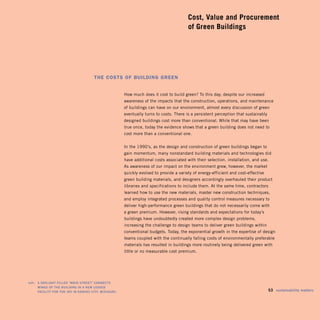
	   left:		 A	dAylight	filled	“mAin	street”	connects	 	
            wings	of	the	building	in	A	new	leAsed	
            fAcility	for	the	irs	in	KAnsAs	city,	missouri.                                                                             	 53	 sustainability	matters
Cost, Value and Procurement of Green Buildings


                                                 gsA’s	green	strategy	cost	studies
                                                 In 1996, GSA began to look at the cost implications of green buildings with
                                                 its first green project, the Alfred A. Arraj U.S. Courthouse in Denver, Colorado.
                                                 The then-PBS Commissioner challenged the project team to create a showcase
                                                 green building, providing an opportunity for the government to lead the nation
                                                 in the infancy of this emerging discipline. A panel of nationally recognized
                                                 experts on environmental design identified nearly 150 green building strate­
                                                 gies to reduce the environmental impact of the courthouse and grouped them
                                                 into low-, medium- and high-cost categories.


                                                 The greening of the Denver courthouse helped the agency answer the critical
                                                 question, how much additional funding is necessary to make a project green?
A developer’s view
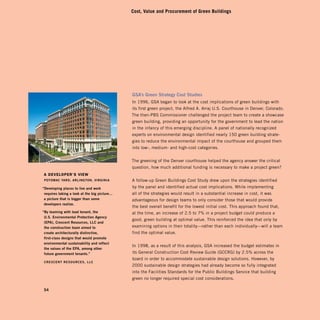
 PotomAc	yArd,	Arlington,	VirginiA               A follow-up Green Buildings Cost Study drew upon the strategies identified
“developing	places	to	live	and	work	             by the panel and identified actual cost implications. While implementing
 requires	taking	a	look	at	the	big	picture...	   all of the strategies would result in a substantial increase in cost, it was
 a	picture	that	is	bigger	than	some	             advantageous for design teams to only consider those that would provide
 developers	realize.
                                                 the best overall benefit for the lowest initial cost. This approach found that,
“by	teaming	with	lead	tenant,	the		              at the time, an increase of 2.5 to 7% in a project budget could produce a
 u.s.	environmental	Protection	Agency	

                                                 good, green building at optimal value. This reinforced the idea that only by
 (ePA),	crescent	resources,	llc	and		

 the	construction	team	aimed	to		
               examining options in their totality—rather than each individually—will a team
 create	architecturally	distinctive,		
          find the optimal value.
 first-class	designs	that	would	promote	

 environmental	sustainability	and	reflect	

                                                 In 1998, as a result of this analysis, GSA increased the budget estimates in
 the	values	of	the	ePA,	among	other	

 future	government	tenants.”
                    its General Construction Cost Review Guide (GCCRG) by 2.5% across the
                                                 board in order to accommodate sustainable design solutions. However, by
 crescent	resources,	llc
                                                 2000 sustainable design strategies had already become so fully integrated
                                                 into the Facilities Standards for the Public Buildings Service that building
                                                 green no longer required special cost considerations.

54
the	cost	of	leed	
                   gsA leed ConsTruCTion
                                                             Because the original increase in the GCCRG was put in place before LEED was
                   CosT impACTs
                                                             fully developed as a rating system, GSA conducted another study in 2004 to
                   as	compared	to	cost	factors		
                   related	to	estimating	Accuracy		
                                                             determine the cost of LEED certification. The GSA LEED Cost Study examined
                   and	to	design	contingency                 the additional costs, if any, of developing green facilities using LEED 2.1. The
                                                             study looked at two building types—a new mid-rise Federal courthouse and a
                                                             mid-rise Federal office building modernization. These building types reflected
design	            10.0%                                     a significant percentage of GSA’s planned capital projects at the time.
contingency
                   	 9.0%
                                                             The study determined incremental costs for green by comparing GSA’s
                   	 8.0%
                                                             requirements, reflected in the construction cost table, to changes required
                   	 7.0%                                    to achieve LEED credits. The courthouse project analysis considered low- and
                                                             high-cost scenarios for certified, silver and gold levels of LEED certification
                   	 6.0%
                                                             and the results ranged from a reduction in cost to a premium of 8.1%. It is

estimating	        	 5.0%                                    interesting to note the estimated construction cost impacts for the certified or
Accuracy                                                     silver LEED scenarios fall well below both the 5% expected estimating accuracy
                   	 4.0%
                                                             and 10% design contingency carried by projects in the concept phase.
                   	 3.0%

Previous		                                                   The Federal building modernization analysis had similar results but reflected
gsA	budget	        	 2.0%
Allocation	for		                                             scopes of work based on full or partial façade replacement. Soft costs were
sustainability     	 1.0%	                                   identified from firms with actual experience on GSA sustainably designed projects
                   	 	0
                                                             providing anecdotal information on the additional time required to achieve LEED.
                                                             It should be noted, however, that the GSA LEED Cost Study addressed first costs
                   –1.0%     certified					silver						
                                                      gold   only, without examining potential benefits or cost-benefit relationships.


                                                             info:	 gsA	leed	cost	study	–	www.wbdg.org/ ccb/ gsAmAn/ gsaleed.pdf     	   55	    sustainability	matters
Cost, Value and Procurement of Green Buildings


     Additional	research	and	results
     GSA was not the only entity of the Federal government concerned with
     the value of sustainable design. The Federal Energy Management Program
     (FEMP) and the Interagency Sustainability Working Group (ISWG) initiated
     another early research effort on the cost of green buildings. Their research
     document, The Business Case for Sustainable Design in Federal Facilities,
     completed in 2004, examined the economic, social, and environmental
     benefits of sustainable design. The report provides significant financial
     evidence, from both research findings and case studies, that sustainable
     design is not only good for the environment, but is also a smart business
     choice. Benefits include annual energy, water, and OM cost savings, lower
     churn (reconfiguration) costs, higher resale value, lower liability, reduced
     environmental impact, and increases in the productivity, safety, security,
     health, and well-being of building occupants.


     Davis Langdon, a consulting firm offering cost planning and sustainable
     design management services, published a study, Examining the Cost of Green
     in 2004, followed by Cost of Green Revisited, an updated version in 2007.
     The conclusions of both reports were nearly identical; in short, there are so
     many cost factors in construction today that it is nearly impossible to detect
     any statistically significant difference between the cost of conventional and
     green buildings. The report examined the budgets for 221 projects over a
     span of 10 years. Eighty-six of them had pursued various levels of LEED
     certification. The resulting data suggest that green building aspects tend to
     have a lesser impact on costs than other factors and led the authors to
     conclude, “buildings cannot be budgeted based on averages.”


56   info:	 the	business	case	for	sustainable	design	in	federal	facilities	–	 	
     	      www1.eere.energy.gov/femp/pdfs/bcsddoc.pdf
     info:	 davis	langdon	–	www.davislangdon.com/usA/research
dAvis lAngdon CosT CompArison sTudy


                                                  800
cost	of	construction	Per	squAre	feet	in	dollArs


                                                        leed	certified,		
                                                  700
                                                        gold,	and	silver	
                                                        construction

                                                  600   non-certified	
                                                        construction


                                                  500


                                                  400


                                                  300


                                                  200


                                                  100


                                                    0
                                                                            Projects


dAtA	source:		

Cost of Green revisited,	2007	                                                         	   57	   sustainability	matters
58
green Building proCuremenT sTrATegies

                                                  The common theme to successful green procurement is to structure the
                                                  procurement to capitalize on the combined knowledge of the team (designer,
                                                  builder, developer, lessor and government). Prescriptive contracts are
                                                  problematic in any complex procurement, and especially so in green
                                                  procurement for new buildings or major renovations. Seeking the best value
                                                  begins before the procurement and should continue through project execution.
                                                  Success is achieved through technically solid and imaginative solutions
                                                  evaluated by competent and open-minded government teams. Performance-
                                                  based specifications—measurable and linked to contract terms that provide
                                                  incentives to achieve the outcomes—are more likely to succeed than rigid
                                                  specifications for particular materials or design solutions. Although this
                                                  section does not fully describe the several procurement methods currently
                                                  in use, it makes suggestions for each that should enhance the likelihood of
                                                  excellent results.


                                                  new	construction
                                                  Design/bid/build, also referred to as “traditional” delivery, has been the
                                                  standard method of procuring GSA-owned buildings since competitive bidding
                                                  regulations were established in government procurement laws. Missed
                                                  opportunities to incorporate the expertise of construction companies in the
	    left:	 A	design/build	APProAch	wAs	used	 	   evaluation of design alternatives are a sustainability downside to this method,
            for	the	u.s.	census	heAdquArters	
                                                  because the design and construction process is separated by procurement.
            in	suitlAnd,	mArylAnd.	
                                                  The solution to this potential problem is to keep the design team involved in
	     top:	 the	u.s.	courthouse	in	seAttle	       the inevitable evolution of the design during the construction phase.
            incorPorAted	green	strAtegies	
            through	A	trAditionAl	design/bid/
            build	contrAct.	

	   above:	 using	A	cm	@	risK	contrAct	enAbled	
            the	morse	courthouse	in	eugene,	
            oregon,	to	AchieVe	A	leed	gold	
            rAting	within	budgeted	costs.	                                                                                	    59	   sustainability	matters
Cost, Value and Procurement of Green Buildings


     Design/build and bridging design/build are newer delivery methods used by
     GSA. The key to success on design/build delivered projects in GSA has been
     the ability of project delivery teams to work collaboratively toward achieving
     the project’s sustainable design goals, and to not sacrifice life-cycle cost-
     effective design features in favor of lower first costs (construction costs) as
     key design decisions are made. It has proven essential in design/build
     delivered projects to clearly define sustainable design goals, expectations and
     requirements in the request for proposals (RFP).


     Much like design/build, Construction Manager as Constructor (CM @ Risk,
     or CMc) has more recently been used as an alternative delivery method to
     control costs better in the pre-construction phases of GSA projects. GSA
     teams that have used CMc often favor it over design/build because the
     architect-engineer is independent of the CMc, thus providing greater flexibility
     and collaboration in evaluating and pricing out sustainable/green building
     features during design phases.


     leasing
     GSA’s lease construction projects have earned not only the greatest share of
     LEED ratings, but also the highest LEED ratings. As early as 2000, GSA realty
     specialists began using LEED requirement compliance to help ensure that
     tenants receive quality work environments that meet GSA sustainable design
     mandates without raising the cost of the leases. Typical procurement language
     requires a LEED rating at the certified or silver level. Soon developers began
     to exceed the new mandates, providing GSA with buildings that achieved gold


60
shown:		 the	leAse	for	the	600,000	squAre	foot	
             irs	cAmPus	in	KAnsAs	city,	missouri,	
             required	leed	certificAtion.
                                                      	   61	   sustainability	matters
Cost, Value and Procurement of Green Buildings


     LEED ratings. This is further evidence that the cost of building green can be
     managed within market budgets; developers would not be exceeding GSA
     standards if they could not construct projects profitably.


     Private sector developers, in fact, have learned to juggle initial costs and
     operating costs to deliver projects that not only meet sustainability objectives,
     but with rents at or below market rates. Some developers have also learned to
     leverage lower operating costs—achieved through energy efficiency, use of
     daylight, and more durable materials—to more effectively market these
     buildings for leasing both to the private sector and to the government.


     GSA has used both incentive and penalty clauses in its contracts. In two
     cases, GSA included a clause in leases that allowed it to deduct a $250,000
     penalty on one project or 10% of the annual rent payments on the other if the
     lessors did not deliver a silver LEED rating. In both instances, the completed
     buildings achieved LEED Gold and the leases were awarded at or below
     market rates.


     Some of GSA’s most prominent leases—and even some smaller ones—use a
     two-stage procurement method resulting in a design/build project with the
     potential of achieving a greener building. This short-listing method provides
     a far more efficient competition between those best qualified for the project.
     In-depth discussions, covering every aspect of the proposals, are held with
     each finalist in order to determine which promises the most innovative
     solutions to the project’s design challenges.


62
AT The penTAgon:                              innovative	Procurement	
            16-pAge performAnCe
                                                          The Pentagon Renovation Team developed a unique incentive clause for their
            requiremenTs
                                                          construction contract awarded in 2000. At quarterly sustainability reviews,
            in	the	continuing	evolution	toward	           the project manager evaluated the contractor’s performance against a number
            true	performance-based	requirements,	
                                                          of factors, including use of environmentally preferable materials, construction
            all	of	the	technical	language	for	the	
            architectural	and	building	systems		          waste management, and energy-efficient solutions. The team received the
            of	wedges	2–5	are	included	in	a		             contracted amount if it met the project expectations. A specified percentage
            16-page	solicitation.	missing	are	the	        bonus was available if the team exceeded the goals. The entire construction
            “how-to”	instructions	typical	of	
                                                          team became focused on making sure they earned the bonus for each quarter.
            former	solicitations,	which	limited	the	
            contractor’s	creativity	and	innovation	
            in	achieving	the	specified	results.		         energy	savings	contracts	
            to	fully	gauge	how	significant	this	
            step	is,	consider	that	in	1997	the	
                                                          Two types of contracts allow agencies to accomplish energy projects for
            technical	requirements	for	the	               their facilities without up-front capital costs. The Chairman of the Council
            construction	of	wedge	1,	acquired	            on Environmental Quality, establishing Executive Branch policy, has required
            under	the	design/bid/build	method,	
                                                          all agencies to increase their use of ESPCs and UESCs.
            and	representing	only	25%	of	the	
            square	footage	of	the	total	acquisi­
            tion,	comprised	more	than	3,500	              energy	saving	Performance	contract	(esPc)	
            pages	of	the	solicitation.                    Energy Saving Performance Contracts can help the government leverage
                                                          private sector investment in projects through the use of energy services
                                                          company (ESCO). ESPCs make it possible for agencies to undertake more
                                                          and larger efficiency improvements than their budgets might otherwise allow.


                                                          The ESCO contractor begins by conducting a comprehensive energy audit
                                                          at the facility and identifies improvements that will save energy. Next, the
	   left/top:		 the	dePArtment	of	trAnsPortAtion	
                heAdquArters	in	wAshington,	dc,	 	        contractor designs and constructs a project that meets the agency’s needs
                resulted	from	A	two-stAge	leAse	          and arranges financing to pay for it. The ESCO guarantees that the
                Procurement	thAt	included	 	
                A	Post-AwArd	detAiled	design.	

	      left:		 the	ePA	leAse	At	PotomAc	yArd	in	 	
               Arlington,	VirginiA,	included	A	PenAlty	
               clAuse	to	ensure	A	minimum	leed	silVer	
               certificAtion;	it	AchieVed	gold.	                                                                                	    63	    sustainability	matters
Cost, Value and Procurement of Green Buildings


                                                       improvements will generate energy cost savings sufficient to pay for the
                                                       project over the term of the contract, which can run up to 25 years. In return,
                                                       the government pays the contractor over the agreed number of years amounts
                                                       that cannot exceed the guaranteed savings in any year until the improvements
                                                       have been paid off, including interest. Any negotiated performance period
                                                       services provided by the contractor, such as measurement and verification
                                                       (MV) and maintenance, are also paid for by the government over the term
                                                       from within the guaranteed savings. After the contract ends, all additional
                                                       cost savings accrue to the agency. The ESPC can also be combined with
                                                       government-funded renovations, either through the ESPC contract, or in
                                                       conjunction with it.


                                                       utility	energy	service	contract	(uesc)	
                                                       Utility Energy Service Contracts are similar to ESPCs, except the electric or
                                                       gas utilities serving the agency’s site performs the work. With a UESC, the
                                                       utility arranges financing to cover all or a portion of the capital costs of the
                                                       project and is repaid over the contract term from the cost savings generated
                                                       by the energy-efficiency measures. These contracts can either be negotiated
                                                       directly by the agency, placed through an existing “area-wide agreement”
                                                       the utility has with GSA, or established through a “basic ordering agreement.”


	   above:		 the	fdA	cAmPus	in	white	oAK,	mArylAnd,	
             included	An	esPc	to	ProVide	A	
             cogenerAtion	PlAnt.	


            64
working wiTh gsA To geT greener Buildings

                                                        “the	u.s.	environmental	Protection	Agency	believes	that	its	partnership	with		
                                                        gsA	produces	better	leases	and	better	buildings,	which	provide	highly	functional,	
                                                        quality	workspaces	with	significantly	reduced	environmental	impacts.	

                                                        “ePA	supports	gsA	by	clearly	defining	our	space	needs,	functional	requirements,	
                                                        and	environmental	performance	standards	prior	to	acquisition;	by	asking	gsA		
                                                        to	structure	each	major	procurement	to	maximize	results;	and	by	requesting	
                                                        information	on	current	market	conditions	including	the	benefits	and	costs	of		
                                                        new	construction	versus	leasing	space	in	existing	buildings.	

                                                        “together,	the	two	agencies	consider	appropriate	acquisition	approaches.	the	
                                                        source	selection	process —whether	a	design	competition	for	a	new	build -to -suit	
                                                        lease	or	a	best	value	to	the	government	lease	evaluation —requires	more	work		
                                                        than	a	standard	low	cost	procurement,	but	we	strongly	believe	these	approaches	
                                                        produce	innovative,	higher	quality	and	greener	buildings.

                                                        “my	guess	is	that	not	all	clients	come	to	gsA	with	the	same	passion	or		
                                                        background	as	ePA.	i	encourage	gsA	project	managers	and	gsA	acquisition		
                                                        staff	to	take	the	time	to	educate	these	clients	and	pass	on	the	passion	for	
                                                        excellence	in	environmental	performance	and	great	workspaces.	ePA	has	learned	
                                                        a	tremendous	amount	from	gsA	over	the	years,	and,	in	some	ways,	i	believe		
                                                        ePA	has	helped	gsA	expand	its	horizons	and	comfort	zone.	it	has	been	a	long	
                                                        and	productive	partnership,	and	one	that	will	continue. ”	

                                                        bucky	green	
                                                        chief,	sustainable	facilities	Practices	branch	
                                                        u.s.	environmental	Protection	Agency


	   above:		 the	science	And	technology	center	in	
             KAnsAs	city,	KAnsAs,	is	A	gsA	leAse	for	
             ePA	thAt	exceeded	sustAinAbility	goAls	
             to	AchieVe	A	leed	gold	rAting.	                                                                                       	   65	   sustainability	matters
66
C A s e s T u d y : C o s T, vA l u e A n d p r o C u r e m e n T


                    EPA Region 8 Headquarters


                                                              seTTing A sTAndArd for susTAinABle design
                                                              in	2004	a	significant	lease	procurement	in	downtown	denver	captured	the	
                                                              interest	of	many	of	the	nation’s	major	developers	and	top	architects	and	
                                                              engineers.	the	project,	a	new	250,000	gross	square	foot,	state-of-the-art	
                                                              regional	headquarters	for	ePA,	called	for	class	A	space	that	reflected	ePA’s		
                                                              core	mission	of	protecting	the	environment.	complete	with	retail	space,		
                                                              security	standards	for	a	level	iV	facility	and	leed	silver	certification		
                                                              (at	a	minimum),	the	lease	became	the	most	sought	after	construction		
                                                              project	in	the	region.


	   left:		 building	orientAtion	Along	with	horizontAl	 	
            And	VerticAl	fins	helPs	to	oPtimize	the	energy	
            PerformAnce	of	the	ePA	heAdquArters	in	
            denVer,	colorAdo.	                                                                                                       	     67	   sustainability	matters
EPA Region 8 Headquarters


                                         Collaboration between EPA and GSA resulted in a detailed solicitation for
gsA	leed	building                        offers (SFO) that incorporated both the essential elements of a government
ePA	regionAl		                           lease and the specific program requirements of the tenant agency. To speed
heAdquArters
                                         the procurement process and to take advantage of Denver’s slow construction
DENVER, CO
                                         market, GSA decided to select a site before soliciting design proposals. The
LEED NC rated:      Sep 17 2007
                                         chosen site, on the 16th Street Mall in the Lower Downtown Historic District,
gold	                                    is near public transit and urban amenities in keeping with GSA’s and EPA’s
Sustainable Sites               9 14
                                         sustainable design goals.
Water Efficiency                4    5
Energy and Atmosphere           9 17
Materials and Resources         7 13     Two-sTep sourCe seleCTion proCess
Indoor Environmental Quality    6 15
                                         The first phase in the selection process, a competition, drew interest from over
Innovation and Design           5    5
                                         40 development teams who were evaluated on the basis of the proposed team
                               40   69
                                         members, their qualifications, financial strength and past experience on
green	fActs
                                         similar projects. The teams had to demonstrate successful experience within
		40%	water use reduction
                                         the last five years in delivering LEED rated buildings—or using widely
100%	 green power supplied
      by facility                        recognized green building design criteria—in projects of similar size and
				1st	 planted roof in                 scope. Price was not considered during the first phase of the selection
         downtown Denver                 process, and the government selected five teams to proceed to the next step.


                                         In phase two, the process required a conceptual design package that included a
                                         site plan, typical floor plans, representative elevations, sections, a narrative of the
                                         HVAC and other systems, material selections, and a rendering. The solicitation
                                         also requested details related to sustainable design and energy efficiency.


                                         Evaluation criteria for this phase reflected EPA’s particular preferences,
                                         weighted as follows: sustainability, 25%; design, 20%; workplace, 20%;
                                         building operations, 20%; and price, 15%. The offerors were responsible for
                                         funding, preparing, and submitting LEED registration and documentation and
                                         understood that failure to meet a silver LEED rating would result in a one-time
68                                       penalty of $250,000, to be deducted from the rental payments. In addition,
shown:		 the	two	l -shAPed	sections	surrounding	 	
             the	Atrium	hAVe	A	bricK	fAçAde	to	mAintAin	
             the	scAle	of	neighboring	buildings	in	the	
             historic	wArehouse	district.	                 	   69	   sustainability	matters
EPA Region 8 Headquarters


     the facility was to meet ENERGY STAR certification within 14 months of
     reaching 95% occupancy.


     The second phase also included three interactive sessions between the
     selection panel and the short-listed project teams. The first involved a review
     of the project’s objectives, the second required a formal presentation by
     each team, followed by written feedback from EPA and GSA, and the third
     was a two-hour presentation covering the design requirements in the SFO.
     A contracting officer from GSA participated throughout the process to ensure
     that all parties adhered to government regulations.


     This type of procurement can be very beneficial to the government; however,
     in order to provide the developer with accurate cost estimates, architects and
     engineers frequently feel it necessary to design in more detail than is asked
     for by the solicitation. The effort requires a substantial commitment of time
     and resources—as much as $500,000 for the Denver EPA procurement.


     One way to reduce the cost of both competition and delivery is to rely more
     heavily on performance specifications. There is significant support for perfor-
     mance specifications in government contract law and developers generally
     prefer performance contracts rather than a prescriptive approach. According to
     Marshall Burton of Opus: “The government…should allow us to do what is best
     for the project, within the requirements of the performance specification…”


     posT-AwArd TeAmwork

     In August 2004, GSA awarded the lease to Opus Northwest, LLC. They had
     previously delivered a LEED-rated facility on another GSA lease construction
     project, the Department of Transportation facility in Lakewood, Colorado, which


70
achieved LEED Silver. Opus would serve as both developer and contractor, with
                                                      Zimmer Gunsul Frasca (ZGF) as the design architect. ZGF recommended Syska
                                                      Hennessy as project engineers, based on previously successful collaborations.


                                                      In order to ensure that the goals of the project were not compromised, GSA
                                                      and EPA worked with the developer to negotiate project team and buildings
                                                      system changes that arose after the contract was awarded. Some of the
                                                      proposed structural and mechanical system changes resulted in potential cost
                                                      savings for Opus, and the two agencies worked together to negotiate contract
                                                      modifications. GSA and EPA also both hired technical consultants to provide
                                                      review assistance and a representative from EPA’s Sustainable Facilities
                                                      Branch reviewed contract documents throughout the process to ensure that
                                                      they respected EPA’s priorities.


                                                      Biweekly meetings of the entire team began immediately after the award
                                                      and continued throughout the project. Design changes to meet requirements
                                                      of the Lower Downtown Design Review Board and GSA’s security setbacks
                                                      reflected the team’s ability to balance performance with construction cost,
                                                      sustainability and security.


                                                      Communication was key to managing the changes as well as the integrated
                                                      design process. For example, the building features horizontal sunshades and
                                                      vertical fins, recommended by security consultants rather than laminated
                                                      glass, and by the designers to control solar gain and glare while maintaining
                                                      access to daylight inside. After detailed modeling and analysis, the depth of
	     left:		 file	cAbinets	instAlled	beneAth	 	
                                                      the shades and fins were reduced, optimizing both security and daylighting
              windows	ProVide	occuPAnt	Access	 	
              to	dAylight	And	Views.	                 performance and resulting in lower first costs.

	     top:		 A	20,000	squAre	foot	modulAr	green	 	
             roof	is	the	first	in	denVer.	

	   above:		 A	Projecting	 “ cornice ” 	ProVides	 	
             A	sunscreen.                                                                                                   	    71	   sustainability	matters
EPA Region 8 Headquarters


72
A model of susTAinABle design

                                                             Opus proposed a gold LEED rating with their offer, even though the SFO only
                                                             required silver. Although the SFO included a LEED scorecard listing EPA’s
                                                             targeted credits and points, it did not prescribe exactly how to achieve the silver
                                                             rating—an example of a performance-based approach. The team, however, was
                                                             required to submit an updated scorecard—with new energy calculations—at
                                                             each phase of the project to ensure that goals were being met.


                                                             In the end, the Denver EPA headquarters received a LEED Gold certification
                                                             and has set the sustainable design standard for all new EPA facilities nation-
                                                             wide. A thoughtful procurement process and an integrated team approach
                                                             resulted in a host of innovative sustainable design strategies, including:


                                                             • photovoltaics mounted above a section of the green roof,
                                                             • cloud-like forms, constructed by sailmakers, which diffuse daylight
                                                               throughout the atrium,
                                                             • underfloor air distribution for all offices above the third floor,
                                                             • dual flush toilets as well as waterless urinals—despite skeptical
                                                               city officials!
                                                             • the first green roof in Denver.


                                                             The cost of the 10-year, fully serviced lease came to $32.22/rentable square
                                                             foot, including all utilities, janitorial services, landscaping, maintenance, snow
                                                             removal, and security. While somewhat more expensive than the cost of EPA’s
                                                             former location, the agency is more than satisfied with its new high-performance
                                                             facility. Others seem to be as well. More than 1,800 people toured the building
	   far	left:		 fAbric	clouds,	designed	And	crAfted	 	
                by	A	sAilmAKer,	diffuse	dAylight	entering	   within the first four months, underlining EPA’s commitment to sustainability
                the	nine -story	glAss -filled	Atrium.	       through education.
	      left:		 wAter	feAtures,	locAl	stone,	And	bAmboo	
               surfAces	creAte	An	inViting	gAthering	
               sPAce	in	the	Atrium.	                                                                                                  	   73	      sustainability	matters
74
Energy Efficiency


                                        thE PowEr of Saving EnErgy


                                                        The efficient use of energy is at the heart of GSA’s drive for sustainability.
                                                        Increased energy efficiency not only saves U.S. taxpayers’ money, it also
                                                        reduces our country’s dependence on foreign oil and reduces the impact of
                                                        GSA assets on the environment. Given that more than three-quarters of the
                                                        electricity and one-third of the total energy in the U.S. are used to heat,
                                                        cool, and operate buildings, the potential benefit for both energy and cost
                                                        savings is significant. Given the Federal government’s enormous real estate
                                                        holdings, modest improvement in energy efficiency, including those achieved
                                                        without sacrificing the comfort or health of its tenants, can result in a
                                                        significant, strategic reduction of our country’s need to import energy. Finally,
                                                        as part of the Federal government’s continually expanding program to reduce
                                                        greenhouse gases, energy efficiency has the power to greatly reduce our
                                                        impact on the environment. Consumption is one part of greenhouse gas
                                                        control; the other is how the energy is produced. Toward these ends, GSA
                                                        focuses both on reducing energy demand and exploring alternative sources of
                                                        energy supply.


                                                        EnErgy DEmanD rEDuction

                                                        Reducing energy through reducing demand involves numerous strategies,
                                                        some dating back decades and others more recently evolved.


                                                        Efficiency	Targets	
                                                        GSA began setting energy reduction targets in response to the energy crisis
                                                        in the early 1970s. Even after the price of petroleum had stabilized, GSA
                                                        continued its efforts, and between 1985 and 2005 achieved a 30% reduction
                                                        in energy consumption. In fact, GSA’s utility costs have been consistently
                                                        lower than those in the private sector. In 2006, the agency reduced the
	   left:		 ThE	WaynE	L.	MorsE	U.s.	CoUrThoUsE	in	 	
            EUgEnE,	orEgon,	pErforMs	30%	bETTEr	 	
            Than	ThE	rEqUirEMEnTs	of	ashraE	sTandard	
            90.1-1999.	                                                                                                               	 75	 sustainability	matters
Energy Efficiency


     overall energy consumption of its Federal inventory by another 4.7%,
     compared to 2003 levels, in response to the goals set in the Energy Policy Act
     of 2005 (EPAct 2005), the latest in a series of acts, beginning in 1978 that
     have set Federal policies for energy use reduction. The agency achieved this
     reduction by direct investment in energy and water conservation opportunities
     coupled with the concerted efforts of its property managers and tenants.


     Today, Executive Order 13423, Strengthening Federal Environmental, Energy,
     and Transportation Management, the Energy Independence and Security Act of
     2007 (EISA 2007), and EPAct 2005 govern GSA’s targets. On new construction
     projects, EPAct 2005 directs Federal agencies to ensure that all new Federal
     buildings exceed the building energy-efficiency standard (ASHRAE Standard
     90.1-2004) by at least 30%, if life-cycle cost effective.


     The ASHRAE standard does not dictate how to achieve the 30% reduction
     beyond a limited set of mandatory requirements, such as sealing leaks in the
     building envelope and air duct systems. Thus, each design team and Federal
     agency is free to achieve the mandated energy savings as it sees fit. For the
     purposes of calculating the 30% savings, energy consumption includes space
     heating, space cooling, ventilation, service water heating, and lighting, but
     does not include receptacle and process loads.


     EISA 2007 requires that new Federal buildings and major renovations of
     Federal buildings shall be designed so that the fossil fuel-generated energy
     consumption is reduced by 55% in 2010 and 100% by 2030. Under this law,
     the comparison is with commercial buildings, as measured in the Commercial


76
Buildings Energy Consumption Survey, conducted by the Energy Information
Agency in 2003. Further, EISA requires that Federal agencies only lease space
in buildings that have earned the EnERGy STAR label.


All the discussion above refers to new construction; however, existing buildings
offer the best opportunities for energy reduction. Both EPAct 2005 and Executive
Order 13423 set significantly higher conservation targets for the agency’s
portfolio of buildings—triple the previous reduction goals. Given that GSA has
already reduced the energy consumption in its inventory by over 30% since 1985,
these new goals will be challenging and will require taking every opportunity—in
both major and minor renovations—to achieve the maximum energy reduction.
The Executive Order, for example, requires that renovations must reduce the
energy cost to 20% less than the 2003 baseline.


Other salient EPAct 2005 provisions:

•	Requires advanced metering

•	Authorizes the use of ESPCs for all agencies through 2016

•	Requires purchase of only EnERGy STAR or FEMP designated products,
  if available, and only premium efficiency motors as approved by DOE

•	Specifies the increased use of recovered mineral content in concrete in
  all procurements

•	Codifies goals for renewable energy purchases


                                                                        	    77	   sustainability	matters
Energy Efficiency


     GSA measures energy consumption in all its buildings for which the
     government pays the utility bill. Every agency has flexibility in how it will
     achieve the aggregate, agency-wide reduction targets. Because energy costs
     and building conditions vary widely throughout the country, GSA uses both
     annual regional targets and specific building targets for all new construction
     and renovation.


     Energy	standards		Codes	
     Most new construction in the U.S. already meets local minimum energy
     code requirements, but there is ample room for improvement. Per capita
     energy use in California and new york, for example, is approximately half
     the national average due to stringent codes, rigorous enforcement and
     statewide incentives. Such codes contribute to achieving sustainability goals
     first by saving energy, second by reducing the need for power plants and
     thus the use of those natural resources that produce electricity, and third,
     by reducing emissions into the atmosphere.


     Codes generally offer both prescriptive and performance path criteria for
     compliance. Prescriptive criteria are easy-to-use tables containing minimum
     or maximum values, while performance paths set the end goal, which can be
     met by establishing an energy budget and balancing multiple energy-saving
     measures. For instance, if the wall insulation does not meet the prescriptive
     requirements, but the ceiling insulation exceeds them, a performance path
     method may bring the whole building into compliance with the code.


78
advanced	Metering	and	demand	Load	Management	
EPAct 2005 directs all Federal agencies to install advanced metering to
measure electricity use in buildings. GSA, in fact, had already started
installing advanced meters in the Washington, DC, and new york areas before
the law required it. In the long run, advanced meters save money by managing
power consumption more strategically. The minute-by-minute data provide
building operators with a wealth of information that a monthly bill does not.
Perhaps more importantly, advanced metering helps the government buy
power at better prices, because it provides a better understanding of energy
use patterns. Users can participate in demand reduction or load-shedding
programs offered by utilities or grid operators, which can significantly lower
costs either through curtailing use or on-site power generation.


GSA uses a centralized approach to advanced meter data collection, analysis
and reporting with a single software program and database, which not only
simplifies these functions, but provides data with a uniform appearance to
individual users across all regions. Perhaps more important is the analytical
capability this provides GSA in managing building energy performance and the
contracts for operations and maintenance. GSA’s advanced metering system
will be integrated with its existing tracking program, Energy Usage and
Analysis System (EUAS), thus providing a familiar reporting engine and
creating an automated bill verification system.


                                                                       	   79	   sustainability	matters
demand	response	systems	not	only	save	
                                                                                                          electrical	costs	but	also	help	prevent	
                                                                                                          brown-outs	or	catastrophic	grid	failure.	


EffEctS of an automatED DEmanD rESPonSE SyStEm


                                                                               TiME - of - day	CosT	of	ELECTriCiTy

                                                                 $0.10	/	kWh                        .30 .75 .30                $0.10	/	kWh
                            4,500


                            4,000               september	7th

                                                september	8th                                                                 reference	day
                            3,500
WhoLE	bUiLding	poWEr	(kW)


                            3,000                                                                                             adr	Test	day


                            2,500


                            2,000


                            1,500


                            1,000


                             500


                                  0
                              	       0	   1	   2	   3	   4	    5	   6	   7	   8	   9	 10	 11	 12	 13	 14	 15	 16	 17	 18	 19	 20	 21	 22	 23	 24

                                                                                          TiME	of	day


                                                                                                           sTUdiEs	froM	gsa’s	oakLand	fEdEraL	bUiLding
                              80
Commissioning	
                                                   Commissioning, a process that extends ideally from pre-design to project
                                                   completion, guarantees that the design, installation, and operating procedures
                                                   of a building’s equipment and systems are in keeping with the overall design,
           building	commissioning	arose		          its contractual specifications, and most importantly, the tenant’s needs.
           from	the	long	history	of	ship	
                                                   In a process that must touch on every aspect of the project in order to be
           commissioning—where	a	new		
                                                   effective, the commissioning agent reviews and critiques the activities of
           ship’s	“shakedown	cruise”	resulted	
                                                   design and construction teams. This ensures that the building’s systems
           in	testing	and	fine	tuning	of	all		
           the	ship’s	systems,	particularly	the	   designs are respected, reduces the likelihood of costly errors, and improves
           mechanical	systems.	in	the	early	       the efficiency and interactivity of all systems, resulting in increased tenant
           1990s,	the	industry	began	to	           comfort and building profitability. Experience with commissioned buildings
           realize	the	need	for	similar	           across the country, in fact, shows that adding rigorous commissioning to
           processes	to	test	and	validate		        traditional design and construction produces buildings that are less costly,
           the	performance	of	buildings—
                                                   more energy efficient, more comfortable, and easier to maintain.
           preferably	before	the	occupants	
           move	in.	Commissioning	
           procedures	for	gsa	are	available	in	
                                              	
                                                   In the case of existing buildings, the value of re-commissioning, or retro­
           The Building Commissioning Guide.       commissioning if the building has never previously been commissioned, may
                                                   be greater still, given the level of system inefficiency relative to today’s
                                                   standards, the skyrocketing costs of energy, and the increased attention paid to
                                                   the influence of the workplace on productivity. The process can be undertaken
                                                   for its own benefit, or combined with partial or whole building renovations. EISA
                                                   2007 requires that Federal agencies re- or retro-commission buildings every
                                                   four years.


                                                   When retro-commissioning is partnered with an energy-saving performance
                                                   contract that focuses on equipment replacement and other capital improve­
                                                   ments, a facility can greatly improve overall operations and dramatically
                                                   reduce operating costs.

	   above:		 sysTEM	CoMMissioning	opTiMizEd	ThE	
             MEChaniCaL	sysTEM	of	ThE	saM	nUnn	
             fEdEraL	CEnTEr	in	aTLanTa.	
                                                   info:	 The	building	Commissioning	guide	–	www.gsa.gov/commissioning        	   81	   sustainability	matters
C h a r L E s 	 E . 	 bEnnETT	fEdEraL	offiCE	bUiLding
J a C k s o n v i L L E,	fLorida


high	energy	use	in	the	1960s	vintage	11 -story,	330,000	square	foot	Charles	E.	bennett	
federal	office	building	located	in	Jacksonville,	florida	represented	a	major	challenge		
for	gsa	in	achieving	its	energy	management	goals.	in	2004,	as	part	of	a	$25	million	
renovation	project,	gsa	completely	gutted	the	interior,	replacing	all	windows,	electrical	
systems,	mechanical	systems,	and	controls.	

The	holistic	redesign	effort	was	based	on	reducing	energy	usage	and	the	measurable		
goal	of	achieving	an	EnErgy	sTar	rating.	gsa,	the	architects	and	engineers	used		
an	integrated	approach	to	develop	multiple	solutions.	Energy	simulation	using	doE2	
modeling	allowed	the	team	to	evaluate	and	compare	energy	savings	to	determine	the	best	
value	for	the	government.	Using	this	comparison,	the	team	selected	a	design	that	included	
web -based	automation	systems	and	an	energy	and	climate -responsive	hvaC	system.	

To	ensure	their	decisions	worked	once	the	building	reopened,	commissioning	began	in	
design	and	continued	through	construction.	This	allowed	the	team	to	address	system	
deficiencies	early	in	the	process.	overall,	the	team ’s	efforts	lowered	building	energy	
consumption	more	than	60%	in	fy	2005,	saving	23,781	Million	british	Thermal	Units	
(MMbtu) —enough	energy	to	power	208	homes	for	a	year.	The	building	received	an	
EnErgy	sTar	label	and	a	U.s.	department	of	Energy	federal	Energy	and	Water	
Management	award.


82
Life-Cycle	Cost	analysis	
In any project, ideas compete for inclusion. The number of technologies and
techniques that can improve existing building operations or enhance new
design concepts vastly exceeds the likely budget for any project. Therefore,
beginning with the earliest stage of project development, financial analytical
tools will aid project teams in discriminating among options. GSA uses several
layers of financial analysis to select which projects can be funded from its
limited capital budget. A key result of the analysis is determining the most
effective technologies to include in the project. By law, the national Institute
of Standards and Technology (nIST) documents the techniques the govern­
ment uses to perform this analysis. The Building Life-Cycle Cost Program,
developed by nIST, provides computational support for the analysis of capital
investments in buildings.


Energy	Modeling	
Energy modeling offers architects and designers an opportunity that was
unimaginable only a few decades ago—the ability to foresee the effect of design
decisions on energy efficiency long before construction begins. This capability
allows designers to consider several approaches to design, siting, and massing,
and to understand the energy consequences and potential costs of each.


The most effective use of energy modeling begins early—at the concept
stage. Energy modeling does not require a finished set of plans in order to
be effective, and is most useful before designs are finalized. While it is, of
course, impossible to predict the actual energy needs of an incomplete


info:	 building	Life-Cycle	Cost	(bLCC)	programs	                          	   83	   sustainability	matters
	      	http://www1.eere.energy.gov/femp/information/download_blcc.html
Energy Efficiency


     design, it is nevertheless possible to compare the energy repercussions of
     alternate approaches. Given the project’s location, scope, and specific needs,
     energy modeling can also help designers concentrate on a project’s most
     important design variables, and how building materials affect lighting,
     heating, or cooling. GSA is currently leading efforts within the construction
     industry to document and evaluate the implementation of building information
     modeling (BIM) technologies, which assist energy performance analyses,
     as well as operational practices.


84
thE control of light                            EnErgy SuPPly
            gsa	requires	the	use	of	lighting	controls	      Sustainable energy supply strategies refer to alternative energy sources
            in	regularly	unoccupied	spaces.	
                                                            and their applications.
            •	occupancy	sensors	use	infrared,		
            	 ultrasonic	or	microwave	technology		
            	 and	respond	to	movement	or	object		
                                                            solar	
            	 surface	temperature,	automatically		          The sun’s heat and light provide an abundant, inexpensive source of energy
            	 turning	off	or	dimming	luminaires		           that can be harnessed in many ways, including concentrating solar power
            	 when	rooms	are	left	unoccupied.		             systems, passive solar heating, daylighting, photovoltaic systems, solar hot
            	 Typical	savings	run	from	10	to	50%,		
                                                            water, solar process heat, and space heating and cooling.
            	 depending	on	the	application.	

            •	Timers	are	simple	clocks	that	turn		          daylighting	
            	 lighting	off	on	a	set	schedule.	if		
                                                            Daylighting, a passive solar strategy, is the controlled admission of natural
            	 spaces	are	known	to	be	unoccupied		
                                                            light into interior space to reduce or eliminate electric lighting. Given that
            	 during	certain	periods	of	time,	timers		
            	 are	extremely	inexpensive	and	cost-		         electric lighting accounts for 22% of the total electricity used in commercial
            	 effective	devices.	                           buildings, good daylighting design will lower lighting operating costs and

            •	daylight	sensors,	though	not	required,		
                                                            reduce the energy needed to cool the building by between 10 and 20%.
            	 should	be	considered	within	15	feet		         This is despite a relatively small increase in first costs for dimmable ballasts,
            	 of	windows	and	skylights.	Energy		            fixtures, and controls—all of which will be recovered quickly and enable
            	 savings	of	10	to	50%	are	possible.            daylighting to help reduce energy consumption.
            •	occupancy	sensors	make	sense	for	the		
            	 entire	building.		Modern	lighting	control		   solar	Water	heating	
            	 systems	can	reduce	the	whole-building		       Solar water heating, a simple, reliable, and renewable energy technology is
            	 cost	of	lighting	by	30%.                      effective on buildings with appropriate near-south-facing roofs, or with nearby
                                                            shade-free sites where a collector can be installed. Such systems are most
	    left:		 biM	aLLoWs	inTEgraTion	of	sysTEM	 	            cost-effective for buildings with high fuel costs for heating water, and constant
             CoMponEnTs	WiTh	dEsign	ELEMEnTs	 	
             in	This	rEndEring	of	ThE	JaCkson,	 	
             Mississippi,	CoUrThoUsE—ThE	LargEsT	 	
             biM	ModEL	prodUCEd	To	daTE.	

	   above:		 soLar	ThErMaL	CoLLECTors	arE	a	 	
             CosT-EffECTivE	soLUTion	for	providing	 	
             hoT	WaTEr	in	CoMMErCiaL	bUiLdings.	                                                                                    	   85	     sustainability	matters
Photovoltaic roof

     The	national	archives	and	records	administration	(nara)	facility	in	Waltham,	
     Massachusetts,	has	a	377-kilowatt	building-integrated	photovoltaic	system	installed	
     as	its	roof.	The	flexible,	flat	panel	photovoltaic	array	is	heat	welded	into	the	roofing	
     material	and	qualifies	as	a	“Cool	roof”	under	Epa’s	EnErgy	sTar	program.	The	
     project	will	save	approximately	$204,000	and	5.55	billion	btu	annually.	it	is	now	
     producing	more	than	50%	of	the	building’s	electricity	needs.


     Solar Park

     in	2007,	at	the	denver	federal	Center,	gsa	began	constructing	a	one-megawatt	
     solar	photovoltaic	array	on	six	and	one-half	acres.	This	“solar	park”	will	save	
     $405,000	per	year	in	electrical	charges.	The	energy	obtained	from	the	solar	park	
     will	both	feed	directly	into	the	regional	grid	and	will	be	used	at	the	center.	it	has		
     a	positive	return	on	investment	after	just	11	years.


86
yearly (not absent in the summer) and weekly (using solar heat every day)
                                                          water-heating loads. Typical best practice, or that which most effectively
                                                          minimizes life-cycle cost, is a system design that meets 100% of the load on
                                                          the sunniest day of the year (and thus approximately 70% of the annual load).


                                                          solar	cells/photovoltaics	(pv)	
                                                          Solar cells, also known as photovoltaics (PV), convert sunlight directly into
                                                          electricity, using semiconducting materials similar to those used in computer
                                                          chips. Because thin film solar cells use layers of semiconductor materials only
                                                          a few micrometers thick, it is possible for solar cells to be bonded to roofing
                                                          materials, offering the same increased protection and durability.


                                                          Cost-effective renewable opportunities depend on a number of factors,
                                                          including the utility rate and rate structure, available incentives, and whether
           “i’d put my money on                           the state renewable portfolio standard includes a solar set-aside (thus creating
            the sun and solar energy.                     a solar REC [Renewable Energy Credit] market). A potential site must also
            what a source of power!                       consult with its serving utility to determine if the electricity generated in
            i hope we don’t wait ’til                     excess of local needs can be sold back to the utility at reasonable rates.
            oil and coal run out before
            we tackle that.”                              PV installations provide an extremely low maintenance, long-lived source of
           ThoMas	Edison                                  power. The first commercial PV panel installed more than 50 years ago is
                                                          still producing power.


	     top:		 EvaCUaTEd	TUbE	CoLLECTors	ConTain	METaL	
             pLaTEs	To	CapTUrE	and	TransfEr	soLar	
             EnErgy	for	hEaTing	WaTEr.	
	
	   above:		 CrysTaLLinE	phoTovoLTaiC	panELs	arE	onE	 	
             of	Many	opTions	avaiLabLE	for	TUrning	
             sUnLighT	inTo	ELECTriCiTy.                                                                                            	   87	   sustainability	matters
2002: firSt fEDEral BuilDing        StatuE of liBErty
to uSE 100% winD EnErgy             PowErED By winD

The	binghamton	federal	building		   in	2006,	gsa	awarded	a	contract	to	
in	new	york	state	is	the	first	     supply	the	national	park	service ’s	
federal	facility	in	the	nation	     statue	of	Liberty	and	Ellis	island	
powered	by	100%	wind	energy.		      with	electricity	generated	from		
The	power	flows	directly	from		     100%	wind	resources.	The	three -
a	new	wind	turbine	installed	at		   year	contract	will	supply	approxi -
the	fenner	Wind	farm	in	the		       mately	28	million	kilowatt	hours		
town	of	fenner,	new	york.	This	     of	renewable	energy	to	the	two	
project	not	only	demonstrated		     landmark	sites.	The	statue	of	
gsa’s	commitment	to	energy	         Liberty	is	not	only	a	beacon	of	
independence	and	environmental	     freedom	to	the	rest	of	the	world,		
stewardship	but	also	helped	to		    but	also	a	welcome	sign	of	the	
spur	economic	growth	of	a	new	      future	in	renewable	energy.
industry	in	a	small	community	
economy.	


88
Wind	
                                       A clean, inexhaustible, energy resource, wind is one of the fastest-growing
                                       means of generating electricity in the world. The United States, the world’s
                                       largest producer of wind-generated energy, currently generates more than
                                       10,000 megawatts of electricity—or enough to power 2.5 million average
lanDfill gaS hEat                      American homes—and industry experts predict that with proper development,
in	fy	2003,	nasa’s	goddard	            wind energy could eventually provide 20% of all U.S. energy needs. Small wind
space	flight	Center	(gsfC)	            systems also have potential as distributed energy resources. Distributed energy
became	the	first	federal	facility		    resources refer to a variety of small, modular power-generating technologies that
to	heat	its	buildings	with	landfill	   can be combined to improve the operation of the electricity delivery system.
gas.	The	6	million	tons	of	waste	
held	by	the	sandy	hill	Landfill	in	
bowie,	Maryland,	generates	about	      biomass	
2,300	cubic	feet	per	minute	of	        Although wood is still the largest biomass energy resource, other sources include
landfill	gas,	which	will	supply	80%	   food crops, grassy and woody plants, residues from agriculture or forestry such as
or	more	of	the	energy	needed	to	       paper mill residue or lumber mill scrap, and the organic component of municipal
heat	the	facility,	and	at	a	lower	
                                       and industrial wastes. The natural gas generated by landfills—methane—is now
cost	than	conventional	natural	gas.	
                                       used as a source of biomass energy. Biomass as fuels can reduce our dependence
in	2003,	this	initiative	saved	gsfC	
more	than	$1	million	in	energy	
                                       on fossil fuels and foreign energy sources. Biofuels are, in fact, the only renew­
costs	and	contributed	more	than	       able liquid transportation fuels now available.
270	billion	btu	toward	the	federal	
renewable	energy	goal.	since	the	      A key concern, however, is that most biomass energy is produced by burning,
previous	source	of	heating	was	        thus contributing to the production of greenhouse gases. In some cases it is
natural	gas,	there	was	no	increase	
                                       possible to harness biomass without adding to greenhouse emissions. Even
in	greenhouse	gas	production.	
                                       though burning the methane will produce greenhouse gases, the methane is
                                       already typically being dumped into the atmosphere from landfills to guard
                                       against explosions. Harnessing energy in this way produces no increase in
                                       harmful gases.


                                                                                                                 	    89	   sustainability	matters
Energy Efficiency


                                                         geothermal	
                                                         There are two main methods for using the earth for geothermal energy,
                                                         neither of which burns fossil fuels or creates emissions other than water vapor.
                                                         The first method is the geothermal power plant, which uses the natural hot
                                                         water and steam from the earth to turn turbine generators to produce electricity.
                                                         The second is the geothermal, or ground source, heat pump. It uses the mass
                                                         of the earth, which maintains a relatively constant subsurface temperature.
                                                         By pumping fluid through loops of pipe buried near a building, these systems
                                                         transfer heat into buildings during the winter and out of them during the
                                                         summer.


                                                         Geothermal heat pumps reduce electricity use by 30–60% because the
                                                         electricity that powers them is used only to move fluid, not to heat or cool it.
                                                         According to joint studies by EPA and the General Accounting Office, heat
                                                         pumps are the lowest cost/greatest benefit retrofit technology available today.


                                                         Cogeneration	
                                                         Cogeneration, or combined heat and power, is a method of generating
                                                         electricity and simultaneously capturing the heat that is traditionally discarded
                                                         as thermal energy, which is used for cooling and heating. Combined heat
                                                         and power plants are typically three times as efficient as traditional electrical
                                                         plants. The increased efficiency reduces emissions and lowers operating costs;
                                                         local plants also provide for continuity of operations in the case of grid
                                                         disruptions (blackouts).


	   above:		 ThE	fda	CaMpUs	in	WhiTE	oak,	MaryLand,	 	   In 2003 GSA, working with Sempra Energy Solutions, designed a project for
             UsEs	a	CogEnEraTion	pLanT	for	 	
                                                         the FDA’s White Oak, Maryland, campus that improved energy efficiency,
             ELECTriCiTy,	hoT	WaTEr,	and	sTEaM.
                                                         security, and reliability. The team awarded an ESPC to install a 5.8-megawatt
                                                         combined heat and power (CHP) facility as part of the first phase of the

            90
CUsToMhoUsE	rEnovaTion	
porTLand,	MainE


in	the	portland,	Maine,	Customhouse	renovation,	the	gsa	project	manager	
directed	the	designers	to	investigate	and	run	a	building	life- cycle	cost	
comparison	on	a	geothermal	system	that	would	eliminate	the	need	for	a		
chiller	and	boilers	and	address	a	host	of	other	issues	as	well.	The	analysis	
demonstrated	that	the	geothermal	ground	loop	heat	pump	technology	saved	
$80,000	(present	value)	over	the	traditional	chiller/boiler	hvaC	system	and	
achieved	the	following	benefits:	

•	has	a	life	expectancy	of	over	30	years,	with	low	maintenance

•	eliminates	the	cost	and	environmental	liability	from	fuel	oil

•	lowers	emissions	of	harmful	pollutants

•	uses	up	to	30%	less	energy	than	the	conventional	systems

•	reduces	mechanical	space	requirements	and	frees	up	space	for	a	gas- fired		
	 emergency	generator	where	there	had	been	no	emergency	backup

•	provides	for	easy,	one- hour,	switch	over	from	heating	to	cooling,	eliminating		
	 typical	shoulder- month	thermal	discomfort

The	geothermal	heat	pump	system	installed	at	the	portland	Customhouse		
is	only	the	second	such	installation	in	the	state	of	Maine.	


                                                                             	   91	   sustainability	matters
Energy Efficiency


renewable	Energy	Credits	(rECs),	      campus build-out. The plant generates reliable, on-site electricity for three
also	known	as	“green	certificates”	    facilities on campus—a laboratory, office building, and multi-use facility.
or	“green-e	tags,”	represent	all	of	
                                       Heat is also recovered from the generating process to produce hot water,
the	environmental	attributes	or	
                                       and chilled water in absorption chillers, increasing the thermal efficiency
benefits	of	a	specific	quantity	of	
                                       of the plant by 30% and significantly reducing pollution emissions.
renewably	generated	electric	
power.	rECs	are	created	when	a	
renewable	energy	facility	             Furthermore, the planned expansion of the CHP system will eventually
generates	electricity	and	are	sold	    support 100 percent of the power needed for the entire, built-out campus.
separately	from	the	power.	rECs	       This will not only provide the facility with energy independence, but will
create	cost	savings	by	spurring	       also save the local utility the need to generate an additional 25 megawatts
renewable	power	generation	in	
                                       of power. The ESPC also covers installation of a photovoltaic array, lighting
favorable	resource	locations,	
                                       upgrades, glazing improvements, HVAC upgrades, and night set-back controls.
regardless	of	the	location	of	the	
ultimate	power	user.	When	gsa	         Together these measures will save more than 37 million kilowatt-hours,
purchases	rECs	on	behalf	of	the	       $1.4 million in energy costs, and $2.1 million in operation and maintenance
federal	government,	the	market	        costs annually.
responds	by	increasing	the	
production	of	renewable	energy.
                                       renewable	power	purchases	
                                       There are three different methods for purchasing renewable power: Regulated
                                       Utility Green Pricing Programs, Competitive Renewable Power, and Renewable
                                       Energy Certificates (RECs).


                                       Regulated Utility Green Pricing Programs are voluntary plans offered by many
                                       utilities that allow customers to purchase renewable energy. Competitive
                                       Renewable Power, used in states with competitive electricity markets, allows
                                       Federal agencies to purchase renewable power through competitive electricity
                                       procurements. RECs allow Federal agencies to purchase renewable energy
                                       certificates in lieu of direct delivery of renewable power to a facility.


92
distributed	Energy	
                                                    Distributed energy technologies can relieve transmission bottlenecks by
                                                    reducing the amount of electricity sent long distances along high-voltage
                                                    power lines. A distributed energy program can be as simple as installing a
                                                    small, stand-alone, backup electricity generator, or it can consist of a far
                                                    more complicated electricity and thermal generation, energy storage, and
                                                    energy management system integrated with the existing electricity grid.


                                                    Distributed energy resources (DERs) are electric generation units (typically
                                                    from 3 kilowatts to 50 megawatts) located within the electric distribution
                                                    system at or near the end user. Within the electric power industry the terms
                                                    used include distributed generation (DG), distributed power (DP), and DER.
                                                    DERs include virtually any device that can produce electricity, from
                                                    microturbines and fuel cells to internal combustion engines.


                                                    DERs are used in the event of reduced frequency variations, voltage
                                                    transients, surges, dips, or other disruptions, outages, or as a backup to
                                                    the electric grid. They can also save costs during times when electric use
                                                    and demand charges are high.


	   above:	 disTribUTEd	EnErgy	Can	bE	prodUCEd	 	
            by	any	LoCaL	soUrCE.
                                                                                                                         	   93	   sustainability	matters
94
caSE StuDy: EnErgy EfficiEncy


                    Bishop Henry Whipple Federal Building


                                                        a focuSED aPProach to EnErgy EfficiEncy
                                                        The	bishop	henry	Whipple	federal	building	has	been	the	focus	of	a	
                                                        prolonged	and	comprehensive	effort	by	gsa	to	monitor	and	improve		
                                                        energy	efficiency.	situated	within	the	fort	snelling	Military	reservation	in		
                                                        hennepin	County,	Minnesota,	directly	between	st.	paul	and	Minneapolis,		
                                                        it	has	570,248	rentable	square	feet	and	is	the	most	prominent	building		
                                                        on	the	35-acre	federal	government	campus.	The	building	houses	regional	
                                                        offices	for	the	department	of	veterans	affairs,	bureau	of	indian	affairs,		
                                                        and	fish	and	Wildlife	service.	it	also	serves	as	the	national	hiring	Center		
                                                        for	Customs	and	border	patrol/department	of	homeland	security.		


	   left:		 a	rEdEsignEd	EnTry	and	oThEr	proJECTs	 	
            aT	ThE	WhippLE	fEdEraL	bUiLding	providEd	
            opporTUniTiEs	for	iMproving	EnErgy	
            EffiCiEnCy.                                                                                                       	   95	    sustainability	matters
Bishop Henry Whipple Federal Building


Building facts                        Despite its age—the Whipple Building was more than 30 years old when
building	Location: Hennepin County,   GSA decided to readdress its energy efficiency—the building was still in good
Minnesota                             condition. The main components of its mechanical and electrical systems,
date	of	completion: 1969              however, had been in use since the building opened, and therefore had met or
renovated: 2003                       exceeded their normal life expectancy. GSA achieved a major milestone with
size: 617,606 gross square feet
                                      the award of a Super Energy Savings Performance Contract with nORESCO in
                                      2002. This $3 million investment, funded through the ESPC (see Cost, Value
                                      and Procurement of Green Buildings chapter), resulted in lighting upgrades
                                      and HVAC and control system improvements. These initial steps convinced
                                      GSA to mount a more intense and focused approach to energy conservation,
                                      previously unseen in most Federal buildings. To date, results from the five-
                                      year effort show a 20% reduction in energy consumption.

                                      high-impact	strategies
                                      This campaign, at the time unique in both its purpose and scope, started with 

                                      a tough question: how could the combined actions of tenants and building 

                                      management dramatically reduce energy consumption? In the summer of 

                                      2003, a team of energy experts from GSA, the Department of Energy, and the 

                                      Minnesota State Energy Office explored alternatives to traditional energy 

                                      management. They identified and implemented three high-impact strategies:


                                      1 	Design energy-efficient building envelopes, 

                                      2 	Select energy-efficient equipment, 

                                      3 	Improve building operations and maintenance (OM)


                                      The group concluded, however, that of the three, OM-based energy savings 

                                      were the most elusive because they are actions, not things, and are thus 

                                      much harder to measure and influence. The energy savings associated with 

                                      a more efficient motor or an improved lighting system is easily determined 

                                      through life-cycle cost accounting. Once tried and proven, such changes are 

                                      transferable to other sites, translating into immediate reductions in energy 

                                      usage. This is not the case for OM-based conservation. 

96
iaq	and	Energy	savings
                                                         In order to define and measure the OM impact as quickly and efficiently
                                                         as possible, the group installed comprehensive indoor air quality (IAQ)
                                                         monitoring sensors throughout the building. Detailed analysis of the data,
                                                         including carbon dioxide (CO2) levels, revealed over-ventilation of the building,
                                                         particularly when unoccupied. Temperature data showed certain areas
                                                         overcooled in the summer and overheated during the winter. Both findings
                                                         presented valuable energy conservation opportunities. On the other hand,
                                                         relative humidity trends did not require additional mitigation. There were also
                                                         no significant concentrations of carbon monoxide in the monitored spaces,
                                                         and levels of odors and gases were relatively low. In general, these data
                                                         indicated that occupancy-related measurements—like that of CO2—can be
                                                         an adequate indicator of air quality.


                                                         Using both the continuous IAQ data to target specific locations within the
                                                         building for remediation and detailed energy studies of thermal processes
                                                         measured at the fan units, the team identified energy savings opportunities
                                                         of approximately $144,000/year—more than 20% of the total annual energy
                                                         used to heat, cool, and ventilate the building.


                                                         Building on these basics, the team found additional savings. The largest
                                                         of these was achieved through the control of room ventilation rates using
                                                         continuous CO2 data and occupancy monitors. Additional savings came from
                                                         improved temperature monitoring and control. The simple payback period
                                                         calculated for all conservation measures ranged from 0.5 to 11.3 years; the
                                                         weighted average payback for all measures was fewer than 2.2 years. In all,
                                                         continuously monitoring the indoor air quality of the Whipple Building saved
                                                         more than 20% of the energy used to heat, cool and ventilate it.


	   above:		 nEW	vaLvEs	and	METErs	providE	bETTEr	
             ConTroL	ovEr	ThE	hvaC	sysTEM	To	opTiMizE	
             EnErgy	pErforManCE.	
                                                                                                                               	   97	   sustainability	matters
Bishop Henry Whipple Federal Building


     Lessons	and	recommendations	
     In order to determine if the savings at the Whipple Building could be
     replicated, GSA conducted a management study—far more comprehensive
     than an energy audit. The study focused only on equipment inventories and
     operating plans. The following recommendations are thought to be applicable
     to all existing buildings:

     •	 Adopt a building performance standard contingent upon achieving a
       superior workplace. Operating criteria established to deliver this
       environment should govern estimates of the amount of energy needed
       for a specific building.

     •	 Consider stating energy usage as a function of occupancy, as well as a
       function of square feet.

     •	 Adopt energy optimization goals—not absolute energy savings—consistent
       with superior workplace environments. Focus national directives, regional
       goals, and building-specific targets toward maximizing conservation, but
       without degrading the work environment.

     •	 Extend annual, weather-normalized, regional energy goals through 2015.

     •	 Use the GSA Energy Center of Expertise and its regional energy experts to
       determine which facilities to include in calculating regional energy goals,
       and to reach consensus on facility types and weather-normalization rates.


98
•	 Adopt building-specific energy targets. Building personnel need such
  targets to know whether they are “ahead” or “behind” their goals.

•	 Review and amend the building operator bonus/reward system to take
  energy usage into account.

•	 Reconfirm tenant temperature and ventilation requirements, identifying
  possible tenant incentives—rent rebates, energy credits, and in-kind
  benefits—for single tenant, multi-tenant, and multi-zone spaces.

•	 Amend OM contracts to include an energy savings goal statement.


For the Whipple Building, operating and maintenance expenses are projected
to remain relatively stable, even though costs are steadily increasing, because
the energy savings are offsetting the higher cleaning, mechanical, building
support, and OM administration expenses.


The government’s energy-efficiency goals must always be in balance with
an agency’s primary mission—a balance between well-managed, reasonably
priced space and the accomplishment of the agency missions—both achieved
at best value to the taxpayer. By this calculus, the Whipple project team
greatly exceeded its goals.


                                                                      	   99	     sustainability	matters
100
Site and Water


                                          SuStainable Site DeSign


                                                    Site selection and designing for “place” is key to providing new buildings that
                                                    are iconic, respectful of taxpayer’s dollars and environmentally responsible.
                                                    However, because the location of building sites are often set and not easily
                                                    changed, many government projects overlook the opportunities for including
                                                    sustainable site design objectives. Ignoring the site, its use and response to
                                                    environmental factors, will affect building energy and water consumption,
                                                    comfort, and tenant satisfaction.


        “these buildings will be here               Site Selection
         for hundreds of years—long
                                                    There are political and financial implications to consider in choosing a site as
         after we [have] relocated the
                                                    well as customer requirements to address. GSA’s Site Selection Guide (2003)
         last tenant, or written the
         last report. they should be                is a great resource that focuses on how the basic concepts of site section will
         in the right location—that is              affect the overall success of the project.
         our overriding responsibility.”
                                                    As stated in the guide, “...site selection is a “life-cycle” decision that
         GSA	 Site Selection Guide
                                                    recognizes the balance among the initial cost of the real estate, the overall
                                                    cost of executing the project, and the cost of operating the facility. It also
                                                    recognizes the benefit (or cost) to the local community and the environment.
                                                    While the initial cost may be a significant driver, all factors must be
                                                    considered in order to make the right decision.”


                                                    Transportation	and	Parking
                                                    Site selection decisions are multifaceted. Two of the most important, but
                                                    often overlooked criteria are access to public transportation and parking
                                                    availability. Removing vehicles from our highways benefits the community
                                                    and the health and well-being of commuters by improving air quality and
                                                    removing the stress of extended daily travel. Therefore, whenever possible,
	   left:		 The	OklAhOmA	CiTy	FederAl	BuildinG	
            emBrACeS	iTS	SiTe	wiTh	An	urBAn	PArk	
            OPeninG	FrOm	The	BuildinG	And	A	
            COurTyArd	ACCenTed	wiTh	TurF	GrASS,	
            hArdSCAPe,	And	A	wATer	FeATure.	
                                                    inFO:	 GSA	Site Selection Guide	–	www.gsa.gov/siteselection	              	      101	 sustainability	matters
Site and Water


      Federal offices should be located in buildings with convenient, walkable
      access to light rail, subway and bus lines. A good rule of thumb is
      to be within a pedestrian-friendly distance of one-half mile.


      At some locations there are few, if any, alternatives to automobiles and
      parking will need to be provided. In those cases it is important to encourage
      car and van pools by providing priority parking at the facility. Other strategies
      include initiating car-sharing programs, designating preferred parking for
      hybrid cars and providing recharging stations for electric automobiles.


      It is also important to consider the neighborhood and its amenities when
      selecting a site. A facility near transit but without a range of amenities, such
      as restaurants, stores and other conveniences within walking distance, will
      increase the likelihood that people will want to drive to work. Providing secure
      storage areas and changing rooms with showers will encourage bicycle use.


      Brownfields	
      Government building sites frequently involve the remediation of land identi­
      fied as a brownfield, which EPA defines as “abandoned, idled, or under-used
      industrial and commercial facilities where expansion or redevelopment is
      complicated by real or perceived environmental contamination.”


      GSA views brownfields as underutilized Federal properties that, through a
      partnership between the agency and the local community, can be reused to
      bolster revitalization efforts and remediate environmental contamination. As
      landlord and real estate agent for the Federal government, GSA understands
      that underutilized Federal real property can serve as a catalyst for urban
      revitalization when reused by localities to provide jobs, contribute to the local
      tax base, or preserve greenspace. Redeveloping former Federal property makes
      efficient use of existing infrastructure while providing an alternative to developing
102   open space and contributing to urban sprawl.
left:		 The	ePA	heAdquArTerS	in	denver,	COlOrAdO,	 	
             enhAnCeS	The	neiGhBOrhOOd	wiTh	SidewAlk	 	
             AmeniTieS	And	reTAil	SPACe	On	The	FirST	FlOOr.	

	   above:		 The	FdA	CAmPuS	in	whiTe	OAk,	mArylAnd,	iS	lOCATed	 	
             On	A	FOrmer	BrOwnField	SiTe	PreviOuSly	uSed	By	The	    	   103	 sustainability	matters
             miliTAry	FOr	induSTriAl	And	OrdnAnCe	OPerATiOnS.
Site and Water


      Optimizing	Building	and	Site	
      After selecting a site, the project team can positively affect building
      performance by taking best advantage of the site’s opportunities and
      constraints. The topography, geology and hydrology of the site will influence
      orientation and thermal massing decisions, as will the adjacent structures,
      existing trees and habitats. Solar and wind conditions can greatly influence
      the design team’s decisions and contribute to reduced energy use and
      renewable energy strategies.


      One of the most obvious approaches is using the sun, a perpetual source of
      energy, to lower utility bills. Passive solar strategies, such as glazing alternatives
      and the selection of appropriate shading devices, take advantage of the daily
      and seasonal changes in the sun’s movement to lower both energy use and
      heating and cooling costs. Design teams can employ architectural solutions that
      include building overhangs, fins, light shelves, louvers and variations in window
      depths to assist with sun control and optimize daylighting. Dense or well-placed
      vegetation such as trees and vines provide natural shading, as do geographical
      features like berms, hills and embankments.


      The	envelope	
      A key component of the exterior of a building is its envelope or skin. This
      protective layer keeps the elements out, comfort in, allows daylight and views,
      and provides the aesthetic image for buildings. The design team must pay careful
      attention to the selection of materials, moisture control management, thermal
      conductivity, and resistance, while also being attentive to the overall appearance.


      An important resource is the Building Envelope Design Guide by the National
      Institute of Building Sciences (NIBS) found on The Whole Building Design
      Guide website. Among its features are tools for computational fluid dynamics,

104
wind modeling, and sophisticated dew point analysis. Although the guide
                                                        includes a specific section on sustainability, it is important to remember that
                                                        envelope decisions are integrated with and inseparable from the whole-
                                                        building design.


                                                        Site characteristics can help determine the building envelope. Architects
                                                        design the building’s form and select materials for the skin to achieve the
                                                        desired aesthetic image but also to suit the climate conditions. Insulation,
                                                        fenestration and glazing, for example, of each solar orientation may vary
                                                        according to prevailing winds.


                                                        In fact, architects and engineers are realizing that wind can influence design
                                                        and contribute to better building performance. Air movement resulting from
                                                        pressure differentials can be used advantageously. Aerodynamic building form
                                                        can harness air movement for ventilation and removal of heat from the
                                                        building or even drive turbines to create electricity. Double skin façades are
                                                        being used increasingly in commercial buildings and can affect performance
                                                        related to wind and ventilation through the building. Computer analyses such
                                                        as computational fluid dynamics allow modeling of airflow and temperature
                                                        patterns to optimize the design.


	    left:	 exTeriOr	SunShAdeS	AlSO	FunCTiOn	 	
                                                        Glazing choices are among the most important decisions an architect makes.
            AS	liGhT	ShelveS	TO	reFleCT	dAyliGhT	 	     High-performance glazing products are now readily available with many
            TO	inTeriOr	CeilinGS	AT	The	FdA	CAmPuS	 	
            in	whiTe	OAk,	mArylAnd.	
                                                        combinations of U-value, visible light transmittance and shading coefficient of
                                                        the glass. Climate considerations will often dictate whether to use double or
	     top:		 lArGe	AreAS	OF	GlAzinG	ArTiCulATe	 	
                                                        triple insulating units. Beware of reflective glass as it diminishes the available
             PuBliC	SPACe	in	COnTrAST	TO	SmAller	 	
             OFFiCe	windOwS	wiTh	liGhT	ShelveS	AT	 	    natural light inside the building and can cause unpleasant glare on the exterior.
             The	dhS	leASe	in	OmAhA,	neBrASkA.	

	   above:		 hiGh-PerFOrmAnCe	GlASS	COmBineS	 	
             TriPle	GlAzinG,	FriTTinG,	TinTinG	And	
             SunShAdeS	TO	OPTimize	viewS	And	enerGy	
             eFFiCienCy	FOr	The	ArrAj	COurThOuSe	 	
                                                        inFO:	 Building	envelope	design	Guide	–	www.wbdg.org/design/envelope     	   105	 sustainability	matters
             in	denver,	COlOrAdO.
Site and Water


      Water ManageMent anD uSe

      Both inside and outside the building there are alternative strategies to manage
      water use more effectively and with less environmental impact than current
      practices, many of which make little sense from an environmental standpoint.
      For example, rainwater, wastewater and potable water are commonly all
      conveyed from the site without regard for source, cleanliness or reusability.


      Quickly moving rainwater away from buildings, while protective of the
      envelope, can contribute to erosion and introduce chemicals and pesticides
      into waterways. At the same time, cleaned and purified water is used for non-
      potable purposes like irrigation and waste disposal. A better approach is to
      design site conditions that mimic the pre-development site and help restore
      natural hydrologic conditions. EISA 2007 requires that any development over
      5,000 square feet restore the site’s hydrology to pre-development conditions.


      Stormwater	management	
      Low-impact development (LID) is a sustainable stormwater management
      strategy. It is decentralized “source-control” technology that capitalizes on
      integrated design principles to create a balanced, hydrologically functional,
      beautiful, and sustainable site. The LID approach emphasizes conservation,
      impact minimization techniques, pollution prevention measures and
      controlling runoff.


106
Three basic strategies for comprehensive stormwater management are:

                                                            1 1 Distribute stormwater to allow infiltration into the ground to replenish
                                                                 the water table while minimizing runoff into storm drains.

                                                            2 2 Remove barriers to water infiltration including curbs and nonporous
                                                                 pavement.

                                                            3 3 Filter, store and reuse the water that lands on-site.


                                                              Strategies to achieve these goals include raingardens, bioswales, tree box
                                                              filters, permeable paving, rainwater capture and planted roofs.


                                                              Rainwater capture involves collecting rain—a natural resource—and holding
                                                              it for future use. Cisterns, underground tanks, above-ground tanks and
                                                              building integrated storage systems can be used to collect and store rainwater
                                                              from either the roof or the site. Some systems use gravity while others require
                                                              a pump. Collected water can be used as is for irrigation or filtered for flushing
                                                              toilets. Some jurisdictions require labeling or coloring the stored water to
                                                              prevent its use as potable water.


                                                              Paved surfaces make up a large portion of developed sites and the use of
                                                              permeable pavement is very effective at meeting the LID goal of stabilizing
	    left:		 A	veGeTATed	SwAle	FilTerS	wATer	TO	helP	         hydrologic conditions. Some types of alternative pavement include permeable
             reSTOre	The	PredevelOPmenT	hydrOlOGy	OF	
                                                              asphalt, permeable concrete, grid block pavers, plastic grids, gravel, brick,
             The	SiTe	AT	The	SSA	TeleServiCe	CenTer	in	
             AuBurn,	wAShinGTOn.	                             and natural stone. These alternative pavements can be combined with
                                                              traditional pavements to provide stormwater management, such as a parking
	     top:		 A	unique	FeATure	OF	The	ePA	SCienCe	And	
             TeChnOlOGy	CenTer	in	kAnSAS	CiTy,	kAnSAS,	 	     lot with an asphalt driving lane and permeable parking areas.
             iS	A	10,000	GAllOn	underGrOund	TAnk	TO	
             COlleCT	rAinwATer	FOr	reuSe	in	The	COOlinG	
             TOwerS	And	TOileT	FluShinG.	

	   above:		 A	PArkinG	AreA	OF	PermeABle	PAvemenT	AllOwS	
             STOrmwATer	TO	FilTer	inTO	The	GrOund	AT	The	
             OklAhOmA	CiTy	FederAl	BuildinG.                                                                                         	     107	 sustainability	matters
Site and Water


                                                           environmentally	Preferable	landscaping	
                                                           Environmentally beneficial landscaping guidelines that specify sustainable
                                                           landscape management practices for conserving water are available from EPA’s
                                                           GreenScapes program. Examples include mulching with organic matter to cool
                                                           the soil and reduce moisture evaporation from the root area around plants and
                                                           trees. The guide also suggests grouping plants of similar water needs together
                                                           and irrigating the landscape by watering deeply, infrequently and slowly.

                                                           Xeriscape™ is a set of common-sense gardening principles designed to save
                                                           water while creating landscapes that take full advantage of indigenous plants to
                                                           provide interest and beauty. Any selected plants must be native to the place and
                                                           able to thrive in the area’s available rain supply, making irrigation unnecessary.

                                                           The	Green	roof	
                                                           For many, a planted roof is viewed as complicated to design and install. In
                                                           reality, a planted roof is simply a ballasted roof system installed on a flat or
                                                           low slope roof, except the ballast consists of a planting medium and plants.
                                                           There are two basic types of planted roof, extensive and intensive.

                                                           An extensive green roof has a planting medium that is six inches or less in
                                                           depth, does not require irrigation and includes plant species such as sedums or
                                                           other succulents. It is generally lightweight and applicable to new construction
                                                           and many existing buildings. Load calculations are required to determine if
                                                           structural reinforcement is required in existing buildings. Maintenance generally
	     top:		 A	Green	rOOF	OF	Pre-PlAnTed	TrAyS	AdOrnS	 	
             An	OuTdOOr	TerrACe	AT	The	ePA	OFFiCe	AT	      includes a yearly inspection, removal of debris and periodic fertilization. Modular
             POTOmAC	yArd	in	ArlinGTOn,	virGiniA.	         systems where all the components of the planted roof are conveniently installed
	   above:		 mulCh	mAde	FrOm	reCyCled	TireS	CreATeS	A	     in a 2'x2' or 2'x4' tray, provide an alternative that is gaining popularity.
             lOw	mAinTenAnCe	lAndSCAPe	AT	The	dunCAn	
             FederAl	BuildinG	in	knOxville,	TenneSSee.	    Intensive green roofs are load intensive. These roofs are as deep as needed to
                                                           allow for a variety of plants, shrubs, and trees that may require irrigation. They

           108                                             inFO:	 GreenScapes	–	www.epa.gov/GreenScapes
measurements	showed	a	significant	reduction	in		
                                                                                                  the	average	daily	heat	transfer	through	a	green	roof	
                                                                                                  compared	to	a	typical	roof	in	the	spring	and	summer.


average Daily Heat FloW tHrougH rooF SySteMS


                                8


                                7
                                                                                                                                        reference	roof

                                6                                                                                                       Green	roof
    heAT	FlOw	(kwh	/	dAy)


                                5


                                4


                                3


                                2


                                1


                                0
                            	   APr	   mAy	   jun	   jul	     AuG	      SeP	     OCT	      nOv	      deC	      jAn	      FeB	     mAr

                                                             APril	2001	 – 	mArCh	2002


                                                            The	national	research	Council	of	Canada	constructed	an	experimental	
                                                            Field	roof	Facility	(FrF)	in	Ottawa,	Canada.	A	median	divider	separates	
                                                            the	roof	of	the	FrF	in	two	equal	areas:	a	generic	extensive	green	roof	
                                                            and	a	modified	bituminous	reference	roof.	Both	roof	sections	were	
                                                            instrumented	to	allow	direct	comparison	of	their	thermal	performance.
                                                                                                                                           	   109	 sustainability	matters
heat	flow	through	the	roofing	systems	on	a	summer	
                                                                                                                                  day	(july	16,	2001)	indicated	that	the	green	roof	
                                                                                                                                  reduced	the	heat	flow	through	the	roofing	system	
                                                                                                                                  significantly.


    Heat FloW tHrougH rooFing SySteMS


                                                                     40


                                                                     30


                                                                     20
heAT	Flux	(w	/	m 2 )


                        						heAT	lOSS														heAT	GAin


                                                                     10


                                                                                                                                                                   Green	roof	
                                                                      0


                                                                                                                                                                   reference	roof
                                                                     -10


                                                                     -20
                                                                 	     0:00	   3:00	   6:00	   9:00	   12:00	       15:00	        18:00	        21:00	      0:00

                                                                                                       Time


                                                                                                       The	national	research	Council	of	Canada	constructed	an	experimental	
                                                                                                       Field	roof	Facility	(FrF)	in	Ottawa	Canada.	A	median	divider	separates	
                                                                                                       the	roof	of	the	FrF	in	two	equal	areas:	a	generic	extensive	green	roof	
                                                                                                       and	a	modified	bituminous	reference	roof.	Both	roof	sections	are	
                                                                                                       instrumented	to	allow	direct	comparison	of	their	thermal	performance.
                       110
gSa’S FirSt green rooF: 33 yearS anD going Strong
in	1975,	the	edith	Green/wendell	wyatt	Federal	Building	in	Portland,	Oregon,	was	
constructed	with	an	attached	below-grade	parking	garage.	rather	than	a	paved	parking		
deck,	the	roof—an	intensive	green	roof—serves	the	community	as	a	park.	Part	of	the	
Portland	Park	Blocks,	the	Terry	Shrunk	Plaza	is	the	size	of	a	city	block,	measuring	nearly	
40,000	square	feet,	with	large	trees,	landscaped	areas,	a	grass	tiered	seating	area	and		
an	amphitheater.	This	integrative	solution	provides	necessary	secure	parking	for	the	
building,	stormwater	management	for	the	city,	public	amenities	for	the	people,	habitat		
for	the	animals,	and	green	space	in	an	urban	center.	This	roof	has	been	an	asset	to	GSA,	
already	exceeding	an	average	life	expectancy	with	over	33	years	of	service	without	a	leak,	
repair,	or	any	anticipated	replacement	in	the	near	term.	


may even include water features or areas for recreational activities. Maintenance
will vary depending on the plant species but is similar to any landscape.

Overall, the benefits of a planted roof include reducing stormwater runoff,
improving water quality, reducing urban heat island effect, conserving
energy, reducing sound reflection, creating wildlife habitat, and improving
the aesthetics of the typical roof. An often overlooked benefit–and one
with significant asset management impact–is the prolonged life of the roof
membrane. Because a planted roof protects the membrane from the sun’s
ultraviolet radiation, extreme temperature swings, and harmful pollution,
the roofing membrane can last 50 to 100 years.

interior	water	management	
Increasing droughts and water scarcity are a growing global problem making
potable water use reduction in buildings an environmental as well as an
economic necessity. It is estimated that the Federal sector spends nearly
$1 billion on water and sewage charges annually, much of it on potable water
used for purposes other than drinking. There are a number of effective
strategies available to designers and building managers.
                                                                                 	    111	 sustainability	matters
Site and Water


                                     restoom	Strategies	
                                     Restrooms offer the best opportunity for water conservation inside buildings.
                                     New high-efficiency single-flush toilets, for example, provide satisfactory
                                     performance using only 1.1 gallons per flush, significantly better than the
                                     1.6 gpf established by the Energy Policy Act of 1992. Dual-flush toilets,
                                     which offer two volumes—a full flush for solid waste and a lesser amount
                                     for liquid waste—are now available from all the major plumbing fixture
                                     manufacturers.

                                     Urinals by law may use up to 1.0 gpf; however, many are available in the
                                     market that use a half-gallon or less, and some do not use any water at all.
                                     Waterless urinals operate with several different technologies that eliminate the
                                     use of water to flush. They connect to typical drain lines but do not require
                                     water supply connections. Most utilize a replaceable cartridge filled with a
                                     lighter-than-water liquid sealant. All are odor-free if properly maintained. They
                                     do require different maintenance procedures from traditional installations and
                                     it is essential to train the custodial staff. However, with proper training,
                                     studies have shown that long-term maintenance costs are lower than
                                     traditionally plumbed urinals.
ePact 1992 saves the united
                                     Equipping faucets with flow restrictors is a common water-saving strategy.
States over six billion gallons of
                                     Also, infrared sensors, to control urinals, toilets, and sinks, as well as soap
water every day.
                                     dispensers and paper towels, can reduce water or resource usage if properly
                                     calibrated and maintained. If not, they can waste more water than they save,
                                     especially with electronic motion sensors on toilets that often flush repeatedly
                                     or unnecessarily. New solar-powered faucets that can gather energy from any
                                     source, including restroom lighting, have come into the market.


112
Other	interior	means	and	methods	
                                                            In addition to restrooms, food services facilities, such as cafeterias, offer
                                                            water-saving opportunities. Many of the ENERGY STAR rated appliances are
                                                            also water efficient. Additionally, an awareness program for cafeteria staff
                                                            can help reduce wasteful practices.


                                                            Changes to mechanical room equipment also may contribute to water
                                                            conservation. Cooling towers, for example, have traditionally used a lot of
                                                            water because mineral concentrations cause scaling on the tower slats that
                                                            reduce efficiency. New life-cycle cost-effective models require fewer and less
                                                            harmful chemicals and automatically monitor the concentrations. This also
                                                            makes it possible to reuse cooling tower water for other purposes like irrigation
                                                            or flushing toilets.


                                                            A relatively new but viable water conservation method for commercial buildings
                                                            is harvesting a building’s greywater, which can also be used for non-potable
                                                            uses such as flushing waste or irrigation. Sources of greywater include sinks,
                                                            showers, and drinking fountains as well as captured rainwater, and its use
                                                            requires the installation of dual plumbing systems—an added expense that
                                                            can be justified in some parts of the country. Local jurisdictions may have
                                                            requirements about the treatment and labeling of these alternative wastewater
                                                            sources. Additionally, it may be necessary to meter the sewage pipe to properly
                                                            calculate sewage and water use.


                                                            To protect the future of our nation’s water supply by promoting and enhancing
                                                            the market for water-efficient products and services, EPA sponsors the
	    left:		 wATerleSS	urinAlS	CAn	SAve	40,000	GAllOnS	 	   WaterSense program. The WaterSense label, similar to that offered by ENERGY
             OF	wATer	Per	FixTure	Per	yeAr	And	lOwer	
             COSTS	iF	mAinTAined	PrOPerly.	
                                                            STAR, identifies and labels products and programs that meet water efficiency
                                                            and performance criteria.
	   above:		 A	wATer-SAvinG	PrOGrAm	iS	inCluded	AT	The	
             CAFeTeriA	OF	The	dePArTmenT	OF	TrAnSPOrTA-	
             TiOn	heAdquArTerS	in	wAShinGTOn,	dC.	
                                                            inFO:	 waterSense	–	www.epa.gov/waterSense                               	    113	 sustainability	matters
114
c a S e S t u D y : S i t e a n D Wat e r


                    NOAA Satellite Operations Facility


                                                           turning traDitional DeSign uPSiDe DoWn
                                                           The	national	Oceanic	and	Atmospheric	Administration	(nOAA)	Satellite	
                                                           Operations	Facility,	a	208,000-square-foot	building	located	on	15.6	acres	
                                                           within	the	Federal	Center	in	Suitland,	maryland,	features	both	a	bold	design	
                                                           and	a	leed	Gold	rating.	The	facility	is	a	prime	example	of	the	way	in	which	
                                                           a	sustainable	site	strategy	can	save	money	and	provide	a	striking	setting	for		
                                                           the	building.


		   left:		 underGrOund	PArkinG	And	A	lArGe	Green	rOOF	
             GreATly	reduCe	The	AmOunT	OF	imPermeABle	
             SurFACeS	AT	The	SiTe	OF	The	nOAA	SATelliTe	
             OPerATiOnS	CenTer.	                                                                                                	   115	 sustainability	matters
NOAA Satellite Operations Facility


                                        The design team of Morphosis and EYP worked through an integrated design
GSA	leed	BuildinG                       process and developed a scheme based on several underlying goals. First,
nOAA	SATelliTe		                        given that the site was part of a naturally wooded and grassy area, the team
OPerATiOnS	FACiliTy
                                        sought to hide as much of the building as possible in order to reduce its visual
SUITLAND, MD
                                        impact. Second, the team wanted to improve the work environment of the
LEED NC rated:      Oct 26 2007
                                        employees by locating all on a single floor, in contrast to the multi-level
GOld	                                   workspace of the agency’s previous World War II era building. Finally, the
Sustainable Sites             10 14
                                        team wished to accommodate the satellite operations, its employees, and the
Water Efficiency               3    5
                                        necessary technology in an elegant and integrated form.
Energy and Atmosphere          6 17
Materials and Resources        5 13
                                        As the site design progressed, the team became aware of the project’s extensive
Indoor Environmental Quality 11 15
Innovation and Design          5    5   requirements for stormwater management. If built in a typical fashion, the
                             40    69   size of the facility and its 340 parking spaces would cover a good portion of the
Green	FACTS
                                        site, and require a large and expensive stormwater remediation plan including
	 84%	site area restored with           the construction of a retention pond, enlargement of drain connections under
      native and adaptive plants        a local road and measures to protect an on-site stream. Such an approach would
99.9%	non-equipment roof
	                                       expend too large a share of the project budget for site remediation and would,
      area planted
                                        therefore, compromise or detract from the space requirements and level of
100%	 landscape is not irrigated
    	
                                        technology needed within the facility.


                                        The program for the Satellite Operations Facility called for both general office
                                        space, and a highly technical satellite control and operations center. Had it
                                        been designed in the standard way, the architects would have located the
                                        offices in a multi-story, above-ground building with the satellite control rooms
                                        relegated to a “black box” structure, most likely underground. Instead, the
                                        team turned the traditional scenario upside down and placed the office space
                                        underground and the satellite operations within a slender horizontal bar above


116
ground capped with satellite dishes. This solution allowed nearly all of the
                                                           employees to work on a single level, limited the visual impact of the structure
                                                           and its intrusion on the adjacent residential neighborhood, and provided an
                                                           unobstructed view of the sky for the satellites.


                                                           The office area is, in a sense, the foundation of the building, and is defined
                                                           by a vast floor area with a shallow-domed, 23-foot-high ceiling. To prevent the
                                                           feeling of being underground, the design team provided four light wells and
                                                           a 14-foot-high window wall on the southwestern perimeter, ensuring that no
                                                           employee is farther than 60 feet from a window. In addition, 21 circular
                                                           skylights penetrate the roof to provide an even level of daylight throughout
                                                           the space. A 146,000-square-foot planted roof over the main office flows
                                                           seamlessly into the landscape, making the majority of the building’s volume
                                                           disappear from view. Finally, the mechanical rooms and two levels of parking
                                                           are located under the building to further limit the site disturbance.


                                                           By placing the offices underground and planting the roof with vegetation, the
                                                           building exposes just 47,000 square feet of roofing over the operations center,
                                                           which also serves as a structure for the satellites themselves. As such, only
                                                           20% of the finished site is impervious, eliminating the need for a detention
                                                           pond or increased stormwater piping, leading to significant savings, and
                                                           allowing the on-site stream to remain as an amenity, rather than a liability.


                                                           With this bold plan by the design team, GSA was able to economically provide
                                                           NOAA with an architecturally striking facility tailored to its mission, with
                                                           strong sustainable achievements.

	     top:		 SkyliGhTS	dOT	The	Green	rOOF	TO	BrinG	
             dAyliGhT	inTO	The	OFFiCe	SPACe	BelOw.	

	   above:		 TwenTy-Three -FOOT	CeilinGS,	SkyliGhTS	And	
             GlASS -wAlled	COurTyArdS	mAke	The	OPen	
             OFFiCe	AreA	BriGhT	And	CheerFul.	                                                                                     	   117	 sustainability	matters
118
Indoor Environmental Quality


                                          iEQ: intEgrAl to PEoPlE, BuildingS, And rESultS


                                                   GSA embraces good indoor environmental quality (IEQ) first, as a matter
                                                   of principle—GSA knows that a healthy, energy-efficient workplace is every
                                                   employer’s responsibility—and second, as a matter of practical necessity—
                                                   a workplace with good IEQ leads to increases in productivity and has the
                                                   potential to reduce costs. Unlike some building features—such as IT,
                                                   furnishings, and equipment—indoor environmental quality is primarily “built
                                                   into” a facility, and, as such, must be addressed early in the design process,
                                                   and designed with sustainability in mind. For that reason, GSA employs an
                                                   integrated life-cycle approach to the design, construction, operation and
                                                   leasing of its public spaces. It’s in our best interest, too, because GSA is not
                                                   only a provider, but a customer as well; we work in the spaces we create.


                                                   A Short hiStory of indoor EnvironmEntAl dESign

                                                   The design of the indoor environment has been important since man first
                                                   built shelters, but the quality of that environment has, in recent years,
                                                   received more thoughtful attention. Early construction standards consisted
                                                   primarily of building and fire codes, or “boss codes” written to prevent
                                                   buildings from catastrophic failure, either natural or man-made.

                                                   Over time the design and construction industry became more concerned
                                                   with the safety of the occupants inside of buildings and developed the
                                                   National Fire Protection Association’s (NFPA) “Building Exits Code,” which
                                                   would become the “Life Safety Code” in use today. Organizations such as
                                                   the American Society of Heating Refrigerating and Air Conditioning Engineers
                                                   (ASHRAE), the American Conference of Governmental Industrial Hygienists
                                                   (ACGIH), and the National Institute for Occupational Safety and Health
                                                   (NIOSH) began to issue guidelines for thermal comfort and the protection


	   left:		 The	waTer	securiTy	feaTure	in	The	 	
            lobby	of	The	seaTTle	courThouse	
            reflecTs	The	abundanT	daylighT	 	                                                                             	    119	 sustainability	matters
            from	The	skylighTs	and	glass	walls.
Indoor Environmental Quality


      of human health and safety. However, for most of the last 50 years, building
      standards have been governed by rigid, “one size fits all” requirements
      (e.g., area per person, standard aisle widths, temperature boundaries, and
      lighting loads).

      As building materials, construction and installation techniques changed,
      the list of potential indoor hazards grew. The late 1960s brought concerns
      over radon, followed in the 1970s by formaldehyde, airborne asbestos, and
      a suite of problems that became known as sick building syndrome. More
      recently, concerns have shifted to problems associated with molds and
      allergens. Throughout this period EPA and GSA were proactive, testing for
      radon, issuing formaldehyde limits, developing comprehensive asbestos
      control programs, and dedicating significant resources to managing indoor air
      quality. This was effectively an era of “prevention” during which EPA and
      GSA developed many indoor air quality (IAQ) protocols. While the agency is
      justifiably proud of its progress in improving indoor air quality, much of that
      effort consisted of a series of fixes, as opposed to carefully considered,
      systemic designs.


      iaQ	To	ieQ
      Throughout the 1990s GSA increased the scope of its indoor air program,
      going beyond traditional health concerns and including stressors such as
      irritants and allergens. The agency also realized that air quality was a subset
      of a broader issue that came to be known as indoor environmental quality,
      or IEQ. Therefore, in addition to comfort and air quality, GSA began to
      examine lighting, views, acoustics, even ergonomics—in other words,
      all of the factors that affect the occupant’s indoor experience.


120
ComPonEntS of indoor EnvironmEntAl QuAlity


                                         indoor EnvironmEntAl QuAlity


         indoor Air                      lighting                     ACouStiCS                             WorKPlACE


 Thermal	          air		                                       speech	                    speech	
                                Quality         Quantity                                                 Views             ergonomics
 comfort          Quality                                      Privacy                 intelligibility


                                                                       background	
                                                                                                                 cleanliness
                                                                         noise


Temperature     Particulates   brightness       luminance   Privacy	index                  speech	
                                                                                        Transmission	
  humidity      Vapors /Vocs   spectrum                     Partition	noise	                index
                                                              reduction
 radiation        gasses       daylighting
                                                                                       reverberation	
 air	Velocity    microbes        glare

                   odors       reflections                               frequency	
                                                                        distribution

                                                                               level


                                                                                                                       	    121	 sustainability	matters
thE vAv fErvor

The	energy	crisis	of	the	1970s	directly	and	indirectly	created	a	number	of	
building	indoor	air	quality	problems,	which	called	attention	to	the	deficiencies		
of	the	then -prevalent	hVac	system.	while	constant	air	volume— with	reheat		
and	dual -duct	systems —delivered	both	exceptional	thermal	control	and	reliable	
outdoor	air	delivery,	it	was	not	energy	efficient.	building	owners’ 	and	operators’	
desire	to	reduce	energy	costs	resulted	in	the	widespread	use	of	variable	air	
volume	(VaV)	systems	for	new	construction	and	retrofits.	unfortunately,	what		
the	industry	did	was	akin	to	combining	an	aquarium ’s	heater	with	its	air	pump—
and	then	shutting	down	both	systems	when	only	the	thermostat	was	satisfied.		
again,	fixes	were	eventually	developed,	but	they	were	applied	subsystem	by	
subsystem	rather	than	as	an	integrated	strategy.


122
18%	                IEQ and Cost ConsIdEratIons
                         Rent,	Utilities,	
                         Other               Like most building characteristics, improved environmental quality often
                                             impacts other program areas. While IEQ is sometimes perceived as being in
                                             competition with energy efficiency and security, the priorities are not mutually
                                             exclusive. The increased adoption of integrated systems thinking makes it
                                             possible to simultaneously achieve multiple goals—good IEQ, reduced energy
                                             use and cost efficiencies. Demand control ventilation, natural ventilation, and
                                             increased air and water-side economizer utilization are only a few examples
                                             that illustrate this point.

                                             The financial implications of IEQ practices are clear when compared to
                                             other building expenditures. For example, while life-cycle costs for operations
     82%	
                                             and maintenance are approximately three to four times the capital cost of a
     Personnel	Salary	
     and	Benefits
                                             new building, the capital costs of the people inside the buildings, including
                                             salaries and benefits, are often one or two orders of magnitude above
                                             traditional capital and OM costs. Therefore, it is obvious that even small
Cost of doIng BusInEss                       increases in occupant comfort, especially given the resulting gains in
Annual	office	costs	per	square	foot          productivity, can yield substantial cost savings.


                                             Indoor EnvIronmEntal stratEgIEs

                                             Today, GSA takes an integrated, whole-systems approach to the design,
                                             construction, operations and maintenance of its world-class indoor environ­
                                             ments—the result of a team effort involving the agency’s environmental,
                                             environmental health, engineering, architectural, and building operations
                                             champions. Together they have identified integrated and sustainable IEQ
                                             design goals and strategies.


                                                                                                                   	     123	 sustainability	matters
Indoor Environmental Quality


      Provide	a	comfortable	indoor	environment
      Thermal	comfort	and	occupant	control
      Smaller HVAC zones, along with occupant control, increase both thermal
      comfort and occupant perception of air quality. Effective strategies include
      limiting zone sizes, and positioning controls as close to the occupants as
      possible. Also, consider under-floor air distribution (UFAD) and task/ambient
      conditioning (TAC) systems, where appropriate, to facilitate localized air
      distribution and control.

      dehumidification
      Proper humidity control is a critical aspect of comfort control, healthy indoor
      air, and occupant perception of air quality. For that reason GSA now requires
      dedicated outdoor air delivery systems as part of the building’s HVAC design.
      During the cooling season these systems provide better dehumidification
      control, and reduce energy use. Such systems also facilitate building
      pressurization, which controls moisture infiltration.

      Using smaller systems in parallel avoids the dehumidification limitations
      caused by the short-cycling of systems during part-load conditions. This
      design approach allows more operating time at the full-load conditions
      resulting in greater efficiencies and better dehumidification.

      humidification
      Locations in the northern U.S., where the air can be both cold and dry, can
      be particularly problematic during the heating season. Dry air negatively
      impacts occupant comfort and health, can damage wood finishes, and also
      results in electronic equipment damage. Clean humidification technology
      where warranted, combined with lower thermostat temperatures, can offset the
      additional costs of winter humidification without sacrificing comfort levels.


124
hiErArChy of ControlS                    improve	indoor	air	Quality
gsa	employs	a	“hierarchy	of	             In 1991 EPA ranked indoor air pollution as one of the top five environmental
controls”	model	to	prioritize	
                                         threats to public health, a serious problem considering that Americans spend
strategies	to	effectively	eliminate		
or	reduce	indoor	environmental	          80 to 90% of their time indoors. Many people—some estimates are as high
quality	risks.	in	order	of	preference:   as 40%—experience adverse effects from poor indoor air, ranging from
1	 eliminate	the	substance		             respiratory problems to allergic reactions and asthma. Establishing and
	 or	hazard	                             maintaining first-rate IAQ is a top priority for GSA.
2	 substitute	less	hazardous		       	
	 substances	or	materials                source	elimination	and	reduction
                                         A “hierarchy of controls” approach to design—a concept accepted in the
3	 Provide	engineering	controls,		
	 such	as	isolation	and	source		         health and environmental fields as a means to most effectively reduce
	 control	                               hazards and environmental impact at the lowest life-cycle cost—is based
4	 remove	indoor	contaminants	           on the premise that it is far easier to achieve good indoor air quality through
                                         prevention than through remediation.

                                         In this hierarchy the first priority is the elimination of hazardous and
                                         undesirable materials from the design, beginning in the earliest stages of
                                         site selection and project planning. Some potential sources of contamination
                                         will require major modifications—sub-slab de-pressurization, for example,
                                         is recommended for radon-prone locations and brownfield sites. Others will
                                         appear to be less important, such as avoiding high pollen-creating plants in
                                         landscaping and on green roofs. Collectively, however, source elimination or
                                         reduction results in benefits for both occupant health and comfort and cost.

                                         Building materials are a potentially common source of contaminates that
                                         can be easily avoided by eliminating, or at least limiting the use of products
                                         that contain formaldehyde and other volatile organic compounds (VOCs).
                                         This is especially important in specifying “wet” products such as paints,
                                         coatings, adhesives and sealants. Recent product introductions have made
                                         it easier to find low- or no-VOC formulations.
                                                                                                                    	   125	 sustainability	matters
Indoor Environmental Quality


      source	control	
      The next priority is to isolate and control the hazardous materials and
      processes that cannot be eliminated. GSA’s Facilities Standards, for example,
      require local ventilation and negative pressure for smoking areas, detention
      cells, toilets, showers, locker rooms, custodial spaces, and other areas with
      the potential to generate contaminates and unwanted odors. The Facilities
      Standards also recommends grouping printers, copiers, shredders, and
      facsimile machines in separately ventilated areas.

      During construction, staging techniques help prevent clean materials from
      becoming contaminated. Strategies include sealing duct terminations and
      installing off-gassing materials prior to absorptive “sink” materials. Also,
      consider putting appropriate barriers in place and using negative pressure,
      particularly during the renovation of occupied facilities.

      Toxic cleaning products and inattentive maintenance and repair procedures
      can ruin even the most carefully executed IAQ plan. It is essential that
      building operators establish and use green custodial means and methods as
      addressed in GSA’s national custodial performance work statement. Green
      cleaning compounds used at minimum recommended concentrations without
      over-wetting surfaces will deliver the best environmental result. HEPA
      vacuuming is an option in current specifications, and may eventually become
      an agency-wide requirement. Even something as simple as timely trash
      removal can impact indoor air quality.


126   info:	 gsa’s	facility	standards	–	www.gsa.gov / P100
infiltration	control
                                                     Outdoor air may, depending on geographic location and seasonal conditions,
                                                     be cleaner than indoor air. Even so, it is necessary to address the infiltration
                                                     and intrusion of contaminates. An important strategy is to use dedicated
                                                     outdoor air delivery systems for dehumidification and building pressurization.
                                                     Also, specify minimum heights for outdoor air intakes and ensure that such
                                                     locations are far from contaminating sources such as loading docks and
                                                     cooling towers. Sheltered entranceways and walk-off mats also help reduce
                                                     particulate intrusion into buildings. To minimize the impact of second-hand
                                                     smoke, provide specific criteria for the placement and design of outdoor
                                                     smoking areas.

                                                     air	cleaning	and	Ventilation
                                                     Despite diligent efforts, contaminates can and will degrade the quality of
                                                     indoor air. IAQ can be significantly improved by removing pollutants from
                                                     the air stream, and by controlling areas susceptible to microbial growth.
                                                     Ultraviolet germicidal irradiation (UVGI), used in air-handling units, prevents
                                                     microbial growth on coils and in condensate pans. UVGI also maintains coil
                                                     efficiency. This approach reduces—and in some cases eliminates—the use of
                                                     biocides to clean coils and condensate.

                                                     Under-floor air distribution (UFAD) used in select applications results in
                                                     better ventilation effectiveness and can improve the quality of indoor air.
                                                     UFAD can also be used to stratify the room air and reduce ventilation loads
                                                     by exhausting more “contaminate-concentrated” return air.

                                                     GSA has adopted one of the most stringent filtration requirements in the
                                                     commercial building industry: particulate pre-filters must be a minimum of
                                                     MERV 8, and final filters MERV 13.

	   above:		 a	courTroom	in	The	morse	courThouse,	
             eugene,	oregon,	wiTh	under-floor	air	
             disTribuTion                                                                                                    	    127	 sustainability	matters
Indoor Environmental Quality


“Acoustics doesn’t show up         noise	reduction	and	acoustical	Privacy
 in the records of building        Proper acoustic design can significantly contribute to tenant satisfaction
 complaints because people         and productivity. Numerous studies have shown that office workers regard
 don’t complain about it.          unwanted noise as a major irritant. It is, therefore, important to consider
 they don’t think the building
                                   acoustics early in the design process. Use low transmittance decks and walls,
 manager can do anything about
                                   specify vibration isolation for mechanical equipment, and size ductwork to
 it, and that’s generally true.”
                                   avoid the noise associated with high-speed forced air. While internal duct
keVin	kamPschroer,	gsa	
           lining can significantly reduce such noise, liners also absorb dirt and harbor
direcTor	of	exPerT	serVices

                                   microbes; metallic duct silencers are a better choice. In some situations,
                                   efforts at reducing airflow noise have been so successful that workplaces have
                                   become too quiet. In these situations sound masking—often referred to as
                                   white noise—will provide acoustical privacy.


                                   high-Performance	luminous	environment
                                   In general, lighting levels have historically been unnecessarily high, and
                                   therefore unnecessarily expensive and energy inefficient. Overly bright and
                                   poorly designed lighting also detract from occupant comfort and productivity.
                                   Splitting the lighting load between overhead and task lighting yields more
                                   appropriate light levels and makes economic sense. Since the intensity of
                                   light fades approximately with the square of the distance, task lighting is
                                   a more cost-effective solution than general overhead lighting. In addition,
                                   task lighting puts control of light levels with individual occupants, increasing
                                   workplace satisfaction and reducing energy consumption. Current practice
                                   also recommends the use of high-frequency electronic ballasts to reduce
                                   flickering, and directs design teams to reduce glare from all sources
                                   in the workplace.


128
daylighting	and	Views
                                                        The use of daylighting is an essential design element in all buildings. It not
                                                        only reduces energy costs, but also offers the occupants the psychological
                                                        satisfaction of a view of the outdoors. Numerous studies have shown that good
                                                        daylighting and views significantly increase worker productivity, with some
                                                        estimates as high as 18%, further contributing to the economic benefits of
                                                        the strategy. A study by Heschong Mahone, a research group, found that
                                                        office workers performed better on tests of mental function and memory recall
                                                        when they had a view versus those with no view. Reports of increased fatigue
                                                        were most strongly associated with a lack of view.

                                                        Both the art and the science of daylighting involve more than simply adding
                                                        windows or skylights in order to allow light to enter an occupied space;
                                                        good daylighting design must also take into consideration the possibility of
                                                        undesirable side effects and preserve the occupant’s view by using integrated
                                                        design strategies to balance occupant needs. These include balancing heat
                                                        gain and loss, controlling glare, and dealing with variations in the availability
                                                        of daylight. Therefore, successful daylighting designs almost invariably
                                                        include the use of shading devices to control heat loads and to reduce
                                                        both glare and excessive contrast between lit and unlit spaces. In addition,
                                                        designers must evaluate window size and spacing, glass selection, the
                                                        reflectance of interior finishes, and the location of any interior partitions.
                                                        Despite these varied design challenges, daylighting has the potential to
                                                        significantly reduce life-cycle costs, to reduce operating costs, to reduce
                                                        emissions, and to increase occupants’ productivity.
	     left:		 a	founTain	ProVides	boTh	whiTe	noise	 	
              and	humidificaTion	in	The	aTrium	of	 	
              The	ePa	regional	headQuarTers	in	
              kansas	ciTy,	kansas.

	   above:		 high	ceilings,	lighT	shelVes	and	 	
             direcT / indirecT	lighTing	ProVide	a	
             luminous	work	enVironmenT	aT	The	
             oklahoma	ciTy	federal	building.                                                                                     	   129	 sustainability	matters
Indoor Environmental Quality


      ergonomic	design
      Ergonomics is the science of engineering the workspace in light of human
      factors. A properly designed ergonomic work environment reduces injuries,
      absenteeism, errors, and dissatisfaction, and maximizes productivity.
      The Occupational Safety and Health Administration (OSHA) offers
      industry- and task-specific guidelines including those for ergonomically
      correct workstations. It is easiest to achieve ergonomic excellence when
      the total indoor environment is designed and delivered as an integrated
      product rather than from different entities.

      info:	 osha	ergonomic	approach	–	www.osha.gov / slTc / ergonomics


130
vErifiCAtion And folloW-uP

                                                              GSA verifies its progress and success in providing world-class sustainable
                                                              indoor environments through various efforts:

                                                            	 •	 GSA surveys its customers on a regular basis. The agency now has
                                                                over 200,000 tenant satisfaction surveys in its archives for both owned
                                                                and leased buildings, including data on satisfaction with comfort, air
                                                                quality, lighting, and acoustics. The data show a slow but steady increase
                                                                in occupant indoor air quality satisfaction over the last three years.


                                                            		 •	 Post-occupancy evaluations (POEs) verify design intent and proper
                                                                commissioning but also assist in the “shakedown” of new buildings.
                                                                Errors that occur when the building is handed over to the OM staff,
                                                                if left uncorrected, can have a long-term effect on the quality of indoor
                                                                environments.


                                                            		 •	 Where satisfaction surveys indicate potentially problematic buildings,
                                                                GSA performs in-depth environmental quality investigations and
                                                                recommends specific actions. The use of data loggers also allows the
                                                                agency to sample environmental conditions both temporally and spatially,
                                                                providing a whole-building evaluation throughout the workweek.


                                                              These efforts provide an ever-increasing repository of lessons learned, and
                                                              more importantly, a portfolio of best practices.


	    left:		 worksTaTions	aT	The	census	headQuarTers,	
             suiTland,	maryland.	

	   above:		 gsa	measures	noise,	air	moVemenT,	
             TemPeraTure,	relaTiVe	humidiTy,	co,	co 2 ,	
             ozone,	Vocs,	ParTiculaTes,	lighT	and	glare.	                                                                             	    131	 sustainability	matters
132
C A S E S t u d y : i n d o o r E n v i r o n m E n tA l Q u A l i t y


                    Alfred A. Arraj U.S. Courthouse


                                                      thE firSt grEEn CourthouSE:
                                                      A modEl for SuStAinABility
                                                      The	alfred	a.	arraj	u.s.	courthouse,	located	in	downtown	denver,		
                                                      colorado,	is	gsa’s	first	showcase	green	courthouse.	completed	in		
                                                      october	2002,	the	building	is	a	model	of	sustainability	and	serves		
                                                      as	a	prototype	for	cost-effective	sustainable	design	strategies	with	an	
                                                      emphasis	on	occupant	satisfaction	through	excellent	indoor	environmental	
                                                      quality.	The	320,000-square-foot	facility	includes	a	10-story	tower	with		
                                                      14	courtrooms,	judges’	chambers,	court	support	areas,	office	space		
                                                      and	a	two-story	pavilion	housing	the	special	Proceedings	courtroom.	


	   left:		 The	arraj	courThouse	is	an	exPloraTiVe	
            model	of	inTegraTed	susTainable	
            building	design.
                                                                                                                             	   133	 sustainability	matters
Alfred A. Arraj U.S. Courthouse


Building facts                         In 1996, GSA assembled a 20-member interdisciplinary advisory committee
building	location: Denver, Colorado,   composed of leading architects, engineers, environmentalists, planners, and
date	of	completion: 2002               research scientists to recommend sustainable design strategies for GSA’s
budget: $83 Million                    courthouse construction program, specifically the proposed courthouse for
size: 327,103 gross square feet        Denver. The design team then set to work to incorporate the latest proven
                                       technologies for environmentally sensitive design, construction, and operation.
                                       Early in the development process, the project team established these goals:

                                       • Reduce electrical demand by 50%
                                       • Provide daylighting to all building occupants
                                       • Maximize reusable products
                                       • Maximize flexibility to accommodate changes
                                       • Minimize construction waste
                                       • Provide a healthy and productive work environment


                                       Building fEAturES

                                       The design of the Arraj Courthouse used the most advanced technology
                                       available at the time to take advantage of the synergistic effects of integrated
                                       features and technologies. Site selection and orientation, landscape features,
                                       sustainable construction materials, high-performance glazing, advanced
                                       building controls, energy-efficiency measures, and under-floor air distribution
                                       are hallmark features of the building, marking it as a milestone project for GSA.


                                       site	selection	and	orientation
                                       The Arraj Courthouse complex completes a four-block Federal district, adjacent
                                       to Denver’s rapid transit system. Collaboration between GSA, the city, and
                                       public and private interest groups ensured that the entire complex would be
                                       compatible with development objectives for Denver’s central business district.
                                       The building not only meets the judiciary’s current space requirements, it allows
                                       for expansion in the future and has a 100-year life expectancy.
134
landscape	features	
                                                      The position of the two-story pavilion, which serves as the public entrance
                                                      and houses the Special Proceedings Courtroom, is on a southeast-oriented
                                                      landscaped plaza. Architecturally, it recalls a historic courthouse-in-the-
                                                      square. The surrounding plaza is paved with local stone set in sand beds—
                                                      rather than concrete—which absorbs water and helps control runoff. The
                                                      plaza also features hardy drought-tolerant regional plants that require little
                                                      maintenance. An ornamental waterway runs from the sidewalk to the building
                                                      entrance, symbolizing the streams of the high desert.


                                                      materials
                                                      Specific environmental attributes guided the selection of building materials.
                                                      Locally produced materials include exterior stone paving and precast concrete
                                                      elements. The interior floors of Spanish limestone are light in color and
                                                      extremely durable. All paints and adhesives are water-based and low in
                                                      volatile organic compounds. Steel and other recycled content products comply
                                                      with the Comprehensive Procurement Guidelines for Federal agencies. Maple
                                                      wood paneling from sustainably managed domestic forests provide beauty
                                                      throughout the courtrooms and lobby. The courtroom flooring is cork, a
                                                      renewable natural resource, which is a traditional material used in courtrooms
                                                      in the 1920s and 1930s.


                                                      daylight
                                                      The public corridors of the building are oriented to the southeast to maximize
                                                      solar exposure. Oversized windows provide occupants and visitors with a
                                                      connection to the outdoors and magnificent views of downtown Denver.
                                                      Internal light shelves bounce daylight onto light-colored surfaces so that it


	   above:	 a	sTream	of	waTer	Through	The	Plaza	 	
            mimics	The	meandering	flow	of	riVers	 	
            and	creeks	in	The	mounTains.
                                                      info:	 comprehensive	Procurement	guidelines	–	www.epa.gov/cpg          	      135	 sustainability	matters
Alfred A. Arraj U.S. Courthouse,


      reaches deep into the interior. Fluted glass panels bring diffused daylight
      into the interior courtrooms and other spaces. Automated shades can provide
      50% or 100% opacity as needed. Overall, natural light is available throughout
      75% of the building.


      high-Performance	glazing
      After extensive analysis, the architects selected high-efficiency triple-glazed
      windows for the south-facing public corridors. The initial cost was higher than a
      double glass curtainwall, but the resulting reduction in heating and cooling load
      made them an economical choice. Clear glazing used above the light shelves
      allows more sunlight to enter than the tinted glass below. Fritting, applied in
      key areas of the building, filters the amount of light entering the space.


      advanced	building	controls
      The lighting system takes maximum advantage of daylighting by incorporating
      electronic dimming ballasts, occupancy sensors, and low-level ambient
      lighting. The state-of-the-art building automation and performance assurance
      system optimizes building systems within the top 20% of performance.
      A custom-designed energy management system monitors outside temperatures
      to optimize heating and cooling loads, neutralize the impact of weather
      extremes, account for weekend building closures and other conditions that
      may compromise interior comfort.


      energy	
      The initial design predicted building performance at 46% better than the
      Code of Federal Regulations energy baseline. Evaporative cooling reduced the
      need for an electric powered chiller and is the major source for seasonal air
      conditioning. Variable speed fans and pumps also reduce energy usage during


136
partial load conditions. The Arraj Courthouse was the first federal courthouse
                                                      to include a building-integrated photovoltaic system, one that both produces
                                                      electricity and serves as an integral component of the building envelope. The
                                                      1,491-square-foot system produces up to 60 kWh of electricity and up to 1%
                                                      of the building’s peak electrical demand. Despite the efficiency of numerous
                                                      individual building elements the overall building performance has not met
                                                      expectations due to programmatic changes and lack of an integrated approach
                                                      to value engineering.


                                                      under-floor	air	distribution
                                                      The courtrooms, with 16-foot-high ceilings, use displacement ventilation from
                                                      an under-floor air system and take advantage of thermal stratification to
                                                      maintain standard temperature ranges within the occupied areas. Air delivered
                                                      at a low velocity passes through the breathing zone and exhausts near the
                                                      ceilings providing high-quality air in an extremely quiet manner. A full-scale
                                                      mockup and heat load test demonstrated the adequacy and proper balancing
                                                      of the low-velocity system before work continued on the remainder of the
                                                      building. Under-floor air distribution supplies the first three floors of offices,
                                                      allowing for individual user control and flexibility for future reconfiguration.


                                                      Building ASSESSmEnt

                                                      The use of a variety of assessment tools allows GSA to compare methodologies
                                                      and study the most appropriate metrics and indicators of sustainability from
                                                      various perspectives, both nationally and globally. The Arraj Courthouse has
                                                      been evaluated with multiple tools to better understand the design features
	    left:		 a	souThern	orienTaTion	maximizes	 	      and performance.
             exPosure	To	sunlighT	so	ThaT	75%	of	 	
             The	inTerior	is	naTurally	illuminaTed.

	   above:		 brighT	finishes	and	lighT	shelVes	
             conTribuTe	To	reflecTing	daylighT	 	
             inTo	inTerior	courTrooms.	                                                                                        	   137	 sustainability	matters
Alfred A. Arraj U.S. Courthouse


      leed	green	building	rating	system
      As a forerunner of green design, the Arraj Courthouse preceded the LEED
      rating system and GSA’s requirement for certification. An attempt to gather
      LEED documentation after completion of construction was not successful,
      proving that new construction certification is more likely when begun in the
      early stages of a project. The building is currently working toward certification
      through LEED for Existing Buildings: Operations and Maintenance.


      green	building	challenge
      In 2005, GSA participated in the Green Building Challenge, an international
      collaborative effort to evaluate and improve the performance of buildings
      worldwide, by assessing the design phase of the Arraj Courthouse using the
      Green Building Tool, now called the SBTool. The Green Building Challenge seeks
      to advance building environmental performance assessment methodologies
      through addressing state-of-the-art or controversial aspects of building
      performance and presenting the findings of buildings from participating countries
      at the World Sustainable Building Conference held every two to three years.


      The SBTool is an extremely challenging system with few if any buildings
      reaching the top score. The Arraj Courthouse scored the highest in the Long
      Term Performance category, primarily due to the 100-year life expectancy, and
      scored the lowest in Social and Economic Aspects, a category not currently
      addressed in LEED. Site Selection, reflecting GSA’s emphasis on urban
      development, scored well as did Indoor Environmental Quality, but as a whole
      the building fell short of best practices of the world’s greenest buildings.


138
Post	occupancy	evaluation
                                                   GSA also evaluated the Arraj Courthouse using WorkPlace 20•20
                                                   research tools. The two components include a workplace satisfaction survey
                                                   developed through the University of California-Berkeley’s Center for the
                                                   Built Environment (CBE) and physical workplace measurements developed
                                                   in partnership with Carnegie-Mellon University. Questions in the web-based
                                                   survey address thermal comfort, air quality, acoustics, lighting, cleanliness,
                                                   spatial layout, and office furnishings, and relate physical conditions to their
                                                   effect on work experience. The physical measurements were gathered from
                                                   a compact kit of mobile instrumentation that objectively measures acoustics,
                                                   temperature, humidity, glare, VOCs, particulates and other indoor environ-
                                                   mental quality factors. The results are analyzed and compared to accepted
                                                   industry standards to validate the design intent and the successful
                                                   achievement of green building operational performance.


                                                   Observations from the Arraj Courthouse studies show:

                                                   • The Arraj Courthouse has higher occupant satisfaction levels than both
                                                    LEED and non-LEED buildings in the CBE database.

                                                   • The lighting satisfaction scores for the Arraj Courthouse are much higher
                                                    than the average, suggesting that daylight, when properly controlled, can
                                                    have a significant positive effect.

                                                   • Compared with the air-quality satisfaction score for all LEED buildings in the
                                                    CBE database, the Arraj Courthouse had higher satisfaction levels. Potential
                                                    reasons for the improved satisfaction scores are reduced VOCs or particulates
	    left:	 disPlacemenT	VenTilaTion	Through	 	
                                                    related to material selection, improved ventilation and the use of an under-
            a	raised	floor	coVered	wiTh	cork	       floor air distribution system. Further research is needed to clarify the causal
            ProVides	QuieT	for	courTroom	
            Proceedings.	
                                                    relationships between environmental factors and air-quality perceptions.

	   above:		 roofToP	building	inTegraTed	                                                                                  	   139	 sustainability	matters
             PhoToVolTaics	and	a	sundial	bask	 	
             in	The	denVer	sun.
140
Materials


                                          chAllenGes And opportunItIes


         “Asking useful questions and                The array of products that go into the manufacture of materials and the
         interpreting the responses                  construction of buildings today is daunting. Is it safe or not? Is it sustainable
         in a meaningful way requires                or not? Construction material selection can be a challenge but it is also an
         a lot of knowledge. even                    opportunity for meaningful action.
         researchers who study these
         issues intensively still have               Two broad considerations are part of materials selection—sourcing and
         more questions than answers                 end of life—and each has significant environmental impact. Billions of
         about the complex interactions              tons of raw materials are used to construct buildings and to manufacture
         between material flows and                  the furnishings inside them. Eventually, too many of them end up in landfills.
         the environment, and between
                                                     For example, EPA estimates that nearly 5 billion pounds of carpet end up
         indoor chemical emissions
                                                     in landfills annually. The better strategy is to minimize the use of virgin
         and human health.”
                                                     materials and extend all materials’ service life through planned reuse.
         Nadav	MaliN	 	
         BuildiNggreeN,	iNc.	
                                                     Is It Green?

                                                     A sustainable materials selection strategy identifies and considers all product
                                                     attributes important to the project, and supports the criteria of the Guiding
                                                     Principles for Federal Leadership in High Performance and Sustainable
                                                     Buildings from EO 13423 by reducing the environmental impact of materials.
                                                     It also aligns with important Federal mandates: the Federal government’s
                                                     Environmentally Preferable Purchasing program, EPA’s Comprehensive
                                                     Procurement Guidelines and USDA’s BioPreferred products.


	   left:		 WhiTe	PaiNT	aNd	glaSS	STair	riSerS	 	    iNFO:	 executive	Order	13423:	Strengthening	Federal	environmental,	 	
            lighTeN	The	eFFecT	OF	The	STaiNleSS	 	   	      energy,	and	Transportation	Management

            STeel	Wall	aNd	uNglazed	FlOOr	TileS	 	   iNFO:	 environmentally	Preferable	Purchasing	–	www.epa.gov/epp

            OF	The	MONuMeNTal	STair	OF	The	MOrSe	    iNFO:	 comprehensive	Procurement	guidelines	–	www.epa.gov/cpg

            cOurThOuSe,	eugeNe,	OregON.                                                                                            	 141	 sustainability	matters
                                                     iNFO:	 uSda	BioPreferred	Program	–	www.usda.gov/biopreferred
Materials


                                     Designers have traditionally focused on the core material characteristics—
                                     function, aesthetics, availability and cost—and rightly so. They remain the
                                     cornerstone of product selection; without them, inappropriate and costly
                                     materials will prematurely be sent to the landfill as building occupants tire
                                     of non-performing products. This perpetuates unnecessary consumption and
                                     adds undue stress on available material and energy resources.


                                     New thinking integrates sustainability issues into the decision-making
                                     process. The basic list of questions is deceptively short but the answers
                                     to each are extensive.


                                     • Do I need to use it at all?
                                     • Where did it come from?
                                     • What is it made of?
                                     • How was it made?
                                     • How is it maintained?
                                     • Is it safe?
                                     • How much energy and water does it use?
                                     • What happens to it at the end of its life?
“We believed that a noble material
                                     • How do I know you’re telling me the truth?
[granite] was essential and that
the buildings should be of classic
                                     By drilling down into the complexities, the questions begin to delve into
design and of the same scale.”
                                     specifics. For example, “where did it come from” addresses the extraction,
arNOld	W.	BruNer,	archiTecT,	
                                     processing, and manufacturing for finished products as well as their
clevelaNd	Federal	BuildiNg	
                                     component parts. Were they locally or regionally sourced or have they
[MeTzeNBauM	cOurThOuSe].c.1910
                                     accumulated embodied energy by traveling long distances? For complicated
                                     products, the research can be exhaustive; even simple products, such as
                                     certain types of glass, require finding out where the sand came from.


142
recycliNg,	
               reuSe,	
                              reSOurce	
              diSPOSal
                             exTracTiON


deMOliTiON       liFe	cycle		
                OF	BuildiNg		
                 PrOducTS        MaNuFacTuriNg


      OccuPaNcy,	
     MaiNTeNaNce          ON-SiTe	
                       cONSTrucTiON              By looking at some of the other questions prompted by those listed above—

                                                 •	 Does this material support design strategies for heating and cooling 

                                                   the project? 


                                                 • Will it increase or decrease loads if placed in the project?

                                                 • Is this material toxic to humans or the environment?

                                                 •	 What is known about this material’s toxicity during its extraction, processing,
                                                   installation, use and disposal?

                                                 • How durable is this material?

                                                 • Can it age gracefully in the local climate?

                                                 • Does this material replace a harmful product?

                                                 • Does it reduce construction impacts?

                                                 •	 Does it minimize water use? Is the production of the product conducted 

                                                   in an environmentally or socially responsible way? 


                                                 • Does the material have independent green labeling?

                                                 •	 And finally, how does this material uphold the goals and requirements 

                                                   of the project?


                                                 — it becomes apparent how complex these issues are.

                                                 Material characteristics can be readily quantified and evaluated individually
                                                 but none alone provides a complete picture of the desired environmental
                                                 aspects of a product. For example, some recycled content products may
                                                 have higher toxicity, or some bio-based products may promote unsustainable
                                                 agricultural practices. However, when these characteristics are carefully


                                                                                                                        	    143	 sustainability	matters
Materials


       weighed in alignment with broader environmental goals, through the life-cycle
      assessment (LCA) process, then the most appropriate choices can be made
       for any project.


      The International Organization of Standardization (ISO) defines LCA as
      “a compilation and evaluation of the inputs, outputs and the potential
      environmental impacts of a product system throughout its life-cycle.”
       LCAs can be complex to complete. When project schedule and budget
       permit and dependable tools are available, however, it is the best method
       to evaluate the environmental impact of a given product or service throughout
       its entire lifespan—raw material production, manufacture, distribution, use
      and disposal, including all intervening transportation steps. The goal of LCA
       is to identify opportunities to make informed choices that meet prioritized
      core characteristics, yet are the least burdensome to the environment. A life-
      cycle cost analysis (LCC) can also be used to calculate the cost of a system
      or product over its entire life span, and is often an easier metric to evaluate.


       Different types of LCA tools are available to manufacturers, designers and
       specifiers. One of the first tools for assessing the environmental impact of
       individual materials is Building for Environmental and Economic Sustainability
      (BEES), developed by the National Institute of Standards and Technology
      (NIST). It allows users to set parameters for specific building products and
      compare the results against other alternatives. Another emerging tool for
      evaluating structural and envelope materials is the Athena Environmental
      Impact Estimator, developed by the Athena Institute. Their EcoCalculator is
      a useful tool that offers quick data on selected building assemblies.


144   iNFO:	 BeeS	–	www.bfrl.nist.gov/oae/software/bees
      iNFO:	 ecocalculator	–	www.athenasmi.ca/tools/ecocalculator
hoW do I KnoW You’re tellInG Me the truth?

                                                            “Greenwashing” is the act of misleading consumers regarding the environmental
                                                            practices of a company or the environmental benefits of a product or service.
                                                            It can be a challenge to determine which environmental statements are
                                                             meaningful and relevant from those that are misleading or simply false. The
                                                             more informed one becomes, the easier it is to avoid being greenwashed.


                                                             When evaluating the environmental attributes of a product, consider what
                                                             type of environmental claim is being made. Is a copy of the environmental
                                                            standard or testing protocol readily available for review? How has the environ­
                                                             mental standard or testing protocol been developed and who developed it? Is
                                                            it possible to verify that the material actually meets the standard or passed
                                                             the testing requirements? Asking questions distinguishes legitimate products,
                                                            such as those that have no harmful emissions affecting indoor air quality, and
                                                             those that go beyond existing forest industry protocols and truly follow
                                                            sustainable forestry practices.


                                                            As a result of the doubt generated by false environmental claims exposed in
                                                             the media and the sheer number of environmental claims, many materials
                                                            specifiers use environmental standards, including ENERGY STAR, GREENGUARD,
                                                             GreenSeal, and EcoLogo. These entities offer independent third party verification.
                                                            They objectively confirm that “green” claims for a product are true and accurate
                                                             through quantifiable and measurable methods and are preferable to second party
                                                            certifications from industry related groups, or first party self-certification claims.

	    left:		 The	exTeriOr	claddiNg	OF	The	NOaa	SaTelliTe	
             OPeraTiONS	FaciliTy,	SuiTlaNd,	MarylaNd,	 	
             iS	lOW	MaiNTeNaNce	aNd	very	duraBle.

	   above:		 The	BreakrOOM	iNcludeS	recycled	cONTeNT	
             MaTerialS	aNd	eNergy	STar	aPPliaNceS	aT	 	
             The	ePa	OFFiceS	iN	POTOMac	yard,	arliNgTON,	
             virgiNia.	                                                                                                                 	   145	 sustainability	matters
Materials


      It is crucial when using any standard or certification that its development
      process is transparent. This allows free and easy access to information about
      the corporate and political influences and the creation of a given certification
      or standard. Many standard developers seek accreditation by The American
      National Standards Institute (ANSI), which requires openness, balance,
      consensus and due process. By using legitimate environmental standards and
      certification organizations and asking insightful questions, specifiers can be
      confident they are selecting quality ‘green’ materials.


      MAterIAls evAluAtIon MethodoloGIes

      To further support sustainable material selection, numerous methodologies
      and schools of thought have arisen. GSA encourages their use to meet Federal
      mandates and inform building design which can, in turn, facilitate sustainability
      and life-cycle cost savings. The methodologies discussed below are only a
      sampling of those available to support sustainable buildings. Many of these
      methodologies require a deeper understanding of systems that enable buildings
      to have greater performance and capabilities. The methodologies listed are inter­
      related and supportive of each other and espouse an integrated design process.


      The	Precautionary	Principle
      The Precautionary Principle is a core guiding parameter that informs other
      design methodologies. If the exact consequences of an action are unknown
      but are determined to have a high risk of negative impact, then it is better
      not to carry out the action than risk the uncertain, but possibly negative,
      consequences. It is often used to evaluate the effects specific acts have
      on the environment and on human health: for example, the use of phthalates
      in soft vinyl products.


146
lBc MAterIAls red lIst                     The	Natural	Step	
         of prohIBIted suBstAnces
                                                    The Natural Step is a powerful scientifically based design methodology built
         •	No	added	formaldehyde                    on a common framework of consensus and systems thinking. It is based on
         •	halogenated	Flame	retardants	            four system conditions: “In a sustainable society, nature is NOT subject to
         •	Pvc	(except	in	wiring	applications		     systematically increasing:
         	 where	it	is	mandated	by	code)
                                                    1	 concentrations of substances extracted from the Earth’s crust,
         •	Mercury	(except	in	low-mercury		
         	 fluorescent	lighting)                    2	 concentrations of substances produced by society,
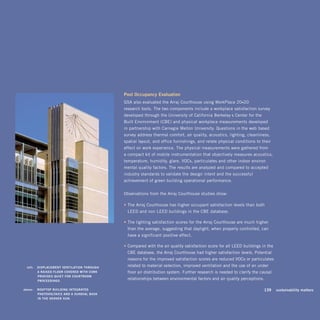
         •	cFcs                                     3	 degradation by physical means,
         •	hcFcs                                      and in that society...
         •	Neoprene	(chloroprene)
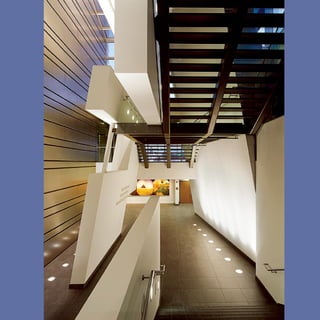
                                                    4	 people are not subject to conditions that systematically undermine
         •	cadmium
                                                      their capacity to meet their needs.”
         •	chlorinated	Polyethylene	and		
         	 chlorosulfonated	Polyethlene		
         	 (hdPe	and	ldPe	are	excluded)             The	living	Building	challenge	
         •	Wood	treatments	containing	creosote,		   The Living Building Challenge (LBC) is a product of the Cascadia Region
         	 arsenic,	or	Pentachlorophenol            Green Building Council. It goes beyond best practices and differentiates
         •	Polyurethane                             material choice priorities based on five criteria: the materials red list of
         •	lead	(except	for	solder	and	off-grid		   prohibited substances, the embodied carbon footprint, responsible wood
         	 solar	battery	systems	only)	             use, appropriate materials/service radius, and diverting construction waste
         •	Phthalates                               from landfills. LBC materials requirements seek to remove the worst known
                                                    offending materials from buildings as measured from a health standpoint,
                                                    and to reduce and offset the environmental impacts associated with the
                                                    construction process.


	   left:		 ePa	ideNTiFieS	eNvirONMeNTally	
            PreFeraBle	aTTriBuTeS	FOr	MaTerial	
            SelecTiON	iN	Their	BuildiNgS	Such	aS	
                                                    iNFO:	 The	Natural	Step	–	www.naturalstep.org                            	     147	 sustainability	matters
            POTOMac	yard,	arliNgTON,	virgiNia.      iNFO:	 living	Building	challenge	–	www.cascadiagbc.org / lbc
Materials


      cradle-to-cradle	
      Cradle-to-Cradle (C2C) is a design paradigm developed by McDonough
      Braungart Design Chemistry (MBDC), seeking to transform industry by creating
      products for cradle-to-cradle cycles rather than the take-make-waste cradle-to­
      grave legacy of the past. Through careful design of component materials and
      product assemblies, the product’s component materials can, at the product’s
      end of useful life, be perpetually circulated for reuse in closed loops. This
      maximizes material value without damaging ecosystems. MBDC offers material
      and product certifications through the C2C process.


      PharOS
      The PHAROS protocol developed by the Healthy Building Network is a
      valuable framework for evaluating sustainable materials and a progressive
      building material assessment tool. Products are evaluated for progress
      toward ideals in three defined measurement categories: impact on health
      and pollution, resource attributes and social and community factors.


      dematerialization	
      Dematerialization aims to produce the same quality of life while using
      significantly fewer resources. Given a particular building material,
      dematerialization guides a series of questions by assessing the need for the
      material to support the mission of the facility, local sourcing possibilities
      and durability. This relies on the inventive ability of designers to avoid raw
      material consumption and waste, by steadily closing material loops, by using
      renewable energy and renewable raw materials and by moving towards a
      service-oriented economy. The process goes beyond increased energy and
      resource efficiency but actually reduces consumption.


148   iNFO:	 cradle	to	cradle	–	www.mbdc.com/c2c
      iNFO:	 PharOS	–	www.	pharosproject.net
elIMInAte                                   Biomimicry
         constructIon WAste                          Biomimicry (from bio, meaning life, and mimesis, meaning to imitate) is 

         at	the	kluczynski	Federal	Building,	       defined by Janine Benyus, who coined the term, as “a new science that 

         gSa	saved	green	by	building	green.	         studies nature’s best ideas and then imitates these designs and processes to 

         renovation	contractors	salvaged	or	         solve human problems.” Product designers have used biomimicry to produce a 

         recycled	over	90%	of	all	construction	      beetle-inspired water harvester, termite-inspired ventilation systems, mollusk-

         and	demolition	waste—everything	
                                                     inspired fans and epoxy, abalone-inspired lightweight building materials and 

         from	ballasts	to	concrete	blocks—	
                                                    a fabric modeled after a lotus leaf to stay clean. The premise behind the 

         providing	an	excellent	example	of	
         recycling	through	all	phases	of	
                                                    approach is that nature has already solved most design problems. 

         construction.	The	success	of	the	
         project	created	a	cultural	shift	in	        there Is no AWAY
         gSa’s	contracting	procedures,	which	
         now	emphasize	a	comprehensive	
                                                    Amory Lovins, co-founder and chairman of the Rocky Mountain Institute, 

         construction	waste	management	             estimates that 99.98% of the U.S. materials flow is pure waste. A large 

         tracking	system.                            portion of all consumer goods manufactured is thrown away within one year. 

                                                     Statistics aside, there is no “away” and material not recycled or reused ends 

                                                    up in an incinerator or landfill. Neither is a good choice.


                                                     Building designers make choices based on many criteria; amongst
                                                     them should be end-of-life considerations. The Natural Step suggests,
                                                    “The design and use of materials in the building will meet the following
                                                     in order of priority:

                                                     a	 Material selection and design favor deconstruction, reuse, and durability
                                                       appropriate to the service life of the structure.
                                                     B	Solid waste is eliminated by being as efficient as possible, or
                                                     c	 Where waste does occur, reuses are found for it on-site, or
                                                     d	For what is left, reuses are found off-site.
	   left:		 Brick,	glaSS,	aNd	STeel—MaTerialS	 	
            WiTh	eNvirONMeNTally	FavOraBle	
                                                     e	 Any solid waste that can not be reused is recycled or composted.”
            characTeriSTicS—FOrM	The	exTeriOr	OF	
            The	deParTMeNT	OF	hOMelaNd	SecuriTy	
            FaciliTy	iN	OMaha,	NeBraSka.	
                                                     iNFO:	 Biomimicry	–	www.biomimicry.net	                                	   149	 sustainability	matters
AdAptInG the old And plAnnInG for the future

according	to	gSa	associate	Tammy	eatough,	 “older	buildings	are	more	
adaptable.	if	they’ ve	survived	the	first	80	years	they	are	likely	to	go	on	for	
many	more.” 	The	renovation	of	the	historic	Scowcroft	building	in	Ogden,	
utah,	preserved	100%	of	the	shell	and	50%	of	the	non- shell	and	diverted	
close	to	76%	of	construction	waste	through	an	effective	waste	management	
plan.	The	tenant	agency,	anticipating	the	need	for	flexibility	during	their		
20- year	lease,	included	a	raised- floor	system	to	accommodate	the	changing	
needs	of	current	and	future	tenants.	


reuse reduces WAste

The	howard	M.	Metzenbaum	u.S.	courthouse	in	cleveland,	Ohio,		
emphasizes	the	gSa	priority	to	reduce	waste	by	preserving	100%	of		
the	existing	structure	and	shell.	existing	glazed	brick	in	the	atrium,	not	
available	in	today’s	market,	was	salvaged	for	reuse.	historical	chandeliers		
in	the	main	lobby,	courtrooms,	and	judges’ 	chambers	were	refurbished	for	
reuse.	Original	marble	stock	stored	in	the	basement	was	reused	for	patching	
floors	and	wainscots.	resource	reuse	on	this	project	even	includes	artwork!	
The	Francis	Millet	murals	original	to	this	building	were	found,	restored	and	
reinstalled	in	the	public	areas.


150
Plan	to	Minimize	Waste	
Design projects for deconstruction and reuse to allow the possibility for
continuing the useful life of the materials. This approach considers both the
whole building design and construction process, incorporates disassembly, and
makes continued reuse or renovation more cost-effective. While designing, ask
if this material will be able to withstand reuse? What attachment or assembly
method is most appropriate to enable reuse? How could salvaged materials be
incorporated into a new construction project, and the handling of the materials
themselves? The premise of Repeat, Rethink, and Renew informs the design.


Also consider designing for modular construction, often a missed opportunity.
It can enable a facility to adapt to changes over time and can enhance the
quality control of construction through assembly in controlled conditions.
Using demountable rather than constructed walls is an example.


A durability plan informs material and systems decisions, assessing potential
risk factors and damage functions. Once identified, measures can be incor­
porated into the building design to address the risk factors. This process
follows every phase from pre-design to building occupancy. Durability plans
consider effects related to moisture, heat, sunlight, insects, material failure,
ozone and acid rain, building function, style and natural disasters.


                                                                        	   151	 sustainability	matters
152
c A s e s t u d Y : M At e r I A l s


                   Carl T. Curtis Midwest Regional Headquarters
                   of the National Park Service


                                                      A shInInG exAMple
                                                      The	carl	T.	curtis	Midwest	regional	headquarters	of	the	National	Park	
                                                      Service	(NPS)	in	Omaha,	Ne,	serves	both	as	the	agency’s	regional	
                                                      headquarters	and	as	the	visitor	center	for	the	lewis		clark	National	historic	
                                                      Trail.	NPS’s	core	mission	of	preserving	the	natural	resources	of	america,		
                                                      and	its	location	on	the	Missouri	river,	dictated	that	the	headquarters	serve	
                                                      as	an	exemplar	of	sustainable	materials	selection.	in	pursuit	of	those	goals,	
                                                      rangers	at	the	visitor	center	not	only	lead	discussion	groups,	which	provide	
                                                      insights	into	the	lewis	and	clark	Trail,	but	also	offer	an	educational	program	
                                                      that	shares	the	story	of	NPS’s	success	in	sustainable	building	design.	


	   left:		 lOcally	SOurced	aNd	MaNuFacTured	 	
            MaTerialS	highlighT	The	curTiS	NPS	 	
                                                                                                                           	    153	 sustainability	matters
            regiONal	headquarTerS,	OMaha,	NeBraSka.
Carl T. Curtis Midwest Regional Headquarters of the National Park Service


                                           The GSA solicitation required a 68,000 square foot building and LEED
gSa	leed	BuildiNg                          certification at the silver level, making it the first LEED building in the state
NaTiONal	Park	Service	MidWeST	             of Nebraska. The lease construction project, completed in 2004, exceeded
regiONal	headquarTerS
                                           expectations and actually achieved a LEED Gold rating. Features contributing
OMAHA, NE
                                           to its success include extensive use of daylight, self-sufficient landscaping, a
LEED NC rated:      May 3 2005
                                           rain garden or bioretention pond, under-floor air distribution and sustainable
gOld	                                      material choices throughout the three-story building.
Sustainable Sites               8 14
Water Efficiency                4      5
                                           Starting with the building envelope, the design team selected pre-cast
Energy and Atmosphere           6 17
                                           panels with a high insulation value and a reflective, light-colored, single-ply
Materials and Resources         6 13
Indoor Environmental Quality 11 15
                                           thermoplastic roof to lower energy costs. In addition, the panels reduced
Innovation and Design           5      5
                              40      69

greeN	FacTS
		39%	water savings from low flow
      fixtures, dual flush toilets,
      and waterless urinals
		59%	wood from Forest Stewardship
      Council (FSC) sustainably
      managed forests
100%	 green power purchase for
      more than two years


154
overall material costs, serving both as interior and exterior walls. The interior
                                                       also features low maintenance exposed structural concrete.


                                                       The use and prominent placement of local materials is evident throughout the
                                                       project, including the Kansas limestone in the lobby, quarried within 500
                                                       miles of Omaha. In all, 35% of project materials were manufactured locally,
                                                       and 17% were extracted from local sources. The designers specified paint
                                                       rather than wall covering and stained concrete floors instead of tile or carpet
                                                       in areas of high traffic, reducing both material use and maintenance costs.
                                                       The carpet covering the raised floor tiles is a low profile, uncut loop carpet
                                                       tile, making it easier to clean and more adaptable over the life of the building.


                                                       Almost 60% of the wood used for the project, including the maple trim
                                                       and millwork, are Forest Stewardship Council (FSC) certified, which provides
                                                       a full chain of custody and guarantees global forest practices that exceed
                                                       industry best practices. In addition, 12% of the project materials by cost
                                                       contain recycled content, from the restroom lavatory countertops to the carpet.
                                                       Furniture systems and seating are GREENGUARD IAQ certified for low
                                                       emissions and all of the carpet, adhesives, sealants, and paints meet the low
                                                       volatile organic compound (VOC) requirements of Green Seal Standard GS-11
                                                       and the South Coast Air Quality Management District Rule 1113, ensuring
                                                       better air quality and a healthier working environment for building occupants.
                                                       The furniture is also adaptable and can be reconfigured, recovered, and
                                                       painted to suit changing needs over the life of the building.


                                                       In summary, the project serves as a shining example of how material selection
                                                       strategies can support sustainable design, adaptability, and a healthy workplace,
	    left:		 NOrTh -FaciNg	WiNdOWS	OverlOOk	The	
                                                       while reinforcing the mission and image of the National Park Service.
             eNvirONMeNTally	aPPrOPriaTe	
             laNdScaPiNg.

	   above:		 STaiNed	aNd	POliShed	cONcreTe	FlOOrS	
             BleNd	WiTh	NaTural	STONe	iN	The	lOBBy.	                                                                           	   155	 sustainability	matters
156
Operations and Maintenance


                                          OM delivers the prOMise Of gOOd design


                                                         Designing and building a high-performance green facility is of little use if
                                                         it is not operated and maintained in a manner consistent with the principles
                                                         of sustainability. Operations and maintenance (OM) include the day-to-day
                                                         activities necessary to meet an existing building’s functional requirements,
                                                         its routine maintenance, repair of the building and its systems, cleaning,
                                                         care of the grounds, and all those services and activities necessary to preserve
                                                         the value of the asset. Viewed from the perspective of sustainability, OM’s
                                                         ultimate goal is to perform these activities and services efficiently and with
                                                         as little impact as possible on the occupants of the building, the personnel
                                                         performing the work, and the environment itself.


                                                         Operations and maintenance procedures are important for the building
                                                         and facility managers; however, the OM planning preferably begins during
                                                         the design phase as part of a fully integrated, whole building approach and
                                                         continues throughout the life of the building. An OM plan, or Building
                                                         Operating Plan, is required for each facility and must cover the overall goals,
                                                         procedures and schedules as well as describe the strategies for ongoing site
                                                         issues, construction and renovation procedures as they effect the building’s
                                                         systems and materials, occupant health, comfort and enjoyment, and cost
                                                         considerations. A checklist is a good operational tool for managing regular
                                                         inspections, maintenance and repairs.


                                                         In this OM chapter, the discussion is focused on what can be accomplished
                                                         during the operation of a building and the implications for renovation. To
                                                         provide an overview of operations and maintenance in one chapter, we have
                                                         summarized at a high level the details contained in the chapters on energy,
                                                         materials, indoor environmental quality, and site.


	   left:		 EnvironmEntal	initiativEs	at	thE	sam	nunn	
            atlanta	FEdEral	CEntEr	rEsultEd	in	grEEn	
            purChasing,	inCrEasEd	rECyCling,	and	an	
            EnErgy	star	sCorE	oF	81.	                                                                                              	 157	 sustainability	matters
Operations and Maintenance


      site

      The operation and maintenance of the exterior begins with evaluating the
      site, including the landscape and hardscape (any non-plant element such as
      paving, walkways, walls and fences). The preferred strategies for managing
      the grounds and the building’s exterior are those that have the lowest possible
      environmental impact. They include heat island effect reduction, stormwater
      management, light pollution, integrated pest management, transportation
      issues and responsible grounds upkeep.


      An important aspect of site OM management is minimizing the impact
      of the heat island effect—the term used to describe an increase in urban
      temperatures as a result of the absorption of the sun’s energy by a building
      and its hardscape. For non-roof areas, the use of light-colored/high-albedo
      materials will reflect, rather than absorb, the sun’s heat, but care must be
      taken as they may also contribute to annoying excess glare. Replacing asphalt
      surfaces in parking lots with permeable and/or open grid pavers will also
      reduce heat absorption. Shading devices are another effective solution for
      parking areas, and may include solar panels (although this is, admittedly, an
      initially expensive option). Improving the landscape by planting trees is a
      simple way to lower temperatures during the summer, reduce the heat island
      effect and provide shaded outdoor areas for the building’s occupants to enjoy.


      When renovating roof areas, the heat island effect can be reduced by choosing
      only ENERGY STAR roofing materials or by installing a planted roof (refer to the
      Site and Water chapter for details). Also, roofing products are available, including
      biobased coatings, which can be sprayed as a topcoat to provide a higher
      reflectance value. The “Cool Roof” guidelines published by DOE provide multiple
      options and solid advice.


158
OM site management should consider a variety of innovative techniques
                                                      to manage stormwater. Implement strategies that allow stormwater to filter
                                                      slowly into the ground by using rain gardens, catchments, or swales. Rainwater
                                                      can be captured and used for irrigation or flushing toilets. Look for ways to
                                                      keep water away from the building, by redirecting downspouts, curbs and
                                                      gutters to drain into retention areas.


                                                      Light pollution is defined as site and building lighting that spills onto
                                                      adjacent properties and degrades the night sky. Lighting sources should
                                                      provide only enough illumination to maintain safe lighting levels without
                                                      trespassing on other areas of the site, or adjacent properties. Many manu­
                                                      facturers make fixture models that meet these objectives and additional
                                                      resources are available from the International Dark-Sky Association.


                                                      Integrated pest management (IPM) provides for the management of outdoor
                                                      pests—be they plants, insects, or animal—without endangering human health
                                                      and the surrounding environment. IPM improves economic returns through
                                                      the use of minimum application rates, selection of the least-toxic chemical
                                                      pesticides and herbicides, and localized applications for targeted species.
                                                      As with most OM practices, IPM requires routine inspection and monitoring.


                                                      Transportation impacts are usually addressed during the site selection process
                                                      rather than as an ongoing operations issue, but an alert building manager
                                                      can often discover ways to support preferred tenant behaviors. These include
                                                      offering preferred parking to carpools and alternative fuel vehicles, and
	    left:		 trEEs	and	light-ColorEd	pavEmEnt	 	
                                                      encouraging the use of bicycles by providing secured bike racks and shower
             rEduCE	hEat	gain	in	thE	CEntral	plaza	   facilities. Also, promoting the use of public transportation through commuter
             oF	thE	patEnt	and	tradEmark	ComplEx	 	
                                                      benefit plans helps to defray tenants’ costs and reduce parking demands.
             in	alExandria,	virginia.	

	   above:		 BikE	raCks	at	thE	sEattlE	CourthousE	
             EnCouragE	Building	usErs	to	BiCyClE	 	   inFo:	 Cool	roofs	–	http://www1.eere.energy.gov/	
             to	work	rathEr	than	drivE.	              	      femp/procurement/eep_roof_products.html                          	   159	 sustainability	matters
                                                      inFo:	 international	dark-sky	association	–	www.darksky.org
Operations and Maintenance


      It is important for the Building Operating Plan to include everyday maintenance
      and seasonal procedures such as using biodegradable cleaning agents and salt-
      free snow and ice removal. Choosing fuel-efficient maintenance equipment that
      operates at low sound levels—preferably fewer than 70 decibels—diminishes
      the excess noise that is damaging to the equipment operator and annoying for
      the employees of the building or nearby neighbors.


      Water

      Executive Order 13423 requires Federal agencies to reduce their water
      consumption by 2% per year based on their 2007 baseline. To help achieve
      this requirement, building managers should inventory all plumbing fixtures
      to determine if they meet the Energy Policy Act 1992 water requirements.
      A plan should then be developed to replace or improve fixture performance
      to meet agency goals. In addition, consider the use of sensors, aerators,
      waterless urinals, high-efficiency toilets and other strategies described in
      the Site and Water chapter.


      energy

      Reduced energy use through operations and maintenance initiatives is one
      of the best ways to meet agency energy goals in existing buildings. Include a
      narrative in the Building Operating Plan describing the building’s mechanical
      system, its operation, sequence of events, and predictive and preventive
      maintenance schedules to enhance overall energy efficiency. The plan, outlining
      energy design intent, should be made available to everyone on staff to ensure
      that the building is operated as its designers intended.


160
Using a systematic process, the plan defines the operation of the building’s
                                                       major energy systems, options for optimizing the building’s energy performance,
                                                       and strategies to achieve energy savings. It should include items like mechani­
                                                       cal set points, equipment run times, occupancy schedules, and lighting levels.
                                                       Building Automation Systems (BAS) are an effective way to implement the plan
                                                       with minimal effect on the workload of the OM staff. If feasible, BAS should
                                                       control all equipment and as much lighting as possible; if not, install individual
                                                       controls. Building managers should also analyze energy bills and initiate
                                                       periodic energy audits.


                                                       Executive Order 13423 requires that all Federal agencies reduce their energy
                                                       use 3% per year based on 2003 baselines. Once individual building baselines
                                                       are established, ENERGY STAR’s Target Finder tool can assist with setting the
                                                       targets outlined in the EO or aim for at least a 30% reduction by 2015. These
                                                       achievements can be verified by submitting the documentation necessary for an
                                                       ENERGY STAR building label. Refer to the Duncan Federal Building case study
                                                       at the end of this chapter for an example of the process.


                                                       A plan for retro-commissioning, re-commissioning, or ongoing commissioning
                                                       will produce considerable savings by implementing both minor improvements
                                                       and identifying planned capital projects, ensuring that the building’s major
                                                       energy-using systems undergo repair, operation, and maintenance to optimize
                                                       energy performance. Commissioning can also be used to address changes in
                                                       building occupancy and use as well as identify periodic adjustments and
                                                       procedures essential for optimal energy efficiency. Once new adjustments and
                                                       procedures are in place, building managers should review and update the
	    left:		 indigEnous	plantings	rEduCE	watEr	
             Consumption	and	maintEnanCE	at	 	         Building Operating Plan.
             thE	dEpartmEnt	oF	transportation,	
             lakEwood,	Colorado.	

	   above:		 rE-Commissioning	oF	mEChaniCal	systEms	
             EnsurEs	thEy	arE	opErating	to	maximum	
             EFFiCiEnCy.                                                                                                       	 161	 sustainability	matters
Operations and Maintenance


      Many chillers in existing buildings still contain ozone-depleting compounds
      such as CFC-based refrigerants. Identify equipment using these refrigerants
      and plan for replacement if a financial analysis shows that a simple payback
      can be achieved within 10 years. If replacement is not feasible, then consider
      the use of suitable alternative refrigerants. In the meantime, implement
      measures to control leakage of CFC-based refrigerant to less than 5% per year
      as directed by the Clean Air Act. One strategy is to visually check valves rather
      than by pressure testing, which causes refrigerant to escape. Finally, manage
      all halogenated hydrocarbons per The Montreal Protocol on Substances that
      Deplete the Ozone Layer.


      Another resource, the ENERGY STAR program, lists over 50 categories of
      products that deliver equal or better performance than non-labeled goods while
      using less energy. Major categories of rated products include appliances, heating
      and cooling, electronics, office equipment, lighting, and commercial food service.


      Materials

      Materials issues must be considered in facility alterations typically made
      during the normal course of a building’s life. As part of their responsibility,
      building and facility managers must comply with the requirements of
      EO 13423 as well as the requirements and best practices used in new buildings
      outlined in GSA’s Facilities Standards for the Public Buildings Service.


      Material management in the operations and maintenance of a building
      requires persistence, coordination and familiarity with new products and
      processes. EO 13423 calls for Federal agencies to acquire goods and services
      that follow sustainable environmental practices, including bio-based, recycled-


162   inFo:	 the	montreal	protocol	on	substances	that	deplete	the	ozone	layer	–		
      	      www.unep.org/ozonE/pdfs/montreal-protocol2000.pdf
sam	nunn	FEdEral	CEntEr	
atlanta,	gEorgia


in	2003,	the	sam	nunn	Federal	Center	in	atlanta	implemented	a	retro- commissioning		
project	for	a	total	cost	of	about	$120,000	that	now	generates	annual	cost	savings		
of	approximately	$250,000.	gsa,	doE,	and	Epa	worked	together	to	establish	a	
comprehensive	program	to	address	high	energy	usage	in	the	1.6	million- square- foot	
facility.	the	partnership	leveraged	resources	and	skills	to	retro- commission	the	entire	
building,	with	the	goal	of	having	the	building	qualify	for	EnErgy	star	certification	
after	12	months	of	demonstrated	savings.	

the	team	met	regularly	to	analyze	energy	use	and	identify	simple,	low -cost	energy	
reduction	modifications.	these	measures	included	metering,	de -lamping	excessively	
lit	areas,	installing	motion	sensors,	repairing	improperly	installed	or	broken	equipment,	
and	devising	an	after-hours	setback	mode	so	that	air-handlers	no	longer	ran	around	
the	clock.	they	also	initiated	occupant -focused	energy	awareness	programs.	the	retro -
commissioning	effort	reduced	cooling	loads,	increased	the	efficiency	of	the	central	
plant,	and	saved	almost	12	billion	Btu	in	2003	alone —enough	energy	to	power	228	
homes	for	a	year.	the	team	is	now	retro -commissioning	additional	buildings	based	on	
the	successful	atlanta	Federal	Center	model.


                                                                              	   163	 sustainability	matters
Operations and Maintenance


      content, environmentally friendly, energy-efficient and water-efficient
      products. A soy-based roof coating is a good example of a material with
      multiple sustainable attributes.


      Understanding Federal purchasing requirements may appear difficult but it
      is no less important than meeting tenant service calls or energy efficiency
      targets. There are, however, helpful resources such as EPA’s Environmentally
      Preferable Purchasing (EPP) program, which assists building and facility
      managers to “buy green” by offering guidance and product listings that meet
      Federal requirements. The program also provides calculators for cost benefit
      analysis and a mechanism for managing green purchasing. Ensuring that
      tenants know about these resources should be a part of the regular tenant
      communications, especially since the Energy Policy Act of 2005 requires
      GSA’s tenants to follow the same purchasing rules when buying devices
      for themselves, such as light bulbs for desk lamps.


      Building	standards
      Establishing building standards that can be inserted into service and
      construction contracts is another way for building managers to encourage
      the purchase and use of sustainable materials. The standards may include
      minimum recycled content for ceiling tiles and carpet; use of high-efficiency
      lighting, appliances, and office equipment; reuse of furniture and other
      recycled or recyclable building materials; use of low-emitting paints and
      sealants; and wood from responsibly managed forests.


      A standard to guide the purchasing and the disposal of fluorescent lamps
      is an example. Fluorescents are an energy-efficient light source but require


164   inFo:	 Environmentally	preferable	purchasing	–	www.epa.gov.epp
the use of mercury to function and, therefore, contaminate the waste stream
                                                           at the end of their lives. Building and facility managers must take care in
                                                           selecting replacement lamps to ensure low mercury content in fluorescent
                                                           tubes and compact fluorescent lamps; there are a large number of products
                                                           meeting this requirement. They should also match a specified color
                                                           temperature to avoid a hodgepodge look over time.


                                                           Although the National Electrical Manufacturer’s Association has announced
                                                           a voluntary commitment to cap the amount of mercury allowed in CFLs, and
                                                           mercury levels in tube lamps have been significantly reduced, the disposal of
                                                           all fluorescents is still an issue. EPA imposes fines for the improper disposal
                                                           of mercury-containing lamps and each building must have a hazardous waste
                                                           disposal plan in place and follow it diligently.


                                                           waste	disposal
                                                           Understanding what makes up a building’s trash—differentiating between
                                                           those products that are truly waste, those that are recyclable, and hazardous
                                                           waste—is key to managing the waste stream. An OM plan should require
                                                           a waste stream audit as the best way to gather this information. Once
                                                           completed, a tenant education program will encourage active occupant
                                                           participation, increase recycling and reduce waste. In areas where recycling
                                                           programs do not exist, the audit can, perhaps, spur new community action
                                                           or private industry initiative by showing a need for such efforts.


	     left:		 duraBlE	FinishEs	allow	Easy	maintEnanCE	
              oF	thE	puBliC	arEa	oF	thE	dEpartmEnt	oF	
              homEland	sECurity,	ins	FaCility	in	omaha,	
              nEBraska.	

	   above:		 high-EFFiCiEnCy	lighting	is	rEquirEd	in	 	
             all	FEdEral	Buildings.	                                                                                             	   165	 sustainability	matters
F E d E r a l 	 B u i lding	
r i C h m o n d , 	 v irginia


small	steps	to	operational	improvement
Like many older buildings the 368,588 square-foot Federal Building in
Richmond, Virginia, built in 1962, suffered from poor performance. From 1985
to 1994, the facility averaged 81,000 Btu/gsf/yr. After a major renovation of the
HVAC system completed in 1997, energy use started to increase and by 1998,
consumption was up 27% over the previous ten year average, peaking in 2000
at 152,500 Btu/sf/yr, an 88% increase. A multi-year incremental renovation
focused on improved operations, maintenance and equipment upgrades—the
result: GSA now enjoys reduced energy costs and an ENERGY STAR building.

In 2003, an operational assessment of the Energy Management Control System
revealed the causes of the poor performance:

•	 Faulty scheduling had equipment running at night, on the weekends, and
   during other times when it was assumed to be off.
•	 System was operated above or below set-points, or did not meet the load.
•	 Control hardware malfunctions for the air and water side economizers.
•	 Control loops did not function optimally.
•	 Building operators had permanently overridden controls.
•	 Interaction between the heating and cooling system was problematic.

166
making	incremental	improvements	
In 2004, the management team set out to resolve issues and bring the system
under control. Their efforts included putting the bathroom exhaust back on
schedule, lowering heating water loop temperatures, reducing HVAC system
operation by one to two hours per day, trimming weekend operation, and
resetting the supply air temperature to the original design of 55°F. These no-
cost items immediately reduced energy usage by 17.4% and saved $25,000
per year.

In 2005, initiatives included correcting the water-side economizer operation
while extending hours of its use, adjusting the boiler outside air temperature
set point and eliminating the overlap between simultaneous heating and
cooling. These control actions reduced energy usage by 33.7% from the
previous year and saved $109,000 per year.

In 2006, the purchase of new upgraded control equipment allowed for the
optimization of the overall system. The new equipment included direct digital
controls with internet accessibility, custom programming and energy recovery
air coils with a circulated glycol loop for the bathroom exhaust. Additionally,
the steam supply pipes to the penthouse were isolated from ductwork so as not
to preheat the outside air to the air handlers. Optimization of the controls
included more run time of the air side economizers for the dedicated
ventilation units. The reduction of energy usage was 17.6% from the previous
year and provided a net $15,000 per year savings even with the cost upgrades
of $120,000.

Efforts continued into 2007 and at year-end, the total energy usage was
49,300 Btu/gsf/yr, a 19.8% reduction from the previous year. 2007 also
brought an additional $134,000 per year saved. These annual reductions are
impressive improvement in the building’s operations budget, but the impact is
beneficial to all of GSA. EISA 2007 and EO 13423 both require energy use
reduction based on the agency’s 2003 baseline. The Richmond Federal
Building reduced energy usage by 62% compared to its 2003 baseline,
demonstrating that a steady but consistent operations and maintenance
improvement plan can help GSA meet energy reduction goals and save money.


                                                                       	   167	 sustainability	matters
Operations and Maintenance


      Building and facility managers should consider alternative disposal strategies
      for durable goods such as computers, free-standing and systems furniture, and
      appliances, not only because they are a burden on landfills, but also needlessly
      waste potentially reusable products. Several manufacturers have “take back”
      programs that are worth considering and in many areas of the country programs
      exist to recycle durable goods. Tenants can be encouraged to reuse discarded
      items that are still in good condition by providing a designated room or location
      for drop off or claiming such items. Lists of items available for reuse can be
      posted in the building or made available to charities in the community.


      EPA’s Comprehensive Procurement Guidelines (CPG) is part of the
      government’s “buy-recycled” program. Buying products with recycled content,
      from carpeting and insulation to office paper helps “close the recycling loop”
      by reusing materials collected through recycling programs. EPA also provides
      Recovered Materials Advisory Notices (RMAN), which recommend recycled-
      content levels for CPG items.


      Demolition from facility alterations should adhere to construction waste
      management strategies. EO 13423, for example, requires the recycling or
      salvage of at least 50% of construction and demolition waste. No matter
      how large or small the project, construction waste can be diverted from
      landfills through recycling or reuse. In order to assist building managers in
      compliance, the Whole Building Design Guide has a database of companies
      that haul, collect, and process recyclable debris from construction projects.


168   inFo:	 Comprehensive	procurement	guidelines	–	www.epa.gov.cpg
indOOr envirOnMental Quality

                                                         Indoor environmental quality (IEQ) is the final component of a successful,
                                                         sustainable OM program, and the one with the greatest potential for
                                                         increasing the comfort, protecting the health and increasing the productivity
                                                         of those who work in the building.

                                                         To ensure the health and well-being of a building’s occupants, OM practices
                                                         should include a minimum indoor air quality performance requirement. Although
                                                         ASHRAE Standard 62.1 is the standard for ventilation rates, many older buildings
                                                         and equipment cannot comply. In such cases, building managers should try
                                                         to achieve at least 10 cfm of outdoor air per occupant. Installing an air intake
                                                         measurement device can help ensure that a sufficient amount of outdoor air
                                                         enters the system. Air intakes must remain clear of debris, and be positioned
                                                         away from loading dock truck exhaust, trash containers, or designated smoking
                                                         areas (which should be at least 25 feet from any opening in the building’s
                                                         envelope).

                                                         Properly maintained filters, with a high MERV value, are also very important
                                                         in meeting air quality standards. Building managers can also use EPA’s
                                                         Indoor Air Quality Building Education and Assessment Model (I-BEAM) a
                                                         comprehensive state-of-the-art tool for managing IAQ in commercial buildings.
                                                         Finally, CO2 sensors are useful, especially in densely occupied areas, in
                                                         identifying the need for more outside air. To be effective they must be placed
                                                         to take measurements at human, not ceiling, height.


	    left:		 grEEn	housEkEEping	praCtiCEs	arE	
             EssEntial	in	Child	CarE	CEntErs	suCh	as	
             this	ssa	FaCility	in	woodlawn,	maryland.	

	   above:		 ExpansivE	Floor	spaCE	and	undEr-Floor	 	
             air	distriBution	EnhanCE	thE	FlExiBility	
             oF	thE	irs	proCEssing	CEntEr	in	kansas	
             City,	missouri.                                                                                                      	   169	 sustainability	matters
sustainable facility ManageMent :
the benefits
the	international	Facility	management	association	identifies	sustainable		
building	practices	that	help	facility	managers	upgrade	and	operate	their		
buildings	to	achieve	a	long- term	human	and	ecosystem	balance.	Financial,	
environmental	and	social	benefits	result	from:

•	lower	energy	and	water	costs	

•	lower	waste	disposal	costs	

•	lower	environmental	and	emissions	costs	

•	lower	operations	and	maintenance	costs	

•	increased	productivity	of	building	occupants	

•	increased	health	of	building	occupants	

•	higher	building	valuation	

•	positive	impacts	on	the	local	and	global	environment	from	reductions		
	 in	resource	use,	emissions,	water	use	and	waste	disposal

the	impact	of	the	facility	management	community	on	the	environment	is		
profound.	as	stewards	of	the	built	environment,	facility	managers	are	critical		
to	the	adoption	of	more	energy	and	environmental	solutions.


170          inFo:	the	international	Facility	management	association	–	www.www.ifma.org
Green cleaning is an excellent way to reduce exposure from potentially
                                                       hazardous contaminants. Unlike a traditional cleaning program, green cleaning
                                                       is a holistic approach to cleaning that goes beyond simple appearances and
                                                       focuses on human health and environmental impacts. At a minimum,
                                                       contractors can reduce exposures by limiting the amount and level of toxic
                                                       and hazardous chemicals used.


                                                       Products and practices employed should follow guidelines such as
                                                       Environmentally Preferable Purchasing, the Green Seal Environmental
                                                       Standard for Cleaning Services, and the California Code of Regulations for
                                                       maximum allowable VOC levels for each product category. Based on the
                                                       Centers for Disease Control and Prevention determination, soap should not
                                                       contain antimicrobial agents unless required by health codes and regulations
                                                       for food service and health/fitness equipment.


                                                       All cleaning equipment should similarly follow a green standard as well
                                                       as minimize the use of energy and water. Vacuums and extraction cleaners
                                                       should meet the Carpet  Rug Institute “Green Label” Testing Program
                                                       and have a maximum noise level of 70 decibels.


                                                       Finally, one of the simplest strategies for maintaining a clean building is to
                                                       provide “walk off” areas at all entrances to the building. Such areas should
                                                       have at least 10 walkable feet to remove particulates from shoes. Ideally,
                                                       walk off areas will include grates, grills, or carpet mats. All must be regularly
                                                       cleaned and properly maintained to remain effective. It may be necessary to
                                                       change the mats depending on the season or weather conditions.


	   above:		 thE	Byron	rogErs	CourthousE	in	dEnvEr,	
             Colorado,	EarnEd	gsa’s	First	lEEd	For	
             Existing	Buildings	gold	rating	For	
             opErations	and	maintEnanCE	praCtiCEs.                                                                             	   171	 sustainability	matters
7-pOint challenge

in	2007,	the	Building	owners	and	managers	association	(Boma)	created	a		
7-Point Challenge	to	reduce	use	of	natural	resources,	non - renewable	energy		
sources,	and	waste	production	and	work	in	coordination	with	building	
management,	ownership,	and	tenants:

1 Continue	to	work	toward	a	goal	to	decrease	energy	consumption	by		
	 30%	across	portfolios	by	2012;	

2 Benchmark	energy	performance	and	water	usage	through	Epa’s		
	 EnErgy	star	benchmarking	tool;	

3 provide	education	to	building	managers,	building	owners	and	operators,		
	 engineers,	and	others	involved	in	building	operations,	to	ensure	that		
	 equipment	is	properly	maintained	and	utilized;	

4 perform	an	energy	audit	and/or	retro-commissioning	of	buildings	and	implement		
	 low-risk,	low-cost	strategies	to	improve	energy	efficiency	with	high	returns;	

5 Extend	equipment	life	by	improving	the	operations	and	maintenance	of		
	 building	systems	and	ensure	equipment	is	operating	as	designed;

6 through	leadership,	positively	impact	your	community	and	your	planet	by		
	 helping	to	reduce	your	industry ’s	role	in	global	warming;	and	

7 position	yourself	and	the	industry	as	leaders	and	solution	providers	to		
	 owners	and	tenants	seeking	environmental	and	operational	excellence.	


172            inFo:	Building	owners	and	managers	association	(Boma)	international	–	www.boma.org
cOnclusiOn

                                                       The impact of OM practices and policies now extends far beyond the
                                                       mechanical room and includes a very broad range of practices that a
                                                       building manager can implement to achieve environmentally responsible
                                                       goals. Because EO 13423 mandates that 15% of all Federal agencies’
                                                       portfolios meet the requirements of the Guiding Principles for High
                                                       Performance and Sustainable Buildings by 2015, the importance of
                                                       sustainable OM practices can only increase.

                                                       What’s more, as many existing buildings are not likely to be renovated in the
                                                       near future, the most sensible approach may be the slow but steady returns
                                                       of an OM program focusing on continual improvement. The use of new
                                                       planning techniques, such as integrated design charrettes, have helped building
                                                       and facility managers devise and implement successful OM strategies that
                                                       balance cost and tenant satisfaction with environmental responsibility.


	   right:		 attraCtivE	amEnitiEs	in	a	Courtyard	 	
             oF	thE	irs	Campus	in	kansas	City,	
             missouri,	Expand	thE	FaCility’s	usaBlE	
             spaCE	to	outdoors.
                                                                                                                             	   173	 sustainability	matters
174
c a s e s t u d y : O p e r at i O n s a n d M a i n t e n a n c e


                    John J. Duncan Federal Building


                                                          an existing building: 

                                                          achieving sustainable excellence 

                                                          the	John	J.	duncan	Federal	Building	in	downtown	knoxville,	tennessee,		
                                                          is	a	six-story,	172,683-square-foot	structure	with	two	underground		
                                                          parking	decks.	the	building	houses	seventeen	Federal	agencies	and		
                                                          the	knoxville	satellite	office	of	gsa’s	nashville	service	Center	manages	
                                                          the	building.	although	it	was	not	designed	and	constructed	as	a	green	
                                                          building	in	1988,	the	duncan	Federal	Building	is	an	excellent	example		
                                                          of	achieving	sustainable	excellence	through	operations	and	maintenance.	


	   left:		 thE	dunCan	Building	stands	tall	as	a	modEl	
            oF	EFFiCiEnt	opErations	and	maintEnanCE.                                                                         	     175	 sustainability	matters
John J. Duncan Federal Building


                                          This building was an average energy and water performer until the building’s
gsa	lEEd	Building                         manager, Johnathan Sitzlar, set out to meet both the requirements of
John	J.	dunCan		                          Executive Order 13123 and GSA’s 2005 fiscal year energy targets. The first
FEdEral	Building
                                          step was putting together a diverse team of professionals, GSA associates
KNOxVILLE, TN
                                          and contractors. Together they developed a master plan for the building that
LEED EB rated:      Jan 4 2007
                                          started with an energy audit, continued with a careful analysis of its findings,
CErtiFiEd	                                and then proceeded to prioritized implementation.
Sustainable Sites                6 14
Water Efficiency                 2    5
                                          The Duncan Building team exceeded 2005 energy reduction goals by 33%,
Energy and Atmosphere          15 23
                                          achieved an ENERGY STAR rating of 94, and began to utilize green energy
Materials and Resources          3 16
                                          sources for electricity in place of coal. In addition, they reduced water usage
Indoor Environmental Quality     5 22
Innovation and Design            3    5   by 400,000 gallons per year.
                               34    85

grEEn	FaCts
                                          A parallel challenge—LEED for Existing Buildings (EB) certification—proved
		95%	Energy Star score                   to be a formidable one. The team had to draw on the diverse creativity of its
		50%	water use reduction                 members to achieve the desired rating. However, working through the LEED
100%	 occupancy rate after                EB process caused them to broaden their environmental initiatives, better
      renovations                         engage the tenant agencies, and in the end, provide superior workplaces. The
                                          success of the approach is evident in the building’s 100% occupancy rate,
                                          and in its 91% customer satisfaction score. The fundamental steps used by
                                          the Duncan team are an instructive lesson in greening an existing building.


176
Energy
GSA, the Department of Energy’s Atlanta office, Oak Ridge National
Laboratory, the University of Tennessee Energy, and the Environmental
Resource Center used a team approach to conduct energy audits. Executive
Order 13123 required GSA to reduce 2005 energy usage by 30% below
1985 levels. For the Duncan Building, this meant a target of 52,499 Btu/gsf.
Actual usage was 35,693 Btu/gsf in 2005, exceeding the Executive Order
goal by 33%. Further, GSA also purchases renewable energy in blocks from
the Tennessee Valley Authority and the Knoxville Utility Board to provide
Green Power derived from wind, solar and methane.


retro-commissioning
The Duncan team quickly saw that their best opportunity at complying with
Executive order mandates was through a comprehensive retro-commissioning
of the building’s operating systems and the procurement of a new Building
Control System (BCS). The BCS is the computerized central system respon-
sible for maximizing energy efficiency, controllable from a single on-site
location. In particular, the maintenance staff uses the system to maximize
efficiency of the HVAC system, establish cost effective machine run times,
use outside air to meet the demands of the building, immediately pinpoint
problems in all systems, and produce numbers for trend-data analysis in
order to improve operating decisions.


Systems that were retro-commissioned and connected to the BCS include:
lighting on all floors, all variable frequency drives, chillers, boilers, cooling towers,
garage exhausts, restroom exhausts, air handling units, the building economizer,


                                                                             	   177	 sustainability	matters
John J. Duncan Federal Building


      and all package and split units, as well as the domestic hot water loop. The
      BCS itself is tied into two real-time local utility meters that provide time-specific
      energy load data. Furthermore, an Internet portal allows the system to be
      integrated into the region’s enterprise-wide management system, allowing for
      continuous monitoring and remote support to ensure its sustained performance.


      lighting	upgrades
      Pre-retrofit lighting consisted of magnetic ballasts and F40 bulbs. Favorable
      life-cycle cost analysis enabled GSA to obtain funding for upgrading the
      building’s 1,536 lighting fixtures to electronic ballasts and T-8 bulbs, and
      to replace incandescent lamps with compact fluorescents. Also, motion
      detectors control the lighting in restrooms, conference rooms and other
      non-regularly occupied spaces.


      water	Conservation
      By installing secondary meters on the exterior landscaping water lines, GSA
      demonstrated to the local utility company that water was being diverted from
      the waste stream and the agency was able to reduce its sewage utility bills.
      Fourteen waterless urinals installed in the restrooms provide water-free usage.
      The team also changed all 2.5 gallon per minute (gpm) faucet aerators to
      those using 0.5 gpm.


      Equipment	replacement	
      In order to further reduce energy and water consumption, it was necessary to
      identify the most environmentally sound means of upgrading the building’s
      existing cooling tower, already scheduled for replacement. The existing
      cooling tower used two 15 horsepower motors and lost excessive amounts of


178
water due to overspray. The new tower incorporates premium efficiency fill,
                                                         and uses two premium efficiency 7.5-horsepower motors. Together, they have
                                                         significantly reduced total operating time, and thus the load on the building.


                                                         recycling	
                                                         Through office-waste recycling programs, construction material recycling,
                                                         and educational programs for the tenants, the Knoxville team reduced waste
                                                         destined for landfills by 40%. In 2005, the team diverted 13.75 tons of
                                                         white paper and over 300 pounds of aluminum from the landfills. Through
                                                         a joint effort between the University of Tennessee and GSA, moving boxes and
                                                         telephone books given to the local school system provide additional funding
                                                         to the school system through their recycling efforts. They also diverted nearly
                                                         12,000 square feet of carpet removed from renovated tenant spaces from
                                                         the landfill. Using new technology, a local contractor was able to convert
                                                         the old carpet into reusable carpet tiles for the local Knox County School
                                                         System, saving the school system nearly $24,000 and saving GSA
                                                         construction waste fees.


                                                         green	space	
                                                         The site includes a large amount of green space, providing one of the nicest
                                                         courtyards in downtown Knoxville, and heat island reduction for the city’s
                                                         center. As part of its plan, the team installed recycled, post-consumer plastic
                                                         benches under the canopy and the landscapers used recycled tire mulch in
                                                         place of wood-based mulch. (Recycled tire mulch diverts tires from the
                                                         landfill and does not fade or deteriorate.) A cost analysis confirmed savings
                                                         of $30,000 to $35,000 over the nine-year contract.
	    left:		 thE	dunCan	rEnovation	inCludEd	rEplaCing	
             thE	Cooling	towEr	with	a	supEr	EFFiCiEnt	
             ChillEr	halF	thE	sizE.	

	   above:		 sustainaBlE	opErations	and	maintEnanCE	
             praCtiCEs	ExtEnd	BEyond	thE	Building	to	
             EnhanCE	a	nEighBorhood	park.                                                                                      	   179	 sustainability	matters
John J. Duncan Federal Building


“compared to an average building,       institutionalization
 this building saves the equivalent     Within GSA Region 4, energy reduction measures in this facility now serve as
 of about 91,000 gallons of gaso-
                                       “best practices” for a variety of common agency contracts.
 line per year, or the amount of
 fuel required to drive 216 million
                                        maintenance
 automobile miles per year. another
                                        By working closely with contractors and tenants, GSA proposed green cleaning
 perspective would be to say that,
 compared to an average building,      and integrated pest management as a no-cost enhancement of its services.
 savings here is the electricity       Additionally, the region developed maintenance contract language that called
 equivalent of 18 train cars of coal    for more stringent maintenance schedules, more sustainable processes in
 if their contents were burned to       building renovation, and the use of more environmentally sound building
 make electricity.”                     materials. This language now serves as the model for new maintenance
                                       contracts throughout the region.
Jim	powEll,	rEgional	dirECtor,	
dEpartmEnt	oF	EnErgy
                                       tenant	meetings
                                       The team took particular care to ensure that the tenants were educated about
                                        the changes going on in the building. Regularly scheduled meetings serve as
                                       change management sessions and address such issues as:

                                       • material reuse and recycling

                                       • safety issues

                                       • energy conservation—turning off lights, discouraging the use of personal
                                         heaters, unplugging equipment

                                       • green cleaning with biodegradable products that lack both the side effects
                                         of standard commercial cleaners and the perfumes that many people
                                         associate with “clean”


180
The meetings also promote new ideas such as alternative modes of
                                                transportation, electrical outlets for alternative fuel vehicles, and bicycle
                                                racks as well as valuable public relations and employee benefit initiatives.
energy savings
                                                In 2005, to maximize the use of public transportation, the team arranged
Baseline	usage	(Fy	2004):		                     for the Knoxville Area Transit Authority (KAT) to provide a free ride-share
1,931,040	kwh/year	
                                                program. Now, tenants can ride the KAT buses for free from different
Electric	usage	(Fy2005):		                      locations throughout Knox County.
1,640,880	kwh/year	

annual	kwh	savings:		
290,160	kwh/year	(15%	decrease)	                cOnclusiOn
total	Energy	savings:		
                                                The GSA Duncan building team succeeded by taking a holistic approach
1,177	mmBtu	including	gas	
                                                toward reducing the environmental impact of their facility, and in so doing,
annual	Energy	Cost	savings:	$15,570	
                                                exceeded the objectives of Executive Order 13123. They also received a
Water savings                                   Federal Building Showcase Designation, and LEED EB certification.
savings:	400,000	gal/year	$22,619/year	
meter	data	not	available

envirOnMental benefits

recycling:	40%	waste	diversion	from	landfill	

renewable	Energy:	97,200	kwh	per	year		
equivalent	to	27	acres	of	trees,		
recycling	432,864	aluminum	cans,		
or	recycling	47,682	pounds	of	paper	

Co2	reduction:	1,452,759	kg	
so2	reduction:	4,296	kg	
sox	reduction:	3,049	kg	

siMple payback

3.7	years	on	$142,000	cost	for		
water	and	energy	measures


                                                                                                                        	   181	 sustainability	matters
Municipalities that signed U.S. Conference of Mayors Climate Protection Agreement

States with signed green building legislation


182
Beyond GSA: 

                                           The Greening of America


The ProliferaTion of Green


         Aristotle said, “We are what we repeatedly do.” If this is so then
         the United States is edging ever closer to becoming a green nation.
         Environmentalism is proliferating—in buildings, the popular media,
         state and local governments, non-government organizations (NGOs),
         corporations and industry.


         Consider these private sector initiatives as just a few recent examples.


         • CB Richard Ellis announced it would become carbon neutral
          by 2010 at the more than 5 million square feet it occupies worldwide.


         • Wal-Mart, the world’s largest retailer, has asked its 60,000 suppliers to
          reduce packaging by 5%, avoiding millions of pounds of trash in landfills
          and 667,000 metric tons of carbon dioxide in the atmosphere.


         • Home Depot, another retailing giant, launched EcoOptions to identify
          environmentally preferable products. More than 2,500 products are labeled.


         • PNC is the first U.S. bank to apply green building standards to all newly
          constructed or renovated retail branch offices and has more certified
          “green” buildings than any other company in the world.


         • Delta Airlines offers passengers the option to buy carbon offsets for their
          trips at the same time that they buy their tickets through a donation to
          The Conservation Fund’s tree-planting program.


                                                                                     183   sustainability matters
Beyond GSA: The Greening of America


      early influencers

      Our national focus, triggered by global warming awareness and the desire to
      become energy independent, may be a recent phenomenon, but its roots can
      be traced back to multiple sources over many decades. Prominent among
      them is the role of the Federal government, including EPA, DOE,
      GSA and the Executive orders, programs and policies mentioned throughout
      this book. However, other entities, both public and private, have played roles
      as well.


      State and Local Governments
      Local jurisdictions have been especially proactive in enacting green initiatives.
      Early adapters include the City of Austin, which founded its Green Builder
      Program in 1991 and the City of Seattle’s inter-departmental committee, which
      partnered with municipal utilities to develop its Sustainable Building Action
      Plan in 1997. In New York City the Office of Sustainable Design published the
      High Performance Building Guidelines in 1999 that became a respected green
      building reference. Major U.S. cities, including Boston, San Francisco and
      Washington, DC, have recently mandated green commercial development.

      An early adopter of green building policies and initiatives, Arlington County,
      Virginia, with its somewhat high density but well-managed smart growth,
      has served as a model for other communities looking to improve their
      environmental programs and achievements.

      On the state level, the Maryland Environmental Service, established in
      1970 to protect and enhance the state’s air, land and water resources, has
      expanded and continues its work today. The Commonwealth of Pennsylvania
      established the Governor’s Green Government Council by Executive order
      in 1998 to help the government and its agencies achieve environmental
      sustainability. California’s low emission targets are influencing action in
184   other states and its Collaborative for High Performance Schools, popularly
      known as CHPS, is a design guide that has found a national audience.
Non-Government Organizations
                                                 Worldwide there are literally hundreds of thousands of non-government
                                                 organizations (NGOs) advocating for environmental causes. Some, like Natural
                                                 Resources Defense Fund, The Sierra Club, Greenpeace and the World Wildlife
                                                 Fund are well known; others are more obscure. Several NGOs have made
                                                 significant contributions to the built environment.

                                                 USGBC
                                                 As early as 2002, the Wall Street Journal attributed the tremendous rise in
                                                 environmental consciousness to the work of the U.S. Green Building Council.
                                                 Certainly before its founding in 1993, the term “green building” was not
                                                 commonly recognized or used. Today, with more than 16,000 member
        “My goal has always been for             companies and organizations and a diverse portfolio of LEED green building
         usGBc to make the term ‘green           rating systems, USGBC provides the industry a national standard rating system
         building’ redundant—because all         for the development, operations and management of high-performance
         buildings will be green.”               sustainable buildings. It has come to serve as the primary forum for ongoing
        RiCk FEdRizzi, CEO, 

                                                 consensus-based, industry-wide discussions of improvements to green building
        FOUNdiNG CHAiRMAN, USGBC
                standards and the vetting of new—or controversial—issues. The Council’s
                                                 annual Greenbuild conference is the world’s largest dedicated to green
                                                 buildings; and 70 local chapters and affiliates support USGBC activities
                                                 nationwide.

                                                 ASHRAE
                                                 Best known by its acronym, the American Society of Heating, Refrigerating,
                                                 and Air-Conditioning Engineers influences the design and construction of
                                                 buildings through the widespread use of its standards. Founded in 1894,
                                                 ASHRAE is an international technical organization that provides research,
                                                 knowledge and guidance to help ensure energy-efficient, comfortable and

left:   ARLiNGtON COUNty, ViRGiNiA, wAS ONE OF
        tHE FiRSt COUNtiES tO EMBRACE GREEN
        BUiLdiNG PRACtiCES iN BUiLdiNGS LikE                                                                                185   sustainability matters
                                                 iNFO: U.S. Green Building Council – www.usgbc.org
        tHE wALtER REEd COMMUNity CENtER.
Beyond GSA: The Greening of America


       safe indoor environments. The Society publishes the ASHRAE Standards for
       HVAC systems and refrigerants—which are widely used in building codes—
       as well as the ASHRAE Handbook, a four-volume resource manual, and the
       ASHRAE Journal, a monthly magazine with peer-reviewed articles. The
       ASHRAE Green Guide offers guidance on green design and tips on techniques,
       processes, measures and systems.


       ASHRAE, in partnership with USGBC and the Illuminating Engineering
       Society of North America (IESNA) is developing a code-enforceable minimum
       guideline for green buildings. The Standard for the Design of High-Performance
       Green Buildings Except Low-Rise Residential Buildings (Standard 189.1) is
       an effort to establish a set of code-enforceable minimum guidelines for the
       sustainable design, construction and operation of buildings. It is not a rating
       system. It will impact LEED and other rating systems and may well become
       a prerequisite.


       AiA/COtE
       The Committee on the Environment (COTE), operating as an arm of the
       American Institute of Architects (AIA), provides programs and services
       to enhance green design practices and protect the natural environment.
       AIA/COTE has asserted its role in green design with its annual listing of
       the Top Ten Green Projects, a juried competition that recognizes the best
       in sustainable design. The Wayne L. Morse U.S. Courthouse in Eugene,
       Oregon, and the IRS campus in Kansas City, Missouri are among the winners.

       BOMA international
       The Building Owners and Managers Association (BOMA) is an international
       organization founded in 1907 as a primary source of information on office


186	   iNFO: ASHRAE – www.ashrae.org
       iNFO: Committee on the Environment – www.aia.org/cote
building development, leasing, operating costs, energy use, codes, regulations
                                               and legislation. It has become proactive in combating the environmental
                                               and economic risks of global warming by introducing a Market Transformation
                                               Energy Plan and 7-Point Challenge, which urge building management,
                                               ownership and tenants to work in coordination with each other to reduce their
                                               use of natural resources, non-renewable energy sources and waste production.
         sustainable development:
        “development that meets
                                               world Business Council for Sustainable development (wBCSd)
         the needs of the present
                                               The World Business Council for Sustainable Development (WBCSD) is a
         without compromising the
                                               coalition of 175 international companies united by a shared commitment to
         ability of future generations
                                               sustainable development via the three pillars of economic growth, ecological
         to meet their own needs.”
                                               balance and social progress. This group is leading the development of the
        UN REPORt OF tHE wORLd
                                               international standard for greenhouse gas measurement. The EPA uses this
        COMMiSSiON ON ENViRONMENt
                                               standard for the U.S. under its Climate Leaders program.
        ANd dEVELOPMENt
        Our COmmOn Future (1987)
                                               recoMMended readinG

                                               When Rachel Carson wrote Silent Spring in 1962, awareness of the
                                               environmental effects of business practices was almost completely absent.
                                               In The Ecology of Commerce (1993) Paul Hawken predicted, “If every
                                               company on the planet were to adopt the best environmental practices of the
                                               ‘leading’ companies...the world would still be moving toward sure degradation
                                               and collapse.” By discussing environmental practices in business terms
                                               Hawken created an economic argument that has influenced change in dozens
                                               of businesses.

                                               Reading Paul Hawken’s book, Ray Anderson, as CEO of Interface, one of the
                                               world’s largest interior furnishings companies, developed the first “how-to”
                                               plan for industry. In Mid-Course Correction, published in 1998, Anderson


left:   tHE wAyNE L. MORSE U.S. COURtHOUSE
        iS tHE FiRSt GSA BUiLdiNG tO EARN AN                                                                             187    sustainability matters
                                               iNFO: BOMA – www.boma.org
        AiA/COtE tOP tEN AwARd.
                                               iNFO: wBCSd – www.wbcsd.org
Beyond GSA: The Greening of America


“sustainability, like quality,   describes his company’s climb up “Mount Sustainability” and its seven faces:
 doesn’t cost; it pays. in all   waste elimination; benign emissions; renewable energy; closed loop material
 my business experience,         flows; resource-efficient transportation; sensitizing employees, customers,
 i have never seen a more        suppliers, and communities; and ultimately reinventing commerce.
 powerful differentiator in
 the marketplace.”               The environmental movement is rich with those who have led and inspired.
RAy ANdERSON, FOUNdER ANd        They include Amory Lovins, William McDonough, David Suzuki, Janine
CHAiRMAN OF iNtERFACE, iNC.      Benyus and the countless others who have contributed to the existing body
                                 of knowledge. Paul Hawken, in his latest book, Blessed Unrest: How the
                                 Largest Movement in the World Came into Being and Why No One Saw It
                                 Coming, looks at the continuing and serious woes affecting our planet, but its
                                 focus is on what’s right in this world. It is an examination of the movement—
                                 the “coherent, organic, self-organized congregations involving tens of millions
                                 of people dedicated to change.”


                                 Buckminster Fuller said, “When individuals join in a cooperative venture,
                                 the power generated far exceeds what they could have accomplished acting
                                 individually.” GSA is part of and a valuable contributor to a vibrant community
                                 of players who are learning, every day, from each other. We conclude this
                                 look outside with two interviews giving a personal view of how the practice
                                 of building has changed over the past few decades.


188
Conversations and Reflections
By Penny Bonda, fasid


                    BoB BerkeBile, faia

                    Things are different now in the private sector according to one of the nation’s
                    most respected green architects. Bob Berkebile, a founding principal of BNIM
                    in Kansas City, is a leading authority in the field of sustainable design. As a
                    true pioneer, and drawing from more than 37 years experience in architecture,
                    Bob Berkebile is imminently qualified to assess the green building industry’s
                    best practices and recommend how GSA can learn from the private sector to
                    better inform its own procedures.

                    During a recent conversation, he did just that, reflecting first on the changing
                    nature of his own firm.

                   “We used to spend a lot of time at the outset of projects interviewing and
                    educating our clients to see if we could lift their goals. Increasingly clients
                    now call us, from all sectors—government, private, institutional—already
                    motivated and looking for help in reaching a higher standard beyond LEED
                    platinum. Each defines it differently but it’s pretty common to be asked for
                    help in delivering the triple bottom line—a balance between economic,
                    ecological and social objectives. Or, clients want us to create a planning
                    strategy for a living community or building with exemplary performance.

                   “The conversation is no longer just about the LEED cost premium as it once
                    was. Clients are still interested in defining the initial increase in capital cost
                    necessary to get a truly high performance project and how long it will take
                    to recover their investments; however, all stakeholders—clients, architects,
                    engineers, contractors, and suppliers—have more experience and green building
                    cost premiums are coming down. Design teams, owners and contractors are
                    incorporating integrated design concepts early on, which are proving to be far
                    more efficient and economical and produce much better results.


                                                                                                   189   sustainability matters
Beyond GSA: The Greening of America


                                                      “GSA and other government agencies still have a barrier because, in many
                                                      cases, the contractor is not part of the initial decision-making process that
                                                       is creating the innovations that are going to reduce costs and increase
                                                       performance. Without ownership, an adversarial relationship may develop
                                                      due to a lack of alignment of goals between the construction team, the design
                                                       team and the client.


                                                      “In order to optimize chances for success it’s time for GSA to reconsider
                                                       its rules of engagement. Ten-year leases, for example, encourage developers
                                                       to cash out at the end of the term and there’s an impact on the overall
                                                      quality, durability and performance of the project. Just by considering a
                                                       longer term, I believe GSA would see significant improvements in what
                                                       they’re purchasing. I’d also encourage more specific performance standards
                                                       that require integrated thinking, better systems and more durable materials.
                                                      This would cause developers to rethink their economic models because their
                                                       buildings would retain their value longer.


                                                      “We just broke ground in upstate New York on what will be our first living
                                                       building and there are three more in various stages of design. A living building
                                                       is one that has no net impact on the environment. It produces more energy
                                                       than it consumes, purifies more air and water than it pollutes, and uses
                                                       locally sourced materials so it’s not doing damage elsewhere. My vision
                                                       is that the next refinement of LEED will be based on these principles of
                                                       regenerative solutions and move the LEED program to beyond platinum.
                                                       Since GSA was such an important leader in the early going of LEED I hope
above, below: BNiM’S LEwiS ANd CLARk StAtE OFFiCE
            BUiLdiNG, MiSSOURi dEPARtMENt OF

                                                       they will have a great role in taking it to the next level.”
            NAtURAL RESOURCES, iN JEFFERSON City, 

            MiSSOURi, RECEiVEd A LEEd PLAtiNUM

            RAtiNG witHiN A CONVENtiONAL OFFiCE

            BUiLdiNG BUdGEt. 


            190
BoB fox, aia
Any conversation with Bob Fox is likely to include discussions of the highly
 innovative green building strategies and advanced thinking that has made his
 firm, Cook+Fox Architects, one of the most admired in the green building
 industry. Many of their projects are breaking new ground, such as the Bank of
America Tower in New York City, which is slated to be the first high-rise to
achieve the LEED Platinum. After 43 years in practice, Fox has been witness
 to an evolving profession.


“There’s been a dramatic change in the practice of sustainable design that I
 believe can be attributed to the remarkable growth of the U.S. Green Building
 Council. It’s changed the language of architecture and the way architects are
approaching their work.


“Our process, however, is different from that of many firms who use the LEED
checklist as a road map for how to do a green building. We use LEED on all
of our projects but as a measure of how well we’ve done in creating the most
 high-performance building possible. Our approach is to educate our clients and
assemble the best possible collaborative team at the earliest possible stage.


“Rick Cook and I joined with Bill Browning to create Terrapin, a green think
 tank, to work on our projects as well as those for others—developers, govern­
 ment agencies, not-for-profits. We begin by organizing a one- to two-day
charrette where we explore all the possibilities of a project with the right
consultants, such as landscape architects, mechanical engineers, lighting


                                                                            191   sustainability matters
Beyond GSA: The Greening of America


      designers and others—people who are at the top of their game. We try hard 

       to bring the builder in at this early stage. It starts things off right and gets 

       us to the best possible building.


      “Here’s an example of the innovative and integrated thinking that results from
       the charrette process. At the Bank of America building we were exploring ways
       with the mechanical and structural engineers to capture all of the storm water
      —four feet of rain and snow per year—by using the core structure of the
       building, a combination of a steel frame and two-foot thick concrete shear
       walls. The cellar beneath the ground floor is 85 feet deep, or three floors, and
       the elevator pits extend down only to the first floor of the cellar; below that
       there’s nothing—essentially air—surrounded by these very thick concrete
       walls. By using that space, we got a huge water storage tank—water that can
       be used for the cooling tower and flushing toilets—for free!


      “Terrapin was hired by Gale International to work on a new city of office/
       residential/retail buildings in South Korea that is to be a model of sustain-
      ability and technological innovation. One of our first challenges was the poor
       condition of the soil and we thought we were going to have to pour giant
      15-foot thick concrete mats in order to support the structures. Instead we
       proposed using large ice storage tanks buried in the foundation. Because
       they’re filled with liquid or ice all the time, they’re quite heavy and would
       take the place of the concrete in the mats. This would save a fair amount
       on the foundation work, cleverly create a space large enough for on-site
       ice storage, and eliminate the CO2 that comes from cement manufacture.


192
“It’s a cool solution that came directly out of the charrette experience. It’s
                                       so inexpensive to do this kind of thinking up front, whereas the chances of
                                       integrating a great idea like this six months into the project are slim—you’re
                                       too far in. The secret is to get the right people in the room without their egos
                                       who are willing to share ideas and collaborate. Internalizing the concept and
                                       the process means asking, what can I do with that idea that would use less
                                       material, less energy and somehow integrate it into the building?


                                      “Clearly, in history there were architects who were incredible leaders and
                                       made great changes from what had been the standard. It seems we need
                                       that kind of thinking now and maybe USGBC is leading the way. GSA, to
                                       its great credit, has been a leader as well by requiring LEED certification
                                       in its buildings. When an agency with that much influence has that much
                                       foresight, this is a good thing.”


shown:   tHE BANk OF AMERiCA tOwER
         iN NEw yORk ASPiRES tO BE
                                                                                                                193    sustainability matters
         tHE FiRSt LEEd PLAtiNUM
         SkySCRAPER iN tHE COUNtRy.
194
Moving Forward: 

                                                                                         The Challenges Ahead


                                           On the Brink Of Change


                                                       As one of the largest public real estate organizations in the world, GSA’s
                                                       Public Buildings Service has the responsibility to demonstrate an intelligent
                                                       approach to design, construction and operation of our buildings that can
                                                       reduce our environmental impacts while creating effective places for people
                                                       to work and for the government to conduct its business.


                                                       Perhaps of greater importance is our obligation to provide the leadership for
                                                       the building industry—in this case to deeper shades of green. Documented
                                                       and compelling evidence supports our need to do this. Buildings in the United
                                                       States account for 68% of all electricity consumed, 39% of all energy used,
                                                       38% of carbon dioxide emissions and 12% of the total water consumption.
                                                       Building-related waste from construction and demolition accounts for nearly
                                                       60% of all non-industrial waste (136 million tons annually). These numbers
                                                       oblige us to recognize that changing the way buildings are created and
                                                       operated can make a huge and immediate impact in addressing important
                                                       global issues including the threats of climate change.


                                                       GSA has a long history of investing in energy-efficient building solutions
                                                       and we have historically met or exceeded our energy reduction goals. Now,
                                                       energy reduction is necessary but not enough. As we have learned, mechanical
                                                       systems and efficient building operations are important facets but not the
                                                       whole solution to energy efficiency. Similarly, energy efficiency alone does
                                                       not answer the quest for sustainable solutions in the built environment.


	   left:		 Metal	rain	screen	walls	surround	 	
            a	courtyard	of	bio-swales	that	filter	
            storMwater	and	clean	supply	air	at	 	
            the	land	port	of	entry	in	calais,	Maine.                                                                         	      195	 sustainability	matters
Moving Forward: The Challenges Ahead


      This sentiment has become widely acknowledged and as this publication
      neared completion, Congress passed and the President signed into law on
      December 19, 2007, the Energy Independence and Security Act of 2007.
      This new law sets ambitious goals for Federal agencies and the building
      industry as a whole, not just in the area of energy efficiency but in other
      related resource areas as well. The mandates for Federal agencies present
      immediate and identified challenges in sustainable design, lighting
      efficiency, energy efficient products, renewable energy, energy reduction,
      and demonstration projects to name a few. Significantly, Federal buildings
      designed in 2030 will be required to be carbon neutral. Mandates for GSA
      include a requirement to establish the Office of Federal High-Performance
      Green Buildings to set standards for, coordinate activities and publicize
      information related to high-performance green buildings across the
      government.


      As the singular focus of simply reducing energy consumption evolves toward
      goals for using non-fossil fuel energy, developing and using renewable energy,
      and achieving sustainable high-performing buildings, our approach must
      expand to consider building design holistically. Successful strategies to
      address energy, water and other resources must integrate location and use
      factors. These include building orientation, climate considerations, envelope
      characteristics, mechanical, and lighting systems and the mission and work
      requirements of our customers. Though we have begun this effort with
      considerable success, we must increase our commitment to bring the entire
      building delivery team—client, designers, engineers, project managers,
      and building operators—into an integrated design process at the outset. In
      addition, we must agree on a set of performance metrics at the outset that
      will be verified at building delivery and on an ongoing basis after occupancy.


196
MOving fOrward

                                                           In moving forward, listing requirements and platitudes to do better is simply
                                                           a mental exercise. The more important challenge is communicating data that
                                                           are persuasive and incontrovertibly demonstrate that green buildings are, in
                                                           fact, better, and that high-performing green buildings are the inevitable future
                                                           of the building industry.


                                                           Initial data speak to energy performance, and as found in a 2007 study
                                                           by the New Buildings Institute of 121 buildings nationwide, LEED Certified
                                                           buildings perform 25–30% better than average non-LEED buildings, LEED
                                                           Silver perform 35% better, and LEED Gold and Platinum buildings perform
                                                           45% better.


                                                           Similarly, GSA conducted a study in 2007 of 14 GSA buildings, both owned
                                                           and leased, located in half of its regions to compare energy, water, maintenance
                                                           and operations, waste, recycling, transportation, and occupant satisfaction
                                                           metrics against industry-standard performance. This whole building
                                                           performance approach examined actual measured data from several years of
                                                           operation. GSA’s sustainably designed buildings investigated under the study
                                                           cost less to operate, have excellent energy performance, and have occupants
                                                           who are more satisfied with the overall building than the occupants in typical
                                                           commercial buildings. Several of GSA’s early LEED buildings were not designed
                                                           from an integrated design perspective and interestingly, were not energy
	    left:		 land	port	of	entry,	warroad,	Minnesota	 	
             and	other	border	stations	Must	consider	      efficient. It is not clear if one condition followed the other; however,
             sustainable	design	solutions	such	as	 	       observations from the study confirmed common beliefs, such as buildings
             on-site	renewable	power,	rainwater	
             collection,	and	wastewater	treatMent.
                                                           that intentionally incorporate energy considerations into design deliver better
                                                           energy performance.
	   above:		 a	double	glass	wall	and	a	living	green	 	
             screen	are	orientation-specific	treatMents	
             under	study	to	replace	the	façade	of	the	
             edith	green/wendell	wyatt	federal	building	
             in	portland,	oregon.                                                                                                     	   197	 sustainability	matters
building	forM	is	used	to	harness	the	power	 	
            of	the	wind	and	sun	to	create	a	carbon	 	
            neutral	building	in	sMith+gill’ s	clean	
198         technology	tower,	chicago,	illinois.
This study is only one piece of a larger body of research and data that need
to be pursued by the building industry and communicated to the real estate
community and its stakeholders. Efforts to continue such exploration are not
only encouraged but applauded; and in the new Energy Independence and
Security Act of 2007, the research is mandated.


As perceptions of building performance widen, we must find performance
data addressing infrastructure, customer needs, and human health and
comfort. Measuring the performance of recently constructed projects must
include metrics ranging from workplaces, through innovative technologies
and practices, to whole building performance.


While not an answer to the on-going debate on how much “green” costs,
the data gathered will help us relate the value of the investment in sustainable
design to the benefits realized. As a corollary, we can better determine those
design features that offer the best return on investment and value to GSA.
This should drive us to better, more holistic designs for new buildings and
renovations—even at the expense of perhaps doing fewer numbers of projects.
And the trade-off that conventional thinking would push for (better technology
costs more, so less is built) needs to be countered with creative design,
creative procurement methods, and creative financing. Then, a wealth of
possibilities open.


For GSA, as both a property developer and a property manager, designing
and constructing sustainable buildings is just the first step. To fully realize
the performance of a green building we must improve our operational
practices. Continued research will provide data that can help advance green
building design/construction features and practices so that we can optimize
building operations and maintenance.

                                                                        	   199	 sustainability	matters
regenerative	capability	

 continuous	improvement?


                                      restorative	
                                      design

                                                                 sustainability	targets	
                                                                 (100%	less	damage)
                                          absolute	
                                          improvement
                                                                 greening	goals	
                                                                 (slowing	down	the	damage)
                                          relative	
                                          improvement

                                                                 conventional	practice	goals
concept	by	b i l l 	 r e e d 	 a n d 	 r e g e n e s i s


“ current	green	building	goals	are	typically	characterized	in	terms	of	relative	
improvement	over	conventional	practice,	as	in	 ‘30%	energy	savings	compared	
with	an	ashrae	90.1	baseline. ’	beyond	this	relative	improvement	model	is		
a	vaguely	understood	idea	of	sustainability,	where	any	negative	impacts	from	
our	projects	are	somehow	within	the	capacity	of	natural	systems	to	absorb		
and	mitigate	indefinitely.	but	even	that	goal	has	two	questionable	implications:	
                                                                                	
1)	that	the	current	state	of	natural	systems	is	good	enough,	and	should	be	
sustained;	and	2)	that	the	built	environment	will	always	exist	in	opposition		
to	natural	systems.	are	we	really	constrained	by	these	implications?”

froM	 Expandi n g O u r a p p r O a c h t O S u S ta i n a b l E d E S i g n : a n i n v i tat i O n, 	 g s a 	 2 0 0 6


200
a new visiOn

In April 2005, GSA, with support from the Rockefeller Brothers Fund,
convened a workshop composed of leading sustainable design practitioners
and thinkers. Participants explored avenues in the building process and in the
integrated design process that could inspire and propel revolutionary change.
The following two excerpts from a GSA publication, Expanding Our Approach
to Sustainable Design: An Invitation, set the stage for examining the larger
context and posing deeper questions for project teams.

“Our current approaches are focused on reducing negative impacts. They can
be characterized as ‘doing less damage’ or ‘doing damage less quickly.’ They
beg the question, is achieving even 100 percent less damage good enough?”


“As practices evolve, we need to be looking further ahead toward a vision
for the built environment that is not limited by the paradigms of the current
building industry. This vision must expand beyond the idea of a building
as a fixed end-point, toward a more fluid understanding of project design,
construction, and operation as they relate to sustainability and regenerative
relationships.”


It is easy to leave the reader to ponder this vision of the built environment,
the natural environment and the human environments not only coexisting,
but also contributing to one another. It is harder to ask each person, each
customer, each GSA associate to embrace the vision of a sustainable future.
Yet, that is what we are asking and we implore each reader—in the words of
Mahatma Gandhi, “You must be the change you wish to see in the world.”


                                                                       	   201	 sustainability	matters
energy and envirOnMental COnCerns eMerge


           in	the	1800s,	steam	power	heralded	the	modern	industrial	revolution,		
           and	was	followed	closely	by	electrical	power	and	electric-driven	
           machines.	populations	moved	from	farms	to	cities.	factories	brought		
           an	increase	in	pollution,	crowded	living,	and	the	spread	of	disease.		
           by	the	turn	of	the	century,	there	was	a	growing	concern	in	health	issues	
           and	the	environment.


           the	continuous	demand	for	automobiles	brought	about	the	superhighway	
           in	the	1950s.	the	use	of	petroleum	products	continued	to	rise,	causing	
           an	energy	crisis	by	1980.	at	current	consumption,	the	known	reserves	of	
           crude	oil	will	be	gone	by	2039.		


united	   steam	    industrial	    civil		   end	of	the	          John	Muir,	          atomic	   rachel	carson,	 energy		
states    power     revolution     war       american	frontier	   sierra	club          energy    silent	spring   crisis


          200	years	ago                                               100	years	ago                                         t o d ay
                                                                                                           gsa	
                                                                                                           energy	plan	
                                                                                                           initiated


           202
gsa’s rOle in sustainaBility leadership


                                                                                                              gsa	energy		             gsa	energy		          gsa	energy		
                                                                                                              down	16.5%               down	22.4%            down	30%
                                                                                                            1995                     2000                    2005


                          department	of	energy	                                         gsa’s	first	                         gsa	first	green	
       gsa	energy		                                                                                                                                                    gsa	reaches	
                          (doe)	created                                                 renewable		                          lease	procurement
       plan	starts                                                                                                                                                     500,000	sq	ft	
                         1977                                                           energy	purchase                      1998
$100   1973                                                                                                                                                            of	planted	roof
                                                                                        1991                                                                           2006
                                                                                                                                     gsa	first	solar	pv
                                 first	gsa		                                                                                         2000
 $90                                                          gsa	computerizes	
                                 solar	installation
                                                              all	utilities	for		
                                 1978
                                                              all	buildings                        gsa/ epa		                             gsa	first		
 $80                                                          1985                                 green	cleaning		                       federal	Member	
                 gsa	first	
                 planted	roof	                                                                     pilot	project                          of	usgbc
                 installed                                                                         1993                                   2001
 $70
                 1975                                                                                                                                                  gsa	reduces	
                                                                                                       gsa	holds	first	                          first	gsa		           building	petroleum	
 $60                                                                            gsa	uses	              government-wide	                          leed	certified	       use	by	97%
                                                                                                                                                                       2006
                                                                                integrated	pest	       energy	conference	                        building
                                                                                management            “teeM”                                     2002
 $50                                                                           1989                    1994                     gsa	establishes	                              gsa	achieves	
                                                                                                                                sustainable	                                  22	leed	
 $40                                                                                                                            design	program                                buildings
                                                                                                                                1999                                          2007


 $30


 $20                                                                                                                                                first	gsa		               gsa	receives	aia	
                                                                                                                                                    leed	gold		               top	ten	award
                                                                                                                                                    building                  2007
 $10                                                                                                                                                2003


   0


       	 1975	                   1980	                1985	                1990	                   1995	                     2000	                    2005


       the	graph	shows	the	fluctuation	in	cost		
       of	a	barrel	of	crude	oil,	with	a	price	under		
       $20	in	1970	and	a	price	over	$100	in	2007.	
                                                                                                                                                                   	   203	 sustainability	matters
GSA LEED buiLDinGS


Social Security                          nathaniel r. JoneS federal               Social Security adminiStration           ePa new enGland
adminiStration annex                     BuildinG and u.S. courthouSe             child care center                        reGional laBoratory
WoodlaWn, Md                             YoungStoWn, oH                           WoodlaWn, Md                             CHElMSFoRd, Ma

lEEd nC rated:      nov 19 2002          lEEd nC rated:      nov 25 2002          lEEd nC rated:      Feb 27 2003          lEEd nC rated:      Mar 31 2003

certified                                certified                                certified                                Gold
Sustainable Sites               4 14     Sustainable Sites              10 14     Sustainable Sites               6 14     Sustainable Sites               7 11
Water Efficiency                2    5   Water Efficiency                2    5   Water Efficiency                2    5   Energy Efficiency               6 11
Energy and atmosphere           8 17     Energy and atmosphere           1 17     Energy and atmosphere           5 17     Materials and Resources         6 12
Materials and Resources         5 13     Materials and Resources         4 13     Materials and Resources         6 13     Indoor Environmental Quality    6    7
Indoor Environmental Quality    5 15     Indoor Environmental Quality    8 15     Indoor Environmental Quality    7 15     Safeguarding Water              5    8
Innovation and design           2    5   Innovation and design           2    5   Innovation and design           2    5   design Excellence               1    1
                               26   69                                  27   69                                  28   69                                  31   50

Green factS                              Green factS                              Green factS                              Green factS
25% energy usage reduction               73% construction waste diverted          98% spaces have views outdoors           35% open space maintained on-site
    using thermal ice storage                from landfills                       58% recycled content in materials        35% energy performance
41% materials locally manufactured,      62% materials locally manufactured,      33% energy performance                       improvement over baseline
    reducing transportation impacts          reducing transportation impacts          improvement over baseline            57% materials were
77% reuse of existing building shell     90% spaces have views of outdoors                                                     manufactured locally


  204
ePa Science and                           united StateS dePartment                  united StateS and canadian               Scowcroft BuildinG,
technoloGy center                         of tranSPortation facility                Shared Port of entry                     internal revenue Service
KanSaS CItY, KS                           laKEWood, Co                              SWEEt gRaSS, Mt                          ogdEn, ut

lEEd nC rated:      Jul 30 2003           lEEd nC rated:      oct 4 2004            lEEd nC rated:      May 20 2005          lEEd nC rated:      nov 4 2005

Gold                                      Silver                                    certified                                Silver
Sustainable Sites              11 14      Sustainable Sites                8 14     Sustainable Sites               6 14     Sustainable Sites                6 14
Water Efficiency                5     5   Water Efficiency                 1    5   Water Efficiency                3    5   Water Efficiency                 2    5
Energy and atmosphere           3 17      Energy and atmosphere            8 17     Energy and atmosphere           1 17     Energy and atmosphere            7 17
Materials and Resources         6 13      Materials and Resources          6 13     Materials and Resources         4 13     Materials and Resources          6 13
Indoor Environmental Quality    9 15      Indoor Environmental Quality     7 15     Indoor Environmental Quality    9 15     Indoor Environmental Quality     9 15
Innovation and design           5     5   Innovation and design            5    5   Innovation and design           4    5   Innovation and design            3    5
                               39   69                                   35    69                                  27   69                                  33    69

Green factS                               Green factS                               Green factS                              Green factS
43% stormwater reduction through          33% energy performance                      4% electric fork-lift trucks           100% historic building reuse –
    pervious surfaces and rainwater           improvement over baseline                  purchased for use on site                exterior
    capture                               50% water reduction from                  100% drought-tolerant,                    50% historic building reuse –
40% water use reduction from                  drought-tolerant plants and                native-species plants                    interior
    flushing toilets with rainwater           high-efficiency irrigation             98% construction waste                   30% energy performance
99% roof surface is covered with          76% construction waste diverted                diverted from landfills                  improvement over baseline
    an Energy Star rated roof                 from landfills


                                                                                                                                                        205        sustainability matters
GSA LEED buiLDinGS


oSha Salt lake                           ePa national                                national Park Service midweSt            dePartment of
technical center                         comPuter center                             reGional headquarterS                    homeland Security / inS
SandY, ut                                RESEaRCH tRIanglE PaRK, nC                  oMaHa, nE                                oMaHa, nE

lEEd nC rated:      Jan 12 2005          lEEd nC rated:      Feb 26 2005             lEEd nC rated:      May 3 2005           lEEd nC rated:      apr 17 2006

Silver                                   Silver                                      Gold                                     Gold
Sustainable Sites               6 14     Sustainable Sites                  7 14     Sustainable Sites              8 14      Sustainable Sites               6 14
Water Efficiency                1    5   Water Efficiency                   2    5   Water Efficiency               4     5   Water Efficiency                3      5
Energy and atmosphere          10 17     Energy and atmosphere              6 17     Energy and atmosphere          6 17      Energy and atmosphere          13 17
Materials and Resources         4 13     Materials and Resources            6 13     Materials and Resources        6 13      Materials and Resources         6 13
Indoor Environmental Quality    9 15     Indoor Environmental Quality       9 15     Indoor Environmental Quality 11 15       Indoor Environmental Quality    9 15
Innovation and design           3    5   Innovation and design              5    5   Innovation and design          5     5   Innovation and design           5      5
                               33   69                                  35      69                                40    69                                   42   69

Green factS                              Green factS                                 Green factS                              Green factS
31% recycled content in materials         90%	 site area is undisturbed 
             39% water savings from low-flow         100% rainwater harvesting to
47% energy performance                         or restored
                               fixtures, dual-flush toilets,            reduce potable water use
    improvement over baseline               94	 kilowatts produced by                     and waterless urinals               100% furniture is indoor air quality
79% occupied spaces have                        solar roof                            59% wood from Forest Stewardship             certified by greenguard
    a daylight factor of 2%              100% biomass electricity fuel mix                Council (FSC) sustainably            66% energy performance
                                                                                          managed forests                          improvement over baseline
                                                                                     100% green power purchase for
                                                                                          more than two years


  206
howard m. metzenBaum                     center for                                one                                    two
u.S. courthouSe                          immiGration ServiceS                      Potomac yard, ePa                      Potomac yard, ePa
ClEvEland, oH                            lInColn, nE                               aRlIngton, va                          aRlIngton, va

lEEd nC rated:      apr 19 2006          lEEd nC rated:      Jun 9 2006            lEEd nC rated:      Jun 19 2006        lEEd nC rated:      Jun 19 2006

certified                                Silver                                    Gold                                   Gold
Sustainable Sites               6 14     Sustainable Sites                5 14     Sustainable Sites           10 14      Sustainable Sites            11 14
Water Efficiency                4    5   Water Efficiency                 3    5   Water Efficiency              4    5   Water Efficiency                4    5
Energy and atmosphere           3 17     Energy and atmosphere            3 17     Energy and atmosphere         7 17     Energy and atmosphere           5 17
Materials and Resources         6 13     Materials and Resources          7 13     Materials and Resources       6 13     Materials and Resources         6 13
Indoor Environmental Quality    7 15     Indoor Environmental Quality 11 15        Indoor Environmental Quality 11 15     Indoor Environmental Quality 11 15
Innovation and design           3    5   Innovation and design            4    5   Innovation and design         5    5   Innovation and design           5    5
                               29   69                               33       69                               43    69                               42      69

Green factS                              Green factS                               Green factS                            Green factS
32% water use reduction                   24% water use reduction                  72% construction waste diverted        90% regularly occupied spaces
95% reuse of historic building shell      21% materials are from                   83% certified wood used                    have views outdoors

     green housekeeping                       within 500 miles                         throughout building                63% materials are from within
     procedures employed                 100% energy is supplied                   50% power supplied by green power          500 miles of site
                                              by green power                                                                4 mass transit stations nearby


                                                                                                                                                    207        sustainability matters
GSA LEED buiLDinGS


Byron G. roGerS                        wayne l. morSe                           John J. duncan 	                          ePa reGion 8
u.S. courthouSe                        u.S. courthouSe                          federal BuildinG                          headquarterS
dEnvER, Co                             EugEnE, oR                               KnoxvIllE, tn                             dEnvER, Co

lEEd EB rated:      Sep 21 2006        lEEd nC rated:      nov 10 2006          lEEd EB rated:      Jan 4 2007            lEEd nC rated:      Sep 17 2007

Gold	                                  Gold                                     certified                                 Gold
Sustainable Sites           11 16      Sustainable Sites               8 14     Sustainable Sites                6 14     Sustainable Sites               9 14
Water Efficiency             2     5   Water Efficiency                3    5   Water Efficiency                 2    5   Water Efficiency                4    5
Energy and atmosphere       15 22      Energy and atmosphere           8 17     Energy and atmosphere          15 23      Energy and atmosphere           9 17
Materials and Resources      2 10      Materials and Resources         6 13     Materials and Resources          3 16     Materials and Resources         7 13
Indoor Environmental Quality 10 18     Indoor Environmental Quality    9 15     Indoor Environmental Quality     5 22     Indoor Environmental Quality    6 15
Innovation and design        4     5   Innovation and design           5    5   Innovation and design            3    5   Innovation and design           5    5
                            44    76                                  39   69                                  34    85                                  40   69

Green factS                            Green factS                              Green factS                               Green factS
100% building is powered by wind       43% water use reduction from              95% Energy Star score                     40% water use reduction
 51% materials used on the project         low-flow fixtures and                 50% water use reduction                  100% energy is supplied
     have recycled content                 waterless urinals                                                                   by green power
                                                                                100% occupancy rate after
 50% water savings for 
               30% energy performance                        renovations                            1st	 planted roof in
     exterior plantings
                   improvement over baseline                                                             downtown denver
                                       90% construction waste diverted
                                           from landfills


  208
Social Security adminiStration          noaa Satellite                         u.S. dePartment                           veteranS affairS
teleService center                      oPerationS facility                    of aGriculture                            reGional office
auBuRn, Wa                              SuItland, Md                           ManHattan, KS                             REno, nv

lEEd nC rated:      oct 22 2007         lEEd nC rated:      oct 26 2007        lEEd nC rated:      Jan 2 2008            lEEd nC rated:      Feb 7 2008

Silver                                  Gold                                   Silver                                    Silver
Sustainable Sites              4 14     Sustainable Sites            10 14     Sustainable Sites                5 14     Sustainable Sites                6 14
Water Efficiency               3    5   Water Efficiency              3    5   Water Efficiency                 4    5   Water Efficiency                 3    5
Energy and atmosphere          9 17     Energy and atmosphere         6 17     Energy and atmosphere            2 17     Energy and atmosphere            9 17
Materials and Resources        6 13     Materials and Resources       5 13     Materials and Resources          4 13     Materials and Resources          4 13
Indoor Environmental Quality 10 15      Indoor Environmental Quality 11 15     Indoor Environmental Quality 13 15        Indoor Environmental Quality 10 15
Innovation and design          4    5   Innovation and design         5    5   Innovation and design            5    5   Innovation and design            3    5
                              36   69                               40    69                                 33     69                               35       69

Green factS                             Green factS                            Green factS                               Green factS
42% water use reduction                  84% site area restored with            30% recycled content value                79% exterior water use reduction
16% recycled content value                   native and adaptive plants             of the total materials                30% materials were
    of the total materials              99.9% non-equipment roof               100% white reflective roof                     manufactured locally
77% reuse of existing shell                   area planted                      90% spaces with views to                  43% interior water use reduction
                                        100% landscape is not irrigated             the outside


                                                                                                                                                   209         sustainability matters
PhotoGraPhS


      CouRtESY oF tHE advanCEd BuIldIng            CouRtESY gSa REgIon 6                           MaxWEll MaCKEnzIE
      SYStEMS IntEgRatIon CounCIl                  Page 40                                         Pages 117 (lower), 144
      Page 131 (graphic)
                                                   CouRtESY gSa REgIon 8                           StEvE MoRREll, CouRtESY gSa REgIon 4
      Ron Blunt PHotogRaPHY                        Pages 66, 69, 71 (upper), 171                   Pages 108 (lower), 174, 177, 178, 179
      CouRtESY oF RtKl aSSoCIatES, InC.
      Page 184                                     CouRtESY gSa REgIon 9                           CouRtESY oF nREl
                                                   Page 112                                        Page 85
      CouRtESY oF BnIM
      Page 189                                     CouRtESY gSa REgIon 10                          FRanK ooMS
                                                   Pages 106, 111, 197                             Cover (front/right), pages 74, 115 (lower),
      © aSSaSSI CouRtESY oF BnIM                                                                   118, 127, 132, 135, 136, 137, 138, 139,
      Pages 52, 61, 169, 173, 190 (both)           PoStER PHoto                                    Cover (back)
      Page 189                                     CouRtESY oF gREEnIng aMERICa
                                                   Page 181                                        CouRtESY QuIEt REvolutIon
      CouRtESY oF CooK+Fox aRCHItECtS                                                              WInd tuRBInE
      Page 191                                     tIM gRIFFItH                                    Page 92 (lower)
                                                   Pages 24, 25 (both), 26, 27, 29, 33
      © dBox FoR CooK+Fox aRCHItECtS                                                               KEvIn g. REEvES CouRtESY oF
      Pages 192 (graphic), 193 (graphic)           Roland HalBE FotogRaFIE                         WEStlaKE REEd lESKoSKY
                                                   Pages 20, 28, 30, 31 (both), 59 (lower),        Pages 46, 49 (both), 51, 142, 150
      lanCE davIS                                  114, 117 (upper), 140, 186
      Pages 23, 59 (upper), 62, 65, 107 (upper),                                                   KEvIn RoBInSon
      113, 159, 160, 161, 182 (graphic)            CouRtESY oF H3 HaRdY CollaBoRatIon              Page 39 (both)
                                                   aRCHItECtuRE llC
      CouRtESY SHan dWYER                          Page 84 (graphic)                               © 2007 RtKl.CoM/davId WHItCoMB
      Page 88 (right)                                                                              Pages 64, 90, 103, 165
                                                   donald HoRn
      CouRtESY oF dPKa aRCHItECtS, llP            Pages 70, 71 (lower), 72 (both), 102, 104,      CouRtESY oF RoBERt SIEgEl aRCHItECtS
      Page 45 (graphic)                            107 (lower), 128                                Page 194

      taMMY EatougH                                EduaRd HuEBER                                   CouRtESY oF SMItH+gIll aRCHItECtS
      Page 43                                      Pages 58, 130                                   Page 198

      CouRtESY oF tHE gSa oFFICE                   tIMotHY HuRSlEY:                                CouRtESY oF JulIE SnoW aRCHItECtS
      oF CHIEF aRCHItECt                           Cover (front/left), pages 8, 34, 41, 100, 129   Page 196
      Pages 2, 15, 91
                                                   SEda Inal                                       SolaR dECatHlon / JIM tEtRo
      CouRtESY gSa REgIon 1                        Page 122                                        Pages 87 (both), 92 (upper)
      Page 86 (upper)
                                                   alan KaRCHMER                                   CouRtESY oF Sun EdISon
      CouRtESY gSa REgIon 3                        Pages 44, 158                                   Page 86 (lower)
      Page 166, 168
                                                   KESSlER ©                                       JIM tEtRo PHotogRaPHY 2007
      CouRtESY gSa REgIon 4                        Pages 115 (upper), 148, 152, 154, 155, 164      CouRtESY oF CRESCEnt RESouRCES, llC
      Pages 81, 82, 156, 163                                                                       Pages 145, 146
                                                   ERIC KIElEY PHotogRaPHY 2007
      CouRtESY gSa REgIon 5                        CouRtESY oF CRESCEnt RESouRCES, llC             CouRtESY oF WEStlaKE REEd lESKoSKY
      Pages 88 (left), 94, 97 (both), 99           Pages 54, 62 (lower), 108 (upper)               Pages 50 (both)


210
AcknowLEDGEmEntS


     the projects included in this book and those responsible for
     them inspired gSa to compile and create this resource for others.
     We gratefully acknowledge the foresight and perseverance of each
     project manager and team member.

     Specifically, we want to thank our leaders and associates who have
     shared their vision, passion and knowledge in the development of
     Sustainability Matters.

     david l. Bibb, deputy administrator, Senior Environmental official
     david l. Winstead, Commissioner, Public Buildings Service
     anthony E. Costa, deputy Commissioner, Public Buildings Service
     Sam Hunter, assistant Commissioner, office of applied Science
     Kevin Kampschroer, director, Expert Services division
     don Horn, director, Sustainable design Program
     lance davis, Sustainable design Expert
     ann Kosmal, Sustainable design Expert
     Mark Ewing, director, Energy Program
     Jim Carelock, Energy Program
     Kevin Kelly, director, Workplace Program
     Kevin Powell, Research director
     dave Marciniak, Health and Safety Manager
     debra Yap, director, Regulatory Study and advocacy
     Matthew Watt, Program analyst

     We especially thank our consultants for their expertise and insight
     in editing, designing, and formatting the book.

     Penny Bonda 

     Cox  associates, Inc.

     Cory Williamson


                                                                           211   sustainability matters
BKSFOLKJBKQI?BKBCFQPPQQBJBKQ
                                                     PGVTJOHQPTUDPOTVNFSXBTUFGJCFSWTWJSHJOGJCFS
    64(FOFSBM4FSWJDFTENJOJTUSBUJPOTBWFEUIFGPMMPXJOHSFTPVSDFTCZVTJOH/FX-FBG3FJODBSOBUJPO
    .BUUF
NBEFXJUISFDZDMFEGJCFSBOEQPTUDPOTVNFSXBTUF
QSPDFTTFEDIMPSJOFGSFF
BOE
    NBOVGBDUVSFEXJUIFMFDUSJDJUZUIBUJTPGGTFUXJUI(SFFOFˆDFSUJGJFESFOFXBCMFFOFSHZDFSUJGJDBUFT
                                                                                               HSFFOIPVTF
         USFFT                 XBUFS                  FOFSHZ             TPMJEXBTUF              HBTFT


      GVMMZHSPXO             HBMMPOT              NJMMJPO#UV            QPVOET                 QPVOET
         $BMDVMBUJPOTCBTFEPOSFTFBSDICZOWJSPONFOUBM%FGFOTFBOEPUIFSNFNCFSTPGUIF1BQFS5BTL'PSDF

                      ‰/FX-FBG1BQFSXXXOFXMFBGQBQFSDPN


Sustainability Matters was printed by SS graphics, Inc., using soy-based inks.
212
u.S. General Services administration
Public Buildings Service
office of applied Science
1800 F Street, nW
Washington, dC 20405

For more information:
www.gsa.gov
                                       213 sustainability matters
U.S. General Services Administration

Sustainability Matters

  • 1.
  • 2.
    U.S. General ServicesAdministration Public Buildings Service Office of Applied Science 1800 F Street, NW Washington, DC 20405 For more information: www.gsa.gov
  • 3.
  • 4.
    U.S. General ServicesAdministration 2008
  • 5.
    Table of conTenTs 1 m e S S A G e f r o m t h e A c t i n G A d m i n i S t r At o r 3 meSSAGe from the commiSSioner 4 introdUction 8 the case for Sustainability CASE StuDY: SAN FRANCiSCO FEDERAL BuiLDiNg, SAN FRANCiSCO, CALiFORNiA 34 the Greenest Alternative CASE StuDY: HOWARD M. MEtzENBAuM u.S. COuRtHOuSE, CLEvELAND, OHiO 52 cost, Value, and Procurement of Green Buildings CASE StuDY: EPA REgiON 8 HEADquARtERS, DENvER, COLORADO sTraTegies 74 energy efficiency CASE StuDY: BiSHOP HENRY WHiPPLE FEDERAL BuiLDiNg, FORt SNELLiNg, MiNNESOtA 100 Site and Water CASE StuDY: NOAA SAtELLitE OPERAtiONS FACiLitY, SuitLAND, MARYLAND 118 indoor environmental Quality CASE StuDY: ALFRED A. ARRAj u.S. COuRtHOuSE, DENvER, COLORADO 140 materials CASE StuDY: CARL t. CuRtiS MiDWESt REgiONAL HEADquARtERS, OMAHA, NEBRASkA 156 operations and maintenance CASE StuDY: jOHN j. DuNCAN FEDERAL BuiLDiNg, kNOxviLLE, tENNESSEE 182 Beyond GSA: the Greening of America CONvERSAtiONS AND REFLECtiONS: BOB BERkEBiLE, FAiA, AND BOB FOx, AiA 194 moving forward: the challenges Ahead 204 GSA Leed BUiLdinGS 211 AcknoWLedGementS
  • 6.
    tHE HuMAN RACE iSCHALLENgED MORE tHAN EvER BEFORE tO DEMONStRAtE OuR MAStERY— NOt OvER NAtuRE, But OuRSELvES. rachel carson
  • 7.
    Message froM TheacTing adMinisTraTor For more than 30 years, the general Services Administration (gSA) has set the standard for sustainable, high-quality workplaces that improve productivity, revitalize communities, encourage environmental responsibility and promote intelligent decision making with respect to energy use. Sustainability has been an evolving theme for gSA beginning with energy efficiency initiatives, resulting from the oil embargo, in the early 1970s. gSA, working with the Centers for Disease Control and Prevention, helped develop many of the building protocols for healthy indoor air quality. in the early 1990s, gSA created the first-ever program for reducing the toxicity of cleaning products. in 2001, gSA was the first Federal agency to join the u.S. green Building Council, and continues to play an active role to this day. gSA’s successes—from 30% energy use reduction at 12% less cost than Guiding Principles for federal private sector buildings to 24 LEED-rated buildings in six years—stem from Leadership in high-Performance the seamless integration of sustainable design principles into the design, and Sustainable Buildings: construction and renovation of our buildings and build-to-suit leases through • employ integrated design Principles gSA’s Design Excellence program. From requirements through construction, • optimize energy Performance occupancy and use, gSA is committed to following the guiding Principles for • Protect and conserve Water Federal Leadership in High-Performance and Sustainable Buildings. • enhance indoor environmental Quality Changing mindsets to embrace a whole building integrated design approach • reduce environmental impact is a challenge, but this collaborative process allows creative solutions that of materials are economical, environmental and innovative. gSA has just begun that, both internally and with the consultant teams we hire. in doing so, we will continue our impressive record of sustainability excellence and achievement. david L. Bibb Acting Administrator, u.S. general Services Administration gSA Senior Environmental Official 1 sustainability matters
  • 8.
    above: PeAce Arch LAnd Port of entry BLAine, WAShinGton 2
  • 9.
    Message froM ThecoMMissioner gSA’s Public Buildings Service (PBS)—landlord for the civilian Federal government—has an opportunity and a responsibility to lead by example and to demonstrate how to create sustainable buildings by intelligently integrating energy efficiency and environmentally sound decisions into building designs while still creating places where people can work effectively. Sustainability in building design, construction, and operation, is fundamental to and indivisible from our core agency mission of providing superior workplaces for Federal customer agencies at best value to the American taxpayer. We want to be part of transforming the building industry so that “green” is the only way of doing business. this book provides examples of our progress toward sustainability to date. it is meant to inspire the people who work for and with gSA to surpass—not Sustainability Goals: just continue—the excellent work PBS has already accomplished in meeting • Sustainable design practices in the sustainability goals of the Federal government. all major projects • reduce energy use by 30% We celebrate the accomplishments recognized in this book, but merely in 10 years continuing this good work will fall short of our needs. the Energy Policy Act • exceed AShrAe energy standards of 2005, the President’s Executive Order 13423, “Strengthening Federal by at least 30% Environmental, Energy and transportation Management,” and the Energy • reduce fossil fuel-generated energy independence and Security Act of 2007 have each raised the performance bar. by 55% now and 100% by 2030 Our task is increasingly difficult and the new goals will be tough to achieve. PBS builds buildings to last a century. integrating sustainability into all of our activities will leave a legacy for America that will outlast our buildings. i urge all of us to embrace these ideas and enhance them through our actions. david L. Winstead Commissioner, Public Buildings Service 3 sustainability matters
  • 10.
    inTroducTion gSA presents this resource as an aid to improve current practices and to encourage continuing innovations that create and maintain sustainable work environments. Whatever mission a Federal agency may have, this publication presents an integrated approach, illustrated with numerous and various examples, that will improve buildings and workplaces and achieve legislative and executive mandates: at best value to taxpayers and without compromising the quality of life of future Americans. the book begins by setting the stage for sustainability in the Federal government. the second chapter, “the greenest Alternative” highlights the importance of the preservation of existing resources and the sustainability of not building at all. the third chapter addresses the value proposition and practical procurement practices for green buildings. the following five chapters offer proven examples of processes and techniques gSA can and should be implementing. the strategies address the broad panoply of a building’s lifecycle—from choosing a site through operations, maintenance and renovation. Each chapter’s content is illustrated by case studies of gSA facilities that emphasize the knowledge and strategies presented therein. in aggregate, they highlight the creativity, diligence and understanding of asset managers, project managers, property managers, and realty professionals. their success should inspire project teams to solve the new challenges we face, and improve each building through an integrated approach from the earliest phase.
  • 11.
    the book’s concludingchapters acknowledge the green movement external to the Federal government, its influencers and gSA’s continuing and emerging efforts to participate in and, in fact, lead by deed and example. As seen in the following charts, the world is taking notice of the urgency before us. global scale environmental changes demand an examination of current practice and a vision for the future. it is in this context that gSA must make operational and design decisions to continue to meet the mission-related needs of customer agencies. Changing standard practices always involves risk. But the examples herein contain ideas and strategies that can reduce energy consumption, discourage resource depletion, increase productivity, and create healthy work environments. this is the legacy we at gSA wish to leave behind— buildings of today that incorporate our hopes for tomorrow. 5 sustainability matters
  • 12.
    For the past150 years, sea levels have mirrored rising surface temperature. Changes in global surfaCe temperature and sea level global Average Surface Temperature 1.0 200 global Average Sea Level 150 ChAngE in TEmpERATuRE (ºC) 0.5 100 ChAngE in SEA LEvEL (mm) 50 0 191–1990 A verage –50 –0.5 –100 1850 1900 1950 2000 YEAR DATA FRom ThE inTERgovERnmEnTAL pAnEL on CLimATE ChAngE FouRTh ASSESSmEnT REpoRT— CLimATE ChAngE 2007: SYnThESiS REpoRT
  • 13.
    From 1800 tothe present, carbon dioxide (Co2) has soared above previously recorded levels. growth in Carbon dioxide levels 30 340 ATmoSphERiC CARbon DioxiDE (ppm) 320 300 280 20 1,000 YEARS Ago 500 YEARS Ago 1900 T o D AY DATA FRom ThE CARbon DioxiDE inFoRmATion AnALYSiS CEnTER AT oAk RiDgE nATionAL LAboRAToRY bASED on AnTARCTiC iCE CoRES AnD, AFTER 1800 AD, FRom mAunA LoA obSERvATionS 7 sustainability matters
  • 14.
  • 15.
    The Case forSustainability sustainability and the federal government The Federal government’s environmental footprint is enormous. As the owner of nearly 450,000 buildings with more than 3 billion square feet of floor space—an area larger than the state of Nevada—the Federal government has both the responsibility and the unique opportunity to reduce its impact on the environment. Through the sustainable design, construction, operation, and the challenge—to make maintenance of Federal buildings, our government can reduce the emission of federal buildings more greenhouse gases, curtail energy costs, contribute to national security by sustainable—begins in a reducing our dependence on foreign energy sources, improve working conditions context of hundreds of for its millions of employees, and perhaps most importantly, serve as a model thousands of diverse buildings, for the private sector. serving unique purposes, and owned by numerous agencies, Arriving at this holistic view of sustainability has taken decades—now the with significant environmental challenge is to apply its universal principles to the individual missions of every impacts and the opportunity governmental agency. for improvement. FRom The Federal CommiTmenT To Also, green building and issues of sustainability have come to bear on policy Green BuildinG: experienCes and decisions made outside the environmental arena. Energy security has become expeCTaTions, 2003, oFFiCE oF ThE FEDERAL EnviRonmEnTAL ExECuTivE increasingly important to the Federal government, and in particular the Department of Defense—itself responsible for more than half of the govern­ ment’s energy use. It was a concern of the Energy Independence and Security Act of 2007 and the subject of current legislative proposals. As far back as the oil embargo of the mid-1970s, agencies understood that reducing dependence on foreign oil was as much a military as an economic strategy, and that energy conservation could play a major role in that effort. Just as importantly, by spending less money on energy, the government will have more funds available to meet its core missions. The adoption of environmentally sound design, building, and maintenance practices not only makes sense for the planet, it also makes sense for the Federal budget and for our national security. left: ThE REpETiTivE inTERpLAY oF SunShADES, LighT ShELvES, AnD RECESSED winDowS ConTRoLS DAYLighT AT ThE okLAhomA CiTY FEDERAL buiLDing. 9 sustainability matters
  • 16.
    The Case forSustainability The U.S. General Services Administration is, therefore, committed to sustainable design defined by five overarching goals: 1 Using an integrated team approach to design, construct and operate its buildings, 2 Reducing the total life-cycle ownership cost of facilities, 3 Improving energy efficiency, water conservation, and reducing material consumption, 4 Providing safe, healthy, and productive built environments, 5 Promoting excellence in environmental stewardship. A Short history of gSA and Sustainable practices GSA’s energy program began like that of many Federal agencies—as a response to the energy crisis of the early 1970s. Unlike the general public, however, whose interest in conservation waned once the crisis passed, GSA’s interest in sustainability grew throughout the decade. As a result, when oil prices began to spike again in the early 1980s, the agency was prepared. In addition to numerous energy-saving initiatives involving the lighting, heating, and cooling of its facilities, GSA also promoted water-saving programs, environmentally beneficial landscaping, and incorporated guidelines established by the Environmental Protection Agency (EPA) for the use of recycled-content and environmentally preferable building materials. The design of mechanical systems included economizers and heat recovery equipment, saving energy as well as enhancing indoor air quality through an increased use of outside air. Recognizing the impact of a healthy workplace on employee satisfaction and productivity, GSA developed green cleaning policies as early as 1992. 10
  • 17.
    u.s. buildings aCCountfor: Over time, individual “best practices” within the agency were included in GSA’s Facilities Standards for the Public Buildings Service, the most 39% of total energy use comprehensive and progressive set of building standards then in existence. 12% of total water consumption In essence, GSA had implemented a comprehensive sustainable design 8% total electricity consumption strategy for new buildings in advance of any policy directive. 38% of all carbon dioxide emissions 0% of total non-industrial waste Furthermore, GSA created a strategy for the adoption of the principles of sustainable design, focusing on three specific goals: 1) commitment at the CompiLED bY EpA gREEn buiLDing strategic level; 2) integration into current standards and processes; and woRkgRoup 2004 3) gaining the support of GSA associates through training and education. The goal was a challenging one, and involved the design, implementation, and seamless integration of a sustainable design program into the day-to-day business practices and processes of the Public Buildings Service. In the late 1990s a series of Executive orders focused on “greening” the government laid the foundation for many of the Federal environmental policies in place today. Executive Order (EO) 13123 “Greening the Government through Efficient Energy Management,” signed in June of 1999, was the first to mention sustainable design. That order charged an interagency team, led by GSA and the Department of Defense, to define precisely what sustainable design and development principles would mean to the Federal government. The resulting six principles guided the future development of the Whole Building Design Guide, which emphasizes a holistic, sustainable approach to facilities design, construction, and maintenance. Sustainable design became an umbrella term encompassing all of the best environmental building strategies. 11 sustainability matters
  • 18.
    whole building designguide As they began the monumental task of upgrading criteria documents for the naval Facilities Engineering Command in 1997, the members and staff of the Sustainable buildings industry Council (SbiC) and its then Chairman, visionary architect and educator, Don prowler, first conceived of the on- line resource, the whole building Design guide (wbDg). After nearly two years of development, the site was turned over to the national institute of building Sciences. it has since become the primary web- based portal for architects and engineers in government and industry to gain access to up- to- date information on a wide range of buildings- related guidance, criteria and resources. Design objectives, the website’s first section, focuses on eight critical aspects for designing, delivering and operating almost any building: accessibility, aesthetics, cost effectiveness, functionality, historic, productivity, safety and security, and sustainability. Sustainability became the first of these to be fully wbdg is a web-based portal developed. The original outline for the sustainability section emerged as SbiC providing government and worked with gSA, DoD, DoE and EpA to write the Sustainability principles industry practitioners with called for in Executive order 13123. access to up-to-date guidance toward sustainability. now updated regularly by committees of Federal agency representatives, the various sections of the wbDg have expanded to cover additional design criteria, always emphasizing an integrated “ whole building” approach. more than 1 million documents are downloaded each month from the site and over 10 million visits are expected in 2007. Access to the site is free to all. 12 inFo: whole building Design guide – www.wbdg.org/sustainable
  • 19.
    guiding prinCiples: Following these early initiatives, GSA continued to develop and implement sustainable policy into the 21st century. The Energy Policy Act of 2005 i. Employ integrated Design principles formally established the wording of EO 13123 as national policy, requiring • integrated Design all Federal agencies to apply sustainable design principles to the siting, • Commissioning design and construction of all new facilities if life-cycle cost effective. ii. optimize Energy performance • Energy Efficiency GSA, in partnership with the Departments of Defense and Energy and through • measurement and verification the Interagency Sustainability Working Group, worked to pool the strength of iii. protect and Conserve water the three agencies to support Federal construction requirements that mandated • indoor water the incorporation of sustainable design strategies. The group identified the • outdoor water most commonly used, financially feasible and measurable strategies with the iv. Enhance indoor Environmental Quality intention that a Memorandum of Understanding (MOU) between participating • ventilation and Thermal Comfort agencies would make them de facto standards for Federal construction. • moisture Control The office of the Federal Environmental Executive adopted the resulting • Daylighting document and its signing became a highlight of the first White House Summit • Low-Emitting materials on Sustainable Federal Buildings held January 24-25, 2006. Nineteen • protect indoor Air Quality during Construction agencies signed the MOU on the first day. Exactly one year later President Bush v. Reduce Environmental impact of materials signed Executive Order 13423, “Strengthening Federal Environmental, • Recycled Content Energy and Transportation Management,” establishing the MOU and its • biobased Content “Guiding Principles for Federal Leadership in High Performance and • Construction waste Sustainable Buildings” as formal Federal policy. • ozone Depleting Compounds As Congress and the American people continue to learn of how buildings contribute to climate change, energy efficiency has taken on an even greater significance. During the 2007 Congressional session, legislators introduced 26 pieces of legislation with the potential to affect Federal energy and sustainable design programs. The Energy Independence and Security Act of 2007 (EISA 2007) is the result that codified many of the goals of EO 13423, and for the first time set targets for the reduction of fossil fuel-generated energy used by buildings. 13 sustainability matters
  • 20.
    The Case forSustainability gSA and LEED® gSA LEED buiLDingS In 2000, in order to objectively measure the success of its sustainable design achievements, GSA decided that all capital projects from 2003 on—the next funding cycle—would be assessed using the U.S. Green Building Council’s (USGBC) Leadership in Energy and Environmental Design (LEED) rating system. Recognizing that opportunities for sustainable practices existed in all building types, the agency began incorporating sustainable design principles into all aspects of its business processes. GSA updated leasing language to introduce green strategies and concepts, encouraged repair and alteration projects of all sizes to adopt sustainable design principles, and revised standard guidance and SoCiAL SECuRiTY building processes to include sustainability requirements. ADminiSTRATion (SSA) AnnEx WOODLAWN, MD The Office of Management and Budget (OMB) also sought ways to strengthen LEED NC rated: Nov 19 2002 the Federal commitment to green buildings. In 2002, recognizing the enhanced CERTiFiED asset value of better building design and construction, OMB revised Circular Sustainable Sites 4 14 A-11, Section 55—Energy and Transportation Efficiency Management—to Water Efficiency 2 5 encourage Federal agencies to incorporate ENERGY STAR or LEED into design Energy and Atmosphere 8 17 concepts for new construction and/or building renovations. Materials and Resources 5 13 Indoor Environmental Quality 5 15 In 2004, in response to concerns about the first costs of green buildings, Innovation and Design 2 5 GSA examined the costs of LEED certification for its most recent construction 2 69 projects and found that LEED ratings could indeed be achieved within a gREEn FACTS standard GSA budget. In fact, the potential costs for either certified or silver 25% energy usage reduction using thermal ice storage LEED certification were below the 5% estimate variance normally associated 41% materials locally manufactured, with early conceptual cost estimates. As a result of a 2006 evaluation by GSA reducing transportation impacts of sustainable building rating systems, the Administrator concluded that LEED 77% reuse of existing building shell remains the most credible rating system available to meet GSA’s needs. EISA 2007 requires GSA to re-evaluate the rating systems every five years. 14
  • 21.
    Enhancing the vision Supportfrom the Administrator of GSA and the Commissioner of the Public Buildings Service (PBS), as well as training programs throughout all GSA regional offices continue to maintain and strengthen the entire agency’s commitment to sustainability. GSA’s long established emphasis on healthy and productive work environments is perfectly compatible with the principles of sustainable design, which, at times, calls for going beyond standard building codes. Whether within or in addition to existing design and construction guidelines, GSA’s goal has been to provide superior workplaces for Federal workers at the best value to the U.S. taxpayer. It is the position of GSA that this vision—in essence, to be the best public real estate organization in the world—is enhanced through its increased focus on all aspects of sustainability in buildings. design exCellenCe pbS initiated the Design Excellence program in 1994 to foster the creation of Federal buildings of enduring value and to ensure the continued viability of gSA’s existing portfolio. The program engages the broad and diverse spectrum of America’s most creative designers, engineers, and artists to deliver buildings that embody the finest design quality and enhance the communities in which they are built. Through its national Register of peer professionals, Design Excellence uses the expertise of distinguished private-sector design, art, and construction professionals to assist gSA’s 11 regions in creatively meeting the facility needs of Federal customers with buildings that gSA can effectively and efficiently own and operate. in 200, recognizing the importance of sustainable design, gSA added 15 of America’s most knowledgeable voices in this area to its peer review register. 15 sustainability matters
  • 22.
    The Case forSustainability integrated Design Delivery and management of buildings that accomplish the multiple goals of sustainability cannot reasonably result from processes that focus on single systems and short-term goals. From the beginning of any project, all the parties’ need to be involved in a structured process that ensures that the result will deliver performance that meets all the parties needs. The building tenants and their customers; the building operators; the entire design and delivery team; all bring crucial understanding of different aspects of building performance. One key to such change is an integrated design process. This is not a difficult concept to understand or to embrace, but, at times has proven difficult to practice. Nonetheless, it is the first step toward changing entrenched processes that tend to deliver the same limited results. The design charrette can be the mechanism that overcomes these obstacles and starts the communication process between the team members, building users, and project management staff. As such, it is important that all relevant decision makers participate. The charrette, viewed as a creative burst of energy that builds momentum for a project and sets it on a course to meet project goals, can transform a project from a static, complex problem to a successful, buildable plan. Usually, it is an intensely focused, multi-day session that uses a collaborative approach to create realistic and achievable design ideas that respond holistically to the issues at hand. 1
  • 23.
    An example ofthe factors at play in an actual project, and how the presence of key players in one room at one time in a charrette fostered rapid communication and decision making. the Charrette proCess CLiEnT The result was a high-performance building at a lower cost, annual energy savings, and naturally lighted interior The client wanted to spaces for the building occupants. ARChiTECT optimize use of natural light The architect proposed in the new office building high - performance glazing while containing costs. for the windows to maximize light coming into the building and control heat loss. LT Su RE ELECTRiC uTiLiTY ELECTRiCAL EnginEER REpRESEnTATivE The electrical engineer The Electric utility suggested using fluorescent CoLLAboRATivE Representative offered lamps with light sensors to modulate the electric light in CREATiviTY substantial rebates for high - performance glass, energy - proportion to available natural efficient light fixtures, and light, and then calculated daylight sensors. the annual savings. ConTRACToR ConTRACToR The contractor surmised After calculating the cost mEChAniCAL EnginEER of the smaller mechanical that the glazing and the lights with sensors units, the contractor would substantially increase The mechanical engineer determined that this the project budget. suggested smaller mechanical integrated solution would units because the building reduce the total project cost. would be in a cooling mode most of the year and the electric light fixtures would be a source of heat. above: ThE CApTion inFoRmATion goES hERE FoR ThE phoTo AT LEFT ExAmpLE bY nAThAn gooD, AiA, iiDAA, Ch2m hiLL 17 17 sustainability matters sustainability matters
  • 24.
    The top performingbuildings in each metric deliver significantly better results than the national average. performanCe of gsa buildings Compared to national averages Energy use Co2 Emissions water use maintenance Costs national Average 0 50% -3% 42% -10% -13% 40% -20% R EDuCT ion in uSE 30% 27% -2% -30% -33% 20% -40% -39% -40% -45% 10% -50% -53% national Average increase in user Satisfaction Top Third of Studied buildings Average of Studied buildings 18
  • 25.
    measuring Results GSA recently completed a comprehensive post-occupancy evaluation of 12 of its sustainably designed buildings in order to answer the question, Key findings- “Does sustainable design deliver?” The evaluation of these buildings was Compared to national averages, comprehensive, including environmental performance, financial metrics, buildings in this study have: and occupant satisfaction. No previous U.S. study has taken such a holistic 2% less energy use approach to building performance. The buildings studied all incorporated (5 kbtu/sf/yr vs. 88 kbtu/sf/yr) sustainable design criteria to varying degrees, with seven receiving LEED 13% lower maintenance costs ratings. The study compared the energy performance, operating cost, and ($2.88/sf vs. $3.30/sf) water use of the GSA buildings against the average performance of U.S. 33% fewer Co2 emissions commercial buildings. (19 lbs/sf/yr vs. 29 lbs/sf/yr) 27% higher occupant satisfaction Results show that an integrated approach to sustainable design—addressing environmental, financial, and occupant satisfaction issues in aggregate— improves building performance. Taken together, the GSA buildings in the study produce 33% lower carbon emissions than the national average. They use 26% less energy and 3% less domestic water. On average, their occupants are 27% more satisfied than U.S. commercial building occupants. However, the two LEED Gold buildings in the study, which best reflect an integrated sustainable design approach, performed markedly better, using 34% less energy and 54% less domestic water than the national average, and their occupants report 34% greater satisfaction. Findings such as those documented by this study validate the efforts and achievements of green building initiatives, providing sometimes needed incentives for clients and their design teams to take on sustainable design challenges. By undertaking this study, and hopefully others like it, GSA encourages the needed practice of measuring results. 19 sustainability matters
  • 26.
  • 27.
    C a se s t u d y : i n t e g r at e d d e s i g n San Francisco Federal Building a model of sustainable design one of gSA’s newest federally-constructed office buildings, opened in 2007 in San Francisco, exemplifies the integrated design approach essential to achieving sustainability. The building responds to the climatic conditions of its site, the functional and operational needs of its owner, and the workplace productivity needs of its tenants—now and into the future. From the initial planning stages, gSA wanted the new Federal building to be among the nation’s finest high-performance, environmentally friendly commercial office buildings. Climate and urban context considerations guided the vision of a building that would not only provide a healthy environment for its occupants, but would also serve as a national template for the sustainable use of natural resources and energy. left: ThE SAn FRAnCiSCo FEDERAL buiLDing iS A STRiking ARChiTECTuRAL STATEmEnT ThAT DEmonSTRATES An inTEgRATED, EnviRonmEnTAL AppRoACh To DESign. 21 sustainability matters
  • 28.
    San Francisco FederalBuilding building facts integrated design building Location: San Francisco, California The effort required to meet sustainable design and energy-efficiency goals Date of completion: 2007 had an impact on nearly every aspect of the project, beginning with the make- budget: $144 Million up of the design team, and extending to the selection of building materials Size: 18-story tower with four-story annex; and tenant space requirements. It also required an unprecedented level of 652,433 gross square feet cooperation between team members and client representatives from the earliest phases of schematic design through the final phases of furnishing the interior. In 2000, GSA selected the design team led by architect Thom Mayne and his firm, Morphosis, with Ove Arup providing engineering and the Smith Group (architect of record) as key team members. Their winning proposal called for an 18-story, $144 million structure with 605,000 rentable square feet, which promised to be an enduring model of sustainable design on many levels. Ove Arup, a global design and business consulting firm responsible for the project’s structural, mechanical, and electrical engineering, was already involved at the schematic design kickoff necessary for integrated solutions, but, an unusual arrangement since architects traditionally bring engineers in much further along into the design process. Their early involvement paid large dividends, allowing the team to fully exploit the project’s potential for energy efficiency—and to optimize the use of sustainable materials—before architectural concepts were fixed. This early collaboration cultivated the whole-building, integrated-design approach. In this case study, we highlight many of the facets of the process which led to the total building solution: neighborhood, energy efficiency, structure, performance studies, workplace innovations, metrics and measurement. While every individual aspect is interesting, it is how they combined and influenced each other that is the story. 22
  • 29.
    neighborhood The San Francisco Federal Building (SFFB) is located across from GSA’s historic U.S. Court of Appeals and is on axis with San Francisco’s Civic Center. The South of Market neighborhood is a socially and economically diverse area known for its three- and four-story light industrial, commercial and residential buildings. As the building design took shape, an intense dialogue between GSA, its design team and neighborhood advocates helped all stakeholders better understand both the opportunities and the design challenges before them. The slender tower along the northeast boundary frames the beautifully detailed façade of the Court of Appeals, juxtaposing the Beaux Arts building with the SFFB’s contemporary architecture and creating a large public plaza. Federal employees and neighborhood residents alike are able to take advantage of the open plaza and the café with outdoor dining, as well as the conference center and child care center inside. This sensitivity to the urban setting and to the neighborhood respects the lower buildings to the south, while the tower anticipates the greater density and monumental buildings of the Civic Center across Market Street. In short, the SFFB design team sought not only to use the natural advantages of the site—wind, sun, and light—to create a more sustainable and productive place to work, but also to revitalize a long-neglected site without overwhelming the unique character of the neighborhood. above: ThE noRThwEST FACE oF ThE FEDERAL buiLDing AS viEwED FRom ThE CiviC CEnTER pLAzA. 23 sustainability matters
  • 30.
    San Francisco FederalBuilding Energy Efficiency From the outset, the project team aimed for a building of uncompromised architectural vision, and a demonstration that energy efficiency is possible on a standard ($240/square foot) construction budget. The SFFB is projected to use fewer than 25,000 Btu per square foot per year for naturally ventilated portions of the tower, less than one third as much energy as the average office space in GSA’s portfolio. By creating an 18-story tower, the designers were able to take advantage of the site’s dependable northwest prevailing winds and San Francisco’s year-round mild climate to help cool the building. Thus the design allows a majority of the office space to rely on operable windows, rather than air conditioning, for year-round cooling, resulting in the construction of our nation’s first naturally-ventilated, high-rise commercial building since World War II. Moreover, since the local zoning code imposes a height limit of 120 feet on any structures to the north, the design not only ensured that the SFFB would stand as an icon on the skyline, but also that no future construction would block the cooling breezes. The narrow 66-foot floor plate of the tower allows daylight to serve as the primary illumination for 80% of the workspace, a fiscally sound and sustainable achievement in an office environment where electric lighting typically represents 18% of total energy use. An undulating perforated metal screen on the southeast façade and vertical glass fins on the northwest façade of the tower are designed to control sunlight. Each makes a bold architectural statement while serving to dissipate the unpleasantness of direct sun and reduce solar heat gain without restricting natural light. On each floor of offices, controls automatically dim or turn off electric lighting as natural light fills the space, thus reducing energy use and minimizing heat loads. 24
  • 31.
    above: vERTiCAL gLASS FinS on ThE noRThwEST SiDE DiRECT CooLing oCEAn bREEzES inTo ThE buiLDing. right: A pERFoRATED STAinLESS STEEL SCREEn on ThE SouThEAST SiDE FoRmS A SEConD Skin FiLTERing SunLighT EnTERing ThE buiLDing. 25 sustainability matters
  • 32.
    San Francisco FederalBuilding Structure The SFFB’s whole-building, integrated design approach aims to provide not only optimal performance throughout the building’s life cycle, but also return significant and recurring cost savings through reduced operating costs. The structure’s form—derived principally from its energy design, particularly its natural ventilation—also includes other strategic elements: • Desk-height windows that can be opened or closed by employees • Upper-level windows controlled by electronic temperature monitors • “Trickle vents” and finned tube convectors near the floor that provide small amounts of ventilation and heat for cold days • Wall panels and file storage that are six inches off the floor and do not exceed 52 inches in height to allow natural airflow The building is made of concrete, rather than steel, which is integral to the energy strategy. The exposed ceiling slab functions as a thermal mass, cooled by the night air and continues its work during the day by radiating coolness to the building occupants and absorbing heat from their activities. The design team developed a wave-shaped slab that provides the needed mass without reducing either the amount of reflected light or the proper flow of nighttime air. 2
  • 33.
    The concrete mixcontains a high proportion of ground granulated blast furnace slag, which increases the strength of and whitens the concrete, allowing the surfaces to reflect light without being painted. Slag, a steel industry by-product, replaced 50% of the energy-intensive Portland cement in the concrete, dramatically reducing the building’s carbon footprint. The lobby floor has the appearance of terrazzo but the design team avoided added material by using simple polished concrete, providing a sustainable, durable, uncoated finish at a fraction of the cost of other flooring options. performance Studies To ensure that the natural ventilation system would provide a comfortable environment for the building’s occupants, GSA commissioned a series of third-party performance studies. Wind tunnel tests were used to simulate worse-case build-out on surrounding properties to make certain that sufficient natural ventilation could not be compromised. Consultants from Lawrence Berkeley National Laboratory evaluated the façade system and determined that building performance did not require a full double skin façade, resulting in a savings of $1.5 million. A design team from the University of California-San Diego also provided a computational fluid dynamics analysis to help finalize the shape of the window mullions, which serve to deflect incoming air away from the desk and seating areas on the windward side of the building. left: DESign ELEmEnTS, inCLuDing ThE unDuLATing CEiLing AnD ThE opERAbLE winDowS, ARE inTEgRAL To ThE vEnTiLATion SYSTEm. above: A pubLiC CAFé AnD A ChiLD CARE CEnTER, EACh CovERED wiTh pERFoRATED STAinLESS STEEL SCREEnS, RESiDE in ThE pLAzA FRonTing ThE TowER. 27 sustainability matters
  • 34.
  • 35.
    Given the building’scomplexity, the level of integration achieved among all parties would have been impossible with standard two-dimensional drawings. Therefore, the design team used three-dimensional building information modeling (BIM) technology, enabling the integration of information across all disciplines. Early digital models facilitated the study of climate and wind data and validated the natural ventilation scheme. As the plans evolved, BIM also facilitated team integration and allowed the architect to provide virtual views of the building, which helped GSA and its prospective tenants understand the design. Later, BIM was essential to refining the natural ventilation design in a three-dimensional simulation model, which verified its capacity to provide a comfortable indoor environment. Finally, as the building moved into construction, BIM became the groundwork for the shop drawings used to manufacture specific building elements and served as a guide for their installation. workplace innovations The building’s innovations also extended to workplace design and challenged conventional views with a new model for large organizations. Open plan workspaces are arrayed along the building’s perimeter, while private offices and enclosed conference rooms form an enclosed core of “cabins” along the center of each floor. These changes in conventional office design make the natural ventilation and daylighting far more effective. Additionally, the office tower is served by a skip-stop elevator system— stopping only every third floor. The design not only reduces waiting time but also aims to encourage use of the wide and conveniently located stairways to promote occupant interaction and fitness. left: RAiSED FuRniTuRE AnD pRivATE CAbinS EnDing bELow ThE ConCRETE CEiLing EnAbLE AiR To FLow ThRough ThE oFFiCE. above: opEningS in ThE FAçADE inCLuDE SkY LobbiES FoR ThE Skip - STop ELEvAToRS AnD A ThREE - SToRY SkY gARDEn. 29 sustainability matters
  • 36.
    San Francisco FederalBuilding metrics and measurement To verify that the commissioned building would achieve a real-world performance similar to that predicted by computer models, GSA measured temperature conditions in the unoccupied, un-commissioned building prior to occupancy. After occupancy, GSA will re-measure the same conditions to ensure the predicted improvement in comfort and working conditions are realized. One of the few early concerns, in fact, came from results showing that interior illumination levels, as a result of the design’s emphasis on daylighting, were considerably higher than those found in conventionally lighted offices. This knowledge enabled GSA to prepare the future tenants for the degree of change. Because the performance modeling was unusually detailed, the building will provide GSA a unique opportunity, not only to evaluate how the building performs, but also to evaluate the performance of sophisticated modeling techniques. Post occupancy evaluation will focus on five areas: energy savings; indoor environment including employee comfort, satisfaction and engagement; social networks and communications; and, occupant health and well-being. 30
  • 37.
    left: A FouR -SToRY AnnEx ConTAinS An ADDiTionAL 100,000 SQuARE FEET oF oFFiCE SpACE. above: DRAmATiC SkYLighTS EnLivEn ThE ChiLD CARE CEnTER wiTh LighT AnD CoLoR. right: A pRoTECTED pLAY AREA FoR ThE ChiLDREn iS CovERED wiTh A CuShionED, RECYCLED RubbER SuRFACE. 31 sustainability matters
  • 38.
    San Francisco FederalBuilding refleCtions on the proCess At every stage of the building’s development and construction, projected levels of financial and contractual performance have been—or are being— verified by multiple independent analyses. These analyses demonstrate that the SFFB, built at a total cost comparable to conventional commercial office buildings, will become a model of sustainable design principles. The GSA team’s progressive thinking, passion, and commitment allowed the strong initial design concepts of the design team to be carried through to completion. The extraordinary integration of expert consultants, spearheaded by a design architect who strove for innovation and sustainable design excellence, was central to the project’s success. The SFFB uses techniques and systems appropriate for its location and its use. The specific strategies implemented in the building—in particular the use of natural ventilation—are not readily transferred to some less salubrious geographic locations. The project’s design goals and methods, rather than the technical solutions, are applicable for all projects: an insistent commitment to energy efficiency, a focus on sustainable design excellence, the provision of a healthy working environment, the reduced use of natural resources, and the use of an integrated design approach to achieve these goals—all these are the future of excellent design. 32
  • 39.
    shown: mATERiAL SimpLiCiTY iS ARTiCuLATED bY boTh DAYLighT AnD ELECTRiCALLY LiT pEnETRATionS in ThE EnTRAnCE LobbY.
  • 40.
  • 41.
    The Greenest Alternative reThinking The need To build The greenest alternative is to not build at all. This catches many building owners and designers off guard. How can organizations meet their workplace needs without constructing a building? Alternatives do exist—renovating existing facilities, interior retrofits, reorganizing work processes, reusing resources and materials—with potentially enormous benefits for owners, occupants and the environment. The Modern Workplace The nearly universal adoption of modern office technology—fax machines, laptops, cell phones, and pda’s—introduced unprecedented mobility into the nation’s workforce. Even so, though the nature of work has changed over in 2001, robert probst, also known the last two decades, many offices continue to be built out with the same late as the “father of the cubicle” for his 1960’s design assumption that “one size fits all,” an outmoded workplace “action office” design of the late concept. 1960’s, labeled the current use of the cubicle as “monolithic insanity.” As a result of the modern workforce’s increasing mobility, and the growth of more strategic, knowledge-based work—by its nature less routine and more collaborative workplace strategies that rely on single individual places are unlikely to effectively support modern work practice. Work is no longer a solitary pursuit, performed exclusively in an office. Perhaps the most dramatic change over the last decade has been the decrease—from 34% in 1997, to only 8% in 2007—in traditional nine to five workdays spent exclusively in the office. Workers today have more flexible schedules and job demands that regularly take them away from their desks. left: The governmenTs of Canada and The UniTed sTaTes deCided To bUild a single shared porT 35 sustainability matters of enTry raTher Than Two aT sweeT grass, monTana – CoUTTs, alberTa.
  • 42.
    TiMe Space uTilizaTion(TSu) Survey daTa 100% 90% 80% 70% 60% O c c upA nc y 50% 40% 30% at work, but At work, but 20% not at desk not at desk 10% At desk at desk 0% 08:00 09:00 10:00 11:00 12:00 13:00 14:00 15:00 16:00 17:00 TIME gSa’S Workplace 20 • 20 prograM To create a better fit between the workforces of present day world-class organizations and their workplaces, gsa initiated the workplace 20 •20 program in 2002. some of the program’s most important findings are: • organizations often underutilize their workspace • organizations often configure the available workspace in ways that do not support the new work styles • The workforce itself has an inaccurate idea of how it spends its time • self-reporting is a poor source for reliable programming data gsa’s workplace 20•20 partners—including hoK, spaulding slye Colliers, degw, gensler, studios architecture, business place strategies, interior architects, as well as Carnegie mellon, miT, University of California berkeley, georgia Tech, and the University of michigan—confirm that underutilization of workstations is typical of the government and private sector as well. 36 info: www.gsa.gov/workplacesolutions
  • 43.
    During individual clientengagements, researchers observed and documented the many ways employees actually use their workspaces in terms of occupancy and task parameters. The survey data show the use of space over time of organizations and provides an objective counterpoint to the ways employees think they are using their spaces. • Workspaces are temporarily unoccupied 23% of the time on average • Work tasks are consistent throughout the day, with a modest lunch dip • Computer work is the dominate activity while at the desk—approximately half the time • Desks are vacant up to 60% of the time, even at times of the highest occupancy! This last startling statistic poses the question, where are these workers? They are on site but away from their desks, at agency client offices, or traveling—in other words, doing their jobs the way work is done in the 21st century and using the full range of modern tools. Typically, workforces have a mistaken idea of how they actually use their workspaces. In general, GSA found that they use their workstations about half as much, and in different ways, than they think. These findings regarding actual space usage should prompt a reexamination of traditional programming procedures that rely on self-reported space requirements and use. Most organizations need to consider replacing much of their “fixed” space with “flexible” space in order to accommodate the new, more mobile work style of the modern office worker. 37 sustainability matters
  • 44.
    The Greenest Alternative The SuSTainabiliTy QueSTion There will always be a place for closed offices, open workstations and demountable partitions that characterize a well-designed workplace. However, the layout must be consciously designed, and informed by an understanding of modern work styles in order to serve the organization well. Many furniture manufacturers are responding to the more mobile workforce with components and designs that are not only more sustainable, but far better suited for the way work is done today. Nevertheless, for some organizations, the reality that 30–50% of their workstations will be vacant for large parts of the day will beg the (sustainable) question: Is this really a beneficial use of resources? These findings also lead to the conclusion that building more space should not always be the first answer to meeting an organization’s workplace needs. As an alternative, desk sharing and conference room scheduling procedures can greatly reduce the amount of office space an organization requires, and at the same time, increase the flexible, varied use of that space. All of these factors affect the amount and type of space, furnishings, finishes and electric lighting that an organization needs, which directly relates to resource use. Hewlett Packard, for example, has been able to reduce its total portfolio use of space by over 30% through the re-alignment of space to reflect the working habits of a mobile workforce. 38
  • 45.
    John C. KlUCzynsKi federal bUilding ChiCago, illinois leSS iS More in June 2006, gsa leveraged workplace 20 • 20 tools and guidelines to renovate two floors of Chicago’s timeless mies van der rohe-designed John C. Kluczynski federal building for the great lakes region, public buildings service. workplace consultants conducted in- depth analyses of the organization and its work patterns through interviews, focus groups, surveys and cultural analysis. as a result, they optimized the interior environment to fit the way the agency works while also maximizing environmental goals. The analysis identified a widely held desire to increase interpersonal communication while breaking down organizational stovepipes. The resulting design created egalitarian and nimble work settings by combining: • stunning corner views, reserved for group spaces • low partitions and increased individual work surfaces • rapidly reconfigurable standard- sized offices and meeting rooms • glazed- walled private offices throughout, located away from windows • open, well-appointed reception and break room areas as gathering destinations post- occupancy surveys confirm that the new plan “ strikes the right balance.” flexible configurations contributed significantly to the reduction in total space consumed and lowered churn costs to a bare minimum. gsa also reclaimed over 16,000 square feet of inefficient file storage space by investing in a managed 1260 square foot high- density system that centralized all regional document and supply management services. not only do the occupants use space more efficiently and better control their files and supplies, but resulting savings (14,000 square feet at $32 per square foot), equate to $450,000 per year, or enough to finance the system support, file management, copy and mail operations, and plotting needs of the growing agency. above: The inTerior layoUT and design refleCTs The findings of The “ deep dive ” analysis. 39 sustainability matters
  • 46.
    i nTernal revenUe serviCe CampUs Kansas CiTy, missoUri FlexibiliTy : The neW Model The recently opened irs campus in Kansas City, missouri, is the result of a master planning effort between irs and gsa to create service centers reflecting the changing work processes and the new reality of electronic tax return filings. The primary goal for this facility is to increase efficiency and cost effectiveness in the tax collection process and specifically to aid in the servicing of individual taxpayer returns. The new irs campus preserves a 475,000 square foot historic post office and integrates a 600,000 square foot addition facility into the existing urban fabric reinforcing the vitality of the midtown Kansas City location. The project not only received historic preservation tax credits but a leed certification. what really makes this project a model for building only what is needed is the way it accommodates the fluctuation between 3,000 full -time employees and up to 5,000 additional seasonal workers, depending upon the tax cycle. in another era with different perceptions of environmental and financial stewardship, it is likely that the building might have been built for 8,000 leaving 60% of the desks unoccupied during the off -season. given the challenge of designing for a changing workforce, irs, gsa and two Kansas City architectural firms —bnim and 360 architects —collaborated with the winning developer, pershing road development Company, to create an addition featuring three processing wings connected by a “main street ” spine and a series of courtyards. during those parts of the year when a seasonal workforce is not required and the wings are not being used, they can be closed off and shut down, dramatically cutting utility usage. The highly flexible solution accommodates seasonal changes in work loads as well as changes in processes, programs and technology over time. 40
  • 47.
    shared porT of enTry sweeT grass, monTana – CoUTTs, alberTa Whybuild TWo When one Will do? in 1996, when the U.s. and Canadian governments signed the shared border accord, separate building projects for the sweet grass, montana– Coutts, alberta, border crossing had already been planned, each within a few hundred feet of the other. instead, the accord allowed the two governments to consolidate the projects into one building, conserving construction materials and minimizing life- cycle costs through reduced maintenance and utility expenses over the building’s lifespan. The design and administrative challenges, however, associated with building one border crossing instead of two were exceptionally challenging. everything from currency exchange rates for subcontractor payments to locker rooms for the construction crews— eventually located in the U.s. for both american and Canadian personnel because the possession of firearms is not permitted in Canada— had to be carefully considered. gsa and the Canada Customs revenue agency along with the design firm of felchlin and diamond executed the project using a design -build process, which allowed the joint venture to reclaim the nearly one -year delay that had resulted from the decision to abandon the individual U.s. and Canadian projects. The project fulfilled its objectives of capital cost reduction and demonstration of internationally cooperative environmental stewardship. sweet grass/Coutts is the first border station to achieve leed certification, even though, at the time of the building ’s design, gsa did not yet require leed for new all construction projects. 41 sustainability matters
  • 48.
    The Greenest Alternative “historicpreservation is the uSing WhaT you have ultimate form of sustainable As we consider the need to build, we must think about the environmental development. by encouraging impact of the manufacture and transport of the materials, energy used, and the reuse of older buildings pollution generated by the construction of a new structure. This is not to say instead of abandoning or demolishing them, historic that building new is never necessary. A new structure provides a fresh preservation reduces the opportunity for the user by focusing on a new construction budget. We often demand for environmentally do not consider the environmental impact of new buildings, and thus fail to costly new building materials account for the total cost of ownership. Green building design strategies and and lessens the amount of the rethinking of outdated work patterns can minimize these costs, thus waste dumped in our landfills. providing functional space while reducing the environmental footprint. The it also protects and celebrates appeal of the “clean slate” of a new facility is undeniable; the truth is that the social and cultural such a slate may not be so clean after all. resources that define and unite us as americans, and ensures Preservation of our existing building stock is the greenest alternative of all. that they will survive to enrich For GSA the construction of a new building generally involves the demolition our communities and our lives of an existing building on an urban site, generating a considerable amount of for generations to come.” waste. Unfortunately, some buildings are no longer functionally viable and a riChard moe, presidenT, decision may be made to tear them down; however, that decision cannot be The naTional TrUsT for made lightly and must include not only the financial impacts of the decision hisToriC preservaTion but also the social and environmental impacts—it is a balance of often competing considerations. 42
  • 49.
    Given that 60%of the buildings that will exist 30 years from now have already been built, new construction will affect only a fraction of our inventory of space. GSA must focus on how reusing (and continuing to use) existing buildings makes sense. Just as we are concerned with the earth’s irreplaceable natural resources, so must we learn to preserve the irreplaceable cultural resources that our buildings represent. Executive Orders 12072 and 13006 encourage locating Federal facilities in city centers and in historic buildings, strengthening not only our communities but also the value of the investment in the reuse of existing buildings and infrastructure. Adaptive reuse strategies make it possible for existing facilities to meet modern office needs while eliminating the huge environmental burden of building anew. Redesigning existing space or fulfilling programmatic needs in alternative ways, including designing for mobility, may require even greater resourcefulness and creativity than a new building. Working with existing conditions, often the result of decisions made far in the past, in order to modernize a structure to serve present day needs, can not only make formerly mute spaces sing, it can also save money and reduce the strain on our nation’s overburdened landfills. above: maTerials refleCT The original warehoUse fUnCTion of The hisToriC sCowCrofT bUilding in ogden, UTah. info: executive order 12072: federal space management, 1978 43 sustainability matters info: executive order 13006: locating federal facilities on historic properties in our nation’s Central Cities, 1996
  • 50.
    U . s. paT e n T and TrademarK offiCe a l e x a n d r i a , virginia online reServaTionS Save oFFice Space The department of Commerce ’s U.s. patent and Trademark office (UspTo) in alexandria, virginia, implemented a work -at -home program in 1997. designed to improve workforce recruitment and retention and relieve office overcrowding, the program achieves multiple quality -of -life and environmental goals, including a reduction of the carbon footprint associated with the agency’s workforce. The agency, in turn, benefits from higher productivity, reduced costs, and greater employee satisfaction. The UspTo telework program provides employees with fully equipped workstations, including computers, multifunction laser printers and a high -speed data line. even though the cost of each home workstation is approximately $5,500, the program saved the agency a significant amount of money by reducing the need for office space. employees also have access to an online reservation “hoteling ” system that allows them to reserve shared office space on the agency ’s main campus. The telework program has enabled the UspTo to avoid building nearly three floors, or 47,000 square feet, of office space for an annual cost avoidance of over $1.4 million. 44
  • 51.
    For GSA, whichcontrols some 351,900,000 square feet of existing space (176,400,000 of it federally owned), the opportunity for imaginative reuse is vast indeed. One quarter of the agency’s existing inventory is either listed on or potentially eligible for listing on the National Register of Historic Places. History provides us with innumerable examples of the imaginative redesign of existing structures. One of the best of these, though not widely known, is Michelangelo’s reuse of scattered and unrelated, asymmetrical Roman and medieval structures to create the Campidoglio, an architectural masterpiece of majestic symmetry. At GSA, it’s refreshing to consider that Michelangelo was both a great practitioner of adaptive reuse and a civil servant! Federal Building and U.S. Courthouse, 1937 Public Library, 1899 Baker Building, 1946 Annex, 2004 Connector, 2004 gsa reUsed Three hisToriC bUildings along wiTh new ConsTrUCTion To CreaTe The federal Complex in erie, pennsylvania 45 sustainability matters
  • 52.
  • 53.
    c a Se S T u d y : T h e g r e e n e S T a lT e r n aT i v e Howard M. Title Goes Here Case Study Metzenbaum U.S. Courthouse hiSTorically preServed, FuncTionally iMproved, environMenTally advanced rather than increasing the size of the newly constructed Carl b. stokes U.s. Courthouse in Cleveland, ohio to accommodate the bankruptcy courts, gsa decided to renovate the city’s monumental metzenbaum Courthouse, and to use the remaining space to consolidate several federal tenants from leased spaces scattered around the city. The resulting renovation is a brilliant accommodation of both the preservation of the original courthouse, built in 1910, and the requirements of modern jurisprudence. This remarkable achievement has resulted in more than 14 awards for design, historic preservation, engineering and environmental stewardship. 47 sustainability matters
  • 54.
    Howard M. MetzenbaumU.S. Courthouse Often the most effective strategy for sustainability is to creatively redesign gsa leed bUilding currently occupied space. In the case of this Cleveland landmark, the howard m. meTzenbaUm designers successfully introduced modern functionality into the existing U.s. CoUrThoUse historic footprint. Central to their strategy was the adaptation of the original CLEvELAND, OH five-level courtyard into functional space, repurposing it as far more than LEED NC rated: Apr 19 2006 just a lightwell. CerTified Sustainable Sites 6 14 The courtyard now houses the security screening area, which was not only Water Efficiency 4 5 designed to blend beautifully with the original architecture, but did not Energy and Atmosphere 3 17 require the use of space on the highly sought-after first floor. It also allows Materials and Resources 6 13 Indoor Environmental Quality 7 15 more logical—and safer—movement within the building by using a portion Innovation and Design 3 5 of the courtyard’s former volume for new circulation balconies. Finally, to 29 69 prevent heating and cooling loss through the walls and windows surrounding green faCTs the courtyard, an impressive glass skylight now caps the space, dramatically 32% water use reduction reducing the building’s energy use. 95% reuse of historic building shell green housekeeping The historic nature of the structure made it necessary for the design team, procedures employed Westlake Reed Leskosky Architects, to balance the sometimes conflicting needs of modern convenience with the preservation of the building’s original grandeur. Toward that end they tucked mechanical chases and risers into no longer used chimneys. They removed the drop ceilings that had been built to contain ductwork for the 1960’s-era air conditioning, and in the process, revealed the original ceilings, including one with ornate plasterwork. The architect’s mechanical engineer also succeeded in locating a demand control ventilation system in the attic. This ingenious solution solves the design problem of placing modern equipment and improves the mechanical function 48
  • 55.
    above: a hisToriC Ceiling disCovered dUring renovaTion adorns a JUdge ’s Chamber. right: seCUriTy feaTUres are inTegraTed inTo The bUilding bridging The hisToriC lobby 49 sustainability matters and a new aTriUm.
  • 56.
    Howard M. MetzenbaumU.S. Courthouse by introducing more outside air into the building when concentrations of CO2 reach undesirable levels. The strategy not only reduced costs but also created a more comfortable productive workplace. The project reinstalled restored murals and rebuilt an original chandelier to accommodate low-energy lamps. Other reused materials include hardware, grills, wood doors, glazed brick, and marble from the basement to patch floors and wainscots. GSA’s renovation of the Metzenbaum Courthouse proves that buildings firsT floor plan designed and built in the past can gain new life through the application of the same thought, concern and ingenuity that produced them. The great nineteenth century English architecture critic, John Ruskin, said, “When we build, let us think that we build forever.” Recognizing both the beauty of the past and the needs of the present, GSA has, more than a century later, heeded Ruskin’s advice. seCTion 50
  • 57.
    left: as seen in seCTion, enClosing The aTriUm CapTUred 5,000 sqUare feeT of new inTerior spaCe. right: The new aTriUm improves CirCUlaTion effiCienCy ThroUghoUT The bUilding. 51 sustainability matters
  • 58.
  • 59.
    Cost, Value andProcurement of Green Buildings The CosTs of Building green How much does it cost to build green? To this day, despite our increased awareness of the impacts that the construction, operations, and maintenance of buildings can have on our environment, almost every discussion of green eventually turns to costs. There is a persistent perception that sustainably designed buildings cost more than conventional. While that may have been true once, today the evidence shows that a green building does not need to cost more than a conventional one. In the 1990’s, as the design and construction of green buildings began to gain momentum, many nonstandard building materials and technologies did have additional costs associated with their selection, installation, and use. As awareness of our impact on the environment grew, however, the market quickly evolved to provide a variety of energy-efficient and cost-effective green building materials, and designers accordingly overhauled their product libraries and specifications to include them. At the same time, contractors learned how to use the new materials, master new construction techniques, and employ integrated processes and quality control measures necessary to deliver high-performance green buildings that do not necessarily come with a green premium. However, rising standards and expectations for today’s buildings have undoubtedly created more complex design problems, increasing the challenge to design teams to deliver green buildings within conventional budgets. Today, the exponential growth in the expertise of design teams coupled with the continually falling costs of environmentally preferable materials has resulted in buildings more routinely being delivered green with little or no measurable cost premium. left: A dAylight filled “mAin street” connects wings of the building in A new leAsed fAcility for the irs in KAnsAs city, missouri. 53 sustainability matters
  • 60.
    Cost, Value andProcurement of Green Buildings gsA’s green strategy cost studies In 1996, GSA began to look at the cost implications of green buildings with its first green project, the Alfred A. Arraj U.S. Courthouse in Denver, Colorado. The then-PBS Commissioner challenged the project team to create a showcase green building, providing an opportunity for the government to lead the nation in the infancy of this emerging discipline. A panel of nationally recognized experts on environmental design identified nearly 150 green building strate­ gies to reduce the environmental impact of the courthouse and grouped them into low-, medium- and high-cost categories. The greening of the Denver courthouse helped the agency answer the critical question, how much additional funding is necessary to make a project green? A developer’s view PotomAc yArd, Arlington, VirginiA A follow-up Green Buildings Cost Study drew upon the strategies identified “developing places to live and work by the panel and identified actual cost implications. While implementing requires taking a look at the big picture... all of the strategies would result in a substantial increase in cost, it was a picture that is bigger than some advantageous for design teams to only consider those that would provide developers realize. the best overall benefit for the lowest initial cost. This approach found that, “by teaming with lead tenant, the at the time, an increase of 2.5 to 7% in a project budget could produce a u.s. environmental Protection Agency good, green building at optimal value. This reinforced the idea that only by (ePA), crescent resources, llc and the construction team aimed to examining options in their totality—rather than each individually—will a team create architecturally distinctive, find the optimal value. first-class designs that would promote environmental sustainability and reflect In 1998, as a result of this analysis, GSA increased the budget estimates in the values of the ePA, among other future government tenants.” its General Construction Cost Review Guide (GCCRG) by 2.5% across the board in order to accommodate sustainable design solutions. However, by crescent resources, llc 2000 sustainable design strategies had already become so fully integrated into the Facilities Standards for the Public Buildings Service that building green no longer required special cost considerations. 54
  • 61.
    the cost of leed gsA leed ConsTruCTion Because the original increase in the GCCRG was put in place before LEED was CosT impACTs fully developed as a rating system, GSA conducted another study in 2004 to as compared to cost factors related to estimating Accuracy determine the cost of LEED certification. The GSA LEED Cost Study examined and to design contingency the additional costs, if any, of developing green facilities using LEED 2.1. The study looked at two building types—a new mid-rise Federal courthouse and a mid-rise Federal office building modernization. These building types reflected design 10.0% a significant percentage of GSA’s planned capital projects at the time. contingency 9.0% The study determined incremental costs for green by comparing GSA’s 8.0% requirements, reflected in the construction cost table, to changes required 7.0% to achieve LEED credits. The courthouse project analysis considered low- and high-cost scenarios for certified, silver and gold levels of LEED certification 6.0% and the results ranged from a reduction in cost to a premium of 8.1%. It is estimating 5.0% interesting to note the estimated construction cost impacts for the certified or Accuracy silver LEED scenarios fall well below both the 5% expected estimating accuracy 4.0% and 10% design contingency carried by projects in the concept phase. 3.0% Previous The Federal building modernization analysis had similar results but reflected gsA budget 2.0% Allocation for scopes of work based on full or partial façade replacement. Soft costs were sustainability 1.0% identified from firms with actual experience on GSA sustainably designed projects 0 providing anecdotal information on the additional time required to achieve LEED. It should be noted, however, that the GSA LEED Cost Study addressed first costs –1.0% certified silver gold only, without examining potential benefits or cost-benefit relationships. info: gsA leed cost study – www.wbdg.org/ ccb/ gsAmAn/ gsaleed.pdf 55 sustainability matters
  • 62.
    Cost, Value andProcurement of Green Buildings Additional research and results GSA was not the only entity of the Federal government concerned with the value of sustainable design. The Federal Energy Management Program (FEMP) and the Interagency Sustainability Working Group (ISWG) initiated another early research effort on the cost of green buildings. Their research document, The Business Case for Sustainable Design in Federal Facilities, completed in 2004, examined the economic, social, and environmental benefits of sustainable design. The report provides significant financial evidence, from both research findings and case studies, that sustainable design is not only good for the environment, but is also a smart business choice. Benefits include annual energy, water, and OM cost savings, lower churn (reconfiguration) costs, higher resale value, lower liability, reduced environmental impact, and increases in the productivity, safety, security, health, and well-being of building occupants. Davis Langdon, a consulting firm offering cost planning and sustainable design management services, published a study, Examining the Cost of Green in 2004, followed by Cost of Green Revisited, an updated version in 2007. The conclusions of both reports were nearly identical; in short, there are so many cost factors in construction today that it is nearly impossible to detect any statistically significant difference between the cost of conventional and green buildings. The report examined the budgets for 221 projects over a span of 10 years. Eighty-six of them had pursued various levels of LEED certification. The resulting data suggest that green building aspects tend to have a lesser impact on costs than other factors and led the authors to conclude, “buildings cannot be budgeted based on averages.” 56 info: the business case for sustainable design in federal facilities – www1.eere.energy.gov/femp/pdfs/bcsddoc.pdf info: davis langdon – www.davislangdon.com/usA/research
  • 63.
    dAvis lAngdon CosTCompArison sTudy 800 cost of construction Per squAre feet in dollArs leed certified, 700 gold, and silver construction 600 non-certified construction 500 400 300 200 100 0 Projects dAtA source: Cost of Green revisited, 2007 57 sustainability matters
  • 64.
  • 65.
    green Building proCuremenTsTrATegies The common theme to successful green procurement is to structure the procurement to capitalize on the combined knowledge of the team (designer, builder, developer, lessor and government). Prescriptive contracts are problematic in any complex procurement, and especially so in green procurement for new buildings or major renovations. Seeking the best value begins before the procurement and should continue through project execution. Success is achieved through technically solid and imaginative solutions evaluated by competent and open-minded government teams. Performance- based specifications—measurable and linked to contract terms that provide incentives to achieve the outcomes—are more likely to succeed than rigid specifications for particular materials or design solutions. Although this section does not fully describe the several procurement methods currently in use, it makes suggestions for each that should enhance the likelihood of excellent results. new construction Design/bid/build, also referred to as “traditional” delivery, has been the standard method of procuring GSA-owned buildings since competitive bidding regulations were established in government procurement laws. Missed opportunities to incorporate the expertise of construction companies in the left: A design/build APProAch wAs used evaluation of design alternatives are a sustainability downside to this method, for the u.s. census heAdquArters because the design and construction process is separated by procurement. in suitlAnd, mArylAnd. The solution to this potential problem is to keep the design team involved in top: the u.s. courthouse in seAttle the inevitable evolution of the design during the construction phase. incorPorAted green strAtegies through A trAditionAl design/bid/ build contrAct. above: using A cm @ risK contrAct enAbled the morse courthouse in eugene, oregon, to AchieVe A leed gold rAting within budgeted costs. 59 sustainability matters
  • 66.
    Cost, Value andProcurement of Green Buildings Design/build and bridging design/build are newer delivery methods used by GSA. The key to success on design/build delivered projects in GSA has been the ability of project delivery teams to work collaboratively toward achieving the project’s sustainable design goals, and to not sacrifice life-cycle cost- effective design features in favor of lower first costs (construction costs) as key design decisions are made. It has proven essential in design/build delivered projects to clearly define sustainable design goals, expectations and requirements in the request for proposals (RFP). Much like design/build, Construction Manager as Constructor (CM @ Risk, or CMc) has more recently been used as an alternative delivery method to control costs better in the pre-construction phases of GSA projects. GSA teams that have used CMc often favor it over design/build because the architect-engineer is independent of the CMc, thus providing greater flexibility and collaboration in evaluating and pricing out sustainable/green building features during design phases. leasing GSA’s lease construction projects have earned not only the greatest share of LEED ratings, but also the highest LEED ratings. As early as 2000, GSA realty specialists began using LEED requirement compliance to help ensure that tenants receive quality work environments that meet GSA sustainable design mandates without raising the cost of the leases. Typical procurement language requires a LEED rating at the certified or silver level. Soon developers began to exceed the new mandates, providing GSA with buildings that achieved gold 60
  • 67.
    shown: the leAse for the 600,000 squAre foot irs cAmPus in KAnsAs city, missouri, required leed certificAtion. 61 sustainability matters
  • 68.
    Cost, Value andProcurement of Green Buildings LEED ratings. This is further evidence that the cost of building green can be managed within market budgets; developers would not be exceeding GSA standards if they could not construct projects profitably. Private sector developers, in fact, have learned to juggle initial costs and operating costs to deliver projects that not only meet sustainability objectives, but with rents at or below market rates. Some developers have also learned to leverage lower operating costs—achieved through energy efficiency, use of daylight, and more durable materials—to more effectively market these buildings for leasing both to the private sector and to the government. GSA has used both incentive and penalty clauses in its contracts. In two cases, GSA included a clause in leases that allowed it to deduct a $250,000 penalty on one project or 10% of the annual rent payments on the other if the lessors did not deliver a silver LEED rating. In both instances, the completed buildings achieved LEED Gold and the leases were awarded at or below market rates. Some of GSA’s most prominent leases—and even some smaller ones—use a two-stage procurement method resulting in a design/build project with the potential of achieving a greener building. This short-listing method provides a far more efficient competition between those best qualified for the project. In-depth discussions, covering every aspect of the proposals, are held with each finalist in order to determine which promises the most innovative solutions to the project’s design challenges. 62
  • 69.
    AT The penTAgon: innovative Procurement 16-pAge performAnCe The Pentagon Renovation Team developed a unique incentive clause for their requiremenTs construction contract awarded in 2000. At quarterly sustainability reviews, in the continuing evolution toward the project manager evaluated the contractor’s performance against a number true performance-based requirements, of factors, including use of environmentally preferable materials, construction all of the technical language for the architectural and building systems waste management, and energy-efficient solutions. The team received the of wedges 2–5 are included in a contracted amount if it met the project expectations. A specified percentage 16-page solicitation. missing are the bonus was available if the team exceeded the goals. The entire construction “how-to” instructions typical of team became focused on making sure they earned the bonus for each quarter. former solicitations, which limited the contractor’s creativity and innovation in achieving the specified results. energy savings contracts to fully gauge how significant this step is, consider that in 1997 the Two types of contracts allow agencies to accomplish energy projects for technical requirements for the their facilities without up-front capital costs. The Chairman of the Council construction of wedge 1, acquired on Environmental Quality, establishing Executive Branch policy, has required under the design/bid/build method, all agencies to increase their use of ESPCs and UESCs. and representing only 25% of the square footage of the total acquisi­ tion, comprised more than 3,500 energy saving Performance contract (esPc) pages of the solicitation. Energy Saving Performance Contracts can help the government leverage private sector investment in projects through the use of energy services company (ESCO). ESPCs make it possible for agencies to undertake more and larger efficiency improvements than their budgets might otherwise allow. The ESCO contractor begins by conducting a comprehensive energy audit at the facility and identifies improvements that will save energy. Next, the left/top: the dePArtment of trAnsPortAtion heAdquArters in wAshington, dc, contractor designs and constructs a project that meets the agency’s needs resulted from A two-stAge leAse and arranges financing to pay for it. The ESCO guarantees that the Procurement thAt included A Post-AwArd detAiled design. left: the ePA leAse At PotomAc yArd in Arlington, VirginiA, included A PenAlty clAuse to ensure A minimum leed silVer certificAtion; it AchieVed gold. 63 sustainability matters
  • 70.
    Cost, Value andProcurement of Green Buildings improvements will generate energy cost savings sufficient to pay for the project over the term of the contract, which can run up to 25 years. In return, the government pays the contractor over the agreed number of years amounts that cannot exceed the guaranteed savings in any year until the improvements have been paid off, including interest. Any negotiated performance period services provided by the contractor, such as measurement and verification (MV) and maintenance, are also paid for by the government over the term from within the guaranteed savings. After the contract ends, all additional cost savings accrue to the agency. The ESPC can also be combined with government-funded renovations, either through the ESPC contract, or in conjunction with it. utility energy service contract (uesc) Utility Energy Service Contracts are similar to ESPCs, except the electric or gas utilities serving the agency’s site performs the work. With a UESC, the utility arranges financing to cover all or a portion of the capital costs of the project and is repaid over the contract term from the cost savings generated by the energy-efficiency measures. These contracts can either be negotiated directly by the agency, placed through an existing “area-wide agreement” the utility has with GSA, or established through a “basic ordering agreement.” above: the fdA cAmPus in white oAK, mArylAnd, included An esPc to ProVide A cogenerAtion PlAnt. 64
  • 71.
    working wiTh gsATo geT greener Buildings “the u.s. environmental Protection Agency believes that its partnership with gsA produces better leases and better buildings, which provide highly functional, quality workspaces with significantly reduced environmental impacts. “ePA supports gsA by clearly defining our space needs, functional requirements, and environmental performance standards prior to acquisition; by asking gsA to structure each major procurement to maximize results; and by requesting information on current market conditions including the benefits and costs of new construction versus leasing space in existing buildings. “together, the two agencies consider appropriate acquisition approaches. the source selection process —whether a design competition for a new build -to -suit lease or a best value to the government lease evaluation —requires more work than a standard low cost procurement, but we strongly believe these approaches produce innovative, higher quality and greener buildings. “my guess is that not all clients come to gsA with the same passion or background as ePA. i encourage gsA project managers and gsA acquisition staff to take the time to educate these clients and pass on the passion for excellence in environmental performance and great workspaces. ePA has learned a tremendous amount from gsA over the years, and, in some ways, i believe ePA has helped gsA expand its horizons and comfort zone. it has been a long and productive partnership, and one that will continue. ” bucky green chief, sustainable facilities Practices branch u.s. environmental Protection Agency above: the science And technology center in KAnsAs city, KAnsAs, is A gsA leAse for ePA thAt exceeded sustAinAbility goAls to AchieVe A leed gold rAting. 65 sustainability matters
  • 72.
  • 73.
    C A se s T u d y : C o s T, vA l u e A n d p r o C u r e m e n T EPA Region 8 Headquarters seTTing A sTAndArd for susTAinABle design in 2004 a significant lease procurement in downtown denver captured the interest of many of the nation’s major developers and top architects and engineers. the project, a new 250,000 gross square foot, state-of-the-art regional headquarters for ePA, called for class A space that reflected ePA’s core mission of protecting the environment. complete with retail space, security standards for a level iV facility and leed silver certification (at a minimum), the lease became the most sought after construction project in the region. left: building orientAtion Along with horizontAl And VerticAl fins helPs to oPtimize the energy PerformAnce of the ePA heAdquArters in denVer, colorAdo. 67 sustainability matters
  • 74.
    EPA Region 8Headquarters Collaboration between EPA and GSA resulted in a detailed solicitation for gsA leed building offers (SFO) that incorporated both the essential elements of a government ePA regionAl lease and the specific program requirements of the tenant agency. To speed heAdquArters the procurement process and to take advantage of Denver’s slow construction DENVER, CO market, GSA decided to select a site before soliciting design proposals. The LEED NC rated: Sep 17 2007 chosen site, on the 16th Street Mall in the Lower Downtown Historic District, gold is near public transit and urban amenities in keeping with GSA’s and EPA’s Sustainable Sites 9 14 sustainable design goals. Water Efficiency 4 5 Energy and Atmosphere 9 17 Materials and Resources 7 13 Two-sTep sourCe seleCTion proCess Indoor Environmental Quality 6 15 The first phase in the selection process, a competition, drew interest from over Innovation and Design 5 5 40 development teams who were evaluated on the basis of the proposed team 40 69 members, their qualifications, financial strength and past experience on green fActs similar projects. The teams had to demonstrate successful experience within 40% water use reduction the last five years in delivering LEED rated buildings—or using widely 100% green power supplied by facility recognized green building design criteria—in projects of similar size and 1st planted roof in scope. Price was not considered during the first phase of the selection downtown Denver process, and the government selected five teams to proceed to the next step. In phase two, the process required a conceptual design package that included a site plan, typical floor plans, representative elevations, sections, a narrative of the HVAC and other systems, material selections, and a rendering. The solicitation also requested details related to sustainable design and energy efficiency. Evaluation criteria for this phase reflected EPA’s particular preferences, weighted as follows: sustainability, 25%; design, 20%; workplace, 20%; building operations, 20%; and price, 15%. The offerors were responsible for funding, preparing, and submitting LEED registration and documentation and understood that failure to meet a silver LEED rating would result in a one-time 68 penalty of $250,000, to be deducted from the rental payments. In addition,
  • 75.
    shown: the two l -shAPed sections surrounding the Atrium hAVe A bricK fAçAde to mAintAin the scAle of neighboring buildings in the historic wArehouse district. 69 sustainability matters
  • 76.
    EPA Region 8Headquarters the facility was to meet ENERGY STAR certification within 14 months of reaching 95% occupancy. The second phase also included three interactive sessions between the selection panel and the short-listed project teams. The first involved a review of the project’s objectives, the second required a formal presentation by each team, followed by written feedback from EPA and GSA, and the third was a two-hour presentation covering the design requirements in the SFO. A contracting officer from GSA participated throughout the process to ensure that all parties adhered to government regulations. This type of procurement can be very beneficial to the government; however, in order to provide the developer with accurate cost estimates, architects and engineers frequently feel it necessary to design in more detail than is asked for by the solicitation. The effort requires a substantial commitment of time and resources—as much as $500,000 for the Denver EPA procurement. One way to reduce the cost of both competition and delivery is to rely more heavily on performance specifications. There is significant support for perfor- mance specifications in government contract law and developers generally prefer performance contracts rather than a prescriptive approach. According to Marshall Burton of Opus: “The government…should allow us to do what is best for the project, within the requirements of the performance specification…” posT-AwArd TeAmwork In August 2004, GSA awarded the lease to Opus Northwest, LLC. They had previously delivered a LEED-rated facility on another GSA lease construction project, the Department of Transportation facility in Lakewood, Colorado, which 70
  • 77.
    achieved LEED Silver.Opus would serve as both developer and contractor, with Zimmer Gunsul Frasca (ZGF) as the design architect. ZGF recommended Syska Hennessy as project engineers, based on previously successful collaborations. In order to ensure that the goals of the project were not compromised, GSA and EPA worked with the developer to negotiate project team and buildings system changes that arose after the contract was awarded. Some of the proposed structural and mechanical system changes resulted in potential cost savings for Opus, and the two agencies worked together to negotiate contract modifications. GSA and EPA also both hired technical consultants to provide review assistance and a representative from EPA’s Sustainable Facilities Branch reviewed contract documents throughout the process to ensure that they respected EPA’s priorities. Biweekly meetings of the entire team began immediately after the award and continued throughout the project. Design changes to meet requirements of the Lower Downtown Design Review Board and GSA’s security setbacks reflected the team’s ability to balance performance with construction cost, sustainability and security. Communication was key to managing the changes as well as the integrated design process. For example, the building features horizontal sunshades and vertical fins, recommended by security consultants rather than laminated glass, and by the designers to control solar gain and glare while maintaining access to daylight inside. After detailed modeling and analysis, the depth of left: file cAbinets instAlled beneAth the shades and fins were reduced, optimizing both security and daylighting windows ProVide occuPAnt Access to dAylight And Views. performance and resulting in lower first costs. top: A 20,000 squAre foot modulAr green roof is the first in denVer. above: A Projecting “ cornice ” ProVides A sunscreen. 71 sustainability matters
  • 78.
    EPA Region 8Headquarters 72
  • 79.
    A model ofsusTAinABle design Opus proposed a gold LEED rating with their offer, even though the SFO only required silver. Although the SFO included a LEED scorecard listing EPA’s targeted credits and points, it did not prescribe exactly how to achieve the silver rating—an example of a performance-based approach. The team, however, was required to submit an updated scorecard—with new energy calculations—at each phase of the project to ensure that goals were being met. In the end, the Denver EPA headquarters received a LEED Gold certification and has set the sustainable design standard for all new EPA facilities nation- wide. A thoughtful procurement process and an integrated team approach resulted in a host of innovative sustainable design strategies, including: • photovoltaics mounted above a section of the green roof, • cloud-like forms, constructed by sailmakers, which diffuse daylight throughout the atrium, • underfloor air distribution for all offices above the third floor, • dual flush toilets as well as waterless urinals—despite skeptical city officials! • the first green roof in Denver. The cost of the 10-year, fully serviced lease came to $32.22/rentable square foot, including all utilities, janitorial services, landscaping, maintenance, snow removal, and security. While somewhat more expensive than the cost of EPA’s former location, the agency is more than satisfied with its new high-performance facility. Others seem to be as well. More than 1,800 people toured the building far left: fAbric clouds, designed And crAfted by A sAilmAKer, diffuse dAylight entering within the first four months, underlining EPA’s commitment to sustainability the nine -story glAss -filled Atrium. through education. left: wAter feAtures, locAl stone, And bAmboo surfAces creAte An inViting gAthering sPAce in the Atrium. 73 sustainability matters
  • 80.
  • 81.
    Energy Efficiency thE PowEr of Saving EnErgy The efficient use of energy is at the heart of GSA’s drive for sustainability. Increased energy efficiency not only saves U.S. taxpayers’ money, it also reduces our country’s dependence on foreign oil and reduces the impact of GSA assets on the environment. Given that more than three-quarters of the electricity and one-third of the total energy in the U.S. are used to heat, cool, and operate buildings, the potential benefit for both energy and cost savings is significant. Given the Federal government’s enormous real estate holdings, modest improvement in energy efficiency, including those achieved without sacrificing the comfort or health of its tenants, can result in a significant, strategic reduction of our country’s need to import energy. Finally, as part of the Federal government’s continually expanding program to reduce greenhouse gases, energy efficiency has the power to greatly reduce our impact on the environment. Consumption is one part of greenhouse gas control; the other is how the energy is produced. Toward these ends, GSA focuses both on reducing energy demand and exploring alternative sources of energy supply. EnErgy DEmanD rEDuction Reducing energy through reducing demand involves numerous strategies, some dating back decades and others more recently evolved. Efficiency Targets GSA began setting energy reduction targets in response to the energy crisis in the early 1970s. Even after the price of petroleum had stabilized, GSA continued its efforts, and between 1985 and 2005 achieved a 30% reduction in energy consumption. In fact, GSA’s utility costs have been consistently lower than those in the private sector. In 2006, the agency reduced the left: ThE WaynE L. MorsE U.s. CoUrThoUsE in EUgEnE, orEgon, pErforMs 30% bETTEr Than ThE rEqUirEMEnTs of ashraE sTandard 90.1-1999. 75 sustainability matters
  • 82.
    Energy Efficiency overall energy consumption of its Federal inventory by another 4.7%, compared to 2003 levels, in response to the goals set in the Energy Policy Act of 2005 (EPAct 2005), the latest in a series of acts, beginning in 1978 that have set Federal policies for energy use reduction. The agency achieved this reduction by direct investment in energy and water conservation opportunities coupled with the concerted efforts of its property managers and tenants. Today, Executive Order 13423, Strengthening Federal Environmental, Energy, and Transportation Management, the Energy Independence and Security Act of 2007 (EISA 2007), and EPAct 2005 govern GSA’s targets. On new construction projects, EPAct 2005 directs Federal agencies to ensure that all new Federal buildings exceed the building energy-efficiency standard (ASHRAE Standard 90.1-2004) by at least 30%, if life-cycle cost effective. The ASHRAE standard does not dictate how to achieve the 30% reduction beyond a limited set of mandatory requirements, such as sealing leaks in the building envelope and air duct systems. Thus, each design team and Federal agency is free to achieve the mandated energy savings as it sees fit. For the purposes of calculating the 30% savings, energy consumption includes space heating, space cooling, ventilation, service water heating, and lighting, but does not include receptacle and process loads. EISA 2007 requires that new Federal buildings and major renovations of Federal buildings shall be designed so that the fossil fuel-generated energy consumption is reduced by 55% in 2010 and 100% by 2030. Under this law, the comparison is with commercial buildings, as measured in the Commercial 76
  • 83.
    Buildings Energy ConsumptionSurvey, conducted by the Energy Information Agency in 2003. Further, EISA requires that Federal agencies only lease space in buildings that have earned the EnERGy STAR label. All the discussion above refers to new construction; however, existing buildings offer the best opportunities for energy reduction. Both EPAct 2005 and Executive Order 13423 set significantly higher conservation targets for the agency’s portfolio of buildings—triple the previous reduction goals. Given that GSA has already reduced the energy consumption in its inventory by over 30% since 1985, these new goals will be challenging and will require taking every opportunity—in both major and minor renovations—to achieve the maximum energy reduction. The Executive Order, for example, requires that renovations must reduce the energy cost to 20% less than the 2003 baseline. Other salient EPAct 2005 provisions: • Requires advanced metering • Authorizes the use of ESPCs for all agencies through 2016 • Requires purchase of only EnERGy STAR or FEMP designated products, if available, and only premium efficiency motors as approved by DOE • Specifies the increased use of recovered mineral content in concrete in all procurements • Codifies goals for renewable energy purchases 77 sustainability matters
  • 84.
    Energy Efficiency GSA measures energy consumption in all its buildings for which the government pays the utility bill. Every agency has flexibility in how it will achieve the aggregate, agency-wide reduction targets. Because energy costs and building conditions vary widely throughout the country, GSA uses both annual regional targets and specific building targets for all new construction and renovation. Energy standards Codes Most new construction in the U.S. already meets local minimum energy code requirements, but there is ample room for improvement. Per capita energy use in California and new york, for example, is approximately half the national average due to stringent codes, rigorous enforcement and statewide incentives. Such codes contribute to achieving sustainability goals first by saving energy, second by reducing the need for power plants and thus the use of those natural resources that produce electricity, and third, by reducing emissions into the atmosphere. Codes generally offer both prescriptive and performance path criteria for compliance. Prescriptive criteria are easy-to-use tables containing minimum or maximum values, while performance paths set the end goal, which can be met by establishing an energy budget and balancing multiple energy-saving measures. For instance, if the wall insulation does not meet the prescriptive requirements, but the ceiling insulation exceeds them, a performance path method may bring the whole building into compliance with the code. 78
  • 85.
    advanced Metering and demand Load Management EPAct 2005 directsall Federal agencies to install advanced metering to measure electricity use in buildings. GSA, in fact, had already started installing advanced meters in the Washington, DC, and new york areas before the law required it. In the long run, advanced meters save money by managing power consumption more strategically. The minute-by-minute data provide building operators with a wealth of information that a monthly bill does not. Perhaps more importantly, advanced metering helps the government buy power at better prices, because it provides a better understanding of energy use patterns. Users can participate in demand reduction or load-shedding programs offered by utilities or grid operators, which can significantly lower costs either through curtailing use or on-site power generation. GSA uses a centralized approach to advanced meter data collection, analysis and reporting with a single software program and database, which not only simplifies these functions, but provides data with a uniform appearance to individual users across all regions. Perhaps more important is the analytical capability this provides GSA in managing building energy performance and the contracts for operations and maintenance. GSA’s advanced metering system will be integrated with its existing tracking program, Energy Usage and Analysis System (EUAS), thus providing a familiar reporting engine and creating an automated bill verification system. 79 sustainability matters
  • 86.
    demand response systems not only save electrical costs but also help prevent brown-outs or catastrophic grid failure. EffEctS of an automatED DEmanD rESPonSE SyStEm TiME - of - day CosT of ELECTriCiTy $0.10 / kWh .30 .75 .30 $0.10 / kWh 4,500 4,000 september 7th september 8th reference day 3,500 WhoLE bUiLding poWEr (kW) 3,000 adr Test day 2,500 2,000 1,500 1,000 500 0 0 1 2 3 4 5 6 7 8 9 10 11 12 13 14 15 16 17 18 19 20 21 22 23 24 TiME of day sTUdiEs froM gsa’s oakLand fEdEraL bUiLding 80
  • 87.
    Commissioning Commissioning, a process that extends ideally from pre-design to project completion, guarantees that the design, installation, and operating procedures of a building’s equipment and systems are in keeping with the overall design, building commissioning arose its contractual specifications, and most importantly, the tenant’s needs. from the long history of ship In a process that must touch on every aspect of the project in order to be commissioning—where a new effective, the commissioning agent reviews and critiques the activities of ship’s “shakedown cruise” resulted design and construction teams. This ensures that the building’s systems in testing and fine tuning of all the ship’s systems, particularly the designs are respected, reduces the likelihood of costly errors, and improves mechanical systems. in the early the efficiency and interactivity of all systems, resulting in increased tenant 1990s, the industry began to comfort and building profitability. Experience with commissioned buildings realize the need for similar across the country, in fact, shows that adding rigorous commissioning to processes to test and validate traditional design and construction produces buildings that are less costly, the performance of buildings— more energy efficient, more comfortable, and easier to maintain. preferably before the occupants move in. Commissioning procedures for gsa are available in In the case of existing buildings, the value of re-commissioning, or retro­ The Building Commissioning Guide. commissioning if the building has never previously been commissioned, may be greater still, given the level of system inefficiency relative to today’s standards, the skyrocketing costs of energy, and the increased attention paid to the influence of the workplace on productivity. The process can be undertaken for its own benefit, or combined with partial or whole building renovations. EISA 2007 requires that Federal agencies re- or retro-commission buildings every four years. When retro-commissioning is partnered with an energy-saving performance contract that focuses on equipment replacement and other capital improve­ ments, a facility can greatly improve overall operations and dramatically reduce operating costs. above: sysTEM CoMMissioning opTiMizEd ThE MEChaniCaL sysTEM of ThE saM nUnn fEdEraL CEnTEr in aTLanTa. info: The building Commissioning guide – www.gsa.gov/commissioning 81 sustainability matters
  • 88.
    C h ar L E s E . bEnnETT fEdEraL offiCE bUiLding J a C k s o n v i L L E, fLorida high energy use in the 1960s vintage 11 -story, 330,000 square foot Charles E. bennett federal office building located in Jacksonville, florida represented a major challenge for gsa in achieving its energy management goals. in 2004, as part of a $25 million renovation project, gsa completely gutted the interior, replacing all windows, electrical systems, mechanical systems, and controls. The holistic redesign effort was based on reducing energy usage and the measurable goal of achieving an EnErgy sTar rating. gsa, the architects and engineers used an integrated approach to develop multiple solutions. Energy simulation using doE2 modeling allowed the team to evaluate and compare energy savings to determine the best value for the government. Using this comparison, the team selected a design that included web -based automation systems and an energy and climate -responsive hvaC system. To ensure their decisions worked once the building reopened, commissioning began in design and continued through construction. This allowed the team to address system deficiencies early in the process. overall, the team ’s efforts lowered building energy consumption more than 60% in fy 2005, saving 23,781 Million british Thermal Units (MMbtu) —enough energy to power 208 homes for a year. The building received an EnErgy sTar label and a U.s. department of Energy federal Energy and Water Management award. 82
  • 89.
    Life-Cycle Cost analysis In any project,ideas compete for inclusion. The number of technologies and techniques that can improve existing building operations or enhance new design concepts vastly exceeds the likely budget for any project. Therefore, beginning with the earliest stage of project development, financial analytical tools will aid project teams in discriminating among options. GSA uses several layers of financial analysis to select which projects can be funded from its limited capital budget. A key result of the analysis is determining the most effective technologies to include in the project. By law, the national Institute of Standards and Technology (nIST) documents the techniques the govern­ ment uses to perform this analysis. The Building Life-Cycle Cost Program, developed by nIST, provides computational support for the analysis of capital investments in buildings. Energy Modeling Energy modeling offers architects and designers an opportunity that was unimaginable only a few decades ago—the ability to foresee the effect of design decisions on energy efficiency long before construction begins. This capability allows designers to consider several approaches to design, siting, and massing, and to understand the energy consequences and potential costs of each. The most effective use of energy modeling begins early—at the concept stage. Energy modeling does not require a finished set of plans in order to be effective, and is most useful before designs are finalized. While it is, of course, impossible to predict the actual energy needs of an incomplete info: building Life-Cycle Cost (bLCC) programs 83 sustainability matters http://www1.eere.energy.gov/femp/information/download_blcc.html
  • 90.
    Energy Efficiency design, it is nevertheless possible to compare the energy repercussions of alternate approaches. Given the project’s location, scope, and specific needs, energy modeling can also help designers concentrate on a project’s most important design variables, and how building materials affect lighting, heating, or cooling. GSA is currently leading efforts within the construction industry to document and evaluate the implementation of building information modeling (BIM) technologies, which assist energy performance analyses, as well as operational practices. 84
  • 91.
    thE control oflight EnErgy SuPPly gsa requires the use of lighting controls Sustainable energy supply strategies refer to alternative energy sources in regularly unoccupied spaces. and their applications. • occupancy sensors use infrared, ultrasonic or microwave technology and respond to movement or object solar surface temperature, automatically The sun’s heat and light provide an abundant, inexpensive source of energy turning off or dimming luminaires that can be harnessed in many ways, including concentrating solar power when rooms are left unoccupied. systems, passive solar heating, daylighting, photovoltaic systems, solar hot Typical savings run from 10 to 50%, water, solar process heat, and space heating and cooling. depending on the application. • Timers are simple clocks that turn daylighting lighting off on a set schedule. if Daylighting, a passive solar strategy, is the controlled admission of natural spaces are known to be unoccupied light into interior space to reduce or eliminate electric lighting. Given that during certain periods of time, timers are extremely inexpensive and cost- electric lighting accounts for 22% of the total electricity used in commercial effective devices. buildings, good daylighting design will lower lighting operating costs and • daylight sensors, though not required, reduce the energy needed to cool the building by between 10 and 20%. should be considered within 15 feet This is despite a relatively small increase in first costs for dimmable ballasts, of windows and skylights. Energy fixtures, and controls—all of which will be recovered quickly and enable savings of 10 to 50% are possible. daylighting to help reduce energy consumption. • occupancy sensors make sense for the entire building. Modern lighting control solar Water heating systems can reduce the whole-building Solar water heating, a simple, reliable, and renewable energy technology is cost of lighting by 30%. effective on buildings with appropriate near-south-facing roofs, or with nearby shade-free sites where a collector can be installed. Such systems are most left: biM aLLoWs inTEgraTion of sysTEM cost-effective for buildings with high fuel costs for heating water, and constant CoMponEnTs WiTh dEsign ELEMEnTs in This rEndEring of ThE JaCkson, Mississippi, CoUrThoUsE—ThE LargEsT biM ModEL prodUCEd To daTE. above: soLar ThErMaL CoLLECTors arE a CosT-EffECTivE soLUTion for providing hoT WaTEr in CoMMErCiaL bUiLdings. 85 sustainability matters
  • 92.
    Photovoltaic roof The national archives and records administration (nara) facility in Waltham, Massachusetts, has a 377-kilowatt building-integrated photovoltaic system installed as its roof. The flexible, flat panel photovoltaic array is heat welded into the roofing material and qualifies as a “Cool roof” under Epa’s EnErgy sTar program. The project will save approximately $204,000 and 5.55 billion btu annually. it is now producing more than 50% of the building’s electricity needs. Solar Park in 2007, at the denver federal Center, gsa began constructing a one-megawatt solar photovoltaic array on six and one-half acres. This “solar park” will save $405,000 per year in electrical charges. The energy obtained from the solar park will both feed directly into the regional grid and will be used at the center. it has a positive return on investment after just 11 years. 86
  • 93.
    yearly (not absentin the summer) and weekly (using solar heat every day) water-heating loads. Typical best practice, or that which most effectively minimizes life-cycle cost, is a system design that meets 100% of the load on the sunniest day of the year (and thus approximately 70% of the annual load). solar cells/photovoltaics (pv) Solar cells, also known as photovoltaics (PV), convert sunlight directly into electricity, using semiconducting materials similar to those used in computer chips. Because thin film solar cells use layers of semiconductor materials only a few micrometers thick, it is possible for solar cells to be bonded to roofing materials, offering the same increased protection and durability. Cost-effective renewable opportunities depend on a number of factors, including the utility rate and rate structure, available incentives, and whether “i’d put my money on the state renewable portfolio standard includes a solar set-aside (thus creating the sun and solar energy. a solar REC [Renewable Energy Credit] market). A potential site must also what a source of power! consult with its serving utility to determine if the electricity generated in i hope we don’t wait ’til excess of local needs can be sold back to the utility at reasonable rates. oil and coal run out before we tackle that.” PV installations provide an extremely low maintenance, long-lived source of ThoMas Edison power. The first commercial PV panel installed more than 50 years ago is still producing power. top: EvaCUaTEd TUbE CoLLECTors ConTain METaL pLaTEs To CapTUrE and TransfEr soLar EnErgy for hEaTing WaTEr. above: CrysTaLLinE phoTovoLTaiC panELs arE onE of Many opTions avaiLabLE for TUrning sUnLighT inTo ELECTriCiTy. 87 sustainability matters
  • 94.
    2002: firSt fEDEralBuilDing StatuE of liBErty to uSE 100% winD EnErgy PowErED By winD The binghamton federal building in 2006, gsa awarded a contract to in new york state is the first supply the national park service ’s federal facility in the nation statue of Liberty and Ellis island powered by 100% wind energy. with electricity generated from The power flows directly from 100% wind resources. The three - a new wind turbine installed at year contract will supply approxi - the fenner Wind farm in the mately 28 million kilowatt hours town of fenner, new york. This of renewable energy to the two project not only demonstrated landmark sites. The statue of gsa’s commitment to energy Liberty is not only a beacon of independence and environmental freedom to the rest of the world, stewardship but also helped to but also a welcome sign of the spur economic growth of a new future in renewable energy. industry in a small community economy. 88
  • 95.
    Wind A clean, inexhaustible, energy resource, wind is one of the fastest-growing means of generating electricity in the world. The United States, the world’s largest producer of wind-generated energy, currently generates more than 10,000 megawatts of electricity—or enough to power 2.5 million average lanDfill gaS hEat American homes—and industry experts predict that with proper development, in fy 2003, nasa’s goddard wind energy could eventually provide 20% of all U.S. energy needs. Small wind space flight Center (gsfC) systems also have potential as distributed energy resources. Distributed energy became the first federal facility resources refer to a variety of small, modular power-generating technologies that to heat its buildings with landfill can be combined to improve the operation of the electricity delivery system. gas. The 6 million tons of waste held by the sandy hill Landfill in bowie, Maryland, generates about biomass 2,300 cubic feet per minute of Although wood is still the largest biomass energy resource, other sources include landfill gas, which will supply 80% food crops, grassy and woody plants, residues from agriculture or forestry such as or more of the energy needed to paper mill residue or lumber mill scrap, and the organic component of municipal heat the facility, and at a lower and industrial wastes. The natural gas generated by landfills—methane—is now cost than conventional natural gas. used as a source of biomass energy. Biomass as fuels can reduce our dependence in 2003, this initiative saved gsfC more than $1 million in energy on fossil fuels and foreign energy sources. Biofuels are, in fact, the only renew­ costs and contributed more than able liquid transportation fuels now available. 270 billion btu toward the federal renewable energy goal. since the A key concern, however, is that most biomass energy is produced by burning, previous source of heating was thus contributing to the production of greenhouse gases. In some cases it is natural gas, there was no increase possible to harness biomass without adding to greenhouse emissions. Even in greenhouse gas production. though burning the methane will produce greenhouse gases, the methane is already typically being dumped into the atmosphere from landfills to guard against explosions. Harnessing energy in this way produces no increase in harmful gases. 89 sustainability matters
  • 96.
    Energy Efficiency geothermal There are two main methods for using the earth for geothermal energy, neither of which burns fossil fuels or creates emissions other than water vapor. The first method is the geothermal power plant, which uses the natural hot water and steam from the earth to turn turbine generators to produce electricity. The second is the geothermal, or ground source, heat pump. It uses the mass of the earth, which maintains a relatively constant subsurface temperature. By pumping fluid through loops of pipe buried near a building, these systems transfer heat into buildings during the winter and out of them during the summer. Geothermal heat pumps reduce electricity use by 30–60% because the electricity that powers them is used only to move fluid, not to heat or cool it. According to joint studies by EPA and the General Accounting Office, heat pumps are the lowest cost/greatest benefit retrofit technology available today. Cogeneration Cogeneration, or combined heat and power, is a method of generating electricity and simultaneously capturing the heat that is traditionally discarded as thermal energy, which is used for cooling and heating. Combined heat and power plants are typically three times as efficient as traditional electrical plants. The increased efficiency reduces emissions and lowers operating costs; local plants also provide for continuity of operations in the case of grid disruptions (blackouts). above: ThE fda CaMpUs in WhiTE oak, MaryLand, In 2003 GSA, working with Sempra Energy Solutions, designed a project for UsEs a CogEnEraTion pLanT for the FDA’s White Oak, Maryland, campus that improved energy efficiency, ELECTriCiTy, hoT WaTEr, and sTEaM. security, and reliability. The team awarded an ESPC to install a 5.8-megawatt combined heat and power (CHP) facility as part of the first phase of the 90
  • 97.
    CUsToMhoUsE rEnovaTion porTLand, MainE in the portland, Maine, Customhouse renovation, the gsa project manager directed the designers to investigate and run a building life- cycle cost comparison on a geothermal system that would eliminate the need for a chiller and boilers and address a host of other issues as well. The analysis demonstrated that the geothermal ground loop heat pump technology saved $80,000 (present value) over the traditional chiller/boiler hvaC system and achieved the following benefits: • has a life expectancy of over 30 years, with low maintenance • eliminates the cost and environmental liability from fuel oil • lowers emissions of harmful pollutants • uses up to 30% less energy than the conventional systems • reduces mechanical space requirements and frees up space for a gas- fired emergency generator where there had been no emergency backup • provides for easy, one- hour, switch over from heating to cooling, eliminating typical shoulder- month thermal discomfort The geothermal heat pump system installed at the portland Customhouse is only the second such installation in the state of Maine. 91 sustainability matters
  • 98.
    Energy Efficiency renewable Energy Credits (rECs), campus build-out. The plant generates reliable, on-site electricity for three also known as “green certificates” facilities on campus—a laboratory, office building, and multi-use facility. or “green-e tags,” represent all of Heat is also recovered from the generating process to produce hot water, the environmental attributes or and chilled water in absorption chillers, increasing the thermal efficiency benefits of a specific quantity of of the plant by 30% and significantly reducing pollution emissions. renewably generated electric power. rECs are created when a renewable energy facility Furthermore, the planned expansion of the CHP system will eventually generates electricity and are sold support 100 percent of the power needed for the entire, built-out campus. separately from the power. rECs This will not only provide the facility with energy independence, but will create cost savings by spurring also save the local utility the need to generate an additional 25 megawatts renewable power generation in of power. The ESPC also covers installation of a photovoltaic array, lighting favorable resource locations, upgrades, glazing improvements, HVAC upgrades, and night set-back controls. regardless of the location of the ultimate power user. When gsa Together these measures will save more than 37 million kilowatt-hours, purchases rECs on behalf of the $1.4 million in energy costs, and $2.1 million in operation and maintenance federal government, the market costs annually. responds by increasing the production of renewable energy. renewable power purchases There are three different methods for purchasing renewable power: Regulated Utility Green Pricing Programs, Competitive Renewable Power, and Renewable Energy Certificates (RECs). Regulated Utility Green Pricing Programs are voluntary plans offered by many utilities that allow customers to purchase renewable energy. Competitive Renewable Power, used in states with competitive electricity markets, allows Federal agencies to purchase renewable power through competitive electricity procurements. RECs allow Federal agencies to purchase renewable energy certificates in lieu of direct delivery of renewable power to a facility. 92
  • 99.
    distributed Energy Distributed energy technologies can relieve transmission bottlenecks by reducing the amount of electricity sent long distances along high-voltage power lines. A distributed energy program can be as simple as installing a small, stand-alone, backup electricity generator, or it can consist of a far more complicated electricity and thermal generation, energy storage, and energy management system integrated with the existing electricity grid. Distributed energy resources (DERs) are electric generation units (typically from 3 kilowatts to 50 megawatts) located within the electric distribution system at or near the end user. Within the electric power industry the terms used include distributed generation (DG), distributed power (DP), and DER. DERs include virtually any device that can produce electricity, from microturbines and fuel cells to internal combustion engines. DERs are used in the event of reduced frequency variations, voltage transients, surges, dips, or other disruptions, outages, or as a backup to the electric grid. They can also save costs during times when electric use and demand charges are high. above: disTribUTEd EnErgy Can bE prodUCEd by any LoCaL soUrCE. 93 sustainability matters
  • 100.
  • 101.
    caSE StuDy: EnErgyEfficiEncy Bishop Henry Whipple Federal Building a focuSED aPProach to EnErgy EfficiEncy The bishop henry Whipple federal building has been the focus of a prolonged and comprehensive effort by gsa to monitor and improve energy efficiency. situated within the fort snelling Military reservation in hennepin County, Minnesota, directly between st. paul and Minneapolis, it has 570,248 rentable square feet and is the most prominent building on the 35-acre federal government campus. The building houses regional offices for the department of veterans affairs, bureau of indian affairs, and fish and Wildlife service. it also serves as the national hiring Center for Customs and border patrol/department of homeland security. left: a rEdEsignEd EnTry and oThEr proJECTs aT ThE WhippLE fEdEraL bUiLding providEd opporTUniTiEs for iMproving EnErgy EffiCiEnCy. 95 sustainability matters
  • 102.
    Bishop Henry WhippleFederal Building Building facts Despite its age—the Whipple Building was more than 30 years old when building Location: Hennepin County, GSA decided to readdress its energy efficiency—the building was still in good Minnesota condition. The main components of its mechanical and electrical systems, date of completion: 1969 however, had been in use since the building opened, and therefore had met or renovated: 2003 exceeded their normal life expectancy. GSA achieved a major milestone with size: 617,606 gross square feet the award of a Super Energy Savings Performance Contract with nORESCO in 2002. This $3 million investment, funded through the ESPC (see Cost, Value and Procurement of Green Buildings chapter), resulted in lighting upgrades and HVAC and control system improvements. These initial steps convinced GSA to mount a more intense and focused approach to energy conservation, previously unseen in most Federal buildings. To date, results from the five- year effort show a 20% reduction in energy consumption. high-impact strategies This campaign, at the time unique in both its purpose and scope, started with a tough question: how could the combined actions of tenants and building management dramatically reduce energy consumption? In the summer of 2003, a team of energy experts from GSA, the Department of Energy, and the Minnesota State Energy Office explored alternatives to traditional energy management. They identified and implemented three high-impact strategies: 1 Design energy-efficient building envelopes, 2 Select energy-efficient equipment, 3 Improve building operations and maintenance (OM) The group concluded, however, that of the three, OM-based energy savings were the most elusive because they are actions, not things, and are thus much harder to measure and influence. The energy savings associated with a more efficient motor or an improved lighting system is easily determined through life-cycle cost accounting. Once tried and proven, such changes are transferable to other sites, translating into immediate reductions in energy usage. This is not the case for OM-based conservation. 96
  • 103.
    iaq and Energy savings In order to define and measure the OM impact as quickly and efficiently as possible, the group installed comprehensive indoor air quality (IAQ) monitoring sensors throughout the building. Detailed analysis of the data, including carbon dioxide (CO2) levels, revealed over-ventilation of the building, particularly when unoccupied. Temperature data showed certain areas overcooled in the summer and overheated during the winter. Both findings presented valuable energy conservation opportunities. On the other hand, relative humidity trends did not require additional mitigation. There were also no significant concentrations of carbon monoxide in the monitored spaces, and levels of odors and gases were relatively low. In general, these data indicated that occupancy-related measurements—like that of CO2—can be an adequate indicator of air quality. Using both the continuous IAQ data to target specific locations within the building for remediation and detailed energy studies of thermal processes measured at the fan units, the team identified energy savings opportunities of approximately $144,000/year—more than 20% of the total annual energy used to heat, cool, and ventilate the building. Building on these basics, the team found additional savings. The largest of these was achieved through the control of room ventilation rates using continuous CO2 data and occupancy monitors. Additional savings came from improved temperature monitoring and control. The simple payback period calculated for all conservation measures ranged from 0.5 to 11.3 years; the weighted average payback for all measures was fewer than 2.2 years. In all, continuously monitoring the indoor air quality of the Whipple Building saved more than 20% of the energy used to heat, cool and ventilate it. above: nEW vaLvEs and METErs providE bETTEr ConTroL ovEr ThE hvaC sysTEM To opTiMizE EnErgy pErforManCE. 97 sustainability matters
  • 104.
    Bishop Henry WhippleFederal Building Lessons and recommendations In order to determine if the savings at the Whipple Building could be replicated, GSA conducted a management study—far more comprehensive than an energy audit. The study focused only on equipment inventories and operating plans. The following recommendations are thought to be applicable to all existing buildings: • Adopt a building performance standard contingent upon achieving a superior workplace. Operating criteria established to deliver this environment should govern estimates of the amount of energy needed for a specific building. • Consider stating energy usage as a function of occupancy, as well as a function of square feet. • Adopt energy optimization goals—not absolute energy savings—consistent with superior workplace environments. Focus national directives, regional goals, and building-specific targets toward maximizing conservation, but without degrading the work environment. • Extend annual, weather-normalized, regional energy goals through 2015. • Use the GSA Energy Center of Expertise and its regional energy experts to determine which facilities to include in calculating regional energy goals, and to reach consensus on facility types and weather-normalization rates. 98
  • 105.
    • Adopt building-specificenergy targets. Building personnel need such targets to know whether they are “ahead” or “behind” their goals. • Review and amend the building operator bonus/reward system to take energy usage into account. • Reconfirm tenant temperature and ventilation requirements, identifying possible tenant incentives—rent rebates, energy credits, and in-kind benefits—for single tenant, multi-tenant, and multi-zone spaces. • Amend OM contracts to include an energy savings goal statement. For the Whipple Building, operating and maintenance expenses are projected to remain relatively stable, even though costs are steadily increasing, because the energy savings are offsetting the higher cleaning, mechanical, building support, and OM administration expenses. The government’s energy-efficiency goals must always be in balance with an agency’s primary mission—a balance between well-managed, reasonably priced space and the accomplishment of the agency missions—both achieved at best value to the taxpayer. By this calculus, the Whipple project team greatly exceeded its goals. 99 sustainability matters
  • 106.
  • 107.
    Site and Water SuStainable Site DeSign Site selection and designing for “place” is key to providing new buildings that are iconic, respectful of taxpayer’s dollars and environmentally responsible. However, because the location of building sites are often set and not easily changed, many government projects overlook the opportunities for including sustainable site design objectives. Ignoring the site, its use and response to environmental factors, will affect building energy and water consumption, comfort, and tenant satisfaction. “these buildings will be here Site Selection for hundreds of years—long There are political and financial implications to consider in choosing a site as after we [have] relocated the well as customer requirements to address. GSA’s Site Selection Guide (2003) last tenant, or written the last report. they should be is a great resource that focuses on how the basic concepts of site section will in the right location—that is affect the overall success of the project. our overriding responsibility.” As stated in the guide, “...site selection is a “life-cycle” decision that GSA Site Selection Guide recognizes the balance among the initial cost of the real estate, the overall cost of executing the project, and the cost of operating the facility. It also recognizes the benefit (or cost) to the local community and the environment. While the initial cost may be a significant driver, all factors must be considered in order to make the right decision.” Transportation and Parking Site selection decisions are multifaceted. Two of the most important, but often overlooked criteria are access to public transportation and parking availability. Removing vehicles from our highways benefits the community and the health and well-being of commuters by improving air quality and removing the stress of extended daily travel. Therefore, whenever possible, left: The OklAhOmA CiTy FederAl BuildinG emBrACeS iTS SiTe wiTh An urBAn PArk OPeninG FrOm The BuildinG And A COurTyArd ACCenTed wiTh TurF GrASS, hArdSCAPe, And A wATer FeATure. inFO: GSA Site Selection Guide – www.gsa.gov/siteselection 101 sustainability matters
  • 108.
    Site and Water Federal offices should be located in buildings with convenient, walkable access to light rail, subway and bus lines. A good rule of thumb is to be within a pedestrian-friendly distance of one-half mile. At some locations there are few, if any, alternatives to automobiles and parking will need to be provided. In those cases it is important to encourage car and van pools by providing priority parking at the facility. Other strategies include initiating car-sharing programs, designating preferred parking for hybrid cars and providing recharging stations for electric automobiles. It is also important to consider the neighborhood and its amenities when selecting a site. A facility near transit but without a range of amenities, such as restaurants, stores and other conveniences within walking distance, will increase the likelihood that people will want to drive to work. Providing secure storage areas and changing rooms with showers will encourage bicycle use. Brownfields Government building sites frequently involve the remediation of land identi­ fied as a brownfield, which EPA defines as “abandoned, idled, or under-used industrial and commercial facilities where expansion or redevelopment is complicated by real or perceived environmental contamination.” GSA views brownfields as underutilized Federal properties that, through a partnership between the agency and the local community, can be reused to bolster revitalization efforts and remediate environmental contamination. As landlord and real estate agent for the Federal government, GSA understands that underutilized Federal real property can serve as a catalyst for urban revitalization when reused by localities to provide jobs, contribute to the local tax base, or preserve greenspace. Redeveloping former Federal property makes efficient use of existing infrastructure while providing an alternative to developing 102 open space and contributing to urban sprawl.
  • 109.
    left: The ePA heAdquArTerS in denver, COlOrAdO, enhAnCeS The neiGhBOrhOOd wiTh SidewAlk AmeniTieS And reTAil SPACe On The FirST FlOOr. above: The FdA CAmPuS in whiTe OAk, mArylAnd, iS lOCATed On A FOrmer BrOwnField SiTe PreviOuSly uSed By The 103 sustainability matters miliTAry FOr induSTriAl And OrdnAnCe OPerATiOnS.
  • 110.
    Site and Water Optimizing Building and Site After selecting a site, the project team can positively affect building performance by taking best advantage of the site’s opportunities and constraints. The topography, geology and hydrology of the site will influence orientation and thermal massing decisions, as will the adjacent structures, existing trees and habitats. Solar and wind conditions can greatly influence the design team’s decisions and contribute to reduced energy use and renewable energy strategies. One of the most obvious approaches is using the sun, a perpetual source of energy, to lower utility bills. Passive solar strategies, such as glazing alternatives and the selection of appropriate shading devices, take advantage of the daily and seasonal changes in the sun’s movement to lower both energy use and heating and cooling costs. Design teams can employ architectural solutions that include building overhangs, fins, light shelves, louvers and variations in window depths to assist with sun control and optimize daylighting. Dense or well-placed vegetation such as trees and vines provide natural shading, as do geographical features like berms, hills and embankments. The envelope A key component of the exterior of a building is its envelope or skin. This protective layer keeps the elements out, comfort in, allows daylight and views, and provides the aesthetic image for buildings. The design team must pay careful attention to the selection of materials, moisture control management, thermal conductivity, and resistance, while also being attentive to the overall appearance. An important resource is the Building Envelope Design Guide by the National Institute of Building Sciences (NIBS) found on The Whole Building Design Guide website. Among its features are tools for computational fluid dynamics, 104
  • 111.
    wind modeling, andsophisticated dew point analysis. Although the guide includes a specific section on sustainability, it is important to remember that envelope decisions are integrated with and inseparable from the whole- building design. Site characteristics can help determine the building envelope. Architects design the building’s form and select materials for the skin to achieve the desired aesthetic image but also to suit the climate conditions. Insulation, fenestration and glazing, for example, of each solar orientation may vary according to prevailing winds. In fact, architects and engineers are realizing that wind can influence design and contribute to better building performance. Air movement resulting from pressure differentials can be used advantageously. Aerodynamic building form can harness air movement for ventilation and removal of heat from the building or even drive turbines to create electricity. Double skin façades are being used increasingly in commercial buildings and can affect performance related to wind and ventilation through the building. Computer analyses such as computational fluid dynamics allow modeling of airflow and temperature patterns to optimize the design. left: exTeriOr SunShAdeS AlSO FunCTiOn Glazing choices are among the most important decisions an architect makes. AS liGhT ShelveS TO reFleCT dAyliGhT High-performance glazing products are now readily available with many TO inTeriOr CeilinGS AT The FdA CAmPuS in whiTe OAk, mArylAnd. combinations of U-value, visible light transmittance and shading coefficient of the glass. Climate considerations will often dictate whether to use double or top: lArGe AreAS OF GlAzinG ArTiCulATe triple insulating units. Beware of reflective glass as it diminishes the available PuBliC SPACe in COnTrAST TO SmAller OFFiCe windOwS wiTh liGhT ShelveS AT natural light inside the building and can cause unpleasant glare on the exterior. The dhS leASe in OmAhA, neBrASkA. above: hiGh-PerFOrmAnCe GlASS COmBineS TriPle GlAzinG, FriTTinG, TinTinG And SunShAdeS TO OPTimize viewS And enerGy eFFiCienCy FOr The ArrAj COurThOuSe inFO: Building envelope design Guide – www.wbdg.org/design/envelope 105 sustainability matters in denver, COlOrAdO.
  • 112.
    Site and Water Water ManageMent anD uSe Both inside and outside the building there are alternative strategies to manage water use more effectively and with less environmental impact than current practices, many of which make little sense from an environmental standpoint. For example, rainwater, wastewater and potable water are commonly all conveyed from the site without regard for source, cleanliness or reusability. Quickly moving rainwater away from buildings, while protective of the envelope, can contribute to erosion and introduce chemicals and pesticides into waterways. At the same time, cleaned and purified water is used for non- potable purposes like irrigation and waste disposal. A better approach is to design site conditions that mimic the pre-development site and help restore natural hydrologic conditions. EISA 2007 requires that any development over 5,000 square feet restore the site’s hydrology to pre-development conditions. Stormwater management Low-impact development (LID) is a sustainable stormwater management strategy. It is decentralized “source-control” technology that capitalizes on integrated design principles to create a balanced, hydrologically functional, beautiful, and sustainable site. The LID approach emphasizes conservation, impact minimization techniques, pollution prevention measures and controlling runoff. 106
  • 113.
    Three basic strategiesfor comprehensive stormwater management are: 1 1 Distribute stormwater to allow infiltration into the ground to replenish the water table while minimizing runoff into storm drains. 2 2 Remove barriers to water infiltration including curbs and nonporous pavement. 3 3 Filter, store and reuse the water that lands on-site. Strategies to achieve these goals include raingardens, bioswales, tree box filters, permeable paving, rainwater capture and planted roofs. Rainwater capture involves collecting rain—a natural resource—and holding it for future use. Cisterns, underground tanks, above-ground tanks and building integrated storage systems can be used to collect and store rainwater from either the roof or the site. Some systems use gravity while others require a pump. Collected water can be used as is for irrigation or filtered for flushing toilets. Some jurisdictions require labeling or coloring the stored water to prevent its use as potable water. Paved surfaces make up a large portion of developed sites and the use of permeable pavement is very effective at meeting the LID goal of stabilizing left: A veGeTATed SwAle FilTerS wATer TO helP hydrologic conditions. Some types of alternative pavement include permeable reSTOre The PredevelOPmenT hydrOlOGy OF asphalt, permeable concrete, grid block pavers, plastic grids, gravel, brick, The SiTe AT The SSA TeleServiCe CenTer in AuBurn, wAShinGTOn. and natural stone. These alternative pavements can be combined with traditional pavements to provide stormwater management, such as a parking top: A unique FeATure OF The ePA SCienCe And TeChnOlOGy CenTer in kAnSAS CiTy, kAnSAS, lot with an asphalt driving lane and permeable parking areas. iS A 10,000 GAllOn underGrOund TAnk TO COlleCT rAinwATer FOr reuSe in The COOlinG TOwerS And TOileT FluShinG. above: A PArkinG AreA OF PermeABle PAvemenT AllOwS STOrmwATer TO FilTer inTO The GrOund AT The OklAhOmA CiTy FederAl BuildinG. 107 sustainability matters
  • 114.
    Site and Water environmentally Preferable landscaping Environmentally beneficial landscaping guidelines that specify sustainable landscape management practices for conserving water are available from EPA’s GreenScapes program. Examples include mulching with organic matter to cool the soil and reduce moisture evaporation from the root area around plants and trees. The guide also suggests grouping plants of similar water needs together and irrigating the landscape by watering deeply, infrequently and slowly. Xeriscape™ is a set of common-sense gardening principles designed to save water while creating landscapes that take full advantage of indigenous plants to provide interest and beauty. Any selected plants must be native to the place and able to thrive in the area’s available rain supply, making irrigation unnecessary. The Green roof For many, a planted roof is viewed as complicated to design and install. In reality, a planted roof is simply a ballasted roof system installed on a flat or low slope roof, except the ballast consists of a planting medium and plants. There are two basic types of planted roof, extensive and intensive. An extensive green roof has a planting medium that is six inches or less in depth, does not require irrigation and includes plant species such as sedums or other succulents. It is generally lightweight and applicable to new construction and many existing buildings. Load calculations are required to determine if structural reinforcement is required in existing buildings. Maintenance generally top: A Green rOOF OF Pre-PlAnTed TrAyS AdOrnS An OuTdOOr TerrACe AT The ePA OFFiCe AT includes a yearly inspection, removal of debris and periodic fertilization. Modular POTOmAC yArd in ArlinGTOn, virGiniA. systems where all the components of the planted roof are conveniently installed above: mulCh mAde FrOm reCyCled TireS CreATeS A in a 2'x2' or 2'x4' tray, provide an alternative that is gaining popularity. lOw mAinTenAnCe lAndSCAPe AT The dunCAn FederAl BuildinG in knOxville, TenneSSee. Intensive green roofs are load intensive. These roofs are as deep as needed to allow for a variety of plants, shrubs, and trees that may require irrigation. They 108 inFO: GreenScapes – www.epa.gov/GreenScapes
  • 115.
    measurements showed a significant reduction in the average daily heat transfer through a green roof compared to a typical roof in the spring and summer. average Daily Heat FloW tHrougH rooF SySteMS 8 7 reference roof 6 Green roof heAT FlOw (kwh / dAy) 5 4 3 2 1 0 APr mAy jun jul AuG SeP OCT nOv deC jAn FeB mAr APril 2001 – mArCh 2002 The national research Council of Canada constructed an experimental Field roof Facility (FrF) in Ottawa, Canada. A median divider separates the roof of the FrF in two equal areas: a generic extensive green roof and a modified bituminous reference roof. Both roof sections were instrumented to allow direct comparison of their thermal performance. 109 sustainability matters
  • 116.
    heat flow through the roofing systems on a summer day (july 16, 2001) indicated that the green roof reduced the heat flow through the roofing system significantly. Heat FloW tHrougH rooFing SySteMS 40 30 20 heAT Flux (w / m 2 ) heAT lOSS heAT GAin 10 Green roof 0 reference roof -10 -20 0:00 3:00 6:00 9:00 12:00 15:00 18:00 21:00 0:00 Time The national research Council of Canada constructed an experimental Field roof Facility (FrF) in Ottawa Canada. A median divider separates the roof of the FrF in two equal areas: a generic extensive green roof and a modified bituminous reference roof. Both roof sections are instrumented to allow direct comparison of their thermal performance. 110
  • 117.
    gSa’S FirSt greenrooF: 33 yearS anD going Strong in 1975, the edith Green/wendell wyatt Federal Building in Portland, Oregon, was constructed with an attached below-grade parking garage. rather than a paved parking deck, the roof—an intensive green roof—serves the community as a park. Part of the Portland Park Blocks, the Terry Shrunk Plaza is the size of a city block, measuring nearly 40,000 square feet, with large trees, landscaped areas, a grass tiered seating area and an amphitheater. This integrative solution provides necessary secure parking for the building, stormwater management for the city, public amenities for the people, habitat for the animals, and green space in an urban center. This roof has been an asset to GSA, already exceeding an average life expectancy with over 33 years of service without a leak, repair, or any anticipated replacement in the near term. may even include water features or areas for recreational activities. Maintenance will vary depending on the plant species but is similar to any landscape. Overall, the benefits of a planted roof include reducing stormwater runoff, improving water quality, reducing urban heat island effect, conserving energy, reducing sound reflection, creating wildlife habitat, and improving the aesthetics of the typical roof. An often overlooked benefit–and one with significant asset management impact–is the prolonged life of the roof membrane. Because a planted roof protects the membrane from the sun’s ultraviolet radiation, extreme temperature swings, and harmful pollution, the roofing membrane can last 50 to 100 years. interior water management Increasing droughts and water scarcity are a growing global problem making potable water use reduction in buildings an environmental as well as an economic necessity. It is estimated that the Federal sector spends nearly $1 billion on water and sewage charges annually, much of it on potable water used for purposes other than drinking. There are a number of effective strategies available to designers and building managers. 111 sustainability matters
  • 118.
    Site and Water restoom Strategies Restrooms offer the best opportunity for water conservation inside buildings. New high-efficiency single-flush toilets, for example, provide satisfactory performance using only 1.1 gallons per flush, significantly better than the 1.6 gpf established by the Energy Policy Act of 1992. Dual-flush toilets, which offer two volumes—a full flush for solid waste and a lesser amount for liquid waste—are now available from all the major plumbing fixture manufacturers. Urinals by law may use up to 1.0 gpf; however, many are available in the market that use a half-gallon or less, and some do not use any water at all. Waterless urinals operate with several different technologies that eliminate the use of water to flush. They connect to typical drain lines but do not require water supply connections. Most utilize a replaceable cartridge filled with a lighter-than-water liquid sealant. All are odor-free if properly maintained. They do require different maintenance procedures from traditional installations and it is essential to train the custodial staff. However, with proper training, studies have shown that long-term maintenance costs are lower than traditionally plumbed urinals. ePact 1992 saves the united Equipping faucets with flow restrictors is a common water-saving strategy. States over six billion gallons of Also, infrared sensors, to control urinals, toilets, and sinks, as well as soap water every day. dispensers and paper towels, can reduce water or resource usage if properly calibrated and maintained. If not, they can waste more water than they save, especially with electronic motion sensors on toilets that often flush repeatedly or unnecessarily. New solar-powered faucets that can gather energy from any source, including restroom lighting, have come into the market. 112
  • 119.
    Other interior means and methods In addition to restrooms, food services facilities, such as cafeterias, offer water-saving opportunities. Many of the ENERGY STAR rated appliances are also water efficient. Additionally, an awareness program for cafeteria staff can help reduce wasteful practices. Changes to mechanical room equipment also may contribute to water conservation. Cooling towers, for example, have traditionally used a lot of water because mineral concentrations cause scaling on the tower slats that reduce efficiency. New life-cycle cost-effective models require fewer and less harmful chemicals and automatically monitor the concentrations. This also makes it possible to reuse cooling tower water for other purposes like irrigation or flushing toilets. A relatively new but viable water conservation method for commercial buildings is harvesting a building’s greywater, which can also be used for non-potable uses such as flushing waste or irrigation. Sources of greywater include sinks, showers, and drinking fountains as well as captured rainwater, and its use requires the installation of dual plumbing systems—an added expense that can be justified in some parts of the country. Local jurisdictions may have requirements about the treatment and labeling of these alternative wastewater sources. Additionally, it may be necessary to meter the sewage pipe to properly calculate sewage and water use. To protect the future of our nation’s water supply by promoting and enhancing the market for water-efficient products and services, EPA sponsors the left: wATerleSS urinAlS CAn SAve 40,000 GAllOnS WaterSense program. The WaterSense label, similar to that offered by ENERGY OF wATer Per FixTure Per yeAr And lOwer COSTS iF mAinTAined PrOPerly. STAR, identifies and labels products and programs that meet water efficiency and performance criteria. above: A wATer-SAvinG PrOGrAm iS inCluded AT The CAFeTeriA OF The dePArTmenT OF TrAnSPOrTA- TiOn heAdquArTerS in wAShinGTOn, dC. inFO: waterSense – www.epa.gov/waterSense 113 sustainability matters
  • 120.
  • 121.
    c a Se S t u D y : S i t e a n D Wat e r NOAA Satellite Operations Facility turning traDitional DeSign uPSiDe DoWn The national Oceanic and Atmospheric Administration (nOAA) Satellite Operations Facility, a 208,000-square-foot building located on 15.6 acres within the Federal Center in Suitland, maryland, features both a bold design and a leed Gold rating. The facility is a prime example of the way in which a sustainable site strategy can save money and provide a striking setting for the building. left: underGrOund PArkinG And A lArGe Green rOOF GreATly reduCe The AmOunT OF imPermeABle SurFACeS AT The SiTe OF The nOAA SATelliTe OPerATiOnS CenTer. 115 sustainability matters
  • 122.
    NOAA Satellite OperationsFacility The design team of Morphosis and EYP worked through an integrated design GSA leed BuildinG process and developed a scheme based on several underlying goals. First, nOAA SATelliTe given that the site was part of a naturally wooded and grassy area, the team OPerATiOnS FACiliTy sought to hide as much of the building as possible in order to reduce its visual SUITLAND, MD impact. Second, the team wanted to improve the work environment of the LEED NC rated: Oct 26 2007 employees by locating all on a single floor, in contrast to the multi-level GOld workspace of the agency’s previous World War II era building. Finally, the Sustainable Sites 10 14 team wished to accommodate the satellite operations, its employees, and the Water Efficiency 3 5 necessary technology in an elegant and integrated form. Energy and Atmosphere 6 17 Materials and Resources 5 13 As the site design progressed, the team became aware of the project’s extensive Indoor Environmental Quality 11 15 Innovation and Design 5 5 requirements for stormwater management. If built in a typical fashion, the 40 69 size of the facility and its 340 parking spaces would cover a good portion of the Green FACTS site, and require a large and expensive stormwater remediation plan including 84% site area restored with the construction of a retention pond, enlargement of drain connections under native and adaptive plants a local road and measures to protect an on-site stream. Such an approach would 99.9% non-equipment roof expend too large a share of the project budget for site remediation and would, area planted therefore, compromise or detract from the space requirements and level of 100% landscape is not irrigated technology needed within the facility. The program for the Satellite Operations Facility called for both general office space, and a highly technical satellite control and operations center. Had it been designed in the standard way, the architects would have located the offices in a multi-story, above-ground building with the satellite control rooms relegated to a “black box” structure, most likely underground. Instead, the team turned the traditional scenario upside down and placed the office space underground and the satellite operations within a slender horizontal bar above 116
  • 123.
    ground capped withsatellite dishes. This solution allowed nearly all of the employees to work on a single level, limited the visual impact of the structure and its intrusion on the adjacent residential neighborhood, and provided an unobstructed view of the sky for the satellites. The office area is, in a sense, the foundation of the building, and is defined by a vast floor area with a shallow-domed, 23-foot-high ceiling. To prevent the feeling of being underground, the design team provided four light wells and a 14-foot-high window wall on the southwestern perimeter, ensuring that no employee is farther than 60 feet from a window. In addition, 21 circular skylights penetrate the roof to provide an even level of daylight throughout the space. A 146,000-square-foot planted roof over the main office flows seamlessly into the landscape, making the majority of the building’s volume disappear from view. Finally, the mechanical rooms and two levels of parking are located under the building to further limit the site disturbance. By placing the offices underground and planting the roof with vegetation, the building exposes just 47,000 square feet of roofing over the operations center, which also serves as a structure for the satellites themselves. As such, only 20% of the finished site is impervious, eliminating the need for a detention pond or increased stormwater piping, leading to significant savings, and allowing the on-site stream to remain as an amenity, rather than a liability. With this bold plan by the design team, GSA was able to economically provide NOAA with an architecturally striking facility tailored to its mission, with strong sustainable achievements. top: SkyliGhTS dOT The Green rOOF TO BrinG dAyliGhT inTO The OFFiCe SPACe BelOw. above: TwenTy-Three -FOOT CeilinGS, SkyliGhTS And GlASS -wAlled COurTyArdS mAke The OPen OFFiCe AreA BriGhT And CheerFul. 117 sustainability matters
  • 124.
  • 125.
    Indoor Environmental Quality iEQ: intEgrAl to PEoPlE, BuildingS, And rESultS GSA embraces good indoor environmental quality (IEQ) first, as a matter of principle—GSA knows that a healthy, energy-efficient workplace is every employer’s responsibility—and second, as a matter of practical necessity— a workplace with good IEQ leads to increases in productivity and has the potential to reduce costs. Unlike some building features—such as IT, furnishings, and equipment—indoor environmental quality is primarily “built into” a facility, and, as such, must be addressed early in the design process, and designed with sustainability in mind. For that reason, GSA employs an integrated life-cycle approach to the design, construction, operation and leasing of its public spaces. It’s in our best interest, too, because GSA is not only a provider, but a customer as well; we work in the spaces we create. A Short hiStory of indoor EnvironmEntAl dESign The design of the indoor environment has been important since man first built shelters, but the quality of that environment has, in recent years, received more thoughtful attention. Early construction standards consisted primarily of building and fire codes, or “boss codes” written to prevent buildings from catastrophic failure, either natural or man-made. Over time the design and construction industry became more concerned with the safety of the occupants inside of buildings and developed the National Fire Protection Association’s (NFPA) “Building Exits Code,” which would become the “Life Safety Code” in use today. Organizations such as the American Society of Heating Refrigerating and Air Conditioning Engineers (ASHRAE), the American Conference of Governmental Industrial Hygienists (ACGIH), and the National Institute for Occupational Safety and Health (NIOSH) began to issue guidelines for thermal comfort and the protection left: The waTer securiTy feaTure in The lobby of The seaTTle courThouse reflecTs The abundanT daylighT 119 sustainability matters from The skylighTs and glass walls.
  • 126.
    Indoor Environmental Quality of human health and safety. However, for most of the last 50 years, building standards have been governed by rigid, “one size fits all” requirements (e.g., area per person, standard aisle widths, temperature boundaries, and lighting loads). As building materials, construction and installation techniques changed, the list of potential indoor hazards grew. The late 1960s brought concerns over radon, followed in the 1970s by formaldehyde, airborne asbestos, and a suite of problems that became known as sick building syndrome. More recently, concerns have shifted to problems associated with molds and allergens. Throughout this period EPA and GSA were proactive, testing for radon, issuing formaldehyde limits, developing comprehensive asbestos control programs, and dedicating significant resources to managing indoor air quality. This was effectively an era of “prevention” during which EPA and GSA developed many indoor air quality (IAQ) protocols. While the agency is justifiably proud of its progress in improving indoor air quality, much of that effort consisted of a series of fixes, as opposed to carefully considered, systemic designs. iaQ To ieQ Throughout the 1990s GSA increased the scope of its indoor air program, going beyond traditional health concerns and including stressors such as irritants and allergens. The agency also realized that air quality was a subset of a broader issue that came to be known as indoor environmental quality, or IEQ. Therefore, in addition to comfort and air quality, GSA began to examine lighting, views, acoustics, even ergonomics—in other words, all of the factors that affect the occupant’s indoor experience. 120
  • 127.
    ComPonEntS of indoorEnvironmEntAl QuAlity indoor EnvironmEntAl QuAlity indoor Air lighting ACouStiCS WorKPlACE Thermal air speech speech Quality Quantity Views ergonomics comfort Quality Privacy intelligibility background cleanliness noise Temperature Particulates brightness luminance Privacy index speech Transmission humidity Vapors /Vocs spectrum Partition noise index reduction radiation gasses daylighting reverberation air Velocity microbes glare odors reflections frequency distribution level 121 sustainability matters
  • 128.
    thE vAv fErvor The energy crisis of the 1970s directly and indirectly created a number of building indoor air quality problems, which called attention to the deficiencies of the then-prevalent hVac system. while constant air volume— with reheat and dual -duct systems —delivered both exceptional thermal control and reliable outdoor air delivery, it was not energy efficient. building owners’ and operators’ desire to reduce energy costs resulted in the widespread use of variable air volume (VaV) systems for new construction and retrofits. unfortunately, what the industry did was akin to combining an aquarium ’s heater with its air pump— and then shutting down both systems when only the thermostat was satisfied. again, fixes were eventually developed, but they were applied subsystem by subsystem rather than as an integrated strategy. 122
  • 129.
    18% IEQ and Cost ConsIdEratIons Rent, Utilities, Other Like most building characteristics, improved environmental quality often impacts other program areas. While IEQ is sometimes perceived as being in competition with energy efficiency and security, the priorities are not mutually exclusive. The increased adoption of integrated systems thinking makes it possible to simultaneously achieve multiple goals—good IEQ, reduced energy use and cost efficiencies. Demand control ventilation, natural ventilation, and increased air and water-side economizer utilization are only a few examples that illustrate this point. The financial implications of IEQ practices are clear when compared to other building expenditures. For example, while life-cycle costs for operations 82% and maintenance are approximately three to four times the capital cost of a Personnel Salary and Benefits new building, the capital costs of the people inside the buildings, including salaries and benefits, are often one or two orders of magnitude above traditional capital and OM costs. Therefore, it is obvious that even small Cost of doIng BusInEss increases in occupant comfort, especially given the resulting gains in Annual office costs per square foot productivity, can yield substantial cost savings. Indoor EnvIronmEntal stratEgIEs Today, GSA takes an integrated, whole-systems approach to the design, construction, operations and maintenance of its world-class indoor environ­ ments—the result of a team effort involving the agency’s environmental, environmental health, engineering, architectural, and building operations champions. Together they have identified integrated and sustainable IEQ design goals and strategies. 123 sustainability matters
  • 130.
    Indoor Environmental Quality Provide a comfortable indoor environment Thermal comfort and occupant control Smaller HVAC zones, along with occupant control, increase both thermal comfort and occupant perception of air quality. Effective strategies include limiting zone sizes, and positioning controls as close to the occupants as possible. Also, consider under-floor air distribution (UFAD) and task/ambient conditioning (TAC) systems, where appropriate, to facilitate localized air distribution and control. dehumidification Proper humidity control is a critical aspect of comfort control, healthy indoor air, and occupant perception of air quality. For that reason GSA now requires dedicated outdoor air delivery systems as part of the building’s HVAC design. During the cooling season these systems provide better dehumidification control, and reduce energy use. Such systems also facilitate building pressurization, which controls moisture infiltration. Using smaller systems in parallel avoids the dehumidification limitations caused by the short-cycling of systems during part-load conditions. This design approach allows more operating time at the full-load conditions resulting in greater efficiencies and better dehumidification. humidification Locations in the northern U.S., where the air can be both cold and dry, can be particularly problematic during the heating season. Dry air negatively impacts occupant comfort and health, can damage wood finishes, and also results in electronic equipment damage. Clean humidification technology where warranted, combined with lower thermostat temperatures, can offset the additional costs of winter humidification without sacrificing comfort levels. 124
  • 131.
    hiErArChy of ControlS improve indoor air Quality gsa employs a “hierarchy of In 1991 EPA ranked indoor air pollution as one of the top five environmental controls” model to prioritize threats to public health, a serious problem considering that Americans spend strategies to effectively eliminate or reduce indoor environmental 80 to 90% of their time indoors. Many people—some estimates are as high quality risks. in order of preference: as 40%—experience adverse effects from poor indoor air, ranging from 1 eliminate the substance respiratory problems to allergic reactions and asthma. Establishing and or hazard maintaining first-rate IAQ is a top priority for GSA. 2 substitute less hazardous substances or materials source elimination and reduction A “hierarchy of controls” approach to design—a concept accepted in the 3 Provide engineering controls, such as isolation and source health and environmental fields as a means to most effectively reduce control hazards and environmental impact at the lowest life-cycle cost—is based 4 remove indoor contaminants on the premise that it is far easier to achieve good indoor air quality through prevention than through remediation. In this hierarchy the first priority is the elimination of hazardous and undesirable materials from the design, beginning in the earliest stages of site selection and project planning. Some potential sources of contamination will require major modifications—sub-slab de-pressurization, for example, is recommended for radon-prone locations and brownfield sites. Others will appear to be less important, such as avoiding high pollen-creating plants in landscaping and on green roofs. Collectively, however, source elimination or reduction results in benefits for both occupant health and comfort and cost. Building materials are a potentially common source of contaminates that can be easily avoided by eliminating, or at least limiting the use of products that contain formaldehyde and other volatile organic compounds (VOCs). This is especially important in specifying “wet” products such as paints, coatings, adhesives and sealants. Recent product introductions have made it easier to find low- or no-VOC formulations. 125 sustainability matters
  • 132.
    Indoor Environmental Quality source control The next priority is to isolate and control the hazardous materials and processes that cannot be eliminated. GSA’s Facilities Standards, for example, require local ventilation and negative pressure for smoking areas, detention cells, toilets, showers, locker rooms, custodial spaces, and other areas with the potential to generate contaminates and unwanted odors. The Facilities Standards also recommends grouping printers, copiers, shredders, and facsimile machines in separately ventilated areas. During construction, staging techniques help prevent clean materials from becoming contaminated. Strategies include sealing duct terminations and installing off-gassing materials prior to absorptive “sink” materials. Also, consider putting appropriate barriers in place and using negative pressure, particularly during the renovation of occupied facilities. Toxic cleaning products and inattentive maintenance and repair procedures can ruin even the most carefully executed IAQ plan. It is essential that building operators establish and use green custodial means and methods as addressed in GSA’s national custodial performance work statement. Green cleaning compounds used at minimum recommended concentrations without over-wetting surfaces will deliver the best environmental result. HEPA vacuuming is an option in current specifications, and may eventually become an agency-wide requirement. Even something as simple as timely trash removal can impact indoor air quality. 126 info: gsa’s facility standards – www.gsa.gov / P100
  • 133.
    infiltration control Outdoor air may, depending on geographic location and seasonal conditions, be cleaner than indoor air. Even so, it is necessary to address the infiltration and intrusion of contaminates. An important strategy is to use dedicated outdoor air delivery systems for dehumidification and building pressurization. Also, specify minimum heights for outdoor air intakes and ensure that such locations are far from contaminating sources such as loading docks and cooling towers. Sheltered entranceways and walk-off mats also help reduce particulate intrusion into buildings. To minimize the impact of second-hand smoke, provide specific criteria for the placement and design of outdoor smoking areas. air cleaning and Ventilation Despite diligent efforts, contaminates can and will degrade the quality of indoor air. IAQ can be significantly improved by removing pollutants from the air stream, and by controlling areas susceptible to microbial growth. Ultraviolet germicidal irradiation (UVGI), used in air-handling units, prevents microbial growth on coils and in condensate pans. UVGI also maintains coil efficiency. This approach reduces—and in some cases eliminates—the use of biocides to clean coils and condensate. Under-floor air distribution (UFAD) used in select applications results in better ventilation effectiveness and can improve the quality of indoor air. UFAD can also be used to stratify the room air and reduce ventilation loads by exhausting more “contaminate-concentrated” return air. GSA has adopted one of the most stringent filtration requirements in the commercial building industry: particulate pre-filters must be a minimum of MERV 8, and final filters MERV 13. above: a courTroom in The morse courThouse, eugene, oregon, wiTh under-floor air disTribuTion 127 sustainability matters
  • 134.
    Indoor Environmental Quality “Acousticsdoesn’t show up noise reduction and acoustical Privacy in the records of building Proper acoustic design can significantly contribute to tenant satisfaction complaints because people and productivity. Numerous studies have shown that office workers regard don’t complain about it. unwanted noise as a major irritant. It is, therefore, important to consider they don’t think the building acoustics early in the design process. Use low transmittance decks and walls, manager can do anything about specify vibration isolation for mechanical equipment, and size ductwork to it, and that’s generally true.” avoid the noise associated with high-speed forced air. While internal duct keVin kamPschroer, gsa lining can significantly reduce such noise, liners also absorb dirt and harbor direcTor of exPerT serVices microbes; metallic duct silencers are a better choice. In some situations, efforts at reducing airflow noise have been so successful that workplaces have become too quiet. In these situations sound masking—often referred to as white noise—will provide acoustical privacy. high-Performance luminous environment In general, lighting levels have historically been unnecessarily high, and therefore unnecessarily expensive and energy inefficient. Overly bright and poorly designed lighting also detract from occupant comfort and productivity. Splitting the lighting load between overhead and task lighting yields more appropriate light levels and makes economic sense. Since the intensity of light fades approximately with the square of the distance, task lighting is a more cost-effective solution than general overhead lighting. In addition, task lighting puts control of light levels with individual occupants, increasing workplace satisfaction and reducing energy consumption. Current practice also recommends the use of high-frequency electronic ballasts to reduce flickering, and directs design teams to reduce glare from all sources in the workplace. 128
  • 135.
    daylighting and Views The use of daylighting is an essential design element in all buildings. It not only reduces energy costs, but also offers the occupants the psychological satisfaction of a view of the outdoors. Numerous studies have shown that good daylighting and views significantly increase worker productivity, with some estimates as high as 18%, further contributing to the economic benefits of the strategy. A study by Heschong Mahone, a research group, found that office workers performed better on tests of mental function and memory recall when they had a view versus those with no view. Reports of increased fatigue were most strongly associated with a lack of view. Both the art and the science of daylighting involve more than simply adding windows or skylights in order to allow light to enter an occupied space; good daylighting design must also take into consideration the possibility of undesirable side effects and preserve the occupant’s view by using integrated design strategies to balance occupant needs. These include balancing heat gain and loss, controlling glare, and dealing with variations in the availability of daylight. Therefore, successful daylighting designs almost invariably include the use of shading devices to control heat loads and to reduce both glare and excessive contrast between lit and unlit spaces. In addition, designers must evaluate window size and spacing, glass selection, the reflectance of interior finishes, and the location of any interior partitions. Despite these varied design challenges, daylighting has the potential to significantly reduce life-cycle costs, to reduce operating costs, to reduce emissions, and to increase occupants’ productivity. left: a founTain ProVides boTh whiTe noise and humidificaTion in The aTrium of The ePa regional headQuarTers in kansas ciTy, kansas. above: high ceilings, lighT shelVes and direcT / indirecT lighTing ProVide a luminous work enVironmenT aT The oklahoma ciTy federal building. 129 sustainability matters
  • 136.
    Indoor Environmental Quality ergonomic design Ergonomics is the science of engineering the workspace in light of human factors. A properly designed ergonomic work environment reduces injuries, absenteeism, errors, and dissatisfaction, and maximizes productivity. The Occupational Safety and Health Administration (OSHA) offers industry- and task-specific guidelines including those for ergonomically correct workstations. It is easiest to achieve ergonomic excellence when the total indoor environment is designed and delivered as an integrated product rather than from different entities. info: osha ergonomic approach – www.osha.gov / slTc / ergonomics 130
  • 137.
    vErifiCAtion And folloW-uP GSA verifies its progress and success in providing world-class sustainable indoor environments through various efforts: • GSA surveys its customers on a regular basis. The agency now has over 200,000 tenant satisfaction surveys in its archives for both owned and leased buildings, including data on satisfaction with comfort, air quality, lighting, and acoustics. The data show a slow but steady increase in occupant indoor air quality satisfaction over the last three years. • Post-occupancy evaluations (POEs) verify design intent and proper commissioning but also assist in the “shakedown” of new buildings. Errors that occur when the building is handed over to the OM staff, if left uncorrected, can have a long-term effect on the quality of indoor environments. • Where satisfaction surveys indicate potentially problematic buildings, GSA performs in-depth environmental quality investigations and recommends specific actions. The use of data loggers also allows the agency to sample environmental conditions both temporally and spatially, providing a whole-building evaluation throughout the workweek. These efforts provide an ever-increasing repository of lessons learned, and more importantly, a portfolio of best practices. left: worksTaTions aT The census headQuarTers, suiTland, maryland. above: gsa measures noise, air moVemenT, TemPeraTure, relaTiVe humidiTy, co, co 2 , ozone, Vocs, ParTiculaTes, lighT and glare. 131 sustainability matters
  • 138.
  • 139.
    C A SE S t u d y : i n d o o r E n v i r o n m E n tA l Q u A l i t y Alfred A. Arraj U.S. Courthouse thE firSt grEEn CourthouSE: A modEl for SuStAinABility The alfred a. arraj u.s. courthouse, located in downtown denver, colorado, is gsa’s first showcase green courthouse. completed in october 2002, the building is a model of sustainability and serves as a prototype for cost-effective sustainable design strategies with an emphasis on occupant satisfaction through excellent indoor environmental quality. The 320,000-square-foot facility includes a 10-story tower with 14 courtrooms, judges’ chambers, court support areas, office space and a two-story pavilion housing the special Proceedings courtroom. left: The arraj courThouse is an exPloraTiVe model of inTegraTed susTainable building design. 133 sustainability matters
  • 140.
    Alfred A. ArrajU.S. Courthouse Building facts In 1996, GSA assembled a 20-member interdisciplinary advisory committee building location: Denver, Colorado, composed of leading architects, engineers, environmentalists, planners, and date of completion: 2002 research scientists to recommend sustainable design strategies for GSA’s budget: $83 Million courthouse construction program, specifically the proposed courthouse for size: 327,103 gross square feet Denver. The design team then set to work to incorporate the latest proven technologies for environmentally sensitive design, construction, and operation. Early in the development process, the project team established these goals: • Reduce electrical demand by 50% • Provide daylighting to all building occupants • Maximize reusable products • Maximize flexibility to accommodate changes • Minimize construction waste • Provide a healthy and productive work environment Building fEAturES The design of the Arraj Courthouse used the most advanced technology available at the time to take advantage of the synergistic effects of integrated features and technologies. Site selection and orientation, landscape features, sustainable construction materials, high-performance glazing, advanced building controls, energy-efficiency measures, and under-floor air distribution are hallmark features of the building, marking it as a milestone project for GSA. site selection and orientation The Arraj Courthouse complex completes a four-block Federal district, adjacent to Denver’s rapid transit system. Collaboration between GSA, the city, and public and private interest groups ensured that the entire complex would be compatible with development objectives for Denver’s central business district. The building not only meets the judiciary’s current space requirements, it allows for expansion in the future and has a 100-year life expectancy. 134
  • 141.
    landscape features The position of the two-story pavilion, which serves as the public entrance and houses the Special Proceedings Courtroom, is on a southeast-oriented landscaped plaza. Architecturally, it recalls a historic courthouse-in-the- square. The surrounding plaza is paved with local stone set in sand beds— rather than concrete—which absorbs water and helps control runoff. The plaza also features hardy drought-tolerant regional plants that require little maintenance. An ornamental waterway runs from the sidewalk to the building entrance, symbolizing the streams of the high desert. materials Specific environmental attributes guided the selection of building materials. Locally produced materials include exterior stone paving and precast concrete elements. The interior floors of Spanish limestone are light in color and extremely durable. All paints and adhesives are water-based and low in volatile organic compounds. Steel and other recycled content products comply with the Comprehensive Procurement Guidelines for Federal agencies. Maple wood paneling from sustainably managed domestic forests provide beauty throughout the courtrooms and lobby. The courtroom flooring is cork, a renewable natural resource, which is a traditional material used in courtrooms in the 1920s and 1930s. daylight The public corridors of the building are oriented to the southeast to maximize solar exposure. Oversized windows provide occupants and visitors with a connection to the outdoors and magnificent views of downtown Denver. Internal light shelves bounce daylight onto light-colored surfaces so that it above: a sTream of waTer Through The Plaza mimics The meandering flow of riVers and creeks in The mounTains. info: comprehensive Procurement guidelines – www.epa.gov/cpg 135 sustainability matters
  • 142.
    Alfred A. ArrajU.S. Courthouse, reaches deep into the interior. Fluted glass panels bring diffused daylight into the interior courtrooms and other spaces. Automated shades can provide 50% or 100% opacity as needed. Overall, natural light is available throughout 75% of the building. high-Performance glazing After extensive analysis, the architects selected high-efficiency triple-glazed windows for the south-facing public corridors. The initial cost was higher than a double glass curtainwall, but the resulting reduction in heating and cooling load made them an economical choice. Clear glazing used above the light shelves allows more sunlight to enter than the tinted glass below. Fritting, applied in key areas of the building, filters the amount of light entering the space. advanced building controls The lighting system takes maximum advantage of daylighting by incorporating electronic dimming ballasts, occupancy sensors, and low-level ambient lighting. The state-of-the-art building automation and performance assurance system optimizes building systems within the top 20% of performance. A custom-designed energy management system monitors outside temperatures to optimize heating and cooling loads, neutralize the impact of weather extremes, account for weekend building closures and other conditions that may compromise interior comfort. energy The initial design predicted building performance at 46% better than the Code of Federal Regulations energy baseline. Evaporative cooling reduced the need for an electric powered chiller and is the major source for seasonal air conditioning. Variable speed fans and pumps also reduce energy usage during 136
  • 143.
    partial load conditions.The Arraj Courthouse was the first federal courthouse to include a building-integrated photovoltaic system, one that both produces electricity and serves as an integral component of the building envelope. The 1,491-square-foot system produces up to 60 kWh of electricity and up to 1% of the building’s peak electrical demand. Despite the efficiency of numerous individual building elements the overall building performance has not met expectations due to programmatic changes and lack of an integrated approach to value engineering. under-floor air distribution The courtrooms, with 16-foot-high ceilings, use displacement ventilation from an under-floor air system and take advantage of thermal stratification to maintain standard temperature ranges within the occupied areas. Air delivered at a low velocity passes through the breathing zone and exhausts near the ceilings providing high-quality air in an extremely quiet manner. A full-scale mockup and heat load test demonstrated the adequacy and proper balancing of the low-velocity system before work continued on the remainder of the building. Under-floor air distribution supplies the first three floors of offices, allowing for individual user control and flexibility for future reconfiguration. Building ASSESSmEnt The use of a variety of assessment tools allows GSA to compare methodologies and study the most appropriate metrics and indicators of sustainability from various perspectives, both nationally and globally. The Arraj Courthouse has been evaluated with multiple tools to better understand the design features left: a souThern orienTaTion maximizes and performance. exPosure To sunlighT so ThaT 75% of The inTerior is naTurally illuminaTed. above: brighT finishes and lighT shelVes conTribuTe To reflecTing daylighT inTo inTerior courTrooms. 137 sustainability matters
  • 144.
    Alfred A. ArrajU.S. Courthouse leed green building rating system As a forerunner of green design, the Arraj Courthouse preceded the LEED rating system and GSA’s requirement for certification. An attempt to gather LEED documentation after completion of construction was not successful, proving that new construction certification is more likely when begun in the early stages of a project. The building is currently working toward certification through LEED for Existing Buildings: Operations and Maintenance. green building challenge In 2005, GSA participated in the Green Building Challenge, an international collaborative effort to evaluate and improve the performance of buildings worldwide, by assessing the design phase of the Arraj Courthouse using the Green Building Tool, now called the SBTool. The Green Building Challenge seeks to advance building environmental performance assessment methodologies through addressing state-of-the-art or controversial aspects of building performance and presenting the findings of buildings from participating countries at the World Sustainable Building Conference held every two to three years. The SBTool is an extremely challenging system with few if any buildings reaching the top score. The Arraj Courthouse scored the highest in the Long Term Performance category, primarily due to the 100-year life expectancy, and scored the lowest in Social and Economic Aspects, a category not currently addressed in LEED. Site Selection, reflecting GSA’s emphasis on urban development, scored well as did Indoor Environmental Quality, but as a whole the building fell short of best practices of the world’s greenest buildings. 138
  • 145.
    Post occupancy evaluation GSA also evaluated the Arraj Courthouse using WorkPlace 20•20 research tools. The two components include a workplace satisfaction survey developed through the University of California-Berkeley’s Center for the Built Environment (CBE) and physical workplace measurements developed in partnership with Carnegie-Mellon University. Questions in the web-based survey address thermal comfort, air quality, acoustics, lighting, cleanliness, spatial layout, and office furnishings, and relate physical conditions to their effect on work experience. The physical measurements were gathered from a compact kit of mobile instrumentation that objectively measures acoustics, temperature, humidity, glare, VOCs, particulates and other indoor environ- mental quality factors. The results are analyzed and compared to accepted industry standards to validate the design intent and the successful achievement of green building operational performance. Observations from the Arraj Courthouse studies show: • The Arraj Courthouse has higher occupant satisfaction levels than both LEED and non-LEED buildings in the CBE database. • The lighting satisfaction scores for the Arraj Courthouse are much higher than the average, suggesting that daylight, when properly controlled, can have a significant positive effect. • Compared with the air-quality satisfaction score for all LEED buildings in the CBE database, the Arraj Courthouse had higher satisfaction levels. Potential reasons for the improved satisfaction scores are reduced VOCs or particulates left: disPlacemenT VenTilaTion Through related to material selection, improved ventilation and the use of an under- a raised floor coVered wiTh cork floor air distribution system. Further research is needed to clarify the causal ProVides QuieT for courTroom Proceedings. relationships between environmental factors and air-quality perceptions. above: roofToP building inTegraTed 139 sustainability matters PhoToVolTaics and a sundial bask in The denVer sun.
  • 146.
  • 147.
    Materials chAllenGes And opportunItIes “Asking useful questions and The array of products that go into the manufacture of materials and the interpreting the responses construction of buildings today is daunting. Is it safe or not? Is it sustainable in a meaningful way requires or not? Construction material selection can be a challenge but it is also an a lot of knowledge. even opportunity for meaningful action. researchers who study these issues intensively still have Two broad considerations are part of materials selection—sourcing and more questions than answers end of life—and each has significant environmental impact. Billions of about the complex interactions tons of raw materials are used to construct buildings and to manufacture between material flows and the furnishings inside them. Eventually, too many of them end up in landfills. the environment, and between For example, EPA estimates that nearly 5 billion pounds of carpet end up indoor chemical emissions in landfills annually. The better strategy is to minimize the use of virgin and human health.” materials and extend all materials’ service life through planned reuse. Nadav MaliN BuildiNggreeN, iNc. Is It Green? A sustainable materials selection strategy identifies and considers all product attributes important to the project, and supports the criteria of the Guiding Principles for Federal Leadership in High Performance and Sustainable Buildings from EO 13423 by reducing the environmental impact of materials. It also aligns with important Federal mandates: the Federal government’s Environmentally Preferable Purchasing program, EPA’s Comprehensive Procurement Guidelines and USDA’s BioPreferred products. left: WhiTe PaiNT aNd glaSS STair riSerS iNFO: executive Order 13423: Strengthening Federal environmental, lighTeN The eFFecT OF The STaiNleSS energy, and Transportation Management STeel Wall aNd uNglazed FlOOr TileS iNFO: environmentally Preferable Purchasing – www.epa.gov/epp OF The MONuMeNTal STair OF The MOrSe iNFO: comprehensive Procurement guidelines – www.epa.gov/cpg cOurThOuSe, eugeNe, OregON. 141 sustainability matters iNFO: uSda BioPreferred Program – www.usda.gov/biopreferred
  • 148.
    Materials Designers have traditionally focused on the core material characteristics— function, aesthetics, availability and cost—and rightly so. They remain the cornerstone of product selection; without them, inappropriate and costly materials will prematurely be sent to the landfill as building occupants tire of non-performing products. This perpetuates unnecessary consumption and adds undue stress on available material and energy resources. New thinking integrates sustainability issues into the decision-making process. The basic list of questions is deceptively short but the answers to each are extensive. • Do I need to use it at all? • Where did it come from? • What is it made of? • How was it made? • How is it maintained? • Is it safe? • How much energy and water does it use? • What happens to it at the end of its life? “We believed that a noble material • How do I know you’re telling me the truth? [granite] was essential and that the buildings should be of classic By drilling down into the complexities, the questions begin to delve into design and of the same scale.” specifics. For example, “where did it come from” addresses the extraction, arNOld W. BruNer, archiTecT, processing, and manufacturing for finished products as well as their clevelaNd Federal BuildiNg component parts. Were they locally or regionally sourced or have they [MeTzeNBauM cOurThOuSe].c.1910 accumulated embodied energy by traveling long distances? For complicated products, the research can be exhaustive; even simple products, such as certain types of glass, require finding out where the sand came from. 142
  • 149.
    recycliNg, reuSe, reSOurce diSPOSal exTracTiON deMOliTiON liFe cycle OF BuildiNg PrOducTS MaNuFacTuriNg OccuPaNcy, MaiNTeNaNce ON-SiTe cONSTrucTiON By looking at some of the other questions prompted by those listed above— • Does this material support design strategies for heating and cooling the project? • Will it increase or decrease loads if placed in the project? • Is this material toxic to humans or the environment? • What is known about this material’s toxicity during its extraction, processing, installation, use and disposal? • How durable is this material? • Can it age gracefully in the local climate? • Does this material replace a harmful product? • Does it reduce construction impacts? • Does it minimize water use? Is the production of the product conducted in an environmentally or socially responsible way? • Does the material have independent green labeling? • And finally, how does this material uphold the goals and requirements of the project? — it becomes apparent how complex these issues are. Material characteristics can be readily quantified and evaluated individually but none alone provides a complete picture of the desired environmental aspects of a product. For example, some recycled content products may have higher toxicity, or some bio-based products may promote unsustainable agricultural practices. However, when these characteristics are carefully 143 sustainability matters
  • 150.
    Materials weighed in alignment with broader environmental goals, through the life-cycle assessment (LCA) process, then the most appropriate choices can be made for any project. The International Organization of Standardization (ISO) defines LCA as “a compilation and evaluation of the inputs, outputs and the potential environmental impacts of a product system throughout its life-cycle.” LCAs can be complex to complete. When project schedule and budget permit and dependable tools are available, however, it is the best method to evaluate the environmental impact of a given product or service throughout its entire lifespan—raw material production, manufacture, distribution, use and disposal, including all intervening transportation steps. The goal of LCA is to identify opportunities to make informed choices that meet prioritized core characteristics, yet are the least burdensome to the environment. A life- cycle cost analysis (LCC) can also be used to calculate the cost of a system or product over its entire life span, and is often an easier metric to evaluate. Different types of LCA tools are available to manufacturers, designers and specifiers. One of the first tools for assessing the environmental impact of individual materials is Building for Environmental and Economic Sustainability (BEES), developed by the National Institute of Standards and Technology (NIST). It allows users to set parameters for specific building products and compare the results against other alternatives. Another emerging tool for evaluating structural and envelope materials is the Athena Environmental Impact Estimator, developed by the Athena Institute. Their EcoCalculator is a useful tool that offers quick data on selected building assemblies. 144 iNFO: BeeS – www.bfrl.nist.gov/oae/software/bees iNFO: ecocalculator – www.athenasmi.ca/tools/ecocalculator
  • 151.
    hoW do IKnoW You’re tellInG Me the truth? “Greenwashing” is the act of misleading consumers regarding the environmental practices of a company or the environmental benefits of a product or service. It can be a challenge to determine which environmental statements are meaningful and relevant from those that are misleading or simply false. The more informed one becomes, the easier it is to avoid being greenwashed. When evaluating the environmental attributes of a product, consider what type of environmental claim is being made. Is a copy of the environmental standard or testing protocol readily available for review? How has the environ­ mental standard or testing protocol been developed and who developed it? Is it possible to verify that the material actually meets the standard or passed the testing requirements? Asking questions distinguishes legitimate products, such as those that have no harmful emissions affecting indoor air quality, and those that go beyond existing forest industry protocols and truly follow sustainable forestry practices. As a result of the doubt generated by false environmental claims exposed in the media and the sheer number of environmental claims, many materials specifiers use environmental standards, including ENERGY STAR, GREENGUARD, GreenSeal, and EcoLogo. These entities offer independent third party verification. They objectively confirm that “green” claims for a product are true and accurate through quantifiable and measurable methods and are preferable to second party certifications from industry related groups, or first party self-certification claims. left: The exTeriOr claddiNg OF The NOaa SaTelliTe OPeraTiONS FaciliTy, SuiTlaNd, MarylaNd, iS lOW MaiNTeNaNce aNd very duraBle. above: The BreakrOOM iNcludeS recycled cONTeNT MaTerialS aNd eNergy STar aPPliaNceS aT The ePa OFFiceS iN POTOMac yard, arliNgTON, virgiNia. 145 sustainability matters
  • 152.
    Materials It is crucial when using any standard or certification that its development process is transparent. This allows free and easy access to information about the corporate and political influences and the creation of a given certification or standard. Many standard developers seek accreditation by The American National Standards Institute (ANSI), which requires openness, balance, consensus and due process. By using legitimate environmental standards and certification organizations and asking insightful questions, specifiers can be confident they are selecting quality ‘green’ materials. MAterIAls evAluAtIon MethodoloGIes To further support sustainable material selection, numerous methodologies and schools of thought have arisen. GSA encourages their use to meet Federal mandates and inform building design which can, in turn, facilitate sustainability and life-cycle cost savings. The methodologies discussed below are only a sampling of those available to support sustainable buildings. Many of these methodologies require a deeper understanding of systems that enable buildings to have greater performance and capabilities. The methodologies listed are inter­ related and supportive of each other and espouse an integrated design process. The Precautionary Principle The Precautionary Principle is a core guiding parameter that informs other design methodologies. If the exact consequences of an action are unknown but are determined to have a high risk of negative impact, then it is better not to carry out the action than risk the uncertain, but possibly negative, consequences. It is often used to evaluate the effects specific acts have on the environment and on human health: for example, the use of phthalates in soft vinyl products. 146
  • 153.
    lBc MAterIAls redlIst The Natural Step of prohIBIted suBstAnces The Natural Step is a powerful scientifically based design methodology built • No added formaldehyde on a common framework of consensus and systems thinking. It is based on • halogenated Flame retardants four system conditions: “In a sustainable society, nature is NOT subject to • Pvc (except in wiring applications systematically increasing: where it is mandated by code) 1 concentrations of substances extracted from the Earth’s crust, • Mercury (except in low-mercury fluorescent lighting) 2 concentrations of substances produced by society, • cFcs 3 degradation by physical means, • hcFcs and in that society... • Neoprene (chloroprene) 4 people are not subject to conditions that systematically undermine • cadmium their capacity to meet their needs.” • chlorinated Polyethylene and chlorosulfonated Polyethlene (hdPe and ldPe are excluded) The living Building challenge • Wood treatments containing creosote, The Living Building Challenge (LBC) is a product of the Cascadia Region arsenic, or Pentachlorophenol Green Building Council. It goes beyond best practices and differentiates • Polyurethane material choice priorities based on five criteria: the materials red list of • lead (except for solder and off-grid prohibited substances, the embodied carbon footprint, responsible wood solar battery systems only) use, appropriate materials/service radius, and diverting construction waste • Phthalates from landfills. LBC materials requirements seek to remove the worst known offending materials from buildings as measured from a health standpoint, and to reduce and offset the environmental impacts associated with the construction process. left: ePa ideNTiFieS eNvirONMeNTally PreFeraBle aTTriBuTeS FOr MaTerial SelecTiON iN Their BuildiNgS Such aS iNFO: The Natural Step – www.naturalstep.org 147 sustainability matters POTOMac yard, arliNgTON, virgiNia. iNFO: living Building challenge – www.cascadiagbc.org / lbc
  • 154.
    Materials cradle-to-cradle Cradle-to-Cradle (C2C) is a design paradigm developed by McDonough Braungart Design Chemistry (MBDC), seeking to transform industry by creating products for cradle-to-cradle cycles rather than the take-make-waste cradle-to­ grave legacy of the past. Through careful design of component materials and product assemblies, the product’s component materials can, at the product’s end of useful life, be perpetually circulated for reuse in closed loops. This maximizes material value without damaging ecosystems. MBDC offers material and product certifications through the C2C process. PharOS The PHAROS protocol developed by the Healthy Building Network is a valuable framework for evaluating sustainable materials and a progressive building material assessment tool. Products are evaluated for progress toward ideals in three defined measurement categories: impact on health and pollution, resource attributes and social and community factors. dematerialization Dematerialization aims to produce the same quality of life while using significantly fewer resources. Given a particular building material, dematerialization guides a series of questions by assessing the need for the material to support the mission of the facility, local sourcing possibilities and durability. This relies on the inventive ability of designers to avoid raw material consumption and waste, by steadily closing material loops, by using renewable energy and renewable raw materials and by moving towards a service-oriented economy. The process goes beyond increased energy and resource efficiency but actually reduces consumption. 148 iNFO: cradle to cradle – www.mbdc.com/c2c iNFO: PharOS – www. pharosproject.net
  • 155.
    elIMInAte Biomimicry constructIon WAste Biomimicry (from bio, meaning life, and mimesis, meaning to imitate) is at the kluczynski Federal Building, defined by Janine Benyus, who coined the term, as “a new science that gSa saved green by building green. studies nature’s best ideas and then imitates these designs and processes to renovation contractors salvaged or solve human problems.” Product designers have used biomimicry to produce a recycled over 90% of all construction beetle-inspired water harvester, termite-inspired ventilation systems, mollusk- and demolition waste—everything inspired fans and epoxy, abalone-inspired lightweight building materials and from ballasts to concrete blocks— a fabric modeled after a lotus leaf to stay clean. The premise behind the providing an excellent example of recycling through all phases of approach is that nature has already solved most design problems. construction. The success of the project created a cultural shift in there Is no AWAY gSa’s contracting procedures, which now emphasize a comprehensive Amory Lovins, co-founder and chairman of the Rocky Mountain Institute, construction waste management estimates that 99.98% of the U.S. materials flow is pure waste. A large tracking system. portion of all consumer goods manufactured is thrown away within one year. Statistics aside, there is no “away” and material not recycled or reused ends up in an incinerator or landfill. Neither is a good choice. Building designers make choices based on many criteria; amongst them should be end-of-life considerations. The Natural Step suggests, “The design and use of materials in the building will meet the following in order of priority: a Material selection and design favor deconstruction, reuse, and durability appropriate to the service life of the structure. B Solid waste is eliminated by being as efficient as possible, or c Where waste does occur, reuses are found for it on-site, or d For what is left, reuses are found off-site. left: Brick, glaSS, aNd STeel—MaTerialS WiTh eNvirONMeNTally FavOraBle e Any solid waste that can not be reused is recycled or composted.” characTeriSTicS—FOrM The exTeriOr OF The deParTMeNT OF hOMelaNd SecuriTy FaciliTy iN OMaha, NeBraSka. iNFO: Biomimicry – www.biomimicry.net 149 sustainability matters
  • 156.
    AdAptInG the oldAnd plAnnInG for the future according to gSa associate Tammy eatough, “older buildings are more adaptable. if they’ ve survived the first 80 years they are likely to go on for many more.” The renovation of the historic Scowcroft building in Ogden, utah, preserved 100% of the shell and 50% of the non- shell and diverted close to 76% of construction waste through an effective waste management plan. The tenant agency, anticipating the need for flexibility during their 20- year lease, included a raised- floor system to accommodate the changing needs of current and future tenants. reuse reduces WAste The howard M. Metzenbaum u.S. courthouse in cleveland, Ohio, emphasizes the gSa priority to reduce waste by preserving 100% of the existing structure and shell. existing glazed brick in the atrium, not available in today’s market, was salvaged for reuse. historical chandeliers in the main lobby, courtrooms, and judges’ chambers were refurbished for reuse. Original marble stock stored in the basement was reused for patching floors and wainscots. resource reuse on this project even includes artwork! The Francis Millet murals original to this building were found, restored and reinstalled in the public areas. 150
  • 157.
    Plan to Minimize Waste Design projects fordeconstruction and reuse to allow the possibility for continuing the useful life of the materials. This approach considers both the whole building design and construction process, incorporates disassembly, and makes continued reuse or renovation more cost-effective. While designing, ask if this material will be able to withstand reuse? What attachment or assembly method is most appropriate to enable reuse? How could salvaged materials be incorporated into a new construction project, and the handling of the materials themselves? The premise of Repeat, Rethink, and Renew informs the design. Also consider designing for modular construction, often a missed opportunity. It can enable a facility to adapt to changes over time and can enhance the quality control of construction through assembly in controlled conditions. Using demountable rather than constructed walls is an example. A durability plan informs material and systems decisions, assessing potential risk factors and damage functions. Once identified, measures can be incor­ porated into the building design to address the risk factors. This process follows every phase from pre-design to building occupancy. Durability plans consider effects related to moisture, heat, sunlight, insects, material failure, ozone and acid rain, building function, style and natural disasters. 151 sustainability matters
  • 158.
  • 159.
    c A se s t u d Y : M At e r I A l s Carl T. Curtis Midwest Regional Headquarters of the National Park Service A shInInG exAMple The carl T. curtis Midwest regional headquarters of the National Park Service (NPS) in Omaha, Ne, serves both as the agency’s regional headquarters and as the visitor center for the lewis clark National historic Trail. NPS’s core mission of preserving the natural resources of america, and its location on the Missouri river, dictated that the headquarters serve as an exemplar of sustainable materials selection. in pursuit of those goals, rangers at the visitor center not only lead discussion groups, which provide insights into the lewis and clark Trail, but also offer an educational program that shares the story of NPS’s success in sustainable building design. left: lOcally SOurced aNd MaNuFacTured MaTerialS highlighT The curTiS NPS 153 sustainability matters regiONal headquarTerS, OMaha, NeBraSka.
  • 160.
    Carl T. CurtisMidwest Regional Headquarters of the National Park Service The GSA solicitation required a 68,000 square foot building and LEED gSa leed BuildiNg certification at the silver level, making it the first LEED building in the state NaTiONal Park Service MidWeST of Nebraska. The lease construction project, completed in 2004, exceeded regiONal headquarTerS expectations and actually achieved a LEED Gold rating. Features contributing OMAHA, NE to its success include extensive use of daylight, self-sufficient landscaping, a LEED NC rated: May 3 2005 rain garden or bioretention pond, under-floor air distribution and sustainable gOld material choices throughout the three-story building. Sustainable Sites 8 14 Water Efficiency 4 5 Starting with the building envelope, the design team selected pre-cast Energy and Atmosphere 6 17 panels with a high insulation value and a reflective, light-colored, single-ply Materials and Resources 6 13 Indoor Environmental Quality 11 15 thermoplastic roof to lower energy costs. In addition, the panels reduced Innovation and Design 5 5 40 69 greeN FacTS 39% water savings from low flow fixtures, dual flush toilets, and waterless urinals 59% wood from Forest Stewardship Council (FSC) sustainably managed forests 100% green power purchase for more than two years 154
  • 161.
    overall material costs,serving both as interior and exterior walls. The interior also features low maintenance exposed structural concrete. The use and prominent placement of local materials is evident throughout the project, including the Kansas limestone in the lobby, quarried within 500 miles of Omaha. In all, 35% of project materials were manufactured locally, and 17% were extracted from local sources. The designers specified paint rather than wall covering and stained concrete floors instead of tile or carpet in areas of high traffic, reducing both material use and maintenance costs. The carpet covering the raised floor tiles is a low profile, uncut loop carpet tile, making it easier to clean and more adaptable over the life of the building. Almost 60% of the wood used for the project, including the maple trim and millwork, are Forest Stewardship Council (FSC) certified, which provides a full chain of custody and guarantees global forest practices that exceed industry best practices. In addition, 12% of the project materials by cost contain recycled content, from the restroom lavatory countertops to the carpet. Furniture systems and seating are GREENGUARD IAQ certified for low emissions and all of the carpet, adhesives, sealants, and paints meet the low volatile organic compound (VOC) requirements of Green Seal Standard GS-11 and the South Coast Air Quality Management District Rule 1113, ensuring better air quality and a healthier working environment for building occupants. The furniture is also adaptable and can be reconfigured, recovered, and painted to suit changing needs over the life of the building. In summary, the project serves as a shining example of how material selection strategies can support sustainable design, adaptability, and a healthy workplace, left: NOrTh -FaciNg WiNdOWS OverlOOk The while reinforcing the mission and image of the National Park Service. eNvirONMeNTally aPPrOPriaTe laNdScaPiNg. above: STaiNed aNd POliShed cONcreTe FlOOrS BleNd WiTh NaTural STONe iN The lOBBy. 155 sustainability matters
  • 162.
  • 163.
    Operations and Maintenance OM delivers the prOMise Of gOOd design Designing and building a high-performance green facility is of little use if it is not operated and maintained in a manner consistent with the principles of sustainability. Operations and maintenance (OM) include the day-to-day activities necessary to meet an existing building’s functional requirements, its routine maintenance, repair of the building and its systems, cleaning, care of the grounds, and all those services and activities necessary to preserve the value of the asset. Viewed from the perspective of sustainability, OM’s ultimate goal is to perform these activities and services efficiently and with as little impact as possible on the occupants of the building, the personnel performing the work, and the environment itself. Operations and maintenance procedures are important for the building and facility managers; however, the OM planning preferably begins during the design phase as part of a fully integrated, whole building approach and continues throughout the life of the building. An OM plan, or Building Operating Plan, is required for each facility and must cover the overall goals, procedures and schedules as well as describe the strategies for ongoing site issues, construction and renovation procedures as they effect the building’s systems and materials, occupant health, comfort and enjoyment, and cost considerations. A checklist is a good operational tool for managing regular inspections, maintenance and repairs. In this OM chapter, the discussion is focused on what can be accomplished during the operation of a building and the implications for renovation. To provide an overview of operations and maintenance in one chapter, we have summarized at a high level the details contained in the chapters on energy, materials, indoor environmental quality, and site. left: EnvironmEntal initiativEs at thE sam nunn atlanta FEdEral CEntEr rEsultEd in grEEn purChasing, inCrEasEd rECyCling, and an EnErgy star sCorE oF 81. 157 sustainability matters
  • 164.
    Operations and Maintenance site The operation and maintenance of the exterior begins with evaluating the site, including the landscape and hardscape (any non-plant element such as paving, walkways, walls and fences). The preferred strategies for managing the grounds and the building’s exterior are those that have the lowest possible environmental impact. They include heat island effect reduction, stormwater management, light pollution, integrated pest management, transportation issues and responsible grounds upkeep. An important aspect of site OM management is minimizing the impact of the heat island effect—the term used to describe an increase in urban temperatures as a result of the absorption of the sun’s energy by a building and its hardscape. For non-roof areas, the use of light-colored/high-albedo materials will reflect, rather than absorb, the sun’s heat, but care must be taken as they may also contribute to annoying excess glare. Replacing asphalt surfaces in parking lots with permeable and/or open grid pavers will also reduce heat absorption. Shading devices are another effective solution for parking areas, and may include solar panels (although this is, admittedly, an initially expensive option). Improving the landscape by planting trees is a simple way to lower temperatures during the summer, reduce the heat island effect and provide shaded outdoor areas for the building’s occupants to enjoy. When renovating roof areas, the heat island effect can be reduced by choosing only ENERGY STAR roofing materials or by installing a planted roof (refer to the Site and Water chapter for details). Also, roofing products are available, including biobased coatings, which can be sprayed as a topcoat to provide a higher reflectance value. The “Cool Roof” guidelines published by DOE provide multiple options and solid advice. 158
  • 165.
    OM site managementshould consider a variety of innovative techniques to manage stormwater. Implement strategies that allow stormwater to filter slowly into the ground by using rain gardens, catchments, or swales. Rainwater can be captured and used for irrigation or flushing toilets. Look for ways to keep water away from the building, by redirecting downspouts, curbs and gutters to drain into retention areas. Light pollution is defined as site and building lighting that spills onto adjacent properties and degrades the night sky. Lighting sources should provide only enough illumination to maintain safe lighting levels without trespassing on other areas of the site, or adjacent properties. Many manu­ facturers make fixture models that meet these objectives and additional resources are available from the International Dark-Sky Association. Integrated pest management (IPM) provides for the management of outdoor pests—be they plants, insects, or animal—without endangering human health and the surrounding environment. IPM improves economic returns through the use of minimum application rates, selection of the least-toxic chemical pesticides and herbicides, and localized applications for targeted species. As with most OM practices, IPM requires routine inspection and monitoring. Transportation impacts are usually addressed during the site selection process rather than as an ongoing operations issue, but an alert building manager can often discover ways to support preferred tenant behaviors. These include offering preferred parking to carpools and alternative fuel vehicles, and left: trEEs and light-ColorEd pavEmEnt encouraging the use of bicycles by providing secured bike racks and shower rEduCE hEat gain in thE CEntral plaza facilities. Also, promoting the use of public transportation through commuter oF thE patEnt and tradEmark ComplEx benefit plans helps to defray tenants’ costs and reduce parking demands. in alExandria, virginia. above: BikE raCks at thE sEattlE CourthousE EnCouragE Building usErs to BiCyClE inFo: Cool roofs – http://www1.eere.energy.gov/ to work rathEr than drivE. femp/procurement/eep_roof_products.html 159 sustainability matters inFo: international dark-sky association – www.darksky.org
  • 166.
    Operations and Maintenance It is important for the Building Operating Plan to include everyday maintenance and seasonal procedures such as using biodegradable cleaning agents and salt- free snow and ice removal. Choosing fuel-efficient maintenance equipment that operates at low sound levels—preferably fewer than 70 decibels—diminishes the excess noise that is damaging to the equipment operator and annoying for the employees of the building or nearby neighbors. Water Executive Order 13423 requires Federal agencies to reduce their water consumption by 2% per year based on their 2007 baseline. To help achieve this requirement, building managers should inventory all plumbing fixtures to determine if they meet the Energy Policy Act 1992 water requirements. A plan should then be developed to replace or improve fixture performance to meet agency goals. In addition, consider the use of sensors, aerators, waterless urinals, high-efficiency toilets and other strategies described in the Site and Water chapter. energy Reduced energy use through operations and maintenance initiatives is one of the best ways to meet agency energy goals in existing buildings. Include a narrative in the Building Operating Plan describing the building’s mechanical system, its operation, sequence of events, and predictive and preventive maintenance schedules to enhance overall energy efficiency. The plan, outlining energy design intent, should be made available to everyone on staff to ensure that the building is operated as its designers intended. 160
  • 167.
    Using a systematicprocess, the plan defines the operation of the building’s major energy systems, options for optimizing the building’s energy performance, and strategies to achieve energy savings. It should include items like mechani­ cal set points, equipment run times, occupancy schedules, and lighting levels. Building Automation Systems (BAS) are an effective way to implement the plan with minimal effect on the workload of the OM staff. If feasible, BAS should control all equipment and as much lighting as possible; if not, install individual controls. Building managers should also analyze energy bills and initiate periodic energy audits. Executive Order 13423 requires that all Federal agencies reduce their energy use 3% per year based on 2003 baselines. Once individual building baselines are established, ENERGY STAR’s Target Finder tool can assist with setting the targets outlined in the EO or aim for at least a 30% reduction by 2015. These achievements can be verified by submitting the documentation necessary for an ENERGY STAR building label. Refer to the Duncan Federal Building case study at the end of this chapter for an example of the process. A plan for retro-commissioning, re-commissioning, or ongoing commissioning will produce considerable savings by implementing both minor improvements and identifying planned capital projects, ensuring that the building’s major energy-using systems undergo repair, operation, and maintenance to optimize energy performance. Commissioning can also be used to address changes in building occupancy and use as well as identify periodic adjustments and procedures essential for optimal energy efficiency. Once new adjustments and procedures are in place, building managers should review and update the left: indigEnous plantings rEduCE watEr Consumption and maintEnanCE at Building Operating Plan. thE dEpartmEnt oF transportation, lakEwood, Colorado. above: rE-Commissioning oF mEChaniCal systEms EnsurEs thEy arE opErating to maximum EFFiCiEnCy. 161 sustainability matters
  • 168.
    Operations and Maintenance Many chillers in existing buildings still contain ozone-depleting compounds such as CFC-based refrigerants. Identify equipment using these refrigerants and plan for replacement if a financial analysis shows that a simple payback can be achieved within 10 years. If replacement is not feasible, then consider the use of suitable alternative refrigerants. In the meantime, implement measures to control leakage of CFC-based refrigerant to less than 5% per year as directed by the Clean Air Act. One strategy is to visually check valves rather than by pressure testing, which causes refrigerant to escape. Finally, manage all halogenated hydrocarbons per The Montreal Protocol on Substances that Deplete the Ozone Layer. Another resource, the ENERGY STAR program, lists over 50 categories of products that deliver equal or better performance than non-labeled goods while using less energy. Major categories of rated products include appliances, heating and cooling, electronics, office equipment, lighting, and commercial food service. Materials Materials issues must be considered in facility alterations typically made during the normal course of a building’s life. As part of their responsibility, building and facility managers must comply with the requirements of EO 13423 as well as the requirements and best practices used in new buildings outlined in GSA’s Facilities Standards for the Public Buildings Service. Material management in the operations and maintenance of a building requires persistence, coordination and familiarity with new products and processes. EO 13423 calls for Federal agencies to acquire goods and services that follow sustainable environmental practices, including bio-based, recycled- 162 inFo: the montreal protocol on substances that deplete the ozone layer – www.unep.org/ozonE/pdfs/montreal-protocol2000.pdf
  • 169.
    sam nunn FEdEral CEntEr atlanta, gEorgia in 2003, the sam nunn Federal Center in atlanta implemented a retro- commissioning project for a total cost of about $120,000 that now generates annual cost savings of approximately $250,000. gsa, doE, and Epa worked together to establish a comprehensive program to address high energy usage in the 1.6 million- square-foot facility. the partnership leveraged resources and skills to retro- commission the entire building, with the goal of having the building qualify for EnErgy star certification after 12 months of demonstrated savings. the team met regularly to analyze energy use and identify simple, low -cost energy reduction modifications. these measures included metering, de -lamping excessively lit areas, installing motion sensors, repairing improperly installed or broken equipment, and devising an after-hours setback mode so that air-handlers no longer ran around the clock. they also initiated occupant -focused energy awareness programs. the retro - commissioning effort reduced cooling loads, increased the efficiency of the central plant, and saved almost 12 billion Btu in 2003 alone —enough energy to power 228 homes for a year. the team is now retro -commissioning additional buildings based on the successful atlanta Federal Center model. 163 sustainability matters
  • 170.
    Operations and Maintenance content, environmentally friendly, energy-efficient and water-efficient products. A soy-based roof coating is a good example of a material with multiple sustainable attributes. Understanding Federal purchasing requirements may appear difficult but it is no less important than meeting tenant service calls or energy efficiency targets. There are, however, helpful resources such as EPA’s Environmentally Preferable Purchasing (EPP) program, which assists building and facility managers to “buy green” by offering guidance and product listings that meet Federal requirements. The program also provides calculators for cost benefit analysis and a mechanism for managing green purchasing. Ensuring that tenants know about these resources should be a part of the regular tenant communications, especially since the Energy Policy Act of 2005 requires GSA’s tenants to follow the same purchasing rules when buying devices for themselves, such as light bulbs for desk lamps. Building standards Establishing building standards that can be inserted into service and construction contracts is another way for building managers to encourage the purchase and use of sustainable materials. The standards may include minimum recycled content for ceiling tiles and carpet; use of high-efficiency lighting, appliances, and office equipment; reuse of furniture and other recycled or recyclable building materials; use of low-emitting paints and sealants; and wood from responsibly managed forests. A standard to guide the purchasing and the disposal of fluorescent lamps is an example. Fluorescents are an energy-efficient light source but require 164 inFo: Environmentally preferable purchasing – www.epa.gov.epp
  • 171.
    the use ofmercury to function and, therefore, contaminate the waste stream at the end of their lives. Building and facility managers must take care in selecting replacement lamps to ensure low mercury content in fluorescent tubes and compact fluorescent lamps; there are a large number of products meeting this requirement. They should also match a specified color temperature to avoid a hodgepodge look over time. Although the National Electrical Manufacturer’s Association has announced a voluntary commitment to cap the amount of mercury allowed in CFLs, and mercury levels in tube lamps have been significantly reduced, the disposal of all fluorescents is still an issue. EPA imposes fines for the improper disposal of mercury-containing lamps and each building must have a hazardous waste disposal plan in place and follow it diligently. waste disposal Understanding what makes up a building’s trash—differentiating between those products that are truly waste, those that are recyclable, and hazardous waste—is key to managing the waste stream. An OM plan should require a waste stream audit as the best way to gather this information. Once completed, a tenant education program will encourage active occupant participation, increase recycling and reduce waste. In areas where recycling programs do not exist, the audit can, perhaps, spur new community action or private industry initiative by showing a need for such efforts. left: duraBlE FinishEs allow Easy maintEnanCE oF thE puBliC arEa oF thE dEpartmEnt oF homEland sECurity, ins FaCility in omaha, nEBraska. above: high-EFFiCiEnCy lighting is rEquirEd in all FEdEral Buildings. 165 sustainability matters
  • 172.
    F E dE r a l B u i lding r i C h m o n d , v irginia small steps to operational improvement Like many older buildings the 368,588 square-foot Federal Building in Richmond, Virginia, built in 1962, suffered from poor performance. From 1985 to 1994, the facility averaged 81,000 Btu/gsf/yr. After a major renovation of the HVAC system completed in 1997, energy use started to increase and by 1998, consumption was up 27% over the previous ten year average, peaking in 2000 at 152,500 Btu/sf/yr, an 88% increase. A multi-year incremental renovation focused on improved operations, maintenance and equipment upgrades—the result: GSA now enjoys reduced energy costs and an ENERGY STAR building. In 2003, an operational assessment of the Energy Management Control System revealed the causes of the poor performance: • Faulty scheduling had equipment running at night, on the weekends, and during other times when it was assumed to be off. • System was operated above or below set-points, or did not meet the load. • Control hardware malfunctions for the air and water side economizers. • Control loops did not function optimally. • Building operators had permanently overridden controls. • Interaction between the heating and cooling system was problematic. 166
  • 173.
    making incremental improvements In 2004, themanagement team set out to resolve issues and bring the system under control. Their efforts included putting the bathroom exhaust back on schedule, lowering heating water loop temperatures, reducing HVAC system operation by one to two hours per day, trimming weekend operation, and resetting the supply air temperature to the original design of 55°F. These no- cost items immediately reduced energy usage by 17.4% and saved $25,000 per year. In 2005, initiatives included correcting the water-side economizer operation while extending hours of its use, adjusting the boiler outside air temperature set point and eliminating the overlap between simultaneous heating and cooling. These control actions reduced energy usage by 33.7% from the previous year and saved $109,000 per year. In 2006, the purchase of new upgraded control equipment allowed for the optimization of the overall system. The new equipment included direct digital controls with internet accessibility, custom programming and energy recovery air coils with a circulated glycol loop for the bathroom exhaust. Additionally, the steam supply pipes to the penthouse were isolated from ductwork so as not to preheat the outside air to the air handlers. Optimization of the controls included more run time of the air side economizers for the dedicated ventilation units. The reduction of energy usage was 17.6% from the previous year and provided a net $15,000 per year savings even with the cost upgrades of $120,000. Efforts continued into 2007 and at year-end, the total energy usage was 49,300 Btu/gsf/yr, a 19.8% reduction from the previous year. 2007 also brought an additional $134,000 per year saved. These annual reductions are impressive improvement in the building’s operations budget, but the impact is beneficial to all of GSA. EISA 2007 and EO 13423 both require energy use reduction based on the agency’s 2003 baseline. The Richmond Federal Building reduced energy usage by 62% compared to its 2003 baseline, demonstrating that a steady but consistent operations and maintenance improvement plan can help GSA meet energy reduction goals and save money. 167 sustainability matters
  • 174.
    Operations and Maintenance Building and facility managers should consider alternative disposal strategies for durable goods such as computers, free-standing and systems furniture, and appliances, not only because they are a burden on landfills, but also needlessly waste potentially reusable products. Several manufacturers have “take back” programs that are worth considering and in many areas of the country programs exist to recycle durable goods. Tenants can be encouraged to reuse discarded items that are still in good condition by providing a designated room or location for drop off or claiming such items. Lists of items available for reuse can be posted in the building or made available to charities in the community. EPA’s Comprehensive Procurement Guidelines (CPG) is part of the government’s “buy-recycled” program. Buying products with recycled content, from carpeting and insulation to office paper helps “close the recycling loop” by reusing materials collected through recycling programs. EPA also provides Recovered Materials Advisory Notices (RMAN), which recommend recycled- content levels for CPG items. Demolition from facility alterations should adhere to construction waste management strategies. EO 13423, for example, requires the recycling or salvage of at least 50% of construction and demolition waste. No matter how large or small the project, construction waste can be diverted from landfills through recycling or reuse. In order to assist building managers in compliance, the Whole Building Design Guide has a database of companies that haul, collect, and process recyclable debris from construction projects. 168 inFo: Comprehensive procurement guidelines – www.epa.gov.cpg
  • 175.
    indOOr envirOnMental Quality Indoor environmental quality (IEQ) is the final component of a successful, sustainable OM program, and the one with the greatest potential for increasing the comfort, protecting the health and increasing the productivity of those who work in the building. To ensure the health and well-being of a building’s occupants, OM practices should include a minimum indoor air quality performance requirement. Although ASHRAE Standard 62.1 is the standard for ventilation rates, many older buildings and equipment cannot comply. In such cases, building managers should try to achieve at least 10 cfm of outdoor air per occupant. Installing an air intake measurement device can help ensure that a sufficient amount of outdoor air enters the system. Air intakes must remain clear of debris, and be positioned away from loading dock truck exhaust, trash containers, or designated smoking areas (which should be at least 25 feet from any opening in the building’s envelope). Properly maintained filters, with a high MERV value, are also very important in meeting air quality standards. Building managers can also use EPA’s Indoor Air Quality Building Education and Assessment Model (I-BEAM) a comprehensive state-of-the-art tool for managing IAQ in commercial buildings. Finally, CO2 sensors are useful, especially in densely occupied areas, in identifying the need for more outside air. To be effective they must be placed to take measurements at human, not ceiling, height. left: grEEn housEkEEping praCtiCEs arE EssEntial in Child CarE CEntErs suCh as this ssa FaCility in woodlawn, maryland. above: ExpansivE Floor spaCE and undEr-Floor air distriBution EnhanCE thE FlExiBility oF thE irs proCEssing CEntEr in kansas City, missouri. 169 sustainability matters
  • 176.
    sustainable facility ManageMent: the benefits the international Facility management association identifies sustainable building practices that help facility managers upgrade and operate their buildings to achieve a long- term human and ecosystem balance. Financial, environmental and social benefits result from: • lower energy and water costs • lower waste disposal costs • lower environmental and emissions costs • lower operations and maintenance costs • increased productivity of building occupants • increased health of building occupants • higher building valuation • positive impacts on the local and global environment from reductions in resource use, emissions, water use and waste disposal the impact of the facility management community on the environment is profound. as stewards of the built environment, facility managers are critical to the adoption of more energy and environmental solutions. 170 inFo: the international Facility management association – www.www.ifma.org
  • 177.
    Green cleaning isan excellent way to reduce exposure from potentially hazardous contaminants. Unlike a traditional cleaning program, green cleaning is a holistic approach to cleaning that goes beyond simple appearances and focuses on human health and environmental impacts. At a minimum, contractors can reduce exposures by limiting the amount and level of toxic and hazardous chemicals used. Products and practices employed should follow guidelines such as Environmentally Preferable Purchasing, the Green Seal Environmental Standard for Cleaning Services, and the California Code of Regulations for maximum allowable VOC levels for each product category. Based on the Centers for Disease Control and Prevention determination, soap should not contain antimicrobial agents unless required by health codes and regulations for food service and health/fitness equipment. All cleaning equipment should similarly follow a green standard as well as minimize the use of energy and water. Vacuums and extraction cleaners should meet the Carpet Rug Institute “Green Label” Testing Program and have a maximum noise level of 70 decibels. Finally, one of the simplest strategies for maintaining a clean building is to provide “walk off” areas at all entrances to the building. Such areas should have at least 10 walkable feet to remove particulates from shoes. Ideally, walk off areas will include grates, grills, or carpet mats. All must be regularly cleaned and properly maintained to remain effective. It may be necessary to change the mats depending on the season or weather conditions. above: thE Byron rogErs CourthousE in dEnvEr, Colorado, EarnEd gsa’s First lEEd For Existing Buildings gold rating For opErations and maintEnanCE praCtiCEs. 171 sustainability matters
  • 178.
    7-pOint challenge in 2007, the Building owners and managers association (Boma) created a 7-Point Challenge to reduce use of natural resources, non- renewable energy sources, and waste production and work in coordination with building management, ownership, and tenants: 1 Continue to work toward a goal to decrease energy consumption by 30% across portfolios by 2012; 2 Benchmark energy performance and water usage through Epa’s EnErgy star benchmarking tool; 3 provide education to building managers, building owners and operators, engineers, and others involved in building operations, to ensure that equipment is properly maintained and utilized; 4 perform an energy audit and/or retro-commissioning of buildings and implement low-risk, low-cost strategies to improve energy efficiency with high returns; 5 Extend equipment life by improving the operations and maintenance of building systems and ensure equipment is operating as designed; 6 through leadership, positively impact your community and your planet by helping to reduce your industry ’s role in global warming; and 7 position yourself and the industry as leaders and solution providers to owners and tenants seeking environmental and operational excellence. 172 inFo: Building owners and managers association (Boma) international – www.boma.org
  • 179.
    cOnclusiOn The impact of OM practices and policies now extends far beyond the mechanical room and includes a very broad range of practices that a building manager can implement to achieve environmentally responsible goals. Because EO 13423 mandates that 15% of all Federal agencies’ portfolios meet the requirements of the Guiding Principles for High Performance and Sustainable Buildings by 2015, the importance of sustainable OM practices can only increase. What’s more, as many existing buildings are not likely to be renovated in the near future, the most sensible approach may be the slow but steady returns of an OM program focusing on continual improvement. The use of new planning techniques, such as integrated design charrettes, have helped building and facility managers devise and implement successful OM strategies that balance cost and tenant satisfaction with environmental responsibility. right: attraCtivE amEnitiEs in a Courtyard oF thE irs Campus in kansas City, missouri, Expand thE FaCility’s usaBlE spaCE to outdoors. 173 sustainability matters
  • 180.
  • 181.
    c a se s t u d y : O p e r at i O n s a n d M a i n t e n a n c e John J. Duncan Federal Building an existing building: achieving sustainable excellence the John J. duncan Federal Building in downtown knoxville, tennessee, is a six-story, 172,683-square-foot structure with two underground parking decks. the building houses seventeen Federal agencies and the knoxville satellite office of gsa’s nashville service Center manages the building. although it was not designed and constructed as a green building in 1988, the duncan Federal Building is an excellent example of achieving sustainable excellence through operations and maintenance. left: thE dunCan Building stands tall as a modEl oF EFFiCiEnt opErations and maintEnanCE. 175 sustainability matters
  • 182.
    John J. DuncanFederal Building This building was an average energy and water performer until the building’s gsa lEEd Building manager, Johnathan Sitzlar, set out to meet both the requirements of John J. dunCan Executive Order 13123 and GSA’s 2005 fiscal year energy targets. The first FEdEral Building step was putting together a diverse team of professionals, GSA associates KNOxVILLE, TN and contractors. Together they developed a master plan for the building that LEED EB rated: Jan 4 2007 started with an energy audit, continued with a careful analysis of its findings, CErtiFiEd and then proceeded to prioritized implementation. Sustainable Sites 6 14 Water Efficiency 2 5 The Duncan Building team exceeded 2005 energy reduction goals by 33%, Energy and Atmosphere 15 23 achieved an ENERGY STAR rating of 94, and began to utilize green energy Materials and Resources 3 16 sources for electricity in place of coal. In addition, they reduced water usage Indoor Environmental Quality 5 22 Innovation and Design 3 5 by 400,000 gallons per year. 34 85 grEEn FaCts A parallel challenge—LEED for Existing Buildings (EB) certification—proved 95% Energy Star score to be a formidable one. The team had to draw on the diverse creativity of its 50% water use reduction members to achieve the desired rating. However, working through the LEED 100% occupancy rate after EB process caused them to broaden their environmental initiatives, better renovations engage the tenant agencies, and in the end, provide superior workplaces. The success of the approach is evident in the building’s 100% occupancy rate, and in its 91% customer satisfaction score. The fundamental steps used by the Duncan team are an instructive lesson in greening an existing building. 176
  • 183.
    Energy GSA, the Departmentof Energy’s Atlanta office, Oak Ridge National Laboratory, the University of Tennessee Energy, and the Environmental Resource Center used a team approach to conduct energy audits. Executive Order 13123 required GSA to reduce 2005 energy usage by 30% below 1985 levels. For the Duncan Building, this meant a target of 52,499 Btu/gsf. Actual usage was 35,693 Btu/gsf in 2005, exceeding the Executive Order goal by 33%. Further, GSA also purchases renewable energy in blocks from the Tennessee Valley Authority and the Knoxville Utility Board to provide Green Power derived from wind, solar and methane. retro-commissioning The Duncan team quickly saw that their best opportunity at complying with Executive order mandates was through a comprehensive retro-commissioning of the building’s operating systems and the procurement of a new Building Control System (BCS). The BCS is the computerized central system respon- sible for maximizing energy efficiency, controllable from a single on-site location. In particular, the maintenance staff uses the system to maximize efficiency of the HVAC system, establish cost effective machine run times, use outside air to meet the demands of the building, immediately pinpoint problems in all systems, and produce numbers for trend-data analysis in order to improve operating decisions. Systems that were retro-commissioned and connected to the BCS include: lighting on all floors, all variable frequency drives, chillers, boilers, cooling towers, garage exhausts, restroom exhausts, air handling units, the building economizer, 177 sustainability matters
  • 184.
    John J. DuncanFederal Building and all package and split units, as well as the domestic hot water loop. The BCS itself is tied into two real-time local utility meters that provide time-specific energy load data. Furthermore, an Internet portal allows the system to be integrated into the region’s enterprise-wide management system, allowing for continuous monitoring and remote support to ensure its sustained performance. lighting upgrades Pre-retrofit lighting consisted of magnetic ballasts and F40 bulbs. Favorable life-cycle cost analysis enabled GSA to obtain funding for upgrading the building’s 1,536 lighting fixtures to electronic ballasts and T-8 bulbs, and to replace incandescent lamps with compact fluorescents. Also, motion detectors control the lighting in restrooms, conference rooms and other non-regularly occupied spaces. water Conservation By installing secondary meters on the exterior landscaping water lines, GSA demonstrated to the local utility company that water was being diverted from the waste stream and the agency was able to reduce its sewage utility bills. Fourteen waterless urinals installed in the restrooms provide water-free usage. The team also changed all 2.5 gallon per minute (gpm) faucet aerators to those using 0.5 gpm. Equipment replacement In order to further reduce energy and water consumption, it was necessary to identify the most environmentally sound means of upgrading the building’s existing cooling tower, already scheduled for replacement. The existing cooling tower used two 15 horsepower motors and lost excessive amounts of 178
  • 185.
    water due tooverspray. The new tower incorporates premium efficiency fill, and uses two premium efficiency 7.5-horsepower motors. Together, they have significantly reduced total operating time, and thus the load on the building. recycling Through office-waste recycling programs, construction material recycling, and educational programs for the tenants, the Knoxville team reduced waste destined for landfills by 40%. In 2005, the team diverted 13.75 tons of white paper and over 300 pounds of aluminum from the landfills. Through a joint effort between the University of Tennessee and GSA, moving boxes and telephone books given to the local school system provide additional funding to the school system through their recycling efforts. They also diverted nearly 12,000 square feet of carpet removed from renovated tenant spaces from the landfill. Using new technology, a local contractor was able to convert the old carpet into reusable carpet tiles for the local Knox County School System, saving the school system nearly $24,000 and saving GSA construction waste fees. green space The site includes a large amount of green space, providing one of the nicest courtyards in downtown Knoxville, and heat island reduction for the city’s center. As part of its plan, the team installed recycled, post-consumer plastic benches under the canopy and the landscapers used recycled tire mulch in place of wood-based mulch. (Recycled tire mulch diverts tires from the landfill and does not fade or deteriorate.) A cost analysis confirmed savings of $30,000 to $35,000 over the nine-year contract. left: thE dunCan rEnovation inCludEd rEplaCing thE Cooling towEr with a supEr EFFiCiEnt ChillEr halF thE sizE. above: sustainaBlE opErations and maintEnanCE praCtiCEs ExtEnd BEyond thE Building to EnhanCE a nEighBorhood park. 179 sustainability matters
  • 186.
    John J. DuncanFederal Building “compared to an average building, institutionalization this building saves the equivalent Within GSA Region 4, energy reduction measures in this facility now serve as of about 91,000 gallons of gaso- “best practices” for a variety of common agency contracts. line per year, or the amount of fuel required to drive 216 million maintenance automobile miles per year. another By working closely with contractors and tenants, GSA proposed green cleaning perspective would be to say that, compared to an average building, and integrated pest management as a no-cost enhancement of its services. savings here is the electricity Additionally, the region developed maintenance contract language that called equivalent of 18 train cars of coal for more stringent maintenance schedules, more sustainable processes in if their contents were burned to building renovation, and the use of more environmentally sound building make electricity.” materials. This language now serves as the model for new maintenance contracts throughout the region. Jim powEll, rEgional dirECtor, dEpartmEnt oF EnErgy tenant meetings The team took particular care to ensure that the tenants were educated about the changes going on in the building. Regularly scheduled meetings serve as change management sessions and address such issues as: • material reuse and recycling • safety issues • energy conservation—turning off lights, discouraging the use of personal heaters, unplugging equipment • green cleaning with biodegradable products that lack both the side effects of standard commercial cleaners and the perfumes that many people associate with “clean” 180
  • 187.
    The meetings alsopromote new ideas such as alternative modes of transportation, electrical outlets for alternative fuel vehicles, and bicycle racks as well as valuable public relations and employee benefit initiatives. energy savings In 2005, to maximize the use of public transportation, the team arranged Baseline usage (Fy 2004): for the Knoxville Area Transit Authority (KAT) to provide a free ride-share 1,931,040 kwh/year program. Now, tenants can ride the KAT buses for free from different Electric usage (Fy2005): locations throughout Knox County. 1,640,880 kwh/year annual kwh savings: 290,160 kwh/year (15% decrease) cOnclusiOn total Energy savings: The GSA Duncan building team succeeded by taking a holistic approach 1,177 mmBtu including gas toward reducing the environmental impact of their facility, and in so doing, annual Energy Cost savings: $15,570 exceeded the objectives of Executive Order 13123. They also received a Water savings Federal Building Showcase Designation, and LEED EB certification. savings: 400,000 gal/year $22,619/year meter data not available envirOnMental benefits recycling: 40% waste diversion from landfill renewable Energy: 97,200 kwh per year equivalent to 27 acres of trees, recycling 432,864 aluminum cans, or recycling 47,682 pounds of paper Co2 reduction: 1,452,759 kg so2 reduction: 4,296 kg sox reduction: 3,049 kg siMple payback 3.7 years on $142,000 cost for water and energy measures 181 sustainability matters
  • 188.
    Municipalities that signedU.S. Conference of Mayors Climate Protection Agreement States with signed green building legislation 182
  • 189.
    Beyond GSA: The Greening of America The ProliferaTion of Green Aristotle said, “We are what we repeatedly do.” If this is so then the United States is edging ever closer to becoming a green nation. Environmentalism is proliferating—in buildings, the popular media, state and local governments, non-government organizations (NGOs), corporations and industry. Consider these private sector initiatives as just a few recent examples. • CB Richard Ellis announced it would become carbon neutral by 2010 at the more than 5 million square feet it occupies worldwide. • Wal-Mart, the world’s largest retailer, has asked its 60,000 suppliers to reduce packaging by 5%, avoiding millions of pounds of trash in landfills and 667,000 metric tons of carbon dioxide in the atmosphere. • Home Depot, another retailing giant, launched EcoOptions to identify environmentally preferable products. More than 2,500 products are labeled. • PNC is the first U.S. bank to apply green building standards to all newly constructed or renovated retail branch offices and has more certified “green” buildings than any other company in the world. • Delta Airlines offers passengers the option to buy carbon offsets for their trips at the same time that they buy their tickets through a donation to The Conservation Fund’s tree-planting program. 183 sustainability matters
  • 190.
    Beyond GSA: TheGreening of America early influencers Our national focus, triggered by global warming awareness and the desire to become energy independent, may be a recent phenomenon, but its roots can be traced back to multiple sources over many decades. Prominent among them is the role of the Federal government, including EPA, DOE, GSA and the Executive orders, programs and policies mentioned throughout this book. However, other entities, both public and private, have played roles as well. State and Local Governments Local jurisdictions have been especially proactive in enacting green initiatives. Early adapters include the City of Austin, which founded its Green Builder Program in 1991 and the City of Seattle’s inter-departmental committee, which partnered with municipal utilities to develop its Sustainable Building Action Plan in 1997. In New York City the Office of Sustainable Design published the High Performance Building Guidelines in 1999 that became a respected green building reference. Major U.S. cities, including Boston, San Francisco and Washington, DC, have recently mandated green commercial development. An early adopter of green building policies and initiatives, Arlington County, Virginia, with its somewhat high density but well-managed smart growth, has served as a model for other communities looking to improve their environmental programs and achievements. On the state level, the Maryland Environmental Service, established in 1970 to protect and enhance the state’s air, land and water resources, has expanded and continues its work today. The Commonwealth of Pennsylvania established the Governor’s Green Government Council by Executive order in 1998 to help the government and its agencies achieve environmental sustainability. California’s low emission targets are influencing action in 184 other states and its Collaborative for High Performance Schools, popularly known as CHPS, is a design guide that has found a national audience.
  • 191.
    Non-Government Organizations Worldwide there are literally hundreds of thousands of non-government organizations (NGOs) advocating for environmental causes. Some, like Natural Resources Defense Fund, The Sierra Club, Greenpeace and the World Wildlife Fund are well known; others are more obscure. Several NGOs have made significant contributions to the built environment. USGBC As early as 2002, the Wall Street Journal attributed the tremendous rise in environmental consciousness to the work of the U.S. Green Building Council. Certainly before its founding in 1993, the term “green building” was not commonly recognized or used. Today, with more than 16,000 member “My goal has always been for companies and organizations and a diverse portfolio of LEED green building usGBc to make the term ‘green rating systems, USGBC provides the industry a national standard rating system building’ redundant—because all for the development, operations and management of high-performance buildings will be green.” sustainable buildings. It has come to serve as the primary forum for ongoing RiCk FEdRizzi, CEO, consensus-based, industry-wide discussions of improvements to green building FOUNdiNG CHAiRMAN, USGBC standards and the vetting of new—or controversial—issues. The Council’s annual Greenbuild conference is the world’s largest dedicated to green buildings; and 70 local chapters and affiliates support USGBC activities nationwide. ASHRAE Best known by its acronym, the American Society of Heating, Refrigerating, and Air-Conditioning Engineers influences the design and construction of buildings through the widespread use of its standards. Founded in 1894, ASHRAE is an international technical organization that provides research, knowledge and guidance to help ensure energy-efficient, comfortable and left: ARLiNGtON COUNty, ViRGiNiA, wAS ONE OF tHE FiRSt COUNtiES tO EMBRACE GREEN BUiLdiNG PRACtiCES iN BUiLdiNGS LikE 185 sustainability matters iNFO: U.S. Green Building Council – www.usgbc.org tHE wALtER REEd COMMUNity CENtER.
  • 192.
    Beyond GSA: TheGreening of America safe indoor environments. The Society publishes the ASHRAE Standards for HVAC systems and refrigerants—which are widely used in building codes— as well as the ASHRAE Handbook, a four-volume resource manual, and the ASHRAE Journal, a monthly magazine with peer-reviewed articles. The ASHRAE Green Guide offers guidance on green design and tips on techniques, processes, measures and systems. ASHRAE, in partnership with USGBC and the Illuminating Engineering Society of North America (IESNA) is developing a code-enforceable minimum guideline for green buildings. The Standard for the Design of High-Performance Green Buildings Except Low-Rise Residential Buildings (Standard 189.1) is an effort to establish a set of code-enforceable minimum guidelines for the sustainable design, construction and operation of buildings. It is not a rating system. It will impact LEED and other rating systems and may well become a prerequisite. AiA/COtE The Committee on the Environment (COTE), operating as an arm of the American Institute of Architects (AIA), provides programs and services to enhance green design practices and protect the natural environment. AIA/COTE has asserted its role in green design with its annual listing of the Top Ten Green Projects, a juried competition that recognizes the best in sustainable design. The Wayne L. Morse U.S. Courthouse in Eugene, Oregon, and the IRS campus in Kansas City, Missouri are among the winners. BOMA international The Building Owners and Managers Association (BOMA) is an international organization founded in 1907 as a primary source of information on office 186 iNFO: ASHRAE – www.ashrae.org iNFO: Committee on the Environment – www.aia.org/cote
  • 193.
    building development, leasing,operating costs, energy use, codes, regulations and legislation. It has become proactive in combating the environmental and economic risks of global warming by introducing a Market Transformation Energy Plan and 7-Point Challenge, which urge building management, ownership and tenants to work in coordination with each other to reduce their use of natural resources, non-renewable energy sources and waste production. sustainable development: “development that meets world Business Council for Sustainable development (wBCSd) the needs of the present The World Business Council for Sustainable Development (WBCSD) is a without compromising the coalition of 175 international companies united by a shared commitment to ability of future generations sustainable development via the three pillars of economic growth, ecological to meet their own needs.” balance and social progress. This group is leading the development of the UN REPORt OF tHE wORLd international standard for greenhouse gas measurement. The EPA uses this COMMiSSiON ON ENViRONMENt standard for the U.S. under its Climate Leaders program. ANd dEVELOPMENt Our COmmOn Future (1987) recoMMended readinG When Rachel Carson wrote Silent Spring in 1962, awareness of the environmental effects of business practices was almost completely absent. In The Ecology of Commerce (1993) Paul Hawken predicted, “If every company on the planet were to adopt the best environmental practices of the ‘leading’ companies...the world would still be moving toward sure degradation and collapse.” By discussing environmental practices in business terms Hawken created an economic argument that has influenced change in dozens of businesses. Reading Paul Hawken’s book, Ray Anderson, as CEO of Interface, one of the world’s largest interior furnishings companies, developed the first “how-to” plan for industry. In Mid-Course Correction, published in 1998, Anderson left: tHE wAyNE L. MORSE U.S. COURtHOUSE iS tHE FiRSt GSA BUiLdiNG tO EARN AN 187 sustainability matters iNFO: BOMA – www.boma.org AiA/COtE tOP tEN AwARd. iNFO: wBCSd – www.wbcsd.org
  • 194.
    Beyond GSA: TheGreening of America “sustainability, like quality, describes his company’s climb up “Mount Sustainability” and its seven faces: doesn’t cost; it pays. in all waste elimination; benign emissions; renewable energy; closed loop material my business experience, flows; resource-efficient transportation; sensitizing employees, customers, i have never seen a more suppliers, and communities; and ultimately reinventing commerce. powerful differentiator in the marketplace.” The environmental movement is rich with those who have led and inspired. RAy ANdERSON, FOUNdER ANd They include Amory Lovins, William McDonough, David Suzuki, Janine CHAiRMAN OF iNtERFACE, iNC. Benyus and the countless others who have contributed to the existing body of knowledge. Paul Hawken, in his latest book, Blessed Unrest: How the Largest Movement in the World Came into Being and Why No One Saw It Coming, looks at the continuing and serious woes affecting our planet, but its focus is on what’s right in this world. It is an examination of the movement— the “coherent, organic, self-organized congregations involving tens of millions of people dedicated to change.” Buckminster Fuller said, “When individuals join in a cooperative venture, the power generated far exceeds what they could have accomplished acting individually.” GSA is part of and a valuable contributor to a vibrant community of players who are learning, every day, from each other. We conclude this look outside with two interviews giving a personal view of how the practice of building has changed over the past few decades. 188
  • 195.
    Conversations and Reflections ByPenny Bonda, fasid BoB BerkeBile, faia Things are different now in the private sector according to one of the nation’s most respected green architects. Bob Berkebile, a founding principal of BNIM in Kansas City, is a leading authority in the field of sustainable design. As a true pioneer, and drawing from more than 37 years experience in architecture, Bob Berkebile is imminently qualified to assess the green building industry’s best practices and recommend how GSA can learn from the private sector to better inform its own procedures. During a recent conversation, he did just that, reflecting first on the changing nature of his own firm. “We used to spend a lot of time at the outset of projects interviewing and educating our clients to see if we could lift their goals. Increasingly clients now call us, from all sectors—government, private, institutional—already motivated and looking for help in reaching a higher standard beyond LEED platinum. Each defines it differently but it’s pretty common to be asked for help in delivering the triple bottom line—a balance between economic, ecological and social objectives. Or, clients want us to create a planning strategy for a living community or building with exemplary performance. “The conversation is no longer just about the LEED cost premium as it once was. Clients are still interested in defining the initial increase in capital cost necessary to get a truly high performance project and how long it will take to recover their investments; however, all stakeholders—clients, architects, engineers, contractors, and suppliers—have more experience and green building cost premiums are coming down. Design teams, owners and contractors are incorporating integrated design concepts early on, which are proving to be far more efficient and economical and produce much better results. 189 sustainability matters
  • 196.
    Beyond GSA: TheGreening of America “GSA and other government agencies still have a barrier because, in many cases, the contractor is not part of the initial decision-making process that is creating the innovations that are going to reduce costs and increase performance. Without ownership, an adversarial relationship may develop due to a lack of alignment of goals between the construction team, the design team and the client. “In order to optimize chances for success it’s time for GSA to reconsider its rules of engagement. Ten-year leases, for example, encourage developers to cash out at the end of the term and there’s an impact on the overall quality, durability and performance of the project. Just by considering a longer term, I believe GSA would see significant improvements in what they’re purchasing. I’d also encourage more specific performance standards that require integrated thinking, better systems and more durable materials. This would cause developers to rethink their economic models because their buildings would retain their value longer. “We just broke ground in upstate New York on what will be our first living building and there are three more in various stages of design. A living building is one that has no net impact on the environment. It produces more energy than it consumes, purifies more air and water than it pollutes, and uses locally sourced materials so it’s not doing damage elsewhere. My vision is that the next refinement of LEED will be based on these principles of regenerative solutions and move the LEED program to beyond platinum. Since GSA was such an important leader in the early going of LEED I hope above, below: BNiM’S LEwiS ANd CLARk StAtE OFFiCE BUiLdiNG, MiSSOURi dEPARtMENt OF they will have a great role in taking it to the next level.” NAtURAL RESOURCES, iN JEFFERSON City, MiSSOURi, RECEiVEd A LEEd PLAtiNUM RAtiNG witHiN A CONVENtiONAL OFFiCE BUiLdiNG BUdGEt. 190
  • 197.
    BoB fox, aia Anyconversation with Bob Fox is likely to include discussions of the highly innovative green building strategies and advanced thinking that has made his firm, Cook+Fox Architects, one of the most admired in the green building industry. Many of their projects are breaking new ground, such as the Bank of America Tower in New York City, which is slated to be the first high-rise to achieve the LEED Platinum. After 43 years in practice, Fox has been witness to an evolving profession. “There’s been a dramatic change in the practice of sustainable design that I believe can be attributed to the remarkable growth of the U.S. Green Building Council. It’s changed the language of architecture and the way architects are approaching their work. “Our process, however, is different from that of many firms who use the LEED checklist as a road map for how to do a green building. We use LEED on all of our projects but as a measure of how well we’ve done in creating the most high-performance building possible. Our approach is to educate our clients and assemble the best possible collaborative team at the earliest possible stage. “Rick Cook and I joined with Bill Browning to create Terrapin, a green think tank, to work on our projects as well as those for others—developers, govern­ ment agencies, not-for-profits. We begin by organizing a one- to two-day charrette where we explore all the possibilities of a project with the right consultants, such as landscape architects, mechanical engineers, lighting 191 sustainability matters
  • 198.
    Beyond GSA: TheGreening of America designers and others—people who are at the top of their game. We try hard to bring the builder in at this early stage. It starts things off right and gets us to the best possible building. “Here’s an example of the innovative and integrated thinking that results from the charrette process. At the Bank of America building we were exploring ways with the mechanical and structural engineers to capture all of the storm water —four feet of rain and snow per year—by using the core structure of the building, a combination of a steel frame and two-foot thick concrete shear walls. The cellar beneath the ground floor is 85 feet deep, or three floors, and the elevator pits extend down only to the first floor of the cellar; below that there’s nothing—essentially air—surrounded by these very thick concrete walls. By using that space, we got a huge water storage tank—water that can be used for the cooling tower and flushing toilets—for free! “Terrapin was hired by Gale International to work on a new city of office/ residential/retail buildings in South Korea that is to be a model of sustain- ability and technological innovation. One of our first challenges was the poor condition of the soil and we thought we were going to have to pour giant 15-foot thick concrete mats in order to support the structures. Instead we proposed using large ice storage tanks buried in the foundation. Because they’re filled with liquid or ice all the time, they’re quite heavy and would take the place of the concrete in the mats. This would save a fair amount on the foundation work, cleverly create a space large enough for on-site ice storage, and eliminate the CO2 that comes from cement manufacture. 192
  • 199.
    “It’s a coolsolution that came directly out of the charrette experience. It’s so inexpensive to do this kind of thinking up front, whereas the chances of integrating a great idea like this six months into the project are slim—you’re too far in. The secret is to get the right people in the room without their egos who are willing to share ideas and collaborate. Internalizing the concept and the process means asking, what can I do with that idea that would use less material, less energy and somehow integrate it into the building? “Clearly, in history there were architects who were incredible leaders and made great changes from what had been the standard. It seems we need that kind of thinking now and maybe USGBC is leading the way. GSA, to its great credit, has been a leader as well by requiring LEED certification in its buildings. When an agency with that much influence has that much foresight, this is a good thing.” shown: tHE BANk OF AMERiCA tOwER iN NEw yORk ASPiRES tO BE 193 sustainability matters tHE FiRSt LEEd PLAtiNUM SkySCRAPER iN tHE COUNtRy.
  • 200.
  • 201.
    Moving Forward: The Challenges Ahead On the Brink Of Change As one of the largest public real estate organizations in the world, GSA’s Public Buildings Service has the responsibility to demonstrate an intelligent approach to design, construction and operation of our buildings that can reduce our environmental impacts while creating effective places for people to work and for the government to conduct its business. Perhaps of greater importance is our obligation to provide the leadership for the building industry—in this case to deeper shades of green. Documented and compelling evidence supports our need to do this. Buildings in the United States account for 68% of all electricity consumed, 39% of all energy used, 38% of carbon dioxide emissions and 12% of the total water consumption. Building-related waste from construction and demolition accounts for nearly 60% of all non-industrial waste (136 million tons annually). These numbers oblige us to recognize that changing the way buildings are created and operated can make a huge and immediate impact in addressing important global issues including the threats of climate change. GSA has a long history of investing in energy-efficient building solutions and we have historically met or exceeded our energy reduction goals. Now, energy reduction is necessary but not enough. As we have learned, mechanical systems and efficient building operations are important facets but not the whole solution to energy efficiency. Similarly, energy efficiency alone does not answer the quest for sustainable solutions in the built environment. left: Metal rain screen walls surround a courtyard of bio-swales that filter storMwater and clean supply air at the land port of entry in calais, Maine. 195 sustainability matters
  • 202.
    Moving Forward: TheChallenges Ahead This sentiment has become widely acknowledged and as this publication neared completion, Congress passed and the President signed into law on December 19, 2007, the Energy Independence and Security Act of 2007. This new law sets ambitious goals for Federal agencies and the building industry as a whole, not just in the area of energy efficiency but in other related resource areas as well. The mandates for Federal agencies present immediate and identified challenges in sustainable design, lighting efficiency, energy efficient products, renewable energy, energy reduction, and demonstration projects to name a few. Significantly, Federal buildings designed in 2030 will be required to be carbon neutral. Mandates for GSA include a requirement to establish the Office of Federal High-Performance Green Buildings to set standards for, coordinate activities and publicize information related to high-performance green buildings across the government. As the singular focus of simply reducing energy consumption evolves toward goals for using non-fossil fuel energy, developing and using renewable energy, and achieving sustainable high-performing buildings, our approach must expand to consider building design holistically. Successful strategies to address energy, water and other resources must integrate location and use factors. These include building orientation, climate considerations, envelope characteristics, mechanical, and lighting systems and the mission and work requirements of our customers. Though we have begun this effort with considerable success, we must increase our commitment to bring the entire building delivery team—client, designers, engineers, project managers, and building operators—into an integrated design process at the outset. In addition, we must agree on a set of performance metrics at the outset that will be verified at building delivery and on an ongoing basis after occupancy. 196
  • 203.
    MOving fOrward In moving forward, listing requirements and platitudes to do better is simply a mental exercise. The more important challenge is communicating data that are persuasive and incontrovertibly demonstrate that green buildings are, in fact, better, and that high-performing green buildings are the inevitable future of the building industry. Initial data speak to energy performance, and as found in a 2007 study by the New Buildings Institute of 121 buildings nationwide, LEED Certified buildings perform 25–30% better than average non-LEED buildings, LEED Silver perform 35% better, and LEED Gold and Platinum buildings perform 45% better. Similarly, GSA conducted a study in 2007 of 14 GSA buildings, both owned and leased, located in half of its regions to compare energy, water, maintenance and operations, waste, recycling, transportation, and occupant satisfaction metrics against industry-standard performance. This whole building performance approach examined actual measured data from several years of operation. GSA’s sustainably designed buildings investigated under the study cost less to operate, have excellent energy performance, and have occupants who are more satisfied with the overall building than the occupants in typical commercial buildings. Several of GSA’s early LEED buildings were not designed from an integrated design perspective and interestingly, were not energy left: land port of entry, warroad, Minnesota and other border stations Must consider efficient. It is not clear if one condition followed the other; however, sustainable design solutions such as observations from the study confirmed common beliefs, such as buildings on-site renewable power, rainwater collection, and wastewater treatMent. that intentionally incorporate energy considerations into design deliver better energy performance. above: a double glass wall and a living green screen are orientation-specific treatMents under study to replace the façade of the edith green/wendell wyatt federal building in portland, oregon. 197 sustainability matters
  • 204.
    building forM is used to harness the power of the wind and sun to create a carbon neutral building in sMith+gill’ s clean 198 technology tower, chicago, illinois.
  • 205.
    This study isonly one piece of a larger body of research and data that need to be pursued by the building industry and communicated to the real estate community and its stakeholders. Efforts to continue such exploration are not only encouraged but applauded; and in the new Energy Independence and Security Act of 2007, the research is mandated. As perceptions of building performance widen, we must find performance data addressing infrastructure, customer needs, and human health and comfort. Measuring the performance of recently constructed projects must include metrics ranging from workplaces, through innovative technologies and practices, to whole building performance. While not an answer to the on-going debate on how much “green” costs, the data gathered will help us relate the value of the investment in sustainable design to the benefits realized. As a corollary, we can better determine those design features that offer the best return on investment and value to GSA. This should drive us to better, more holistic designs for new buildings and renovations—even at the expense of perhaps doing fewer numbers of projects. And the trade-off that conventional thinking would push for (better technology costs more, so less is built) needs to be countered with creative design, creative procurement methods, and creative financing. Then, a wealth of possibilities open. For GSA, as both a property developer and a property manager, designing and constructing sustainable buildings is just the first step. To fully realize the performance of a green building we must improve our operational practices. Continued research will provide data that can help advance green building design/construction features and practices so that we can optimize building operations and maintenance. 199 sustainability matters
  • 206.
    regenerative capability continuous improvement? restorative design sustainability targets (100% less damage) absolute improvement greening goals (slowing down the damage) relative improvement conventional practice goals concept by b i l l r e e d a n d r e g e n e s i s “ current green building goals are typically characterized in terms of relative improvement over conventional practice, as in ‘30% energy savings compared with an ashrae 90.1 baseline. ’ beyond this relative improvement model is a vaguely understood idea of sustainability, where any negative impacts from our projects are somehow within the capacity of natural systems to absorb and mitigate indefinitely. but even that goal has two questionable implications: 1) that the current state of natural systems is good enough, and should be sustained; and 2) that the built environment will always exist in opposition to natural systems. are we really constrained by these implications?” froM Expandi n g O u r a p p r O a c h t O S u S ta i n a b l E d E S i g n : a n i n v i tat i O n, g s a 2 0 0 6 200
  • 207.
    a new visiOn InApril 2005, GSA, with support from the Rockefeller Brothers Fund, convened a workshop composed of leading sustainable design practitioners and thinkers. Participants explored avenues in the building process and in the integrated design process that could inspire and propel revolutionary change. The following two excerpts from a GSA publication, Expanding Our Approach to Sustainable Design: An Invitation, set the stage for examining the larger context and posing deeper questions for project teams. “Our current approaches are focused on reducing negative impacts. They can be characterized as ‘doing less damage’ or ‘doing damage less quickly.’ They beg the question, is achieving even 100 percent less damage good enough?” “As practices evolve, we need to be looking further ahead toward a vision for the built environment that is not limited by the paradigms of the current building industry. This vision must expand beyond the idea of a building as a fixed end-point, toward a more fluid understanding of project design, construction, and operation as they relate to sustainability and regenerative relationships.” It is easy to leave the reader to ponder this vision of the built environment, the natural environment and the human environments not only coexisting, but also contributing to one another. It is harder to ask each person, each customer, each GSA associate to embrace the vision of a sustainable future. Yet, that is what we are asking and we implore each reader—in the words of Mahatma Gandhi, “You must be the change you wish to see in the world.” 201 sustainability matters
  • 208.
    energy and envirOnMentalCOnCerns eMerge in the 1800s, steam power heralded the modern industrial revolution, and was followed closely by electrical power and electric-driven machines. populations moved from farms to cities. factories brought an increase in pollution, crowded living, and the spread of disease. by the turn of the century, there was a growing concern in health issues and the environment. the continuous demand for automobiles brought about the superhighway in the 1950s. the use of petroleum products continued to rise, causing an energy crisis by 1980. at current consumption, the known reserves of crude oil will be gone by 2039. united steam industrial civil end of the John Muir, atomic rachel carson, energy states power revolution war american frontier sierra club energy silent spring crisis 200 years ago 100 years ago t o d ay gsa energy plan initiated 202
  • 209.
    gsa’s rOle insustainaBility leadership gsa energy gsa energy gsa energy down 16.5% down 22.4% down 30% 1995 2000 2005 department of energy gsa’s first gsa first green gsa energy gsa reaches (doe) created renewable lease procurement plan starts 500,000 sq ft 1977 energy purchase 1998 $100 1973 of planted roof 1991 2006 gsa first solar pv first gsa 2000 $90 gsa computerizes solar installation all utilities for 1978 all buildings gsa/ epa gsa first $80 1985 green cleaning federal Member gsa first planted roof pilot project of usgbc installed 1993 2001 $70 1975 gsa reduces gsa holds first first gsa building petroleum $60 gsa uses government-wide leed certified use by 97% 2006 integrated pest energy conference building management “teeM” 2002 $50 1989 1994 gsa establishes gsa achieves sustainable 22 leed $40 design program buildings 1999 2007 $30 $20 first gsa gsa receives aia leed gold top ten award building 2007 $10 2003 0 1975 1980 1985 1990 1995 2000 2005 the graph shows the fluctuation in cost of a barrel of crude oil, with a price under $20 in 1970 and a price over $100 in 2007. 203 sustainability matters
  • 210.
    GSA LEED buiLDinGS SocialSecurity nathaniel r. JoneS federal Social Security adminiStration ePa new enGland adminiStration annex BuildinG and u.S. courthouSe child care center reGional laBoratory WoodlaWn, Md YoungStoWn, oH WoodlaWn, Md CHElMSFoRd, Ma lEEd nC rated: nov 19 2002 lEEd nC rated: nov 25 2002 lEEd nC rated: Feb 27 2003 lEEd nC rated: Mar 31 2003 certified certified certified Gold Sustainable Sites 4 14 Sustainable Sites 10 14 Sustainable Sites 6 14 Sustainable Sites 7 11 Water Efficiency 2 5 Water Efficiency 2 5 Water Efficiency 2 5 Energy Efficiency 6 11 Energy and atmosphere 8 17 Energy and atmosphere 1 17 Energy and atmosphere 5 17 Materials and Resources 6 12 Materials and Resources 5 13 Materials and Resources 4 13 Materials and Resources 6 13 Indoor Environmental Quality 6 7 Indoor Environmental Quality 5 15 Indoor Environmental Quality 8 15 Indoor Environmental Quality 7 15 Safeguarding Water 5 8 Innovation and design 2 5 Innovation and design 2 5 Innovation and design 2 5 design Excellence 1 1 26 69 27 69 28 69 31 50 Green factS Green factS Green factS Green factS 25% energy usage reduction 73% construction waste diverted 98% spaces have views outdoors 35% open space maintained on-site using thermal ice storage from landfills 58% recycled content in materials 35% energy performance 41% materials locally manufactured, 62% materials locally manufactured, 33% energy performance improvement over baseline reducing transportation impacts reducing transportation impacts improvement over baseline 57% materials were 77% reuse of existing building shell 90% spaces have views of outdoors manufactured locally 204
  • 211.
    ePa Science and united StateS dePartment united StateS and canadian Scowcroft BuildinG, technoloGy center of tranSPortation facility Shared Port of entry internal revenue Service KanSaS CItY, KS laKEWood, Co SWEEt gRaSS, Mt ogdEn, ut lEEd nC rated: Jul 30 2003 lEEd nC rated: oct 4 2004 lEEd nC rated: May 20 2005 lEEd nC rated: nov 4 2005 Gold Silver certified Silver Sustainable Sites 11 14 Sustainable Sites 8 14 Sustainable Sites 6 14 Sustainable Sites 6 14 Water Efficiency 5 5 Water Efficiency 1 5 Water Efficiency 3 5 Water Efficiency 2 5 Energy and atmosphere 3 17 Energy and atmosphere 8 17 Energy and atmosphere 1 17 Energy and atmosphere 7 17 Materials and Resources 6 13 Materials and Resources 6 13 Materials and Resources 4 13 Materials and Resources 6 13 Indoor Environmental Quality 9 15 Indoor Environmental Quality 7 15 Indoor Environmental Quality 9 15 Indoor Environmental Quality 9 15 Innovation and design 5 5 Innovation and design 5 5 Innovation and design 4 5 Innovation and design 3 5 39 69 35 69 27 69 33 69 Green factS Green factS Green factS Green factS 43% stormwater reduction through 33% energy performance 4% electric fork-lift trucks 100% historic building reuse – pervious surfaces and rainwater improvement over baseline purchased for use on site exterior capture 50% water reduction from 100% drought-tolerant, 50% historic building reuse – 40% water use reduction from drought-tolerant plants and native-species plants interior flushing toilets with rainwater high-efficiency irrigation 98% construction waste 30% energy performance 99% roof surface is covered with 76% construction waste diverted diverted from landfills improvement over baseline an Energy Star rated roof from landfills 205 sustainability matters
  • 212.
    GSA LEED buiLDinGS oShaSalt lake ePa national national Park Service midweSt dePartment of technical center comPuter center reGional headquarterS homeland Security / inS SandY, ut RESEaRCH tRIanglE PaRK, nC oMaHa, nE oMaHa, nE lEEd nC rated: Jan 12 2005 lEEd nC rated: Feb 26 2005 lEEd nC rated: May 3 2005 lEEd nC rated: apr 17 2006 Silver Silver Gold Gold Sustainable Sites 6 14 Sustainable Sites 7 14 Sustainable Sites 8 14 Sustainable Sites 6 14 Water Efficiency 1 5 Water Efficiency 2 5 Water Efficiency 4 5 Water Efficiency 3 5 Energy and atmosphere 10 17 Energy and atmosphere 6 17 Energy and atmosphere 6 17 Energy and atmosphere 13 17 Materials and Resources 4 13 Materials and Resources 6 13 Materials and Resources 6 13 Materials and Resources 6 13 Indoor Environmental Quality 9 15 Indoor Environmental Quality 9 15 Indoor Environmental Quality 11 15 Indoor Environmental Quality 9 15 Innovation and design 3 5 Innovation and design 5 5 Innovation and design 5 5 Innovation and design 5 5 33 69 35 69 40 69 42 69 Green factS Green factS Green factS Green factS 31% recycled content in materials 90% site area is undisturbed 39% water savings from low-flow 100% rainwater harvesting to 47% energy performance or restored fixtures, dual-flush toilets, reduce potable water use improvement over baseline 94 kilowatts produced by and waterless urinals 100% furniture is indoor air quality 79% occupied spaces have solar roof 59% wood from Forest Stewardship certified by greenguard a daylight factor of 2% 100% biomass electricity fuel mix Council (FSC) sustainably 66% energy performance managed forests improvement over baseline 100% green power purchase for more than two years 206
  • 213.
    howard m. metzenBaum center for one two u.S. courthouSe immiGration ServiceS Potomac yard, ePa Potomac yard, ePa ClEvEland, oH lInColn, nE aRlIngton, va aRlIngton, va lEEd nC rated: apr 19 2006 lEEd nC rated: Jun 9 2006 lEEd nC rated: Jun 19 2006 lEEd nC rated: Jun 19 2006 certified Silver Gold Gold Sustainable Sites 6 14 Sustainable Sites 5 14 Sustainable Sites 10 14 Sustainable Sites 11 14 Water Efficiency 4 5 Water Efficiency 3 5 Water Efficiency 4 5 Water Efficiency 4 5 Energy and atmosphere 3 17 Energy and atmosphere 3 17 Energy and atmosphere 7 17 Energy and atmosphere 5 17 Materials and Resources 6 13 Materials and Resources 7 13 Materials and Resources 6 13 Materials and Resources 6 13 Indoor Environmental Quality 7 15 Indoor Environmental Quality 11 15 Indoor Environmental Quality 11 15 Indoor Environmental Quality 11 15 Innovation and design 3 5 Innovation and design 4 5 Innovation and design 5 5 Innovation and design 5 5 29 69 33 69 43 69 42 69 Green factS Green factS Green factS Green factS 32% water use reduction 24% water use reduction 72% construction waste diverted 90% regularly occupied spaces 95% reuse of historic building shell 21% materials are from 83% certified wood used have views outdoors green housekeeping within 500 miles throughout building 63% materials are from within procedures employed 100% energy is supplied 50% power supplied by green power 500 miles of site by green power 4 mass transit stations nearby 207 sustainability matters
  • 214.
    GSA LEED buiLDinGS ByronG. roGerS wayne l. morSe John J. duncan ePa reGion 8 u.S. courthouSe u.S. courthouSe federal BuildinG headquarterS dEnvER, Co EugEnE, oR KnoxvIllE, tn dEnvER, Co lEEd EB rated: Sep 21 2006 lEEd nC rated: nov 10 2006 lEEd EB rated: Jan 4 2007 lEEd nC rated: Sep 17 2007 Gold Gold certified Gold Sustainable Sites 11 16 Sustainable Sites 8 14 Sustainable Sites 6 14 Sustainable Sites 9 14 Water Efficiency 2 5 Water Efficiency 3 5 Water Efficiency 2 5 Water Efficiency 4 5 Energy and atmosphere 15 22 Energy and atmosphere 8 17 Energy and atmosphere 15 23 Energy and atmosphere 9 17 Materials and Resources 2 10 Materials and Resources 6 13 Materials and Resources 3 16 Materials and Resources 7 13 Indoor Environmental Quality 10 18 Indoor Environmental Quality 9 15 Indoor Environmental Quality 5 22 Indoor Environmental Quality 6 15 Innovation and design 4 5 Innovation and design 5 5 Innovation and design 3 5 Innovation and design 5 5 44 76 39 69 34 85 40 69 Green factS Green factS Green factS Green factS 100% building is powered by wind 43% water use reduction from 95% Energy Star score 40% water use reduction 51% materials used on the project low-flow fixtures and 50% water use reduction 100% energy is supplied have recycled content waterless urinals by green power 100% occupancy rate after 50% water savings for 30% energy performance renovations 1st planted roof in exterior plantings improvement over baseline downtown denver 90% construction waste diverted from landfills 208
  • 215.
    Social Security adminiStration noaa Satellite u.S. dePartment veteranS affairS teleService center oPerationS facility of aGriculture reGional office auBuRn, Wa SuItland, Md ManHattan, KS REno, nv lEEd nC rated: oct 22 2007 lEEd nC rated: oct 26 2007 lEEd nC rated: Jan 2 2008 lEEd nC rated: Feb 7 2008 Silver Gold Silver Silver Sustainable Sites 4 14 Sustainable Sites 10 14 Sustainable Sites 5 14 Sustainable Sites 6 14 Water Efficiency 3 5 Water Efficiency 3 5 Water Efficiency 4 5 Water Efficiency 3 5 Energy and atmosphere 9 17 Energy and atmosphere 6 17 Energy and atmosphere 2 17 Energy and atmosphere 9 17 Materials and Resources 6 13 Materials and Resources 5 13 Materials and Resources 4 13 Materials and Resources 4 13 Indoor Environmental Quality 10 15 Indoor Environmental Quality 11 15 Indoor Environmental Quality 13 15 Indoor Environmental Quality 10 15 Innovation and design 4 5 Innovation and design 5 5 Innovation and design 5 5 Innovation and design 3 5 36 69 40 69 33 69 35 69 Green factS Green factS Green factS Green factS 42% water use reduction 84% site area restored with 30% recycled content value 79% exterior water use reduction 16% recycled content value native and adaptive plants of the total materials 30% materials were of the total materials 99.9% non-equipment roof 100% white reflective roof manufactured locally 77% reuse of existing shell area planted 90% spaces with views to 43% interior water use reduction 100% landscape is not irrigated the outside 209 sustainability matters
  • 216.
    PhotoGraPhS CouRtESY oF tHE advanCEd BuIldIng CouRtESY gSa REgIon 6 MaxWEll MaCKEnzIE SYStEMS IntEgRatIon CounCIl Page 40 Pages 117 (lower), 144 Page 131 (graphic) CouRtESY gSa REgIon 8 StEvE MoRREll, CouRtESY gSa REgIon 4 Ron Blunt PHotogRaPHY Pages 66, 69, 71 (upper), 171 Pages 108 (lower), 174, 177, 178, 179 CouRtESY oF RtKl aSSoCIatES, InC. Page 184 CouRtESY gSa REgIon 9 CouRtESY oF nREl Page 112 Page 85 CouRtESY oF BnIM Page 189 CouRtESY gSa REgIon 10 FRanK ooMS Pages 106, 111, 197 Cover (front/right), pages 74, 115 (lower), © aSSaSSI CouRtESY oF BnIM 118, 127, 132, 135, 136, 137, 138, 139, Pages 52, 61, 169, 173, 190 (both) PoStER PHoto Cover (back) Page 189 CouRtESY oF gREEnIng aMERICa Page 181 CouRtESY QuIEt REvolutIon CouRtESY oF CooK+Fox aRCHItECtS WInd tuRBInE Page 191 tIM gRIFFItH Page 92 (lower) Pages 24, 25 (both), 26, 27, 29, 33 © dBox FoR CooK+Fox aRCHItECtS KEvIn g. REEvES CouRtESY oF Pages 192 (graphic), 193 (graphic) Roland HalBE FotogRaFIE WEStlaKE REEd lESKoSKY Pages 20, 28, 30, 31 (both), 59 (lower), Pages 46, 49 (both), 51, 142, 150 lanCE davIS 114, 117 (upper), 140, 186 Pages 23, 59 (upper), 62, 65, 107 (upper), KEvIn RoBInSon 113, 159, 160, 161, 182 (graphic) CouRtESY oF H3 HaRdY CollaBoRatIon Page 39 (both) aRCHItECtuRE llC CouRtESY SHan dWYER Page 84 (graphic) © 2007 RtKl.CoM/davId WHItCoMB Page 88 (right) Pages 64, 90, 103, 165 donald HoRn CouRtESY oF dPKa aRCHItECtS, llP Pages 70, 71 (lower), 72 (both), 102, 104, CouRtESY oF RoBERt SIEgEl aRCHItECtS Page 45 (graphic) 107 (lower), 128 Page 194 taMMY EatougH EduaRd HuEBER CouRtESY oF SMItH+gIll aRCHItECtS Page 43 Pages 58, 130 Page 198 CouRtESY oF tHE gSa oFFICE tIMotHY HuRSlEY: CouRtESY oF JulIE SnoW aRCHItECtS oF CHIEF aRCHItECt Cover (front/left), pages 8, 34, 41, 100, 129 Page 196 Pages 2, 15, 91 SEda Inal SolaR dECatHlon / JIM tEtRo CouRtESY gSa REgIon 1 Page 122 Pages 87 (both), 92 (upper) Page 86 (upper) alan KaRCHMER CouRtESY oF Sun EdISon CouRtESY gSa REgIon 3 Pages 44, 158 Page 86 (lower) Page 166, 168 KESSlER © JIM tEtRo PHotogRaPHY 2007 CouRtESY gSa REgIon 4 Pages 115 (upper), 148, 152, 154, 155, 164 CouRtESY oF CRESCEnt RESouRCES, llC Pages 81, 82, 156, 163 Pages 145, 146 ERIC KIElEY PHotogRaPHY 2007 CouRtESY gSa REgIon 5 CouRtESY oF CRESCEnt RESouRCES, llC CouRtESY oF WEStlaKE REEd lESKoSKY Pages 88 (left), 94, 97 (both), 99 Pages 54, 62 (lower), 108 (upper) Pages 50 (both) 210
  • 217.
    AcknowLEDGEmEntS the projects included in this book and those responsible for them inspired gSa to compile and create this resource for others. We gratefully acknowledge the foresight and perseverance of each project manager and team member. Specifically, we want to thank our leaders and associates who have shared their vision, passion and knowledge in the development of Sustainability Matters. david l. Bibb, deputy administrator, Senior Environmental official david l. Winstead, Commissioner, Public Buildings Service anthony E. Costa, deputy Commissioner, Public Buildings Service Sam Hunter, assistant Commissioner, office of applied Science Kevin Kampschroer, director, Expert Services division don Horn, director, Sustainable design Program lance davis, Sustainable design Expert ann Kosmal, Sustainable design Expert Mark Ewing, director, Energy Program Jim Carelock, Energy Program Kevin Kelly, director, Workplace Program Kevin Powell, Research director dave Marciniak, Health and Safety Manager debra Yap, director, Regulatory Study and advocacy Matthew Watt, Program analyst We especially thank our consultants for their expertise and insight in editing, designing, and formatting the book. Penny Bonda Cox associates, Inc. Cory Williamson 211 sustainability matters
  • 218.
    BKSFOLKJBKQI?BKBCFQPPQQBJBKQ PGVTJOHQPTUDPOTVNFSXBTUFGJCFSWTWJSHJOGJCFS 64(FOFSBM4FSWJDFTENJOJTUSBUJPOTBWFEUIFGPMMPXJOHSFTPVSDFTCZVTJOH/FX-FBG3FJODBSOBUJPO .BUUF NBEFXJUISFDZDMFEGJCFSBOEQPTUDPOTVNFSXBTUF QSPDFTTFEDIMPSJOFGSFF BOE NBOVGBDUVSFEXJUIFMFDUSJDJUZUIBUJTPGGTFUXJUI(SFFOFˆDFSUJGJFESFOFXBCMFFOFSHZDFSUJGJDBUFT HSFFOIPVTF USFFT XBUFS FOFSHZ TPMJEXBTUF HBTFT GVMMZHSPXO HBMMPOT NJMMJPO#UV QPVOET QPVOET $BMDVMBUJPOTCBTFEPOSFTFBSDICZOWJSPONFOUBM%FGFOTFBOEPUIFSNFNCFSTPGUIF1BQFS5BTL'PSDF ‰/FX-FBG1BQFSXXXOFXMFBGQBQFSDPN Sustainability Matters was printed by SS graphics, Inc., using soy-based inks. 212
  • 219.
    u.S. General Servicesadministration Public Buildings Service office of applied Science 1800 F Street, nW Washington, dC 20405 For more information: www.gsa.gov 213 sustainability matters
  • 220.
    U.S. General ServicesAdministration