1
Outline
•   5 minutes: overview and history
•   10 minutes: quick demo
•   5 minutes: ways to get involved
•   Discussion and questions.


                                      2
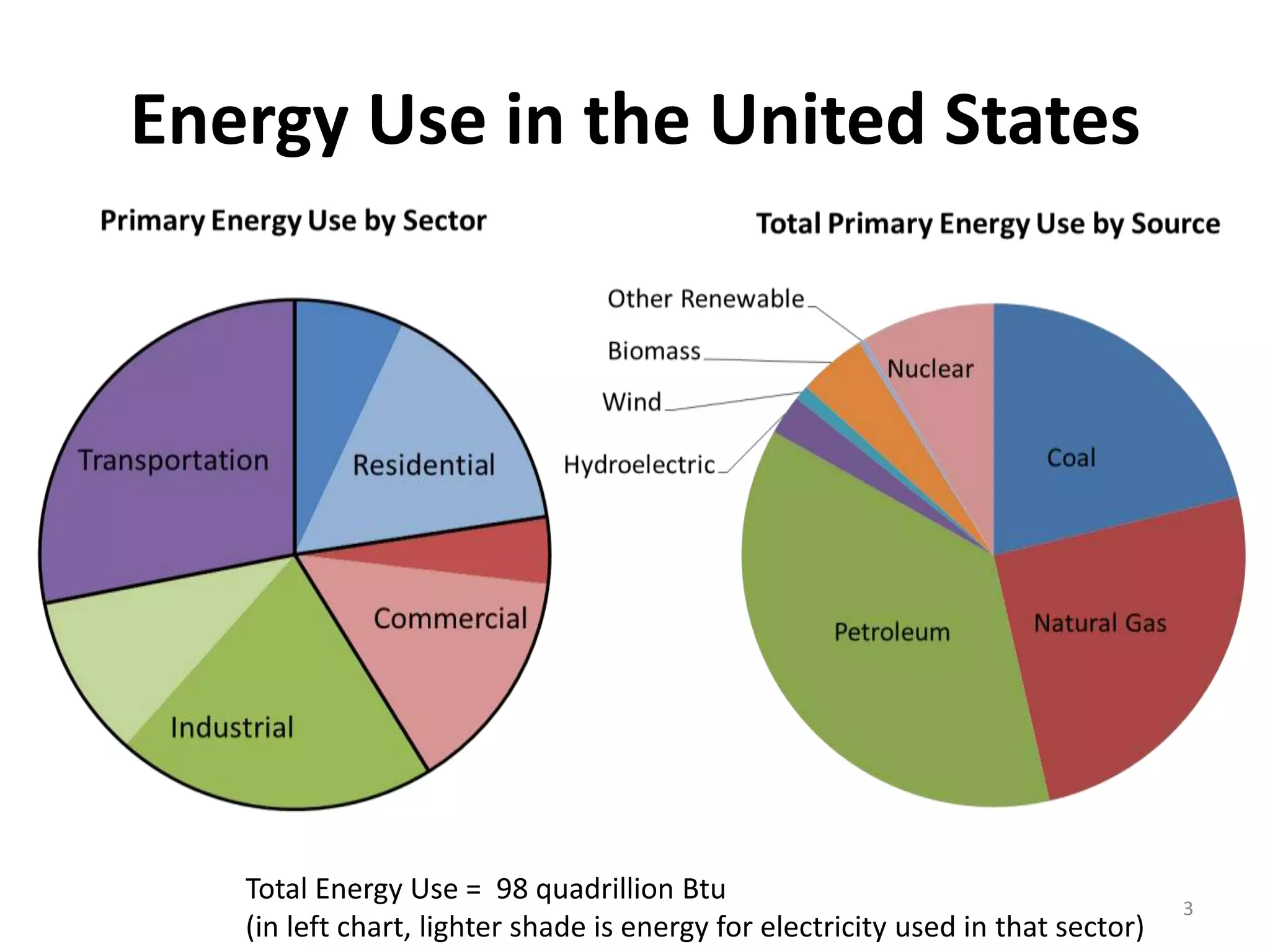
Energy Use in the United States


   Total Energy Use = 98 quadrillion Btu
                                                                                  3
   (in left chart, lighter shade is energy for electricity used in that sector)
Background
• Energy use is intrinsic to the whole economy
• We use a wide variety of different sources of
  energy for different services
• The media and other sources are inundated
  with pros and cons for many energy options
• Learning about and comparing the impact of
  various options is important, but with such a
  complex system, it is extremely challenging.

                                                  4
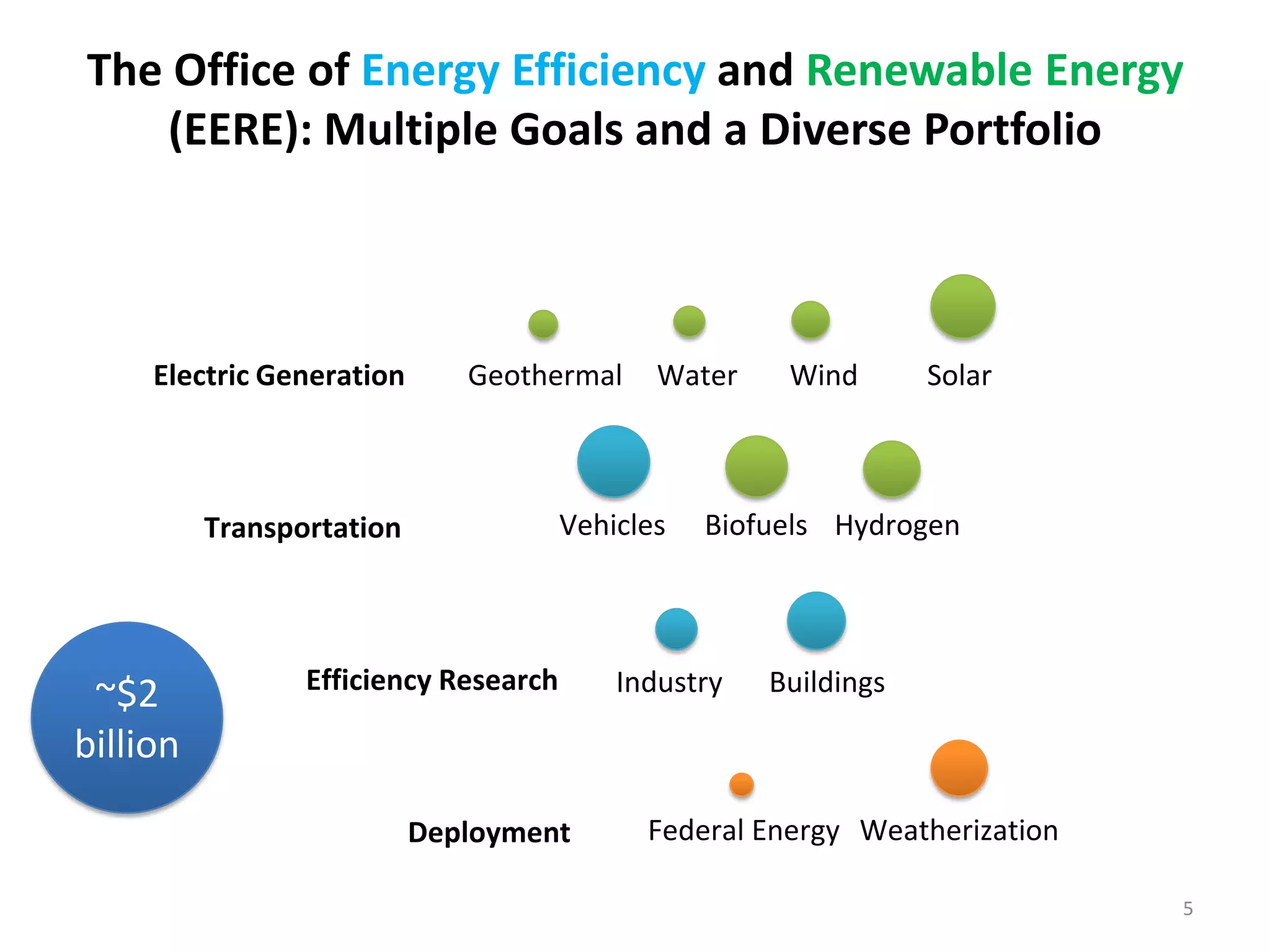
The Office of Energy Efficiency and Renewable Energy
    (EERE): Multiple Goals and a Diverse Portfolio


     Electric Generation      Geothermal      Water    Wind       Solar


          Transportation               Vehicles   Biofuels Hydrogen


                 Efficiency Research       Industry   Buildings
 ~$2
billion

                           Deployment        Federal Energy Weatherization

                                                                             5
EERE Goals and Related Tools
• EERE has diverse goals
  (environmental, economic, energy security)
  and various programs on the supply and
  demand sides of energy
• We developed tools to combine the impacts
  of technology development and deployment
  in all these EERE areas
• These tools were instructive for the team, so
  we developed a version for the web.

                                                  6
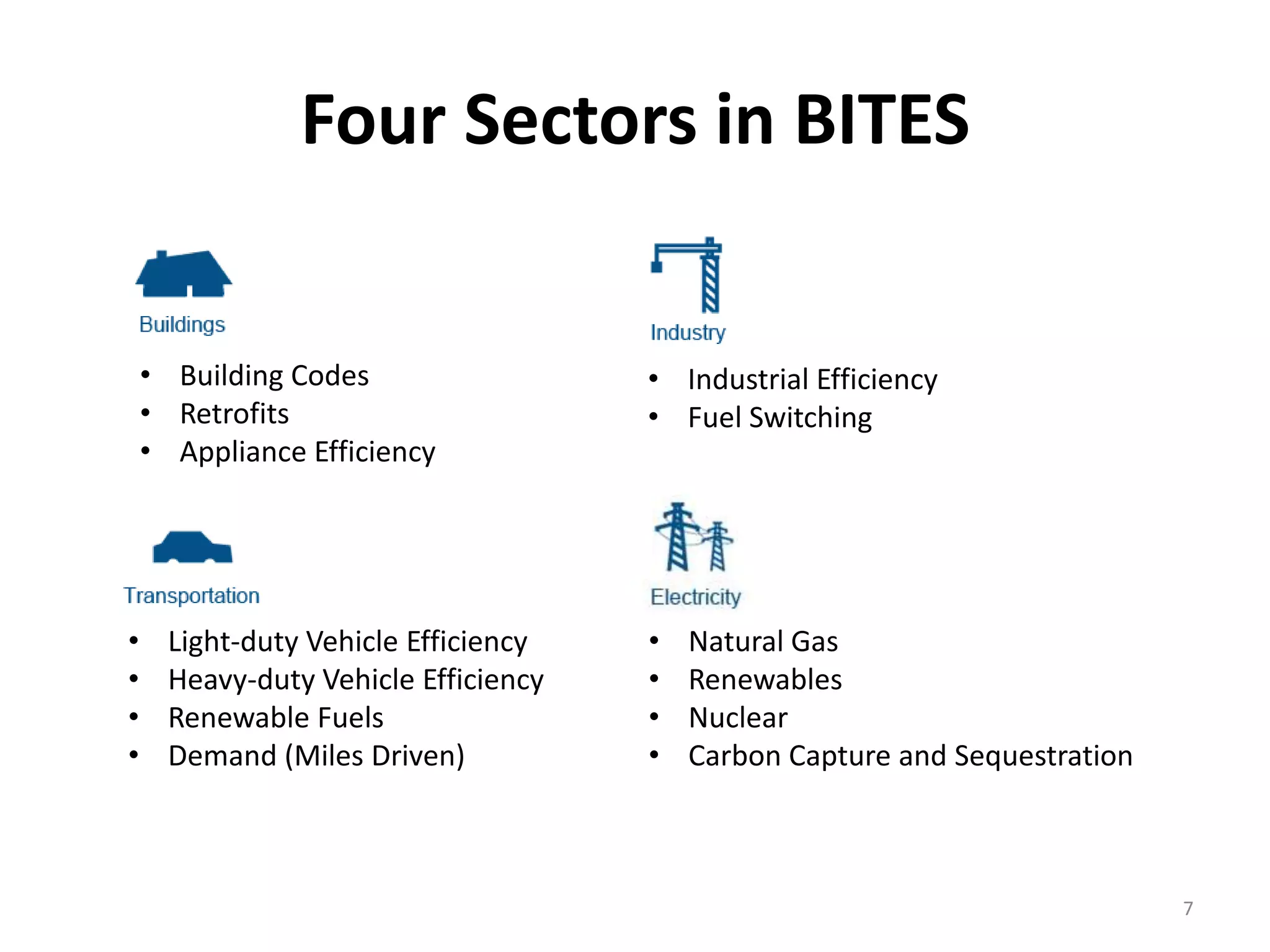
Four Sectors in BITES


    • Building Codes                  • Industrial Efficiency
    • Retrofits                       • Fuel Switching
    • Appliance Efficiency


•     Light-duty Vehicle Efficiency   •   Natural Gas
•     Heavy-duty Vehicle Efficiency   •   Renewables
•     Renewable Fuels                 •   Nuclear
•     Demand (Miles Driven)           •   Carbon Capture and Sequestration


                                                                             7
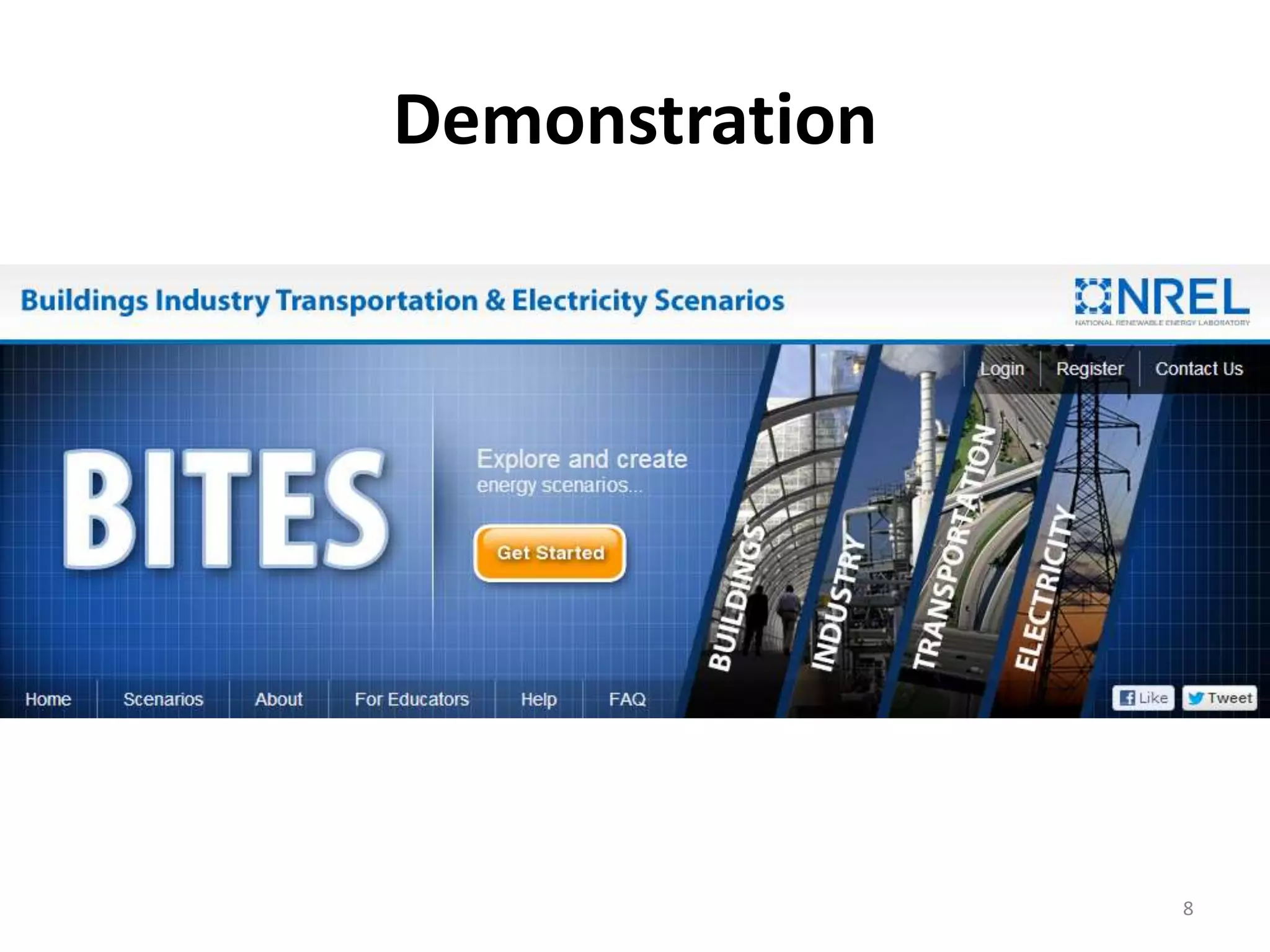
Demonstration


                8
Goals for Education
• Learn where we get energy and where we use
  energy in the U.S., as well as the associated
  emissions
• Experiment with options to change the energy
  future of the U.S.
• Explore the trade-offs between sectors and
  individual technologies
• Generate a realistic cross-sector scenario that
  meets or approaches energy and carbon emission
  targets
• Share learning by discussing, comparing, and
  justifying selected scenarios
                                                9
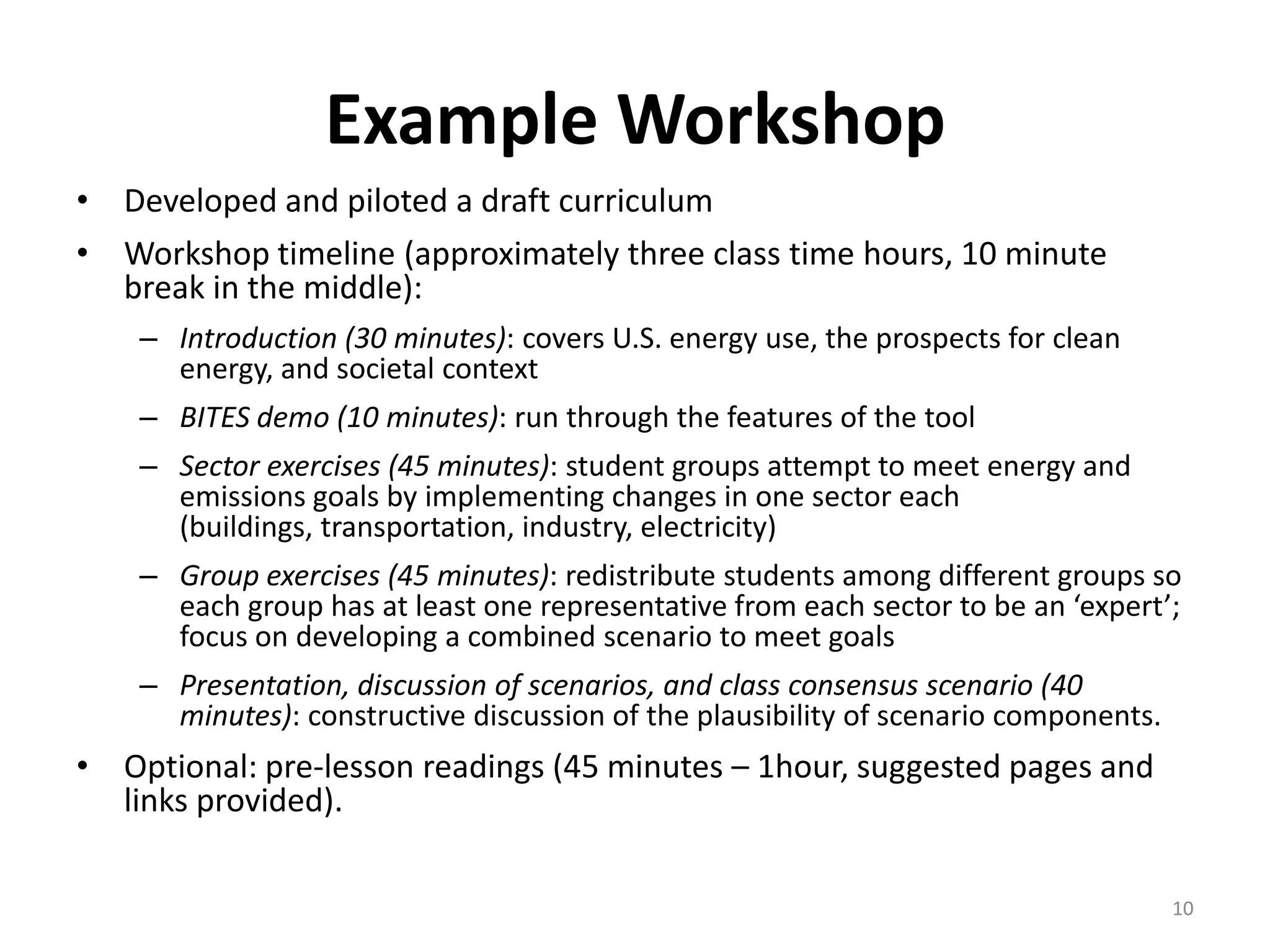
Example Workshop
• Developed and piloted a draft curriculum
• Workshop timeline (approximately three class time hours, 10 minute
  break in the middle):
    – Introduction (30 minutes): covers U.S. energy use, the prospects for clean
      energy, and societal context
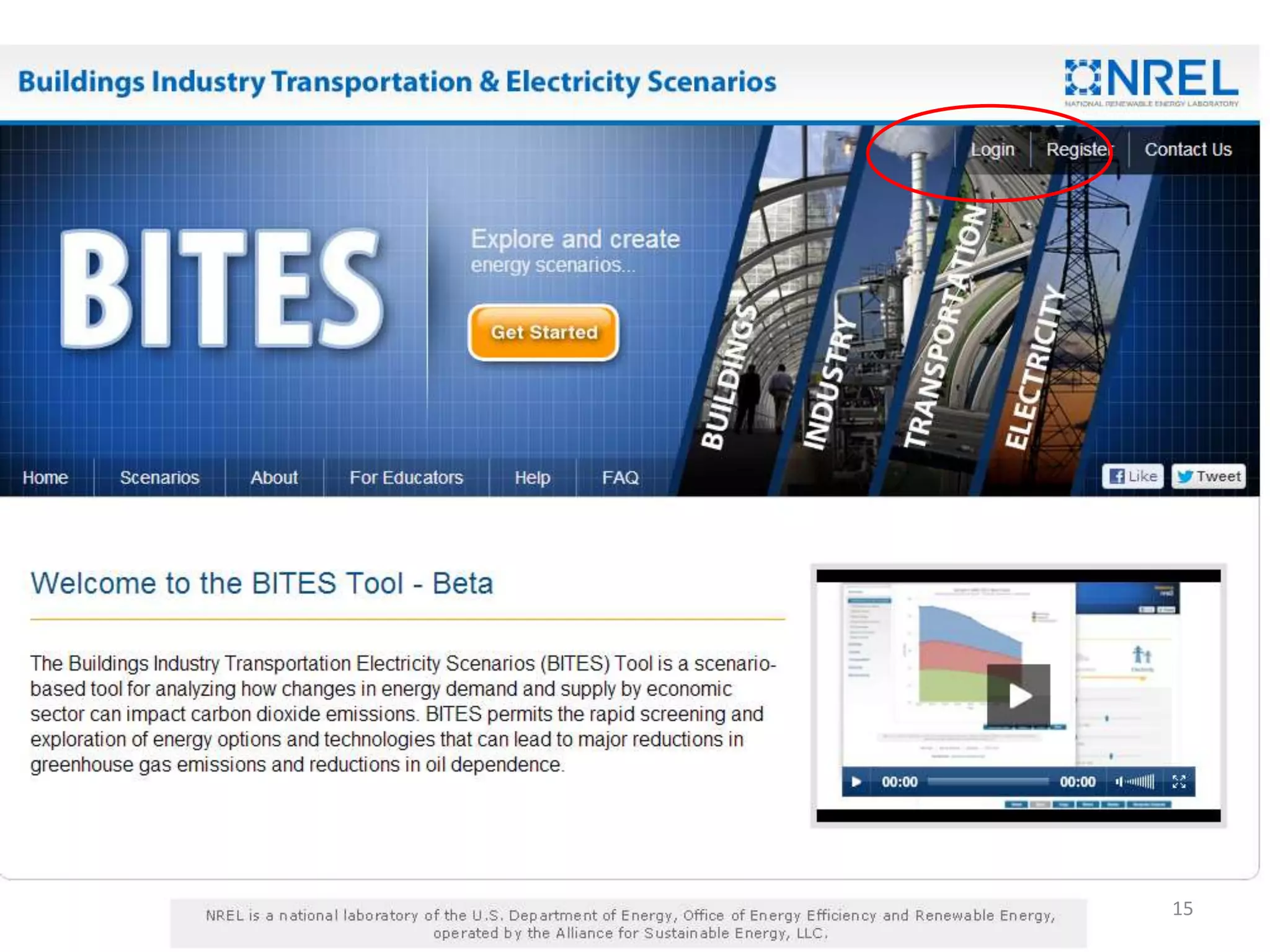
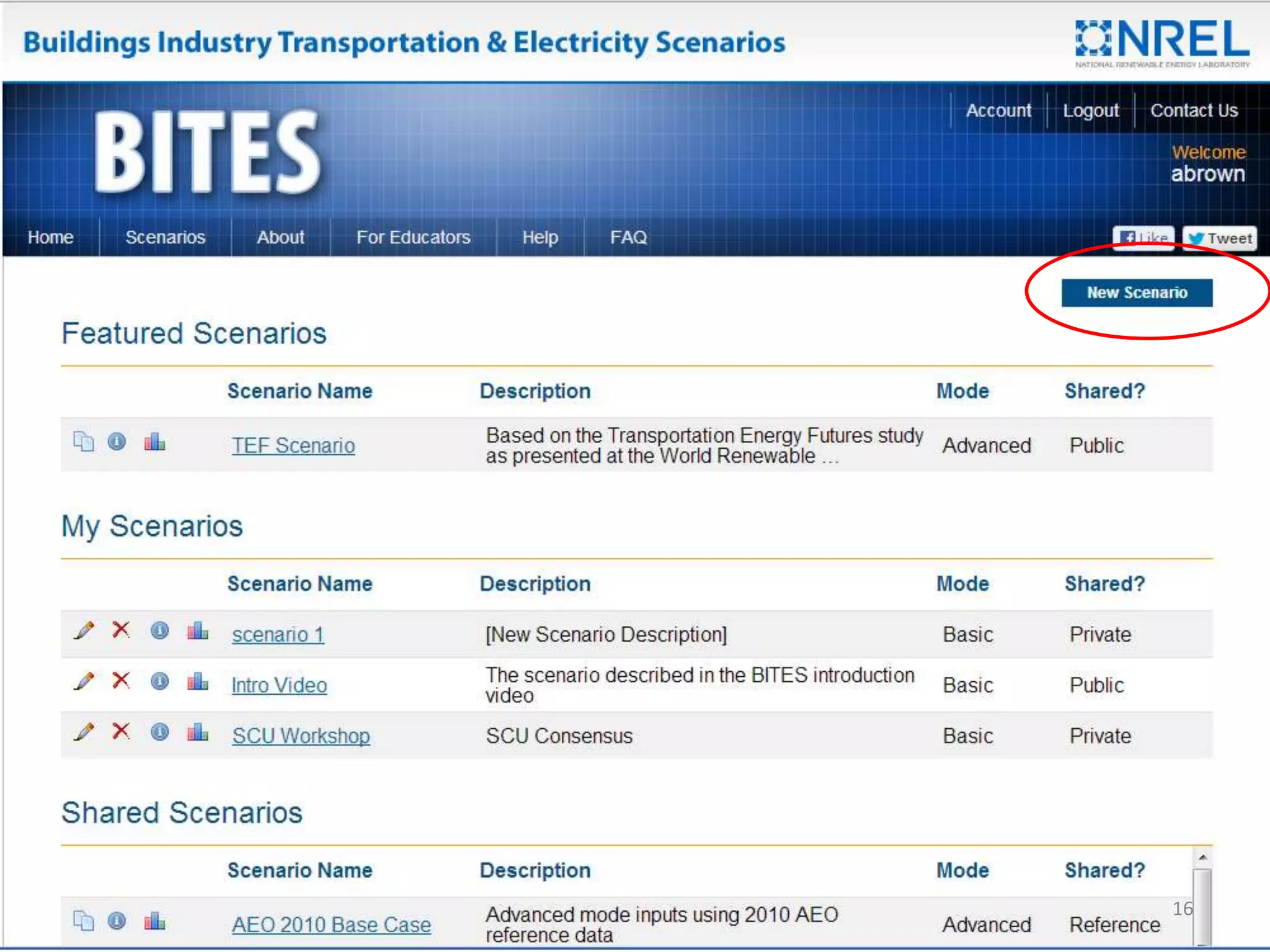
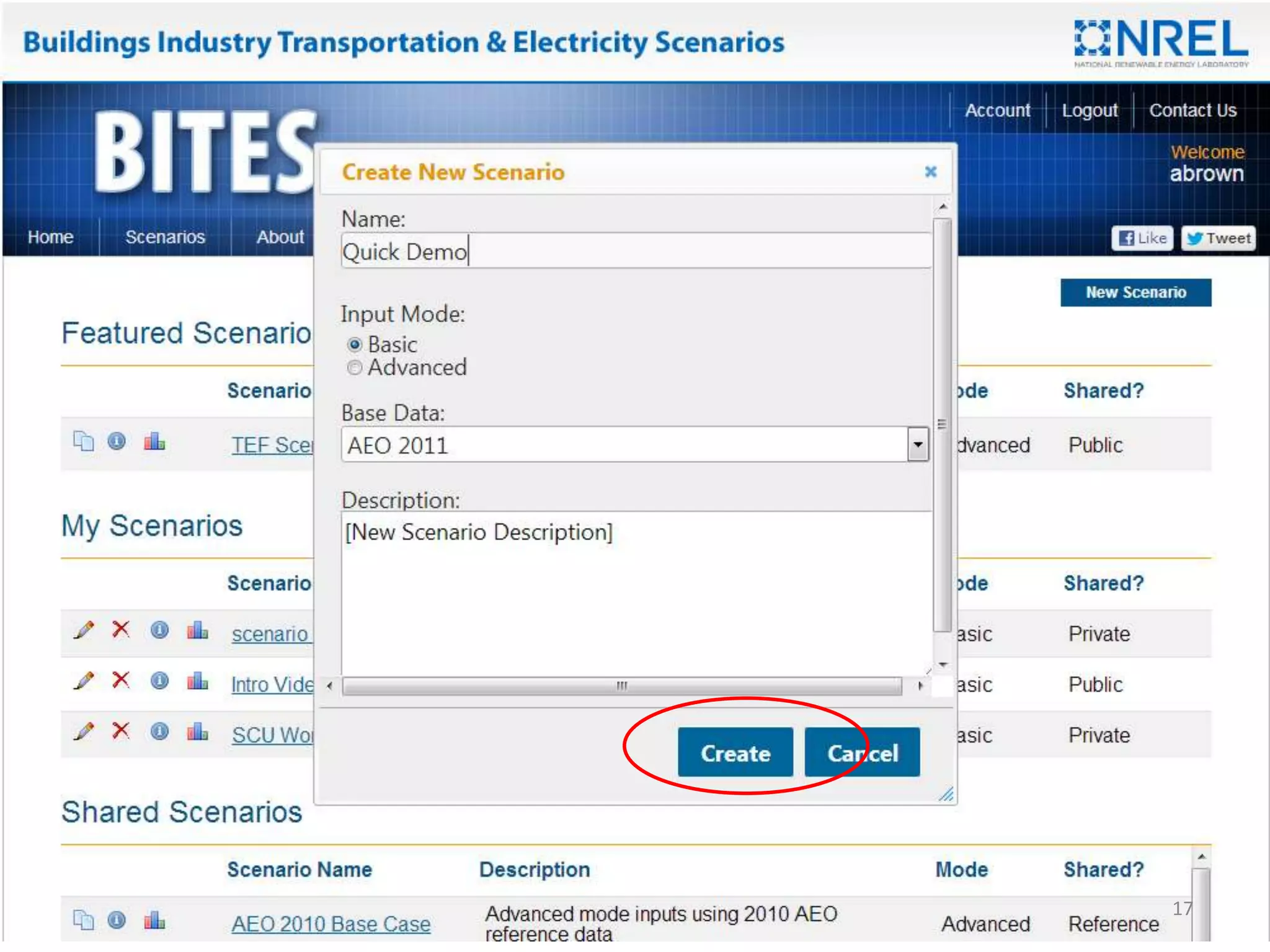
    – BITES demo (10 minutes): run through the features of the tool
    – Sector exercises (45 minutes): student groups attempt to meet energy and
      emissions goals by implementing changes in one sector each
      (buildings, transportation, industry, electricity)
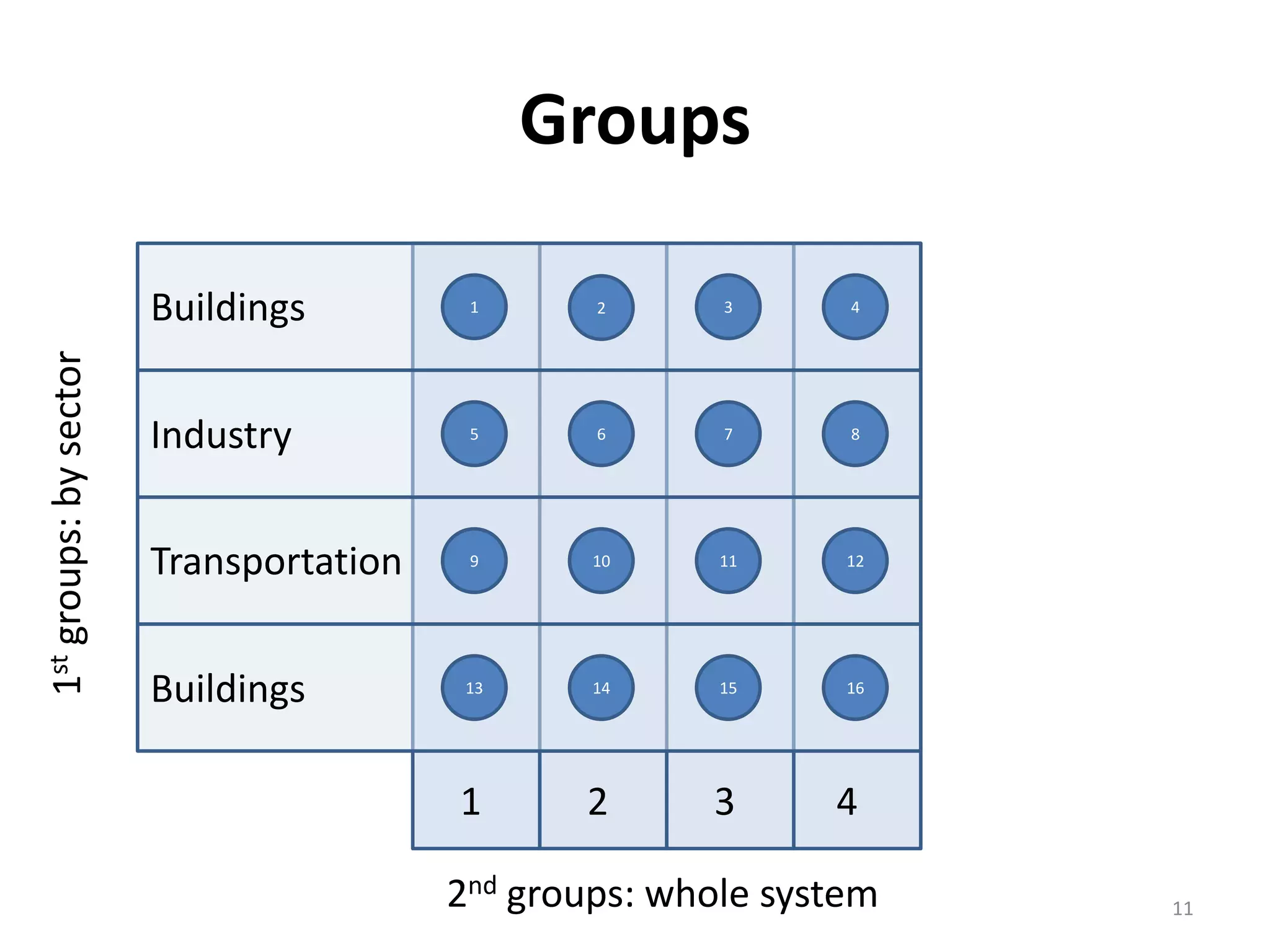
    – Group exercises (45 minutes): redistribute students among different groups so
      each group has at least one representative from each sector to be an ‘expert’;
      focus on developing a combined scenario to meet goals
    – Presentation, discussion of scenarios, and class consensus scenario (40
      minutes): constructive discussion of the plausibility of scenario components.
• Optional: pre-lesson readings (45 minutes – 1hour, suggested pages and
  links provided).

                                                                                      10
Groups

                        Buildings         1      2      3      4
1st groups: by sector


                        Industry          5      6      7      8


                        Transportation    9      10     11     12


                        Buildings         13     14     15     16


                                         1      2      3      4

                                         2nd groups: whole system   11
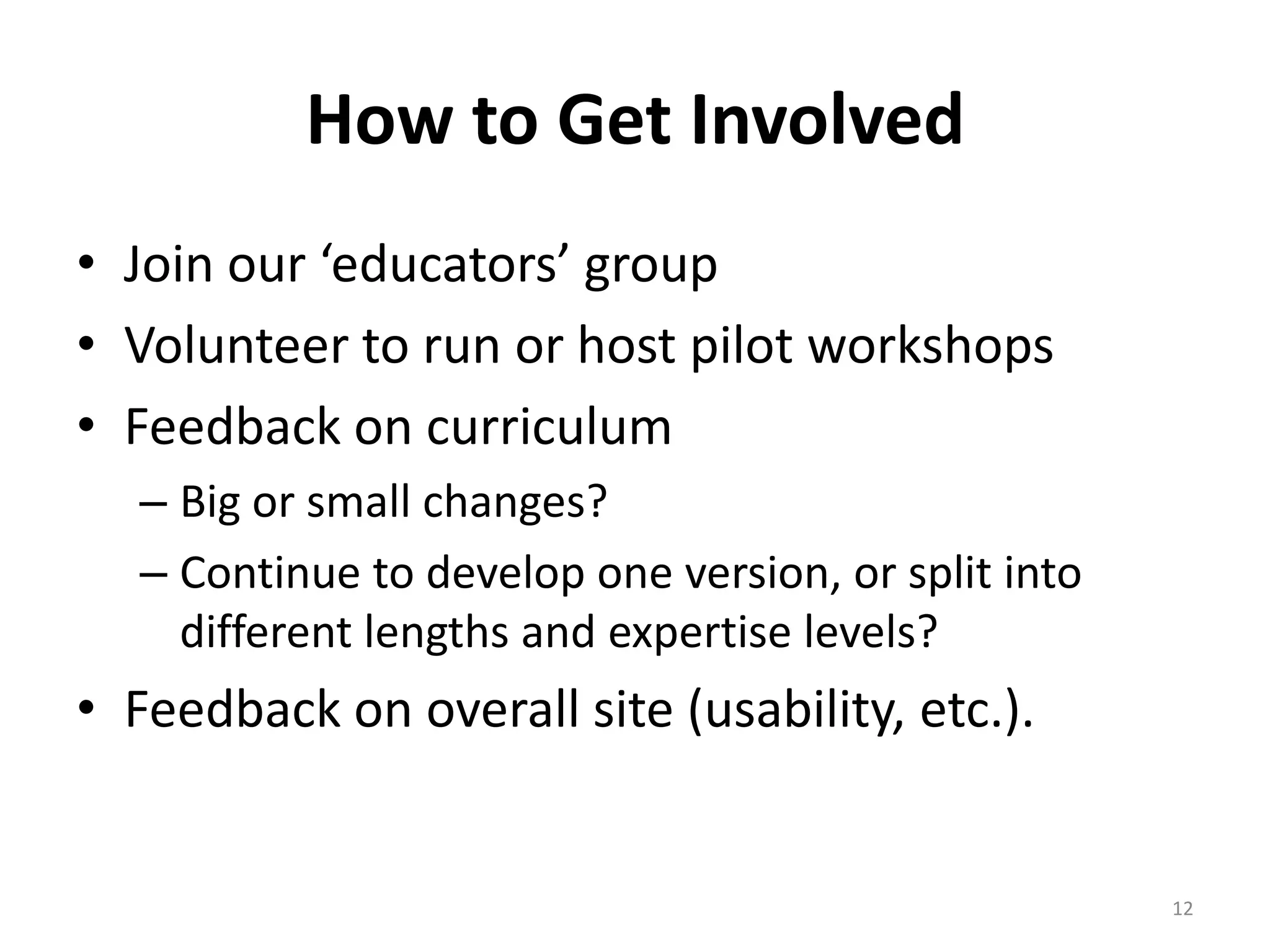
How to Get Involved
• Join our ‘educators’ group
• Volunteer to run or host pilot workshops
• Feedback on curriculum
  – Big or small changes?
  – Continue to develop one version, or split into
    different lengths and expertise levels?
• Feedback on overall site (usability, etc.).


                                                     12
Questions?
• Beta version: https://bites.nrel.gov/.

• Educational materials:
  https://bites.nrel.gov/education.php

• For more information:
  austin.brown@nrel.gov.


                                           13
Appendix
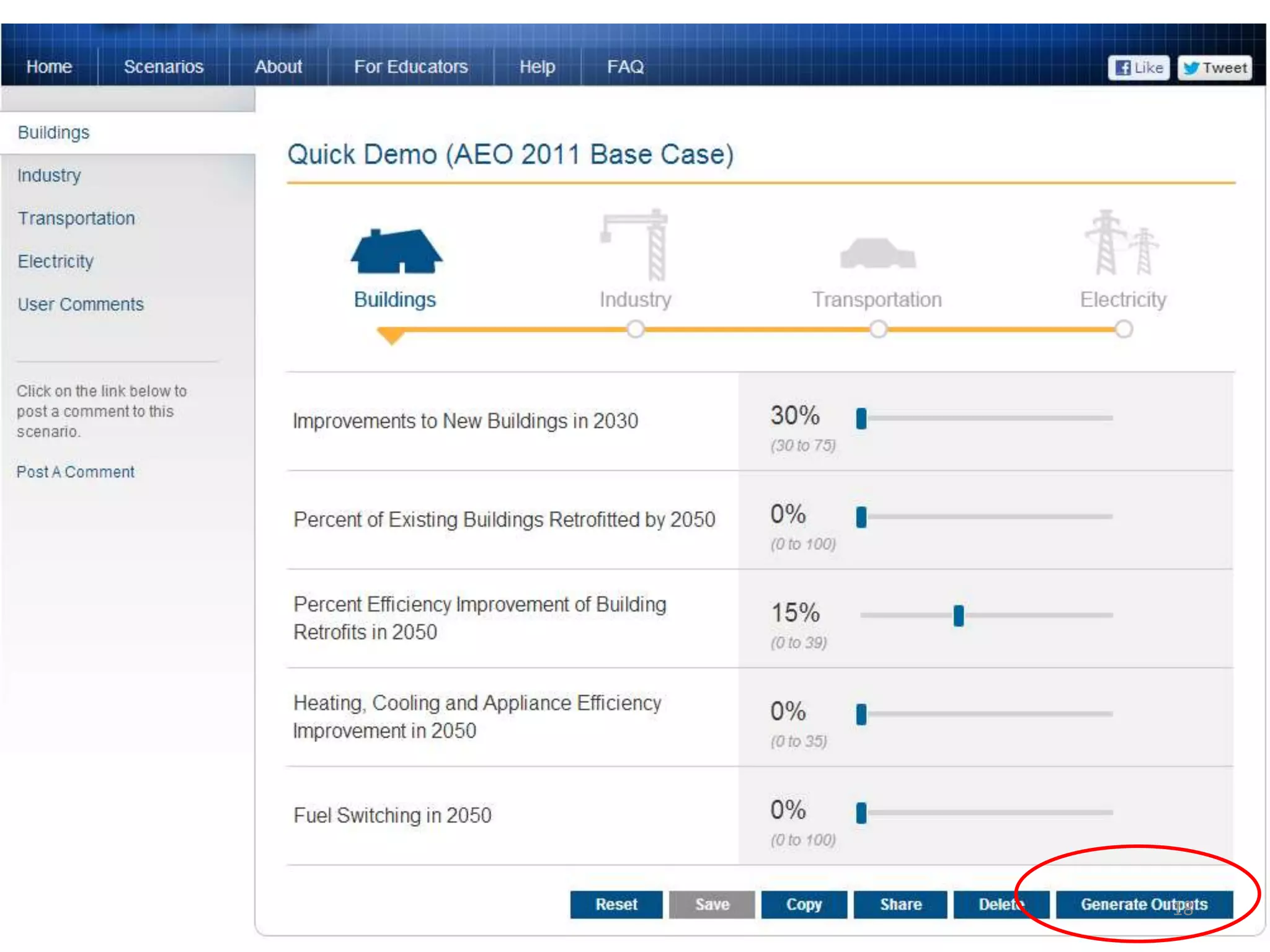
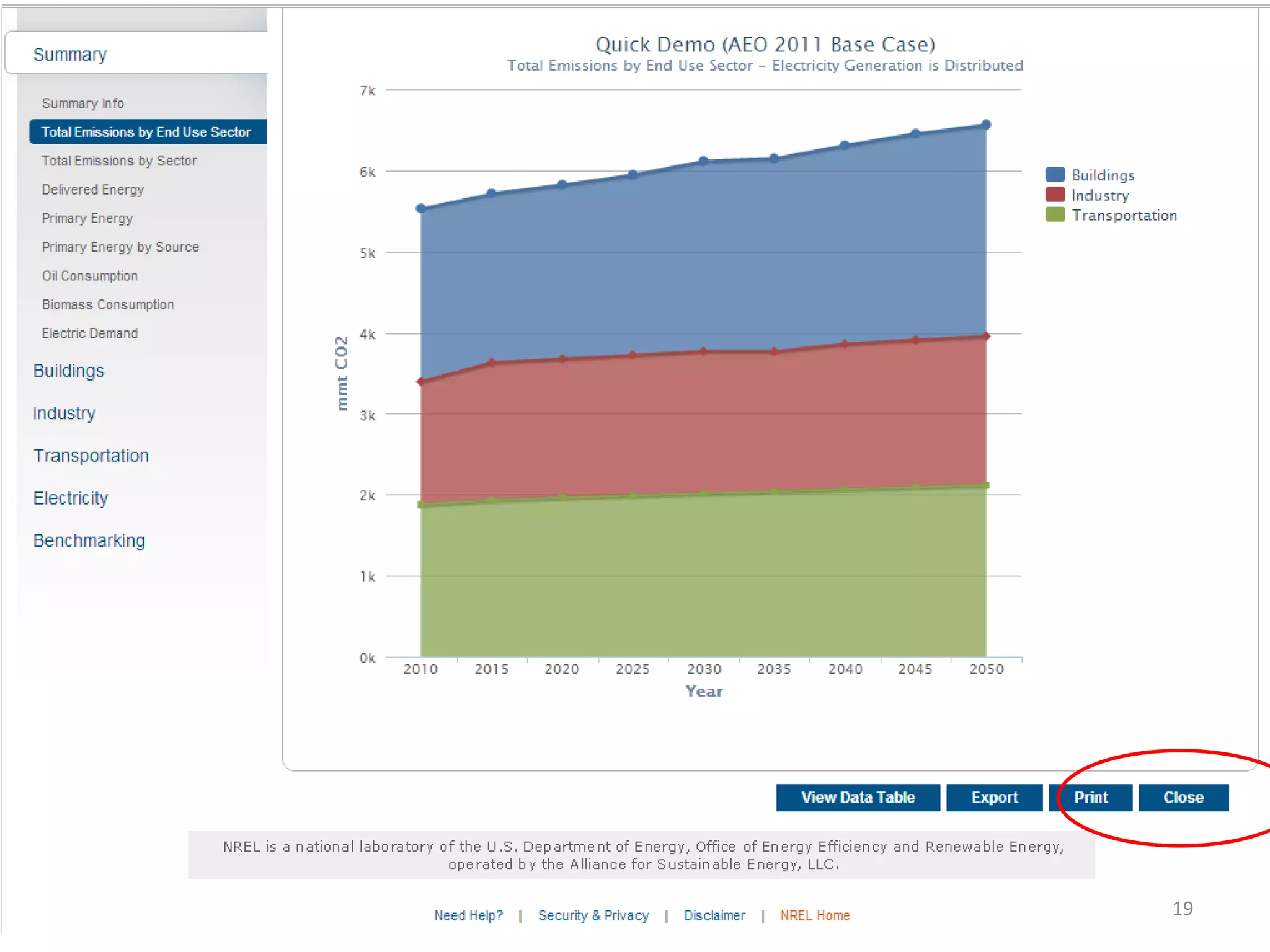
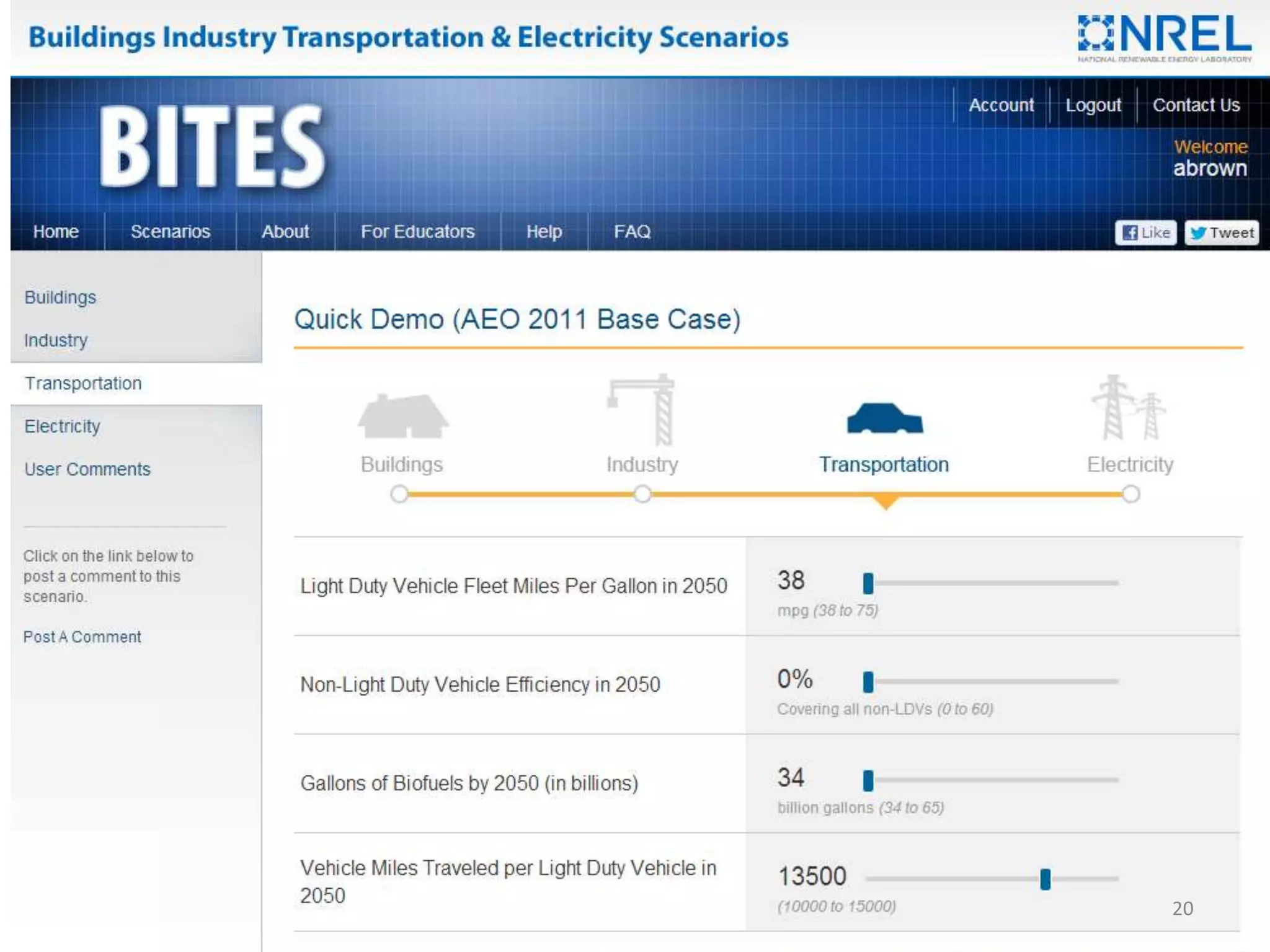
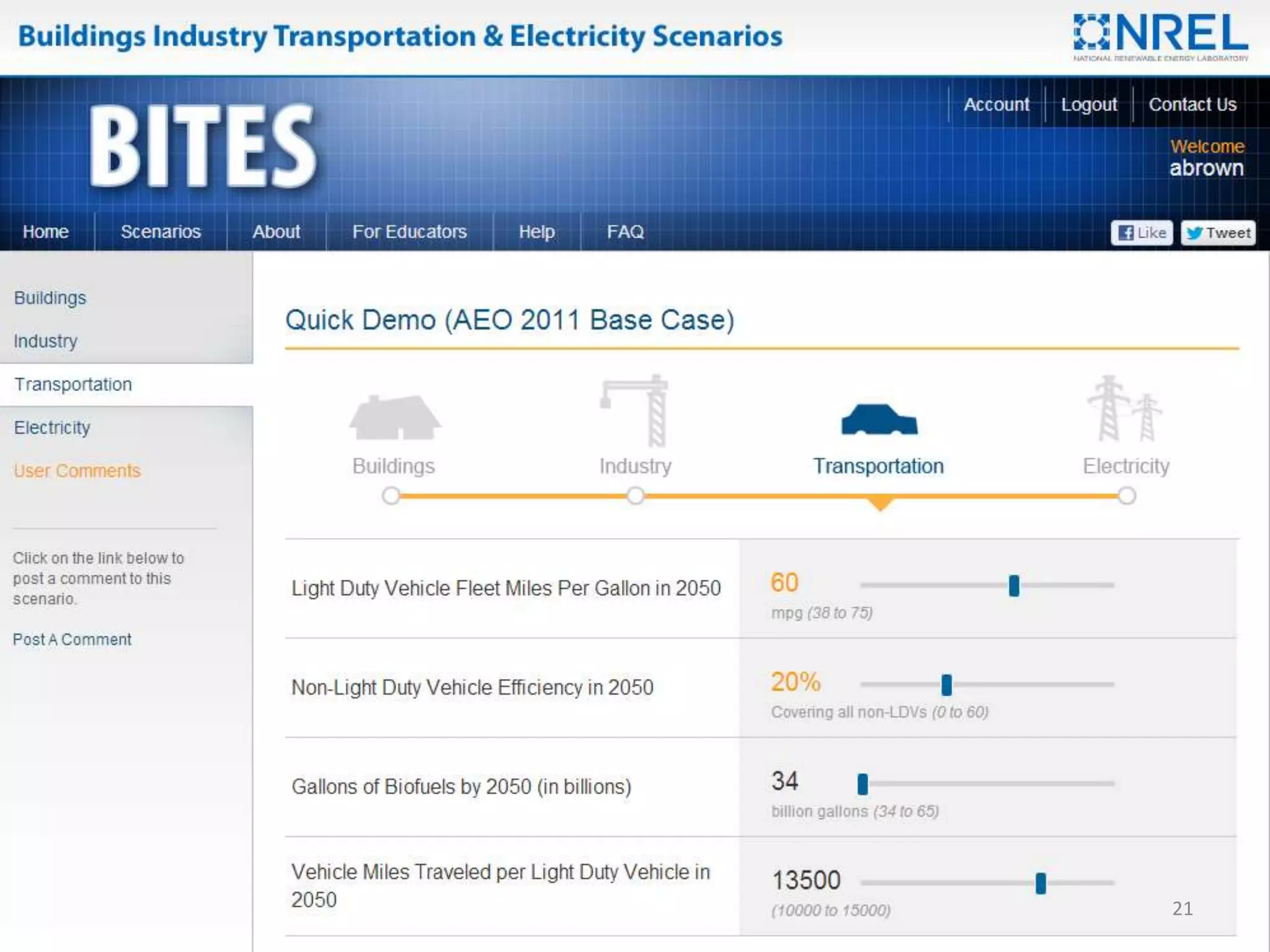
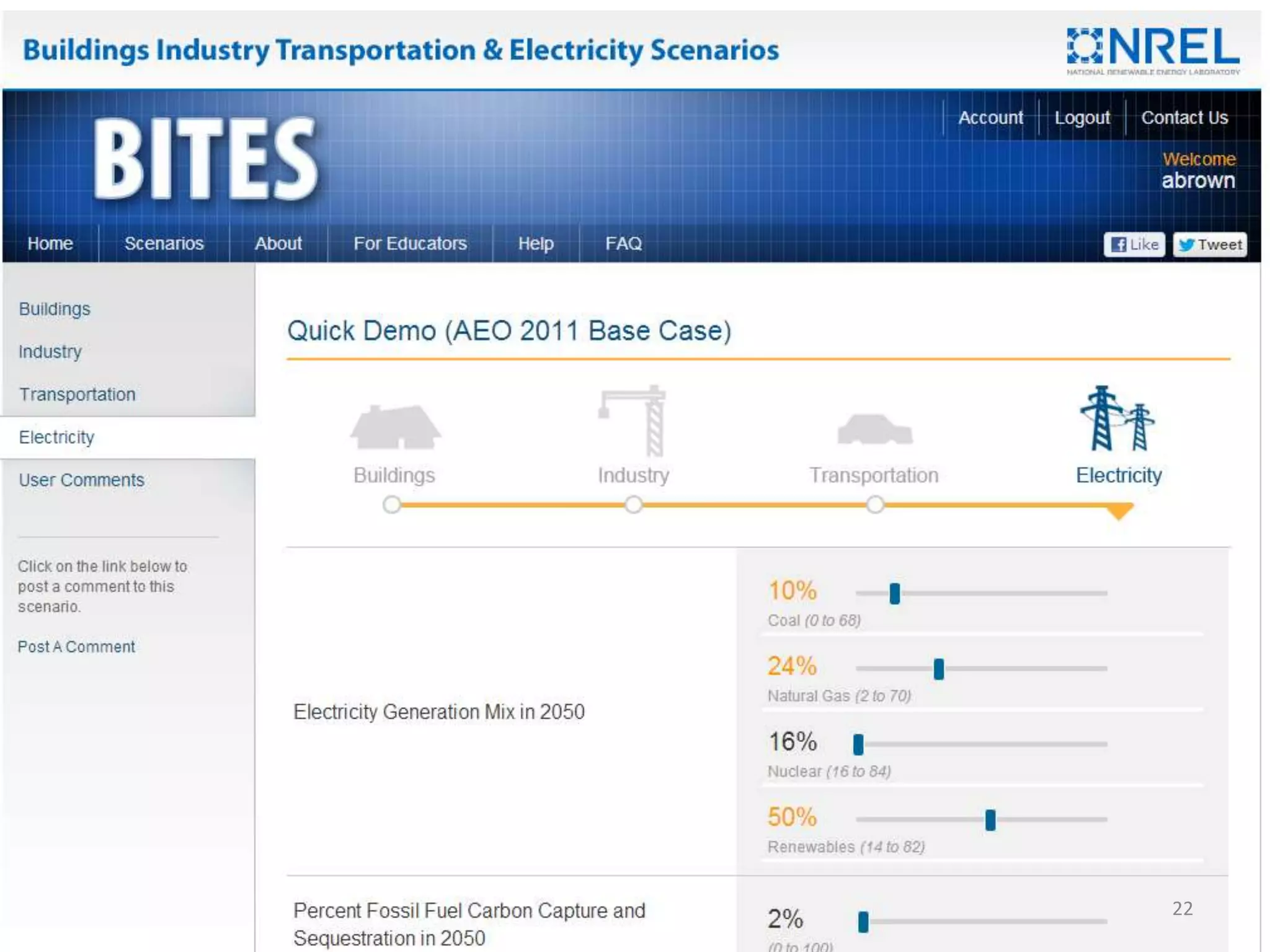
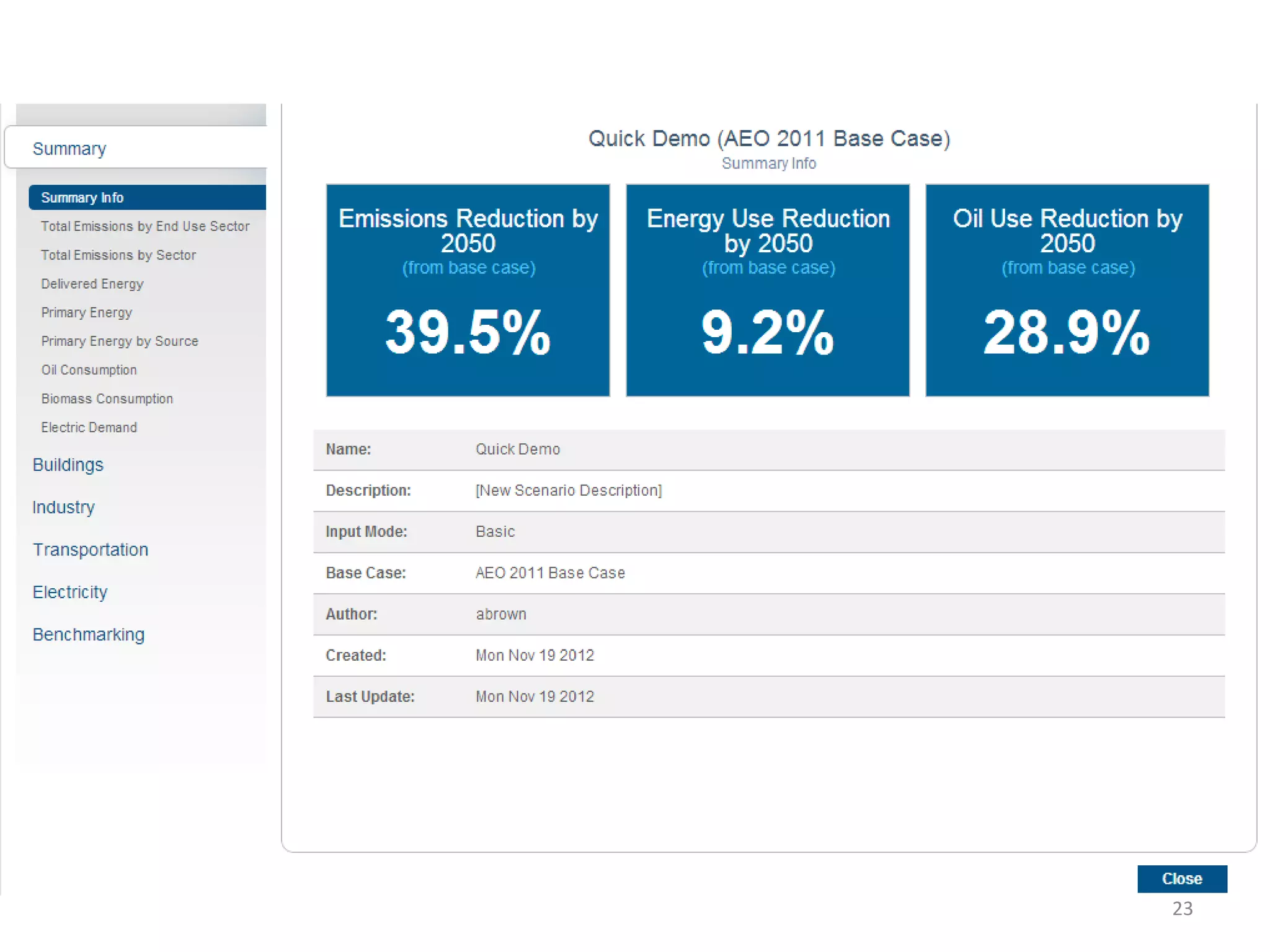
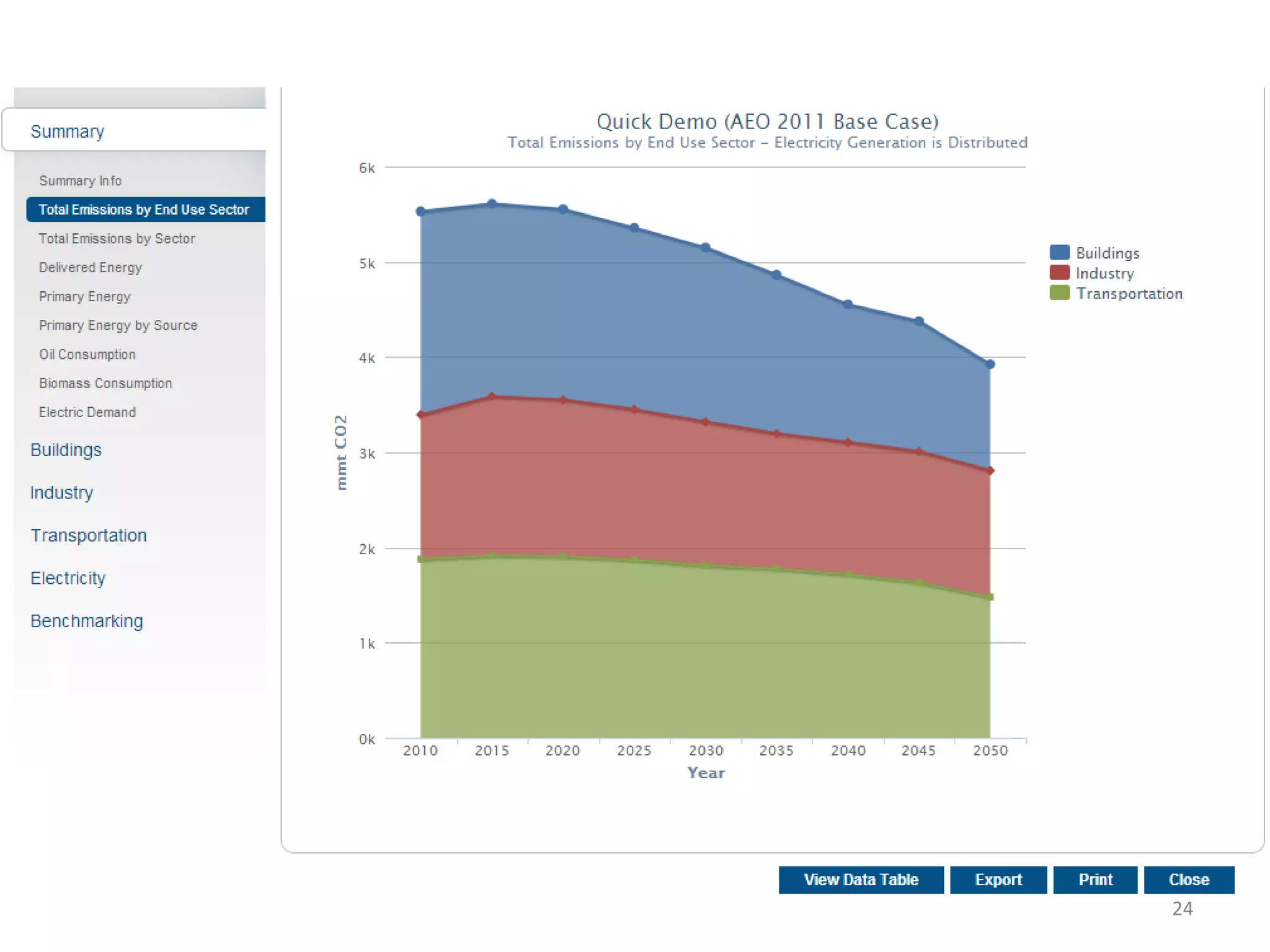
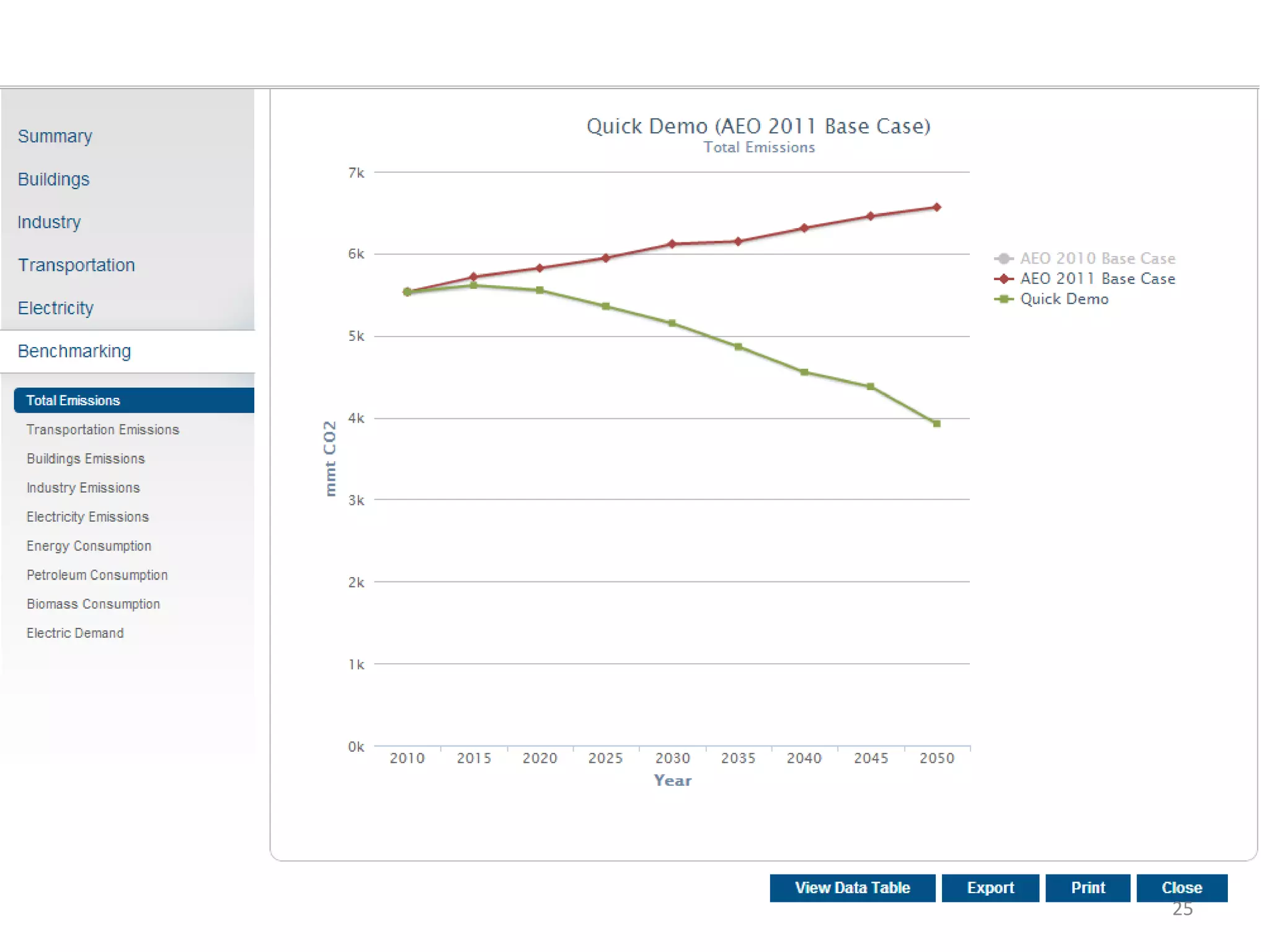
(Some screenshots from the demo just in case)


                                                14
15
16
17
18
19
20
21
22
23
24
25

BITES webinar 2013-3-5

  • 1.
  • 2.
    Outline • 5 minutes: overview and history • 10 minutes: quick demo • 5 minutes: ways to get involved • Discussion and questions. 2
  • 3.
    Energy Use inthe United States Total Energy Use = 98 quadrillion Btu 3 (in left chart, lighter shade is energy for electricity used in that sector)
  • 4.
    Background • Energy useis intrinsic to the whole economy • We use a wide variety of different sources of energy for different services • The media and other sources are inundated with pros and cons for many energy options • Learning about and comparing the impact of various options is important, but with such a complex system, it is extremely challenging. 4
  • 5.
    The Office ofEnergy Efficiency and Renewable Energy (EERE): Multiple Goals and a Diverse Portfolio Electric Generation Geothermal Water Wind Solar Transportation Vehicles Biofuels Hydrogen Efficiency Research Industry Buildings ~$2 billion Deployment Federal Energy Weatherization 5
  • 6.
    EERE Goals andRelated Tools • EERE has diverse goals (environmental, economic, energy security) and various programs on the supply and demand sides of energy • We developed tools to combine the impacts of technology development and deployment in all these EERE areas • These tools were instructive for the team, so we developed a version for the web. 6
  • 7.
    Four Sectors inBITES • Building Codes • Industrial Efficiency • Retrofits • Fuel Switching • Appliance Efficiency • Light-duty Vehicle Efficiency • Natural Gas • Heavy-duty Vehicle Efficiency • Renewables • Renewable Fuels • Nuclear • Demand (Miles Driven) • Carbon Capture and Sequestration 7
  • 8.
  • 9.
    Goals for Education •Learn where we get energy and where we use energy in the U.S., as well as the associated emissions • Experiment with options to change the energy future of the U.S. • Explore the trade-offs between sectors and individual technologies • Generate a realistic cross-sector scenario that meets or approaches energy and carbon emission targets • Share learning by discussing, comparing, and justifying selected scenarios 9
  • 10.
    Example Workshop • Developedand piloted a draft curriculum • Workshop timeline (approximately three class time hours, 10 minute break in the middle): – Introduction (30 minutes): covers U.S. energy use, the prospects for clean energy, and societal context – BITES demo (10 minutes): run through the features of the tool – Sector exercises (45 minutes): student groups attempt to meet energy and emissions goals by implementing changes in one sector each (buildings, transportation, industry, electricity) – Group exercises (45 minutes): redistribute students among different groups so each group has at least one representative from each sector to be an ‘expert’; focus on developing a combined scenario to meet goals – Presentation, discussion of scenarios, and class consensus scenario (40 minutes): constructive discussion of the plausibility of scenario components. • Optional: pre-lesson readings (45 minutes – 1hour, suggested pages and links provided). 10
  • 11.
    Groups Buildings 1 2 3 4 1st groups: by sector Industry 5 6 7 8 Transportation 9 10 11 12 Buildings 13 14 15 16 1 2 3 4 2nd groups: whole system 11
  • 12.
    How to GetInvolved • Join our ‘educators’ group • Volunteer to run or host pilot workshops • Feedback on curriculum – Big or small changes? – Continue to develop one version, or split into different lengths and expertise levels? • Feedback on overall site (usability, etc.). 12
  • 13.
    Questions? • Beta version:https://bites.nrel.gov/. • Educational materials: https://bites.nrel.gov/education.php • For more information: austin.brown@nrel.gov. 13
  • 14.
    Appendix (Some screenshots fromthe demo just in case) 14
  • 15.
  • 16.
  • 17.
  • 18.
  • 19.
  • 20.
  • 21.
  • 22.
  • 23.
  • 24.
  • 25.

Editor's Notes

  • #6 EERE has a total annual budget for research, development, demonstration, and deployment across ten programs of about $2 billion (varies by year). Ten Programs, Many Goals – each program supports different technologies with different proximities to market and varying potential benefits.How do we add up cheaper batteries + higher capacity factor wind + efficient refrigerators?