The host/pathogen
interplay in
tuberculosis and
HIV/TB co-
infection.
dgr8@cornell.edu
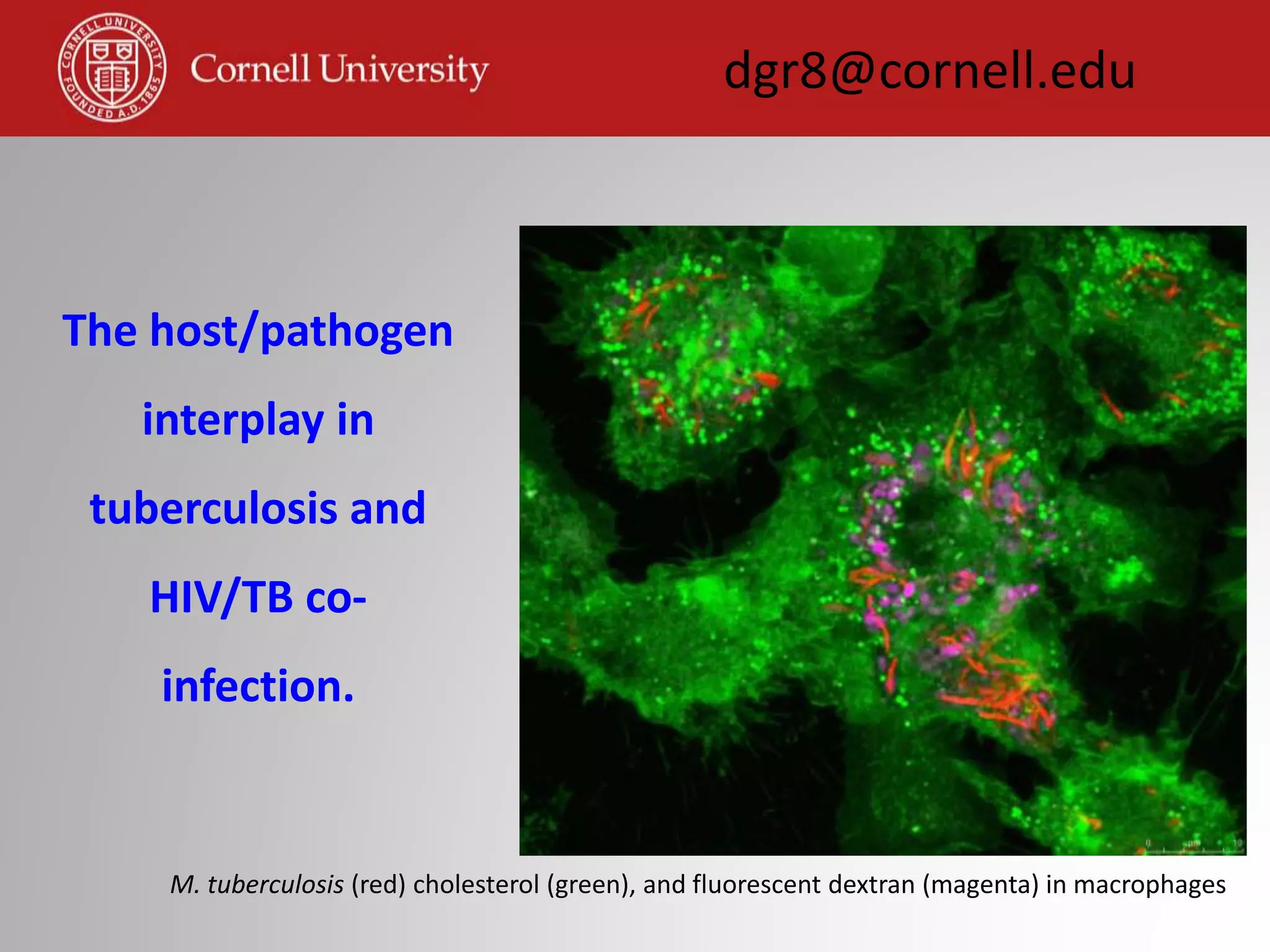
M. tuberculosis (red) cholesterol (green), and fluorescent dextran (magenta) in macrophages
1. The interplay between the immune
environment and bacterial stress responses.
1. The contribution of host-derived stresses to
the activity of anti-TB drugs
2. The impact of HIV on the host/pathogen
balance and is significance to active TB.
The Host Immune Environment
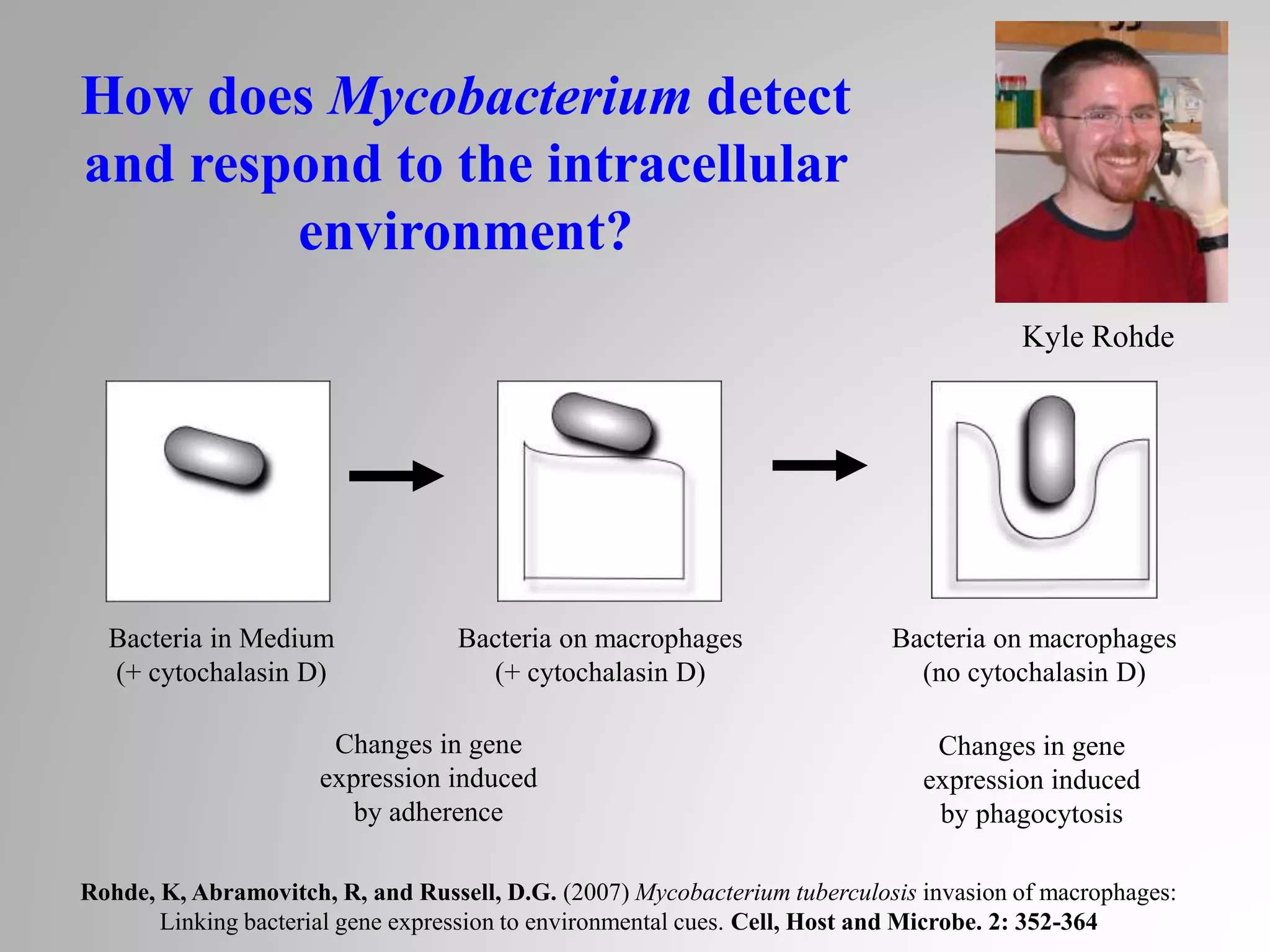
Bacteria in Medium
(+ cytochalasin D)
Bacteria on macrophages
(+ cytochalasin D)
Changes in gene
expression induced
by adherence
Bacteria on macrophages
(no cytochalasin D)
Changes in gene
expression induced
by phagocytosis
How does Mycobacterium detect
and respond to the intracellular
environment?
Kyle Rohde
Rohde, K, Abramovitch, R, and Russell, D.G. (2007) Mycobacterium tuberculosis invasion of macrophages:
Linking bacterial gene expression to environmental cues. Cell, Host and Microbe. 2: 352-364
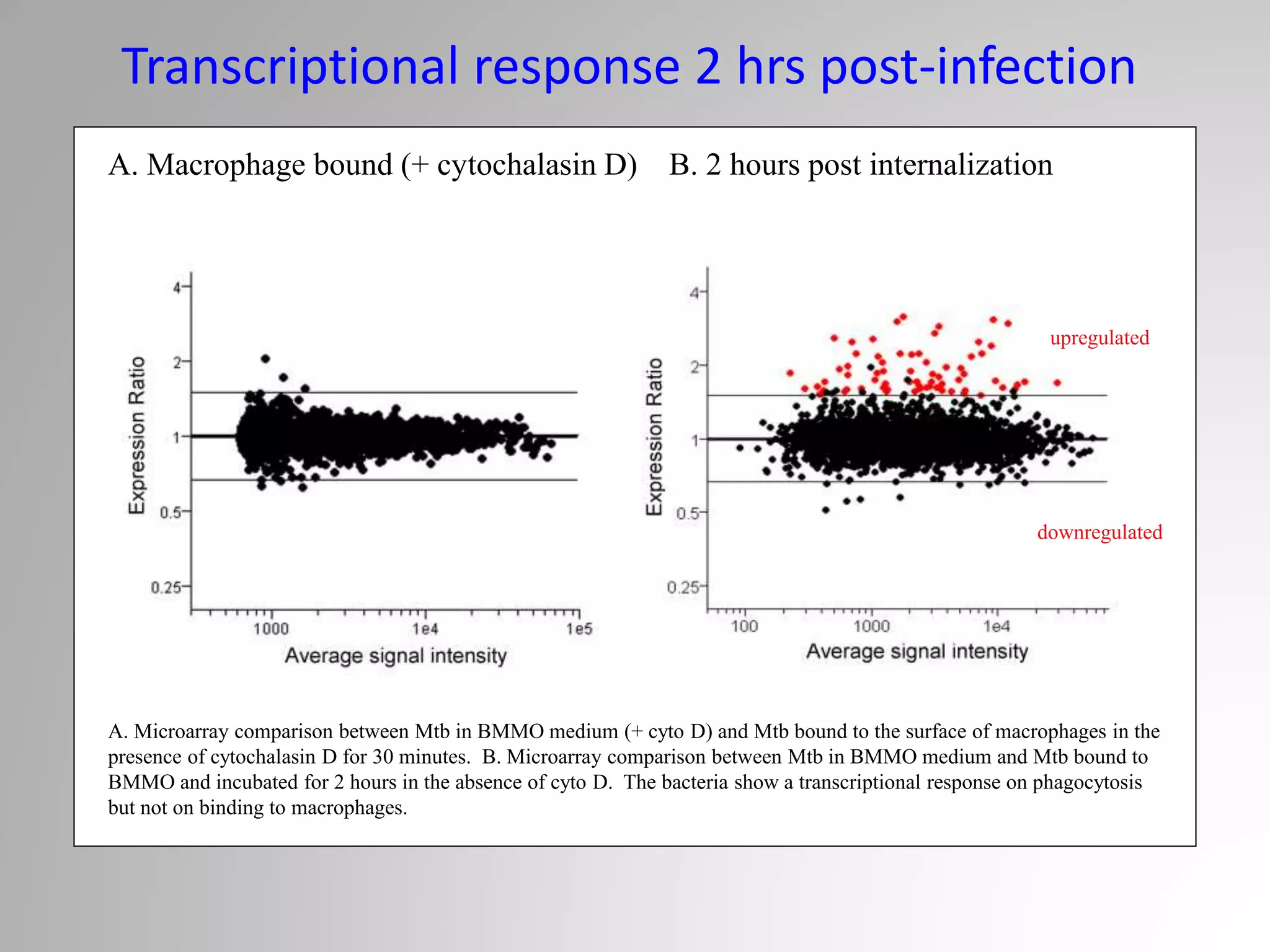
A. Macrophage bound (+ cytochalasin D) B. 2 hours post internalization
A. Microarray comparison between Mtb in BMMO medium (+ cyto D) and Mtb bound to the surface of macrophages in the
presence of cytochalasin D for 30 minutes. B. Microarray comparison between Mtb in BMMO medium and Mtb bound to
BMMO and incubated for 2 hours in the absence of cyto D. The bacteria show a transcriptional response on phagocytosis
but not on binding to macrophages.
upregulated
downregulated
Transcriptional response 2 hrs post-infection
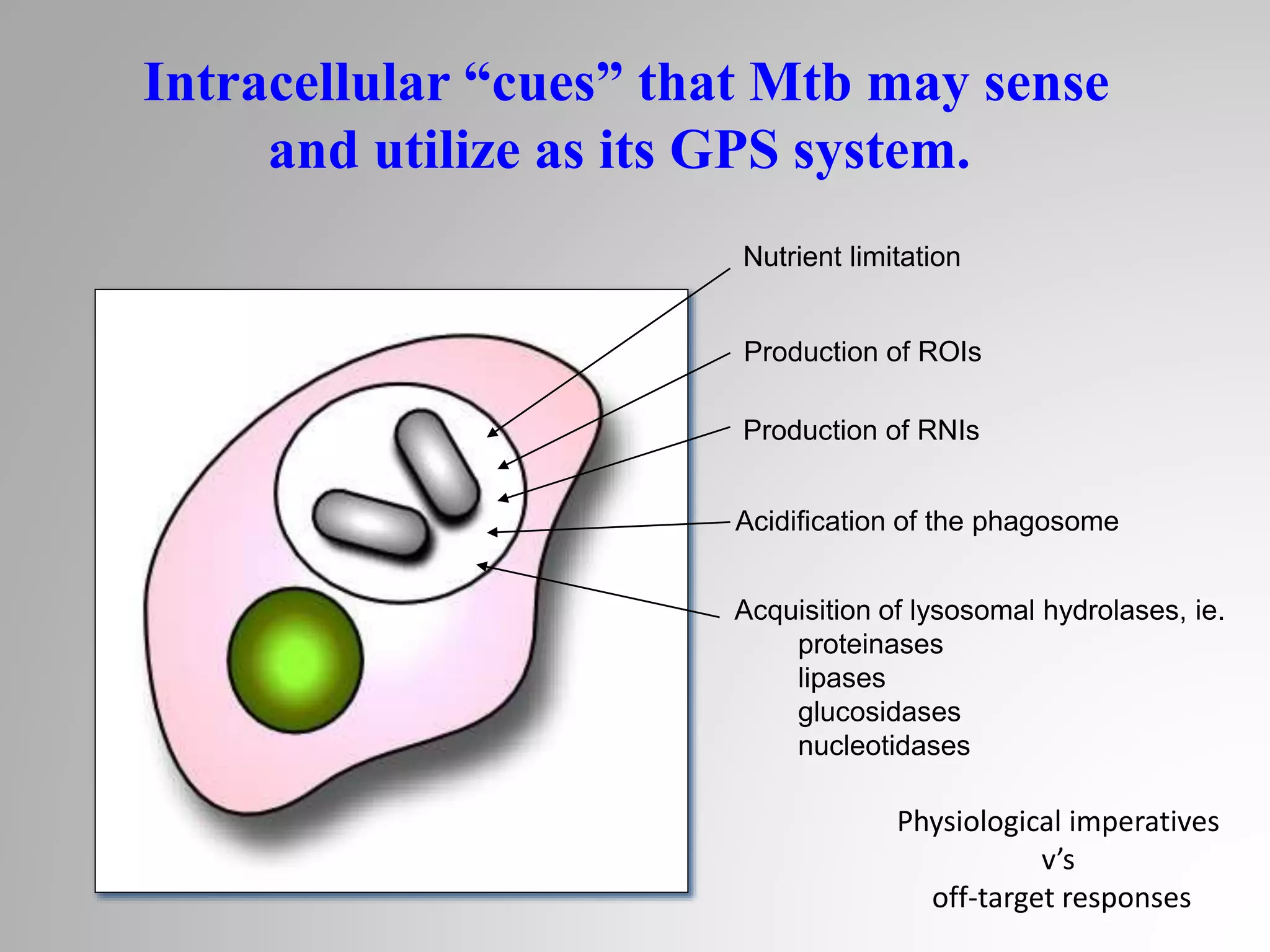
Production of ROIs
Acidification of the phagosome
Production of RNIs
Acquisition of lysosomal hydrolases, ie.
proteinases
lipases
glucosidases
nucleotidases
Nutrient limitation
Intracellular “cues” that Mtb may sense
and utilize as its GPS system.
Physiological imperatives
v’s
off-target responses
Mycobacterium tuberculosis Reporter Strains
environmentally-
responsive
promoter
mCherry
gfp constitutively-active
promoter
hspX: Hypoxia and NO
rv2390c: [Cl-] and low pH
Tan, S., Sukumar, N., Abramovitch, R.B., Parish, T., and
Russell, D.G. (2013) Mycobacterium tuberculosis senses
chloride and pH as indicators of the immune status of its host
cell. PLoS Pathogens. 9 (4), e1003282
Shumin Tan
Neelima Sukamar
Erdman rv2390c’::GFP a Sensor for phagosome maturation
IgG-coated reporter
beads in phagosomes
( senses [Cl-]
( senses pH]
rpfD’::gfp - reporter Mtb
in defined buffers
As pH goes down, [Cl-] goes up.
Both increase activity of the 2390c promoter activity.
Bis(carboxylpropyl) biacridinium
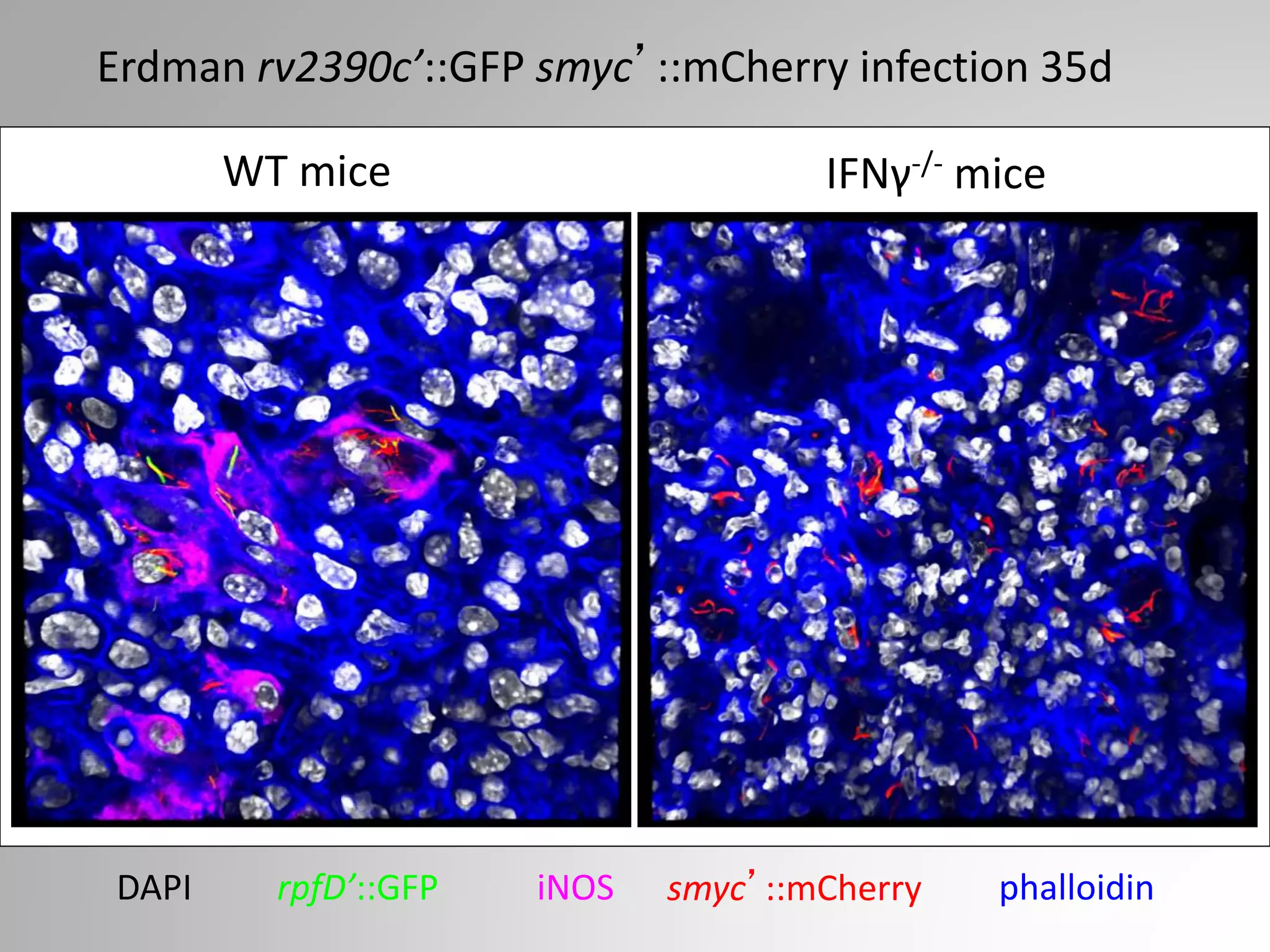
Erdman rv2390c’::GFP smyc’::mCherry infection 35d
WT mice IFNγ-/- mice
smyc’::mCherryrpfD’::GFP phalloidinDAPI iNOS
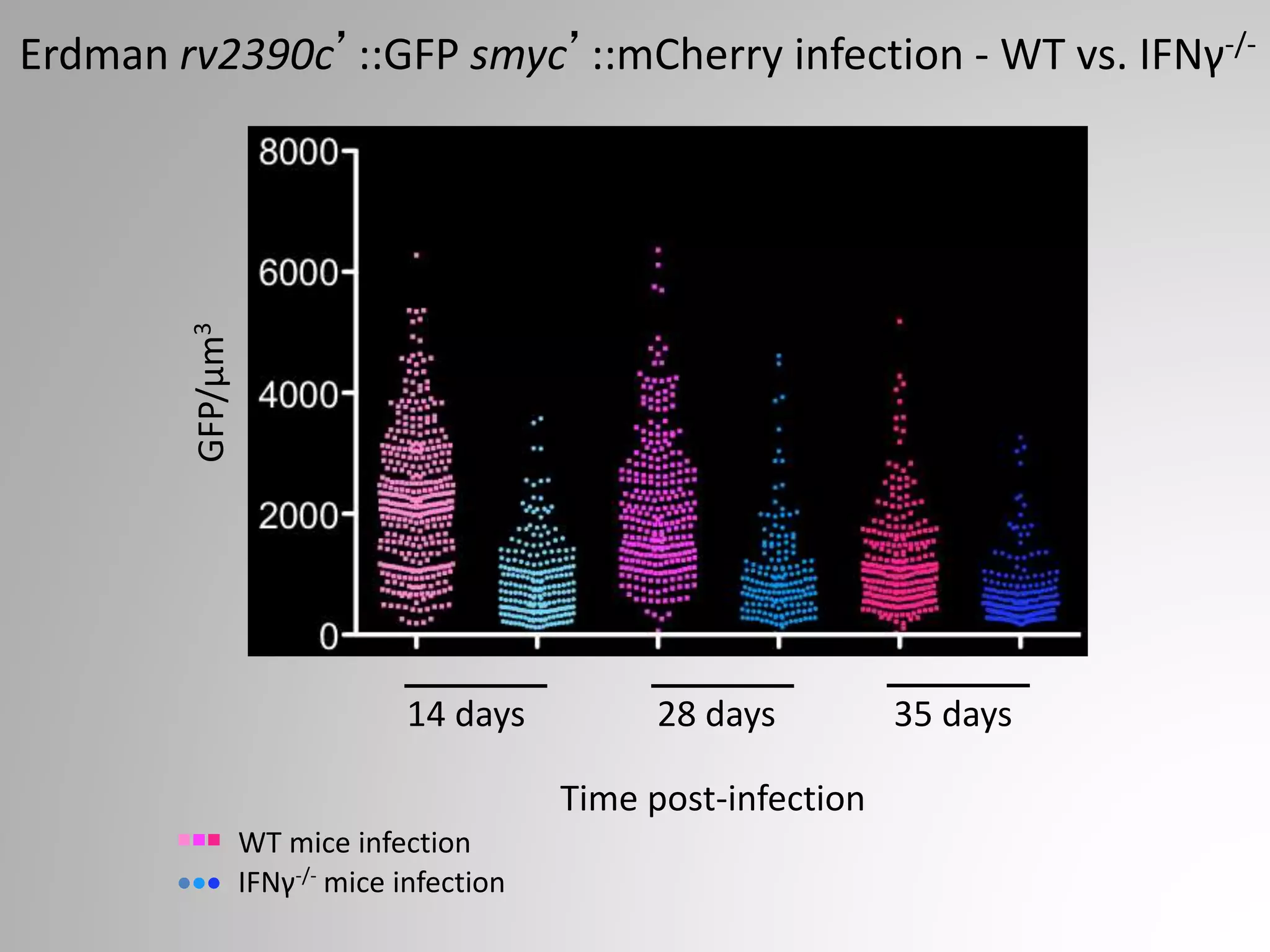
Erdman rv2390c’::GFP smyc’::mCherry infection - WT vs. IFNγ-/-
14 days 28 days 35 days
Time post-infection
GFP/µm3
p<0.0001 p<0.0001 p<0.0001
IFNγ-/- mice infection
WT mice infection
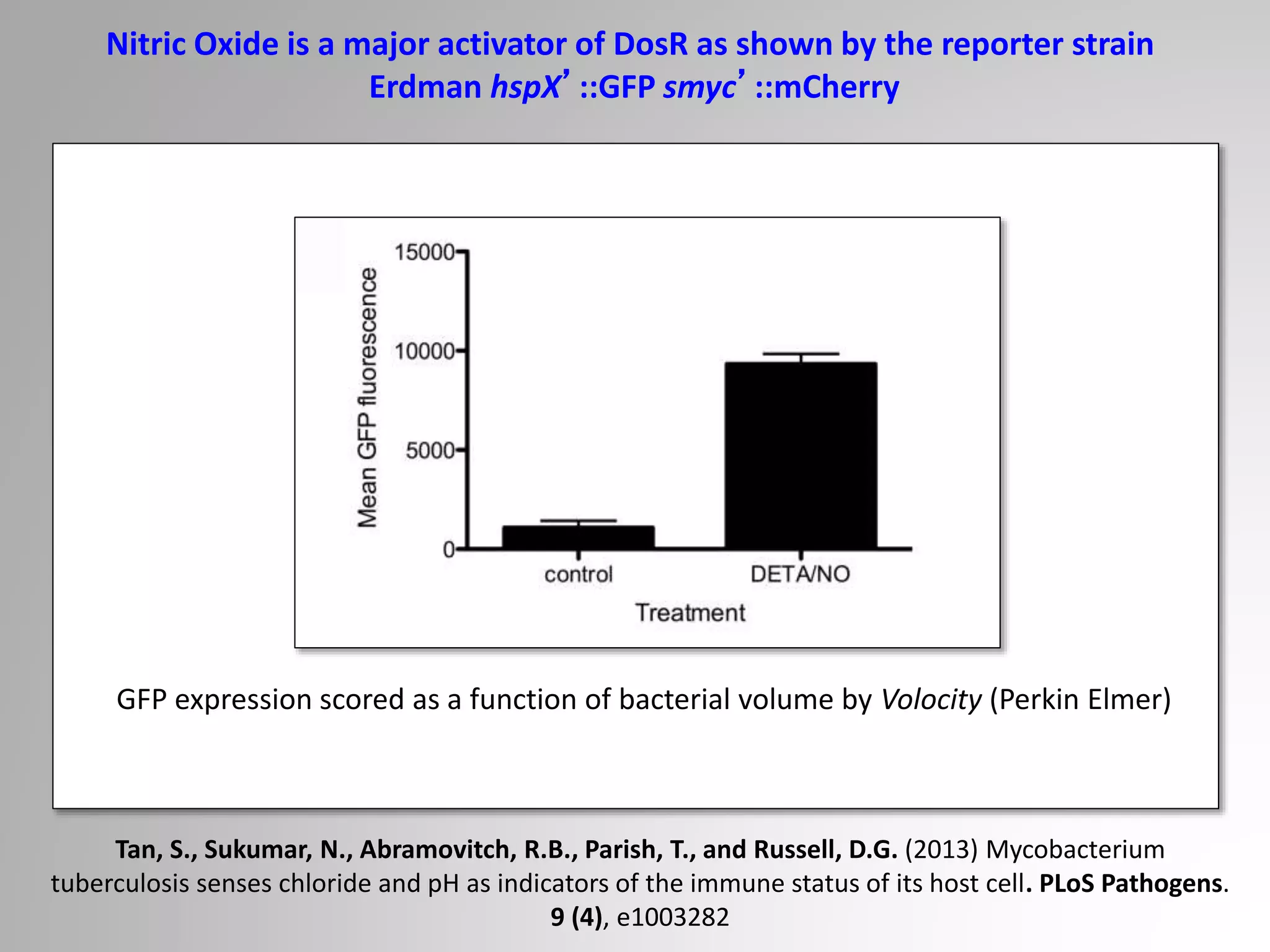
Nitric Oxide is a major activator of DosR as shown by the reporter strain
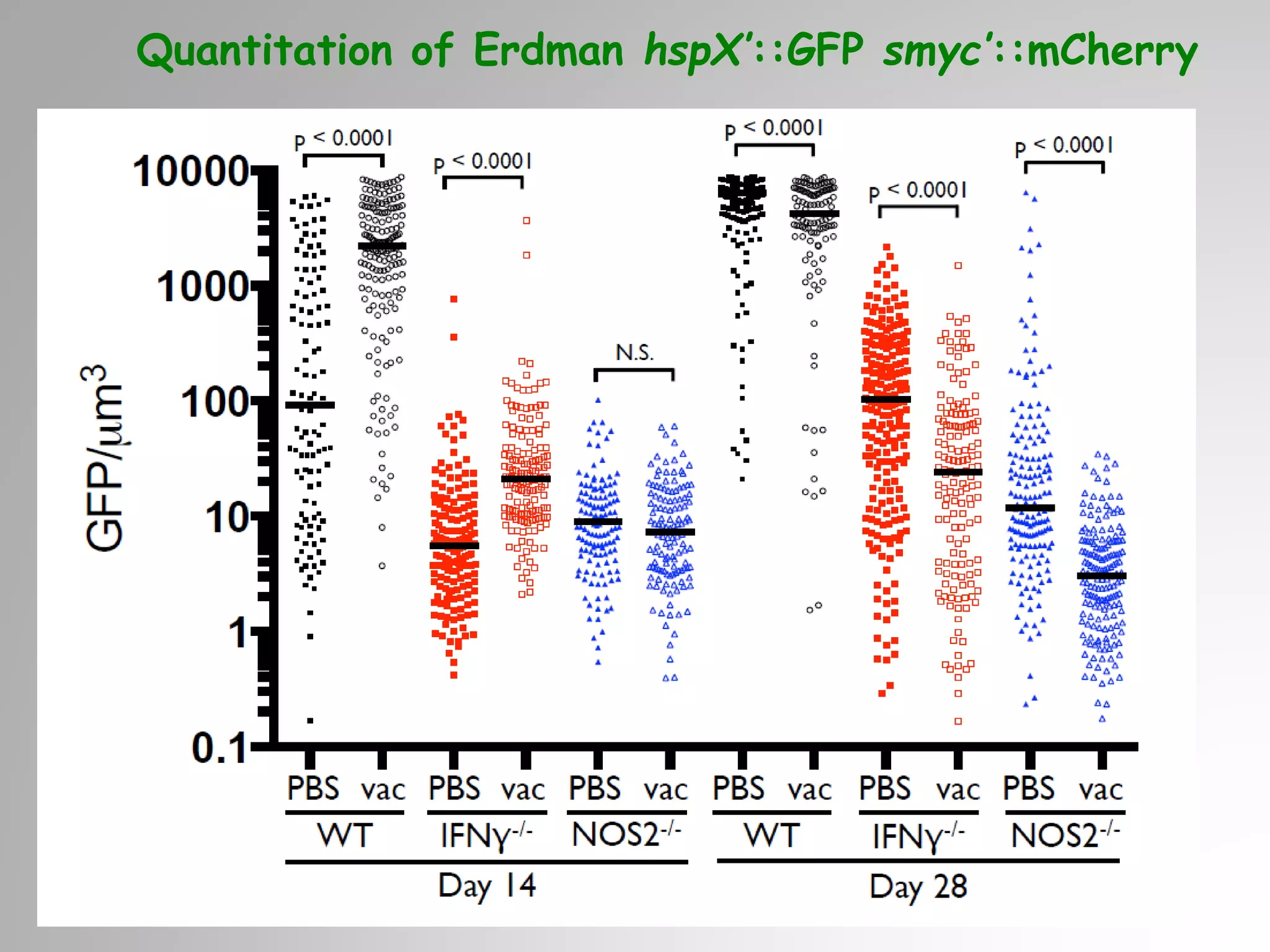
Erdman hspX’::GFP smyc’::mCherry
GFP expression scored as a function of bacterial volume by Volocity (Perkin Elmer)
Tan, S., Sukumar, N., Abramovitch, R.B., Parish, T., and Russell, D.G. (2013) Mycobacterium
tuberculosis senses chloride and pH as indicators of the immune status of its host cell. PLoS Pathogens.
9 (4), e1003282
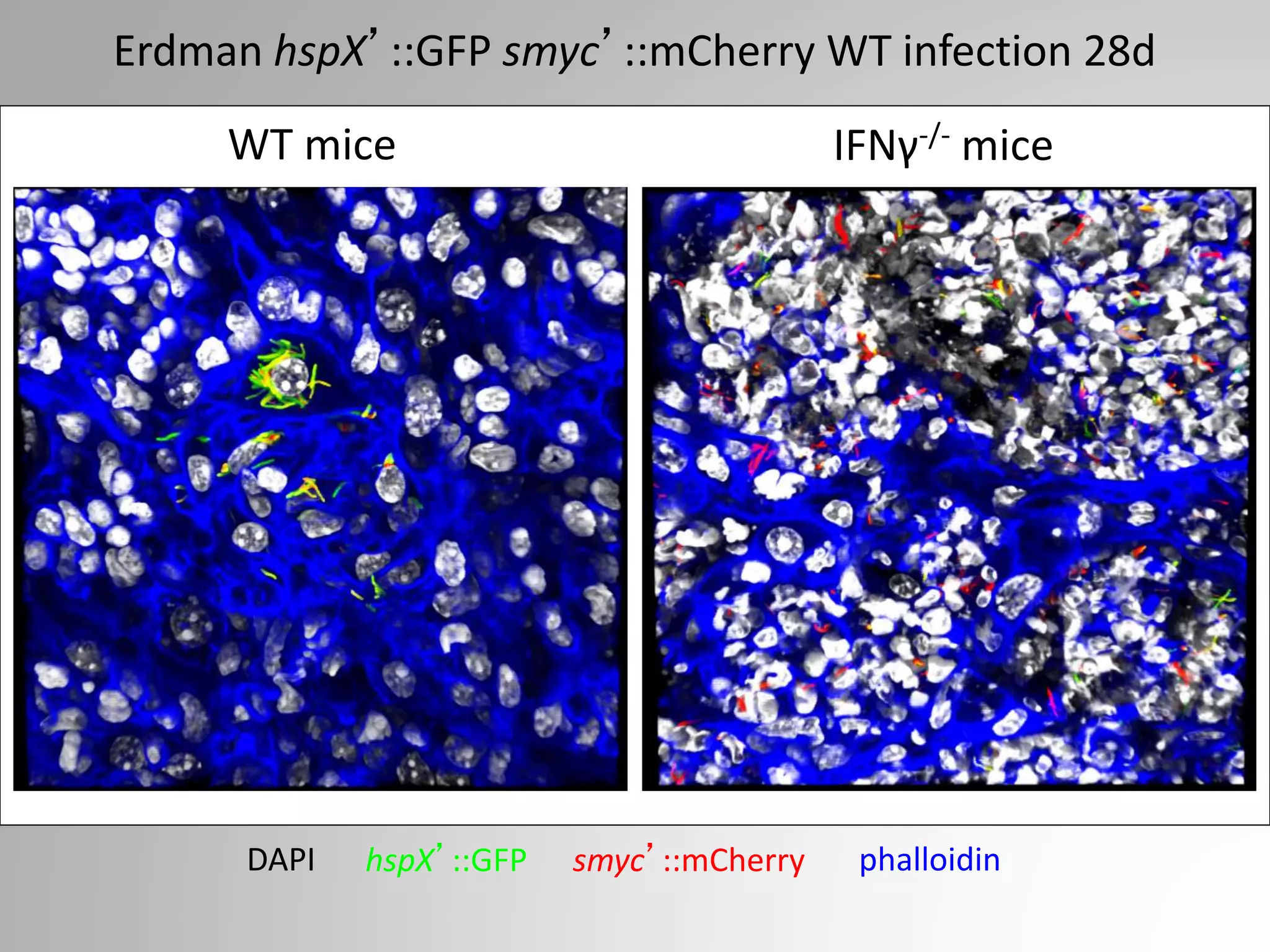
Erdman hspX’::GFP smyc’::mCherry WT infection 28d
WT mice IFNγ-/- mice
smyc’::mCherryhspX’::GFP phalloidinDAPI
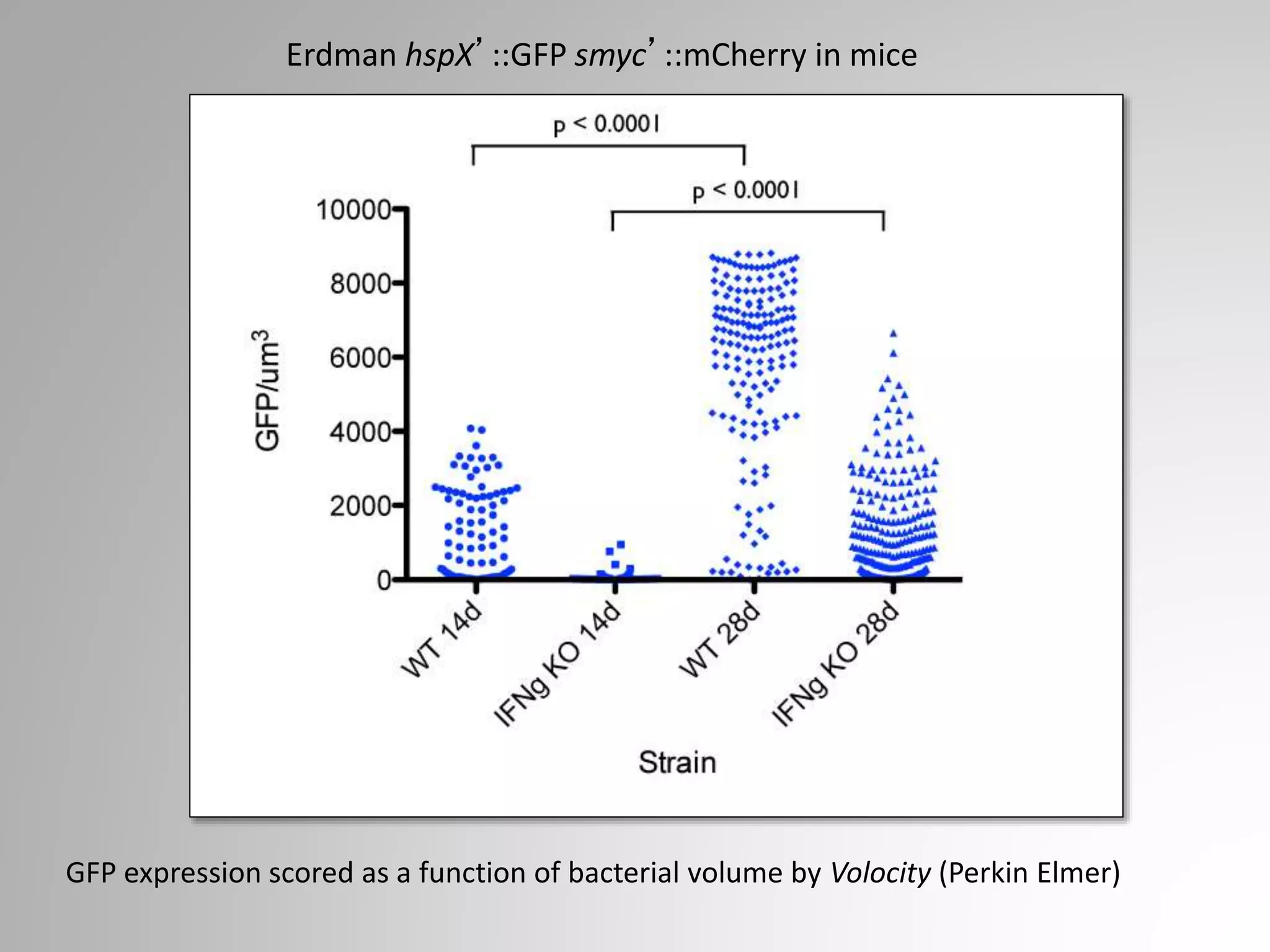
Erdman hspX’::GFP smyc’::mCherry in mice
GFP expression scored as a function of bacterial volume by Volocity (Perkin Elmer)
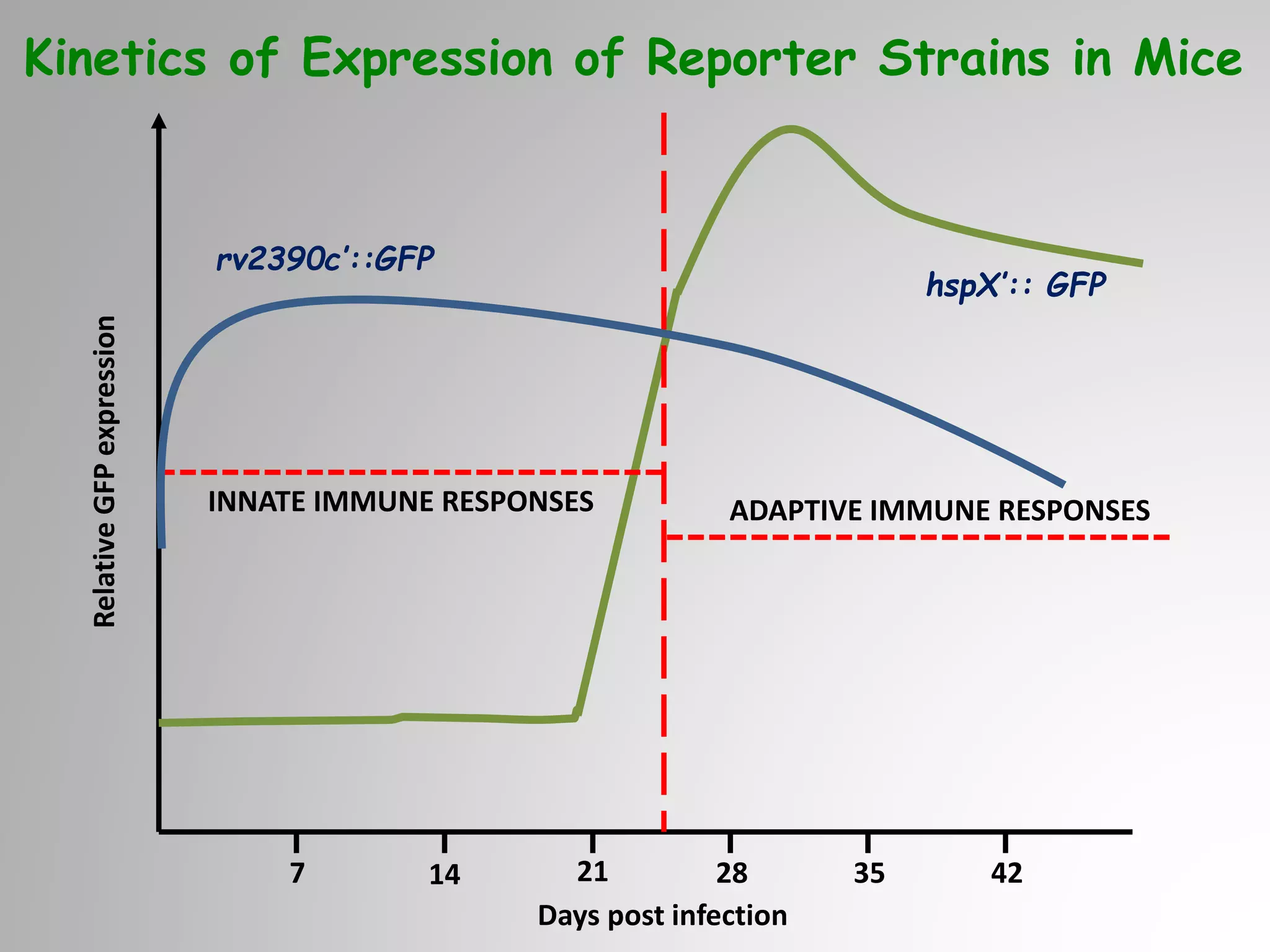
RelativeGFPexpression
7 14 21 28 35 42
rv2390c’::GFP
hspX’:: GFP
INNATE IMMUNE RESPONSES ADAPTIVE IMMUNE RESPONSES
Kinetics of Expression of Reporter Strains in Mice
Days post infection
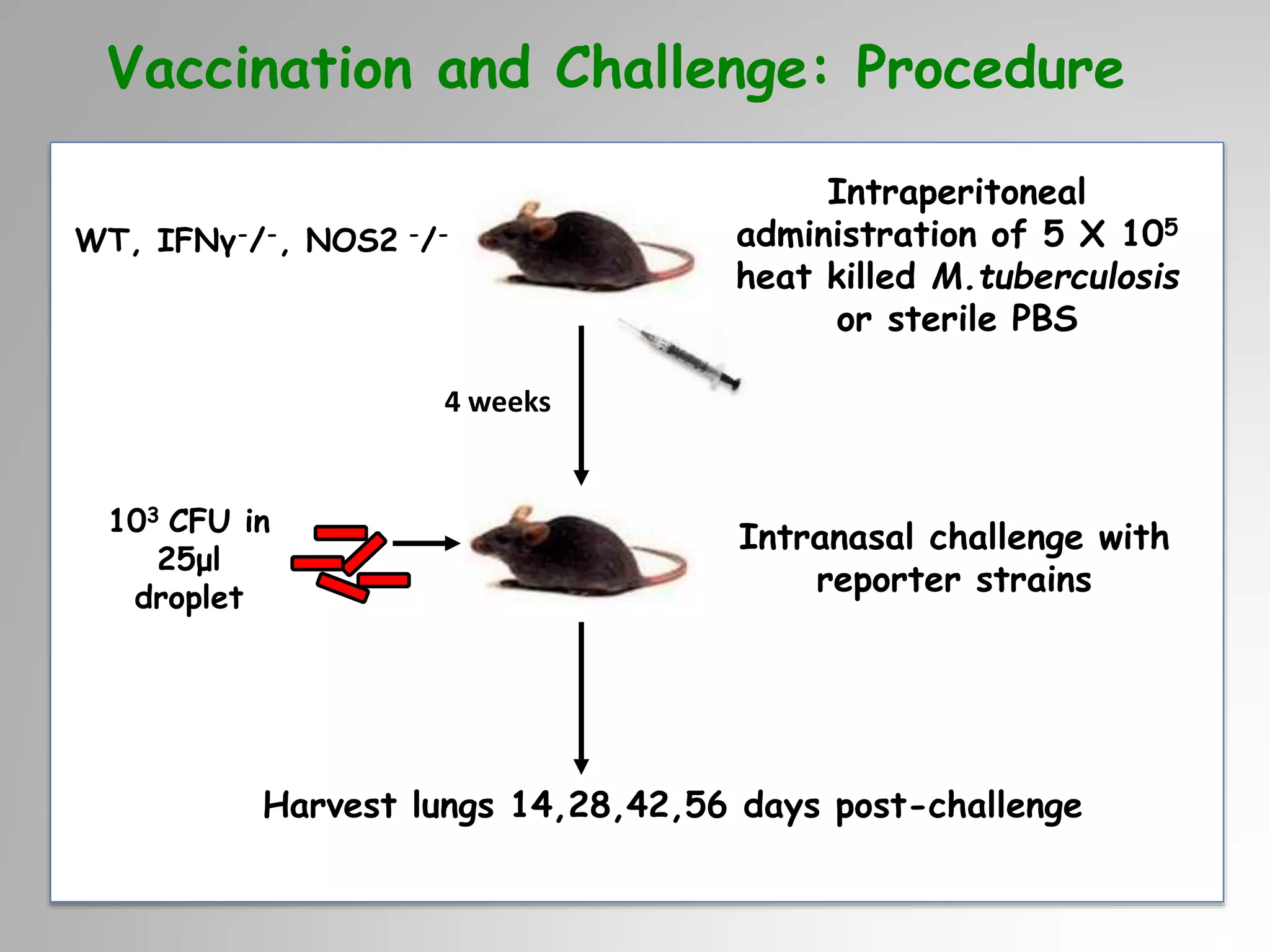
Harvest lungs 14,28,42,56 days post-challenge
4 weeks
Intranasal challenge with
reporter strains
103 CFU in
25μl
droplet
Vaccination and Challenge: Procedure
Intraperitoneal
administration of 5 X 10⁵
heat killed M.tuberculosis
or sterile PBS
WT, IFNγ-/-, NOS2 -/-
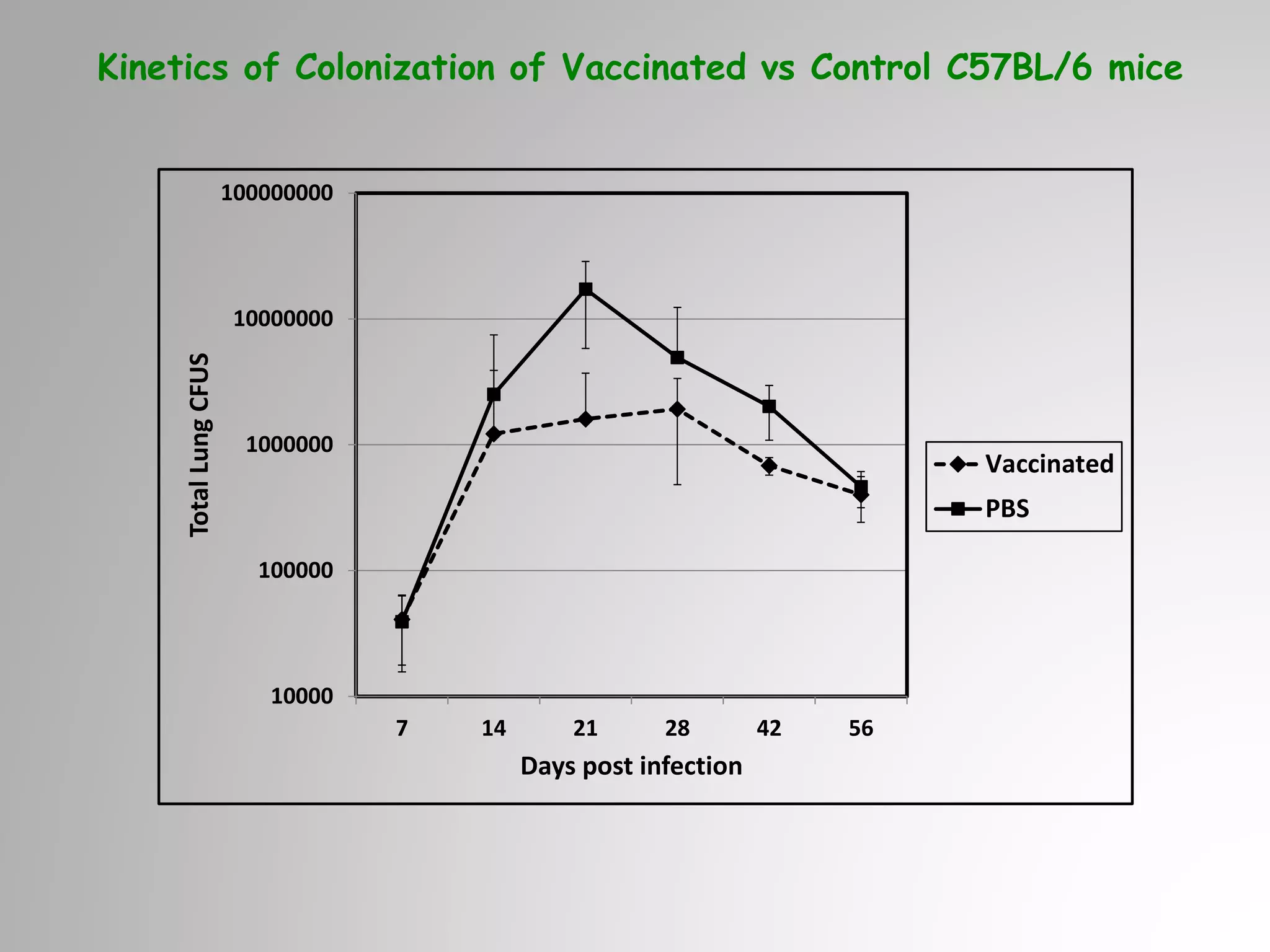
10000
100000
1000000
10000000
100000000
7 14 21 28 42 56
TotalLungCFUS
Days post infection
Vaccinated
PBS
Kinetics of Colonization of Vaccinated vs Control C57BL/6 mice
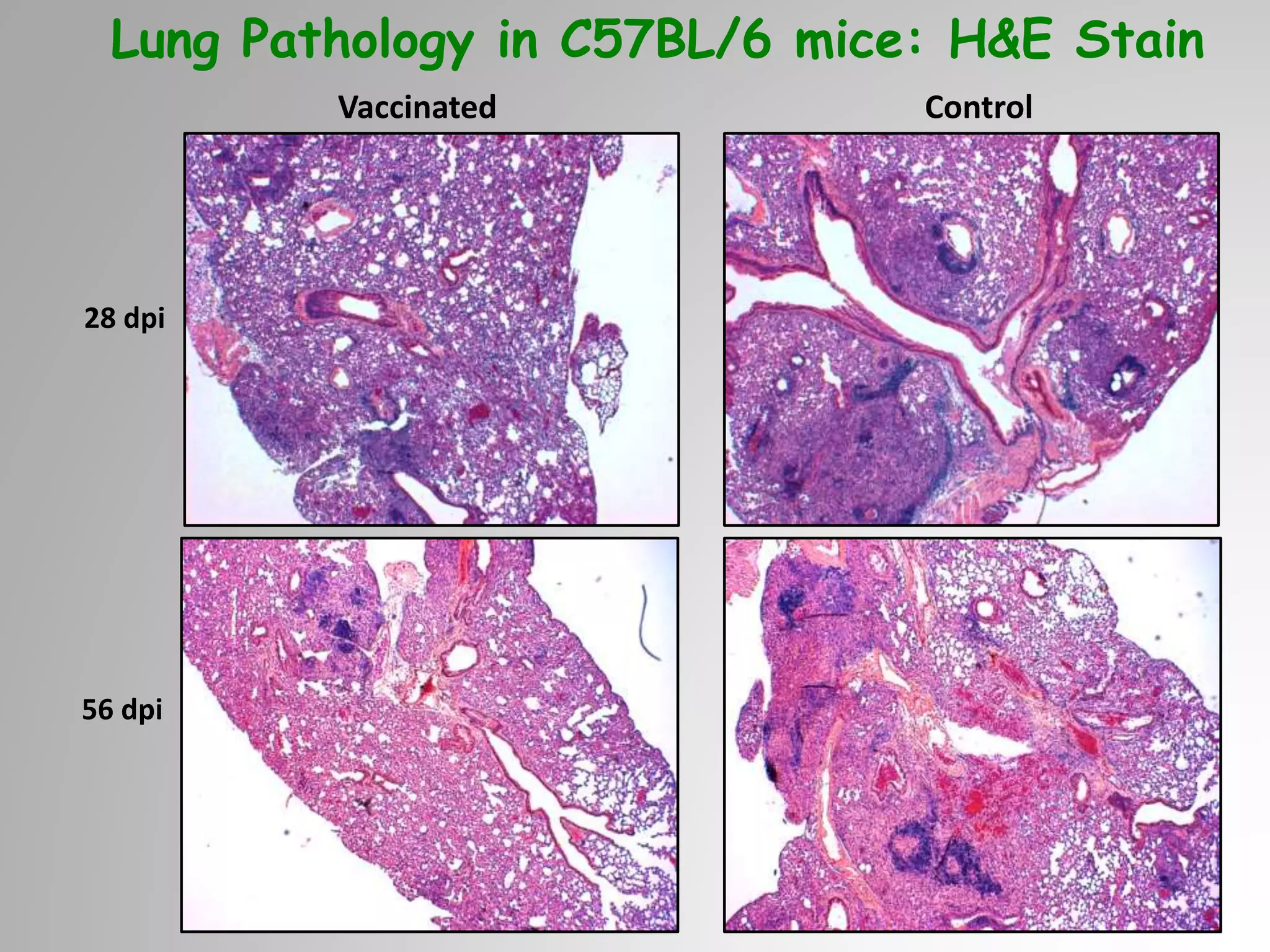
28 dpi
Vaccinated Control
56 dpi
Lung Pathology in C57BL/6 mice: H&E Stain
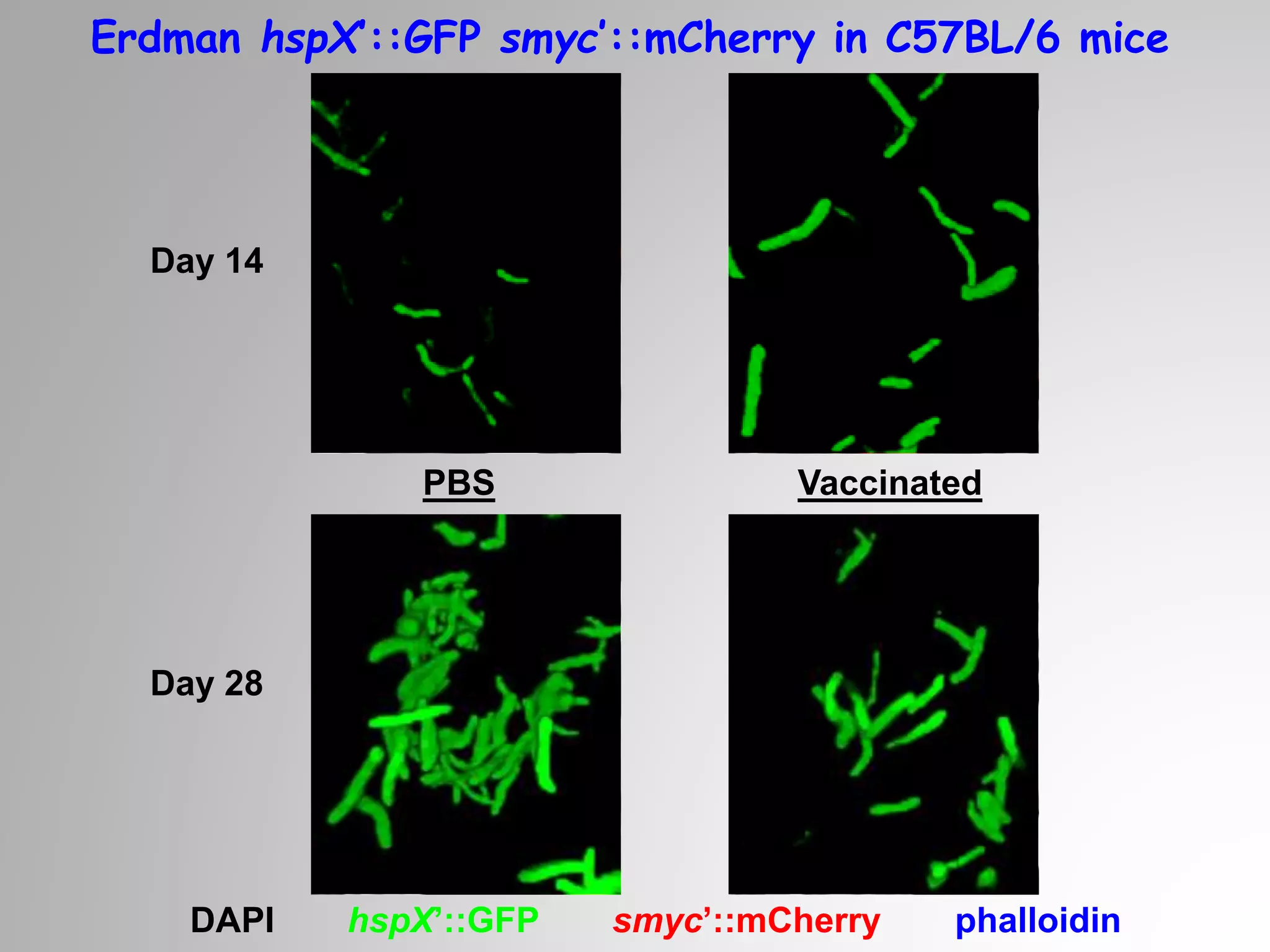
Vaccinated
Day 28
Day 14
DAPI hspX’::GFP smyc’::mCherry phalloidin
PBS
Erdman hspX’::GFP smyc’::mCherry in C57BL/6 mice
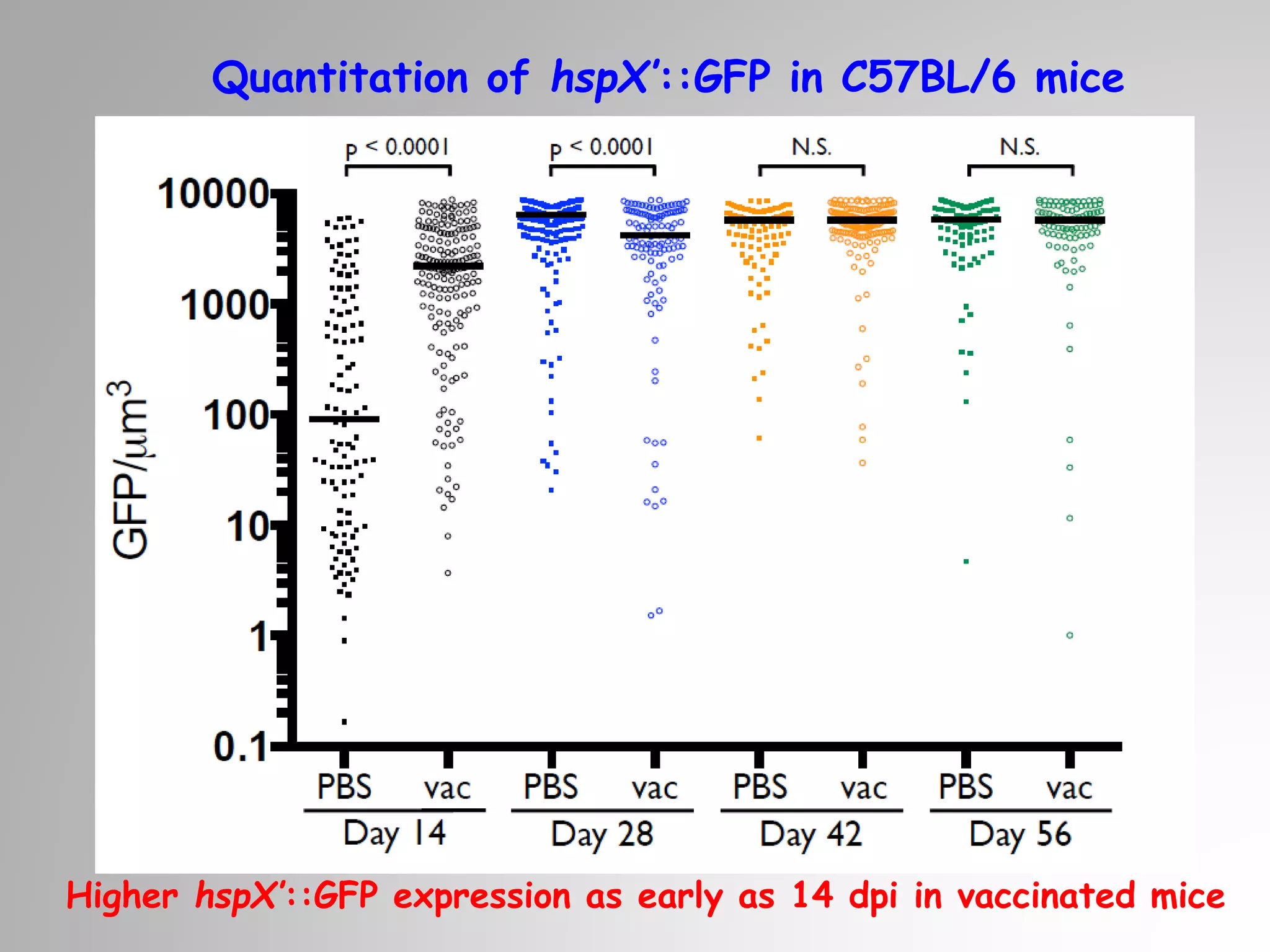
Quantitation of hspX’::GFP in C57BL/6 mice
Higher hspX’::GFP expression as early as 14 dpi in vaccinated mice
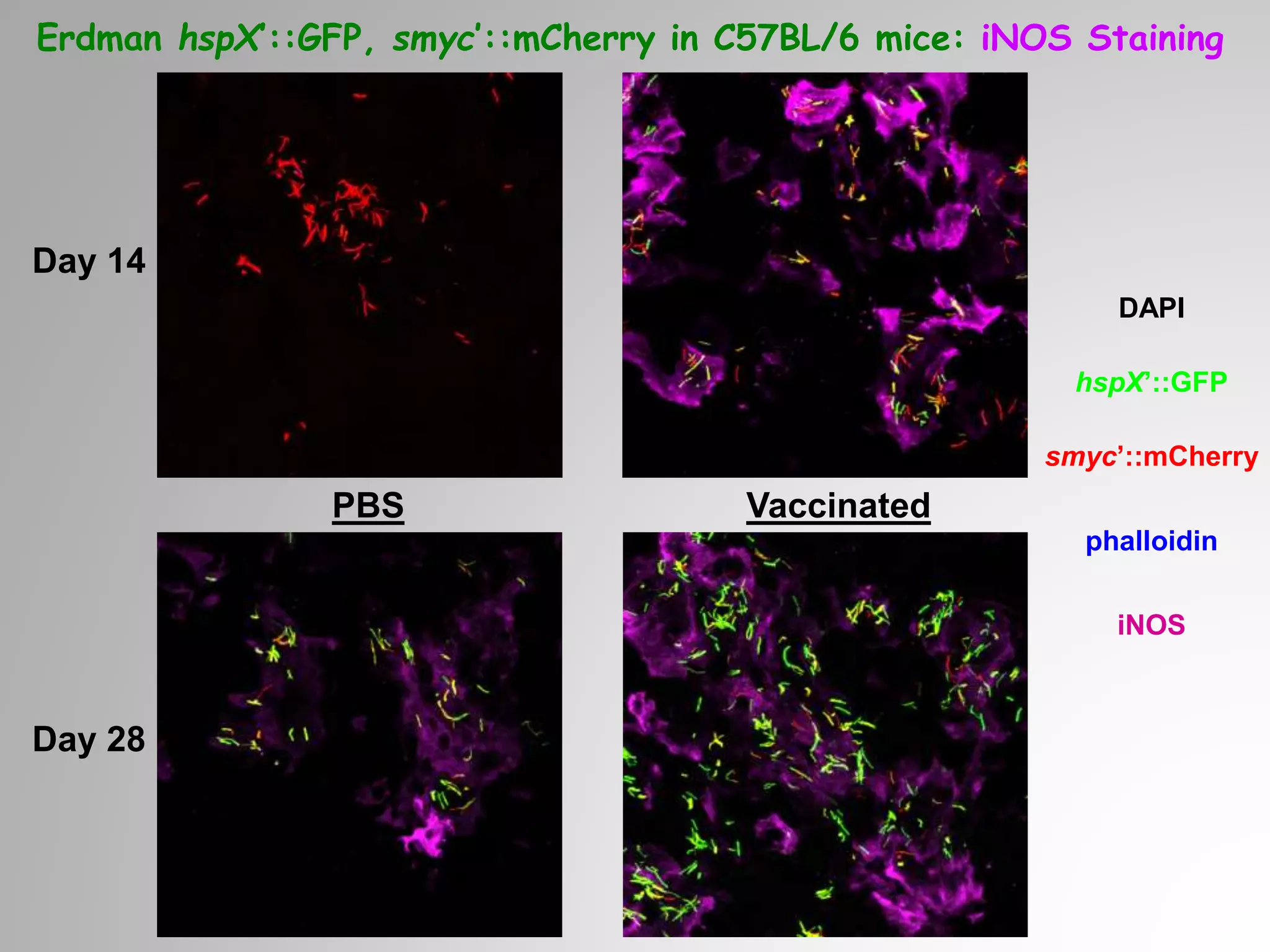
DAPI
hspX’::GFP
smyc’::mCherry
phalloidin
iNOS
Erdman hspX’::GFP, smyc’::mCherry in C57BL/6 mice: iNOS Staining
VaccinatedPBS
Day 28
Day 14
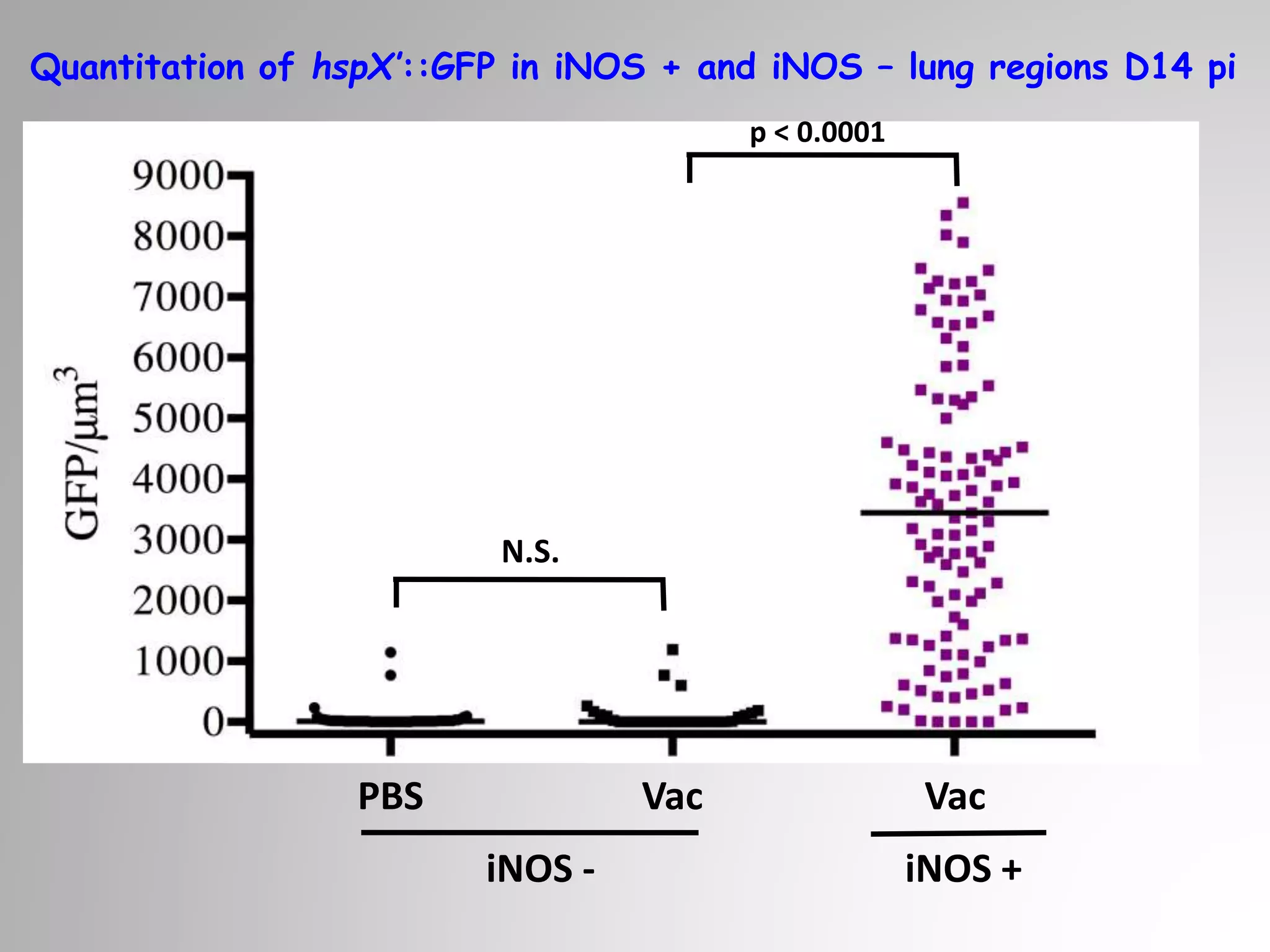
Quantitation of hspX’::GFP in iNOS + and iNOS – lung regions D14 pi
PBS Vac
iNOS -
Vac
iNOS +
p < 0.0001
N.S.
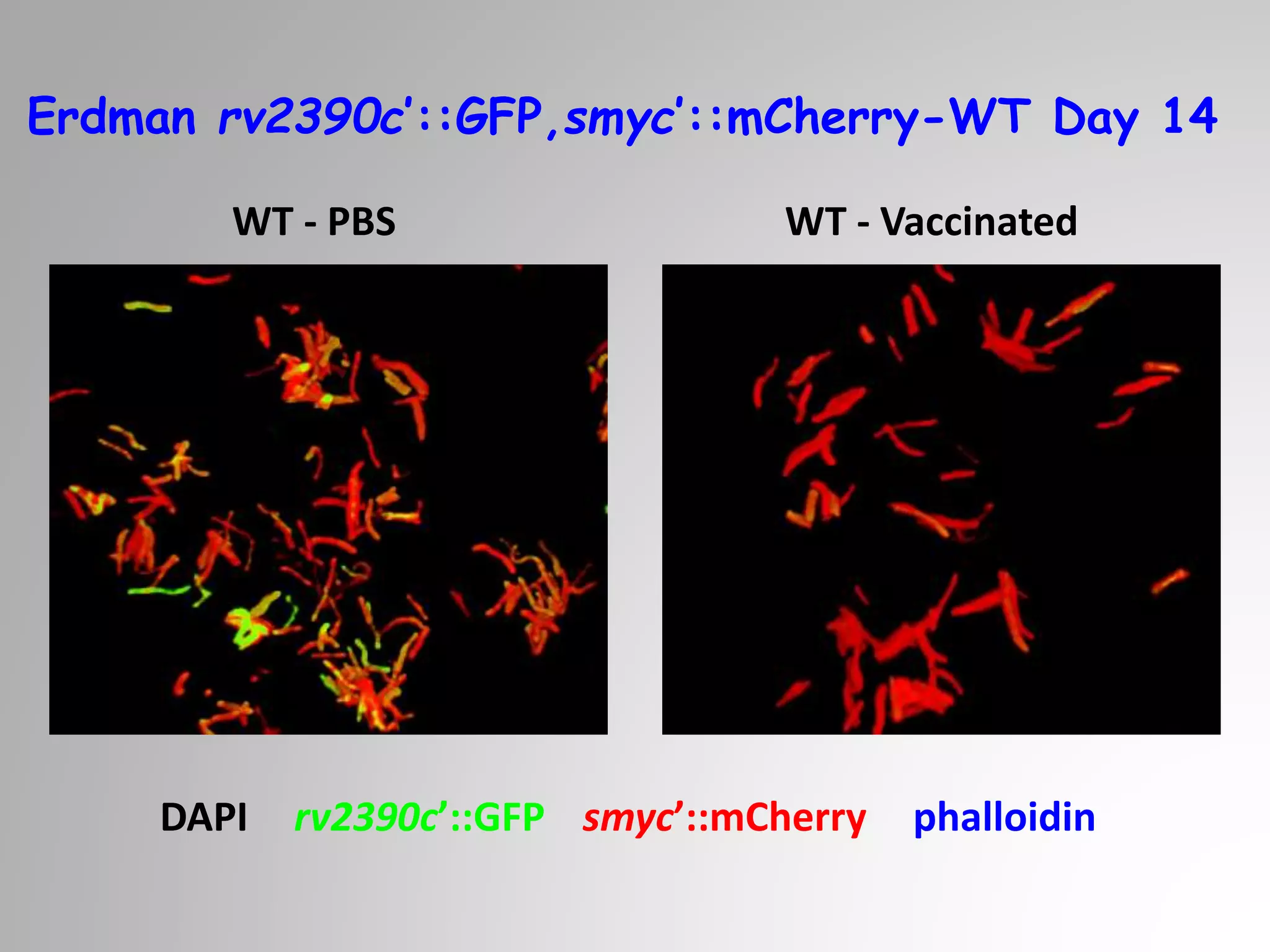
WT - PBS WT - Vaccinated
Erdman rv2390c’::GFP,smyc’::mCherry-WT Day 14
DAPI rv2390c’::GFP smyc’::mCherry phalloidin
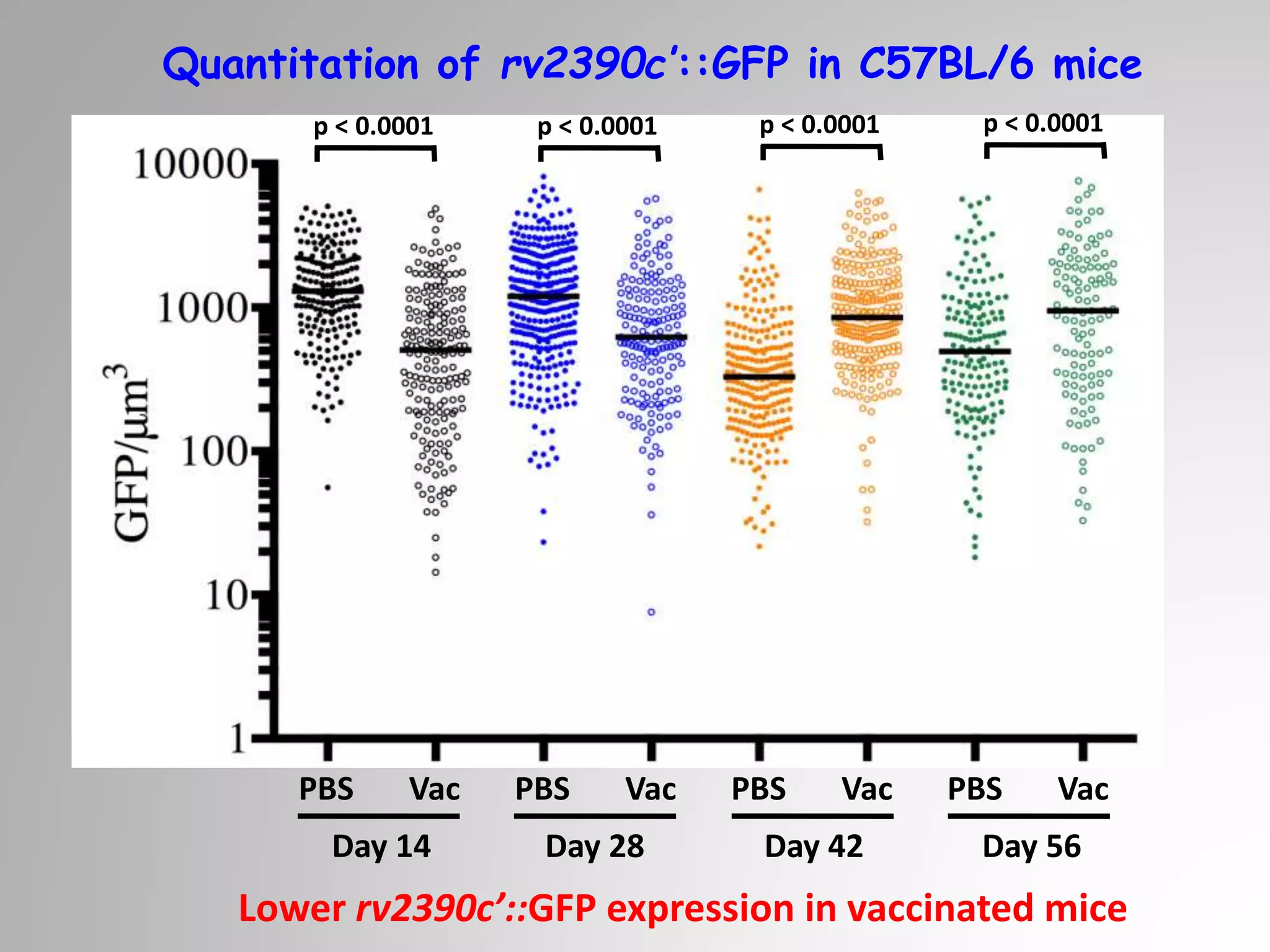
PBS Vac
Day 14
PBS Vac
Day 28
PBS Vac
Day 42
PBS Vac
Day 56
Quantitation of rv2390c’::GFP in C57BL/6 mice
Lower rv2390c’::GFP expression in vaccinated mice
p < 0.0001 p < 0.0001 p < 0.0001 p < 0.0001
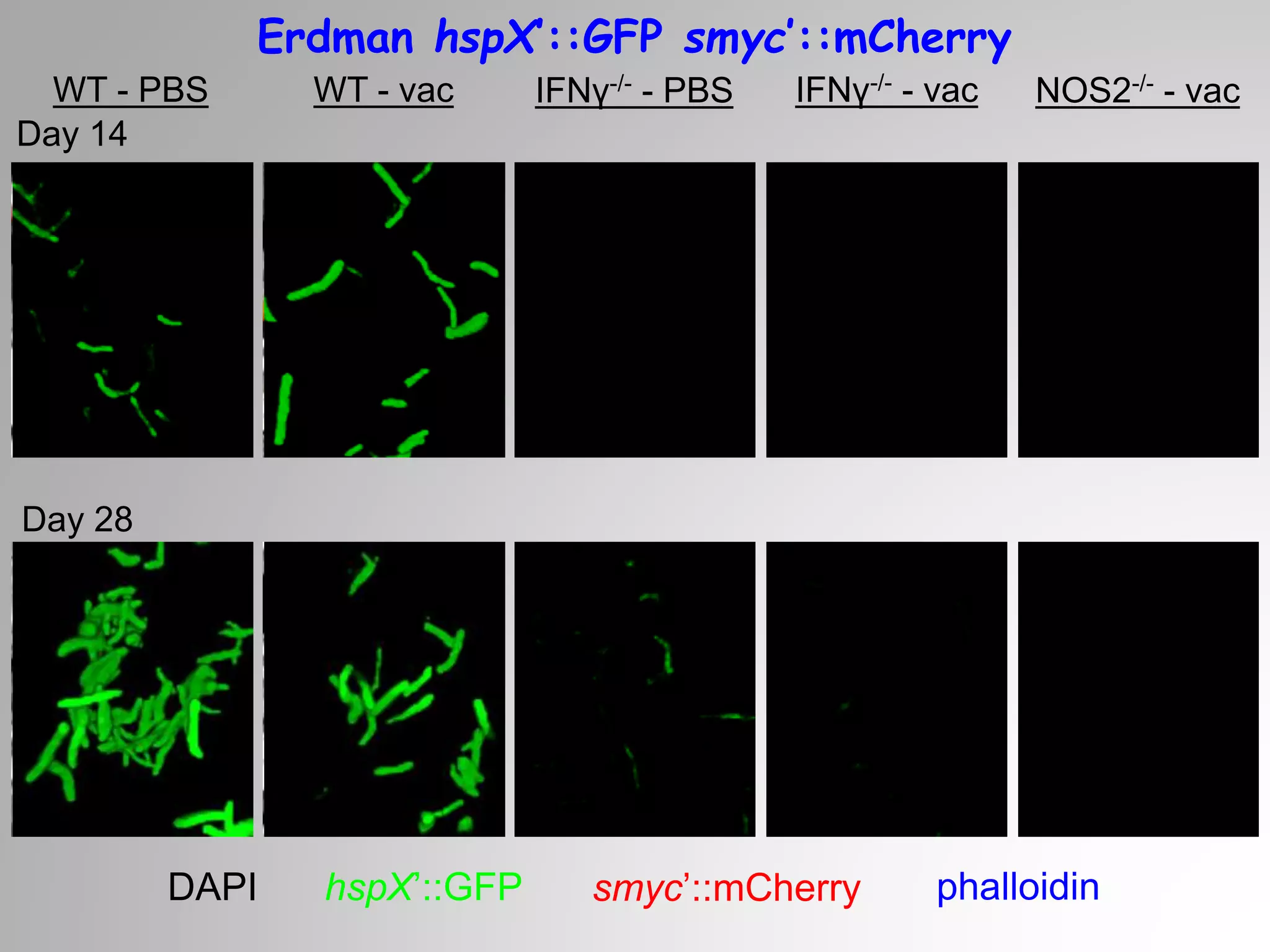
Erdman hspX’::GFP smyc’::mCherry
WT - PBS WT - vac
Day 14
DAPI hspX’::GFP smyc’::mCherry phalloidin
Day 28
IFNγ-/- - vacIFNγ-/- - PBS NOS2-/- - vac
Quantitation of Erdman hspX’::GFP smyc’::mCherry
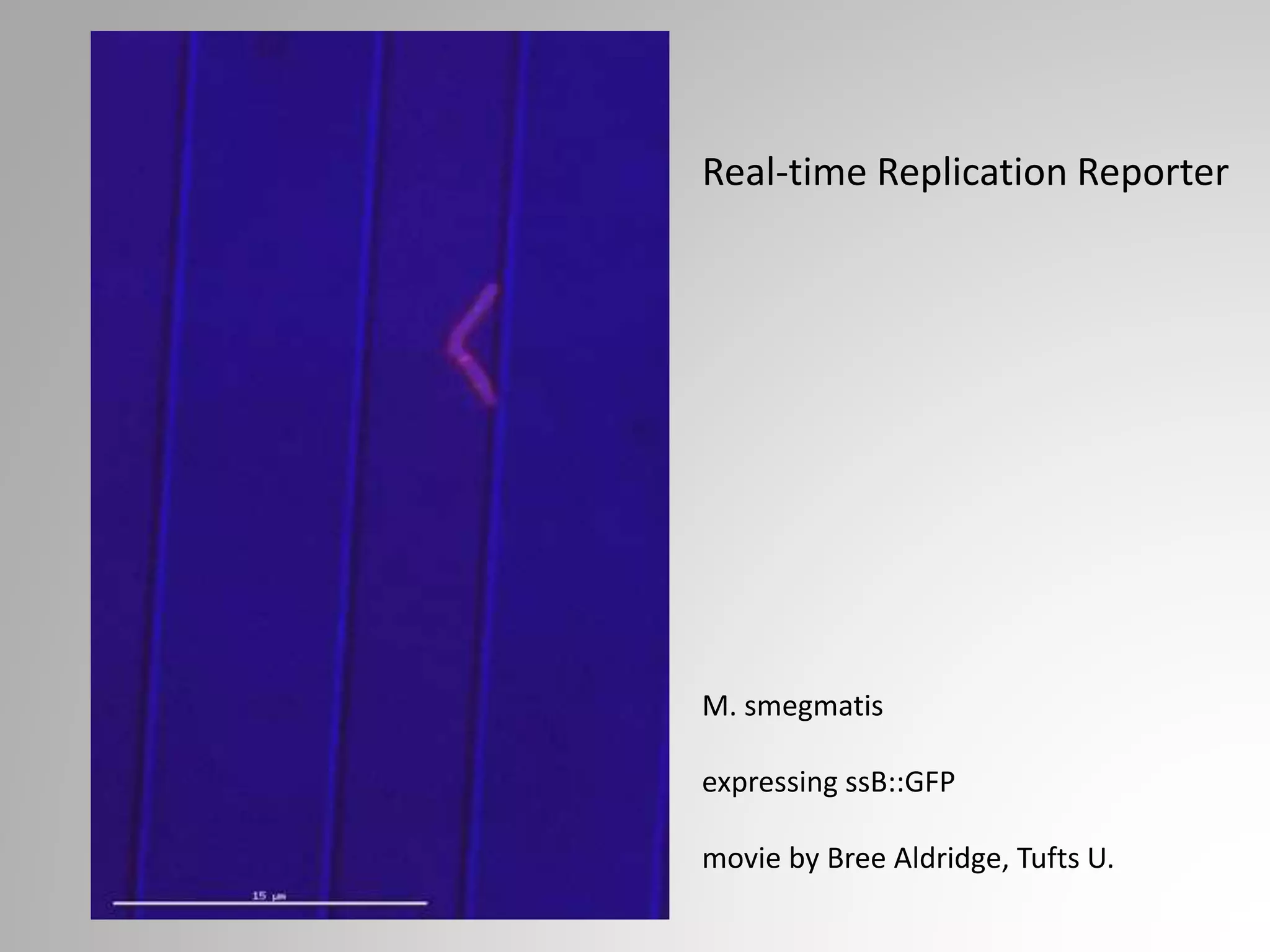
M. smegmatis
expressing ssB::GFP
movie by Bree Aldridge, Tufts U.
Real-time Replication Reporter
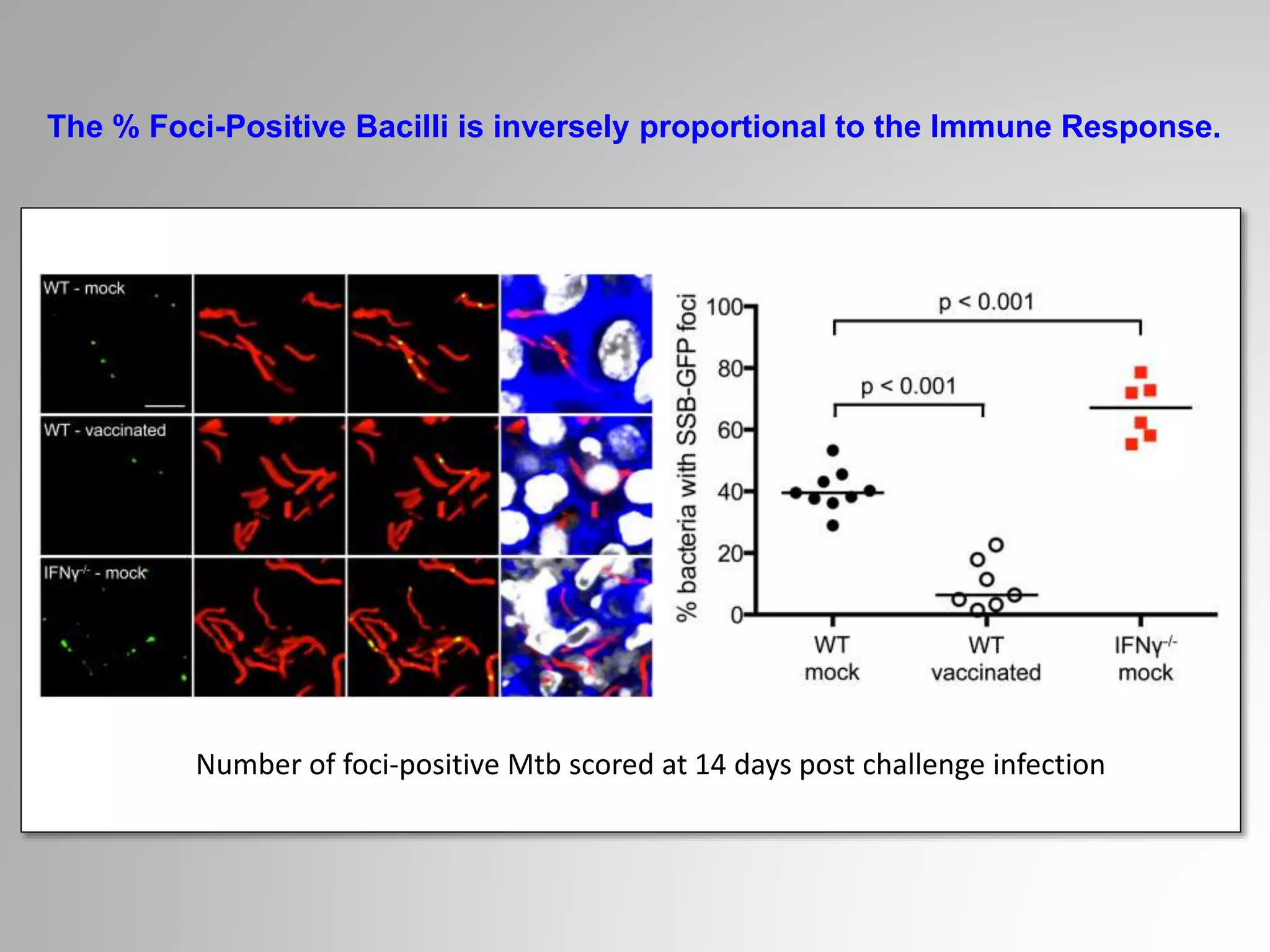
The % Foci-Positive Bacilli is inversely proportional to the Immune Response.
Number of foci-positive Mtb scored at 14 days post challenge infection
PBS Vac
INH
PBS Vac
RIF
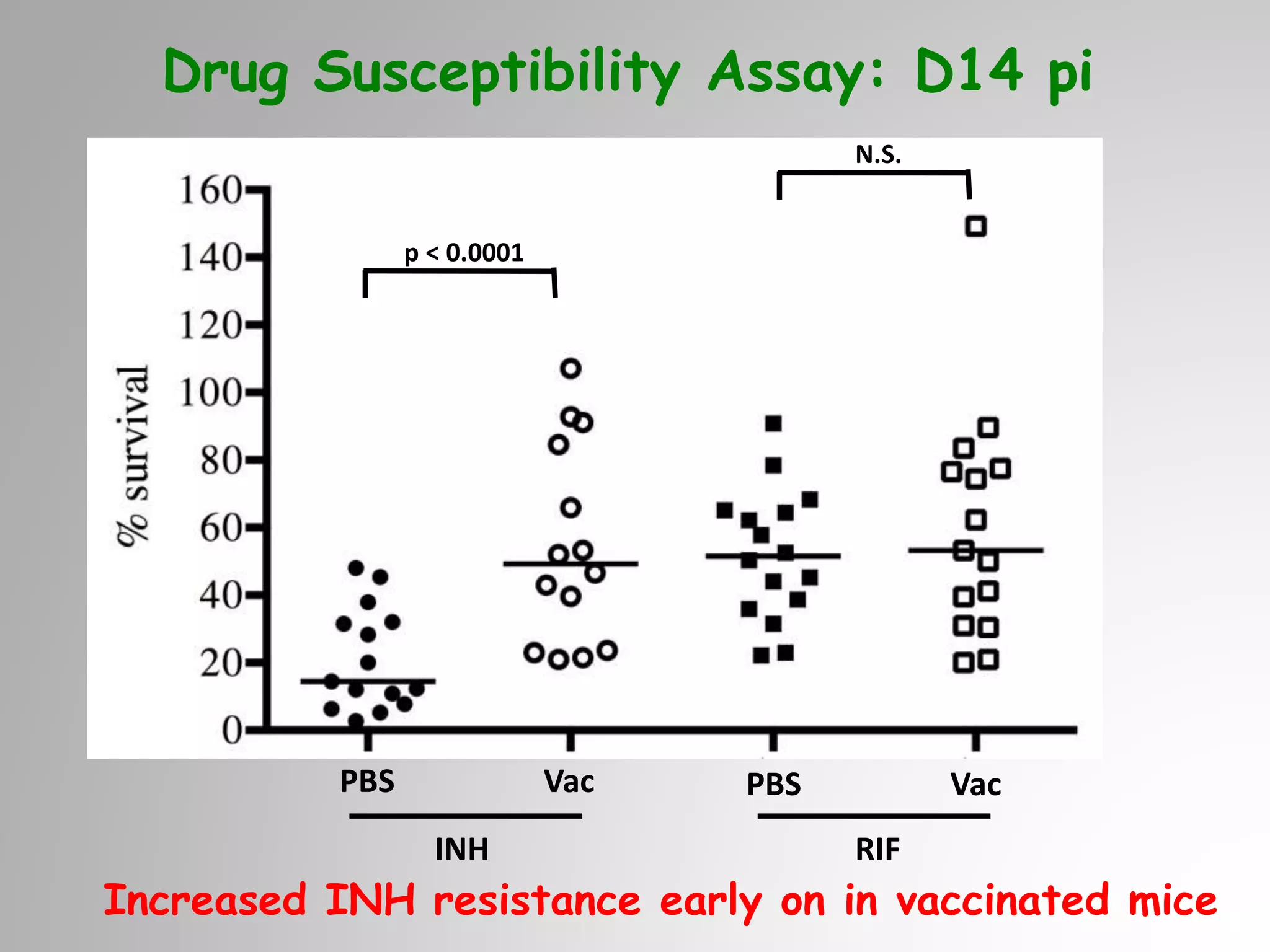
Drug Susceptibility Assay: D14 pi
p < 0.0001
N.S.
Increased INH resistance early on in vaccinated mice
What do the reporter strains tell us?
1. DosR reporter: Induction correlates well with the acquired immune
response and the presence of IFN-g and iNOS. Expression is accelerated
by vaccination.
2. Drug sensitivity: Sensitivity to INH in Mtb from 14d infection is higher in
naive than vaccinated mice implying that these bacteria are more
actively replicating.
3. ssB::GFP reporter: Scoring of replication forks indicates that replication
correlates inversely with the development of the acquired immune
response and is dependent on the presence of IFN-g.
3. Chloride reporter: induced early but trends down as the acquired
immune response develops. Is not induced in immune incompetent mice
so early neutrophil activity? Inverse correlation with granuloma
establishment?
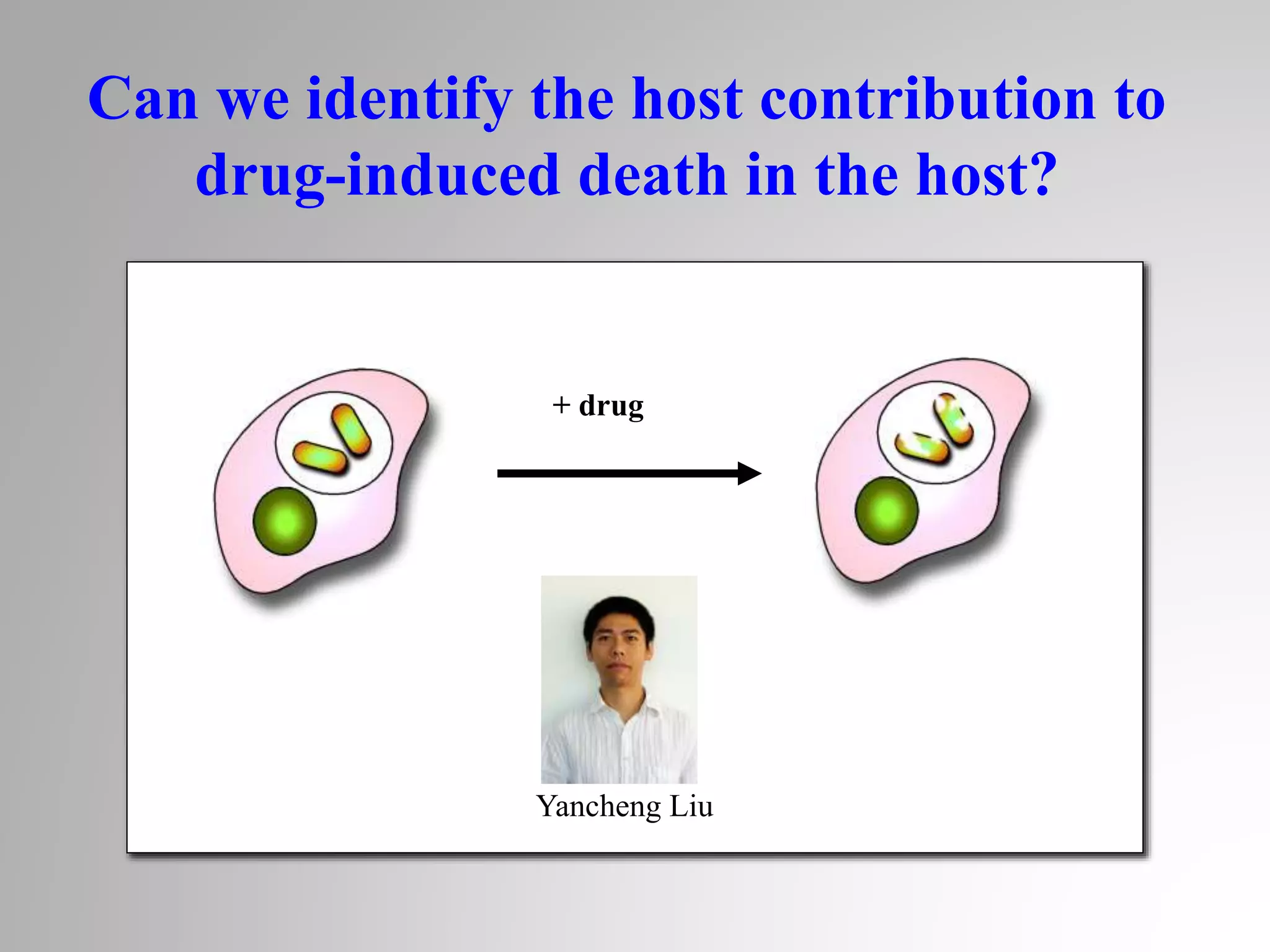
+ drug
Yancheng Liu
Can we identify the host contribution to
drug-induced death in the host?
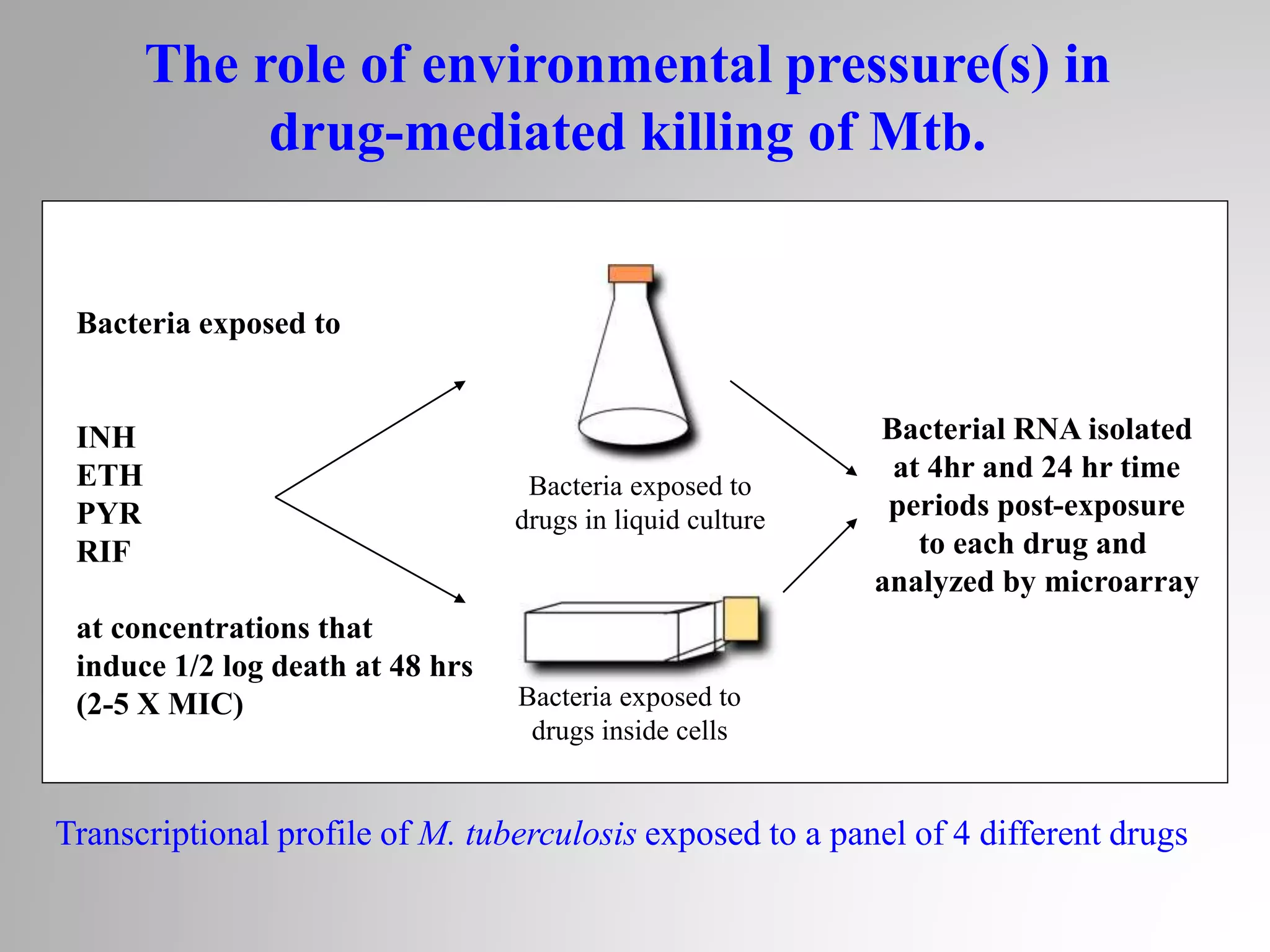
Bacteria exposed to
drugs inside cells
Bacteria exposed to
drugs in liquid culture
Bacteria exposed to
INH
ETH
PYR
RIF
at concentrations that
induce 1/2 log death at 48 hrs
(2-5 X MIC)
Bacterial RNA isolated
at 4hr and 24 hr time
periods post-exposure
to each drug and
analyzed by microarray
Transcriptional profile of M. tuberculosis exposed to a panel of 4 different drugs
The role of environmental pressure(s) in
drug-mediated killing of Mtb.
1.0E+05
1.0E+06
1.0E+07
0 1 2 3 4 5 6 7 8 9 10
CFU/ml
DMSO
INH
RIF
PZA
EMB
DPI
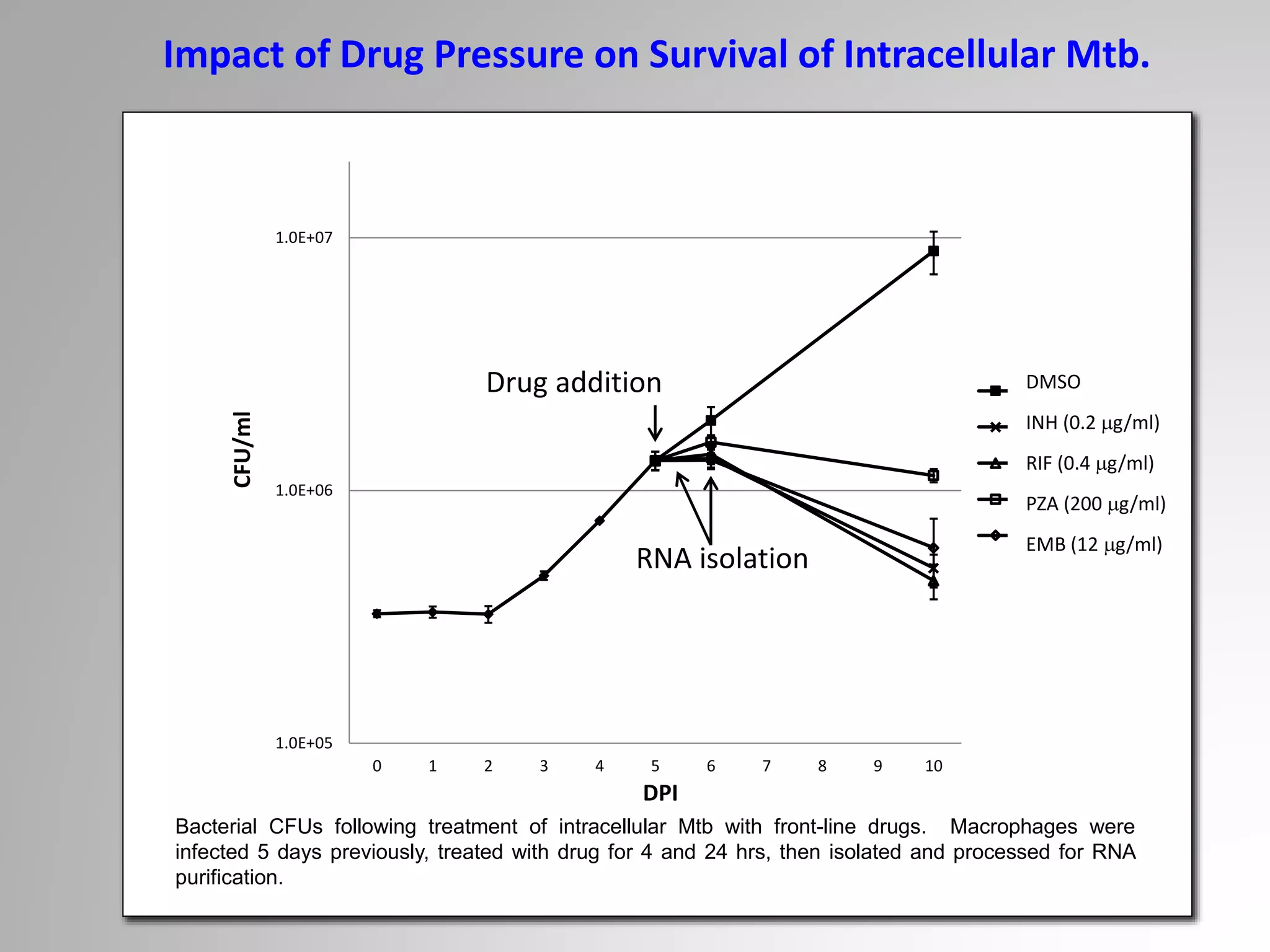
Bacterial CFUs following treatment of intracellular Mtb with front-line drugs. Macrophages were
infected 5 days previously, treated with drug for 4 and 24 hrs, then isolated and processed for RNA
purification.
DMSO
INH (0.2 mg/ml)
RIF (0.4 mg/ml)
PZA (200 mg/ml)
EMB (12 mg/ml)
Impact of Drug Pressure on Survival of Intracellular Mtb.
Drug addition
RNA isolation
196 248128
Induced by
INH in broth
Induced by
INH in mØ
Expression ratio in broth
ExpressionratioinmØ
fadE23
fadE24
fbpC
accD6
rv1772
iniA
iniC
iniB
efpA
kasA
kasB
rv1592c
fabD
acpM
ahpC
rv0448c
rv0449c
mpt70
mpt83
MT2941
rv2874
rv3290c
Macrophage-specific
response
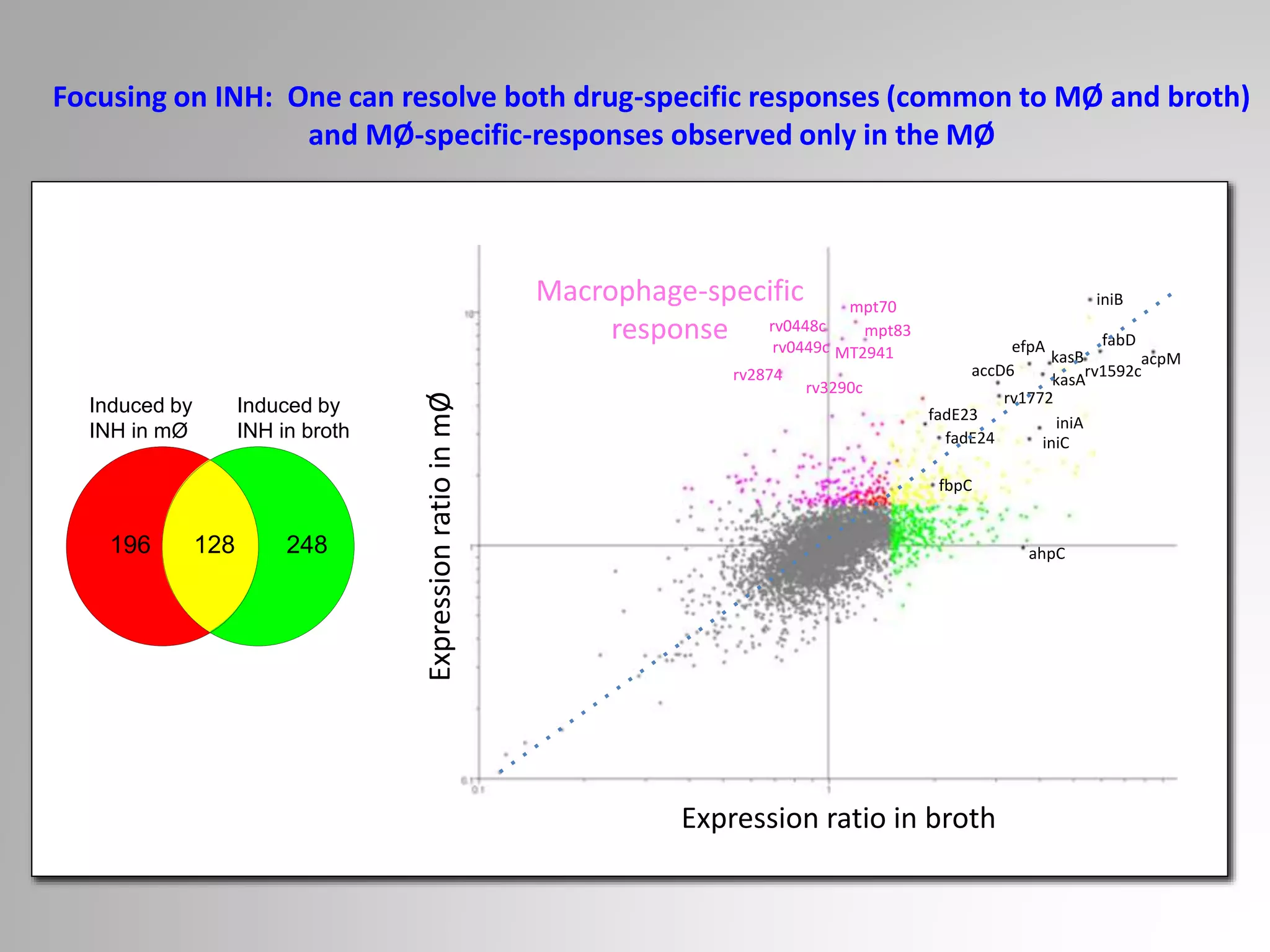
Focusing on INH: One can resolve both drug-specific responses (common to MØ and broth)
and MØ-specific-responses observed only in the MØ
In vitro stimulus
Genes overlapped with mφ-
specific INH induced list
(146 genes)
Genes overlapped by
random chanceh
Acid stress (pH=5.5)a (291 genes) 35 8
Nutrient starvationb (440 genes) 37 12
Oxidative stress (H2O2)c (319 genes) 24 9
NO/CO/hypoxia(Dos regulon)d (50 genes) 16 1
Dos-independent hypoxiae (290 genes) 14 8
SDS-mediated membrane damagef (211 genes) 30 6
Triton-mediated membrane damageg (73 genes) 20 2
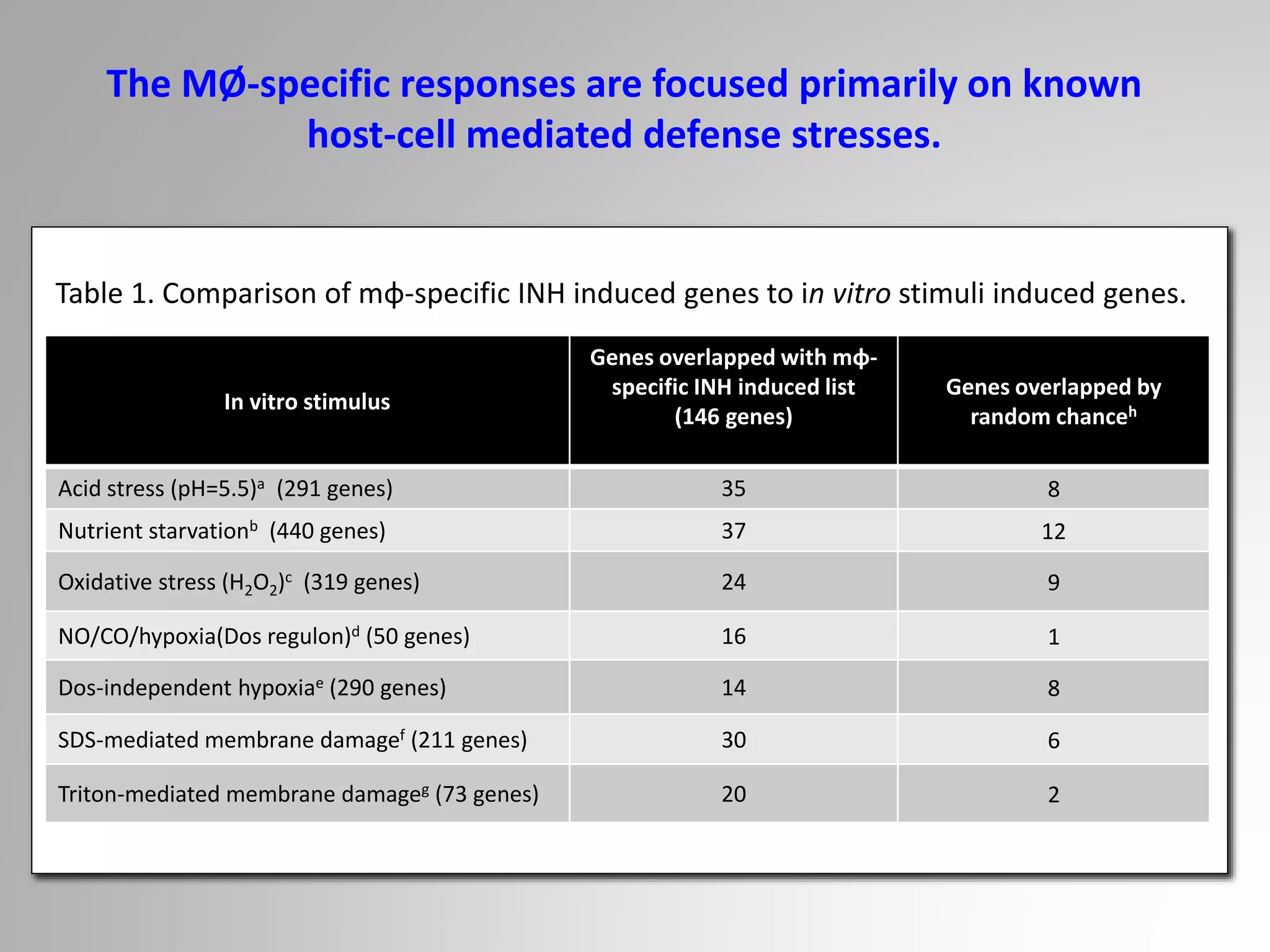
Table 1. Comparison of mφ-specific INH induced genes to in vitro stimuli induced genes.
The MØ-specific responses are focused primarily on known
host-cell mediated defense stresses.
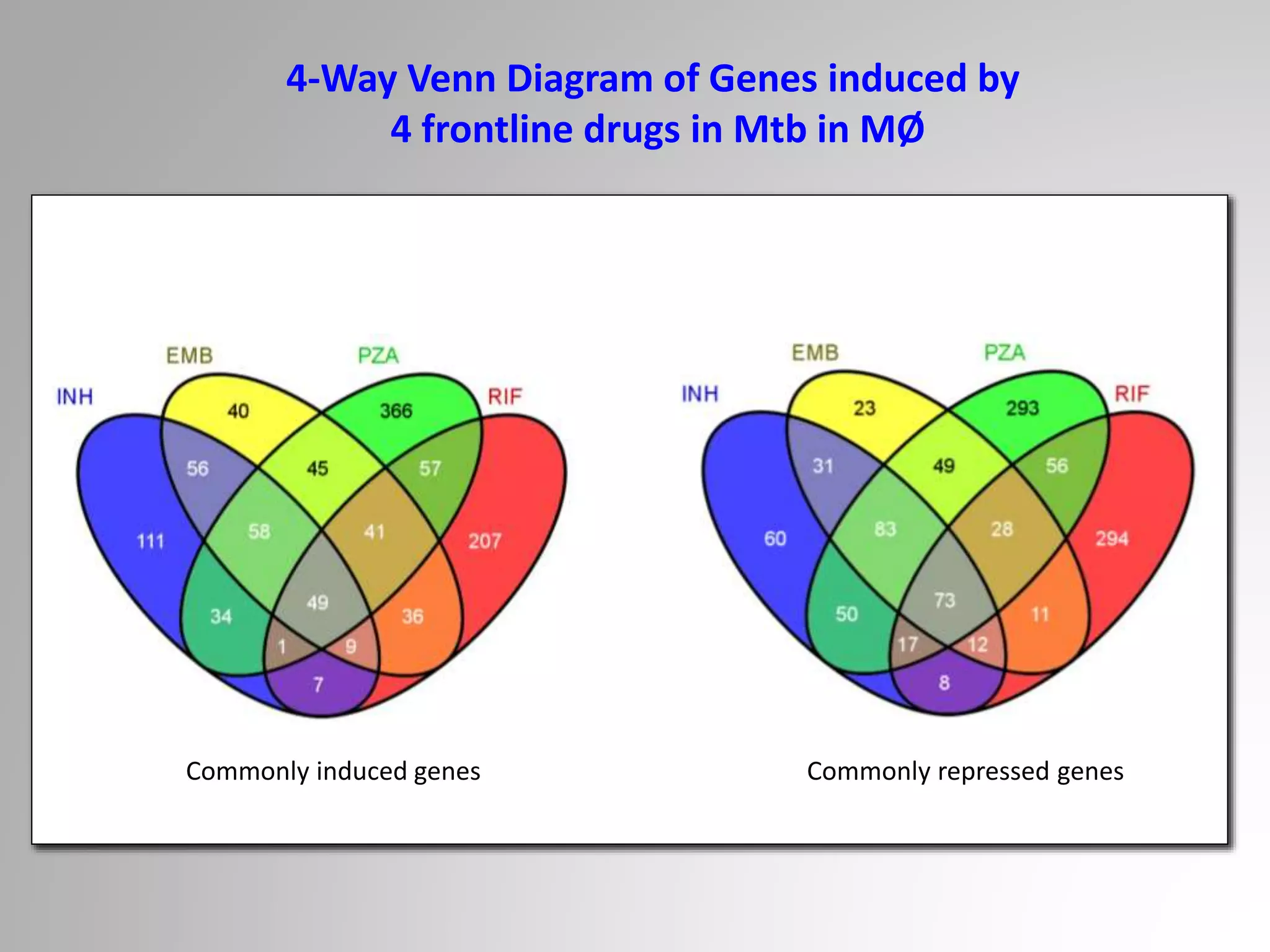
Commonly induced genes Commonly repressed genes
4-Way Venn Diagram of Genes induced by
4 frontline drugs in Mtb in MØ
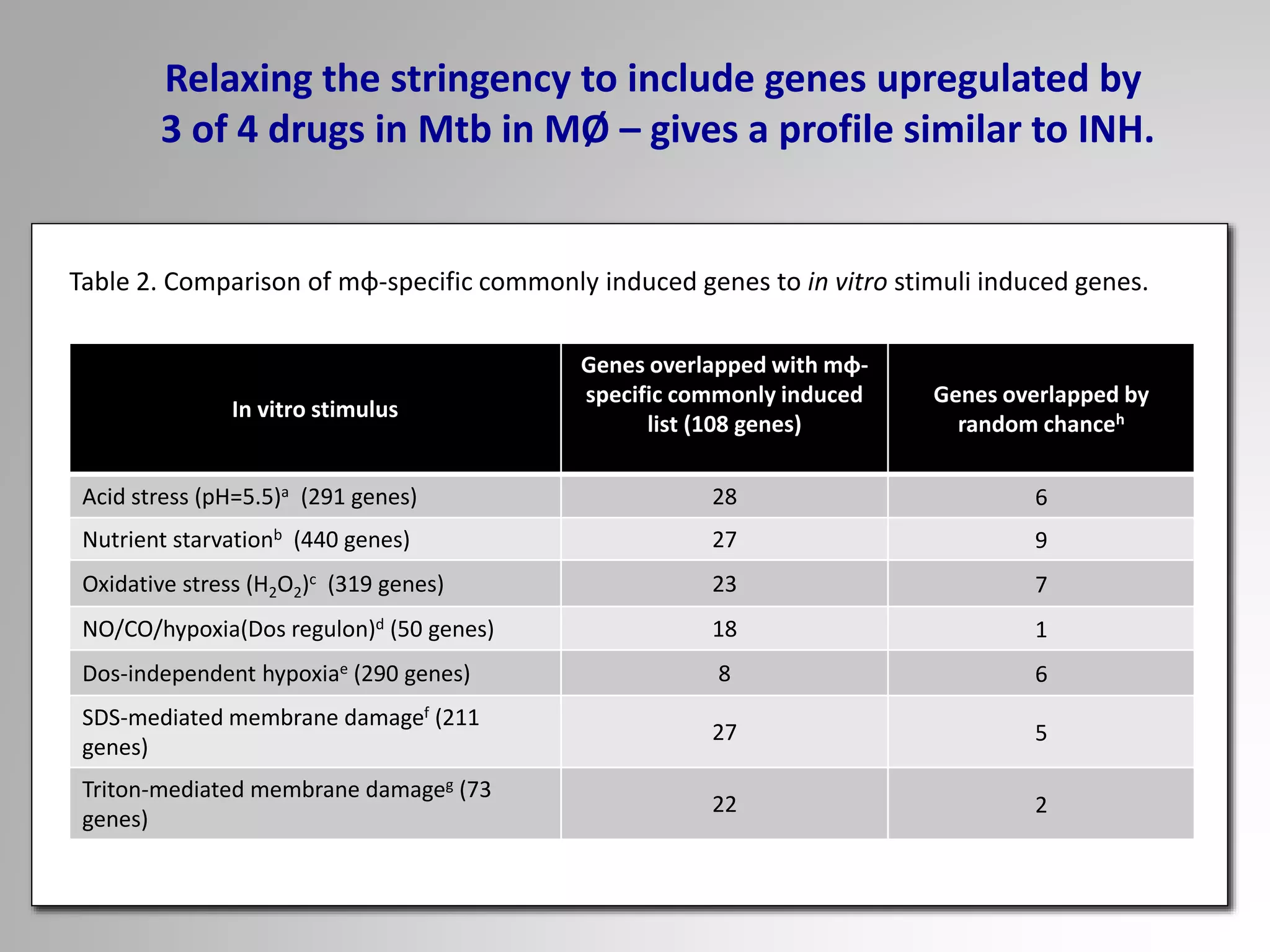
Table 2. Comparison of mφ-specific commonly induced genes to in vitro stimuli induced genes.
In vitro stimulus
Genes overlapped with mφ-
specific commonly induced
list (108 genes)
Genes overlapped by
random chanceh
Acid stress (pH=5.5)a (291 genes) 28 6
Nutrient starvationb (440 genes) 27 9
Oxidative stress (H2O2)c (319 genes) 23 7
NO/CO/hypoxia(Dos regulon)d (50 genes) 18 1
Dos-independent hypoxiae (290 genes) 8 6
SDS-mediated membrane damagef (211
genes)
27 5
Triton-mediated membrane damageg (73
genes)
22 2
Relaxing the stringency to include genes upregulated by
3 of 4 drugs in Mtb in MØ – gives a profile similar to INH.
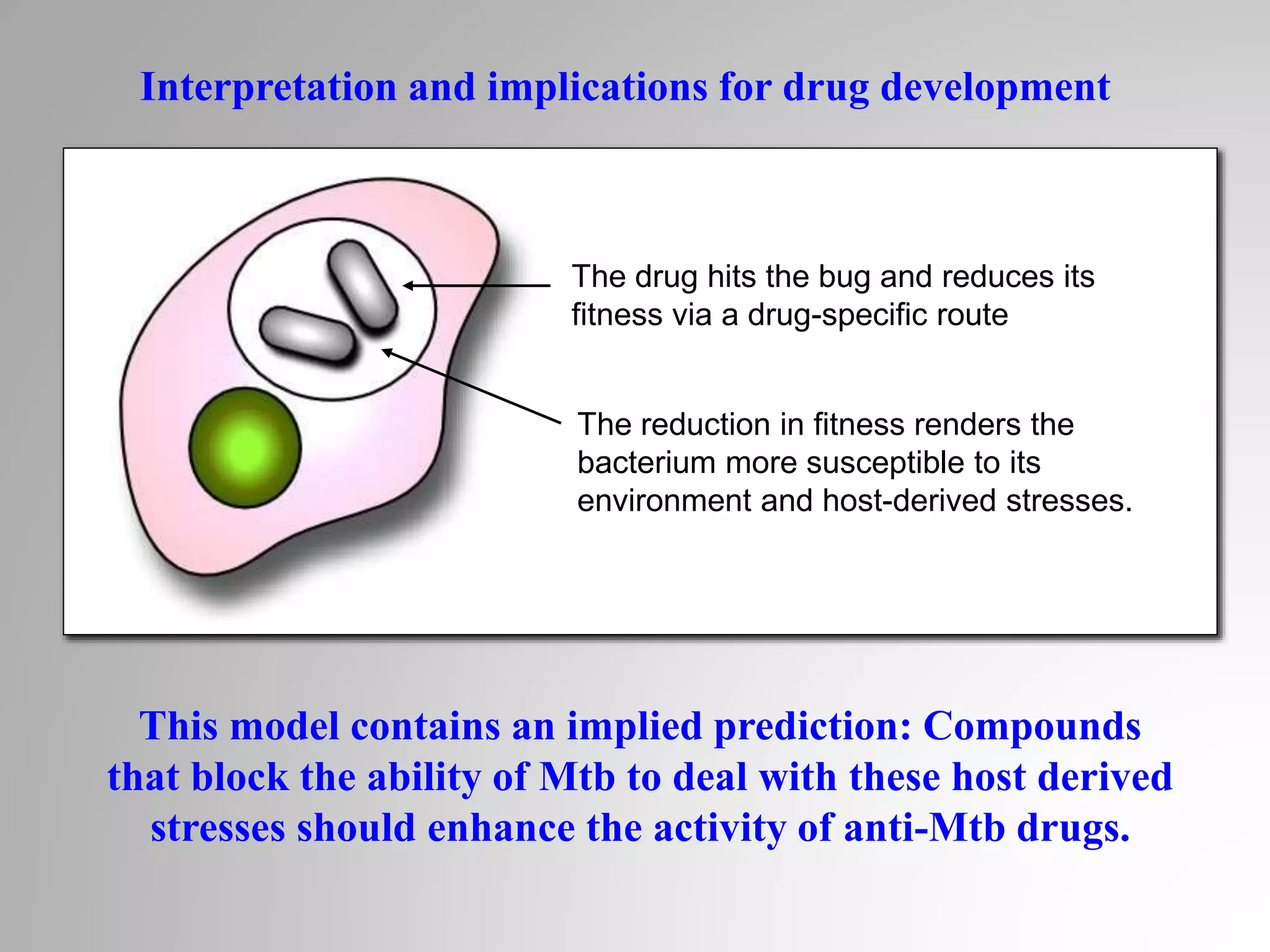
Interpretation and implications for drug development
The drug hits the bug and reduces its
fitness via a drug-specific route
The reduction in fitness renders the
bacterium more susceptible to its
environment and host-derived stresses.
This model contains an implied prediction: Compounds
that block the ability of Mtb to deal with these host derived
stresses should enhance the activity of anti-Mtb drugs.
Synergy: Exploitation of the host “stresses” that
are intensified by drug pressure renders Mtb
more susceptible to known drugs.
Identifies the potential for exploiting host-
derived pressures to enhance drug action in vivo
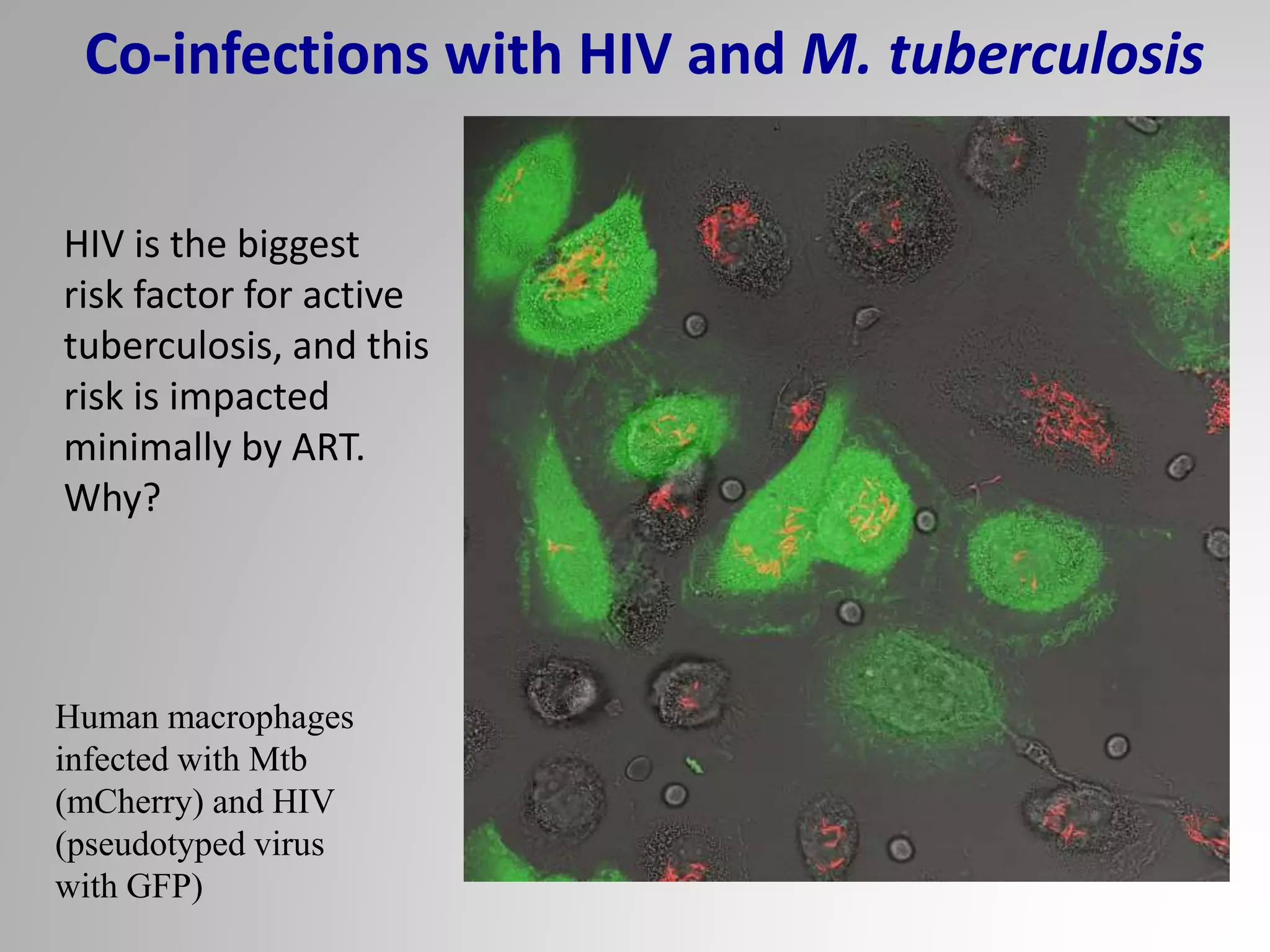
Human macrophages
infected with Mtb
(mCherry) and HIV
(pseudotyped virus
with GFP)
Co-infections with HIV and M. tuberculosis
HIV is the biggest
risk factor for active
tuberculosis, and this
risk is impacted
minimally by ART.
Why?
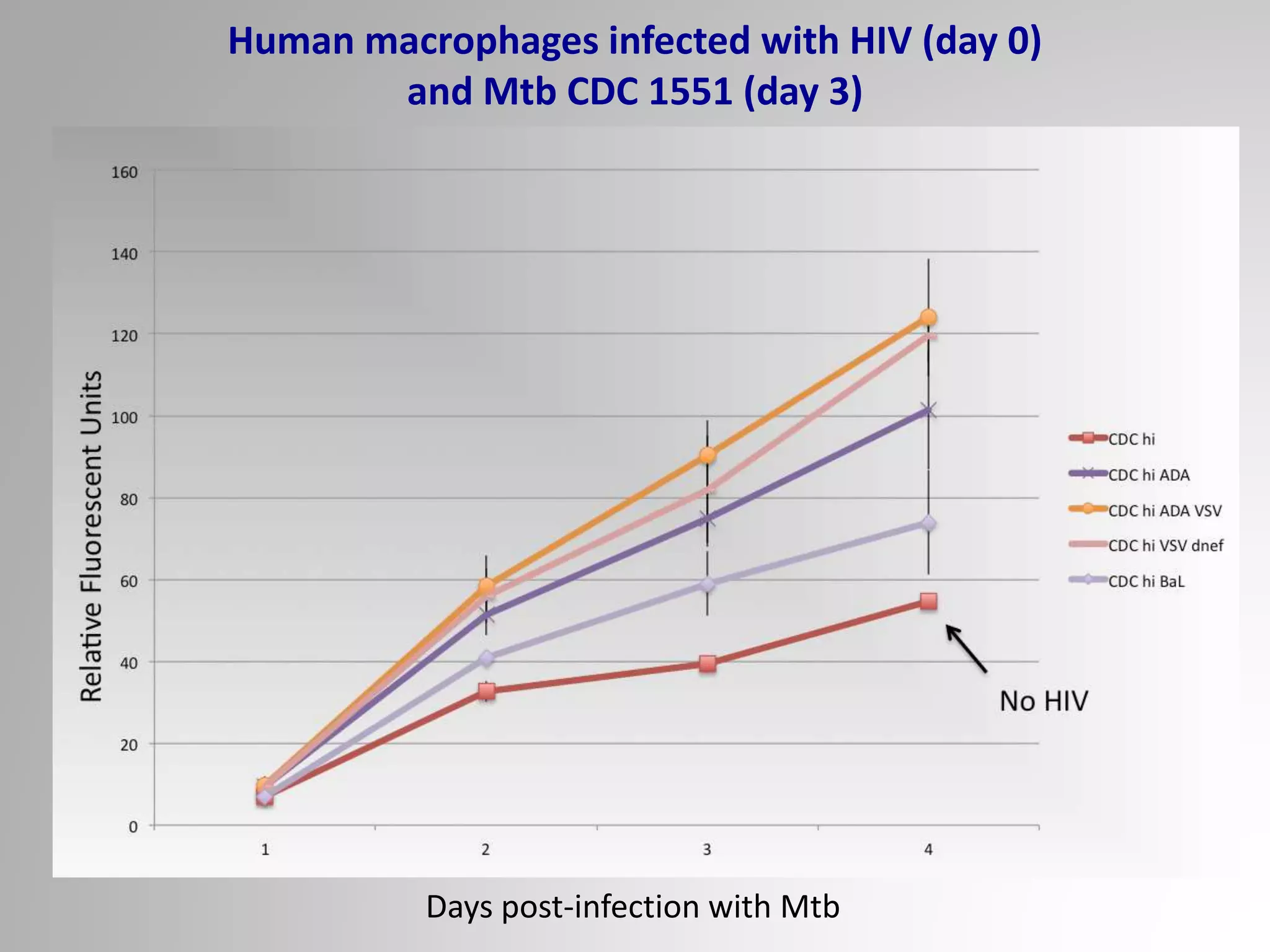
Human macrophages infected with HIV (day 0)
and Mtb CDC 1551 (day 3)
Days post-infection with Mtb
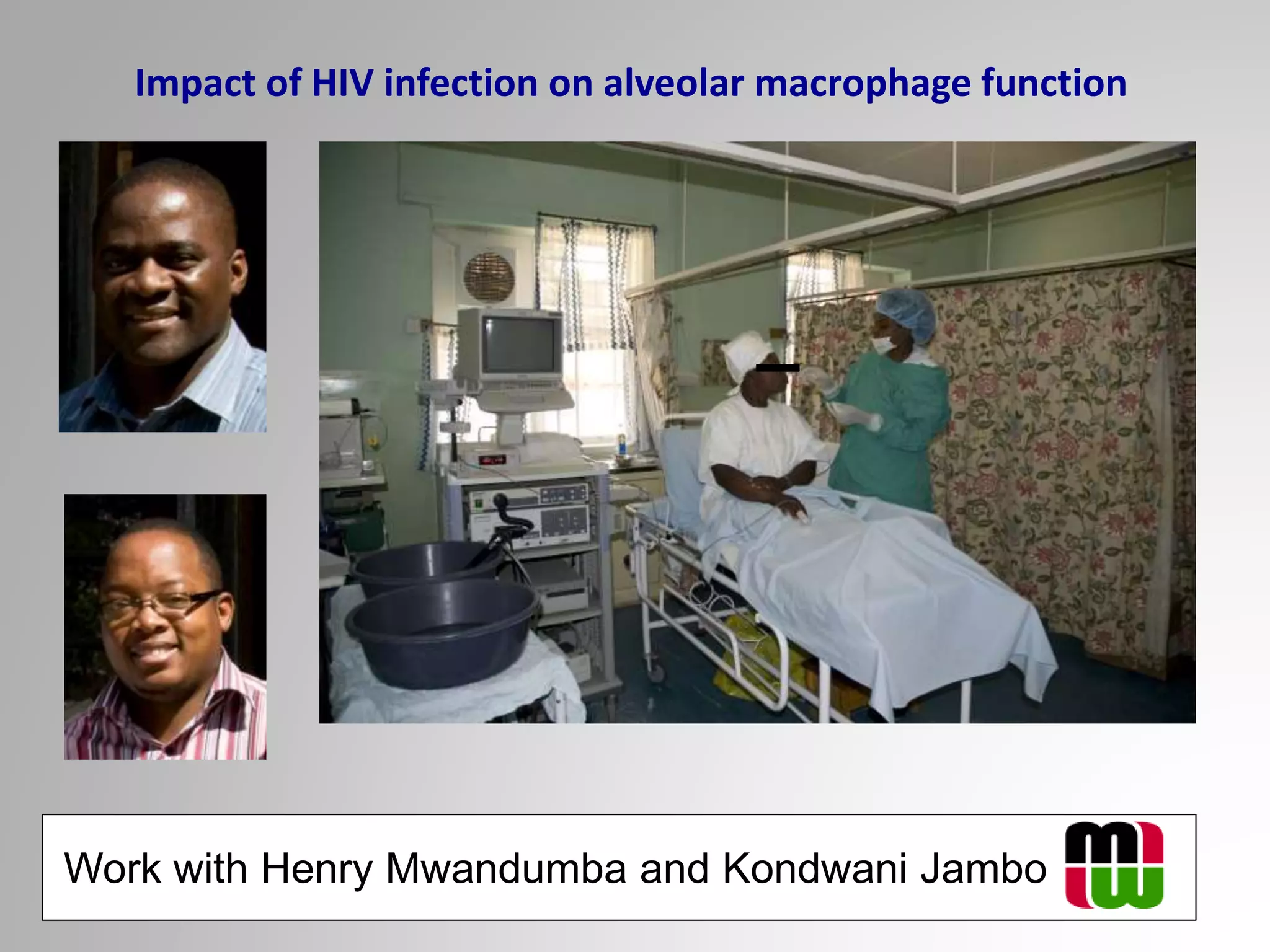
Work with Henry Mwandumba and Kondwani Jambo
Impact of HIV infection on alveolar macrophage function
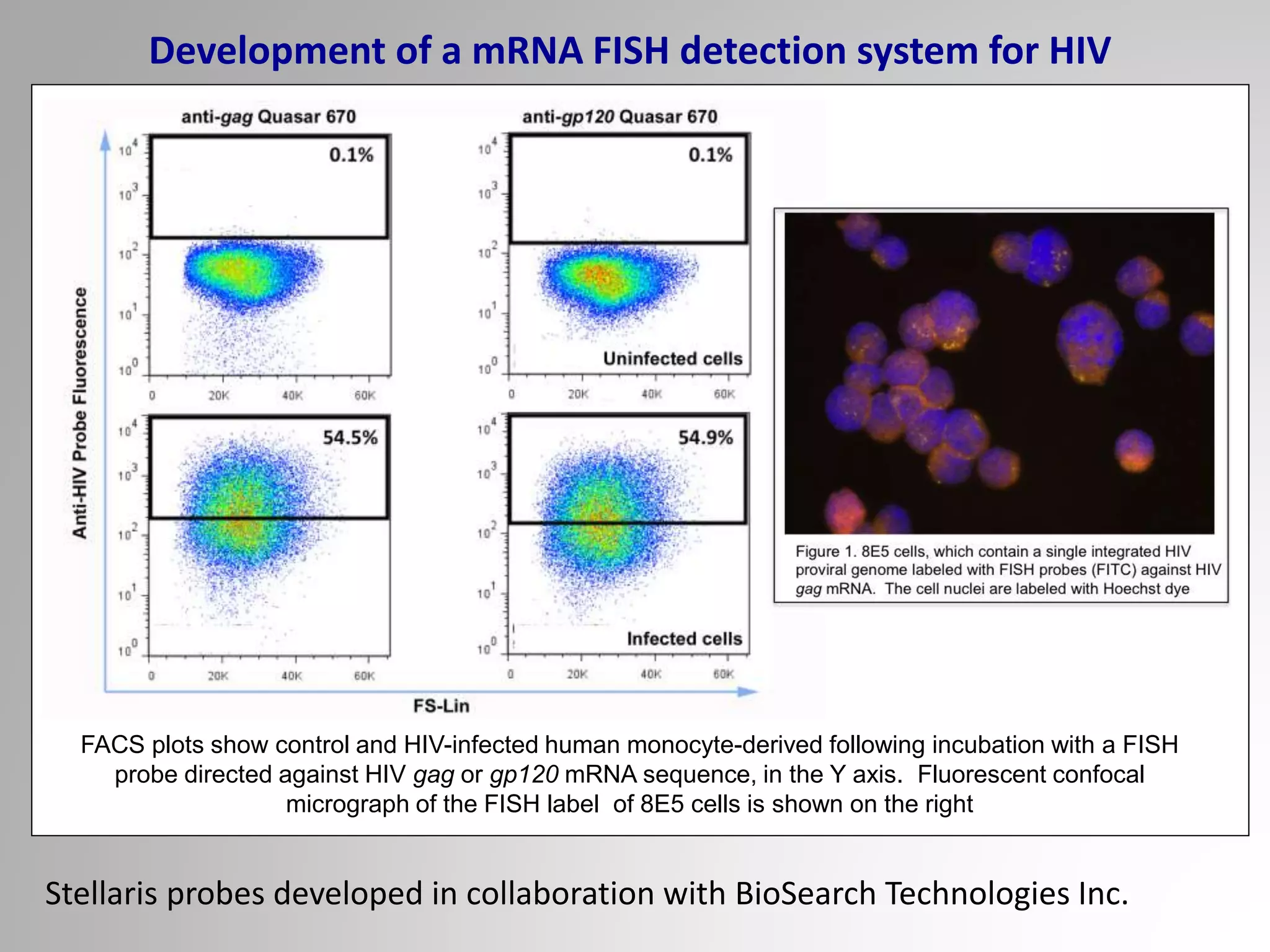
FACS plots show control and HIV-infected human monocyte-derived following incubation with a FISH
probe directed against HIV gag or gp120 mRNA sequence, in the Y axis. Fluorescent confocal
micrograph of the FISH label of 8E5 cells is shown on the right
Development of a mRNA FISH detection system for HIV
Stellaris probes developed in collaboration with BioSearch Technologies Inc.
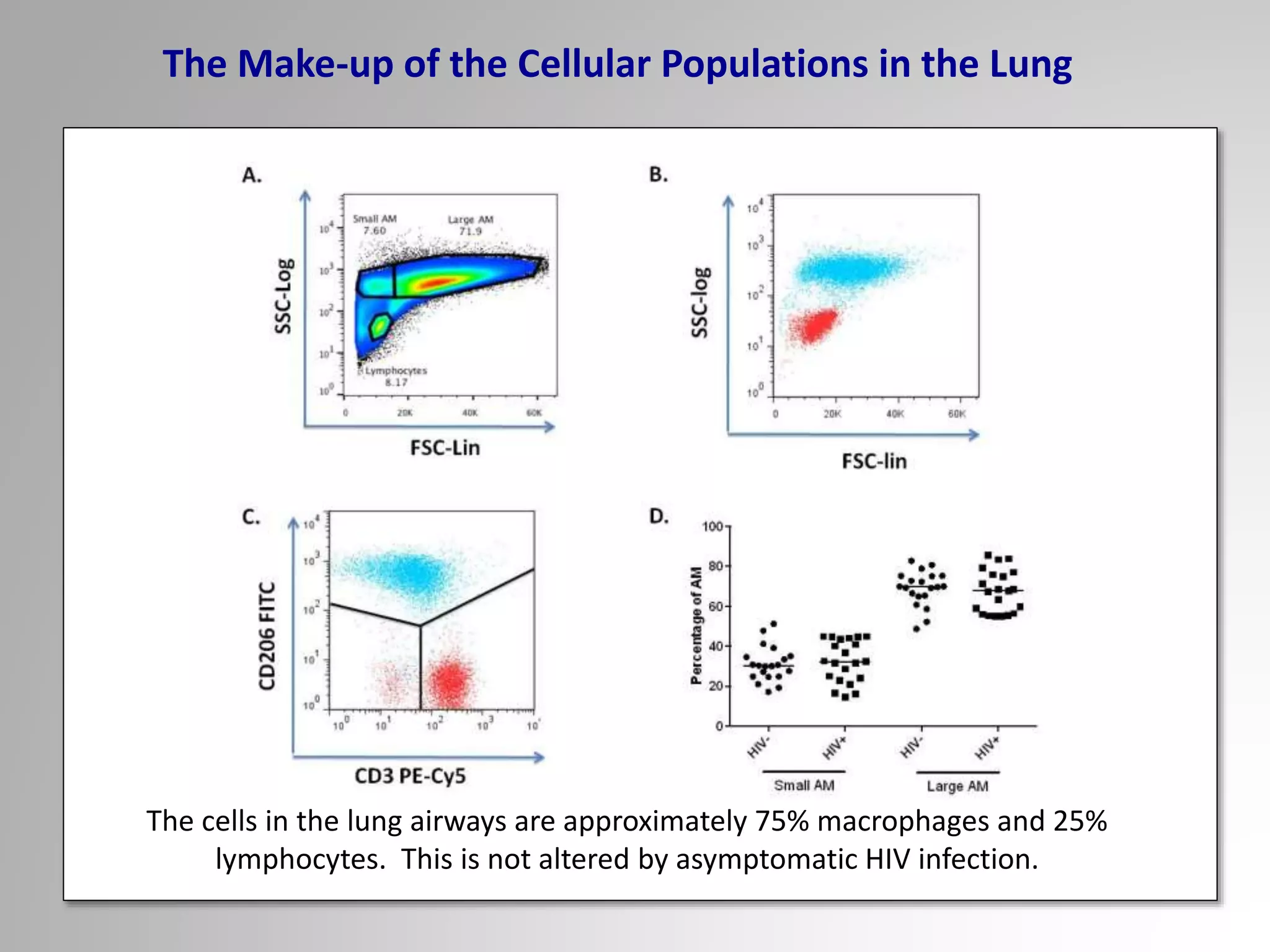
The Make-up of the Cellular Populations in the Lung
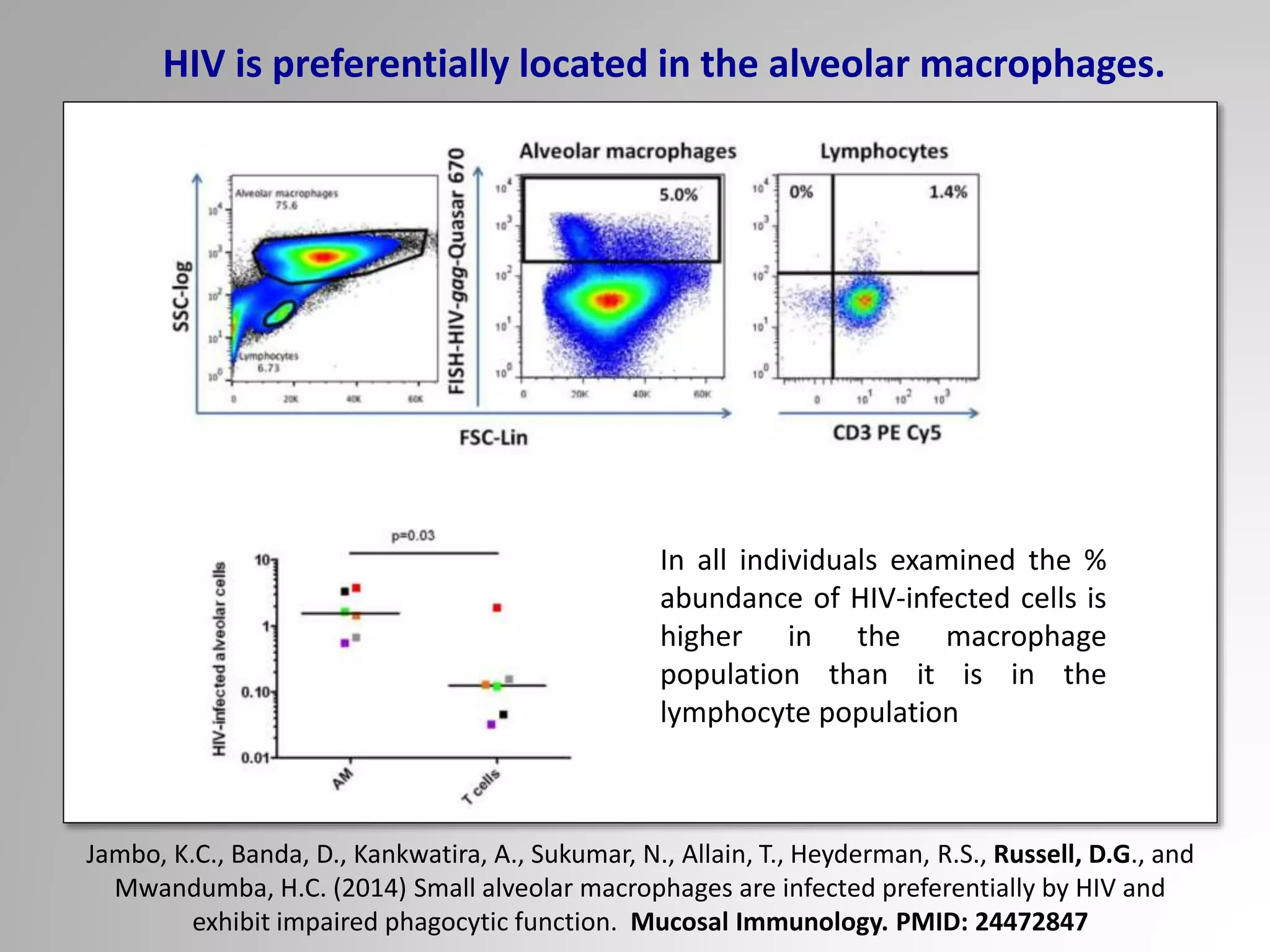
The cells in the lung airways are approximately 75% macrophages and 25%
lymphocytes. This is not altered by asymptomatic HIV infection.
HIV is preferentially located in the alveolar macrophages.
In all individuals examined the %
abundance of HIV-infected cells is
higher in the macrophage
population than it is in the
lymphocyte population
Jambo, K.C., Banda, D., Kankwatira, A., Sukumar, N., Allain, T., Heyderman, R.S., Russell, D.G., and
Mwandumba, H.C. (2014) Small alveolar macrophages are infected preferentially by HIV and
exhibit impaired phagocytic function. Mucosal Immunology. PMID: 24472847
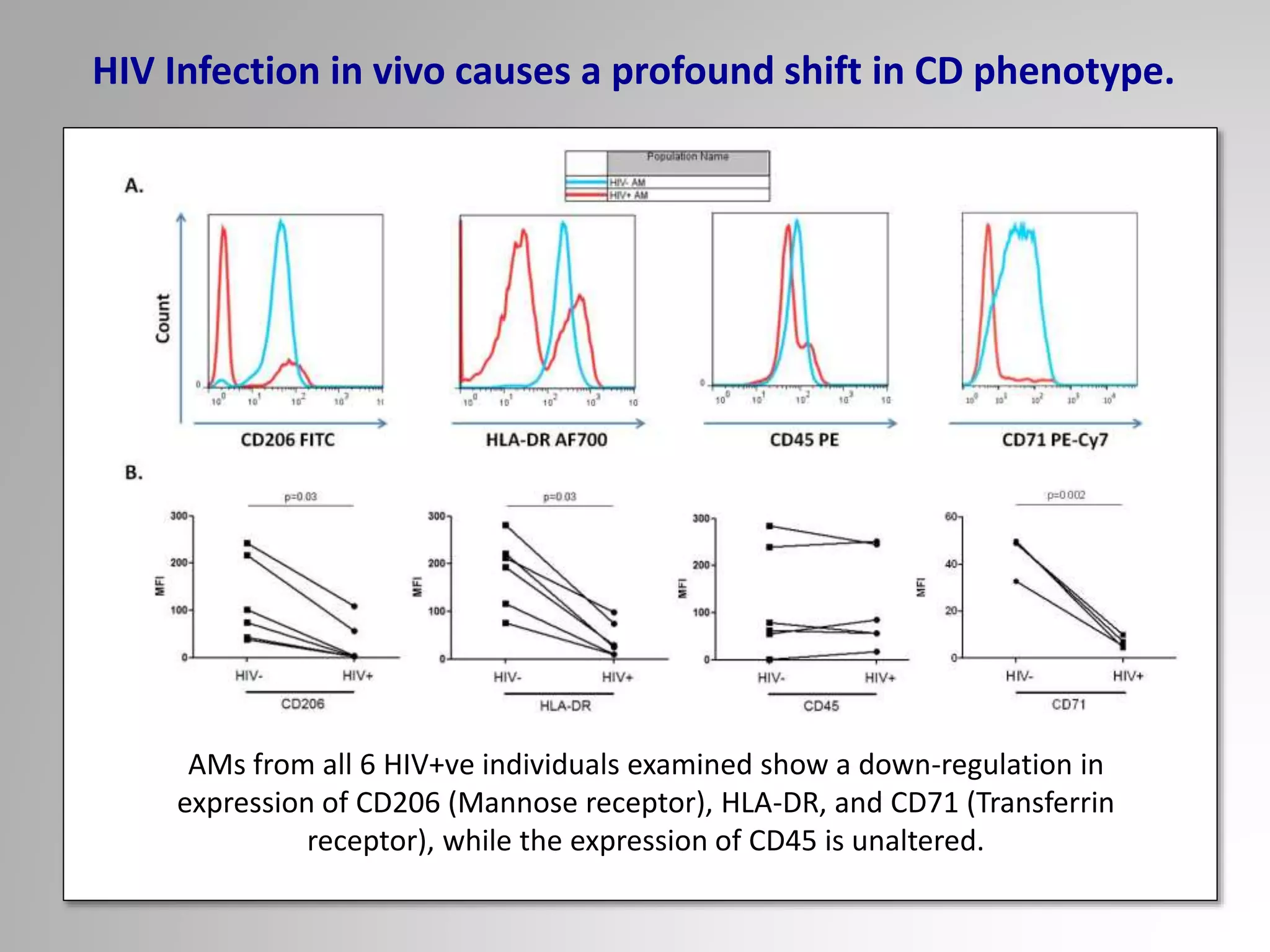
HIV Infection in vivo causes a profound shift in CD phenotype.
AMs from all 6 HIV+ve individuals examined show a down-regulation in
expression of CD206 (Mannose receptor), HLA-DR, and CD71 (Transferrin
receptor), while the expression of CD45 is unaltered.
Thanks to:
Henry Mwandumba and
Kondwani Jambo,
MLW Labs, Blantyre, Malawi.
The NIH: NIAID & NHLBI.
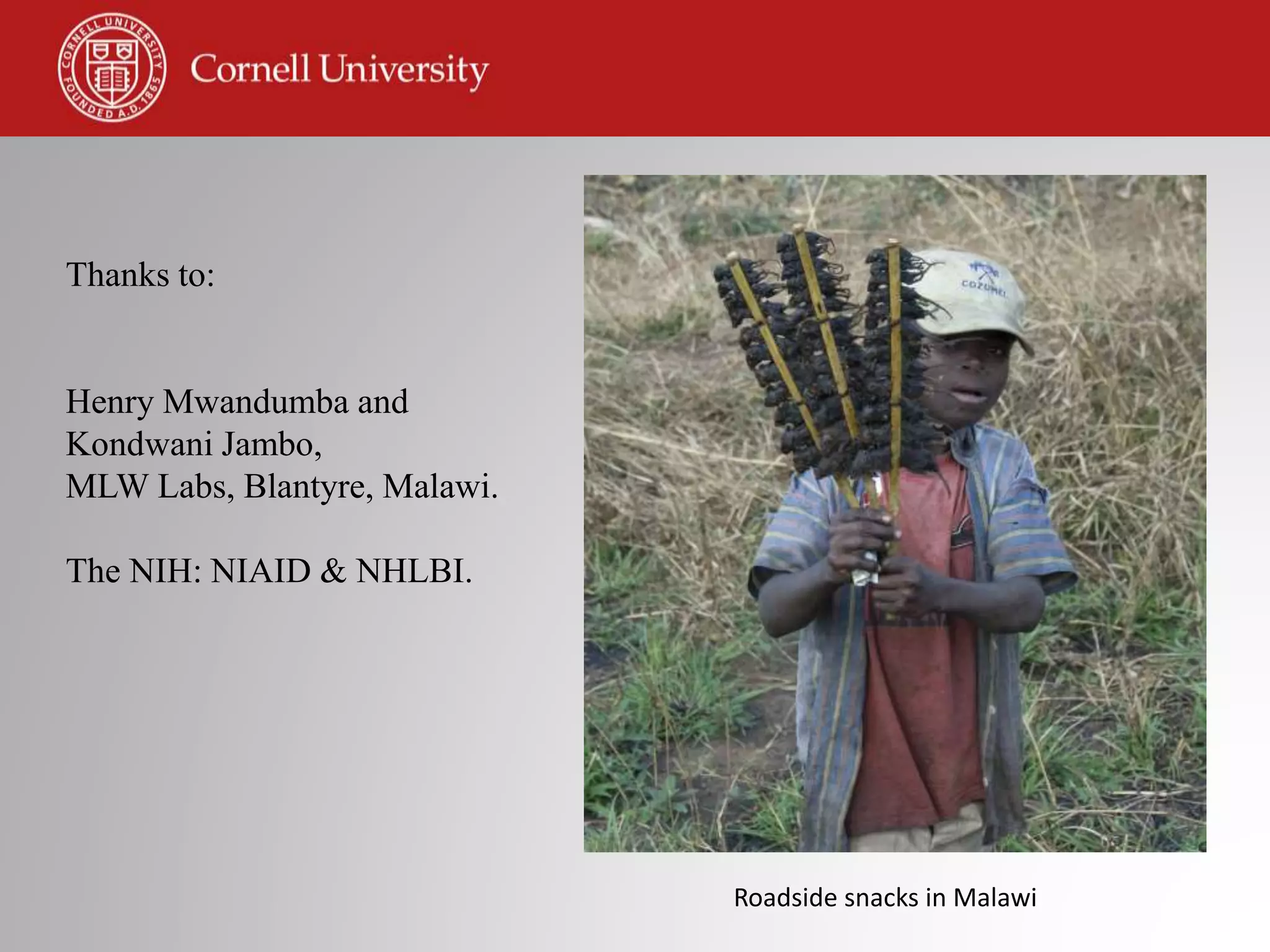
Roadside snacks in Malawi

David Russell Thaler Lecture

  • 1.
    The host/pathogen interplay in tuberculosisand HIV/TB co- infection. dgr8@cornell.edu M. tuberculosis (red) cholesterol (green), and fluorescent dextran (magenta) in macrophages
  • 2.
    1. The interplaybetween the immune environment and bacterial stress responses. 1. The contribution of host-derived stresses to the activity of anti-TB drugs 2. The impact of HIV on the host/pathogen balance and is significance to active TB. The Host Immune Environment
  • 3.
    Bacteria in Medium (+cytochalasin D) Bacteria on macrophages (+ cytochalasin D) Changes in gene expression induced by adherence Bacteria on macrophages (no cytochalasin D) Changes in gene expression induced by phagocytosis How does Mycobacterium detect and respond to the intracellular environment? Kyle Rohde Rohde, K, Abramovitch, R, and Russell, D.G. (2007) Mycobacterium tuberculosis invasion of macrophages: Linking bacterial gene expression to environmental cues. Cell, Host and Microbe. 2: 352-364
  • 4.
    A. Macrophage bound(+ cytochalasin D) B. 2 hours post internalization A. Microarray comparison between Mtb in BMMO medium (+ cyto D) and Mtb bound to the surface of macrophages in the presence of cytochalasin D for 30 minutes. B. Microarray comparison between Mtb in BMMO medium and Mtb bound to BMMO and incubated for 2 hours in the absence of cyto D. The bacteria show a transcriptional response on phagocytosis but not on binding to macrophages. upregulated downregulated Transcriptional response 2 hrs post-infection
  • 5.
    Production of ROIs Acidificationof the phagosome Production of RNIs Acquisition of lysosomal hydrolases, ie. proteinases lipases glucosidases nucleotidases Nutrient limitation Intracellular “cues” that Mtb may sense and utilize as its GPS system. Physiological imperatives v’s off-target responses
  • 6.
    Mycobacterium tuberculosis ReporterStrains environmentally- responsive promoter mCherry gfp constitutively-active promoter hspX: Hypoxia and NO rv2390c: [Cl-] and low pH Tan, S., Sukumar, N., Abramovitch, R.B., Parish, T., and Russell, D.G. (2013) Mycobacterium tuberculosis senses chloride and pH as indicators of the immune status of its host cell. PLoS Pathogens. 9 (4), e1003282 Shumin Tan Neelima Sukamar
  • 7.
    Erdman rv2390c’::GFP aSensor for phagosome maturation IgG-coated reporter beads in phagosomes ( senses [Cl-] ( senses pH] rpfD’::gfp - reporter Mtb in defined buffers As pH goes down, [Cl-] goes up. Both increase activity of the 2390c promoter activity. Bis(carboxylpropyl) biacridinium
  • 8.
    Erdman rv2390c’::GFP smyc’::mCherryinfection 35d WT mice IFNγ-/- mice smyc’::mCherryrpfD’::GFP phalloidinDAPI iNOS
  • 9.
    Erdman rv2390c’::GFP smyc’::mCherryinfection - WT vs. IFNγ-/- 14 days 28 days 35 days Time post-infection GFP/µm3 p<0.0001 p<0.0001 p<0.0001 IFNγ-/- mice infection WT mice infection
  • 10.
    Nitric Oxide isa major activator of DosR as shown by the reporter strain Erdman hspX’::GFP smyc’::mCherry GFP expression scored as a function of bacterial volume by Volocity (Perkin Elmer) Tan, S., Sukumar, N., Abramovitch, R.B., Parish, T., and Russell, D.G. (2013) Mycobacterium tuberculosis senses chloride and pH as indicators of the immune status of its host cell. PLoS Pathogens. 9 (4), e1003282
  • 11.
    Erdman hspX’::GFP smyc’::mCherryWT infection 28d WT mice IFNγ-/- mice smyc’::mCherryhspX’::GFP phalloidinDAPI
  • 12.
    Erdman hspX’::GFP smyc’::mCherryin mice GFP expression scored as a function of bacterial volume by Volocity (Perkin Elmer)
  • 13.
    RelativeGFPexpression 7 14 2128 35 42 rv2390c’::GFP hspX’:: GFP INNATE IMMUNE RESPONSES ADAPTIVE IMMUNE RESPONSES Kinetics of Expression of Reporter Strains in Mice Days post infection
  • 14.
    Harvest lungs 14,28,42,56days post-challenge 4 weeks Intranasal challenge with reporter strains 103 CFU in 25μl droplet Vaccination and Challenge: Procedure Intraperitoneal administration of 5 X 10⁵ heat killed M.tuberculosis or sterile PBS WT, IFNγ-/-, NOS2 -/-
  • 15.
    10000 100000 1000000 10000000 100000000 7 14 2128 42 56 TotalLungCFUS Days post infection Vaccinated PBS Kinetics of Colonization of Vaccinated vs Control C57BL/6 mice
  • 16.
    28 dpi Vaccinated Control 56dpi Lung Pathology in C57BL/6 mice: H&E Stain
  • 17.
    Vaccinated Day 28 Day 14 DAPIhspX’::GFP smyc’::mCherry phalloidin PBS Erdman hspX’::GFP smyc’::mCherry in C57BL/6 mice
  • 18.
    Quantitation of hspX’::GFPin C57BL/6 mice Higher hspX’::GFP expression as early as 14 dpi in vaccinated mice
  • 19.
    DAPI hspX’::GFP smyc’::mCherry phalloidin iNOS Erdman hspX’::GFP, smyc’::mCherryin C57BL/6 mice: iNOS Staining VaccinatedPBS Day 28 Day 14
  • 20.
    Quantitation of hspX’::GFPin iNOS + and iNOS – lung regions D14 pi PBS Vac iNOS - Vac iNOS + p < 0.0001 N.S.
  • 21.
    WT - PBSWT - Vaccinated Erdman rv2390c’::GFP,smyc’::mCherry-WT Day 14 DAPI rv2390c’::GFP smyc’::mCherry phalloidin
  • 22.
    PBS Vac Day 14 PBSVac Day 28 PBS Vac Day 42 PBS Vac Day 56 Quantitation of rv2390c’::GFP in C57BL/6 mice Lower rv2390c’::GFP expression in vaccinated mice p < 0.0001 p < 0.0001 p < 0.0001 p < 0.0001
  • 23.
    Erdman hspX’::GFP smyc’::mCherry WT- PBS WT - vac Day 14 DAPI hspX’::GFP smyc’::mCherry phalloidin Day 28 IFNγ-/- - vacIFNγ-/- - PBS NOS2-/- - vac
  • 24.
    Quantitation of ErdmanhspX’::GFP smyc’::mCherry
  • 25.
    M. smegmatis expressing ssB::GFP movieby Bree Aldridge, Tufts U. Real-time Replication Reporter
  • 26.
    The % Foci-PositiveBacilli is inversely proportional to the Immune Response. Number of foci-positive Mtb scored at 14 days post challenge infection
  • 27.
    PBS Vac INH PBS Vac RIF DrugSusceptibility Assay: D14 pi p < 0.0001 N.S. Increased INH resistance early on in vaccinated mice
  • 28.
    What do thereporter strains tell us? 1. DosR reporter: Induction correlates well with the acquired immune response and the presence of IFN-g and iNOS. Expression is accelerated by vaccination. 2. Drug sensitivity: Sensitivity to INH in Mtb from 14d infection is higher in naive than vaccinated mice implying that these bacteria are more actively replicating. 3. ssB::GFP reporter: Scoring of replication forks indicates that replication correlates inversely with the development of the acquired immune response and is dependent on the presence of IFN-g. 3. Chloride reporter: induced early but trends down as the acquired immune response develops. Is not induced in immune incompetent mice so early neutrophil activity? Inverse correlation with granuloma establishment?
  • 29.
    + drug Yancheng Liu Canwe identify the host contribution to drug-induced death in the host?
  • 30.
    Bacteria exposed to drugsinside cells Bacteria exposed to drugs in liquid culture Bacteria exposed to INH ETH PYR RIF at concentrations that induce 1/2 log death at 48 hrs (2-5 X MIC) Bacterial RNA isolated at 4hr and 24 hr time periods post-exposure to each drug and analyzed by microarray Transcriptional profile of M. tuberculosis exposed to a panel of 4 different drugs The role of environmental pressure(s) in drug-mediated killing of Mtb.
  • 31.
    1.0E+05 1.0E+06 1.0E+07 0 1 23 4 5 6 7 8 9 10 CFU/ml DMSO INH RIF PZA EMB DPI Bacterial CFUs following treatment of intracellular Mtb with front-line drugs. Macrophages were infected 5 days previously, treated with drug for 4 and 24 hrs, then isolated and processed for RNA purification. DMSO INH (0.2 mg/ml) RIF (0.4 mg/ml) PZA (200 mg/ml) EMB (12 mg/ml) Impact of Drug Pressure on Survival of Intracellular Mtb. Drug addition RNA isolation
  • 32.
    196 248128 Induced by INHin broth Induced by INH in mØ Expression ratio in broth ExpressionratioinmØ fadE23 fadE24 fbpC accD6 rv1772 iniA iniC iniB efpA kasA kasB rv1592c fabD acpM ahpC rv0448c rv0449c mpt70 mpt83 MT2941 rv2874 rv3290c Macrophage-specific response Focusing on INH: One can resolve both drug-specific responses (common to MØ and broth) and MØ-specific-responses observed only in the MØ
  • 33.
    In vitro stimulus Genesoverlapped with mφ- specific INH induced list (146 genes) Genes overlapped by random chanceh Acid stress (pH=5.5)a (291 genes) 35 8 Nutrient starvationb (440 genes) 37 12 Oxidative stress (H2O2)c (319 genes) 24 9 NO/CO/hypoxia(Dos regulon)d (50 genes) 16 1 Dos-independent hypoxiae (290 genes) 14 8 SDS-mediated membrane damagef (211 genes) 30 6 Triton-mediated membrane damageg (73 genes) 20 2 Table 1. Comparison of mφ-specific INH induced genes to in vitro stimuli induced genes. The MØ-specific responses are focused primarily on known host-cell mediated defense stresses.
  • 34.
    Commonly induced genesCommonly repressed genes 4-Way Venn Diagram of Genes induced by 4 frontline drugs in Mtb in MØ
  • 35.
    Table 2. Comparisonof mφ-specific commonly induced genes to in vitro stimuli induced genes. In vitro stimulus Genes overlapped with mφ- specific commonly induced list (108 genes) Genes overlapped by random chanceh Acid stress (pH=5.5)a (291 genes) 28 6 Nutrient starvationb (440 genes) 27 9 Oxidative stress (H2O2)c (319 genes) 23 7 NO/CO/hypoxia(Dos regulon)d (50 genes) 18 1 Dos-independent hypoxiae (290 genes) 8 6 SDS-mediated membrane damagef (211 genes) 27 5 Triton-mediated membrane damageg (73 genes) 22 2 Relaxing the stringency to include genes upregulated by 3 of 4 drugs in Mtb in MØ – gives a profile similar to INH.
  • 36.
    Interpretation and implicationsfor drug development The drug hits the bug and reduces its fitness via a drug-specific route The reduction in fitness renders the bacterium more susceptible to its environment and host-derived stresses. This model contains an implied prediction: Compounds that block the ability of Mtb to deal with these host derived stresses should enhance the activity of anti-Mtb drugs.
  • 37.
    Synergy: Exploitation ofthe host “stresses” that are intensified by drug pressure renders Mtb more susceptible to known drugs. Identifies the potential for exploiting host- derived pressures to enhance drug action in vivo
  • 38.
    Human macrophages infected withMtb (mCherry) and HIV (pseudotyped virus with GFP) Co-infections with HIV and M. tuberculosis HIV is the biggest risk factor for active tuberculosis, and this risk is impacted minimally by ART. Why?
  • 39.
    Human macrophages infectedwith HIV (day 0) and Mtb CDC 1551 (day 3) Days post-infection with Mtb
  • 40.
    Work with HenryMwandumba and Kondwani Jambo Impact of HIV infection on alveolar macrophage function
  • 41.
    FACS plots showcontrol and HIV-infected human monocyte-derived following incubation with a FISH probe directed against HIV gag or gp120 mRNA sequence, in the Y axis. Fluorescent confocal micrograph of the FISH label of 8E5 cells is shown on the right Development of a mRNA FISH detection system for HIV Stellaris probes developed in collaboration with BioSearch Technologies Inc.
  • 42.
    The Make-up ofthe Cellular Populations in the Lung The cells in the lung airways are approximately 75% macrophages and 25% lymphocytes. This is not altered by asymptomatic HIV infection.
  • 43.
    HIV is preferentiallylocated in the alveolar macrophages. In all individuals examined the % abundance of HIV-infected cells is higher in the macrophage population than it is in the lymphocyte population Jambo, K.C., Banda, D., Kankwatira, A., Sukumar, N., Allain, T., Heyderman, R.S., Russell, D.G., and Mwandumba, H.C. (2014) Small alveolar macrophages are infected preferentially by HIV and exhibit impaired phagocytic function. Mucosal Immunology. PMID: 24472847
  • 44.
    HIV Infection invivo causes a profound shift in CD phenotype. AMs from all 6 HIV+ve individuals examined show a down-regulation in expression of CD206 (Mannose receptor), HLA-DR, and CD71 (Transferrin receptor), while the expression of CD45 is unaltered.
  • 45.
    Thanks to: Henry Mwandumbaand Kondwani Jambo, MLW Labs, Blantyre, Malawi. The NIH: NIAID & NHLBI. Roadside snacks in Malawi