Dijkstra’s Algorithm
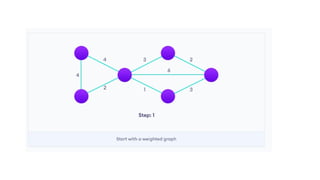
• Given a graph and a source vertex in the graph, find the
shortest paths from the source to all vertices in the given
graph.
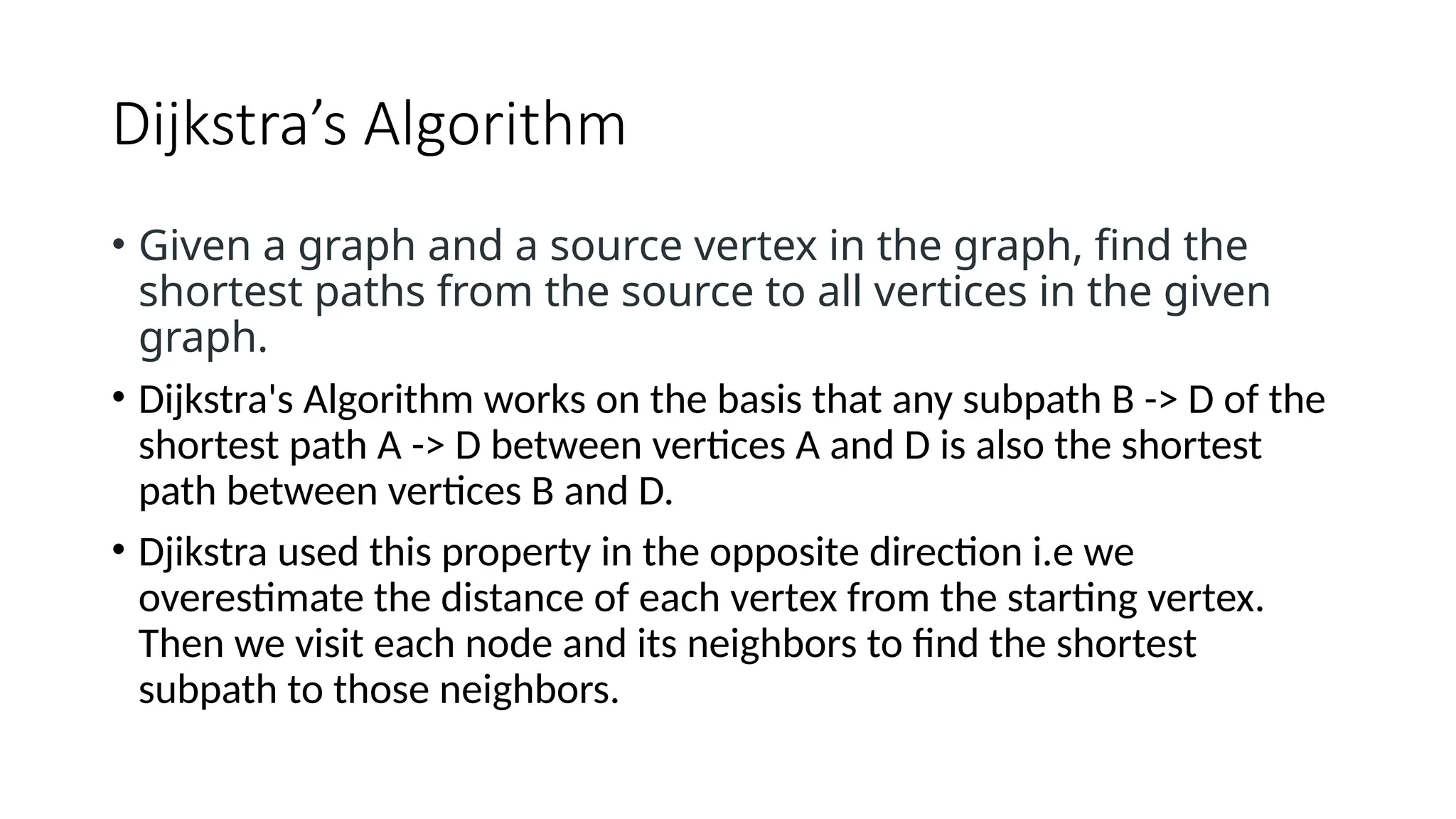
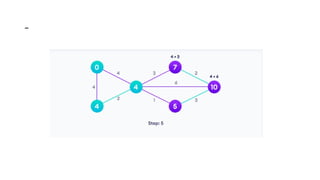
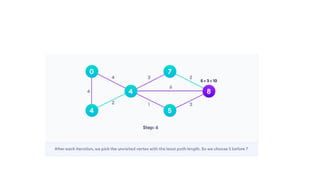
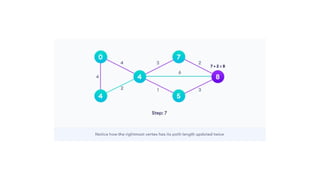
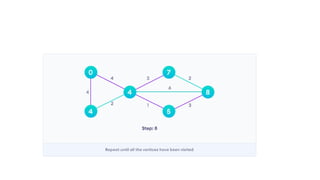
• Dijkstra's Algorithm works on the basis that any subpath B -> D of the
shortest path A -> D between vertices A and D is also the shortest
path between vertices B and D.
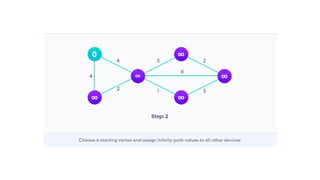
• Djikstra used this property in the opposite direction i.e we
overestimate the distance of each vertex from the starting vertex.
Then we visit each node and its neighbors to find the shortest
subpath to those neighbors.
function dijkstra(G, S)
for each vertex V in G
distance[V] <- infinite
previous[V] <- NULL
If V != S, add V to Priority Queue Q
distance[S] <- 0
while Q IS NOT EMPTY
U <- Extract MIN from Q
for each unvisited neighbour V of U
tempDistance <- distance[U] + edge_weight(U, V)
if tempDistance < distance[V]
distance[V] <- tempDistance
previous[V] <- U
return distance[], previous[]
-
Dijkstra's Algorithm Complexity
• Time Complexity: O(E Log V)
• where, E is the number of edges and V is the number of vertices.
• Space Complexity: O(V)
Dijkstra's Algorithm Applications
• To find the shortest path
• In social networking applications
• In a telephone network
• To find the locations in the map

Data structures and algorithms Dijkstra’s Algorithm (1).pptx

  • 1.
    Dijkstra’s Algorithm • Givena graph and a source vertex in the graph, find the shortest paths from the source to all vertices in the given graph. • Dijkstra's Algorithm works on the basis that any subpath B -> D of the shortest path A -> D between vertices A and D is also the shortest path between vertices B and D. • Djikstra used this property in the opposite direction i.e we overestimate the distance of each vertex from the starting vertex. Then we visit each node and its neighbors to find the shortest subpath to those neighbors.
  • 2.
    function dijkstra(G, S) foreach vertex V in G distance[V] <- infinite previous[V] <- NULL If V != S, add V to Priority Queue Q distance[S] <- 0 while Q IS NOT EMPTY U <- Extract MIN from Q for each unvisited neighbour V of U tempDistance <- distance[U] + edge_weight(U, V) if tempDistance < distance[V] distance[V] <- tempDistance previous[V] <- U return distance[], previous[]
  • 6.
  • 10.
    Dijkstra's Algorithm Complexity •Time Complexity: O(E Log V) • where, E is the number of edges and V is the number of vertices. • Space Complexity: O(V) Dijkstra's Algorithm Applications • To find the shortest path • In social networking applications • In a telephone network • To find the locations in the map