Introduction to
Machine Learning -
Marketing Use Case
Greg Werner / 2/8/2018
2
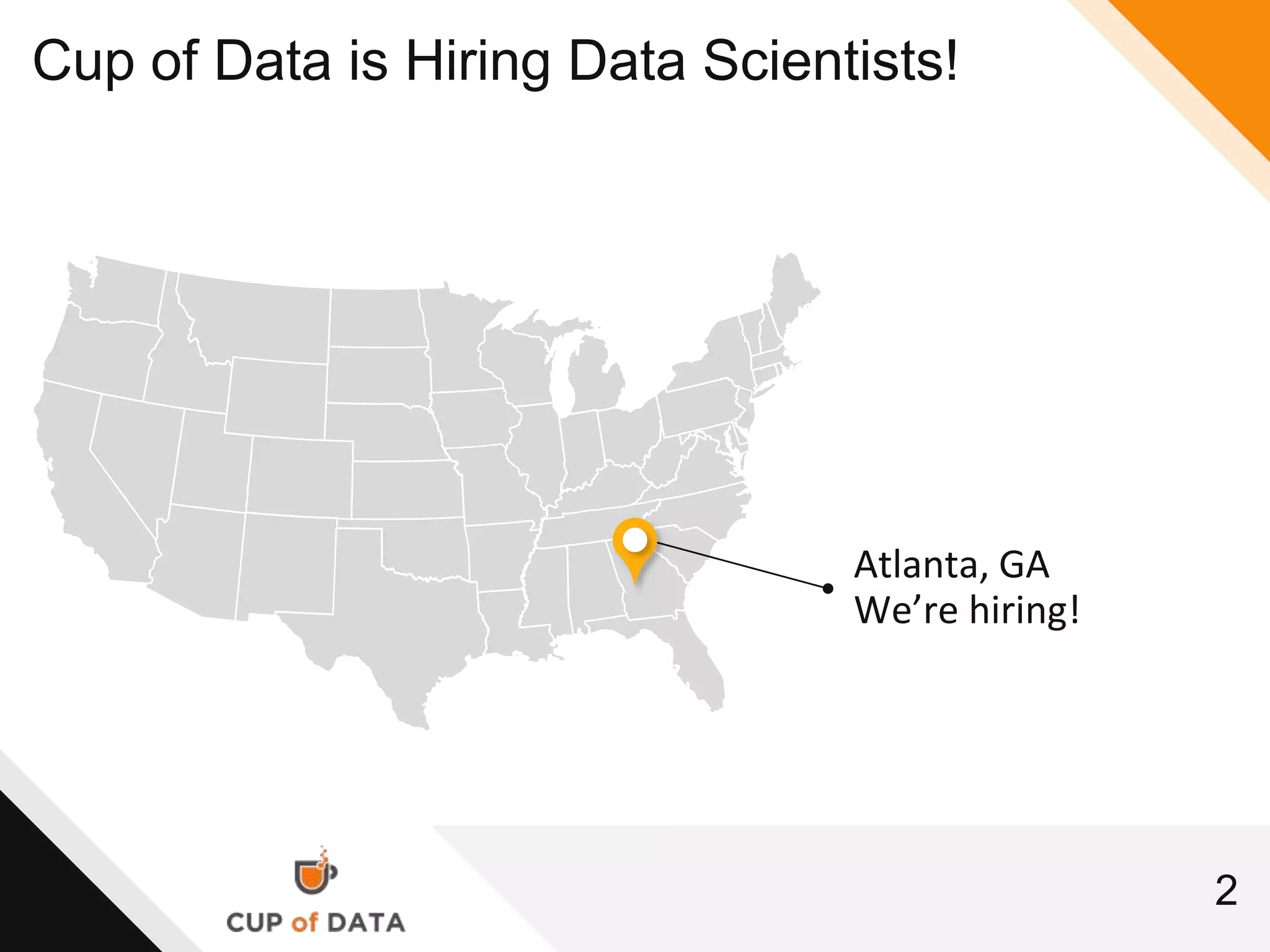
Cup of Data is Hiring Data Scientists!
Atlanta, GA
We’re hiring!
3
Basic Agenda
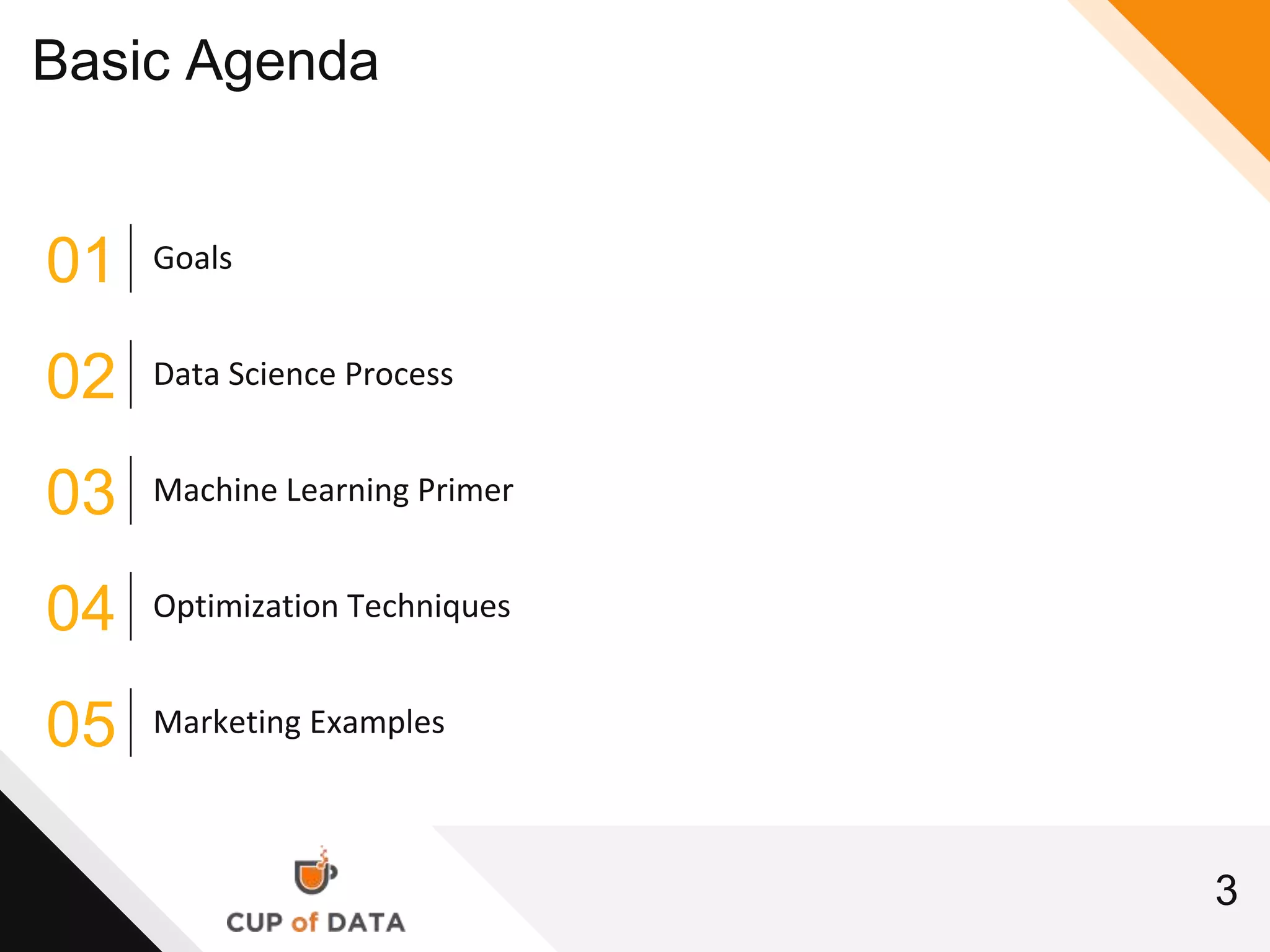
01 Goals
02 Data Science Process
03 Machine Learning Primer
04 Optimization Techniques
05 Marketing Examples
4
Timeline Agenda
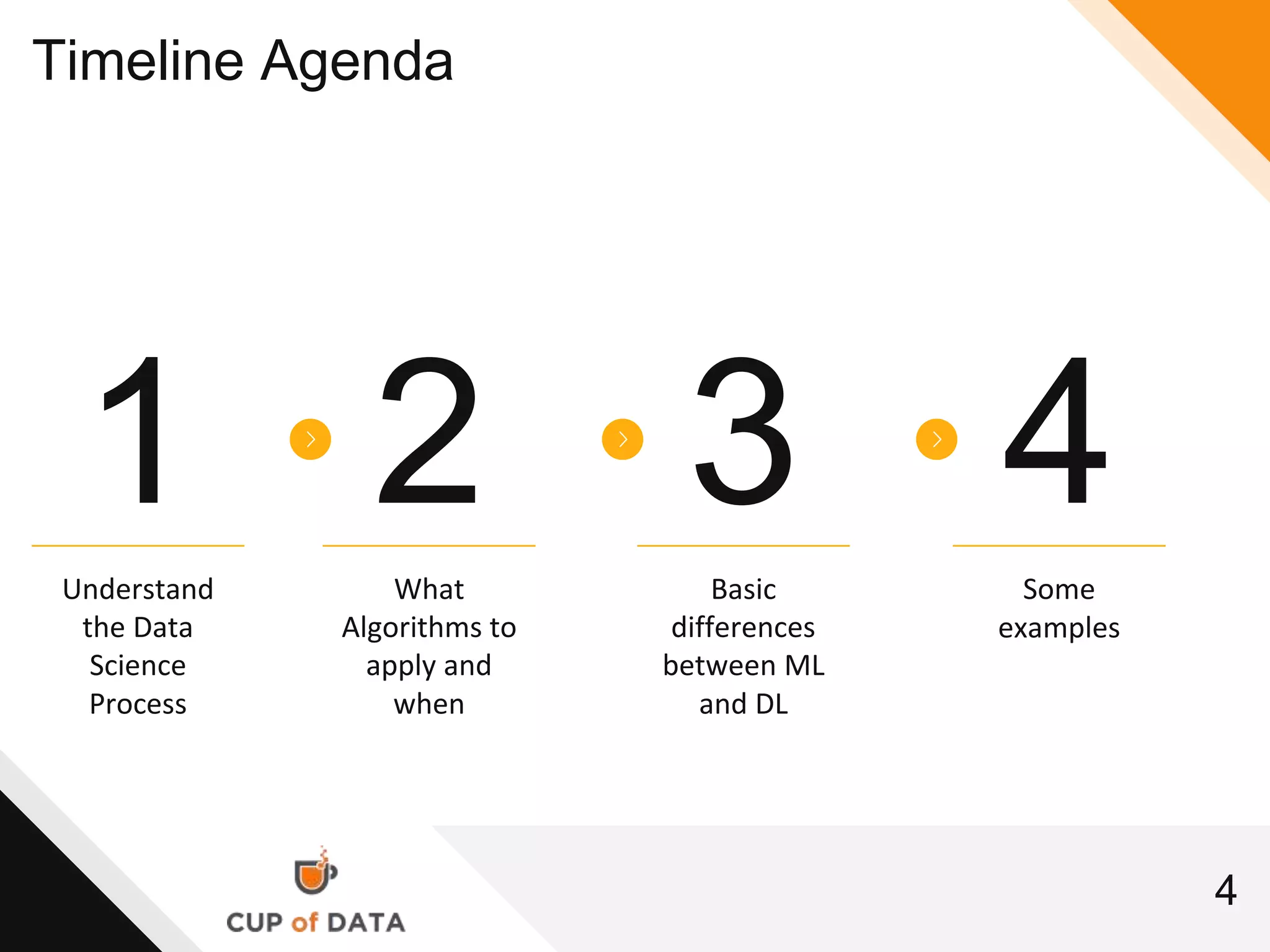
1Understand
the Data
Science
Process
2What
Algorithms to
apply and
when
3Basic
differences
between ML
and DL
4Some
examples
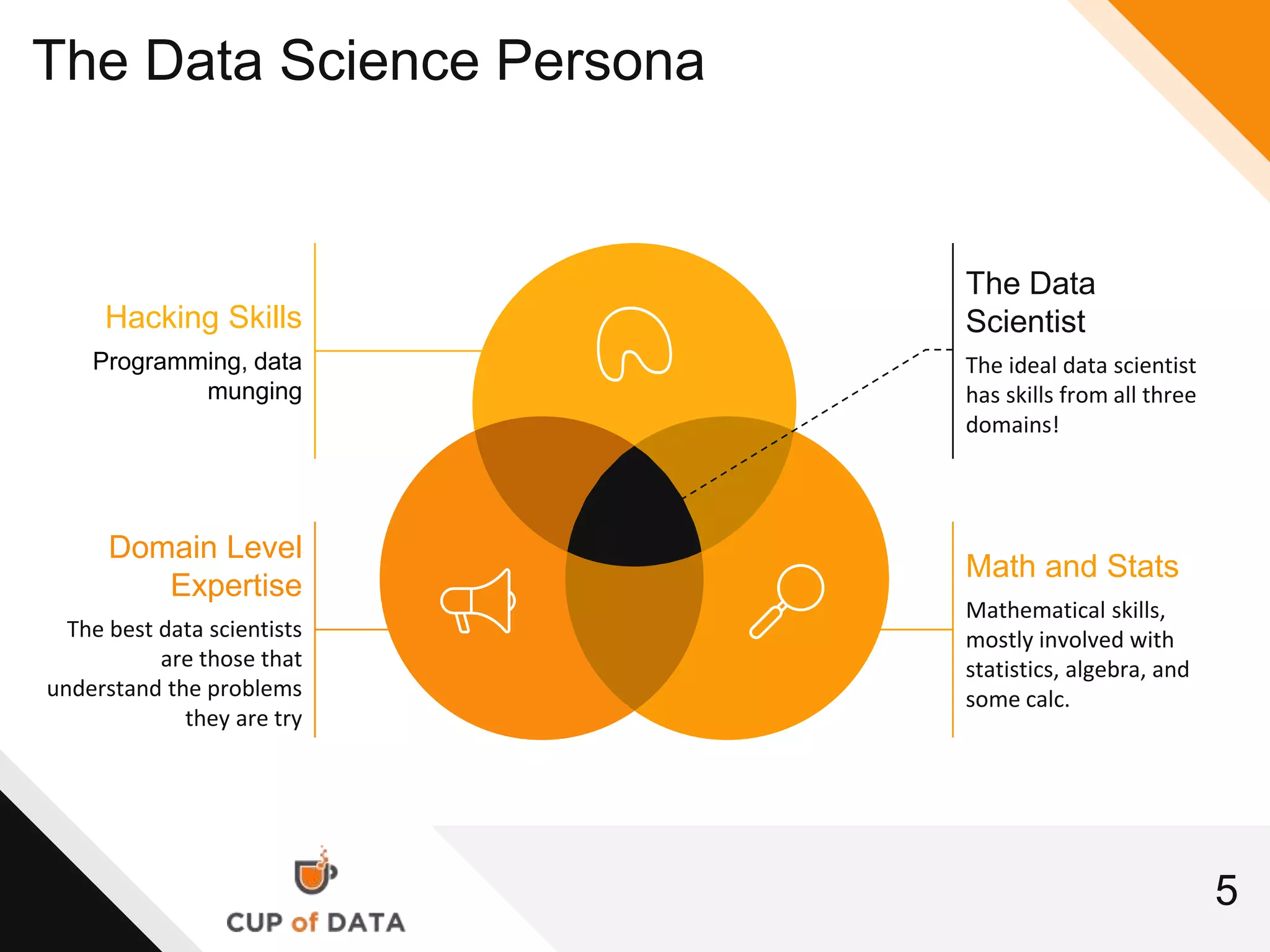
Hacking Skills
Programming, data
munging
Domain Level
Expertise
The best data scientists
are those that
understand the problems
they are try
5
The Data Science Persona
Math and Stats
Mathematical skills,
mostly involved with
statistics, algebra, and
some calc.
The Data
Scientist
The ideal data scientist
has skills from all three
domains!
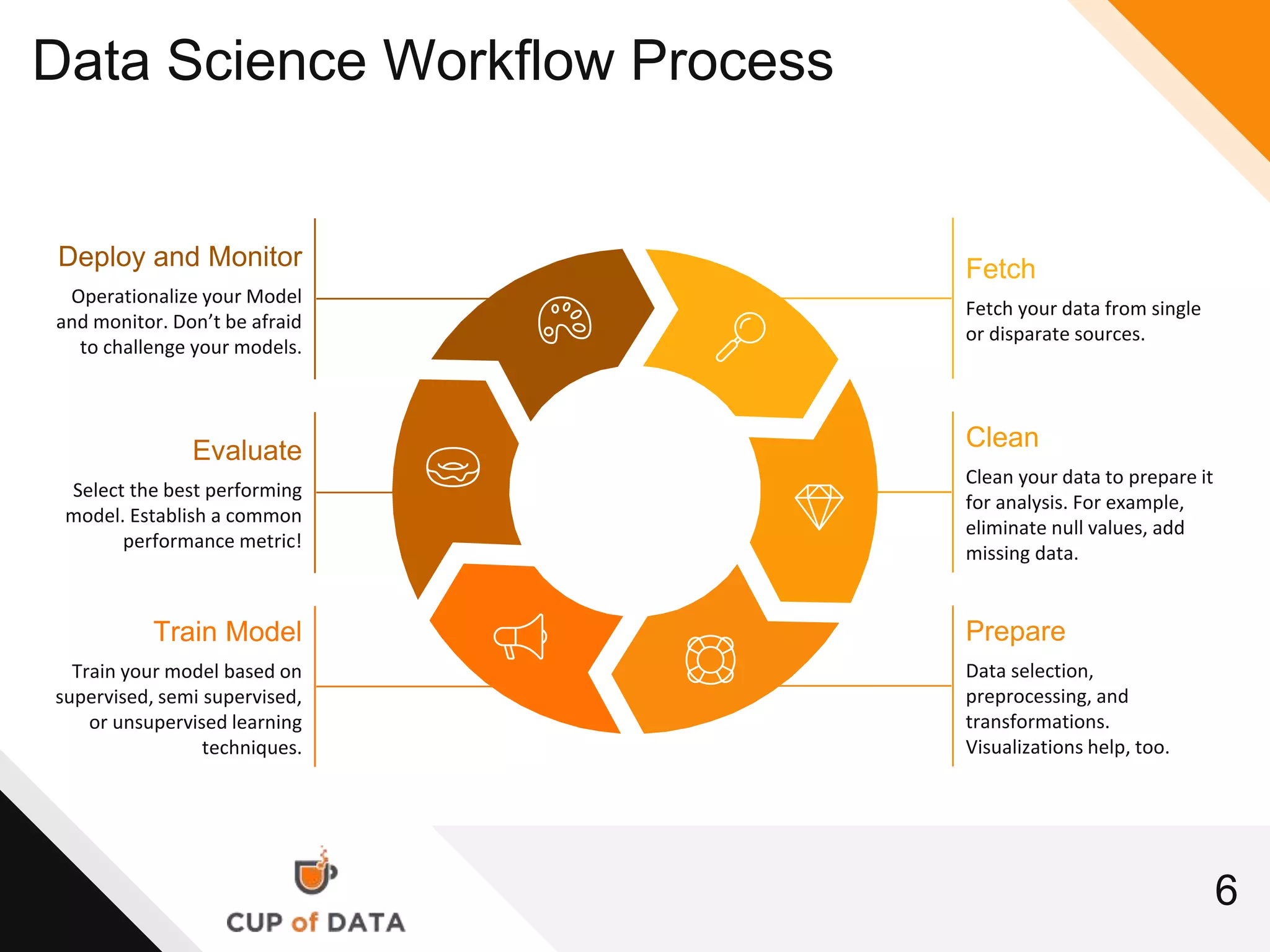
Fetch
Fetch your data from single
or disparate sources.
Clean
Clean your data to prepare it
for analysis. For example,
eliminate null values, add
missing data.
Prepare
Data selection,
preprocessing, and
transformations.
Visualizations help, too.
Deploy and Monitor
Operationalize your Model
and monitor. Don’t be afraid
to challenge your models.
Evaluate
Select the best performing
model. Establish a common
performance metric!
Train Model
Train your model based on
supervised, semi supervised,
or unsupervised learning
techniques.
6
Data Science Workflow Process
7
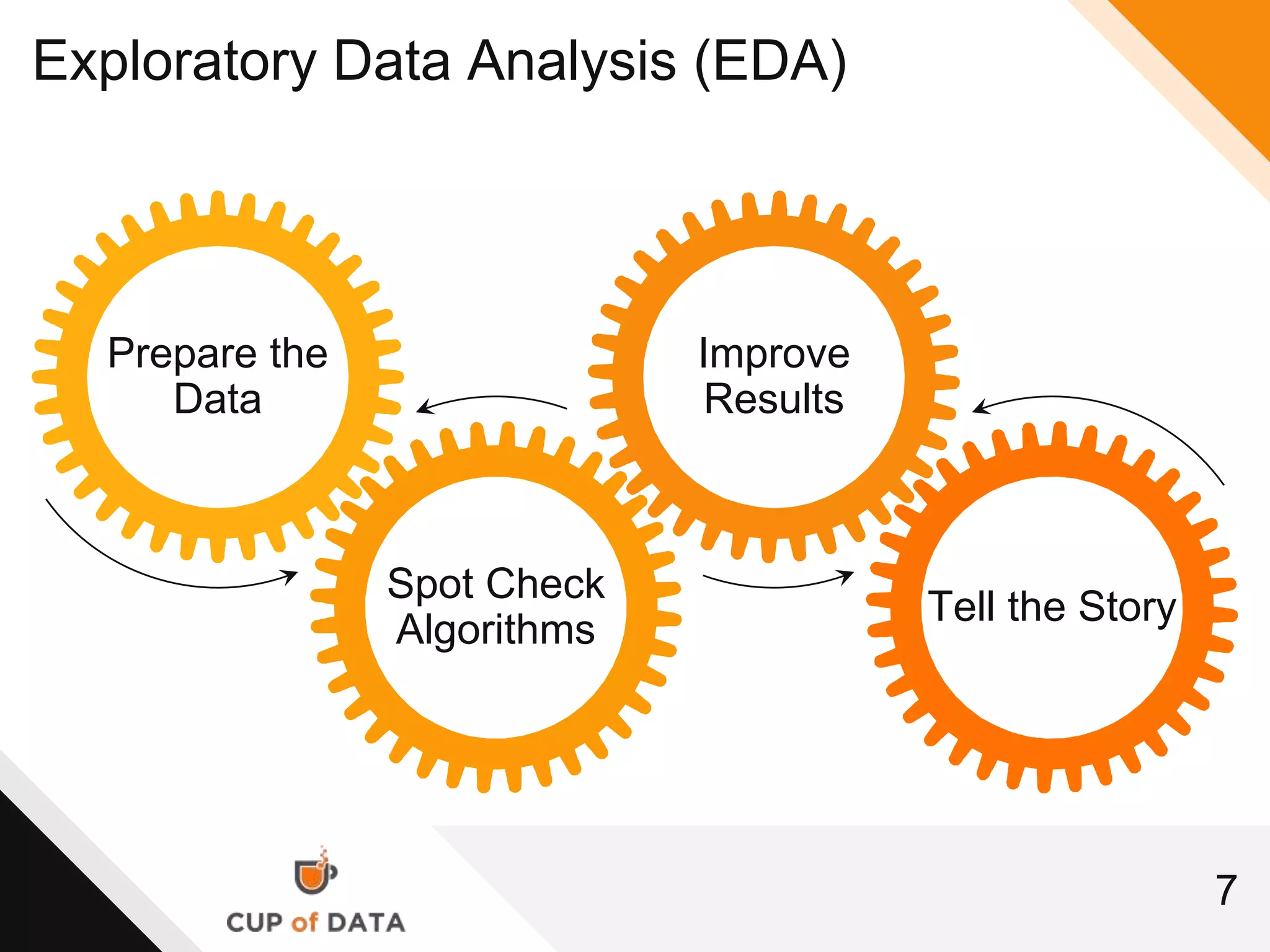
Exploratory Data Analysis (EDA)
Prepare the
Data
Spot Check
Algorithms
Improve
Results
Tell the Story
8
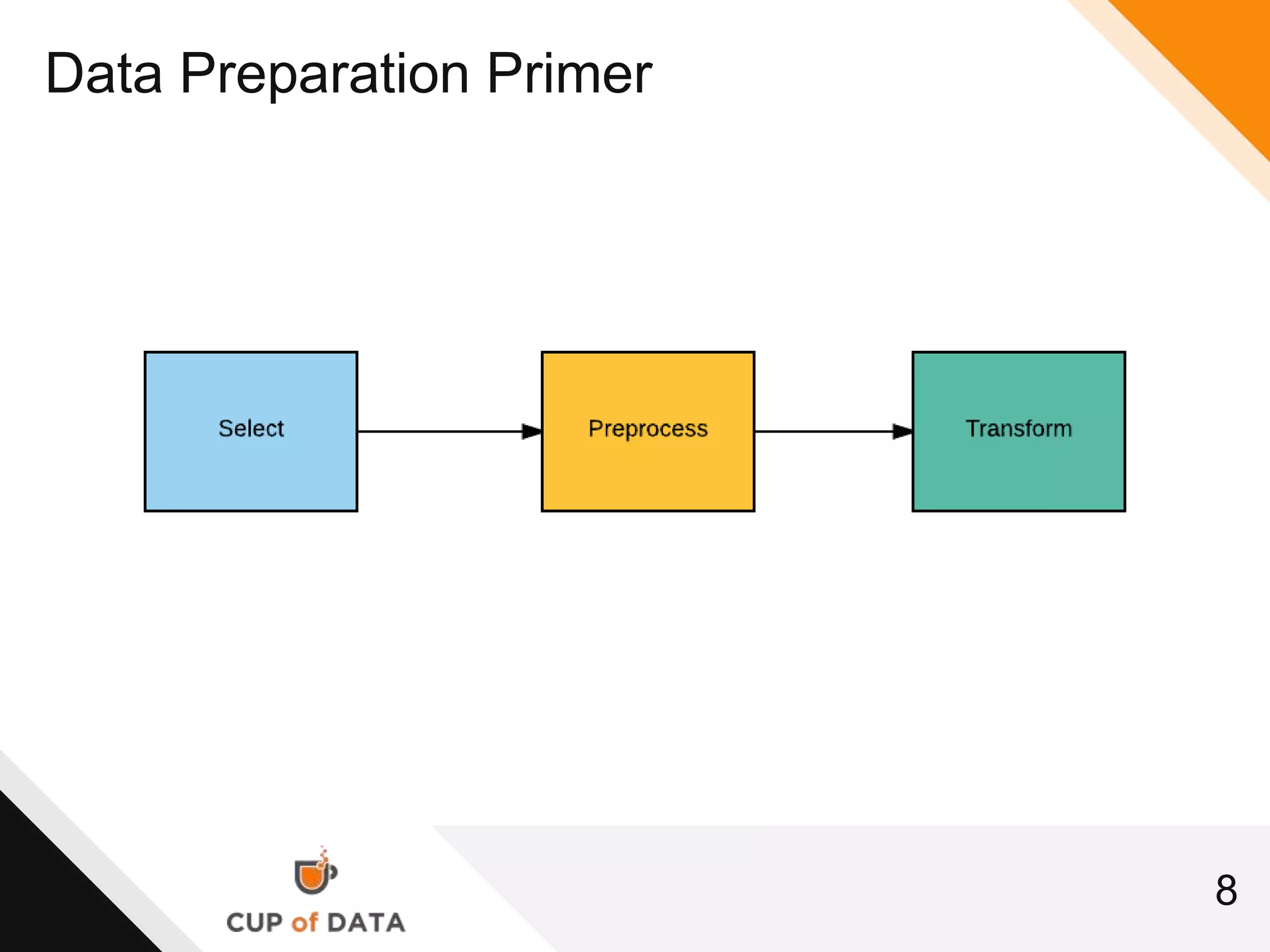
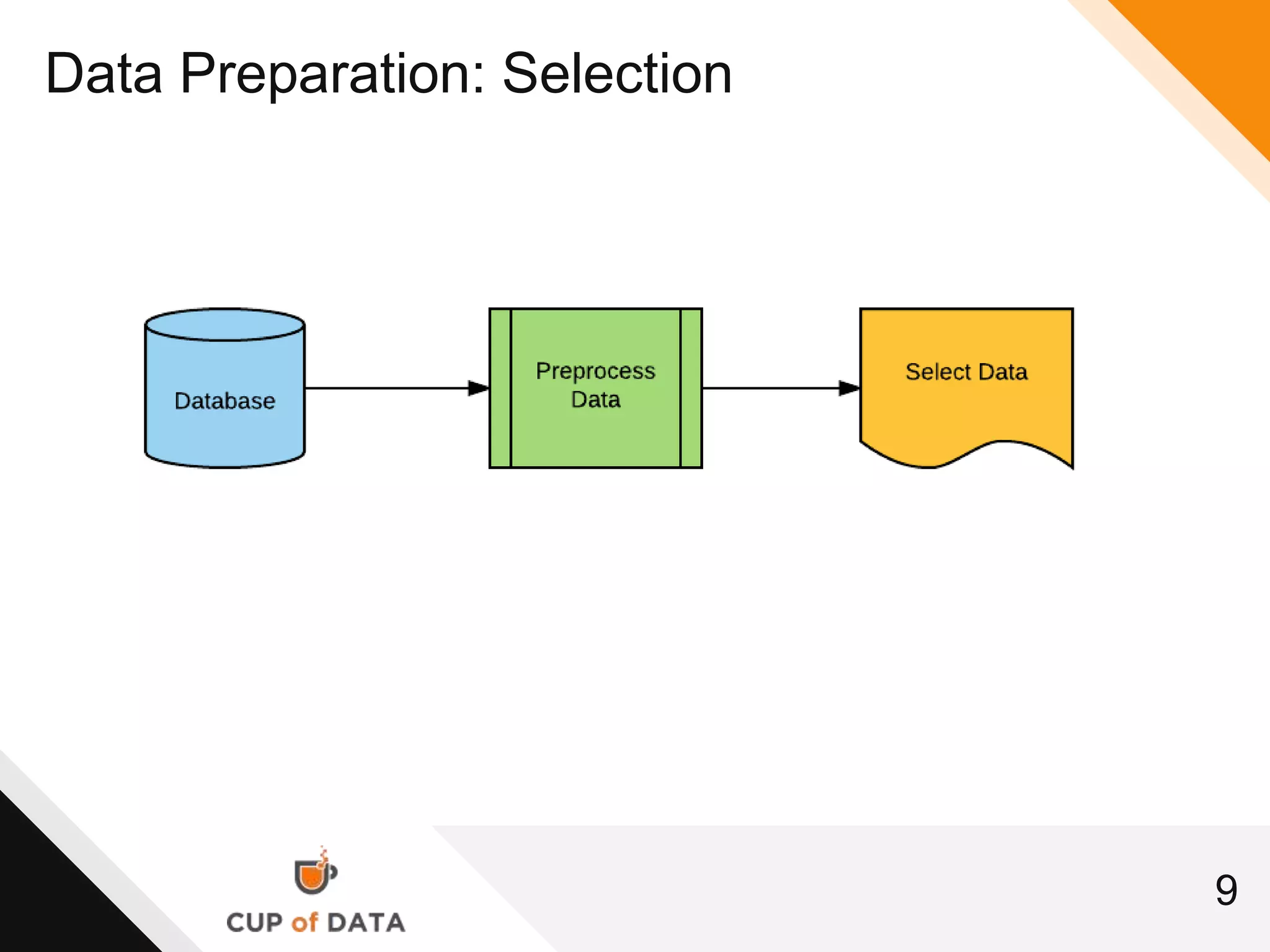
Data Preparation Primer
9
Data Preparation: Selection
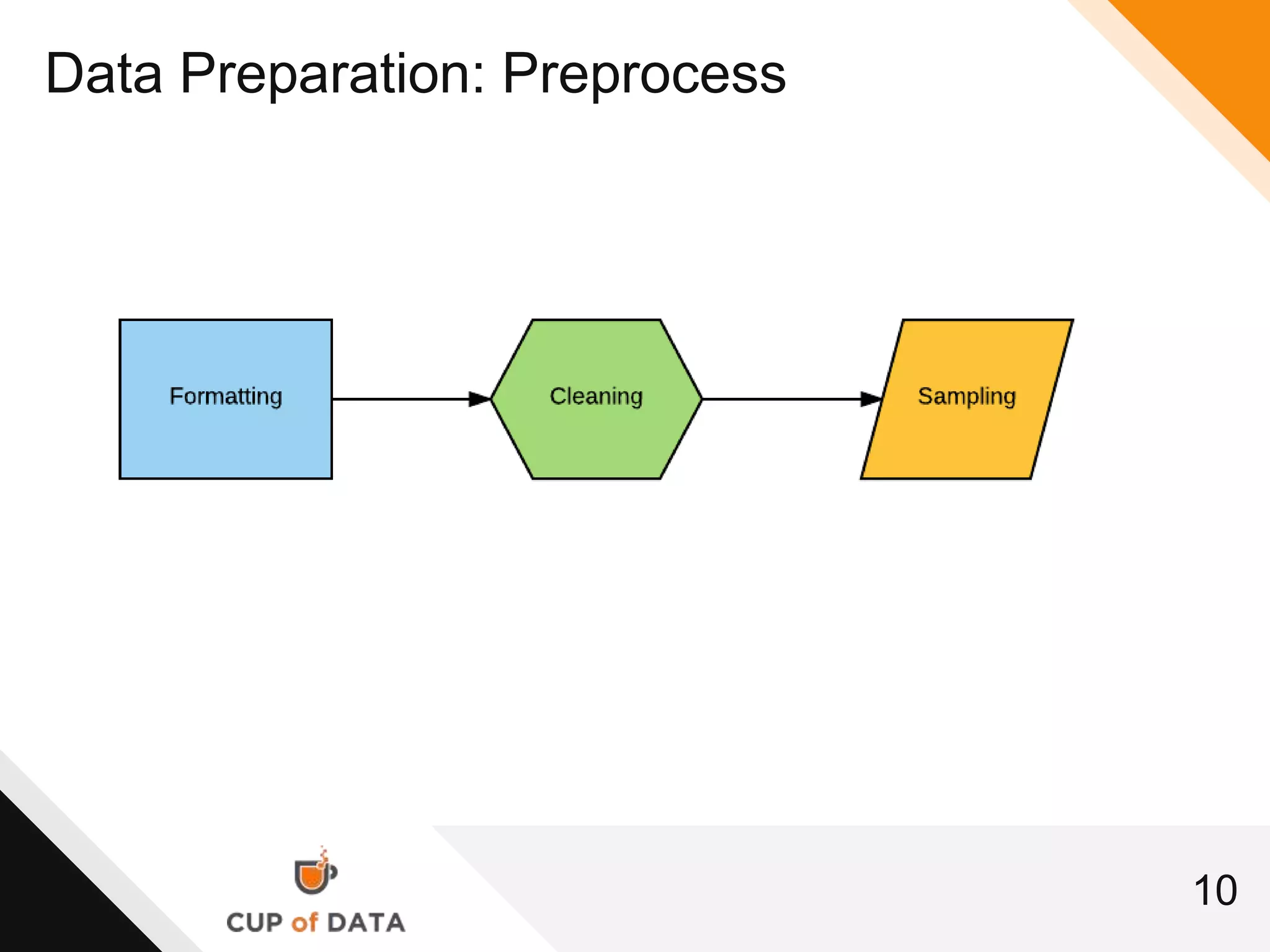
10
Data Preparation: Preprocess
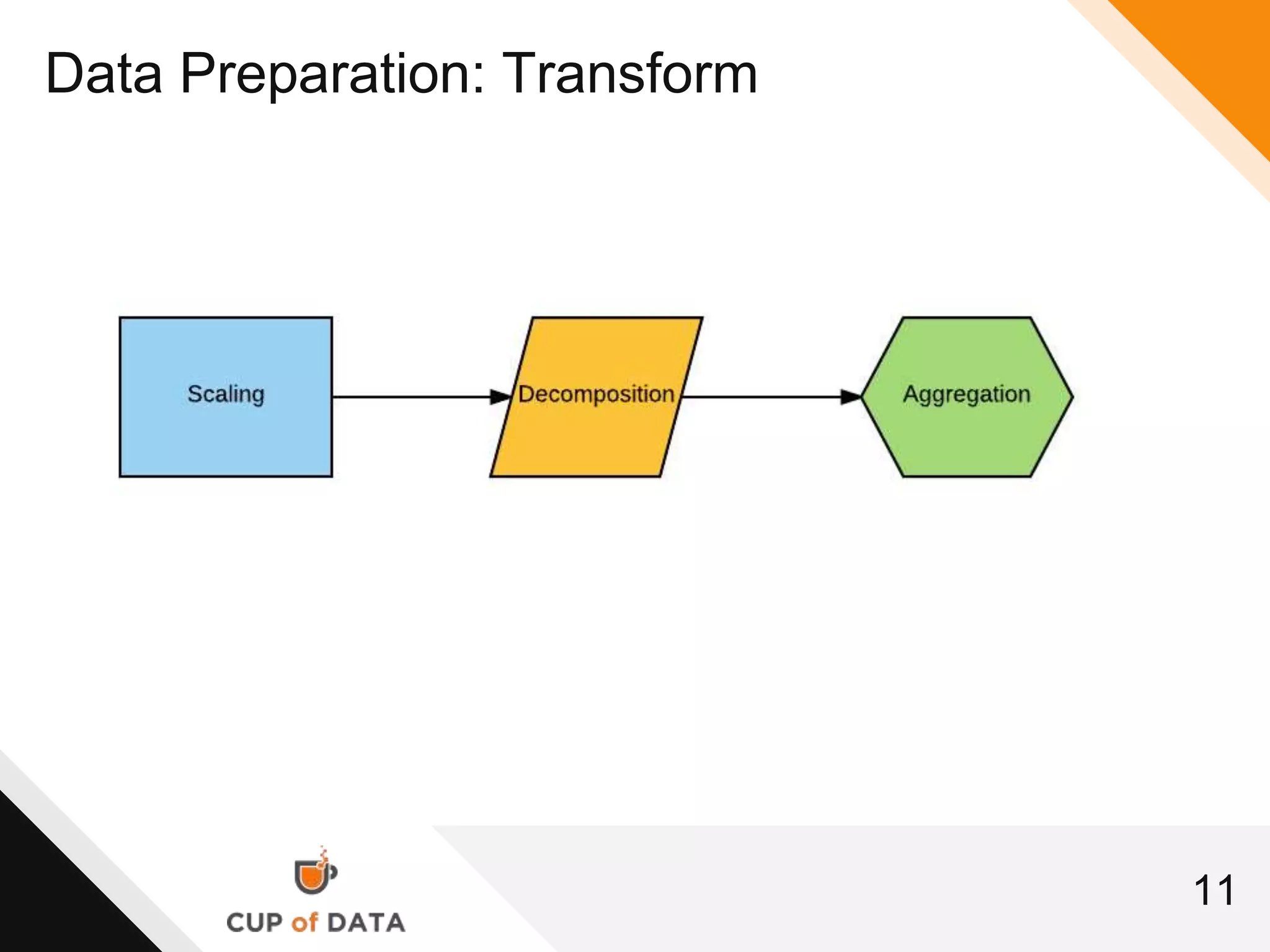
11
Data Preparation: Transform
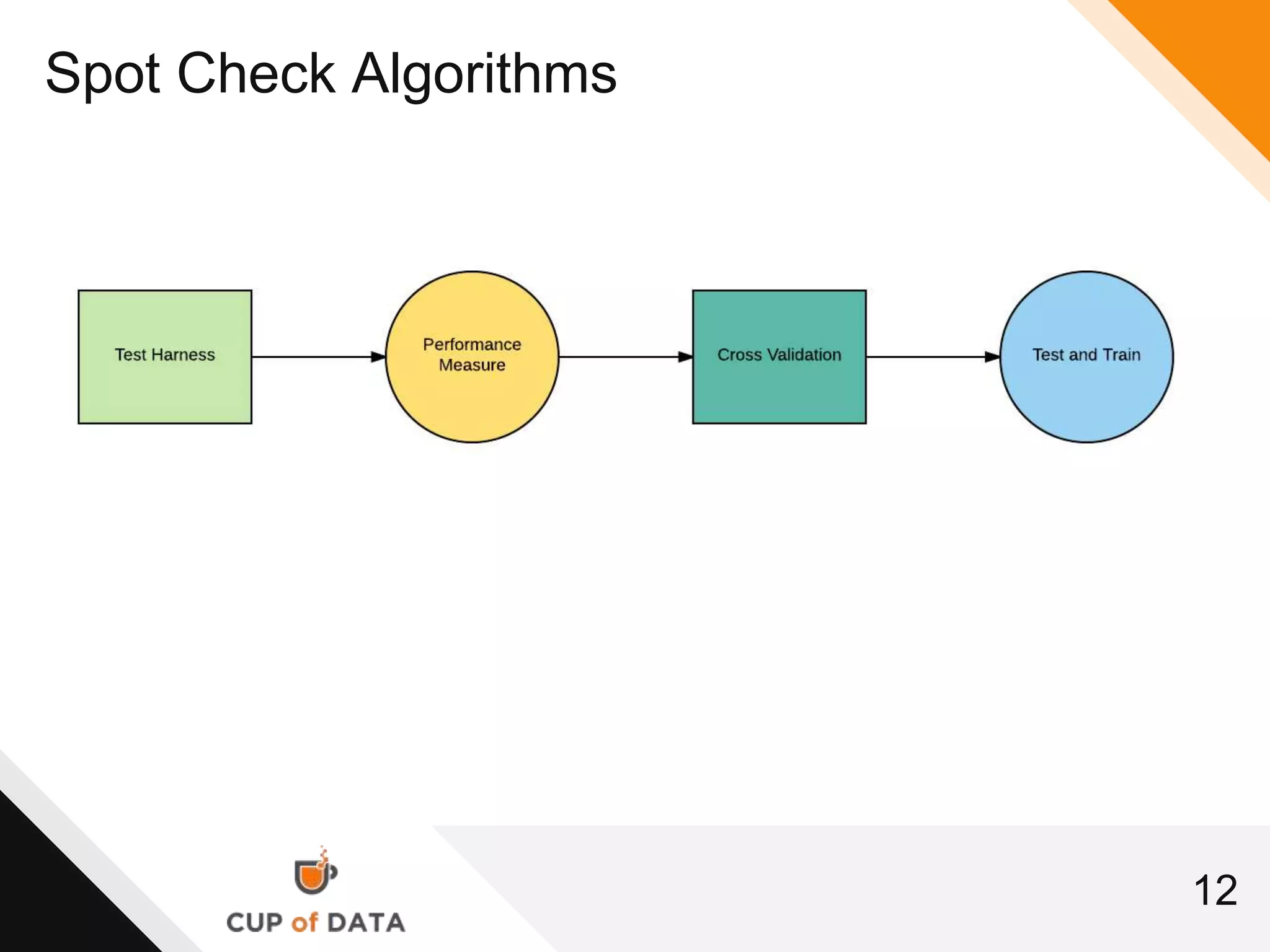
12
Spot Check Algorithms
13
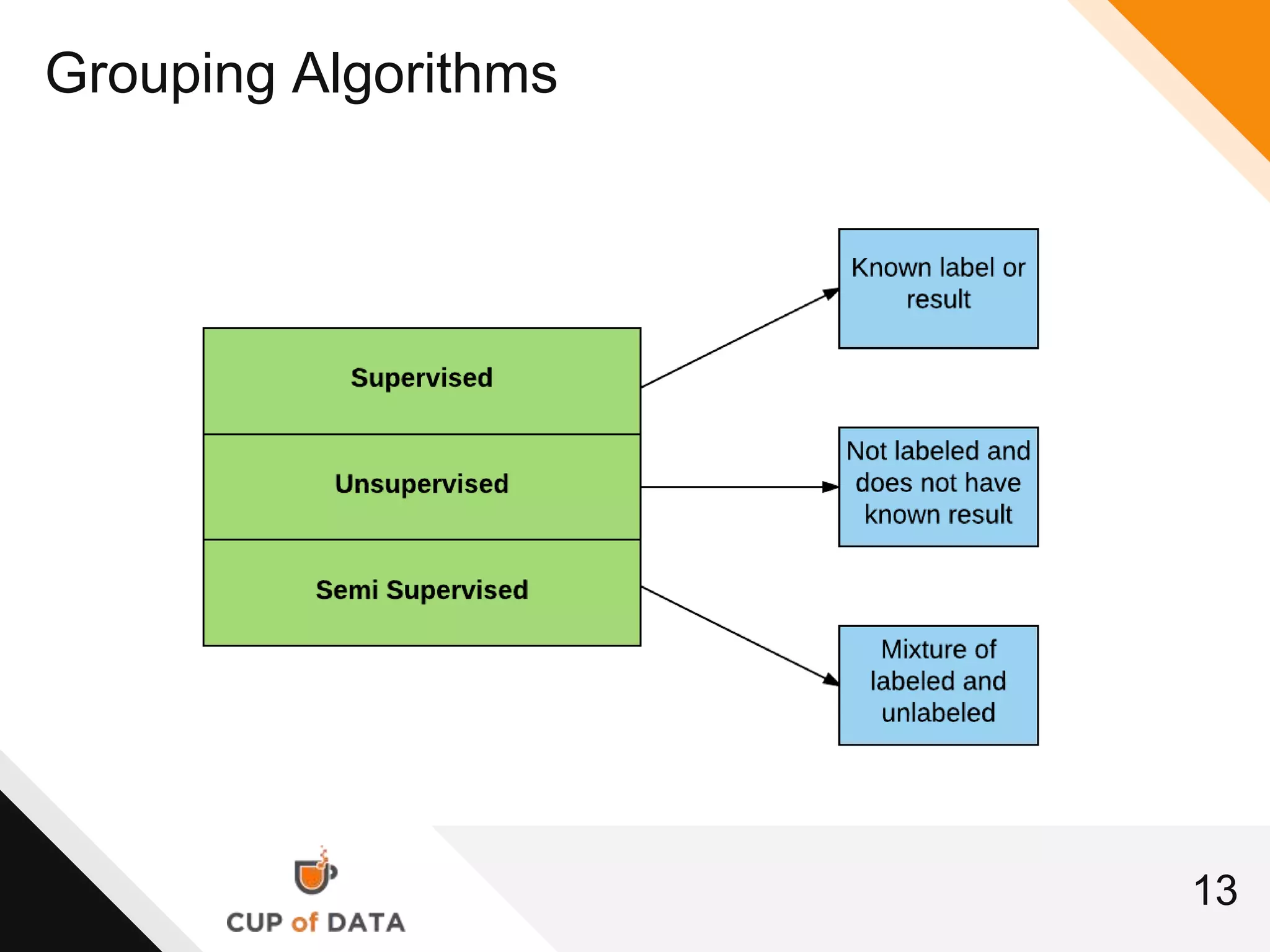
Grouping Algorithms
14
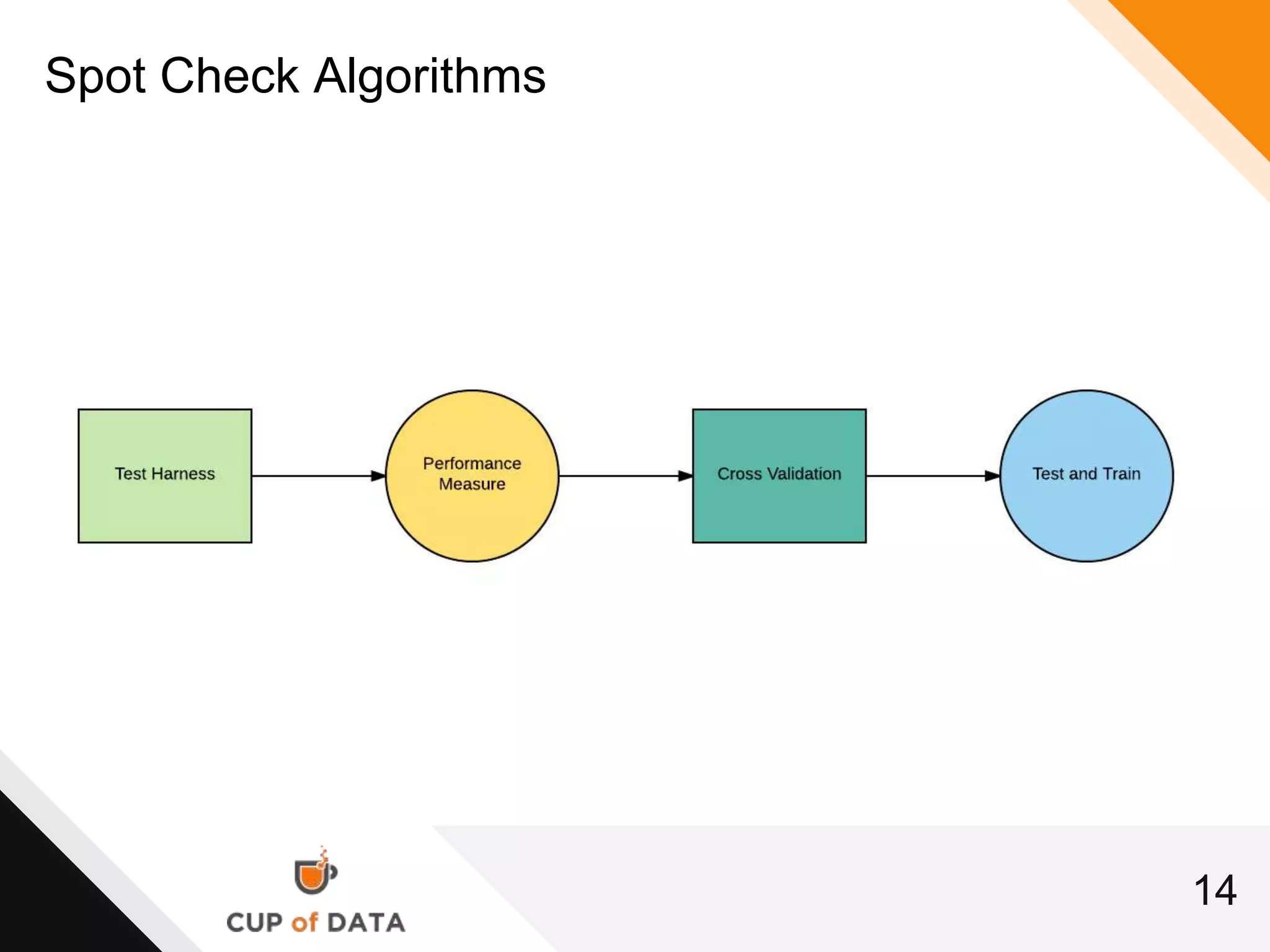
Spot Check Algorithms
15
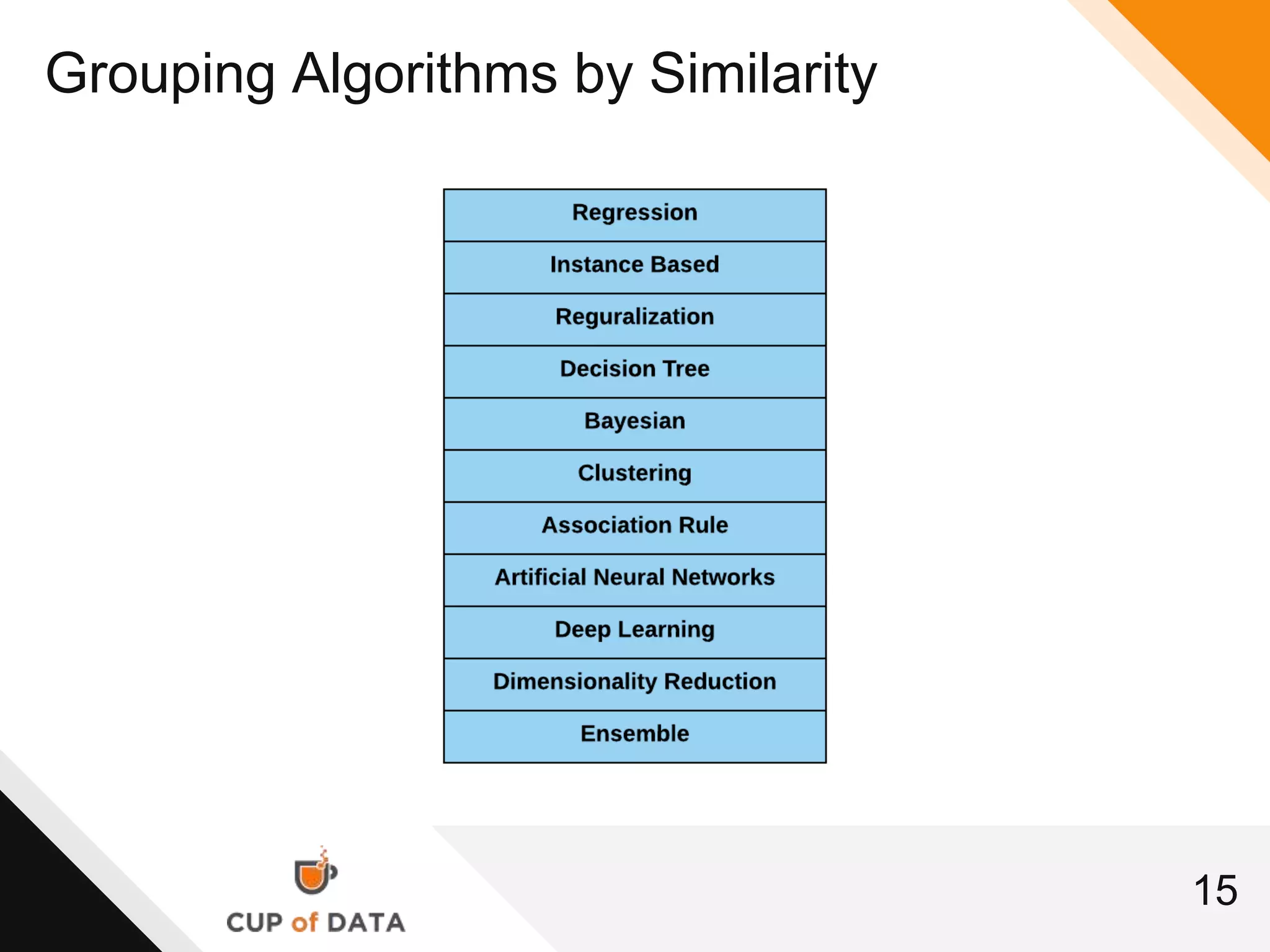
Grouping Algorithms by Similarity
16
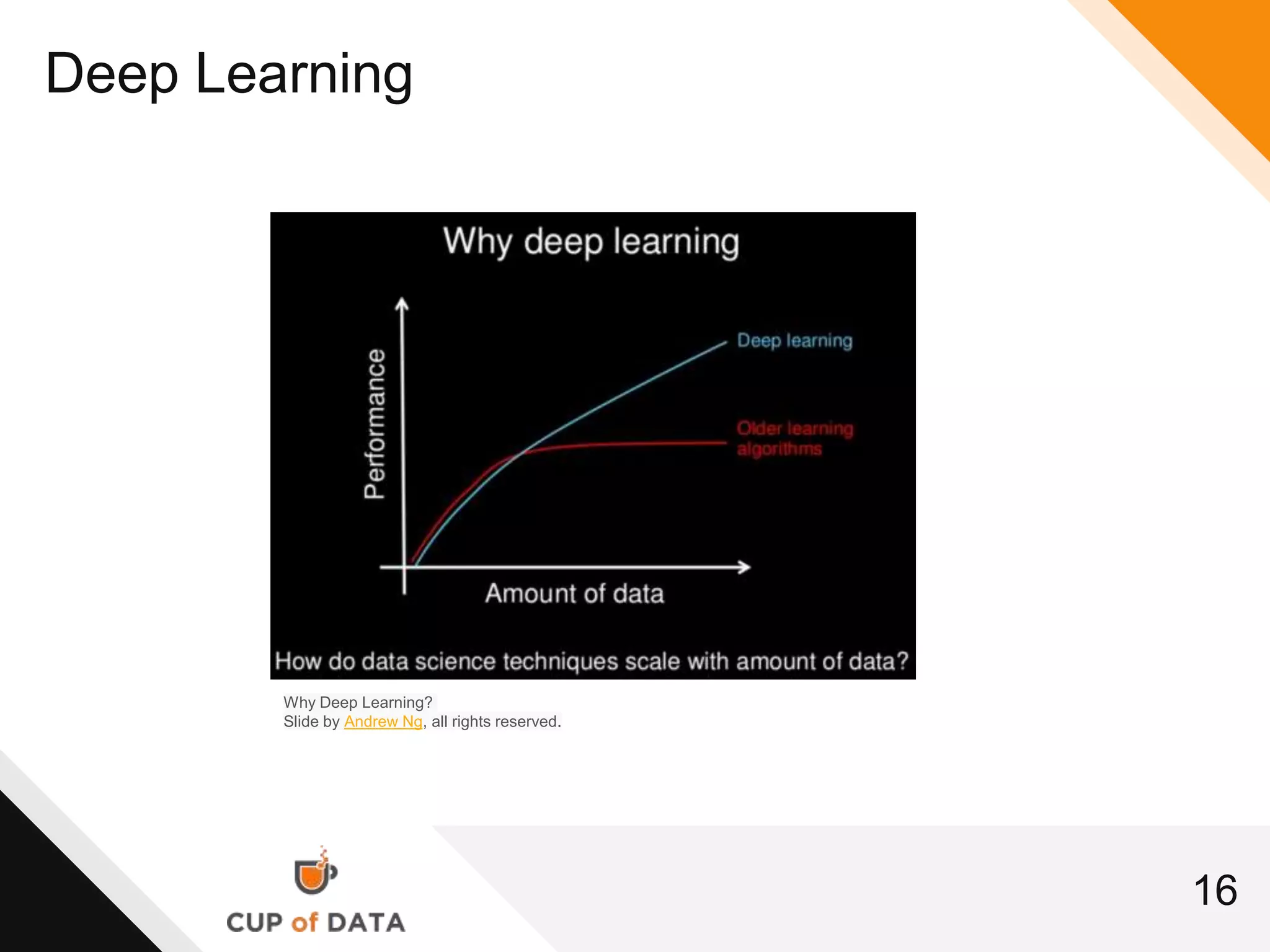
Deep Learning
Why Deep Learning?
Slide by Andrew Ng, all rights reserved.
17
“When you hear the term deep learning, just think of a large
deep neural net. Deep refers to the number of layers typically
and so this kind of the popular term that’s been adopted in the
press. I think of them as deep neural networks generally.”
Jeff Dean
18
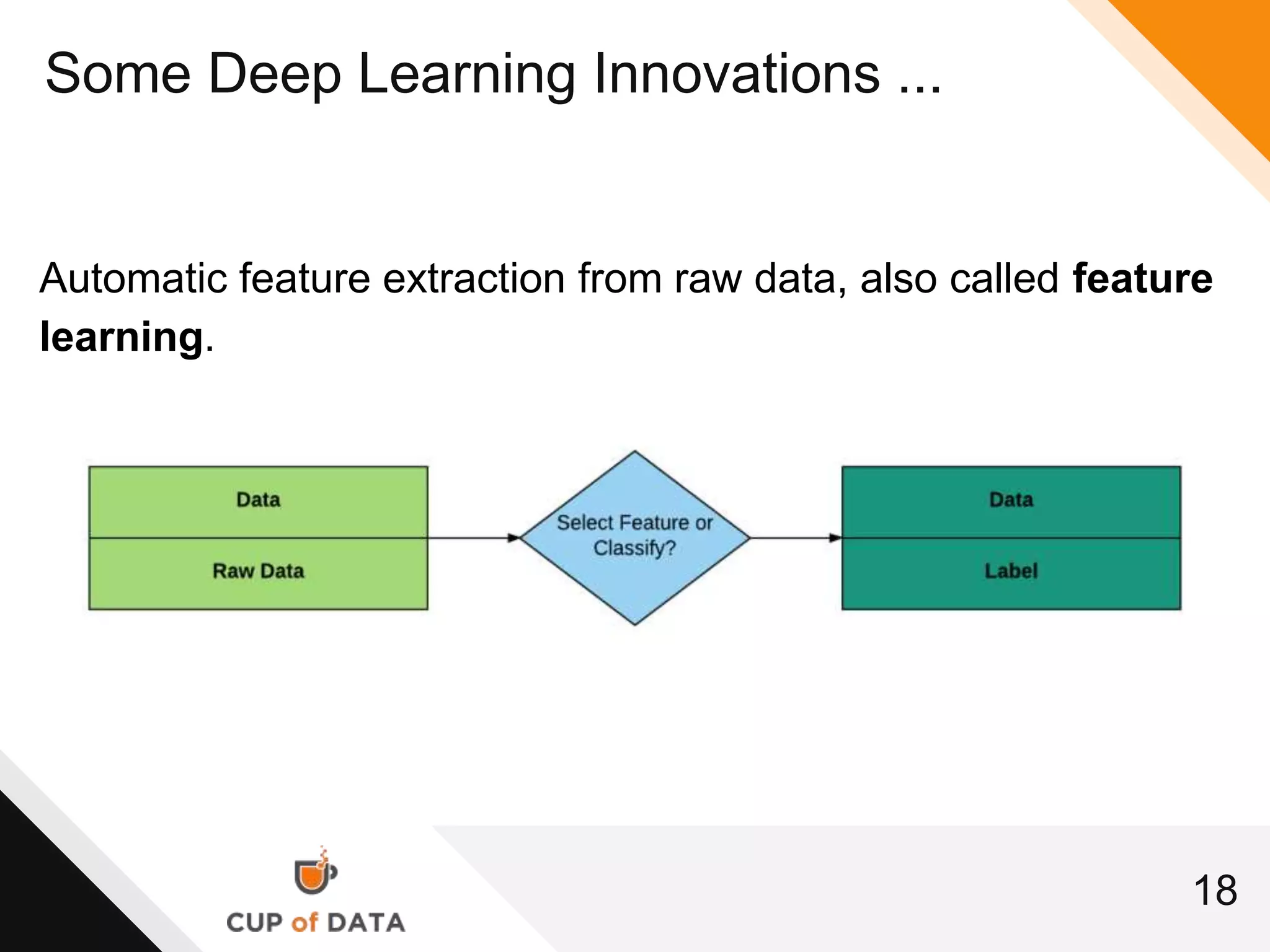
Some Deep Learning Innovations ...
Automatic feature extraction from raw data, also called feature
learning.
19
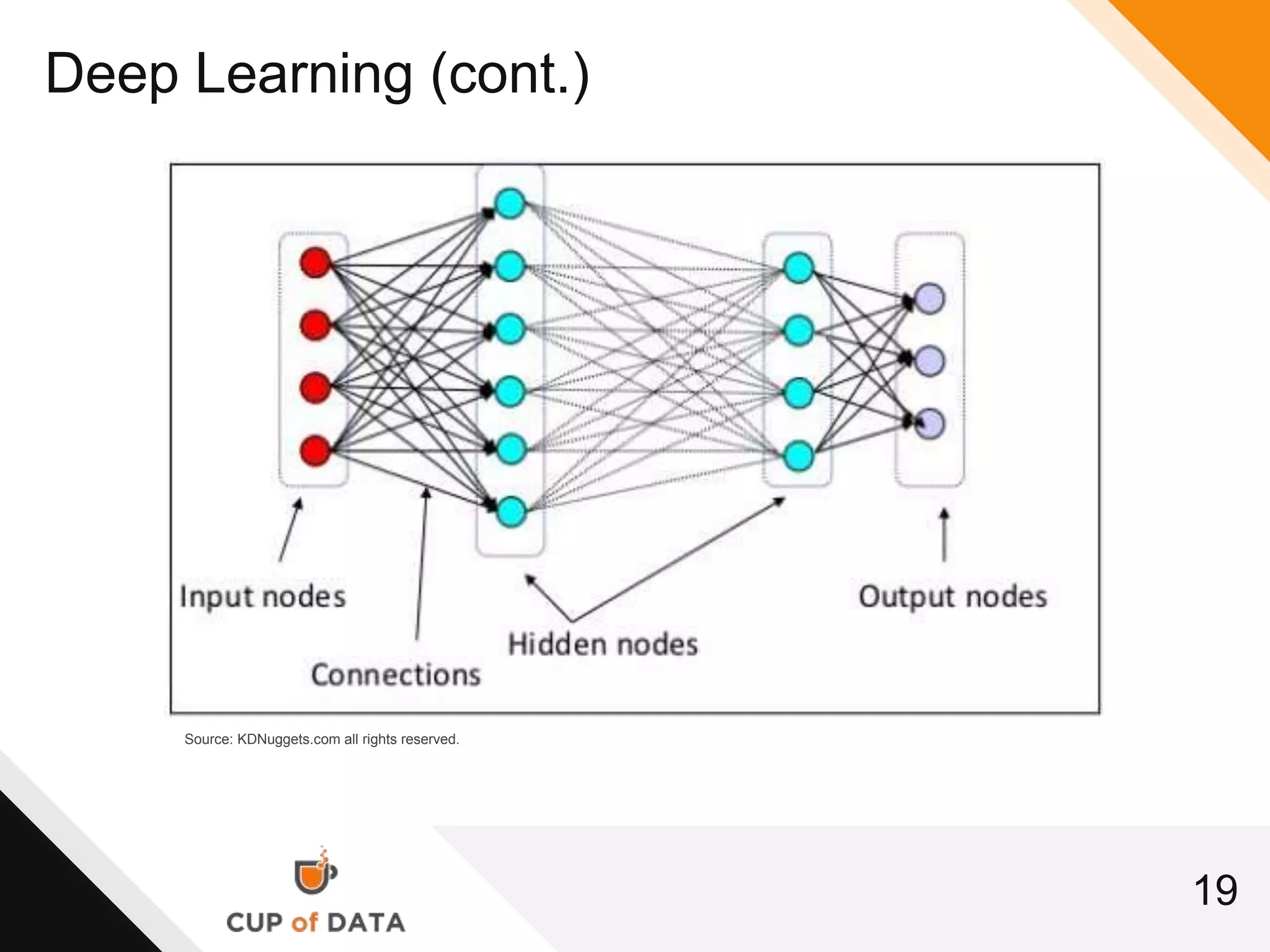
Deep Learning (cont.)
Source: KDNuggets.com all rights reserved.
20
Deep Learning (cont.)
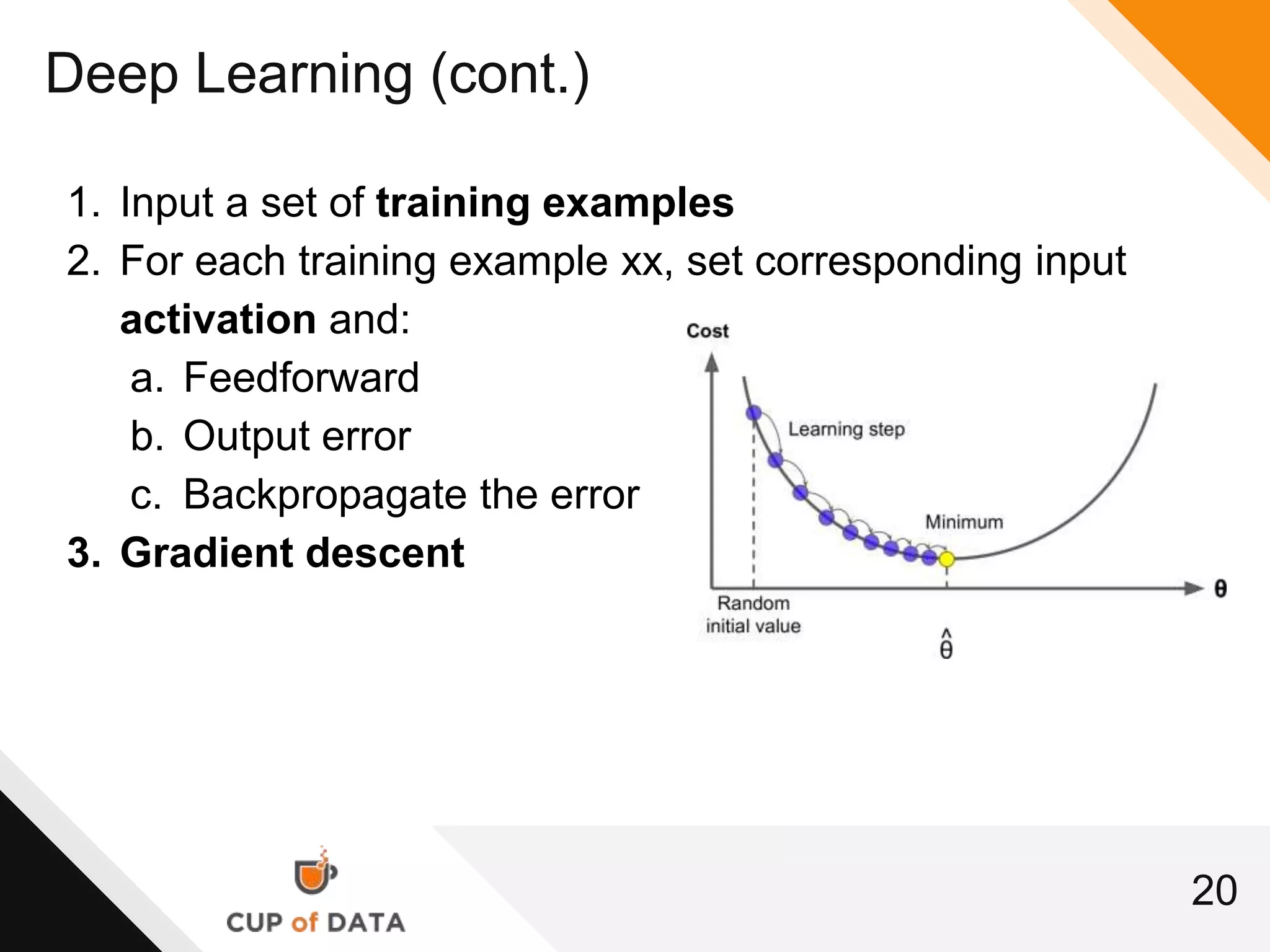
1. Input a set of training examples
2. For each training example xx, set corresponding input
activation and:
a. Feedforward
b. Output error
c. Backpropagate the error
3. Gradient descent
21
Linear Components with Icons
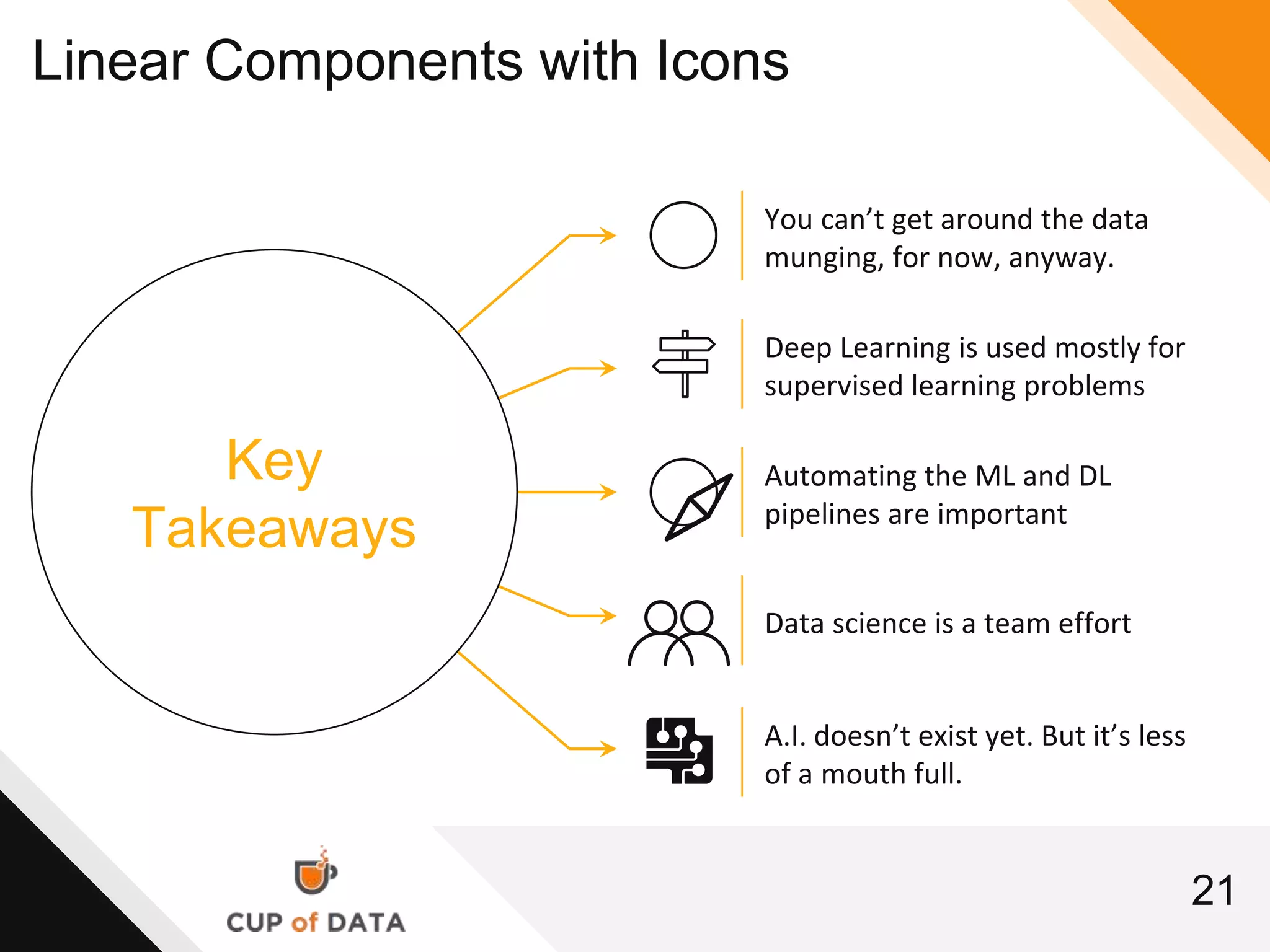
Key
Takeaways
You can’t get around the data
munging, for now, anyway.
Deep Learning is used mostly for
supervised learning problems
Automating the ML and DL
pipelines are important
Data science is a team effort
A.I. doesn’t exist yet. But it’s less
of a mouth full.
22
Some Demos
Thank You!!
23
greg@cupofdata.com
linkedin.com/in/wernergreg/
www.cupofdata.com
3423 Piedmont Rd NE
Atlanta, GA 30305

Data Science Salon Miami Presentation