P R E D I C T I V E M A I N T E N A N C E A N D R O U T E
O P T I M I Z A T I O N
DATA SCIENCE
APPLICATION IN
TRANSPORTATION
KANISHKA K B
2337029
1MAECO
Predictive modeling and data analysis are two concepts
used in data science for transportation to enhance a
number of transportation-related issues in this
growing population and traffic. It is essential for
improving the economy, safety, and efficiency of
transportation for smoother functioning. Predictive
maintenance and route optimization are two important
uses of data science in transportation that will be
discussed in the upcoming slides.
I N T R O D U C T I O N
P R E D I C T I V E M A I N T E N A N C E I N T R A N S P O R T A T I O N
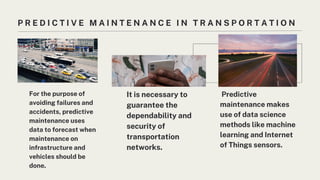
For the purpose of
avoiding failures and
accidents, predictive
maintenance uses
data to forecast when
maintenance on
infrastructure and
vehicles should be
done.
It is necessary to
guarantee the
dependability and
security of
transportation
networks.
Predictive
maintenance makes
use of data science
methods like machine
learning and Internet
of Things sensors.
P R E D I C T I V E M A I N T E N A N C E T E C H N I Q U E S
The three basic methods employed in predictive maintenance
are condition-based maintenance, failure prediction, and
anomaly detection.
Examples from the real world include tracking the structural
integrity of roads and bridges and utilizing sensor data to
forecast engine breakdowns in automobiles.
Transportation safety is increased and costs are decreased
through predictive maintenance.
R O U T E O P T I M I Z A T I O N I N T R A N S P O R T A T I O N
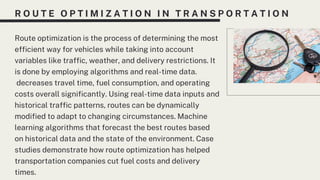
Route optimization is the process of determining the most
efficient way for vehicles while taking into account
variables like traffic, weather, and delivery restrictions. It
is done by employing algorithms and real-time data.
decreases travel time, fuel consumption, and operating
costs overall significantly. Using real-time data inputs and
historical traffic patterns, routes can be dynamically
modified to adapt to changing circumstances. Machine
learning algorithms that forecast the best routes based
on historical data and the state of the environment. Case
studies demonstrate how route optimization has helped
transportation companies cut fuel costs and delivery
times.
R E A L - W O R L D A P P L I C A T I O N S
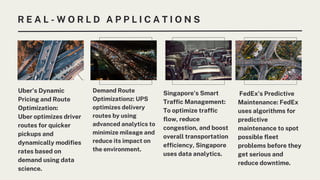
Uber's Dynamic
Pricing and Route
Optimization:
Uber optimizes driver
routes for quicker
pickups and
dynamically modifies
rates based on
demand using data
science.
Singapore's Smart
Traffic Management:
To optimize traffic
flow, reduce
congestion, and boost
overall transportation
efficiency, Singapore
uses data analytics.
Demand Route
Optimizationz: UPS
optimizes delivery
routes by using
advanced analytics to
minimize mileage and
reduce its impact on
the environment.
FedEx's Predictive
Maintenance: FedEx
uses algorithms for
predictive
maintenance to spot
possible fleet
problems before they
get serious and
reduce downtime.
F U T U R E T R E N D S
The development of autonomous vehicles is
significantly helped by data science, which
makes it possible to make decisions in real
time using sensor data. Data is processed
closer to the source using edge computing,
allowing for quicker immediate analysis for
route optimization. The transportation
sector is transforming because of data
science, which is creating more economical,
ecological, and efficient methods. It is
anticipated that continued innovation in this
area would improve transportation overall,
lessen its impact on the environment, and
increase safety.
Thank you!

DATA SCIENCE APPLICATION IN TRANSPORTATION.pdf

  • 1.
    P R ED I C T I V E M A I N T E N A N C E A N D R O U T E O P T I M I Z A T I O N DATA SCIENCE APPLICATION IN TRANSPORTATION KANISHKA K B 2337029 1MAECO
  • 2.
    Predictive modeling anddata analysis are two concepts used in data science for transportation to enhance a number of transportation-related issues in this growing population and traffic. It is essential for improving the economy, safety, and efficiency of transportation for smoother functioning. Predictive maintenance and route optimization are two important uses of data science in transportation that will be discussed in the upcoming slides. I N T R O D U C T I O N
  • 3.
    P R ED I C T I V E M A I N T E N A N C E I N T R A N S P O R T A T I O N For the purpose of avoiding failures and accidents, predictive maintenance uses data to forecast when maintenance on infrastructure and vehicles should be done. It is necessary to guarantee the dependability and security of transportation networks. Predictive maintenance makes use of data science methods like machine learning and Internet of Things sensors.
  • 4.
    P R ED I C T I V E M A I N T E N A N C E T E C H N I Q U E S The three basic methods employed in predictive maintenance are condition-based maintenance, failure prediction, and anomaly detection. Examples from the real world include tracking the structural integrity of roads and bridges and utilizing sensor data to forecast engine breakdowns in automobiles. Transportation safety is increased and costs are decreased through predictive maintenance.
  • 5.
    R O UT E O P T I M I Z A T I O N I N T R A N S P O R T A T I O N Route optimization is the process of determining the most efficient way for vehicles while taking into account variables like traffic, weather, and delivery restrictions. It is done by employing algorithms and real-time data. decreases travel time, fuel consumption, and operating costs overall significantly. Using real-time data inputs and historical traffic patterns, routes can be dynamically modified to adapt to changing circumstances. Machine learning algorithms that forecast the best routes based on historical data and the state of the environment. Case studies demonstrate how route optimization has helped transportation companies cut fuel costs and delivery times.
  • 6.
    R E AL - W O R L D A P P L I C A T I O N S Uber's Dynamic Pricing and Route Optimization: Uber optimizes driver routes for quicker pickups and dynamically modifies rates based on demand using data science. Singapore's Smart Traffic Management: To optimize traffic flow, reduce congestion, and boost overall transportation efficiency, Singapore uses data analytics. Demand Route Optimizationz: UPS optimizes delivery routes by using advanced analytics to minimize mileage and reduce its impact on the environment. FedEx's Predictive Maintenance: FedEx uses algorithms for predictive maintenance to spot possible fleet problems before they get serious and reduce downtime.
  • 7.
    F U TU R E T R E N D S The development of autonomous vehicles is significantly helped by data science, which makes it possible to make decisions in real time using sensor data. Data is processed closer to the source using edge computing, allowing for quicker immediate analysis for route optimization. The transportation sector is transforming because of data science, which is creating more economical, ecological, and efficient methods. It is anticipated that continued innovation in this area would improve transportation overall, lessen its impact on the environment, and increase safety.
  • 8.