
A DataViz Technique to Improve Stakeholder
Understanding of Evaluation Results
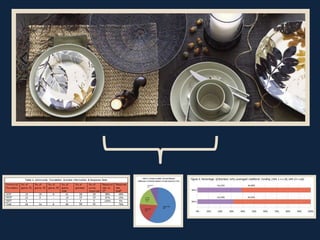
Data Placemats
American Evaluation Association
Annual Conference
October 25, 2012
Minneapolis, Minnesota
Veena Pankaj
Innovation Network
vpankaj@innonet.org
Veena Pankaj
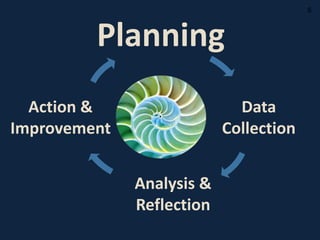
Planning
Analysis &
Reflection
Action &
Improvement
Data
Collection
5
Involve Stakeholders
VII(a). Types of Connections
As a result of participatingin the National Hunger
Fellows Program, did you develop a network of
helpfulcontacts? (n=117)
Yes, 94%
*Survey numbers do not add up to 100% because respondents could choose more than one answer.
How often do you reach out to your peer
(alumni)network for resourcesand
information? (n=109)
Several times a year, 45%
Ab
out
onc
e a
yea
r,
24
%
Ha
rdl
y
Ev
er,
17
%
At
lea
st
on
ce
a
m
on
th,
14
%
Otherthan your peers, please note the
groupsfrom which you still have contacts.
(n=106)*
Other, 7%
Key players (introducedthroughfellowship), 45%
Field site staff, 60%
Policy site staff, 70%
CHC staff, 92%
The Hunger Fellowship was the first time I was a
member of a close-knit community of people committed
to fighting poverty. That was a truly life-changing
experience. Six years later, many of my very closest
friends are fellows from my class. - Alumnus, Class 11
(SurveyRespondent)
I feel that we went through this experience together and
we could talk though tough issues. Strong connections
were definitelymade.
- Alumnus, Class 12 (Survey Respondent)
We have amazing opportunities being part of] this huge
CHC network of people who have gone through this
program. Knowing people is how to get things done. -
Alumnus, Class 13 (Survey Respondent)
N
o
,
6
%
For what types of information have you reached out to the
networksdeveloped as a result of being a fellow? (n=103)*
Includes:
Informationand resources during graduate
school (4)
Personal updates (4)
Fellow network (2)
Advice on career path and new opportunities
Data and policy insight
Organizingservice projects
To give thanks and appreciation
Other, 19%
When recruitingnew staff for my organization, 19%
Connections/Introductionsto others in the
field, 59%
Personaljob leads, 68%
When seeking work related advice, 70%
2
1
3
4
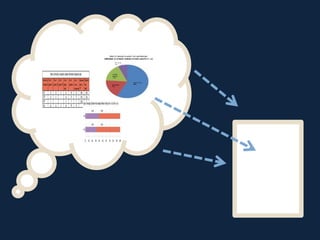
Overall theme
of this
placemat
Charts and
graphs
illustrating
preliminary
analysis
Supporting
quotations
from
stakeholders
Data Interpretation
Meeting
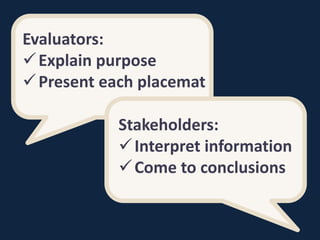
Evaluators:
Explain purpose
Present each placemat
Stakeholders:
Interpret information
Come to conclusions
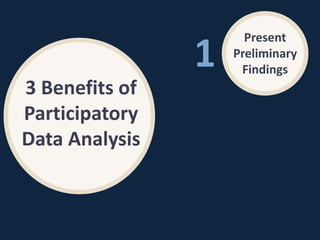
3 Benefits of
Participatory
Data Analysis
Present
Preliminary
Findings
1
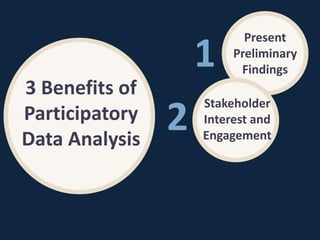
3 Benefits of
Participatory
Data Analysis
Present
Preliminary
Findings
1
2
Stakeholder
Interest and
Engagement
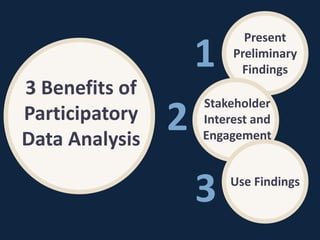
3 Benefits of
Participatory
Data Analysis
Present
Preliminary
Findings
1
2
3
Stakeholder
Interest and
Engagement
Use Findings
Veena Pankaj
vpankaj@innonet.org
Participatory Analysis: Expanding Stakeholder
Involvement in Evaluation
Available at www.innonet.org
Thank You!

Data Placemats: A DataViz Technique to Improve Stakeholder Understanding of Evaluation Results

  • 1.
    A DataViz Techniqueto Improve Stakeholder Understanding of Evaluation Results Data Placemats American Evaluation Association Annual Conference October 25, 2012 Minneapolis, Minnesota Veena Pankaj Innovation Network vpankaj@innonet.org
  • 2.
  • 5.
  • 6.
  • 7.
    VII(a). Types ofConnections As a result of participatingin the National Hunger Fellows Program, did you develop a network of helpfulcontacts? (n=117) Yes, 94% *Survey numbers do not add up to 100% because respondents could choose more than one answer. How often do you reach out to your peer (alumni)network for resourcesand information? (n=109) Several times a year, 45% Ab out onc e a yea r, 24 % Ha rdl y Ev er, 17 % At lea st on ce a m on th, 14 % Otherthan your peers, please note the groupsfrom which you still have contacts. (n=106)* Other, 7% Key players (introducedthroughfellowship), 45% Field site staff, 60% Policy site staff, 70% CHC staff, 92% The Hunger Fellowship was the first time I was a member of a close-knit community of people committed to fighting poverty. That was a truly life-changing experience. Six years later, many of my very closest friends are fellows from my class. - Alumnus, Class 11 (SurveyRespondent) I feel that we went through this experience together and we could talk though tough issues. Strong connections were definitelymade. - Alumnus, Class 12 (Survey Respondent) We have amazing opportunities being part of] this huge CHC network of people who have gone through this program. Knowing people is how to get things done. - Alumnus, Class 13 (Survey Respondent) N o , 6 % For what types of information have you reached out to the networksdeveloped as a result of being a fellow? (n=103)* Includes: Informationand resources during graduate school (4) Personal updates (4) Fellow network (2) Advice on career path and new opportunities Data and policy insight Organizingservice projects To give thanks and appreciation Other, 19% When recruitingnew staff for my organization, 19% Connections/Introductionsto others in the field, 59% Personaljob leads, 68% When seeking work related advice, 70% 2 1 3 4 Overall theme of this placemat Charts and graphs illustrating preliminary analysis Supporting quotations from stakeholders
  • 11.
  • 12.
    Evaluators: Explain purpose Present eachplacemat Stakeholders: Interpret information Come to conclusions
  • 16.
    3 Benefits of Participatory DataAnalysis Present Preliminary Findings 1
  • 17.
    3 Benefits of Participatory DataAnalysis Present Preliminary Findings 1 2 Stakeholder Interest and Engagement
  • 18.
    3 Benefits of Participatory DataAnalysis Present Preliminary Findings 1 2 3 Stakeholder Interest and Engagement Use Findings
  • 19.
    Veena Pankaj vpankaj@innonet.org Participatory Analysis:Expanding Stakeholder Involvement in Evaluation Available at www.innonet.org Thank You!