Data-Driven Marketing
By
Gbolahan Omotosho
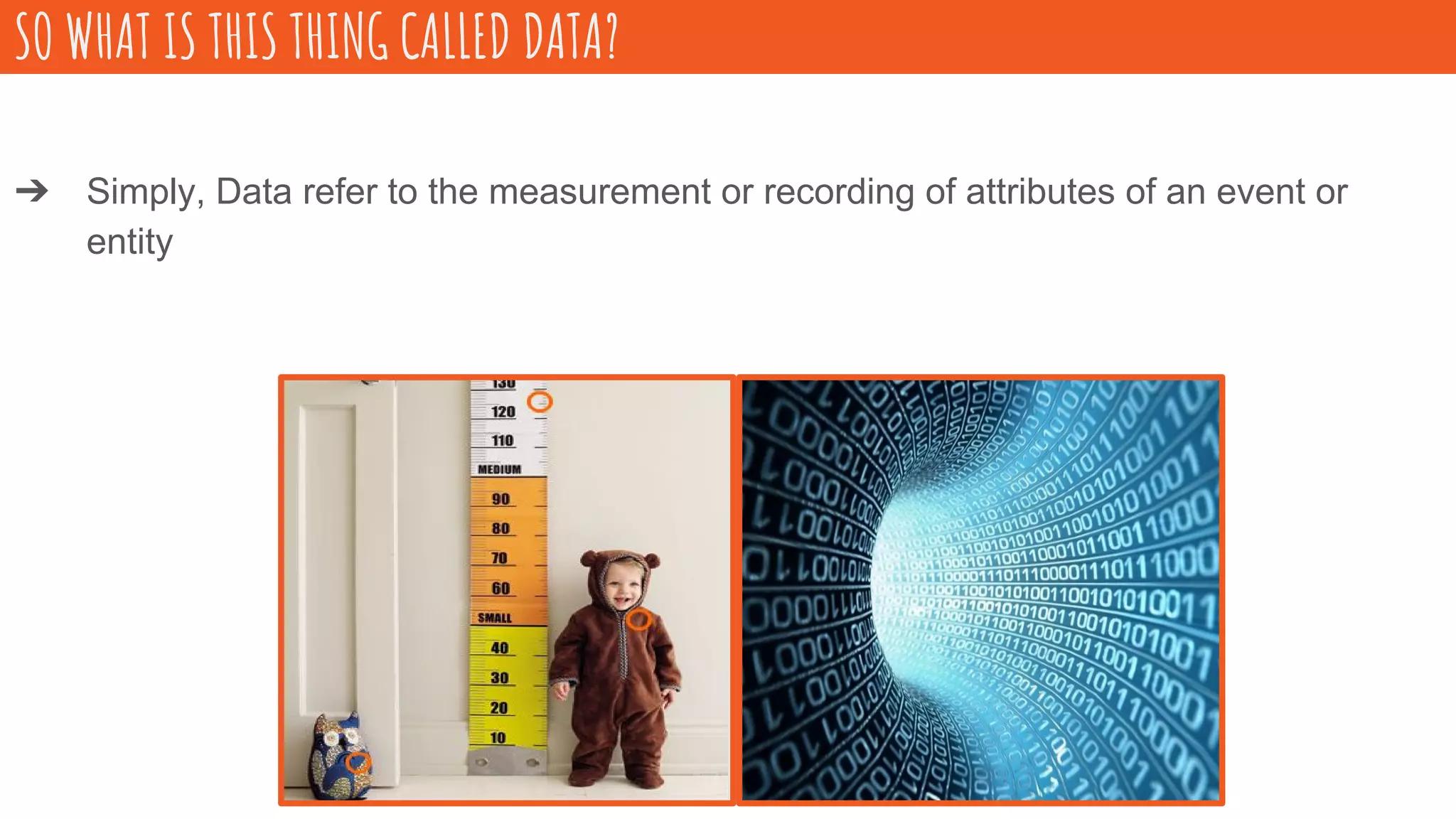
➔ Simply, Data refer to the measurement or recording of attributes of an event or
entity
SO WHAT IS THIS THING CALLED DATA?
A DATA-DRIVEN DECISION
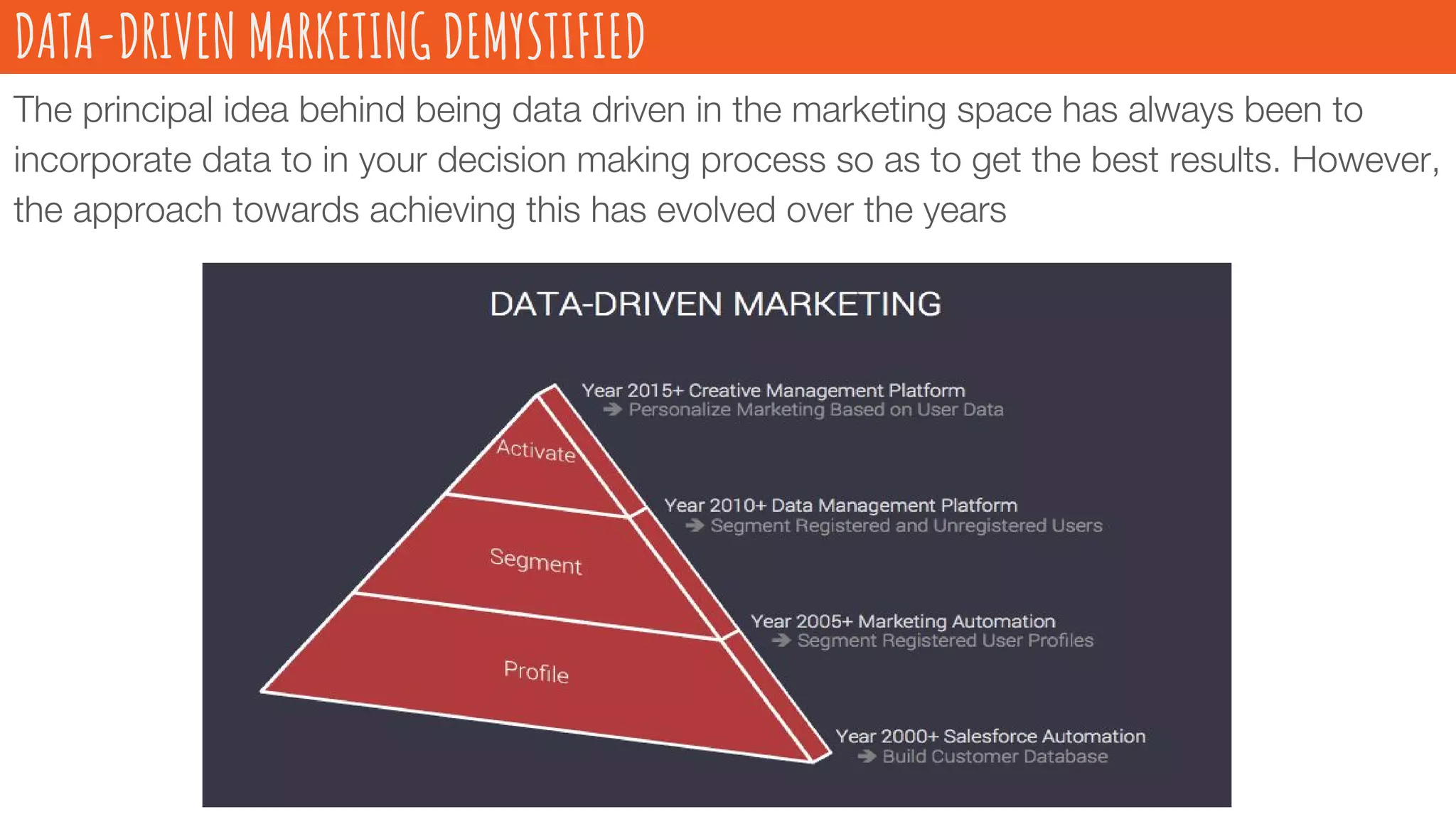
DATA-DRIVEN MARKETING DEMYSTIFIED
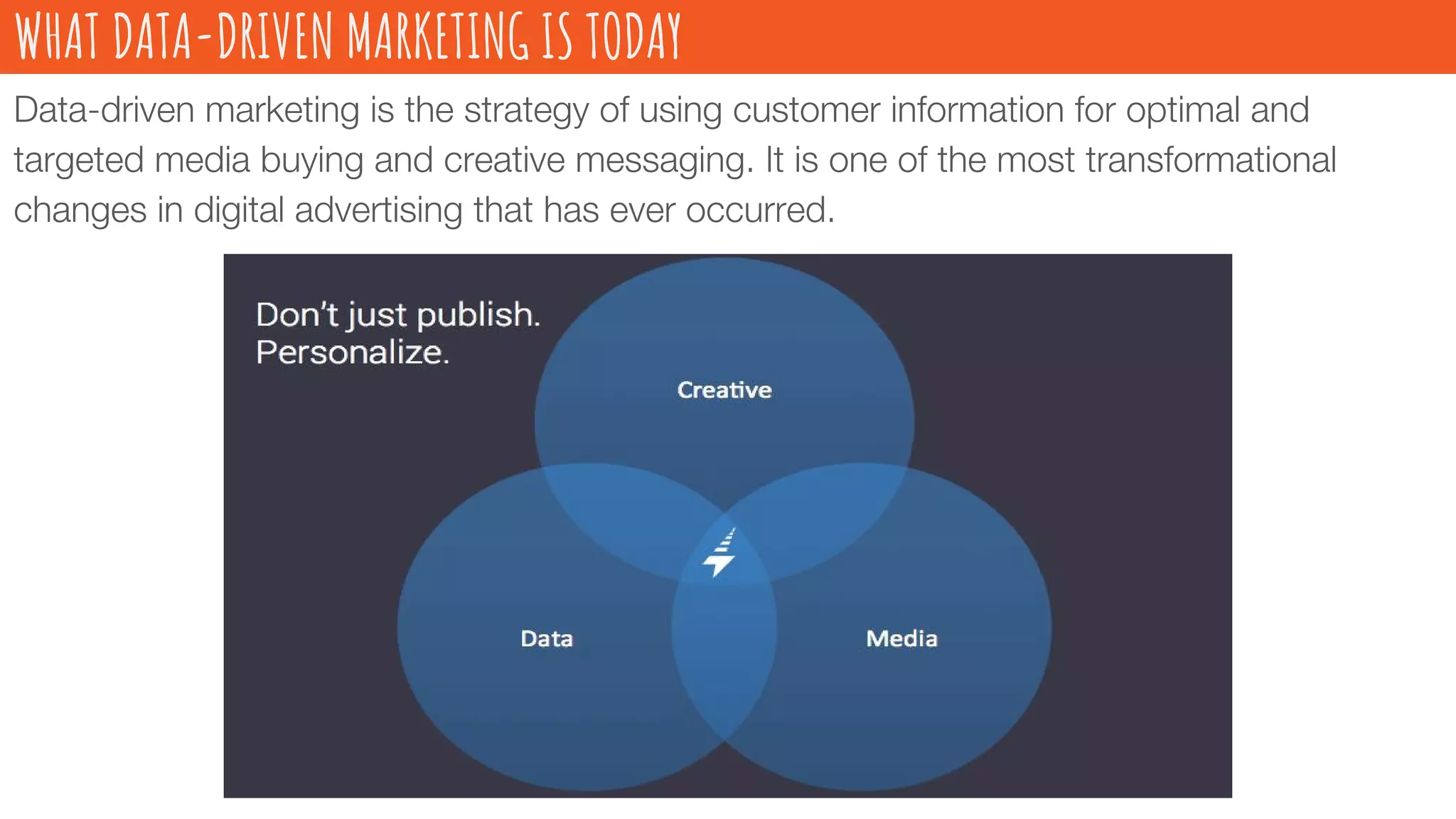
WHAT DATA-DRIVEN MARKETING IS TODAY
Data-driven marketing allows advertisers to be able to customize creatives based on
behavioral, contextual, psychographic, and geographic profiles of customers leading to
the following benefits;
1. More efficient media buying. Data-driven marketing is probably the most advanced in the programmatic buying sector. By
leveraging algorithms and machine learning, ad agencies and marketers are removing a lot of the guesswork from media
planning and buying.
2. Targeting the right consumers. Ad spends and marketing messages are optimized to be shown only to the appropriate
targets for the marketing campaign.
3. Messaging audiences with relevant messages. The age of generic, one-size fits all marketing messages is over. There is
still room for these big ideas for some brands, but for most companies, marketing messages must get more granular in order
to be relevant enough to resonate with consumers.
This people-first marketing strategy is more personalized. It has also been responsible
for driving considerable ROIs for marketers.
WHY DATA-DRIVEN MARKETING ?
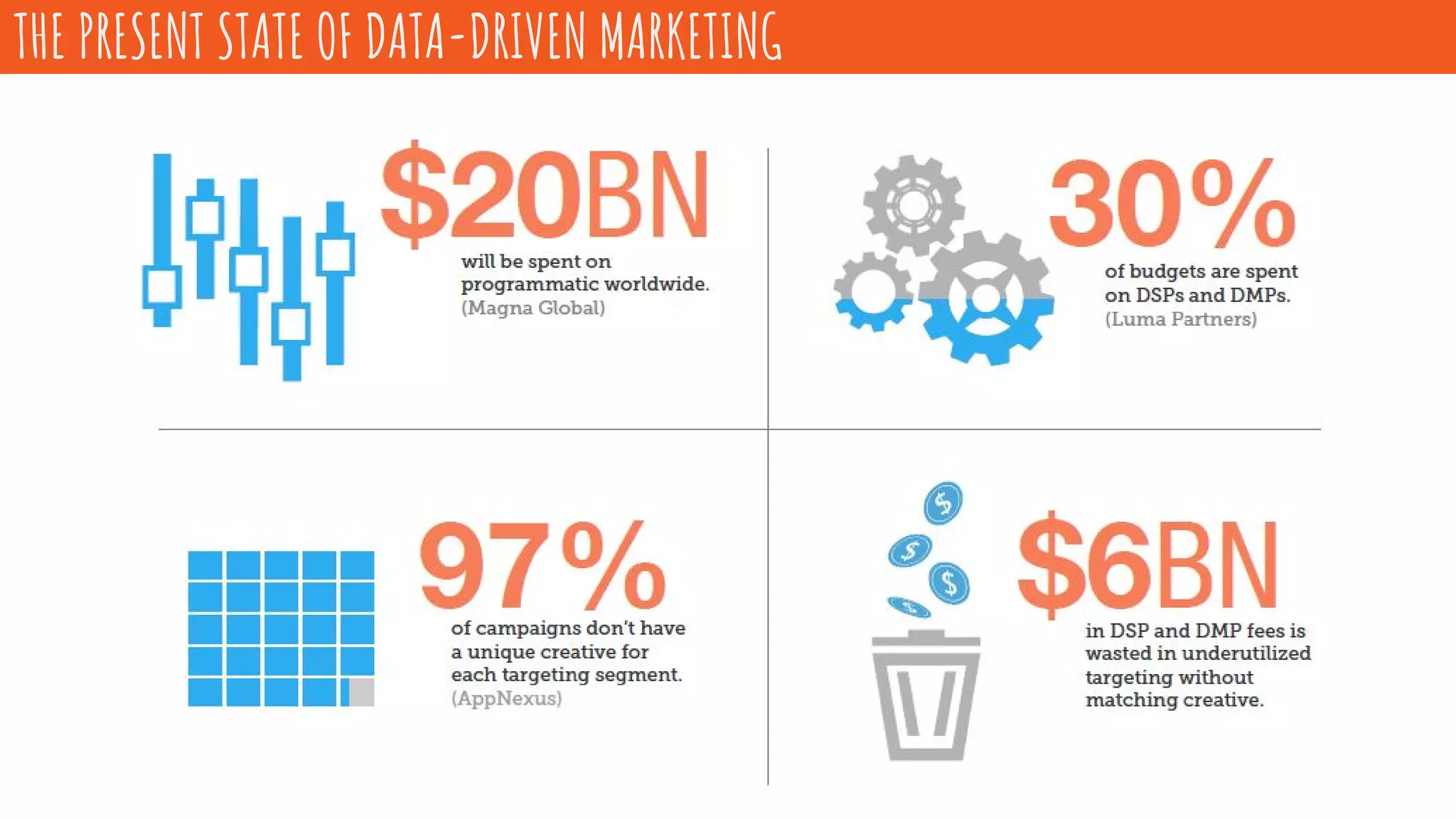
THE PRESENT STATE OF DATA-DRIVEN MARKETING
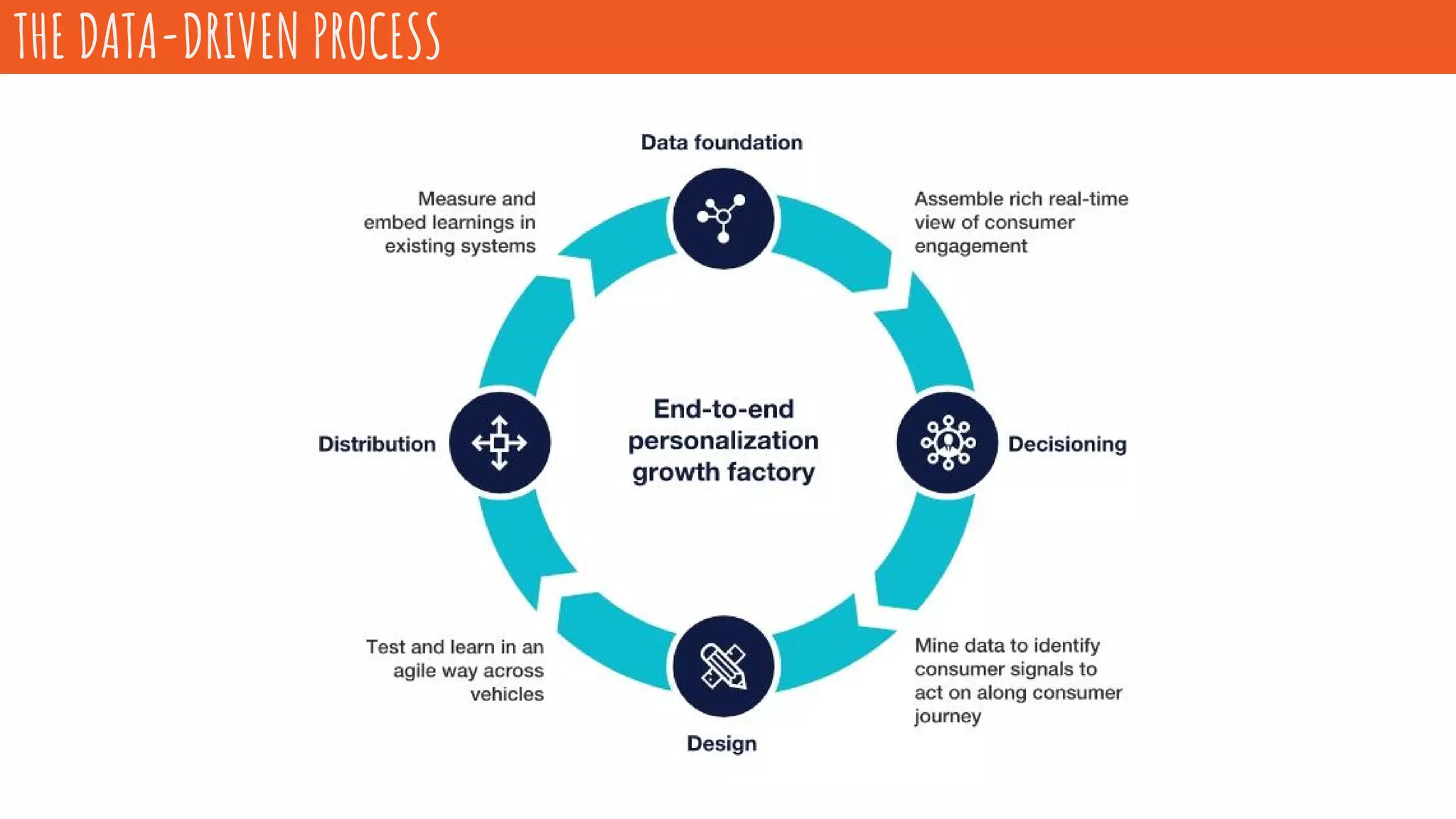
THE DATA-DRIVEN PROCESS
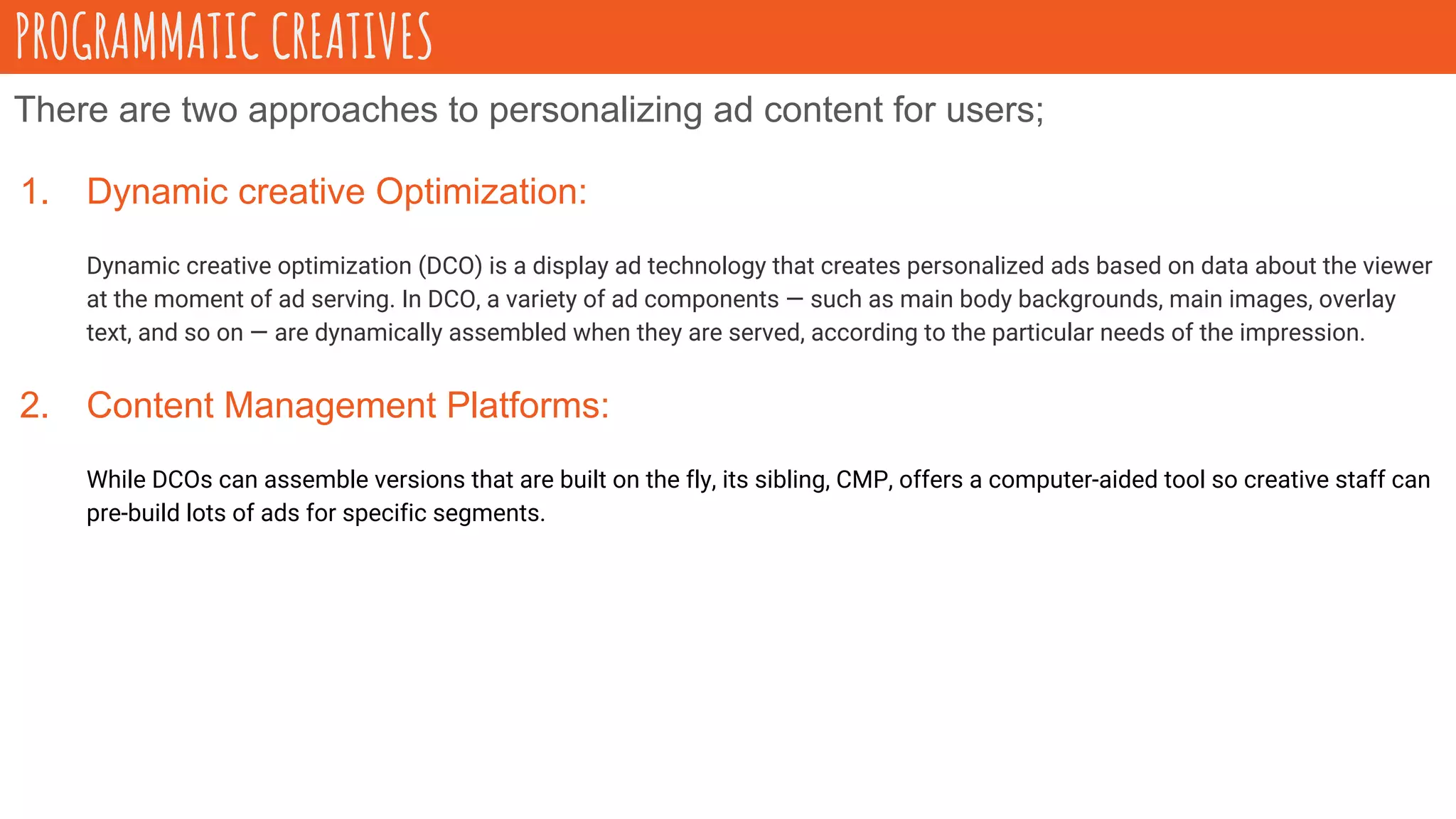
There are two approaches to personalizing ad content for users;
1. Dynamic creative Optimization:
Dynamic creative optimization (DCO) is a display ad technology that creates personalized ads based on data about the viewer
at the moment of ad serving. In DCO, a variety of ad components — such as main body backgrounds, main images, overlay
text, and so on — are dynamically assembled when they are served, according to the particular needs of the impression.
2. Content Management Platforms:
While DCOs can assemble versions that are built on the fly, its sibling, CMP, offers a computer-aided tool so creative staff can
pre-build lots of ads for specific segments.
PROGRAMMATIC CREATIVES
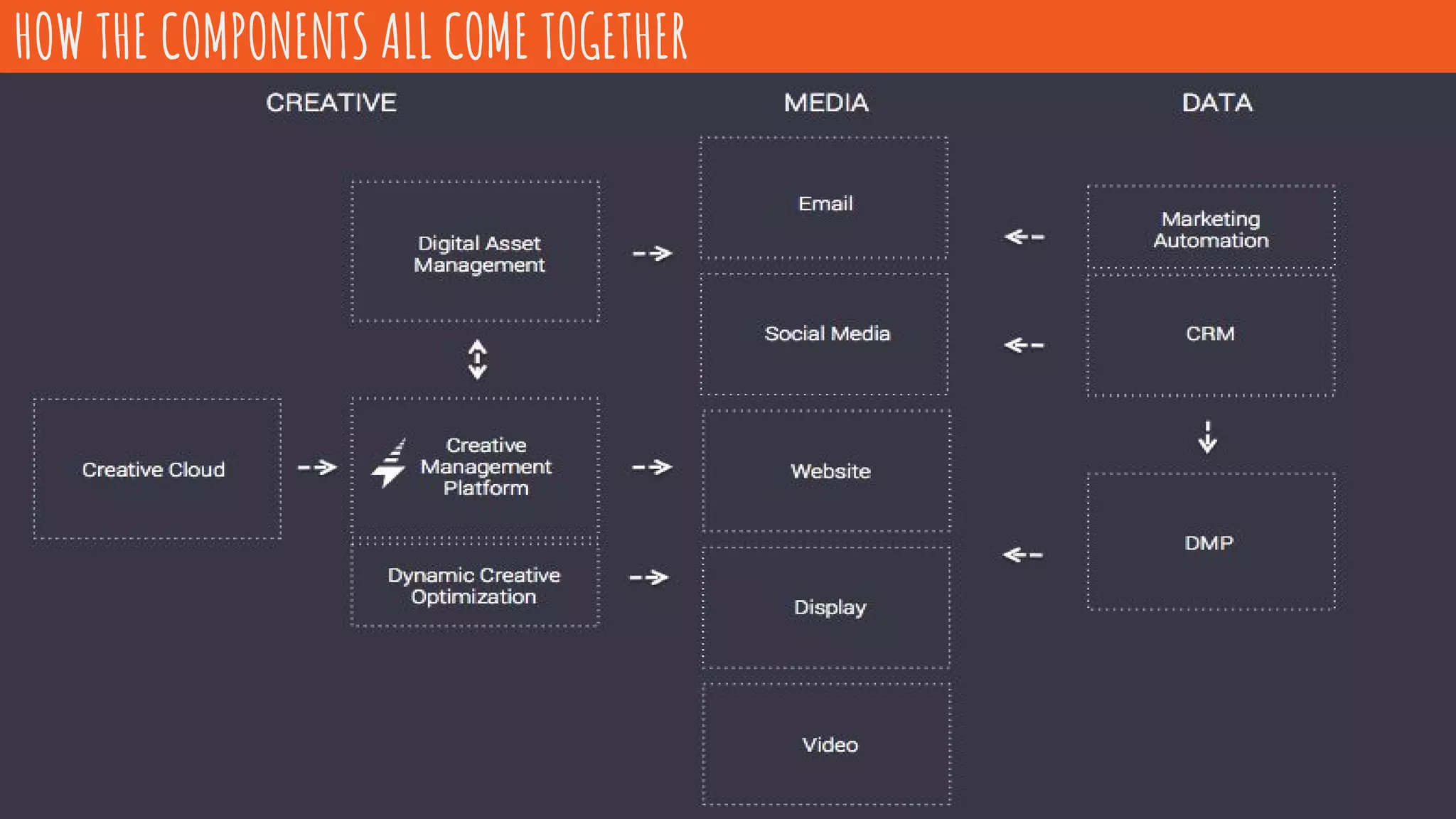
HOW THE COMPONENTS ALL COME TOGETHER
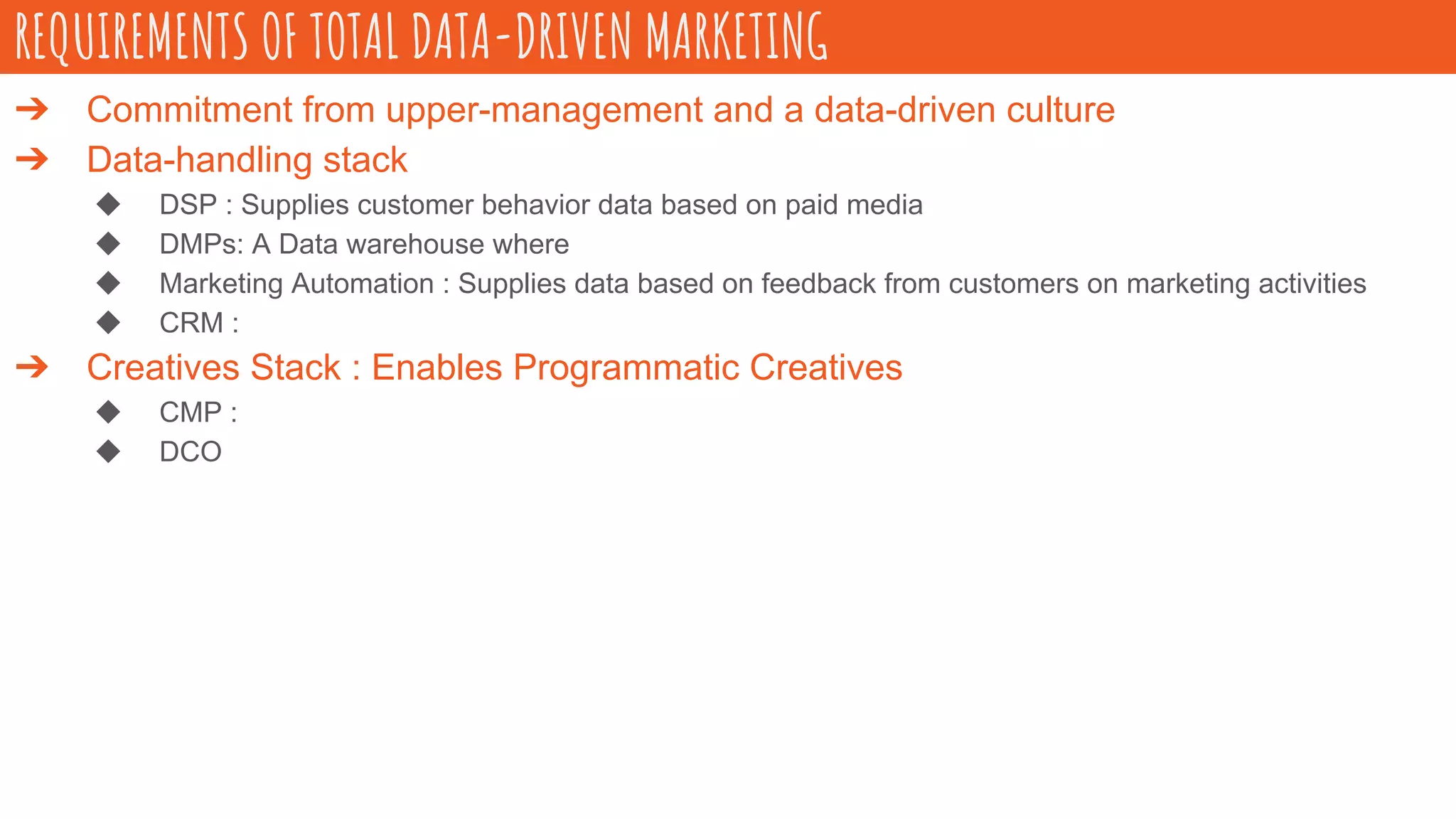
➔ Commitment from upper-management and a data-driven culture
➔ Data-handling stack
◆ DSP : Supplies customer behavior data based on paid media
◆ DMPs: A Data warehouse where
◆ Marketing Automation : Supplies data based on feedback from customers on marketing activities
◆ CRM :
➔ Creatives Stack : Enables Programmatic Creatives
◆ CMP :
◆ DCO
REQUIREMENTS OF TOTAL DATA-DRIVEN MARKETING
➔ In as much as data-driven marketing involves many new technologies and
processes working in concert. At the core of it all, it’s still about incorporating data to
place relevant ads infront of users.
➔ The world; marketing aside, is becoming increasingly more data-driven. Internet of
things (Iot) and various sensors in addition to data from internet
companies/services, fintech and martech. A paradigm shift is required now in most
jobs that decisions are made from making decisions based on gut feelings to
basing decisions on insights gathered from data.
FINAL THOUGHTS
THANK YOU

Data driven marketing

  • 1.
  • 2.
    ➔ Simply, Datarefer to the measurement or recording of attributes of an event or entity SO WHAT IS THIS THING CALLED DATA?
  • 3.
  • 4.
  • 5.
  • 6.
    Data-driven marketing allowsadvertisers to be able to customize creatives based on behavioral, contextual, psychographic, and geographic profiles of customers leading to the following benefits; 1. More efficient media buying. Data-driven marketing is probably the most advanced in the programmatic buying sector. By leveraging algorithms and machine learning, ad agencies and marketers are removing a lot of the guesswork from media planning and buying. 2. Targeting the right consumers. Ad spends and marketing messages are optimized to be shown only to the appropriate targets for the marketing campaign. 3. Messaging audiences with relevant messages. The age of generic, one-size fits all marketing messages is over. There is still room for these big ideas for some brands, but for most companies, marketing messages must get more granular in order to be relevant enough to resonate with consumers. This people-first marketing strategy is more personalized. It has also been responsible for driving considerable ROIs for marketers. WHY DATA-DRIVEN MARKETING ?
  • 7.
    THE PRESENT STATEOF DATA-DRIVEN MARKETING
  • 8.
  • 9.
    There are twoapproaches to personalizing ad content for users; 1. Dynamic creative Optimization: Dynamic creative optimization (DCO) is a display ad technology that creates personalized ads based on data about the viewer at the moment of ad serving. In DCO, a variety of ad components — such as main body backgrounds, main images, overlay text, and so on — are dynamically assembled when they are served, according to the particular needs of the impression. 2. Content Management Platforms: While DCOs can assemble versions that are built on the fly, its sibling, CMP, offers a computer-aided tool so creative staff can pre-build lots of ads for specific segments. PROGRAMMATIC CREATIVES
  • 10.
    HOW THE COMPONENTSALL COME TOGETHER
  • 11.
    ➔ Commitment fromupper-management and a data-driven culture ➔ Data-handling stack ◆ DSP : Supplies customer behavior data based on paid media ◆ DMPs: A Data warehouse where ◆ Marketing Automation : Supplies data based on feedback from customers on marketing activities ◆ CRM : ➔ Creatives Stack : Enables Programmatic Creatives ◆ CMP : ◆ DCO REQUIREMENTS OF TOTAL DATA-DRIVEN MARKETING
  • 12.
    ➔ In asmuch as data-driven marketing involves many new technologies and processes working in concert. At the core of it all, it’s still about incorporating data to place relevant ads infront of users. ➔ The world; marketing aside, is becoming increasingly more data-driven. Internet of things (Iot) and various sensors in addition to data from internet companies/services, fintech and martech. A paradigm shift is required now in most jobs that decisions are made from making decisions based on gut feelings to basing decisions on insights gathered from data. FINAL THOUGHTS
  • 13.