Attribution with Google Analytics.
How to do it… and why you shouldn’t!.

Dara Fitzgerald
Head of Insight
www.freshegg.co.uk
@darafitzgerald
Multi-session conversion analysis.
The tools available.
• Multi-Channel Funnels
• Attribution Modelling Tool
• Data-Driven Attribution (Premium only)
Multi-Channel Funnels.
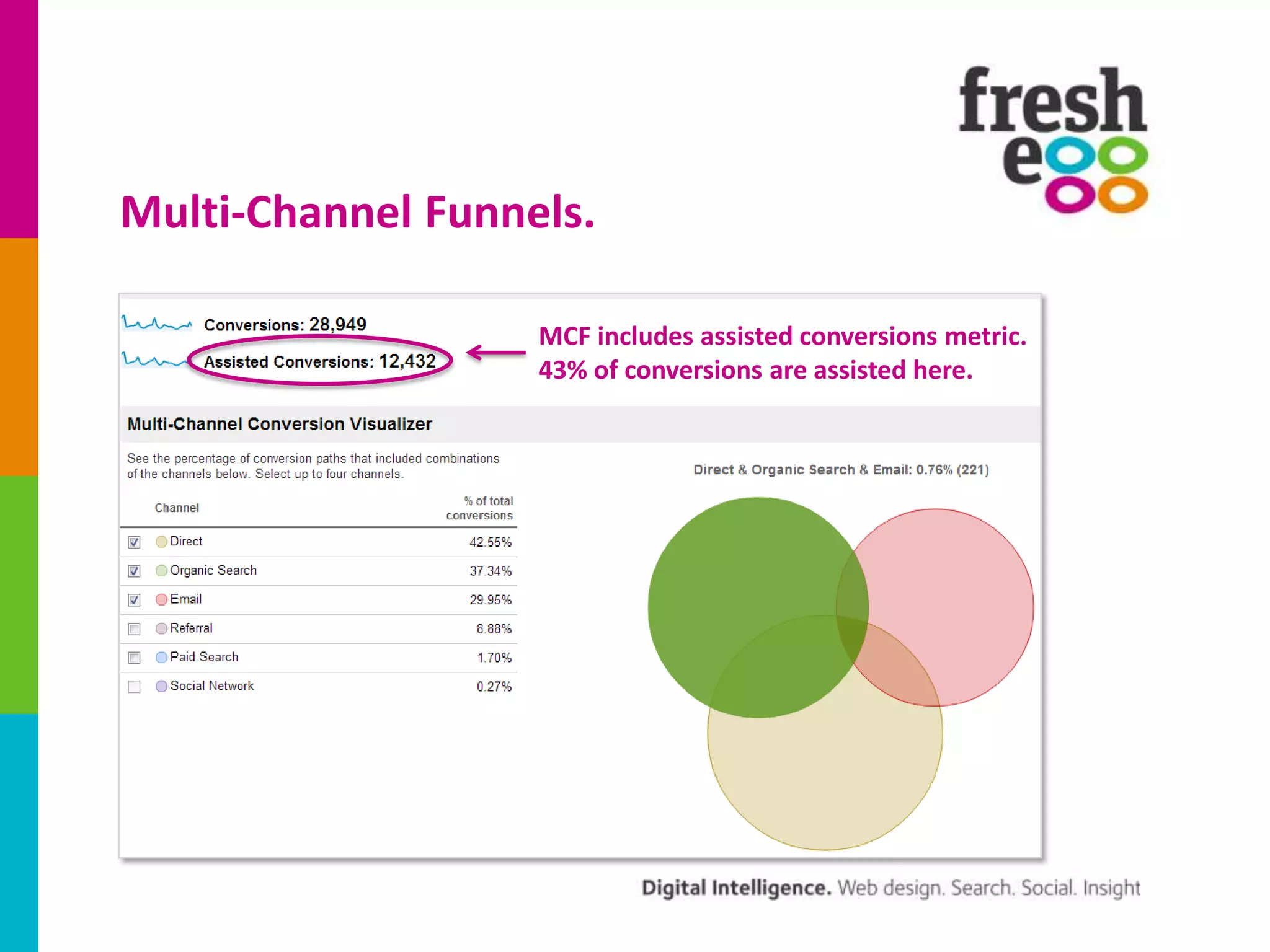
MCF includes assisted conversions metric.
43% of conversions are assisted here.
Multi-Channel Funnels.
• Conversion tracking required (Goals and/or Ecommerce)
• Ensure correct campaign tagging or the data is meaningless
• AdWords auto-tagging
• Manual campaign parameters (URL builder)

•

• utm_source
• utm_medium
• utm_campaign
E.g.
http://www.abc.com/?utm_source=mailer&utm_medium=email&utm_campaign=sep13
Multi-Channel Funnels.
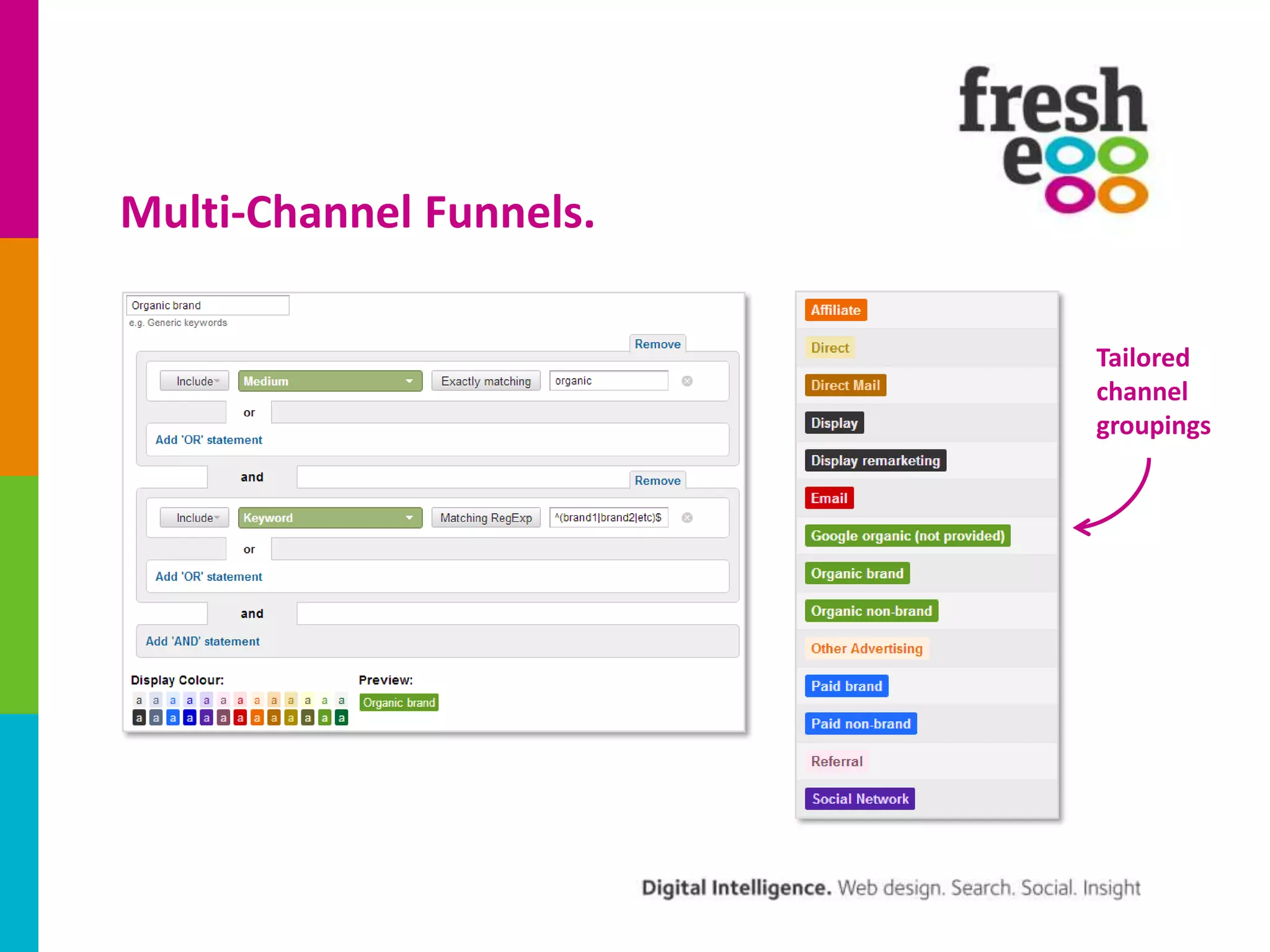
Tailored
channel
groupings
Multi-Channel Funnels.

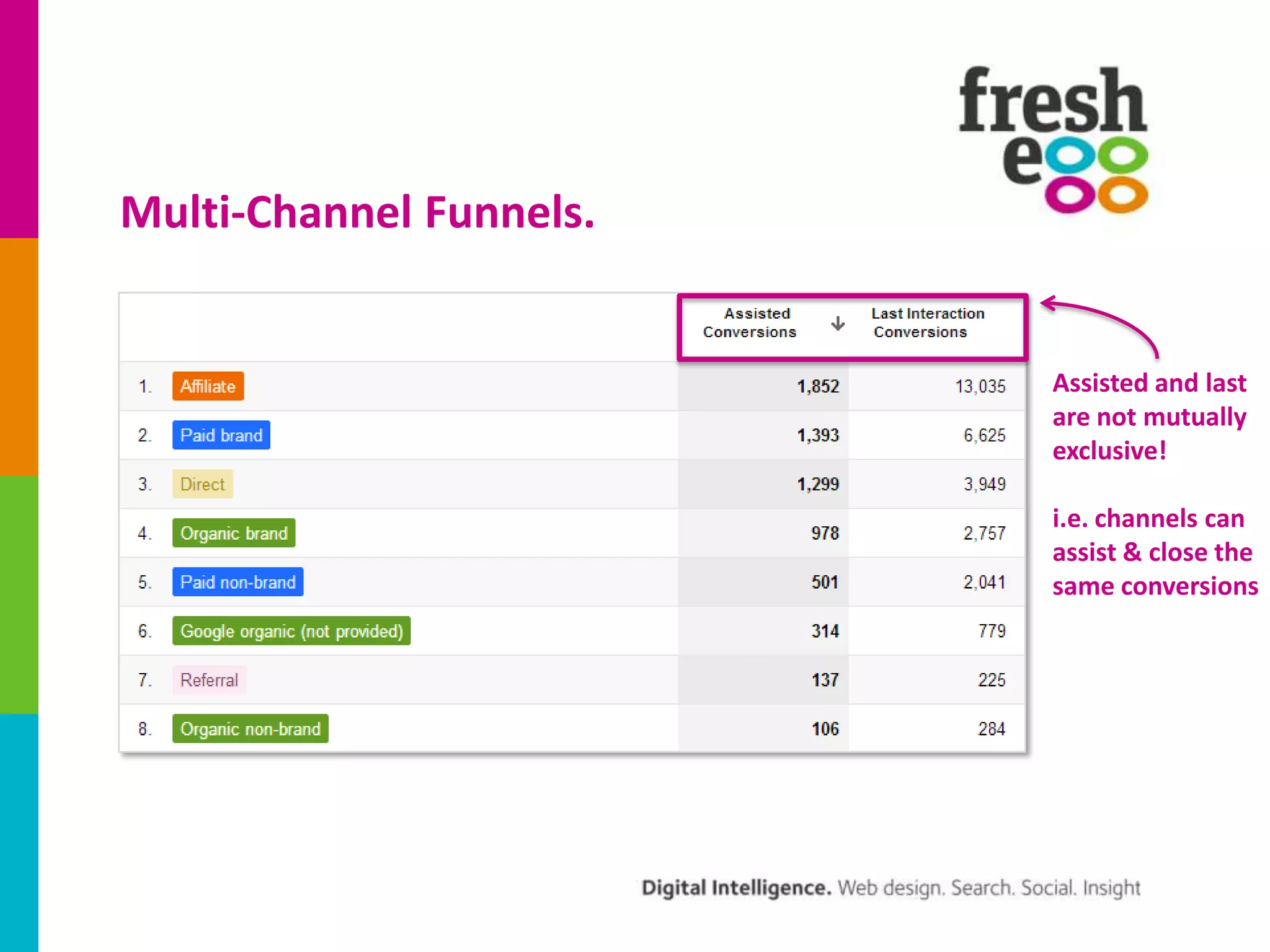
Assisted and last
are not mutually
exclusive!
i.e. channels can
assist & close the
same conversions
Multi-Channel Funnels.
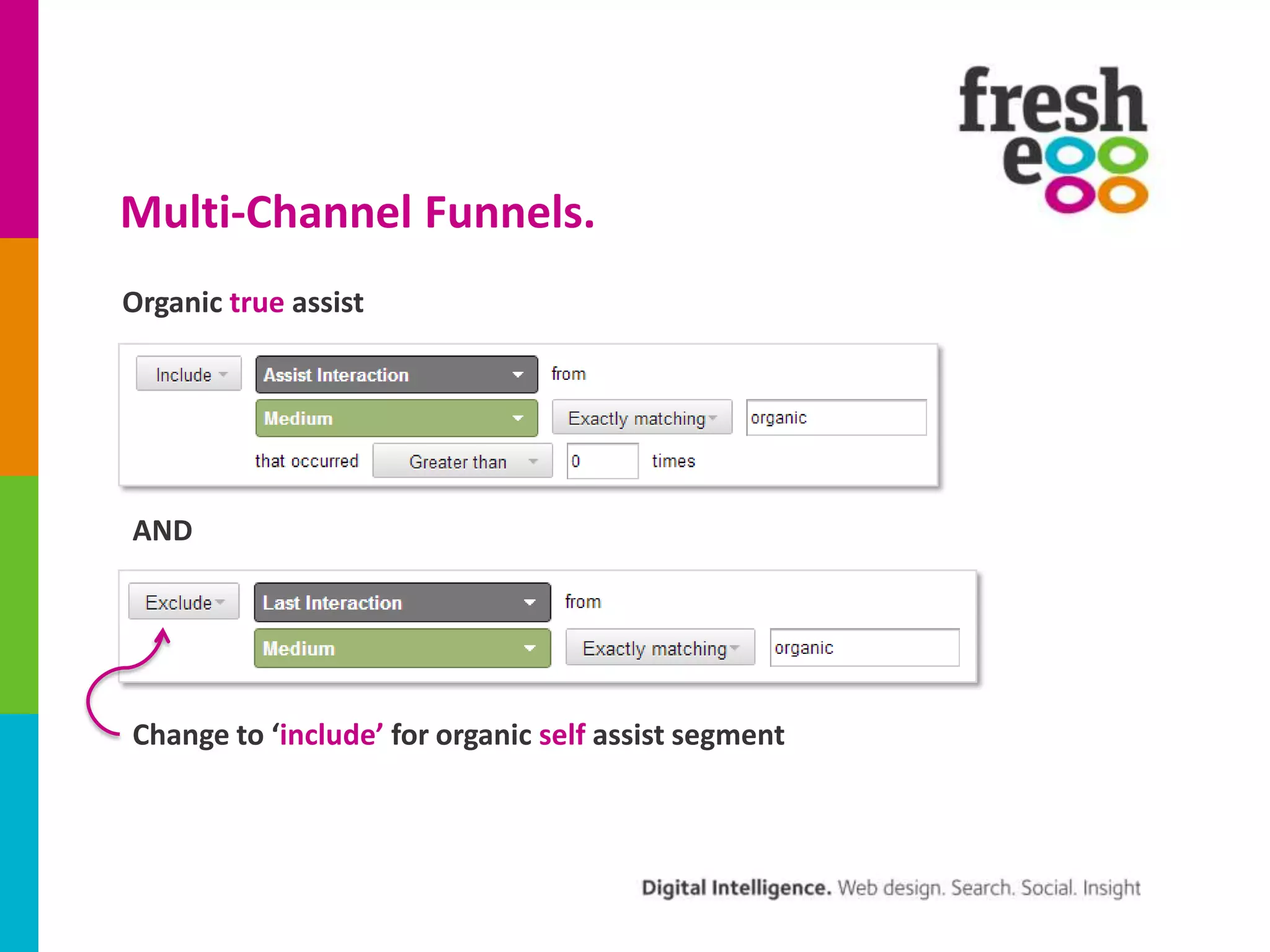
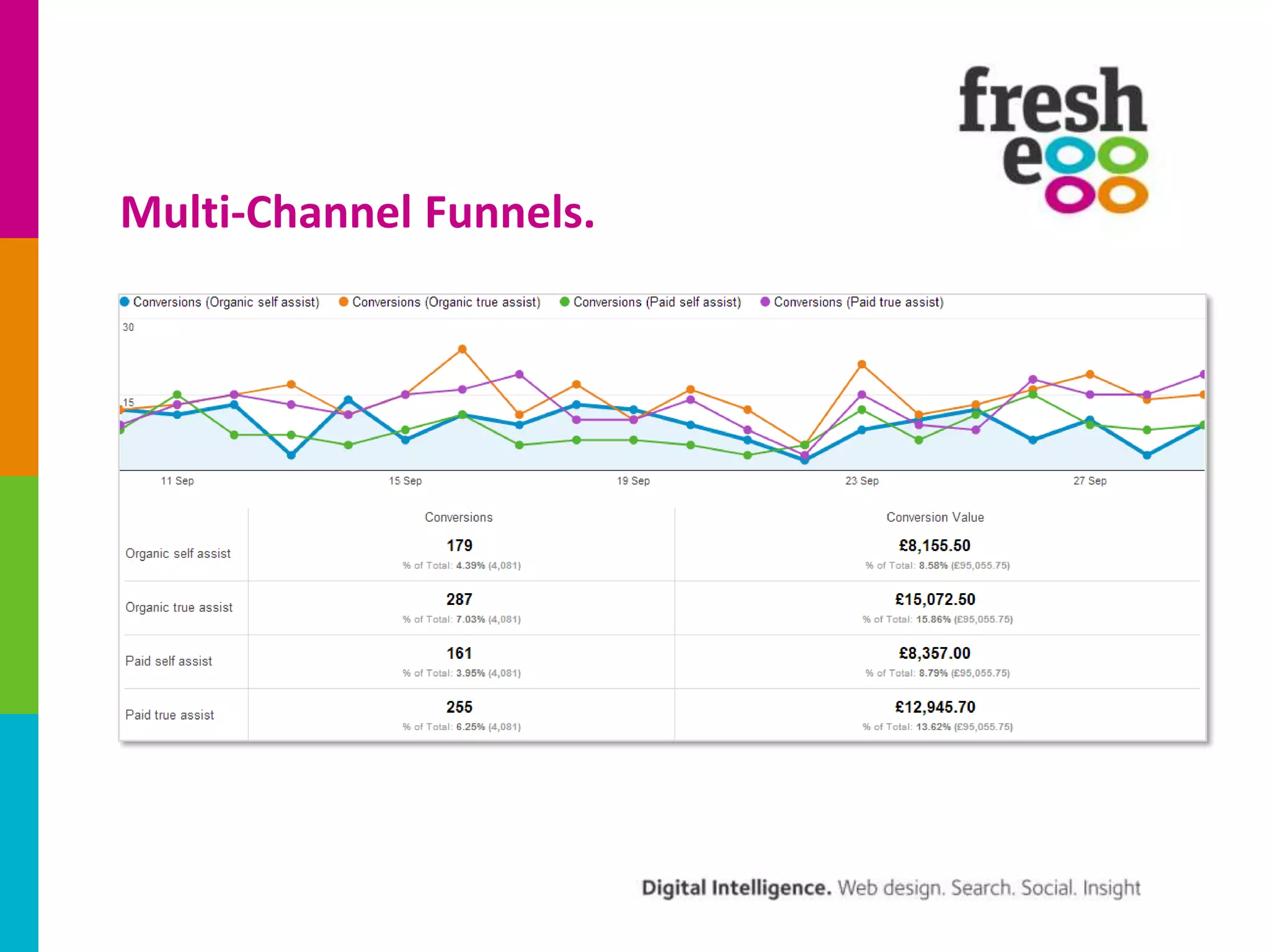
Organic true assist

AND

Change to ‘include’ for organic self assist segment
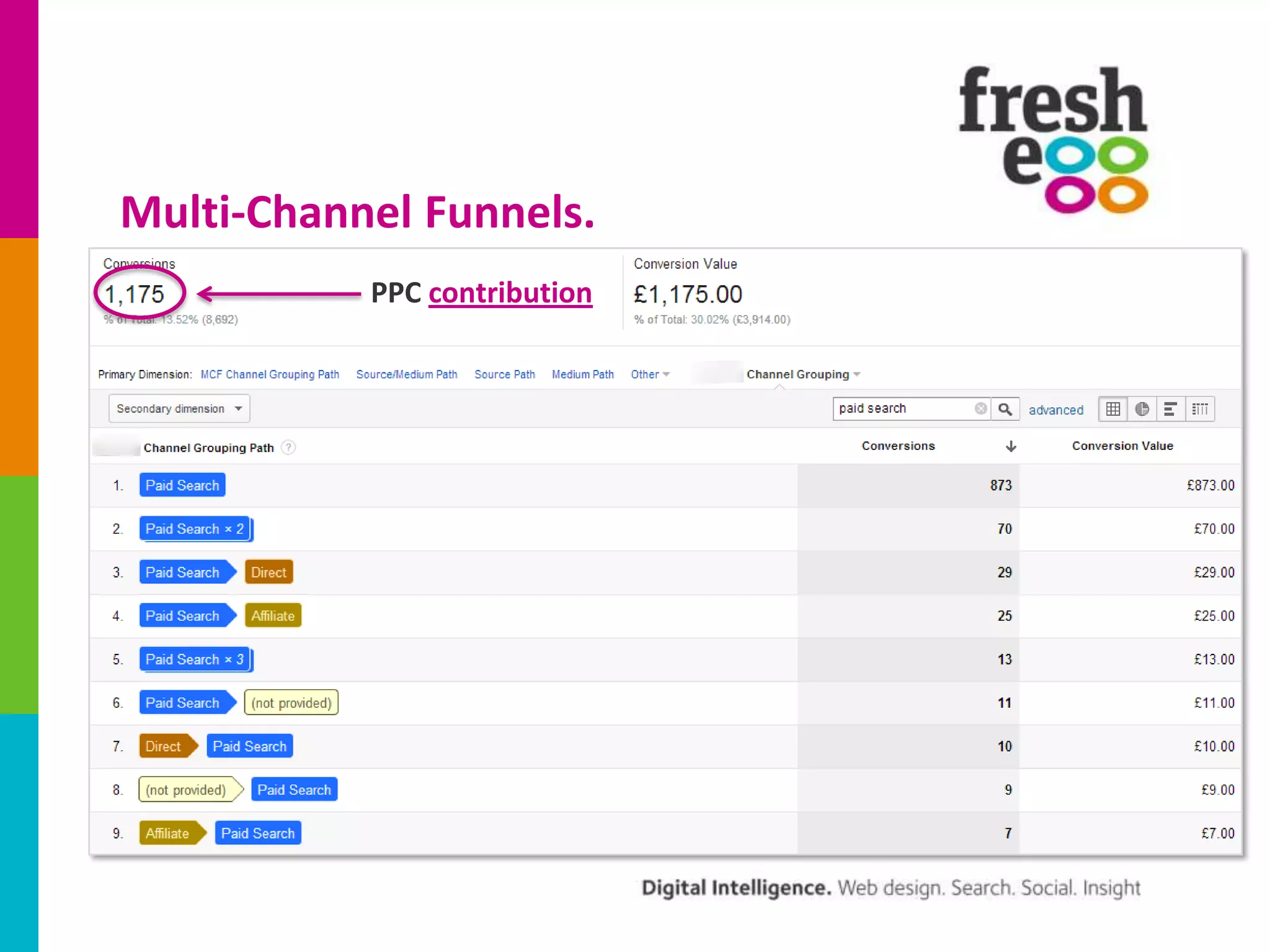
Multi-Channel Funnels.
PPC contribution
Attribution Modelling Tool.
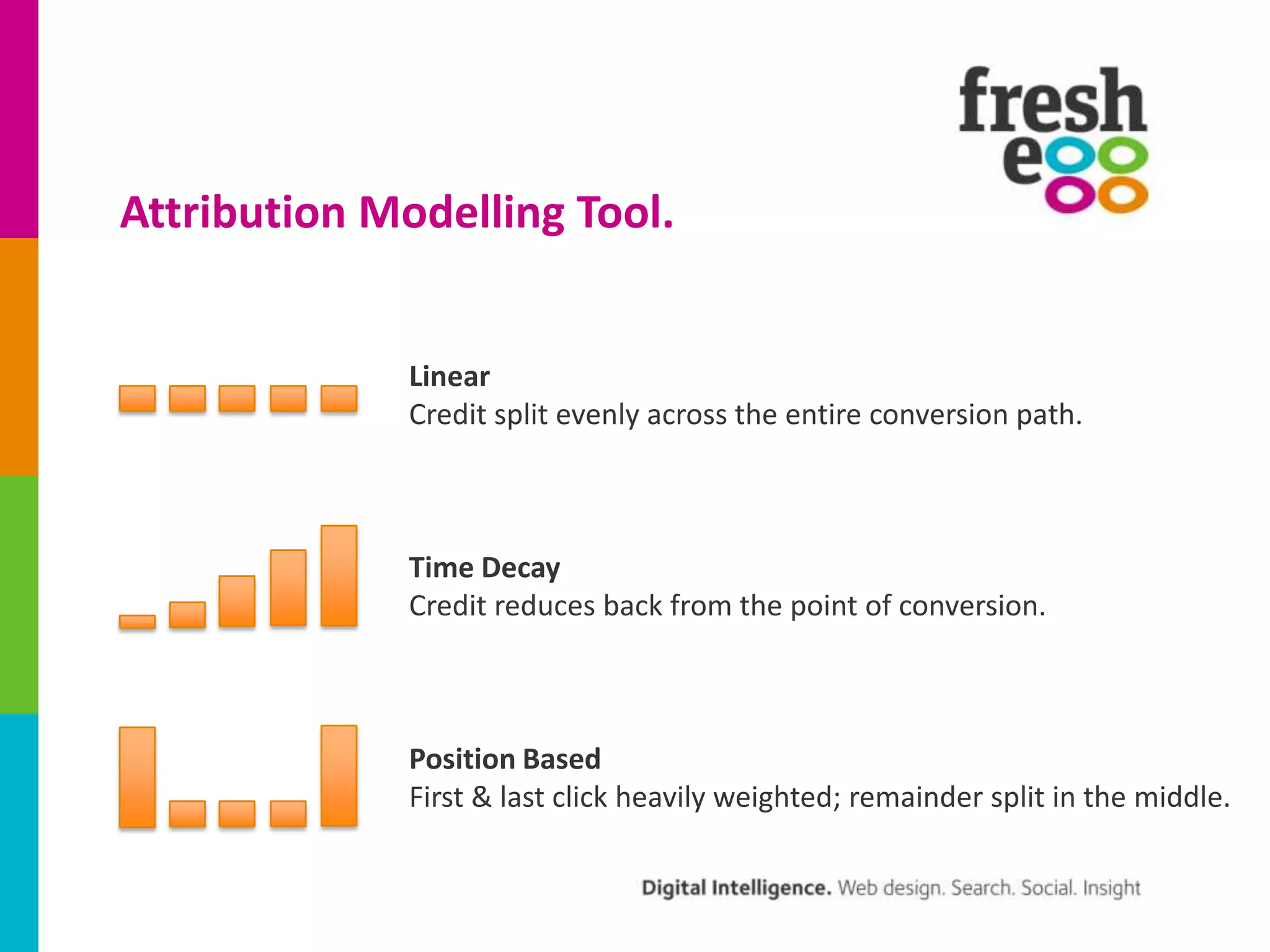
Linear
Credit split evenly across the entire conversion path.

Time Decay
Credit reduces back from the point of conversion.

Position Based
First & last click heavily weighted; remainder split in the middle.
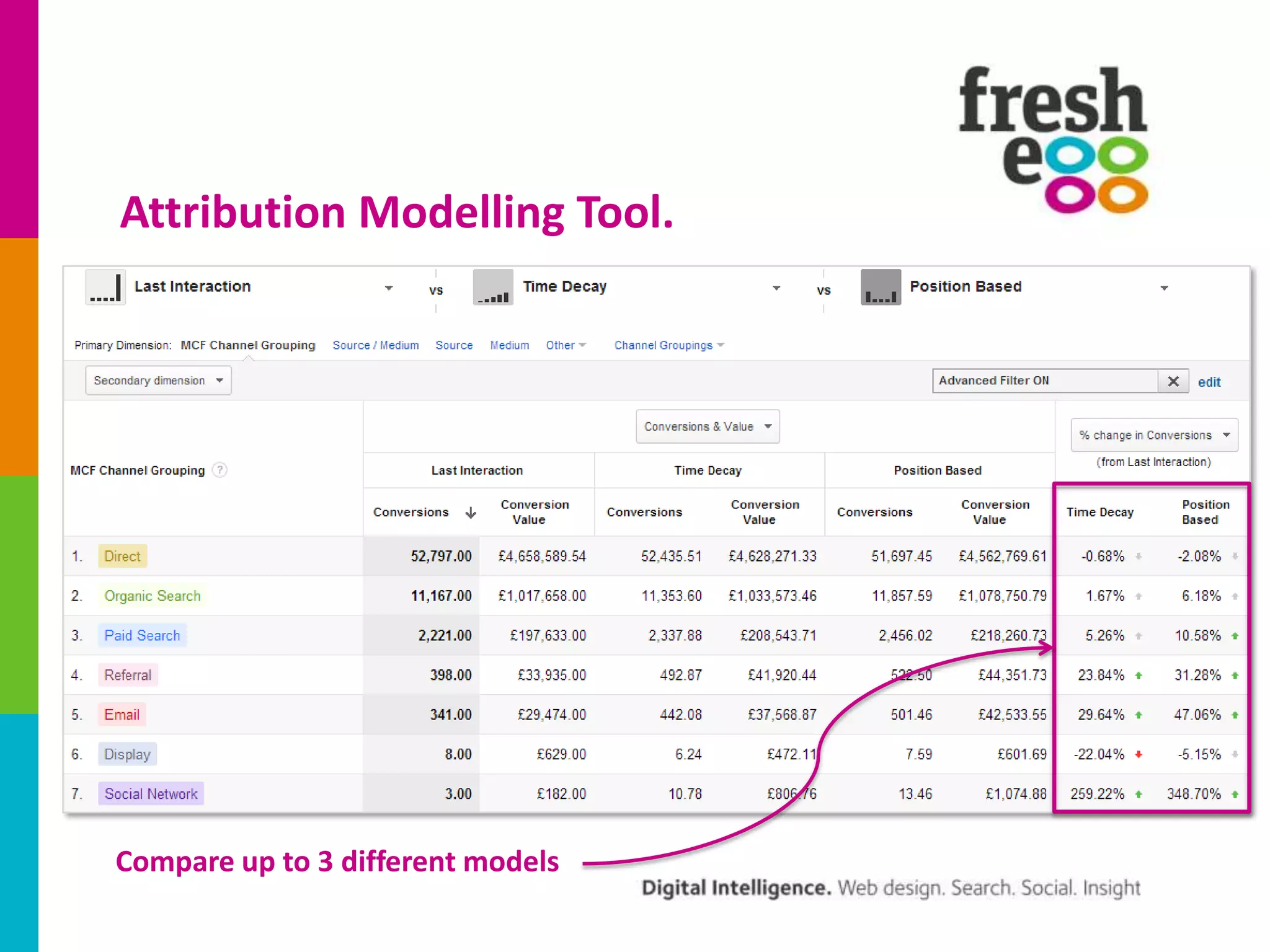
Attribution Modelling Tool.

Compare up to 3 different models
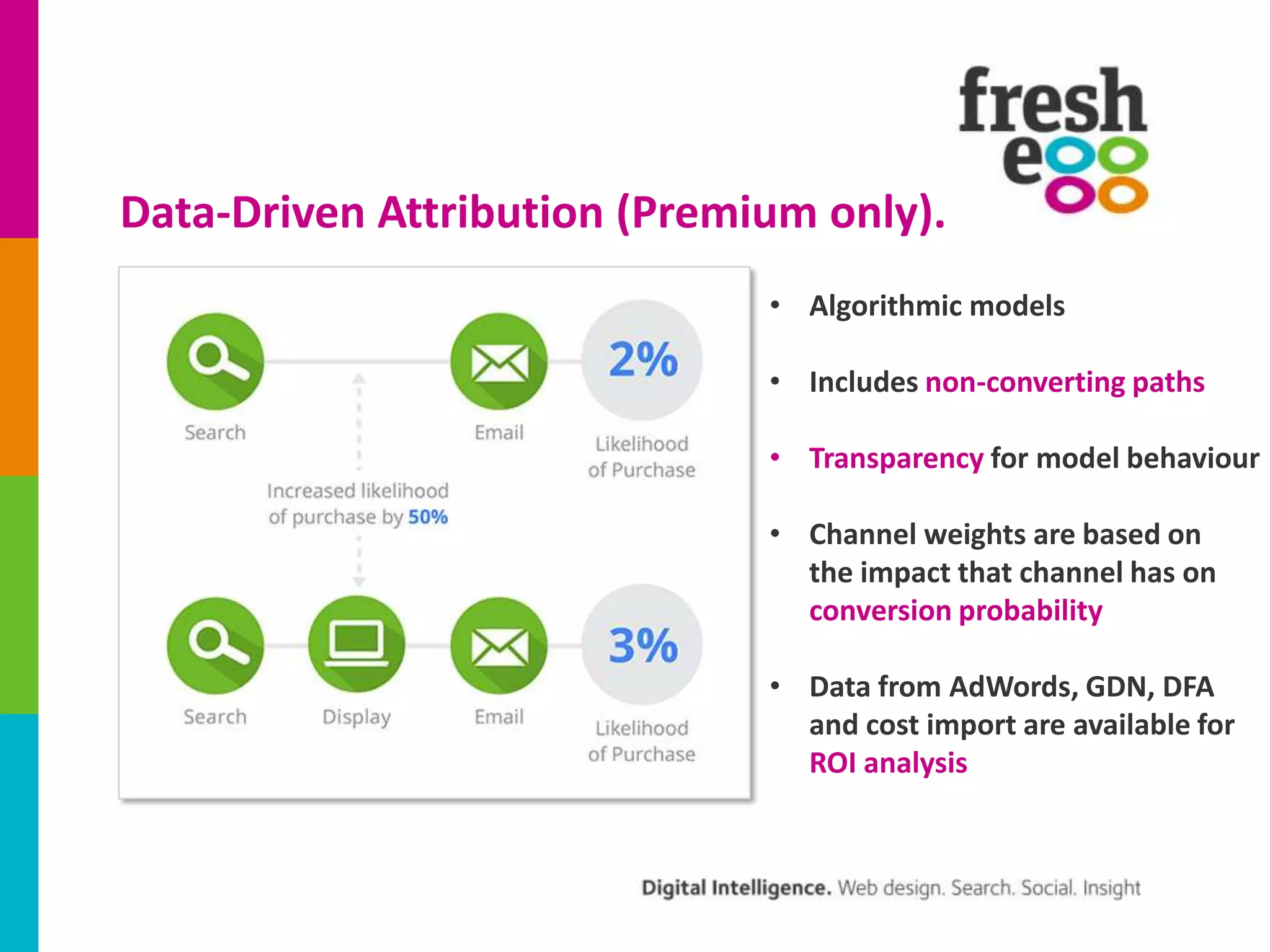
Data-Driven Attribution (Premium only).
• Algorithmic models
• Includes non-converting paths
• Transparency for model behaviour
• Channel weights are based on
the impact that channel has on
conversion probability
• Data from AdWords, GDN, DFA
and cost import are available for
ROI analysis
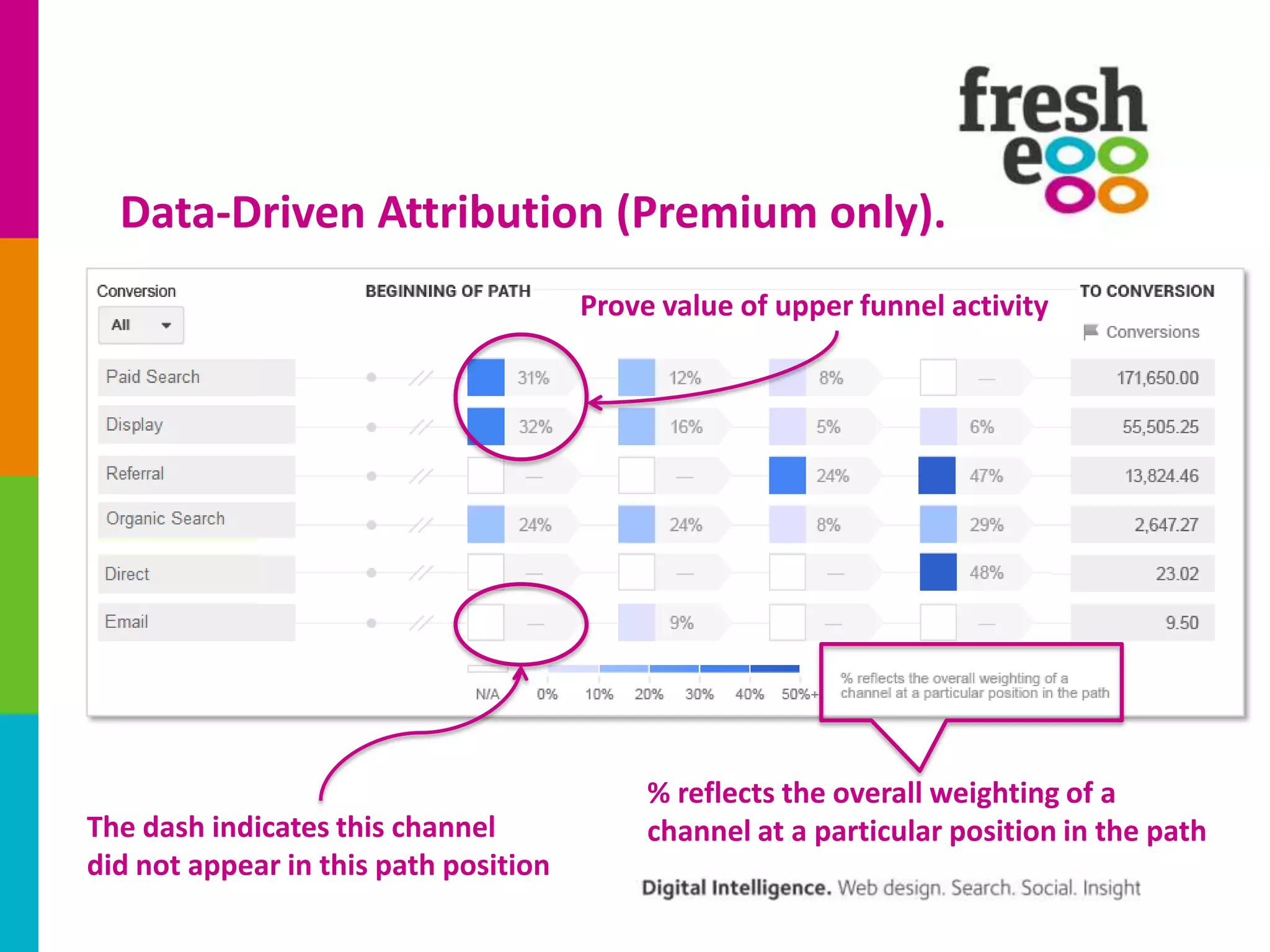
Data-Driven Attribution (Premium only).
Prove value of upper funnel activity

The dash indicates this channel
did not appear in this path position

% reflects the overall weighting of a
channel at a particular position in the path
What’s wrong with all this?
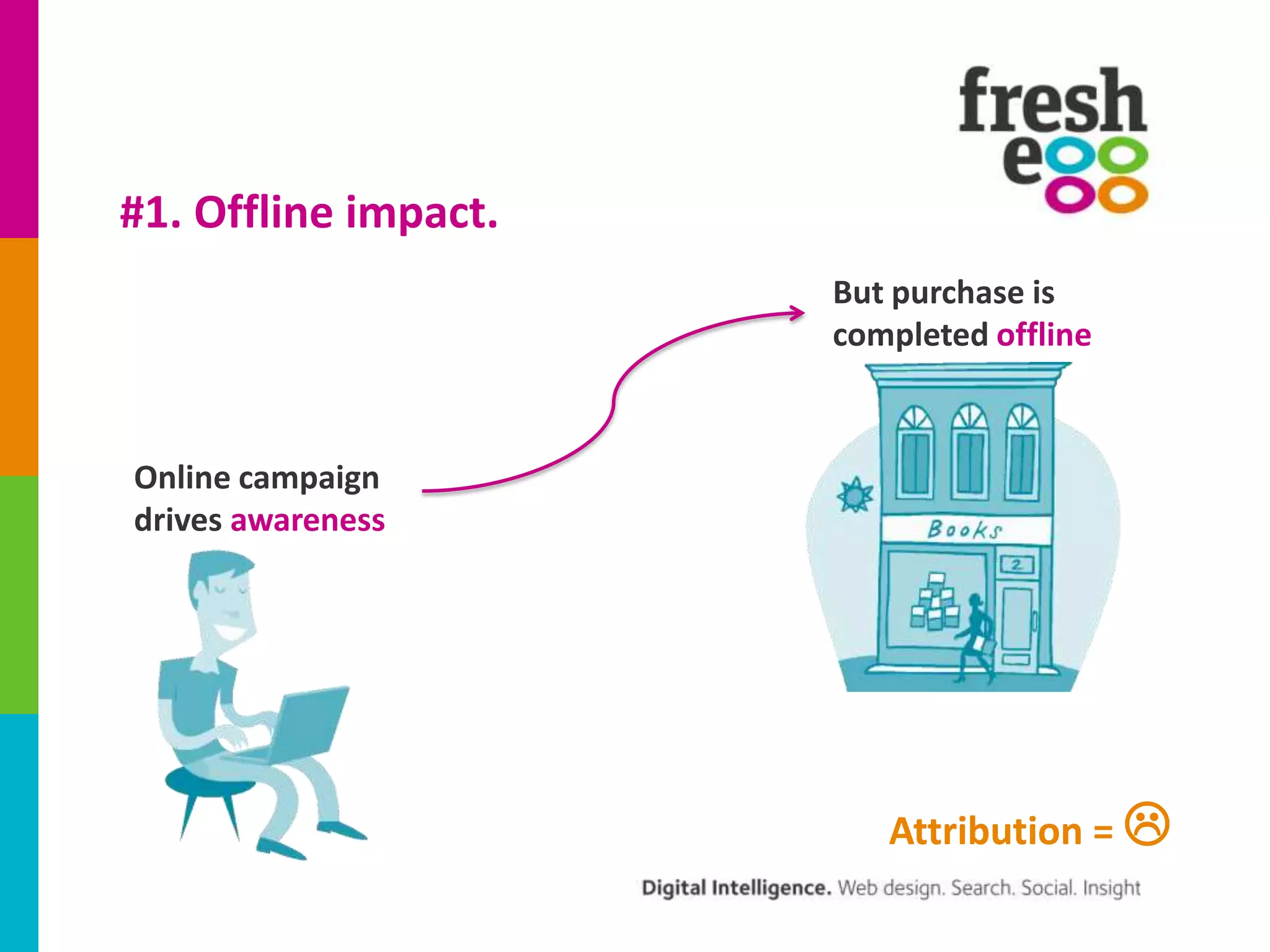
#1. Offline impact.
But purchase is
completed offline

Online campaign
drives awareness

Attribution = 
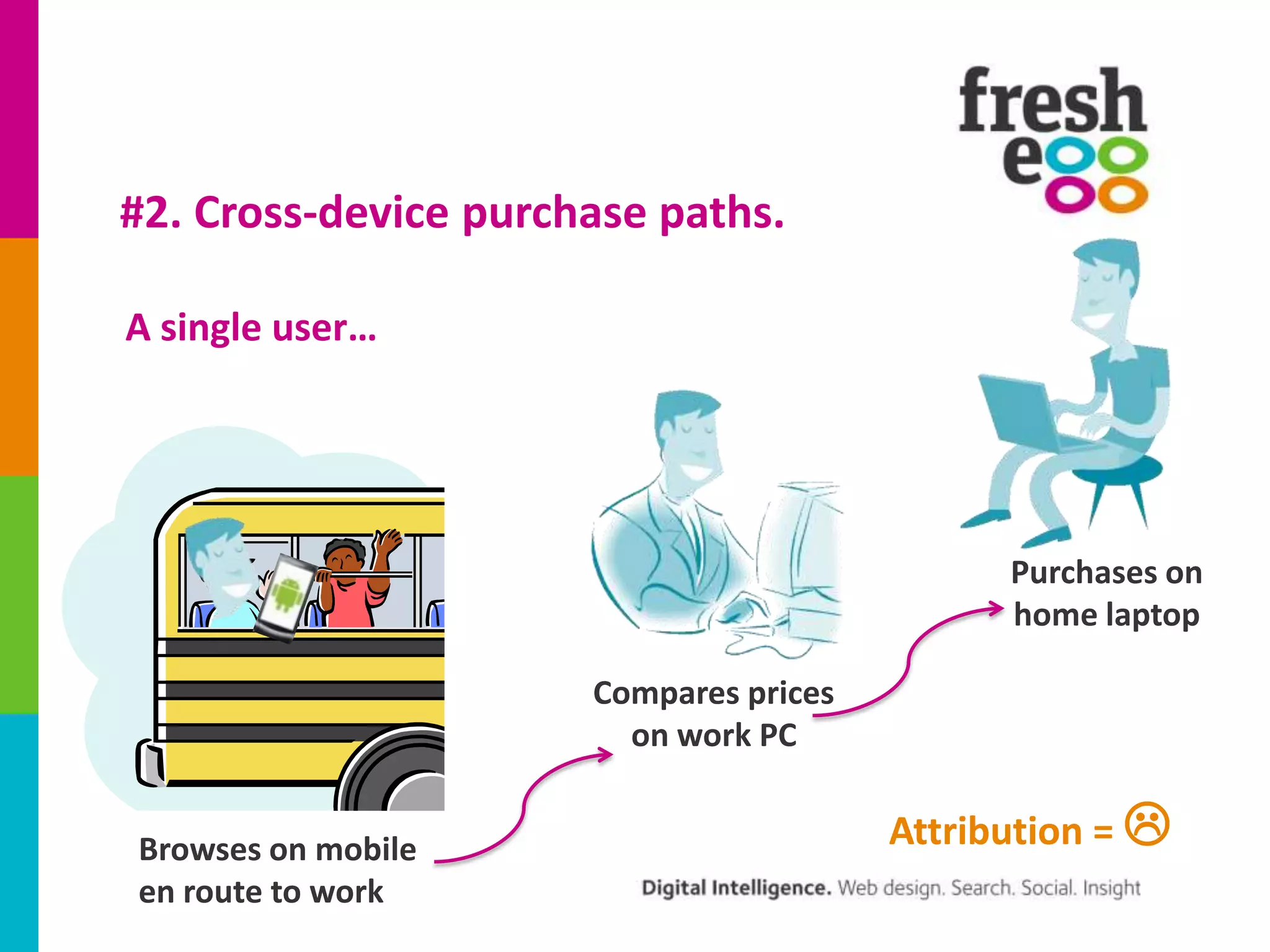
#2. Cross-device purchase paths.
A single user…

Purchases on
home laptop
Compares prices
on work PC
Browses on mobile
en route to work

Attribution = 
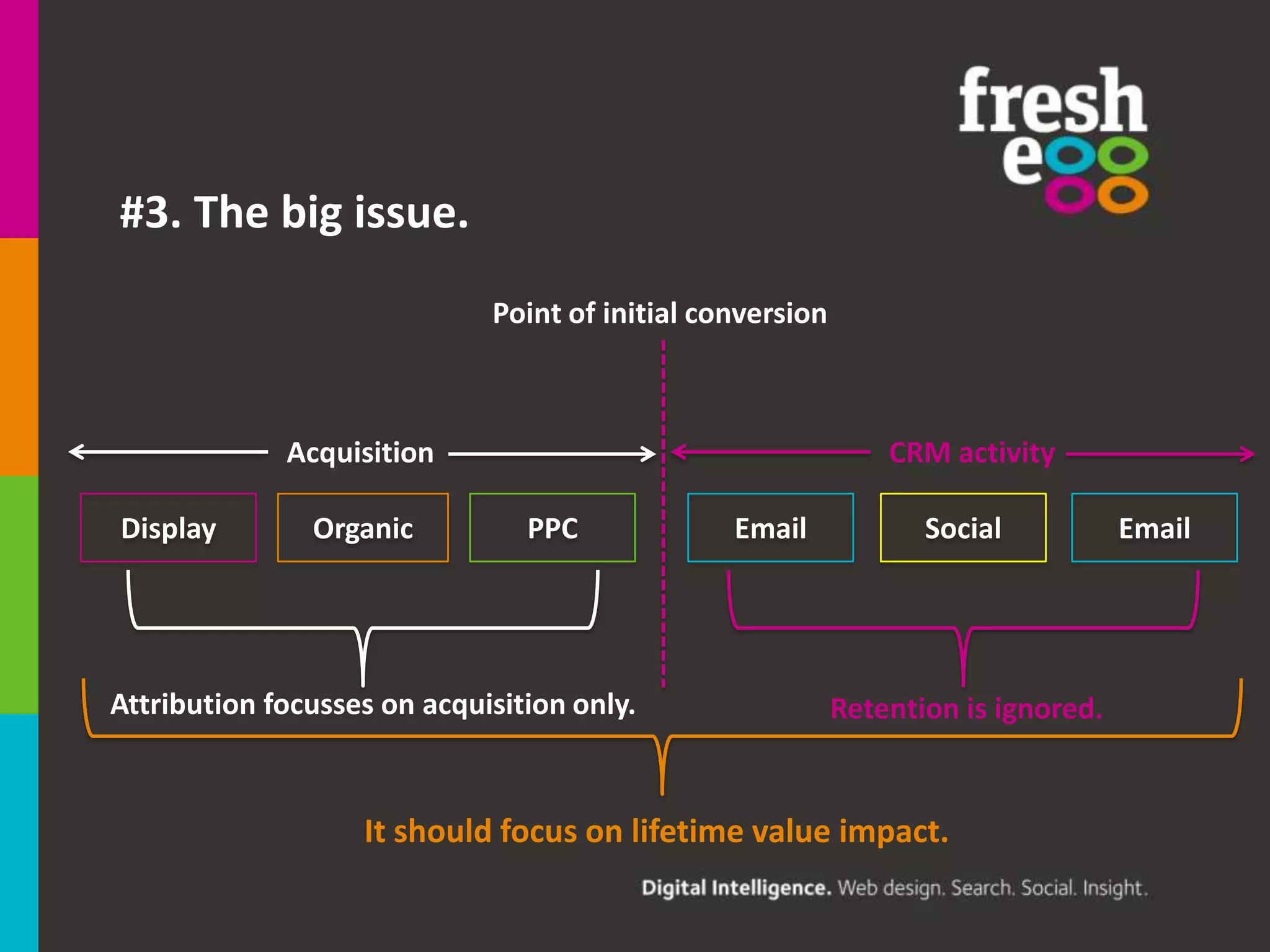
#3. The big issue.
Point of initial conversion

Acquisition
Display

Organic

CRM activity
PPC

Attribution focusses on acquisition only.

Email

Social

Retention is ignored.

It should focus on lifetime value impact.

Email
So, what should we be doing?
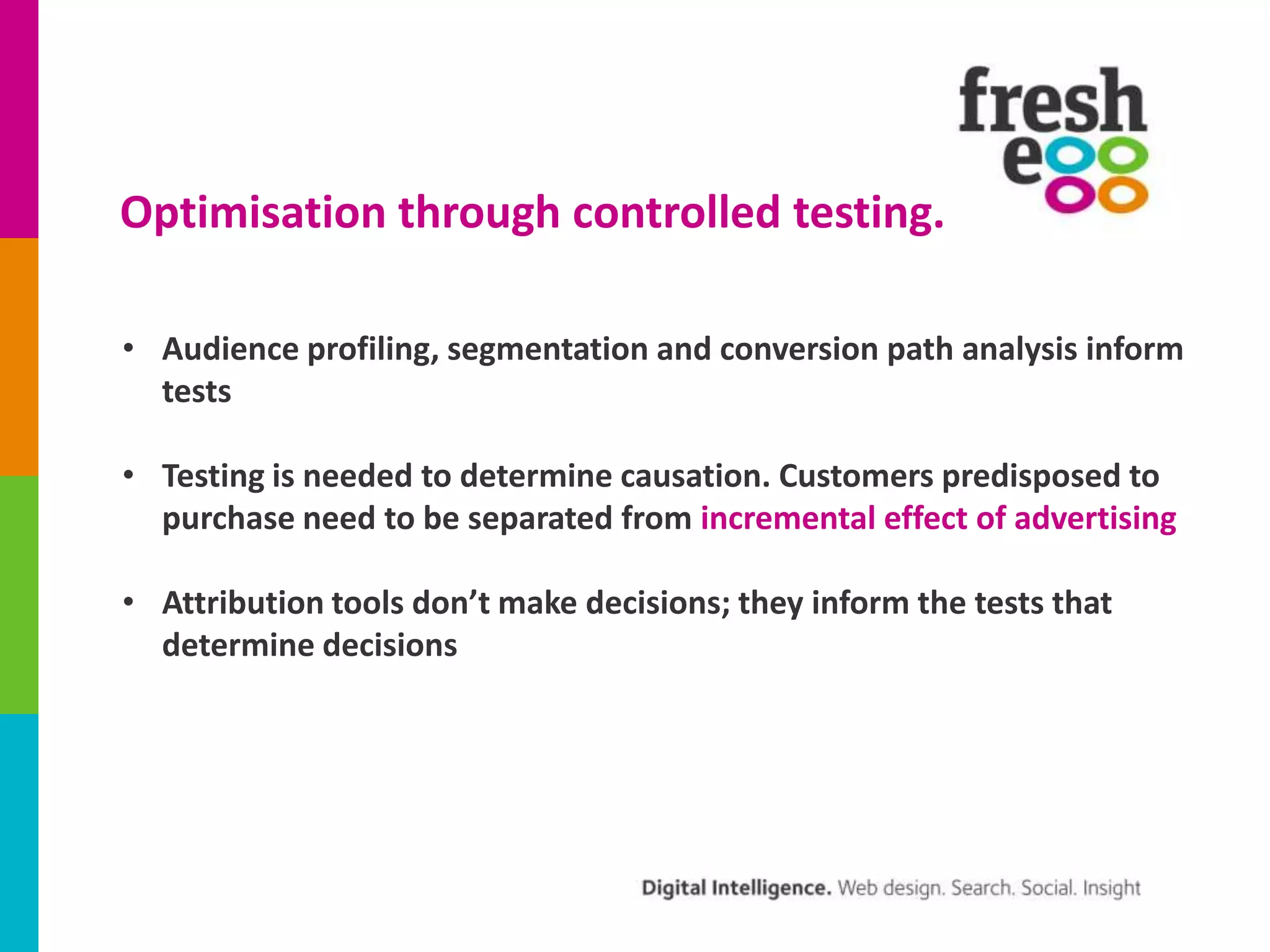
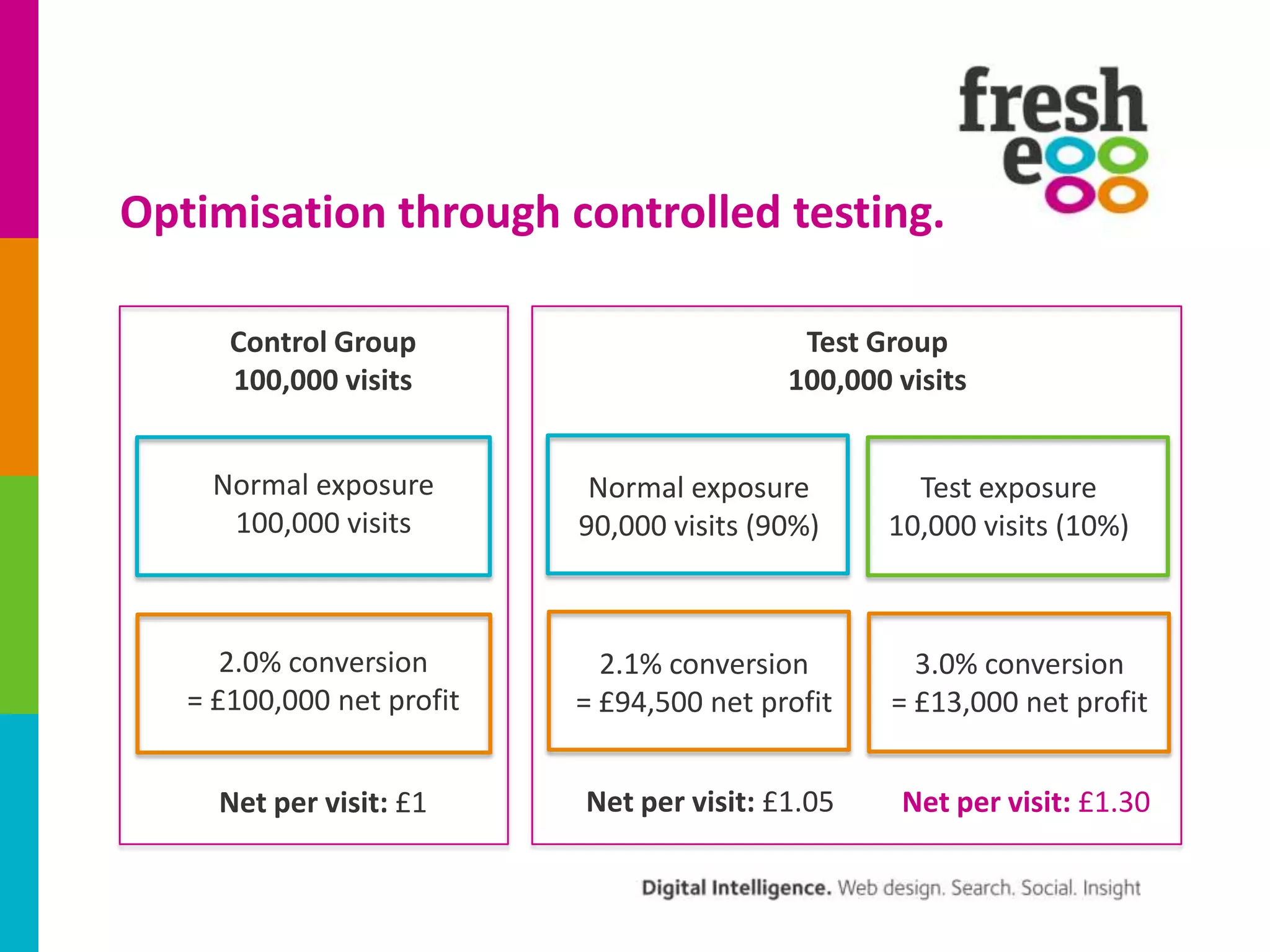
Optimisation through controlled testing.
• Audience profiling, segmentation and conversion path analysis inform
tests

• Testing is needed to determine causation. Customers predisposed to
purchase need to be separated from incremental effect of advertising
• Attribution tools don’t make decisions; they inform the tests that
determine decisions
Optimisation through controlled testing.
Control Group
100,000 visits

Test Group
100,000 visits

Normal exposure
100,000 visits

Normal exposure
90,000 visits (90%)

Test exposure
10,000 visits (10%)

2.0% conversion
= £100,000 net profit

2.1% conversion
= £94,500 net profit

3.0% conversion
= £13,000 net profit

Net per visit: £1

Net per visit: £1.05

Net per visit: £1.30
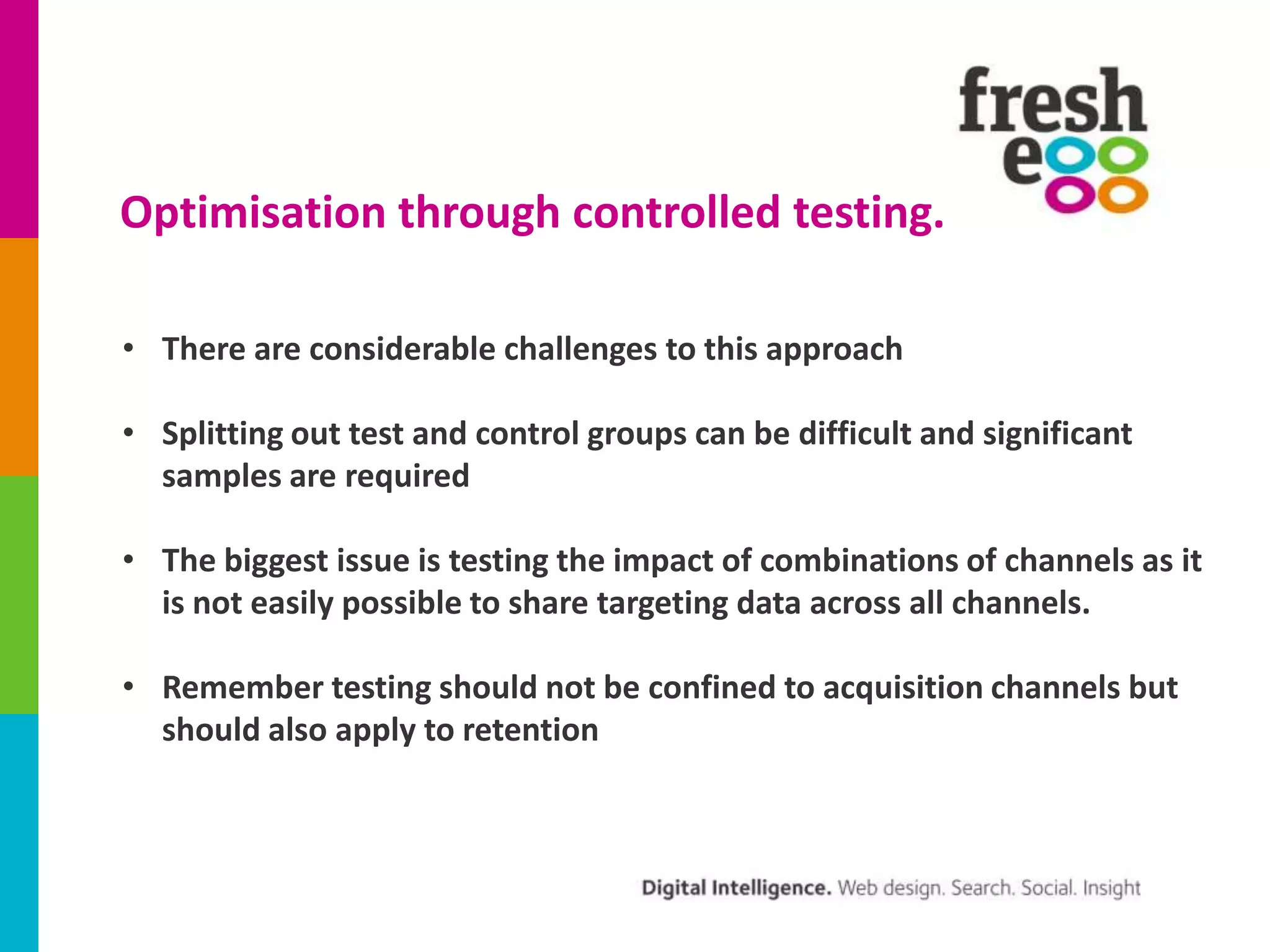
Optimisation through controlled testing.
• There are considerable challenges to this approach
• Splitting out test and control groups can be difficult and significant
samples are required
• The biggest issue is testing the impact of combinations of channels as it
is not easily possible to share targeting data across all channels.

• Remember testing should not be confined to acquisition channels but
should also apply to retention
Summary.
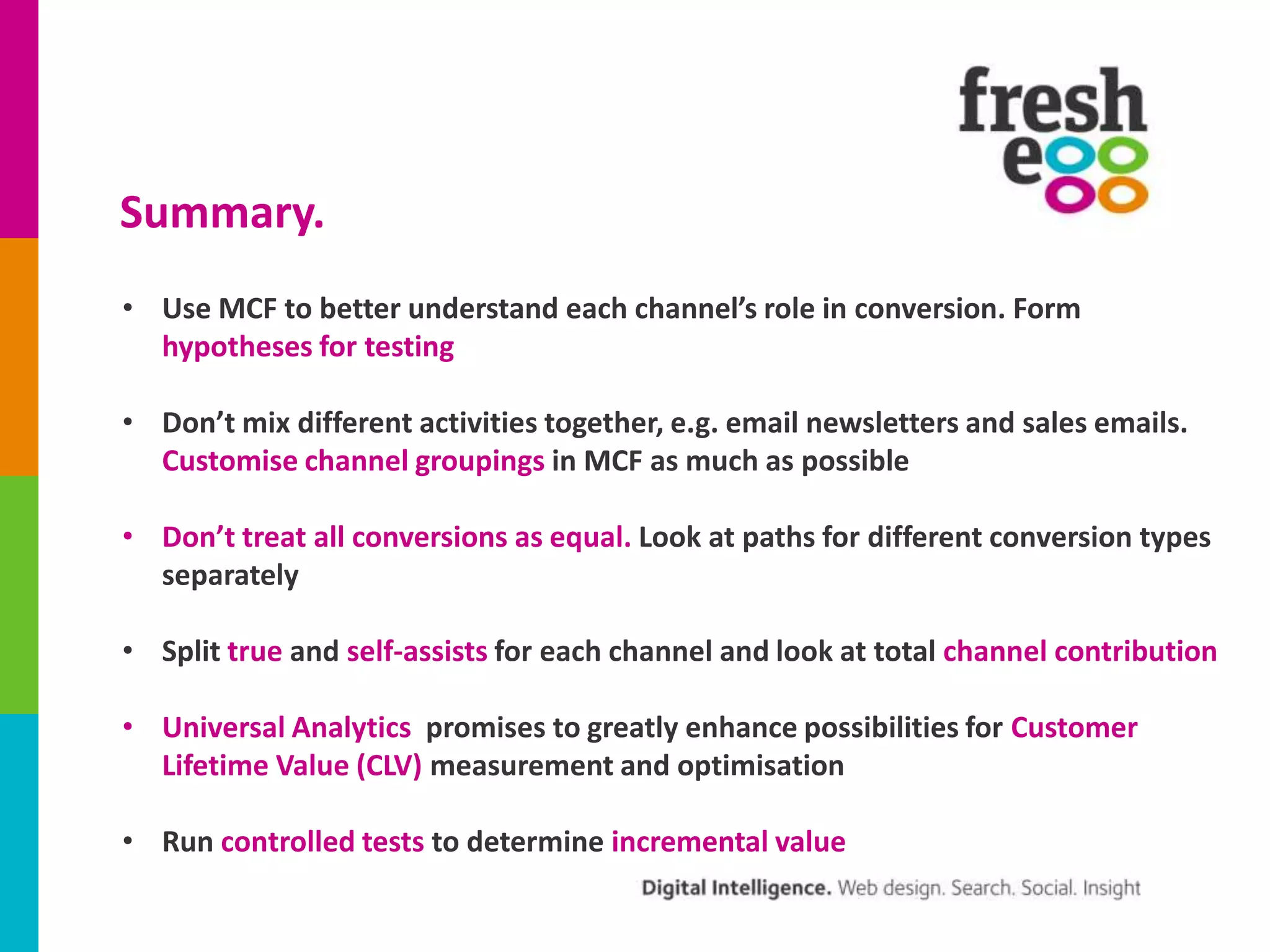
Summary.
• Use MCF to better understand each channel’s role in conversion. Form
hypotheses for testing
• Don’t mix different activities together, e.g. email newsletters and sales emails.
Customise channel groupings in MCF as much as possible
• Don’t treat all conversions as equal. Look at paths for different conversion types
separately
• Split true and self-assists for each channel and look at total channel contribution
• Universal Analytics promises to greatly enhance possibilities for Customer
Lifetime Value (CLV) measurement and optimisation
• Run controlled tests to determine incremental value
Thank You!
Dara Fitzgerald
Head of Insight
www.freshegg.co.uk
@darafitzgerald

Dara Fitzgerald - #MeasureFest Oct13 - Attribution with GA

  • 1.
    Attribution with GoogleAnalytics. How to do it… and why you shouldn’t!. Dara Fitzgerald Head of Insight www.freshegg.co.uk @darafitzgerald
  • 2.
  • 3.
    The tools available. •Multi-Channel Funnels • Attribution Modelling Tool • Data-Driven Attribution (Premium only)
  • 4.
    Multi-Channel Funnels. MCF includesassisted conversions metric. 43% of conversions are assisted here.
  • 5.
    Multi-Channel Funnels. • Conversiontracking required (Goals and/or Ecommerce) • Ensure correct campaign tagging or the data is meaningless • AdWords auto-tagging • Manual campaign parameters (URL builder) • • utm_source • utm_medium • utm_campaign E.g. http://www.abc.com/?utm_source=mailer&utm_medium=email&utm_campaign=sep13
  • 6.
  • 7.
    Multi-Channel Funnels. Assisted andlast are not mutually exclusive! i.e. channels can assist & close the same conversions
  • 8.
    Multi-Channel Funnels. Organic trueassist AND Change to ‘include’ for organic self assist segment
  • 9.
  • 10.
  • 11.
    Attribution Modelling Tool. Linear Creditsplit evenly across the entire conversion path. Time Decay Credit reduces back from the point of conversion. Position Based First & last click heavily weighted; remainder split in the middle.
  • 12.
    Attribution Modelling Tool. Compareup to 3 different models
  • 13.
    Data-Driven Attribution (Premiumonly). • Algorithmic models • Includes non-converting paths • Transparency for model behaviour • Channel weights are based on the impact that channel has on conversion probability • Data from AdWords, GDN, DFA and cost import are available for ROI analysis
  • 14.
    Data-Driven Attribution (Premiumonly). Prove value of upper funnel activity The dash indicates this channel did not appear in this path position % reflects the overall weighting of a channel at a particular position in the path
  • 15.
  • 16.
    #1. Offline impact. Butpurchase is completed offline Online campaign drives awareness Attribution = 
  • 17.
    #2. Cross-device purchasepaths. A single user… Purchases on home laptop Compares prices on work PC Browses on mobile en route to work Attribution = 
  • 18.
    #3. The bigissue. Point of initial conversion Acquisition Display Organic CRM activity PPC Attribution focusses on acquisition only. Email Social Retention is ignored. It should focus on lifetime value impact. Email
  • 19.
    So, what shouldwe be doing?
  • 20.
    Optimisation through controlledtesting. • Audience profiling, segmentation and conversion path analysis inform tests • Testing is needed to determine causation. Customers predisposed to purchase need to be separated from incremental effect of advertising • Attribution tools don’t make decisions; they inform the tests that determine decisions
  • 21.
    Optimisation through controlledtesting. Control Group 100,000 visits Test Group 100,000 visits Normal exposure 100,000 visits Normal exposure 90,000 visits (90%) Test exposure 10,000 visits (10%) 2.0% conversion = £100,000 net profit 2.1% conversion = £94,500 net profit 3.0% conversion = £13,000 net profit Net per visit: £1 Net per visit: £1.05 Net per visit: £1.30
  • 22.
    Optimisation through controlledtesting. • There are considerable challenges to this approach • Splitting out test and control groups can be difficult and significant samples are required • The biggest issue is testing the impact of combinations of channels as it is not easily possible to share targeting data across all channels. • Remember testing should not be confined to acquisition channels but should also apply to retention
  • 23.
  • 24.
    Summary. • Use MCFto better understand each channel’s role in conversion. Form hypotheses for testing • Don’t mix different activities together, e.g. email newsletters and sales emails. Customise channel groupings in MCF as much as possible • Don’t treat all conversions as equal. Look at paths for different conversion types separately • Split true and self-assists for each channel and look at total channel contribution • Universal Analytics promises to greatly enhance possibilities for Customer Lifetime Value (CLV) measurement and optimisation • Run controlled tests to determine incremental value
  • 25.
    Thank You! Dara Fitzgerald Headof Insight www.freshegg.co.uk @darafitzgerald