S
Nonviolent Resistance
to Nazi Occupation of
Denmark
Clark Schneider
Jamie Greenwald
Thesis
S Once the Nazis shift from benevolent occupiers to
oppressors, the goals (autonomy, independence) of the
nonviolent conflict are indeed a viable option in changing
the unjust Nazi society into a just one.
Through a predominantly non-violent campaign of strikes
and protests, Denmark frustrated the Nazi regime while
maintaining Danish society and culture and minimizing
bloodshed.
Nazi Invasion
S On April 9, 1940, the Nazis invaded Denmark with
overwhelming force
S Denmark did little to resist
S Germany promised not to compromise Denmark’s
“political independence”
S (Petrow, Bitter Years, pp. 48-49)
Samarbejdspolitik
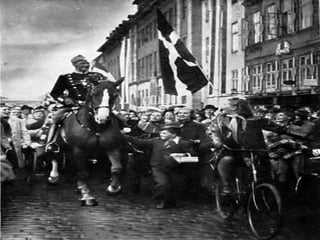
S Danish government adopted a policy of cooperation
S King Christian “wished to spare his country further misfortune”
S (Petrow, Bitter Years, p. 50)
S “To survive became the goal’”
S (Lennart Bergfeldt, Experiences of Civilian Resistance: The Case of Denmark, 1940-1945
(Uppsala: University of Uppsala, 1993), p. 63)
S “Cooperation would be the lesser evil”
S (Ackerman, and Duvall, 2010, p. 210)
Early Resistance: Symbolic
Protest
S Cultural pride
S Lays the groundwork for resistance by emphasizing continued
Danish society and culture despite the German occupation
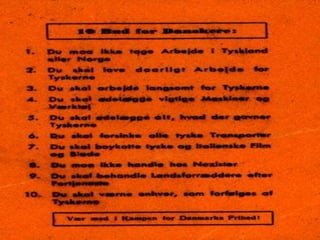
S 10 Commandments for Danes
S Danskerens 10 bud
S Danish Youth Association
S Media
S Ekstrabladet
Onset of German Oppression
S Communist Crackdown
S “Clashes with the usual Danish sense of justice”
S (Petrow, Bitter Years, p. 163)
S Anti-Comintern Pact of 1941
S “Unavoidable consequences”
S (Thomas, Giant Killers, pp. 108-110)
S German enlistment of Danish civilians
“‘Down with the traitors’” (The
Times of London)
S Protests at Rigsdag
S Churchill Club
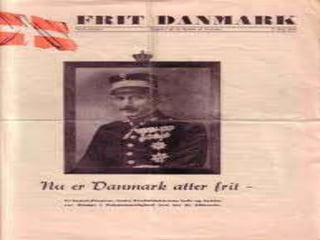
S Underground press
S Frit Danmark; Studenternes Efterretniigstjeneste
S White Book
S “Action is required of us all”
S (Thomas, Giant Killers, pp. 124-125)
Resistance Gains Momentum
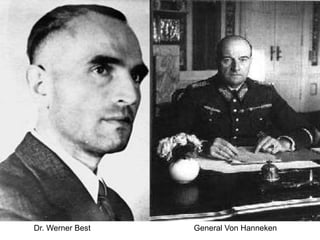
S General von Hanneken and Dr. Werner Best
S Parliamentary election
S Making a difference in World War II
S Sabotage
S Folk strikes
S Traitors black-listed
Dr. Werner Best General Von Hanneken
Government Cooperation
Ends
S Hitler instructs General von Hanneken to “rule with an iron
hand”
S (Thomas, Giant Killers, p. 122)
S In response to the strikes, Germany gives Denmark’s
government an ultimatum: submit to total Germen tyranny or
lose power
S Danish government refuses; cooperation ends
S German military assumes control of Denmark
The Height of Resistance
S Danish Jews saved from Nazi round-up
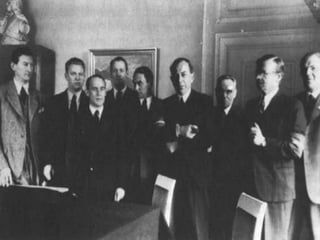
S Freedom Council established
S Sabotaged Nazi military factories
S Frode Jakobsen: “the battle for people’s soul” is through non-
violence
S (Jorgen Haestrup, Secret Alliance (Odense: University of Odense, 1976), p. 45)
S The Freedom Council’s resistance movement had over 45,000
by war’s end
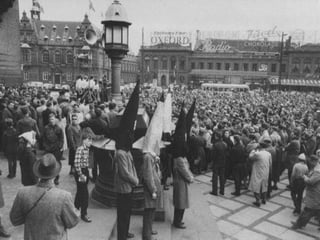
People’s Strikes
S Massive strikes halt military production
S Danish endure German repercussions
S Freedom Council appreciates the power of strikes
S Encouraged nonviolent resistance over sabotage and riots
S Strikes significantly impaired Nazi war machine
Post-War
S Danish resistance forms an interim coalition government
S Danish culture, society, and economy remain intact
Goals and Values
S Initial goals
S compliance, survival, minimal bloodshed
S Eventual goals of the resistance
S Independence, democracy, minimal bloodshed, resist the
Nazis
Conclusion
S In the case of Danish resistance to the Nazis, the
eventual goals of independence through strikes and
noncooperation were a viable and effective option in
changing the unjust Nazi state by debilitating its capacity
to fight a war.
The Power of Nonviolence
S In Denmark’s case resisting the powerful Nazi military
through violence would have resulted in slaughter
S Nonviolent resistance gave the Danish people the ability
to effectively resist the Nazis while avoiding sacrificial
violent conflict
Bibliography
S Ackerman, Peter, and Jack Duvall. A Force More
Powerful. 1st ed. New York: St. Martin's Press, 2000.
210. Print.

Danish resistance schneider,greenwald

  • 1.
    S Nonviolent Resistance to NaziOccupation of Denmark Clark Schneider Jamie Greenwald
  • 2.
    Thesis S Once theNazis shift from benevolent occupiers to oppressors, the goals (autonomy, independence) of the nonviolent conflict are indeed a viable option in changing the unjust Nazi society into a just one. Through a predominantly non-violent campaign of strikes and protests, Denmark frustrated the Nazi regime while maintaining Danish society and culture and minimizing bloodshed.
  • 3.
    Nazi Invasion S OnApril 9, 1940, the Nazis invaded Denmark with overwhelming force S Denmark did little to resist S Germany promised not to compromise Denmark’s “political independence” S (Petrow, Bitter Years, pp. 48-49)
  • 4.
    Samarbejdspolitik S Danish governmentadopted a policy of cooperation S King Christian “wished to spare his country further misfortune” S (Petrow, Bitter Years, p. 50) S “To survive became the goal’” S (Lennart Bergfeldt, Experiences of Civilian Resistance: The Case of Denmark, 1940-1945 (Uppsala: University of Uppsala, 1993), p. 63) S “Cooperation would be the lesser evil” S (Ackerman, and Duvall, 2010, p. 210)
  • 6.
    Early Resistance: Symbolic Protest SCultural pride S Lays the groundwork for resistance by emphasizing continued Danish society and culture despite the German occupation S 10 Commandments for Danes S Danskerens 10 bud S Danish Youth Association S Media S Ekstrabladet
  • 8.
    Onset of GermanOppression S Communist Crackdown S “Clashes with the usual Danish sense of justice” S (Petrow, Bitter Years, p. 163) S Anti-Comintern Pact of 1941 S “Unavoidable consequences” S (Thomas, Giant Killers, pp. 108-110) S German enlistment of Danish civilians
  • 9.
    “‘Down with thetraitors’” (The Times of London) S Protests at Rigsdag S Churchill Club S Underground press S Frit Danmark; Studenternes Efterretniigstjeneste S White Book S “Action is required of us all” S (Thomas, Giant Killers, pp. 124-125)
  • 11.
    Resistance Gains Momentum SGeneral von Hanneken and Dr. Werner Best S Parliamentary election S Making a difference in World War II S Sabotage S Folk strikes S Traitors black-listed
  • 12.
    Dr. Werner BestGeneral Von Hanneken
  • 13.
    Government Cooperation Ends S Hitlerinstructs General von Hanneken to “rule with an iron hand” S (Thomas, Giant Killers, p. 122) S In response to the strikes, Germany gives Denmark’s government an ultimatum: submit to total Germen tyranny or lose power S Danish government refuses; cooperation ends S German military assumes control of Denmark
  • 14.
    The Height ofResistance S Danish Jews saved from Nazi round-up S Freedom Council established S Sabotaged Nazi military factories S Frode Jakobsen: “the battle for people’s soul” is through non- violence S (Jorgen Haestrup, Secret Alliance (Odense: University of Odense, 1976), p. 45) S The Freedom Council’s resistance movement had over 45,000 by war’s end
  • 16.
    People’s Strikes S Massivestrikes halt military production S Danish endure German repercussions S Freedom Council appreciates the power of strikes S Encouraged nonviolent resistance over sabotage and riots S Strikes significantly impaired Nazi war machine
  • 18.
    Post-War S Danish resistanceforms an interim coalition government S Danish culture, society, and economy remain intact
  • 20.
    Goals and Values SInitial goals S compliance, survival, minimal bloodshed S Eventual goals of the resistance S Independence, democracy, minimal bloodshed, resist the Nazis
  • 21.
    Conclusion S In thecase of Danish resistance to the Nazis, the eventual goals of independence through strikes and noncooperation were a viable and effective option in changing the unjust Nazi state by debilitating its capacity to fight a war.
  • 22.
    The Power ofNonviolence S In Denmark’s case resisting the powerful Nazi military through violence would have resulted in slaughter S Nonviolent resistance gave the Danish people the ability to effectively resist the Nazis while avoiding sacrificial violent conflict
  • 23.
    Bibliography S Ackerman, Peter,and Jack Duvall. A Force More Powerful. 1st ed. New York: St. Martin's Press, 2000. 210. Print.

Editor's Notes

  • #5 Danish word referring to the Danish government’s policy of compliance
  • #12 Referendum on the people’s preference for domestic rule over imperialism
  • #15 Freedom Council: leads resistance and serves as de-facto government