The Paris Peace Conference and the Treaty at Versailles January 1919 - January 1920
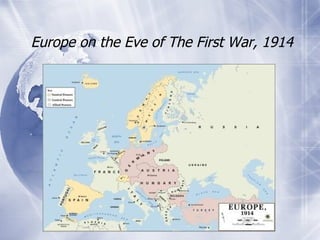
Europe on the Eve of The First War, 1914
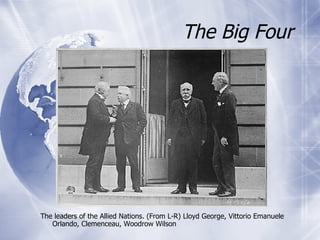
The Big Four The leaders of the Allied Nations. (From L-R) Lloyd George, Vittorio Emanuele Orlando, Clemenceau, Woodrow Wilson
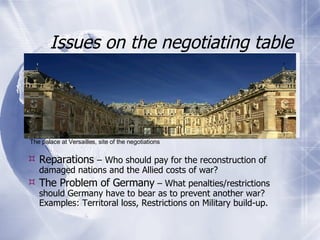
Issues on the negotiating table Reparations  –   Who should pay for the reconstruction of damaged nations and the Allied costs of war? The Problem of Germany  – What penalties/restrictions should Germany have to bear as to prevent another war? Examples: Territoral loss, Restrictions on Military build-up.  The palace at Versailles, site of the negotiations
Issues, continued. . . Redrawing of Borders  – What should be done about ethnic groups that wish to be self-governed, such as the Poles, Serbs,  How to prevent another war?-  What should be done about the alliances and treaties that arrayed nations against each other? How should international conflicts be resolved? The U.S. Delegation
Your Charge You are advisors to the delegate from your nation. He is seeking your informed opinion on these issues up for negotiation. You decisions will lay the groundwork for the future of Europe and the rest of the world. Create a list of issues that are important to your nation and are on the negotiating table.
Priorities ? Along with recognizing the desires of their nation, as shrewd advisors, you must be able to prioritize their list of agenda items; which items are they willing to compromise on in order to secure the things they feel are essential to the future security or prosperity of their nation?
Picture References Slide 1:  Slide 2:  http://upload.wikimedia.org/wikipedia/commons/thumb/6/63/Europe_1914.jpg/350px-Europe_1914.jpg Slide 3: http://upload.wikimedia.org/wikipedia/commons/2/20/Council_of_Four_Versailles.jpg Slide 4: http://upload.wikimedia.org/wikipedia/commons/a/a7/Versailles_Palace.jpg Slide 5: http://upload.wikimedia.org/wikipedia/commons/0/0c/WilsonVersailles.jpg

Paris Peace Conference

  • 1.
    The Paris PeaceConference and the Treaty at Versailles January 1919 - January 1920
  • 2.
    Europe on theEve of The First War, 1914
  • 3.
    The Big FourThe leaders of the Allied Nations. (From L-R) Lloyd George, Vittorio Emanuele Orlando, Clemenceau, Woodrow Wilson
  • 4.
    Issues on thenegotiating table Reparations – Who should pay for the reconstruction of damaged nations and the Allied costs of war? The Problem of Germany – What penalties/restrictions should Germany have to bear as to prevent another war? Examples: Territoral loss, Restrictions on Military build-up. The palace at Versailles, site of the negotiations
  • 5.
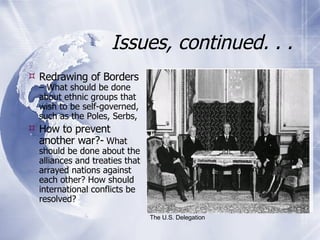
    Issues, continued. .. Redrawing of Borders – What should be done about ethnic groups that wish to be self-governed, such as the Poles, Serbs, How to prevent another war?- What should be done about the alliances and treaties that arrayed nations against each other? How should international conflicts be resolved? The U.S. Delegation
  • 6.
    Your Charge Youare advisors to the delegate from your nation. He is seeking your informed opinion on these issues up for negotiation. You decisions will lay the groundwork for the future of Europe and the rest of the world. Create a list of issues that are important to your nation and are on the negotiating table.
  • 7.
    Priorities ? Alongwith recognizing the desires of their nation, as shrewd advisors, you must be able to prioritize their list of agenda items; which items are they willing to compromise on in order to secure the things they feel are essential to the future security or prosperity of their nation?
  • 8.
    Picture References Slide1: Slide 2: http://upload.wikimedia.org/wikipedia/commons/thumb/6/63/Europe_1914.jpg/350px-Europe_1914.jpg Slide 3: http://upload.wikimedia.org/wikipedia/commons/2/20/Council_of_Four_Versailles.jpg Slide 4: http://upload.wikimedia.org/wikipedia/commons/a/a7/Versailles_Palace.jpg Slide 5: http://upload.wikimedia.org/wikipedia/commons/0/0c/WilsonVersailles.jpg