Directions for ICT Research in Disease Prevention


 FT7-ICT-2009.5.1 – Support Action


                  D2.1 – Relevant Diseases and
                           Conditions
                                              Workshop
                                      Barcelona 16th March 2010

                               This project is partially funded under the 7th Framework Programme by the European Commission
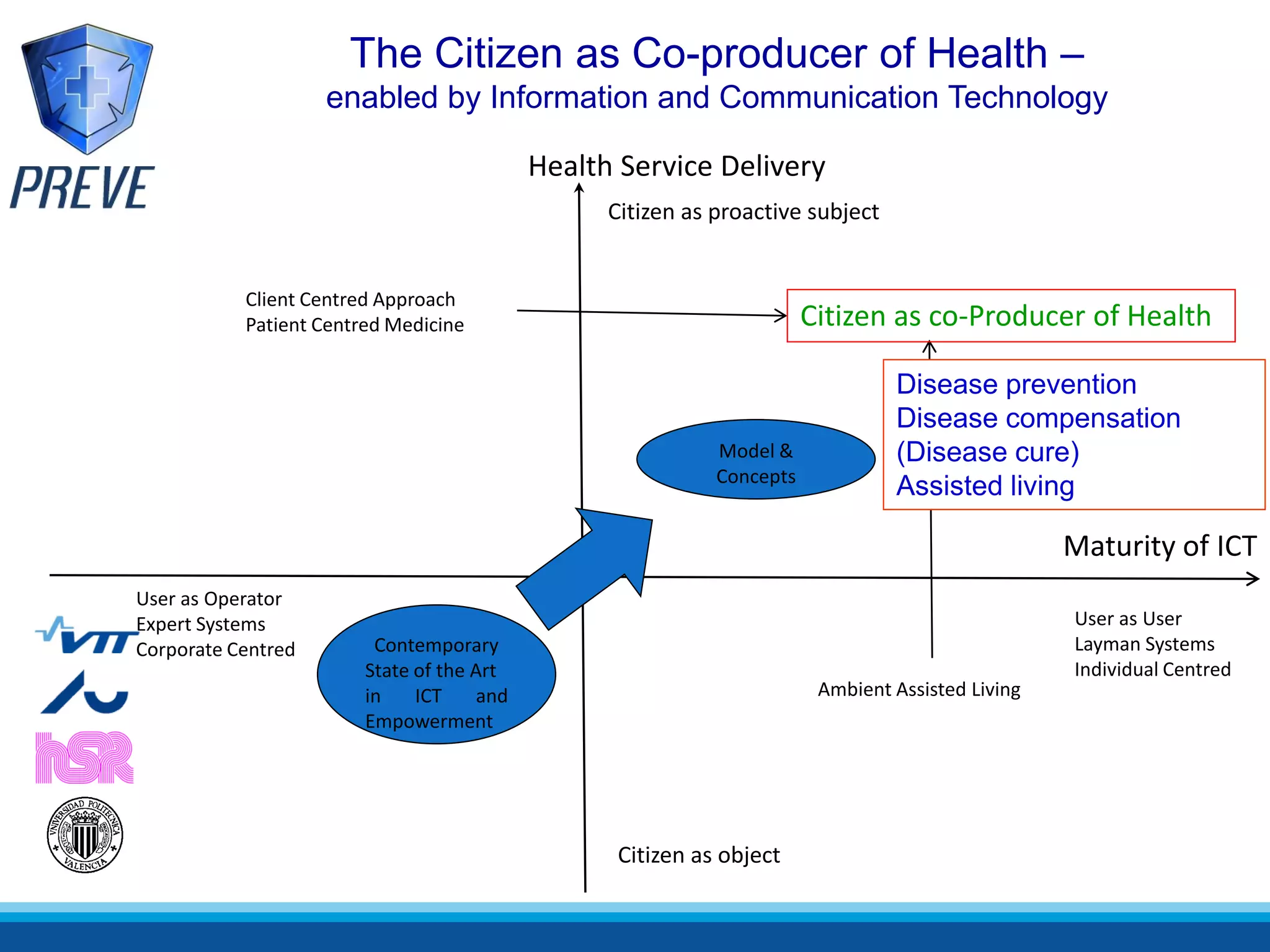
The Citizen as Co-producer of Health –
                    enabled by Information and Communication Technology

                                           Health Service Delivery
                                                 Citizen as proactive subject


           Client Centred Approach
           Patient Centred Medicine                                    Citizen as co-Producer of Health

                                                                                Disease prevention
                                                                                Disease compensation
                                                            Model &             (Disease cure)
                                                            Concepts
                                                                                Assisted living

                                                                                                  Maturity of ICT
User as Operator
Expert Systems                                                                                    User as User
Corporate Centred        Contemporary                                                             Layman Systems
                        State of the Art                                                          Individual Centred
                        in    ICT    and                                Ambient Assisted Living
                        Empowerment


                                                  Citizen as object
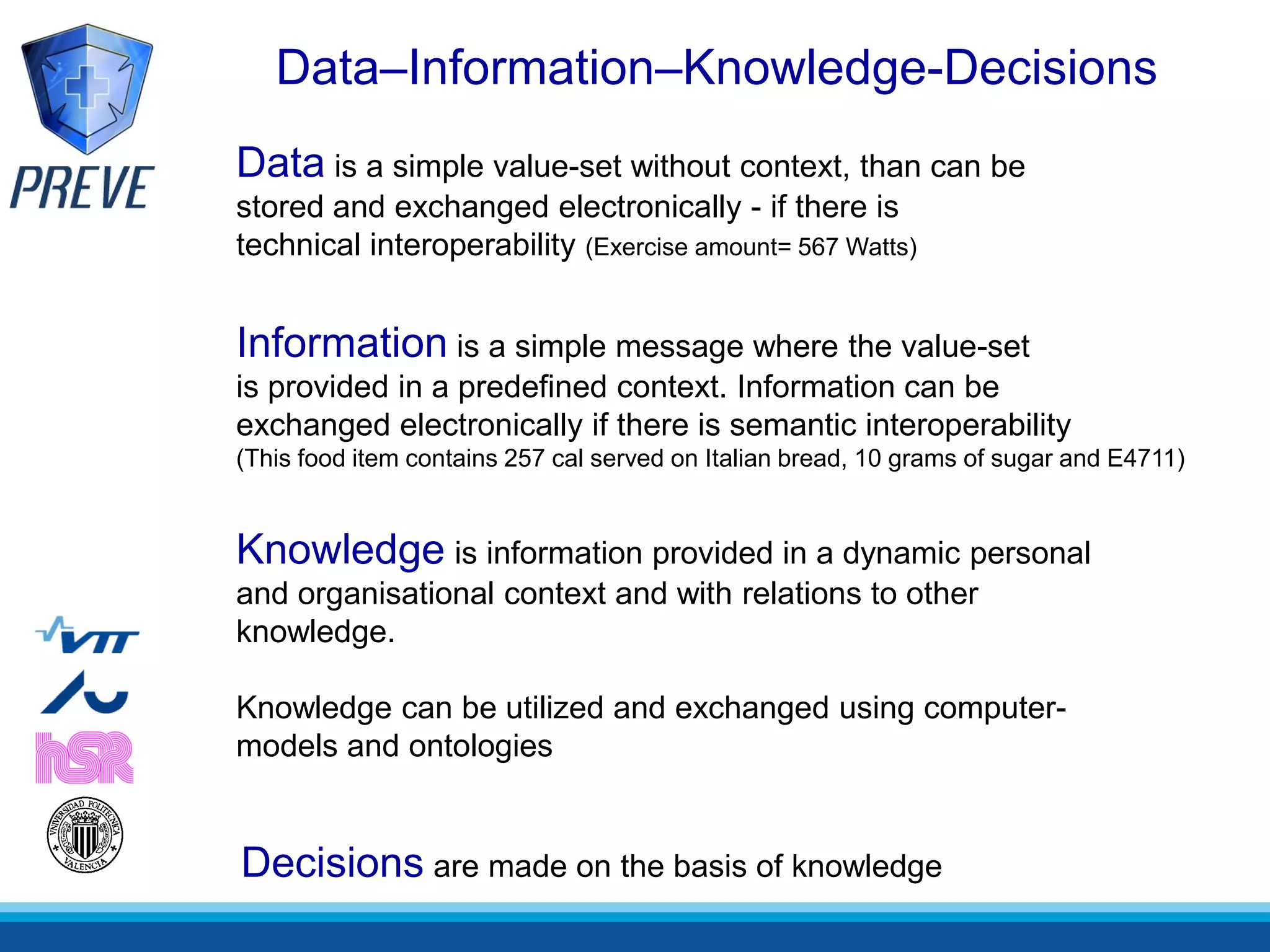
Data–Information–Knowledge-Decisions
Data is a simple value-set without context, than can be
stored and exchanged electronically - if there is
technical interoperability (Exercise amount= 567 Watts)


Information is a simple message where the value-set
is provided in a predefined context. Information can be
exchanged electronically if there is semantic interoperability
(This food item contains 257 cal served on Italian bread, 10 grams of sugar and E4711)


Knowledge is information provided in a dynamic personal
and organisational context and with relations to other
knowledge.

Knowledge can be utilized and exchanged using computer-
models and ontologies


Decisions are made on the basis of knowledge
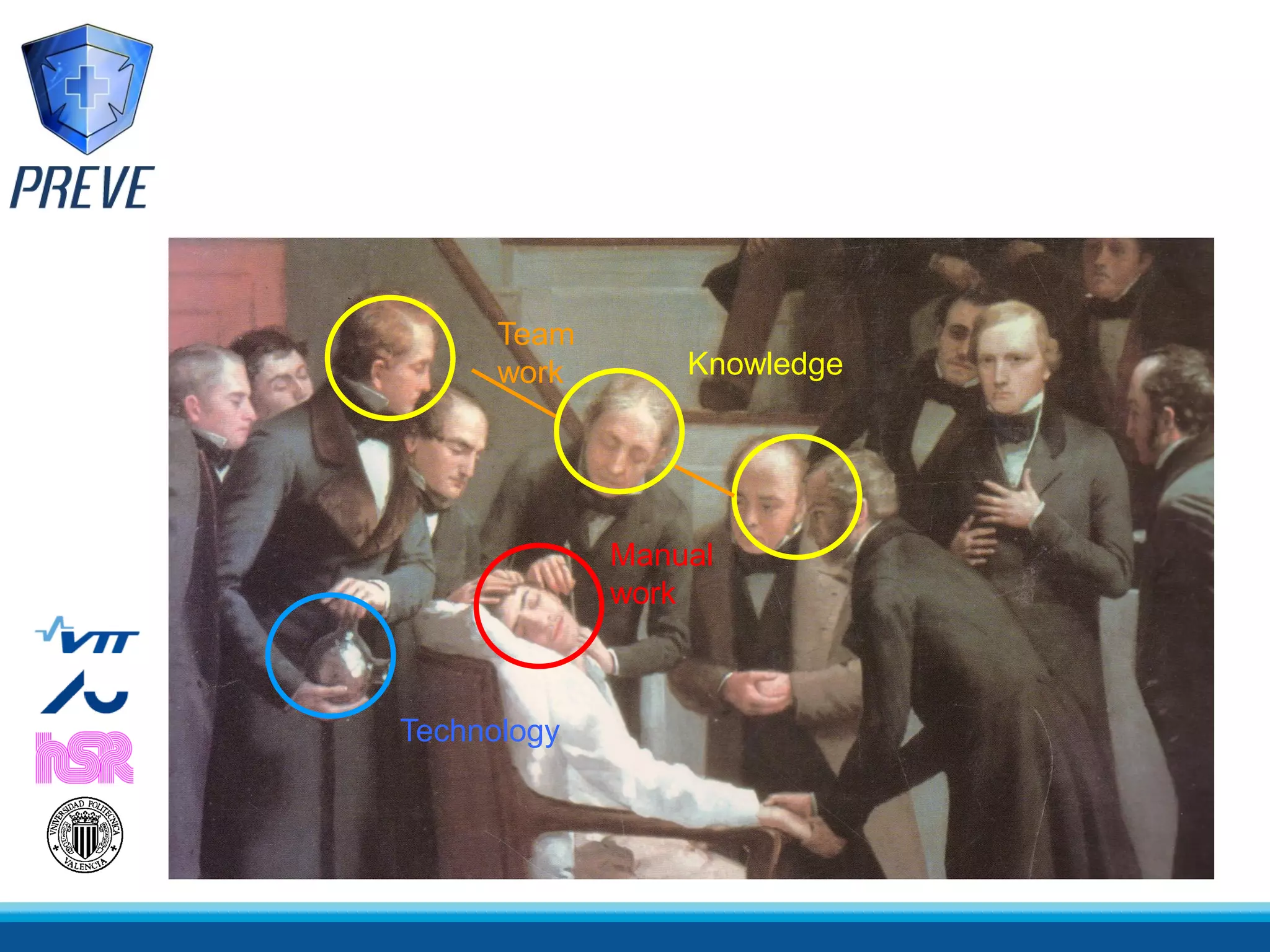
Team
      work       Knowledge


             Manual
             work


Technology
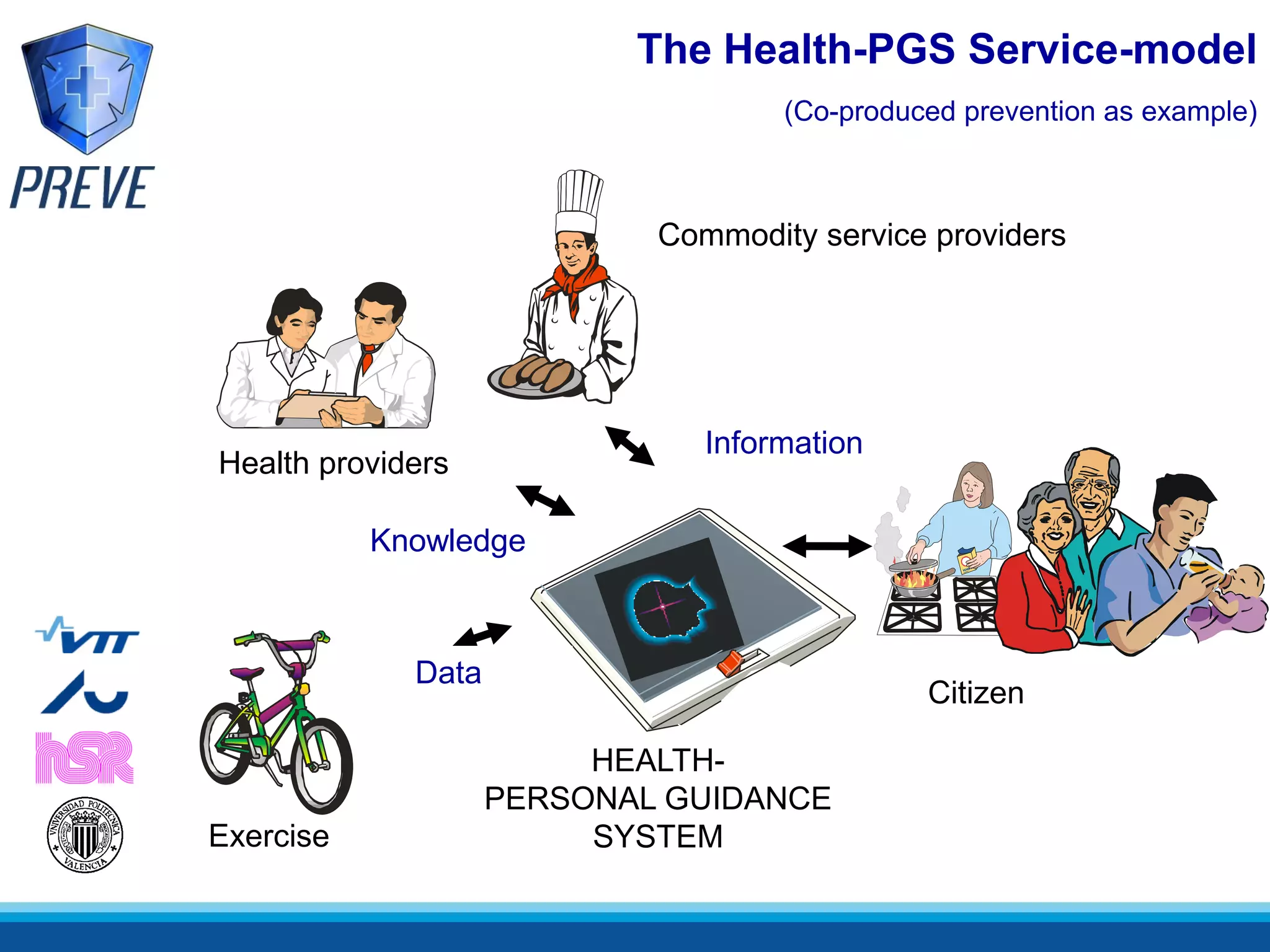
The Health-PGS Service-model
                                    (Co-produced prevention as example)


                            Commodity service providers


                               Information
Health providers

           Knowledge


             Data
                                              Citizen

                         HEALTH-
                    PERSONAL GUIDANCE
Exercise                 SYSTEM
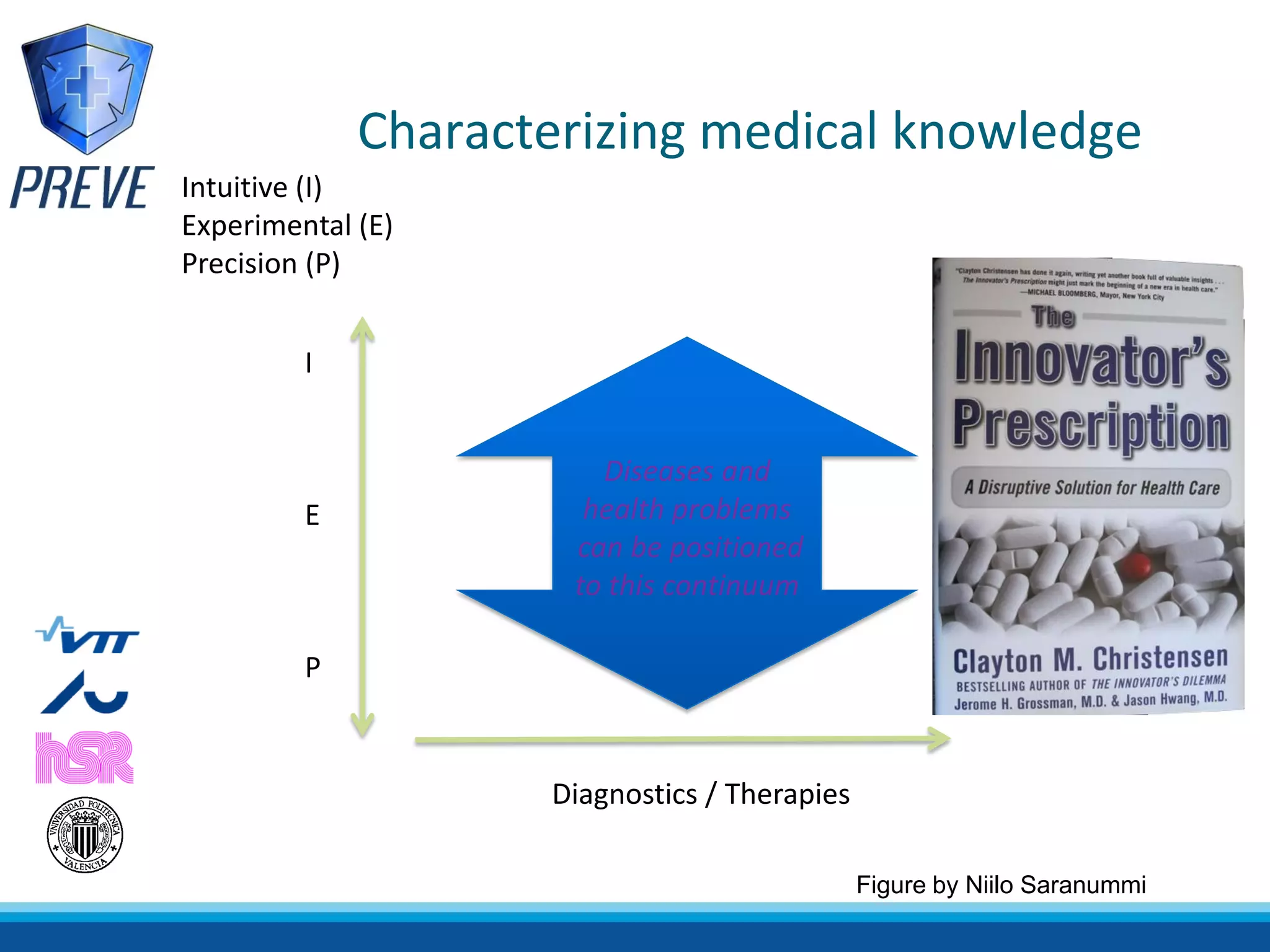
Characterizing medical knowledge
Intuitive (I)
Experimental (E)
Precision (P)


         I


                       Diseases and
         E            health problems
                     can be positioned
                     to this continuum

         P


                    Diagnostics / Therapies

                                              Figure by Niilo Saranummi
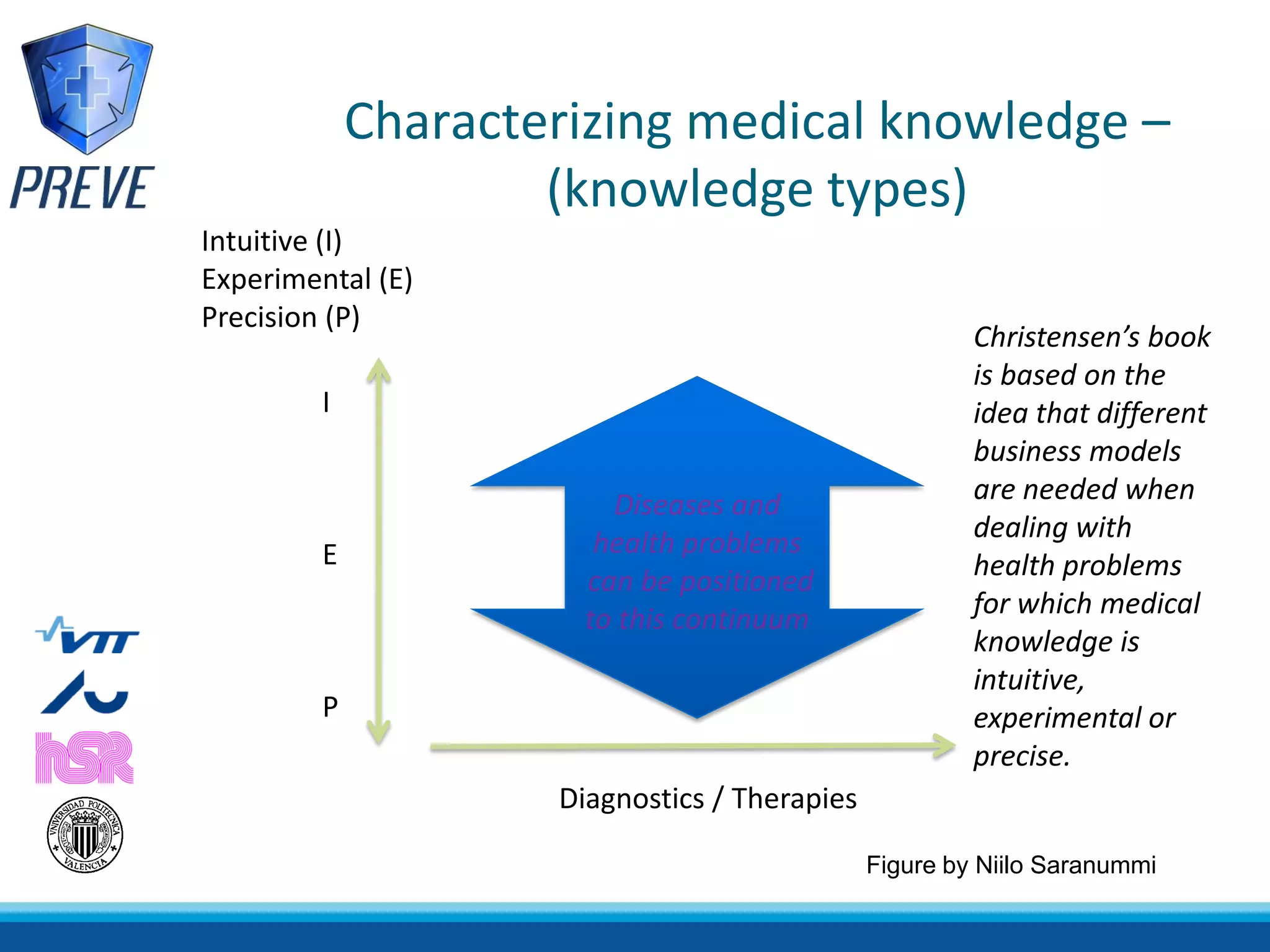
Characterizing medical knowledge –
                     (knowledge types)
Intuitive (I)
Experimental (E)
Precision (P)
                                                        Christensen’s book
                                                        is based on the
         I                                              idea that different
                                                        business models
                         Diseases and                   are needed when
                        health problems                 dealing with
         E                                              health problems
                       can be positioned
                       to this continuum                for which medical
                                                        knowledge is
                                                        intuitive,
         P                                              experimental or
                                                        precise.
                     Diagnostics / Therapies

                                               Figure by Niilo Saranummi
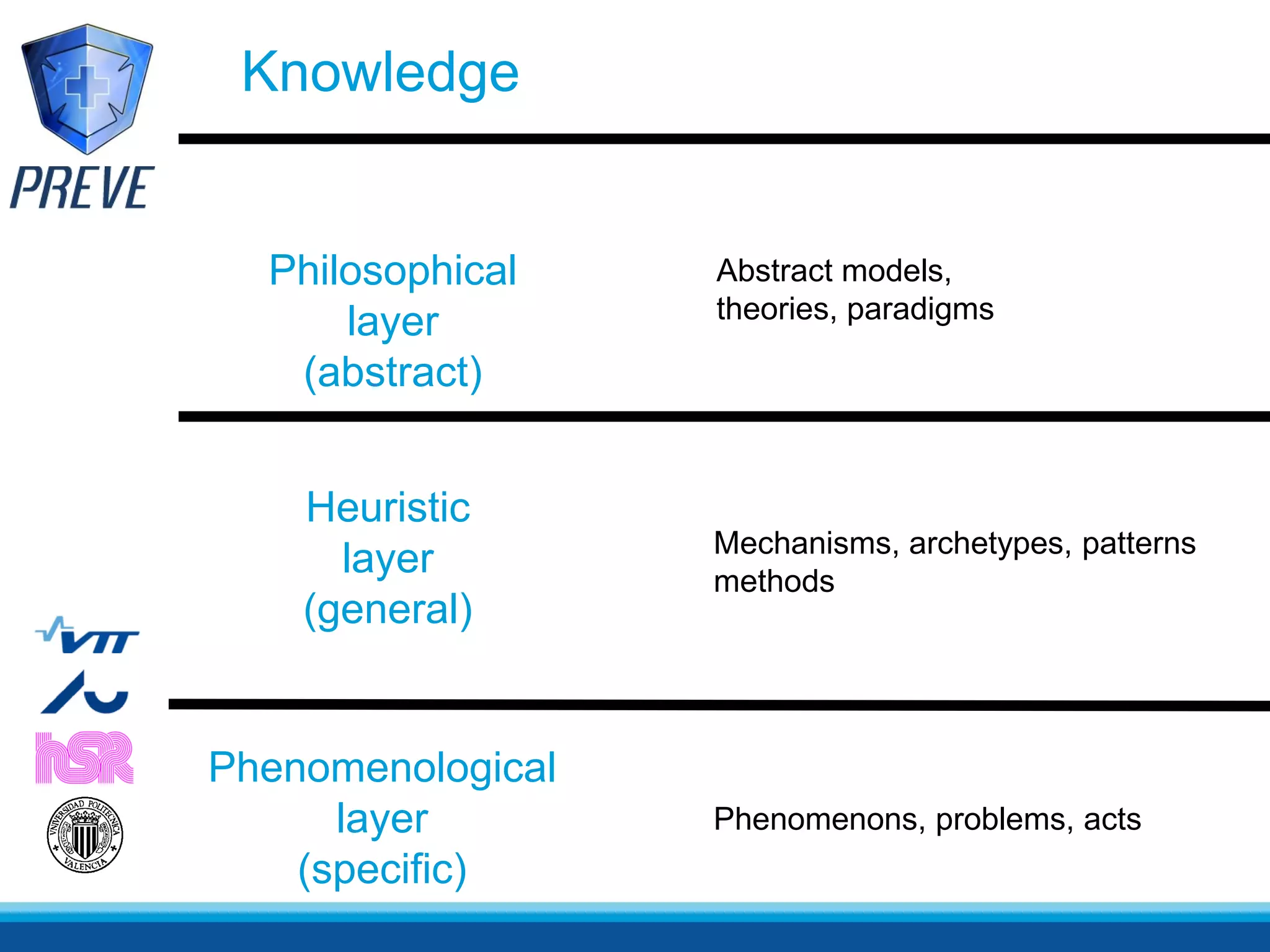
Knowledge


  Philosophical    Abstract models,
                   theories, paradigms
      layer
   (abstract)


    Heuristic
                   Mechanisms, archetypes, patterns
      layer        methods
    (general)


Phenomenological
      layer        Phenomenons, problems, acts
    (specific)
The healthy life trajectory is like a
 journey - navigation is crucial.


 Heath-navigation is based on
       shared decisions
  of which pathways to follow
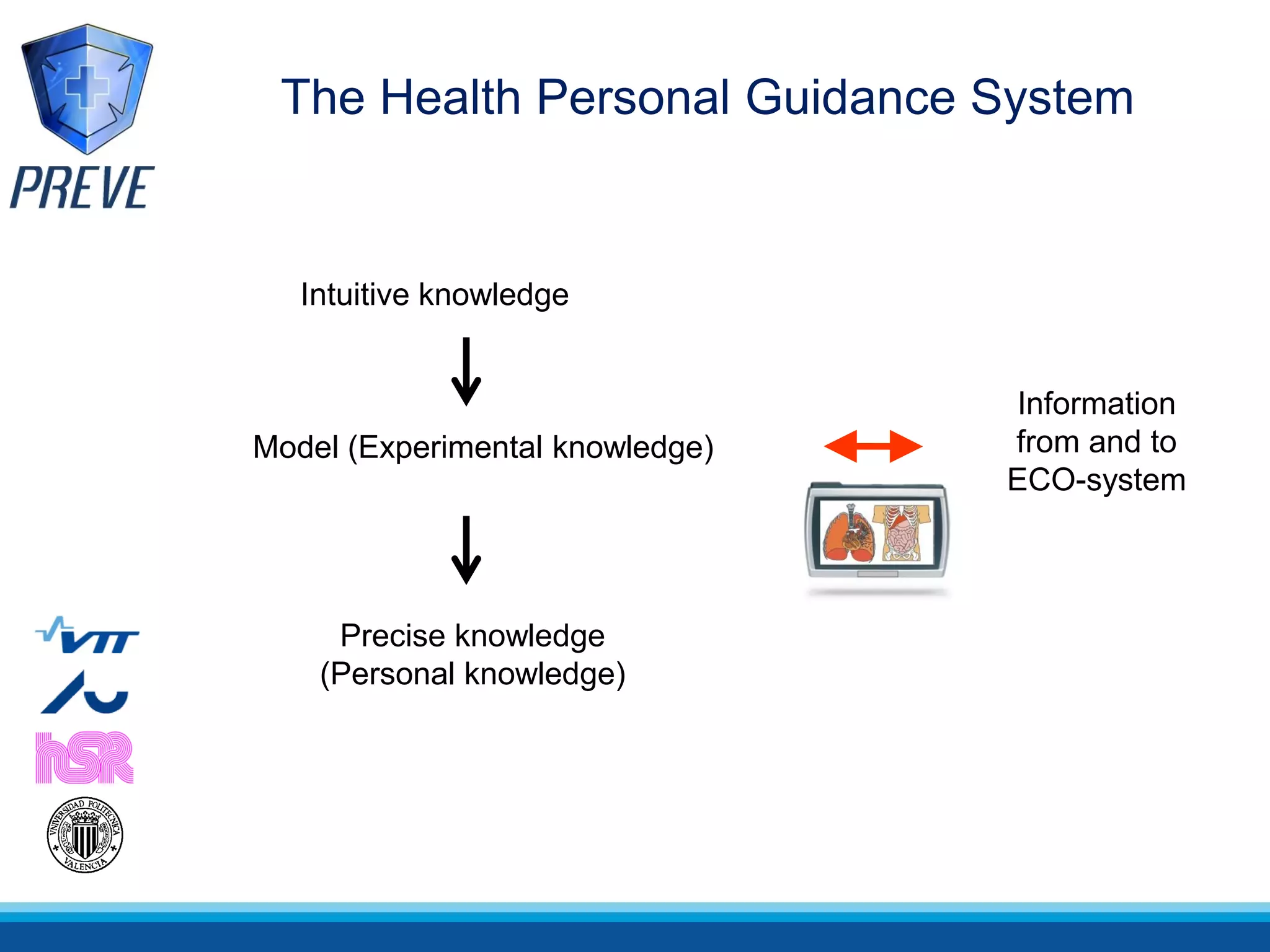
The Health Personal Guidance System


   Intuitive knowledge


                                 Information
Model (Experimental knowledge)   from and to
                                 ECO-system


     Precise knowledge
    (Personal knowledge)
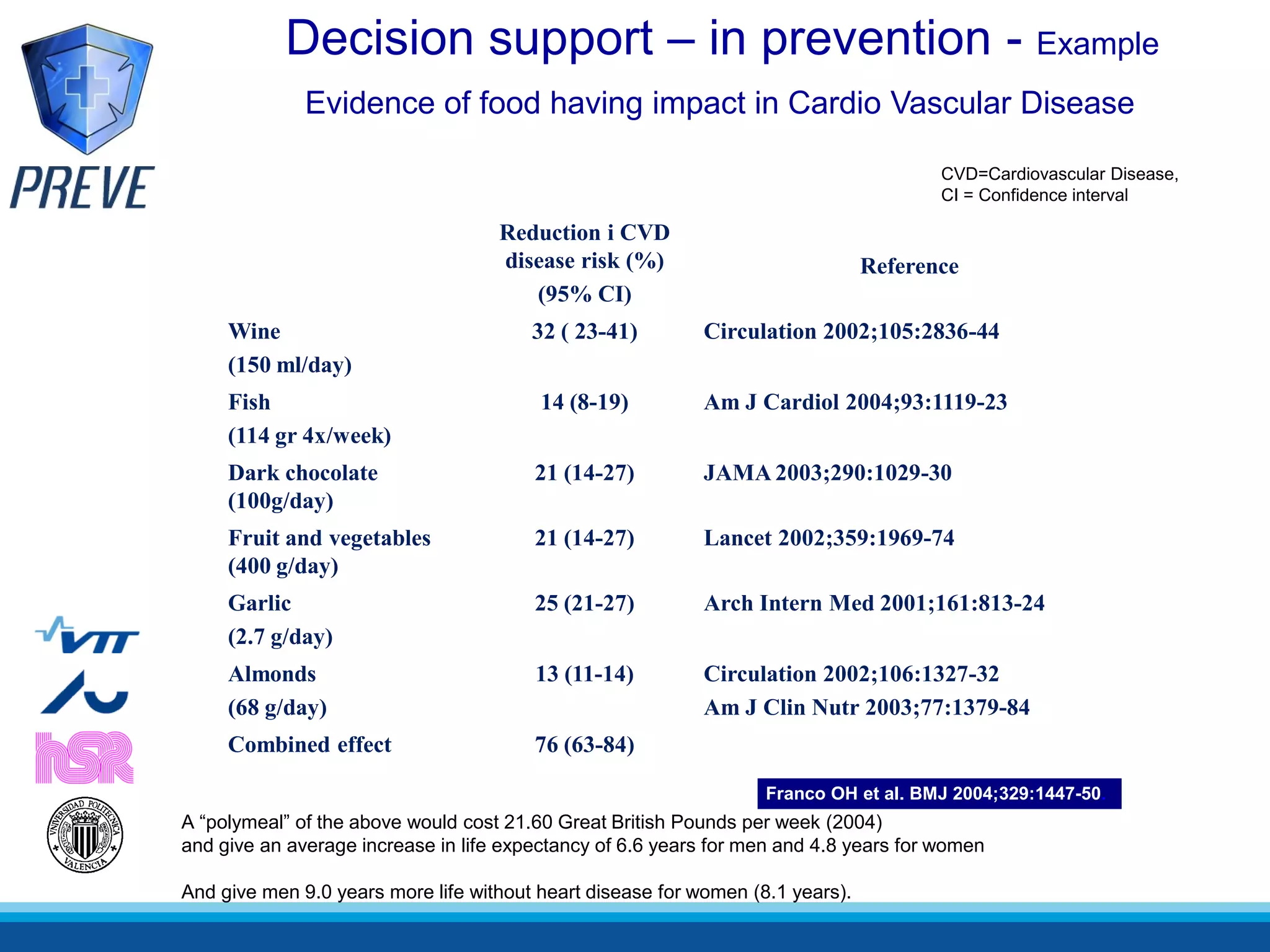
Decision support – in prevention - Example
              Evidence of food having impact in Cardio Vascular Disease

                                                                                       CVD=Cardiovascular Disease,
                                                                                       CI = Confidence interval

                                    Reduction i CVD
                                    disease risk (%)                            Reference
                                       (95% CI)
     Wine                               32 ( 23-41)        Circulation 2002;105:2836-44
     (150 ml/day)
     Fish                                14 (8-19)         Am J Cardiol 2004;93:1119-23
     (114 gr 4x/week)
     Dark chocolate                     21 (14-27)         JAMA 2003;290:1029-30
     (100g/day)
     Fruit and vegetables               21 (14-27)         Lancet 2002;359:1969-74
     (400 g/day)
     Garlic                             25 (21-27)         Arch Intern Med 2001;161:813-24
     (2.7 g/day)
     Almonds                            13 (11-14)         Circulation 2002;106:1327-32
     (68 g/day)                                            Am J Clin Nutr 2003;77:1379-84
     Combined effect                    76 (63-84)

                                                                   Franco OH et al. BMJ 2004;329:1447-50.
A “polymeal” of the above would cost 21.60 Great British Pounds per week (2004)
and give an average increase in life expectancy of 6.6 years for men and 4.8 years for women

And give men 9.0 years more life without heart disease for women (8.1 years).
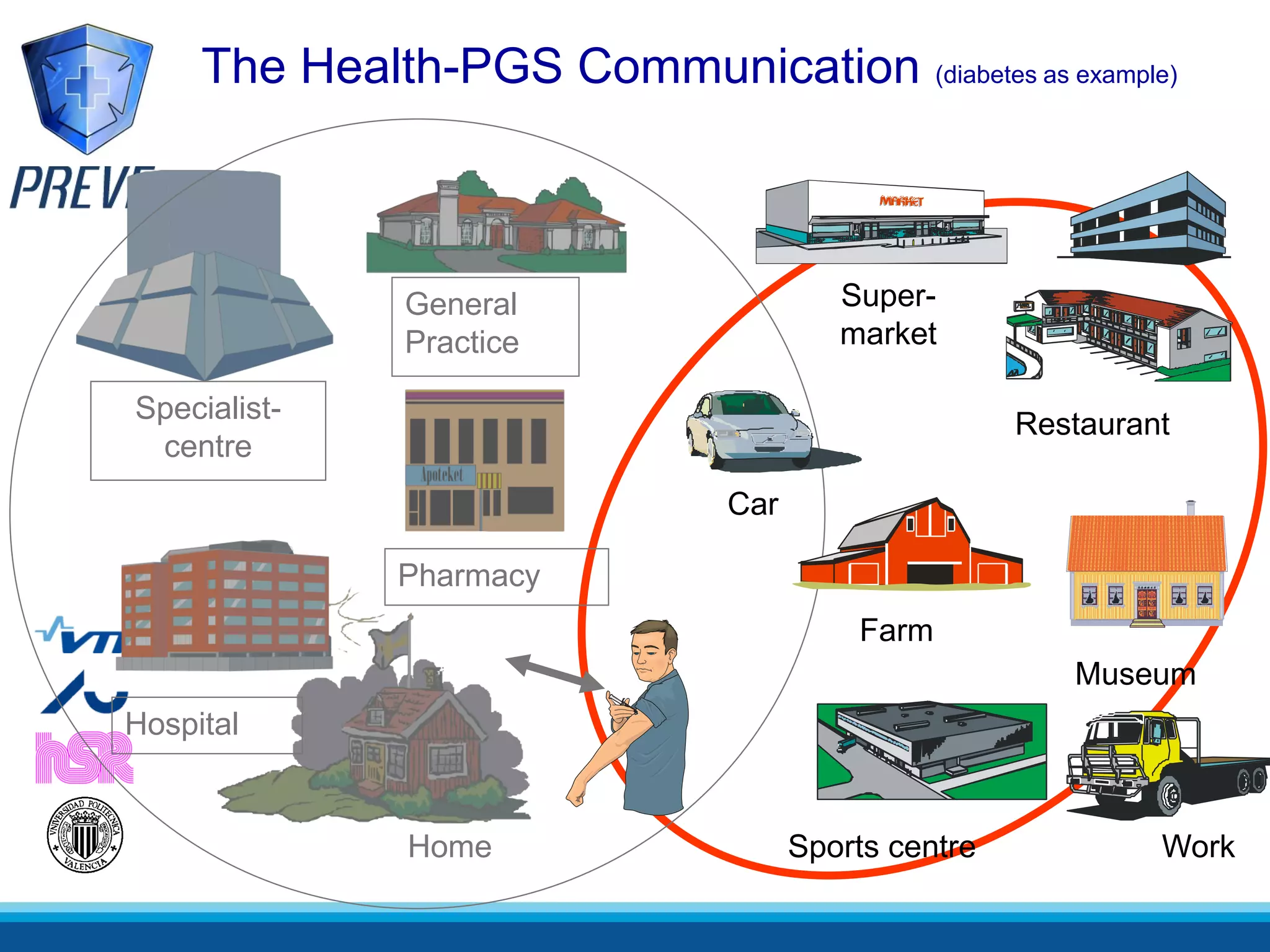
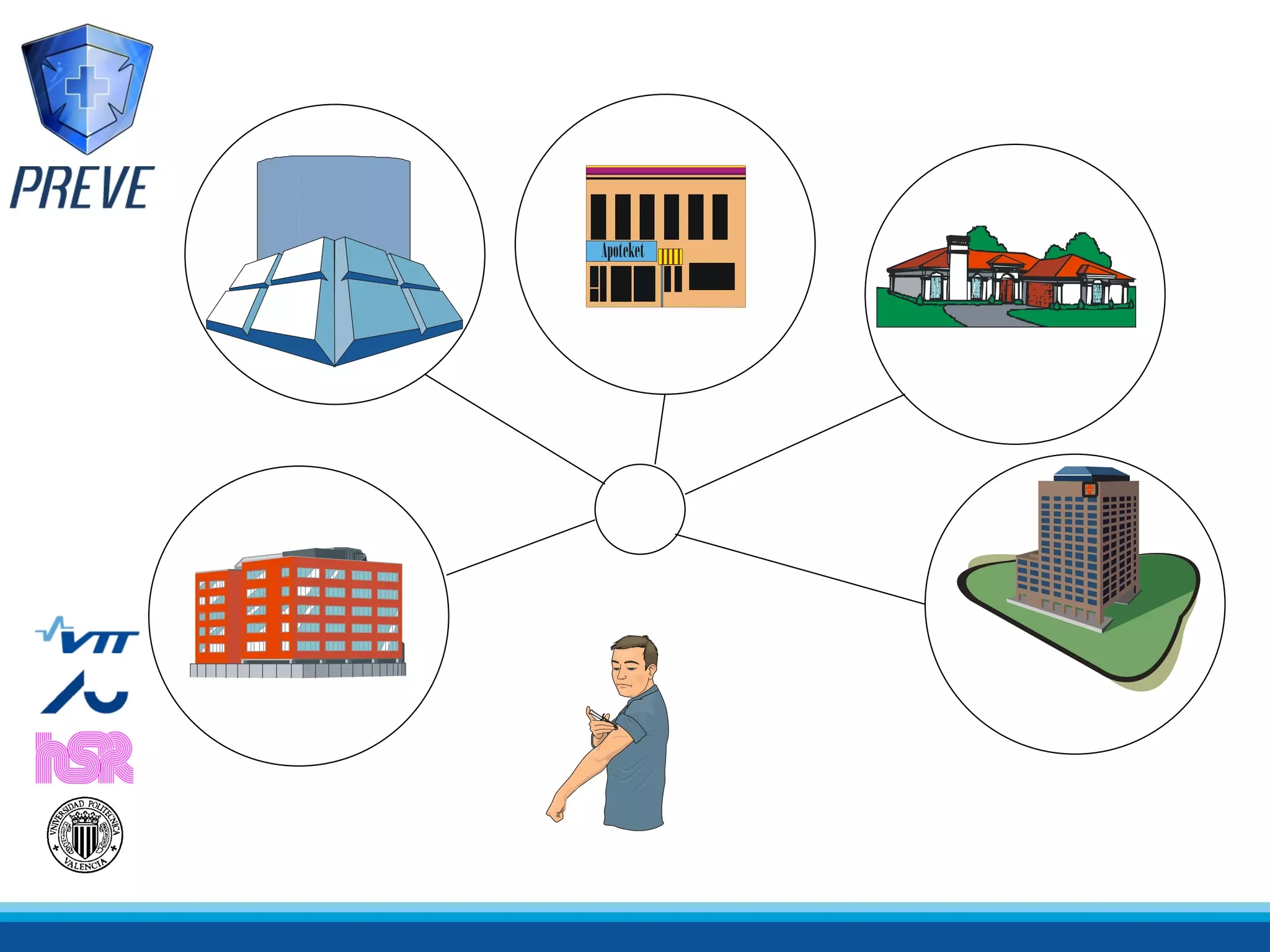
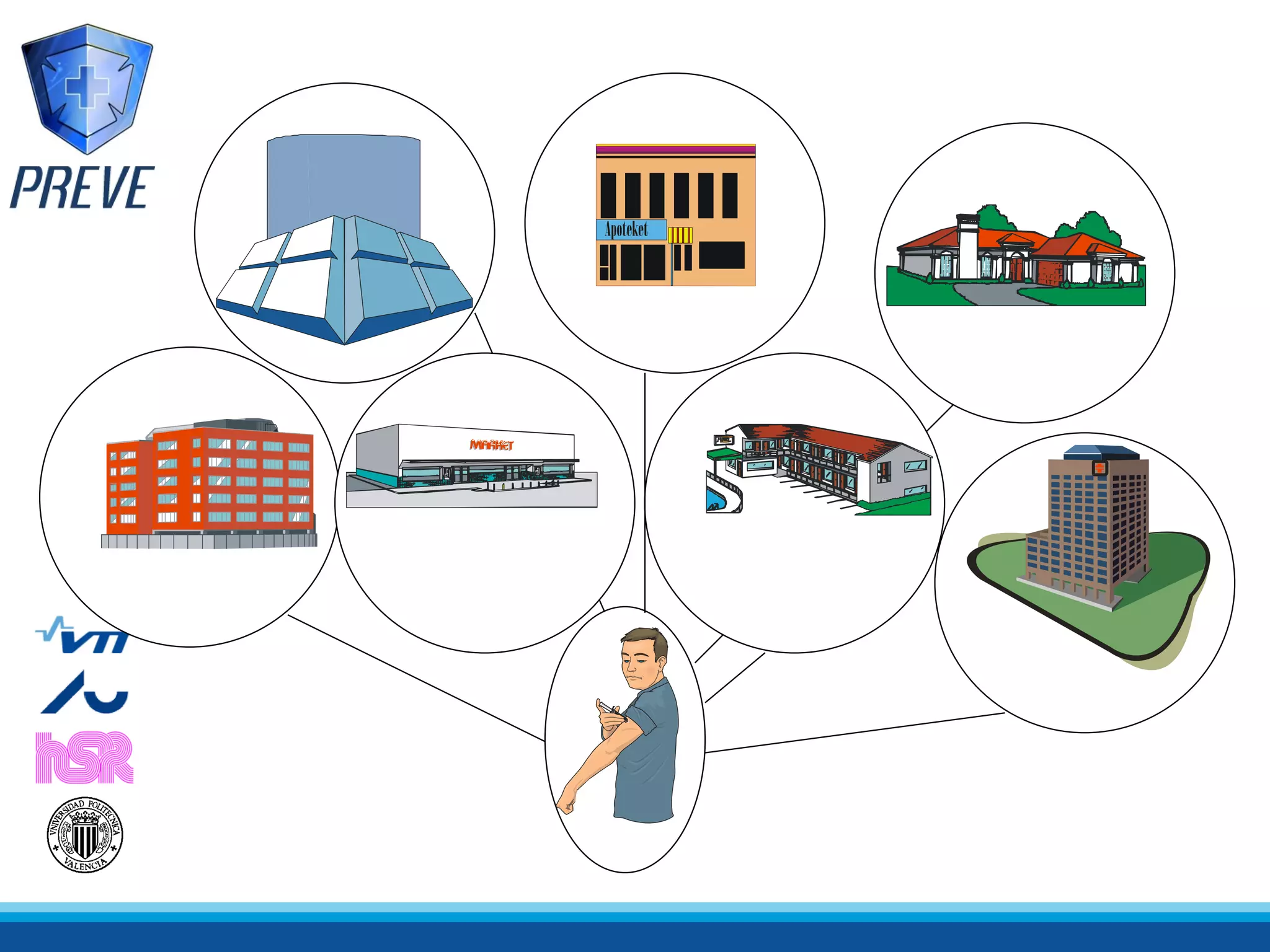
The Health-PGS Communication (diabetes as example)


               General                  Super-
               Practice                 market

Specialist-                                          Restaurant
 centre
                               Car

               Pharmacy
                                         Farm
                                                        Museum
Hospital


               Home                  Sports centre            Work
Apoteket
Apoteket
Conventional
         Co-production
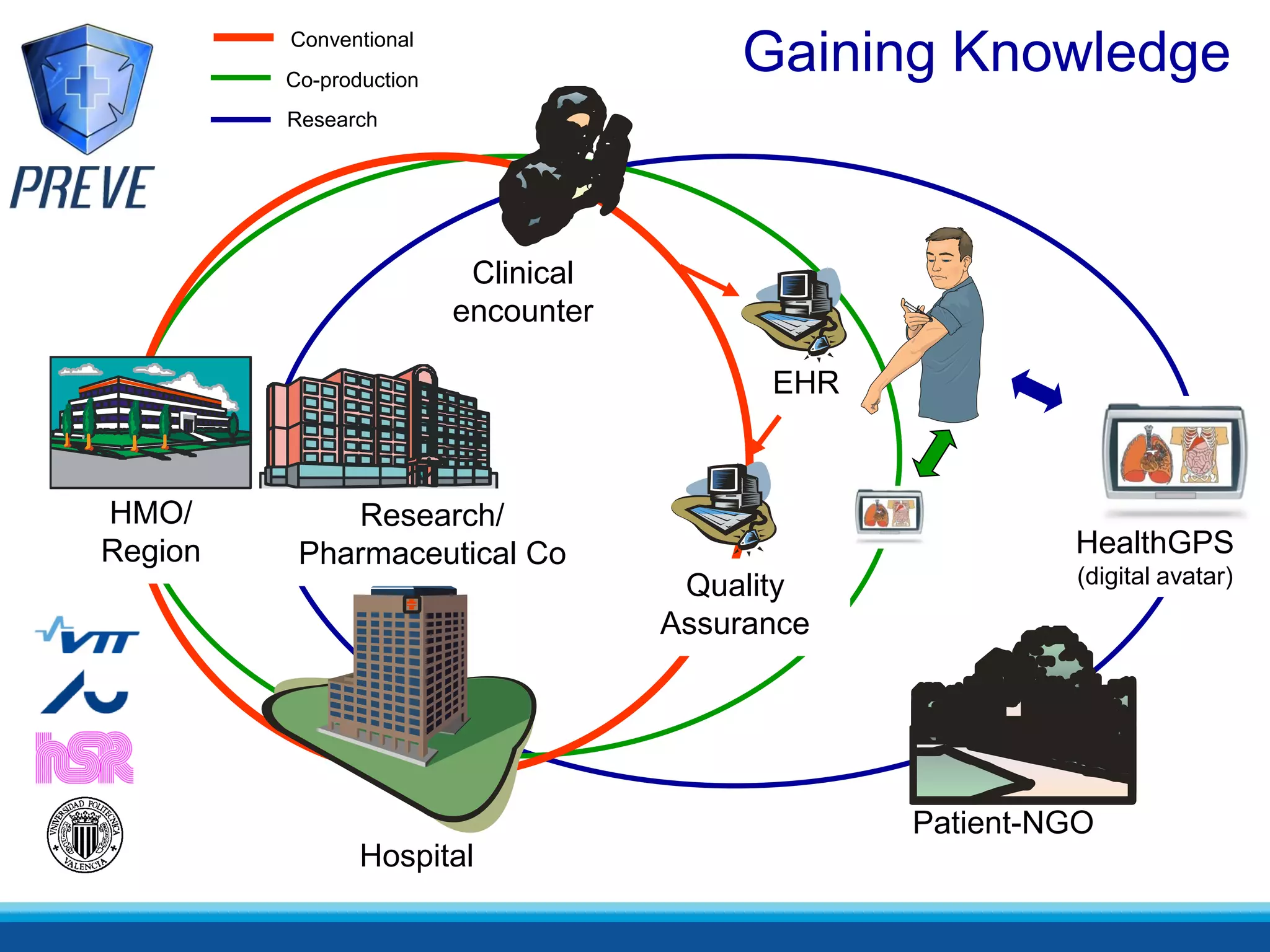
                                         Gaining Knowledge
         Research


                          Clinical
                         encounter

                                           EHR


HMO/         Research/
Region    Pharmaceutical Co                               HealthGPS
                                      Quality             (digital avatar)

                                     Assurance


                                                 Patient-NGO
                Hospital
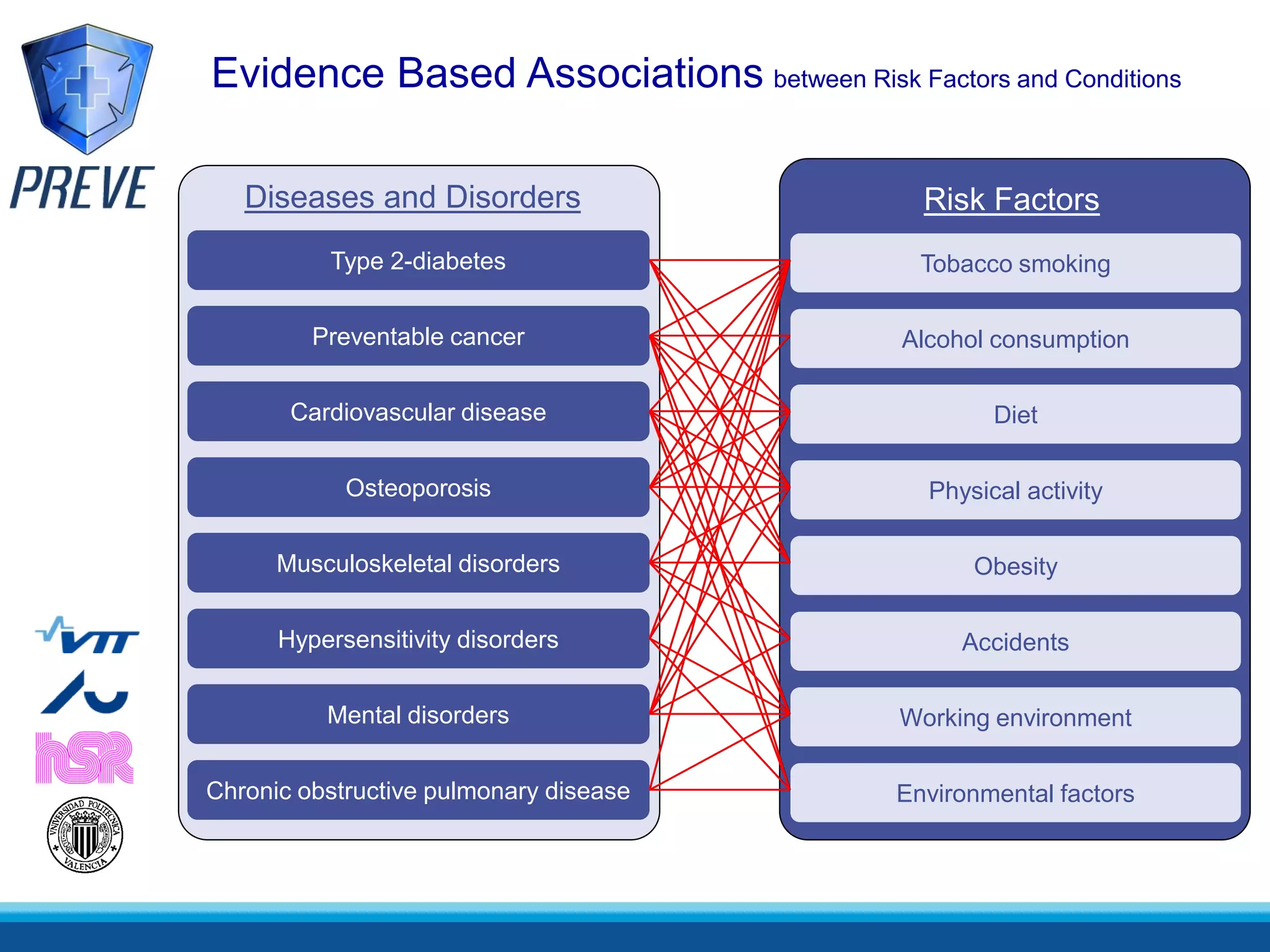
Evidence Based Associations between Risk Factors and Conditions

   Diseases and Disorders                     Risk Factors
          Type 2-diabetes                     Tobacco smoking

         Preventable cancer                 Alcohol consumption

       Cardiovascular disease                       Diet

            Osteoporosis                      Physical activity

      Musculoskeletal disorders                   Obesity

      Hypersensitivity disorders                 Accidents

          Mental disorders                  Working environment

Chronic obstructive pulmonary disease       Environmental factors
PREVE partners
Valtion teknillinen tutkimuskeskus, VTT

Aarhus University

Fondazione Centro San Raffaele del
  Monte Tabor

Universidad Politécnica de Valencia

D2.1 relevant diseases and conditions

  • 1.
    Directions for ICTResearch in Disease Prevention FT7-ICT-2009.5.1 – Support Action D2.1 – Relevant Diseases and Conditions Workshop Barcelona 16th March 2010 This project is partially funded under the 7th Framework Programme by the European Commission
  • 2.
    The Citizen asCo-producer of Health – enabled by Information and Communication Technology Health Service Delivery Citizen as proactive subject Client Centred Approach Patient Centred Medicine Citizen as co-Producer of Health Disease prevention Disease compensation Model & (Disease cure) Concepts Assisted living Maturity of ICT User as Operator Expert Systems User as User Corporate Centred Contemporary Layman Systems State of the Art Individual Centred in ICT and Ambient Assisted Living Empowerment Citizen as object
  • 3.
    Data–Information–Knowledge-Decisions Data is asimple value-set without context, than can be stored and exchanged electronically - if there is technical interoperability (Exercise amount= 567 Watts) Information is a simple message where the value-set is provided in a predefined context. Information can be exchanged electronically if there is semantic interoperability (This food item contains 257 cal served on Italian bread, 10 grams of sugar and E4711) Knowledge is information provided in a dynamic personal and organisational context and with relations to other knowledge. Knowledge can be utilized and exchanged using computer- models and ontologies Decisions are made on the basis of knowledge
  • 4.
    Team work Knowledge Manual work Technology
  • 5.
    The Health-PGS Service-model (Co-produced prevention as example) Commodity service providers Information Health providers Knowledge Data Citizen HEALTH- PERSONAL GUIDANCE Exercise SYSTEM
  • 6.
    Characterizing medical knowledge Intuitive(I) Experimental (E) Precision (P) I Diseases and E health problems can be positioned to this continuum P Diagnostics / Therapies Figure by Niilo Saranummi
  • 7.
    Characterizing medical knowledge– (knowledge types) Intuitive (I) Experimental (E) Precision (P) Christensen’s book is based on the I idea that different business models Diseases and are needed when health problems dealing with E health problems can be positioned to this continuum for which medical knowledge is intuitive, P experimental or precise. Diagnostics / Therapies Figure by Niilo Saranummi
  • 8.
    Knowledge Philosophical Abstract models, theories, paradigms layer (abstract) Heuristic Mechanisms, archetypes, patterns layer methods (general) Phenomenological layer Phenomenons, problems, acts (specific)
  • 9.
    The healthy lifetrajectory is like a journey - navigation is crucial. Heath-navigation is based on shared decisions of which pathways to follow
  • 10.
    The Health PersonalGuidance System Intuitive knowledge Information Model (Experimental knowledge) from and to ECO-system Precise knowledge (Personal knowledge)
  • 11.
    Decision support –in prevention - Example Evidence of food having impact in Cardio Vascular Disease CVD=Cardiovascular Disease, CI = Confidence interval Reduction i CVD disease risk (%) Reference (95% CI) Wine 32 ( 23-41) Circulation 2002;105:2836-44 (150 ml/day) Fish 14 (8-19) Am J Cardiol 2004;93:1119-23 (114 gr 4x/week) Dark chocolate 21 (14-27) JAMA 2003;290:1029-30 (100g/day) Fruit and vegetables 21 (14-27) Lancet 2002;359:1969-74 (400 g/day) Garlic 25 (21-27) Arch Intern Med 2001;161:813-24 (2.7 g/day) Almonds 13 (11-14) Circulation 2002;106:1327-32 (68 g/day) Am J Clin Nutr 2003;77:1379-84 Combined effect 76 (63-84) Franco OH et al. BMJ 2004;329:1447-50. A “polymeal” of the above would cost 21.60 Great British Pounds per week (2004) and give an average increase in life expectancy of 6.6 years for men and 4.8 years for women And give men 9.0 years more life without heart disease for women (8.1 years).
  • 12.
    The Health-PGS Communication(diabetes as example) General Super- Practice market Specialist- Restaurant centre Car Pharmacy Farm Museum Hospital Home Sports centre Work
  • 13.
  • 14.
  • 15.
    Conventional Co-production Gaining Knowledge Research Clinical encounter EHR HMO/ Research/ Region Pharmaceutical Co HealthGPS Quality (digital avatar) Assurance Patient-NGO Hospital
  • 16.
    Evidence Based Associationsbetween Risk Factors and Conditions Diseases and Disorders Risk Factors Type 2-diabetes Tobacco smoking Preventable cancer Alcohol consumption Cardiovascular disease Diet Osteoporosis Physical activity Musculoskeletal disorders Obesity Hypersensitivity disorders Accidents Mental disorders Working environment Chronic obstructive pulmonary disease Environmental factors
  • 17.
    PREVE partners Valtion teknillinentutkimuskeskus, VTT Aarhus University Fondazione Centro San Raffaele del Monte Tabor Universidad Politécnica de Valencia