Cybersecurity & Data Privacy
A Comprehensive Overview
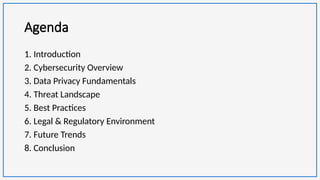
Agenda
1. Introduction
2. Cybersecurity Overview
3. Data Privacy Fundamentals
4. Threat Landscape
5. Best Practices
6. Legal & Regulatory Environment
7. Future Trends
8. Conclusion
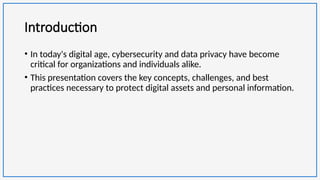
Introduction
• In today's digital age, cybersecurity and data privacy have become
critical for organizations and individuals alike.
• This presentation covers the key concepts, challenges, and best
practices necessary to protect digital assets and personal information.
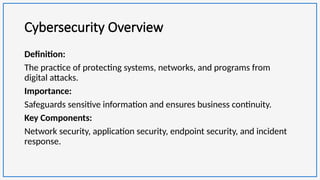
Cybersecurity Overview
Definition:
The practice of protecting systems, networks, and programs from
digital attacks.
Importance:
Safeguards sensitive information and ensures business continuity.
Key Components:
Network security, application security, endpoint security, and incident
response.
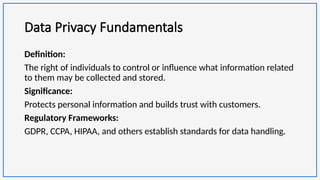
Data Privacy Fundamentals
Definition:
The right of individuals to control or influence what information related
to them may be collected and stored.
Significance:
Protects personal information and builds trust with customers.
Regulatory Frameworks:
GDPR, CCPA, HIPAA, and others establish standards for data handling.
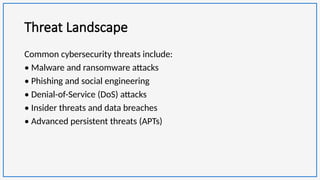
Threat Landscape
Common cybersecurity threats include:
• Malware and ransomware attacks
• Phishing and social engineering
• Denial-of-Service (DoS) attacks
• Insider threats and data breaches
• Advanced persistent threats (APTs)
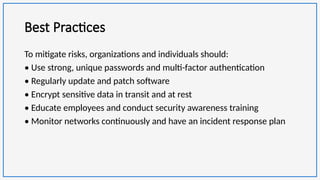
Best Practices
To mitigate risks, organizations and individuals should:
• Use strong, unique passwords and multi-factor authentication
• Regularly update and patch software
• Encrypt sensitive data in transit and at rest
• Educate employees and conduct security awareness training
• Monitor networks continuously and have an incident response plan
Legal & Regulatory Environment
Key regulations and standards include:
• GDPR (General Data Protection Regulation)
• CCPA (California Consumer Privacy Act)
• HIPAA (Health Insurance Portability and Accountability Act)
• PCI DSS (Payment Card Industry Data Security Standard)
These frameworks help organizations manage risk and ensure
accountability.
Future Trends
Emerging trends in cybersecurity and data privacy:
• Increased use of AI and machine learning for threat detection
• Adoption of zero-trust security models
• Growth in cloud security solutions
• Enhanced privacy technologies and data anonymization
• Greater emphasis on regulatory compliance and ethical data handling
Conclusion
• Cybersecurity and data privacy are critical pillars for safeguarding
digital assets. By understanding the threat landscape, adopting best
practices, and complying with regulatory standards, organizations can
protect sensitive data and maintain trust.
• The evolving nature of cyber threats requires continuous vigilance
and adaptation to new technologies and regulatory requirements.

Cybersecurity & Data Privacy – PowerPoint Presentation

  • 1.
    Cybersecurity & DataPrivacy A Comprehensive Overview
  • 2.
    Agenda 1. Introduction 2. CybersecurityOverview 3. Data Privacy Fundamentals 4. Threat Landscape 5. Best Practices 6. Legal & Regulatory Environment 7. Future Trends 8. Conclusion
  • 3.
    Introduction • In today'sdigital age, cybersecurity and data privacy have become critical for organizations and individuals alike. • This presentation covers the key concepts, challenges, and best practices necessary to protect digital assets and personal information.
  • 4.
    Cybersecurity Overview Definition: The practiceof protecting systems, networks, and programs from digital attacks. Importance: Safeguards sensitive information and ensures business continuity. Key Components: Network security, application security, endpoint security, and incident response.
  • 5.
    Data Privacy Fundamentals Definition: Theright of individuals to control or influence what information related to them may be collected and stored. Significance: Protects personal information and builds trust with customers. Regulatory Frameworks: GDPR, CCPA, HIPAA, and others establish standards for data handling.
  • 6.
    Threat Landscape Common cybersecuritythreats include: • Malware and ransomware attacks • Phishing and social engineering • Denial-of-Service (DoS) attacks • Insider threats and data breaches • Advanced persistent threats (APTs)
  • 7.
    Best Practices To mitigaterisks, organizations and individuals should: • Use strong, unique passwords and multi-factor authentication • Regularly update and patch software • Encrypt sensitive data in transit and at rest • Educate employees and conduct security awareness training • Monitor networks continuously and have an incident response plan
  • 8.
    Legal & RegulatoryEnvironment Key regulations and standards include: • GDPR (General Data Protection Regulation) • CCPA (California Consumer Privacy Act) • HIPAA (Health Insurance Portability and Accountability Act) • PCI DSS (Payment Card Industry Data Security Standard) These frameworks help organizations manage risk and ensure accountability.
  • 9.
    Future Trends Emerging trendsin cybersecurity and data privacy: • Increased use of AI and machine learning for threat detection • Adoption of zero-trust security models • Growth in cloud security solutions • Enhanced privacy technologies and data anonymization • Greater emphasis on regulatory compliance and ethical data handling
  • 10.
    Conclusion • Cybersecurity anddata privacy are critical pillars for safeguarding digital assets. By understanding the threat landscape, adopting best practices, and complying with regulatory standards, organizations can protect sensitive data and maintain trust. • The evolving nature of cyber threats requires continuous vigilance and adaptation to new technologies and regulatory requirements.