Cyber Security
and Data Privacy
In today's digital world, safeguarding our personal and sensitive
information is paramount.
Importance of Cyber Security in
the Digital Age
1 Protecting Against Threats
Cyber attacks, data breaches,
and online fraud pose serious
risks to individuals and
organizations. Robust cyber
security is essential to mitigate
these threats.
2 Maintaining Privacy
In an increasingly connected
world, personal data is
vulnerable. Effective cyber
security measures help
preserve our right to privacy
and control over our
information.
3 Ensuring Business Continuity
Cyber attacks can disrupt operations, damage reputations, and result in
significant financial losses. Cyber security is critical for the continuity of
businesses and organizations.
Common Cyber Threats and Vulnerabilities
Malware
Malicious software, such as
viruses, worms, and
ransomware, can infiltrate
systems and compromise data.
Phishing Attacks
Fraudulent attempts to steal
sensitive information through
deceptive emails, websites, or
messages.
Unsecured Devices
Inadequately protected
smartphones, laptops, and
Internet of Things (IoT) devices
can be entry points for cyber
criminals.
Protecting Personal and Sensitive Data
Strong Passwords
Use long, complex passwords and enable two-
factor authentication to secure accounts and
devices.
Encryption
Encrypt sensitive data to protect it from
unauthorized access and ensure confidentiality.
Secure Backups
Regularly back up important data to safeguard
against loss or corruption in the event of a cyber
attack.
Privacy-Focused Browsing
Use privacy-enhancing tools, such as VPNs and
secure browsers, to protect online activities and
minimize data collection.
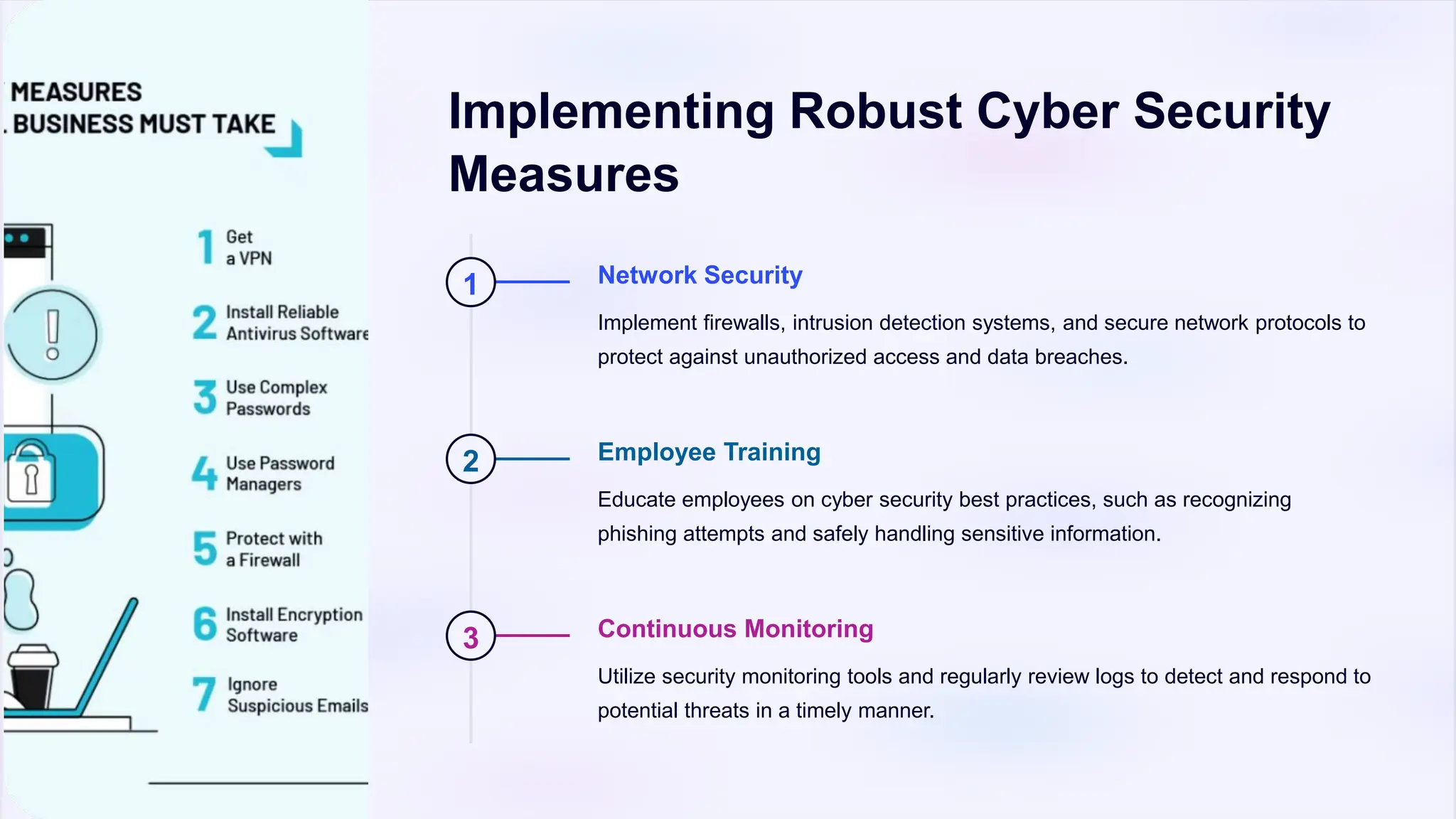
Implementing Robust Cyber Security
Measures
1 Network Security
Implement firewalls, intrusion detection systems, and secure network protocols to
protect against unauthorized access and data breaches.
2 Employee Training
Educate employees on cyber security best practices, such as recognizing
phishing attempts and safely handling sensitive information.
3 Continuous Monitoring
Utilize security monitoring tools and regularly review logs to detect and respond to
potential threats in a timely manner.
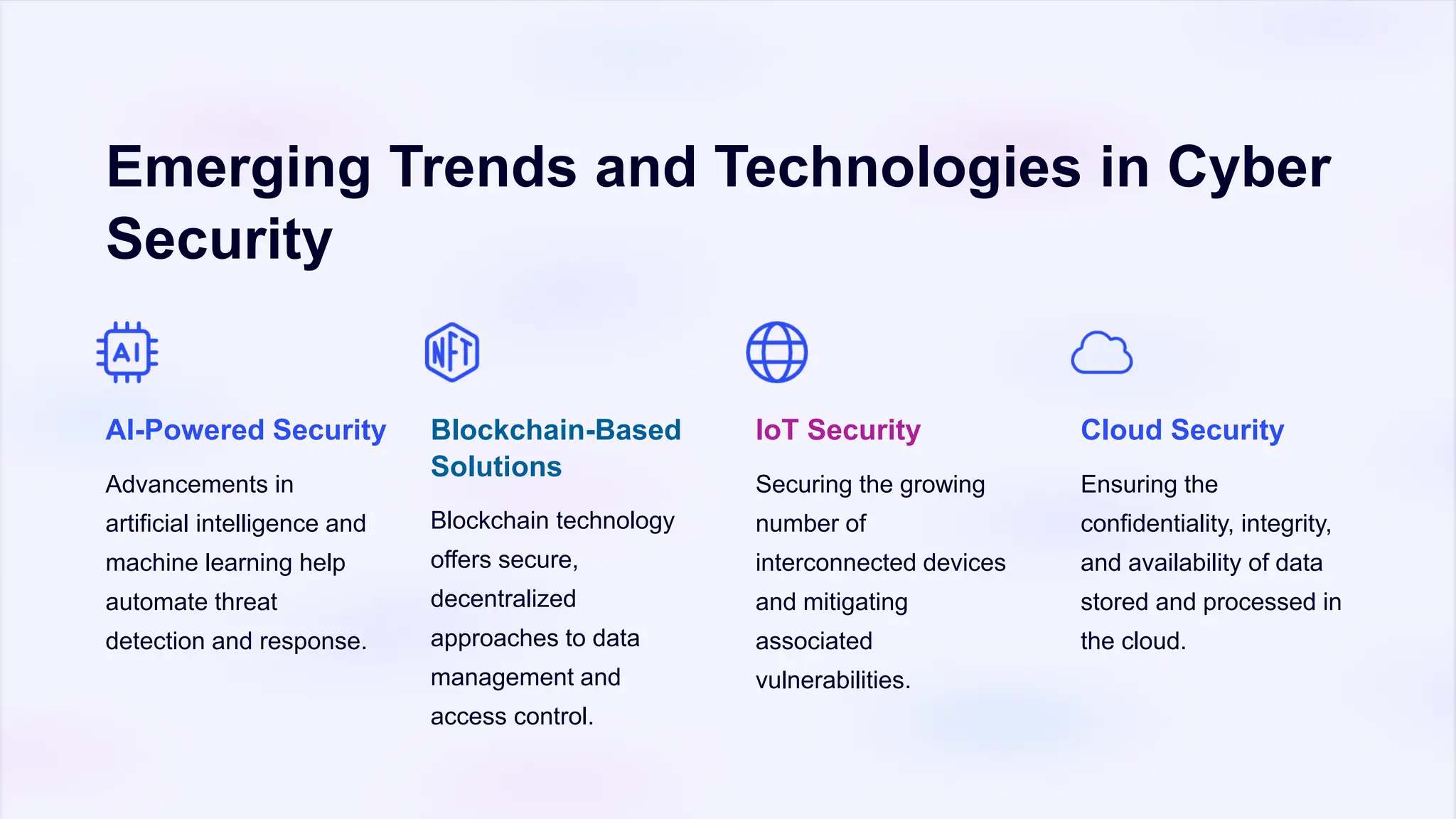
Emerging Trends and Technologies in Cyber
Security
AI-Powered Security
Advancements in
artificial intelligence and
machine learning help
automate threat
detection and response.
Blockchain-Based
Solutions
Blockchain technology
offers secure,
decentralized
approaches to data
management and
access control.
IoT Security
Securing the growing
number of
interconnected devices
and mitigating
associated
vulnerabilities.
Cloud Security
Ensuring the
confidentiality, integrity,
and availability of data
stored and processed in
the cloud.
Conclusion and Call to Action
Awareness
Educate yourself and others about the importance of cyber security
and data privacy.
Vigilance
Remain vigilant and proactive in implementing security measures to
protect your personal and sensitive information.
Advocacy
Advocate for stronger cyber security policies and regulations to
safeguard our digital world.

A presentation on cyber security Introduction

  • 1.
    Cyber Security and DataPrivacy In today's digital world, safeguarding our personal and sensitive information is paramount.
  • 2.
    Importance of CyberSecurity in the Digital Age 1 Protecting Against Threats Cyber attacks, data breaches, and online fraud pose serious risks to individuals and organizations. Robust cyber security is essential to mitigate these threats. 2 Maintaining Privacy In an increasingly connected world, personal data is vulnerable. Effective cyber security measures help preserve our right to privacy and control over our information. 3 Ensuring Business Continuity Cyber attacks can disrupt operations, damage reputations, and result in significant financial losses. Cyber security is critical for the continuity of businesses and organizations.
  • 3.
    Common Cyber Threatsand Vulnerabilities Malware Malicious software, such as viruses, worms, and ransomware, can infiltrate systems and compromise data. Phishing Attacks Fraudulent attempts to steal sensitive information through deceptive emails, websites, or messages. Unsecured Devices Inadequately protected smartphones, laptops, and Internet of Things (IoT) devices can be entry points for cyber criminals.
  • 4.
    Protecting Personal andSensitive Data Strong Passwords Use long, complex passwords and enable two- factor authentication to secure accounts and devices. Encryption Encrypt sensitive data to protect it from unauthorized access and ensure confidentiality. Secure Backups Regularly back up important data to safeguard against loss or corruption in the event of a cyber attack. Privacy-Focused Browsing Use privacy-enhancing tools, such as VPNs and secure browsers, to protect online activities and minimize data collection.
  • 5.
    Implementing Robust CyberSecurity Measures 1 Network Security Implement firewalls, intrusion detection systems, and secure network protocols to protect against unauthorized access and data breaches. 2 Employee Training Educate employees on cyber security best practices, such as recognizing phishing attempts and safely handling sensitive information. 3 Continuous Monitoring Utilize security monitoring tools and regularly review logs to detect and respond to potential threats in a timely manner.
  • 6.
    Emerging Trends andTechnologies in Cyber Security AI-Powered Security Advancements in artificial intelligence and machine learning help automate threat detection and response. Blockchain-Based Solutions Blockchain technology offers secure, decentralized approaches to data management and access control. IoT Security Securing the growing number of interconnected devices and mitigating associated vulnerabilities. Cloud Security Ensuring the confidentiality, integrity, and availability of data stored and processed in the cloud.
  • 7.
    Conclusion and Callto Action Awareness Educate yourself and others about the importance of cyber security and data privacy. Vigilance Remain vigilant and proactive in implementing security measures to protect your personal and sensitive information. Advocacy Advocate for stronger cyber security policies and regulations to safeguard our digital world.