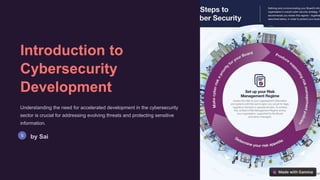
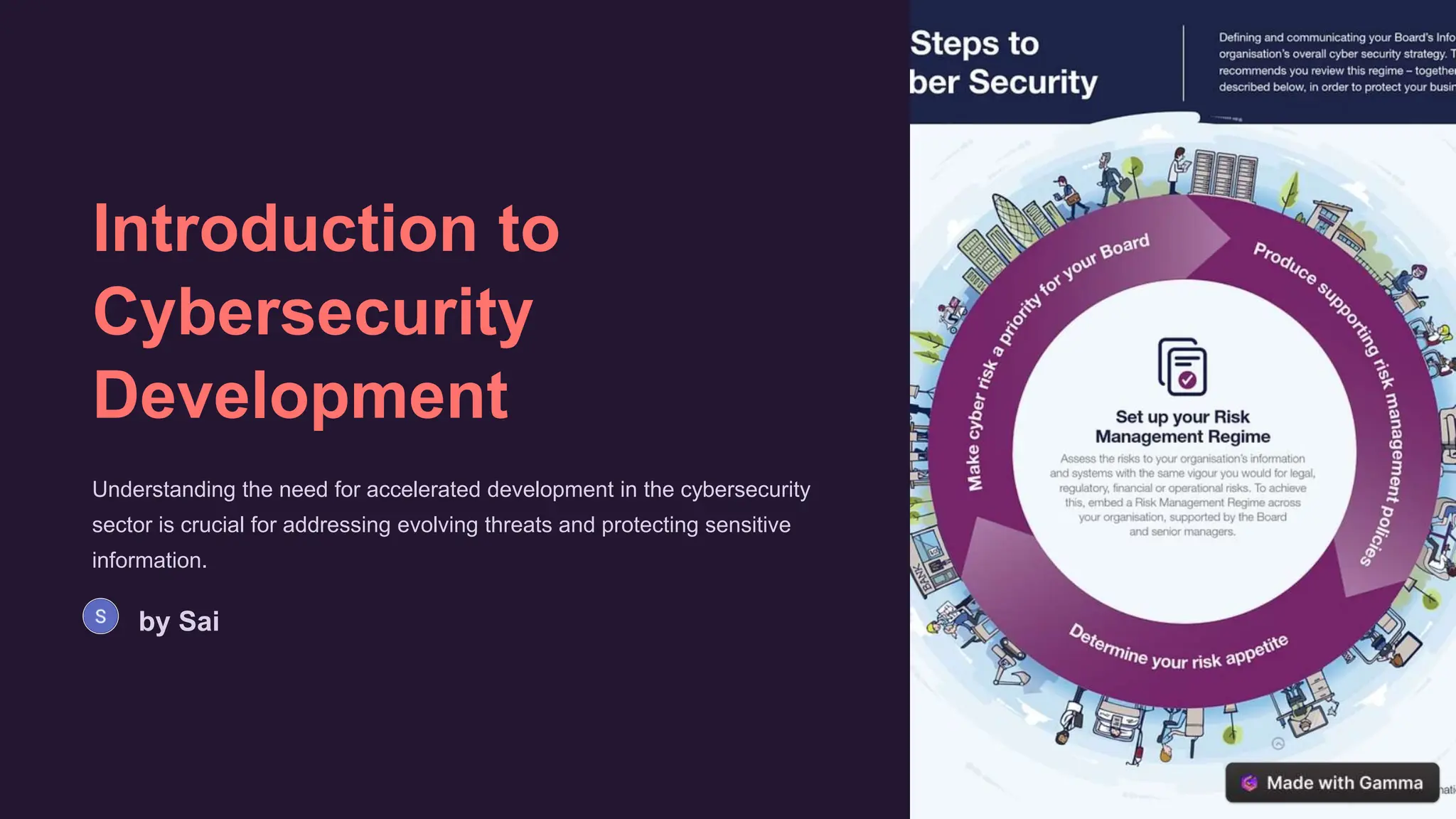
Introduction to
Cybersecurity
Development
Understanding the need for accelerated development in the cybersecurity
sector is crucial for addressing evolving threats and protecting sensitive
information.
by Sai
Importance of Accelerating
Development in Cybersecurity
1 Digital Threats
Rapid development is essential to stay ahead of constantly evolving digital
threats.
2 Data Protection
Faster development is key to ensuring the security and integrity of sensitive
data.
3 Technological Advancements
Accelerating development ensures alignment with the latest technological
advancements.
Key Challenges in Cybersecurity
Development
1 Complexity of Threats
Adapting to the increasing complexity of
cyber threats requires constant innovation.
2 Resource Limitations
Lack of resources and expertise often
hinder the pace of cybersecurity
development.
3 Regulatory Compliance
Meeting stringent regulatory compliance
standards poses a significant challenge.
4 Human Error
Human error remains a persistent
challenge in ensuring robust cybersecurity
practices.
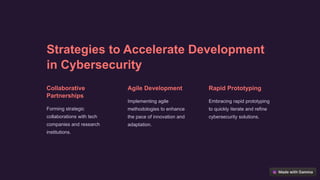
Strategies to Accelerate Development
in Cybersecurity
Collaborative
Partnerships
Forming strategic
collaborations with tech
companies and research
institutions.
Agile Development
Implementing agile
methodologies to enhance
the pace of innovation and
adaptation.
Rapid Prototyping
Embracing rapid prototyping
to quickly iterate and refine
cybersecurity solutions.
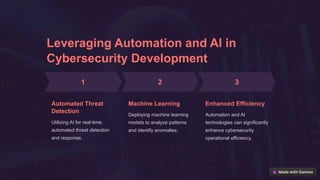
Leveraging Automation and AI in
Cybersecurity Development
Automated Threat
Detection
Utilizing AI for real-time,
automated threat detection
and response.
Machine Learning
Deploying machine learning
models to analyze patterns
and identify anomalies.
Enhanced Efficiency
Automation and AI
technologies can significantly
enhance cybersecurity
operational efficiency.
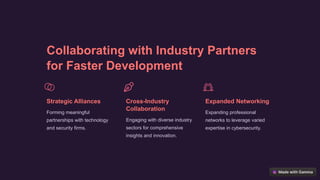
Collaborating with Industry Partners
for Faster Development
Strategic Alliances
Forming meaningful
partnerships with technology
and security firms.
Cross-Industry
Collaboration
Engaging with diverse industry
sectors for comprehensive
insights and innovation.
Expanded Networking
Expanding professional
networks to leverage varied
expertise in cybersecurity.
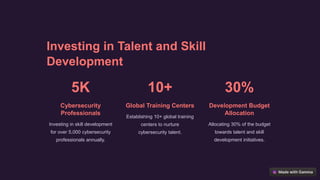
Investing in Talent and Skill
Development
5K
Cybersecurity
Professionals
Investing in skill development
for over 5,000 cybersecurity
professionals annually.
10+
Global Training Centers
Establishing 10+ global training
centers to nurture
cybersecurity talent.
30%
Development Budget
Allocation
Allocating 30% of the budget
towards talent and skill
development initiatives.
Conclusion and Key Takeaways
Continuous Adaptation
Flexibility and continuous
adaptation are essential for
sustainable cybersecurity
development.
Integrated Approach
An integrated, holistic
approach is crucial to
address evolving
challenges effectively.
Dynamic Cyber
Landscape
Embracing the dynamic
nature of the cyber
landscape is vital for long-
term success.

Cyber Security Research Landscape and Cyber security development

  • 1.
    Introduction to Cybersecurity Development Understanding theneed for accelerated development in the cybersecurity sector is crucial for addressing evolving threats and protecting sensitive information. by Sai
  • 2.
    Importance of Accelerating Developmentin Cybersecurity 1 Digital Threats Rapid development is essential to stay ahead of constantly evolving digital threats. 2 Data Protection Faster development is key to ensuring the security and integrity of sensitive data. 3 Technological Advancements Accelerating development ensures alignment with the latest technological advancements.
  • 3.
    Key Challenges inCybersecurity Development 1 Complexity of Threats Adapting to the increasing complexity of cyber threats requires constant innovation. 2 Resource Limitations Lack of resources and expertise often hinder the pace of cybersecurity development. 3 Regulatory Compliance Meeting stringent regulatory compliance standards poses a significant challenge. 4 Human Error Human error remains a persistent challenge in ensuring robust cybersecurity practices.
  • 4.
    Strategies to AccelerateDevelopment in Cybersecurity Collaborative Partnerships Forming strategic collaborations with tech companies and research institutions. Agile Development Implementing agile methodologies to enhance the pace of innovation and adaptation. Rapid Prototyping Embracing rapid prototyping to quickly iterate and refine cybersecurity solutions.
  • 5.
    Leveraging Automation andAI in Cybersecurity Development Automated Threat Detection Utilizing AI for real-time, automated threat detection and response. Machine Learning Deploying machine learning models to analyze patterns and identify anomalies. Enhanced Efficiency Automation and AI technologies can significantly enhance cybersecurity operational efficiency.
  • 6.
    Collaborating with IndustryPartners for Faster Development Strategic Alliances Forming meaningful partnerships with technology and security firms. Cross-Industry Collaboration Engaging with diverse industry sectors for comprehensive insights and innovation. Expanded Networking Expanding professional networks to leverage varied expertise in cybersecurity.
  • 7.
    Investing in Talentand Skill Development 5K Cybersecurity Professionals Investing in skill development for over 5,000 cybersecurity professionals annually. 10+ Global Training Centers Establishing 10+ global training centers to nurture cybersecurity talent. 30% Development Budget Allocation Allocating 30% of the budget towards talent and skill development initiatives.
  • 8.
    Conclusion and KeyTakeaways Continuous Adaptation Flexibility and continuous adaptation are essential for sustainable cybersecurity development. Integrated Approach An integrated, holistic approach is crucial to address evolving challenges effectively. Dynamic Cyber Landscape Embracing the dynamic nature of the cyber landscape is vital for long- term success.