




October is Cyber 
Security Awareness 
Month
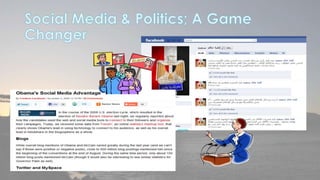
Social Media 
Private 
Life 
Work 
Family 
School
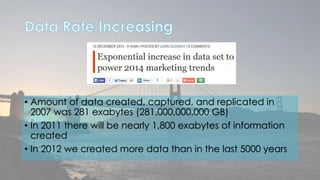
• Amount of data created, captured, and replicated in 
2007 was 281 exabytes (281,000,000,000 GB) 
• In 2011 there will be nearly 1,800 exabytes of information 
created 
• In 2012 we created more data than in the last 5000 years
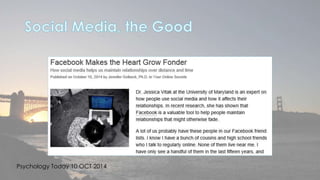
Psychology Today 10 OCT 2014
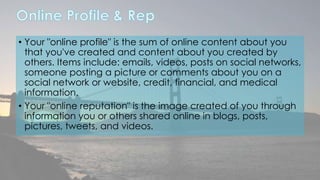
• Your "online profile" is the sum of online content about you 
that you've created and content about you created by 
others. Items include: emails, videos, posts on social networks, 
someone posting a picture or comments about you on a 
social network or website, credit, financial, and medical 
information. 
• Your "online reputation" is the image created of you through 
information you or others shared online in blogs, posts, 
pictures, tweets, and videos.
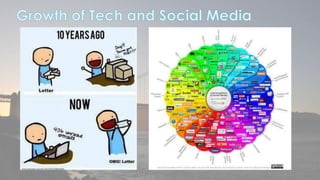
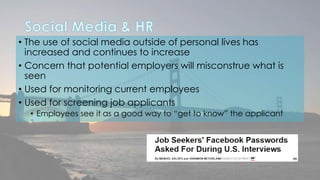
• The use of social media outside of personal lives has 
increased and continues to increase 
• Concern that potential employers will misconstrue what is 
seen 
• Used for monitoring current employees 
• Used for screening job applicants 
• Employees see it as a good way to “get to know” the applicant
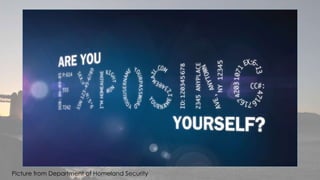
Picture from Department of Homeland Security
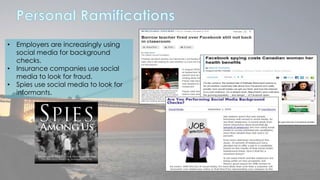
• Employers are increasingly using 
social media for background 
checks. 
• Insurance companies use social 
media to look for fraud. 
• Spies use social media to look for 
informants.
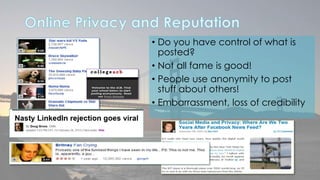
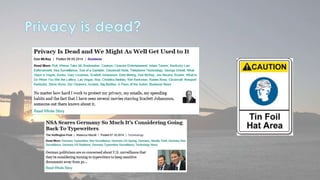
• Do you have control of what is 
posted? 
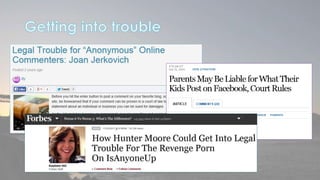
• Not all fame is good! 
• People use anonymity to post 
stuff about others! 
• Embarrassment, loss of credibility 
Rev2/28/2011
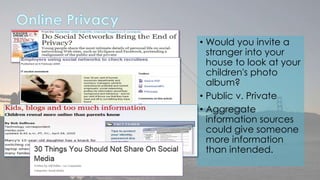
• Would you invite a 
stranger into your 
house to look at your 
children's photo 
album? 
• Public v. Private 
• Aggregate 
information sources 
could give someone 
more information 
than intended.
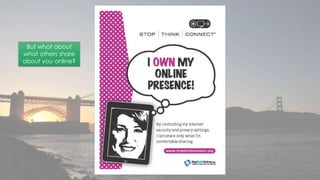
But what about 
what others share 
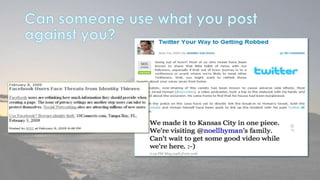
about you online?
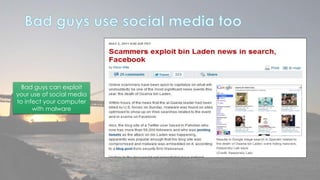
Bad guys can exploit 
your use of social media 
to infect your computer 
with malware
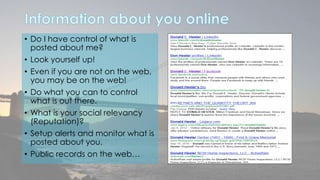
• Do I have control of what is 
posted about me? 
• Look yourself up! 
• Even if you are not on the web, 
you may be on the web! 
• Do what you can to control 
what is out there. 
• What is your social relevancy 
(Reputation)? 
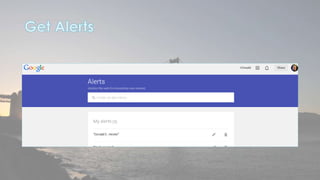
• Setup alerts and monitor what is 
posted about you. 
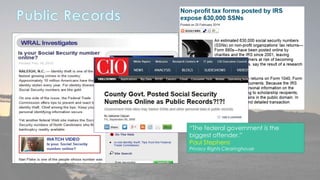
• Public records on the web…
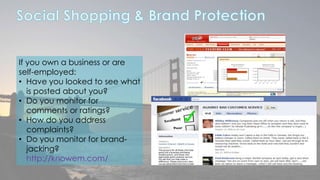
If you own a business or are 
self-employed: 
• Have you looked to see what 
is posted about you? 
• Do you monitor for 
comments or ratings? 
• How do you address 
complaints? 
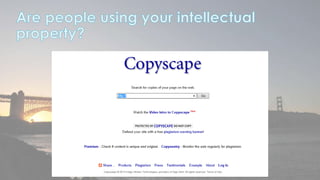
• Do you monitor for brand-jacking? 
http://knowem.com/
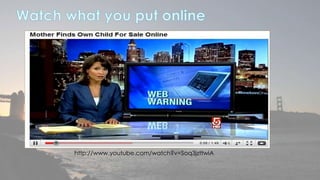
http://www.youtube.com/watch?v=Soq3jzttwiA
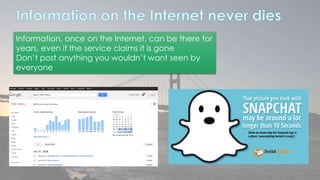
Information, once on the Internet, can be there for 
years, even if the service claims it is gone 
Don’t post anything you wouldn’t want seen by 
everyone
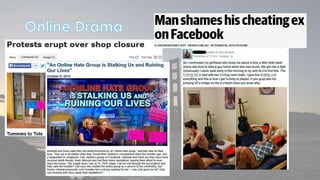
• "Cyberbullying" happens when a child, preteen, or teen is 
tormented, threatened, harassed, humiliated, 
embarrassed or otherwise targeted by another child, 
preteen, or teen using the Internet, interactive and digital 
technologies, or mobile phones 
• Examples of cyberbullying include, mean text messages or 
emails, rumors sent by email or posted on social 
networking sites, and embarrassing pictures, videos, 
websites, or fake profiles. 
• http://www.stopbullying.gov
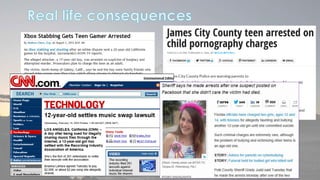
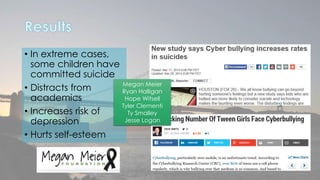
• In extreme cases, 
some children have 
committed suicide 
• Distracts from 
academics 
• Increases risk of 
depression 
• Hurts self-esteem 
Megan Meier 
Ryan Halligan 
Hope Witsell 
Tyler Clementi 
Ty Smalley 
Jesse Logan
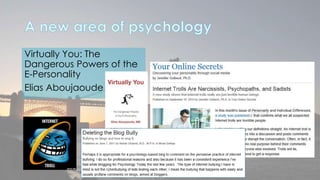
Virtually You: The 
Dangerous Powers of the 
E-Personality 
Elias Aboujaoude
• Why does someone want 
your personal information? 
• In an information age, 
information becomes a 
commodity 
• Information has a value 
• Some information has a 
greater value 
• Your personal information is 
potentially worth more than 
you think
• Personally Identifiable Information 
• Name and account number 
• Name and social security number 
• Name and address 
• Credit Card Number 
• Where you might find it 
• Tax files 
• Account Statements 
• Records (Medical, Public and other) 
• Businesses you do business with
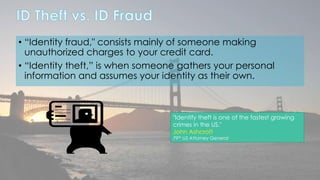
• “Identity fraud," consists mainly of someone making 
unauthorized charges to your credit card. 
• “Identity theft,” is when someone gathers your personal 
information and assumes your identity as their own. 
"Identify theft is one of the fastest growing 
crimes in the US." 
John Ashcroft 
79th US Attorney General
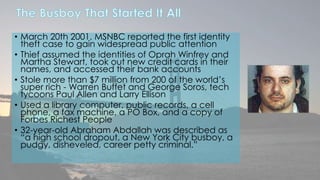
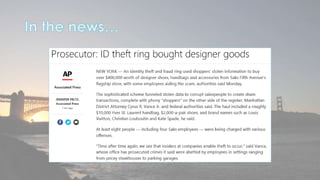
• March 20th 2001, MSNBC reported the first identity 
theft case to gain widespread public attention 
• Thief assumed the identities of Oprah Winfrey and 
Martha Stewart, took out new credit cards in their 
names, and accessed their bank accounts 
• Stole more than $7 million from 200 of the world’s 
super rich - Warren Buffet and George Soros, tech 
tycoons Paul Allen and Larry Ellison 
• Used a library computer, public records, a cell 
phone, a fax machine, a PO Box, and a copy of 
Forbes Richest People 
• 32-year-old Abraham Abdallah was described as 
“a high school dropout, a New York City busboy, a 
pudgy, disheveled, career petty criminal.”
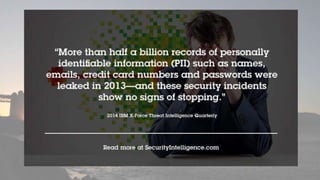
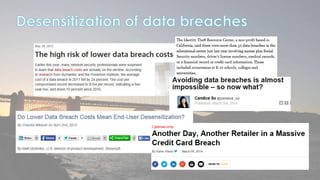
• PII exposed by others (Data Breaches) 
• PII exposed by ourselves (online & others) 
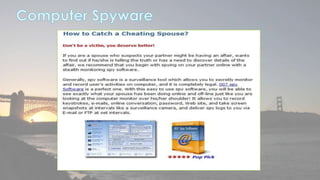
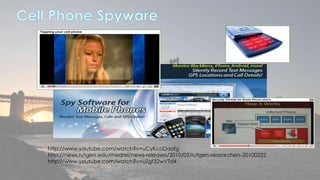
• Malware (Spyware, Viruses, etc…) 
• Social Engineering 
• Phone 
• Internet (Phishing, social websites etc…) 
• In Person (at your door, in a restaurant etc…) 
• Physical theft 
• Mail box 
• Trash (Dumpster diving) 
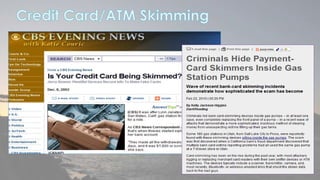
• ATMs (skimming) 
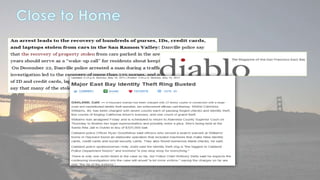
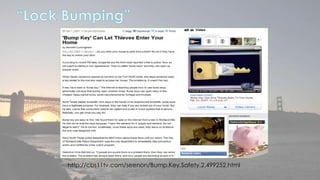
• Home break-ins
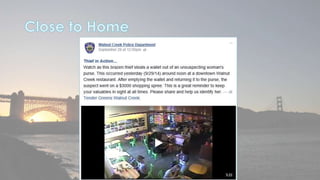
• Dumpster diving 
• ATM – Credit Card skimming 
• Mailbox 
• Home Break-in
http://cbs11tv.com/seenon/Bump.Key.Safety.2.499252.html
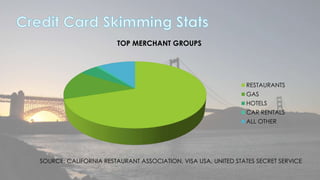
TOP MERCHANT GROUPS 
RESTAURANTS 
GAS 
HOTELS 
CAR RENTALS 
ALL OTHER 
SOURCE: CALIFORNIA RESTAURANT ASSOCIATION, VISA USA, UNITED STATES SECRET SERVICE
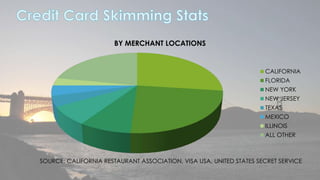
BY MERCHANT LOCATIONS 
CALIFORNIA 
FLORIDA 
NEW YORK 
NEW JERSEY 
TEXAS 
MEXICO 
ILLINOIS 
ALL OTHER 
SOURCE: CALIFORNIA RESTAURANT ASSOCIATION, VISA USA, UNITED STATES SECRET SERVICE
“The federal government is the 
biggest offender.” 
Paul Stephens 
Privacy Rights Clearinghouse
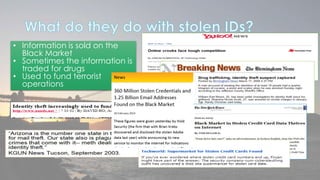
• Information is sold on the 
Black Market 
• Sometimes the information is 
traded for drugs 
• Used to fund terrorist 
operations
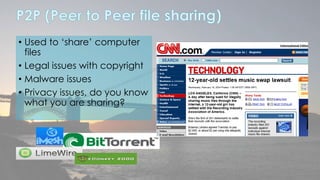
• Used to ‘share’ computer 
files 
• Legal issues with copyright 
• Malware issues 
• Privacy issues, do you know 
what you are sharing?
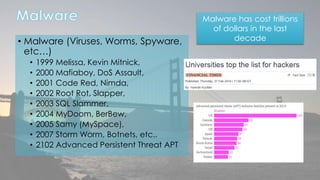
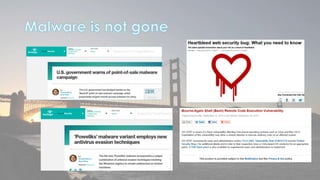
• Malware (Viruses, Worms, Spyware, 
etc…) 
• 1999 Melissa, Kevin Mitnick, 
• 2000 Mafiaboy, DoS Assault, 
• 2001 Code Red, Nimda, 
• 2002 Root Rot, Slapper, 
• 2003 SQL Slammer, 
• 2004 MyDoom, BerBew, 
• 2005 Samy (MySpace), 
• 2007 Storm Worm, Botnets, etc.. 
• 2102 Advanced Persistent Threat APT 
Malware has cost trillions 
of dollars in the last 
decade
• In the past, they were primarily destructive 
• Today, they focus on stealing information 
• Or using your computer as a Bot (Zombie) to send out SPAM 
or attack other systems
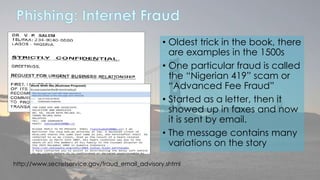
• Oldest trick in the book, there 
are examples in the 1500s 
• One particular fraud is called 
the “Nigerian 419” scam or 
“Advanced Fee Fraud” 
• Started as a letter, then it 
showed up in faxes and now 
it is sent by email. 
• The message contains many 
variations on the story 
Rev2/28/2011 
http://www.secretservice.gov/fraud_email_advisory.shtml
http://www.youtube.com/watch?v=uCyKcoDaofg 
http://news.rutgers.edu/medrel/news-releases/2010/02/rutgers-researchers-20100222 
http://www.youtube.com/watch?v=UZgf32wVTd4
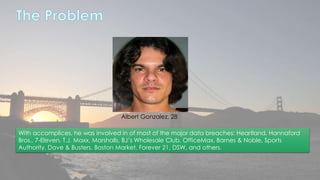
Albert Gonzalez, 28 
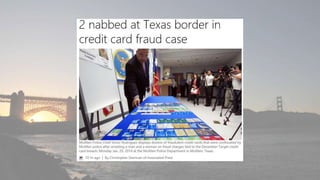
With accomplices, he was involved in of most of the major data breaches: Heartland, Hannaford 
Bros., 7-Eleven, T.J. Maxx, Marshalls, BJ’s Wholesale Club, OfficeMax, Barnes & Noble, Sports 
Authority, Dave & Busters, Boston Market, Forever 21, DSW, and others.
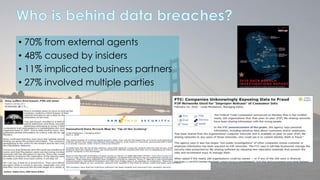
• 70% from external agents 
• 48% caused by insiders 
• 11% implicated business partners 
• 27% involved multiple parties
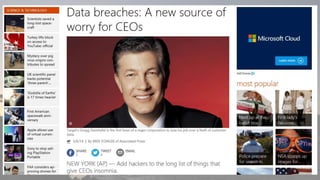
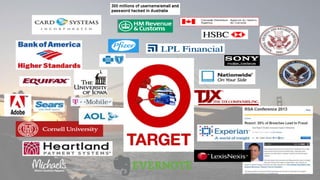
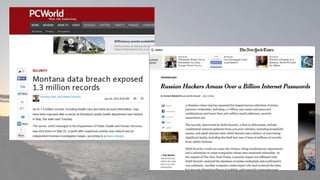
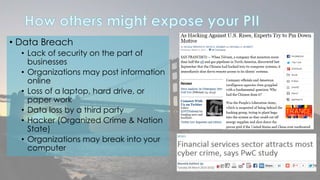
• Data Breach 
• Lack of security on the part of 
businesses 
• Organizations may post information 
online 
• Loss of a laptop, hard drive, or 
paper work 
• Data loss by a third party 
• Hacker (Organized Crime & Nation 
State) 
• Organizations may break into your 
computer
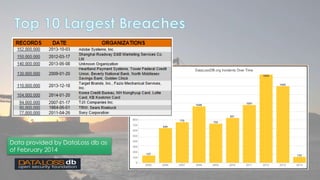
Data provided by DataLoss db as 
of February 2014
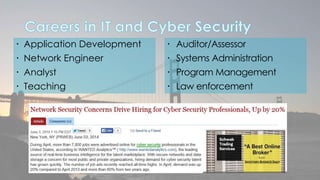
 Application Development 
 Network Engineer 
 Analyst 
 Teaching
Cyber Security Awareness October 2014

Cyber Security Awareness October 2014

  • 2.
    October is Cyber Security Awareness Month
  • 5.
    Social Media Private Life Work Family School
  • 8.
    • Amount ofdata created, captured, and replicated in 2007 was 281 exabytes (281,000,000,000 GB) • In 2011 there will be nearly 1,800 exabytes of information created • In 2012 we created more data than in the last 5000 years
  • 9.
  • 11.
    • Your "onlineprofile" is the sum of online content about you that you've created and content about you created by others. Items include: emails, videos, posts on social networks, someone posting a picture or comments about you on a social network or website, credit, financial, and medical information. • Your "online reputation" is the image created of you through information you or others shared online in blogs, posts, pictures, tweets, and videos.
  • 12.
    • The useof social media outside of personal lives has increased and continues to increase • Concern that potential employers will misconstrue what is seen • Used for monitoring current employees • Used for screening job applicants • Employees see it as a good way to “get to know” the applicant
  • 13.
    Picture from Departmentof Homeland Security
  • 14.
    • Employers areincreasingly using social media for background checks. • Insurance companies use social media to look for fraud. • Spies use social media to look for informants.
  • 15.
    • Do youhave control of what is posted? • Not all fame is good! • People use anonymity to post stuff about others! • Embarrassment, loss of credibility Rev2/28/2011
  • 16.
    • Would youinvite a stranger into your house to look at your children's photo album? • Public v. Private • Aggregate information sources could give someone more information than intended.
  • 17.
    But what about what others share about you online?
  • 19.
    Bad guys canexploit your use of social media to infect your computer with malware
  • 20.
    • Do Ihave control of what is posted about me? • Look yourself up! • Even if you are not on the web, you may be on the web! • Do what you can to control what is out there. • What is your social relevancy (Reputation)? • Setup alerts and monitor what is posted about you. • Public records on the web…
  • 22.
    If you owna business or are self-employed: • Have you looked to see what is posted about you? • Do you monitor for comments or ratings? • How do you address complaints? • Do you monitor for brand-jacking? http://knowem.com/
  • 24.
  • 29.
    Information, once onthe Internet, can be there for years, even if the service claims it is gone Don’t post anything you wouldn’t want seen by everyone
  • 38.
    • "Cyberbullying" happenswhen a child, preteen, or teen is tormented, threatened, harassed, humiliated, embarrassed or otherwise targeted by another child, preteen, or teen using the Internet, interactive and digital technologies, or mobile phones • Examples of cyberbullying include, mean text messages or emails, rumors sent by email or posted on social networking sites, and embarrassing pictures, videos, websites, or fake profiles. • http://www.stopbullying.gov
  • 40.
    • In extremecases, some children have committed suicide • Distracts from academics • Increases risk of depression • Hurts self-esteem Megan Meier Ryan Halligan Hope Witsell Tyler Clementi Ty Smalley Jesse Logan
  • 41.
    Virtually You: The Dangerous Powers of the E-Personality Elias Aboujaoude
  • 46.
    • Why doessomeone want your personal information? • In an information age, information becomes a commodity • Information has a value • Some information has a greater value • Your personal information is potentially worth more than you think
  • 47.
    • Personally IdentifiableInformation • Name and account number • Name and social security number • Name and address • Credit Card Number • Where you might find it • Tax files • Account Statements • Records (Medical, Public and other) • Businesses you do business with
  • 51.
    • “Identity fraud,"consists mainly of someone making unauthorized charges to your credit card. • “Identity theft,” is when someone gathers your personal information and assumes your identity as their own. "Identify theft is one of the fastest growing crimes in the US." John Ashcroft 79th US Attorney General
  • 52.
    • March 20th2001, MSNBC reported the first identity theft case to gain widespread public attention • Thief assumed the identities of Oprah Winfrey and Martha Stewart, took out new credit cards in their names, and accessed their bank accounts • Stole more than $7 million from 200 of the world’s super rich - Warren Buffet and George Soros, tech tycoons Paul Allen and Larry Ellison • Used a library computer, public records, a cell phone, a fax machine, a PO Box, and a copy of Forbes Richest People • 32-year-old Abraham Abdallah was described as “a high school dropout, a New York City busboy, a pudgy, disheveled, career petty criminal.”
  • 53.
    • PII exposedby others (Data Breaches) • PII exposed by ourselves (online & others) • Malware (Spyware, Viruses, etc…) • Social Engineering • Phone • Internet (Phishing, social websites etc…) • In Person (at your door, in a restaurant etc…) • Physical theft • Mail box • Trash (Dumpster diving) • ATMs (skimming) • Home break-ins
  • 55.
    • Dumpster diving • ATM – Credit Card skimming • Mailbox • Home Break-in
  • 57.
  • 59.
    TOP MERCHANT GROUPS RESTAURANTS GAS HOTELS CAR RENTALS ALL OTHER SOURCE: CALIFORNIA RESTAURANT ASSOCIATION, VISA USA, UNITED STATES SECRET SERVICE
  • 60.
    BY MERCHANT LOCATIONS CALIFORNIA FLORIDA NEW YORK NEW JERSEY TEXAS MEXICO ILLINOIS ALL OTHER SOURCE: CALIFORNIA RESTAURANT ASSOCIATION, VISA USA, UNITED STATES SECRET SERVICE
  • 61.
    “The federal governmentis the biggest offender.” Paul Stephens Privacy Rights Clearinghouse
  • 62.
    • Information issold on the Black Market • Sometimes the information is traded for drugs • Used to fund terrorist operations
  • 65.
    • Used to‘share’ computer files • Legal issues with copyright • Malware issues • Privacy issues, do you know what you are sharing?
  • 66.
    • Malware (Viruses,Worms, Spyware, etc…) • 1999 Melissa, Kevin Mitnick, • 2000 Mafiaboy, DoS Assault, • 2001 Code Red, Nimda, • 2002 Root Rot, Slapper, • 2003 SQL Slammer, • 2004 MyDoom, BerBew, • 2005 Samy (MySpace), • 2007 Storm Worm, Botnets, etc.. • 2102 Advanced Persistent Threat APT Malware has cost trillions of dollars in the last decade
  • 67.
    • In thepast, they were primarily destructive • Today, they focus on stealing information • Or using your computer as a Bot (Zombie) to send out SPAM or attack other systems
  • 69.
    • Oldest trickin the book, there are examples in the 1500s • One particular fraud is called the “Nigerian 419” scam or “Advanced Fee Fraud” • Started as a letter, then it showed up in faxes and now it is sent by email. • The message contains many variations on the story Rev2/28/2011 http://www.secretservice.gov/fraud_email_advisory.shtml
  • 71.
  • 78.
    Albert Gonzalez, 28 With accomplices, he was involved in of most of the major data breaches: Heartland, Hannaford Bros., 7-Eleven, T.J. Maxx, Marshalls, BJ’s Wholesale Club, OfficeMax, Barnes & Noble, Sports Authority, Dave & Busters, Boston Market, Forever 21, DSW, and others.
  • 80.
    • 70% fromexternal agents • 48% caused by insiders • 11% implicated business partners • 27% involved multiple parties
  • 81.
    • Data Breach • Lack of security on the part of businesses • Organizations may post information online • Loss of a laptop, hard drive, or paper work • Data loss by a third party • Hacker (Organized Crime & Nation State) • Organizations may break into your computer
  • 82.
    Data provided byDataLoss db as of February 2014
  • 83.
     Application Development  Network Engineer  Analyst  Teaching