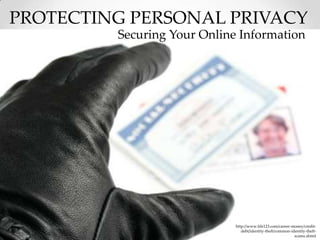
PROTECTING PERSONAL PRIVACY
         Securing Your Online Information


                             http://www.life123.com/career-money/credit-
                                debt/identity-theft/common-identity-theft-
                                                             scams.shtml
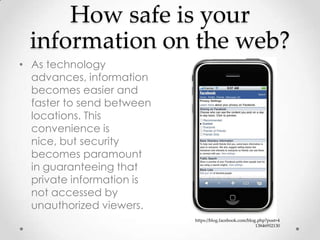
How safe is your
 information on the web?
• As technology
  advances, information
  becomes easier and
  faster to send between
  locations. This
  convenience is
  nice, but security
  becomes paramount
  in guaranteeing that
  private information is
  not accessed by
  unauthorized viewers.
                           https://blog.facebook.com/blog.php?post=4
                                                         13846952130
Personal information can be disclosed
            on all kinds of websites
• Social Media Sites:
  Facebook, Twitter, Myspa
  ce, etc.
• Purchasing Websites:
  Amazon, E-Bay, etc.
• Any other website that
  requires creating an
  account
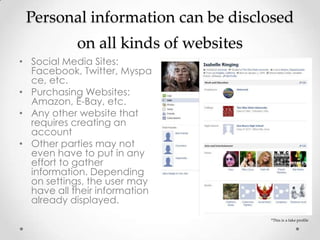
• Other parties may not
  even have to put in any
  effort to gather
  information. Depending
  on settings, the user may
  have all their information
  already displayed.
                                       *This is a fake profile
What can they do with
    your information?
• Use it to access
  other personal
  accounts
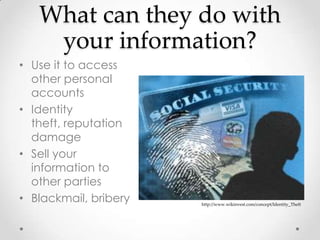
• Identity
  theft, reputation
  damage
• Sell your
  information to
  other parties
• Blackmail, bribery   http://www.wikinvest.com/concept/Identity_Theft
Some information should never be given out unless

      you know the source is completely trustworthy


•   Social Security Number
•   Credit Card Numbers
•   Account passwords
•   Addresses and Phone
    Numbers
                                   http://issbs.com/how-to-find-the-best-option-in-
                                                                    credit-cards-2/
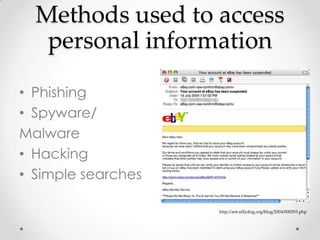
Methods used to access
   personal information

• Phishing
• Spyware/
Malware
• Hacking
• Simple searches

                    http://ant.sillydog.org/blog/2004/000293.php
You may not even know your information is
         compromised until its too late
• Universities have been
  targets for ID thieves
• One attack went
  unnoticed for over a
  year
• No U.S. law was
  implemented requiring
  the university to notify
  individuals that their
  information had been
  stolen                      http://en.wikipedia.org/wiki/Ohio_University
Apprehending violators is
       difficult
• Anonymity adds to
  difficulty
• Victims must spend time
  and $$ to attempt to
  correct the situation
• Law
  enforcement, governm
  ent and credit industries
  add complications to
  resolving the situation in
  a timely manner
                               http://appraisalnewsonline.typepad.com/appraisal_n
                                                     ews_for_real_e/identity_theft/
However, there are punishments for
 those caught committing these crimes
• State laws vary, but
  federal laws have
  begun to crack down
  on identity theft related
  crimes
• Identity Theft Penalty
  Act raises max
  sentence from 3 to 5
  years in prison with
  additional years
  depending on the
  specific crime              http://www.cybercrimesunit.com/?p=374
Simple Steps to Protect
 Your Online Information
• Never give out your
  information to people you
  do not know or trust
• Be sure to have all your
  essential programs
  updated to their current
  release
• Use secure passwords for
  accounts
• Have antivirus and
  spyware/malware
  programs installed and
  enabled
• Keep other electronic       http://simpleit1.tech.officelive.com/ProtectionSoftware.aspx

  devices with links to
  personal accounts secure
Useful Computer
              Programs
• CCleaner: http://www.piriform.com/ccleaner
• MalwareBytes: http://www.malwarebytes.org/
• NoScript(If using Mozilla Firefox browser):
  http://noscript.net/
• Antivirus Programs and more:
  o   AVG: http://free.avg.com/us-en/homepage
  o   Nod32: http://www.eset.com/us/
  o   Avast!: http://www.avast.com/en-us/index
  o   Aviria: http://www.avira.com/en/index
  o   Comodo: http://www.comodo.com/
  o   Norton: http://www.symantec.com/index.jsp

PROTECTION PERSONAL PRIVACY

  • 1.
    PROTECTING PERSONAL PRIVACY Securing Your Online Information http://www.life123.com/career-money/credit- debt/identity-theft/common-identity-theft- scams.shtml
  • 2.
    How safe isyour information on the web? • As technology advances, information becomes easier and faster to send between locations. This convenience is nice, but security becomes paramount in guaranteeing that private information is not accessed by unauthorized viewers. https://blog.facebook.com/blog.php?post=4 13846952130
  • 3.
    Personal information canbe disclosed on all kinds of websites • Social Media Sites: Facebook, Twitter, Myspa ce, etc. • Purchasing Websites: Amazon, E-Bay, etc. • Any other website that requires creating an account • Other parties may not even have to put in any effort to gather information. Depending on settings, the user may have all their information already displayed. *This is a fake profile
  • 4.
    What can theydo with your information? • Use it to access other personal accounts • Identity theft, reputation damage • Sell your information to other parties • Blackmail, bribery http://www.wikinvest.com/concept/Identity_Theft
  • 5.
    Some information shouldnever be given out unless you know the source is completely trustworthy • Social Security Number • Credit Card Numbers • Account passwords • Addresses and Phone Numbers http://issbs.com/how-to-find-the-best-option-in- credit-cards-2/
  • 6.
    Methods used toaccess personal information • Phishing • Spyware/ Malware • Hacking • Simple searches http://ant.sillydog.org/blog/2004/000293.php
  • 7.
    You may noteven know your information is compromised until its too late • Universities have been targets for ID thieves • One attack went unnoticed for over a year • No U.S. law was implemented requiring the university to notify individuals that their information had been stolen http://en.wikipedia.org/wiki/Ohio_University
  • 8.
    Apprehending violators is difficult • Anonymity adds to difficulty • Victims must spend time and $$ to attempt to correct the situation • Law enforcement, governm ent and credit industries add complications to resolving the situation in a timely manner http://appraisalnewsonline.typepad.com/appraisal_n ews_for_real_e/identity_theft/
  • 9.
    However, there arepunishments for those caught committing these crimes • State laws vary, but federal laws have begun to crack down on identity theft related crimes • Identity Theft Penalty Act raises max sentence from 3 to 5 years in prison with additional years depending on the specific crime http://www.cybercrimesunit.com/?p=374
  • 10.
    Simple Steps toProtect Your Online Information • Never give out your information to people you do not know or trust • Be sure to have all your essential programs updated to their current release • Use secure passwords for accounts • Have antivirus and spyware/malware programs installed and enabled • Keep other electronic http://simpleit1.tech.officelive.com/ProtectionSoftware.aspx devices with links to personal accounts secure
  • 11.
    Useful Computer Programs • CCleaner: http://www.piriform.com/ccleaner • MalwareBytes: http://www.malwarebytes.org/ • NoScript(If using Mozilla Firefox browser): http://noscript.net/ • Antivirus Programs and more: o AVG: http://free.avg.com/us-en/homepage o Nod32: http://www.eset.com/us/ o Avast!: http://www.avast.com/en-us/index o Aviria: http://www.avira.com/en/index o Comodo: http://www.comodo.com/ o Norton: http://www.symantec.com/index.jsp