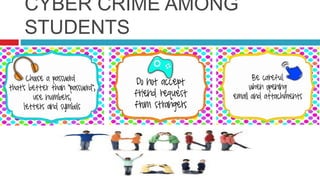
CYBER CRIME AMONG
STUDENTS
    By : Harshpreet Kaur
What is Cyber Crime?
Computer crime refers to any crime that involves a
computer and a network.

Cybercrimes are defined as: “Offences that are
committed against individuals or groups of individuals
with a criminal motive to intentionally harm the
reputation of the victim or cause physical or mental
harm to the victim directly or indirectly, using modern
telecommunication networks such as Internet (Chat
rooms, emails, notice boards and groups) and mobile
phones (SMS/MMS)”.
India 5th among cyber crime affected
     countries
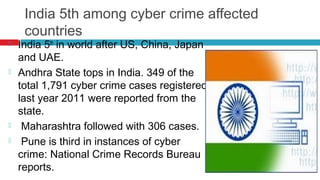
   India 5th in world after US, China, Japan
    and UAE.
   Andhra State tops in India. 349 of the
    total 1,791 cyber crime cases registered
    last year 2011 were reported from the
    state.
    Maharashtra followed with 306 cases.
    Pune is third in instances of cyber
    crime: National Crime Records Bureau
    reports.
Types of Cyber Crime
   Hacking: Hacking means unauthorized attempts to bypass the security
    mechanisms of an information system or network. Also, in simple words
    Hacking is the unauthorized access to a computer system, programs, data
    and network resources.

   Data Theft: If any person without permission of the owner or any other
    person, who is in charge of a computer, computer system of computer
    network - downloads, copies or extracts any data, computer data base or
    information from such computer, computer system or computer network
    including information or data held or stored in any removable storage
    medium, then it is data theft.

   Spreading Virus or W    orms: the virus will install files on your system and then
    will change your system so that virus program is run every time you start your
    system. It will then attempt to replicate itself by sending itself to other
Types of Cyber Crime
   Identity Theft: Identity theft is a form of fraud or cheating of another
    person’s identity in which someone pretends to be someone else by
    assuming that person’s identity, typically in order to access resources
    or obtain credit and other benefits in that person’s name.

   E-Mail Spoofing: E-mail spoofing is sending an e-mail to another
    person in such a way that it appears that the e-mail was sent by
    someone else. A spoof email is one that appears to originate from
    one source but actually has been sent from another source. Spoofing
    is the act of electronically disguising one computer as another for
    gaining as the password system. It is becoming so common that you
    can no longer take for granted that the e-mail you are receiving is
    truly from the person identified as the sender.
Cyber Crime Case: Fake Profile
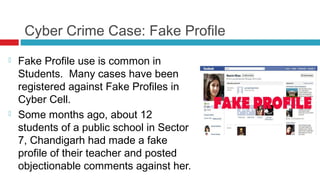
   Fake Profile use is common in
    Students. Many cases have been
    registered against Fake Profiles in
    Cyber Cell.
   Some months ago, about 12
    students of a public school in Sector
    7, Chandigarh had made a fake
    profile of their teacher and posted
    objectionable comments against her.
Cyber Crime Case: Password Hacking
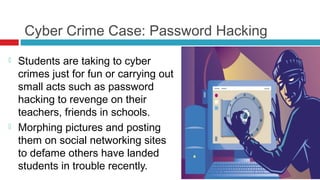
   Students are taking to cyber
    crimes just for fun or carrying out
    small acts such as password
    hacking to revenge on their
    teachers, friends in schools.
   Morphing pictures and posting
    them on social networking sites
    to defame others have landed
    students in trouble recently.
Cyber Crime Case: Cyber Bulling
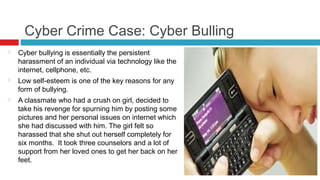
   Cyber bullying is essentially the persistent
    harassment of an individual via technology like the
    internet, cellphone, etc.
   Low self-esteem is one of the key reasons for any
    form of bullying.
   A classmate who had a crush on girl, decided to
    take his revenge for spurning him by posting some
    pictures and her personal issues on internet which
    she had discussed with him. The girl felt so
    harassed that she shut out herself completely for
    six months. It took three counselors and a lot of
    support from her loved ones to get her back on her
    feet.
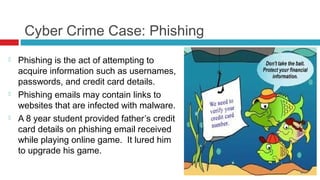
Cyber Crime Case: Phishing
   Phishing is the act of attempting to
    acquire information such as usernames,
    passwords, and credit card details.
   Phishing emails may contain links to
    websites that are infected with malware.
   A 8 year student provided father’s credit
    card details on phishing email received
    while playing online game. It lured him
    to upgrade his game.
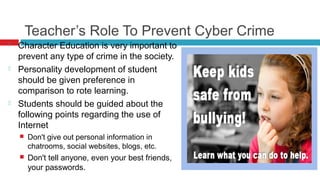
Teacher’s Role To Prevent Cyber Crime
   Character Education is very important to
    prevent any type of crime in the society.
   Personality development of student
    should be given preference in
    comparison to rote learning.
   Students should be guided about the
    following points regarding the use of
    Internet
       Don't give out personal information in
        chatrooms, social websites, blogs, etc.
       Don't tell anyone, even your best friends,
        your passwords.

     Teacher’s Role To Prevent Cyber Crime
    Continued……
       Don't give out personal information in
        chatrooms, social websites, blogs, etc.
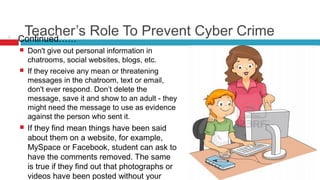
       If they receive any mean or threatening
        messages in the chatroom, text or email,
        don't ever respond. Don’t delete the
        message, save it and show to an adult - they
        might need the message to use as evidence
        against the person who sent it.
       If they find mean things have been said
        about them on a website, for example,
        MySpace or Facebook, student can ask to
        have the comments removed. The same
        is true if they find out that photographs or
        videos have been posted without your
Teacher’s Role To Prevent Cyber Crime

   Continued……
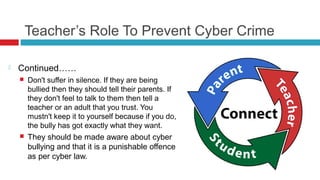
       Don't suffer in silence. If they are being
        bullied then they should tell their parents. If
        they don't feel to talk to them then tell a
        teacher or an adult that you trust. You
        mustn't keep it to yourself because if you do,
        the bully has got exactly what they want.
       They should be made aware about cyber
        bullying and that it is a punishable offence
        as per cyber law.
CYBER CRIME AMONG
STUDENTS

Cyber crime among students

  • 1.
    CYBER CRIME AMONG STUDENTS By : Harshpreet Kaur
  • 2.
    What is CyberCrime? Computer crime refers to any crime that involves a computer and a network. Cybercrimes are defined as: “Offences that are committed against individuals or groups of individuals with a criminal motive to intentionally harm the reputation of the victim or cause physical or mental harm to the victim directly or indirectly, using modern telecommunication networks such as Internet (Chat rooms, emails, notice boards and groups) and mobile phones (SMS/MMS)”.
  • 3.
    India 5th amongcyber crime affected countries  India 5th in world after US, China, Japan and UAE.  Andhra State tops in India. 349 of the total 1,791 cyber crime cases registered last year 2011 were reported from the state.  Maharashtra followed with 306 cases.  Pune is third in instances of cyber crime: National Crime Records Bureau reports.
  • 4.
    Types of CyberCrime  Hacking: Hacking means unauthorized attempts to bypass the security mechanisms of an information system or network. Also, in simple words Hacking is the unauthorized access to a computer system, programs, data and network resources.  Data Theft: If any person without permission of the owner or any other person, who is in charge of a computer, computer system of computer network - downloads, copies or extracts any data, computer data base or information from such computer, computer system or computer network including information or data held or stored in any removable storage medium, then it is data theft.  Spreading Virus or W orms: the virus will install files on your system and then will change your system so that virus program is run every time you start your system. It will then attempt to replicate itself by sending itself to other
  • 5.
    Types of CyberCrime  Identity Theft: Identity theft is a form of fraud or cheating of another person’s identity in which someone pretends to be someone else by assuming that person’s identity, typically in order to access resources or obtain credit and other benefits in that person’s name.  E-Mail Spoofing: E-mail spoofing is sending an e-mail to another person in such a way that it appears that the e-mail was sent by someone else. A spoof email is one that appears to originate from one source but actually has been sent from another source. Spoofing is the act of electronically disguising one computer as another for gaining as the password system. It is becoming so common that you can no longer take for granted that the e-mail you are receiving is truly from the person identified as the sender.
  • 6.
    Cyber Crime Case:Fake Profile  Fake Profile use is common in Students. Many cases have been registered against Fake Profiles in Cyber Cell.  Some months ago, about 12 students of a public school in Sector 7, Chandigarh had made a fake profile of their teacher and posted objectionable comments against her.
  • 7.
    Cyber Crime Case:Password Hacking  Students are taking to cyber crimes just for fun or carrying out small acts such as password hacking to revenge on their teachers, friends in schools.  Morphing pictures and posting them on social networking sites to defame others have landed students in trouble recently.
  • 8.
    Cyber Crime Case:Cyber Bulling  Cyber bullying is essentially the persistent harassment of an individual via technology like the internet, cellphone, etc.  Low self-esteem is one of the key reasons for any form of bullying.  A classmate who had a crush on girl, decided to take his revenge for spurning him by posting some pictures and her personal issues on internet which she had discussed with him. The girl felt so harassed that she shut out herself completely for six months. It took three counselors and a lot of support from her loved ones to get her back on her feet.
  • 9.
    Cyber Crime Case:Phishing  Phishing is the act of attempting to acquire information such as usernames, passwords, and credit card details.  Phishing emails may contain links to websites that are infected with malware.  A 8 year student provided father’s credit card details on phishing email received while playing online game. It lured him to upgrade his game.
  • 10.
    Teacher’s Role ToPrevent Cyber Crime  Character Education is very important to prevent any type of crime in the society.  Personality development of student should be given preference in comparison to rote learning.  Students should be guided about the following points regarding the use of Internet  Don't give out personal information in chatrooms, social websites, blogs, etc.  Don't tell anyone, even your best friends, your passwords.
  • 11.
    Teacher’s Role To Prevent Cyber Crime Continued……  Don't give out personal information in chatrooms, social websites, blogs, etc.  If they receive any mean or threatening messages in the chatroom, text or email, don't ever respond. Don’t delete the message, save it and show to an adult - they might need the message to use as evidence against the person who sent it.  If they find mean things have been said about them on a website, for example, MySpace or Facebook, student can ask to have the comments removed. The same is true if they find out that photographs or videos have been posted without your
  • 12.
    Teacher’s Role ToPrevent Cyber Crime  Continued……  Don't suffer in silence. If they are being bullied then they should tell their parents. If they don't feel to talk to them then tell a teacher or an adult that you trust. You mustn't keep it to yourself because if you do, the bully has got exactly what they want.  They should be made aware about cyber bullying and that it is a punishable offence as per cyber law.
  • 13.