CYANIDE
POISONING
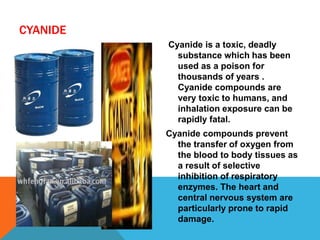
Cyanide is a toxic, deadly
substance which has been
used as a poison for
thousands of years .
Cyanide compounds are
very toxic to humans, and
inhalation exposure can be
rapidly fatal.
Cyanide compounds prevent
the transfer of oxygen from
the blood to body tissues as
a result of selective
inhibition of respiratory
enzymes. The heart and
central nervous system are
particularly prone to rapid
damage.
CYANIDE
Cyanide can be
breathed in,
swallowed, or
absorbed through
the skin. Breathing
in cyanide will
cause rapid,
harmful effects. If it
is swallowed or
absorbed through
your skin, the
effects of cyanide
will occur more
slowly.
HOW DO YOU GET POISONED WITH CYANIDE?
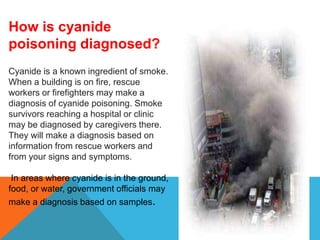
Building fire smoke: Cyanide gas may be created as a
chemical reaction when a building is on fire. Cyanide is also
used in some building parts. If those parts catch fire, cyanide
gas escapes into the smoke.
Contamination: Cyanide may leak into the ground if it is used
either as an ingredient or in a process. If you live near a
building where cyanide was used, the soil, groundwater, and
well water may be contaminated. Contaminated means that
cyanide may have leaked into the soil, groundwater, or well
water. Food grown in cyanide-contaminated dirt may retain
some cyanide.
Chemical warfare: People, groups, and countries may use
cyanide to kill people or animals. To be most effective, cyanide
must be used in an enclosed area. Cyanide spreads quickly in
open air.
How does cyanide work?
The air you breathe has oxygen in it. The oxygen goes
deep into your lungs and is absorbed into your blood. Your
red blood cells pick up the oxygen and carry it throughout
your body. All your organs and tissues depend on your
blood to bring oxygen to them.
•Cyanide causes a chemical change that keeps the oxygen
from getting into your red blood cells.
•No matter how cyanide gets into your body, it works the
same way. It does not have to be breathed in to cause this
change. It can also be swallowed or absorbed through your
skin.
What are the signs and
symptoms of cyanide poisoning?
If you are exposed to small or moderate
amounts of cyanide you will have the following
signs and symptoms:
Rapid (fast) breathing
Restlessness
Dizziness
Weakness
Headache
Eye irritation (itching, burning)
Nausea and vomiting
Rapid heartbeat
If you are exposed to a large amount of
cyanide your signs and symptoms may also
include:
Convulsions
Very slow heartbeat
Loss of consciousness
Your breathing will stop
How is cyanide
poisoning diagnosed?
Cyanide is a known ingredient of smoke.
When a building is on fire, rescue
workers or firefighters may make a
diagnosis of cyanide poisoning. Smoke
survivors reaching a hospital or clinic
may be diagnosed by caregivers there.
They will make a diagnosis based on
information from rescue workers and
from your signs and symptoms.
In areas where cyanide is in the ground,
food, or water, government officials may
make a diagnosis based on samples.
What should I do if I am exposed
to cyanide?
Gas or spray:
If cyanide is being used as a gas or
spray, leave the area and get to some
fresh air. If it is released outdoors, move
away from the area. If released indoors,
go outside.
Cyanide is lighter than air, so it rises. If
you cannot get away from the gas, lie on
the floor or ground and take shallow
breaths.
Remove any clothing that may have
cyanide on it.
Do not shake the clothing.
If cyanide gets into your eyes, rinse them
for several minutes under running water.
If cyanide may be on your skin, shower
with soap and water. Shampoo your hair.
Swallowed cyanide:
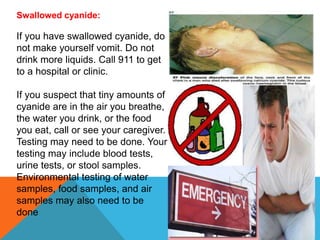
If you have swallowed cyanide, do
not make yourself vomit. Do not
drink more liquids. Call 911 to get
to a hospital or clinic.
If you suspect that tiny amounts of
cyanide are in the air you breathe,
the water you drink, or the food
you eat, call or see your caregiver.
Testing may need to be done. Your
testing may include blood tests,
urine tests, or stool samples.
Environmental testing of water
samples, food samples, and air
samples may also need to be
done.
Tips to Prevent Cyanide
Poisoning
1. Not smoking in bed.
2. Avoidance of over-hot
electrical heaters.
3. Standard home fire
precautions including smoke
detectors.
4. A special antidote kit also
may be used if a strong
suspicion for cyanide
poisoning exists.
5. Strict work safety
regulations must be followed
to prevent occupational
exposure.

Cyanide Poisoning.pptx

  • 1.
  • 2.
    Cyanide is atoxic, deadly substance which has been used as a poison for thousands of years . Cyanide compounds are very toxic to humans, and inhalation exposure can be rapidly fatal. Cyanide compounds prevent the transfer of oxygen from the blood to body tissues as a result of selective inhibition of respiratory enzymes. The heart and central nervous system are particularly prone to rapid damage. CYANIDE
  • 3.
    Cyanide can be breathedin, swallowed, or absorbed through the skin. Breathing in cyanide will cause rapid, harmful effects. If it is swallowed or absorbed through your skin, the effects of cyanide will occur more slowly. HOW DO YOU GET POISONED WITH CYANIDE?
  • 4.
    Building fire smoke:Cyanide gas may be created as a chemical reaction when a building is on fire. Cyanide is also used in some building parts. If those parts catch fire, cyanide gas escapes into the smoke. Contamination: Cyanide may leak into the ground if it is used either as an ingredient or in a process. If you live near a building where cyanide was used, the soil, groundwater, and well water may be contaminated. Contaminated means that cyanide may have leaked into the soil, groundwater, or well water. Food grown in cyanide-contaminated dirt may retain some cyanide. Chemical warfare: People, groups, and countries may use cyanide to kill people or animals. To be most effective, cyanide must be used in an enclosed area. Cyanide spreads quickly in open air.
  • 5.
    How does cyanidework? The air you breathe has oxygen in it. The oxygen goes deep into your lungs and is absorbed into your blood. Your red blood cells pick up the oxygen and carry it throughout your body. All your organs and tissues depend on your blood to bring oxygen to them. •Cyanide causes a chemical change that keeps the oxygen from getting into your red blood cells. •No matter how cyanide gets into your body, it works the same way. It does not have to be breathed in to cause this change. It can also be swallowed or absorbed through your skin.
  • 6.
    What are thesigns and symptoms of cyanide poisoning? If you are exposed to small or moderate amounts of cyanide you will have the following signs and symptoms: Rapid (fast) breathing Restlessness Dizziness Weakness Headache Eye irritation (itching, burning) Nausea and vomiting Rapid heartbeat If you are exposed to a large amount of cyanide your signs and symptoms may also include: Convulsions Very slow heartbeat Loss of consciousness Your breathing will stop
  • 7.
    How is cyanide poisoningdiagnosed? Cyanide is a known ingredient of smoke. When a building is on fire, rescue workers or firefighters may make a diagnosis of cyanide poisoning. Smoke survivors reaching a hospital or clinic may be diagnosed by caregivers there. They will make a diagnosis based on information from rescue workers and from your signs and symptoms. In areas where cyanide is in the ground, food, or water, government officials may make a diagnosis based on samples.
  • 8.
    What should Ido if I am exposed to cyanide? Gas or spray: If cyanide is being used as a gas or spray, leave the area and get to some fresh air. If it is released outdoors, move away from the area. If released indoors, go outside. Cyanide is lighter than air, so it rises. If you cannot get away from the gas, lie on the floor or ground and take shallow breaths. Remove any clothing that may have cyanide on it. Do not shake the clothing. If cyanide gets into your eyes, rinse them for several minutes under running water. If cyanide may be on your skin, shower with soap and water. Shampoo your hair.
  • 9.
    Swallowed cyanide: If youhave swallowed cyanide, do not make yourself vomit. Do not drink more liquids. Call 911 to get to a hospital or clinic. If you suspect that tiny amounts of cyanide are in the air you breathe, the water you drink, or the food you eat, call or see your caregiver. Testing may need to be done. Your testing may include blood tests, urine tests, or stool samples. Environmental testing of water samples, food samples, and air samples may also need to be done.
  • 10.
    Tips to PreventCyanide Poisoning 1. Not smoking in bed. 2. Avoidance of over-hot electrical heaters. 3. Standard home fire precautions including smoke detectors. 4. A special antidote kit also may be used if a strong suspicion for cyanide poisoning exists. 5. Strict work safety regulations must be followed to prevent occupational exposure.