OPCW’s 18th Conference of States Parties to the
Chemical Weapons Convention
-----
Syria’s Chemical Weapons
******
Presented to the Kentucky CAC/CDCAB
11 December 2013
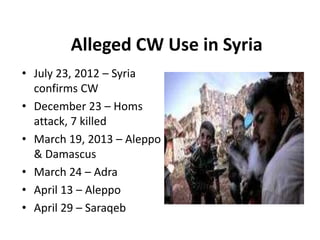
Alleged CW Use in Syria
• July 23, 2012 – Syria
confirms CW
• December 23 – Homs
attack, 7 killed
• March 19, 2013 – Aleppo
& Damascus
• March 24 – Adra
• April 13 – Aleppo
• April 29 – Saraqeb
Syria’s CWC Accession
• August 21, 2013 – Large
scale CW attack in Ghouta
region. 1,400+ killed,
including 400 children.
• September 14 – Syria
accedes to CWC
• October 14 – CWC enters
into force for Syria as 190th
State Party
3
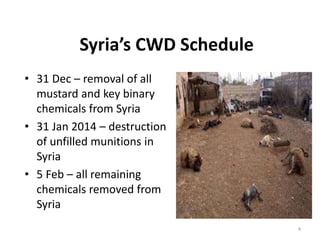
Syria’s CWD Schedule
• 31 Dec – removal of all
mustard and key binary
chemicals from Syria
• 31 Jan 2014 – destruction
of unfilled munitions in
Syria
• 5 Feb – all remaining
chemicals removed from
Syria
4
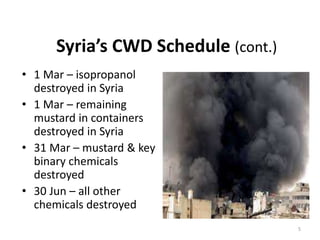
Syria’s CWD Schedule (cont.)
• 1 Mar – isopropanol
destroyed in Syria
• 1 Mar – remaining
mustard in containers
destroyed in Syria
• 31 Mar – mustard & key
binary chemicals
destroyed
• 30 Jun – all other
chemicals destroyed
5
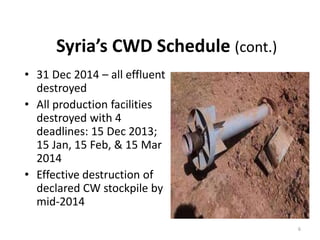
Syria’s CWD Schedule (cont.)
• 31 Dec 2014 – all effluent
destroyed
• All production facilities
destroyed with 4
deadlines: 15 Dec 2013;
15 Jan, 15 Feb, & 15 Mar
2014
• Effective destruction of
declared CW stockpile by
mid-2014
6
Neutralization on Ship
via Field Deployable Hydrolysis System (FDHS)
• Mustard agent and
binary chemicals to be
neutralized with mobile
hydrolysis system
• Neutralization with hot
water and caustic
chemicals
• On board MV Cape Ray
7
CWD Neutralization
• Used successfully at two
US CW stockpiles –
Aberdeen, Maryland
(1,621 Ts) and Newport,
Indiana (1,269 Ts)
• Will be used at Pueblo,
Colorado (2,600 Ts) and
Blue Grass, Kentucky (523
Ts)
8
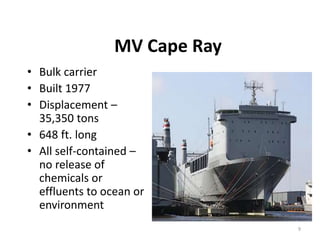
MV Cape Ray
• Bulk carrier
• Built 1977
• Displacement –
35,350 tons
• 648 ft. long
• All self-contained –
no release of
chemicals or
effluents to ocean or
environment
9
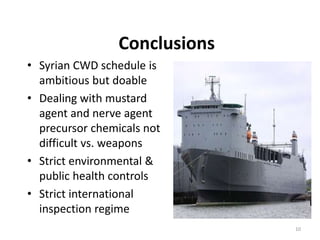
Conclusions
• Syrian CWD schedule is
ambitious but doable
• Dealing with mustard
agent and nerve agent
precursor chemicals not
difficult vs. weapons
• Strict environmental &
public health controls
• Strict international
inspection regime
10
Outstanding Issues of Concern
• How to safely transport materials through Syria during the
ongoing conflict
• Risks Associated with On-Board Work Environment (i.e.
moving platform)
• Possible Port for On-Board Treatment
• Where and How to treat Secondary Waste
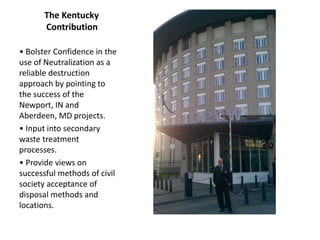
The Kentucky
Contribution
• Bolster Confidence in the
use of Neutralization as a
reliable destruction
approach by pointing to
the success of the
Newport, IN and
Aberdeen, MD projects.
• Input into secondary
waste treatment
processes.
• Provide views on
successful methods of civil
society acceptance of
disposal methods and
locations.
Questions/Discussion

OPCW’s 18th Conference of States Parties to the Chemical Weapons Convention

  • 1.
    OPCW’s 18th Conferenceof States Parties to the Chemical Weapons Convention ----- Syria’s Chemical Weapons ****** Presented to the Kentucky CAC/CDCAB 11 December 2013
  • 2.
    Alleged CW Usein Syria • July 23, 2012 – Syria confirms CW • December 23 – Homs attack, 7 killed • March 19, 2013 – Aleppo & Damascus • March 24 – Adra • April 13 – Aleppo • April 29 – Saraqeb
  • 3.
    Syria’s CWC Accession •August 21, 2013 – Large scale CW attack in Ghouta region. 1,400+ killed, including 400 children. • September 14 – Syria accedes to CWC • October 14 – CWC enters into force for Syria as 190th State Party 3
  • 4.
    Syria’s CWD Schedule •31 Dec – removal of all mustard and key binary chemicals from Syria • 31 Jan 2014 – destruction of unfilled munitions in Syria • 5 Feb – all remaining chemicals removed from Syria 4
  • 5.
    Syria’s CWD Schedule(cont.) • 1 Mar – isopropanol destroyed in Syria • 1 Mar – remaining mustard in containers destroyed in Syria • 31 Mar – mustard & key binary chemicals destroyed • 30 Jun – all other chemicals destroyed 5
  • 6.
    Syria’s CWD Schedule(cont.) • 31 Dec 2014 – all effluent destroyed • All production facilities destroyed with 4 deadlines: 15 Dec 2013; 15 Jan, 15 Feb, & 15 Mar 2014 • Effective destruction of declared CW stockpile by mid-2014 6
  • 7.
    Neutralization on Ship viaField Deployable Hydrolysis System (FDHS) • Mustard agent and binary chemicals to be neutralized with mobile hydrolysis system • Neutralization with hot water and caustic chemicals • On board MV Cape Ray 7
  • 8.
    CWD Neutralization • Usedsuccessfully at two US CW stockpiles – Aberdeen, Maryland (1,621 Ts) and Newport, Indiana (1,269 Ts) • Will be used at Pueblo, Colorado (2,600 Ts) and Blue Grass, Kentucky (523 Ts) 8
  • 9.
    MV Cape Ray •Bulk carrier • Built 1977 • Displacement – 35,350 tons • 648 ft. long • All self-contained – no release of chemicals or effluents to ocean or environment 9
  • 10.
    Conclusions • Syrian CWDschedule is ambitious but doable • Dealing with mustard agent and nerve agent precursor chemicals not difficult vs. weapons • Strict environmental & public health controls • Strict international inspection regime 10
  • 11.
    Outstanding Issues ofConcern • How to safely transport materials through Syria during the ongoing conflict • Risks Associated with On-Board Work Environment (i.e. moving platform) • Possible Port for On-Board Treatment • Where and How to treat Secondary Waste
  • 12.
    The Kentucky Contribution • BolsterConfidence in the use of Neutralization as a reliable destruction approach by pointing to the success of the Newport, IN and Aberdeen, MD projects. • Input into secondary waste treatment processes. • Provide views on successful methods of civil society acceptance of disposal methods and locations.
  • 13.