
Sid Gupta
Credential – Sid Gupta
Professional Experience
• 20 years of distinguished service as Commissioned Officer in Indian Armed
Forces
• Relinquished as Commander by rank and Joint Director by Appointment at
Naval Headquarters
• Business Director – RMS Automation Systems. Telecommunication and
Renewable Energy Business
• Group CEO – IKF Technology. Listed in Mumbai Stock Exchange. BPO, K12
Education, Renewable Energy, GIS Mapping etc.
• Business Consultant – Shaw Communication. Business IT Solution
• Country Manager, Canada – Codan Radio Communications. Trunking Radio
and LMR
• Sales Manager, Canada & USA – DDS Wireless, SaaS & PaaS for Taxi
Industry
Views expressed are all personal
Agenda
Bibliography
• Service Quality – Wikipedia
• Managing Quality – Jeff Heyl
• Delivering Exception Customer Service
• Achieving a Culture of Excellence – QAPI
• How to Provide Service Excellence – Failte Ireland
• Towards Better Understanding of Service Excellence – Robert Johnston
• New Tools for Measuring Service Quality - A. Parasuraman, University of Miami
• Next Generation Customer Service – The New Strategic Differentiator – Booz & Co
• Mastering the Customer Experience: The Key Drivers for Success, by IBF Mgmt LLC
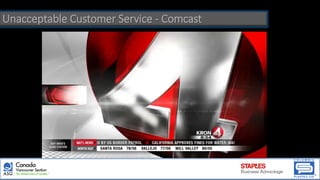
Unacceptable Customer Service - Comcast
Service Provider - Call Center Wait Time
• Earlier each customer had average waiting time of 45 min.
• The company was rated very low for Customer Service
• Company lost 46,000 customers in 2010.
• The service was not very bad but had huge wait time.
• They hired 500 CSR (Customer Service Reps) in late 2010 to early
2011.
• Target was to bring down the call time to within 5 min in a bad day
• It worked…………………. Now wait time is within 5 min.
Todays Customer
• Informed
• Demanding
• Experimental
• Collaborative
• Cost sensitive
• Technologically aligned
• Low Patience / low Tolerance
• Ready to pay for better service
• Alternatives are available in market
Over the last five years, the ways consumers communicate, learn about
products and make purchasing decisions have fundamentally changed
Consumers have never been smarter than they are today. They have more
information than ever before to help them make purchasing decisions
Todays Customer
Customer Service Drivers
Customer service management is
Mission critical asset to the corporation
For revenue protection
Revenue generation opportunities
• Increase customer responsiveness and satisfaction
• Create customer loyalty and increase retention
• Lower marketing and account acquisition costs
• Enhance corporate image and competitive advantage
Customer Service Drivers
Strategic Value
Customer Service Drivers
Customer Relationship Management
Synchronization across traditional customer-interfacing boundaries:
• Marketing, Sales, Field service, Technical and Aftermarket support
• Understand customer expectations and relationship management trends
• Create company-wide customer management – Salesforce and Customer Facing Team
• Establish ‘learning relationships’ with customers – Golden Triangle
In global competitive landscape, companies need to:
• Benchmark within and across industries
• Strive to stay on the leading edge world-class customer care experience
• Based on customer needs and exceeding expectations
• Provide service outside the traditional channels for 24x7x365 – digital
• Set customer service objectives that drive personalization adoption – Dispatch
Scenario
• Create data- and knowledge-sharing infrastructure
• Learn from customer data – business trends
• Realign compensation with customer satisfaction and retention – Account Manager
Customer Service Drivers
Operational Innovation
Customer Service Drivers
Technological Advancements
Advancements in both operation support systems and
customer-facing technologies promise flexibility and innovation.
• Set the pace with personalized, proactive service – Flag CRM on customer
attributes
• Break down service silos to show one face to the customer – Best touch
point
• Coordinate across all customer contact channels – Collaborative Approach
Customer Service Drivers
Customer Expectation
Expectations have evolved to the point where exceptional
customer service is considered the minimal requirement and
personalized, proactive customer care is gaining momentum.
• Master customer interactions on- and off-line for 24x7x365 availability
• Blending of sales and service paradigms
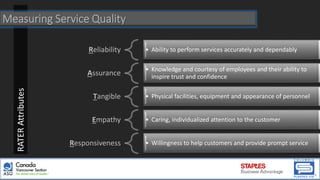
RATERAttributes
Reliability • Ability to perform services accurately and dependably
Assurance
• Knowledge and courtesy of employees and their ability to
inspire trust and confidence
Tangible • Physical facilities, equipment and appearance of personnel
Empathy • Caring, individualized attention to the customer
Responsiveness • Willingness to help customers and provide prompt service
Measuring Service Quality
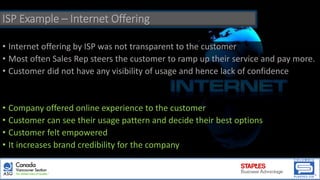
ISP Example – Internet Offering
• Internet offering by ISP was not transparent to the customer
• Most often Sales Rep steers the customer to ramp up their service and pay more.
• Customer did not have any visibility of usage and hence lack of confidence
• Company offered online experience to the customer
• Customer can see their usage pattern and decide their best options
• Customer felt empowered
• It increases brand credibility for the company
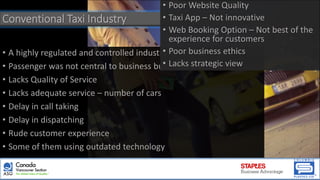
• A highly regulated and controlled industry
• Passenger was not central to business but the driver/owner
• Lacks Quality of Service
• Lacks adequate service – number of cars
• Delay in call taking
• Delay in dispatching
• Rude customer experience
• Some of them using outdated technology
Conventional Taxi Industry
• Poor Website Quality
• Taxi App – Not innovative
• Web Booking Option – Not best of the
experience for customers
• Poor business ethics
• Lacks strategic view
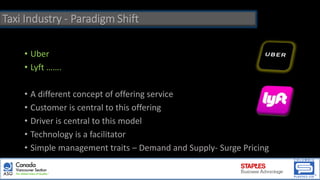
• Uber
• Lyft …….
• A different concept of offering service
• Customer is central to this offering
• Driver is central to this model
• Technology is a facilitator
• Simple management traits – Demand and Supply- Surge Pricing
Taxi Industry - Paradigm Shift
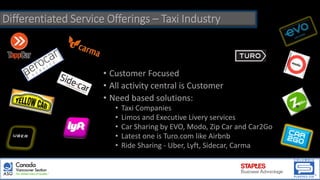
Differentiated Service Offerings – Taxi Industry
• Customer Focused
• All activity central is Customer
• Need based solutions:
• Taxi Companies
• Limos and Executive Livery services
• Car Sharing by EVO, Modo, Zip Car and Car2Go
• Latest one is Turo.com like Airbnb
• Ride Sharing - Uber, Lyft, Sidecar, Carma
• Service excellence
• Satisfaction v. delight
• delight is “an expression of very high satisfaction resulting from
surprisingly good performance” (i.e. excellent service).
• “Exceeding expectations” implies that:
• Organizations have continually to do more in order to deliver excellent
service and delight their customers.
• What is missing is some notion of what the customer values that leads to
feelings of delight (or disgust).
Understanding Service Excellence
CharactersofService
• Service excellence was simply about being “easy to do business
with” (not necessarily exceeding expectations).
• Excellent service was described simply as “a pleasure”
• Customers did not expect “the earth”
• One respondent reported: “it was quick and easy, they were really
helpful”
• “We are easily pleased”.
• Interestingly, the respondents admitted that they were quite
prepared to pay extra for this
Research Group Findings
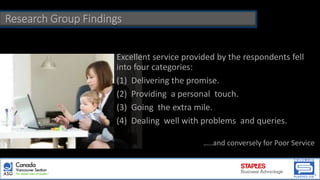
Excellent service provided by the respondents fell
into four categories:
(1) Delivering the promise.
(2) Providing a personal touch.
(3) Going the extra mile.
(4) Dealing well with problems and queries.
…..and conversely for Poor Service
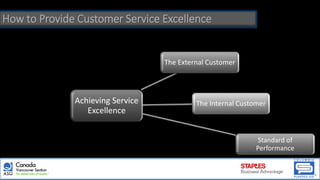
How to Provide Customer Service Excellence
Achieving Service
Excellence
The External Customer
The Internal Customer
Standard of
Performance
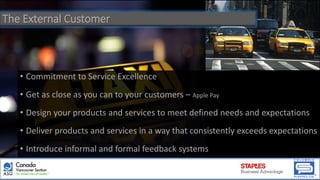
• Commitment to Service Excellence
• Get as close as you can to your customers – Apple Pay
• Design your products and services to meet defined needs and expectations
• Deliver products and services in a way that consistently exceeds expectations
• Introduce informal and formal feedback systems
The External Customer
The Internal Customer
• Clearly Define Roles and Responsibilities
• Provide appropriate and continuous training to all employees
• Create a working environment which engages employees to the fullest extent
• Measure employee satisfaction at regular intervals
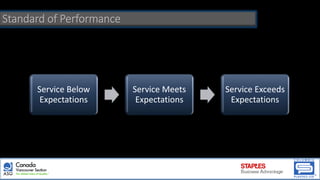
Standard of Performance
Service Below
Expectations
Service Meets
Expectations
Service Exceeds
Expectations
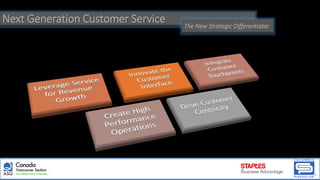
Next Generation Customer Service The New Strategic Differentiator
• Employ cross selling and retention during inbound service contracts
• Leverage contacts for customer insight
• Use service propositions as differentiator
Leverage Service for Revenue Growth
Innovate the Customer Interface
• Provide Multiple Channels
• Employ Web methods to engage customers – correct segmentation & positioning
• Apply smart automation to balance human and automated interaction
• Experiment with technology innovation
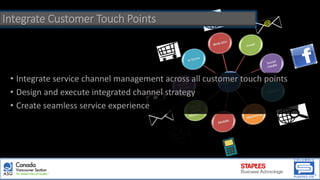
Integrate Customer Touch Points
• Integrate service channel management across all customer touch points
• Design and execute integrated channel strategy
• Create seamless service experience
Drive Customer Centricity
• Establish customer service as cross functional hub
• Appoint a chief service officer
• Demonstrate value of service
• Establish a service minded culture
• Increase efficiency, balance with effectiveness
• Streamline and synchronise process and systems
• Selectively outsource simple processes
• Automate responses to standard inquiries
Create High Performance Operations
Apple - Service Excellence Example
Conclusion
• Customer is Sensitive
• Business to grow only with customer collaboration
• Customers experience is critical for business growth
• Customer Care to be authentic, ethical and transparent
• Stand by your promise
• Customer is looking for that extra mile. Can you do it………..!!
Sid Gupta
siddharth16kumar@gmail.com
604-369-7612

Customer Expectation and Service Excellence - Final

  • 1.
  • 2.
    Credential – SidGupta Professional Experience • 20 years of distinguished service as Commissioned Officer in Indian Armed Forces • Relinquished as Commander by rank and Joint Director by Appointment at Naval Headquarters • Business Director – RMS Automation Systems. Telecommunication and Renewable Energy Business • Group CEO – IKF Technology. Listed in Mumbai Stock Exchange. BPO, K12 Education, Renewable Energy, GIS Mapping etc. • Business Consultant – Shaw Communication. Business IT Solution • Country Manager, Canada – Codan Radio Communications. Trunking Radio and LMR • Sales Manager, Canada & USA – DDS Wireless, SaaS & PaaS for Taxi Industry
  • 3.
    Views expressed areall personal
  • 4.
  • 5.
    Bibliography • Service Quality– Wikipedia • Managing Quality – Jeff Heyl • Delivering Exception Customer Service • Achieving a Culture of Excellence – QAPI • How to Provide Service Excellence – Failte Ireland • Towards Better Understanding of Service Excellence – Robert Johnston • New Tools for Measuring Service Quality - A. Parasuraman, University of Miami • Next Generation Customer Service – The New Strategic Differentiator – Booz & Co • Mastering the Customer Experience: The Key Drivers for Success, by IBF Mgmt LLC
  • 6.
  • 7.
    Service Provider -Call Center Wait Time • Earlier each customer had average waiting time of 45 min. • The company was rated very low for Customer Service • Company lost 46,000 customers in 2010. • The service was not very bad but had huge wait time. • They hired 500 CSR (Customer Service Reps) in late 2010 to early 2011. • Target was to bring down the call time to within 5 min in a bad day • It worked…………………. Now wait time is within 5 min.
  • 8.
    Todays Customer • Informed •Demanding • Experimental • Collaborative • Cost sensitive • Technologically aligned • Low Patience / low Tolerance • Ready to pay for better service • Alternatives are available in market
  • 9.
    Over the lastfive years, the ways consumers communicate, learn about products and make purchasing decisions have fundamentally changed Consumers have never been smarter than they are today. They have more information than ever before to help them make purchasing decisions Todays Customer
  • 10.
  • 11.
    Customer service managementis Mission critical asset to the corporation For revenue protection Revenue generation opportunities • Increase customer responsiveness and satisfaction • Create customer loyalty and increase retention • Lower marketing and account acquisition costs • Enhance corporate image and competitive advantage Customer Service Drivers Strategic Value
  • 12.
    Customer Service Drivers CustomerRelationship Management Synchronization across traditional customer-interfacing boundaries: • Marketing, Sales, Field service, Technical and Aftermarket support • Understand customer expectations and relationship management trends • Create company-wide customer management – Salesforce and Customer Facing Team • Establish ‘learning relationships’ with customers – Golden Triangle
  • 13.
    In global competitivelandscape, companies need to: • Benchmark within and across industries • Strive to stay on the leading edge world-class customer care experience • Based on customer needs and exceeding expectations • Provide service outside the traditional channels for 24x7x365 – digital • Set customer service objectives that drive personalization adoption – Dispatch Scenario • Create data- and knowledge-sharing infrastructure • Learn from customer data – business trends • Realign compensation with customer satisfaction and retention – Account Manager Customer Service Drivers Operational Innovation
  • 14.
    Customer Service Drivers TechnologicalAdvancements Advancements in both operation support systems and customer-facing technologies promise flexibility and innovation. • Set the pace with personalized, proactive service – Flag CRM on customer attributes • Break down service silos to show one face to the customer – Best touch point • Coordinate across all customer contact channels – Collaborative Approach
  • 15.
    Customer Service Drivers CustomerExpectation Expectations have evolved to the point where exceptional customer service is considered the minimal requirement and personalized, proactive customer care is gaining momentum. • Master customer interactions on- and off-line for 24x7x365 availability • Blending of sales and service paradigms
  • 16.
    RATERAttributes Reliability • Abilityto perform services accurately and dependably Assurance • Knowledge and courtesy of employees and their ability to inspire trust and confidence Tangible • Physical facilities, equipment and appearance of personnel Empathy • Caring, individualized attention to the customer Responsiveness • Willingness to help customers and provide prompt service Measuring Service Quality
  • 17.
    ISP Example –Internet Offering • Internet offering by ISP was not transparent to the customer • Most often Sales Rep steers the customer to ramp up their service and pay more. • Customer did not have any visibility of usage and hence lack of confidence • Company offered online experience to the customer • Customer can see their usage pattern and decide their best options • Customer felt empowered • It increases brand credibility for the company
  • 18.
    • A highlyregulated and controlled industry • Passenger was not central to business but the driver/owner • Lacks Quality of Service • Lacks adequate service – number of cars • Delay in call taking • Delay in dispatching • Rude customer experience • Some of them using outdated technology Conventional Taxi Industry • Poor Website Quality • Taxi App – Not innovative • Web Booking Option – Not best of the experience for customers • Poor business ethics • Lacks strategic view
  • 19.
    • Uber • Lyft……. • A different concept of offering service • Customer is central to this offering • Driver is central to this model • Technology is a facilitator • Simple management traits – Demand and Supply- Surge Pricing Taxi Industry - Paradigm Shift
  • 20.
    Differentiated Service Offerings– Taxi Industry • Customer Focused • All activity central is Customer • Need based solutions: • Taxi Companies • Limos and Executive Livery services • Car Sharing by EVO, Modo, Zip Car and Car2Go • Latest one is Turo.com like Airbnb • Ride Sharing - Uber, Lyft, Sidecar, Carma
  • 21.
    • Service excellence •Satisfaction v. delight • delight is “an expression of very high satisfaction resulting from surprisingly good performance” (i.e. excellent service). • “Exceeding expectations” implies that: • Organizations have continually to do more in order to deliver excellent service and delight their customers. • What is missing is some notion of what the customer values that leads to feelings of delight (or disgust). Understanding Service Excellence
  • 22.
    CharactersofService • Service excellencewas simply about being “easy to do business with” (not necessarily exceeding expectations). • Excellent service was described simply as “a pleasure” • Customers did not expect “the earth” • One respondent reported: “it was quick and easy, they were really helpful” • “We are easily pleased”. • Interestingly, the respondents admitted that they were quite prepared to pay extra for this Research Group Findings
  • 23.
    Research Group Findings Excellentservice provided by the respondents fell into four categories: (1) Delivering the promise. (2) Providing a personal touch. (3) Going the extra mile. (4) Dealing well with problems and queries. …..and conversely for Poor Service
  • 24.
    How to ProvideCustomer Service Excellence Achieving Service Excellence The External Customer The Internal Customer Standard of Performance
  • 25.
    • Commitment toService Excellence • Get as close as you can to your customers – Apple Pay • Design your products and services to meet defined needs and expectations • Deliver products and services in a way that consistently exceeds expectations • Introduce informal and formal feedback systems The External Customer
  • 26.
    The Internal Customer •Clearly Define Roles and Responsibilities • Provide appropriate and continuous training to all employees • Create a working environment which engages employees to the fullest extent • Measure employee satisfaction at regular intervals
  • 27.
    Standard of Performance ServiceBelow Expectations Service Meets Expectations Service Exceeds Expectations
  • 28.
    Next Generation CustomerService The New Strategic Differentiator
  • 29.
    • Employ crossselling and retention during inbound service contracts • Leverage contacts for customer insight • Use service propositions as differentiator Leverage Service for Revenue Growth
  • 30.
    Innovate the CustomerInterface • Provide Multiple Channels • Employ Web methods to engage customers – correct segmentation & positioning • Apply smart automation to balance human and automated interaction • Experiment with technology innovation
  • 31.
    Integrate Customer TouchPoints • Integrate service channel management across all customer touch points • Design and execute integrated channel strategy • Create seamless service experience
  • 32.
    Drive Customer Centricity •Establish customer service as cross functional hub • Appoint a chief service officer • Demonstrate value of service • Establish a service minded culture
  • 33.
    • Increase efficiency,balance with effectiveness • Streamline and synchronise process and systems • Selectively outsource simple processes • Automate responses to standard inquiries Create High Performance Operations
  • 34.
    Apple - ServiceExcellence Example
  • 35.
    Conclusion • Customer isSensitive • Business to grow only with customer collaboration • Customers experience is critical for business growth • Customer Care to be authentic, ethical and transparent • Stand by your promise • Customer is looking for that extra mile. Can you do it………..!!
  • 36.

Editor's Notes

  • #12 The customer service delivery model has a long, progressive history: administrative customer support – reactive customer service – proactive customer care –and, ultimately, Internet-based collaborative service. The services business continues to strategically evolve: from a ‘cost of doing business’ that is vertically organized by narrowly defined segments of work/activities; to a multi-channel, cross-organizational approach that is horizontally aligned around customer-focused processes. This strategic paradigm shift represents the recognition of customer service management as a mission critical asset to the corporation for revenue-protection and revenue- generation opportunities.   Increase customer responsiveness and satisfaction Create customer loyalty and increase retention Lower marketing and account acquisition costs Enhance corporate image and competitive advantage
  • #13 Enterprise-wide customer relationship management has broadened the concept of customer care. No longer is it satisfactory to develop strategies and operations within ‘organizational silos’. Personalized customer contacts – the basis for a business relationship – require common customer knowledge across internal functional areas. In addition, customer segmentation rules based on contact triggers are necessary to reduce ‘flight risk’ of high-valued customers. An overall approach is required to synchronously manage across the traditional customer-interfacing organizational boundaries, e.g., marketing, sales, field service, technical and aftermarket support.   Understand customer expectations and relationship management trends Create company-wide customer management Establish ‘learning relationships’ with customers
  • #14 As corporations strategically leverage the customer contact, innovation inherently follows. Leading-edge service organizations looks beyond the four walls of a particular operation and deliver customer contacts to the most appropriate associate regardless of reporting structure Applying the principles of the contact center across the enterprise. As benchmarks in providing exceptional service evolve, the continuous improvement paradigm becomes more of a necessity. It is imperative, in the global competitive landscape, to not only benchmark within and across industries but strive to stay on the leading edge of providing world-class customer care – based on customer needs and exceeding expectations.   Provide service outside the traditional channels for 24x7x365 Set customer service objectives that drive personalization adoption Create data- and knowledge-sharing infrastructure Learn from customer data Realign compensation with customer satisfaction and retention
  • #15 Technology applications are unique in both supporting and driving operational requirements Consistently ‘raising the bar’ in how customer and operations support are defined. Advancements in both operation support systems and customer-facing technologies promise flexibility and innovation. It is necessary to address human factors, business rules and workflow for a business to capitalize on these innovations. In addition, the Internet and other electronic communications raise unique challenges. For example, how to provide proactive, personalized service in an inherently impersonal environment where certain customer touch points, such as email, are not real-time.   Set the pace with personalized, proactive service Break down service silos to show one face to the customer Coordinate across all customer contact channels
  • #17 Many researchers have struggled with the issue of how to measure service quality. Perhaps the most widely used measure is based on a set of five dimensions which have been consistently ranked by customers to be most important for service quality, regardless of service industry. These dimensions defined by the SERVQUAL measurement instrument are as follows: Tangibles: appearance of physical facilities, equipment, personnel, and communication materials; Reliability: ability to perform the promised service dependably and accurately; Responsiveness: willingness to help customers and provide prompt service; Assurance: knowledge and courtesy of employees and their ability to convey trust and confidence; and Empathy: the caring, individualized attention the firm provides its customers. These five SERVQUAL dimensions are used to measure the gap between customers’ expectation for excellence and their perception of actual service delivered. The SERVQUAL instrument, when applied over time, helps service providers understand both customer expectations, perceptions of specific services, and areas of needed quality improvements. SERVQUAL has been used in many ways, such as identifying specific service elements requiring improvement, and targeting training opportunities for service staff. Proper development of items used in the SERVQUAL instrument provides rich item-level information that leads to practical implications for a service manager. The service quality dimensions evaluated by SERVQUAL should be adjusted for optimal performance in different industry, public and private sector applications. SERVQUAL scores are highly reliable, but when used in different industries may fail to produce a clear delineation of the five basic dimensions. Other measures, such as the Six Sigma model should be considered for applicability in quantifying the gap between service expectations and perceptions.
  • #23 Service excellence is both obtrusive and elusive. We know when we have received it and, rather more frequently, we know when we have not. Such service, both excellent and poor, has a strong emotional impact upon us as customers, creating intense feelings about the organization, its staff and its services, and influencing our loyalty to it. Yet many organizations seem to find service excellence elusive, hard to grasp, and also difficult to deliver. These derivations are based on five-year study into service excellence commissioned by the Institute of Customer Service. Its purpose is to try to bridge this gap in management thinking by trying to develop a better understanding of service excellence and suggesting how to achieve it. This exploratory effort makes an attempt to understand what is meant by the term “service excellence” as a first step towards helping marketers and managers, where appropriate, to design and deliver it.
  • #24 There was a research Group created with 3 categories of age group with 150 samples. In essence, service excellence was simply about being “easy to do business with” (not necessarily exceeding expectations). Excellent service was described simply as “a pleasure”.
  • #25 There was a research Group created with 3 categories of age group with 150 samples. In essence, service excellence was simply about being “easy to do business with” (not necessarily exceeding expectations). Excellent service was described simply as “a pleasure”.
  • #31 There are 5 attributes to next generation customer service