CURRENT TRENDS
IN
AGRICULTURE
SIR ISSAC NEWTON COLLEGE OF ENGINEERING
AND TECHNOLOGY- NAGAPATTINAM.
NAME : Christopher.S (821720108009).
Mukesh kannan.S (821720108026).
DEPARTMENT: Agriculture Engineering.
CONTENT:
 Introduction
 Artificial Intelligence
 Role of information technology.
 Vertical farming.
 Hydroponics.
 Types of Hydroponics.
 Application.
 Conclusion.
INTRODUCTION:
 Agriculture [Ager + cultura = Field + culture​]
 Agriculture is arts & science of cultivating soil,
producing crops & raising livestock for business.​
Traditional agriculture Modern agriculture
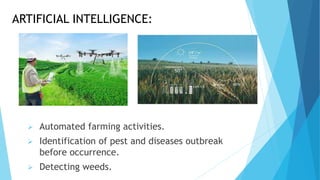
ARTIFICIAL INTELLIGENCE:
 Automated farming activities.
 Identification of pest and diseases outbreak
before occurrence.
 Detecting weeds.
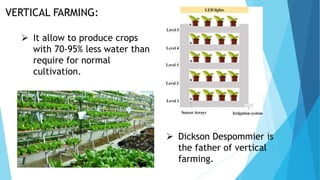
VERTICAL FARMING:
 It allow to produce crops
with 70-95% less water than
require for normal
cultivation.
 Dickson Despommier is
the father of vertical
farming.
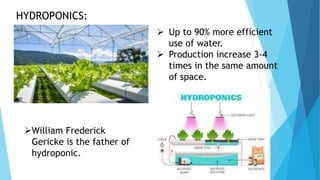
HYDROPONICS:
 Up to 90% more efficient
use of water.
 Production increase 3-4
times in the same amount
of space.
William Frederick
Gericke is the father of
hydroponic.
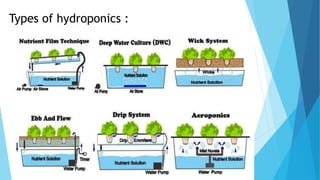
Types of hydroponics :
APPLICATION:
Automatic spraying.
Aerial survey imaging.
Agriculture robotics.
Drone.
ADVANTAGES:
 Higher yield.
 Weeding can be easily
eliminated.
 Lower water use.
 Fresh produce grown
much closer to where
it eaten.
DISADVANTAGES:
High initial costs.
High operation cost.
Very high demand
for energy.
Problems affect
plants quicker.
CONCLUSION:
 The modern agriculture enable the farmer to
better moniter the needs of individual crops
& animals.
 Automatic in irrigation farm machinery and
harvesting further easy for farming
operation's while minimizing losses.
 Drones save time spent on sowing.
 Agriculture is the main driver of development
in most rural area's.
CURRENT TRENDS IN AGRICULTURE.pptx

CURRENT TRENDS IN AGRICULTURE.pptx

  • 1.
  • 2.
    SIR ISSAC NEWTONCOLLEGE OF ENGINEERING AND TECHNOLOGY- NAGAPATTINAM. NAME : Christopher.S (821720108009). Mukesh kannan.S (821720108026). DEPARTMENT: Agriculture Engineering.
  • 3.
    CONTENT:  Introduction  ArtificialIntelligence  Role of information technology.  Vertical farming.  Hydroponics.  Types of Hydroponics.  Application.  Conclusion.
  • 4.
    INTRODUCTION:  Agriculture [Ager+ cultura = Field + culture​]  Agriculture is arts & science of cultivating soil, producing crops & raising livestock for business.​ Traditional agriculture Modern agriculture
  • 5.
    ARTIFICIAL INTELLIGENCE:  Automatedfarming activities.  Identification of pest and diseases outbreak before occurrence.  Detecting weeds.
  • 6.
    VERTICAL FARMING:  Itallow to produce crops with 70-95% less water than require for normal cultivation.  Dickson Despommier is the father of vertical farming.
  • 7.
    HYDROPONICS:  Up to90% more efficient use of water.  Production increase 3-4 times in the same amount of space. William Frederick Gericke is the father of hydroponic.
  • 8.
  • 9.
    APPLICATION: Automatic spraying. Aerial surveyimaging. Agriculture robotics. Drone. ADVANTAGES:  Higher yield.  Weeding can be easily eliminated.  Lower water use.  Fresh produce grown much closer to where it eaten. DISADVANTAGES: High initial costs. High operation cost. Very high demand for energy. Problems affect plants quicker.
  • 10.
    CONCLUSION:  The modernagriculture enable the farmer to better moniter the needs of individual crops & animals.  Automatic in irrigation farm machinery and harvesting further easy for farming operation's while minimizing losses.  Drones save time spent on sowing.  Agriculture is the main driver of development in most rural area's.