Seminar on
CURING OF CONCRETE
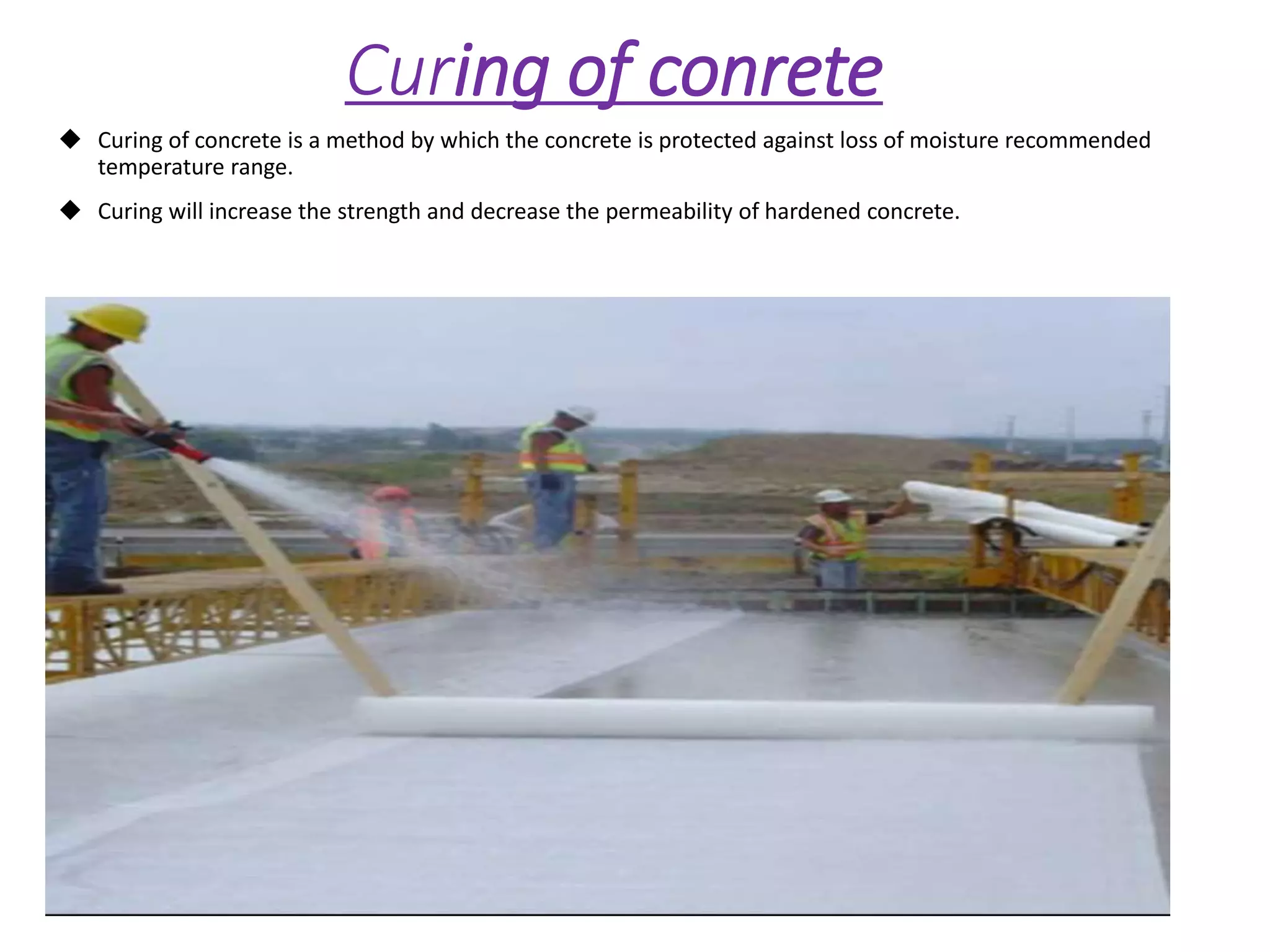
 Curing of concrete is a method by which the concrete is protected against loss of moisture recommended
temperature range.
 Curing will increase the strength and decrease the permeability of hardened concrete.
Curing of conrete
Why curing of concrete is
NECESSARY .....?
1. Enhance hydration of concrete to achieve desired strength .
2. Improved durability of concrete by reducing cracks.
• Water curing.
• Membrane curing.
• Applications of heat.
• Misselaneous curing.
Methods of curing:
1.Water curing:
It is one of the best method of curing as it statifies all the
requirement of curing namely promotion of
hydration,elimination of shrinkage and obsorption of heat of
hydration.
Water curing can be done through following ways :
a.Immersion:
The pre-cast concrete items are normally immersed in curing tank for certaion
duration of time.
b.Ponding:
On flat surfaces such as pavements,footpaths and floors.
c.Spraying/sprinkling:
A fine spray of water applied continously through a system of nozzles provides
a constant supply of water.
d.Wet covering :
Wet hessain/jutty bags ,other moisture retaining fabrics can be laid onto the
concrete as soon as it has hardened enough to prevent surface damage
2.Membrane curing:
• Membrane curing is a good method of maintaining
satisfactory state of wetness in the body of concrete to
promote continues hydration.
• It is used where water availability is less.
• Concrete surface is covered by plastic membranes.
• Plastic sheets reducesvevaporstion in concrete.
• For optimum results,membranes is applied after 1 or 2
days of actual wet curing.
3.Steam curing:
 Steam curing and hot water curing is sometimes adopted.
 steam curing keeps the surface moist and raises the temperature of concrete to
quicken the rate of strength achievements.It is a process done to speed up the early
hardening of concrete and mortar by subjecting it to steam and humidity.
4.Misselaneous curing:
like
1.Infrared radiation:
Curing of concrete by infrared radiation
as been practice in very cold climatic
regions.
It is clime that much more rapid gain of
strength can be obtain than with stream
curing and the rapid initial temperature
doesnot cause the decrease in the
ultimate strength.
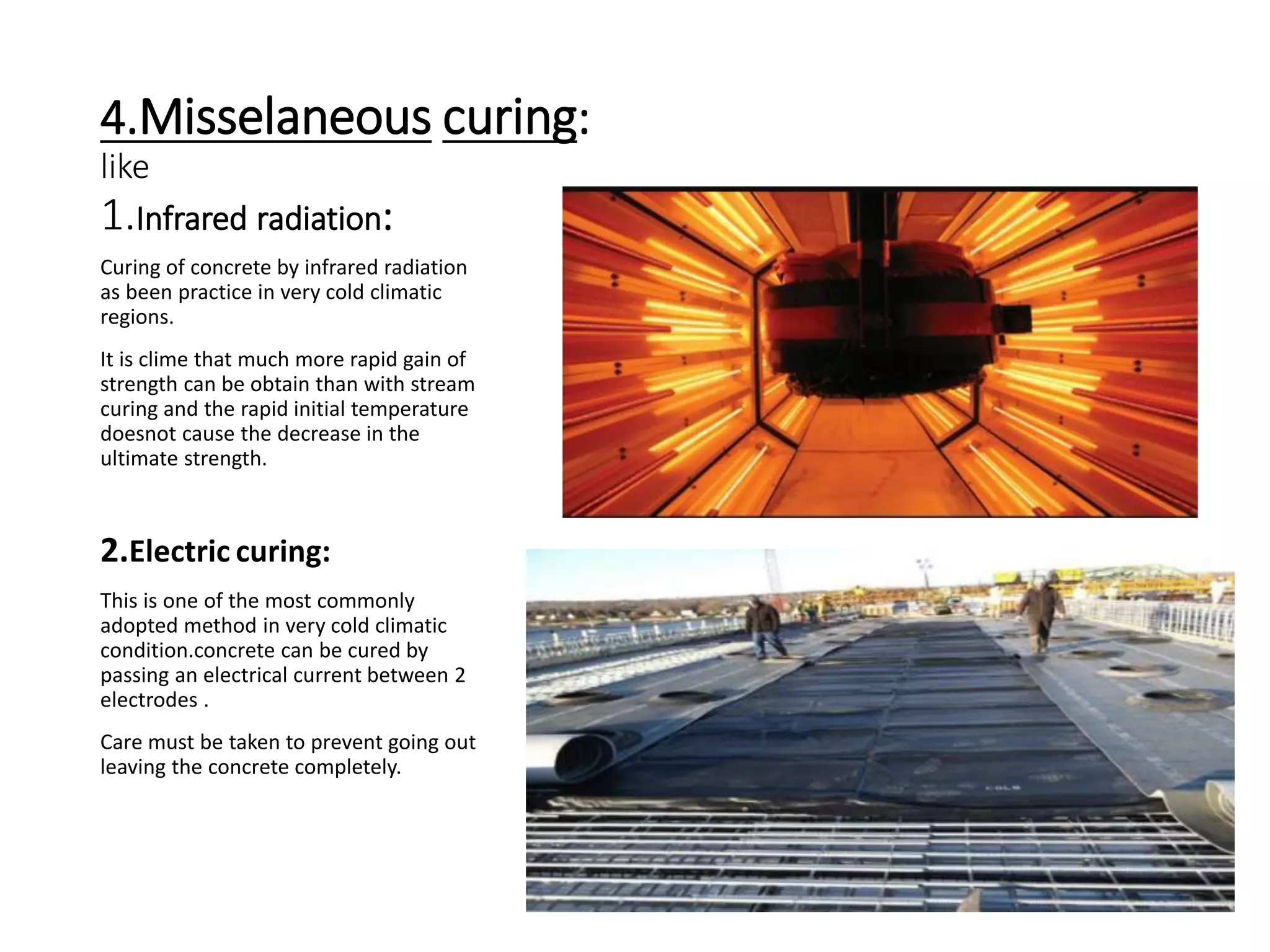
2.Electric curing:
This is one of the most commonly
adopted method in very cold climatic
condition.concrete can be cured by
passing an electrical current between 2
electrodes .
Care must be taken to prevent going out
leaving the concrete completely.
Good practices :
1. Selection of good construction materials.
2. Ratio of ingredients in concrete and
mixing.
3. Placing of concrete.
4. Curing of the concrete.
Bad (poor) practices :
1. Incorrect placement of steel.
2. Inadequate cover to reinforcement .
3. Incorrectly made construction joints.
4. Grout leakage.
5. Poor construction.
6. Segregation.
7. Poor curing
8. Too high a water content.
Heat of hydration:
• Fly ash has a lower heat of hydration.
• Portland cement produces considerable heat upon
hydration.
• In mass concrete placements, the excess internal
heat may contribute to cracking.
• The use of fly ash may greatly reduces this heat
build up and reduces external cracking.

Curing of concrete(1)

  • 1.
  • 2.
     Curing ofconcrete is a method by which the concrete is protected against loss of moisture recommended temperature range.  Curing will increase the strength and decrease the permeability of hardened concrete. Curing of conrete
  • 3.
    Why curing ofconcrete is NECESSARY .....? 1. Enhance hydration of concrete to achieve desired strength . 2. Improved durability of concrete by reducing cracks.
  • 4.
    • Water curing. •Membrane curing. • Applications of heat. • Misselaneous curing. Methods of curing:
  • 5.
    1.Water curing: It isone of the best method of curing as it statifies all the requirement of curing namely promotion of hydration,elimination of shrinkage and obsorption of heat of hydration. Water curing can be done through following ways :
  • 6.
    a.Immersion: The pre-cast concreteitems are normally immersed in curing tank for certaion duration of time.
  • 7.
    b.Ponding: On flat surfacessuch as pavements,footpaths and floors.
  • 8.
    c.Spraying/sprinkling: A fine sprayof water applied continously through a system of nozzles provides a constant supply of water.
  • 9.
    d.Wet covering : Wethessain/jutty bags ,other moisture retaining fabrics can be laid onto the concrete as soon as it has hardened enough to prevent surface damage
  • 10.
    2.Membrane curing: • Membranecuring is a good method of maintaining satisfactory state of wetness in the body of concrete to promote continues hydration. • It is used where water availability is less. • Concrete surface is covered by plastic membranes. • Plastic sheets reducesvevaporstion in concrete. • For optimum results,membranes is applied after 1 or 2 days of actual wet curing.
  • 12.
    3.Steam curing:  Steamcuring and hot water curing is sometimes adopted.  steam curing keeps the surface moist and raises the temperature of concrete to quicken the rate of strength achievements.It is a process done to speed up the early hardening of concrete and mortar by subjecting it to steam and humidity.
  • 13.
    4.Misselaneous curing: like 1.Infrared radiation: Curingof concrete by infrared radiation as been practice in very cold climatic regions. It is clime that much more rapid gain of strength can be obtain than with stream curing and the rapid initial temperature doesnot cause the decrease in the ultimate strength. 2.Electric curing: This is one of the most commonly adopted method in very cold climatic condition.concrete can be cured by passing an electrical current between 2 electrodes . Care must be taken to prevent going out leaving the concrete completely.
  • 14.
    Good practices : 1.Selection of good construction materials. 2. Ratio of ingredients in concrete and mixing. 3. Placing of concrete. 4. Curing of the concrete.
  • 15.
    Bad (poor) practices: 1. Incorrect placement of steel. 2. Inadequate cover to reinforcement . 3. Incorrectly made construction joints. 4. Grout leakage. 5. Poor construction. 6. Segregation. 7. Poor curing 8. Too high a water content.
  • 16.
    Heat of hydration: •Fly ash has a lower heat of hydration. • Portland cement produces considerable heat upon hydration. • In mass concrete placements, the excess internal heat may contribute to cracking. • The use of fly ash may greatly reduces this heat build up and reduces external cracking.