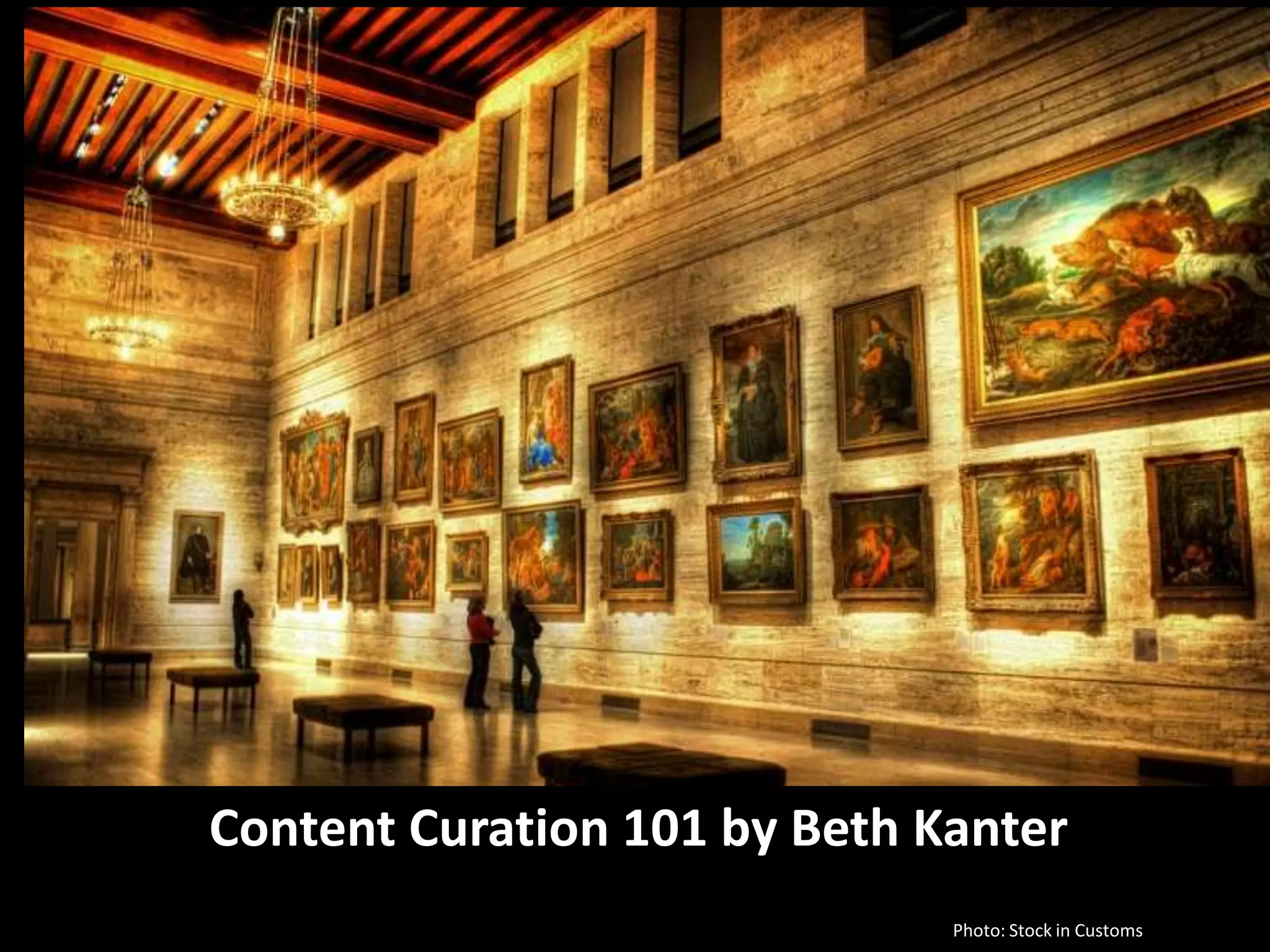

Content Curation 101 by Beth Kanter
                              Photo: Stock in Customs
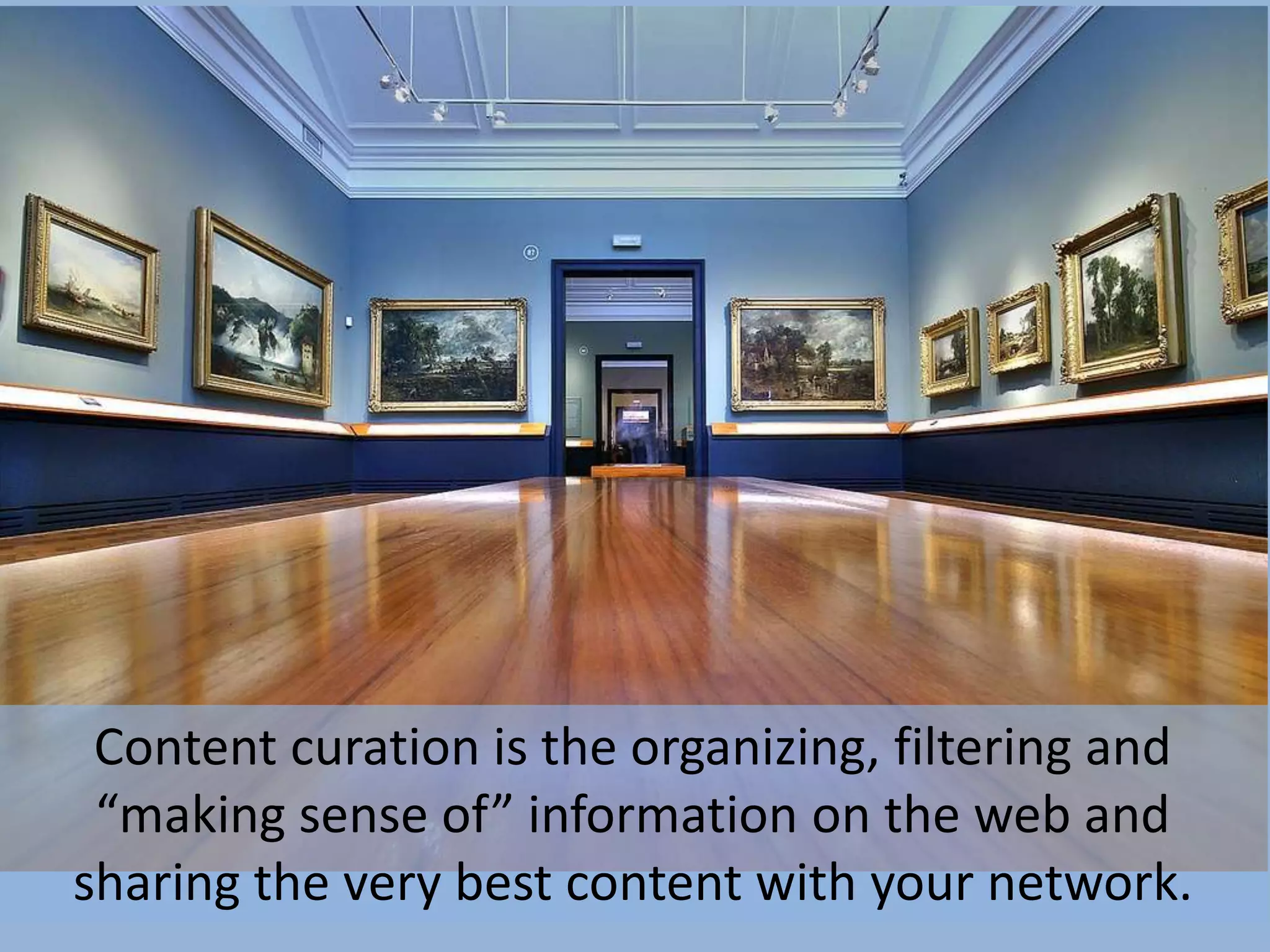
Content curation is the organizing, filtering and
 “making sense of” information on the web and
sharing the very best content with your network.
Why should you and your organization care
about content curation?
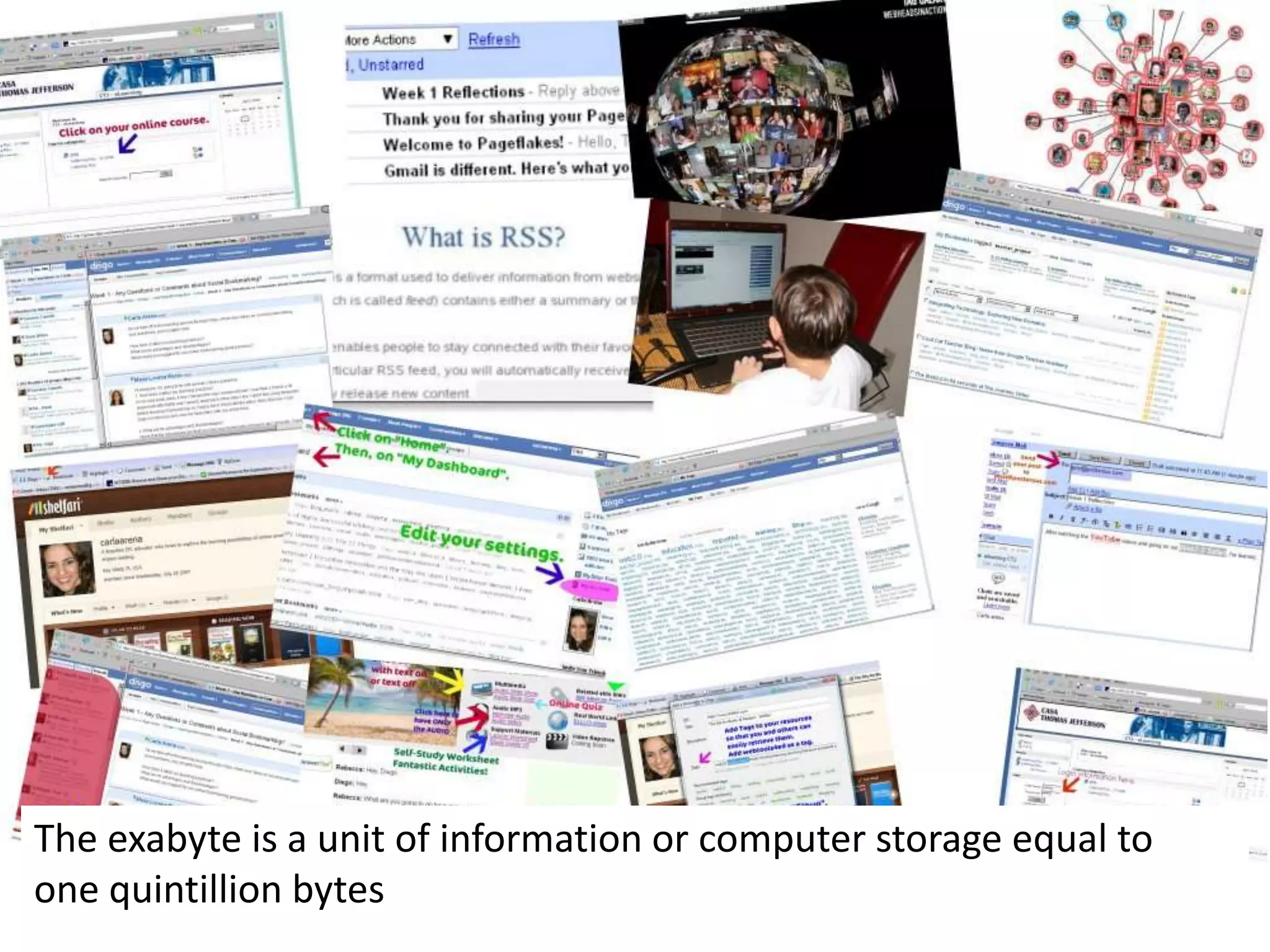
The exabyte is a unit of information or computer storage equal to
one quintillion bytes
800 million users on Facebook
Average user creates 90 pieces of content each month
  Flickr photo by dkalo
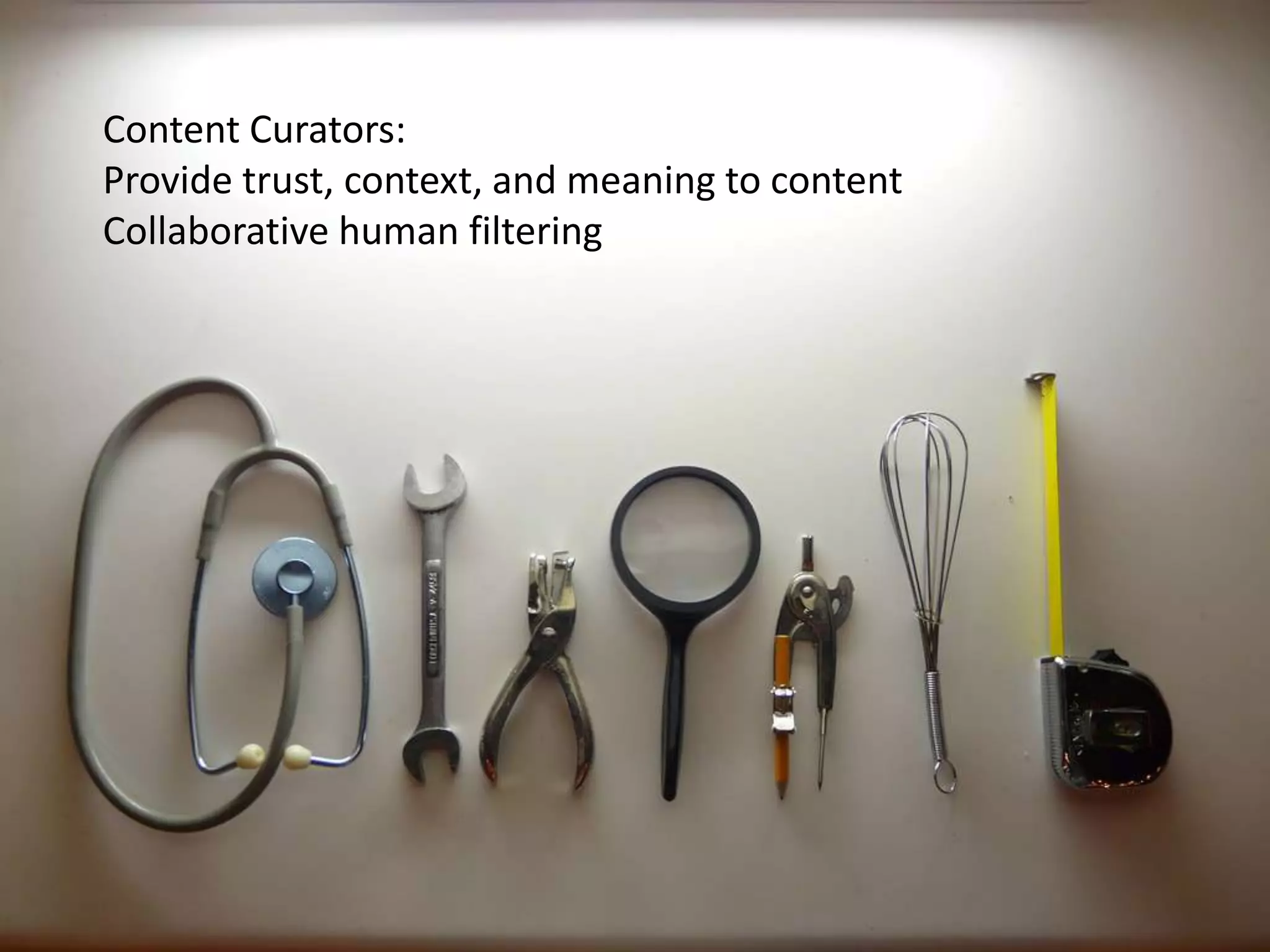
Content Curators:
Provide trust, context, and meaning to content
Collaborative human filtering
Keep Informed of Your Field
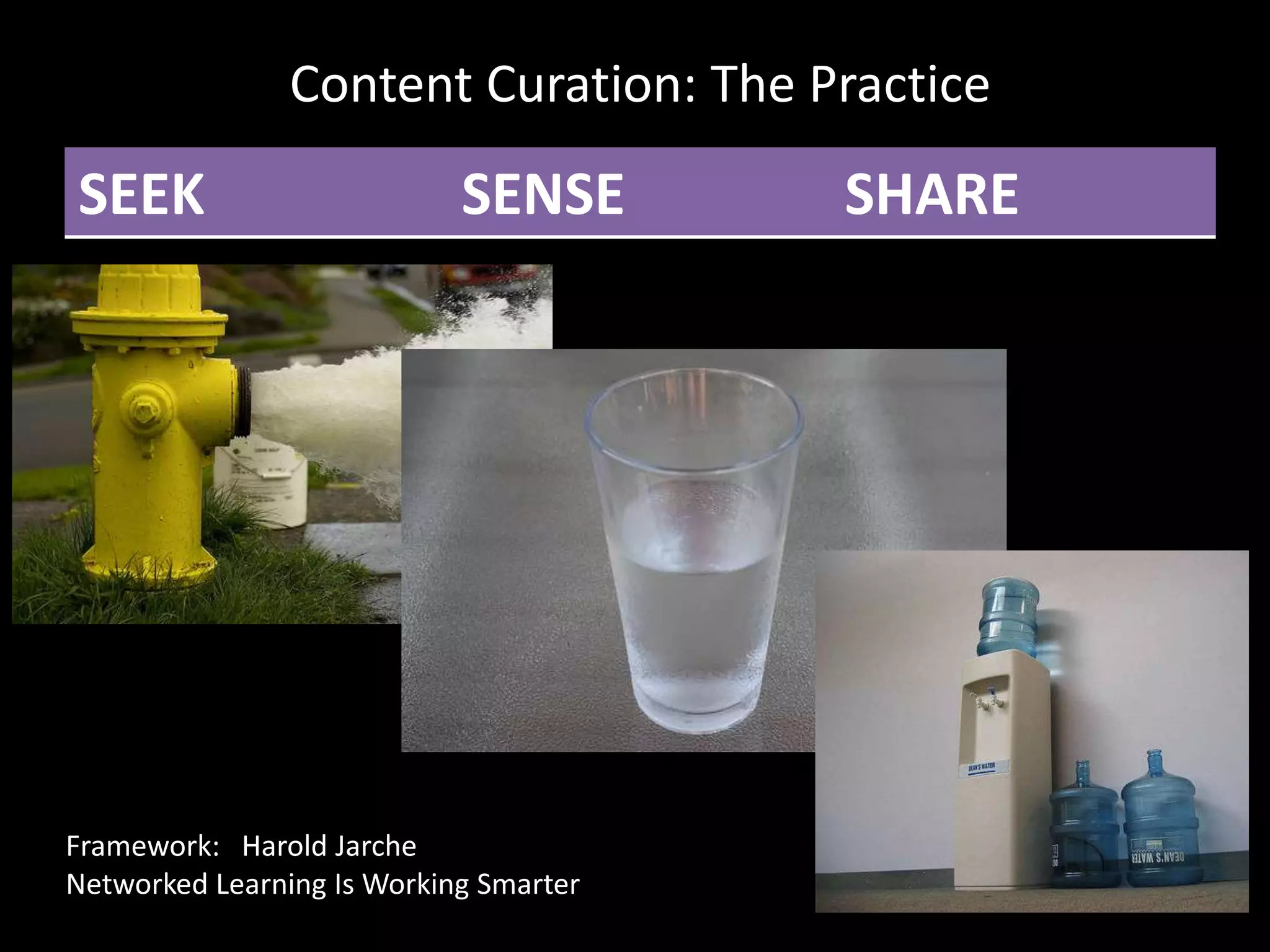
Content Curation: The Practice
SEEK                        SENSE       SHARE


Framework: Harold Jarche
Networked Learning Is Working Smarter
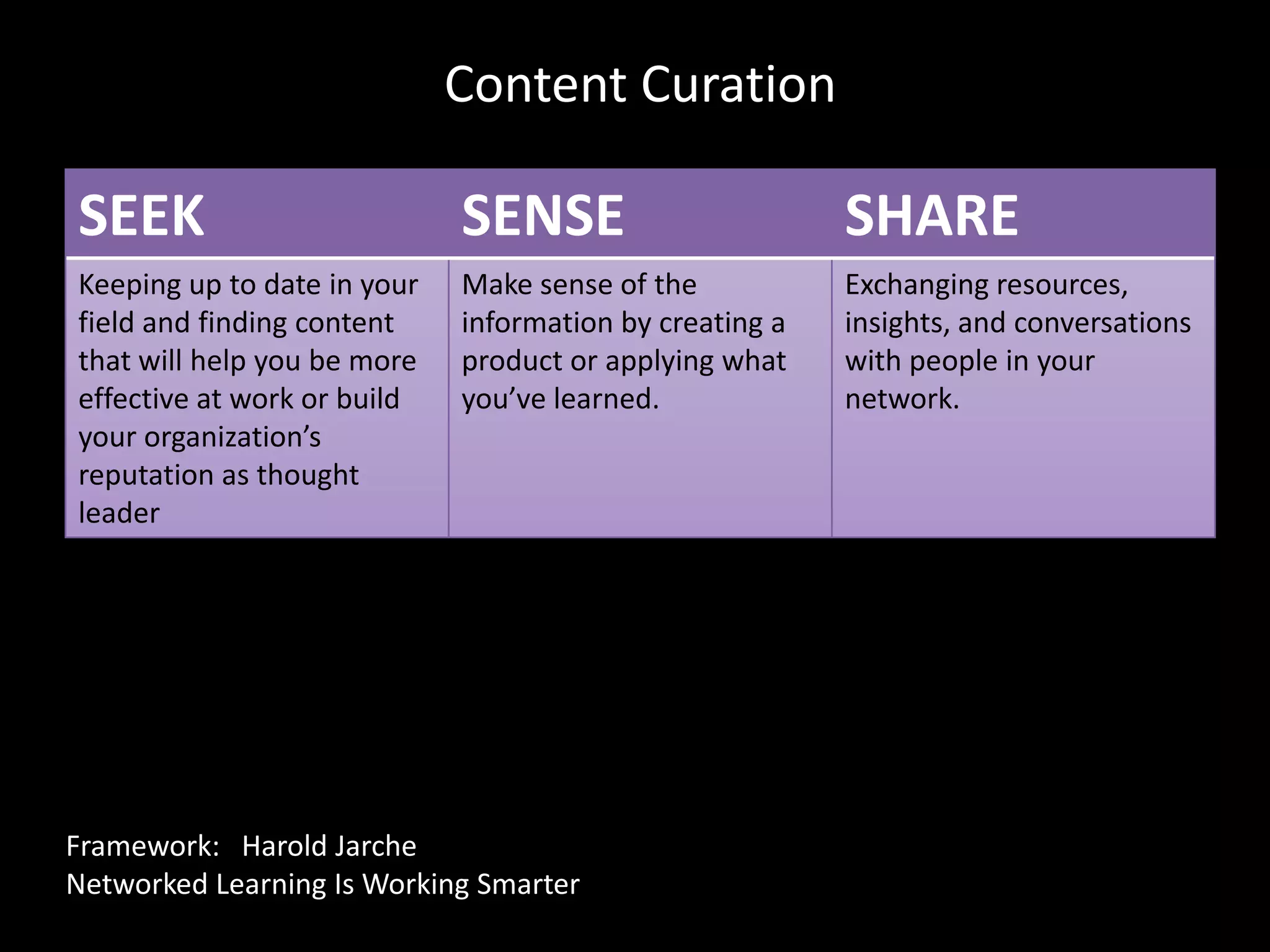
Content Curation

SEEK                         SENSE                       SHARE
Keeping up to date in your   Make sense of the           Exchanging resources,
field and finding content    information by creating a   insights, and conversations
that will help you be more   product or applying what    with people in your
effective at work or build   you’ve learned.             network.
your organization’s
reputation as thought
leader


Framework: Harold Jarche
Networked Learning Is Working Smarter
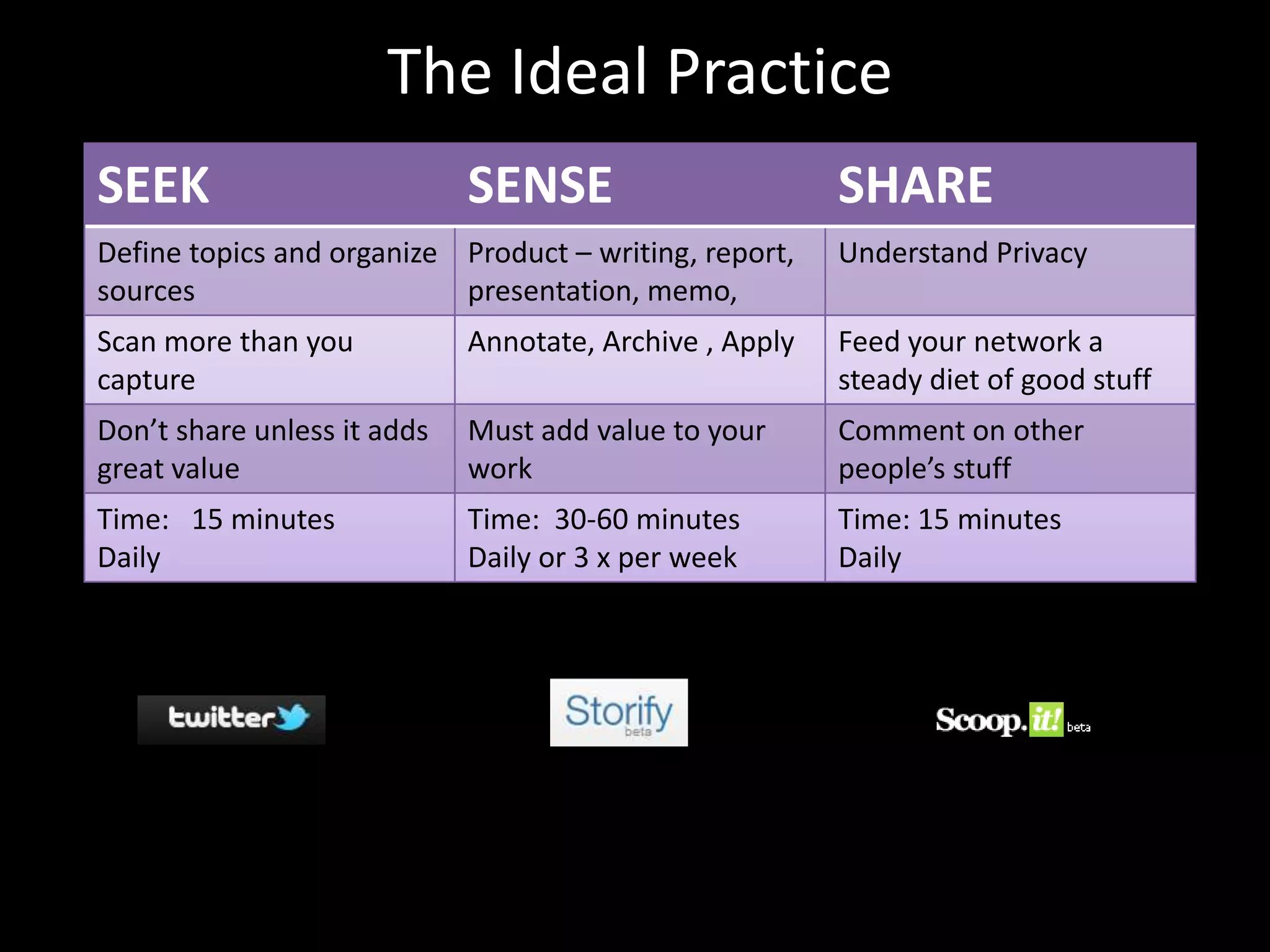
The Ideal Practice
SEEK                         SENSE                       SHARE
Define topics and organize Product – writing, report,    Understand Privacy
sources                    presentation, memo,
Scan more than you           Annotate, Archive , Apply   Feed your network a
capture                                                  steady diet of good stuff
Don’t share unless it adds   Must add value to your      Comment on other
great value                  work                        people’s stuff
Time: 15 minutes             Time: 30-60 minutes         Time: 15 minutes
Daily                        Daily or 3 x per week       Daily
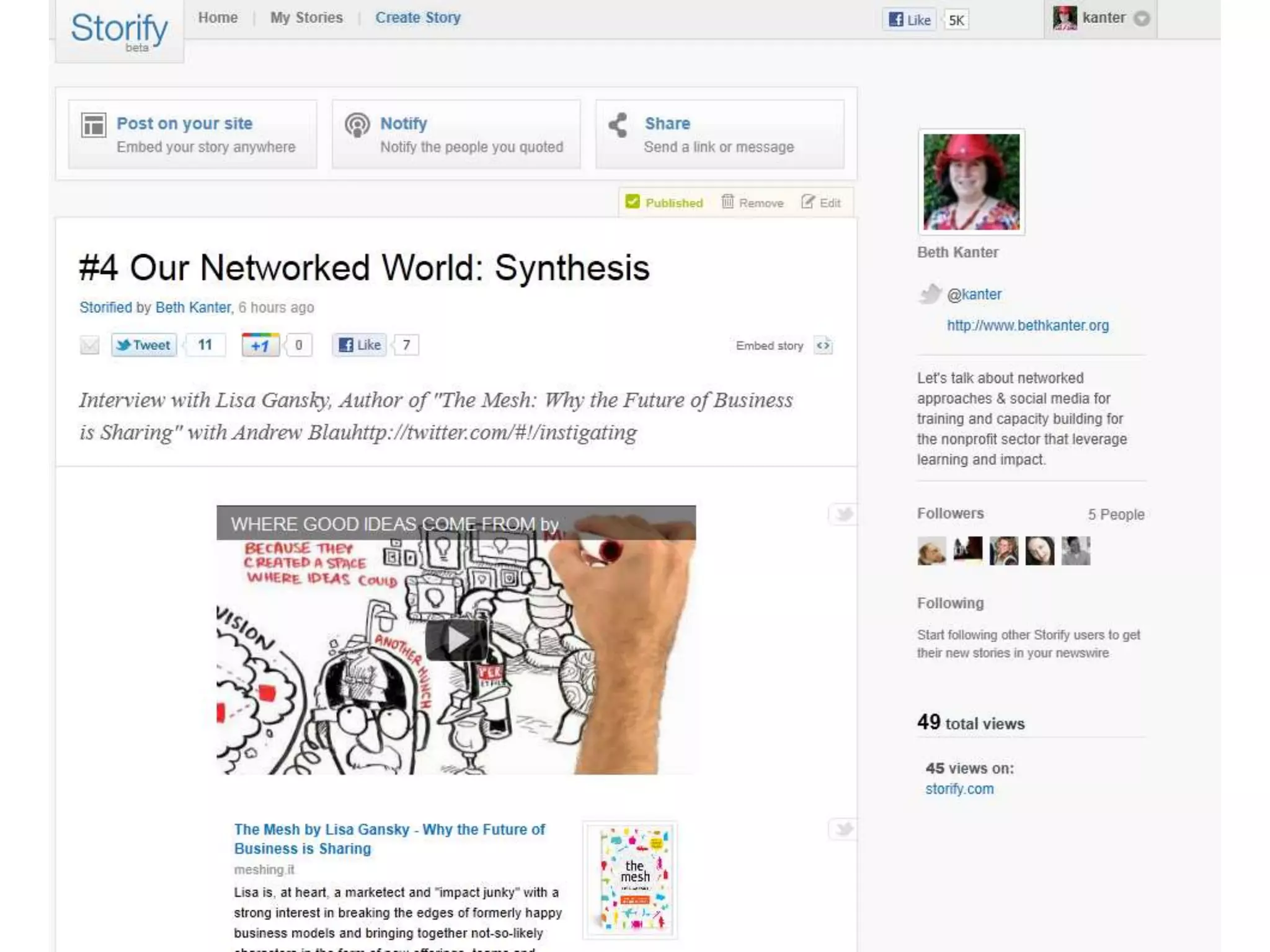
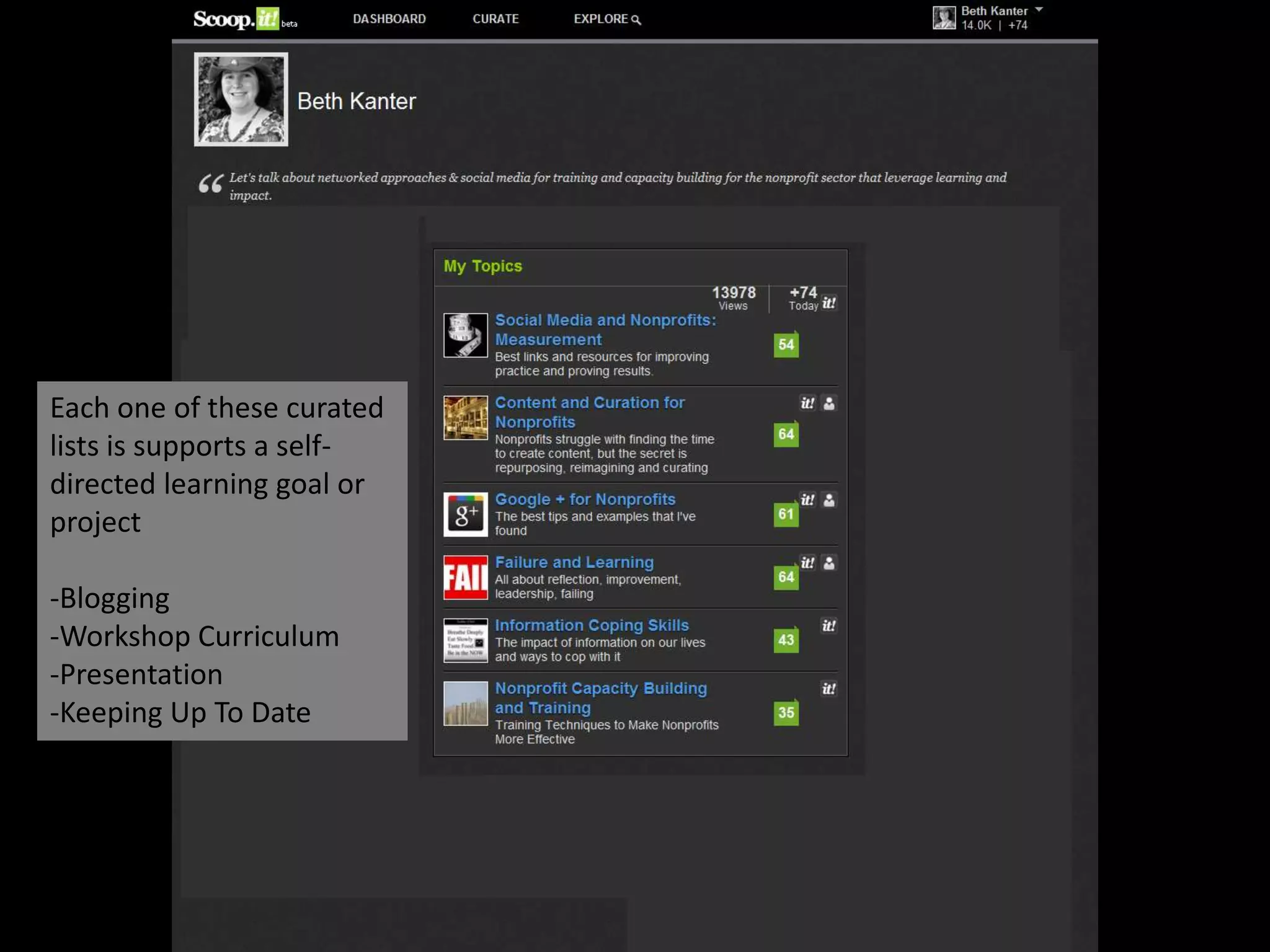
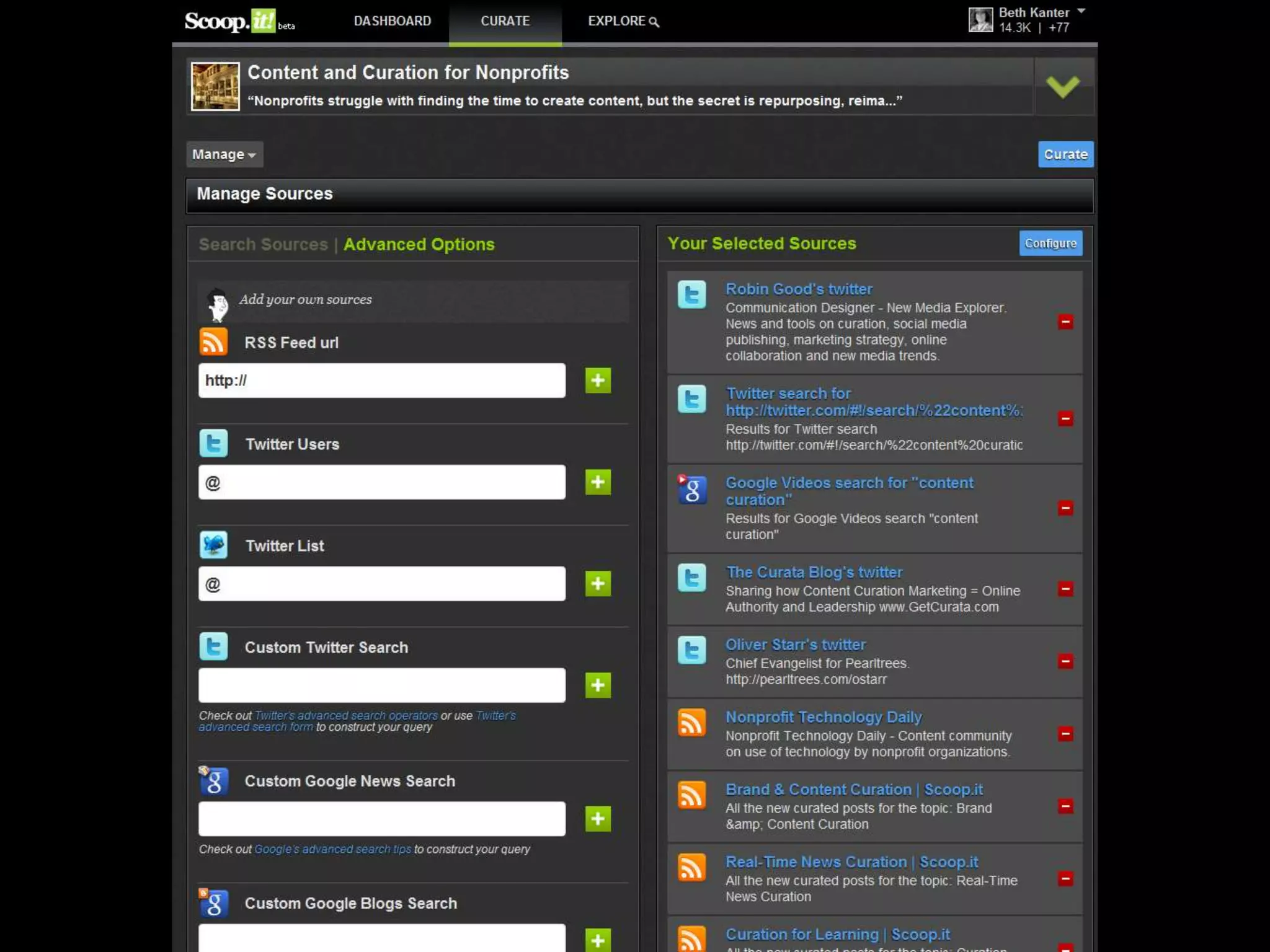
Each one of these curated
lists is supports a self-
directed learning goal or
project

-Blogging
-Workshop Curriculum
-Presentation
-Keeping Up To Date
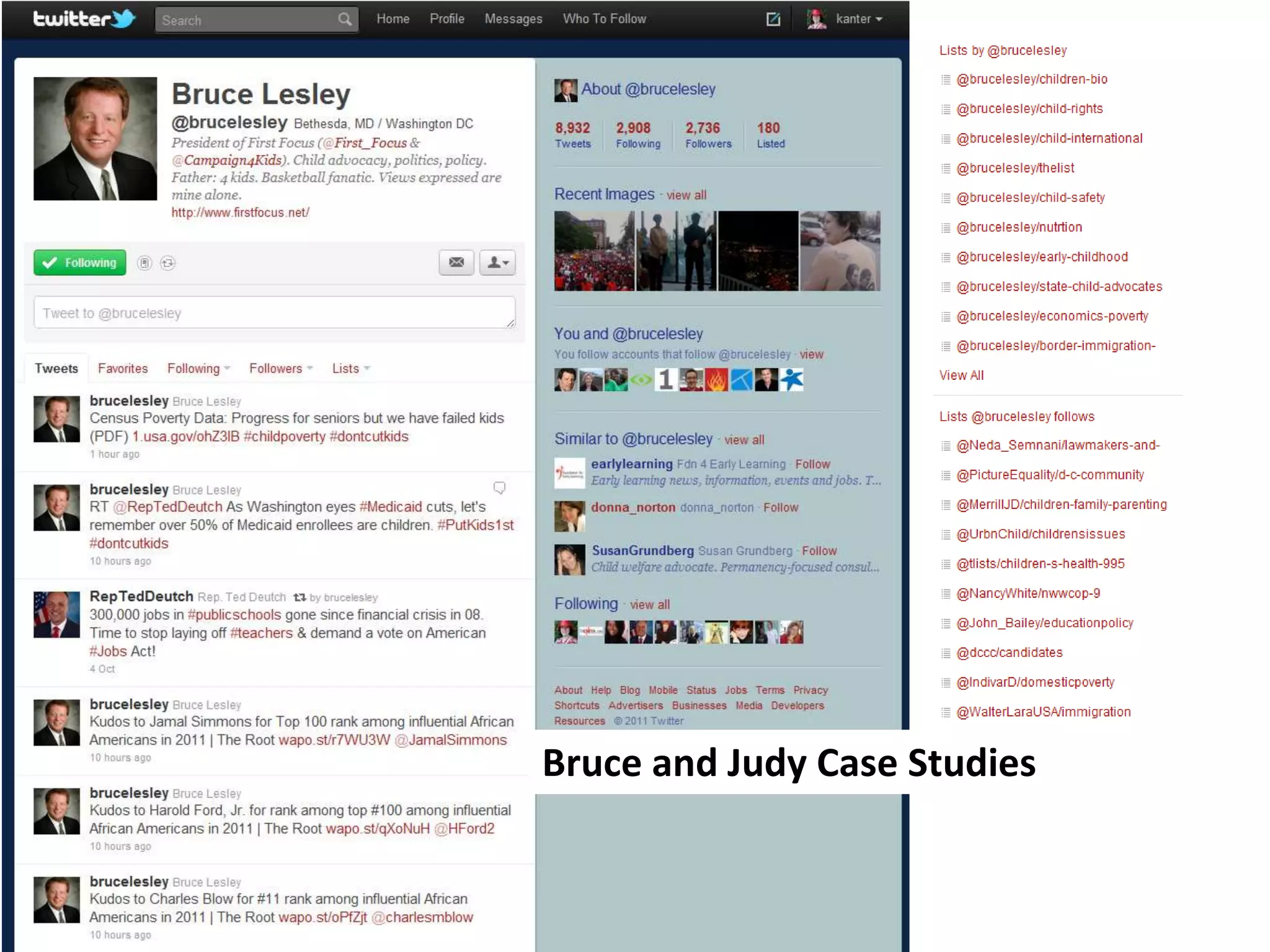
Bruce and Judy Case Studies
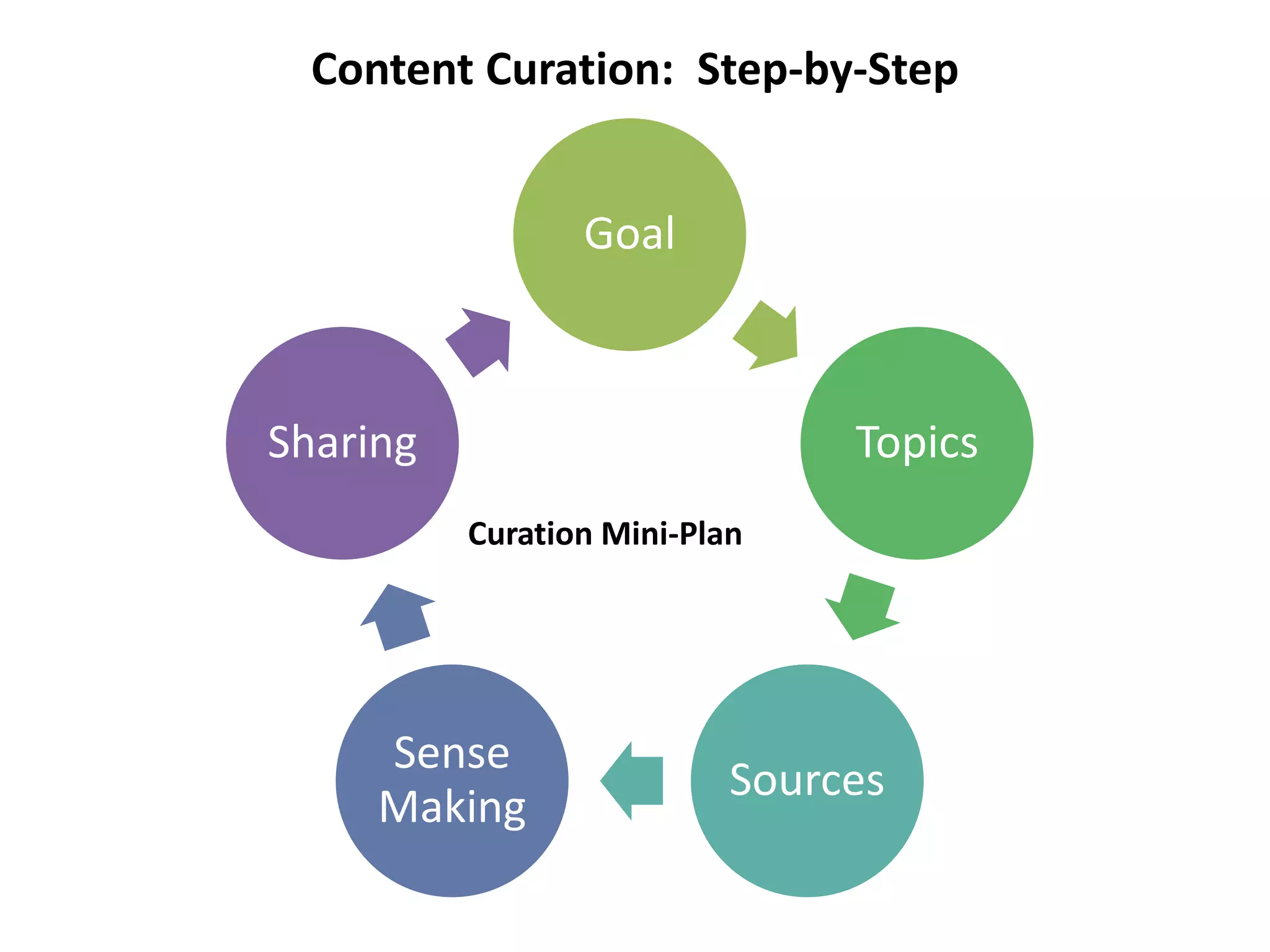
Content Curation: Step-by-Step


                 Goal


Sharing                         Topics
          Curation Mini-Plan


     Sense
                           Sources
     Making
Curation Mini-Plan
                                        Exercise
                                       20 minutes
                                  10 minutes – report out


• What is your goal?
• What are your topics?
• What are the best sources?
• How can you link your sense-making to a work task?
• What networks do you want to share with and
  through?
• How to stay disciplined about sharing only the best
  stuff?
• How can you integrate curation into your work flow?
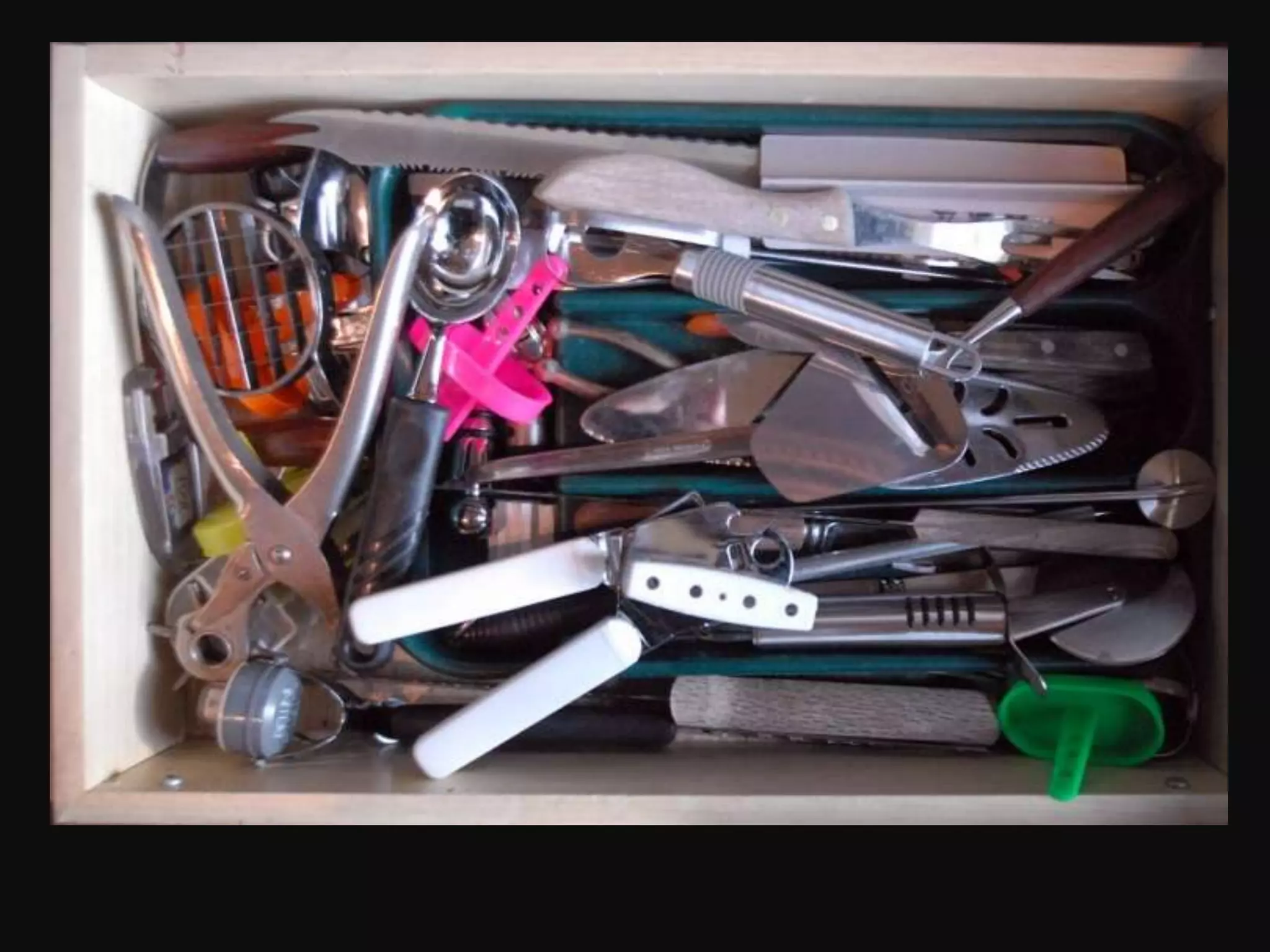
Information Overload
Thank you!
                       Beth Kanter
                       Beth’s Blog

                www.bethkanter.org

         My Content Curation Primer
    http://socialmedia-strategy.wikispaces.com/Content+Curation


 My Curated Collection on Content Curation
   http://www.scoop.it/t/content-and-curation-for-nonprofits

Curation

  • 1.
    Content Curation 101by Beth Kanter Photo: Stock in Customs
  • 2.
    Content curation isthe organizing, filtering and “making sense of” information on the web and sharing the very best content with your network.
  • 3.
    Why should youand your organization care about content curation?
  • 4.
    The exabyte isa unit of information or computer storage equal to one quintillion bytes
  • 5.
    800 million userson Facebook Average user creates 90 pieces of content each month Flickr photo by dkalo
  • 7.
    Content Curators: Provide trust,context, and meaning to content Collaborative human filtering
  • 8.
    Keep Informed ofYour Field
  • 10.
    Content Curation: ThePractice SEEK SENSE SHARE Framework: Harold Jarche Networked Learning Is Working Smarter
  • 11.
    Content Curation SEEK SENSE SHARE Keeping up to date in your Make sense of the Exchanging resources, field and finding content information by creating a insights, and conversations that will help you be more product or applying what with people in your effective at work or build you’ve learned. network. your organization’s reputation as thought leader Framework: Harold Jarche Networked Learning Is Working Smarter
  • 12.
    The Ideal Practice SEEK SENSE SHARE Define topics and organize Product – writing, report, Understand Privacy sources presentation, memo, Scan more than you Annotate, Archive , Apply Feed your network a capture steady diet of good stuff Don’t share unless it adds Must add value to your Comment on other great value work people’s stuff Time: 15 minutes Time: 30-60 minutes Time: 15 minutes Daily Daily or 3 x per week Daily
  • 16.
    Each one ofthese curated lists is supports a self- directed learning goal or project -Blogging -Workshop Curriculum -Presentation -Keeping Up To Date
  • 19.
    Bruce and JudyCase Studies
  • 20.
    Content Curation: Step-by-Step Goal Sharing Topics Curation Mini-Plan Sense Sources Making
  • 21.
    Curation Mini-Plan Exercise 20 minutes 10 minutes – report out • What is your goal? • What are your topics? • What are the best sources? • How can you link your sense-making to a work task? • What networks do you want to share with and through? • How to stay disciplined about sharing only the best stuff? • How can you integrate curation into your work flow?
  • 22.
  • 24.
    Thank you! Beth Kanter Beth’s Blog www.bethkanter.org My Content Curation Primer http://socialmedia-strategy.wikispaces.com/Content+Curation My Curated Collection on Content Curation http://www.scoop.it/t/content-and-curation-for-nonprofits

Editor's Notes

  • #3 Content curation is the process of sorting through the vast amounts of content on the web and presenting it in a meaningful and organized way around a specific theme.  The work  involves  sifting, sorting, arranging, and publishing information.  A content curator cherry picks the best content that is important and relevant to share with their community. It isn’t unlike what a museum curator does to produce an exhibition:   They identify the theme, they provide the context, they decide which paintings to hang on the wall, how they should be annotated, and how they should be displayed for the public.
  • #6 http://www.flickr.com/photos/dkalo/4815259737/sizes/z/in/photostream/
  • #9 In the industrial workplace, our training programs could prepare us for years of work, but much of what we learn today will be outdated in months or even weeks.http://www.flickr.com/photos/elitepete/442095833/sizes/l/in/photostream/
  • #11 http://www.jarche.com/2010/10/network-learning-working-smarter/
  • #12 http://www.jarche.com/2010/10/network-learning-working-smarter/
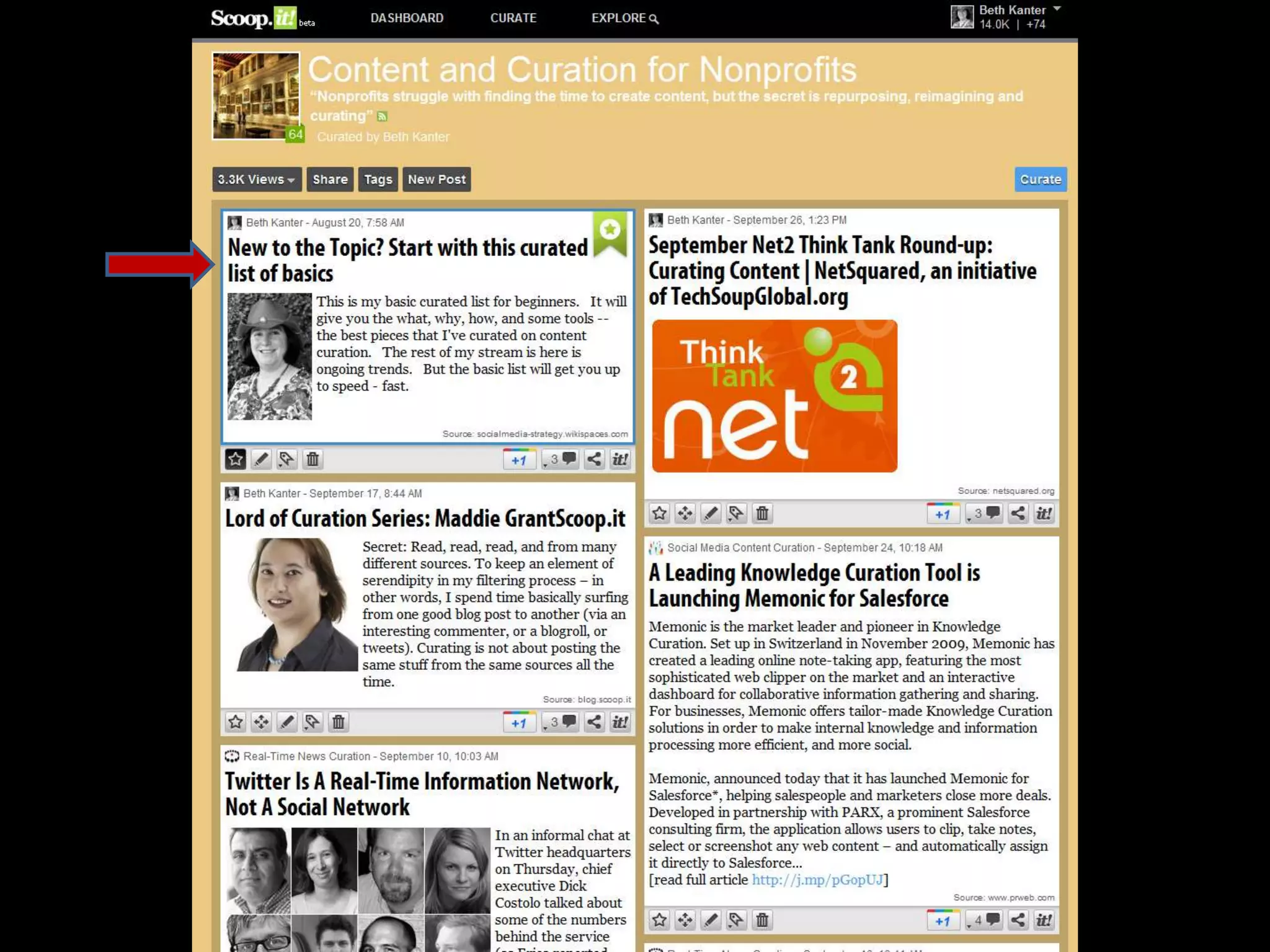
  • #18 http://www.scoop.it/t/content-curation-social-media
  • #20 Bruce Lesley is one of a growing number of  nonprofit executive directors and senior leaders that use Twitter.  And, he isn’t tweeting about what he ate for breakfast or one of his personal passions, basketball.   He uses Twitter to curate information related to his organization’s mission and work as a bipartisan advocacy organization dedicated to making children and families a priority in federal policy and budget decisions.   He also uses content curation for sources for his guest blogging.     His use of Twitter (and his organization’s use of Twitter and all communications channels for that matter) serve this intent:First Focus is working to change the dialogue around children’s issues by taking a cross-cutting and broad based approach to federal policy making. In all of our work, we seek to raise awareness regarding public policies impacting children and ensure that related programs have the resources necessary to help them grow up in a healthy and nurturing environment.If you take a look at Bruce Lesley’s Twitter stream, you will see that he is curating information on public policies impacting children.   Bruce does his own curating, using Google Reader and FlipBoard.   Any individual or nonprofit organization can curate information using these tools.  They can make it strategic by linking the information to their mission.   But what is the secret sauce to doing it well?