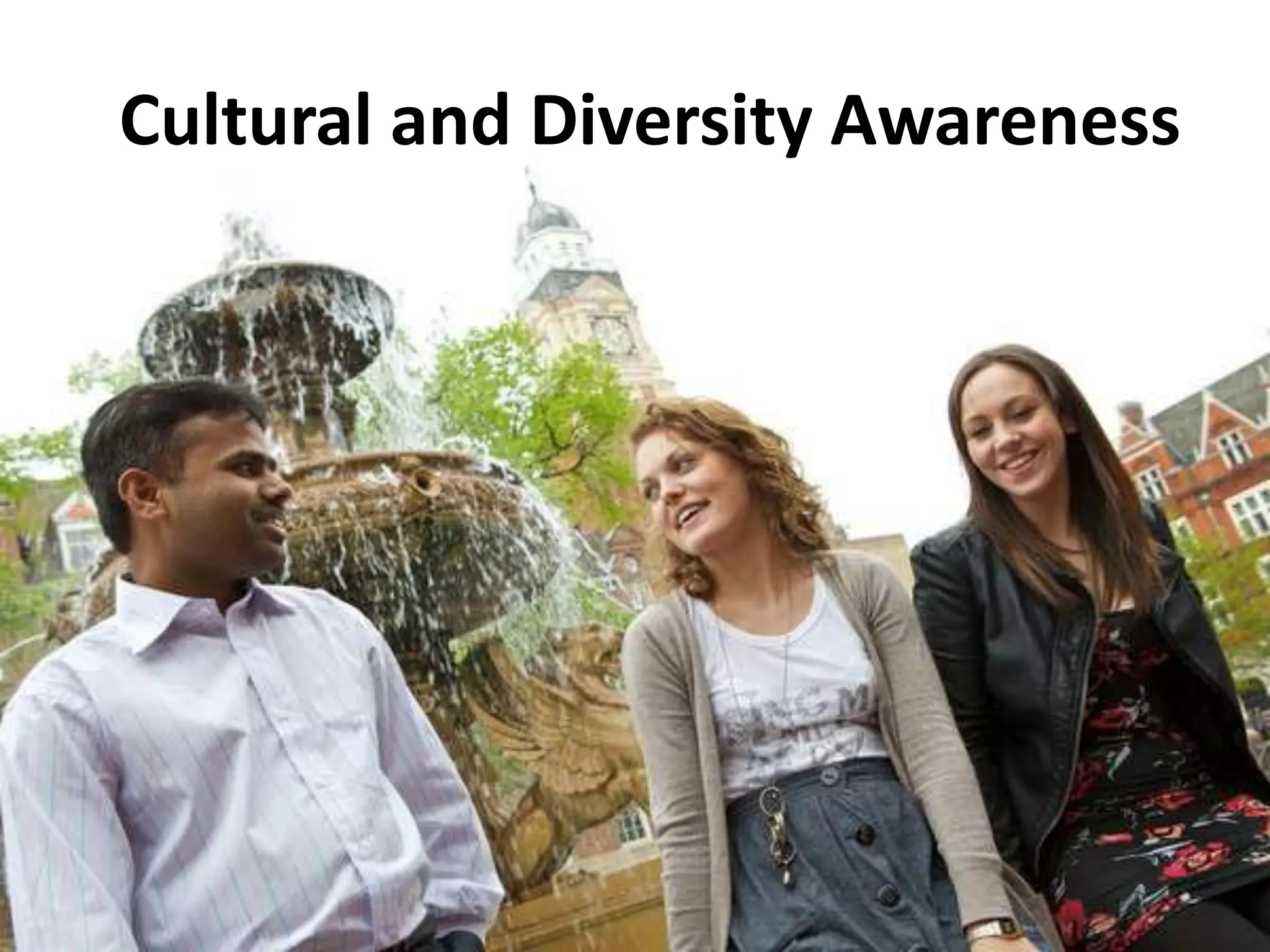
Cultural and Diversity Awareness
What is prejudice?
• Preconceived opinion that is not based on
  reason or actual experience.
• Dislike, hostility, or unjust behaviour deriving
  from preconceived and unfounded opinions.
  – Oxford online dictionary
In your groups take turns to share with each
  other:
• A time when you experienced prejudice or
  discrimination


                                       5
Inclusion & Exclusion
• Think about a time when you felt included and
  a time when you felt excluded from a group
  and share with your group.
• Who might feel excluded?
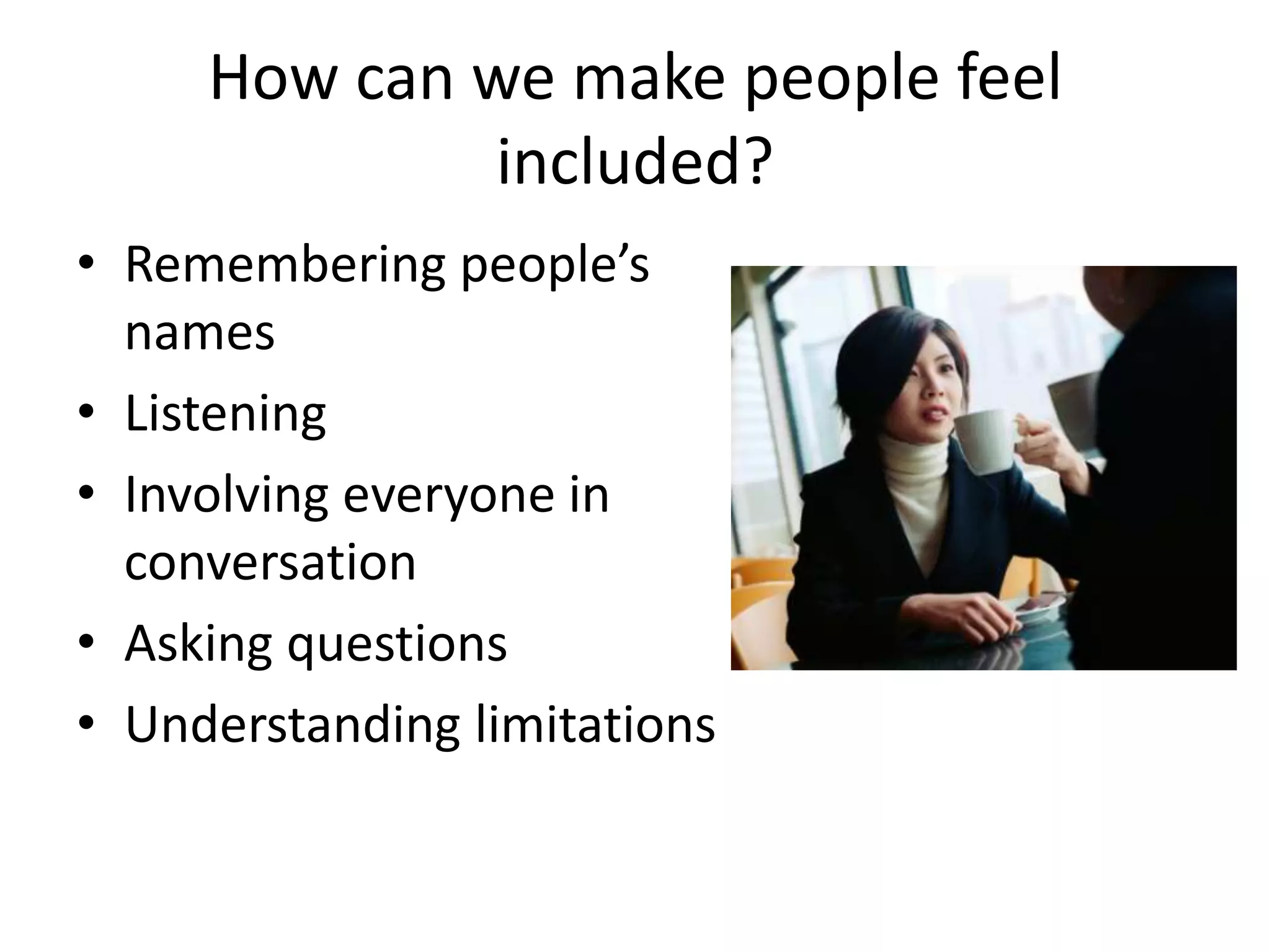
How can we make people feel
             included?
• Remembering people’s
  names
• Listening
• Involving everyone in
  conversation
• Asking questions
• Understanding limitations
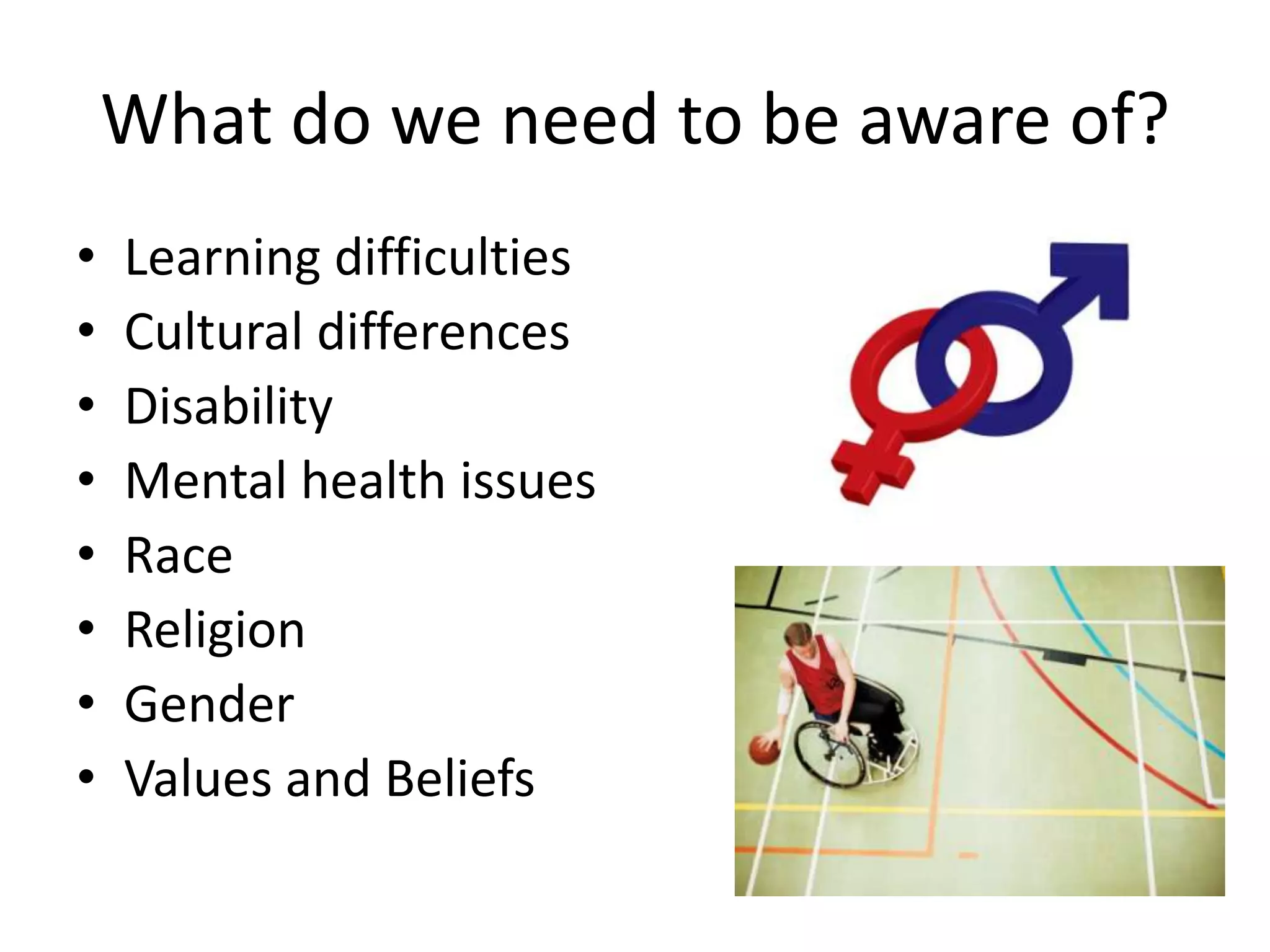
What do we need to be aware of?
•   Learning difficulties
•   Cultural differences
•   Disability
•   Mental health issues
•   Race
•   Religion
•   Gender
•   Values and Beliefs
Disability
•   What is a disability?
•   Question sheet
•   Talk Video
•   Etiquette Guide from Disability Matters
What is Mental Health?
“The emotional resilience that enables us to
  enjoy life and survive pain, disappointment
  and sadness. It is a positive sense of well-
  being and an underlying belief in our own and
  others’ dignity and worth”

                  (HEA 1997)
What is Mental Wellbeing?
“ A state of well-being in which the individual
  realises his or her own abilities, can cope with
  the normal stresses of life, can work
  productively and fruitfully, and is able to make
  a contribution to his or her community”
                   (WHO 2001)
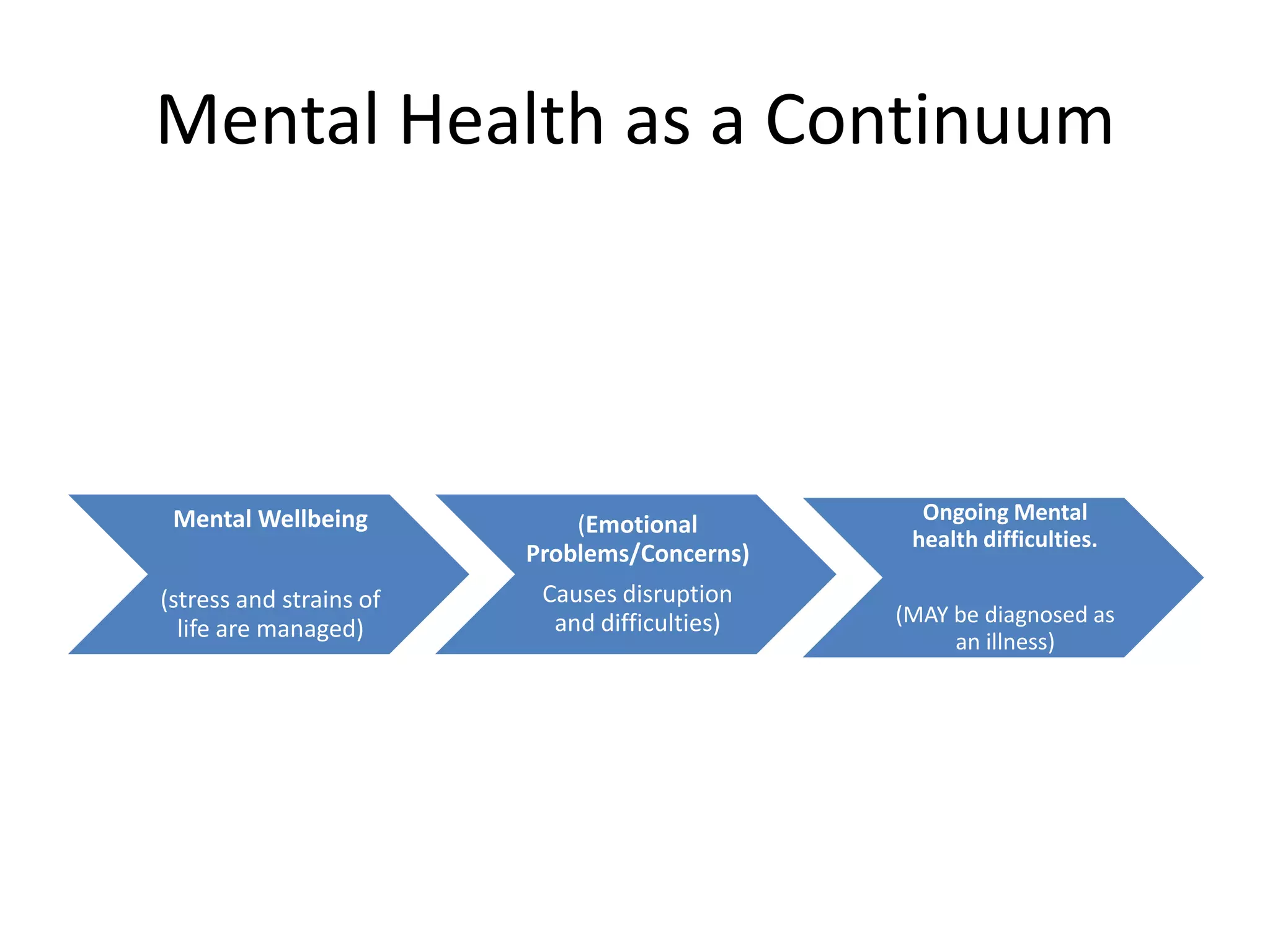
Mental Health as a Continuum


 Mental Wellbeing                                Ongoing Mental
                             (Emotional
                                                health difficulties.
                         Problems/Concerns)
(stress and strains of    Causes disruption
                           and difficulties)   (MAY be diagnosed as
  life are managed)                                 an illness)
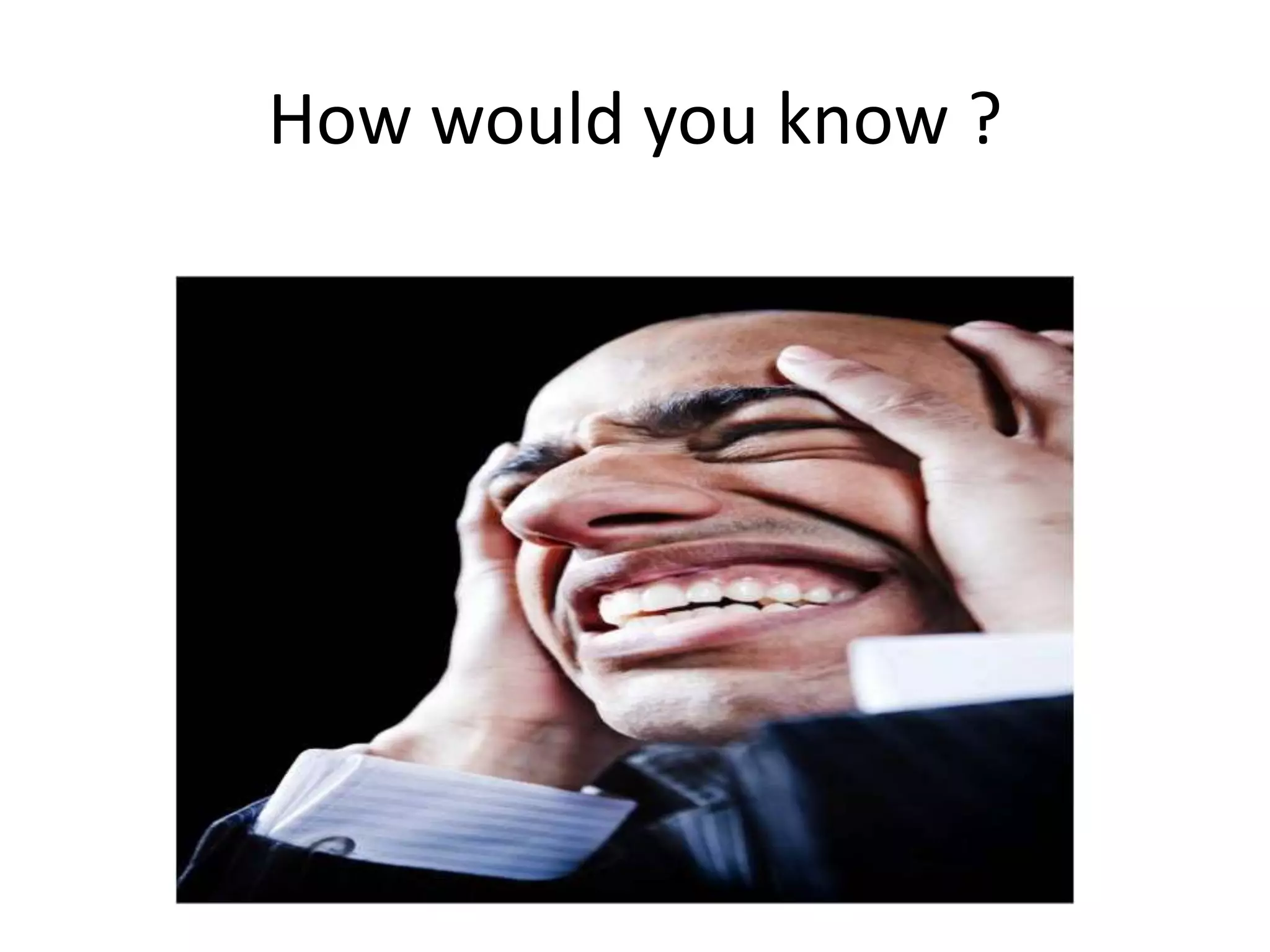
How would you know ?
Indicators of Mental Distress 1
• Emotional upset or distress, e.g. tearful,
  anxious, panicky
• Tense, irritable, agitated
• Feeling edgy, uneasy or detached from other
  people and the environment
• Feeling over alert, or less alert than usual
• Persistent low mood
aIndicators of Mental Distress 2tors
             of Mental Distress 2
• Mood or behaviour changes (maybe subtle or
  significant)
• Talking incoherently
• Disturbed, unusual or erratic behaviour
• Reduced productivity, judgement, memory,
  concentration
• Working less effectively
Indicators of Mental Distress 3
• Withdrawal from family & friends, or from
  course
• Poor timekeeping/attendance
• Very loud or seems to have no inhibitions
• Paranoia
• Holding fixed beliefs (not culturally contextual)
• Hearing voices
Indicators of Mental Distress 4
• Change in sleep pattern
• Change in appetite/weight
• Deterioration in self-care, neglecting personal
  hygiene
• Smell of alcohol or cannabis
Indicators of Mental Distress 5
• Tired all the time and less energetic, or feeling
  very over energetic
• Finding it difficult to relate to/communicate
  with other people
• Expressing feelings of hopelessness, despair,
  or extreme loneliness
• Thought disturbance, e.g. difficulty sustaining
  conversation, flight of ideas, etc
• Talking about suicide or self-harm, or actually
  doing/attempting it
Noticing when a student is in difficulty
•   Ask, be interested and listen
•   Notice clusters of signs
•   Notice changes from usual
•   Notice possible ‘coping’ strategies
Beware of…
•   Labelling
•   Diagnosing
•   Discrimination
•   Stigmatising
•   Language
• http://www.youtube.com/watch?v=CUzHK97
  wdWw&feature=player_embedded
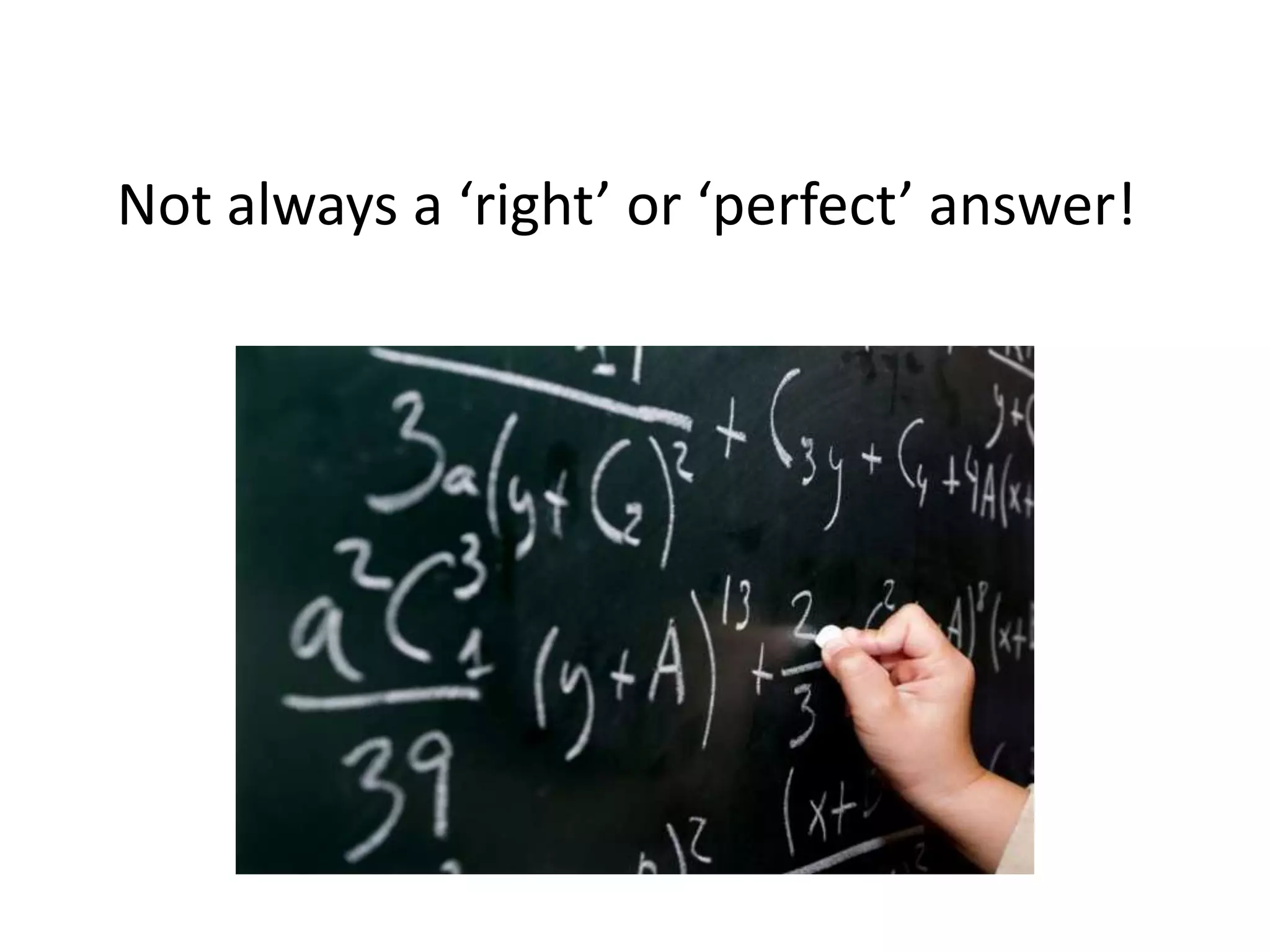
Not always a ‘right’ or ‘perfect’ answer!
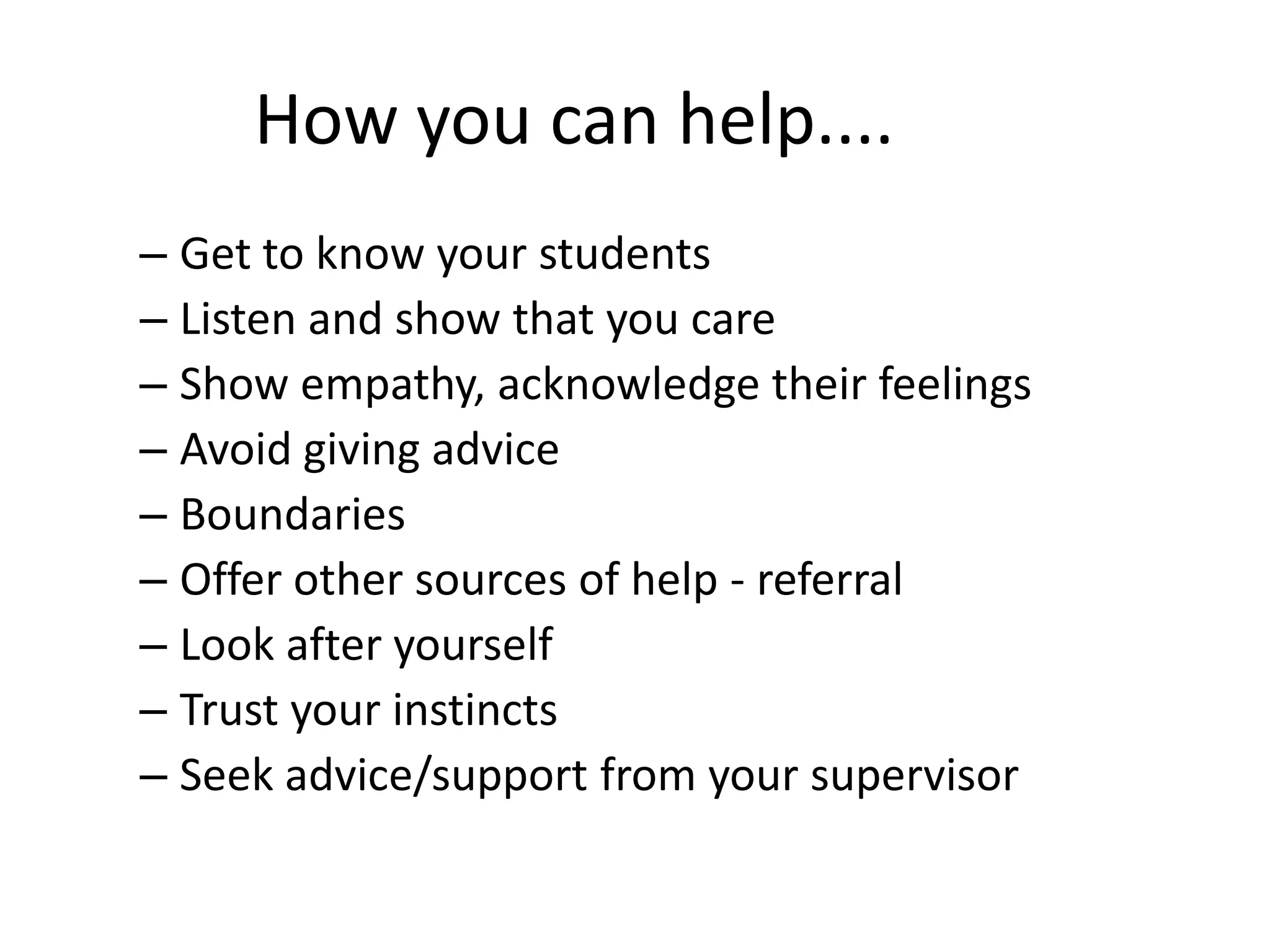
How you can help....
– Get to know your students
– Listen and show that you care
– Show empathy, acknowledge their feelings
– Avoid giving advice
– Boundaries
– Offer other sources of help - referral
– Look after yourself
– Trust your instincts
– Seek advice/support from your supervisor
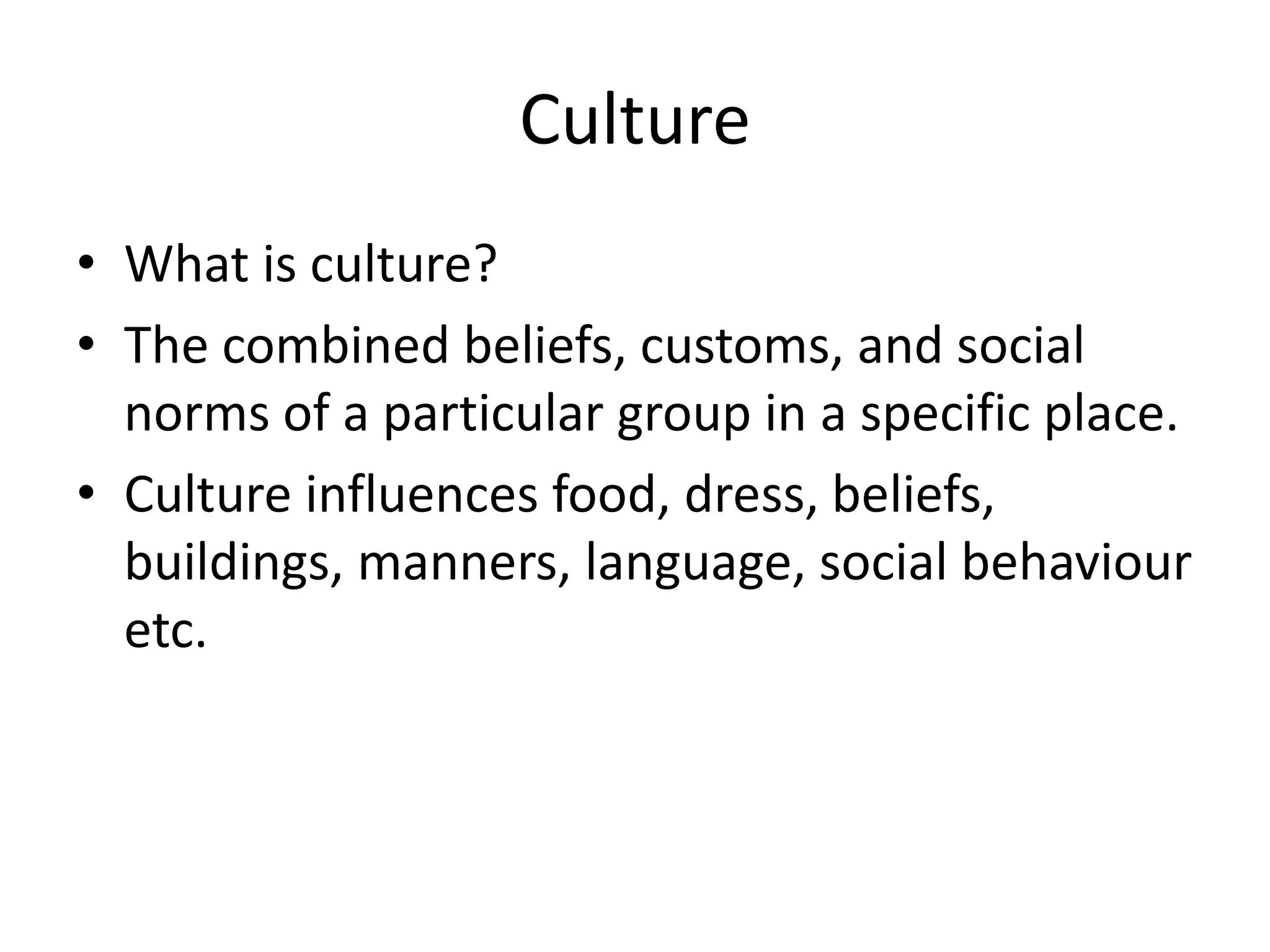
Culture
• What is culture?
• The combined beliefs, customs, and social
  norms of a particular group in a specific place.
• Culture influences food, dress, beliefs,
  buildings, manners, language, social behaviour
  etc.
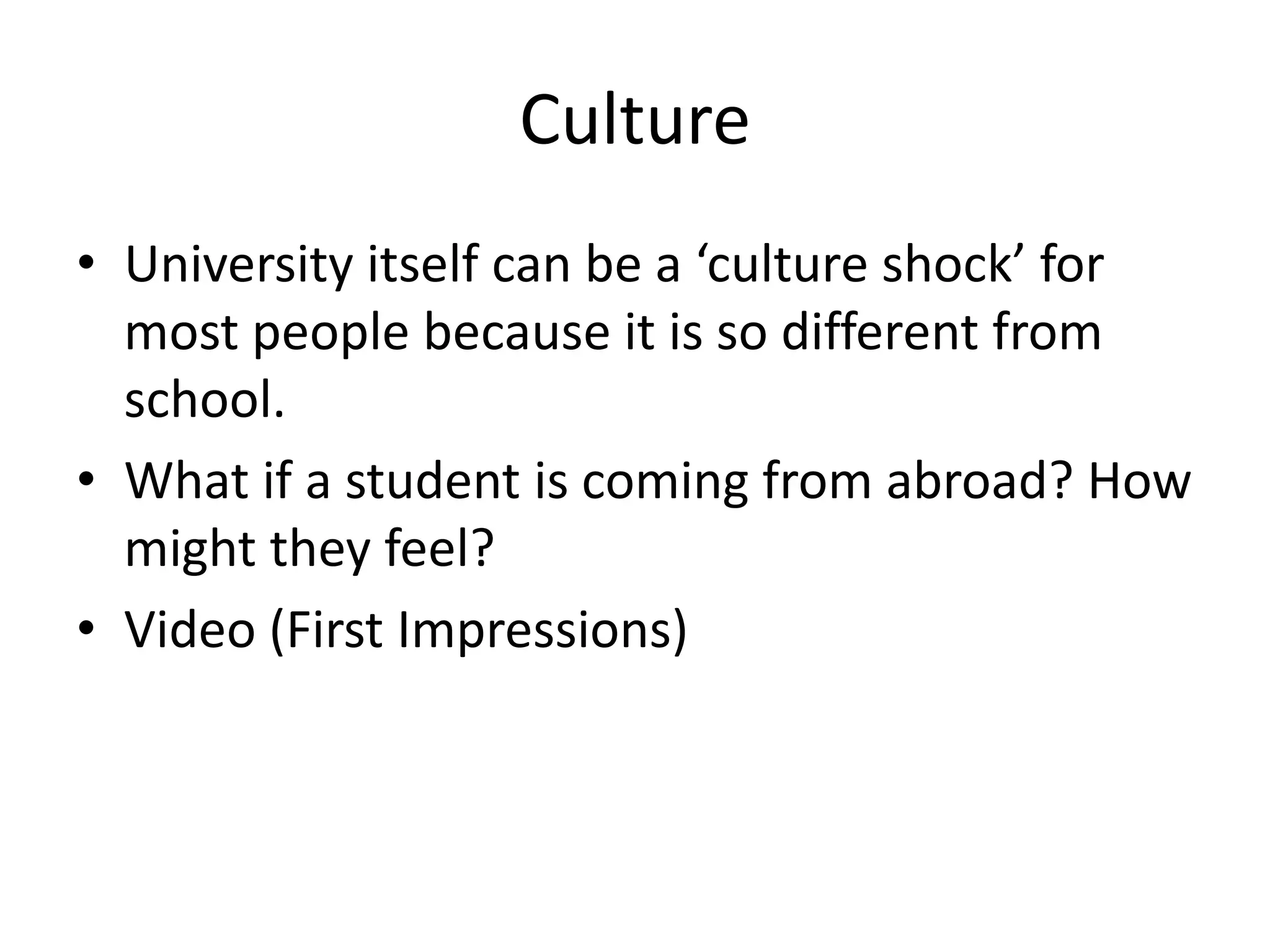
Culture
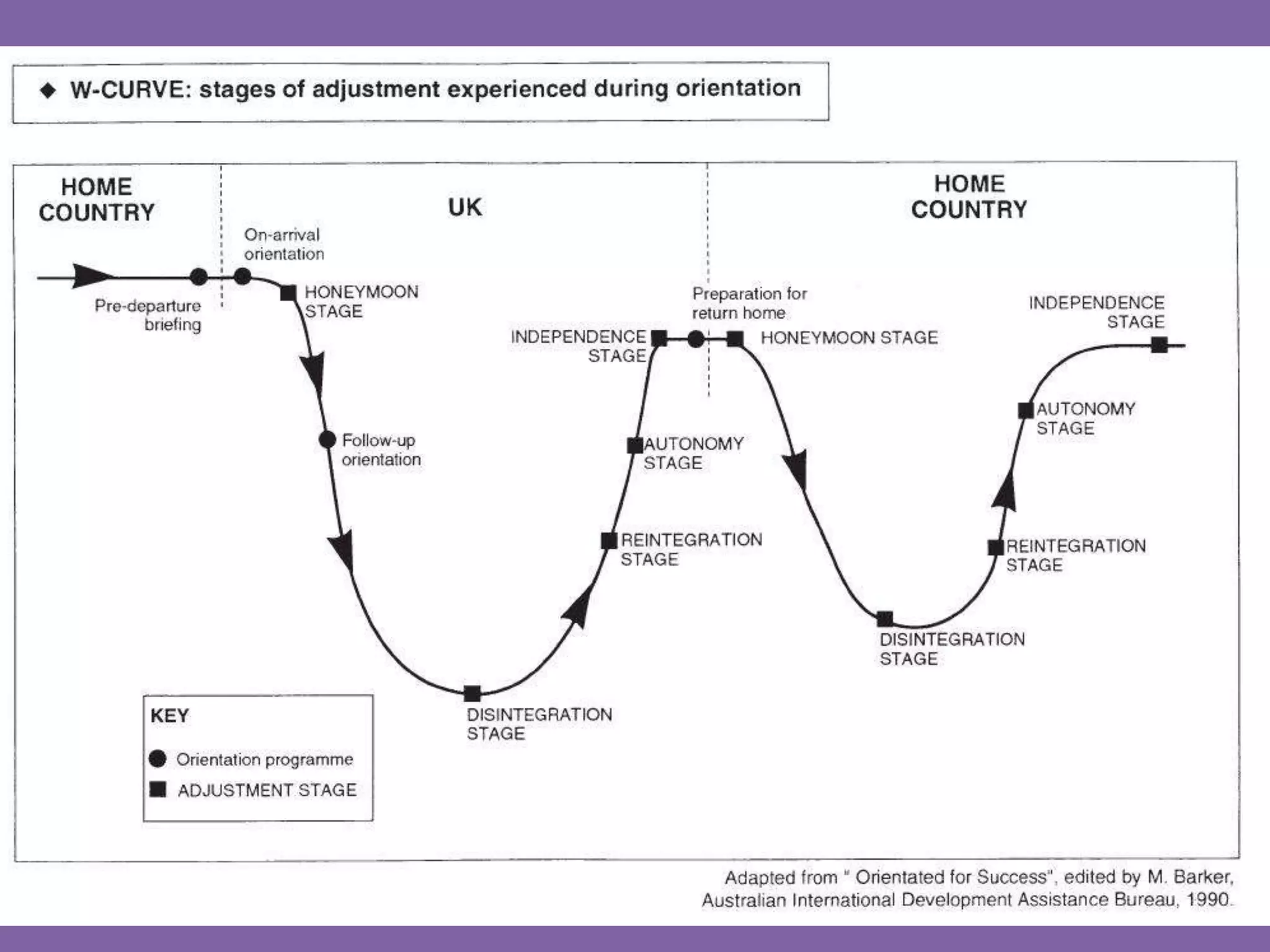
• University itself can be a ‘culture shock’ for
  most people because it is so different from
  school.
• What if a student is coming from abroad? How
  might they feel?
• Video (First Impressions)
Language Barriers

• Split into A’s and B’s. A’s tell your partners about
  what you did at the weekend without using any
  words starting with the letter ‘N’.
• B’s Just listen
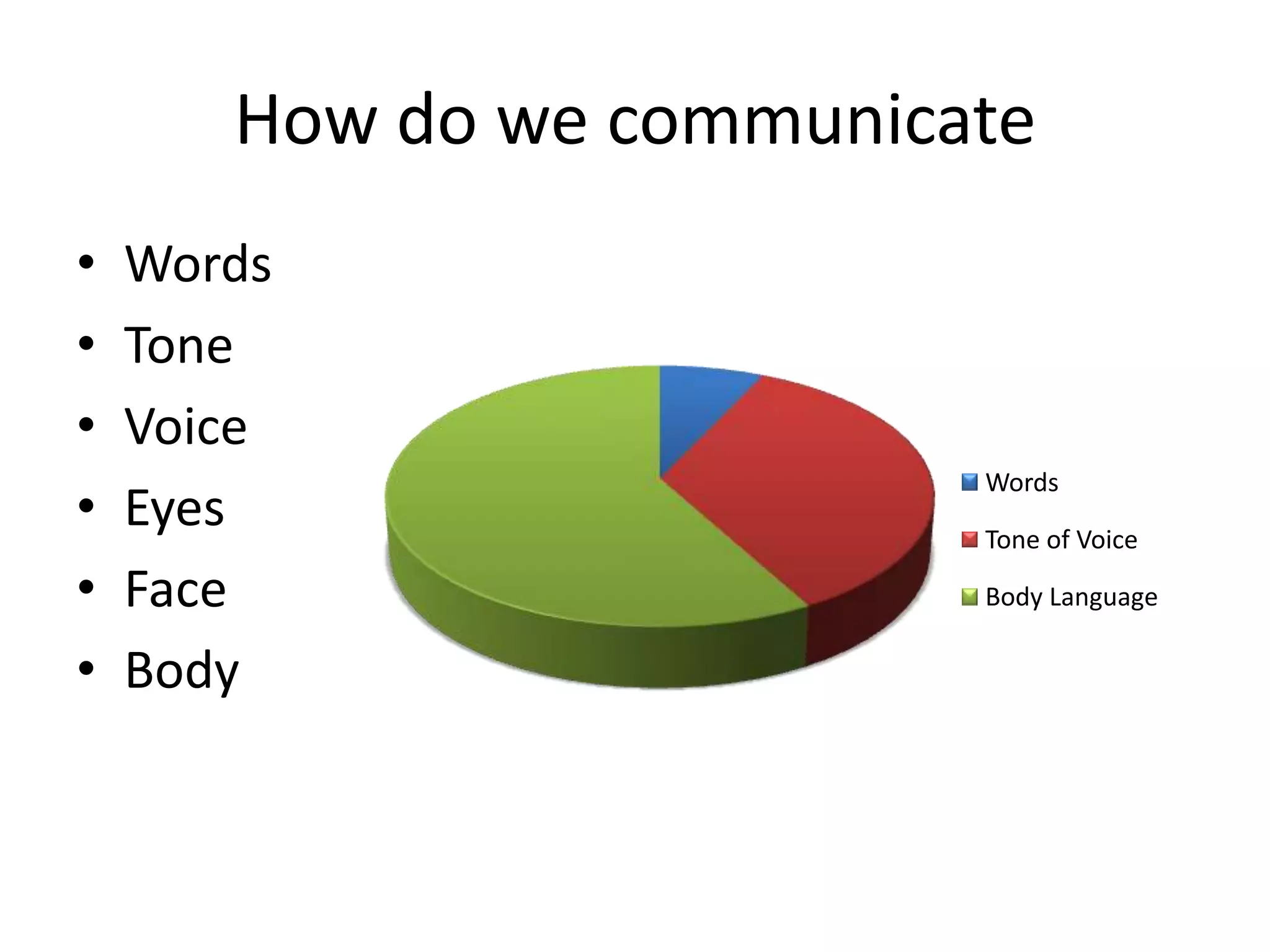
How do we communicate
•   Words
•   Tone
•   Voice
                          Words
•   Eyes                  Tone of Voice

•   Face                  Body Language

•   Body
Language Barriers
• Even if a student has very good English they
  may be frightened or embarrassed to practice
  it.
• It can be harder for international students to
  get involved in University life due to Language
  Barrier.
• Body language and things such as they way of
  telling the time may be different.
Cultural Differences
•   Etiquette
•   Socialising
•   Cooking
•   Religion
•   Gender
Sex, Relationships and gender
• Cultural attitudes differ. Some students may
  find it shocking to see condoms freely
  available or to see public displays of affection.
• Attitudes of men to women and of women to
  men will be influenced by their home culture.
• It is important to treat issues of sex, sexual
  orientation and contraception sensitively.
How can you be culturally aware?
• Learn names and ask your mentees to write
  them down if they are unusual to you.
• Be aware of any language barriers or possible
  cultural misunderstandings.
• Engage with other students’ cultures by asking
  questions.
• Be open! Don’t get into the habit of thinking
  your way is the only way of doing something-
  how is it done in another country?
• Think about what you can learn from other
  students, and what you can teach them.
• Invite students to share their culture with you.
Take Away Points
• Be aware
• Be open minded
• Communication is incredibly important to making
  people feel included.
• Discuss differences if they arise to enable for
  wider understanding.
• No one is right or wrong.
• You are not a mentor to preach the ‘right’ thing
  to students. Your role is to facilitate their
  transition and learning.

Cultural and diversity awareness workshop

  • 1.
  • 3.
    What is prejudice? •Preconceived opinion that is not based on reason or actual experience. • Dislike, hostility, or unjust behaviour deriving from preconceived and unfounded opinions. – Oxford online dictionary
  • 4.
    In your groupstake turns to share with each other: • A time when you experienced prejudice or discrimination 5
  • 5.
    Inclusion & Exclusion •Think about a time when you felt included and a time when you felt excluded from a group and share with your group. • Who might feel excluded?
  • 6.
    How can wemake people feel included? • Remembering people’s names • Listening • Involving everyone in conversation • Asking questions • Understanding limitations
  • 7.
    What do weneed to be aware of? • Learning difficulties • Cultural differences • Disability • Mental health issues • Race • Religion • Gender • Values and Beliefs
  • 8.
    Disability • What is a disability? • Question sheet • Talk Video • Etiquette Guide from Disability Matters
  • 9.
    What is MentalHealth? “The emotional resilience that enables us to enjoy life and survive pain, disappointment and sadness. It is a positive sense of well- being and an underlying belief in our own and others’ dignity and worth” (HEA 1997)
  • 10.
    What is MentalWellbeing? “ A state of well-being in which the individual realises his or her own abilities, can cope with the normal stresses of life, can work productively and fruitfully, and is able to make a contribution to his or her community” (WHO 2001)
  • 11.
    Mental Health asa Continuum Mental Wellbeing Ongoing Mental (Emotional health difficulties. Problems/Concerns) (stress and strains of Causes disruption and difficulties) (MAY be diagnosed as life are managed) an illness)
  • 12.
  • 13.
    Indicators of MentalDistress 1 • Emotional upset or distress, e.g. tearful, anxious, panicky • Tense, irritable, agitated • Feeling edgy, uneasy or detached from other people and the environment • Feeling over alert, or less alert than usual • Persistent low mood
  • 14.
    aIndicators of MentalDistress 2tors of Mental Distress 2 • Mood or behaviour changes (maybe subtle or significant) • Talking incoherently • Disturbed, unusual or erratic behaviour • Reduced productivity, judgement, memory, concentration • Working less effectively
  • 15.
    Indicators of MentalDistress 3 • Withdrawal from family & friends, or from course • Poor timekeeping/attendance • Very loud or seems to have no inhibitions • Paranoia • Holding fixed beliefs (not culturally contextual) • Hearing voices
  • 16.
    Indicators of MentalDistress 4 • Change in sleep pattern • Change in appetite/weight • Deterioration in self-care, neglecting personal hygiene • Smell of alcohol or cannabis
  • 17.
    Indicators of MentalDistress 5 • Tired all the time and less energetic, or feeling very over energetic • Finding it difficult to relate to/communicate with other people • Expressing feelings of hopelessness, despair, or extreme loneliness • Thought disturbance, e.g. difficulty sustaining conversation, flight of ideas, etc • Talking about suicide or self-harm, or actually doing/attempting it
  • 18.
    Noticing when astudent is in difficulty • Ask, be interested and listen • Notice clusters of signs • Notice changes from usual • Notice possible ‘coping’ strategies
  • 19.
    Beware of… • Labelling • Diagnosing • Discrimination • Stigmatising • Language
  • 20.
    • http://www.youtube.com/watch?v=CUzHK97 wdWw&feature=player_embedded
  • 21.
    Not always a‘right’ or ‘perfect’ answer!
  • 22.
    How you canhelp.... – Get to know your students – Listen and show that you care – Show empathy, acknowledge their feelings – Avoid giving advice – Boundaries – Offer other sources of help - referral – Look after yourself – Trust your instincts – Seek advice/support from your supervisor
  • 23.
    Culture • What isculture? • The combined beliefs, customs, and social norms of a particular group in a specific place. • Culture influences food, dress, beliefs, buildings, manners, language, social behaviour etc.
  • 24.
    Culture • University itselfcan be a ‘culture shock’ for most people because it is so different from school. • What if a student is coming from abroad? How might they feel? • Video (First Impressions)
  • 26.
    Language Barriers • Splitinto A’s and B’s. A’s tell your partners about what you did at the weekend without using any words starting with the letter ‘N’. • B’s Just listen
  • 27.
    How do wecommunicate • Words • Tone • Voice Words • Eyes Tone of Voice • Face Body Language • Body
  • 28.
    Language Barriers • Evenif a student has very good English they may be frightened or embarrassed to practice it. • It can be harder for international students to get involved in University life due to Language Barrier. • Body language and things such as they way of telling the time may be different.
  • 29.
    Cultural Differences • Etiquette • Socialising • Cooking • Religion • Gender
  • 30.
    Sex, Relationships andgender • Cultural attitudes differ. Some students may find it shocking to see condoms freely available or to see public displays of affection. • Attitudes of men to women and of women to men will be influenced by their home culture. • It is important to treat issues of sex, sexual orientation and contraception sensitively.
  • 31.
    How can yoube culturally aware? • Learn names and ask your mentees to write them down if they are unusual to you. • Be aware of any language barriers or possible cultural misunderstandings. • Engage with other students’ cultures by asking questions. • Be open! Don’t get into the habit of thinking your way is the only way of doing something- how is it done in another country?
  • 32.
    • Think aboutwhat you can learn from other students, and what you can teach them. • Invite students to share their culture with you.
  • 33.
    Take Away Points •Be aware • Be open minded • Communication is incredibly important to making people feel included. • Discuss differences if they arise to enable for wider understanding. • No one is right or wrong. • You are not a mentor to preach the ‘right’ thing to students. Your role is to facilitate their transition and learning.

Editor's Notes

  • #3 We sometimes see things that do not exist. This sometimes happens when we see people too.
  • #25 Video -1 min 55
  • #27 Split into A’s and B’s. A’s tell your partners about what you did at the weekend without using any words starting with the letter ‘N’ . B’s Just listen