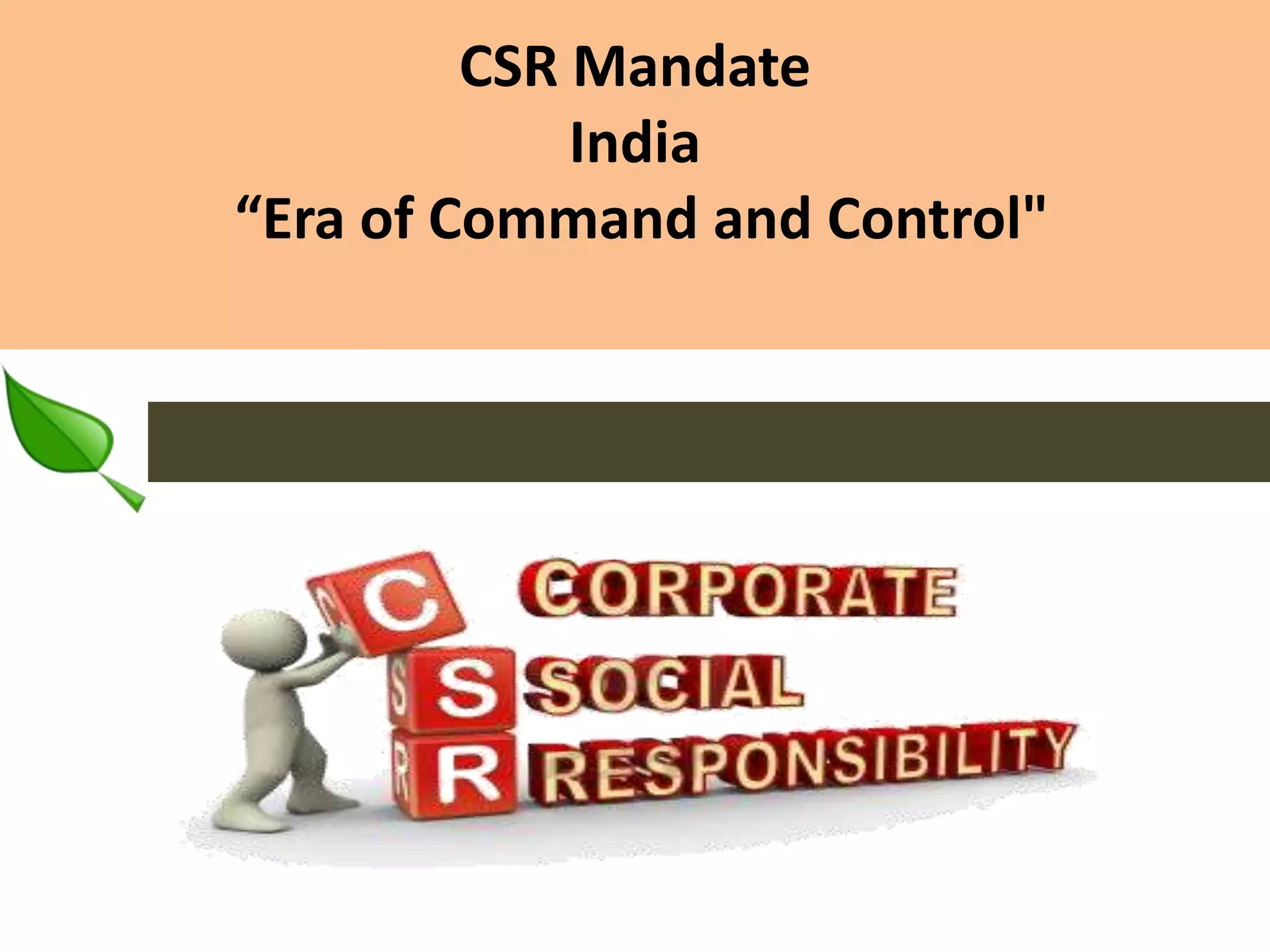
CSR Mandate
India
“Era of Command and Control"
PRESENTATION FLOW

CSR- EVOLUTION AND UNDERSTANDING

CSR MANDATE

CSR FRAMEWORK
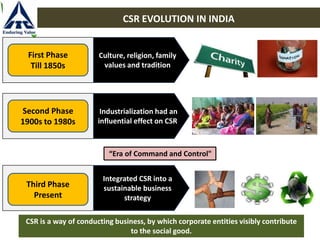
CSR EVOLUTION IN INDIA
First Phase
Till 1850s

Culture, religion, family
values and tradition

Second Phase
1900s to 1980s

Industrialization had an
influential effect on CSR

“Era of Command and Control"

Third Phase
Present

Integrated CSR into a
sustainable business
strategy

CSR is a way of conducting business, by which corporate entities visibly contribute
to the social good.
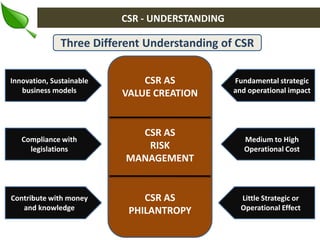
CSR - UNDERSTANDING

Three Different Understanding of CSR
Innovation, Sustainable
business models

CSR AS
VALUE CREATION

Fundamental strategic
and operational impact

Compliance with
legislations

CSR AS
RISK
MANAGEMENT

Medium to High
Operational Cost

Contribute with money
and knowledge

CSR AS
PHILANTROPY

Little Strategic or
Operational Effect
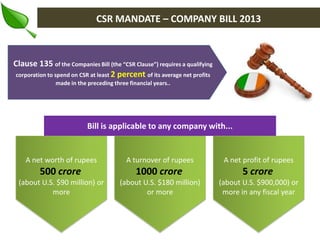
CSR MANDATE – COMPANY BILL 2013

Clause 135 of the Companies Bill (the “CSR Clause”) requires a qualifying
corporation to spend on CSR at least 2 percent of its average net profits
made in the preceding three financial years..

Bill is applicable to any company with...

A net worth of rupees

A turnover of rupees

A net profit of rupees

500 crore

1000 crore

5 crore

(about U.S. $90 million) or
more

(about U.S. $180 million)
or more

(about U.S. $900,000) or
more in any fiscal year
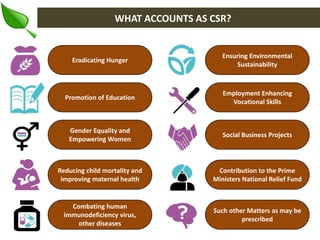
WHAT ACCOUNTS AS CSR?

Eradicating Hunger

Ensuring Environmental
Sustainability

Promotion of Education

Employment Enhancing
Vocational Skills

Gender Equality and
Empowering Women

Social Business Projects

Reducing child mortality and
improving maternal health

Contribution to the Prime
Ministers National Relief Fund

Combating human
immunodeficiency virus,
other diseases

Such other Matters as may be
prescribed
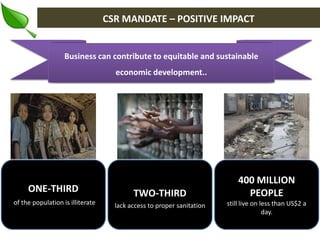
CSR MANDATE – POSITIVE IMPACT

Business can contribute to equitable and sustainable

economic development..

ONE-THIRD
of the population is illiterate

TWO-THIRD
lack access to proper sanitation

400 MILLION
PEOPLE
still live on less than US$2 a
day.
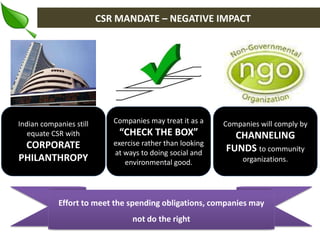
CSR MANDATE – NEGATIVE IMPACT

Indian companies still
equate CSR with

Companies may treat it as a

CORPORATE
PHILANTHROPY

exercise rather than looking
at ways to doing social and
environmental good.

“CHECK THE BOX”

Companies will comply by

CHANNELING
FUNDS to community
organizations.

Effort to meet the spending obligations, companies may
not do the right
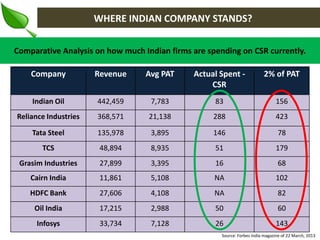
WHERE INDIAN COMPANY STANDS?
Comparative Analysis on how much Indian firms are spending on CSR currently.
Company

Revenue

Avg PAT

Actual Spent CSR

2% of PAT

Indian Oil

442,459

7,783

83

156

Reliance Industries

368,571

21,138

288

423

Tata Steel

135,978

3,895

146

78

TCS

48,894

8,935

51

179

Grasim Industries

27,899

3,395

16

68

Cairn India

11,861

5,108

NA

102

HDFC Bank

27,606

4,108

NA

82

Oil India

17,215

2,988

50

60

Infosys

33,734

7,128

26

143

Source: Forbes India magazine of 22 March, 2013
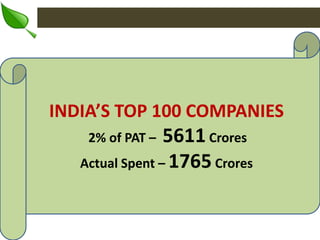
INDIA’S TOP 100 COMPANIES

5611 Crores
Actual Spent – 1765 Crores
2% of PAT –
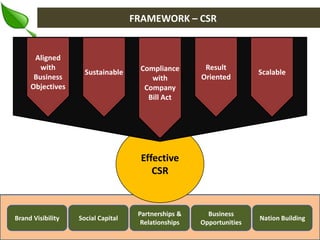
FRAMEWORK – CSR

Aligned
with
Business
Objectives

Sustainable

Compliance
with
Company
Bill Act

Result
Oriented

Scalable

Business
Opportunities

Nation Building

Effective
CSR

Brand Visibility

Social Capital

Partnerships &
Relationships
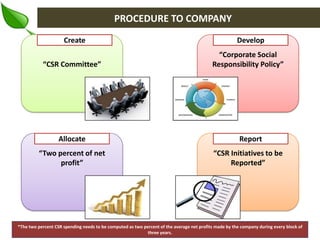
PROCEDURE TO COMPANY
Create
“CSR Committee”

Allocate
“Two percent of net
profit”

Develop
“
“Corporate Social
Responsibility Policy”

Report
“CSR Initiatives to be
Reported”

*The two percent CSR spending needs to be computed as two percent of the average net profits made by the company during every block of
three years.
Aswathaman Vijayan
aswath9882@yahoo.in

CSR Mandate in India

  • 1.
    CSR Mandate India “Era ofCommand and Control"
  • 2.
    PRESENTATION FLOW CSR- EVOLUTIONAND UNDERSTANDING CSR MANDATE CSR FRAMEWORK
  • 4.
    CSR EVOLUTION ININDIA First Phase Till 1850s Culture, religion, family values and tradition Second Phase 1900s to 1980s Industrialization had an influential effect on CSR “Era of Command and Control" Third Phase Present Integrated CSR into a sustainable business strategy CSR is a way of conducting business, by which corporate entities visibly contribute to the social good.
  • 5.
    CSR - UNDERSTANDING ThreeDifferent Understanding of CSR Innovation, Sustainable business models CSR AS VALUE CREATION Fundamental strategic and operational impact Compliance with legislations CSR AS RISK MANAGEMENT Medium to High Operational Cost Contribute with money and knowledge CSR AS PHILANTROPY Little Strategic or Operational Effect
  • 7.
    CSR MANDATE –COMPANY BILL 2013 Clause 135 of the Companies Bill (the “CSR Clause”) requires a qualifying corporation to spend on CSR at least 2 percent of its average net profits made in the preceding three financial years.. Bill is applicable to any company with... A net worth of rupees A turnover of rupees A net profit of rupees 500 crore 1000 crore 5 crore (about U.S. $90 million) or more (about U.S. $180 million) or more (about U.S. $900,000) or more in any fiscal year
  • 8.
    WHAT ACCOUNTS ASCSR? Eradicating Hunger Ensuring Environmental Sustainability Promotion of Education Employment Enhancing Vocational Skills Gender Equality and Empowering Women Social Business Projects Reducing child mortality and improving maternal health Contribution to the Prime Ministers National Relief Fund Combating human immunodeficiency virus, other diseases Such other Matters as may be prescribed
  • 9.
    CSR MANDATE –POSITIVE IMPACT Business can contribute to equitable and sustainable economic development.. ONE-THIRD of the population is illiterate TWO-THIRD lack access to proper sanitation 400 MILLION PEOPLE still live on less than US$2 a day.
  • 10.
    CSR MANDATE –NEGATIVE IMPACT Indian companies still equate CSR with Companies may treat it as a CORPORATE PHILANTHROPY exercise rather than looking at ways to doing social and environmental good. “CHECK THE BOX” Companies will comply by CHANNELING FUNDS to community organizations. Effort to meet the spending obligations, companies may not do the right
  • 11.
    WHERE INDIAN COMPANYSTANDS? Comparative Analysis on how much Indian firms are spending on CSR currently. Company Revenue Avg PAT Actual Spent CSR 2% of PAT Indian Oil 442,459 7,783 83 156 Reliance Industries 368,571 21,138 288 423 Tata Steel 135,978 3,895 146 78 TCS 48,894 8,935 51 179 Grasim Industries 27,899 3,395 16 68 Cairn India 11,861 5,108 NA 102 HDFC Bank 27,606 4,108 NA 82 Oil India 17,215 2,988 50 60 Infosys 33,734 7,128 26 143 Source: Forbes India magazine of 22 March, 2013
  • 12.
    INDIA’S TOP 100COMPANIES 5611 Crores Actual Spent – 1765 Crores 2% of PAT –
  • 14.
    FRAMEWORK – CSR Aligned with Business Objectives Sustainable Compliance with Company BillAct Result Oriented Scalable Business Opportunities Nation Building Effective CSR Brand Visibility Social Capital Partnerships & Relationships
  • 15.
    PROCEDURE TO COMPANY Create “CSRCommittee” Allocate “Two percent of net profit” Develop “ “Corporate Social Responsibility Policy” Report “CSR Initiatives to be Reported” *The two percent CSR spending needs to be computed as two percent of the average net profits made by the company during every block of three years.
  • 16.