

   Negotiation is the process of discussion by which
    two or more parties aim to reach a mutually
    acceptable agreement


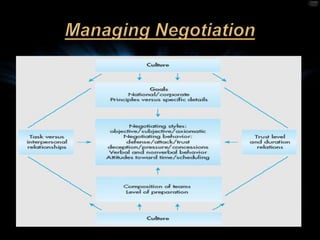
   Negotiating across borders is more complex because
    of the number of stakeholders involved
   Successful management of intercultural
    negotiations requires the manager
     To  gain specific knowledge of the parties in the
      upcoming meeting
     To prepare accordingly to adjust to and control the
      situation
     To be innovative
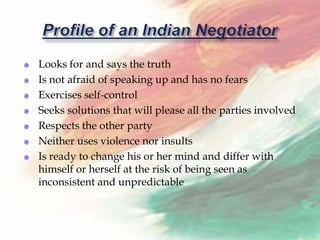
Looks for and says the truth
Is not afraid of speaking up and has no fears
Exercises self-control
Seeks solutions that will please all the parties involved
Respects the other party
Neither uses violence nor insults
Is ready to change his or her mind and differ with
himself or herself at the risk of being seen as
inconsistent and unpredictable
Puts things into perspective and switches easily from
the small picture to the big one
Is humble and trusts the opponent
Is able to withdraw, use silence, and learn from within
Relies on himself or herself, his or her own resources
and strengths
Appeals to the other party’s spiritual identity
Is tenacious, patient, and persistent
Learns from the opponent and avoids the use of secrets
Goes beyond logical reasoning and trusts his or her
instinct as well as faith
Protects all the parties' honor, self-respect, and dignity
Avoids direct confrontation between opponents
Is respected and trusted by all
Does not put the parties involved in a situation where they
have to show weakness or admit defeat
Has the necessary prestige to be listened to
Is creative enough to come up with honorable solutions for all
parties
Is impartial and can understand the positions of the various
parties without leaning toward one or the other
Is able to resist any kind of pressure that the opponents could
try to exercise on him
Uses references to people who are highly respected by the
opponents to persuade them to change their minds on some
issues
Can keep secrets and in so doing gains the confidence of the
negotiating parties
Controls his temper and emotions
Can use conference as mediating devices
Knows that the opponent will have problems in carrying out
the decisions made during the negotiation
Respects the “opponents”
States his or her position as clearly as possible
Knows when he or she wishes a negotiation to move on
Is fully briefed about the negotiated issues
Has a good sense of timing and is consistent
Makes the other party reveal his or her position while
keeping his or her own position hidden as long as
possible
Lets the other negotiator come forward first and looks for
the best deal
Knows when to compromise
Takes a firm stand at the beginning of the negotiation
Refuses to make concessions beforehand
Accepts compromises only when the negotiation is
deadlocked
Sets up the general principles and delegates the detail work to
associates
Keeps a maximum of options open before negotiation
Operates in good faith
Tend to be very direct in communication
Resist making outrageous initial demands
More likely to negotiate alone
Uncomfortable with emotional displays
Expect short term profits
Less likely to speak a foreign language
They are not world travelers
Uncomfortable with silence
Hate to admit that we don’t know
Sensitive to national origin
Prefer to be called English, not British
Make appointment in advance
Excessively polite
Refrain from asking personal questions
Are very class conscious
Not comfortable with strangers
Do not move at the frantic pace
France is very centralized
Competitive environment for business
People are warm and friendly, share everything
Understand English, uncomfortable to speak
logical thinkers
Value principle over result
punctual
Is a low context country
Expect more detailed contracts
Time management
Masters of the deal
Appear formal and aloof at first
Great emphasis on titles
They drive fast
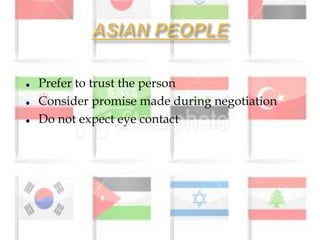
   Are relationship based
    Prefer to trust the person
    Consider promise made during negotiation
    Do not expect eye contact
Saying: “He ging, he li, he fa.”
Traditional greeting style
Do business on building relationship
The groups needs is ahead of personal needs
Negotiate in teams
Concept of Guanxi
Respect for persons position
Entrepreneur by heart and loves to bargain and
haggle
   They are reluctant to say “NO”
   Ask them open ended questions
   Very high context country
   “we” comes before “I”
   Tradtional style of greeting
   The concept of Wa (Harmony)
   Prefer to work in group
   The concept of Kashi
   “Banana no tataki uri”
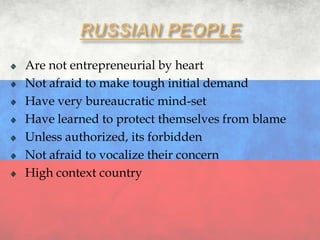
Are not entrepreneurial by heart
Not afraid to make tough initial demand
Have very bureaucratic mind-set
Have learned to protect themselves from blame
Unless authorized, its forbidden
Not afraid to vocalize their concern
High context country
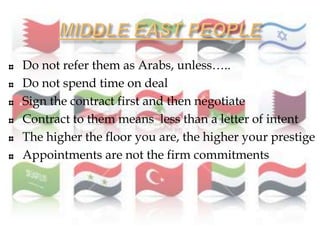
Do not refer them as Arabs, unless…..
Do not spend time on deal
Sign the contract first and then negotiate
Contract to them means less than a letter of intent
The higher the floor you are, the higher your prestige
Appointments are not the firm commitments
cross culture negotiation

cross culture negotiation

  • 2.
    Negotiation is the process of discussion by which two or more parties aim to reach a mutually acceptable agreement  Negotiating across borders is more complex because of the number of stakeholders involved
  • 4.
    Successful management of intercultural negotiations requires the manager  To gain specific knowledge of the parties in the upcoming meeting  To prepare accordingly to adjust to and control the situation  To be innovative
  • 8.
    Looks for andsays the truth Is not afraid of speaking up and has no fears Exercises self-control Seeks solutions that will please all the parties involved Respects the other party Neither uses violence nor insults Is ready to change his or her mind and differ with himself or herself at the risk of being seen as inconsistent and unpredictable
  • 9.
    Puts things intoperspective and switches easily from the small picture to the big one Is humble and trusts the opponent Is able to withdraw, use silence, and learn from within Relies on himself or herself, his or her own resources and strengths Appeals to the other party’s spiritual identity Is tenacious, patient, and persistent Learns from the opponent and avoids the use of secrets Goes beyond logical reasoning and trusts his or her instinct as well as faith
  • 10.
    Protects all theparties' honor, self-respect, and dignity Avoids direct confrontation between opponents Is respected and trusted by all Does not put the parties involved in a situation where they have to show weakness or admit defeat Has the necessary prestige to be listened to Is creative enough to come up with honorable solutions for all parties Is impartial and can understand the positions of the various parties without leaning toward one or the other
  • 11.
    Is able toresist any kind of pressure that the opponents could try to exercise on him Uses references to people who are highly respected by the opponents to persuade them to change their minds on some issues Can keep secrets and in so doing gains the confidence of the negotiating parties Controls his temper and emotions Can use conference as mediating devices Knows that the opponent will have problems in carrying out the decisions made during the negotiation
  • 12.
    Respects the “opponents” Stateshis or her position as clearly as possible Knows when he or she wishes a negotiation to move on Is fully briefed about the negotiated issues Has a good sense of timing and is consistent Makes the other party reveal his or her position while keeping his or her own position hidden as long as possible Lets the other negotiator come forward first and looks for the best deal
  • 13.
    Knows when tocompromise Takes a firm stand at the beginning of the negotiation Refuses to make concessions beforehand Accepts compromises only when the negotiation is deadlocked Sets up the general principles and delegates the detail work to associates Keeps a maximum of options open before negotiation Operates in good faith
  • 15.
    Tend to bevery direct in communication Resist making outrageous initial demands More likely to negotiate alone Uncomfortable with emotional displays Expect short term profits Less likely to speak a foreign language They are not world travelers Uncomfortable with silence Hate to admit that we don’t know
  • 16.
    Sensitive to nationalorigin Prefer to be called English, not British Make appointment in advance Excessively polite Refrain from asking personal questions Are very class conscious Not comfortable with strangers Do not move at the frantic pace
  • 17.
    France is verycentralized Competitive environment for business People are warm and friendly, share everything Understand English, uncomfortable to speak logical thinkers Value principle over result punctual
  • 18.
    Is a lowcontext country Expect more detailed contracts Time management Masters of the deal Appear formal and aloof at first Great emphasis on titles They drive fast
  • 19.
    Are relationship based Prefer to trust the person Consider promise made during negotiation Do not expect eye contact
  • 20.
    Saying: “He ging,he li, he fa.” Traditional greeting style Do business on building relationship The groups needs is ahead of personal needs Negotiate in teams Concept of Guanxi Respect for persons position Entrepreneur by heart and loves to bargain and haggle
  • 21.
    They are reluctant to say “NO”  Ask them open ended questions  Very high context country  “we” comes before “I”  Tradtional style of greeting  The concept of Wa (Harmony)  Prefer to work in group  The concept of Kashi  “Banana no tataki uri”
  • 22.
    Are not entrepreneurialby heart Not afraid to make tough initial demand Have very bureaucratic mind-set Have learned to protect themselves from blame Unless authorized, its forbidden Not afraid to vocalize their concern High context country
  • 23.
    Do not referthem as Arabs, unless….. Do not spend time on deal Sign the contract first and then negotiate Contract to them means less than a letter of intent The higher the floor you are, the higher your prestige Appointments are not the firm commitments