Downloaded 11 times

![Critics
• Shelley adds realism through the use of
epistolary style
• “Mary Shelley’s device of the frame-story of
the explorer… adds credibility to [the] internal
voices”
• Jason Marc Harris
• The framing device buffers “Frankenstein’s
horror story with Walton’s relative normalcy”.
• Susan Sniader Lanser](https://image.slidesharecdn.com/critics-frankenstein-131208162606-phpapp01/85/Critics-frankenstein-4-320.jpg)
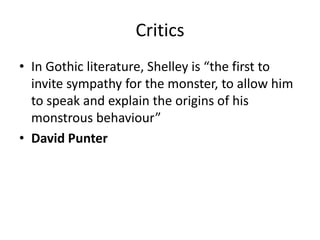
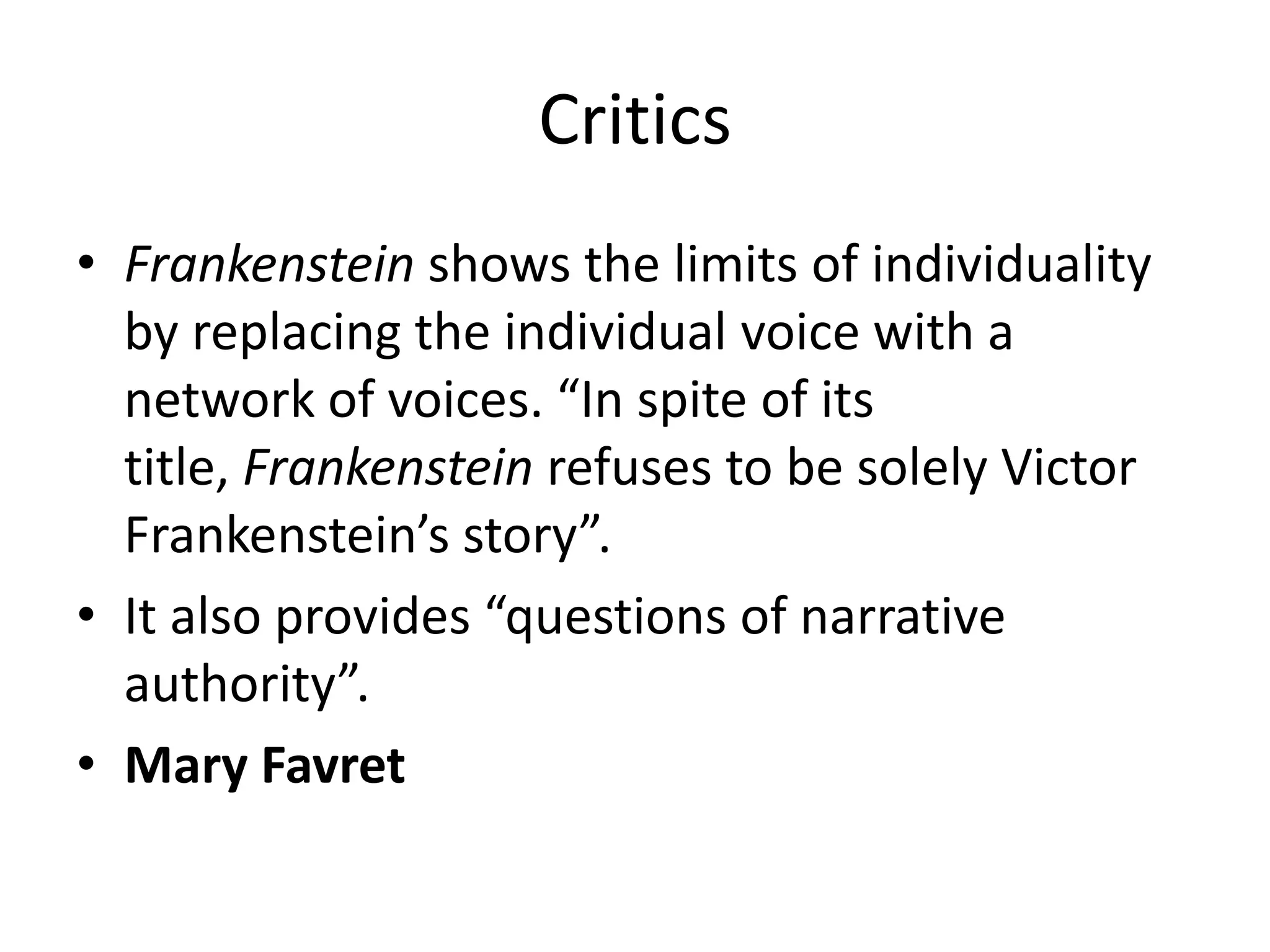
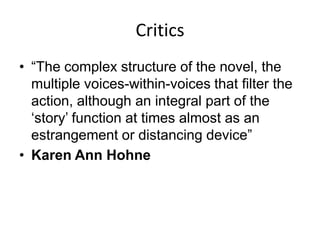
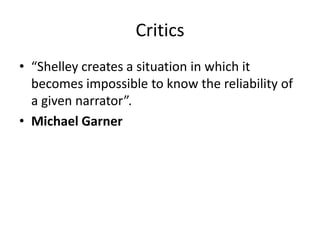
This document summarizes the views of several literary critics on key aspects of Mary Shelley's Frankenstein. The critics note that the novel replaces the individual voice of Victor Frankenstein with a network of voices that create questions of narrative authority. Additionally, the complex structure utilizing multiple narrators functions as a distancing device and makes it impossible to determine the reliability of any single narrator. The epistolary style and framing device of Robert Walton's story add realism and credibility while buffering the horror of Frankenstein's tale. Mary Shelley was also the first to invite sympathy for the monster by allowing him to speak for himself.


