
UBC LIBRARY		STUDENT SERVICESIRVING K BARBER	CENTRE FOR TEACHING,LEARNING CENTRE	AND LEARNING TECHNOLOGYThe Online Workshop Series Presents:How to Think Critically
INSERT POLL ON STUDENT BACKGROUNDPhoto used under CC License: http://bit.ly/gD3qdw
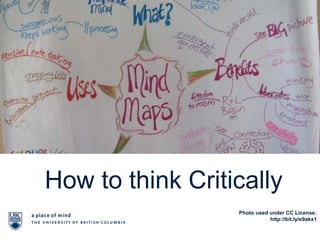
How to think CriticallyPhoto used under CC License: http://bit.ly/e9akx1
What you’ll walk away with today:1. Define what it means to engage in critical thought 2. Identify benefits of critical thinking3. Direct application of critical thinking strategies4. Know your individual preference for certain strategiesPhoto used under CC License: http://bit.ly/fTVbX6
Insert PollCritical Thinking Inventory:Check which of the following actions you undertake at university:Do you seek to clearly understand your academic tasks before undertaking them?Do you create strategies for doing tasks and meeting goals?Do you think about techniques and strategies that you are good at, and that have worked for you in the past?Do you have confidence in your ability to understand academic requirements?Do you recognize when you may be off track or misunderstanding a task?Do you learn from each task about your strengths and weaknesses?Do you ask yourself about what you would like to learn about a topic?Are you able to determine the big picture - the overall concepts of a course?Can you determine the most important concepts and ideas?Do you ask yourself what is coming next, what the author or lecturer will say next?Do you visualize or diagram your work?
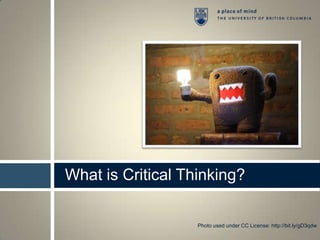
What is Critical Thinking?Photo used under CC License: http://bit.ly/gD3qdw
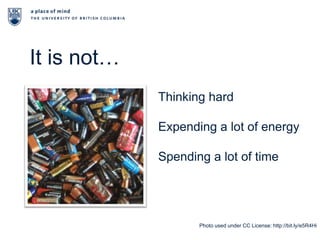
It is not…Thinking hardExpending a lot of energySpending a lot of timePhoto used under CC License: http://bit.ly/e5R4Hi
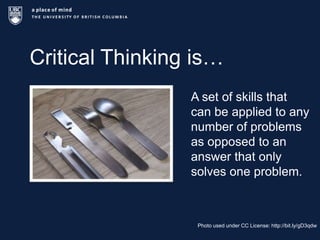
Critical Thinking is…A set of skills that can be applied to any number of problems as opposed to an answer that only solves one problem.Photo used under CC License: http://bit.ly/gD3qdw
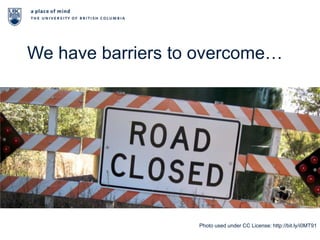
We have barriers to overcome…Photo used under CC License: http://bit.ly/i0MT91
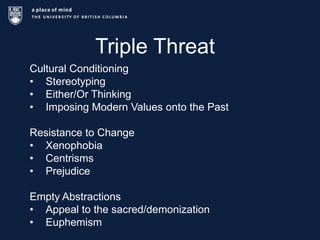
Triple ThreatCultural ConditioningStereotyping
Either/Or Thinking
Imposing Modern Values onto the PastResistance to ChangeXenophobia
Centrisms
PrejudiceEmpty AbstractionsAppeal to the sacred/demonization
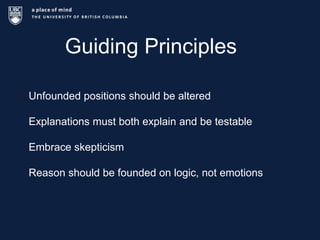
EuphemismGuiding PrinciplesUnfounded positions should be alteredExplanations must both explain and be testableEmbrace skepticismReason should be founded on logic, not emotions
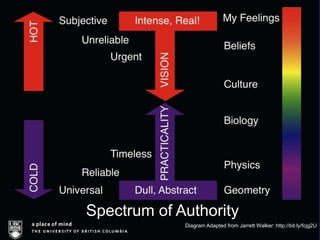
Spectrum of AuthorityDiagram Adapted from Jarrett Walker: http://bit.ly/fcjg2U
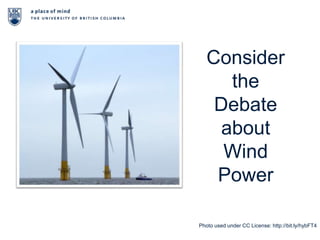
Consider the Debate about Wind PowerPhoto used under CC License: http://bit.ly/hybFT4
Insert PollGive an example of something that has hindered you from Critical Thinking in the past
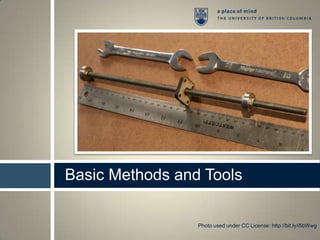
Basic Methods and ToolsPhoto used under CC License: http://bit.ly/i5bWwg
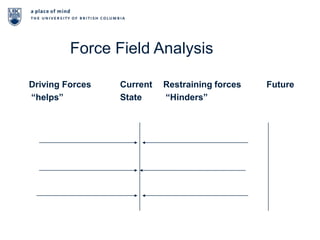
Force Field Analysis    Driving Forces		  Current 	Restraining forces   	   Future	“helps”				  State		 “Hinders”
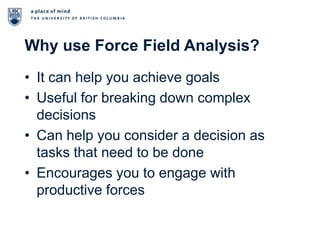
Why use Force Field Analysis? It can help you achieve goals
Useful for breaking down complex decisions
Can help you consider a decision as tasks that need to be done
Encourages you to engage with productive forces Photo used under CC License: http://bit.ly/e9akx1
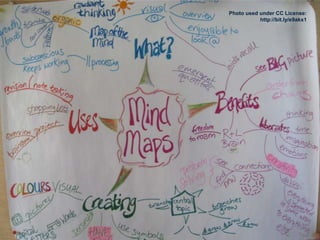
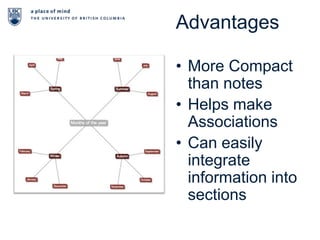
AdvantagesMore Compact than notesHelps make AssociationsCan easily integrate information into sections
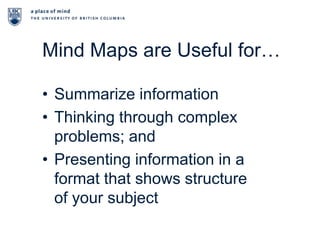
Mind Maps are Useful for…Summarize informationThinking through complex problems; and Presenting information in a format that shows structure of your subject
Advanced Methods and ToolsPhoto used under CC License: http://bit.ly/esLhY6
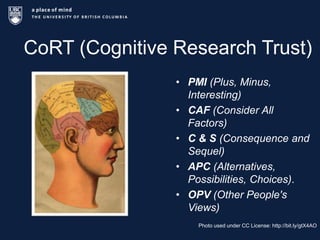
CoRT (Cognitive Research Trust)PMI (Plus, Minus, Interesting)CAF (Consider All Factors)C & S (Consequence and Sequel)APC (Alternatives, Possibilities, Choices).OPV (Other People's Views)Photo used under CC License: http://bit.ly/gtX4AO
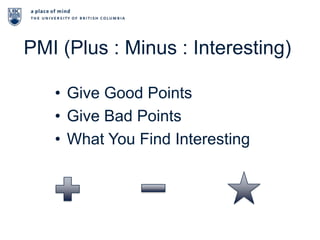
PMI (Plus : Minus : Interesting)Give Good PointsGive Bad PointsWhat You Find Interesting
CAF (Consider All Factors)Make a list of all factorsTry to see if others have left out factors
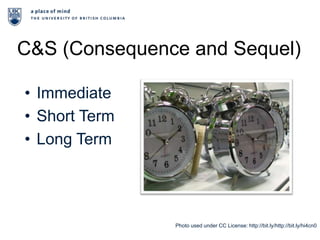
C&S (Consequence and Sequel)ImmediateShort TermLong TermPhoto used under CC License: http://bit.ly/http://bit.ly/hi4cn0
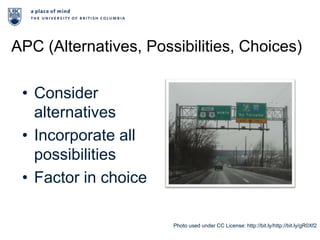
APC (Alternatives, Possibilities, Choices)Consider alternativesIncorporate all possibilitiesFactor in choicePhoto used under CC License: http://bit.ly/http://bit.ly/gR0Xf2
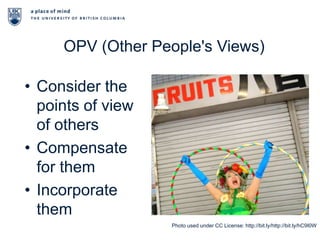
OPV (Other People's Views)Consider the points of view of othersCompensate for themIncorporate themPhoto used under CC License: http://bit.ly/http://bit.ly/hC9I0W
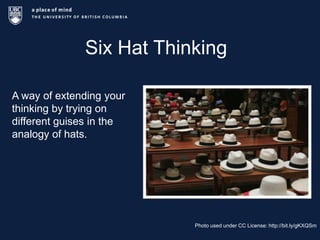
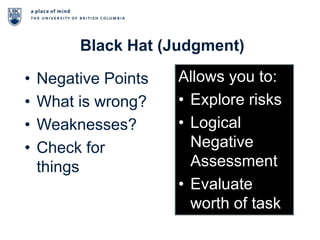
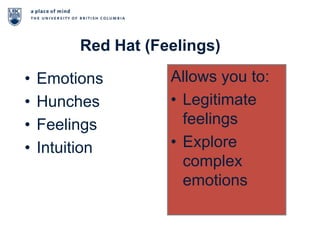
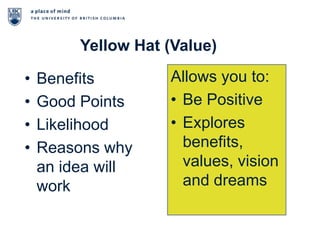
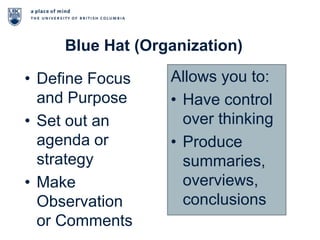
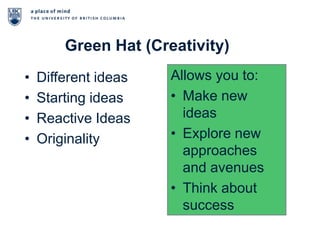
Six Hat ThinkingA way of extending your thinking by trying on different guises in the analogy of hats.Photo used under CC License: http://bit.ly/gKXQSm
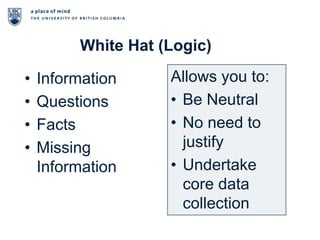
White Hat (Logic)Allows you to:Be NeutralNo need to justifyUndertake core data collectionInformation
Questions
Facts

critical_thinking_slides(strang_2011)

  • 1.
    UBC LIBRARY STUDENT SERVICESIRVINGK BARBER CENTRE FOR TEACHING,LEARNING CENTRE AND LEARNING TECHNOLOGYThe Online Workshop Series Presents:How to Think Critically
  • 2.
    INSERT POLL ONSTUDENT BACKGROUNDPhoto used under CC License: http://bit.ly/gD3qdw
  • 3.
    How to thinkCriticallyPhoto used under CC License: http://bit.ly/e9akx1
  • 4.
    What you’ll walkaway with today:1. Define what it means to engage in critical thought 2. Identify benefits of critical thinking3. Direct application of critical thinking strategies4. Know your individual preference for certain strategiesPhoto used under CC License: http://bit.ly/fTVbX6
  • 5.
    Insert PollCritical ThinkingInventory:Check which of the following actions you undertake at university:Do you seek to clearly understand your academic tasks before undertaking them?Do you create strategies for doing tasks and meeting goals?Do you think about techniques and strategies that you are good at, and that have worked for you in the past?Do you have confidence in your ability to understand academic requirements?Do you recognize when you may be off track or misunderstanding a task?Do you learn from each task about your strengths and weaknesses?Do you ask yourself about what you would like to learn about a topic?Are you able to determine the big picture - the overall concepts of a course?Can you determine the most important concepts and ideas?Do you ask yourself what is coming next, what the author or lecturer will say next?Do you visualize or diagram your work?
  • 6.
    What is CriticalThinking?Photo used under CC License: http://bit.ly/gD3qdw
  • 7.
    It is not…ThinkinghardExpending a lot of energySpending a lot of timePhoto used under CC License: http://bit.ly/e5R4Hi
  • 8.
    Critical Thinking is…Aset of skills that can be applied to any number of problems as opposed to an answer that only solves one problem.Photo used under CC License: http://bit.ly/gD3qdw
  • 9.
    We have barriersto overcome…Photo used under CC License: http://bit.ly/i0MT91
  • 10.
  • 11.
  • 12.
    Imposing Modern Valuesonto the PastResistance to ChangeXenophobia
  • 13.
  • 14.
  • 15.
    EuphemismGuiding PrinciplesUnfounded positionsshould be alteredExplanations must both explain and be testableEmbrace skepticismReason should be founded on logic, not emotions
  • 16.
    Spectrum of AuthorityDiagramAdapted from Jarrett Walker: http://bit.ly/fcjg2U
  • 17.
    Consider the Debateabout Wind PowerPhoto used under CC License: http://bit.ly/hybFT4
  • 18.
    Insert PollGive anexample of something that has hindered you from Critical Thinking in the past
  • 19.
    Basic Methods andToolsPhoto used under CC License: http://bit.ly/i5bWwg
  • 20.
    Force Field Analysis Driving Forces Current Restraining forces Future “helps” State “Hinders”
  • 21.
    Why use ForceField Analysis? It can help you achieve goals
  • 22.
    Useful for breakingdown complex decisions
  • 23.
    Can help youconsider a decision as tasks that need to be done
  • 24.
    Encourages you toengage with productive forces Photo used under CC License: http://bit.ly/e9akx1
  • 25.
    AdvantagesMore Compact thannotesHelps make AssociationsCan easily integrate information into sections
  • 26.
    Mind Maps areUseful for…Summarize informationThinking through complex problems; and Presenting information in a format that shows structure of your subject
  • 27.
    Advanced Methods andToolsPhoto used under CC License: http://bit.ly/esLhY6
  • 28.
    CoRT (Cognitive ResearchTrust)PMI (Plus, Minus, Interesting)CAF (Consider All Factors)C & S (Consequence and Sequel)APC (Alternatives, Possibilities, Choices).OPV (Other People's Views)Photo used under CC License: http://bit.ly/gtX4AO
  • 29.
    PMI (Plus :Minus : Interesting)Give Good PointsGive Bad PointsWhat You Find Interesting
  • 30.
    CAF (Consider AllFactors)Make a list of all factorsTry to see if others have left out factors
  • 31.
    C&S (Consequence andSequel)ImmediateShort TermLong TermPhoto used under CC License: http://bit.ly/http://bit.ly/hi4cn0
  • 32.
    APC (Alternatives, Possibilities,Choices)Consider alternativesIncorporate all possibilitiesFactor in choicePhoto used under CC License: http://bit.ly/http://bit.ly/gR0Xf2
  • 33.
    OPV (Other People'sViews)Consider the points of view of othersCompensate for themIncorporate themPhoto used under CC License: http://bit.ly/http://bit.ly/hC9I0W
  • 34.
    Six Hat ThinkingAway of extending your thinking by trying on different guises in the analogy of hats.Photo used under CC License: http://bit.ly/gKXQSm
  • 35.
    White Hat (Logic)Allowsyou to:Be NeutralNo need to justifyUndertake core data collectionInformation
  • 36.
  • 37.

Editor's Notes

  • #5 Insert your Picture in the Frame
  • #15 OR create your own example
  • #19 Use shortened URLs since they won’t be live links. Make sure to give Creative Commons attribution back to original Flickr slide.UBC header can be moved to the right side of slide if obscured on left. Try to leave current elements in place.
  • #37 Use shortened URLs since they won’t be live links. Make sure to give Creative Commons attribution back to original Flickr slide.UBC header can be moved to the right side of slide if obscured on left. Try to leave current elements in place.
  • #38 What are your thoughts about CoRT and Six Hat Thinking?