CRITICAL THINKING
JOHN ADKINS
KAYLA BECNEL
RACHEL HUTCHISON
KATIE KENDRICK
CHARACTERISTICS:
• Definition: "disciplined thinking that is clear, rational, open-minded,
and informed by evidence"
• Convergent and non-convergent thinking
• Assesses worth and validity
• Involves persistent analysis
IMPORTANCE:
• Necessary to succeed in higher education and the workplace
• Students are better able to understand the “why”
• Better analyze circumstances surrounding occurrences/differing viewpoints
• Forces students to look at information as a process
• Develops skills of recognition/prediction
• Evaluating information/sources
• Help students learn appropriate ways to use discretion/utilizing credible information
• This will in turn improve reading comprehension/problem-solving skills
• Develop a systematic way of thinking/learning/working
• Increase in Creativity, Performance, and Literacy
ROLE IN 21ST CENTURY:
• Effective learning through critical thinking (students):
• Asking questions
• Gathering/assessing relevant information
• Developing well-reasoned conclusions/solutions
• Effective communication
• Effective instruction through critical thinking (teachers):
• Deeply engaging content
• Focusing on fundamental/ powerful concepts
• Concrete/ abstract examples
• Explicitly spell out intellectual standards
STORYTELLING
• Creates an interest in learning by giving the students the ability to
narrate and create their own "movie"
• Gives the students control
• Makes learning more fun and exciting
• Allows for creativity
• Critical thinking is used in developing the narrative
YOUTUBE
• Allows students to be creative while engaging and learning a useful tool
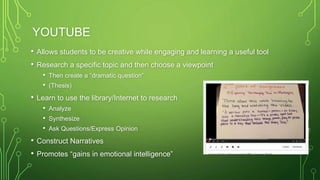
• Research a specific topic and then choose a viewpoint
• Then create a “dramatic question”
• (Thesis)
• Learn to use the library/Internet to research
• Analyze
• Synthesize
• Ask Questions/Express Opinion
• Construct Narratives
• Promotes “gains in emotional intelligence”
ZELLO
• A walkie-talkie app that can be downloaded with any smartphone, tablet, or PC
• A fast and easy way to communicate with students, parents, and teachers
• Record your voice and get a response within seconds
• Ask questions about tests, schedule parent-teacher conferences, or give out
homework assignments
• This can be used in life to stay connected with students, parents, and teachers on
an appropriate, professional level
• Critical Thinking:
• Thought provoking questions for the next day
FACEBOOK
• A social media site that can be used from your smartphone or computer.
• You can use it for your class to:
• Build a bond between two or more students.
• Build a bond between the instructor and the students.
• Upload assignments:
• Updates
• Changes
• Critical thinking:
• Posting videos that relate to topics discussed-our analysis of
that video
PODCASTS
• You can record a lecture using Podcast
• The benefits of recording lectures are:
• Reiterating what the teacher taught in class.
• If the student missed a day, they can play the recording.
• Benefits for the hearing and seeing impaired.
• Give extra information to benefit the student, but not as a requirement.
• Critical thinking:
• Theoretical questions
• Communicate answers back via Facebook
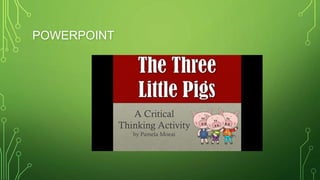
POWERPOINT
CONCLUSION
“The Important Thing Is To Not Stop Questioning. Curiosity Has Its Own Reasoning
For Existing.”
-Albert Einstein
WORKS CITED
Buchanan, A. (n.d.). In Integrating Critical Thinking Skills Into the Classroom.
Retrieved from http://www.accessexcellence.org/LC/TL/Buchanan/.
”Drive Belonging and Engagement in the Classroom”.Using Facebook.
Retrieved from http://www.marshall.edu
Elder,Linda. and Paul,Richard. Journal of Developmental Education.
Fall 2001.Vol.25.Issue 1,p.40.2p.
http://dictionary.reference.com/browse/Critical+thinking.
”Podcasts in Education.” Retrieved from: www.marshall.edu
Robin,Bernard.The Educational Uses of Digital Storytelling.
Retrieved from www.marshall.edu.
Simmons, N.Characteristics of Critical Thinking and Decision Making.
retrieved from http://www.studymode.com/essays/Characteristics-Of-Critical-Thinking-987071.html.
”The Importance of Teaching Critical Thinking”.Global Digital Citizen. Web. 3 Oct. 2014.

Critical Thinking

  • 1.
    CRITICAL THINKING JOHN ADKINS KAYLABECNEL RACHEL HUTCHISON KATIE KENDRICK
  • 2.
    CHARACTERISTICS: • Definition: "disciplinedthinking that is clear, rational, open-minded, and informed by evidence" • Convergent and non-convergent thinking • Assesses worth and validity • Involves persistent analysis
  • 3.
    IMPORTANCE: • Necessary tosucceed in higher education and the workplace • Students are better able to understand the “why” • Better analyze circumstances surrounding occurrences/differing viewpoints • Forces students to look at information as a process • Develops skills of recognition/prediction • Evaluating information/sources • Help students learn appropriate ways to use discretion/utilizing credible information • This will in turn improve reading comprehension/problem-solving skills • Develop a systematic way of thinking/learning/working • Increase in Creativity, Performance, and Literacy
  • 4.
    ROLE IN 21STCENTURY: • Effective learning through critical thinking (students): • Asking questions • Gathering/assessing relevant information • Developing well-reasoned conclusions/solutions • Effective communication • Effective instruction through critical thinking (teachers): • Deeply engaging content • Focusing on fundamental/ powerful concepts • Concrete/ abstract examples • Explicitly spell out intellectual standards
  • 5.
    STORYTELLING • Creates aninterest in learning by giving the students the ability to narrate and create their own "movie" • Gives the students control • Makes learning more fun and exciting • Allows for creativity • Critical thinking is used in developing the narrative
  • 6.
    YOUTUBE • Allows studentsto be creative while engaging and learning a useful tool • Research a specific topic and then choose a viewpoint • Then create a “dramatic question” • (Thesis) • Learn to use the library/Internet to research • Analyze • Synthesize • Ask Questions/Express Opinion • Construct Narratives • Promotes “gains in emotional intelligence”
  • 7.
    ZELLO • A walkie-talkieapp that can be downloaded with any smartphone, tablet, or PC • A fast and easy way to communicate with students, parents, and teachers • Record your voice and get a response within seconds • Ask questions about tests, schedule parent-teacher conferences, or give out homework assignments • This can be used in life to stay connected with students, parents, and teachers on an appropriate, professional level • Critical Thinking: • Thought provoking questions for the next day
  • 8.
    FACEBOOK • A socialmedia site that can be used from your smartphone or computer. • You can use it for your class to: • Build a bond between two or more students. • Build a bond between the instructor and the students. • Upload assignments: • Updates • Changes • Critical thinking: • Posting videos that relate to topics discussed-our analysis of that video
  • 9.
    PODCASTS • You canrecord a lecture using Podcast • The benefits of recording lectures are: • Reiterating what the teacher taught in class. • If the student missed a day, they can play the recording. • Benefits for the hearing and seeing impaired. • Give extra information to benefit the student, but not as a requirement. • Critical thinking: • Theoretical questions • Communicate answers back via Facebook
  • 10.
  • 12.
    CONCLUSION “The Important ThingIs To Not Stop Questioning. Curiosity Has Its Own Reasoning For Existing.” -Albert Einstein
  • 13.
    WORKS CITED Buchanan, A.(n.d.). In Integrating Critical Thinking Skills Into the Classroom. Retrieved from http://www.accessexcellence.org/LC/TL/Buchanan/. ”Drive Belonging and Engagement in the Classroom”.Using Facebook. Retrieved from http://www.marshall.edu Elder,Linda. and Paul,Richard. Journal of Developmental Education. Fall 2001.Vol.25.Issue 1,p.40.2p. http://dictionary.reference.com/browse/Critical+thinking. ”Podcasts in Education.” Retrieved from: www.marshall.edu Robin,Bernard.The Educational Uses of Digital Storytelling. Retrieved from www.marshall.edu. Simmons, N.Characteristics of Critical Thinking and Decision Making. retrieved from http://www.studymode.com/essays/Characteristics-Of-Critical-Thinking-987071.html. ”The Importance of Teaching Critical Thinking”.Global Digital Citizen. Web. 3 Oct. 2014.

Editor's Notes

  • #4 Higher Education/Work force: forced to teach skills for critical thinking-(not being taught before college level) Understanding the “why” instead of just the occurrence itself (or the facts) Deeper understanding-analyzing the current events surrounding the occurrence and differing viewpoints- Culture/timeofbirth/place of birth/particular beliefs Form associations-based on who’s around us/associations w/ people with a viewpoint,values, and taboos—it’s important to understand why Science-enhancing critical thinking allowed students to enhance their understanding of scientific process which in turn encouraged them to become more experimental/questioning different aspects Reading-increase in comprehension/assessment scores
  • #7 In order to create their dramatic question for their video they have to explore and think critically about all the surrounding facts Why this topic-what does it mean to you? What is your view? Why?
  • #12  Poll Title: Make up a new ending to the story. https://www.polleverywhere.com/free_text_polls/DVx1oWW7vIC9FAu