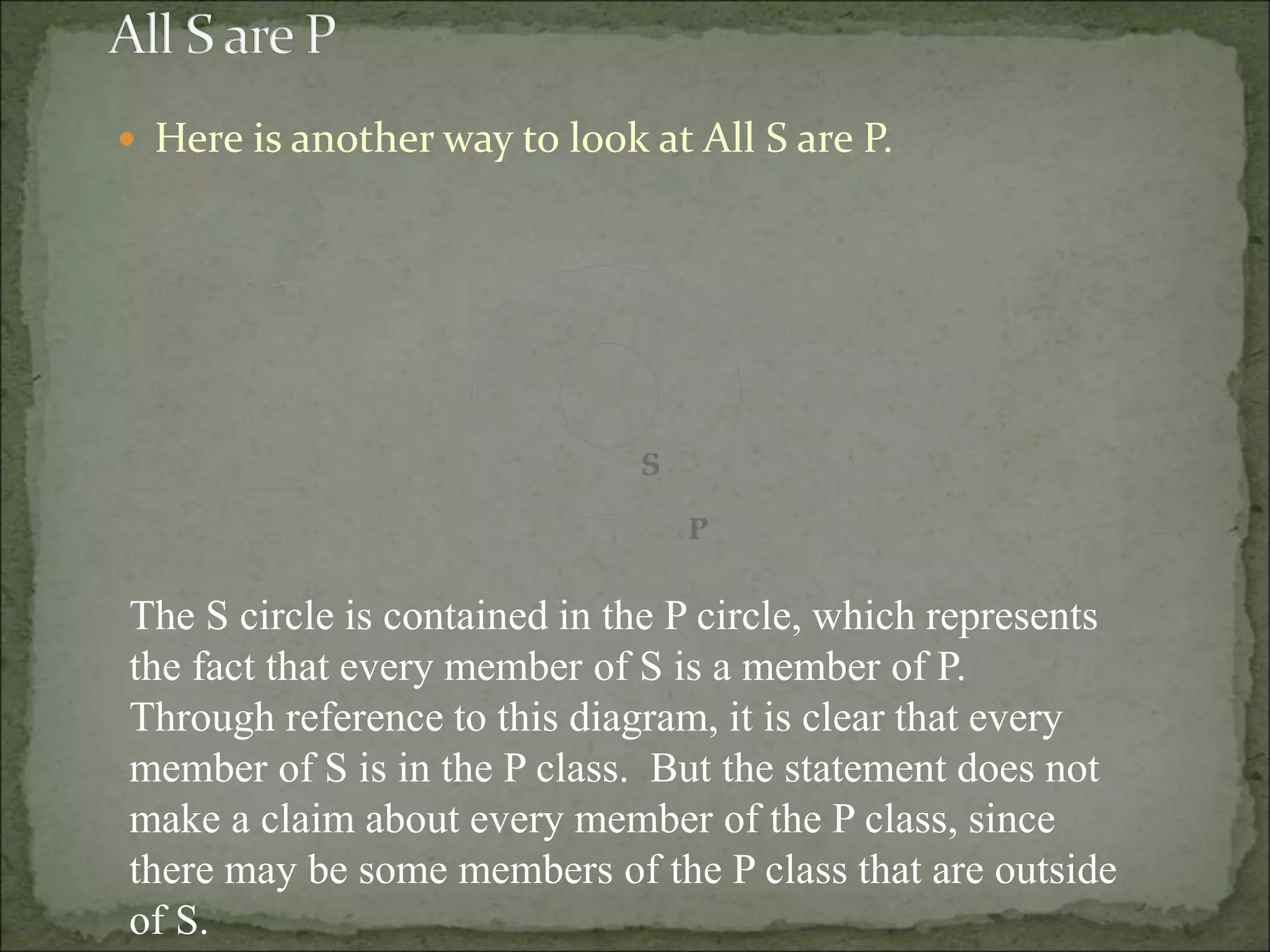
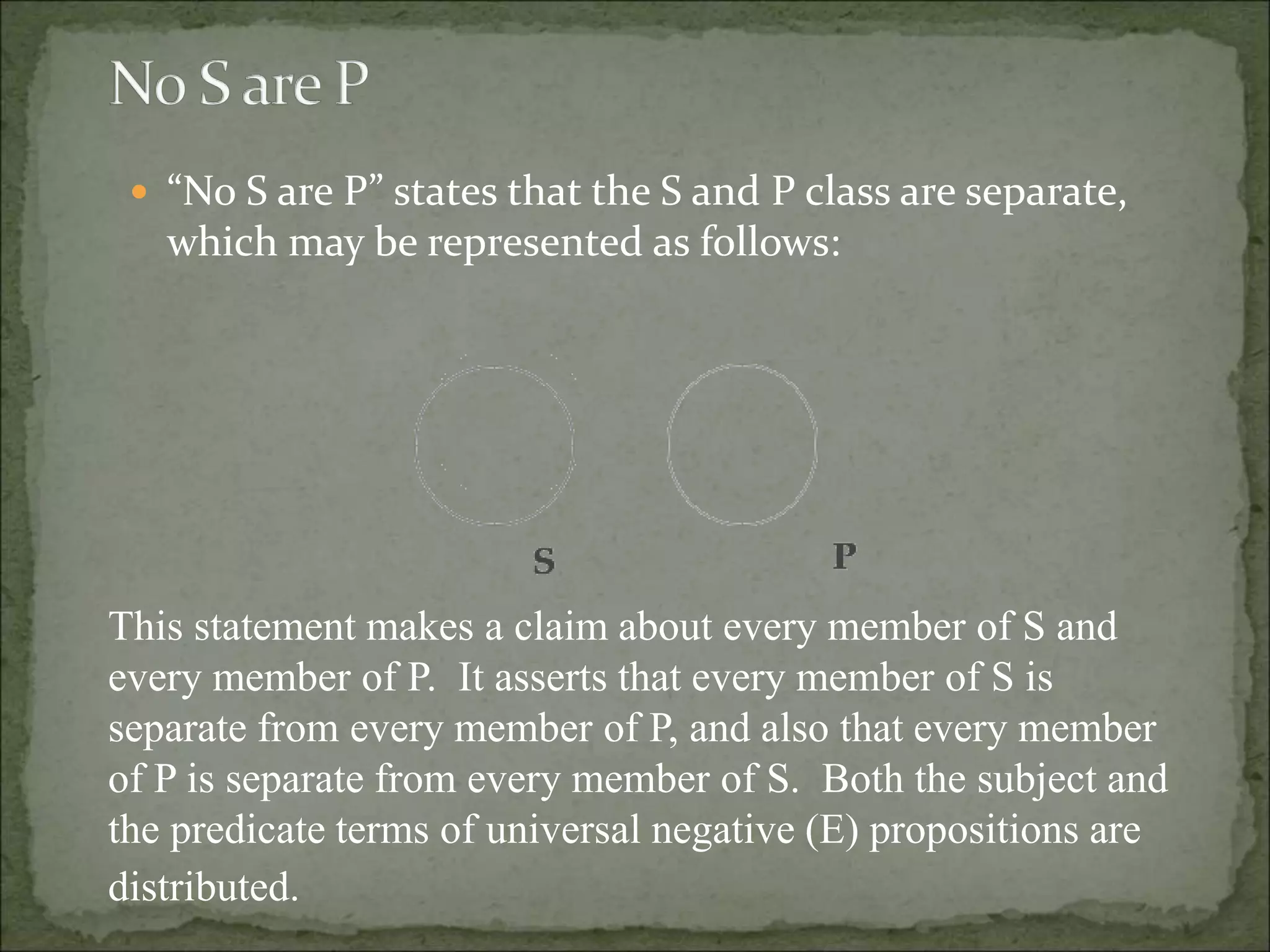
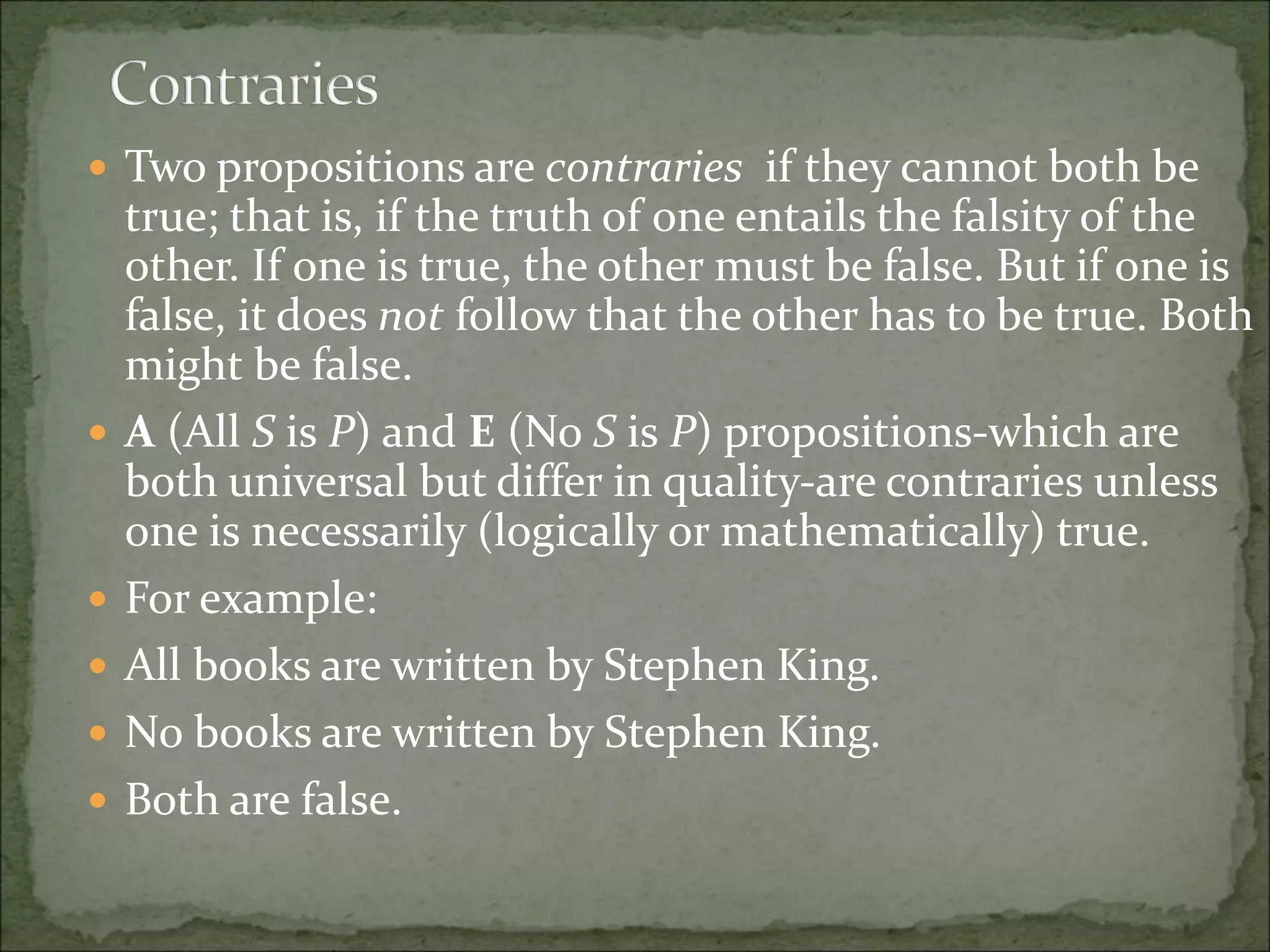
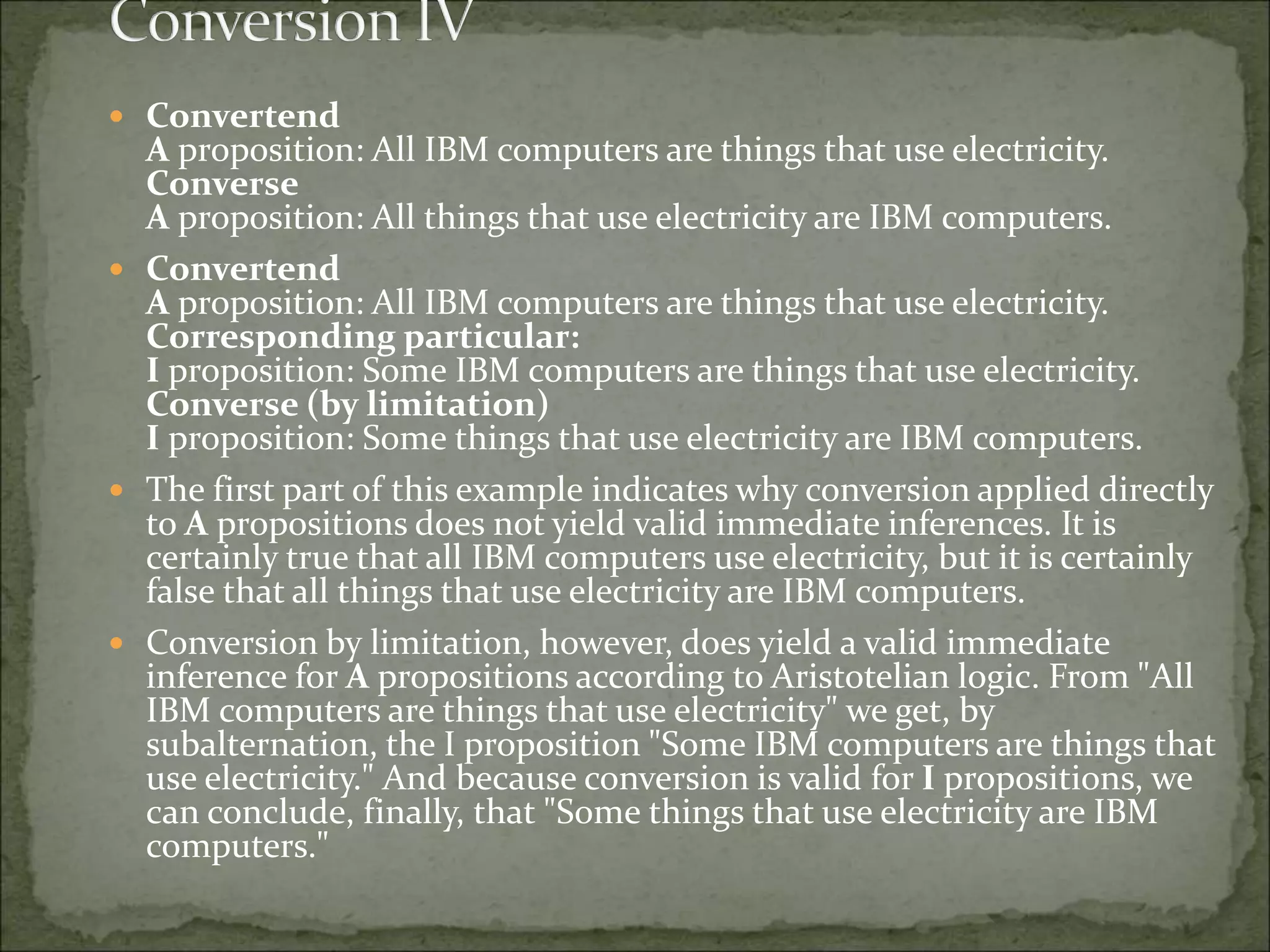
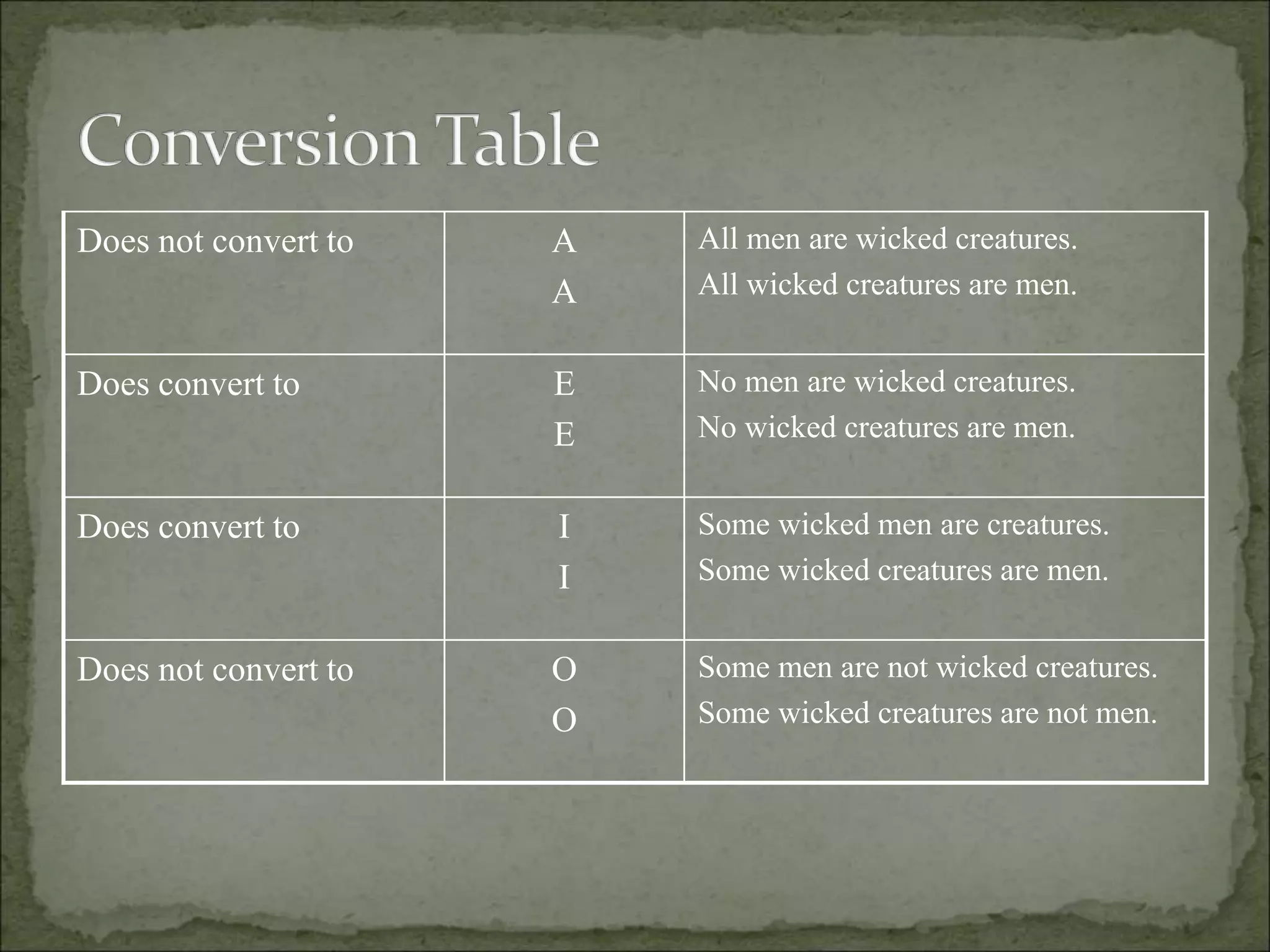
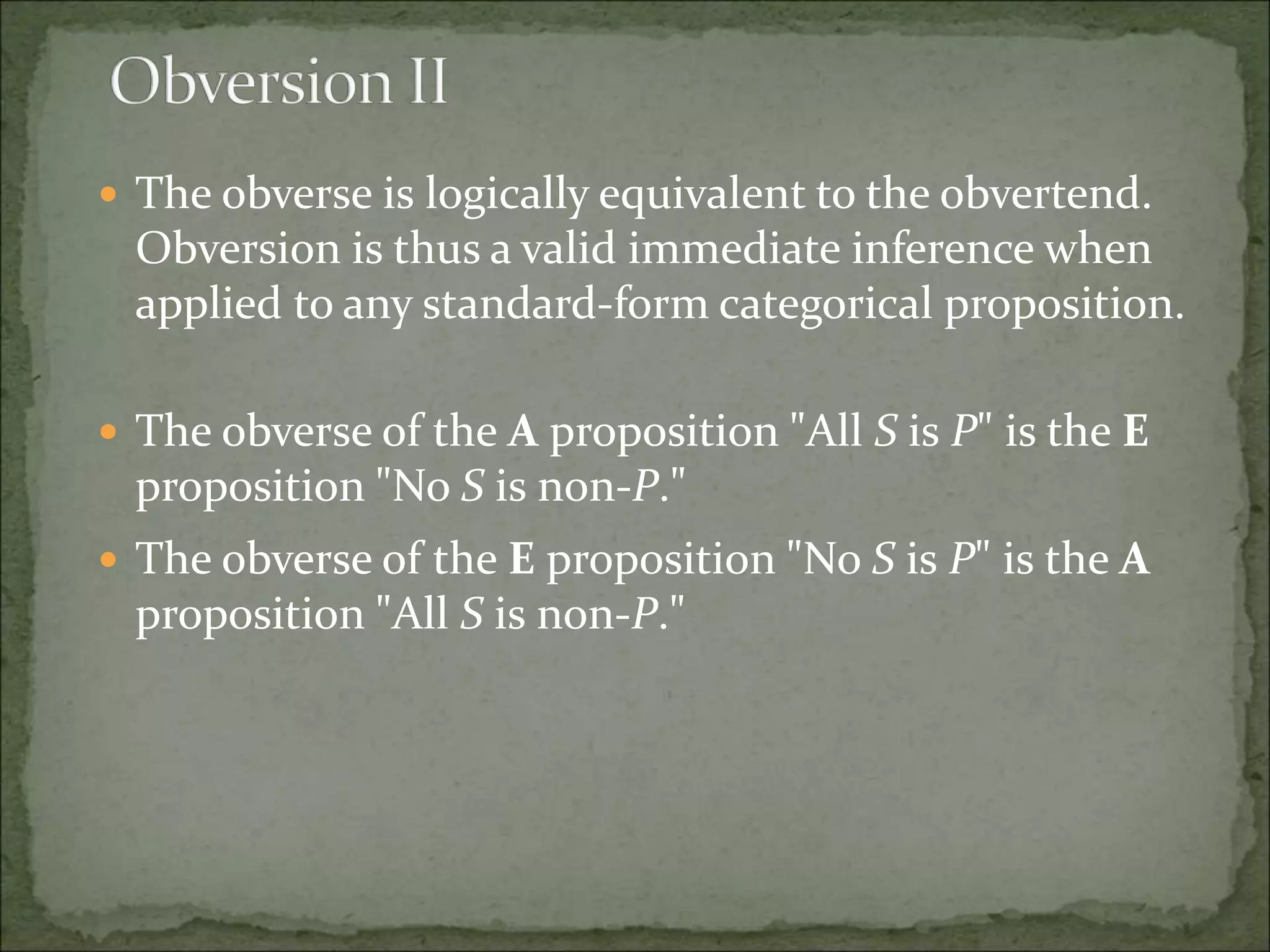
This document discusses Aristotle's four categorical propositions: A, E, I, and O. It explains that these propositions classify relationships between subject and predicate terms into universal affirmative (A), universal negative (E), particular affirmative (I), and particular negative (O). The document provides examples of each proposition type and discusses how they distribute or do not distribute the subject and predicate terms. It also explains the logical relationships between the different proposition types, including how they can be contradictories, contraries, or subcontraries based on whether their truth values allow both to be true/false.