A Presentation on
As a Partial Fulfillment to :
Planning Education for Change (EDPM 515)
M. Ed. First Semester 2020
Presented to:
Dr. Ram Hari Dhakal
Rainbow International College,
Dallu, Kathmandu
4.3. Criteria of Policy Options
Presented By:
Birendra Prasad Shrestha
Roll No: 12
1/26/2021 1
Content
4.3.4. Criteria of Policy Options
4.3.4.1. Desirability
4.3.4.2. Affordability
4.3.4.3. Feasibility
(A Presentation to Rainbow International College, Dallu, Kathmandu)
2
1/26/2021
a. 4.3.1. Introduction to Education Policy
4.3.2. Sources of Education Policy
4.3.2.1. Internal Sources
4.3.2.2. External Sources
4.3.2.3. Other Sources
4.3.3. Process of Policy Formation in Nepal
b. Conclusion
c. References
d. Questions TU)
• Education in broader sense, means
everything that is learned by an individual in
a society.
1/26/2021 3
(A Presentation to Rainbow International College, Dallu, Kathmandu)
• “Education” is connected with the verb
educere = to bring forth
• “Education” is derived from Latin word educare = to
bring up
Introduction to Education Policy
1/26/2021 4
Policy
A policy is a verbal, written or implied basic
guide to action that is adopted and
followed by a manager. – G. R. Terry
(A Presentation to Rainbow International College, Dallu, Kathmandu)
Policy is consciously acknowledged rules of
conduct that guide administrative decisions. -
Dimock & Dimock
1/26/2021 5
• Principles and Government Policies in the
educational sphere
(A Presentation to Rainbow International College, Dallu, Kathmandu)
Contd … Intro to Edu Policy
• Collection of LAWS and RULES that govern the
operation of education systems
1/26/2021 6
Sources of Educational Policies
(A Presentation to Rainbow International College, Dallu, Kathmandu)
1. Internal Sources
2. External Sources
3. Other Sources
The Three Sources of
Educational Policies:-
1/26/2021 7
Internal Sources of
Educational Policies
• Constitution, Laws, Rules and Regulations, Parliamentary
Decisions, Court Decisions,
• Recommendations of education commissions, plans, projects,
(A Presentation to Rainbow International College, Dallu, Kathmandu)
• Agendas of Political Parties and Civil Society,
• Outcomes of Various Political, Social, Economic and
Cultural Movements
• Prescriptions / attitudes of Pressure Groups, INGOs & NGOs
• Issues raised by Education Related Professional Organizations
1/26/2021 8
Examples of Internal Source
of Educational Policies
• Constitution of Nepal, Education Act and Rules and
Regulation, Distance Learning Policy
• Special Need Education Policy
(A Presentation to Rainbow International College, Dallu, Kathmandu)
• National Education Policy 2076
• School Sector Reform Project
• Food For Education Programme
• Second Higher Education Project
1/26/2021 9
External Sources of
Educational Policies
• International Laws
• Charter and Declarations of the United Nations
(A Presentation to Rainbow International College, Dallu, Kathmandu)
• Declarations made by the Nation in the International
Forums
• Agreements, Treaties, Contracts and MOUs signed with
the International Agencies including INGOS
1/26/2021 10
Other Sources of
Educational Policies
• Thoughts, Philosophies, and Educational
Contributions of Various Philosophers
• Issues raised by the Media
(A Presentation to Rainbow International College, Dallu, Kathmandu)
1/26/2021 11
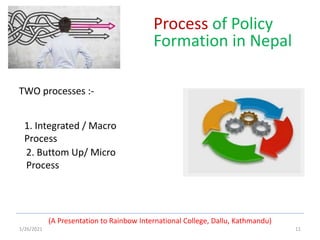
Process of Policy
Formation in Nepal
(A Presentation to Rainbow International College, Dallu, Kathmandu)
TWO processes :-
2. Buttom Up/ Micro
Process
1. Integrated / Macro
Process
1/26/2021 12
Contd … Process … Formation
(A Presentation to Rainbow International College, Dallu, Kathmandu)
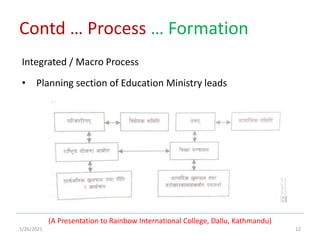
Integrated / Macro Process
• Planning section of Education Ministry leads
1/26/2021 13
Contd … Process … Formation
(A Presentation to Rainbow International College, Dallu, Kathmandu)
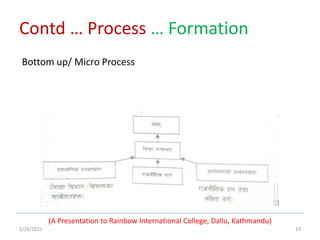
Bottom up/ Micro Process
1/26/2021 14
Criteria of Educational Policy
Options
(A Presentation to Rainbow International College, Dallu, Kathmandu)
1. Desirability
2. Affordability
3. Feasibility
The Three Criteria :-
1/26/2021 15
(A Presentation to Rainbow International College, Dallu, Kathmandu)
Desirability
Determinants of Success or Effectiveness of Policies:-
• Address the want, necessity, desire of the stakeholders
• Ensure the Inclusiveness & Participation of the locals
• Develop Ownership in the Stakeholders/ Locals
• Fulfill the Needs of the Stakeholders
Desirability is a key criteria of Educational Policy Options.
1/26/2021 16
(A Presentation to Rainbow International College, Dallu, Kathmandu)
Desirability Contd …
Why Desirability a key Criterion?
• Be based on public necessity
• Affect the Stakeholders
• Have Output useful to Stakeholders
• Cultivate a sense of Ownership in Stakeholders
• Produce Human Resource needed for the nation
• Address Socio, economic and political change of a nation
Because Policies & Plans must:-
1/26/2021 17
(A Presentation to Rainbow International College, Dallu, Kathmandu)
Affordability
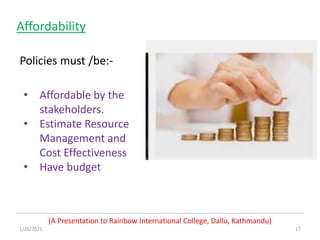
• Affordable by the
stakeholders.
• Estimate Resource
Management and
Cost Effectiveness
• Have budget
Policies must /be:-
1/26/2021 18
(A Presentation to Rainbow International College, Dallu, Kathmandu)
Affordability Contd …
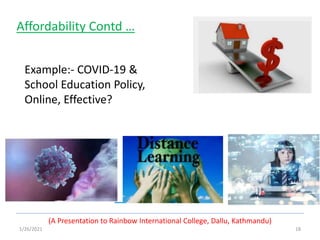
Example:- COVID-19 &
School Education Policy,
Online, Effective?
1/26/2021 19
(A Presentation to Rainbow International College, Dallu, Kathmandu)
Affordability Contd …
Why Affordability another key Criterion?
• Available Resources
• Stakeholders’ Affordability
• Funding for the Plan
• Financially feasible or not?
Because Policies & Plans must Analyze :-
1/26/2021 20
(A Presentation to Rainbow International College, Dallu, Kathmandu)
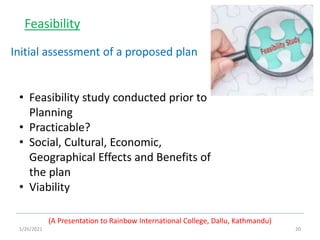
Feasibility
• Feasibility study conducted prior to
Planning
• Practicable?
• Social, Cultural, Economic,
Geographical Effects and Benefits of
the plan
• Viability
Initial assessment of a proposed plan
1/26/2021 21
(A Presentation to Rainbow International College, Dallu, Kathmandu)
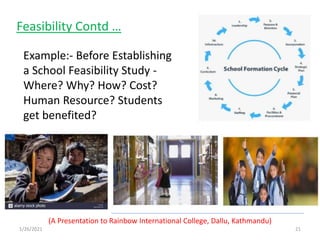
Feasibility Contd …
Example:- Before Establishing
a School Feasibility Study -
Where? Why? How? Cost?
Human Resource? Students
get benefited?
1/26/2021 22
(A Presentation to Rainbow International College, Dallu, Kathmandu)
Feasibility Contd …
Why Feasibility another key Criterion?
• Geography
• Available Resources
• Stakeholders’ Affordability,
Benefit, Wants to be fulfilled
• Socio, Economic, Cultural Impact
• Financially feasible or not?
Because Policies & Plans must Analyze :-
1/26/2021 23
(A Presentation to Rainbow International College, Dallu, Kathmandu)
Conclusion
Making Educational Plans and
Planning Educational Policy
involves the study of Source of
Educational Policies, Process of
Policy Formulation and Criteria of
Policy Options that include
Desirability, Affordability and
Feasibility
1/26/2021 24
(A Presentation to Rainbow International College, Dallu, Kathmandu)
References
Shrestha, Chandrabahadur et al(2077), Planning Education
for Change, Bhundipuran Publication, Bagbazar,
Kathmandu
(www.google.com and many other sites for the images)
1/26/2021 25
(A Presentation to Rainbow International College, Dallu, Kathmandu)
Questions Asked in the TU Board Exam
1. State the criteria of policy options of educational
planning. (5 marks 2075)
2. State the criteria of policy options with reference to
planning education for change. (10 marks 2076)
1/26/2021 26
Any Queries
(A Presentation to Rainbow International College, Dallu, Kathmandu)
1/26/2021 27
(A Presentation to Rainbow International College, Dallu, Kathmandu)

Criteria for policy options

  • 1.
    A Presentation on Asa Partial Fulfillment to : Planning Education for Change (EDPM 515) M. Ed. First Semester 2020 Presented to: Dr. Ram Hari Dhakal Rainbow International College, Dallu, Kathmandu 4.3. Criteria of Policy Options Presented By: Birendra Prasad Shrestha Roll No: 12 1/26/2021 1
  • 2.
    Content 4.3.4. Criteria ofPolicy Options 4.3.4.1. Desirability 4.3.4.2. Affordability 4.3.4.3. Feasibility (A Presentation to Rainbow International College, Dallu, Kathmandu) 2 1/26/2021 a. 4.3.1. Introduction to Education Policy 4.3.2. Sources of Education Policy 4.3.2.1. Internal Sources 4.3.2.2. External Sources 4.3.2.3. Other Sources 4.3.3. Process of Policy Formation in Nepal b. Conclusion c. References d. Questions TU)
  • 3.
    • Education inbroader sense, means everything that is learned by an individual in a society. 1/26/2021 3 (A Presentation to Rainbow International College, Dallu, Kathmandu) • “Education” is connected with the verb educere = to bring forth • “Education” is derived from Latin word educare = to bring up Introduction to Education Policy
  • 4.
    1/26/2021 4 Policy A policyis a verbal, written or implied basic guide to action that is adopted and followed by a manager. – G. R. Terry (A Presentation to Rainbow International College, Dallu, Kathmandu) Policy is consciously acknowledged rules of conduct that guide administrative decisions. - Dimock & Dimock
  • 5.
    1/26/2021 5 • Principlesand Government Policies in the educational sphere (A Presentation to Rainbow International College, Dallu, Kathmandu) Contd … Intro to Edu Policy • Collection of LAWS and RULES that govern the operation of education systems
  • 6.
    1/26/2021 6 Sources ofEducational Policies (A Presentation to Rainbow International College, Dallu, Kathmandu) 1. Internal Sources 2. External Sources 3. Other Sources The Three Sources of Educational Policies:-
  • 7.
    1/26/2021 7 Internal Sourcesof Educational Policies • Constitution, Laws, Rules and Regulations, Parliamentary Decisions, Court Decisions, • Recommendations of education commissions, plans, projects, (A Presentation to Rainbow International College, Dallu, Kathmandu) • Agendas of Political Parties and Civil Society, • Outcomes of Various Political, Social, Economic and Cultural Movements • Prescriptions / attitudes of Pressure Groups, INGOs & NGOs • Issues raised by Education Related Professional Organizations
  • 8.
    1/26/2021 8 Examples ofInternal Source of Educational Policies • Constitution of Nepal, Education Act and Rules and Regulation, Distance Learning Policy • Special Need Education Policy (A Presentation to Rainbow International College, Dallu, Kathmandu) • National Education Policy 2076 • School Sector Reform Project • Food For Education Programme • Second Higher Education Project
  • 9.
    1/26/2021 9 External Sourcesof Educational Policies • International Laws • Charter and Declarations of the United Nations (A Presentation to Rainbow International College, Dallu, Kathmandu) • Declarations made by the Nation in the International Forums • Agreements, Treaties, Contracts and MOUs signed with the International Agencies including INGOS
  • 10.
    1/26/2021 10 Other Sourcesof Educational Policies • Thoughts, Philosophies, and Educational Contributions of Various Philosophers • Issues raised by the Media (A Presentation to Rainbow International College, Dallu, Kathmandu)
  • 11.
    1/26/2021 11 Process ofPolicy Formation in Nepal (A Presentation to Rainbow International College, Dallu, Kathmandu) TWO processes :- 2. Buttom Up/ Micro Process 1. Integrated / Macro Process
  • 12.
    1/26/2021 12 Contd …Process … Formation (A Presentation to Rainbow International College, Dallu, Kathmandu) Integrated / Macro Process • Planning section of Education Ministry leads
  • 13.
    1/26/2021 13 Contd …Process … Formation (A Presentation to Rainbow International College, Dallu, Kathmandu) Bottom up/ Micro Process
  • 14.
    1/26/2021 14 Criteria ofEducational Policy Options (A Presentation to Rainbow International College, Dallu, Kathmandu) 1. Desirability 2. Affordability 3. Feasibility The Three Criteria :-
  • 15.
    1/26/2021 15 (A Presentationto Rainbow International College, Dallu, Kathmandu) Desirability Determinants of Success or Effectiveness of Policies:- • Address the want, necessity, desire of the stakeholders • Ensure the Inclusiveness & Participation of the locals • Develop Ownership in the Stakeholders/ Locals • Fulfill the Needs of the Stakeholders Desirability is a key criteria of Educational Policy Options.
  • 16.
    1/26/2021 16 (A Presentationto Rainbow International College, Dallu, Kathmandu) Desirability Contd … Why Desirability a key Criterion? • Be based on public necessity • Affect the Stakeholders • Have Output useful to Stakeholders • Cultivate a sense of Ownership in Stakeholders • Produce Human Resource needed for the nation • Address Socio, economic and political change of a nation Because Policies & Plans must:-
  • 17.
    1/26/2021 17 (A Presentationto Rainbow International College, Dallu, Kathmandu) Affordability • Affordable by the stakeholders. • Estimate Resource Management and Cost Effectiveness • Have budget Policies must /be:-
  • 18.
    1/26/2021 18 (A Presentationto Rainbow International College, Dallu, Kathmandu) Affordability Contd … Example:- COVID-19 & School Education Policy, Online, Effective?
  • 19.
    1/26/2021 19 (A Presentationto Rainbow International College, Dallu, Kathmandu) Affordability Contd … Why Affordability another key Criterion? • Available Resources • Stakeholders’ Affordability • Funding for the Plan • Financially feasible or not? Because Policies & Plans must Analyze :-
  • 20.
    1/26/2021 20 (A Presentationto Rainbow International College, Dallu, Kathmandu) Feasibility • Feasibility study conducted prior to Planning • Practicable? • Social, Cultural, Economic, Geographical Effects and Benefits of the plan • Viability Initial assessment of a proposed plan
  • 21.
    1/26/2021 21 (A Presentationto Rainbow International College, Dallu, Kathmandu) Feasibility Contd … Example:- Before Establishing a School Feasibility Study - Where? Why? How? Cost? Human Resource? Students get benefited?
  • 22.
    1/26/2021 22 (A Presentationto Rainbow International College, Dallu, Kathmandu) Feasibility Contd … Why Feasibility another key Criterion? • Geography • Available Resources • Stakeholders’ Affordability, Benefit, Wants to be fulfilled • Socio, Economic, Cultural Impact • Financially feasible or not? Because Policies & Plans must Analyze :-
  • 23.
    1/26/2021 23 (A Presentationto Rainbow International College, Dallu, Kathmandu) Conclusion Making Educational Plans and Planning Educational Policy involves the study of Source of Educational Policies, Process of Policy Formulation and Criteria of Policy Options that include Desirability, Affordability and Feasibility
  • 24.
    1/26/2021 24 (A Presentationto Rainbow International College, Dallu, Kathmandu) References Shrestha, Chandrabahadur et al(2077), Planning Education for Change, Bhundipuran Publication, Bagbazar, Kathmandu (www.google.com and many other sites for the images)
  • 25.
    1/26/2021 25 (A Presentationto Rainbow International College, Dallu, Kathmandu) Questions Asked in the TU Board Exam 1. State the criteria of policy options of educational planning. (5 marks 2075) 2. State the criteria of policy options with reference to planning education for change. (10 marks 2076)
  • 26.
    1/26/2021 26 Any Queries (APresentation to Rainbow International College, Dallu, Kathmandu)
  • 27.
    1/26/2021 27 (A Presentationto Rainbow International College, Dallu, Kathmandu)