Crime Scene Basics
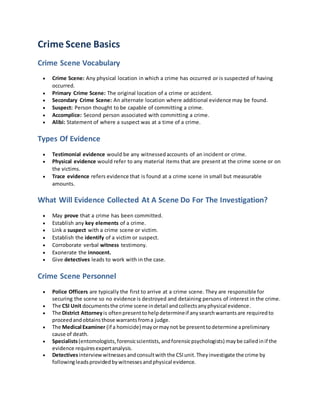
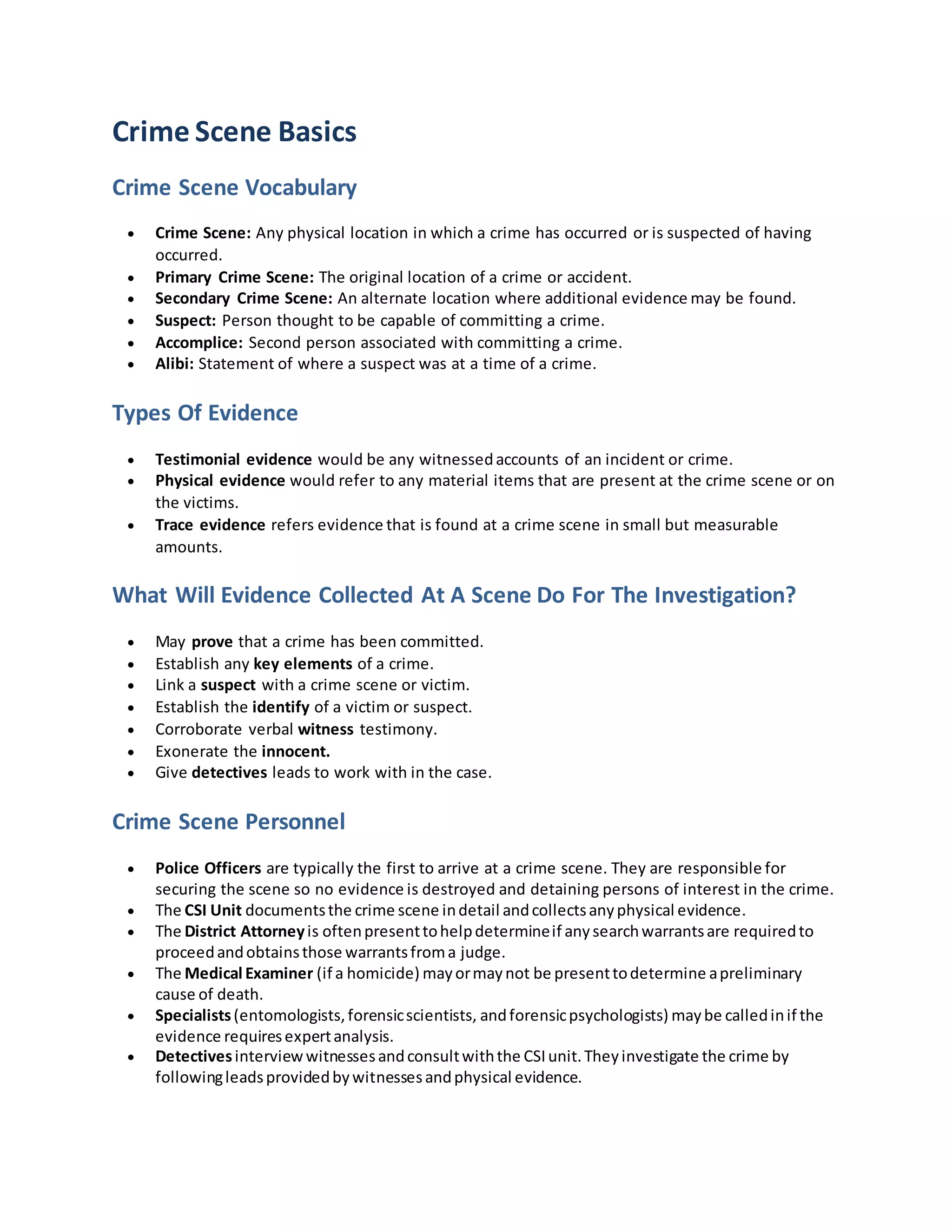
Crime Scene Vocabulary
 Crime Scene: Any physical location in which a crime has occurred or is suspected of having
occurred.
 Primary Crime Scene: The original location of a crime or accident.
 Secondary Crime Scene: An alternate location where additional evidence may be found.
 Suspect: Person thought to be capable of committing a crime.
 Accomplice: Second person associated with committing a crime.
 Alibi: Statement of where a suspect was at a time of a crime.
Types Of Evidence
 Testimonial evidence would be any witnessedaccounts of an incident or crime.
 Physical evidence would refer to any material items that are present at the crime scene or on
the victims.
 Trace evidence refers evidence that is found at a crime scene in small but measurable
amounts.
What Will Evidence Collected At A Scene Do For The Investigation?
 May prove that a crime has been committed.
 Establish any key elements of a crime.
 Link a suspect with a crime scene or victim.
 Establish the identify of a victim or suspect.
 Corroborate verbal witness testimony.
 Exonerate the innocent.
 Give detectives leads to work with in the case.
Crime Scene Personnel
 Police Officers are typically the first to arrive at a crime scene. They are responsible for
securing the scene so no evidence is destroyed and detaining persons of interest in the crime.
 The CSI Unit documentsthe crime scene indetail andcollectsanyphysical evidence.
 The District Attorneyis oftenpresenttohelpdetermineif anysearchwarrantsare requiredto
proceedandobtainsthose warrantsfroma judge.
 The Medical Examiner (if a homicide) mayormaynot be presenttodetermine apreliminary
cause of death.
 Specialists(entomologists,forensicscientists, andforensicpsychologists) maybe calledinif the
evidence requiresexpertanalysis.
 Detectivesinterviewwitnessesandconsultwiththe CSIunit.Theyinvestigate the crime by
followingleadsprovidedbywitnessesandphysical evidence.
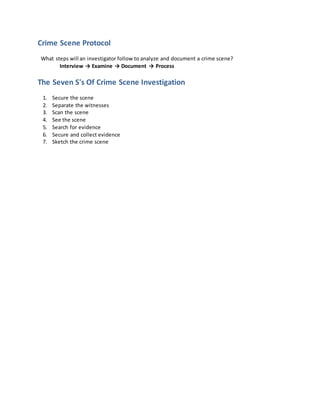
Crime Scene Protocol
What steps will an investigator follow to analyze and document a crime scene?
Interview → Examine → Document → Process
The Seven S's Of Crime Scene Investigation
1. Secure the scene
2. Separate the witnesses
3. Scan the scene
4. See the scene
5. Search for evidence
6. Secure and collect evidence
7. Sketch the crime scene

Crime scene Basics Sheet

  • 1.
    Crime Scene Basics CrimeScene Vocabulary  Crime Scene: Any physical location in which a crime has occurred or is suspected of having occurred.  Primary Crime Scene: The original location of a crime or accident.  Secondary Crime Scene: An alternate location where additional evidence may be found.  Suspect: Person thought to be capable of committing a crime.  Accomplice: Second person associated with committing a crime.  Alibi: Statement of where a suspect was at a time of a crime. Types Of Evidence  Testimonial evidence would be any witnessedaccounts of an incident or crime.  Physical evidence would refer to any material items that are present at the crime scene or on the victims.  Trace evidence refers evidence that is found at a crime scene in small but measurable amounts. What Will Evidence Collected At A Scene Do For The Investigation?  May prove that a crime has been committed.  Establish any key elements of a crime.  Link a suspect with a crime scene or victim.  Establish the identify of a victim or suspect.  Corroborate verbal witness testimony.  Exonerate the innocent.  Give detectives leads to work with in the case. Crime Scene Personnel  Police Officers are typically the first to arrive at a crime scene. They are responsible for securing the scene so no evidence is destroyed and detaining persons of interest in the crime.  The CSI Unit documentsthe crime scene indetail andcollectsanyphysical evidence.  The District Attorneyis oftenpresenttohelpdetermineif anysearchwarrantsare requiredto proceedandobtainsthose warrantsfroma judge.  The Medical Examiner (if a homicide) mayormaynot be presenttodetermine apreliminary cause of death.  Specialists(entomologists,forensicscientists, andforensicpsychologists) maybe calledinif the evidence requiresexpertanalysis.  Detectivesinterviewwitnessesandconsultwiththe CSIunit.Theyinvestigate the crime by followingleadsprovidedbywitnessesandphysical evidence.
  • 2.
    Crime Scene Protocol Whatsteps will an investigator follow to analyze and document a crime scene? Interview → Examine → Document → Process The Seven S's Of Crime Scene Investigation 1. Secure the scene 2. Separate the witnesses 3. Scan the scene 4. See the scene 5. Search for evidence 6. Secure and collect evidence 7. Sketch the crime scene