Download to read offline


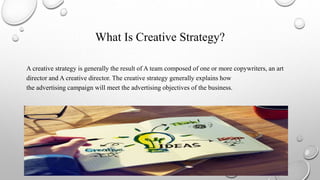






The creative strategy is developed by a team to explain how an advertising campaign will meet business objectives. This strategy is documented in a creative brief covering the target audience, objective, key message, and reason to believe. Three theoretical frameworks help evaluate marketing communication: the hierarchy of effects model clarifies objectives and execution; means-end theory suggests linking messages to desired consumer values; and the elaboration likelihood model examines persuasion routes. Marketing appeals can be rational, focusing on price, performance, or scarcity, or emotional using fear, humor, or other techniques to gain attention and promote brand loyalty. Humor appeals work by capturing attention, holding it, winning awards, providing high recall, and creating likeable ads


