High Performance Engineering Teams
The Technical Practices
Lars Thorup
ZeaLake Software Consulting


October 18, 2011
Who is Lars Thorup?
●   Managing software
    development
    ●   10 years of agile practices
    ●   15 years of automated testing

●   Introducing agile and
    automated testing with clients

●   Assessing software projects
    and companies

●   Founder of 2 agile consulting
    companies
    ●   12+ senior consultants
    ●   10+ years
What is a High Performing Team?
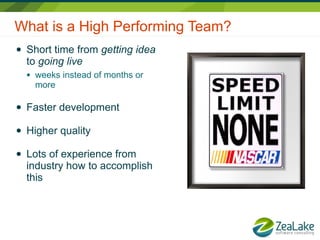
●   Short time from getting idea
    to going live
    ●   weeks instead of months or
        more

●   Faster development

●   Higher quality

●   Lots of experience from
    industry how to accomplish
    this
How to become faster?
●   Stop doing non-productive things!
    ●   Manual regression testing
    ●   Bug hunting and debugging
    ●   Implementing more than required
    ●   Out-of-date documentation
    ●   Piling up bug reports
    ●   Rediscovering of knowledge
    ●   Working on stuff not in the value stream
How to increase quality?
●   Test more thoroughly

●   Test more often

●   Test cheaper
Automate!
●   Software companies tell
    their clients to automate to
    increase productivity and
    quality

●   This advice also applies to
    the software development
    itself!
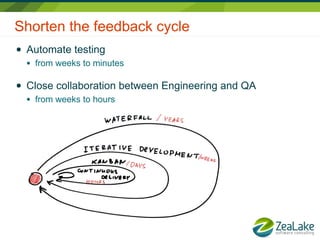
Shorten the feedback cycle
●   Automate testing
    ●   from weeks to minutes

●   Close collaboration between Engineering and QA
    ●   from weeks to hours
Don't track bugs - fix them!
●   Real bugs are always top priority
    ●   Fix before working on anything on the backlog

●   Decide if an issue is a real bug or an (unwanted) feature

●   Prioritize (unwanted) features into the backlog

●   Purge your backlog
Automate the build
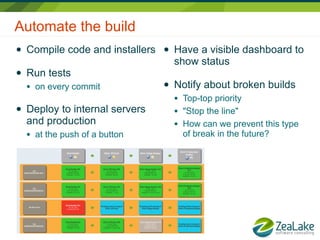
●   Compile code and installers   ●   Have a visible dashboard to
                                      show status
●   Run tests
    ●   on every commit           ●   Notify about broken builds
                                      ●   Top-top priority
●   Deploy to internal servers        ●   "Stop the line"
    and production                    ●   How can we prevent this type
    ●   at the push of a button           of break in the future?
Automate the testing
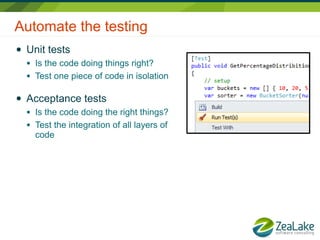
●   Unit tests
    ●   Is the code doing things right?
    ●   Test one piece of code in isolation

●   Acceptance tests
    ●   Is the code doing the right things?
    ●   Test the integration of all layers of
        code
Automated unit testing
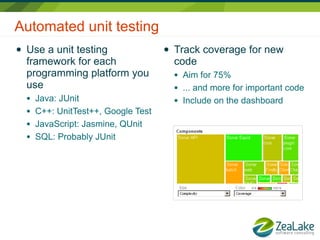
●   Use a unit testing                 ●   Track coverage for new
    framework for each                     code
    programming platform you               ●   Aim for 75%
    use                                    ●   ... and more for important code
    ●   Java: JUnit                        ●   Include on the dashboard
    ●   C++: UnitTest++, Google Test
    ●   JavaScript: Jasmine, QUnit
    ●   SQL: Probably JUnit
Automated acceptance testing
●   Test through the UI if you must
    ●   ...as little as reasonably possible

●   Test just below the UI if you can
    ●   Use your existing unit testing framework

●   Consider an acceptance testing framework
    ●   like Cucumber
Test Driven Development
●   Write tests before writing the code to make them pass

●   Not a testing technique!
    ●   but a design technique

●   Makes it easy to write tests
    ●   keeping coverage high

●   Makes the design flexible

●   Improves communication between Engineering and QA

●   Speeds up development
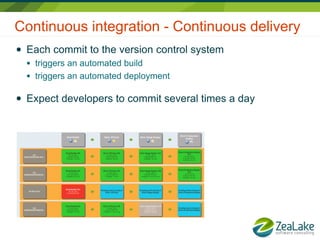
Continuous integration - Continuous delivery
●   Each commit to the version control system
    ●   triggers an automated build
    ●   triggers an automated deployment

●   Expect developers to commit several times a day
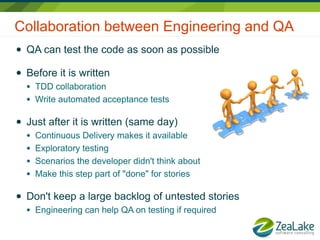
Collaboration between Engineering and QA
●   QA can test the code as soon as possible

●   Before it is written
    ●   TDD collaboration
    ●   Write automated acceptance tests

●   Just after it is written (same day)
    ●   Continuous Delivery makes it available
    ●   Exploratory testing
    ●   Scenarios the developer didn't think about
    ●   Make this step part of "done" for stories

●   Don't keep a large backlog of untested stories
    ●   Engineering can help QA on testing if required
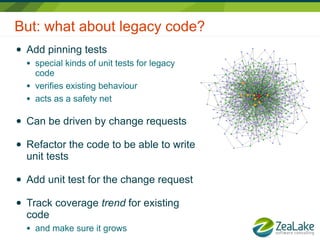
But: what about legacy code?
●   Add pinning tests
    ●   special kinds of unit tests for legacy
        code
    ●   verifies existing behaviour
    ●   acts as a safety net

●   Can be driven by change requests

●   Refactor the code to be able to write
    unit tests

●   Add unit test for the change request

●   Track coverage trend for existing
    code
    ●   and make sure it grows
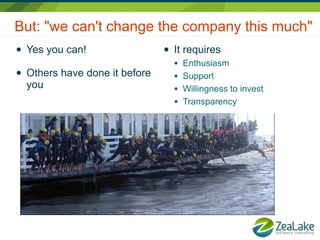
But: "we can't change the company this much"
●   Yes you can!                 ●   It requires
                                     ●   Enthusiasm
●   Others have done it before       ●   Support
    you                              ●   Willingness to invest
                                     ●   Transparency
But: <your question here>
References
●   "Continuous Delivery: Reliable Software Releases through
    Build, Test, and Deployment Automation" by Jez Humble
    and David Farley

●   Local software companies following these practices with
    success
    ●   Wealthfront, Palo Alto
    ●   IMVU, Mountain View
    ●   Salesforce, San Francisco
    ●   Pivotal Labs, San Francisco
    ●   ...

High Performance Software Engineering Teams

  • 1.
    High Performance EngineeringTeams The Technical Practices Lars Thorup ZeaLake Software Consulting October 18, 2011
  • 2.
    Who is LarsThorup? ● Managing software development ● 10 years of agile practices ● 15 years of automated testing ● Introducing agile and automated testing with clients ● Assessing software projects and companies ● Founder of 2 agile consulting companies ● 12+ senior consultants ● 10+ years
  • 3.
    What is aHigh Performing Team? ● Short time from getting idea to going live ● weeks instead of months or more ● Faster development ● Higher quality ● Lots of experience from industry how to accomplish this
  • 4.
    How to becomefaster? ● Stop doing non-productive things! ● Manual regression testing ● Bug hunting and debugging ● Implementing more than required ● Out-of-date documentation ● Piling up bug reports ● Rediscovering of knowledge ● Working on stuff not in the value stream
  • 5.
    How to increasequality? ● Test more thoroughly ● Test more often ● Test cheaper
  • 6.
    Automate! ● Software companies tell their clients to automate to increase productivity and quality ● This advice also applies to the software development itself!
  • 7.
    Shorten the feedbackcycle ● Automate testing ● from weeks to minutes ● Close collaboration between Engineering and QA ● from weeks to hours
  • 8.
    Don't track bugs- fix them! ● Real bugs are always top priority ● Fix before working on anything on the backlog ● Decide if an issue is a real bug or an (unwanted) feature ● Prioritize (unwanted) features into the backlog ● Purge your backlog
  • 9.
    Automate the build ● Compile code and installers ● Have a visible dashboard to show status ● Run tests ● on every commit ● Notify about broken builds ● Top-top priority ● Deploy to internal servers ● "Stop the line" and production ● How can we prevent this type ● at the push of a button of break in the future?
  • 10.
    Automate the testing ● Unit tests ● Is the code doing things right? ● Test one piece of code in isolation ● Acceptance tests ● Is the code doing the right things? ● Test the integration of all layers of code
  • 11.
    Automated unit testing ● Use a unit testing ● Track coverage for new framework for each code programming platform you ● Aim for 75% use ● ... and more for important code ● Java: JUnit ● Include on the dashboard ● C++: UnitTest++, Google Test ● JavaScript: Jasmine, QUnit ● SQL: Probably JUnit
  • 12.
    Automated acceptance testing ● Test through the UI if you must ● ...as little as reasonably possible ● Test just below the UI if you can ● Use your existing unit testing framework ● Consider an acceptance testing framework ● like Cucumber
  • 13.
    Test Driven Development ● Write tests before writing the code to make them pass ● Not a testing technique! ● but a design technique ● Makes it easy to write tests ● keeping coverage high ● Makes the design flexible ● Improves communication between Engineering and QA ● Speeds up development
  • 14.
    Continuous integration -Continuous delivery ● Each commit to the version control system ● triggers an automated build ● triggers an automated deployment ● Expect developers to commit several times a day
  • 15.
    Collaboration between Engineeringand QA ● QA can test the code as soon as possible ● Before it is written ● TDD collaboration ● Write automated acceptance tests ● Just after it is written (same day) ● Continuous Delivery makes it available ● Exploratory testing ● Scenarios the developer didn't think about ● Make this step part of "done" for stories ● Don't keep a large backlog of untested stories ● Engineering can help QA on testing if required
  • 16.
    But: what aboutlegacy code? ● Add pinning tests ● special kinds of unit tests for legacy code ● verifies existing behaviour ● acts as a safety net ● Can be driven by change requests ● Refactor the code to be able to write unit tests ● Add unit test for the change request ● Track coverage trend for existing code ● and make sure it grows
  • 17.
    But: "we can'tchange the company this much" ● Yes you can! ● It requires ● Enthusiasm ● Others have done it before ● Support you ● Willingness to invest ● Transparency
  • 18.
  • 19.
    References ● "Continuous Delivery: Reliable Software Releases through Build, Test, and Deployment Automation" by Jez Humble and David Farley ● Local software companies following these practices with success ● Wealthfront, Palo Alto ● IMVU, Mountain View ● Salesforce, San Francisco ● Pivotal Labs, San Francisco ● ...