COVID-19 and Time
 Brain is time
 Heart is time
 Lung is time
 Kidney is time
 Liver is time
Infection is distance and TIME
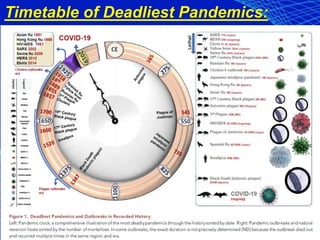
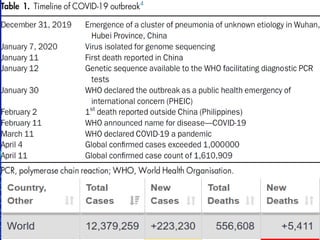
Timetable of Deadliest Pandemics:
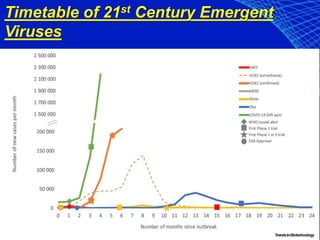
Timetable of 21st Century Emergent
Viruses
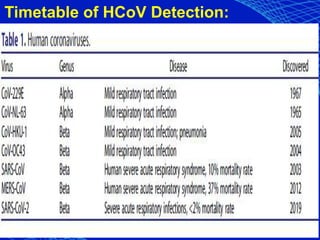
Timetable of HCoV Detection:
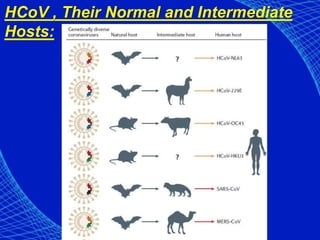
HCoV , Their Normal and Intermediate
Hosts:
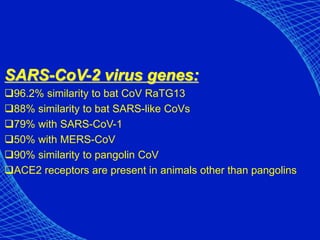
SARS-CoV-2 virus genes:
96.2% similarity to bat CoV RaTG13
88% similarity to bat SARS-like CoVs
79% with SARS-CoV-1
50% with MERS-CoV
90% similarity to pangolin CoV
ACE2 receptors are present in animals other than pangolins
I didn't search PubMed for the last 12
hours, The data I present may be out of
date
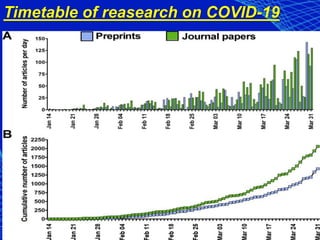
Timetable of reasearch on COVID-19
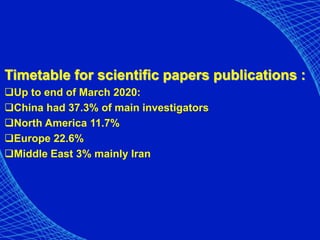
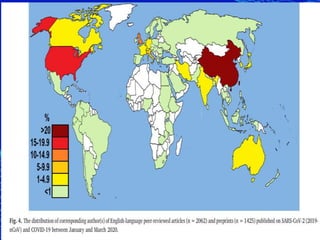
Timetable for scientific papers publications :
Up to end of March 2020:
China had 37.3% of main investigators
North America 11.7%
Europe 22.6%
Middle East 3% mainly Iran
Timetable for scientific papers
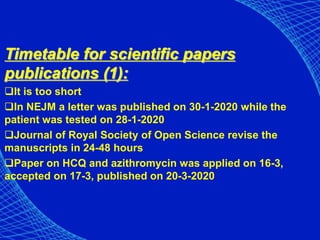
publications (1):
It is too short
In NEJM a letter was published on 30-1-2020 while the
patient was tested on 28-1-2020
Journal of Royal Society of Open Science revise the
manuscripts in 24-48 hours
Paper on HCQ and azithromycin was applied on 16-3,
accepted on 17-3, published on 20-3-2020
Timetable for scientific papers
publications (2):
The rigorous peer-review standards and editorial practices
are the core to ensure high quality research and best way to
avoid the dissemination of erroneous, inaccurate or
inconclusive data
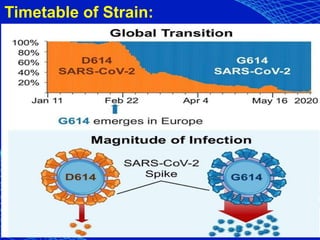
Timetable of Strain:
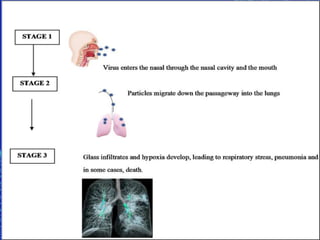
Timetable for pathogenesis:
Stage 1: Asymptomatic state (initial 1–2 days of infection)
The inhaled virus SARS-CoV-2 likely binds to epithelial cells
in the nasal cavity and starts replicating
Stage 2: Upper airway and conducting airway response
(next few days) The virus propagates and migrates down the
respiratory tract along the conducting airways, clinically
manifest
Stage 3: Hypoxia, ground glass infiltrates, and progression
to ARDS Unfortunately, about 20% of the infected patients will
progress to stage 3
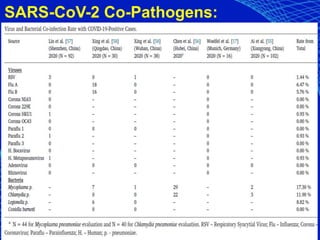
SARS-CoV-2 Co-Pathogens:
Incubation Period
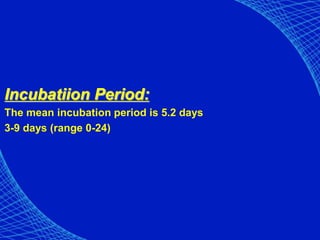
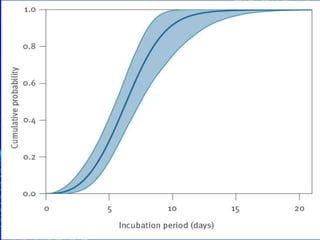
Incubatiion Period:
The mean incubation period is 5.2 days
3-9 days (range 0-24)
Mode of transmission
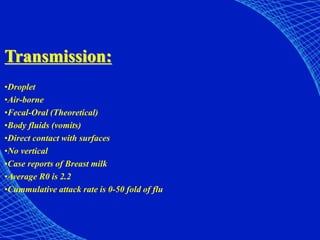
Transmission:
•Droplet
•Air-borne
•Fecal-Oral (Theoretical)
•Body fluids (vomits)
•Direct contact with surfaces
•No vertical
•Case reports of Breast milk
•Average R0 is 2.2
•Cummulative attack rate is 0-50 fold of flu
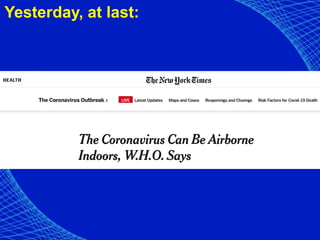
Yesterday, at last:
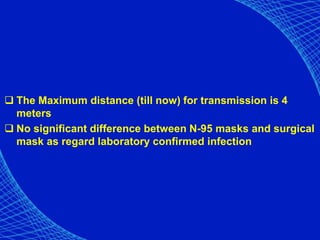
 The Maximum distance (till now) for transmission is 4
meters
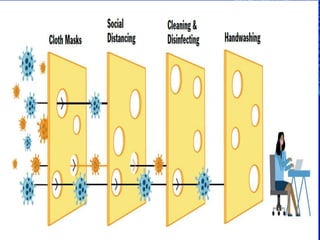
 No significant difference between N-95 masks and surgical
mask as regard laboratory confirmed infection
Timetable of Symptoms and disease
course
No evidence of SARS-CoV-2 before the end of March
2020 in samples of patients with suspected CAP was
seen in Germany
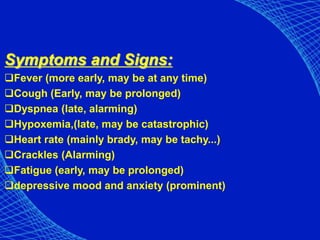
Symptoms and Signs:
Fever (more early, may be at any time)
Cough (Early, may be prolonged)
Dyspnea (late, alarming)
Hypoxemia,(late, may be catastrophic)
Heart rate (mainly brady, may be tachy...)
Crackles (Alarming)
Fatigue (early, may be prolonged)
depressive mood and anxiety (prominent)
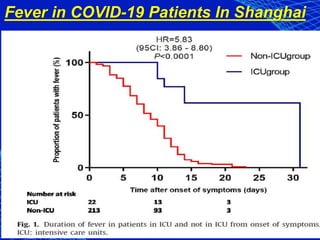
Fever in COVID-19 Patients In Shanghai
Low-grade fever during convalescence is an atypical
symptom of COVID-19. These cases are not rare, but the
mechanism and outcome of low-grade fever during
convalescence is not yet completely clear.
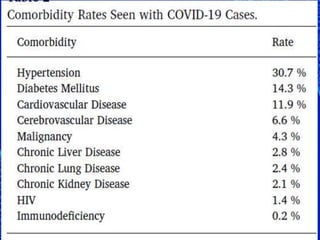
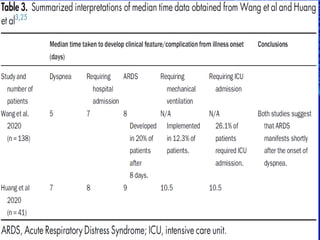
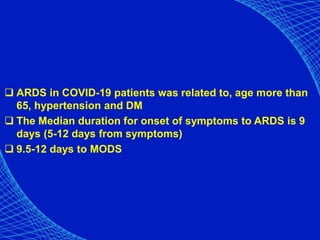
 ARDS in COVID-19 patients was related to, age more than
65, hypertension and DM
 The Median duration for onset of symptoms to ARDS is 9
days (5-12 days from symptoms)
 9.5-12 days to MODS
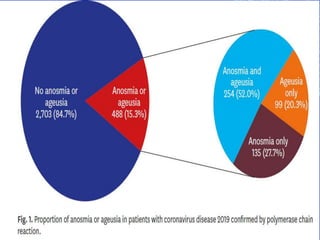
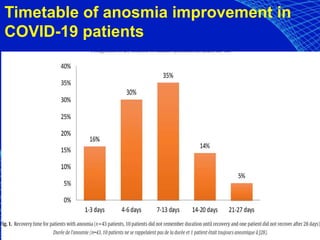
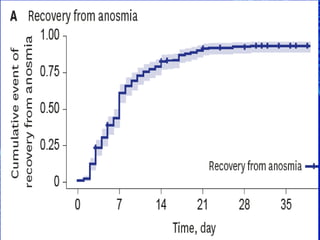
Timetable of anosmia improvement in
COVID-19 patients
Post COVID-19 symptoms (18% were
free, 44% worsened QOL) (Italy, 143
patients)
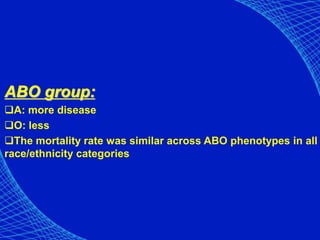
ABO group:
A: more disease
O: less
The mortality rate was similar across ABO phenotypes in all
race/ethnicity categories
CT of the Chest
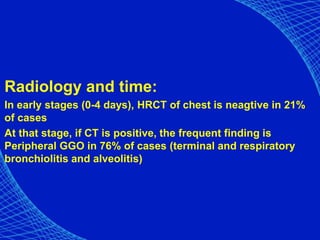
Radiology and time:
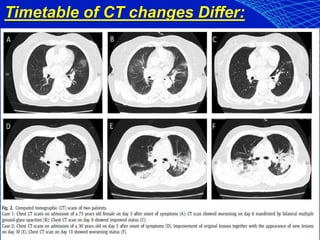
In early stages (0-4 days), HRCT of chest is neagtive in 21%
of cases
At that stage, if CT is positive, the frequent finding is
Peripheral GGO in 76% of cases (terminal and respiratory
bronchiolitis and alveolitis)
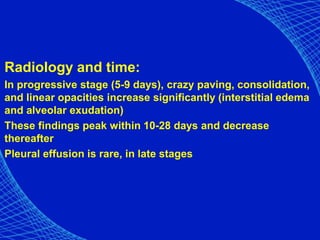
Radiology and time:
In progressive stage (5-9 days), crazy paving, consolidation,
and linear opacities increase significantly (interstitial edema
and alveolar exudation)
These findings peak within 10-28 days and decrease
thereafter
Pleural effusion is rare, in late stages
Timetable of CT changes Differ:
Timetable of Serological tests
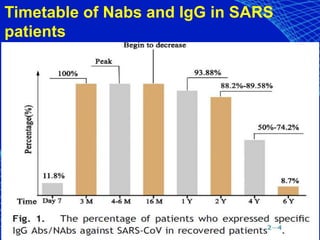
Timetable of Nabs and IgG in SARS
patients
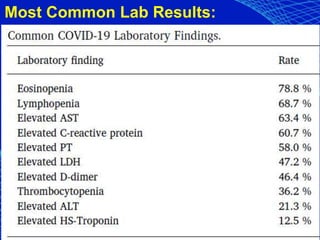
Most Common Lab Results:
Causes of lymphopenia in COVID-19:
1- Lymphocyte infection without replication leading to cell
death
2- Release of inhibitory cytokines eg IL-10
3- Immune cell redistribution
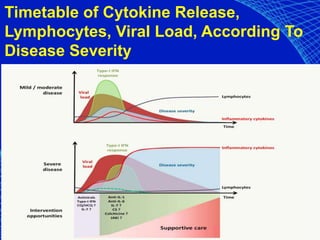
Timetable of Cytokine Release,
Lymphocytes, Viral Load, According To
Disease Severity
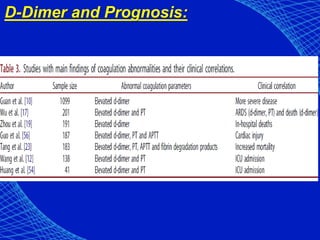
D-Dimer and Prognosis:
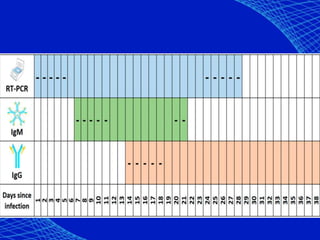
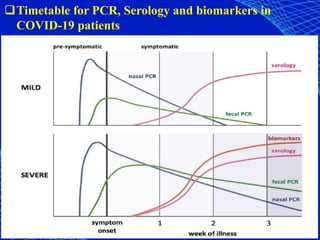
Timetable for PCR, Serology and biomarkers in
COVID-19 patients
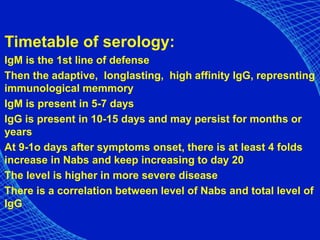
Timetable of serology:
IgM is the 1st line of defense
Then the adaptive, longlasting, high affinity IgG, represnting
immunological memmory
IgM is present in 5-7 days
IgG is present in 10-15 days and may persist for months or
years
At 9-1o days after symptoms onset, there is at least 4 folds
increase in Nabs and keep increasing to day 20
The level is higher in more severe disease
There is a correlation between level of Nabs and total level of
IgG
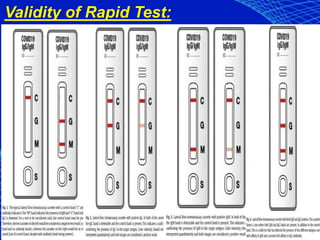
Validity of Rapid Test:
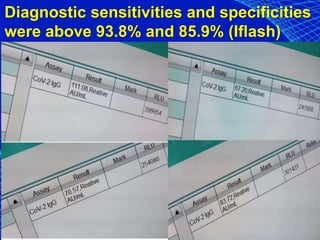
Diagnostic sensitivities and specificities
were above 93.8% and 85.9% (Iflash)
Timetable for viral shedding and
infectivity
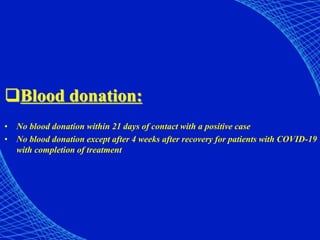
Blood donation:
• No blood donation within 21 days of contact with a positive case
• No blood donation except after 4 weeks after recovery for patients with COVID-19
with completion of treatment
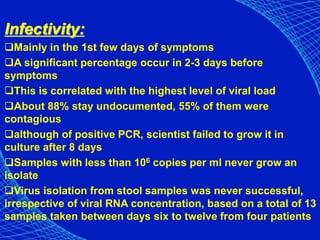
Infectivity:
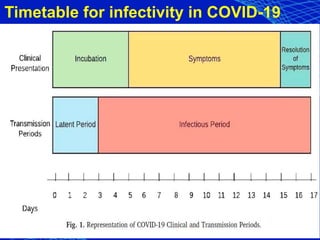
Mainly in the 1st few days of symptoms
A significant percentage occur in 2-3 days before
symptoms
This is correlated with the highest level of viral load
About 88% stay undocumented, 55% of them were
contagious
although of positive PCR, scientist failed to grow it in
culture after 8 days
Samples with less than 106 copies per ml never grow an
isolate
Virus isolation from stool samples was never successful,
irrespective of viral RNA concentration, based on a total of 13
samples taken between days six to twelve from four patients
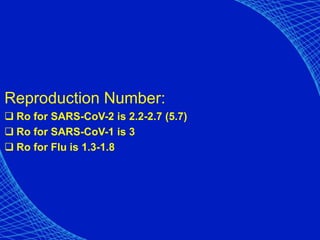
Reproduction Number:
 Ro for SARS-CoV-2 is 2.2-2.7 (5.7)
 Ro for SARS-CoV-1 is 3
 Ro for Flu is 1.3-1.8
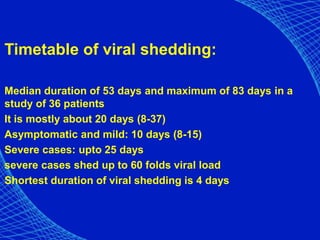
Timetable of viral shedding:
Median duration of 53 days and maximum of 83 days in a
study of 36 patients
It is mostly about 20 days (8-37)
Asymptomatic and mild: 10 days (8-15)
Severe cases: upto 25 days
severe cases shed up to 60 folds viral load
Shortest duration of viral shedding is 4 days
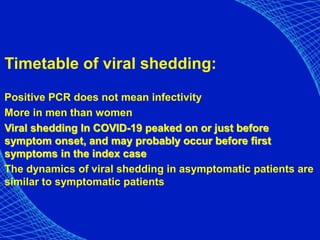
Timetable of viral shedding:
Positive PCR does not mean infectivity
More in men than women
Viral shedding In COVID-19 peaked on or just before
symptom onset, and may probably occur before first
symptoms in the index case
The dynamics of viral shedding in asymptomatic patients are
similar to symptomatic patients
Timetable for infectivity in COVID-19
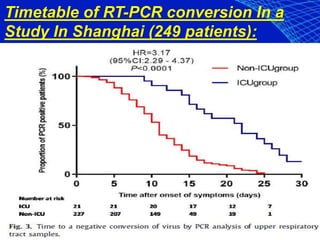
Timetable of RT-PCR conversion In a
Study In Shanghai (249 patients):
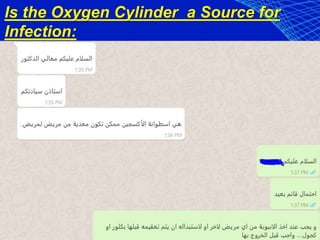
Is the Oxygen Cylinder a Source for
Infection:
Reinfection
It is unclear if convalescent patient can be reinfected
After recovery of experimentally infected monkies, They were
rechallnged with the same dose of same strain, and failed to
develop disease again for more 5 days thereafter
Hence, in short term, infection seems to give an immunity
against reinfection
Reinfection
Reinfection of HCoV-NL63 was reported in 28% of cases over
6 months period
Most of them were milder with lower viral titers
11% showed higher viral shedding than the previous attack
Cross Immunity:
The betacoronaviruses can induce immune responses
against one another: SARS-CoV-1 infection can generate
neutralizing antibodies against HCoV-OC43
HCoV-OC43 infection can generate cross-reactive
antibodies against SARS-CoV-1
Relapse/Reactivation:
9-20% of dischrged patients in small studies retest PCR
positive
The 2 discharge negative PCR may be falsely negative
In 10 re-test positive patients after being negative,
scientists failed to grow the virus in culture (low viral load or
dead virus)
In 13 re-test positive patients, none of their 104 close
family contacts developed disease
Relapse/Reactivation:
Causes of Relapse positive RT-PCR:
1.Still there is virus, esp in severe disease
2.Cross contamination with other betacoronaviruses
3.False positive results
4.Incorrect sample collection techniques
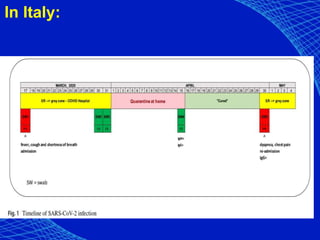
In Italy:
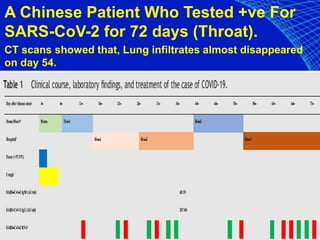
A Chinese Patient Who Tested +ve For
SARS-CoV-2 for 72 days (Throat).
CT scans showed that, Lung infiltrates almost disappeared
on day 54.
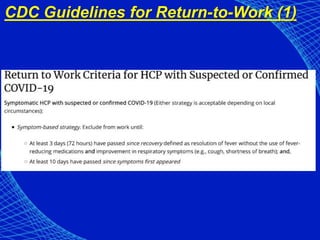
CDC Guidelines for Return-to-Work (1)
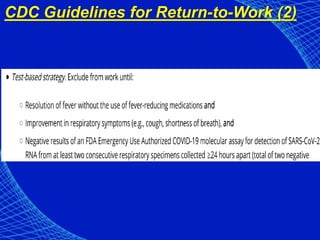
CDC Guidelines for Return-to-Work (2)
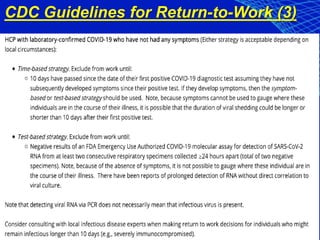
CDC Guidelines for Return-to-Work (3)
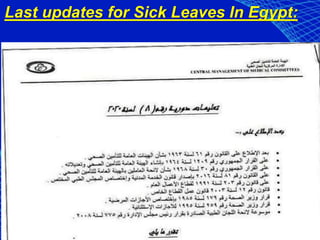
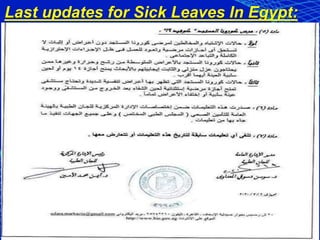
Last updates for Sick Leaves In Egypt:
COVID-19 Treatment and Interventions
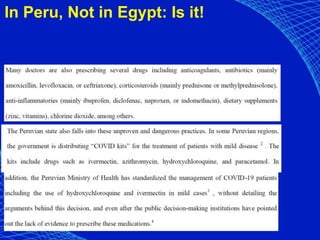
In Peru, Not in Egypt: Is it!
Early thearpy with antiviral shortens virus clearance time and
prevent rapid progression of COVID-19
Combined therapies with antiviral should be started at early
stages to prevent from mild to severe disease
HCQ:
400 mg twice 1st day then 200 mg twice daily up to 5-9 days
CQ 500 mg twice for the same period
HCQ elimination half-life is 40 days
Remdisivir:
Remdisivir was approved by FDA (EUA) according to a
study that reported 31% acceleration in recovery (from 15 to
11 days). It decreased mortality non-significantly (from 11% to
8%)
Remdisivir dose is 200 mg for 1st day IV followed by 100
mg daily for 9 days
5 days regimen is as effective as 10 days in non-MV
patients
Not recommended if estimated GFR less than 30 ml/min
In patients with severe Covid-19 not requiring mechanical
ventilation, No significant difference between a 5-day course and
a 10-day course of remdesivir.
Umifenovir (Arbidol):
Oral dose: 2 tab (Cap) 3 times daily for 14-20 days each
contain 100 mg
Lopinavir/ritonavir (Kaletra):
Doses of lopinavir (200mg) and ritonavir (50mg) every 12h
for 7-14 days. in patients with moderate and severe COVID-19
current data do not support lopinavir/ritonavir in COVID-19
treatment, although it was successful in some cases
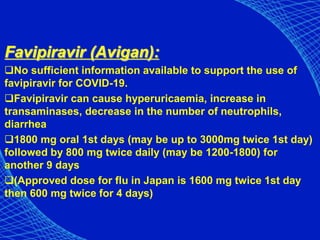
Favipiravir (Avigan):
No sufficient information available to support the use of
favipiravir for COVID-19.
Favipiravir can cause hyperuricaemia, increase in
transaminases, decrease in the number of neutrophils,
diarrhea
1800 mg oral 1st days (may be up to 3000mg twice 1st day)
followed by 800 mg twice daily (may be 1200-1800) for
another 9 days
(Approved dose for flu in Japan is 1600 mg twice 1st day
then 600 mg twice for 4 days)
Tocilizumab injection:
4-8 mg per kg one dose can be
repeated in 12-24 hour to total of 800 mg
Recovery Study:
6 mg daily of dexamthasone decreased the mortality by 1/3 in
severe COVID-19 patients in need for MV
The FDA a criteria for CP In COVID-19:
• Laboratory confirmed COVID-19
• Severe or immediately life-threatening COVID-19.
_x0001_ Severe disease is defined as one or more of the folloing:
• Dysnea,
• Tacypnea ≥ 30/min,
• blood oxygen saturation ≤ 93%,
• PaO/FiO2 < 300,
• lung infiltrates >50% within 24-48 hours
_x0001_ The life-threatening disease is defined as one or more of the
following:
• respiratoy failure,
• septic shock
•MODS
FDA Criteria for CP Donors:
1.Recovered from COVID-19, blood donor tests weredone and
suitable for donation
2.Documented infection with PCR or Serologic IgG
3.Complete resolution of symptoms, at least 14 days before
donation
4.Male, Non-Pregnant females,
Coagulopathy and time:
SARS-CoV-2 causes a hypercogulable state
Incidence of thromboembolism among hospitalized patients
with COVID-19 ranged from 25 to 53%
Extended thromboprophylaxis for 2-6 weeks post discharge
should be considered
Coagulopathy and time:
LMWH is the drug of choice with fondaparinux is the second
choice
NOAC (out of licence) is easier to administer in the
community stting (rivaroxipan 10 mg daily or apixaban 2.5 mg
twice) with PPI to protect from GIT bleadimg
If chemoprophylaxis is contraindicated, use mechanicla
prophylaxis
IVIG:
Within 48 hours of hospital admission decresed need for
MV, ICU duration and 28-day mortality
Needs further study
 Higher duration of sunlight exposure was associated with
higher recovery rate
 Sunlight exposure does not prevent infection
 Sunlight boost the immune system
SARS-CoV-2 Vaccine
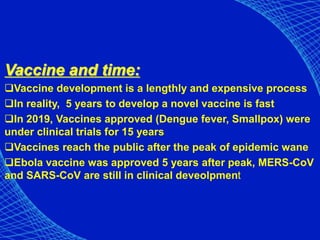
Vaccine and time:
Vaccine development is a lengthly and expensive process
In reality, 5 years to develop a novel vaccine is fast
In 2019, Vaccines approved (Dengue fever, Smallpox) were
under clinical trials for 15 years
Vaccines reach the public after the peak of epidemic wane
Ebola vaccine was approved 5 years after peak, MERS-CoV
and SARS-CoV are still in clinical deveolpment
Vaccine and Time:
Available vaccine does not equal uptake
The newer the vaccine, the higher the hesitancy
People trust slow vaccine
H1N1 vaccine , in 22 countries, was available but the
coverage rate was 0.4-59% only
The rate decreases also due to misinformation
Covid-19 and time 10 7-2020

Covid-19 and time 10 7-2020

  • 1.
  • 3.
     Brain istime  Heart is time  Lung is time  Kidney is time  Liver is time
  • 4.
  • 7.
  • 8.
    Timetable of 21stCentury Emergent Viruses
  • 9.
  • 10.
    HCoV , TheirNormal and Intermediate Hosts:
  • 12.
    SARS-CoV-2 virus genes: 96.2%similarity to bat CoV RaTG13 88% similarity to bat SARS-like CoVs 79% with SARS-CoV-1 50% with MERS-CoV 90% similarity to pangolin CoV ACE2 receptors are present in animals other than pangolins
  • 13.
    I didn't searchPubMed for the last 12 hours, The data I present may be out of date
  • 14.
  • 15.
    Timetable for scientificpapers publications : Up to end of March 2020: China had 37.3% of main investigators North America 11.7% Europe 22.6% Middle East 3% mainly Iran
  • 17.
    Timetable for scientificpapers publications (1): It is too short In NEJM a letter was published on 30-1-2020 while the patient was tested on 28-1-2020 Journal of Royal Society of Open Science revise the manuscripts in 24-48 hours Paper on HCQ and azithromycin was applied on 16-3, accepted on 17-3, published on 20-3-2020
  • 18.
    Timetable for scientificpapers publications (2): The rigorous peer-review standards and editorial practices are the core to ensure high quality research and best way to avoid the dissemination of erroneous, inaccurate or inconclusive data
  • 19.
  • 21.
    Timetable for pathogenesis: Stage1: Asymptomatic state (initial 1–2 days of infection) The inhaled virus SARS-CoV-2 likely binds to epithelial cells in the nasal cavity and starts replicating Stage 2: Upper airway and conducting airway response (next few days) The virus propagates and migrates down the respiratory tract along the conducting airways, clinically manifest Stage 3: Hypoxia, ground glass infiltrates, and progression to ARDS Unfortunately, about 20% of the infected patients will progress to stage 3
  • 23.
  • 24.
  • 25.
    Incubatiion Period: The meanincubation period is 5.2 days 3-9 days (range 0-24)
  • 27.
  • 28.
    Transmission: •Droplet •Air-borne •Fecal-Oral (Theoretical) •Body fluids(vomits) •Direct contact with surfaces •No vertical •Case reports of Breast milk •Average R0 is 2.2 •Cummulative attack rate is 0-50 fold of flu
  • 29.
  • 30.
     The Maximumdistance (till now) for transmission is 4 meters  No significant difference between N-95 masks and surgical mask as regard laboratory confirmed infection
  • 31.
    Timetable of Symptomsand disease course
  • 32.
    No evidence ofSARS-CoV-2 before the end of March 2020 in samples of patients with suspected CAP was seen in Germany
  • 34.
    Symptoms and Signs: Fever(more early, may be at any time) Cough (Early, may be prolonged) Dyspnea (late, alarming) Hypoxemia,(late, may be catastrophic) Heart rate (mainly brady, may be tachy...) Crackles (Alarming) Fatigue (early, may be prolonged) depressive mood and anxiety (prominent)
  • 35.
    Fever in COVID-19Patients In Shanghai
  • 36.
    Low-grade fever duringconvalescence is an atypical symptom of COVID-19. These cases are not rare, but the mechanism and outcome of low-grade fever during convalescence is not yet completely clear.
  • 38.
     ARDS inCOVID-19 patients was related to, age more than 65, hypertension and DM  The Median duration for onset of symptoms to ARDS is 9 days (5-12 days from symptoms)  9.5-12 days to MODS
  • 40.
    Timetable of anosmiaimprovement in COVID-19 patients
  • 43.
    Post COVID-19 symptoms(18% were free, 44% worsened QOL) (Italy, 143 patients)
  • 44.
    ABO group: A: moredisease O: less The mortality rate was similar across ABO phenotypes in all race/ethnicity categories
  • 45.
    CT of theChest
  • 46.
    Radiology and time: Inearly stages (0-4 days), HRCT of chest is neagtive in 21% of cases At that stage, if CT is positive, the frequent finding is Peripheral GGO in 76% of cases (terminal and respiratory bronchiolitis and alveolitis)
  • 47.
    Radiology and time: Inprogressive stage (5-9 days), crazy paving, consolidation, and linear opacities increase significantly (interstitial edema and alveolar exudation) These findings peak within 10-28 days and decrease thereafter Pleural effusion is rare, in late stages
  • 48.
    Timetable of CTchanges Differ:
  • 49.
  • 50.
    Timetable of Nabsand IgG in SARS patients
  • 51.
  • 53.
    Causes of lymphopeniain COVID-19: 1- Lymphocyte infection without replication leading to cell death 2- Release of inhibitory cytokines eg IL-10 3- Immune cell redistribution
  • 54.
    Timetable of CytokineRelease, Lymphocytes, Viral Load, According To Disease Severity
  • 55.
  • 57.
    Timetable for PCR,Serology and biomarkers in COVID-19 patients
  • 58.
    Timetable of serology: IgMis the 1st line of defense Then the adaptive, longlasting, high affinity IgG, represnting immunological memmory IgM is present in 5-7 days IgG is present in 10-15 days and may persist for months or years At 9-1o days after symptoms onset, there is at least 4 folds increase in Nabs and keep increasing to day 20 The level is higher in more severe disease There is a correlation between level of Nabs and total level of IgG
  • 59.
  • 60.
    Diagnostic sensitivities andspecificities were above 93.8% and 85.9% (Iflash)
  • 61.
    Timetable for viralshedding and infectivity
  • 62.
    Blood donation: • Noblood donation within 21 days of contact with a positive case • No blood donation except after 4 weeks after recovery for patients with COVID-19 with completion of treatment
  • 69.
    Infectivity: Mainly in the1st few days of symptoms A significant percentage occur in 2-3 days before symptoms This is correlated with the highest level of viral load About 88% stay undocumented, 55% of them were contagious although of positive PCR, scientist failed to grow it in culture after 8 days Samples with less than 106 copies per ml never grow an isolate Virus isolation from stool samples was never successful, irrespective of viral RNA concentration, based on a total of 13 samples taken between days six to twelve from four patients
  • 70.
    Reproduction Number:  Rofor SARS-CoV-2 is 2.2-2.7 (5.7)  Ro for SARS-CoV-1 is 3  Ro for Flu is 1.3-1.8
  • 71.
    Timetable of viralshedding: Median duration of 53 days and maximum of 83 days in a study of 36 patients It is mostly about 20 days (8-37) Asymptomatic and mild: 10 days (8-15) Severe cases: upto 25 days severe cases shed up to 60 folds viral load Shortest duration of viral shedding is 4 days
  • 72.
    Timetable of viralshedding: Positive PCR does not mean infectivity More in men than women Viral shedding In COVID-19 peaked on or just before symptom onset, and may probably occur before first symptoms in the index case The dynamics of viral shedding in asymptomatic patients are similar to symptomatic patients
  • 73.
  • 74.
    Timetable of RT-PCRconversion In a Study In Shanghai (249 patients):
  • 76.
    Is the OxygenCylinder a Source for Infection:
  • 77.
    Reinfection It is unclearif convalescent patient can be reinfected After recovery of experimentally infected monkies, They were rechallnged with the same dose of same strain, and failed to develop disease again for more 5 days thereafter Hence, in short term, infection seems to give an immunity against reinfection
  • 78.
    Reinfection Reinfection of HCoV-NL63was reported in 28% of cases over 6 months period Most of them were milder with lower viral titers 11% showed higher viral shedding than the previous attack
  • 79.
    Cross Immunity: The betacoronavirusescan induce immune responses against one another: SARS-CoV-1 infection can generate neutralizing antibodies against HCoV-OC43 HCoV-OC43 infection can generate cross-reactive antibodies against SARS-CoV-1
  • 80.
    Relapse/Reactivation: 9-20% of dischrgedpatients in small studies retest PCR positive The 2 discharge negative PCR may be falsely negative In 10 re-test positive patients after being negative, scientists failed to grow the virus in culture (low viral load or dead virus) In 13 re-test positive patients, none of their 104 close family contacts developed disease
  • 81.
    Relapse/Reactivation: Causes of Relapsepositive RT-PCR: 1.Still there is virus, esp in severe disease 2.Cross contamination with other betacoronaviruses 3.False positive results 4.Incorrect sample collection techniques
  • 82.
  • 83.
    A Chinese PatientWho Tested +ve For SARS-CoV-2 for 72 days (Throat). CT scans showed that, Lung infiltrates almost disappeared on day 54.
  • 84.
    CDC Guidelines forReturn-to-Work (1)
  • 85.
    CDC Guidelines forReturn-to-Work (2)
  • 86.
    CDC Guidelines forReturn-to-Work (3)
  • 87.
    Last updates forSick Leaves In Egypt:
  • 88.
    Last updates forSick Leaves In Egypt:
  • 89.
  • 90.
    In Peru, Notin Egypt: Is it!
  • 91.
    Early thearpy withantiviral shortens virus clearance time and prevent rapid progression of COVID-19 Combined therapies with antiviral should be started at early stages to prevent from mild to severe disease
  • 93.
    HCQ: 400 mg twice1st day then 200 mg twice daily up to 5-9 days CQ 500 mg twice for the same period HCQ elimination half-life is 40 days
  • 94.
    Remdisivir: Remdisivir was approvedby FDA (EUA) according to a study that reported 31% acceleration in recovery (from 15 to 11 days). It decreased mortality non-significantly (from 11% to 8%) Remdisivir dose is 200 mg for 1st day IV followed by 100 mg daily for 9 days 5 days regimen is as effective as 10 days in non-MV patients Not recommended if estimated GFR less than 30 ml/min
  • 95.
    In patients withsevere Covid-19 not requiring mechanical ventilation, No significant difference between a 5-day course and a 10-day course of remdesivir.
  • 96.
    Umifenovir (Arbidol): Oral dose:2 tab (Cap) 3 times daily for 14-20 days each contain 100 mg
  • 97.
    Lopinavir/ritonavir (Kaletra): Doses oflopinavir (200mg) and ritonavir (50mg) every 12h for 7-14 days. in patients with moderate and severe COVID-19 current data do not support lopinavir/ritonavir in COVID-19 treatment, although it was successful in some cases
  • 98.
    Favipiravir (Avigan): No sufficientinformation available to support the use of favipiravir for COVID-19. Favipiravir can cause hyperuricaemia, increase in transaminases, decrease in the number of neutrophils, diarrhea 1800 mg oral 1st days (may be up to 3000mg twice 1st day) followed by 800 mg twice daily (may be 1200-1800) for another 9 days (Approved dose for flu in Japan is 1600 mg twice 1st day then 600 mg twice for 4 days)
  • 99.
    Tocilizumab injection: 4-8 mgper kg one dose can be repeated in 12-24 hour to total of 800 mg
  • 100.
    Recovery Study: 6 mgdaily of dexamthasone decreased the mortality by 1/3 in severe COVID-19 patients in need for MV
  • 101.
    The FDA acriteria for CP In COVID-19: • Laboratory confirmed COVID-19 • Severe or immediately life-threatening COVID-19. _x0001_ Severe disease is defined as one or more of the folloing: • Dysnea, • Tacypnea ≥ 30/min, • blood oxygen saturation ≤ 93%, • PaO/FiO2 < 300, • lung infiltrates >50% within 24-48 hours _x0001_ The life-threatening disease is defined as one or more of the following: • respiratoy failure, • septic shock •MODS
  • 102.
    FDA Criteria forCP Donors: 1.Recovered from COVID-19, blood donor tests weredone and suitable for donation 2.Documented infection with PCR or Serologic IgG 3.Complete resolution of symptoms, at least 14 days before donation 4.Male, Non-Pregnant females,
  • 103.
    Coagulopathy and time: SARS-CoV-2causes a hypercogulable state Incidence of thromboembolism among hospitalized patients with COVID-19 ranged from 25 to 53% Extended thromboprophylaxis for 2-6 weeks post discharge should be considered
  • 104.
    Coagulopathy and time: LMWHis the drug of choice with fondaparinux is the second choice NOAC (out of licence) is easier to administer in the community stting (rivaroxipan 10 mg daily or apixaban 2.5 mg twice) with PPI to protect from GIT bleadimg If chemoprophylaxis is contraindicated, use mechanicla prophylaxis
  • 105.
    IVIG: Within 48 hoursof hospital admission decresed need for MV, ICU duration and 28-day mortality Needs further study
  • 106.
     Higher durationof sunlight exposure was associated with higher recovery rate  Sunlight exposure does not prevent infection  Sunlight boost the immune system
  • 108.
  • 111.
    Vaccine and time: Vaccinedevelopment is a lengthly and expensive process In reality, 5 years to develop a novel vaccine is fast In 2019, Vaccines approved (Dengue fever, Smallpox) were under clinical trials for 15 years Vaccines reach the public after the peak of epidemic wane Ebola vaccine was approved 5 years after peak, MERS-CoV and SARS-CoV are still in clinical deveolpment
  • 112.
    Vaccine and Time: Availablevaccine does not equal uptake The newer the vaccine, the higher the hesitancy People trust slow vaccine H1N1 vaccine , in 22 countries, was available but the coverage rate was 0.4-59% only The rate decreases also due to misinformation