1
Proprietary & Confidential
Coverage Impact due to 10MHz / 7MHz
Test case – Rawalpindi DAP Duo Cluster
RF North
10th June, 2011
2
Proprietary & Confidential
Introduction
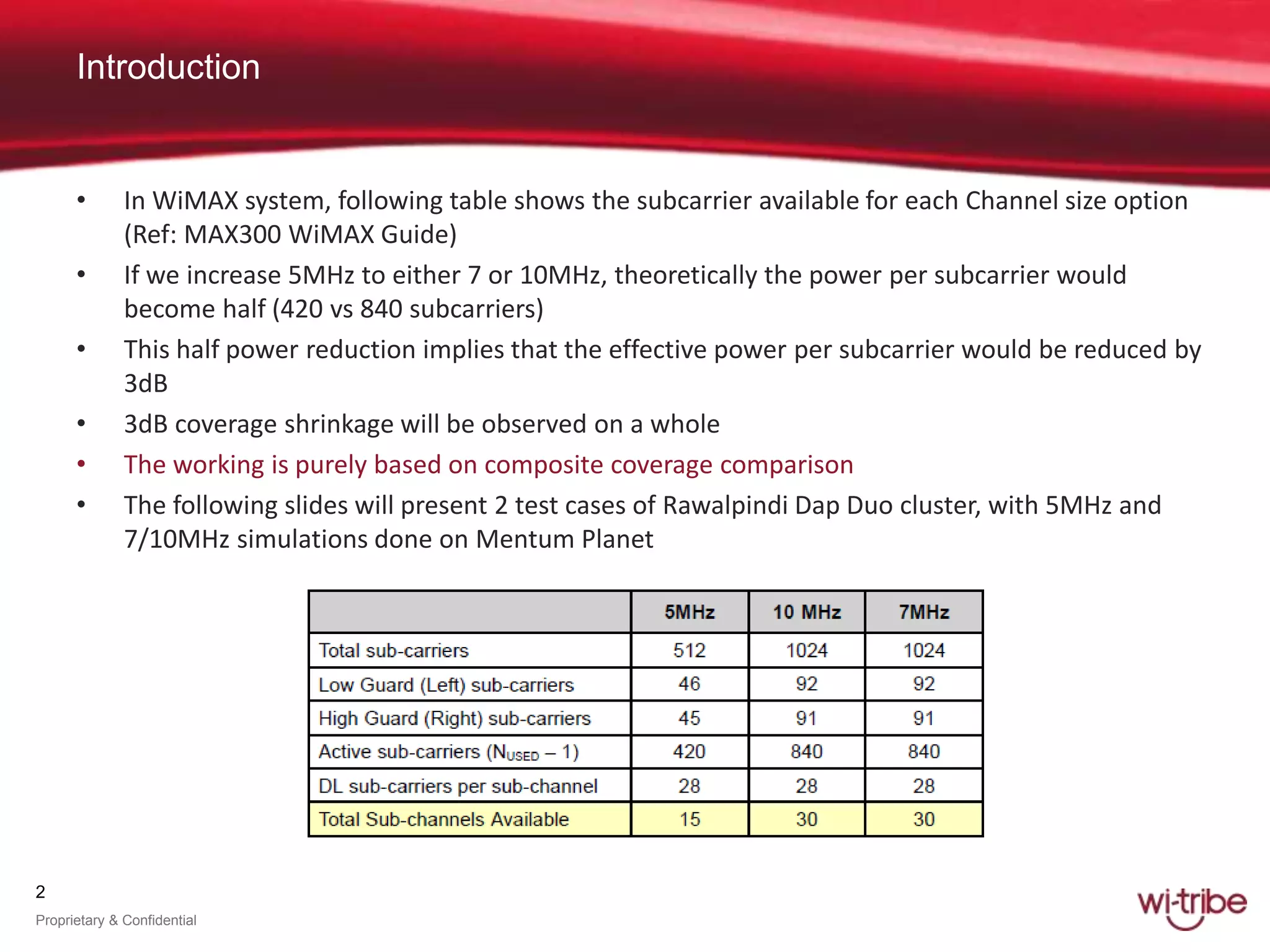
• In WiMAX system, following table shows the subcarrier available for each Channel size option
(Ref: MAX300 WiMAX Guide)
• If we increase 5MHz to either 7 or 10MHz, theoretically the power per subcarrier would
become half (420 vs 840 subcarriers)
• This half power reduction implies that the effective power per subcarrier would be reduced by
3dB
• 3dB coverage shrinkage will be observed on a whole
• The working is purely based on composite coverage comparison
• The following slides will present 2 test cases of Rawalpindi Dap Duo cluster, with 5MHz and
7/10MHz simulations done on Mentum Planet
3
Proprietary & Confidential
Simulation Areas
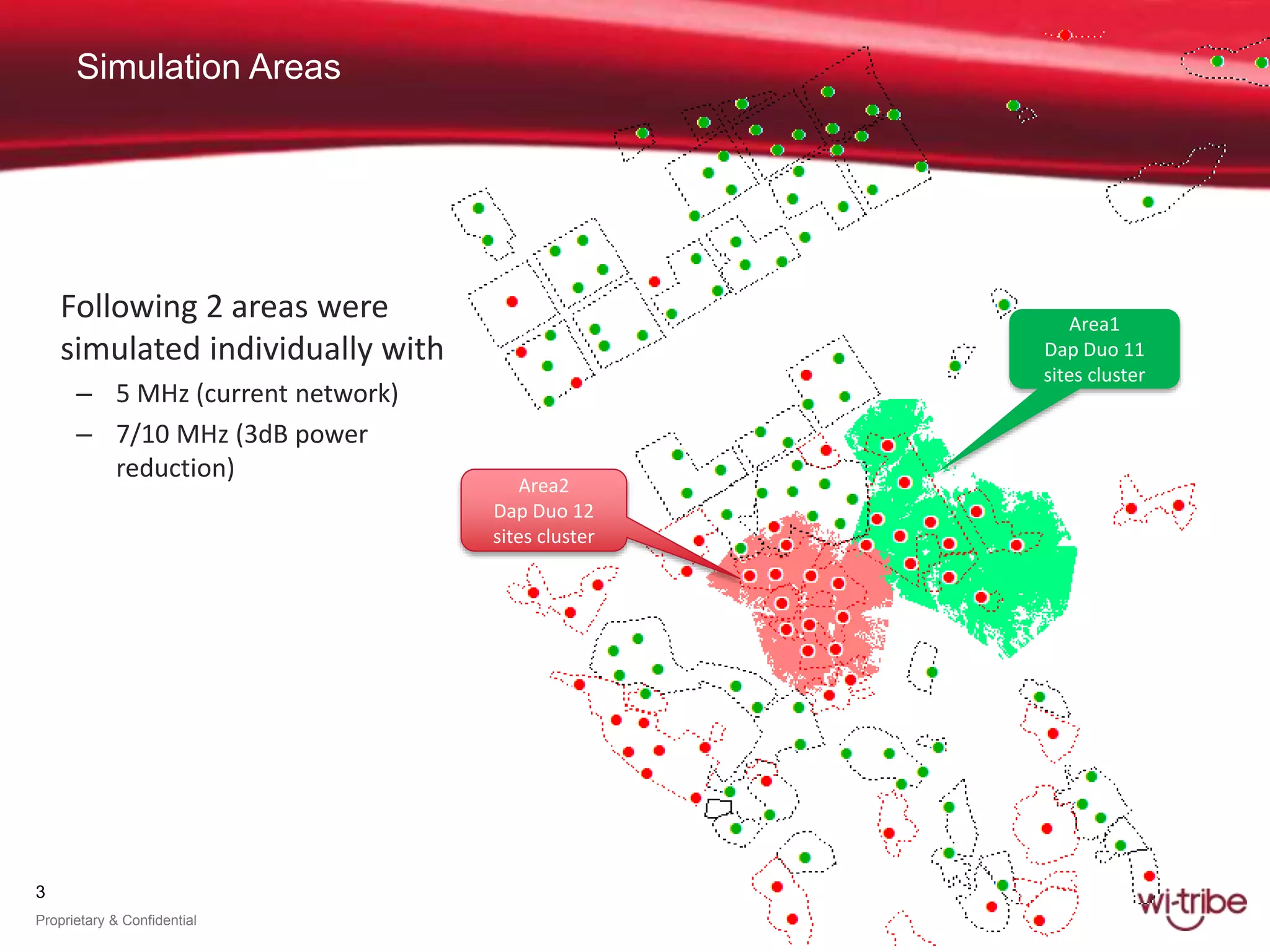
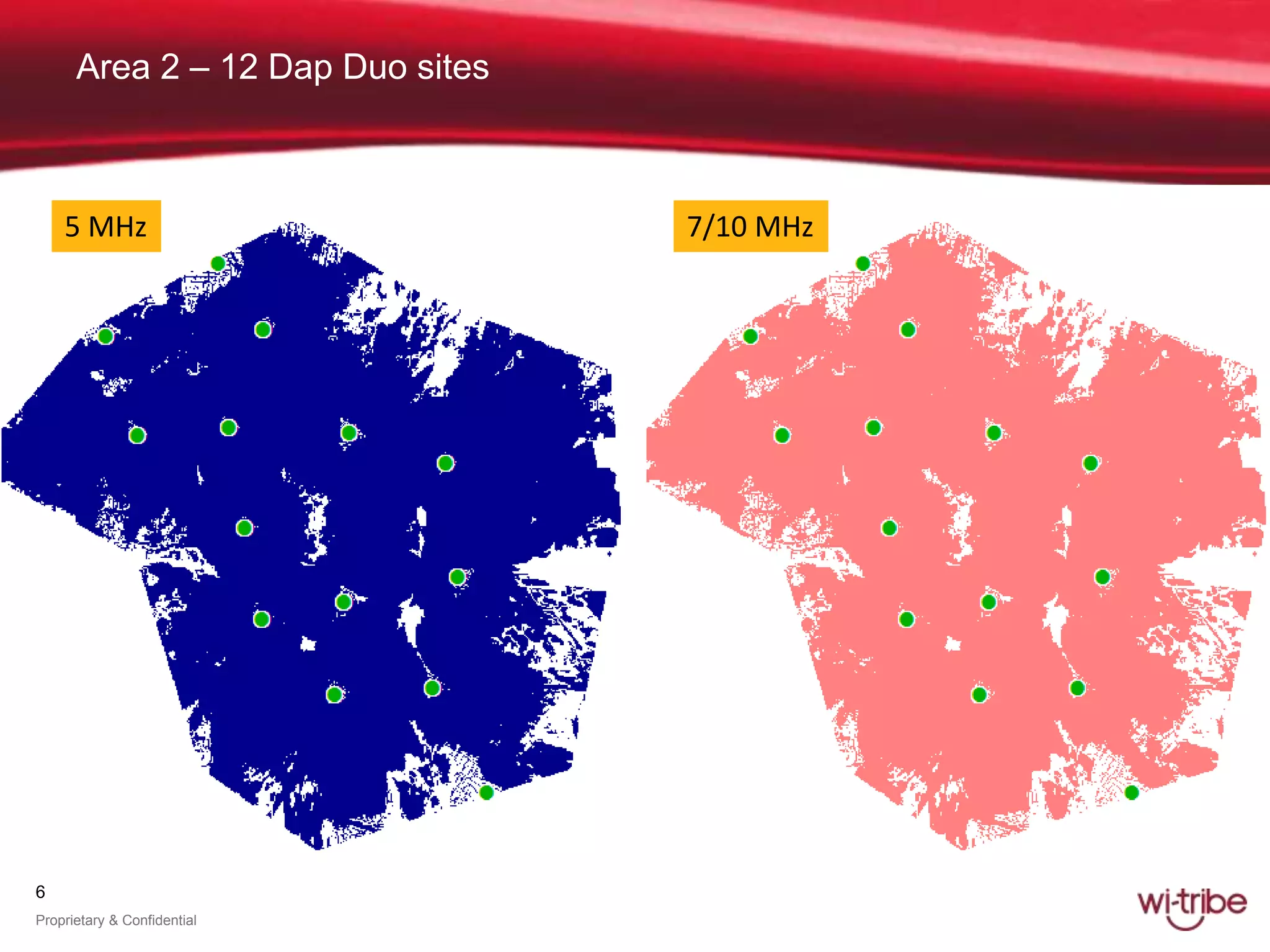
Following 2 areas were
simulated individually with
– 5 MHz (current network)
– 7/10 MHz (3dB power
reduction)
Area2
Dap Duo 12
sites cluster
Area1
Dap Duo 11
sites cluster
4
Proprietary & Confidential
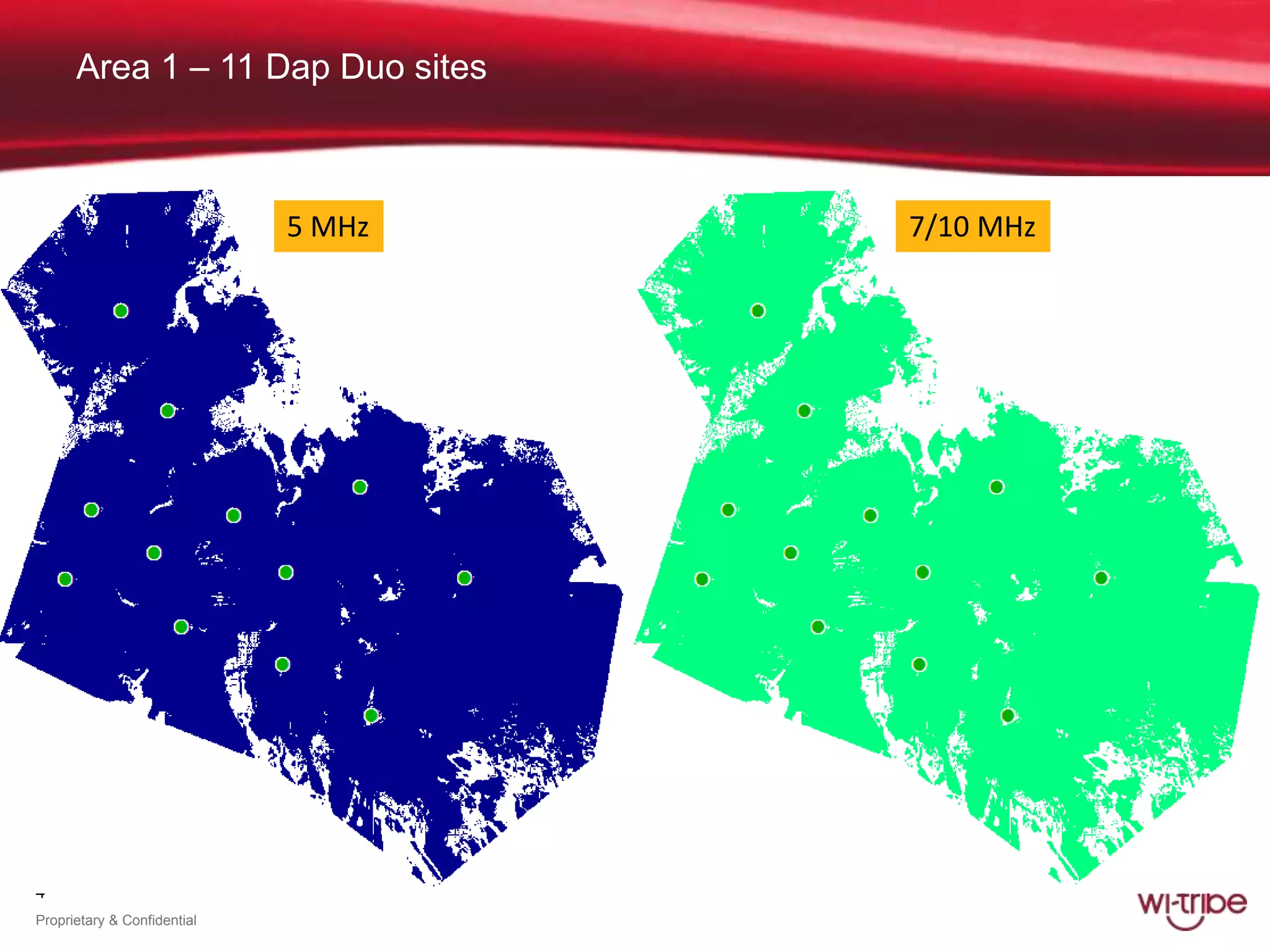
Area 1 – 11 Dap Duo sites
5 MHz 7/10 MHz
5
Proprietary & Confidential
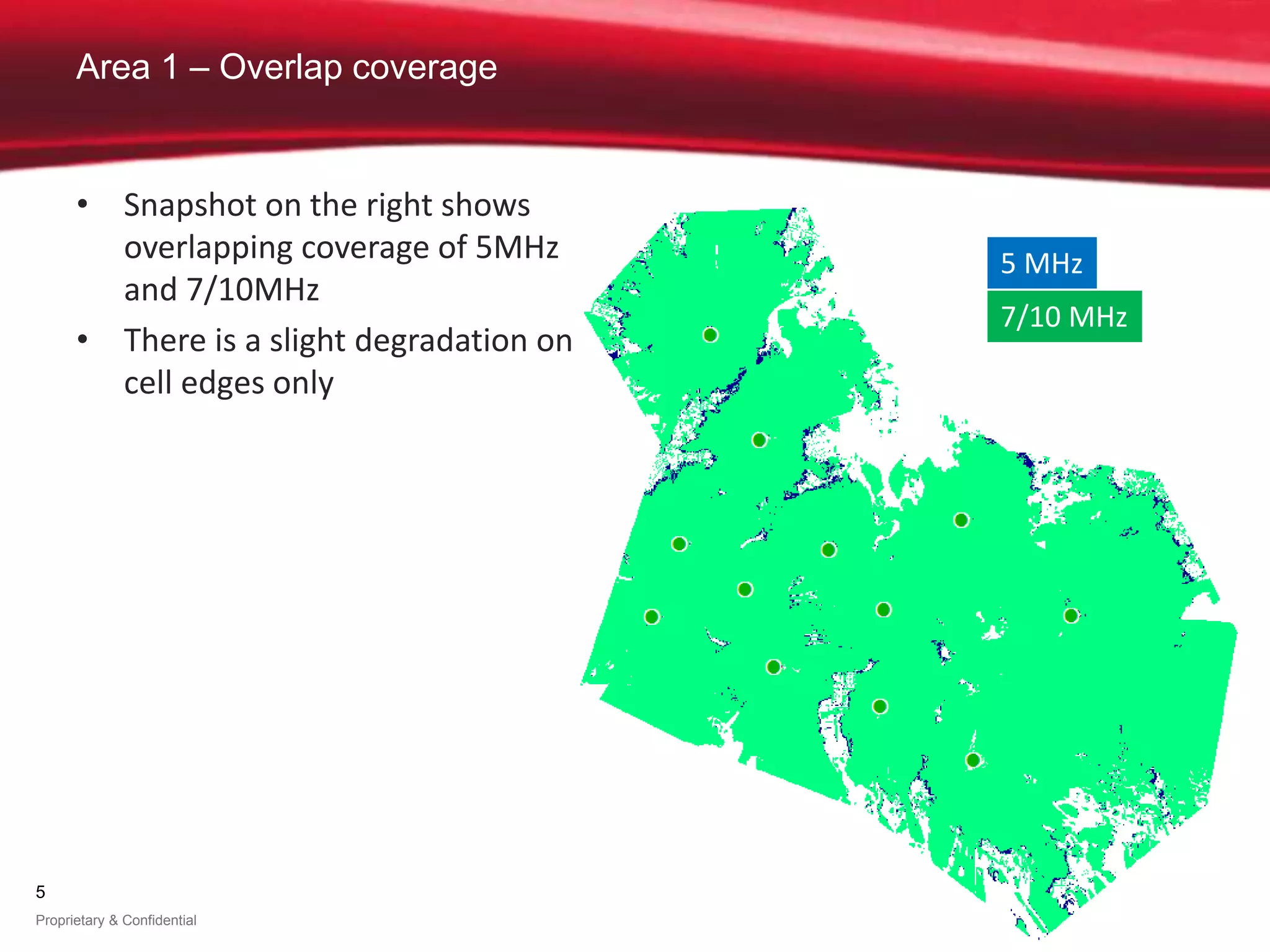
Area 1 – Overlap coverage
5 MHz
7/10 MHz
• Snapshot on the right shows
overlapping coverage of 5MHz
and 7/10MHz
• There is a slight degradation on
cell edges only
6
Proprietary & Confidential
Area 2 – 12 Dap Duo sites
5 MHz 7/10 MHz
7
Proprietary & Confidential
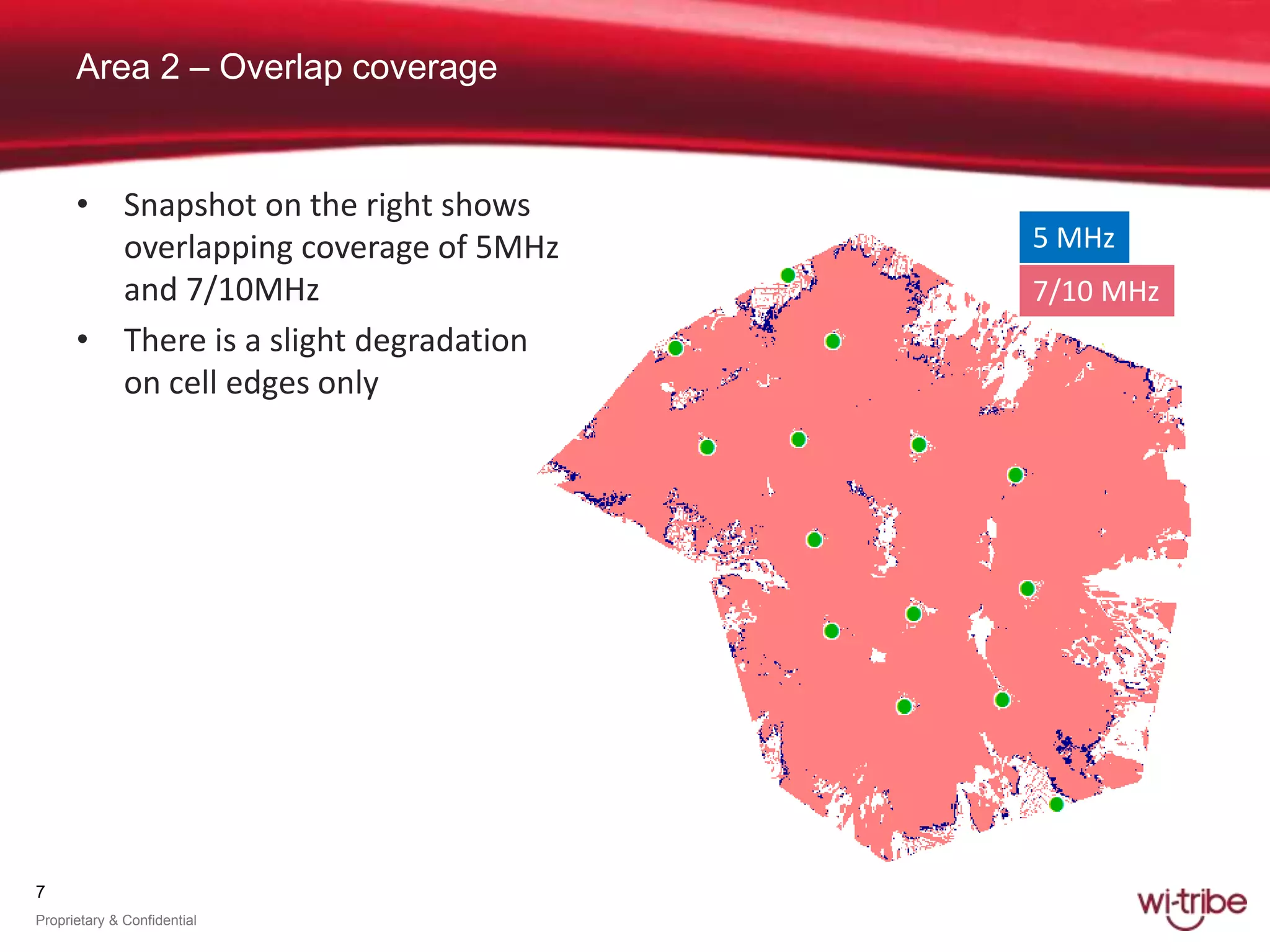
Area 2 – Overlap coverage
5 MHz
7/10 MHz
• Snapshot on the right shows
overlapping coverage of 5MHz
and 7/10MHz
• There is a slight degradation
on cell edges only
8
Proprietary & Confidential
Conclusion
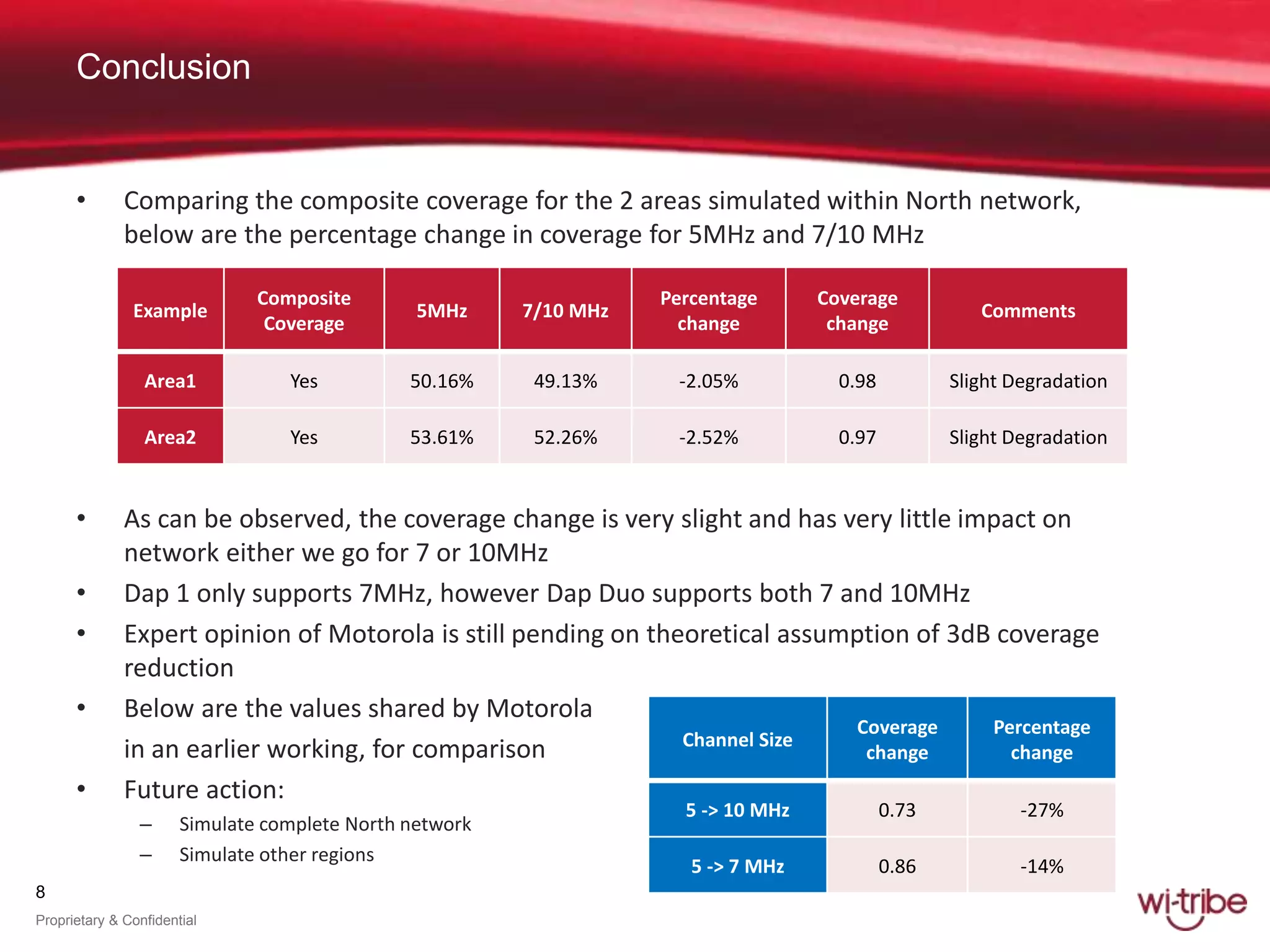
• Comparing the composite coverage for the 2 areas simulated within North network,
below are the percentage change in coverage for 5MHz and 7/10 MHz
• As can be observed, the coverage change is very slight and has very little impact on
network either we go for 7 or 10MHz
• Dap 1 only supports 7MHz, however Dap Duo supports both 7 and 10MHz
• Expert opinion of Motorola is still pending on theoretical assumption of 3dB coverage
reduction
• Below are the values shared by Motorola
in an earlier working, for comparison
• Future action:
– Simulate complete North network
– Simulate other regions
Example
Composite
Coverage
5MHz 7/10 MHz
Percentage
change
Coverage
change
Comments
Area1 Yes 50.16% 49.13% -2.05% 0.98 Slight Degradation
Area2 Yes 53.61% 52.26% -2.52% 0.97 Slight Degradation
Channel Size
Coverage
change
Percentage
change
5 -> 10 MHz 0.73 -27%
5 -> 7 MHz 0.86 -14%
9
Proprietary & Confidential
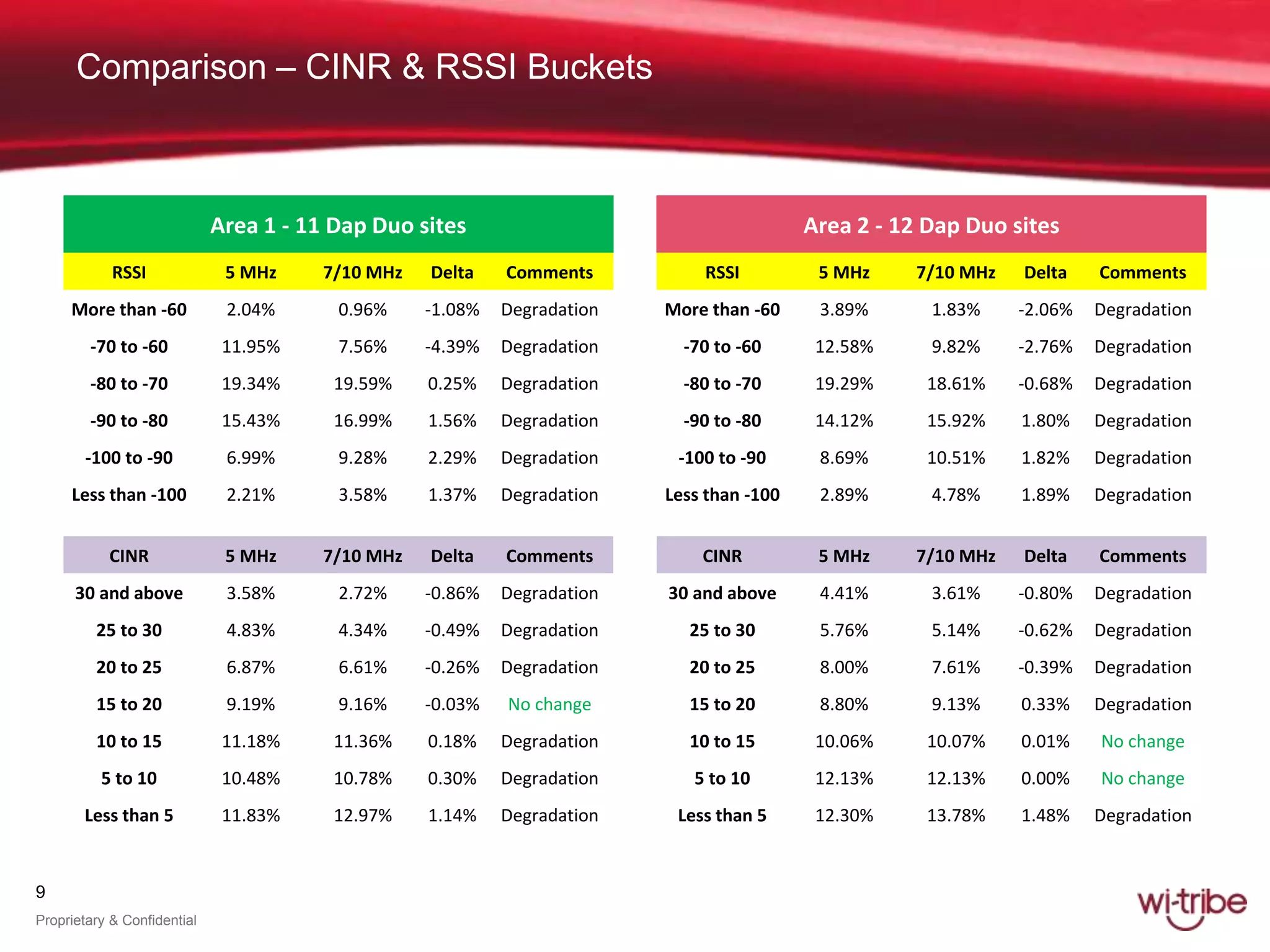
Area 1 - 11 Dap Duo sites Area 2 - 12 Dap Duo sites
RSSI 5 MHz 7/10 MHz Delta Comments RSSI 5 MHz 7/10 MHz Delta Comments
More than -60 2.04% 0.96% -1.08% Degradation More than -60 3.89% 1.83% -2.06% Degradation
-70 to -60 11.95% 7.56% -4.39% Degradation -70 to -60 12.58% 9.82% -2.76% Degradation
-80 to -70 19.34% 19.59% 0.25% Degradation -80 to -70 19.29% 18.61% -0.68% Degradation
-90 to -80 15.43% 16.99% 1.56% Degradation -90 to -80 14.12% 15.92% 1.80% Degradation
-100 to -90 6.99% 9.28% 2.29% Degradation -100 to -90 8.69% 10.51% 1.82% Degradation
Less than -100 2.21% 3.58% 1.37% Degradation Less than -100 2.89% 4.78% 1.89% Degradation
CINR 5 MHz 7/10 MHz Delta Comments CINR 5 MHz 7/10 MHz Delta Comments
30 and above 3.58% 2.72% -0.86% Degradation 30 and above 4.41% 3.61% -0.80% Degradation
25 to 30 4.83% 4.34% -0.49% Degradation 25 to 30 5.76% 5.14% -0.62% Degradation
20 to 25 6.87% 6.61% -0.26% Degradation 20 to 25 8.00% 7.61% -0.39% Degradation
15 to 20 9.19% 9.16% -0.03% No change 15 to 20 8.80% 9.13% 0.33% Degradation
10 to 15 11.18% 11.36% 0.18% Degradation 10 to 15 10.06% 10.07% 0.01% No change
5 to 10 10.48% 10.78% 0.30% Degradation 5 to 10 12.13% 12.13% 0.00% No change
Less than 5 11.83% 12.97% 1.14% Degradation Less than 5 12.30% 13.78% 1.48% Degradation
Comparison – CINR & RSSI Buckets

Coverage Compromise 10_mhz_7mhz v1

  • 1.
    1 Proprietary & Confidential CoverageImpact due to 10MHz / 7MHz Test case – Rawalpindi DAP Duo Cluster RF North 10th June, 2011
  • 2.
    2 Proprietary & Confidential Introduction •In WiMAX system, following table shows the subcarrier available for each Channel size option (Ref: MAX300 WiMAX Guide) • If we increase 5MHz to either 7 or 10MHz, theoretically the power per subcarrier would become half (420 vs 840 subcarriers) • This half power reduction implies that the effective power per subcarrier would be reduced by 3dB • 3dB coverage shrinkage will be observed on a whole • The working is purely based on composite coverage comparison • The following slides will present 2 test cases of Rawalpindi Dap Duo cluster, with 5MHz and 7/10MHz simulations done on Mentum Planet
  • 3.
    3 Proprietary & Confidential SimulationAreas Following 2 areas were simulated individually with – 5 MHz (current network) – 7/10 MHz (3dB power reduction) Area2 Dap Duo 12 sites cluster Area1 Dap Duo 11 sites cluster
  • 4.
    4 Proprietary & Confidential Area1 – 11 Dap Duo sites 5 MHz 7/10 MHz
  • 5.
    5 Proprietary & Confidential Area1 – Overlap coverage 5 MHz 7/10 MHz • Snapshot on the right shows overlapping coverage of 5MHz and 7/10MHz • There is a slight degradation on cell edges only
  • 6.
    6 Proprietary & Confidential Area2 – 12 Dap Duo sites 5 MHz 7/10 MHz
  • 7.
    7 Proprietary & Confidential Area2 – Overlap coverage 5 MHz 7/10 MHz • Snapshot on the right shows overlapping coverage of 5MHz and 7/10MHz • There is a slight degradation on cell edges only
  • 8.
    8 Proprietary & Confidential Conclusion •Comparing the composite coverage for the 2 areas simulated within North network, below are the percentage change in coverage for 5MHz and 7/10 MHz • As can be observed, the coverage change is very slight and has very little impact on network either we go for 7 or 10MHz • Dap 1 only supports 7MHz, however Dap Duo supports both 7 and 10MHz • Expert opinion of Motorola is still pending on theoretical assumption of 3dB coverage reduction • Below are the values shared by Motorola in an earlier working, for comparison • Future action: – Simulate complete North network – Simulate other regions Example Composite Coverage 5MHz 7/10 MHz Percentage change Coverage change Comments Area1 Yes 50.16% 49.13% -2.05% 0.98 Slight Degradation Area2 Yes 53.61% 52.26% -2.52% 0.97 Slight Degradation Channel Size Coverage change Percentage change 5 -> 10 MHz 0.73 -27% 5 -> 7 MHz 0.86 -14%
  • 9.
    9 Proprietary & Confidential Area1 - 11 Dap Duo sites Area 2 - 12 Dap Duo sites RSSI 5 MHz 7/10 MHz Delta Comments RSSI 5 MHz 7/10 MHz Delta Comments More than -60 2.04% 0.96% -1.08% Degradation More than -60 3.89% 1.83% -2.06% Degradation -70 to -60 11.95% 7.56% -4.39% Degradation -70 to -60 12.58% 9.82% -2.76% Degradation -80 to -70 19.34% 19.59% 0.25% Degradation -80 to -70 19.29% 18.61% -0.68% Degradation -90 to -80 15.43% 16.99% 1.56% Degradation -90 to -80 14.12% 15.92% 1.80% Degradation -100 to -90 6.99% 9.28% 2.29% Degradation -100 to -90 8.69% 10.51% 1.82% Degradation Less than -100 2.21% 3.58% 1.37% Degradation Less than -100 2.89% 4.78% 1.89% Degradation CINR 5 MHz 7/10 MHz Delta Comments CINR 5 MHz 7/10 MHz Delta Comments 30 and above 3.58% 2.72% -0.86% Degradation 30 and above 4.41% 3.61% -0.80% Degradation 25 to 30 4.83% 4.34% -0.49% Degradation 25 to 30 5.76% 5.14% -0.62% Degradation 20 to 25 6.87% 6.61% -0.26% Degradation 20 to 25 8.00% 7.61% -0.39% Degradation 15 to 20 9.19% 9.16% -0.03% No change 15 to 20 8.80% 9.13% 0.33% Degradation 10 to 15 11.18% 11.36% 0.18% Degradation 10 to 15 10.06% 10.07% 0.01% No change 5 to 10 10.48% 10.78% 0.30% Degradation 5 to 10 12.13% 12.13% 0.00% No change Less than 5 11.83% 12.97% 1.14% Degradation Less than 5 12.30% 13.78% 1.48% Degradation Comparison – CINR & RSSI Buckets