Cohesion
 In computer programming, cohesion refers to the degree
to which the elements of a module belong together. Thus,
cohesion measures the strength of relationship between
pieces of functionality within a given module. For
example, in highlycohesive systems functionality is
stronglyrelated.
 Cohesion is an ordinal type of measurement and is
usuallydescribed as “high cohesion” or “low cohesion”.
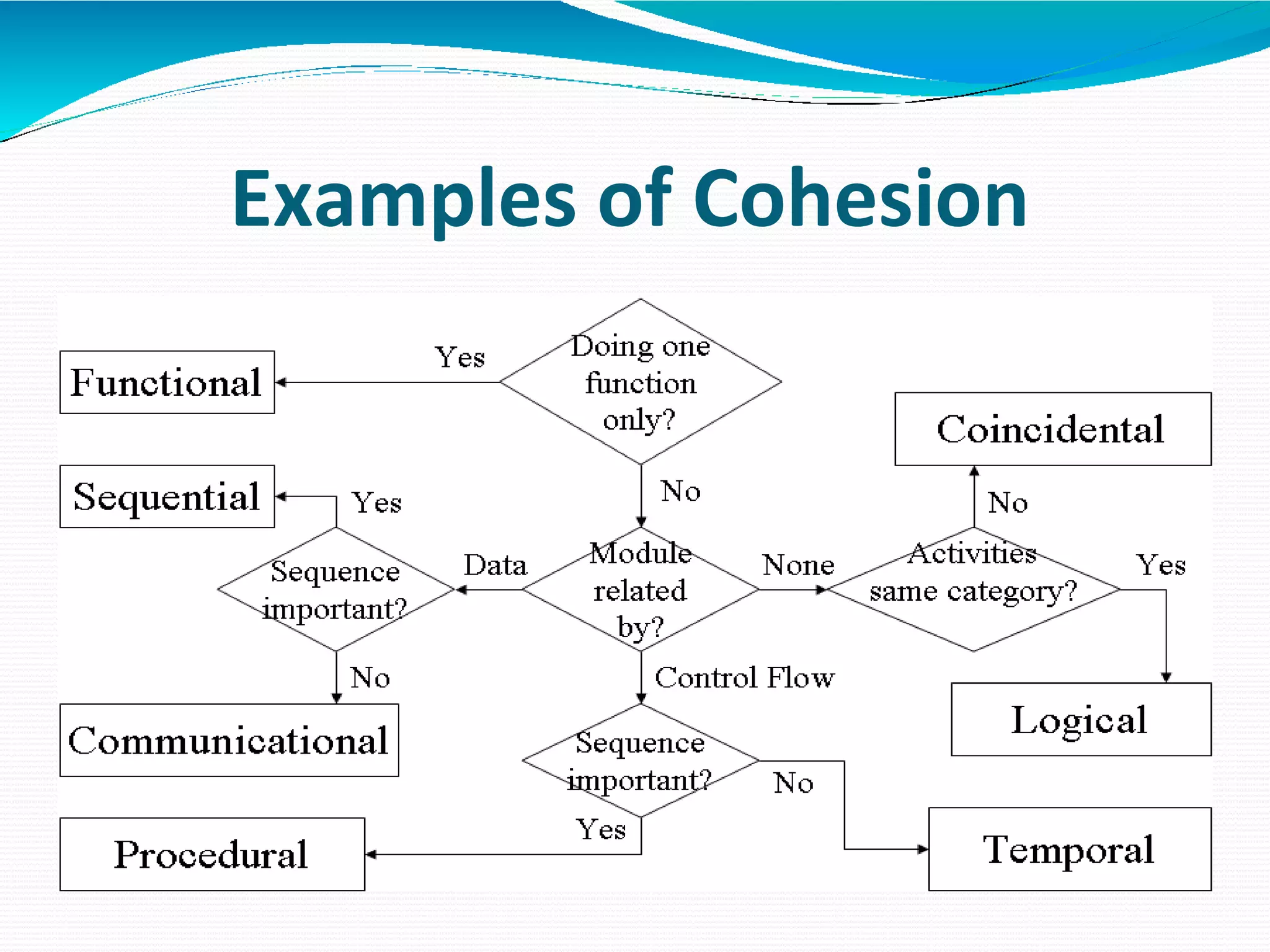
Logical cohesion
Logical cohesion is when parts of a module are grouped because
they are logically categorized to do the same thing even though
they are different by nature (e.g. grouping all mouse and
keyboard input handling routines).
Temporal cohesion
Temporal cohesion is when parts of a module are grouped by
when they are processed - the parts are processed at a particular
time in program execution (e.g. a function which is called after
catching an exception which closes open files, creates an error
log, and notifies the user).
Procedural cohesion
Procedural cohesion is when parts of a module are
grouped because they always follow a certain sequence
of execution (e.g. a function which checks file
permissions and then opens thefile).
Communicational/informational
cohesion
Communicational cohesion is when parts of a module are
grouped because they operate on the same data (e.g. a module
which operates on the same record of information).
Sequential cohesion
Sequential cohesion is when parts of a module are grouped
because the output from one part is the input to another part like
an assembly line (e.g. a function which reads data from a file and
processes the data).
Functional cohesion (best)
Functional cohesion is when parts of a module are grouped
because they all contribute to a single well- defined task of the
module (e.g. Lexical analysis of an XML string).
While functional cohesion is considered the most
desirable type of cohesion for a software module, it may
not be achievable. There are cases where
communicational cohesion is the highest level of
cohesion that can be attained under the circumstances.
Examples of Cohesion
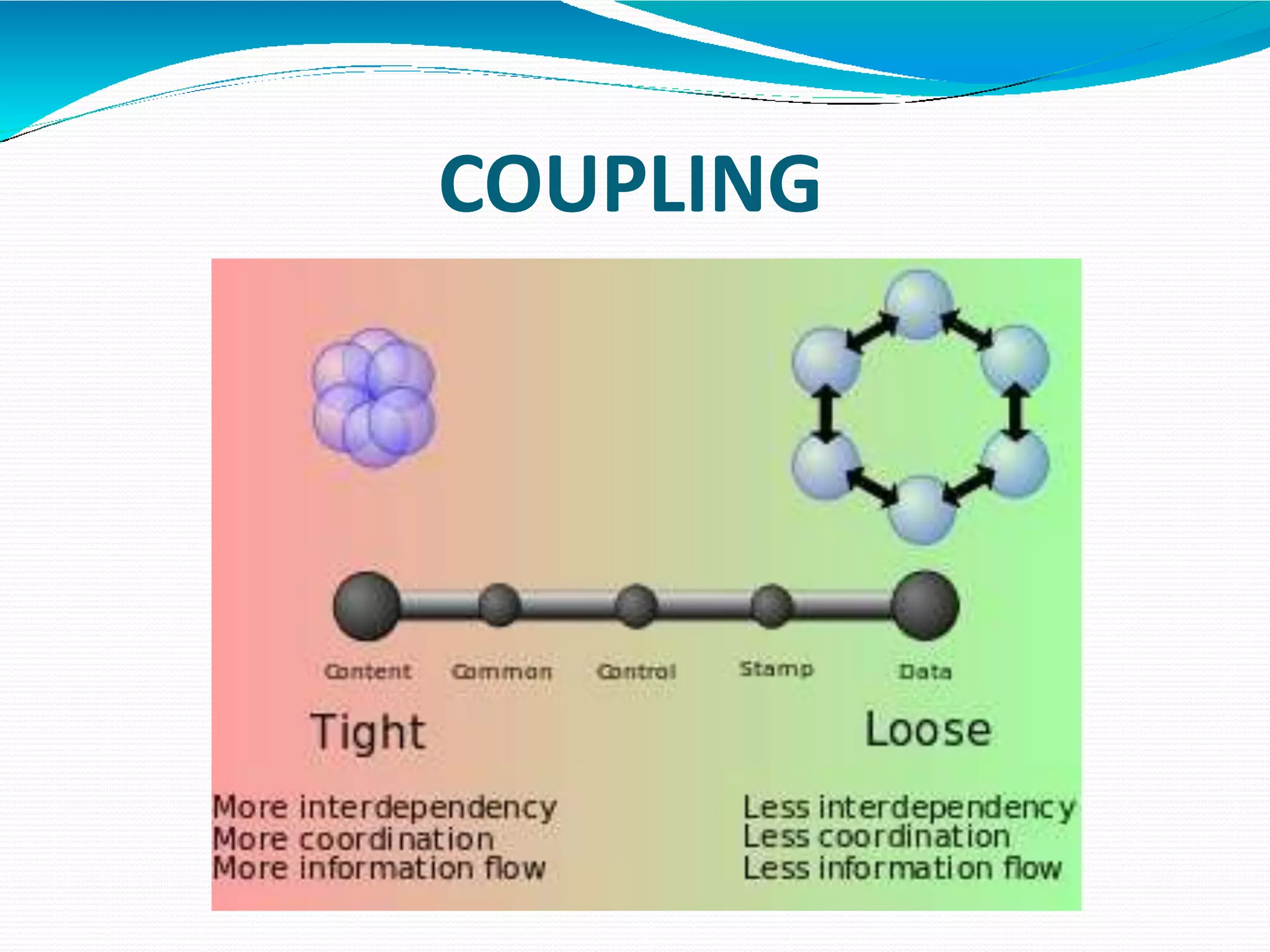
COUPLING
Coupling (computer programming)
 In software Engenering, coupling is the degree of
interdependence between software modules; a measure of how
closely connected two routines or modules are; the strength of
the relationships between modules.
 Coupling is usually contrasted with cohesion. Low coupling often
correlates with high cohesion, and vice versa. Low coupling is
often a sign of a well- structured computer system and a good
design, and when combined with high cohesion, supports the
general goals of high readability andmaintainability.
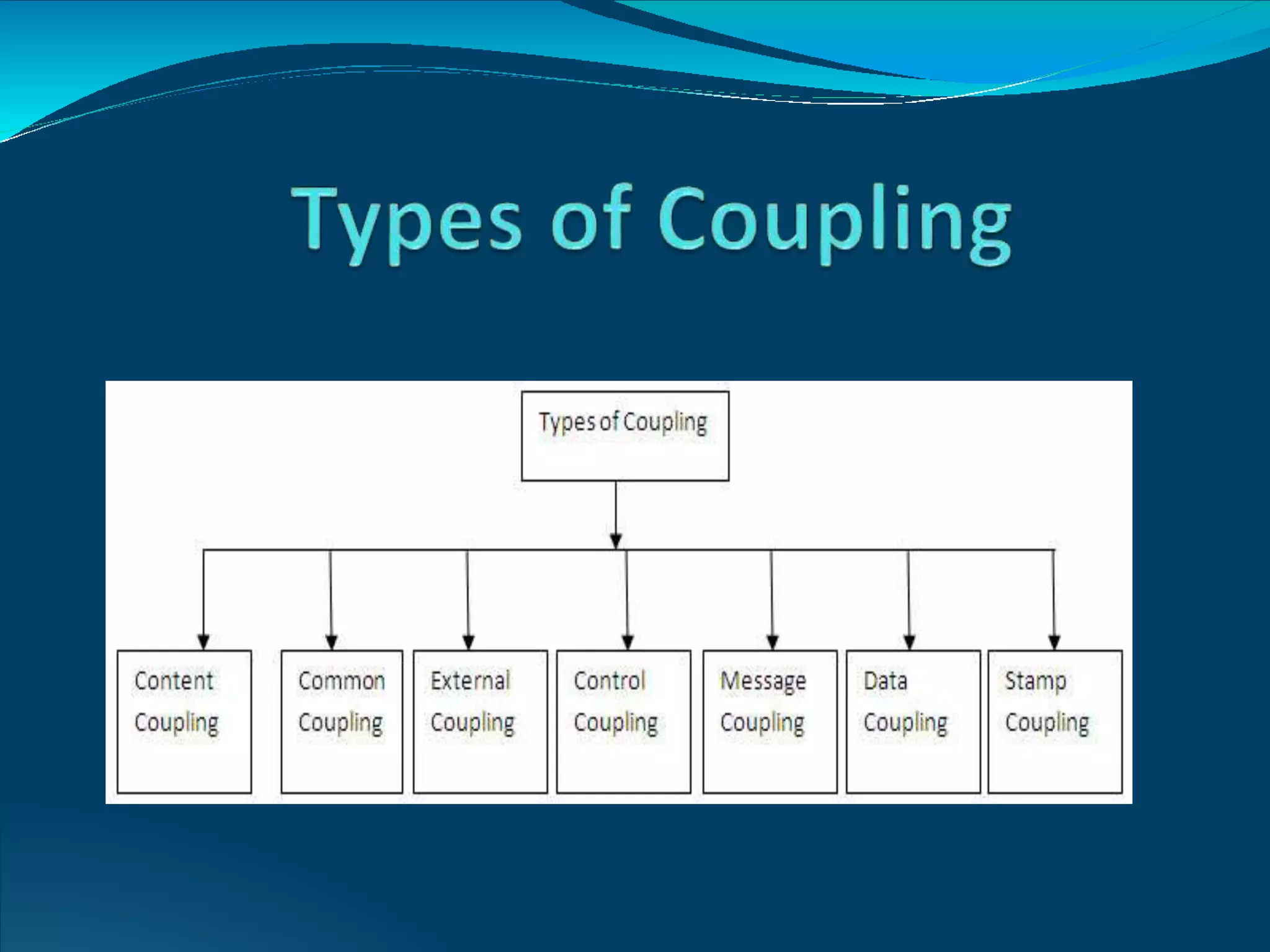
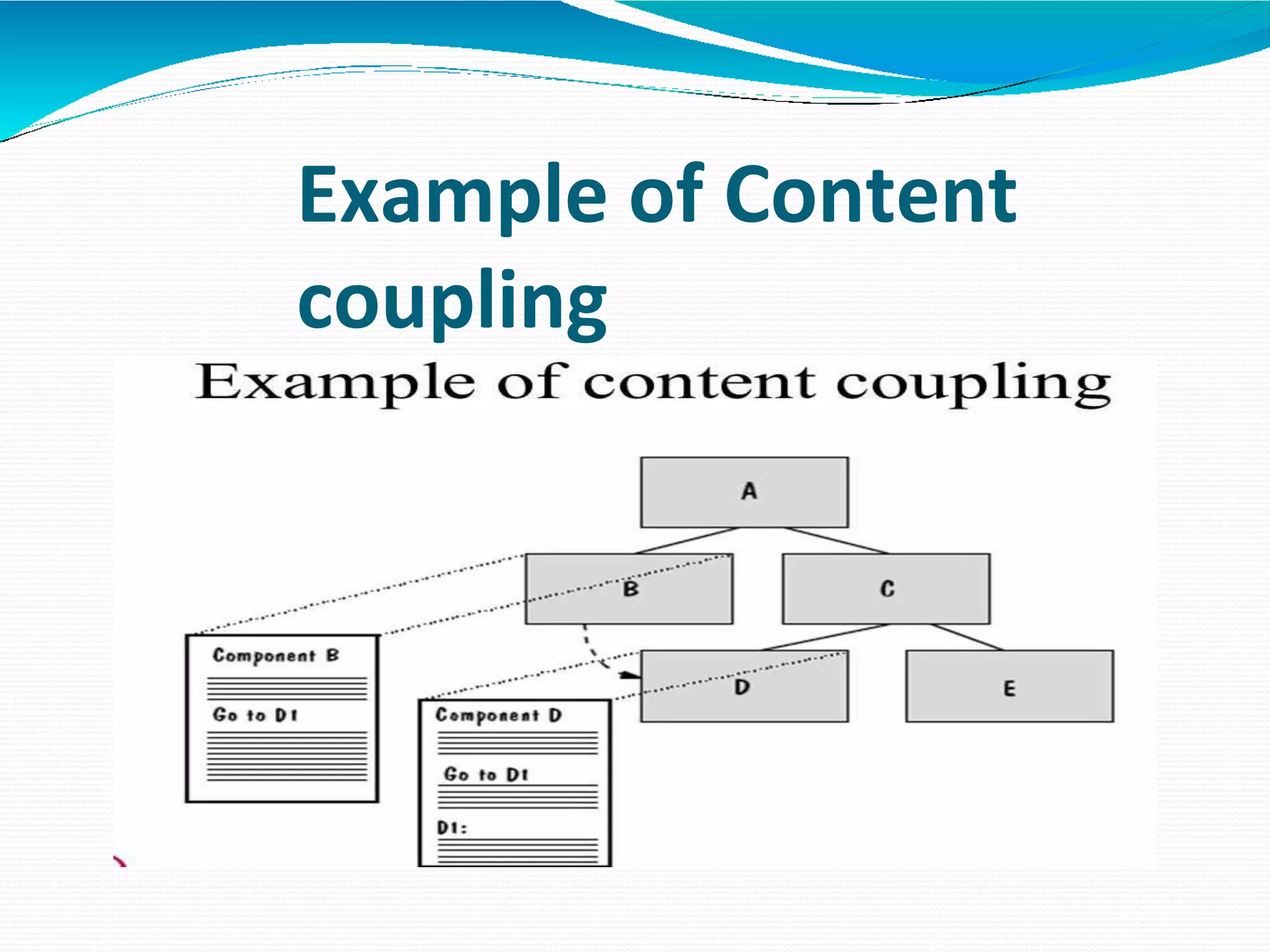
Content coupling (high)
Content coupling (also known as Pathological coupling) occurs
when one module modifies or relies on the internal workings of
another module (e.g., accessing local data of another module). In
this situation, a change in the way the second module produces
data (location, type, timing) might also require a change in the
dependent module.
Example of Content
coupling
Common coupling
Common coupling (also known as Global coupling) occurs when
two modules share the same global data (e.g., a global variable).
Changing the shared resource might imply changing all the
modulesusing it.
Example of
Common coupling
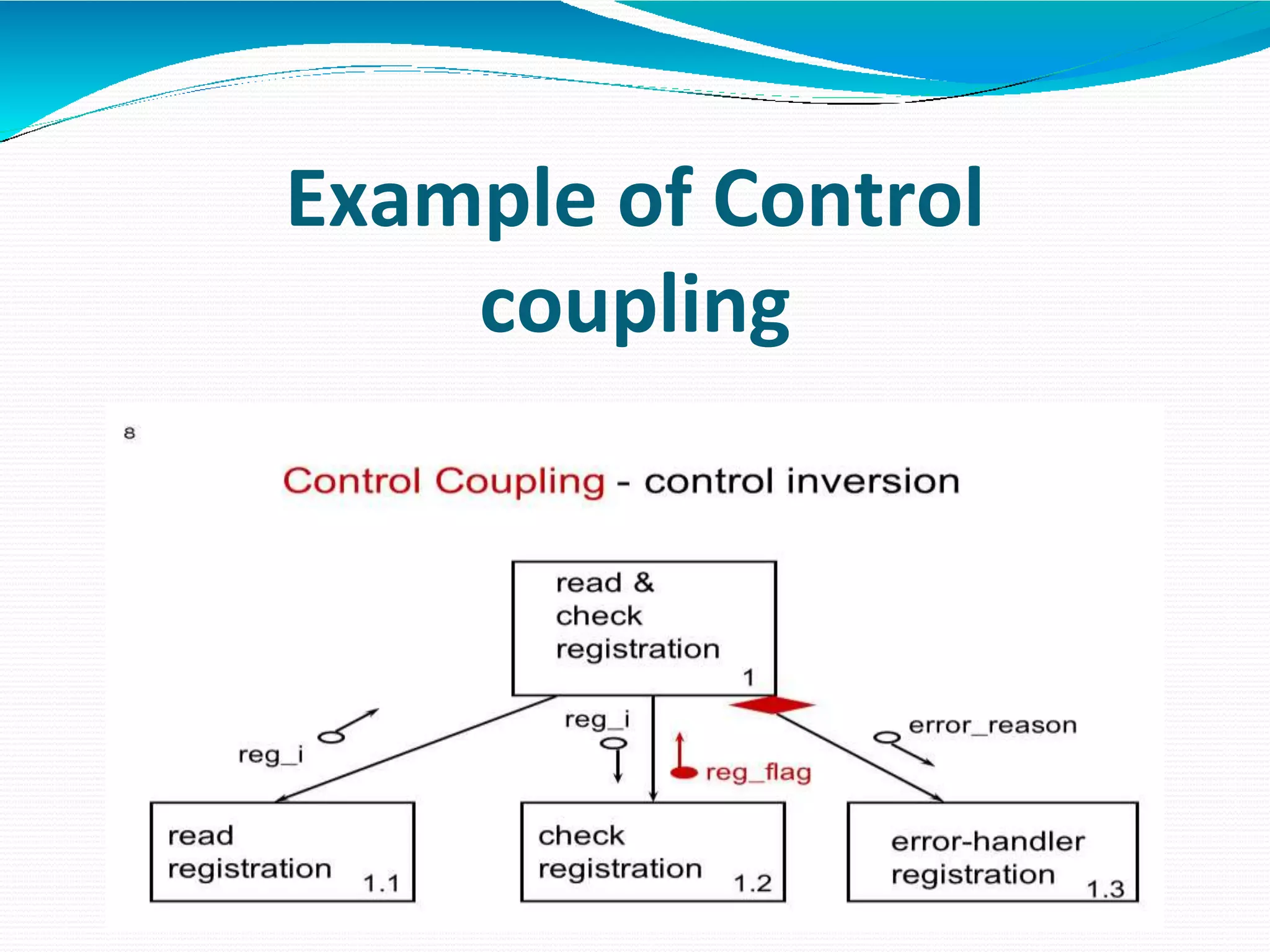
Control coupling
Control coupling is one module controlling the flow of another,
by passing it information on what to do (e.g., passing a what-to-
doflag).
Example of Control
coupling
Stamp coupling (Data-structured
coupling)
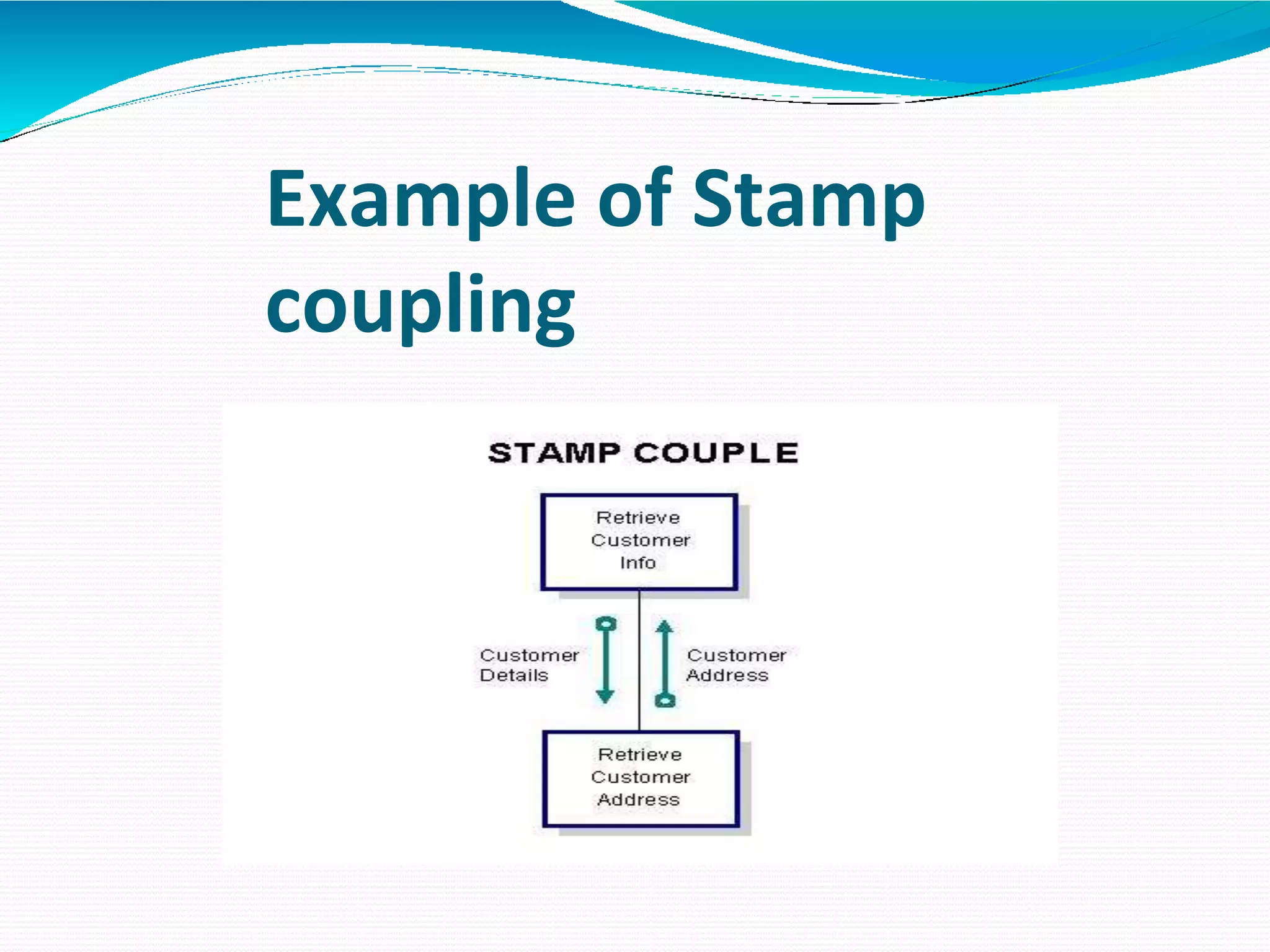
In this type of coupling, the data structure is used to transfer
information from on component to another.
Example of Stamp
coupling
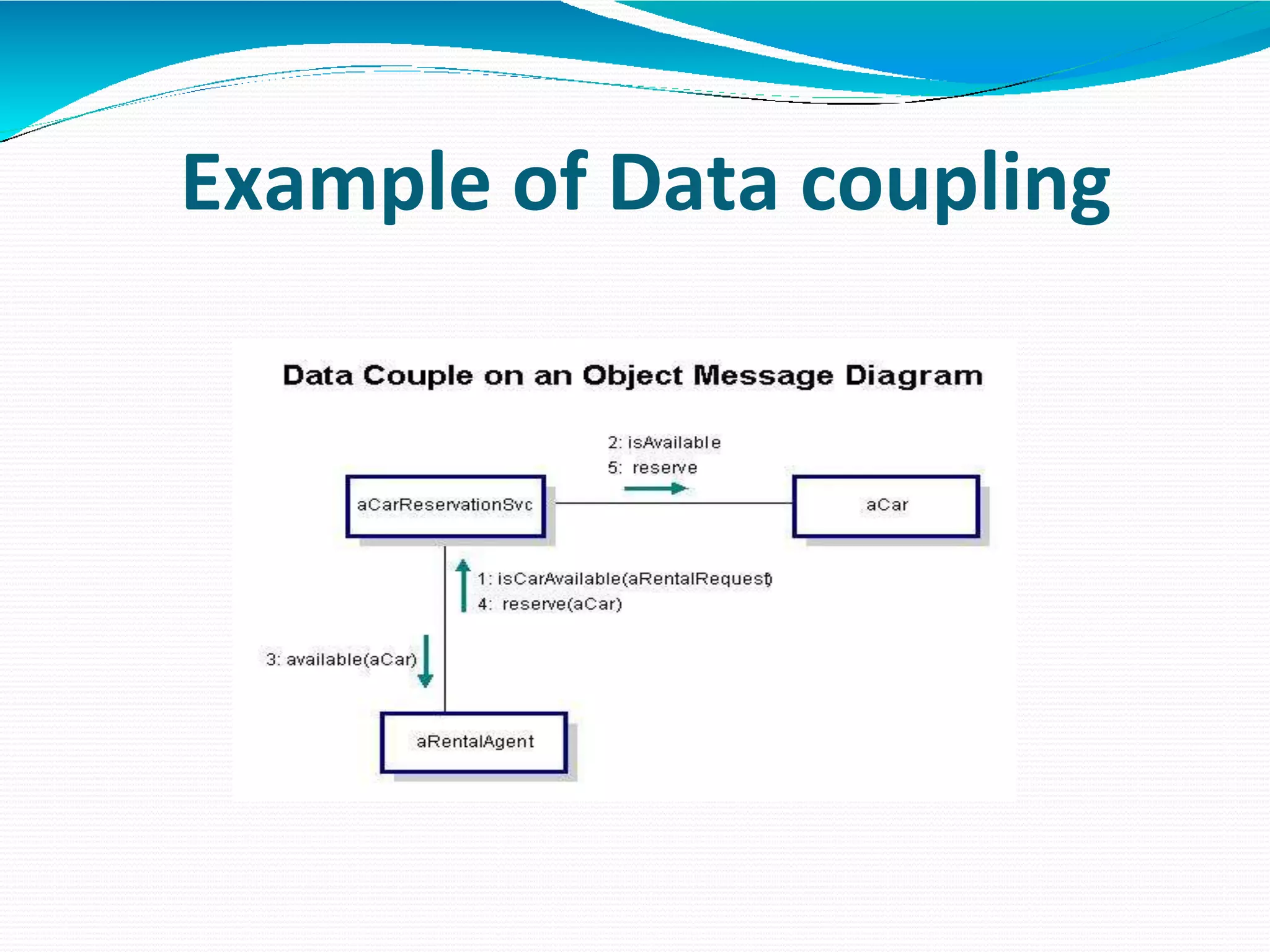
Data coupling
The modules are connected by the data coupling, if only data
can be passed between them.
Example of Data coupling
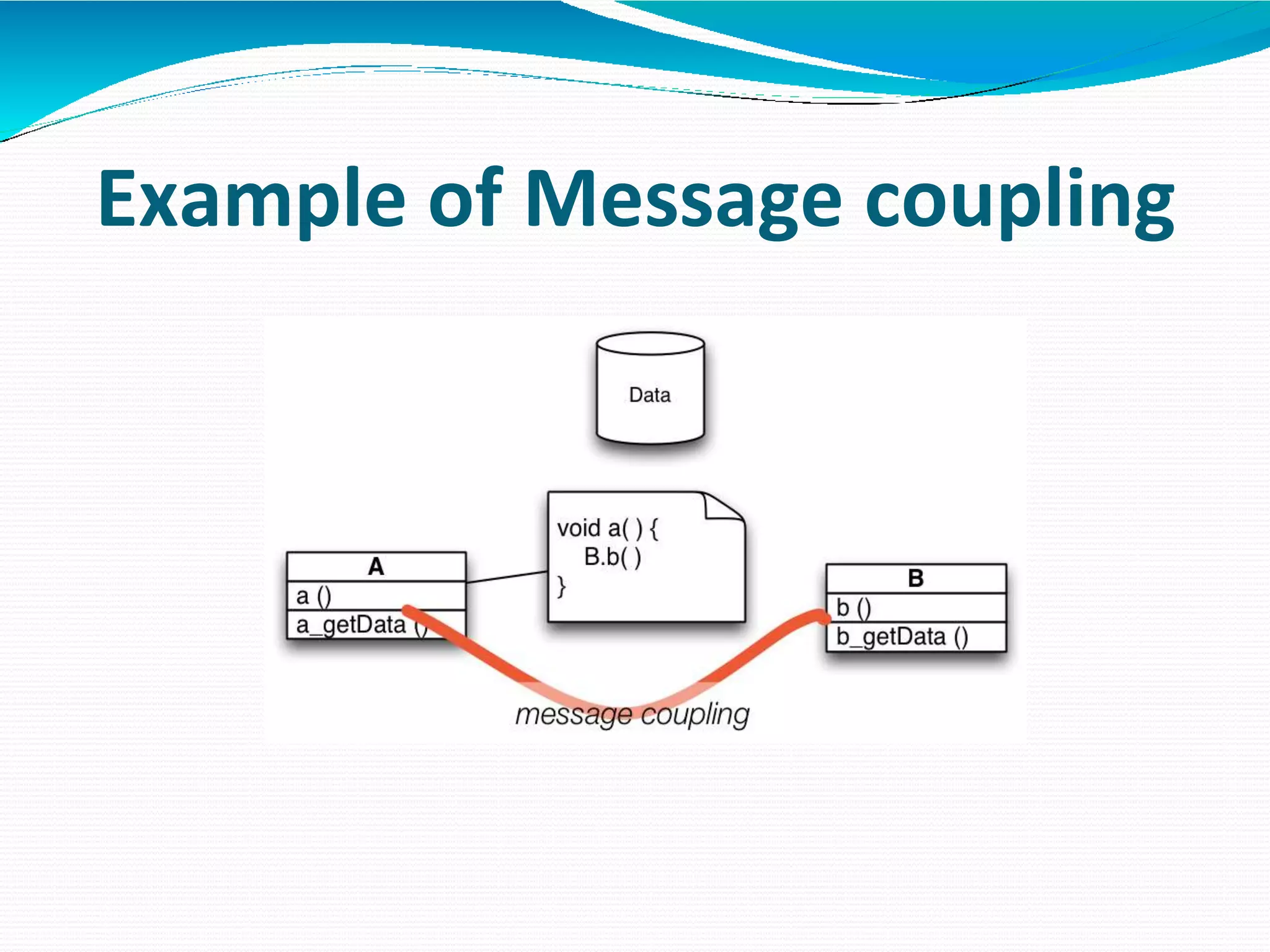
Message coupling (low)
This is the loosest type of coupling. It can be achieved by state
decentralization (as in objects) and component communication is
done via parameters or message passing.
Example of Message coupling
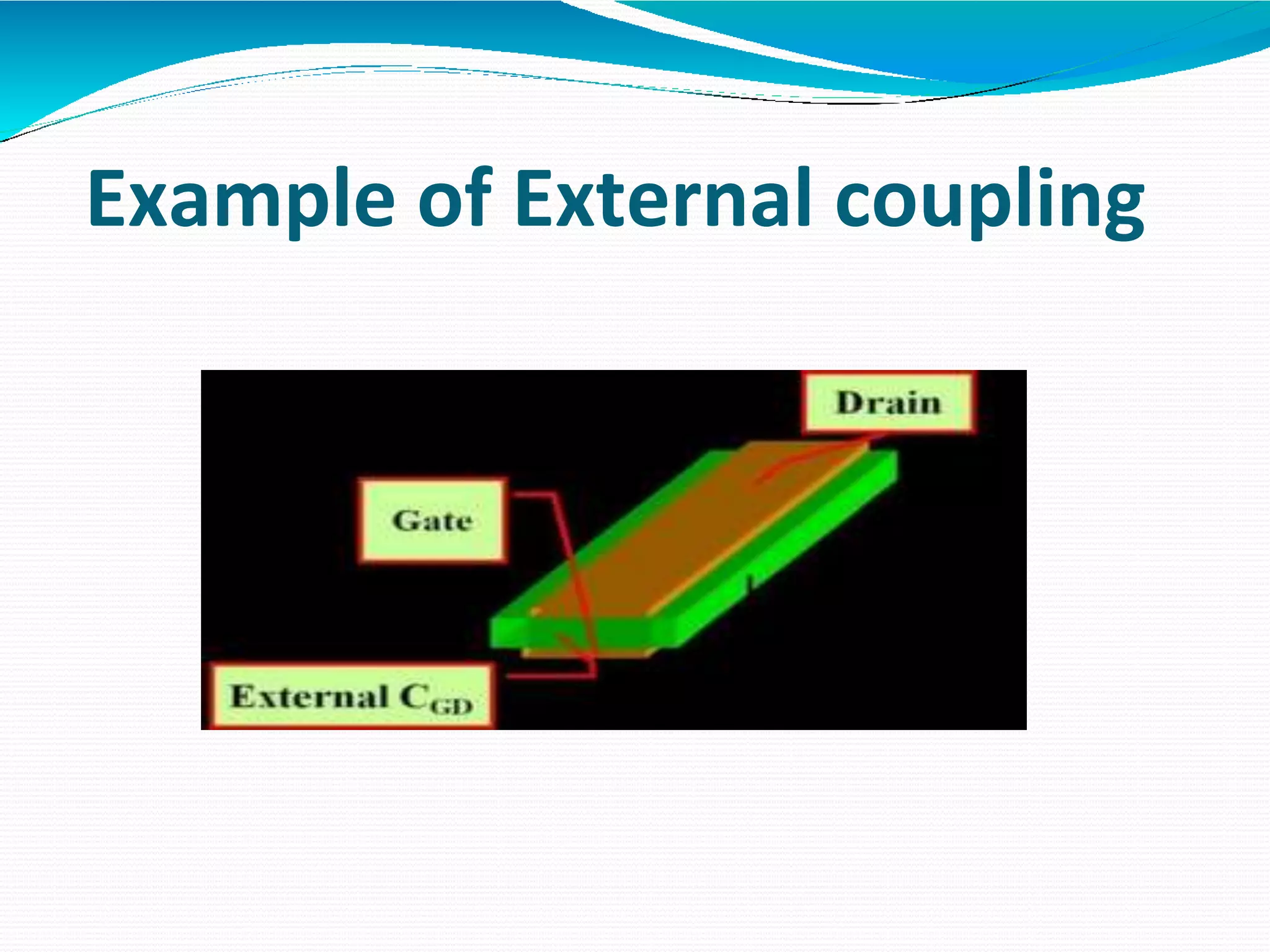
External coupling
External coupling occurs when two modules share an externally
imposed data format, communication protocol, or device
interface. This is basically related to the communication to
external tools and devices.
Example of External coupling
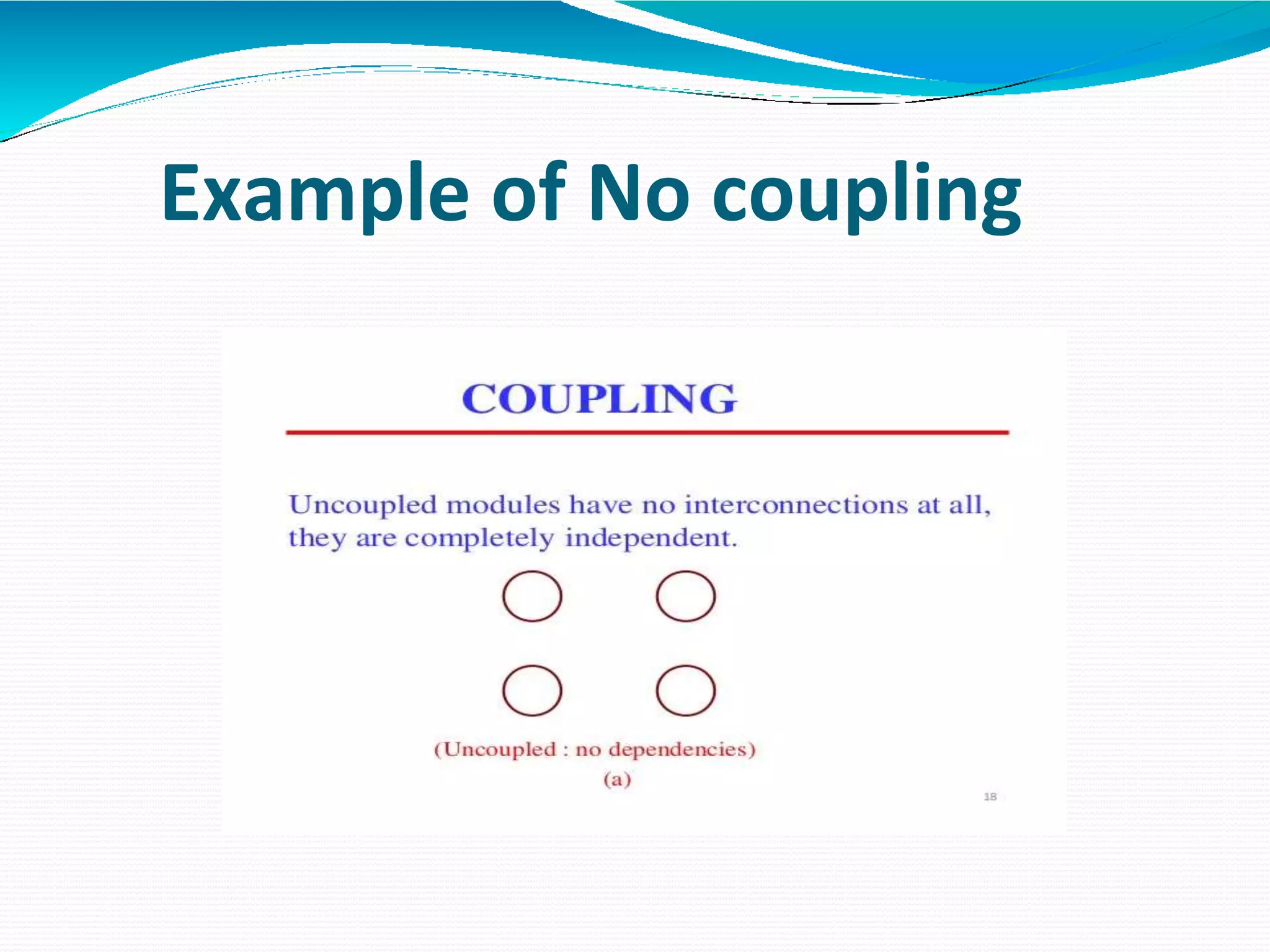
No coupling
Modules do not communicateat all with one another.
Example of No coupling
Coupling , Cohesion and there Types

Coupling , Cohesion and there Types

  • 2.
    Cohesion  In computerprogramming, cohesion refers to the degree to which the elements of a module belong together. Thus, cohesion measures the strength of relationship between pieces of functionality within a given module. For example, in highlycohesive systems functionality is stronglyrelated.  Cohesion is an ordinal type of measurement and is usuallydescribed as “high cohesion” or “low cohesion”.
  • 4.
    Logical cohesion Logical cohesionis when parts of a module are grouped because they are logically categorized to do the same thing even though they are different by nature (e.g. grouping all mouse and keyboard input handling routines).
  • 5.
    Temporal cohesion Temporal cohesionis when parts of a module are grouped by when they are processed - the parts are processed at a particular time in program execution (e.g. a function which is called after catching an exception which closes open files, creates an error log, and notifies the user).
  • 6.
    Procedural cohesion Procedural cohesionis when parts of a module are grouped because they always follow a certain sequence of execution (e.g. a function which checks file permissions and then opens thefile).
  • 7.
    Communicational/informational cohesion Communicational cohesion iswhen parts of a module are grouped because they operate on the same data (e.g. a module which operates on the same record of information).
  • 8.
    Sequential cohesion Sequential cohesionis when parts of a module are grouped because the output from one part is the input to another part like an assembly line (e.g. a function which reads data from a file and processes the data).
  • 9.
    Functional cohesion (best) Functionalcohesion is when parts of a module are grouped because they all contribute to a single well- defined task of the module (e.g. Lexical analysis of an XML string).
  • 10.
    While functional cohesionis considered the most desirable type of cohesion for a software module, it may not be achievable. There are cases where communicational cohesion is the highest level of cohesion that can be attained under the circumstances.
  • 11.
  • 12.
  • 13.
    Coupling (computer programming) In software Engenering, coupling is the degree of interdependence between software modules; a measure of how closely connected two routines or modules are; the strength of the relationships between modules.  Coupling is usually contrasted with cohesion. Low coupling often correlates with high cohesion, and vice versa. Low coupling is often a sign of a well- structured computer system and a good design, and when combined with high cohesion, supports the general goals of high readability andmaintainability.
  • 15.
    Content coupling (high) Contentcoupling (also known as Pathological coupling) occurs when one module modifies or relies on the internal workings of another module (e.g., accessing local data of another module). In this situation, a change in the way the second module produces data (location, type, timing) might also require a change in the dependent module.
  • 16.
  • 17.
    Common coupling Common coupling(also known as Global coupling) occurs when two modules share the same global data (e.g., a global variable). Changing the shared resource might imply changing all the modulesusing it.
  • 18.
  • 19.
    Control coupling Control couplingis one module controlling the flow of another, by passing it information on what to do (e.g., passing a what-to- doflag).
  • 20.
  • 21.
    Stamp coupling (Data-structured coupling) Inthis type of coupling, the data structure is used to transfer information from on component to another.
  • 22.
  • 23.
    Data coupling The modulesare connected by the data coupling, if only data can be passed between them.
  • 24.
  • 25.
    Message coupling (low) Thisis the loosest type of coupling. It can be achieved by state decentralization (as in objects) and component communication is done via parameters or message passing.
  • 26.
  • 27.
    External coupling External couplingoccurs when two modules share an externally imposed data format, communication protocol, or device interface. This is basically related to the communication to external tools and devices.
  • 28.
  • 29.
    No coupling Modules donot communicateat all with one another.
  • 30.
    Example of Nocoupling