Strategic Planning
@RichardMBrooks
26th October 2015
Where do I want to be in 3 years
from now. Given that; where do I
need to be in 12 months and
who do I need to talk to in the
next 6 weeks.
Corporate Strategy
Strategy will affect the overall direction of the
organisation and establish its future working
environment. Corporate strategy defines the
markets and the businesses in which an
organisation chooses to operate. Competitive
or business strategy defines the basis on which
it will compete.
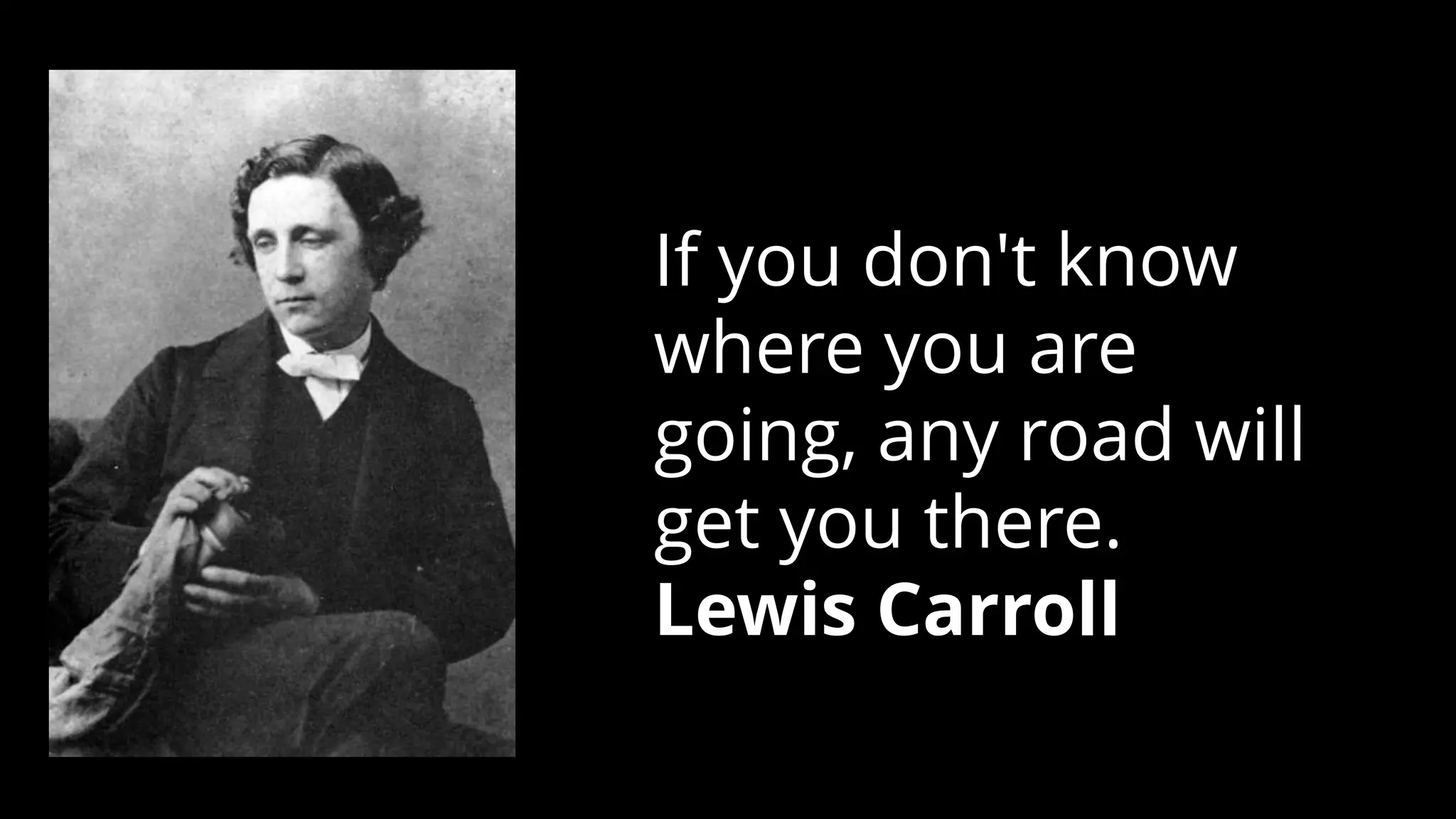
If you don't know
where you are
going, any road will
get you there.
Lewis Carroll
You need a tool kit
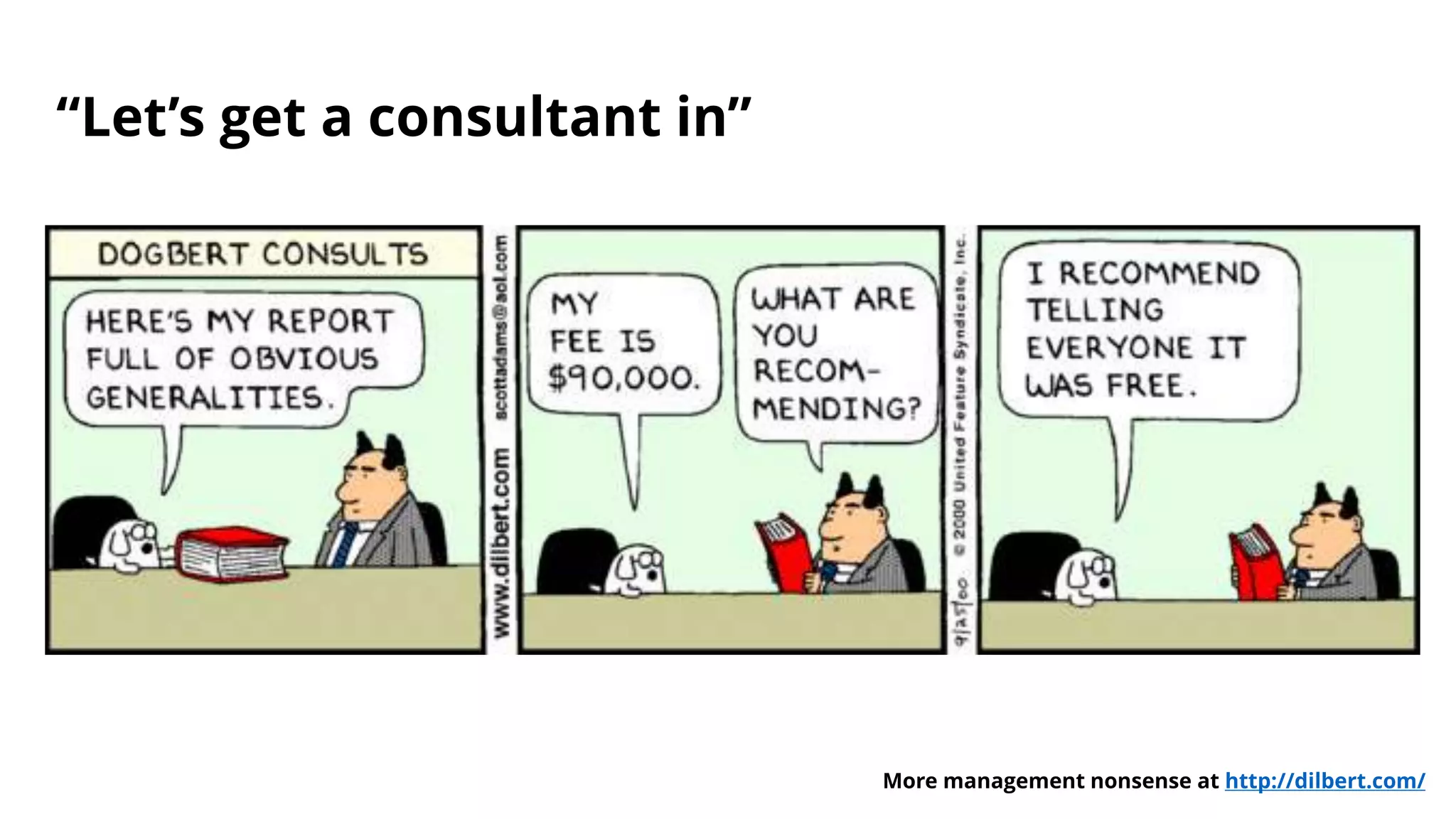
“Let’s get a consultant in”
More management nonsense at http://dilbert.com/
To look into the future we
need to teach managers to
look through the lens of a
good theory.
5 Forces
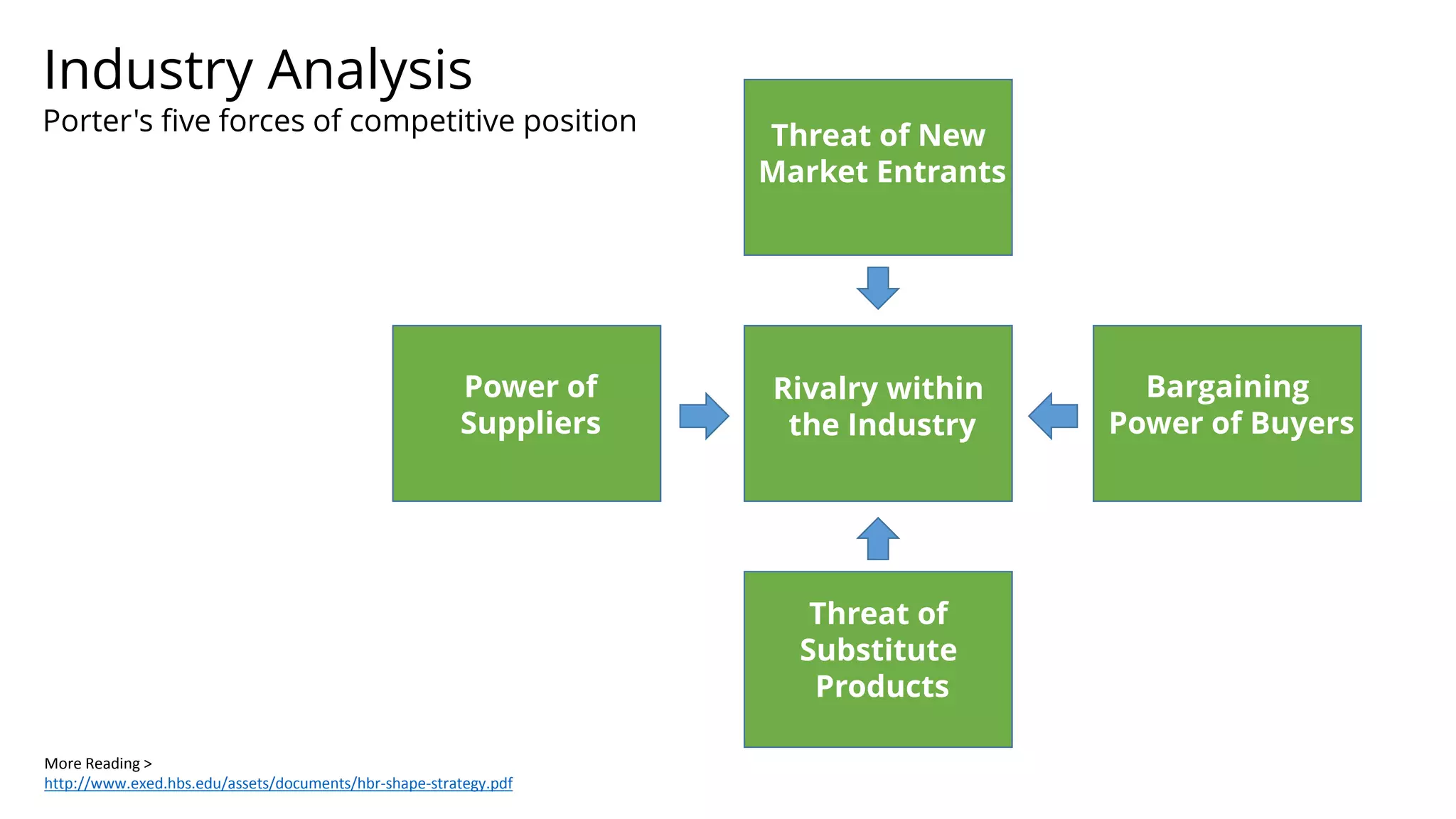
Porter’s five forces analysis is a framework to analyse the
level of competition within an industry and business
strategy development. It draws upon industrial organization
(IO) economics to derive five forces that determine the
competitive intensity, expected level of entrepreneurs
profit and therefore attractiveness of an Industry.
Read More: https://hbr.org/video/3590615226001/the-
explainer-porters-five-forces
Resources Based View of the Firm
The resource-based view (RBV) says the basis for the
competitive advantage of a firm lies primarily in the
application of a bundle of valuable tangible or intangible
resources at the firm's disposal. In other words its what’s
inside your company that counts and its how you
arrange/aquire these resources which will give you
sustainable competitive advantage.
Read more:
http://www.strategicmanagementinsight.com/topics/reso
urce-based-view.html
PESTLE Analysis
Use this to track the wider environment around your
company. The model asks you to look at the Political,
Environmental, Social, Technological, Legal and Economic
influences happening around you.
Preferred over a SWOT analysis as this form of research
naturally contains boundaries.
Read More: http://pestleanalysis.com/what-is-pestle-
analysis/
Business Model Canvas
The central model in Alexander Osterwalder’s book The
Business Model Generation. Raising the thought process
that business models are made of 9 distinct pieces. Model
is easy to learn and to teach to managers. By working
through each section your company gains the opportunity
to innovate nine key aspects of your business.
Read More:
http://www.businessmodelgeneration.com/canvas/bmc
The Power of Conversation
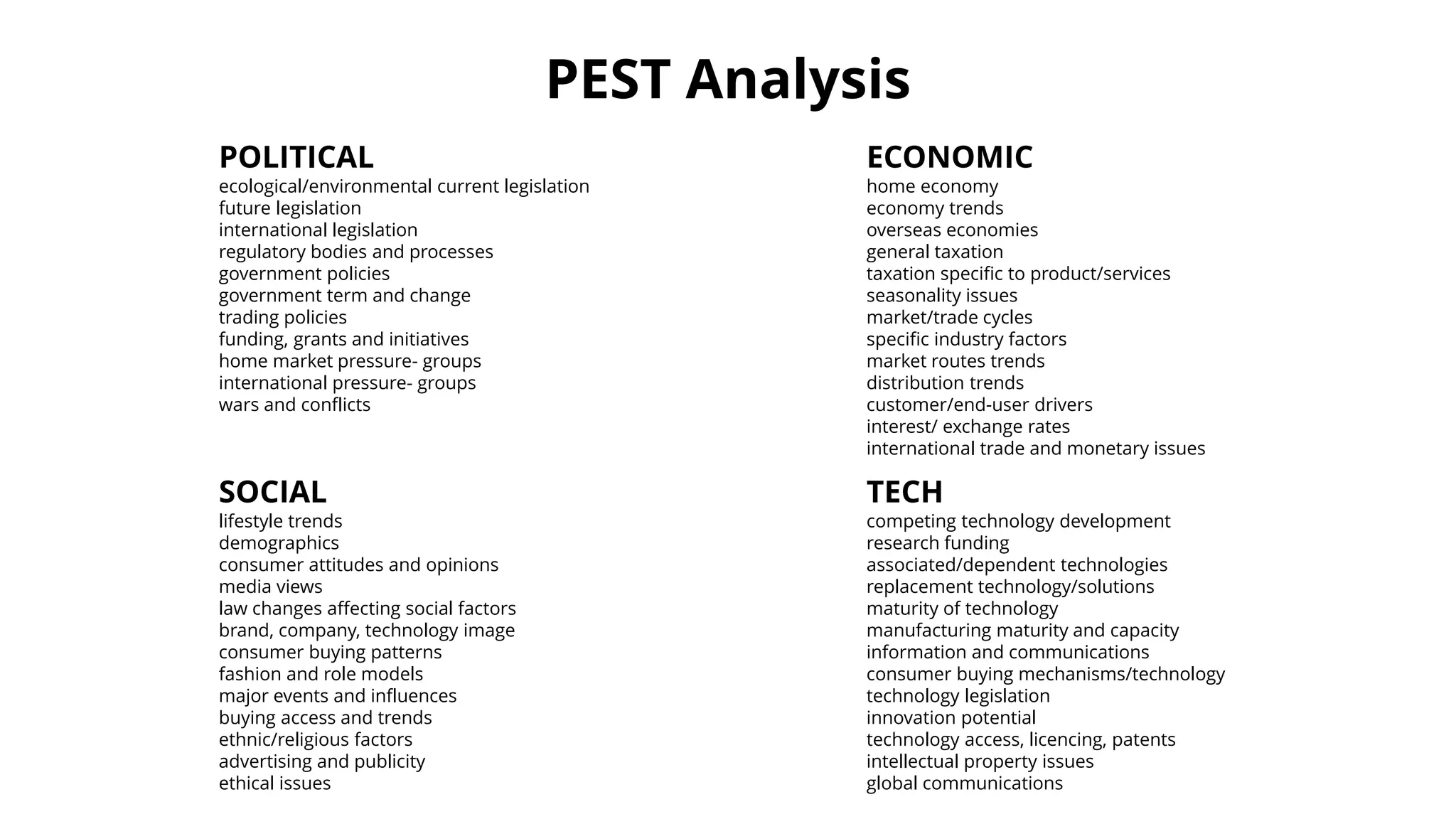
PEST Analysis
POLITICAL
ecological/environmental current legislation
future legislation
international legislation
regulatory bodies and processes
government policies
government term and change
trading policies
funding, grants and initiatives
home market pressure- groups
international pressure- groups
wars and conflicts
ECONOMIC
home economy
economy trends
overseas economies
general taxation
taxation specific to product/services
seasonality issues
market/trade cycles
specific industry factors
market routes trends
distribution trends
customer/end-user drivers
interest/ exchange rates
international trade and monetary issues
SOCIAL
lifestyle trends
demographics
consumer attitudes and opinions
media views
law changes affecting social factors
brand, company, technology image
consumer buying patterns
fashion and role models
major events and influences
buying access and trends
ethnic/religious factors
advertising and publicity
ethical issues
TECH
competing technology development
research funding
associated/dependent technologies
replacement technology/solutions
maturity of technology
manufacturing maturity and capacity
information and communications
consumer buying mechanisms/technology
technology legislation
innovation potential
technology access, licencing, patents
intellectual property issues
global communications
Industry Analysis
Porter's five forces of competitive position Threat of New
Market Entrants
Threat of
Substitute
Products
Rivalry within
the Industry
Bargaining
Power of Buyers
Power of
Suppliers
More Reading >
http://www.exed.hbs.edu/assets/documents/hbr-shape-strategy.pdf
The Power of Conversation
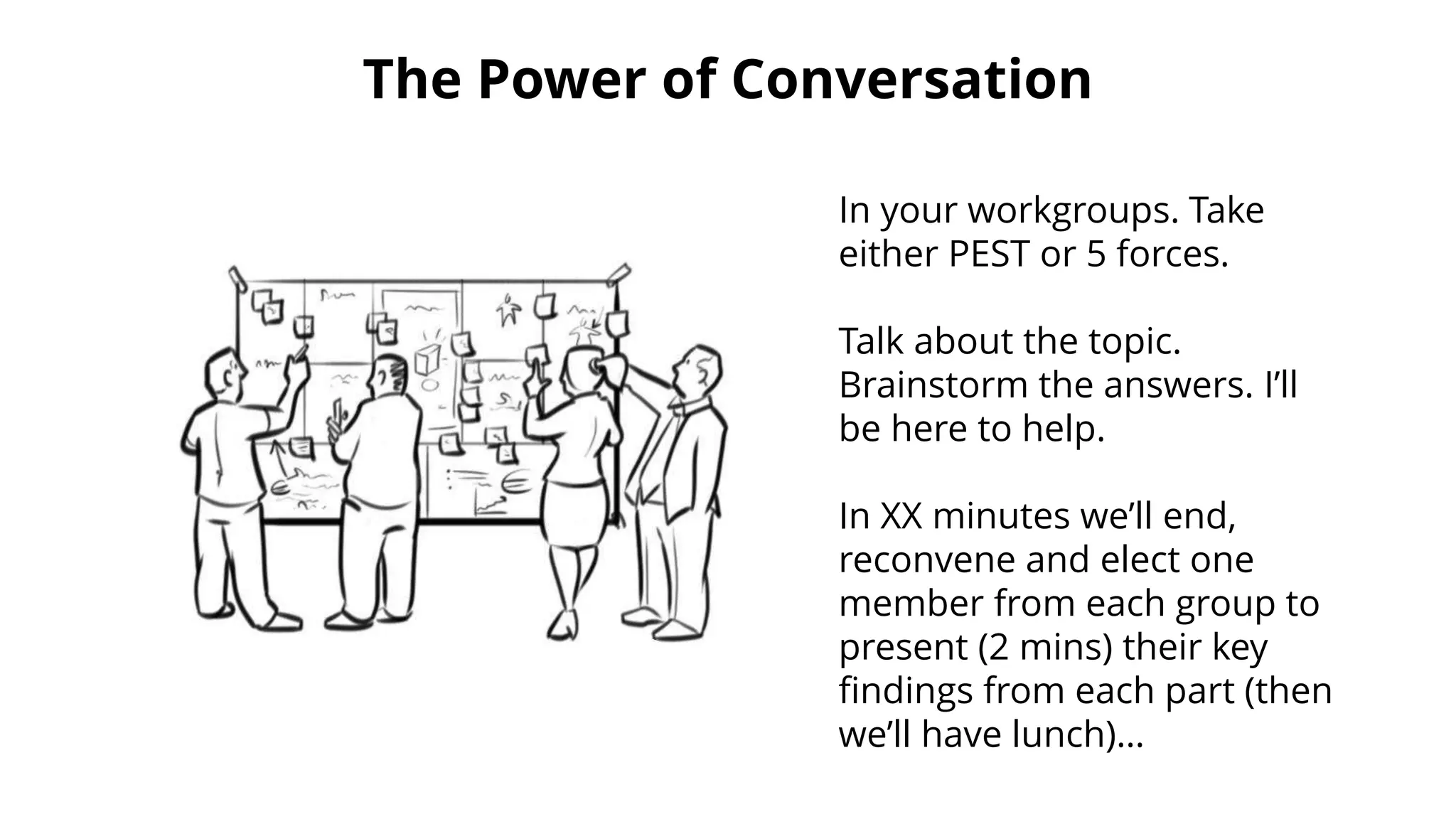
In your workgroups. Take
either PEST or 5 forces.
Talk about the topic.
Brainstorm the answers. I’ll
be here to help.
In XX minutes we’ll end,
reconvene and elect one
member from each group to
present (2 mins) their key
findings from each part (then
we’ll have lunch)…

Corporate Strategy Workshop

  • 1.
  • 2.
    Where do Iwant to be in 3 years from now. Given that; where do I need to be in 12 months and who do I need to talk to in the next 6 weeks.
  • 3.
    Corporate Strategy Strategy willaffect the overall direction of the organisation and establish its future working environment. Corporate strategy defines the markets and the businesses in which an organisation chooses to operate. Competitive or business strategy defines the basis on which it will compete.
  • 4.
    If you don'tknow where you are going, any road will get you there. Lewis Carroll
  • 5.
    You need atool kit
  • 6.
    “Let’s get aconsultant in” More management nonsense at http://dilbert.com/
  • 7.
    To look intothe future we need to teach managers to look through the lens of a good theory.
  • 8.
    5 Forces Porter’s fiveforces analysis is a framework to analyse the level of competition within an industry and business strategy development. It draws upon industrial organization (IO) economics to derive five forces that determine the competitive intensity, expected level of entrepreneurs profit and therefore attractiveness of an Industry. Read More: https://hbr.org/video/3590615226001/the- explainer-porters-five-forces Resources Based View of the Firm The resource-based view (RBV) says the basis for the competitive advantage of a firm lies primarily in the application of a bundle of valuable tangible or intangible resources at the firm's disposal. In other words its what’s inside your company that counts and its how you arrange/aquire these resources which will give you sustainable competitive advantage. Read more: http://www.strategicmanagementinsight.com/topics/reso urce-based-view.html PESTLE Analysis Use this to track the wider environment around your company. The model asks you to look at the Political, Environmental, Social, Technological, Legal and Economic influences happening around you. Preferred over a SWOT analysis as this form of research naturally contains boundaries. Read More: http://pestleanalysis.com/what-is-pestle- analysis/ Business Model Canvas The central model in Alexander Osterwalder’s book The Business Model Generation. Raising the thought process that business models are made of 9 distinct pieces. Model is easy to learn and to teach to managers. By working through each section your company gains the opportunity to innovate nine key aspects of your business. Read More: http://www.businessmodelgeneration.com/canvas/bmc
  • 10.
    The Power ofConversation
  • 11.
    PEST Analysis POLITICAL ecological/environmental currentlegislation future legislation international legislation regulatory bodies and processes government policies government term and change trading policies funding, grants and initiatives home market pressure- groups international pressure- groups wars and conflicts ECONOMIC home economy economy trends overseas economies general taxation taxation specific to product/services seasonality issues market/trade cycles specific industry factors market routes trends distribution trends customer/end-user drivers interest/ exchange rates international trade and monetary issues SOCIAL lifestyle trends demographics consumer attitudes and opinions media views law changes affecting social factors brand, company, technology image consumer buying patterns fashion and role models major events and influences buying access and trends ethnic/religious factors advertising and publicity ethical issues TECH competing technology development research funding associated/dependent technologies replacement technology/solutions maturity of technology manufacturing maturity and capacity information and communications consumer buying mechanisms/technology technology legislation innovation potential technology access, licencing, patents intellectual property issues global communications
  • 12.
    Industry Analysis Porter's fiveforces of competitive position Threat of New Market Entrants Threat of Substitute Products Rivalry within the Industry Bargaining Power of Buyers Power of Suppliers More Reading > http://www.exed.hbs.edu/assets/documents/hbr-shape-strategy.pdf
  • 13.
    The Power ofConversation In your workgroups. Take either PEST or 5 forces. Talk about the topic. Brainstorm the answers. I’ll be here to help. In XX minutes we’ll end, reconvene and elect one member from each group to present (2 mins) their key findings from each part (then we’ll have lunch)…