
Presented By:
Registrationwala
The Need of Insolvency Resolution
 To resolve insolvency quickly.
 To make sure that creditors
are paid properly.
 To provide a streamlined
approach to insolvency
resolution.
Conductor of Insolvency Resolution
The process of insolvency resolution is conducted by the Insolvency
professional.
This professional is Interim in nature and is appointed by IBBI or
Insolvency and Bankruptcy Board in India.
Initiator of Insolvency Resolution
Process
 The insolvency resolution process can be
initiated by:
 The operational or financial creditors.
 Under some conditions, this process can
also be initiated by:
 Corporate debtors as well.
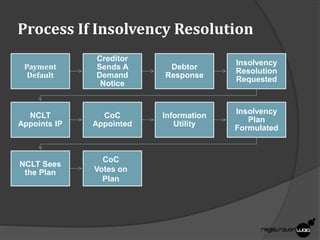
Process If Insolvency Resolution
Payment
Default
Creditor
Sends A
Demand
Notice
Debtor
Response
Insolvency
Resolution
Requested
NCLT
Appoints IP
CoC
Appointed
Information
Utility
Insolvency
Plan
Formulated
NCLT Sees
the Plan
CoC
Votes on
Plan
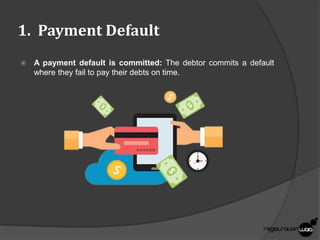
1. Payment Default
 A payment default is committed: The debtor commits a default
where they fail to pay their debts on time.
2. Creditor Sends A Demand Notice
 The creditor sends a demand notice to the debtor: Under
section 8 of the Insolvency and Bankruptcy Act, the debtor can
send a demand notice to the debtor.
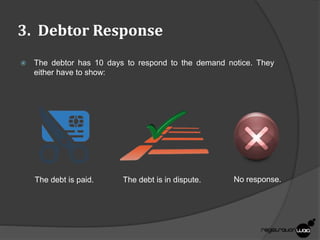
3. Debtor Response
 The debtor has 10 days to respond to the demand notice. They
either have to show:
The debt is in dispute.The debt is paid. No response.
4. Insolvency Resolution Requested
 No/bad response -> insolvency resolution requested : A petition
of insolvency resolution is filed under section 9 of IBC act.
5. NCLT Appoints IP
 NCLT appoints an Insolvency professional: The national
company law tribunal appoints an insolvency professional to
conduct the process.
6. CoC Appointed
 Committee of Creditors appointed: Creditors choose their
representatives to form a committee of creditors.
7. Information Utility
 Information extracted from information utility : The Insolvency
professional extracts the financial information of the debtor.
8. Insolvency Plan Formulated
 Insolvency professional formulates a
plan: The insolvency resolution
professional formulates an insolvency
resolution plan.
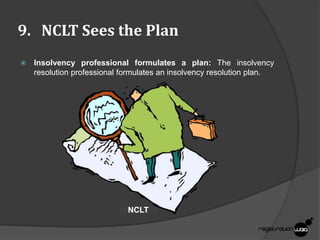
9. NCLT Sees the Plan
 Insolvency professional formulates a plan: The insolvency
resolution professional formulates an insolvency resolution plan.
NCLT
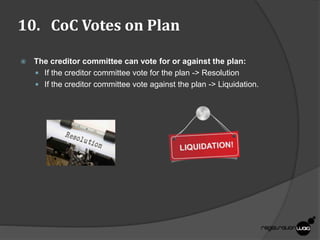
10. CoC Votes on Plan
 The creditor committee can vote for or against the plan:
 If the creditor committee vote for the plan -> Resolution
 If the creditor committee vote against the plan -> Liquidation.
Insolvency Resolution Process Time
Time taken for the complete Insolvency resolution process tends to be
different on the basis of size of the companies:
 For Large Companies:
 For big companies, the process takes 180 days.
 This date can be extended to 270 days for a single time.
 For Small companies:
 For small companies, the process takes 90 days.
 This date can be extended to 135 days for a single time.
Contact Us
+91-8882-580-580
support@registrationwala.com
www.registrationwala.com

Corporate Insolvency Resolution Process PPT

  • 1.
  • 2.
    The Need ofInsolvency Resolution  To resolve insolvency quickly.  To make sure that creditors are paid properly.  To provide a streamlined approach to insolvency resolution.
  • 3.
    Conductor of InsolvencyResolution The process of insolvency resolution is conducted by the Insolvency professional. This professional is Interim in nature and is appointed by IBBI or Insolvency and Bankruptcy Board in India.
  • 4.
    Initiator of InsolvencyResolution Process  The insolvency resolution process can be initiated by:  The operational or financial creditors.  Under some conditions, this process can also be initiated by:  Corporate debtors as well.
  • 5.
    Process If InsolvencyResolution Payment Default Creditor Sends A Demand Notice Debtor Response Insolvency Resolution Requested NCLT Appoints IP CoC Appointed Information Utility Insolvency Plan Formulated NCLT Sees the Plan CoC Votes on Plan
  • 6.
    1. Payment Default A payment default is committed: The debtor commits a default where they fail to pay their debts on time.
  • 7.
    2. Creditor SendsA Demand Notice  The creditor sends a demand notice to the debtor: Under section 8 of the Insolvency and Bankruptcy Act, the debtor can send a demand notice to the debtor.
  • 8.
    3. Debtor Response The debtor has 10 days to respond to the demand notice. They either have to show: The debt is in dispute.The debt is paid. No response.
  • 9.
    4. Insolvency ResolutionRequested  No/bad response -> insolvency resolution requested : A petition of insolvency resolution is filed under section 9 of IBC act.
  • 10.
    5. NCLT AppointsIP  NCLT appoints an Insolvency professional: The national company law tribunal appoints an insolvency professional to conduct the process.
  • 11.
    6. CoC Appointed Committee of Creditors appointed: Creditors choose their representatives to form a committee of creditors.
  • 12.
    7. Information Utility Information extracted from information utility : The Insolvency professional extracts the financial information of the debtor.
  • 13.
    8. Insolvency PlanFormulated  Insolvency professional formulates a plan: The insolvency resolution professional formulates an insolvency resolution plan.
  • 14.
    9. NCLT Seesthe Plan  Insolvency professional formulates a plan: The insolvency resolution professional formulates an insolvency resolution plan. NCLT
  • 15.
    10. CoC Voteson Plan  The creditor committee can vote for or against the plan:  If the creditor committee vote for the plan -> Resolution  If the creditor committee vote against the plan -> Liquidation.
  • 16.
    Insolvency Resolution ProcessTime Time taken for the complete Insolvency resolution process tends to be different on the basis of size of the companies:  For Large Companies:  For big companies, the process takes 180 days.  This date can be extended to 270 days for a single time.  For Small companies:  For small companies, the process takes 90 days.  This date can be extended to 135 days for a single time.
  • 17.