Marketing 3344
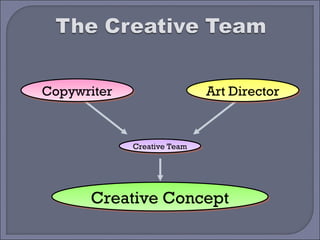
Copywriter
Copywriter                   Art Director
                             Art Director


             Creative Team
             Creative Team


      Creative Concept
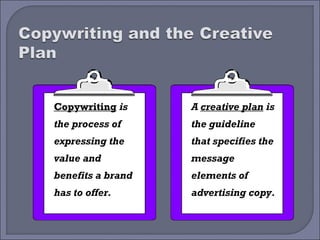
Copywriting is     A creative plan is
the process of     the guideline
expressing the     that specifies the
value and          message
benefits a brand   elements of
has to offer.      advertising copy.
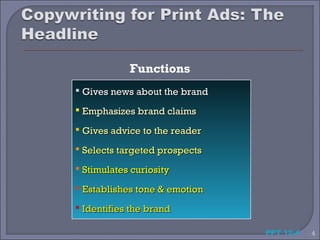
Functions
 Gives news about the brand
 Emphasizes brand claims
 Gives advice to the reader
 Selects targeted prospects
 Stimulates curiosity
 Establishes tone & emotion
 Identifies the brand

                               PPT 12-4   4
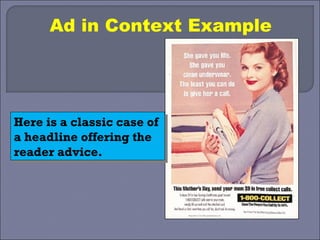
Ad in Context Example


Here is a classic case of
a headline offering the
reader advice.
reader advice.
Guidelines for writing headlines
 Be persuasive
                                Entice to read body copy
 Appeal to self-interest
                                Entice to examine visuals
 Inject maximum information
                                Never change typeface
 Limit to five-eight words
                                Never rely upon body copy
 Include the brand name
                                Keep it simple & familiar
Functions
 Reinforce the headline
 Include important information not
communicated in the headline
 Communicate key selling points or
  information quickly
 Stimulate more complete reading of
the whole ad
 The longer the body copy, the
more appropriate is the use of
subheads
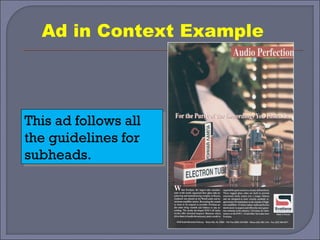
Ad in Context Example


This ad follows all
 This ad follows all
the guidelines for
 the guidelines for
subheads.
 subheads.
Techniques

 Straight-line copy
 Dialogue
 Testimonial
 Narrative
 Direct response copy
Guidelines
   Use present tense           Vary sentence


                        
                              and paragraph
 


   Use singular nouns
  and verbs                   length
   Use active verbs            Involve the reader


                         
                               Provide support
 


   Use familiar words
  and phrases                 for the unbelievable
                               Avoid clichés and
                             superlatives
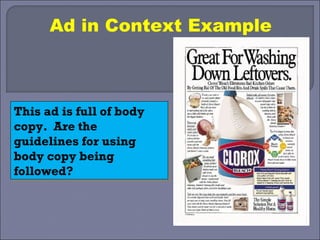
Ad in Context Example


This ad is full of body
 This ad is full of body
copy. Are the
 copy. Are the
guidelines for using
 guidelines for using
body copy being
 body copy being
followed?
 followed?
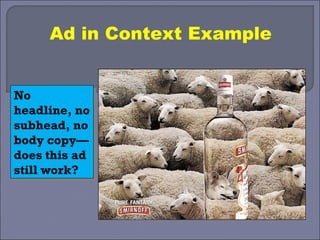
Ad in Context Example


No
No
headline, no
headline, no
subhead, no
subhead, no
body copy—
body copy—
does this ad
does this ad
still work?
still work?
   Cybercopy is often rooted in techno-speak.
   It is a medium where audience has a
    different meaning than in traditional media.
    • Audience often comes directly to ads—not
      passive
    • Other ads pop up
    • Copy is closer to print than broadcast
    • Cybercopy is often direct response
    • Rules for cybercopy are not all that different than
      for print
   Different opportunities due to sight and
    sound
   Inherent limitations . . .
    • Broadcast ads offer a fleeting message
    • Broadcast employs more sensory devices which
      can ad or detract from consumers’ understanding
      of the message
Radio listeners are not active.
   


          Radio has been called “verbal wallpaper.”
          Radio can be the “theater of the mind.”
          Formats:
             Music
             Dialog
             Announcement
             Celebrity announcer
Guidelines

  Use familiar language       Stress the main


                           
 


  Use short words and      selling      points
sentences                     Use sound and music


                           
  Stimulate the imagination carefully
 


  Repeat the product          Tailor the copy to the
name                        time, place, and
                              specific audience
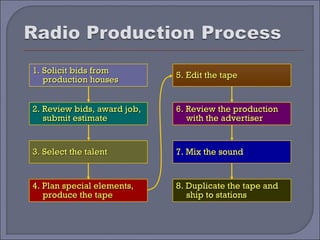
1. Solicit bids from
                             5. Edit the tape
   production houses


2. Review bids, award job,   6. Review the production
   submit estimate              with the advertiser


3. Select the talent         7. Mix the sound


4. Plan special elements,    8. Duplicate the tape and
   produce the tape             ship to stations
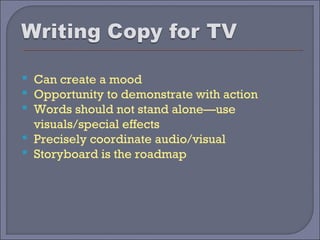
 Can create a mood
 Opportunity to demonstrate with action
 Words should not stand alone—use
  visuals/special effects
 Precisely coordinate audio/visual
 Storyboard is the roadmap
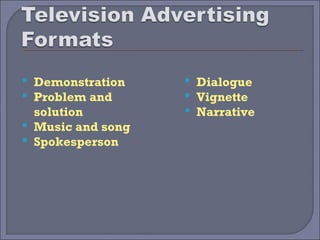
 Demonstration     Dialogue
 Problem and       Vignette
  solution          Narrative
 Music and song
 Spokesperson
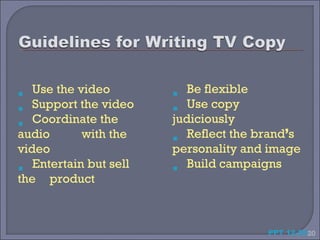
Use the video           Be flexible


                         
  


   Support the video       Use copy
   Coordinate the       judiciously
audio       with the       Reflect the brand’s


                        
video                   personality and image
   Entertain but sell      Build campaigns
                        



the product


                                        PPT 12-20 20
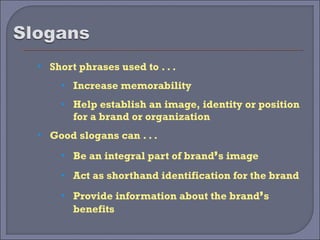
   Short phrases used to . . .
      • Increase memorability

      • Help establish an image, identity or position
         for a brand or organization
   Good slogans can . . .
      • Be an integral part of brand’s image

      • Act as shorthand identification for the brand

      • Provide information about the brand’s
         benefits
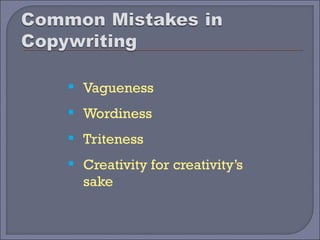
 Vagueness
 Wordiness
 Triteness
 Creativity for creativity’s
  sake
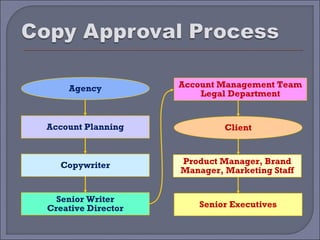
Agency          Account Management Team
                        Legal Department


Account Planning             Client


   Copywriter       Product Manager, Brand
                    Manager, Marketing Staff


  Senior Writer
Creative Director      Senior Executives

Copywriting

  • 1.
  • 2.
    Copywriter Copywriter Art Director Art Director Creative Team Creative Team Creative Concept
  • 3.
    Copywriting is A creative plan is the process of the guideline expressing the that specifies the value and message benefits a brand elements of has to offer. advertising copy.
  • 4.
    Functions  Gives newsabout the brand  Emphasizes brand claims  Gives advice to the reader  Selects targeted prospects  Stimulates curiosity  Establishes tone & emotion  Identifies the brand PPT 12-4 4
  • 5.
    Ad in ContextExample Here is a classic case of Here is a classic case of a headline offering the a headline offering the reader advice. reader advice.
  • 6.
    Guidelines for writingheadlines  Be persuasive  Entice to read body copy  Appeal to self-interest  Entice to examine visuals  Inject maximum information  Never change typeface  Limit to five-eight words  Never rely upon body copy  Include the brand name  Keep it simple & familiar
  • 7.
    Functions  Reinforce theheadline  Include important information not communicated in the headline  Communicate key selling points or information quickly  Stimulate more complete reading of the whole ad  The longer the body copy, the more appropriate is the use of subheads
  • 8.
    Ad in ContextExample This ad follows all This ad follows all the guidelines for the guidelines for subheads. subheads.
  • 9.
    Techniques  Straight-line copy Dialogue  Testimonial  Narrative  Direct response copy
  • 10.
    Guidelines Use present tense Vary sentence  and paragraph   Use singular nouns and verbs length Use active verbs Involve the reader   Provide support   Use familiar words and phrases for the unbelievable Avoid clichés and  superlatives
  • 11.
    Ad in ContextExample This ad is full of body This ad is full of body copy. Are the copy. Are the guidelines for using guidelines for using body copy being body copy being followed? followed?
  • 12.
    Ad in ContextExample No No headline, no headline, no subhead, no subhead, no body copy— body copy— does this ad does this ad still work? still work?
  • 13.
    Cybercopy is often rooted in techno-speak.  It is a medium where audience has a different meaning than in traditional media. • Audience often comes directly to ads—not passive • Other ads pop up • Copy is closer to print than broadcast • Cybercopy is often direct response • Rules for cybercopy are not all that different than for print
  • 14.
    Different opportunities due to sight and sound  Inherent limitations . . . • Broadcast ads offer a fleeting message • Broadcast employs more sensory devices which can ad or detract from consumers’ understanding of the message
  • 15.
    Radio listeners arenot active.     Radio has been called “verbal wallpaper.” Radio can be the “theater of the mind.” Formats:  Music  Dialog  Announcement  Celebrity announcer
  • 16.
    Guidelines Usefamiliar language Stress the main    Use short words and selling points sentences Use sound and music  Stimulate the imagination carefully   Repeat the product Tailor the copy to the name  time, place, and specific audience
  • 17.
    1. Solicit bidsfrom 5. Edit the tape production houses 2. Review bids, award job, 6. Review the production submit estimate with the advertiser 3. Select the talent 7. Mix the sound 4. Plan special elements, 8. Duplicate the tape and produce the tape ship to stations
  • 18.
     Can createa mood  Opportunity to demonstrate with action  Words should not stand alone—use visuals/special effects  Precisely coordinate audio/visual  Storyboard is the roadmap
  • 19.
     Demonstration  Dialogue  Problem and  Vignette solution  Narrative  Music and song  Spokesperson
  • 20.
    Use the video Be flexible      Support the video Use copy Coordinate the judiciously audio with the Reflect the brand’s  video personality and image Entertain but sell Build campaigns   the product PPT 12-20 20
  • 21.
    Short phrases used to . . . • Increase memorability • Help establish an image, identity or position for a brand or organization  Good slogans can . . . • Be an integral part of brand’s image • Act as shorthand identification for the brand • Provide information about the brand’s benefits
  • 22.
     Vagueness  Wordiness Triteness  Creativity for creativity’s sake
  • 23.
    Agency Account Management Team Legal Department Account Planning Client Copywriter Product Manager, Brand Manager, Marketing Staff Senior Writer Creative Director Senior Executives