Co-production, co-design and
co-construction of dementia
policy
Dr Shibley Rahman
3 February 2016
Power is “the ability to cause or prevent
change”
(May (1973) Power and Innocence)
47 million people in the world living with
dementia
850000 roughly in the UK
The edge?
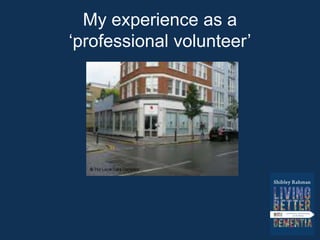
My experience as a
‘professional volunteer’
“Our health and social care services cannot
afford to allow the insight and other life
skills that people using health and social
care services possess to continue to go to
waste.
The only way forward is genuine
collaboration – that powerful bringing
together on an equal basis of lived
experience and professional expertise. This
can be challenging for all concerned.”
Alison Cameron
Blogpost “Co-production, co-design and co-creation:
what is the difference?” by Sean McDougall (November 2012)
Co-design: a design is a plan or method for doing something. The
person who discovered that rubbing sticks over tinder can make fire
was a designer, and the process was the design. Equally, a person who
produces architectural drawings for an office block is a
designer, and the plans are the design.
Co-design, therefore, occurs when more than one person is involved in
drawing up a plan for doing something.
Co-production: production is what happens when the raw materials
needed to do something are brought together and combined to generate
something new.
Working out what to do is design work; doing it is production.
Co-production was first conceptualised by an
academic team led by Elinor Ostrom at Indiana
University in the 1970s and described the lack of
recognition of service users in service delivery.
(source: Realpe and Wallace / Health
Foundation, 2010 ht: Alison Cameron.)
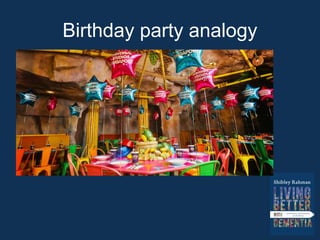
Birthday party analogy
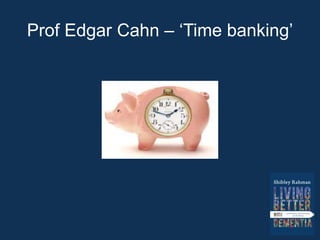
Prof Edgar Cahn – ‘Time banking’
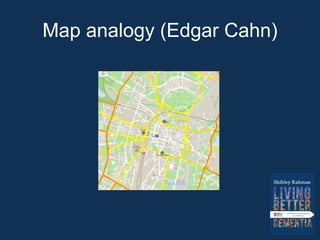
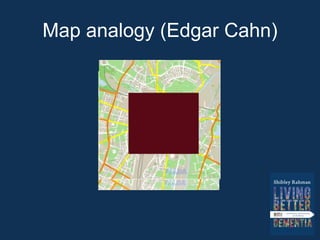
Map analogy (Edgar Cahn)
“no more throwaway
people”
“Co-production: a manifesto for growing the core economy” nef
ht: Alison Cameron @allyc375
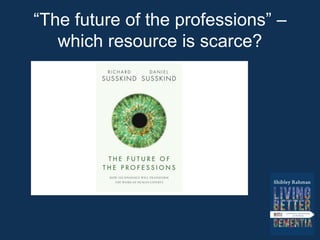
“The future of the professions” –
which resource is scarce?
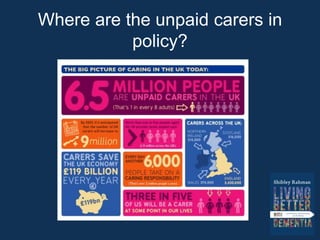
Where are the unpaid carers in
policy?
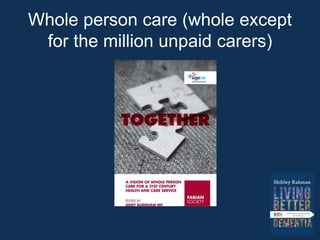
Whole person care (whole except
for the million unpaid carers)
Co-production in policy
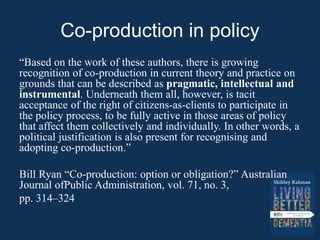
“Based on the work of these authors, there is growing
recognition of co-production in current theory and practice on
grounds that can be described as pragmatic, intellectual and
instrumental. Underneath them all, however, is tacit
acceptance of the right of citizens-as-clients to participate in
the policy process, to be fully active in those areas of policy
that affect them collectively and individually. In other words, a
political justification is also present for recognising and
adopting co-production.”
Bill Ryan “Co-production: option or obligation?” Australian
Journal ofPublic Administration, vol. 71, no. 3,
pp. 314–324
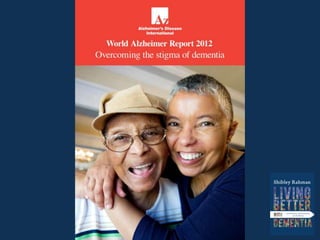
Discourses around dementia can involve:
• fear,
• stigma,
• negative media representations,
• pessimistic attitudes on the part of professionals
[Source: “Living positively with dementia: a systematic
review and synthesis of the qualitative literature”
E.L. Wolverson, C. Clarke and E.D. Moniz-Cook (2015)]
“It is only recently that the views of people
living with dementia have been elicited in any
kind of detailed or systematic fashion”
(Hulko, 2009)
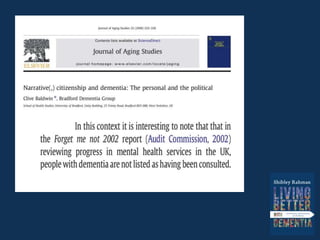
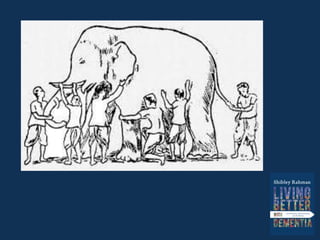
From whose perspective is a community
“dementia friendly”?
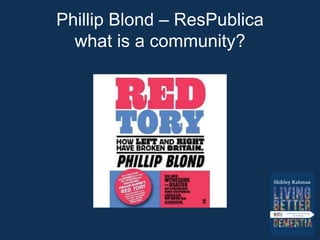
Phillip Blond – ResPublica
what is a community?
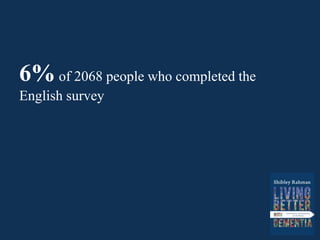
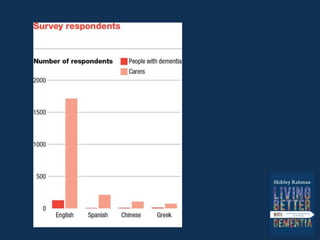
6%of 2068 people who completed the
English survey
#sharetheorange promotional video from
Alzheimer’s Research UK
https://www.youtube.com/watch?v=x9MvEZskR
6o
‘Dementia Friends’ Canada promotional video
https://www.youtube.com/watch?v=Zq2rb7HhK
Yk
‘Nudge’ and dementia friendly
communities
UN Convention on Rights for People with
Disabilities
by February 2013, it has been signed by 155
countries, and ratified by 127.
Examples of ‘reasonable
adjustments’
• reallocation of a duty a disabled employee
cannot do
• providing a piece of equipment
• providing a disabled employee with a mentor
• swapping roles with another employee
Dr Richard Taylor PhD 2014
Alzheimer’s Disease International
Puerto Rico
https://youtu.be/EU_aeOqdKIQ?t=7m16s
“Stop using dementia to campaign for us”
‘anti-oppression research’
“Oppression can be defined as a condition in
which a particular social group is exploited or
constrained for the benefit of another social
group, whose members may not be conscious of
either their privilege or their culpability”.
(Hulko, 2009)
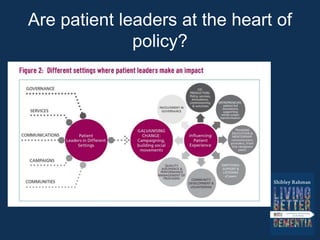
Are patient leaders at the heart of
policy?
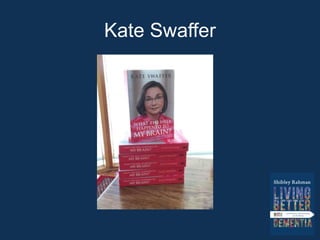
Kate Swaffer
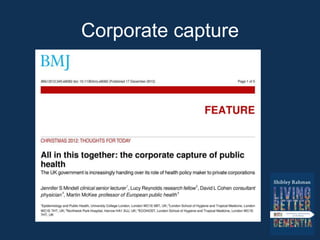
Corporate capture
Luft and Ingham 1955 – “Johari
windows”
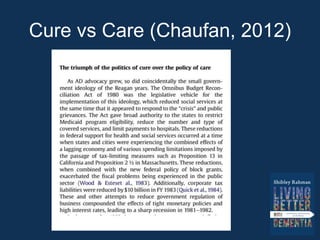
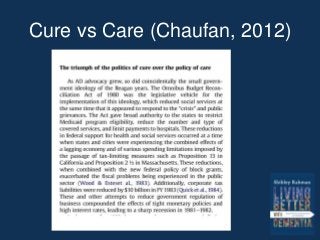
Cure vs Care (Chaufan, 2012)
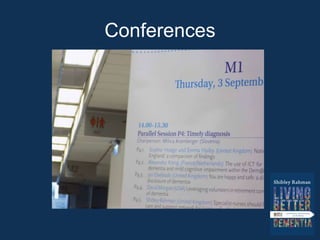
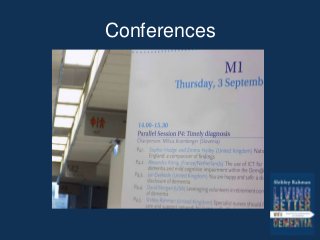
Conferences
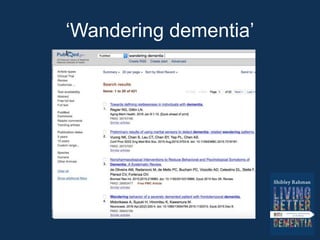
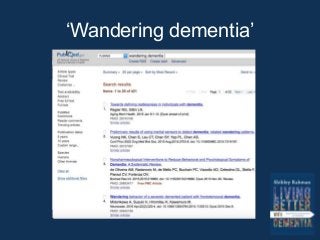
‘Wandering dementia’
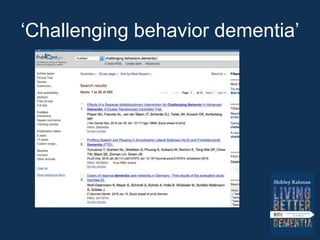
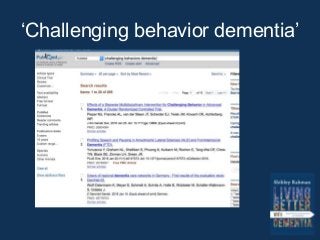
‘Challenging behavior dementia’
Does policy trump rights?
Human rights are inalienable and universal.
It is not possible, lawfully, therefore to
discriminate on the basis of mental capacity
which people are involved in ‘engagement’ and
‘empowerment’ are policy.
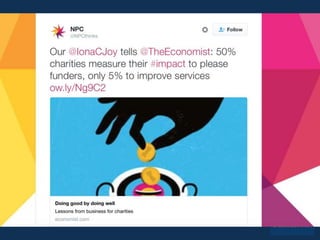
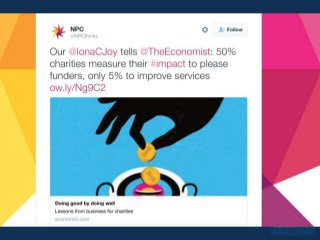
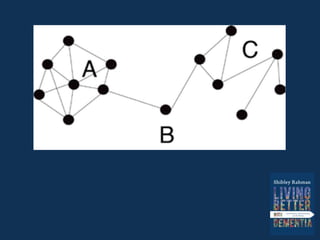
“They are more interested in the shiny new
product rather than the process of co-design”
(Anonymous service user)
Co-production, co-design and co-construction of dementia policy

Co-production, co-design and co-construction of dementia policy

  • 1.
    Co-production, co-design and co-constructionof dementia policy Dr Shibley Rahman 3 February 2016
  • 2.
    Power is “theability to cause or prevent change” (May (1973) Power and Innocence)
  • 3.
    47 million peoplein the world living with dementia 850000 roughly in the UK
  • 6.
  • 8.
    My experience asa ‘professional volunteer’
  • 16.
    “Our health andsocial care services cannot afford to allow the insight and other life skills that people using health and social care services possess to continue to go to waste. The only way forward is genuine collaboration – that powerful bringing together on an equal basis of lived experience and professional expertise. This can be challenging for all concerned.” Alison Cameron
  • 17.
    Blogpost “Co-production, co-designand co-creation: what is the difference?” by Sean McDougall (November 2012) Co-design: a design is a plan or method for doing something. The person who discovered that rubbing sticks over tinder can make fire was a designer, and the process was the design. Equally, a person who produces architectural drawings for an office block is a designer, and the plans are the design. Co-design, therefore, occurs when more than one person is involved in drawing up a plan for doing something. Co-production: production is what happens when the raw materials needed to do something are brought together and combined to generate something new. Working out what to do is design work; doing it is production.
  • 18.
    Co-production was firstconceptualised by an academic team led by Elinor Ostrom at Indiana University in the 1970s and described the lack of recognition of service users in service delivery. (source: Realpe and Wallace / Health Foundation, 2010 ht: Alison Cameron.)
  • 21.
  • 22.
    Prof Edgar Cahn– ‘Time banking’
  • 23.
  • 24.
  • 25.
  • 27.
    “Co-production: a manifestofor growing the core economy” nef ht: Alison Cameron @allyc375
  • 30.
    “The future ofthe professions” – which resource is scarce?
  • 31.
    Where are theunpaid carers in policy?
  • 32.
    Whole person care(whole except for the million unpaid carers)
  • 33.
    Co-production in policy “Basedon the work of these authors, there is growing recognition of co-production in current theory and practice on grounds that can be described as pragmatic, intellectual and instrumental. Underneath them all, however, is tacit acceptance of the right of citizens-as-clients to participate in the policy process, to be fully active in those areas of policy that affect them collectively and individually. In other words, a political justification is also present for recognising and adopting co-production.” Bill Ryan “Co-production: option or obligation?” Australian Journal ofPublic Administration, vol. 71, no. 3, pp. 314–324
  • 38.
    Discourses around dementiacan involve: • fear, • stigma, • negative media representations, • pessimistic attitudes on the part of professionals [Source: “Living positively with dementia: a systematic review and synthesis of the qualitative literature” E.L. Wolverson, C. Clarke and E.D. Moniz-Cook (2015)]
  • 39.
    “It is onlyrecently that the views of people living with dementia have been elicited in any kind of detailed or systematic fashion” (Hulko, 2009)
  • 41.
    From whose perspectiveis a community “dementia friendly”?
  • 42.
    Phillip Blond –ResPublica what is a community?
  • 46.
    6%of 2068 peoplewho completed the English survey
  • 48.
    #sharetheorange promotional videofrom Alzheimer’s Research UK https://www.youtube.com/watch?v=x9MvEZskR 6o
  • 49.
    ‘Dementia Friends’ Canadapromotional video https://www.youtube.com/watch?v=Zq2rb7HhK Yk
  • 50.
    ‘Nudge’ and dementiafriendly communities
  • 52.
    UN Convention onRights for People with Disabilities
  • 53.
    by February 2013,it has been signed by 155 countries, and ratified by 127.
  • 55.
    Examples of ‘reasonable adjustments’ •reallocation of a duty a disabled employee cannot do • providing a piece of equipment • providing a disabled employee with a mentor • swapping roles with another employee
  • 56.
    Dr Richard TaylorPhD 2014 Alzheimer’s Disease International Puerto Rico https://youtu.be/EU_aeOqdKIQ?t=7m16s “Stop using dementia to campaign for us”
  • 57.
    ‘anti-oppression research’ “Oppression canbe defined as a condition in which a particular social group is exploited or constrained for the benefit of another social group, whose members may not be conscious of either their privilege or their culpability”. (Hulko, 2009)
  • 59.
    Are patient leadersat the heart of policy?
  • 60.
  • 61.
  • 63.
    Luft and Ingham1955 – “Johari windows”
  • 65.
    Cure vs Care(Chaufan, 2012)
  • 66.
  • 67.
  • 68.
  • 70.
  • 71.
    Human rights areinalienable and universal. It is not possible, lawfully, therefore to discriminate on the basis of mental capacity which people are involved in ‘engagement’ and ‘empowerment’ are policy.
  • 72.
    “They are moreinterested in the shiny new product rather than the process of co-design” (Anonymous service user)