










MANAGEMENT
EDUCATION
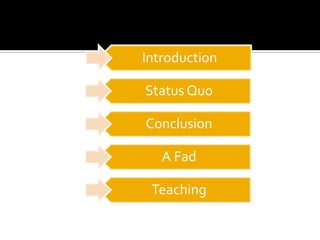
Introduction
Status Quo
Conclusion
A Fad

Teaching
What is Management
Education about?


Acquiring Practical Knowledge.



How we relate this knowledge to our day to
day working.



How we apply this knowledge.
What does it offer?
 Tools, equipments & necessary techniques of
successfully handling various business & management
related issues.
 Holistic picture to the students about how to manage
four “M”s of any organization.
• Money
• Material
• Man
• Machine
Besides providing the basic management
capabilities it also provides :
 Ability to use the contingency approach to solving

business problems.
 Combining the best parts of several solutions into a
unique and better solution.
 Having a global perspective.
 Working with and learning from others.







Development of management education can be traced
back to the 18th century.
From 18th century to 21st century, management
education has seen a lot of changes and development.
Management education in India has come a long way.
The history of management education in India goes
back to the pre-Independence era.
The first college level business school in the country
was founded in 1913 in Mumbai and was soon
followed by another in Delhi in 1920.


According to a report done by the Graduate
Management Admission Council--a global
non-profit education organization--there has
been a marked increase in demand for a MBA
education since 2006.
Influx in Management from Different Fields


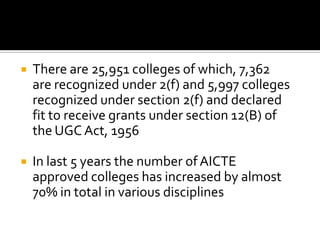
There are 25,951 colleges of which, 7,362
are recognized under 2(f) and 5,997 colleges
recognized under section 2(f) and declared
fit to receive grants under section 12(B) of
the UGC Act, 1956



In last 5 years the number of AICTE
approved colleges has increased by almost
70% in total in various disciplines
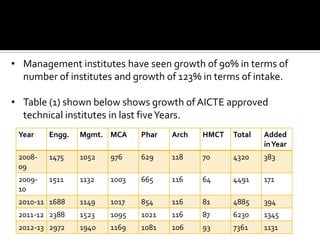
• Management institutes have seen growth of 90% in terms of
number of institutes and growth of 123% in terms of intake.
• Table (1) shown below shows growth of AICTE approved
technical institutes in last five Years.
Year

Engg.

Mgmt. MCA

Phar

Arch

HMCT

Total

Added
inYear

200809

1475

1052

976

629

118

70

4320

383

200910

1511

1132

1003

665

116

64

4491

171

2010-11 1688

1149

1017

854

116

81

4885

394

2011-12 2388

1523

1095

1021

116

87

6230

1345

2012-13 2972

1940

1169

1081

106

93

7361

1131
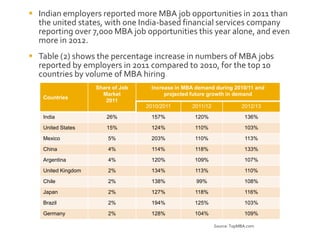
 Indian employers reported more MBA job opportunities in 2011 than
the united states, with one India-based financial services company
reporting over 7,000 MBA job opportunities this year alone, and even
more in 2012.
 Table (2) shows the percentage increase in numbers of MBA jobs
reported by employers in 2011 compared to 2010, for the top 10
countries by volume of MBA hiring
Countries

Share of Job
Market
2011

Increase in MBA demand during 2010/11 and
projected future growth in demand
2010/2011

2011/12

2012/13

India

26%

157%

120%

136%

United States

15%

124%

110%

103%

Mexico

5%

203%

110%

113%

China

4%

114%

118%

133%

Argentina

4%

120%

109%

107%

United Kingdom

2%

134%

113%

110%

Chile

2%

138%

99%

108%

Japan

2%

127%

118%

116%

Brazil

2%

194%

125%

103%

Germany

2%

128%

104%

109%
Source: TopMBA.com









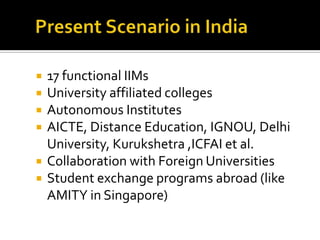
17 functional IIMs
University affiliated colleges
Autonomous Institutes
AICTE, Distance Education, IGNOU, Delhi
University, Kurukshetra ,ICFAI et al.
Collaboration with Foreign Universities
Student exchange programs abroad (like
AMITY in Singapore)
Focuses on :
 Stress on performance
 Losing the sight of Purpose





Is the root cause of :
Morality crisis
Governance issues
Slipshod Behaviour of Corporate Citizens
The criticisms directed at management education
generally revolve around two claims :



I.

II.

The crisis was brought about by managers educated in
business schools which do not pay enough attention to
social responsibility, ethics and governance.
Some theories or models are taught at management
school could be held responsible for the crisis, such as
the principal-agent model or the portfolio model in
finance.


On other side episode like Satyam has given rise to
new controversy and forced to make comparison
like Satyam Vs. Enron, PWC Vs. A.C. Nielson and
Ramalinga Raju Vs. Kenneth Lay and has
questioned acumen and ethics of business
managers.



The future will see changes in business schools
curriculum and management research. Future
research will include questions of diagnosis and
prediction and this will help in explaining and
preventing future global economic meltdowns.
Task:
Construction of
Industrial
Flooring
RECAP:
 What it is
 Why it has become a fad
 The Status Quo
 Teaching Methodology


Bitter truth



Introspection before deciding to study MBA



A System Facelift : Dire need



Focus on Value Addition

Management Education: Flip sides of the coin

  • 1.
  • 2.
  • 4.
    What is Management Educationabout?  Acquiring Practical Knowledge.  How we relate this knowledge to our day to day working.  How we apply this knowledge.
  • 5.
    What does itoffer?  Tools, equipments & necessary techniques of successfully handling various business & management related issues.  Holistic picture to the students about how to manage four “M”s of any organization. • Money • Material • Man • Machine
  • 6.
    Besides providing thebasic management capabilities it also provides :  Ability to use the contingency approach to solving business problems.  Combining the best parts of several solutions into a unique and better solution.  Having a global perspective.  Working with and learning from others.
  • 7.
         Development of managementeducation can be traced back to the 18th century. From 18th century to 21st century, management education has seen a lot of changes and development. Management education in India has come a long way. The history of management education in India goes back to the pre-Independence era. The first college level business school in the country was founded in 1913 in Mumbai and was soon followed by another in Delhi in 1920.
  • 9.
     According to areport done by the Graduate Management Admission Council--a global non-profit education organization--there has been a marked increase in demand for a MBA education since 2006.
  • 15.
    Influx in Managementfrom Different Fields
  • 16.
     There are 25,951colleges of which, 7,362 are recognized under 2(f) and 5,997 colleges recognized under section 2(f) and declared fit to receive grants under section 12(B) of the UGC Act, 1956  In last 5 years the number of AICTE approved colleges has increased by almost 70% in total in various disciplines
  • 17.
    • Management instituteshave seen growth of 90% in terms of number of institutes and growth of 123% in terms of intake. • Table (1) shown below shows growth of AICTE approved technical institutes in last five Years. Year Engg. Mgmt. MCA Phar Arch HMCT Total Added inYear 200809 1475 1052 976 629 118 70 4320 383 200910 1511 1132 1003 665 116 64 4491 171 2010-11 1688 1149 1017 854 116 81 4885 394 2011-12 2388 1523 1095 1021 116 87 6230 1345 2012-13 2972 1940 1169 1081 106 93 7361 1131
  • 18.
     Indian employersreported more MBA job opportunities in 2011 than the united states, with one India-based financial services company reporting over 7,000 MBA job opportunities this year alone, and even more in 2012.  Table (2) shows the percentage increase in numbers of MBA jobs reported by employers in 2011 compared to 2010, for the top 10 countries by volume of MBA hiring Countries Share of Job Market 2011 Increase in MBA demand during 2010/11 and projected future growth in demand 2010/2011 2011/12 2012/13 India 26% 157% 120% 136% United States 15% 124% 110% 103% Mexico 5% 203% 110% 113% China 4% 114% 118% 133% Argentina 4% 120% 109% 107% United Kingdom 2% 134% 113% 110% Chile 2% 138% 99% 108% Japan 2% 127% 118% 116% Brazil 2% 194% 125% 103% Germany 2% 128% 104% 109% Source: TopMBA.com
  • 19.
          17 functional IIMs Universityaffiliated colleges Autonomous Institutes AICTE, Distance Education, IGNOU, Delhi University, Kurukshetra ,ICFAI et al. Collaboration with Foreign Universities Student exchange programs abroad (like AMITY in Singapore)
  • 20.
    Focuses on : Stress on performance  Losing the sight of Purpose    Is the root cause of : Morality crisis Governance issues Slipshod Behaviour of Corporate Citizens
  • 21.
    The criticisms directedat management education generally revolve around two claims :  I. II. The crisis was brought about by managers educated in business schools which do not pay enough attention to social responsibility, ethics and governance. Some theories or models are taught at management school could be held responsible for the crisis, such as the principal-agent model or the portfolio model in finance.
  • 22.
     On other sideepisode like Satyam has given rise to new controversy and forced to make comparison like Satyam Vs. Enron, PWC Vs. A.C. Nielson and Ramalinga Raju Vs. Kenneth Lay and has questioned acumen and ethics of business managers.  The future will see changes in business schools curriculum and management research. Future research will include questions of diagnosis and prediction and this will help in explaining and preventing future global economic meltdowns.
  • 23.
  • 29.
    RECAP:  What itis  Why it has become a fad  The Status Quo  Teaching Methodology
  • 30.
     Bitter truth  Introspection beforedeciding to study MBA  A System Facelift : Dire need  Focus on Value Addition

Editor's Notes

  • #5 Management education is not all about having bookish knowledge, its about having practical knowledge and how we apply this knowledge or how we relate thsknowiledge to our day to day working.Management is about how we manage ourself or how we present ourself in front of others.
  • #6 Management education offers all necessary tools to equip one with the necessary techniques of successfully handling various business and management related issues. Basic tools which will enable you to make contributions to global economy.Management education gives a holistic picture to the students about how to manage the four ‘M’s ofany organization i.e. money, material, man and machine
  • #7 Besides providing the basic management capabilities it also provides :--The ability to use the contingency approach to solving business problems.-Combining the best parts of several solutions into a unique and better solution.-Having a global perspective-Working with and learning from others
  • #8 The development of management education can be traced back to 18th century.From 18th century to 21st century, management education has seen lot of changes and development.Management education in India has come a long way.The history of management education in India goes back to the pre-Independence era.The first college level business school in the country wasfounded in 1913 in Mumbai and was soon followed by another in Delhi in 1920.
  • #14 1. Selective Perception: Instruct your audience to count the number of “F’s” in a sentence. Place this sentence on the board or screen: Allow only 15 seconds.  On average, most people will only spot 3 or 4 of the F’s in the sentence. There are actually six. The brain tends to skip the word “of,” or perceive it as “versus.” Point: One’s perception may not always be correct.
  • #19 Source-Topmba.com
  • #20 The ever increasing demand of Managers for various sectors of the Industry..Have led to the inception of A wide array of management institutions have
  • #21 The Financial crisis in U.S and numerous scandals that have been unearthed in India.Raise issues against management education.The Financial crisis was a result of greed and opportunism :Adirectlresult of the way management education is being imparted.