Two Cases of Design Research that Explore How Mobile Devices and Social Media Mediate ‘Informal Learning’ to Drive the Debate: Can Learning Design Hack it?ASLD11 Workshop: http://cloudworks.ac.uk/cloudscape/view/2349John Cook Learning Technology Research InstituteLondon Metropolitan University
Johnnigelcookor Jonni Gel Cook!Email: john.cook@londonmet.ac.ukPapers online: http://www.mendeley.com/profiles/john-cook6/Home page: http://staffweb.londonmet.ac.uk/~cookj1/Twitter: http://twitter.com/johnnigelcookSlideshare: http://www.slideshare.net/johnnigelcookMusic wiki: http://johnnigelcook.wetpaint.com/page/MusicAcademia.edu: http://londonmet.academia.edu/JohnCook/AboutBlip.fm: http://blip.fm/johnnigelcook
AimsUncover design principles based on 2 complex case studies raise issues about possible approaches to scaling up these techno-pedagogical designs
AimsProvide the workshop with exemplar ‘designs for learning’ (the two cases) for design discoursesee if the learning design tools and software available in the workshop can implement all or perhaps aspects of these complex design-based research driven cases/scenarios that I present in position paperCan Learning Design Hack it?
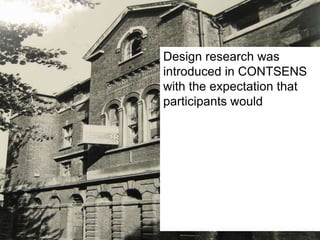
Design research was introduced in CONTSENS with the expectation that participants would
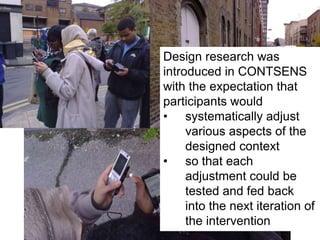
Design research was introduced in CONTSENS with the expectation that participants wouldsystematically adjust various aspects of the designed context
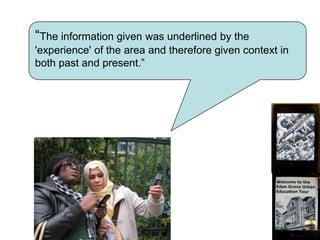
so that each adjustment could be tested and fed back into the next iteration of the intervention“The information given was underlined by the 'experience' of the area and therefore given context in both past and present.”
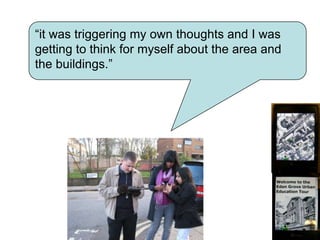
“it was triggering my own thoughts and I was getting to think for myself about the area and the buildings.”
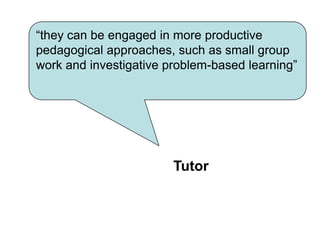
“they can be engaged in more productive pedagogical approaches, such as small group work and investigative problem-based learning”Tutor
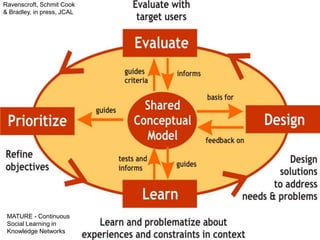
Ravenscroft, Schmit Cook & Bradley, in press, JCALMATURE - Continuous Social Learning in Knowledge Networks
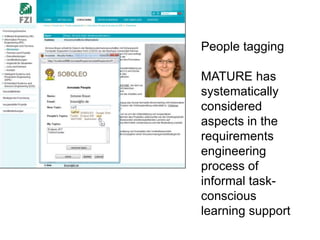
People taggingMATURE has systematically considered aspects in the requirements engineering process of informal task-conscious learning support
ConclusionSystematic adjustment of content and scripts in CONTSENSCustomising tools to meet cultural factors methodology deployed successfully by FZINeeds extending when we attempt to design for the large-scale use of TEL thatis embedded in, or that perhaps embeds, sustainable communities and networks of practice
Learning design tools and software available in the workshop can implement all or perhaps aspects of  my cases/scenarios?I look forward to debate surrounding the critical question posed in this paper’s title:Can Learning Design Hack it?

Cook Workshop Art & Science of Learning Design

  • 1.
    Two Cases ofDesign Research that Explore How Mobile Devices and Social Media Mediate ‘Informal Learning’ to Drive the Debate: Can Learning Design Hack it?ASLD11 Workshop: http://cloudworks.ac.uk/cloudscape/view/2349John Cook Learning Technology Research InstituteLondon Metropolitan University
  • 2.
    Johnnigelcookor Jonni GelCook!Email: john.cook@londonmet.ac.ukPapers online: http://www.mendeley.com/profiles/john-cook6/Home page: http://staffweb.londonmet.ac.uk/~cookj1/Twitter: http://twitter.com/johnnigelcookSlideshare: http://www.slideshare.net/johnnigelcookMusic wiki: http://johnnigelcook.wetpaint.com/page/MusicAcademia.edu: http://londonmet.academia.edu/JohnCook/AboutBlip.fm: http://blip.fm/johnnigelcook
  • 3.
    AimsUncover design principlesbased on 2 complex case studies raise issues about possible approaches to scaling up these techno-pedagogical designs
  • 4.
    AimsProvide the workshopwith exemplar ‘designs for learning’ (the two cases) for design discoursesee if the learning design tools and software available in the workshop can implement all or perhaps aspects of these complex design-based research driven cases/scenarios that I present in position paperCan Learning Design Hack it?
  • 5.
    Design research wasintroduced in CONTSENS with the expectation that participants would
  • 6.
    Design research wasintroduced in CONTSENS with the expectation that participants wouldsystematically adjust various aspects of the designed context
  • 7.
    so that eachadjustment could be tested and fed back into the next iteration of the intervention“The information given was underlined by the 'experience' of the area and therefore given context in both past and present.”
  • 8.
    “it was triggeringmy own thoughts and I was getting to think for myself about the area and the buildings.”
  • 9.
    “they can beengaged in more productive pedagogical approaches, such as small group work and investigative problem-based learning”Tutor
  • 10.
    Ravenscroft, Schmit Cook& Bradley, in press, JCALMATURE - Continuous Social Learning in Knowledge Networks
  • 11.
    People taggingMATURE hassystematically considered aspects in the requirements engineering process of informal task-conscious learning support
  • 12.
    ConclusionSystematic adjustment ofcontent and scripts in CONTSENSCustomising tools to meet cultural factors methodology deployed successfully by FZINeeds extending when we attempt to design for the large-scale use of TEL thatis embedded in, or that perhaps embeds, sustainable communities and networks of practice
  • 13.
    Learning design toolsand software available in the workshop can implement all or perhaps aspects of my cases/scenarios?I look forward to debate surrounding the critical question posed in this paper’s title:Can Learning Design Hack it?